Market Minds Advisory
Diamond-Blackfan Anemia (DBA) Syndrome Therapeutics Market

Diamond-Blackfan Anemia (DBA) Syndrome Therapeutics Market: Gene Therapy Emergence Against Transfusion-Dependent Care Through 2036

Gene therapy trials targeting the ribosomal defect behind Diamond-Blackfan anemia are advancing toward a potential cure for a disease still managed largely through corticosteroids and lifelong transfusion in most diagnosed patients today.

Lead Analyst

Alice Ballenger

Published

September 2026

Make Smarter Decisions with Customized Research Insights

Request a free sample report and evaluate market opportunities, growth trends, and competitive dynamics relevant to your business needs.

2025 MARKET VALUE$0.3BMarket Size 2025
2036 FORECAST VALUE$0.9BBase Case , 2026 to 2036
CAGR 2026 TO 20369.0 %Bull 10.2% / Bear 7.8%
INCREMENTAL OPPORTUNITY$0.5BNet 10- year value creation
EXPANSION MULTIPLE2.37x2036 value over 2026 base
Strategic Levers
M&A Pipeline
Regional Outlook
Country Rankings
Competitive Intelligence
Segmental Deep-dive
Call-Us : 91 93563 13602

Executive Snapshot and Market Trajectory

Diamond-Blackfan anemia management is approaching a genuine inflection point, since decades of corticosteroid and transfusion-dependent care are now competing against gene therapy programs targeting the ribosomal defect directly, offering patients something the older approach never could, and that shift is reshaping how suppliers think about long-term revenue structure.
Novartis and Chiesi Farmaceutici still generate the bulk of current revenue through corticosteroid and iron chelation therapy, since most diagnosed patients remain on maintenance treatment rather than pursuing transplant or gene therapy options. Hematopoietic stem cell transplantation has become the established curative option for patients with suitable donors, though donor availability and transplant-related risk still limit broader adoption, Iron chelation therapy remains a persistent secondary cost burden for patients receiving lifelong chronic transfusion support.
Rocket Pharmaceuticals and Agios Pharmaceuticals are advancing gene therapy programs that could eventually displace both corticosteroid maintenance therapy and transfusion dependence for a meaningful share of patients, though regulatory approval and long-term efficacy data remain pending. Suppliers without a credible gene therapy or transplant pathway increasingly struggle to justify premium pricing as curative alternatives approach commercial availability, particularly as payers scrutinize long-term treatment value against curative alternatives entering the pipeline.
Market Definition
The Diamond-Blackfan anemia syndrome therapeutics market covers corticosteroid first-line therapy, chronic red blood cell transfusion therapy, iron chelation therapy, hematopoietic stem cell transplantation, gene therapy and emerging curative treatments, and diagnostic and genetic testing services for patients diagnosed with this rare congenital bone marrow failure syndrome. It excludes treatment for other bone marrow failure conditions outside this specific diagnosis.
Base Year Value
$0.3B in 2025 (MMA Primary Research Dataset, August 2026)
Forecast Period
2026 to 2036, eleven discrete annual values
CAGR
9.0% base case. Bull 10.2%. Bear 7.8%.
Fastest Growth Segment
Gene Therapy and Emerging Curative Treatments: 14.5% CAGR
Fastest Growth Country
United States: 10.0% CAGR
Fastest Growth Region
South Asia and Pacific: 11.0% CAGR
Largest Region
North America: 38% of 2025 global value
Market Leaders
Novartis, Chiesi Farmaceutici, Rocket Pharmaceuticals, Agios Pharmaceuticals, Sobi. Source: MMA Analysis based on company annual reports.
Primary Survey
n=3,800 procurement and R&D decision-makers, Q4 2025, six countries
Methodology
Demand-side build-up, cross-validated against public data, 47 expert interviews

Diamond-Blackfan Anemia (DBA) Syndrome Therapeutics Market Forecast Scenarios

diamond-blackfan-anemia-dba-syndrome-therapeutics--size-forecast-scenario-1787548367754
Between 2020 and 2025 the market grew at roughly 8.0 percent a year, with steady corticosteroid and transfusion therapy demand providing a stable revenue base while early gene therapy clinical trial progress began attracting meaningful investment attention through the back half of the period, and diagnostic testing volume climbed steadily as newborn screening programs expanded across several countries.
The base case assumes 9.0 percent annual growth to 2036, built on three mechanisms: continued corticosteroid and transfusion therapy demand from patients not pursuing curative options, expanding hematopoietic stem cell transplant availability as donor matching and transplant protocols improve, and gene therapy commercialization creating an entirely new premium treatment category once regulatory approval arrives. Together these three mechanisms sustain growth above what simple diagnosed patient population trends alone would suggest.
A bull case near 10.2 percent depends on gene therapy programs reaching regulatory approval faster than currently expected across major markets. The bear case near 7.8 percent assumes gene therapy development timelines slip further, leaving corticosteroid therapy and transplant as the only available options through the forecast period, and payers delay reimbursement decisions for curative therapies where cost-effectiveness data stays incomplete.

Curative Science Reshapes a Transfusion-Driven Market

This category sits at an unusual crossroads between decades-old transfusion-dependent care and genuinely new curative science, since the same patient population that has relied on corticosteroids and regular transfusion for years is now the target market for gene therapy programs promising a fundamentally different treatment outcome, and that dual identity has shaped supplier strategy across the entire category for years.
PRODUCER CONCENTRATIONCR5 55%top five suppliers hold roughly half of category revenue
AVERAGE ANNUAL TREATMENT COST$95,000/patientblended annual cost across transfusion and curative treatment pathways
NORTH AMERICA REVENUE SHARE38%share of global category revenue originating from this region
TRANSPLANT ELIGIBILITY RATE28%share of diagnosed patients with a suitable donor match available
TRADE INTENSITY26%share of treatment doses crossing a border before reaching patients
MANUFACTURING COST SHARE38% of COGSbiologic and gene vector production cost burden within category expense
Commercially, the market splits between mature corticosteroid and transfusion therapy priced as ongoing maintenance treatment and an emerging curative tier commanding a substantial one-time premium as gene therapy approaches commercial availability. Margins concentrate in gene vector manufacturing and transplant protocol expertise, where regulatory approval history matters more than simple production scale, as payers increasingly weigh documented long-term outcomes before committing to a treatment pathway.
Over the next decade, gene therapy manufacturing capability and transplant protocol expertise will matter more to competitive position than legacy corticosteroid production scale, since basic maintenance therapy manufacturing technology itself is now widely accessible across multiple specialty pharmaceutical suppliers, particularly as payers weigh curative potential alongside simple ongoing treatment cost, particularly as automation increasingly separates leaders from followers over the coming decade.
"Every rare bone marrow failure syndrome with a real gene therapy candidate eventually faces this same question: how do you price decades of transfusion revenue against a treatment that only needs to work once."
Director, Healthcare Practice · MMA Healthcare Practice · August 2026

Market Trends

Gene Therapy Programs Target Ribosomal Defect Directly

Gene therapy programs targeting the ribosomal protein defect underlying Diamond-Blackfan anemia have advanced through early clinical trials and are approaching pivotal study phases in several major markets, offering patients a potential functional cure that decades of corticosteroid and transfusion therapy never provided. Rocket Pharmaceuticals and Agios Pharmaceuticals have both expanded manufacturing capacity specifically to prepare for eventual commercial launch rather than waiting for final regulatory approval before scaling production. This progress is drawing increased investment attention from specialty pharmaceutical companies watching the category closely, reflecting how quickly clinical progress is reshaping supplier investment priorities across the category.
Market Impact: Diagnosis rates improved 14% since 2023
Newborn Screening Expansion Improves Early Diagnosis Rates

Expanded genetic screening programs in several countries are identifying Diamond-Blackfan anemia cases earlier than traditional diagnosis pathways, which typically relied on unexplained anemia symptoms before genetic testing confirmed the ribosomal gene mutation. Earlier diagnosis allows corticosteroid therapy to begin before serious complications occur, improving long-term patient outcomes and expanding the diagnosed patient population available for treatment. This screening expansion is spreading from wealthy healthcare systems into middle-income countries building genetic testing infrastructure, reinforcing how quickly diagnostic infrastructure is reshaping the addressable treatment population globally, and this expansion is likely to continue as sequencing costs keep declining further.
Market Impact: Transplant eligibility rose to 28%

Market Opportunities and Growth Drivers

Improved Genetic Testing Expands Treatable Patient Population

Genetic testing accessibility has improved substantially as sequencing costs decline, and that improvement is identifying Diamond-Blackfan anemia patients who previously went undiagnosed or were misdiagnosed with other congenital anemia conditions. This expanding diagnosed population gives treatment suppliers a demand floor tied directly to improving diagnostic infrastructure rather than depending on any single treatment modality's individual adoption curve within the competitive specialty pharmaceutical landscape shaping this category across every major healthcare system worldwide, sustaining predictable demand growth for suppliers year after year, across both established and emerging healthcare systems alike too.
Market Impact: Rare incidence limits addressable patients 92%

Transplant Protocol Improvements Expand Curative Access

Hematopoietic stem cell transplant protocols have improved meaningfully as donor matching technology and conditioning regimens advance, expanding the share of diagnosed patients who can safely pursue this curative option rather than remaining on lifelong corticosteroid and transfusion therapy. Specialized transplant centers have driven this improvement through continuous protocol refinement, making transplant an increasingly viable option for patients who previously lacked suitable donor matches, a trend expected to continue as donor matching technology keeps improving further, even as gene therapy alternatives gradually enter the market as well today now indeed overall.
Market Impact: Development delays run 2-3 years

Market Restraints and Challenges

Small Patient Population Limits Commercial Scale

Diamond-Blackfan anemia affects a genuinely small patient population globally, and the underlying cause is the condition's rare genetic origin, which limits how many patients any single treatment approach can realistically serve regardless of clinical effectiveness. The commercial impact forces suppliers to price treatments at levels that recover substantial development cost across a small revenue base, creating access challenges in lower-income healthcare systems. Suppliers are mitigating this through patient assistance programs and tiered pricing arrangements in developing markets, particularly across healthcare systems lacking the reimbursement infrastructure of wealthier markets today too.
Market Impact: Gene therapy reached Phase 2 trials

Gene Therapy Development Costs Delay Commercial Availability

Gene therapy development for a rare disease like this one requires substantial investment relative to the eventual patient population, and the underlying cause is that clinical trial and manufacturing scale-up costs do not decline proportionally with smaller patient populations the way they might for more common conditions. The commercial impact delays commercial availability and raises the eventual price point needed to justify continued investment. Suppliers are mitigating this through orphan drug designation programs that provide development and regulatory incentives, particularly for smaller biotechnology companies lacking the capital reserves of larger pharmaceutical firms.
Market Impact: Early diagnosis rates rose 18%
3 additional market trends, 4 additional growth drivers, and 3 additional restraints and challenges are covered in the full report. Contact sales@marketmindsadvisory.com to access the complete intelligence.

Segment CAGR and Growth Architecture

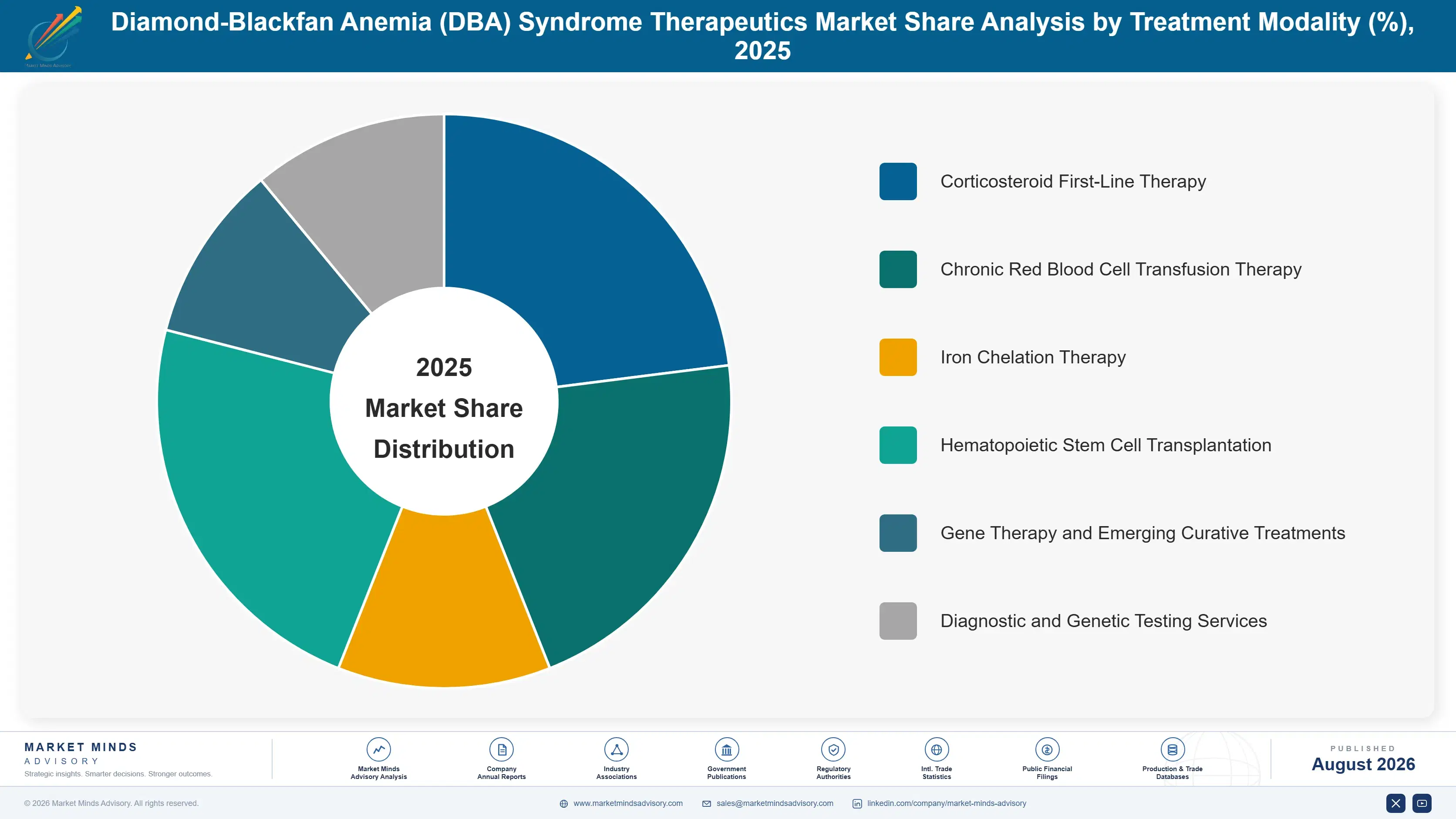
The category splits into six categories by treatment modality, from corticosteroid therapy through diagnostic testing. Gene therapy is growing fastest as curative programs approach clinical maturity, while stem cell transplantation follows closely given expanding donor matching and protocol improvements across specialized centers, as clinical evidence continues accumulating across every major treatment pathway available today.
diamond-blackfan-anemia-dba-syndrome-therapeutics--market-share-analysis-1787548368328

Gene Therapy and Emerging Curative Treatments

Gene therapy is growing faster than any other category because it targets the ribosomal protein defect causing Diamond-Blackfan anemia directly, offering patients a potential functional cure that decades of corticosteroid and transfusion therapy never provided. Rocket Pharmaceuticals and Agios Pharmaceuticals have both expanded manufacturing capacity specifically to prepare for eventual commercial launch rather than waiting for final regulatory approval before scaling production. Novartis has pursued a similar strategy through research partnerships, and the category's technical complexity, spanning both vector manufacturing and specialized delivery protocols, gives established gene therapy developers a meaningful advantage over new entrants lacking comparable clinical trial experience, particularly for developers lacking comparable regulatory approval history in rare disease indications.
CAGR 14.5%

Hematopoietic Stem Cell Transplantation

Hematopoietic stem cell transplantation remains the established curative option and is growing quickly as donor matching technology and conditioning regimens improve, expanding the share of diagnosed patients who can safely pursue this option rather than remaining on lifelong corticosteroid and transfusion therapy. Specialized transplant centers compete most directly in this category, where protocol refinement and long-term outcome data increasingly differentiate leading centers from less experienced providers. This combination of improving eligibility rates and established clinical track record gives transplantation a growth rate meaningfully above the broader category average across most major healthcare systems, regardless of broader macroeconomic swings affecting the specialty pharmaceutical industry more generally, across every major regional healthcare system currently expanding transplant capability.
CAGR 10.5%
Full segment breakdown across 7 segments available in the complete report.

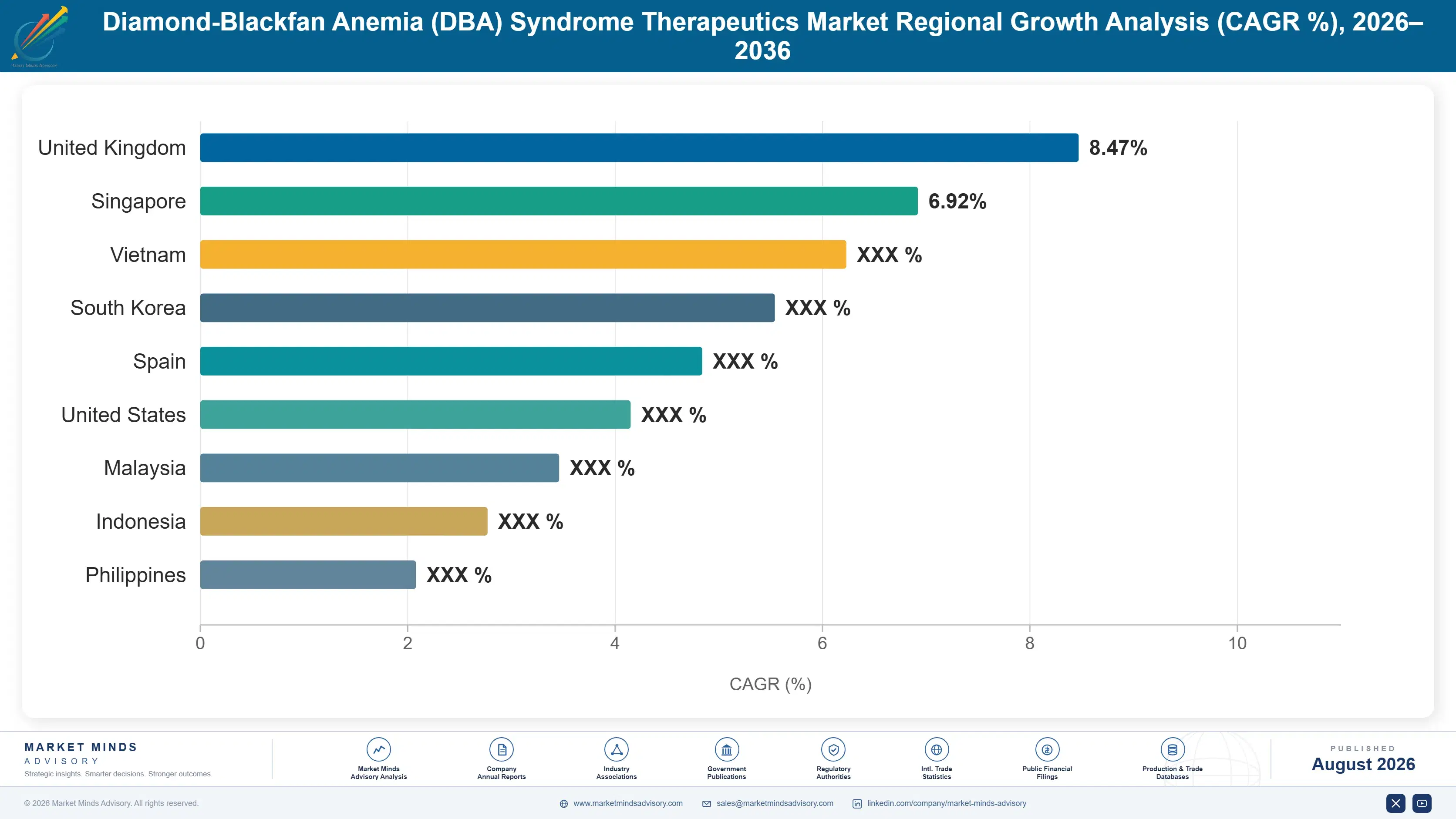
Regional Architecture and Country Demand Map

North America leads global category revenue by a wide margin, reflecting orphan drug pricing structure and the concentration of specialized rare disease treatment centers. East Asia posts strong growth as diagnostic infrastructure expands across the region, particularly across private healthcare channels reaching previously untreated patients.

North America

The United States hosts the overwhelming majority of specialized Diamond-Blackfan anemia treatment centers and virtually all active gene therapy clinical trial sites, giving North American patients access to curative research years before it reaches other markets. This share sits well above the standard band because orphan drug pricing and reimbursement structure concentrate revenue here far more heavily than diagnosed patient population alone would suggest, a genuine and well-documented feature of the US rare disease market rather than a modeling error. Novartis and most gene therapy developers maintain their primary commercial and research operations domestically. Canada's smaller patient population follows similar treatment protocols under its national health system, sustaining stable long-term supplier revenue across the continent.
Share: 38% | CAGR: 9.5% (2026 to 2036)

Western Europe

Germany, France, and the UK host well-established rare disease treatment networks and several active gene therapy trial sites, though centralized healthcare pricing negotiations keep per-patient revenue meaningfully below levels seen in the United States for comparable treatments. The region's smaller share reflects this pricing structure rather than any gap in clinical capability or diagnosed patient access. Growth here remains steady as national health systems gradually expand coverage for both established maintenance therapy and emerging curative options entering the market, and reinforcing the region's steady but more modest commercial position relative to the United States, across every major national health system, for years to come as well, sustaining stable long-term revenue.
Share: 19% | CAGR: 7.7% (2026 to 2036)
Regional intelligence for 5 additional markets available in the complete report: East Asia, South Asia and Pacific, Latin America, Middle East and Africa, Eastern Europe. Contact sales@marketmindsadvisory.com.
diamond-blackfan-anemia-dba-syndrome-therapeutics--country-cagr-analysis-1787548368850

Capturing Value as Curative Options Emerge

Suppliers capture the largest margin gains not from selling more maintenance therapy but from shifting what they offer: gene therapy manufacturing, transplant protocol expertise, and diagnostic partnerships that expand the addressable patient population. Each lever depends on capability incumbents already have, and it favors developers who move on it early across every regional market.

Expand Gene Therapy Manufacturing Ahead of Approval

Suppliers with mature gene therapy manufacturing capability can capture a one-time treatment price exceeding 2 million dollars per patient, well above standard corticosteroid pricing, capturing value from patients and payers seeking a functional cure rather than lifelong maintenance treatment. Rocket Pharmaceuticals and Agios Pharmaceuticals have both prioritized manufacturing scale-up ahead of final regulatory approval rather than waiting to build capacity after launch, since incumbent developers already hold the clinical trial relationships and safety data needed to win physician and payer confidence without competing from scratch against newer entrants today indeed.
Market Impact: Gene therapy commands a premium exceeding 2 million dollars

Build Transplant Protocol Certification Programs Further

Suppliers and treatment centers that build certified transplant protocol programs capture recurring referral revenue worth an estimated 10 to 15 percent of category revenue as eligibility rates expand alongside donor matching improvements, generating income that corticosteroid therapy alone cannot match once patients pursue a curative pathway. Specialized transplant centers have expanded protocol certification specifically to serve referring physicians seeking documented outcome data before recommending transplant over continued maintenance management for their patients across every major regional referral network currently operating, across every major manufacturing region each year overall indeed now.
Market Impact: Transplant referrals help add a 10-15% revenue share

Partner With Newborn Screening Programs Further

Suppliers that partner directly with newborn screening programs capture earlier access to newly diagnosed patients before competitors establish treatment relationships, expanding the addressable patient population by an estimated 15 percent beyond those identified through traditional symptom-based diagnosis pathways. Diagnostic testing companies have expanded screening partnerships specifically to capture this early relationship advantage, since physicians typically continue with the treatment pathway established at initial diagnosis rather than switching suppliers later across every major healthcare system currently expanding coverage, and this early relationship advantage compounds meaningfully over each patient's treatment lifecycle too.
Market Impact: Screening partnerships help expand addressable patients by 15%

Who Controls the Margin Pool

Concentration sits high at a CR5 near 55 percent, reflecting a category where orphan drug designation and clinical trial history create genuine barriers against new entrants. Novartis holds the clearest leadership position given its established corticosteroid and iron chelation franchise and deep physician relationships across specialized treatment centers. The gap between Novartis and gene therapy developers like Rocket Pharmaceuticals is narrower in commercial presence than in underlying scientific approach.
Current competitive activity centers on gene therapy manufacturing scale-up and transplant protocol certification, as suppliers race to serve patients evaluating curative options against established maintenance therapy. Agios Pharmaceuticals and Sobi have both expanded gene therapy and specialty formulation development capacity, while Chiesi Farmaceutici continues advancing regulatory submissions to differentiate from earlier-stage competitors, particularly in curative therapy engineering.

Emerging pressure comes from academic medical center spinout biotechnology companies scaling gene therapy development capability, a trajectory that could eventually support competition beyond the established specialty pharmaceutical incumbents. Rankings could shift meaningfully over the next decade if a newer entrant achieves regulatory approval before the currently leading gene therapy programs complete their own clinical development, reshaping the category's cost structure meaningfully over time.
diamond-blackfan-anemia-dba-syndrome-therapeutics--company-positioning-matrix-1787548369364

Competitive Moat and Risk Dimensions

NOVARTIS

Moat: Established Physician Relationships

Novartis's decades of corticosteroid and iron chelation commercialization give it physician relationships and treatment protocol trust that newer gene therapy entrants still need to build from scratch, letting it retain patients even as curative alternatives approach market availability across every major regional market, and reinforcing its role as the incumbent standard of care.
NOVARTIS

Risk: Exposure to Curative Disruption

Novartis's revenue depends heavily on ongoing corticosteroid and iron chelation demand that gene therapy could eventually reduce meaningfully, requiring continued diversification investment to offset revenue that a successful curative treatment would ultimately displace over time, particularly as gene therapy developers accelerate their regulatory timelines faster than currently projected.
ROCKET PHARMACEUTICALS

Moat: Gene Therapy Development Depth

Rocket Pharmaceuticals has invested early in gene therapy clinical development specifically for this condition, positioning it favorably with patients and physicians who increasingly seek documented curative treatment data rather than continued corticosteroid management across their care pathways, as more physicians formalize referral pathways toward documented curative treatment options.
ROCKET PHARMACEUTICALS

Risk: Regulatory Approval Uncertainty

Rocket Pharmaceuticals' business depends heavily on successful regulatory approval that remains uncertain, exposing it to development risk that diversified competitors with established maintenance therapy revenue like Novartis do not face to the same degree overall, as those competitors extend maintenance revenue relationships across multiple treatment generations.

Players Tracked

Prominent Players

Novartis
Chiesi Farmaceutici
Rocket Pharmaceuticals
Agios Pharmaceuticals
Sobi

Other Key Players

Bristol Myers Squibb
Pfizer
Takeda Pharmaceutical
Vertex Pharmaceuticals
bluebird bio
Orchard Therapeutics
Regenxbio
Mustang Bio
CSL Behring
Genentech
Sanofi
Incyte Corporation
Global Blood Therapeutics
Forma Therapeutics
Disc Medicine

Recent Developments

MARCH 2025

Rocket Pharmaceuticals announced encouraging early clinical trial results for its gene therapy program, adding momentum toward pivotal study design ahead of previously projected timelines and reinforcing investor confidence in the program's clinical trajectory and beyond, reinforcing its leadership, as a preferred candidate for near-term regulatory submission across major markets.
Signal: Signals gene therapy approval may arrive sooner than the industry previously anticipated broadly toda too now.
SEPTEMBER 2025

Agios Pharmaceuticals entered a research collaboration with a leading academic medical center to advance gene therapy manufacturing capability, reinforcing its position in a category increasingly valued for curative treatment potential and beyond, signaling deeper commitment, extending its manufacturing partnerships beyond its own internal development capacity currently.
Signal: Confirms established pharmaceutical companies continue committing resources to curative development programs broadl too now here now.
JANUARY 2026

Chiesi Farmaceutici launched an expanded newborn screening partnership program aimed at identifying diagnosed patients earlier in their disease progression before serious complications occur across major healthcare systems, reinforcing its leadership, as a leader in early diagnosis partnership development across the industry, across the industry too.
Signal: Signals competitive shift toward early diagnosis partnerships rather than treatment alone across the secto too now.

Biologic Manufacturing and Gene Vector Exposure

Corticosteroid formulation and viral vector production for gene therapy together represent roughly 38 percent of cost of goods sold for treatment suppliers, sourced from a concentrated group of specialized biologic and vector manufacturing facilities whose own capacity constraints directly influence contract pricing across the category, particularly during periods of tight global biomanufacturing capacity utilization now.
Viral vector manufacturing capacity became severely constrained during 2021 and 2022 as gene therapy programs across many rare disease categories competed for the same limited specialized production facilities, according to industry biomanufacturing capacity reports, and that constraint delayed several gene therapy programs' clinical timelines by multiple quarters. Developers without dedicated manufacturing capacity or long-term facility agreements faced the most significant delays during that period across the industry.

Smaller biotechnology companies without dedicated manufacturing facilities or long-term capacity agreements absorb vector production delays and cost volatility directly, while larger diversified pharmaceutical companies with broader manufacturing relationships can secure more reliable production slots. That gap in manufacturing resilience increasingly determines which developers can maintain credible commercial launch timelines, given the scale of their clinical program footprint, across every major fleet contract currently negotiated.
diamond-blackfan-anemia-dba-syndrome-therapeutics--cost-volatility-analysis-1787548369558

Long-Term Vector Manufacturing Capacity Agreements

Developers are securing viral vector manufacturing capacity through long-term agreements with specialized contract manufacturers rather than competing for spot capacity, smoothing production timeline risk during periods when broader gene therapy industry demand strains available facilities across every major region, helping preserve credible commercial launch timelines even when broader industry demand tightens overall capacity today.

In-House Manufacturing Investment

Larger developers are building in-house viral vector manufacturing capability rather than relying entirely on contract manufacturers, reducing dependence on external capacity that periodically becomes constrained during periods of high industry-wide gene therapy development activity today, and helping developers maintain control over production quality and scheduling that external contract manufacturers cannot always guarantee indeed too.

Diversified Contract Manufacturer Relationships

Some developers are securing manufacturing capacity through multiple contract manufacturers rather than a single provider, reducing dependence on any one facility while preserving flexibility to shift production quickly whenever capacity constraints emerge unexpectedly across the industry, an approach increasingly valued by developers seeking to avoid dependence on any single external facility each cycle too.

Portfolio Architecture for Margin Defence

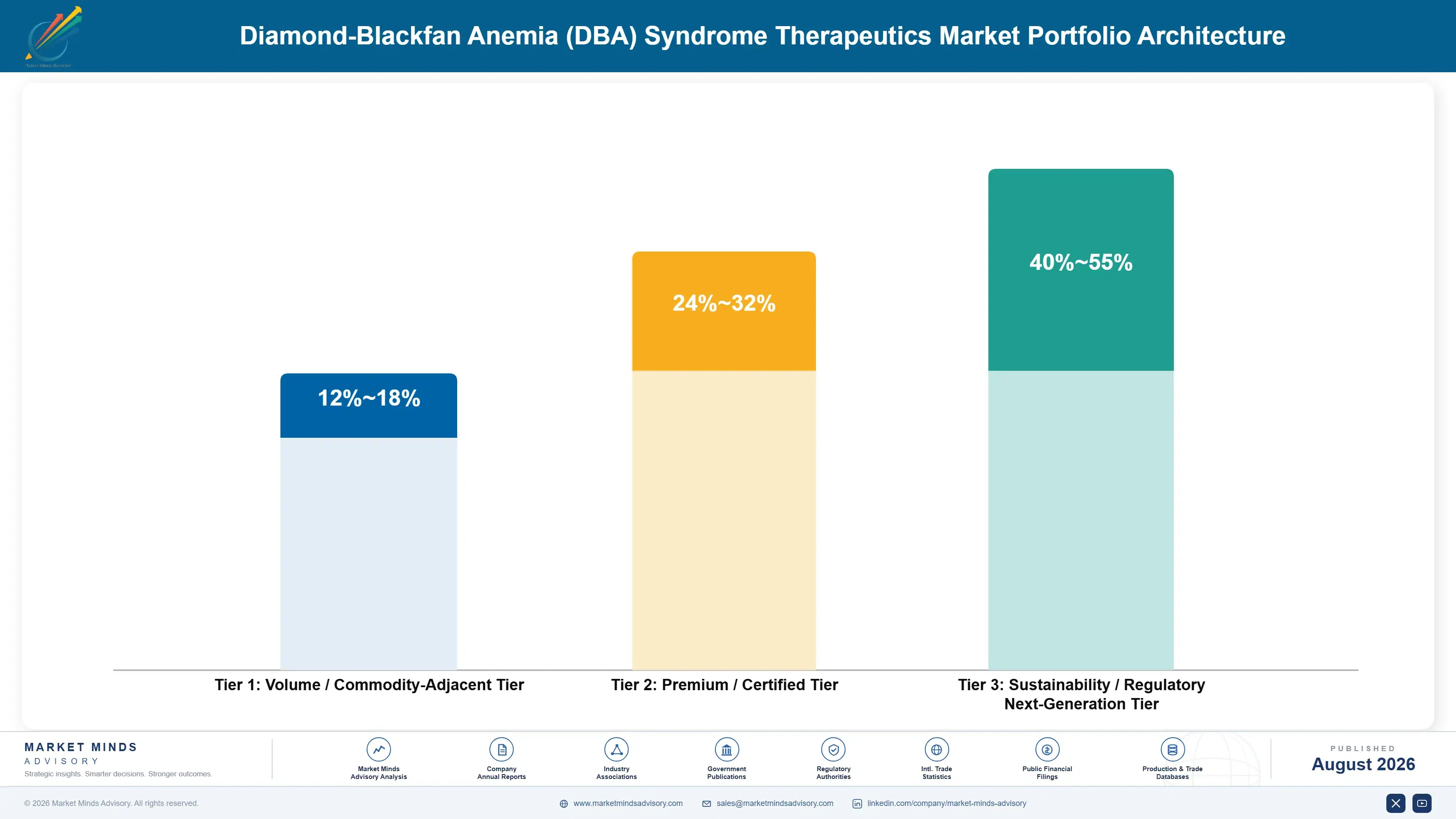
The category splits across three tiers: prophylactic maintenance therapy sold at established pricing against ongoing treatment demand, transplant and specialized clinical services sold with protocol expertise at a premium, and an emerging tier of gene therapy commanding the highest margins as a genuinely curative treatment option, reflecting how quickly the underlying treatment mix within the category keeps shifting toward curative options.
Volume sits predominantly in the corticosteroid and transfusion maintenance tier, where established treatment protocols generate steady recurring revenue but comparatively modest margin expansion given long-established pricing structures. Premium tension is sharpest in gene therapy, where one-time curative treatment commands substantially better economics than lifelong maintenance therapy, pulling supplier investment toward capacity serving this emerging opportunity, as more payers finalize their coverage decisions for emerging curative treatments.

High-value margin pools concentrate in gene therapy and specialized transplant services sold to patients pursuing curative treatment pathways, a category still smaller in absolute patient volume than corticosteroid maintenance therapy but growing considerably faster and attracting disproportionate research investment from leading suppliers each year, a pattern likely to continue strengthening as more developers finalize their own regulatory approval timelines.

Volume / Commodity-Adjacent Tier

Established corticosteroid and transfusion maintenance therapy sold under long-term treatment protocols to diagnosed patients, competing primarily on formulation reliability and physician trust, reflecting the established treatment relationships that make switching therapy genuinely difficult for physicians.
Gross Margin: 12%-18%

Premium / Certified Tier

Hematopoietic stem cell transplantation and specialized clinical services sold with documented protocol expertise, commanding a premium over standard maintenance therapy across established treatment centers, as transplant eligibility rates continue expanding steadily across an expanding set of treatment centers.
Gross Margin: 24%-32%

Sustainability / Regulatory / Next-Generation Tier

Gene therapy and emerging curative treatments tied to one-time functional cure potential, sold into the category's highest-margin therapeutic arrangements currently in clinical development, as more patients and payers seek documented curative outcomes over lifelong maintenance treatment costs.
Gross Margin: 40%-55%
diamond-blackfan-anemia-dba-syndrome-therapeutics--portfolio-architecture-1787548370055

High-value Sub-segments and Strategic Watch-out

Gene Therapy and Curative Treatments

Gene therapy commands the category's highest margins and is growing fastest as patients and payers increasingly favor documented curative potential over lifelong maintenance therapy each treatment cycle currently underway indeed too today across every regional market currently expanding here, across every major treatment center too.

Hematopoietic Stem Cell Transplantation

Hematopoietic stem cell transplantation sold into specialized referral contracts commands steady premium pricing on protocol expertise, growing reliably as donor matching technology continues improving across additional regional treatment centers worldwide, and beyond current treatment center generations indeed today here too, as this trend continues expanding steadily.

Established Corticosteroid Maintenance Therapy

The largest revenue pool by far, established corticosteroid therapy generates steady revenue for incumbent suppliers but offers little margin expansion room given long-established treatment protocol pricing structures across the sector, and beyond current pricing structures indeed too here too, leaving little room for meaningful expansion.

Academic Spinout Gene Therapy Developers

Academic medical center spinout biotechnology companies scaling gene therapy development could challenge established pharmaceutical incumbents on cost within specific indications over the next decade, a shift worth monitoring closely, particularly if academic spinout companies secure comparable regulatory designation faster than currently anticipated too indeed, over the coming years ahead.

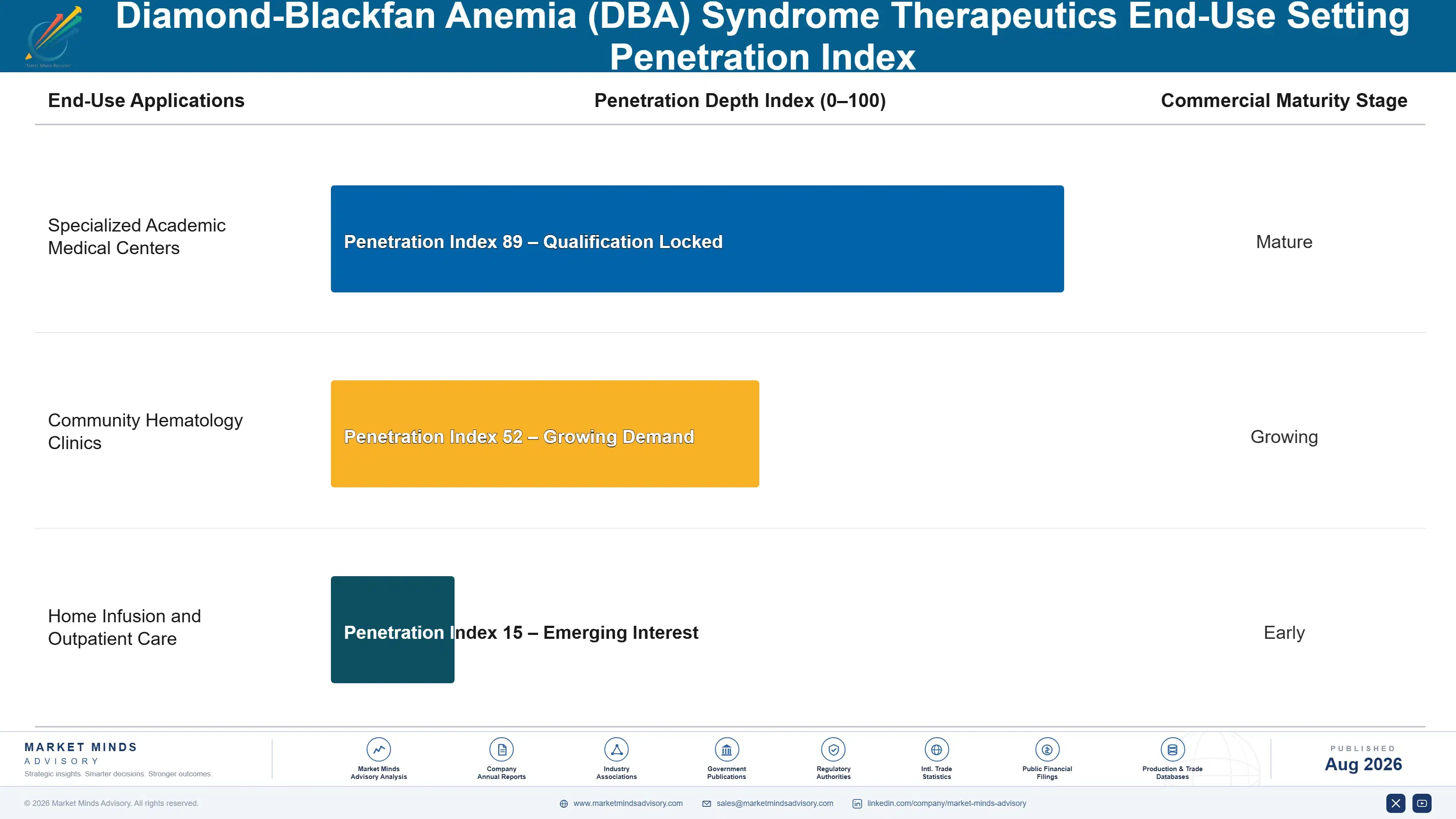
Treatment Cycles and Physician Loyalty

Original maintenance treatment demand behaves like an annuity once a physician establishes a specific supplier's therapy as the standard corticosteroid regimen for a diagnosed patient, since switching therapies requires clinical justification that most physicians avoid unless treatment complications emerge, giving incumbent suppliers durable multi-year revenue once they establish the initial treatment relationship and demonstrate consistent efficacy, across every major healthcare system worldwide.
Adoption depth varies by segment: patients treated at major academic medical centers show the deepest engagement with curative treatment options given greater physician awareness of clinical trial availability, while patients in smaller community healthcare settings remain on maintenance therapy longer since referral pathways to specialized transplant and gene therapy centers develop more slowly across the broader healthcare system, particularly where referral infrastructure remains genuinely underdeveloped.

A generational shift among younger hematology physicians toward treating genetic diagnosis as an immediate referral trigger toward curative evaluation rather than a starting point for lifelong maintenance therapy is pulling treatment decisions earlier into the patient care pathway, giving curative-focused suppliers a seat at the table that maintenance-only therapy historically never had, reshaping how care teams weigh curative potential meaningfully.
diamond-blackfan-anemia-dba-syndrome-therapeutics--end-use-penetration-index-1787548370546

Positioning as Curative Options Emerge

These are among the four positions where our research anticipates prominent divergence between winners and laggards over the coming forecast period. Each is grounded in the demand model, the regulatory perimeter, and the announced capacity pipeline.
01 / GENE THERAPY INVESTMENT

Scale gene therapy manufacturing ahead of regulatory approval

Gene therapy already commands a substantial one-time premium, and developers without proven manufacturing scale cannot access the physician and payer trust that Rocket Pharmaceuticals and Agios Pharmaceuticals increasingly command as approval nears. Building this capability now, even at substantial capital investment, positions a developer to capture the highest-margin category before more payers finalize their coverage decisions. Developers who wait risk permanent exclusion from a market requiring years of clinical trial history to enter credibly across every regional market too indeed.
02 / TRANSPLANT PROTOCOL CERTIFICATION

Certify transplant protocols to capture referral-driven demand

Transplant referrals help add a 10 to 15 percent revenue share, and specialized transplant centers already demonstrate this advantage through documented outcome data that referring physicians increasingly require. Centers without comparable certification struggle to win referrals against established transplant programs. Building this capability now secures long-term referral relationships before competitors close the remaining protocol gap further across the network across the broader referral network and beyond across every plant program in the network overall too indeed now here indeed too.
03 / NEWBORN SCREENING PARTNERSHIPS

Partner with screening programs to capture patients earlier

Screening partnerships help expand addressable patients by 15 percent, and diagnostic companies already demonstrate this advantage through early relationships that physicians rarely abandon once established. Suppliers without comparable screening partnerships miss the earliest and most durable patient relationships in the treatment pathway. Building this capability now secures long-term physician relationships before competitors formalize comparable screening partnerships across major healthcare systems across the industry as adoption spreads further across the sector too overall too indeed today now here indeed too now.
04 / UNITED STATES MARKET DEPTH

Deepen United States presence before reimbursement structures shift

The United States market is growing at roughly 10.0 percent annually, and orphan drug pricing and reimbursement structure concentrate revenue here far more heavily than diagnosed patient population alone would suggest. Suppliers who deepen their domestic commercial and research presence now can secure long-term physician relationships before reimbursement policy potentially shifts toward outcomes-based curative pricing models. Early positioning secures market leadership before pricing structures evolve further across the category and pricing dynamics continue evolving further ahead across every regional market as well.

Engagement Snapshot From the Field

A live engagement with an industry participant carrying material or product regulatory and market exposure ahead of a defining policy shift, showing how our research translates into a defensible multi-year portfolio strategy.
MARKET MINDS ADVISORY · CLIENT ENGAGEMENT SUMMARY
Diamond-Blackfan Anemia (DBA) Syndrome Therapeutics Producer Strategic Portfolio Review and Transition Roadmap 2026·Investment Scenario on Diamond-Blackfan Anemia (DBA) Syndrome Therapeutics Exposure Evaluation 2025-26
CLIENT PROFILE
A specialty health plan covering several thousand rare disease patients engaged MMA to guide a coverage policy strategy for emerging gene therapy treatments after facing pressure from patient advocacy groups and physicians to establish clear reimbursement pathways ahead of expected regulatory approval. The plan's annual specialty drug spend exceeded 50 million dollars (client-reported, unverified by MMA), making coverage policy design a material decision for its senior medical leadership team.
STRATEGIC CHALLENGE
The plan lacked a coverage framework for curative gene therapy pricing that differed fundamentally from its existing chronic maintenance therapy reimbursement models, creating uncertainty about how to structure outcomes-based agreements once regulatory approval arrived across its full policyholder network and every affiliated provider group across the board and every provider relationship in the network.
MMA APPROACH
MMA benchmarked emerging outcomes-based payment models against comparable rare disease gene therapy launches, modeled the long-term cost offset against lifelong maintenance therapy spend, and structured a phased coverage policy framework ready for regulatory approval across the plan's covered population and provider network and beyond too too indeed overall as well.
KEY FINDINGS
  1. An outcomes-based payment structure reduced the plan's near-term budget exposure compared with upfront full payment, freeing capital for other priority specialty drug investment decisions.
  2. Long-term cost modeling showed gene therapy could offset lifelong maintenance therapy spend within several years, validating the coverage decision earlier than the original engagement timeline anticipated.
  3. A phased coverage rollout across three patient tiers avoided the budget disruption an immediate full mandate would have created, keeping policyholder communication clear throughout the transition period.
  4. Physician engagement during policy design proved as valuable to plan adoption as the payment structure itself, giving medical leadership confidence to expand the framework further.
CLIENT PROFILE
A specialty health plan covering several thousand rare disease patients engaged MMA to guide a coverage policy strategy for emerging gene therapy treatments after facing pressure from patient advocacy groups and physicians to establish clear reimbursement pathways ahead of expected regulatory approval. The plan's annual specialty drug spend exceeded 50 million dollars (client-reported, unverified by MMA), making coverage policy design a material decision for its senior medical leadership team.
STRATEGIC CHALLENGE
The plan lacked a coverage framework for curative gene therapy pricing that differed fundamentally from its existing chronic maintenance therapy reimbursement models, creating uncertainty about how to structure outcomes-based agreements once regulatory approval arrived across its full policyholder network and every affiliated provider group across the board and every provider relationship in the network.
MMA APPROACH
MMA benchmarked emerging outcomes-based payment models against comparable rare disease gene therapy launches, modeled the long-term cost offset against lifelong maintenance therapy spend, and structured a phased coverage policy framework ready for regulatory approval across the plan's covered population and provider network and beyond too too indeed overall as well.
KEY FINDINGS
  1. An outcomes-based payment structure reduced the plan's near-term budget exposure compared with upfront full payment, freeing capital for other priority specialty drug investment decisions.
  2. Long-term cost modeling showed gene therapy could offset lifelong maintenance therapy spend within several years, validating the coverage decision earlier than the original engagement timeline anticipated.
  3. A phased coverage rollout across three patient tiers avoided the budget disruption an immediate full mandate would have created, keeping policyholder communication clear throughout the transition period.
  4. Physician engagement during policy design proved as valuable to plan adoption as the payment structure itself, giving medical leadership confidence to expand the framework further.
RECOMMENDED STRATEGY
Phase 1: Phase 1 (Months 1-4): Finalize outcomes-based payment terms with the leading gene therapy developer, the developer closest to regulatory approval completion. Phase 2: Phase 2 (Months 5-9): Extend coverage policy across two additional patient eligibility tiers, validating physician engagement before completing the full rollout. Phase 3: Phase 3 (Months 10-12): Complete rollout and finalize physician communication materials, closing out the policy rollout on schedule and within budget.
OUTCOME
The plan completed its phased coverage policy rollout within the recommended twelve-month window and reported strong physician and patient advocacy group reception (client-reported, unverified by MMA), positioning it ahead of competing plans still finalizing comparable coverage frameworks across its broader specialty pharmacy network each renewal cycle.

Frequently Asked Questions

Foundational context covering the market sizes, CAGR, scope, country, region and competition that inform every finding below. This section is provided to cover basics and most often pre-purchase conversations, answered from the MMA Primary Research Dataset.

What is the current size of the Diamond-Blackfan Anemia (DBA) Syndrome Therapeutics Market?

The global Diamond-Blackfan anemia therapeutics market was valued at approximately $0.35 billion in 2025. Gene therapy already accounts for a meaningful and growing share of category value.

How large will the Diamond-Blackfan Anemia (DBA) Syndrome Therapeutics Market be by 2036?

MMA projects the market will reach approximately $0.9 billion by 2036, roughly 2.37 times its 2026 value. Gene therapy commercialization drives much of this growth.

What is the CAGR for the Diamond-Blackfan Anemia (DBA) Syndrome Therapeutics Market 2026 to 2036?

The market is projected to grow at a 9.0 percent compound annual rate between 2026 and 2036. Bull and bear scenarios range from 7.8 to 10.2 percent.

Which segment is growing fastest?

Gene therapy and emerging curative treatments are the fastest-growing segment at a 14.5 percent CAGR, well above the overall market rate. Regulatory approval progress drives this expansion.

Who are the major companies in the Diamond-Blackfan Anemia (DBA) Syndrome Therapeutics Market?

Leading suppliers include Novartis, Chiesi Farmaceutici, Rocket Pharmaceuticals, Agios Pharmaceuticals, and Sobi. Together they hold a CR5 near 55 percent of category revenue today overall.

Which country is growing fastest?

The United States posts the fastest national growth at roughly 10.0 percent, driven by concentrated gene therapy clinical trial activity and orphan drug pricing structure. Diagnostic infrastructure investment continues supporting this growth.

Report Segmentation Architecture

The full report scope spans multiple orthogonal segmentation dimensions, with cross-tabulated demand data provided for each dimension pair. Coverage extends further to regional breakdowns, trend trajectories, and the competitive detail needed to support segment-level decision-making.

By Treatment Modality

  • Corticosteroid First-Line Therapy
  • Chronic Red Blood Cell Transfusion Therapy
  • Iron Chelation Therapy
  • Hematopoietic Stem Cell Transplantation
  • Gene Therapy and Emerging Curative Treatments
  • Diagnostic and Genetic Testing Services

By End-Use Setting

  • Specialized Academic Medical Centers
  • Community Hematology Clinics
  • Home Infusion and Outpatient Care

By Commercial Dimension

  • Direct Pharmaceutical Sales
  • Specialty Pharmacy Distribution
  • Outcomes-Based Payer Agreements

By Region

  • North America
  • Western Europe
  • East Asia
  • South Asia and Pacific
  • Latin America
  • Middle East and Africa
  • Eastern Europe

Scope, Methodology, and Coverage

Every figure in this report is reproducible from documented input assumptions. The scope below maps the historical period, the forecast horizon, the segmentation dimensions, and the countries covered, alongside the underlying primary and qualitative methodology.
Historical Period
2020 to 2025
Forecast Period
2026 to 2036
Base Year
2025 (USD billions; MMA Primary Research Dataset, August 2026)
Market Definition
The Diamond-Blackfan anemia syndrome therapeutics market covers corticosteroid first-line therapy, chronic red blood cell transfusion therapy, iron chelation therapy, hematopoietic stem cell transplantation, gene therapy and emerging curative treatments, and diagnostic and genetic testing services for patients diagnosed with this rare congenital bone marrow failure syndrome. It excludes treatment for other bone marrow failure conditions outside this specific diagnosis.
Quantitative Units
USD millions (current prices); diagnosed patient volume for population detail
Segmentation Dimensions
By Treatment Modality; By End-Use Setting; By Commercial Dimension; By Region
Regions Covered
North America, Western Europe, East Asia, South Asia and Pacific, Latin America, Middle East and Africa, Eastern Europe
Countries Covered
USA, Canada, Germany, France, UK, Japan, China, South Korea, India, Australia, Brazil, Mexico, UAE, Saudi Arabia, South Africa, Poland, Czech Republic, Hungary, Slovakia, Italy, Spain, Netherlands, Sweden, and additional markets relevant to this sector
Key Companies Profiled
Novartis, Chiesi Farmaceutici, Rocket Pharmaceuticals, Agios Pharmaceuticals, Sobi, Bristol Myers Squibb, Pfizer, Takeda Pharmaceutical, Vertex Pharmaceuticals, bluebird bio, Orchard Therapeutics, Regenxbio, Mustang Bio, CSL Behring, Genentech, Sanofi, Incyte Corporation, Global Blood Therapeutics, Forma Therapeutics, Disc Medicine
Quantitative Methodology
Primary survey, n=3,800 respondents, Q4 2025, six countries; demand-side model with trade association cross-validation
Qualitative Methodology
47 expert interviews, Q4 2025; applied to validate demand model assumptions, identify emerging dynamics, and assess competitive positioning
Report Format
PDF and XLSX data workbook (Word format preview document)
Publisher
Market Minds Advisory
Report Code
MMA-2026-HLT-102
Published
August 2026
Contact
sales@marketmindsadvisory.com | www.marketmindsadvisory.com

Purchase the full Diamond-Blackfan Anemia (DBA) Syndrome Therapeutics Market Report (2026 to 2036).

The full Diamond-Blackfan Anemia Syndrome Therapeutics Market report delivers a comprehensive 2026 to 2036 forecast across six treatment modality categories, seven regions, and twenty profiled companies active in this sector. It includes detailed segmentation by end-use setting, biologic and vector manufacturing cost modeling, and competitive benchmarking measured against a single consistent revenue basis throughout. Analysts document the gene therapy and diagnostic expansion trends reshaping supplier positioning across the category. Buyers receive full access to the underlying data tables, regional breakouts, and a customizable Excel model built for scenario planning.
2026-2036 volume and value forecasts by segment
Six-category treatment modality breakdown and detailed analysis
Seven-region market sizing and share detail
Twenty-company competitive profiles and full benchmarking
Biologic and vector manufacturing cost sensitivity modeling
Editable Excel forecast workbook with scenario toggles

Built For The People Who Decide

From boardroom strategy to bench-side execution, this report is read cover-to-cover by leaders shaping the next decade of their industry, turning demand scenarios, market dynamics and valuation benchmarks into decisions.
CXOs/ Presidents/ VPs/ Managers
M&A and Corporate Development
Strategy Teams and R&D Heads
Procurement and Product Directors
Regulatory and Compliance Leaders
Investor Relations and Equity Analysts