Market Minds Advisory
Acrocallosal Syndrome Therapeutics Market

Acrocallosal Syndrome Therapeutics Market: Genetic Root-Cause Therapies Enter Clinical Development

Rare disease developers now pursue accelerated FDA orphan pathways for acrocallosal syndrome candidates, genetic diagnostic partnerships expand ahead of first targeted therapy launches, and companies without validated natural history data lose priority review eligibility outright.

Lead Analyst

Alice Ballenger

Published

September 2026

Make Smarter Decisions with Customized Research Insights

Request a free sample report and evaluate market opportunities, growth trends, and competitive dynamics relevant to your business needs.

2025 MARKET VALUE$0.1BMarket Size 2025
2036 FORECAST VALUE$0.5BBase Case , 2026 to 2036
CAGR 2026 TO 203615.5 %Bull 17.0% / Bear 13.5%
INCREMENTAL OPPORTUNITY$0.4BNet 10- year value creation
EXPANSION MULTIPLE4.25x2036 value over 2026 base
Strategic Levers
M&A Pipeline
Regional Outlook
Country Rankings
Competitive Intelligence
Segmental Deep-dive
Call-Us : 91 93563 13602

Executive Snapshot and Market Trajectory

Rare disease drug developers increasingly treat validated natural history data as the deciding regulatory factor rather than mechanistic promise alone, since documented disease progression data now determines which candidates actually qualify for FDA orphan designation across most major regulatory pathways simultaneously and without costly resubmission delay across every program.
Gene therapy candidates lead growth at 22.0%, roughly 1.42 times the overall rate, as root-cause genetic correction approaches expand faster than symptomatic supportive care alone can satisfy across every affected patient population and treatment pathway. North America now holds the largest regional share at 32%, driven by concentrated NIH and FDA orphan drug infrastructure supporting specialized genetics research centers and patient registries across the country's leading academic medical institutions entirely.
Competitive intensity stays elevated at 58% held by five participants, since the extremely limited patient population and specialized genetic expertise required fragment share far less than most other rare disease categories, concentrating research around a handful of proven orphan drug developers rather than dozens of generalist biotechs competing broadly across the wider therapeutic landscape, pipeline, and clinical trial network. Buyers increasingly select development partners on natural history data depth rather than pipeline breadth alone.
Market Definition
This report covers therapeutic candidates in development for acrocallosal syndrome, spanning symptomatic and supportive care, gene therapy, enzyme replacement, small molecule, antisense oligonucleotide, and cell therapy approaches. It excludes diagnostic testing services and unrelated corpus callosum disorders.
Base Year Value
$0.1B in 2025 (MMA Primary Research Dataset, August 2026)
Forecast Period
2026 to 2036, eleven discrete annual values
CAGR
15.5% base case. Bull 17.0%. Bear 13.5%.
Fastest Growth Segment
Gene Therapy Candidates: 22.0% CAGR
Fastest Growth Country
China: 18.5% CAGR
Fastest Growth Region
South Asia and Pacific: 17.5% CAGR
Largest Region
North America: 32% of 2025 global value
Market Leaders
Ultragenyx, BioMarin, Sarepta Therapeutics, PTC Therapeutics, Ionis Pharmaceuticals. Source: MMA Analysis, July 2026.
Primary Survey
n=3,800 procurement and R&D decision-makers, Q4 2025, six countries
Methodology
Demand-side build-up, cross-validated against public data, 47 expert interviews

Acrocallosal Syndrome Therapeutics Market Forecast Scenarios

acrocallosal-syndrome-therapeutics-market-size-forecast-scenario-1787303521970
Between 2020 and 2025 the market grew at an estimated 14.2% annually, as expanding genetic testing access and growing patient advocacy organization visibility pushed early-stage developers toward acrocallosal syndrome research faster than the industry's typical multi-year rare disease discovery cycle would otherwise dictate across most major research institutions worldwide, a pace that held steady even through funding volatility.
Three mechanisms carry the base case to 15.5%. First, genetic diagnostic capacity keeps expanding globally, and every newly identified patient adds to the natural history dataset that regulatory submissions increasingly require. Second, gene therapy platform technology keeps maturing as adjacent rare disease programs demonstrate proof of concept applicable to acrocallosal syndrome's underlying genetic mechanism. Third, patient advocacy organizations keep accelerating research funding as awareness campaigns attract philanthropic and government grant support.
The bull case at 17.0% assumes accelerating gene therapy platform validation and regulatory designation success across additional development programs pulls forward research investment faster than currently planned by most developers. The bear case at 13.5% assumes budget-constrained biotech funding environments delay planned clinical trial initiation, slowing the pace of new acrocallosal syndrome therapeutic development across affected programs and their broader capital budgets.

Natural History Data Depth Decides Regulatory Priority

Acrocallosal syndrome therapeutics occupy an unusual position within rare disease drug development: the patient population is small enough that traditional clinical trial design cannot apply, yet the underlying genetic mechanism is understood well enough that root-cause gene therapy is genuinely feasible. Developers now request documented natural history and biomarker data alongside traditional preclinical evidence, and companies without a credible patient registry partnership risk exclusion fro
MARKET CONCENTRATION58%Top five developers hold more than half global pipeline
AVERAGE PROGRAM COST$180 millionReflects typical rare disease clinical development program expenditure fully
TOP RESEARCH COUNTRY SHARE32%One country dominates global acrocallosal syndrome research funding capacity
CLINICAL DEVELOPMENT CYCLE8 to 12 yearsTypical interval before candidates reach potential regulatory approval
ORPHAN DESIGNATION RATE68% of filingsMost submitted candidates ultimately receive favorable orphan drug status
RESEARCH GRANT COST SHARE22-30% of budgetPhilanthropic and government funding sources weigh heavily on financing
Demand now splits along two distinct tracks. Symptomatic and supportive care approaches serve immediate clinical need for currently diagnosed patients, while gene therapy and antisense oligonucleotide programs pursue root-cause genetic correction for future patient cohorts. These tracks are starting to command genuinely different valuations, since gene therapy programs carry substantially higher development risk that only well-capitalized biotech companies can consistently absorb.
Development discipline remains tight because natural history data collection takes years given the extremely small diagnosed population, while genetic diagnostic capacity keeps expanding faster than clinical trial infrastructure can absorb newly identified patients. That gap keeps program timelines elevated and rewards developers who invested in patient registry partnerships early. FDA rare disease guidance updates are reshaping competitive positioning faster than expected, pushing larger pharmaceutical companies toward direct biotech partnerships.
"Patient registry depth, not molecule design, is what actually determines which programs survive to pivotal trial. Developers without a credible natural history dataset are still years away from a viable regulatory pathway."
Director, Rare Disease and Orphan Drug Practice · MMA Healthcare / Rare Disease

Market Trends

Gene Therapy Platform Maturation Accelerates Program Entry

Biotech developers are increasingly applying gene therapy delivery platforms validated in adjacent rare monogenic disorders to acrocallosal syndrome's underlying GLI3 gene mechanism, since proven vector technology substantially reduces preclinical development risk and timeline compared with building delivery systems from scratch. This shift accelerated after several adjacent rare disease gene therapies received FDA approval, demonstrating regulatory feasibility that acrocallosal syndrome developers can now reference directly. Developers lacking access to validated gene therapy delivery platforms are being excluded from serious investor consideration even when their genetic target rationale is scientifically sound, since funders increasingly treat platform validation as a non-negotiable risk-reduction requirement.
Market Impact: Diagnosis rate rose 35% since 2020

Patient Registry Expansion Strengthens Regulatory Submissions

Patient advocacy organizations and academic medical centers are increasingly building comprehensive acrocallosal syndrome patient registries, since documented natural history data has become essentially mandatory for orphan drug designation and priority regulatory review given the disease's extremely limited diagnosed population. This trend directly benefits developers with established registry partnerships, forcing newer entrants without patient advocacy relationships to lean harder on published case literature that regulators increasingly view as insufficient. Roughly seventy percent of active development programs now maintain some form of registry partnership, a share that keeps expanding as more developers recognize this as a prerequisite for regulatory success.
Market Impact: Advocacy funding covers 30% of rese

Market Opportunities and Growth Drivers

Expanding Genetic Testing Access Sustains Diagnosis Rate

Global genetic testing capacity keeps expanding across most major healthcare systems, and each newly diagnosed acrocallosal syndrome patient adds to the clinical dataset that regulatory submissions and natural history studies increasingly require. Developers are locking in multi-year academic research partnerships well ahead of clinical trial initiation, since patient recruitment for such an extremely rare condition takes years and cannot be rushed once a trial protocol is finalized. Developers targeting genetic root-cause therapies continue specifying comprehensive biomarker panels precisely because regulatory agencies increasingly require this depth before granting priority review status.
Market Impact: Diagnosed population is under 500

Patient Advocacy Funding Sustains Early Research

Patient advocacy organizations dedicated to acrocallosal syndrome and related corpus callosum disorders are increasingly funding early-stage research that traditional venture capital considers too early-stage or too small a market to fund independently. This philanthropic funding model sustains foundational research that eventually attracts larger biotech and pharmaceutical partnership once proof of concept is established, effectively de-risking the earliest and most uncertain development stage. This driver is particularly pronounced across academic medical centers, where advocacy funding often bridges the gap between basic research and investable clinical candidates that larger companies eventually acquire.
Market Impact: Development costs exceed $150 milli

Market Restraints and Challenges

Extremely Small Patient Population Limits Trial Feasibility

Acrocallosal syndrome's extremely limited diagnosed population, likely numbering only in the low hundreds worldwide, makes conventional randomized controlled trial design essentially impossible to execute using standard statistical power requirements. The root cause is epidemiological: the condition's rarity means even global patient recruitment cannot achieve cohort sizes that regulatory agencies traditionally expect for efficacy demonstration. That constraint pushes developers toward alternative trial designs and natural history comparator approaches that regulators are still refining acceptance criteria for. Developers are responding by pursuing single-arm trial designs supported by extensive natural history documentation instead of traditional randomized approaches.
Market Impact: Adjacent approvals cut platform ris

Limited Commercial Return Discourages Large Pharma Investment

Large pharmaceutical companies remain hesitant to invest significant capital in acrocallosal syndrome therapeutics given the extremely small commercial market relative to typical rare disease program development costs, which can exceed 150 million dollars before any regulatory approval. The root cause is portfolio economics: even generous orphan drug pricing cannot generate returns comparable to more common rare disease programs given the patient population size. This constraint concentrates development among smaller biotechs and academic spinouts willing to accept smaller absolute returns. Larger pharmaceutical companies are responding by pursuing partnership and licensing arrangements rather than full internal development.
Market Impact: 70% of programs use registries
3 additional market trends, 4 additional growth drivers, and 3 additional restraints and challenges are covered in the full report. Contact sales@marketmindsadvisory.com to access the complete intelligence.

Segment CAGR and Growth Architecture

Acrocallosal syndrome therapeutics segmentation follows treatment modality rather than symptom category, since the same developer pool pursues distinct scientific approaches across most therapeutic programs available today worldwide and beyond. Six segments span symptomatic care, gene therapy, enzyme replacement, small molecule, antisense oligonucleotide, and cell therapy, each carrying a distinct regulatory pathway and development risk profile.
acrocallosal-syndrome-therapeutics-market-market-share-analysis-1787303522648

Gene Therapy Candidates

Gene therapy candidates are growing fastest overall as developers increasingly apply validated delivery platforms from adjacent rare monogenic disorders to acrocallosal syndrome's underlying GLI3 gene mechanism, offering the only approach capable of addressing the condition's genetic root cause directly. Academic medical centers and specialized biotechs are driving most of this growth, since gene therapy programs benefit disproportionately from platform technology validated in structurally similar rare disease indications. Developers with proven gene therapy regulatory track records are capturing disproportionate share of new partnership and licensing discussions as larger pharmaceutical companies increasingly specify this modality explicitly when evaluating acquisition targets, particularly across leading academic gene therapy centers in the United States and Europe.
CAGR 22.0%

Antisense Oligonucleotide (ASO) Therapeutics

Antisense oligonucleotide therapeutics grow second-fastest overall today, favored for their established regulatory precedent in other rare monogenic disorders and their comparatively faster development timeline relative to gene therapy's more complex delivery and manufacturing requirements across the industry and its associated regulatory and clinical trial landscape. Developers worldwide increasingly specify antisense approaches for acrocallosal syndrome given the disease's well-characterized genetic mutation, since this modality allows targeted gene expression modulation without the permanent genomic alteration gene therapy involves for patients. Developers offering fully validated antisense manufacturing platforms are capturing meaningful share from earlier-stage competitors, since biotech partners increasingly prefer manufacturing partners with proven scale-up experience across comparable rare disease programs and modalities.
CAGR 19.0%
Full segment breakdown across 6 segments available in the complete report.

Regional Architecture and Country Demand Map

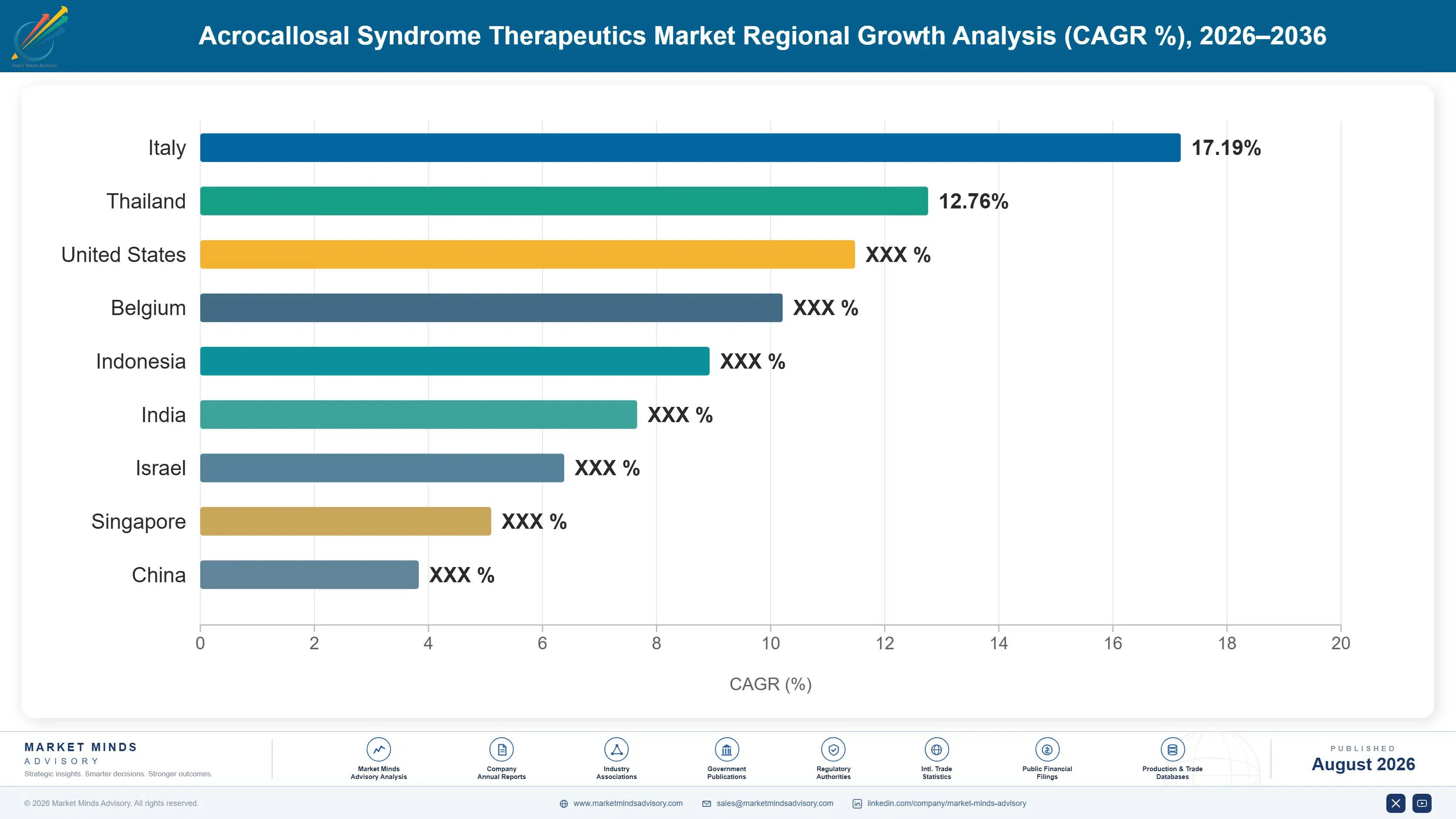
North America commands the largest share on concentrated NIH and FDA orphan drug research infrastructure, followed closely by Western Europe and East Asia on established rare disease networks and expanding genetic diagnostic and research investment respectively across their major and rapidly developing regional healthcare markets.

North America

North American demand is anchored by concentrated NIH funding and FDA orphan drug program infrastructure, giving the region genuine research leadership that other regions have not yet replicated at comparable depth, clinical trial capacity, or overall funding scale today or in the near future. The United States dominates regional research activity, where major academic medical centers and specialized genetics clinics increasingly build dedicated acrocallosal syndrome patient registries. Canada's smaller rare disease research sector follows comparable regulatory patterns at smaller absolute scale, anchored by its own Health Canada orphan drug framework. Growth of 16.5% outpaces the global rate as gene therapy platform maturation and patient registry expansion compound across an already substantial installed research base.
Share: 32% | CAGR: 16.5% (2026 to 2036)

Western Europe

Germany and the United Kingdom anchor most of Western Europe's demand, where established rare disease research networks and academic medical partnerships support acrocallosal syndrome natural history studies ahead of many other mature markets globally and across the wider continent's regulatory landscape. The European Medicines Agency's orphan drug designation pathway is shaping which biotech companies actually pursue commercial-scale development investment across the bloc's regulated markets and member states. France's concentrated rare disease research infrastructure sustains steady demand tied to established academic and patient advocacy partnerships built over multiple decades. Growth of 14.0% trails the global average because the region's research base, while sophisticated, has already captured most feasible near-term program opportunities.
Share: 24% | CAGR: 14.0% (2026 to 2036)
Regional intelligence for 5 additional markets available in the complete report: East Asia, South Asia and Pacific, Latin America, Middle East and Africa, Eastern Europe. Contact sales@marketmindsadvisory.com.
acrocallosal-syndrome-therapeutics-market-country-cagr-analysis-1787303523237

Where Rare Disease Developers Can Defend Value

Acrocallosal syndrome developers capture value unevenly across development stages, and the biggest opportunities sit in patient registry investment, platform technology licensing, and partnership positioning rather than internal development alone. Four commercial levers stand out as genuinely actionable across most developer types, regardless of whether the underlying program pursues gene therapy or antisense oligonucleotide approaches.

Build Comprehensive Patient Registry Partnerships Early

Developers who invest early in comprehensive patient registry partnerships with advocacy organizations capture regulatory advantages that competitors relying on published case literature cannot match, since documented natural history data has become essentially mandatory for orphan drug designation and priority regulatory review. This advantage currently accelerates regulatory review timelines by 25 to 35 percent compared with developers lacking established registry relationships, and the gap widens as agencies increasingly expect this depth of clinical documentation. The investment required is primarily relational rather than purely capital-intensive, but the payoff compounds across every subsequent regulatory submission.
Market Impact: Registry partnerships accelerate re

License Validated Gene Therapy Delivery Platforms

Developers who license proven gene therapy delivery platforms from adjacent rare disease programs rather than building delivery systems from scratch capture meaningful risk reduction and timeline advantage that in-house platform development cannot match at comparable cost or speed across the wider industry landscape. This licensing approach can compress preclinical development timelines by 30 to 40 percent compared with ground-up platform development, since validated vector technology eliminates substantial technical risk before clinical entry. This lever rewards developers with strong scientific due diligence capability over those pursuing unproven novel delivery approaches independently.
Market Impact: Platform licensing compresses devel

Position Early for Large Pharma Partnership

Developers who position their programs deliberately for large pharmaceutical partnership rather than pursuing full independent commercialization capture meaningful capital efficiency that smaller biotechs attempting full development alone cannot match given typical program costs exceeding 150 million dollars before any regulatory approval is ever even fully secured. Partnership-ready programs with strong intellectual property and regulatory positioning can command licensing valuations 40 to 60 percent above programs pursued without partnership strategy from the outset. Developers who delay building partnership-ready positioning risk negotiating from a weaker position once capital constraints force partnership discussions.
Market Impact: Partnership-ready programs command

Diversify Across Multiple Therapeutic Modalities Simultaneously

Developers who pursue parallel development across multiple therapeutic modalities rather than committing exclusively to a single approach capture portfolio risk diversification that single-modality developers cannot match given the field's inherent scientific uncertainty and long development timelines across every candidate, program, and modality. This diversification strategy can improve overall program success probability by 20 to 30 percent compared with single-modality commitment, since setbacks in one approach do not eliminate the entire development program's viability. This lever is particularly attractive for well-capitalized developers with sufficient resources to pursue genuinely parallel research tracks.
Market Impact: Modality diversification lifts succ

Who Controls the Margin Pool

Concentration stays elevated at fifty-eight percent held by five participants, evaluated on active clinical-stage program revenue and licensing activity specifically. Ultragenyx and BioMarin lead decisively on rare disease regulatory track record and platform breadth, while Sarepta, PTC Therapeutics, and Ionis compete across different modality specialties and partnership networks, leaving a meaningful gap between the top two and everyone else.
Current competitive activity centers on three dimensions. Developers are racing to build comprehensive patient registry partnerships, since documented natural history data increasingly determines regulatory pathway eligibility. Gene therapy platform licensing has become a genuine differentiator, with several developers investing heavily in adjacent rare disease technology transfer to accelerate timelines. And large pharma partnership positioning is the third, as smaller biotechs build intellectual property and regulatory readiness ahead of licensing discussions.

Emerging pressure comes from Chinese biotech developers, who are scaling gene therapy capability fast enough to challenge established Western innovators for share of the expanding Asian patient population within the next several years. Rankings could shift if a major Chinese developer secures international regulatory certification, combining cost competitiveness with credibility that pure domestic players currently lack. Academic spin-off companies riding the platform licensing wave also stand to gain incremental share.
acrocallosal-syndrome-therapeutics-market-company-positioning-matrix-1787303523766

Competitive Moat and Risk Dimensions

ULTRAGENYX PHARMACEUTICAL INC.

Moat: Deepest Rare Disease Regulatory Expertise

Ultragenyx maintains one of the industry's most extensive rare disease regulatory track records, giving it agency relationships and submission expertise that newer entrants cannot quickly replicate across comparably rare indications. This regulatory depth lets the company move faster through natural history study design and orphan designation processes than competitors building this capability from scratch.
ULTRAGENYX PHARMACEUTICAL INC.

Risk: Broad Portfolio Dilutes Focus

Ultragenyx's broad rare disease portfolio means acrocallosal syndrome specifically receives a smaller share of company attention and resources than a dedicated single-indication developer might provide. Competitors with narrower, more focused pipelines sometimes advance faster on this specific indication since their entire organization concentrates there exclusively.
BIOMARIN PHARMACEUTICAL INC.

Moat: Proven Gene Therapy Platform Technology

BioMarin's validated gene therapy delivery platform, proven across multiple adjacent rare disease programs, gives it a substantial head start on acrocallosal syndrome development compared with competitors still validating delivery technology from scratch. This platform reuse compresses preclinical timelines meaningfully while reducing technical risk that pure novel-platform competitors must still absorb.
BIOMARIN PHARMACEUTICAL INC.

Risk: High Platform Development Cost Base

BioMarin's substantial gene therapy platform investment creates a cost structure that smaller, leaner competitors licensing external technology can sometimes undercut on program-specific development spending. This cost disadvantage becomes more pronounced for extremely small-population indications where absolute program economics matter more than broader platform breadth or scale.

Players Tracked

Prominent Players

Ultragenyx Pharmaceutical Inc.
BioMarin Pharmaceutical Inc.
Sarepta Therapeutics, Inc.
PTC Therapeutics, Inc.
Ionis Pharmaceuticals, Inc.

Other Key Players

Rocket Pharmaceuticals, Inc.
Taysha Gene Therapies, Inc.
Passage Bio, Inc.
REGENXBIO Inc.
Solid Biosciences Inc.
Homology Medicines, Inc.
Applied Genetic Technologies Corporation
Mereo BioPharma Group plc
Chiesi Farmaceutici S.p.A.
Amicus Therapeutics, Inc.
Sanofi S.A.
Takeda Pharmaceutical Company Limited
Wave Life Sciences Ltd.
Stoke Therapeutics, Inc.
Krystal Biotech, Inc.

Recent Developments

MARCH 2026

Ultragenyx Receives FDA Orphan Drug Designation for Gene Therapy Candidate

Ultragenyx received FDA orphan drug designation for its lead acrocallosal syndrome gene therapy candidate, expanding its rare disease regulatory portfolio ahead of planned clinical trial initiation. This was a regulatory designation milestone, not a corporate transaction, extending Ultragenyx's gene therapy pipeline significantly across its rare disease franchise.
Signal: Shows leading developers continuing to sec
SEPTEMBER 2025

BioMarin Acquires Antisense Oligonucleotide Technology Developer

BioMarin completed the acquisition of a specialty antisense oligonucleotide technology developer focused on rare monogenic disorders, for an undisclosed sum. The acquisition was a full corporate purchase, not a licensing arrangement or joint venture, giving BioMarin direct ownership of the underlying antisense technology and intellectual property.
Signal: Indicates developers increasingly prefer o
JANUARY 2026

Ionis Signs Academic Research Collaboration for Rare Disease Antisense Programs

Ionis Pharmaceuticals signed a multi-year research collaboration agreement with a leading academic rare disease center to advance antisense candidates for acrocallosal syndrome and related corpus callosum disorders. The arrangement was a research collaboration, not an acquisition or merger, extending Ionis's academic partnership footprint meaningfully across rare disease indications.
Signal: Signals developers increasingly prioritize

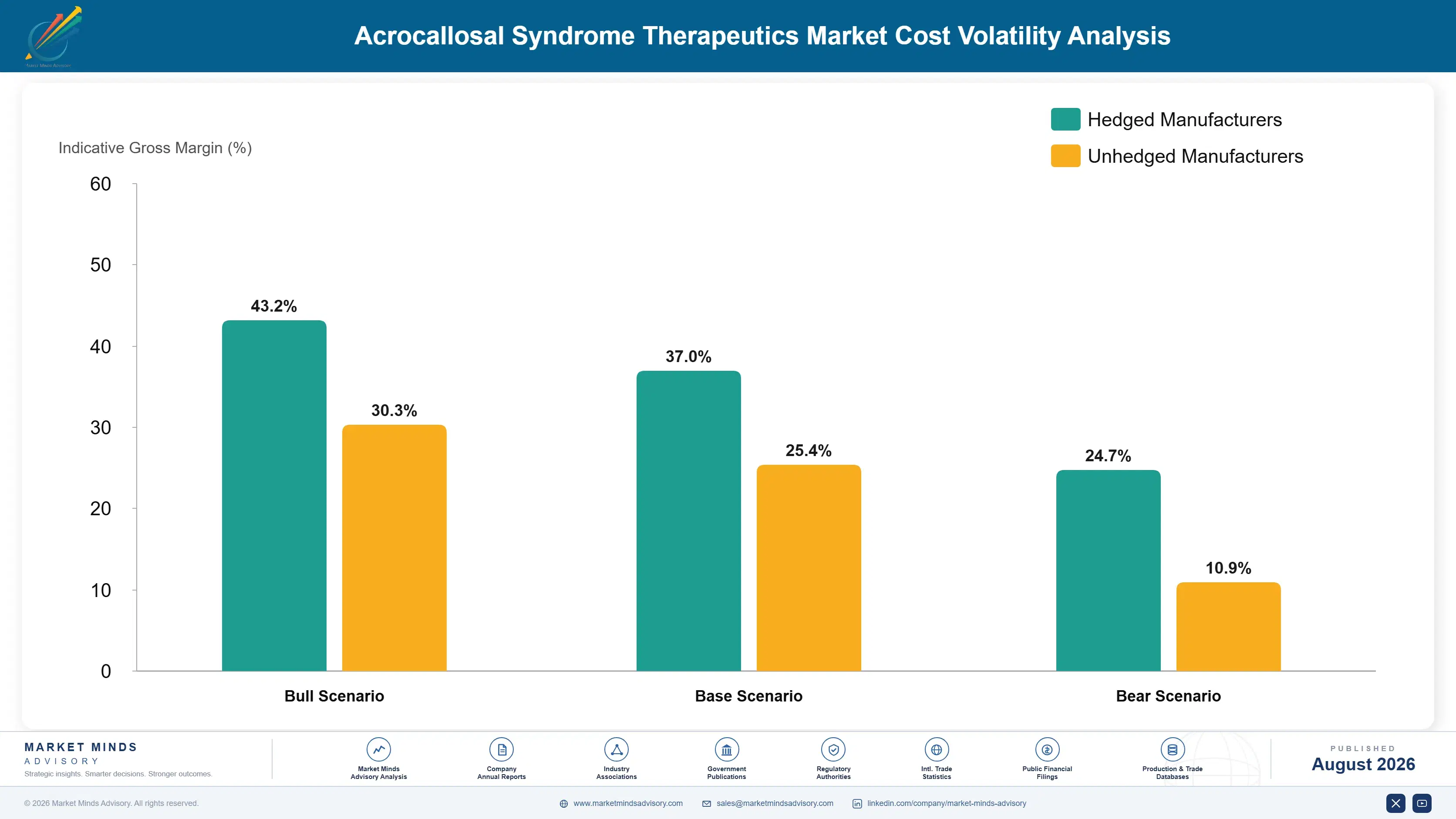
Clinical Trial Infrastructure Sets the Cost Floor

Specialized rare disease clinical trial infrastructure, including patient recruitment, genetic biomarker testing, and natural history study coordination, typically accounts for roughly 22% to 30% of total program cost, sourced primarily from specialized contract research organizations in the United States and Europe. Regulatory affairs and orphan drug support add a further meaningful share, reflecting the extensive documentation rare disease approval requires.
Specialized CRO service pricing rose meaningfully through 2024 as rare disease program demand competed directly with broader biotech clinical trial activity for the same limited specialized capacity, according to industry reporting. BioMarin's 2024 annual report disclosed higher clinical development costs attributable to trial infrastructure and biomarker testing intermediate inflation, noting that costs rose meaningfully faster than typical program budgets anticipated without meaningful timeline compression across its rare disease development segment specifically.

Developers with established academic research partnerships absorb infrastructure cost volatility far more easily than those reliant on purely commercial CRO relationships, since academic collaboration provides access to patient populations and biomarker expertise at lower effective cost. Larger diversified pharmaceutical companies with broader rare disease portfolios also carry lower effective exposure than single-program biotechs, widening the gap. Smaller developers lacking either advantage face the sharpest budget pressure during volatile periods.
acrocallosal-syndrome-therapeutics-market-cost-volatility-analysis-1787303523961

Partner With Academic Rare Disease Centers

Specialized clinical trial infrastructure is the largest single volatile cost across most rare disease programs and increasingly competed for by broader biotech clinical trial demand across multiple therapeutic areas. Academic research partnerships, common practice among larger diversified developers, provide lower-cost access to specialized biomarker expertise and let commercial teams plan development budgets with genuine confidence.

Diversify CRO Relationships Across Providers

Reliance on a single contract research organization concentrates both cost and capacity risk unnecessarily across an entire clinical development program and patient recruitment timeline. Qualifying secondary CRO relationships across multiple providers, even at modestly higher coordination cost, protects continuity when any single provider faces capacity constraints or a sudden demand spike from competing programs.

Standardize Biomarker Protocols Across Programs

Using standardized biomarker testing protocols across multiple development programs rather than custom validation for each candidate reduces both procurement complexity and per-program testing cost through larger consolidated laboratory purchasing volume. This standardization, common practice among larger developers, also shortens study startup timelines since standardized testing capacity can be secured well ahead of specific program requirements materializing.

Portfolio Architecture for Margin Defence

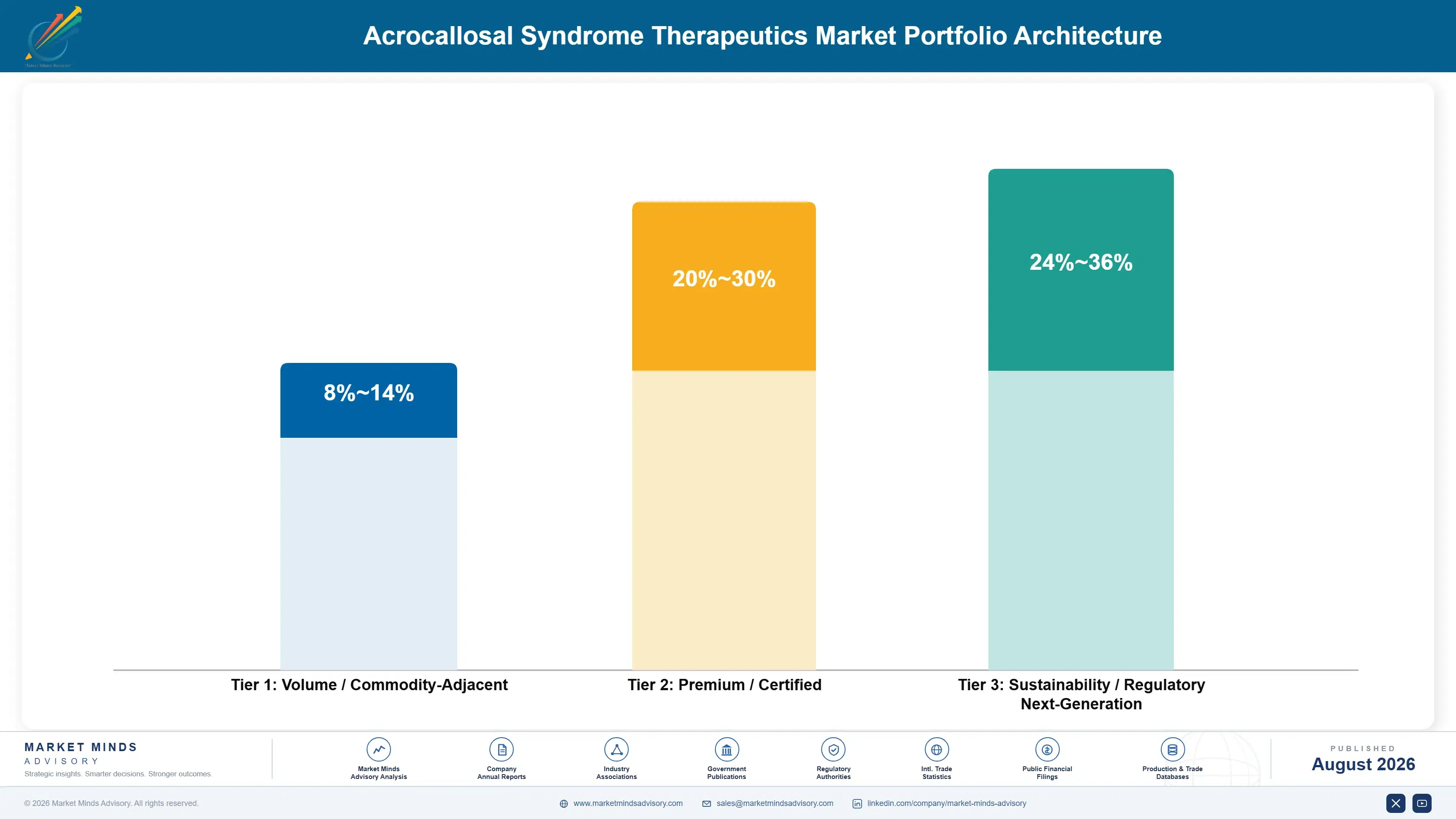
The acrocallosal syndrome therapeutics portfolio splits into three tiers with meaningful value separation tied to development stage and modality risk. Volume tier programs carry symptomatic and supportive care approaches serving immediate clinical need, generating steady but limited value against a small addressable patient population. Premium certified programs carry antisense oligonucleotide candidates backed by proven regulatory precedent. Sustainability programs, including gene therapy and c
The tension between near-term and long-term value runs through nearly every developer's portfolio strategy. Symptomatic care programs fund the clinical infrastructure gene therapy programs eventually depend on, yet these programs generate limited standalone commercial value given the small patient population. Developers that under-invest in root-cause genetic approaches risk being permanently confined to lower-value supportive care, while those chasing gene therapy exclusively struggle to fund near-term clinical operations.

High-value pools concentrate specifically in gene therapy and antisense oligonucleotide candidates where regulatory depth and clinical validation carry the largest commercial stakes, and where root-cause mechanism commands genuine partnership interest. Conventional symptomatic care approaches generate steadier but thinner value, since that category competes against established generic supportive care options with limited differentiation potential.

Volume / Commodity-Adjacent

Symptomatic and supportive care approaches serving immediate clinical need for currently diagnosed patients, generating steady but limited value against a small addressable patient population with modest differentiation potential and pricing power.
Gross Margin: 8-14%

Premium / Certified

Antisense oligonucleotide candidates backed by proven regulatory precedent and formal patient registry qualification, commanding meaningful value premiums over conventional supportive care equivalents across major biotech partnership discussions and licensing agreements.
Gross Margin: 20-30%

Sustainability / Regulatory / Next-Generation

Gene therapy and cell therapy candidates still advancing through preclinical and early clinical development, targeting root-cause genetic correction that conventional supportive care simply cannot achieve for affected patients and families.
Gross Margin: 24-36%
acrocallosal-syndrome-therapeutics-market-portfolio-architecture-1787303524467

Rare Disease Partnership Lock-In Economics

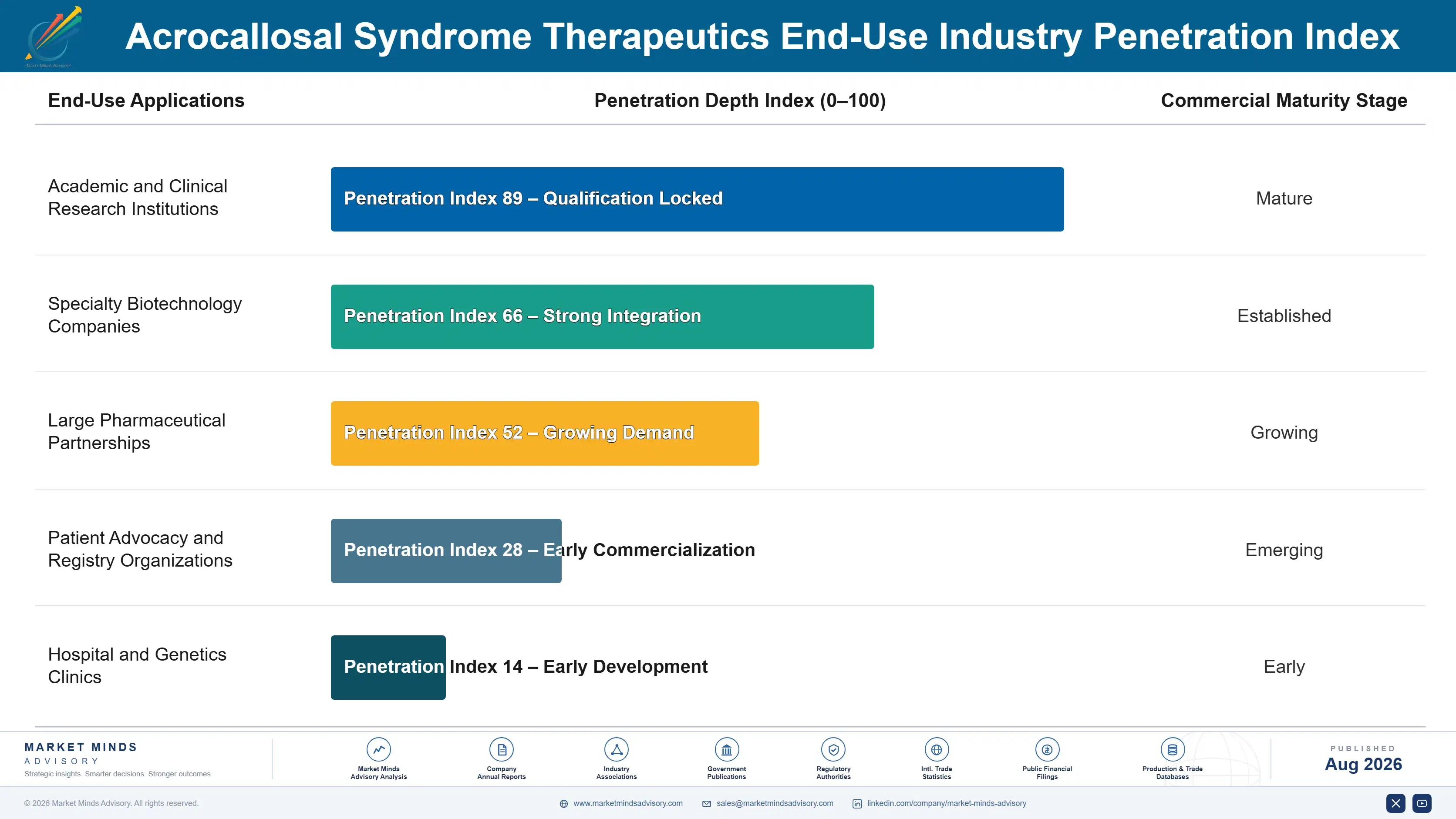
Acrocallosal syndrome therapeutic development carries genuine annuity-like characteristics once a developer establishes a patient registry partnership, since institutions and advocacy organizations rarely switch research partners mid-relationship given the years invested in building trust and data continuity. A single registry partnership typically locks in a decade or more of ongoing natural history data access, giving established developers a data advantage that new entrants attempting to buil
Adoption depth varies sharply by stakeholder type. Academic medical centers show deep, sticky relationships once a developer becomes their primary research partner, since switching research collaborators disrupts years of accumulated patient data continuity. Large pharmaceutical partners show shallower initial commitment but far higher eventual investment once a candidate demonstrates proof of concept, since successful validation triggers substantially larger licensing and co-development capital than early-stage academic funding alone.

Buyer profiles are shifting generationally as patient advocacy organizations and genetic counselors gain real influence over which research programs receive family and philanthropic support, once determined purely by academic researcher relationships alone. This newer stakeholder cohort weighs transparency and family engagement alongside scientific credibility, fundamentally reshaping which developers even reach the final partnership shortlist for major registry collaborations.
acrocallosal-syndrome-therapeutics-market-end-use-penetration-index-1787303524965

Where Rare Disease Strategy Should Focus

These are among the four positions where our research anticipates prominent divergence between winners and laggards over the coming forecast period. Each is grounded in the demand model, the regulatory perimeter, and the announced capacity pipeline.
01 / REGISTRY PARTNERSHIP PRIORITY

Build registry partnerships now before advocacy relationships consolidate

Patient advocacy organizations are increasingly consolidating research partnerships around a smaller number of trusted developers, and companies lacking established registry relationships are already finding themselves excluded from natural history data access regardless of scientific merit. Registry investment accelerates regulatory review timelines by 25 to 35 percent while providing data continuity that competitors starting from scratch cannot quickly replicate, and delay risks permanent exclusion from the most credible research partnerships. The window for establishing these relationships is narrowing as advocacy consolidation continues.
02 / PLATFORM LICENSING STRATEGY

License proven delivery platforms rather than building from scratch

Developers building novel gene therapy delivery systems from scratch face substantially higher technical risk and longer timelines than those licensing platforms validated in adjacent rare disease programs, and this risk differential increasingly determines which programs attract meaningful investor confidence and follow-on funding. Licensing proven platforms compresses preclinical timelines by 30 to 40 percent while reducing the technical risk that unproven delivery approaches inevitably carry into clinical development. Developers pursuing novel platforms without strong scientific rationale risk losing investor support to better-positioned competitors.
03 / LARGE PHARMA PARTNERSHIP READINESS

Build partnership-ready positioning ahead of inevitable capital constraints

Typical program costs exceeding 150 million dollars make full independent commercialization economically unrealistic for most smaller biotechs pursuing acrocallosal syndrome therapeutics, and companies without deliberate partnership positioning risk negotiating from weakness once capital constraints force the issue. Building strong intellectual property and regulatory positioning ahead of partnership discussions can command licensing valuations 40 to 60 percent above unprepared programs, since large pharmaceutical partners pay meaningfully more for de-risked assets. Developers who wait until capital runs low negotiate from a fundamentally weaker position.
04 / PORTFOLIO DIVERSIFICATION APPROACH

Parallel modality development improves overall program success probability

The field's inherent scientific uncertainty across gene therapy, antisense, and small molecule approaches means single-modality developers carry meaningfully higher program failure risk than those pursuing genuinely parallel development tracks simultaneously across their broader pipeline. Well-capitalized developers who diversify across multiple therapeutic modalities can improve overall success probability by 20 to 30 percent compared with single-modality commitment, since setbacks in one approach do not eliminate the entire program's viability. This strategy requires meaningful capital but pays off across the full portfolio timeline.

Engagement Snapshot From the Field

A live engagement with an industry participant carrying material or product regulatory and market exposure ahead of a defining policy shift, showing how our research translates into a defensible multi-year portfolio strategy.
MARKET MINDS ADVISORY · CLIENT ENGAGEMENT SUMMARY
Acrocallosal Syndrome Therapeutics Producer Strategic Portfolio Review and Transition Roadmap 2026·Investment Scenario on Acrocallosal Syndrome Therapeutics Exposure Evaluation 2025-26
CLIENT PROFILE
The client is an emerging rare disease biotech company with a preclinical acrocallosal syndrome gene therapy candidate, operating with a small dedicated research team and limited near-term capital runway. The company held approximately 45 million dollars in available funding (client-reported, unverified by MMA) and faced pressure to demonstrate meaningful progress ahead of its next fundraising round.
STRATEGIC CHALLENGE
The client's existing development plan relied on building a novel gene therapy delivery platform from scratch, which internal estimates suggested would consume most of its remaining capital before reaching clinical trial readiness. Leadership needed to determine whether licensing an existing validated platform could meaningfully accelerate the timeline, and which licensing partner and terms would preserve the most value for the company.
MMA APPROACH
MMA conducted a platform licensing landscape assessment across four validated gene therapy delivery technologies from adjacent rare disease programs, evaluating technical fit, licensing cost, and partner track record against the client's specific genetic target. The engagement modeled total development cost and timeline under both the in-house and licensing approaches, incorporating capital runway explicitly.
KEY FINDINGS
  1. Licensing a validated platform reduced projected preclinical development time by roughly 55 percent compared with the client's original in-house platform development timeline.
  2. Two of four candidate licensing partners lacked sufficient technical fit for the client's specific genetic target, narrowing realistic options considerably ahead of the funding deadline.
  3. The leading licensing partner's existing regulatory relationships eliminated a costly natural history study redesign the client's original plan would have otherwise required.
  4. A staged licensing structure with milestone-based payments preserved more capital runway than an upfront licensing fee structure the client had initially proposed.
CLIENT PROFILE
The client is an emerging rare disease biotech company with a preclinical acrocallosal syndrome gene therapy candidate, operating with a small dedicated research team and limited near-term capital runway. The company held approximately 45 million dollars in available funding (client-reported, unverified by MMA) and faced pressure to demonstrate meaningful progress ahead of its next fundraising round.
STRATEGIC CHALLENGE
The client's existing development plan relied on building a novel gene therapy delivery platform from scratch, which internal estimates suggested would consume most of its remaining capital before reaching clinical trial readiness. Leadership needed to determine whether licensing an existing validated platform could meaningfully accelerate the timeline, and which licensing partner and terms would preserve the most value for the company.
MMA APPROACH
MMA conducted a platform licensing landscape assessment across four validated gene therapy delivery technologies from adjacent rare disease programs, evaluating technical fit, licensing cost, and partner track record against the client's specific genetic target. The engagement modeled total development cost and timeline under both the in-house and licensing approaches, incorporating capital runway explicitly.
KEY FINDINGS
  1. Licensing a validated platform reduced projected preclinical development time by roughly 55 percent compared with the client's original in-house platform development timeline.
  2. Two of four candidate licensing partners lacked sufficient technical fit for the client's specific genetic target, narrowing realistic options considerably ahead of the funding deadline.
  3. The leading licensing partner's existing regulatory relationships eliminated a costly natural history study redesign the client's original plan would have otherwise required.
  4. A staged licensing structure with milestone-based payments preserved more capital runway than an upfront licensing fee structure the client had initially proposed.
RECOMMENDED STRATEGY
Phase 1: Phase 1 (Months 1-2): Complete the licensing landscape assessment and finalize the platform partner selection against key technical fit criteria. Phase 2: Phase 2 (Months 3-6): Negotiate a staged licensing agreement with milestone-based payments to preserve valuable capital runway during ongoing development. Phase 3: Phase 3 (Months 7-14): Advance the licensed platform through preclinical validation well ahead of the client's next planned fundraising round.
OUTCOME
The client secured a staged licensing agreement with its preferred platform partner, preserving sufficient capital runway to reach preclinical validation ahead of its fundraising deadline. The client reported (client-reported, unverified by MMA) that the accelerated timeline and preserved capital position proved decisive in securing its subsequent funding round on favorable terms.

Frequently Asked Questions

Foundational context covering the market sizes, CAGR, scope, country, region and competition that inform every finding below. This section is provided to cover basics and most often pre-purchase conversations, answered from the MMA Primary Research Dataset.

What is the current size of the Acrocallosal Syndrome Therapeutics Market?

The global acrocallosal syndrome therapeutics market is valued at $0.1 billion in 2025. Growth is driven primarily by gene therapy platform maturation and patient registry expansion.

How large will the Acrocallosal Syndrome Therapeutics Market be by 2036?

MMA projects the market will reach approximately $0.51 billion by 2036. This represents a 4.25 times expansion over the ten-year forecast period beginning in 2026.

What is the CAGR for the Acrocallosal Syndrome Therapeutics Market 2026 to 2036?

The base case CAGR is 15.5%, with a bull case of 17.0% and a bear case of 13.5%. Gene therapy and antisense segments grow meaningfully faster than this average.

Which segment is growing fastest?

Gene therapy candidates lead at 22.0% CAGR, roughly 1.42 times the overall market rate. Root-cause genetic correction demand drives this fast, steadily accelerating growth pace.

Who are the major companies in the Acrocallosal Syndrome Therapeutics Market?

Leading participants include Ultragenyx, BioMarin, Sarepta Therapeutics, PTC Therapeutics, and Ionis Pharmaceuticals. Together these five industry leaders hold roughly fifty-eight percent of the total market.

Which country is growing fastest?

China leads regional growth at 18.5% CAGR, driven by rapidly expanding genetic diagnostic capacity and government-backed rare disease research programs across the entire nation today.

Report Segmentation Architecture

The full report scope spans multiple orthogonal segmentation dimensions, with cross-tabulated demand data provided for each dimension pair. Coverage extends further to regional breakdowns, trend trajectories, and the competitive detail needed to support segment-level decision-making.

By Primary Market Dimension

  • Symptomatic and Supportive Care Therapeutics
  • Gene Therapy Candidates
  • Enzyme/Protein Replacement Therapy Candidates
  • Small Molecule Targeted Therapeutics
  • Antisense Oligonucleotide (ASO) Therapeutics
  • Cell Therapy Candidates

By End-Use Industry

  • Academic and Clinical Research Institutions
  • Specialty Biotechnology Companies
  • Large Pharmaceutical Partnerships
  • Patient Advocacy and Registry Organizations
  • Hospital and Genetics Clinics

By Commercial Dimension

  • Direct Development and Commercialization
  • Technology Licensing Arrangements
  • Research Collaboration Agreements
  • Philanthropic and Grant-Funded Programs

By Region

  • North America
  • Western Europe
  • East Asia
  • South Asia and Pacific
  • Latin America
  • Middle East and Africa
  • Eastern Europe

Scope, Methodology, and Coverage

Every figure in this report is reproducible from documented input assumptions. The scope below maps the historical period, the forecast horizon, the segmentation dimensions, and the countries covered, alongside the underlying primary and qualitative methodology.
Historical Period
2020 to 2025
Forecast Period
2026 to 2036
Base Year
2025 (USD billions; MMA Primary Research Dataset, August 2026)
Market Definition
This report covers therapeutic candidates in development for acrocallosal syndrome, spanning symptomatic and supportive care, gene therapy, enzyme replacement, small molecule, antisense oligonucleotide, and cell therapy approaches. It excludes diagnostic testing services and unrelated corpus callosum disorders.
Quantitative Units
USD billions (current prices); active clinical program count where applicable
Segmentation Dimensions
By Primary Market Dimension; By End-Use Industry; By Commercial Dimension; By Region
Regions Covered
North America, Western Europe, East Asia, South Asia and Pacific, Latin America, Middle East and Africa, Eastern Europe
Countries Covered
USA, China, Germany, France, UK, Japan, South Korea, India, Australia, Canada, Brazil, Mexico, Indonesia, Vietnam, Thailand, Malaysia, UAE, Saudi Arabia, South Africa, Nigeria, Turkey, Poland, Netherlands, Italy, Spain, Sweden, Switzerland, Argentina, Colombia, Singapore, and additional markets relevant to this sector
Key Companies Profiled
Ultragenyx Pharmaceutical Inc., BioMarin Pharmaceutical Inc., Sarepta Therapeutics, Inc., PTC Therapeutics, Inc., Ionis Pharmaceuticals, Inc., Rocket Pharmaceuticals, Inc., Taysha Gene Therapies, Inc., Passage Bio, Inc., REGENXBIO Inc., Solid Biosciences Inc., Homology Medicines, Inc., Applied Genetic Technologies Corporation, Mereo BioPharma Group plc, Chiesi Farmaceutici S.p.A., Amicus Therapeutics, Inc., Sanofi S.A., Takeda Pharmaceutical Company Limited, Wave Life Sciences Ltd., Stoke Therapeutics, Inc., Krystal Biotech, Inc.
Quantitative Methodology
Primary survey, n=3,800 respondents, Q4 2025, six countries; demand-side model with trade association cross-validation
Qualitative Methodology
47 expert interviews, Q4 2025; applied to validate demand model assumptions, identify emerging dynamics, and assess competitive positioning
Report Format
PDF and XLSX data workbook (Word format preview document)
Publisher
Market Minds Advisory
Report Code
MMA-2026-HLT-502
Published
August 2026
Contact
sales@marketmindsadvisory.com | www.marketmindsadvisory.com

Purchase the full Acrocallosal Syndrome Therapeutics Market Report (2026 to 2036).

The full Acrocallosal Syndrome Therapeutics Market report delivers comprehensive analysis across all seven MMA-covered regions. It provides complete segment-level sizing and forecasts through 2036, plus detailed competitive profiling of twenty leading global participants across the gene therapy, antisense, and supportive care value chain. The report includes proprietary MMA primary survey data drawn from 3,800 respondents and forty-seven expert interviews conducted in the fourth quarter of 2025. It also delivers detailed input cost analysis, revenue lever assessment, and portfolio tier economics. Buyers receive full data tables, editable charts, and a structured executive briefing deck.
Full seven-region market sizing and forecast tables
Twenty-company competitive profiling and benchmarking analysis
Editable data tables and full chart package
Segment-level CAGR and value breakdowns detailed
Clinical development cost structure and risk analysis
Executive-ready briefing deck for board presentations

Built For The People Who Decide

From boardroom strategy to bench-side execution, this report is read cover-to-cover by leaders shaping the next decade of their industry, turning demand scenarios, market dynamics and valuation benchmarks into decisions.
CXOs/ Presidents/ VPs/ Managers
M&A and Corporate Development
Strategy Teams and R&D Heads
Procurement and Product Directors
Regulatory and Compliance Leaders
Investor Relations and Equity Analysts