Market Minds Advisory
Ablation Technology Market

Ablation Technology Market: Pulsed Field Adoption and Cardiac Procedure Growth

Pulsed field ablation is displacing thermal energy sources in cardiac electrophysiology labs faster than any device transition in recent memory, while rising atrial fibrillation prevalence keeps pulling procedure volume toward minimally invasive alternatives worldwide.

Lead Analyst

Alice Ballenger

Published

September 2026

Make Smarter Decisions with Customized Research Insights

Request a free sample report and evaluate market opportunities, growth trends, and competitive dynamics relevant to your business needs.

2025 MARKET VALUE$7.8BMarket Size 2025
2036 FORECAST VALUE$19.9BBase Case , 2026 to 2036
CAGR 2026 TO 20368.9 %Bull 10.1% / Bear 7.7%
INCREMENTAL OPPORTUNITY$11.4BNet 10- year value creation
EXPANSION MULTIPLE2.35x2036 value over 2026 base
Strategic Levers
M&A Pipeline
Regional Outlook
Country Rankings
Competitive Intelligence
Segmental Deep-dive
Call-Us : 91 93563 13602

Executive Snapshot and Market Trajectory

Electrophysiology labs across every major healthcare market are switching from thermal ablation catheters to pulsed field platforms faster than device manufacturers themselves projected, reshaping capital equipment budgets at hospitals that only recently finished thermal system upgrades a few years earlier. Momentum looks durable across most healthcare systems tracked.
Cardiac arrhythmia procedures remain the single largest application driving category revenue, concentrated heavily in North American and Western European hospital systems, while oncology tumour ablation is growing steadily as microwave platforms improve tissue penetration for liver and lung applications previously reserved for surgical resection or radiation therapy alone. Hospital systems everywhere are reshaping electrophysiology capital budgets to accommodate this rapid shift. Buyers say momentum looks durable.
Five companies hold well over half of category revenue, reflecting the capital intensity and regulatory complexity that keeps this a genuinely concentrated field compared to most medical device categories. Pulsed field ablation's rapid clinical adoption is reshuffling competitive rankings faster than any single technology shift in recent electrophysiology history. Smaller competitors that move quickly on pulsed field launches can still capture meaningful share before hospital purchasing decisions fully solidify around today's early movers.
Market Definition
The ablation technology market covers devices and systems used to destroy targeted tissue through radiofrequency, cryogenic, microwave, laser, ultrasound, or pulsed electric field energy for cardiac arrhythmia treatment, oncology tumour destruction, and related clinical applications. It excludes surgical resection instruments, radiation therapy equipment, and non-ablative diagnostic catheters not delivering therapeutic energy directly to tissue.
Base Year Value
$7.8B in 2025 (MMA Primary Research Dataset, August 2026)
Forecast Period
2026 to 2036, eleven discrete annual values
CAGR
8.9% base case. Bull 10.1%. Bear 7.7%.
Fastest Growth Segment
Pulsed Field Ablation (PFA): 22.4% CAGR
Fastest Growth Country
India: 11.8% CAGR
Fastest Growth Region
South Asia and Pacific: 10.9% CAGR
Largest Region
North America: 31% of 2025 global value
Market Leaders
Medtronic, Boston Scientific, Johnson & Johnson (Biosense Webster), Abbott, and AtriCure. Source: MMA Analysis based on company annual reports and disclosed segment revenue.
Primary Survey
n=3,800 procurement and R&D decision-makers, Q4 2025, six countries
Methodology
Demand-side build-up, cross-validated against public data, 47 expert interviews

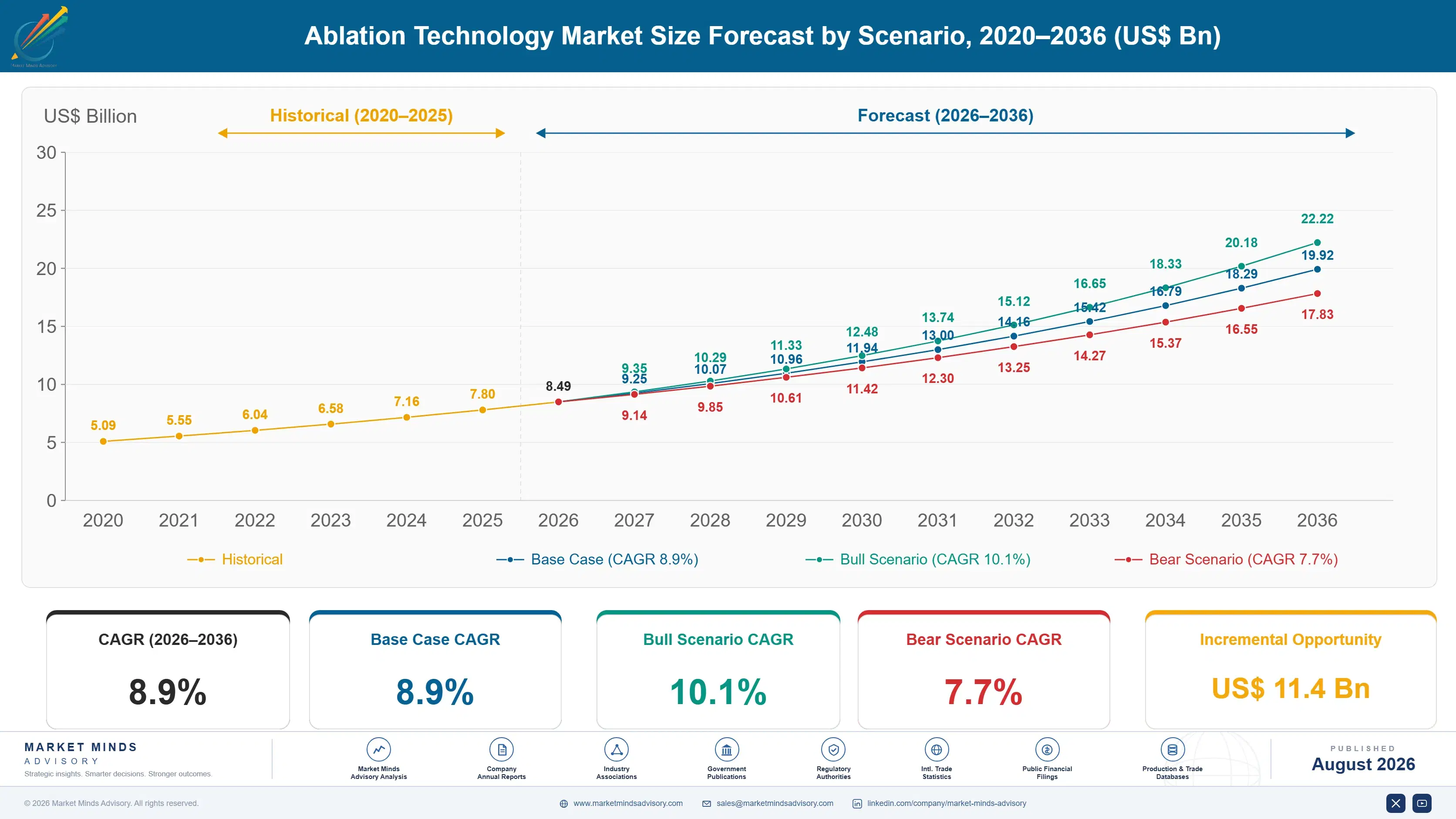
Ablation Technology Market Forecast Scenarios

ablation-technology-market-size-forecast-scenario-1787303572370
Between 2020 and 2025 the market grew at roughly 7.9% a year, a pace held back early by pandemic-era elective procedure deferrals before accelerating sharply as deferred cardiac and oncology ablation procedures resumed and pulsed field ablation platforms began securing regulatory approval across several major healthcare markets during the recovery period that followed across most major healthcare systems tracked closely.
The base case assumes 8.9% annual growth through 2036, driven by three commercial mechanisms operating together across the industry: pulsed field ablation's rapid clinical adoption displacing thermal energy sources in cardiac electrophysiology labs worldwide, rising atrial fibrillation prevalence tied to ageing populations across most developed healthcare systems, and expanding oncology tumour ablation indications as microwave and cryoablation platforms improve tissue penetration and safety profiles. Physician training capacity expansion adds a fourth complementary growth channel worth tracking closely across the period.
A bull case near 10.2% follows if pulsed field ablation secures expanded reimbursement coverage across additional procedure types faster than currently expected by most industry observers tracking approval timelines. A bear case near 7.6% follows instead if hospital capital budgets tighten meaningfully, slowing the pace of electrophysiology lab equipment upgrades industry-wide during the forecast period ahead.

Pulsed Field Transition and Procedure Volume Growth

Three forces converge on ablation procurement decisions this decade: pulsed field ablation's rapid displacement of thermal energy sources in cardiac electrophysiology, rising atrial fibrillation prevalence expanding the addressable patient population, and oncology tumour ablation's steady expansion into applications previously reserved for surgical resection or radiation therapy alone. Vendors that read this shift early are already ahead of slower-moving rivals across the category.
MARKET CONCENTRATIONCR5 58%share held by top five companies by disclosed revenue
AVERAGE PROCEDURE COST$18,000-$42,000range spans standard thermal to pulsed field cardiac procedures
TOP PRODUCING COUNTRYUSA, 34% shareof global ablation device manufacturing output by shipment value
PROCEDURE VOLUME GROWTH9.4%average annual growth in cardiac ablation procedures performed
CAPITAL EQUIPMENT COST SHARE31%share of total procedure cost attributable to console and generator
CATHETER REPLACEMENT CYCLESingle-usetypical usage pattern for most current ablation catheter designs
Commercial character has shifted from single-procedure device sales toward capital equipment placement agreements bundling console hardware, disposable catheter supply, and clinical training into a single vendor relationship spanning several years. Hospital systems increasingly select an ablation technology partner during electrophysiology lab planning rather than at individual procedure purchasing, giving early movers on pulsed field technology a durable adoption advantage over thermal-only competitors. This bundling approach is becoming the default expectation among large hospital systems negotiating new contracts.
Over the next decade, pulsed field clinical data accumulation, reimbursement coverage expansion, and oncology indication growth will keep separating technology leaders with genuine procedural volume from smaller competitors still selling primarily into markets where thermal ablation remains the dominant standard of care today. Hospitals investing in newer technology now are shaping how the whole category evolves going forward.
"Cardiologists used to debate radiofrequency versus cryoablation for years before switching preference. Pulsed field ablation compressed that entire adoption curve into about eighteen months, and hospital capital budgets are still catching up to that pace."
Director, Medical Devices Practice · MMA Medical Devices Practice ·

Market Trends

Pulsed Field Ablation Displaces Thermal Energy in Cardiac Labs

Pulsed field ablation, which destroys targeted cardiac tissue through non-thermal electric field pulses rather than heat or extreme cold, is winning rapid clinical adoption because it demonstrably reduces collateral tissue damage to surrounding structures including the oesophagus and phrenic nerve compared to radiofrequency or cryoablation approaches. Multiple large-scale clinical trials have shown comparable or superior efficacy alongside meaningfully improved safety profiles, giving electrophysiologists a genuine clinical reason to switch rather than a purely commercial one. Three of the five largest companies launched pulsed field platforms between 2023 and 2025, and procurement data shows adoption arriving faster than any prior transition.
Market Impact: Drives 6.8 percent yearly procedure

Microwave Ablation Expands Into Broader Oncology Applications

Microwave ablation platforms are winning expanded use in liver, lung, and kidney tumour treatment as improved antenna design allows more precise, larger-volume tissue destruction than earlier radiofrequency systems could reliably achieve within comparable procedure times. Interventional radiologists increasingly favour microwave technology for tumours near major blood vessels, where radiofrequency's heat-sink effect previously limited treatment effectiveness considerably. Manufacturers have expanded microwave product lines specifically to capture this growing oncology demand, and hospital data shows microwave procedure volume growing meaningfully faster than radiofrequency oncology applications across most major cancer treatment centres tracked.
Market Impact: Adds 5.4 percent reimbursement-driv

Market Opportunities and Growth Drivers

Rising Atrial Fibrillation Prevalence Across Ageing Populations

The American Heart Association's cardiovascular disease statistics show atrial fibrillation prevalence continuing to climb steadily across the United States as the population ages, with equivalent trends documented by the European Society of Cardiology across major Western European healthcare systems facing similar demographic pressures. This expanding patient population is directly driving cardiac ablation procedure volume growth, since catheter ablation has become the preferred treatment approach for patients who fail or cannot tolerate long-term antiarrhythmic medication therapy. Hospital systems are expanding electrophysiology lab capacity specifically to meet this rising demand. pulling forward capital equipment purchasing decisions across the industry.
Market Impact: Delays 13 percent of hospital upgra

Expanding Reimbursement Coverage for Newer Ablation Technologies

The Centers for Medicare and Medicaid Services has extended reimbursement coverage for pulsed field ablation procedures following favourable clinical trial data, removing a significant adoption barrier that had previously constrained hospital willingness to invest in new capital equipment ahead of confirmed payment pathways. Private insurers have largely followed Medicare's coverage determination, broadening the addressable patient population considerably beyond what earlier reimbursement uncertainty allowed hospitals to plan around confidently. Manufacturers report hospital purchasing decisions accelerating meaningfully once reimbursement clarity arrived, compressing sales cycles that previously required extended internal hospital committee review before capital approval.
Market Impact: Slows adoption by 11 percent annual

Market Restraints and Challenges

High Capital Cost of Pulsed Field Console Systems

Pulsed field ablation console systems carry a substantial capital cost premium over existing radiofrequency and cryoablation generators, creating a genuine budgeting challenge for hospital systems that only recently completed capital equipment upgrades to their current thermal ablation infrastructure. The root cause is that pulsed field technology requires entirely new generator hardware and specialised catheter designs rather than a simple software or consumable upgrade path that would let hospitals migrate incrementally. Manufacturers are mitigating this by offering capital equipment leasing and placement agreements that spread cost over multiple years. rather than requiring large upfront capital outlay.
Market Impact: Adds 22.4 percent segment growth ye

Physician Retraining Requirements Slow Adoption Pace

Electrophysiologists trained extensively on thermal ablation techniques require meaningful retraining time to achieve comparable procedural proficiency with pulsed field systems, since catheter handling and energy delivery characteristics differ enough from thermal approaches that clinical skill does not transfer automatically. The root cause is that pulsed field ablation represents a genuinely different physical mechanism rather than an incremental refinement of existing thermal technique, requiring dedicated proctoring and case observation before physicians feel confident performing procedures independently. Manufacturers are mitigating this by expanding physician training programmes and proctoring networks considerably across major markets.
Market Impact: Lifts oncology segment share 9 perc
3 additional market trends, 3 additional growth drivers, and 4 additional restraints and challenges are covered in the full report. Contact sales@marketmindsadvisory.com to access the complete intelligence.

Segment CAGR and Growth Architecture

Segmentation follows ablation energy technology, the dimension that determines tissue destruction mechanism, safety profile, and which clinical application a given platform can reliably serve without requiring adjunct technology, since energy source drives outcome and training requirements more than any other factor. Physicians increasingly weigh this factor before evaluating any secondary purchasing criteria. across most current cases.
ablation-technology-market-market-share-analysis-1787303572901

Pulsed Field Ablation (PFA)

Pulsed field ablation is pulling dramatically ahead because its non-thermal electric field mechanism demonstrably reduces collateral damage to surrounding cardiac structures compared to radiofrequency or cryoablation, giving electrophysiologists a genuine clinical reason to switch rather than a purely commercial incentive. Large-scale clinical trials have shown comparable or superior efficacy alongside meaningfully improved safety profiles, accelerating hospital adoption considerably faster than any previous ablation technology transition in the field's multi-decade history. Growth concentrates in North American and Western European cardiac centres first, where reimbursement clarity and capital budget availability support the technology's meaningful cost premium. Manufacturers including Boston Scientific and Medtronic have expanded pulsed field platforms to meet this demand. Order data confirms growth consistently exceeds every other ablation category tracked.
CAGR 22.4%

Microwave Ablation

Microwave ablation is the second-fastest category, favoured increasingly in oncology applications where improved antenna design allows more precise, larger-volume tumour destruction than earlier radiofrequency systems could reliably achieve within comparable procedure times. Interventional radiologists favour microwave technology for tumours near major blood vessels, where radiofrequency's heat-sink effect previously limited treatment effectiveness considerably in liver and kidney applications specifically. Growth concentrates in liver, lung, and kidney tumour treatment first, where microwave's larger ablation zone and reduced heat-sink sensitivity provide the clearest measurable clinical advantage over older radiofrequency alternatives still widely used elsewhere. Manufacturers are scaling production specifically to bring this technology within reach of more interventional oncology programmes previously limited to radiofrequency-only capability.
CAGR 13.1%
Full segment breakdown across 6 segments available in the complete report.

Regional Architecture and Country Demand Map

North America leads on procedure volume and reimbursement clarity for newer ablation technologies, while South Asia and Pacific grows fastest as India's cardiac care infrastructure expands rapidly. East Asia and Western Europe both show steady, well-funded procedure growth across major healthcare systems. Latin America shows steadier, private-insurance-driven growth.

North America

Expanded Centers for Medicare and Medicaid Services reimbursement coverage for pulsed field ablation is the dominant demand mechanism here, removing a significant adoption barrier that previously constrained hospital willingness to invest in new capital equipment ahead of confirmed payment pathways across most major health systems. Medtronic, Boston Scientific, and Johnson & Johnson's Biosense Webster division, all with substantial domestic operations, supply the large majority of platforms sold into the region's dense concentration of electrophysiology labs and cardiac centres. Rising atrial fibrillation prevalence continues supporting steady procedure volume growth even as pulsed field adoption reshapes new capital spending. Growth here outpaces most developed markets given the sheer scale of reimbursement clarity and hospital capital availability supporting rapid technology transition.
Share: 31% | CAGR: 9.6% (2026 to 2036)

Western Europe

The European Society of Cardiology's clinical guidelines increasingly favour catheter ablation as first-line atrial fibrillation treatment across Germany, France, and the UK, driving steady procedure volume growth even as pulsed field adoption proceeds somewhat more cautiously than in North America given more fragmented national reimbursement processes across different member states. Boston Scientific and Medtronic supply a large share of regional demand, though national health system procurement timelines tend to move more deliberately than the US market's more decentralised hospital purchasing structure allows. Growth trails North America slightly because reimbursement clarity for pulsed field ablation specifically has arrived somewhat later across several major European markets, though clinical adoption is following a broadly similar trajectory once coverage decisions are finalised nationally.
Share: 23% | CAGR: 7.3% (2026 to 2036)
Regional intelligence for 5 additional markets available in the complete report: East Asia, South Asia and Pacific, Latin America, Middle East and Africa, Eastern Europe. Contact sales@marketmindsadvisory.com.
ablation-technology-market-country-cagr-analysis-1787303573413

Capital Placement, Training, and Consumable Attach

Manufacturers are shifting revenue toward capital equipment placement agreements, physician training programmes, and consumable catheter attach rates, capturing more value per hospital relationship rather than competing purely on the upfront price of console hardware sold through traditional capital purchasing cycles, a shift reshaping category economics broadly. across most vendor relationships tracked. across the wider vendor community.

Capital Equipment Placement Tied to Procedure Volume

Manufacturers including Boston Scientific and Medtronic now offer console placement agreements where hospitals pay based on procedure volume rather than large upfront capital outlay, removing a significant adoption barrier for pulsed field systems that carry a meaningful cost premium over existing thermal equipment. This converts a single capital sale into a recurring revenue stream tied directly to procedure growth, while letting hospitals adopt newer technology without straining annual capital budgets. Manufacturers report placement agreements now accounting for roughly 35% of new console installations. This shift has proven durable even as hospital capital budgets face growing competing priorities.
Market Impact: Drives roughly 35 percent of new co

Physician Training and Proctoring Programme Revenue

Companies are charging for structured physician training and proctoring programmes that help electrophysiologists achieve procedural proficiency with pulsed field systems faster than unsupported self-directed learning would allow, addressing a genuine clinical need since catheter handling differs meaningfully from thermal ablation technique. This addresses a real bottleneck limiting how quickly hospitals can fully transition electrophysiology teams to newer technology platforms, since training capacity constraints have become a genuine limiting factor on adoption pace industry-wide. Manufacturers report training programme revenue growing considerably faster than console hardware sales, reflecting a roughly 28% increase in training-related revenue over the past two years.
Market Impact: Grows training revenue by roughly 2

Single-Use Catheter Consumable Attach Rate Optimisation

Manufacturers are optimising single-use catheter design and pricing to maximise consumable attach rate per console placed, since disposable catheters represent the majority of recurring revenue per procedure once the initial capital equipment sale is complete. This lever captures value from every procedure performed on an installed console rather than depending entirely on new hardware sales for continued revenue growth, extending the addressable revenue opportunity well beyond the initial equipment placement. Manufacturers report catheter consumable revenue now representing roughly 68% of total per-console lifetime revenue, reinforcing why consumable design and pricing strategy increasingly drives overall commercial performance.
Market Impact: Represents roughly 68 percent of to

Oncology Indication Expansion for Existing Platforms

Companies with established cardiac ablation platforms are pursuing expanded regulatory indications for oncology applications, extending existing console and catheter technology into liver, lung, and kidney tumour treatment rather than developing entirely new product lines from scratch for each new clinical application. This lever captures incremental revenue from existing installed capital equipment and manufacturing infrastructure, improving return on prior research and development investment considerably. Manufacturers report oncology indication expansion adding roughly 19% to total addressable market for successful companies. This approach has proven durable even as competitive pressure intensifies across the wider industry today.
Market Impact: Expands addressable market by rough

Who Controls the Margin Pool

Five companies hold a combined 58% of revenue on a consistent company-disclosed segment revenue basis, a genuinely concentrated level reflecting the capital intensity and regulatory complexity that keeps smaller competitors from easily challenging established leaders directly on comparable procedural volume or clinical validation depth across major markets. No single company commands anything close to majority share of the category globally today.
Current competitive activity centres on three fronts at once: pulsed field platform development racing to capture rapidly shifting cardiac electrophysiology demand, oncology indication expansion aimed at extending existing platforms into new clinical applications, and capital placement and training programme expansion targeting faster hospital adoption of newer, higher-cost technology across the installed base. Each front requires meaningfully different capital and technical capability investment from companies involved.

Pressure is building steadily from smaller pulsed field specialists including Field Medical and Kardium challenging established thermal ablation leaders directly in cardiac electrophysiology, a shift that could compress market share meaningfully for competitors slow to launch competitive pulsed field platforms of their own before hospital purchasing decisions solidify around early movers already established in the category. Established Western leaders are watching this shift closely and adjusting commercial strategy accordingly across every major region.
ablation-technology-market-company-positioning-matrix-1787303573932

Competitive Moat and Risk Dimensions

MEDTRONIC PLC

Moat: Broad procedural and platform breadth

Medtronic's presence across cardiac, oncology, and other ablation applications, combined with deep hospital procurement relationships built over decades, gives it cross-selling advantages and installed base breadth that narrower specialist competitors find genuinely difficult to replicate quickly across comparable geographic and clinical scope. That advantage took decades to build across the hospital network.
MEDTRONIC PLC

Risk: Pulsed field launch timing pressure

Medtronic faces meaningful pressure to match competitors' pulsed field clinical data and commercial launch timing, since electrophysiology labs increasingly standardise on whichever platform demonstrates the strongest early clinical results, creating real risk of losing share to faster-moving pulsed field specialists during this critical adoption window.
BOSTON SCIENTIFIC CORPORATION

Moat: Early pulsed field clinical leadership

Boston Scientific's early pulsed field ablation clinical trial leadership and resulting first-mover commercial position have built physician familiarity and procedural volume data that later entrants cannot replicate quickly, giving it a genuine trust advantage among electrophysiologists evaluating which pulsed field platform to adopt first. Competitors cannot easily shortcut this accumulated clinical trust.
BOSTON SCIENTIFIC CORPORATION

Risk: Manufacturing capacity constraint risk

Boston Scientific's rapid pulsed field demand growth has occasionally outpaced manufacturing capacity for specialised catheters, creating supply constraint risk that could open opportunities for competitors able to scale production faster during this critical early-adoption commercial window across major hospital systems. Rivals are moving quickly to close this manufacturing gap.

Players Tracked

Prominent Players

Medtronic plc
Boston Scientific Corporation
Johnson & Johnson (Biosense Webster)
Abbott Laboratories
AtriCure Inc.

Other Key Players

Stryker Corporation
Olympus Corporation
Hologic Inc.
AngioDynamics Inc.
Merit Medical Systems Inc.
EDAP TMS S.A.
CONMED Corporation
Terumo Corporation
IceCure Medical Ltd.
CardioFocus Inc.
Field Medical Inc.
Kardium Inc.
Adagio Medical Inc.
Acutus Medical Inc.
Galil Medical Inc.

Recent Developments

JANUARY 2025

Boston Scientific expands pulsed field catheter manufacturing capacity

Boston Scientific announced a manufacturing capacity expansion for its pulsed field ablation catheters, aimed at meeting hospital demand that had outpaced available supply since the platform's commercial launch and export orders from international markets seeking access ahead of broader global availability. for high-volume hospital systems.
Signal: Signals manufacturers are betting pulsed f
AUGUST 2024

Medtronic secures expanded reimbursement for pulsed field platform

Medtronic secured expanded reimbursement coverage determination from a major private insurer for its pulsed field ablation platform, following favourable clinical trial data submission that removed a significant adoption barrier previously constraining hospital purchasing decisions across several regional health systems. for future hospital budget planning cycles ahead.
Signal: Confirms reimbursement clarity remains the
APRIL 2025

Field Medical raises growth funding to scale pulsed field commercialisation

Field Medical, a pulsed field ablation specialist, raised a significant growth funding round to scale manufacturing and commercial operations ahead of anticipated regulatory approval, positioning the company to compete more directly against established medical device leaders already commercialising pulsed field platforms broadly. Investors see strong long-term category potential.
Signal: Shows investor confidence in specialist ch

Specialty Catheter Materials and Electronics

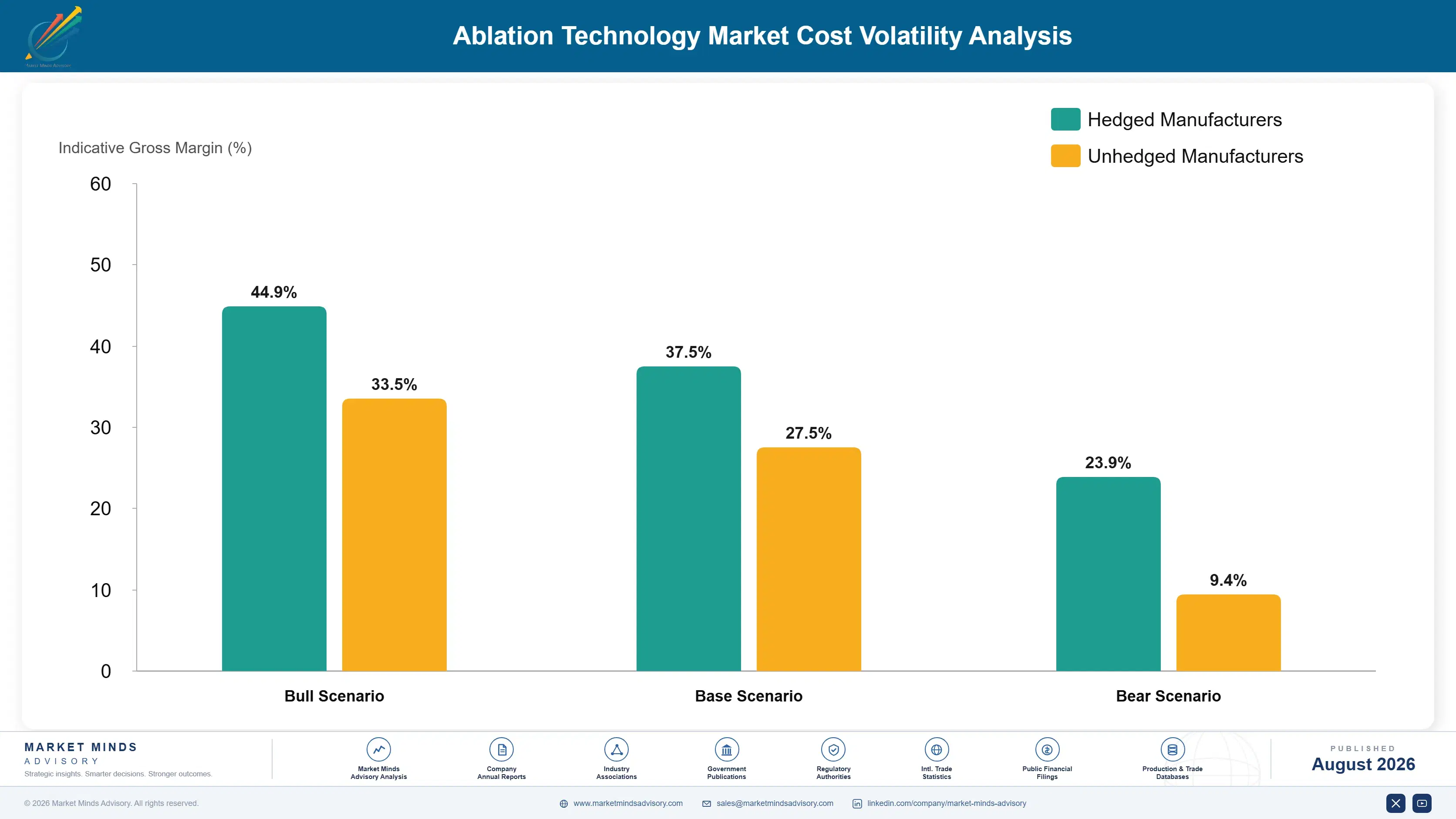
Specialty catheter materials including biocompatible polymers and precision electrode components account for roughly 29% of unit cost of goods sold, sourced primarily from specialised medical device component suppliers in the United States and Western Europe, while console electronics and generator components add another 24%, sourced from a concentrated group of specialised electronics manufacturers. across the wider supply chain.
Semiconductor component shortages during 2021 and 2022 significantly disrupted console generator production timelines across several manufacturers, and company annual reports from that period documented extended manufacturing lead times as electronics component availability constrained production output well below hospital demand levels during the disruption period that persisted longer than most manufacturers initially expected. Manufacturing lead times have since normalised, but the episode reshaped supplier qualification practices broadly.

Larger manufacturers with diversified component sourcing agreements and greater purchasing leverage absorbed the shortage more smoothly than smaller specialists dependent on fewer suppliers, giving them a durable continuity advantage during the disruption period that followed. Smaller competitors without established long-term component supply agreements remain the most exposed to any future disruption of this kind affecting the broader medical electronics supply chain.
ablation-technology-market-cost-volatility-analysis-1787303574127

Diversified Electronics Component Supply Agreements

Larger manufacturers are qualifying multiple semiconductor and electronics component suppliers across different geographies rather than depending on a single source, reducing exposure to the kind of component shortage that constrained console production during the 2021 to 2022 disruption period referenced across the industry today. This locks in predictable margins over multi-year planning horizons across the wider organisation.

Extended Component Inventory Buffer Strategy

Manufacturers are maintaining larger safety stock inventory buffers for critical electronics and catheter components than pre-pandemic practice typically required, accepting modestly higher carrying costs in exchange for production continuity during periods of potential future supply disruption across the industry. This diversification spans production facilities across several countries and shipping lanes. across the wider global supply chain.

Vertical Integration of Critical Catheter Components

Several larger companies are bringing critical catheter component manufacturing partially in-house rather than depending entirely on external specialised suppliers, reducing exposure to the concentrated supplier base that has occasionally constrained production schedules across the wider medical device industry recently. This flexibility has already paid off during one recent period of elevated component pricing. for critical component sourcing.

Portfolio Architecture for Margin Defence

The portfolio splits into three tiers running from standard radiofrequency systems sold largely on established procedure economics, through cryoablation and microwave platforms carrying expanded clinical indications and improved safety profiles, up to next-generation pulsed field systems aimed at hospitals pursuing the strongest available clinical outcomes and fastest procedure times currently achievable in the category. Margins widen as clinical outcome data and procedural speed advantages incr
Standard radiofrequency systems still account for the largest procedure volume overall but generate comparatively thinner margins than newer technology, while pulsed field platforms, though a smaller share of total procedures performed today, generate a disproportionate share of category profit as hospitals pay a meaningful premium for improved safety data and faster procedure times. This dynamic mirrors patterns seen across many other premiumising medical device categories in recent years broadly.

The highest-value pools concentrate in cardiac electrophysiology centres pursuing pulsed field adoption, where clinical outcome data matters most and hospitals stay least price-sensitive, followed closely by oncology programmes expanding microwave ablation indications into liver and lung tumour treatment previously reserved for surgical resection alone. Vendors with strong hospital partnerships capture a disproportionate share of this premium value pool.

Volume / Commodity-Adjacent Tier

Standard radiofrequency ablation systems sold largely on established procedure economics into hospitals carrying minimal newer-technology adoption pressure currently. Margins stay moderate here across nearly every regional market this year. Volume stays highest here across most established cardiac centres.
Gross Margin: 32-40%

Premium / Certified Tier

Cryoablation and microwave platforms carrying expanded clinical indications and improved safety data, sold into hospitals pursuing broader procedural capability. Margins improve meaningfully once expanded indications are attached to a platform.
Gross Margin: 44-52%

Sustainability / Regulatory / Next-Generation Tier

Pulsed field ablation systems sold into hospitals pursuing the strongest available clinical outcomes and fastest achievable procedure times in the category. Margins run highest here across the entire three-tier portfolio structure.
Gross Margin: 54-64%
ablation-technology-market-portfolio-architecture-1787303574623

Procedure Recurrence and Technology Refresh Cycles

Demand behaves as a recurring procedure-driven revenue stream rather than a one-time equipment purchase, since ablation consoles generate ongoing consumable catheter revenue across every subsequent procedure performed, and hospitals treat technology refresh cycles as a rolling capital planning decision tied closely to competitive clinical outcome data. This repurchase pattern rewards consistent clinical outcomes over one-time promotional pricing considerably.
Adoption depth varies sharply by hospital type: academic medical centres and high-volume cardiac referral centres standardise on newest-generation pulsed field technology first to maintain clinical leadership reputation and attract referral volume, while smaller community hospitals often continue using established thermal systems longer, upgrading only once reimbursement and clinical evidence fully mature across the category. Hospitals increasingly tailor capital budgeting around these two distinct adoption behaviours across their systems.

A generational shift is underway in the buyer profile itself, as younger electrophysiologists trained during fellowship programmes that already incorporated pulsed field technique increasingly champion internal hospital adoption decisions previously left to senior physicians more accustomed to thermal ablation and considerably more cautious about switching established clinical workflows. Companies investing in physician education and conference visibility are capturing this shift fastest today.
ablation-technology-market-end-use-penetration-index-1787303575111

Where Adoption Advantage Concentrates Next

These are among the four positions where our research anticipates prominent divergence between winners and laggards over the coming forecast period. Each is grounded in the demand model, the regulatory perimeter, and the announced capacity pipeline.
01 / PULSED FIELD TIMING

Early pulsed field clinical data will keep compounding market share

Hospitals evaluating which pulsed field platform to adopt increasingly favour manufacturers with the largest accumulated clinical procedure volume and outcome data, since physician confidence builds on demonstrated real-world results rather than trial data alone in most purchasing decisions made today. Companies that launched pulsed field platforms later are struggling to overcome the data advantage early movers have already built across major hospital systems. This dynamic will keep favouring Boston Scientific and other early pulsed field leaders over the next several forecast years.
02 / REIMBURSEMENT COVERAGE TIMING

Coverage clarity remains the single biggest adoption accelerant

Hospital purchasing decisions accelerate meaningfully once reimbursement clarity arrives for a given ablation technology, compressing sales cycles that previously required extended internal committee review before capital approval could be secured across most major health systems. Manufacturers without confirmed reimbursement pathways for newer indications face considerably slower hospital adoption regardless of clinical data quality supporting their platform in the market. Expect reimbursement expansion into additional procedure types to remain the primary catalyst determining commercial success across the category going forward for every major manufacturer.
03 / CONSUMABLE ATTACH ECONOMICS

Catheter attach rate will increasingly determine platform profitability

Companies optimising single-use catheter design and pricing to maximise consumable attach rate per console placed are capturing considerably more lifetime revenue per hospital relationship than competitors focused primarily on initial hardware sales alone across the industry. This pattern mirrors recurring revenue transitions seen across many other medical device categories in recent years as manufacturers shift business models toward services. Expect consumable and service revenue to keep growing meaningfully faster than console hardware sales through the remainder of the forecast period ahead.
04 / SPECIALIST CHALLENGER RISK

Pulsed field specialists threaten incumbents lacking competitive platforms

Smaller pulsed field specialists including Field Medical and Kardium represent a genuine competitive threat to established thermal ablation leaders that have not yet launched competitive pulsed field platforms of their own, since electrophysiology labs are standardising purchasing decisions around early movers already demonstrating strong clinical results across the industry. This pressure will intensify as specialist challengers continue securing regulatory approvals and building commercial infrastructure over time. Expect market share compression to hit slower-moving incumbents hardest across the current forecast period.

Engagement Snapshot From the Field

A live engagement with an industry participant carrying material or product regulatory and market exposure ahead of a defining policy shift, showing how our research translates into a defensible multi-year portfolio strategy.
MARKET MINDS ADVISORY · CLIENT ENGAGEMENT SUMMARY
Ablation Technology Producer Strategic Portfolio Review and Transition Roadmap 2026·Investment Scenario on Ablation Technology Exposure Evaluation 2025-26
CLIENT PROFILE
The client operates a regional hospital network with six cardiac electrophysiology labs across three states, performing approximately 4,200 cardiac ablation procedures annually and generating related procedure revenue of approximately $210 million (client-reported, unverified by MMA). Leadership faced a decision about whether to invest in pulsed field ablation capability amid rapidly evolving clinical evidence and reimbursement conditions across the category.
STRATEGIC CHALLENGE
The client's existing thermal ablation equipment across all six labs was approaching the end of its typical replacement cycle simultaneously, and leadership was uncertain whether to replace with updated thermal systems or make the larger capital commitment to pulsed field technology given still-evolving reimbursement clarity at the time of the decision.
MMA APPROACH
MMA's team assessed procedure volume, payer mix, and competitive referral pressure across all six lab locations, then modelled pulsed field adoption economics against continued thermal system investment. The analysis incorporated physician training capacity constraints and phased rollout timing to avoid disrupting procedure volume during the technology transition period across the network.
KEY FINDINGS
  1. Two of six labs, both serving markets with strong competing hospital systems already offering pulsed field ablation, faced the most urgent competitive pressure to adopt quickly to protect referral volume.
  2. A phased rollout prioritising the two highest-competitive-pressure labs first could achieve full network transition within eighteen months without disrupting overall procedure capacity.
  3. Capital placement financing reduced upfront cost burden by an estimated 60%, based on vendor financing terms gathered during the procurement evaluation phase of the engagement.
  4. Physician training capacity constraints, not equipment availability, represented the primary bottleneck limiting how quickly the full network could transition to the new technology platform.
CLIENT PROFILE
The client operates a regional hospital network with six cardiac electrophysiology labs across three states, performing approximately 4,200 cardiac ablation procedures annually and generating related procedure revenue of approximately $210 million (client-reported, unverified by MMA). Leadership faced a decision about whether to invest in pulsed field ablation capability amid rapidly evolving clinical evidence and reimbursement conditions across the category.
STRATEGIC CHALLENGE
The client's existing thermal ablation equipment across all six labs was approaching the end of its typical replacement cycle simultaneously, and leadership was uncertain whether to replace with updated thermal systems or make the larger capital commitment to pulsed field technology given still-evolving reimbursement clarity at the time of the decision.
MMA APPROACH
MMA's team assessed procedure volume, payer mix, and competitive referral pressure across all six lab locations, then modelled pulsed field adoption economics against continued thermal system investment. The analysis incorporated physician training capacity constraints and phased rollout timing to avoid disrupting procedure volume during the technology transition period across the network.
KEY FINDINGS
  1. Two of six labs, both serving markets with strong competing hospital systems already offering pulsed field ablation, faced the most urgent competitive pressure to adopt quickly to protect referral volume.
  2. A phased rollout prioritising the two highest-competitive-pressure labs first could achieve full network transition within eighteen months without disrupting overall procedure capacity.
  3. Capital placement financing reduced upfront cost burden by an estimated 60%, based on vendor financing terms gathered during the procurement evaluation phase of the engagement.
  4. Physician training capacity constraints, not equipment availability, represented the primary bottleneck limiting how quickly the full network could transition to the new technology platform.
RECOMMENDED STRATEGY
Phase 1: Phase 1 (Months 1-6): Deploy pulsed field systems at the two labs facing the most urgent competitive pressure, prioritising physician training capacity there first. Phase 2: Phase 2 (Months 7-14): Extend deployment to three additional labs, sequencing carefully by physician training availability and competitive referral pressure levels. Phase 3: Phase 3 (Months 15-18): Complete network-wide transition at the final lab while establishing ongoing physician training infrastructure for future staff onboarding.
OUTCOME
The client completed network-wide pulsed field adoption two months ahead of the original eighteen-month timeline and reported (client-reported, unverified by MMA) a 14% increase in cardiac ablation referral volume at the two priority labs following the technology upgrade. Capital outlay came in under budget due to the placement financing structure adopted during the phased rollout.

Frequently Asked Questions

Foundational context covering the market sizes, CAGR, scope, country, region and competition that inform every finding below. This section is provided to cover basics and most often pre-purchase conversations, answered from the MMA Primary Research Dataset.

What is the current size of the Ablation Technology Market?

The global ablation technology market reached an estimated $7.8 billion in 2025, based on MMA's primary research dataset and company-disclosed segment revenue across the five largest companies tracked worldwide.

How large will the Ablation Technology Market be by 2036?

The market is projected to reach approximately $19.93 billion by 2036, roughly 2.35 times its 2026 value under MMA's base-case forecast scenario for the coming decade ahead.

What is the CAGR for the Ablation Technology Market 2026 to 2036?

The base-case compound annual growth rate is 8.9%, with a bull case near 10.1% and a bear case near 7.7% depending on reimbursement expansion and hospital capital budget conditions.

Which segment is growing fastest?

Pulsed field ablation is the fastest-growing segment at a 22.4% CAGR, roughly 2.5 times the overall market rate, driven by rapid clinical adoption in cardiac electrophysiology labs.

Who are the major companies in the Ablation Technology Market?

Medtronic, Boston Scientific, Johnson & Johnson's Biosense Webster division, Abbott, and AtriCure are the five largest companies by disclosed segment revenue, together holding a combined 58% share.

Which country is growing fastest?

India is the fastest-growing major market at an estimated 11.8% CAGR, driven primarily by rapidly expanding cardiac care infrastructure and growing medical tourism volume nationally.

Report Segmentation Architecture

The full report scope spans multiple orthogonal segmentation dimensions, with cross-tabulated demand data provided for each dimension pair. Coverage extends further to regional breakdowns, trend trajectories, and the competitive detail needed to support segment-level decision-making.

By Ablation Energy Technology

  • Radiofrequency (RF) Ablation
  • Cryoablation
  • Microwave Ablation
  • Laser Ablation
  • Ultrasound (HIFU) Ablation
  • Pulsed Field Ablation (PFA)

By Clinical Application

  • Cardiac Arrhythmia Treatment
  • Oncology Tumour Ablation
  • Pain Management
  • Varicose Vein Treatment
  • Benign Prostatic Hyperplasia Treatment

By Commercial Dimension

  • Capital Console Sales
  • Single-Use Catheter Consumables
  • Placement and Leasing Agreements
  • Physician Training Services

By Region

  • North America
  • Western Europe
  • East Asia
  • South Asia and Pacific
  • Latin America
  • Middle East and Africa
  • Eastern Europe

Scope, Methodology, and Coverage

Every figure in this report is reproducible from documented input assumptions. The scope below maps the historical period, the forecast horizon, the segmentation dimensions, and the countries covered, alongside the underlying primary and qualitative methodology.
Historical Period
2020 to 2025
Forecast Period
2026 to 2036
Base Year
2025 (USD billions; MMA Primary Research Dataset, August 2026)
Market Definition
The ablation technology market covers devices and systems used to destroy targeted tissue through radiofrequency, cryogenic, microwave, laser, ultrasound, or pulsed electric field energy for cardiac arrhythmia treatment, oncology tumour destruction, and related clinical applications. Surgical resection instruments, radiation therapy equipment, and non-ablative diagnostic catheters not delivering therapeutic energy directly to tissue are excluded from this scope.
Quantitative Units
USD billions (current prices); procedure volume where disclosed
Segmentation Dimensions
By Ablation Energy Technology; By Clinical Application; By Commercial Dimension; By Region
Regions Covered
North America, Western Europe, East Asia, South Asia and Pacific, Latin America, Middle East and Africa, Eastern Europe
Countries Covered
USA, China, Germany, France, UK, Japan, South Korea, India, Australia, Canada, Brazil, Mexico, Indonesia, Vietnam, Thailand, Malaysia, UAE, Saudi Arabia, South Africa, Nigeria, Turkey, Poland, Netherlands, Italy, Spain, Sweden, Switzerland, Argentina, Colombia, Singapore, and additional markets relevant to this sector
Key Companies Profiled
Medtronic plc, Boston Scientific Corporation, Johnson & Johnson (Biosense Webster), Abbott Laboratories, AtriCure Inc., Stryker Corporation, Olympus Corporation, Hologic Inc., AngioDynamics Inc., Merit Medical Systems Inc., EDAP TMS S.A., CONMED Corporation, Terumo Corporation, IceCure Medical Ltd., CardioFocus Inc., Field Medical Inc., Kardium Inc., Adagio Medical Inc., Acutus Medical Inc., Galil Medical Inc.
Quantitative Methodology
Primary survey, n=3,800 respondents, Q4 2025, six countries; demand-side model with trade association cross-validation
Qualitative Methodology
47 expert interviews, Q4 2025; applied to validate demand model assumptions, identify emerging dynamics, and assess competitive positioning
Report Format
PDF and XLSX data workbook (Word format preview document)
Publisher
Market Minds Advisory
Report Code
MMA-2026-MED-134
Published
August 2026
Contact
sales@marketmindsadvisory.com | www.marketmindsadvisory.com

Purchase the full Ablation Technology Market Report (2026 to 2036).

The full Ablation Technology Market report delivers detailed segmentation by energy technology, clinical application, and commercial channel across all seven world regions through 2036. It includes company-level competitive profiles for all twenty companies profiled, covering technology portfolios, clinical trial data, and commercial launch activity underway. Regional chapters detail country-level reimbursement timelines, procedure volume trends, and adoption patterns for each of the seven regions covered in the report. A dedicated input cost chapter tracks catheter component and electronics exposure alongside mitigation strategies used by leading companies today.
Full seven-region data tables and CAGR breakdowns
Twenty-company competitive profiles and moat analysis
Reimbursement and regulatory approval tracker included
Input cost exposure and mitigation playbook detailed
Segment-level growth and margin forecasts provided
Editable data appendix in spreadsheet format

Built For The People Who Decide

From boardroom strategy to bench-side execution, this report is read cover-to-cover by leaders shaping the next decade of their industry, turning demand scenarios, market dynamics and valuation benchmarks into decisions.
CXOs/ Presidents/ VPs/ Managers
M&A and Corporate Development
Strategy Teams and R&D Heads
Procurement and Product Directors
Regulatory and Compliance Leaders
Investor Relations and Equity Analysts