Benign Prostatic Hyperplasia (BPH) and Prostate Treatment Market

Benign Prostatic Hyperplasia (BPH) and Prostate Treatment Market

Benign Prostatic Hyperplasia (BPH) and Prostate Treatment Market Outlook from 2026 to 2033

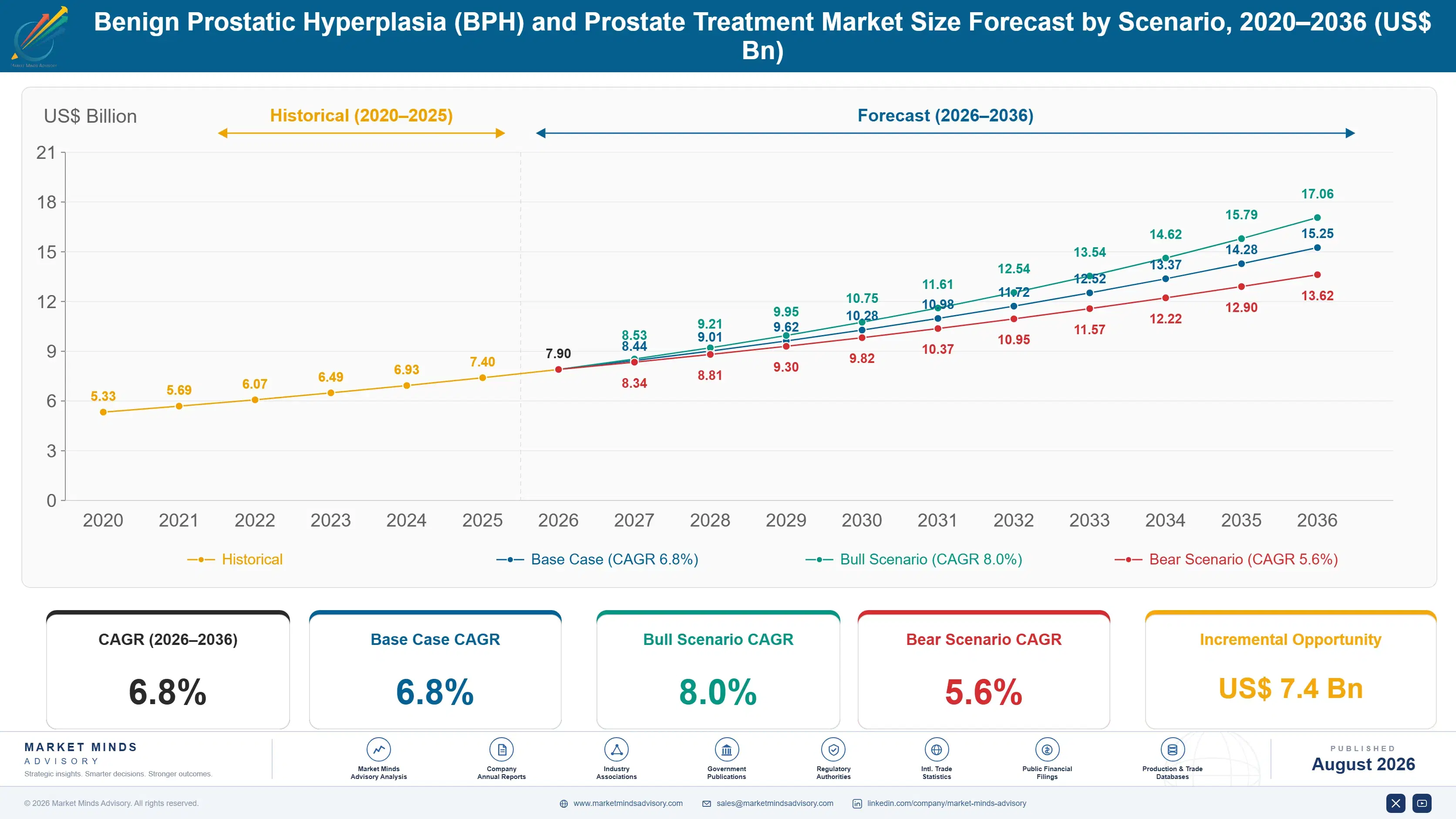
The global benign prostatic hyperplasia (BPH) and prostate treatment market is poised for robust expansion between 2026 and 2033, driven by the rising prevalence of prostate disorders among the aging male population. The market was valued at USD 13.8 billion in 2026 and is projected to reach USD 21.7 billion by 2033, reflecting a compound annual growth rate (CAGR) of 6.7% during the forecast period. The increasing awareness of prostate health, coupled with advancements in minimally invasive treatment options, is expected to fuel market growth. The adoption of novel therapeutics and surgical techniques is further enhancing patient outcomes and broadening the scope of treatment modalities.

The market is characterized by a dynamic landscape, with pharmaceutical companies, medical device manufacturers, and healthcare providers collaborating to address the unmet needs in BPH and prostate care. The integration of digital health technologies, such as telemedicine and remote monitoring, is also transforming patient management and follow-up care. As healthcare systems worldwide prioritize early diagnosis and effective management of prostate conditions, the BPH and prostate treatment market is set to witness significant innovation and investment throughout the forecast period.

Benign Prostatic Hyperplasia (BPH) and Prostate Treatment Market

Benign Prostatic Hyperplasia (BPH) and Prostate Treatment Market Scenario & Strategic Insights

The benign prostatic hyperplasia (BPH) and prostate treatment market is undergoing a paradigm shift, with a growing emphasis on patient-centric care and minimally invasive interventions. The increasing incidence of BPH, particularly among men aged 50 and above, is a key driver for market expansion. Healthcare providers are increasingly adopting evidence-based guidelines and leveraging advanced diagnostic tools to ensure timely and accurate diagnosis. This trend is complemented by the rising preference for outpatient procedures and day-care surgeries, which reduce hospital stays and improve patient satisfaction.

Strategically, market participants are focusing on expanding their product portfolios through research and development, mergers and acquisitions, and strategic collaborations. The introduction of next-generation pharmaceuticals, such as combination therapies and novel alpha-blockers, is enhancing the efficacy and safety profiles of BPH treatments. Additionally, the growing adoption of laser-based therapies and other minimally invasive surgical techniques is reshaping the competitive landscape. Regulatory agencies are also playing a pivotal role by streamlining approval processes for innovative therapies, thereby accelerating market access and adoption.

Attribute2026 (USD Billion)2033 (USD Billion)CAGR (2026 – 2033)
Market Size13.821.76.7%

Benign Prostatic Hyperplasia (BPH) and Prostate Treatment Market Trends

  • Rising Adoption of Minimally Invasive Procedures

The market is witnessing a significant shift towards minimally invasive surgical techniques, such as laser therapy, transurethral resection of the prostate (TURP), and prostatic urethral lift (PUL). These procedures offer reduced recovery times, lower complication rates, and improved patient comfort compared to traditional open surgeries. The increasing availability of advanced surgical devices and the growing expertise of urologists in performing these procedures are driving their adoption. As a result, minimally invasive treatments are becoming the preferred choice for both patients and healthcare providers, contributing to overall market growth.

  • Integration of Digital Health and Remote Monitoring

Digital health technologies are increasingly being integrated into BPH and prostate treatment protocols. Telemedicine platforms enable remote consultations, follow-up care, and patient education, enhancing accessibility and convenience for patients. Remote monitoring devices, such as wearable sensors and mobile health applications, facilitate real-time tracking of symptoms and treatment adherence. These innovations are improving patient engagement, optimizing treatment outcomes, and reducing the burden on healthcare facilities. The trend towards digitalization is expected to accelerate, particularly in developed markets with advanced healthcare infrastructure.

  • Development of Combination Therapies and Novel Drug Formulations

Pharmaceutical companies are investing in the development of combination therapies that target multiple pathways involved in BPH pathogenesis. The use of dual-action drugs, such as alpha-blockers combined with 5-alpha-reductase inhibitors, is gaining traction due to their enhanced efficacy and safety profiles. Additionally, the introduction of novel drug delivery systems, including extended-release formulations and implantable devices, is improving patient compliance and therapeutic outcomes. These advancements are expanding the range of pharmacological options available for BPH management and are expected to drive market growth over the forecast period.

Segment & Category Analysis for Benign Prostatic Hyperplasia (BPH) and Prostate Treatment Market

By Treatment Type

  • Pharmacological Therapy
    • Minimally Invasive Surgery
    • Open Surgery
    • Laser Therapy
    • Others

The treatment type segment is dominated by pharmacological therapy, which remains the first-line approach for most patients with mild to moderate BPH symptoms. Medications such as alpha-blockers and 5-alpha-reductase inhibitors are widely prescribed due to their proven efficacy and safety. However, the demand for minimally invasive surgical options, including laser therapy and prostatic urethral lift, is rising rapidly. These procedures offer durable symptom relief with fewer complications and shorter recovery periods. Open surgery is reserved for severe cases or when other treatments fail. The availability of diverse treatment modalities enables personalized care and supports market expansion.

Benign Prostatic Hyperplasia (BPH) and Prostate Treatment Market Treatment Type

By Drug Class

  • Alpha-Blockers
    • 5-Alpha-Reductase Inhibitors
    • Phosphodiesterase-5 Inhibitors
    • Combination Drugs
    • Others

Within the drug class segment, alpha-blockers and 5-alpha-reductase inhibitors account for the largest market share, owing to their established role in BPH management. Combination drugs, which offer synergistic benefits, are gaining popularity among clinicians seeking to optimize therapeutic outcomes. Phosphodiesterase-5 inhibitors are also being explored for their potential benefits in treating lower urinary tract symptoms associated with BPH. The continuous development of new drug classes and formulations is expected to enhance the pharmacological landscape and provide additional options for patients.

By End User

  • Hospitals
    • Ambulatory Surgical Centers
    • Specialty Clinics
    • Home Healthcare

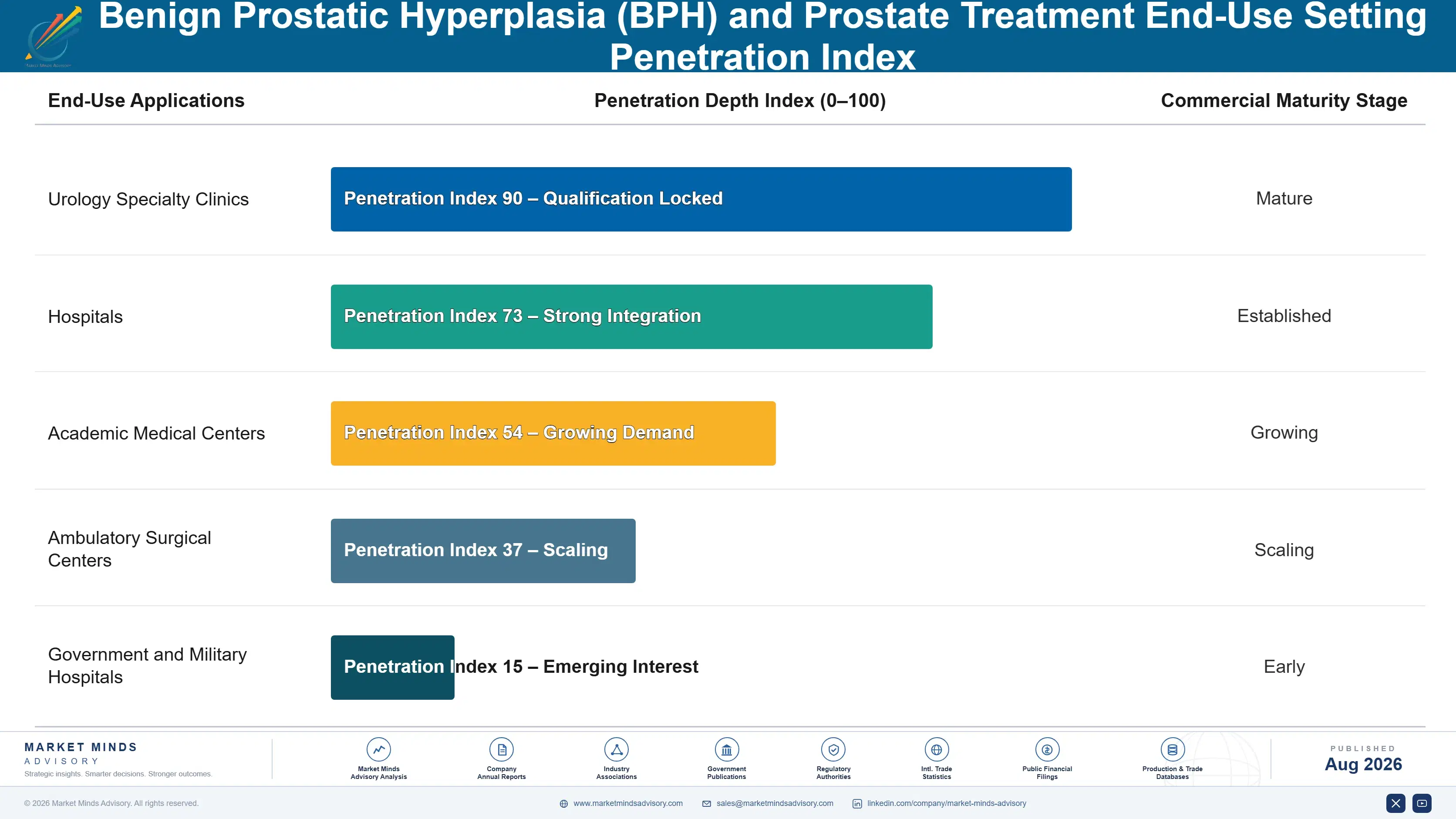
Hospitals remain the primary end users for BPH and prostate treatments, particularly for complex surgical interventions and cases requiring multidisciplinary care. Ambulatory surgical centers are gaining prominence due to the increasing preference for outpatient procedures and cost-effective care delivery. Specialty clinics, including urology centers, play a crucial role in providing specialized diagnostic and therapeutic services. The emergence of home healthcare solutions, supported by telemedicine and remote monitoring, is enabling long-term management of BPH and postoperative care, thereby expanding the reach of treatment services.

By Patient Age Group

  • 40-59 Years
    • 60-79 Years
    • 80 Years and Above

The prevalence of BPH increases with age, with the highest incidence observed among men aged 60-79 years. This age group constitutes the largest patient population seeking treatment for BPH and related prostate conditions. The 40-59 years segment is also significant, as early diagnosis and intervention are becoming more common due to increased awareness and routine screening. Patients aged 80 years and above often present with more advanced disease and comorbidities, necessitating tailored treatment approaches. Understanding age-specific needs is essential for optimizing patient outcomes and resource allocation.

Benign Prostatic Hyperplasia (BPH) and Prostate Treatment Market Patient Age Group

By Geography

  • North America
    • Europe
    • Asia-Pacific
    • South America
    • Middle East & Africa

Geographically, North America and Europe are the leading markets for BPH and prostate treatments, driven by high disease prevalence, advanced healthcare infrastructure, and strong reimbursement frameworks. Asia-Pacific is emerging as a high-growth region, supported by rising healthcare investments, increasing awareness, and expanding access to diagnostic and therapeutic services. South America and the Middle East & Africa are witnessing gradual market development, with efforts focused on improving healthcare delivery and addressing unmet medical needs. Regional dynamics play a critical role in shaping market strategies and growth opportunities.

Growth Drivers and Opportunities in Benign Prostatic Hyperplasia (BPH) and Prostate Treatment Market

  • Aging Population and Rising Disease Prevalence

The global increase in the aging male population is a primary driver for the BPH and prostate treatment market. As life expectancy rises, the incidence of BPH and related prostate disorders is expected to grow significantly. This demographic trend is particularly pronounced in developed regions, but emerging economies are also witnessing a surge in age-related prostate conditions. The expanding patient pool is creating sustained demand for effective diagnostic and therapeutic solutions, prompting healthcare providers and industry stakeholders to invest in innovative treatment modalities and patient education initiatives.

  • Advancements in Diagnostic and Therapeutic Technologies

Technological advancements are transforming the landscape of BPH and prostate treatment. The development of high-resolution imaging modalities, such as multiparametric MRI and advanced ultrasound techniques, is enabling early and accurate diagnosis of prostate conditions. On the therapeutic front, innovations in minimally invasive surgery, laser therapy, and targeted drug delivery systems are improving patient outcomes and reducing the risk of complications. These advancements are enhancing the quality of care, expanding treatment options, and driving market growth by addressing the evolving needs of patients and clinicians.

Emerging Opportunities for Benign Prostatic Hyperplasia (BPH) and Prostate Treatment Market

  • Expansion in Emerging Markets

Emerging economies in Asia-Pacific, South America, and the Middle East & Africa present significant growth opportunities for the BPH and prostate treatment market. Increasing healthcare investments, rising awareness of prostate health, and improving access to medical services are driving market penetration in these regions. Local and international players are focusing on expanding their presence through strategic partnerships, distribution agreements, and capacity-building initiatives. The untapped potential in these markets offers lucrative prospects for sustained growth and market diversification.

  • Personalized Medicine and Genomic Research

The growing emphasis on personalized medicine and genomic research is opening new avenues for BPH and prostate treatment. Advances in molecular diagnostics and biomarker discovery are enabling the identification of patient-specific risk factors and disease subtypes. This knowledge is facilitating the development of targeted therapies and individualized treatment plans, which can improve efficacy and minimize adverse effects. The integration of precision medicine into clinical practice is expected to revolutionize the management of BPH and prostate disorders, creating opportunities for innovation and differentiation.

Growth Restrain factors and Challenges in Benign Prostatic Hyperplasia (BPH) and Prostate Treatment Market

  • High Cost of Advanced Treatments and Limited Reimbursement

The adoption of advanced diagnostic and therapeutic technologies often entails significant costs, which can be a barrier for patients and healthcare systems, particularly in low- and middle-income countries. The high price of minimally invasive surgical devices, novel pharmaceuticals, and state-of-the-art imaging equipment can limit access to optimal care. Additionally, reimbursement policies for BPH and prostate treatments vary widely across regions, with some healthcare systems offering limited coverage for newer interventions. These financial constraints can hinder market growth and exacerbate disparities in healthcare access.

Furthermore, the cost burden is not limited to direct medical expenses; indirect costs, such as lost productivity and long-term care, also contribute to the overall economic impact of BPH and prostate disorders. Addressing these challenges requires collaborative efforts among policymakers, payers, and industry stakeholders to develop sustainable pricing and reimbursement models that ensure equitable access to effective treatments.

  • Regulatory and Clinical Challenges

The regulatory landscape for BPH and prostate treatment products is complex and evolving, with stringent requirements for safety, efficacy, and quality. Obtaining regulatory approval for new drugs and medical devices can be a lengthy and resource-intensive process, particularly for innovative therapies that lack established clinical precedents. Clinical trial design and patient recruitment also pose challenges, as BPH and prostate disorders often affect older individuals with multiple comorbidities.

In addition, post-marketing surveillance and pharmacovigilance are critical for monitoring the long-term safety and effectiveness of new treatments. Regulatory uncertainties and delays can impede product launches and limit the availability of novel therapies. Companies must navigate these challenges by investing in robust clinical research, engaging with regulatory authorities, and adopting best practices in product development and lifecycle management.

Benign Prostatic Hyperplasia (BPH) and Prostate Treatment Market Regional Analysis

RegionMarket Share (2025)Key Market Highlight
Asia-Pacific24%Rapid growth due to increasing healthcare investments and rising awareness
North America36%Largest market, driven by high prevalence and advanced healthcare infrastructure
Europe27%Strong adoption of minimally invasive therapies and favorable reimbursement policies
South America7%Gradual growth with improving access to diagnostic and treatment services
Middle East & Africa6%Emerging market with focus on expanding healthcare infrastructure

Asia-Pacific

Asia-Pacific is emerging as a high-growth region in the BPH and prostate treatment market, supported by rising healthcare investments, increasing awareness of prostate health, and expanding access to diagnostic and therapeutic services. Countries such as China, India, and Japan are witnessing a surge in the aging male population, driving demand for effective BPH management. Local and international players are focusing on capacity-building initiatives and strategic partnerships to tap into the region’s untapped potential.

North America

North America remains the largest market for BPH and prostate treatments, accounting for a significant share of global revenue. The region benefits from a high prevalence of prostate disorders, advanced healthcare infrastructure, and strong reimbursement frameworks. The presence of leading pharmaceutical and medical device companies, coupled with ongoing research and development activities, ensures a steady pipeline of innovative products and therapies.

Europe

Europe is characterized by strong adoption of minimally invasive therapies and favorable reimbursement policies for BPH and prostate treatments. The region’s well-established healthcare systems and emphasis on early diagnosis and preventive care contribute to high treatment rates. Collaborative research initiatives and cross-border partnerships are further enhancing the region’s market position.

South America

South America is experiencing gradual market development, with efforts focused on improving healthcare delivery and addressing unmet medical needs. Brazil and Argentina are the leading markets in the region, driven by increasing awareness and expanding access to diagnostic and treatment services. Market growth is supported by government initiatives and partnerships with international organizations.

Middle East & Africa

The Middle East & Africa region represents an emerging market for BPH and prostate treatments, with a focus on expanding healthcare infrastructure and increasing access to medical services. Countries such as Saudi Arabia, the UAE, and South Africa are investing in healthcare modernization and capacity-building initiatives. Market growth is expected to accelerate as awareness of prostate health increases and access to advanced treatments improves.

Benign Prostatic Hyperplasia (BPH) and Prostate Treatment Market Regional

Competition Landscape in Benign Prostatic Hyperplasia (BPH) and Prostate Treatment Market

The benign prostatic hyperplasia (BPH) and prostate treatment market is highly competitive, with a diverse mix of global and regional players vying for market share. The competitive landscape is shaped by ongoing research and development activities, product launches, strategic collaborations, and mergers and acquisitions. Companies are focusing on expanding their product portfolios, enhancing their technological capabilities, and strengthening their distribution networks to gain a competitive edge. The market is also witnessing increased investment in digital health solutions and personalized medicine, as players seek to differentiate themselves and address evolving patient needs.

Major Players:

  • GlaxoSmithKline plc
  • Eli Lilly and Company
  • Pfizer Inc.
  • Abbott Laboratories
  • Boston Scientific Corporation
  • Teleflex Incorporated
  • Olympus Corporation
  • Medtronic plc
  • Intuitive Surgical, Inc.
  • Cook Medical
  • Astellas Pharma Inc.
  • Sanofi S.A.
  • Merck & Co., Inc.
  • Urologix, LLC
  • NxThera, Inc.
  • Asahi Kasei Corporation
  • Coloplast Group
  • Endo International plc
  • Lumenis Ltd.
  • Richard Wolf GmbH

Recent Developments in Benign Prostatic Hyperplasia (BPH) and Prostate Treatment Market

  • In January 2024, Boston Scientific Corporation launched a new generation of minimally invasive laser therapy devices for BPH treatment, enhancing procedural efficiency and patient outcomes.
  • In March 2024, GlaxoSmithKline plc received regulatory approval for a novel combination drug targeting both BPH and lower urinary tract symptoms, expanding its pharmaceutical portfolio.
  • In September 2023, Medtronic plc announced a strategic partnership with a leading telemedicine provider to integrate remote monitoring solutions into BPH patient management protocols.
  • In November 2023, Olympus Corporation introduced an advanced imaging system for early detection and diagnosis of prostate disorders, supporting precision medicine initiatives.
  • In July 2023, Teleflex Incorporated acquired a specialty urology device manufacturer to strengthen its position in the minimally invasive BPH treatment segment.
  • In May 2023, Pfizer Inc. initiated a multicenter clinical trial to evaluate the efficacy of a new oral therapy for BPH, targeting improved symptom relief and patient compliance.

FAQ for Benign Prostatic Hyperplasia (BPH) and Prostate Treatment Market

  1. What is the projected market size of the BPH and prostate treatment market by 2033?

The global benign prostatic hyperplasia (BPH) and prostate treatment market is expected to reach USD 21.7 billion by 2033, growing at a CAGR of 6.7% from its 2026 value of USD 13.8 billion.

  1. What are the key factors driving growth in the BPH and prostate treatment market?

Major growth drivers include the rising prevalence of BPH among the aging male population, advancements in minimally invasive surgical techniques, increased awareness of prostate health, and the integration of digital health technologies into patient management.

  1. Which treatment modalities are gaining popularity in the BPH and prostate treatment market?

Minimally invasive procedures such as laser therapy, prostatic urethral lift, and advanced pharmacological therapies, including combination drugs, are gaining popularity due to their improved efficacy, safety, and patient comfort.

  1. Which regions are expected to witness the fastest growth in the BPH and prostate treatment market?

Asia-Pacific is expected to witness the fastest growth, driven by increasing healthcare investments, rising awareness, and expanding access to diagnostic and therapeutic services. North America and Europe will continue to dominate in terms of market share.

  1. Who are the major players in the BPH and prostate treatment market?

Leading companies include GlaxoSmithKline plc, Eli Lilly and Company, Pfizer Inc., Abbott Laboratories, Boston Scientific Corporation, Teleflex Incorporated, Olympus Corporation, Medtronic plc, Intuitive Surgical, Inc., and Cook Medical, among others. These players are actively engaged in product innovation, strategic partnerships, and market expansion initiatives.

Take action now! Contact us today to access the full report and propel your business forward with exclusive insights into this evolving market.