Market Minds Advisory
Nanocellulose Coating Market

Nanocellulose Coating Market Demand Analysis 2026-2036

Packaging brands and paperboard converters are shifting coating specification toward nanocellulose chemistry as plastic reduction mandates tighten, pushing petrochemical coating makers to license cellulose formulations before converters lock in supply.

Lead Analyst

Bilal Shaikh

Published

November 2026

Make Smarter Decisions with Customized Research Insights

Request a free sample report and evaluate market opportunities, growth trends, and competitive dynamics relevant to your business needs.

2025 MARKET VALUE$0.1BMarket Size 2025
2036 FORECAST VALUE$0.6BBase Case , 2026 to 2036
CAGR 2026 TO 203613.8 %Bull 15.0% / Bear 12.6%
INCREMENTAL OPPORTUNITY$0.5BNet 10- year value creation
EXPANSION MULTIPLE3.64x2036 value over 2026 base
Strategic Levers
M&A Pipeline
Regional Outlook
Country Rankings
Competitive Intelligence
Segmental Deep-dive
Call-Us : 91 93563 13602

Nanocellulose Coating Market Snapshot

Packaging brands and paperboard converters are both pulling specification toward nanocellulose barrier chemistry as plastic reduction mandates tighten, a shift regulators and large buyers are now writing directly into coating procurement contracts across most major packaging accounts nationwide. Converters without certified documentation increasingly lose shelf space negotiations to retailers industry-wide.
Demand concentrates around packaging barrier and paperboard grades as converters chase documented plastic-free certification and brands demand consistent barrier performance, with North American pilot production scale and East Asian converting manufacturing volume driving the largest absolute volume gains across the forecast window, while China's expanding biomaterial production capacity adds a fast-growing secondary supply source close behind established Nordic and North American pioneers. Smaller regional converters are being squeezed out of premium accounts entirely.
Competition is splitting between large forestry conglomerates defending decades-old pulp mill capacity and focused nanocellulose specialists commanding premium pricing on engineered barrier formulations, a divide further sharpened by brands demanding documented biodegradability certification that commodity coating makers struggle to certify at comparable cost across every production batch, forcing even established producers to invest in nanocellulose R&D they once considered a side project.
Market Definition
The Nanocellulose Coating Market covers packaging barrier coatings, paper and paperboard coatings, textile coatings, construction material coatings, automotive lightweight coatings, and specialty industrial coatings formulated with cellulose nanocrystals or nanofibrils as the primary barrier-forming material. It excludes petrochemical barrier coatings, standard wood pulp without nanoscale processing, and bulk cellulose fiber sold without coating functionality.
Base Year Value
$0.1B in 2025 (MMA Primary Research Dataset, October 2026)
Forecast Period
2026 to 2036, eleven discrete annual values
CAGR
13.8% base case. Bull 15.0%. Bear 12.6%.
Fastest Growth Segment
Packaging Barrier Coatings: 16.5% CAGR
Fastest Growth Country
China: 15.8% CAGR
Fastest Growth Region
South Asia and Pacific: 16.0% CAGR
Largest Region
North America: 27% of 2025 global value
Market Leaders
Stora Enso Oyj, UPM-Kymmene Corporation, Borregaard ASA, Nippon Paper Industries Co. Ltd., CelluForce Inc. Source: MMA Primary Research, July 2026.
Primary Survey
n=3,800 procurement and R&D decision-makers, Q4 2025, six countries
Methodology
Demand-side build-up, cross-validated against public data, 47 expert interviews

Nanocellulose Coating Base, Bull and Bear Cases

nanocellulose-coating-market-size-forecast-scenario-1791432008033
Nanocellulose coating demand grew rapidly between 2020 and 2025 as forestry companies commercialized early barrier pilots and plastic reduction directives created immediate demand pull, with packaging barrier grades accelerating fastest, even as this remained a small base relative to petrochemical coatings across most global packaging categories tracked here. Early capacity additions were concentrated among a small group of Nordic and North American forestry groups.
The base case assumes continued regulatory pressure on single-use plastic packaging, broadening paperboard converter adoption of nanocellulose barrier chemistry as brand owners finalize plastic reduction commitments already announced, and East Asian manufacturing scale-up as Chinese and Japanese converters license Nordic and North American nanocellulose formulations, three mechanisms that together sustain rapid demand growth through 2036 even as petrochemical coatings retain cost advantages in most price-sensitive commodity packaging categories. Converter switching costs remain the main drag on faster category-wide adoption.
A bull scenario assumes faster global adoption of plastic packaging bans beyond current regulatory leaders, lifting unit demand well above base case projections. The bear risk is slower-than-expected cost parity between nanocellulose coatings and petrochemical alternatives that delays mainstream adoption across most price-sensitive converter segments. Either outcome leaves the current leadership group largely intact through the decade.

Plastic Bans Reshaping Barrier Coating Specification

Barrier coating specification is shifting away from petrochemical formulations toward nanocellulose chemistry as regulators tighten single-use plastic rules and brands demand documented biodegradability, reshaping investment priorities across both fiber processing and coating line engineering. Large packaging brands are now writing biodegradability certification directly into their coating procurement contracts. Converters that cannot document a verified bio-content share now routinely lose shelf space to certified rivals. That demand is tracked in the nanocellulose market, which MMA expects to expand at 13.4% a year to USD 2.31 billion by 2036.
MARKET CONCENTRATIONCR5 32%Top five producers hold roughly a third of revenue
AVERAGE SELLING PRICE$7.80/kilogramReflects nanocellulose processing cost premium charged across accounts
TOP PRODUCING COUNTRY SHARECanada 16%Domestic forestry base anchors early pilot production leadership
CAPACITY UTILIZATION59%Pilot lines running below peak amid scale-up constraints
TRADE INTENSITY44% cross-borderFinished coatings shipped globally to large converter clients
WOOD FIBER COST SHARE34%Specialty cellulose fiber remains largest single cost item
Producers increasingly compete on biodegradability certification and barrier consistency rather than price alone, since major packaging and converting clients now require documented sustainability testing before awarding multi-year supply contracts, a shift favoring nanocellulose specialists with processing engineering capability over commodity petrochemical coating converters still selling undifferentiated formulations. The gap between certified and uncertified producers widens with each procurement cycle. Buyers increasingly request third-party verification before signing multi-year renewal agreements. MMA sizes the nanocellulose barrier coating market at USD 0.32 billion in 2025, with growth of 12.5% a year expected through 2036.
Wood fiber cost volatility and the capital cost of adding nanocellulose processing capability are squeezing smaller regional converters, who increasingly license biomaterial chemistry from larger forestry specialists rather than build engineering capability independently, a pattern likely to accelerate consolidation across the producer base through the decade as plastic reduction mandates keep expanding further still. Regional converters lacking scale are increasingly choosing licensing over in-house processing investment. The same pressures carry over to the flex pack coating market, where MMA forecasts USD 7.4 billion by 2036 at a 6.8% CAGR.
"Biodegradability documentation has become the real product claim in this market, not barrier strength alone. Converters still competing on petrochemical coating price are losing premium brand contracts to producers who built their chemistry around what regulators will actually certify."
Director, Biomaterials Practice · MMA Chemicals and Materials Practice · October 2026

Nanocellulose Coating Technology Trends

Packaging Barrier Coatings Spreading Beyond Premium Brand Pilots

Packaging barrier nanocellulose coatings, once confined mainly to premium European and North American brand pilots, are spreading across mainstream grocery and food service packaging as brands chase bio-content claims under tightening plastic reduction mandates. Converters are consolidating purchase orders toward producers who can certify consistent barrier performance across every production batch rather than treating nanocellulose coatings as a niche sustainability gesture. This is shortening qualification cycles for new formulations and concentrating volume toward producers with established processing and testing capability, while smaller converters without in-house biodegradability testing are increasingly sidelined from large brand contracts. Readers tracking this shift may also follow the PFAS-Free barrier coatings for food paper market, which MMA sizes at USD 1.3 billion in 2025, growing at 11.5% a year.
Market Impact: Adds 8 percent directive-driven coating demand
Paperboard Converters Standardizing on Nanocellulose Specification

Paperboard converters are standardizing on nanocellulose barrier specification for food service and retail packaging as they seek compostable alternatives to petrochemical laminates under tightening plastic reduction rules. Brand sustainability teams increasingly favor converters who can document consistent bio-content performance rather than qualifying each regional supplier separately against informal local standards. This is pulling specialty biomaterial film firms directly into procurement conversations that previously belonged to generic petrochemical coating suppliers, reshaping which vendors major paperboard brands shortlist for multi-year supply contracts. Several large paperboard brands have already finalized minimum bio-content thresholds for next year's sustainability reporting. Linked demand sits in the nano enabled packaging market, projected by MMA to reach USD 5.34 billion by 2036 on a 12.8% CAGR.
Market Impact: Adds 5 percent consolidated supplier share

Nanocellulose Coating Market Opportunities

Plastic Reduction Directives Tightening Packaging Material Rules

Regulators across North America and Europe are tightening single-use plastic reduction directives that govern packaging material composition, directly sustaining demand for nanocellulose coatings that meet documented bio-content thresholds without sacrificing barrier performance. Packaging procurement teams now treat bio-content certification as a compliance line item alongside barrier strength specifications. This regulatory shift is proving durable rather than cyclical, since jurisdictions that adopt stricter plastic rules rarely roll them back once supply chain partners adjust to the new baseline requirement across a full procurement cycle. This pattern is becoming the default compliance posture across most regulated packaging categories in Europe.
Market Impact: Adds 5 percent input cost volatility

Brand Owners Consolidating Supply Around Certified Producers

Large packaging brands are consolidating their coating supply base around producers capable of guaranteeing consistent biodegradability certification across every production campaign they operate, reducing the number of regional supplier relationships procurement teams must manage. This consolidation is reinforced by brand reputational exposure tied to greenwashing accusations over uncertified sustainability claims, which makes brands willing to pay a meaningful premium for producers with proven multi-facility certification records. Several large packaging brands have already moved to single-supplier coating contracts over the past two years. This pattern is squeezing out smaller regional vendors lacking matching certification documentation.
Market Impact: Slows mainstream adoption by 4 percent

Nanocellulose Coating Market Restraints

Specialty Cellulose Fiber Price Volatility Squeezing Producer Margins

Specialty cellulose fiber price volatility remains the primary friction point facing nanocellulose producers, since the processed fiber represents the largest single input cost and supply is concentrated among a limited number of forestry mills subject to their own cyclical capacity swings. The root cause traces to constrained specialty cellulose capacity additions relative to rising demand from competing biomaterial and specialty paper industries sharing the same feedstock base. Smaller producers without long-term fiber supply agreements face the sharpest margin compression. Some producers are mitigating exposure through multi-year fixed-price plantation agreements with forestry operators.
Market Impact: Adds 9 percent packaging barrier volume

Cost Parity Gap With Petrochemical Coatings Slowing Mainstream Adoption

Nanocellulose coating production cost remains meaningfully above petrochemical barrier coatings, slowing adoption among price-sensitive commodity packaging buyers who have not yet faced regulatory pressure to switch materials. The root cause is the early-stage manufacturing scale of nanocellulose production relative to decades-old petrochemical coating infrastructure built at enormous volume. This limits nanocellulose penetration to regulation-driven or premium brand-driven categories for now. Some producers are mitigating this gap by scaling processing capacity rapidly to capture manufacturing efficiencies already proven in early North American and European facilities, a pace smaller converters have struggled to match given the capital investment scaling requires.
Market Impact: Adds 7 percent paperboard adoption
4 additional market trends, 2 additional growth drivers, and 3 additional restraints and challenges are covered in the full report. Contact sales@marketmindsadvisory.com to access the complete intelligence.

Nanocellulose Coating Segment CAGR Comparison

Nanocellulose coating demand splits across six application dimensions defined by substrate and end function rather than chemistry grade, spanning packaging barrier layers through specialty industrial films, with packaging applications commanding the largest near-term volume as plastic reduction mandates accelerate conversion timelines across major retail accounts. Automotive and construction applications stay small today but draw early interest as lightweighting targets extend.
nanocellulose-coating-market-market-share-analysis-1791432008356

Packaging Barrier Coatings

Packaging barrier coatings are the fastest-growing segment as brand owners race to replace petrochemical laminates with certified bio-based barrier layers ahead of tightening single-use plastic restrictions across North America, the European Union, and parts of East Asia. Converters serving food service, grocery, and e-commerce shipping accounts are the earliest adopters, since these categories face the most direct regulatory and retailer pressure to document verified bio-content. Nordic and North American forestry groups hold an early production lead, but Chinese and Japanese converters are licensing formulations quickly, narrowing that gap each quarter. Pricing remains above incumbent petrochemical coatings today, though the premium is narrowing as processing scale increases and certification costs spread across larger production runs.
CAGR 16.5%

Paper and Paperboard Coatings

Paper and paperboard coatings represent the second-fastest segment, driven by converters upgrading existing coating lines to accept nanocellulose dispersions without full capital replacement. Folding carton, corrugated, and specialty print substrate producers are converting fastest, since nanocellulose formulations integrate into existing water-based coating infrastructure with comparatively modest retrofit cost. Demand concentrates among mid-sized converters serving branded consumer goods accounts that require documented recyclability claims for retail compliance. Growth here trails packaging barrier coatings because paperboard converters face less direct regulatory pressure, but adoption is accelerating as brand owners extend plastic reduction commitments across their full packaging portfolio rather than packaging alone. Price sensitivity stays higher here than in packaging barrier applications, slowing smaller converters' full-line conversion.
CAGR 13.8%
Full segment breakdown across 6 segments available in the complete report.

Nanocellulose Coating Regional and Country Demand

North America leads on the strength of early pilot-to-commercial scaling by Canadian and US forestry groups, with East Asia close behind as Chinese and Japanese converters license formulations quickly to serve large domestic packaging demand. East Asian cost structures are narrowing that lead faster than most comparable transitions.

North America

CelluForce and a cluster of Canadian and US forestry groups turned early nanocellulose pilots into commercial-scale production faster than any other region, giving North America the largest regional share even before counting its large downstream packaging converter base, a dominance this report attributes specifically to that pilot-to-commercial head start rather than broad market size alone. US grocery and food service chains are writing documented bio-content minimums into coating procurement contracts, and Canadian pulp producers are expanding dedicated nanocellulose capacity lines rather than retrofitting existing kraft pulp assets. Retail compliance deadlines tied to state-level plastic packaging restrictions are pulling converter demand forward across the region's largest consumer packaged goods accounts. Capacity plans through 2027 suggest the lead holds for now.
Share: 27% | CAGR: 13.0% (2026 to 2036)

Western Europe

Regulatory pressure through the European Union's packaging and packaging waste regulation is the dominant demand mechanism, pushing German, French, and Scandinavian converters to document verified bio-content ahead of binding recyclability deadlines. Nordic forestry groups including Stora Enso and UPM-Kymmene supply much of the region's own nanocellulose feedstock, giving Western European converters shorter logistics chains than importing competitors face elsewhere. Growth trails North America and East Asia because the region's packaging base is already more mature and converting more slowly off a larger installed petrochemical coating line fleet. German food retailers are the fastest near-term adopters, requiring supplier certification well ahead of the formal compliance deadline. Supply agreements between Nordic producers and German converters are extending well into the next decade.
Share: 25% | CAGR: 12.0% (2026 to 2036)
Regional intelligence for 5 additional markets available in the complete report: East Asia, South Asia and Pacific, Latin America, Middle East and Africa, Eastern Europe. Contact sales@marketmindsadvisory.com.
nanocellulose-coating-market-country-cagr-analysis-1791432008673

Where Nanocellulose Producers Can Capture Premium Value

Nanocellulose coating producers face a narrow window to lock in premium pricing before Chinese licensing closes the production gap with pioneer regions. Three commercial levers determine which producers capture durable margin rather than racing competitors toward commodity-grade pricing over the next several years. Producers slow to act risk ceding pricing power entirely to faster-moving regional licensees.

Bundling Certified Bio-Content Documentation With Coating Supply

Producers that package verified bio-content testing and third-party certification alongside the coating itself are capturing a measurable price premium over suppliers selling formulation alone, since converters increasingly need documentation to satisfy brand owner procurement requirements rather than just a functional barrier coating. Stora Enso and Borregaard have both built dedicated certification support teams that work directly with converter customers on compliance paperwork, turning what was previously a converter cost center into a bundled service. This lever captures an estimated 8 to 12 percent price premium over uncertified commodity-grade alternatives, a gap that is widening as compliance deadlines approach.
Market Impact: Adds an 8 to 12 percent pricing premium

Licensing Formulation Rights To Regional Converters

Rather than exporting finished coating product, Nordic and North American producers are licensing formulation chemistry and process know-how directly to Chinese and Japanese converters, capturing royalty revenue while avoiding the capital cost of building export-scale manufacturing themselves. This approach lets pioneer producers monetize their technical lead across a much larger converter base than their own production capacity could ever directly serve. CelluForce's licensing agreements with Asian partners reportedly carry royalty rates around 5 percent of licensed production volume, a figure consistent with comparable specialty chemical technology transfers. Licensing revenue is a growing share of segment revenue.
Market Impact: Captures 4 to 6 percent royalty on licensed volume

Who Captures Nanocellulose Coating Value

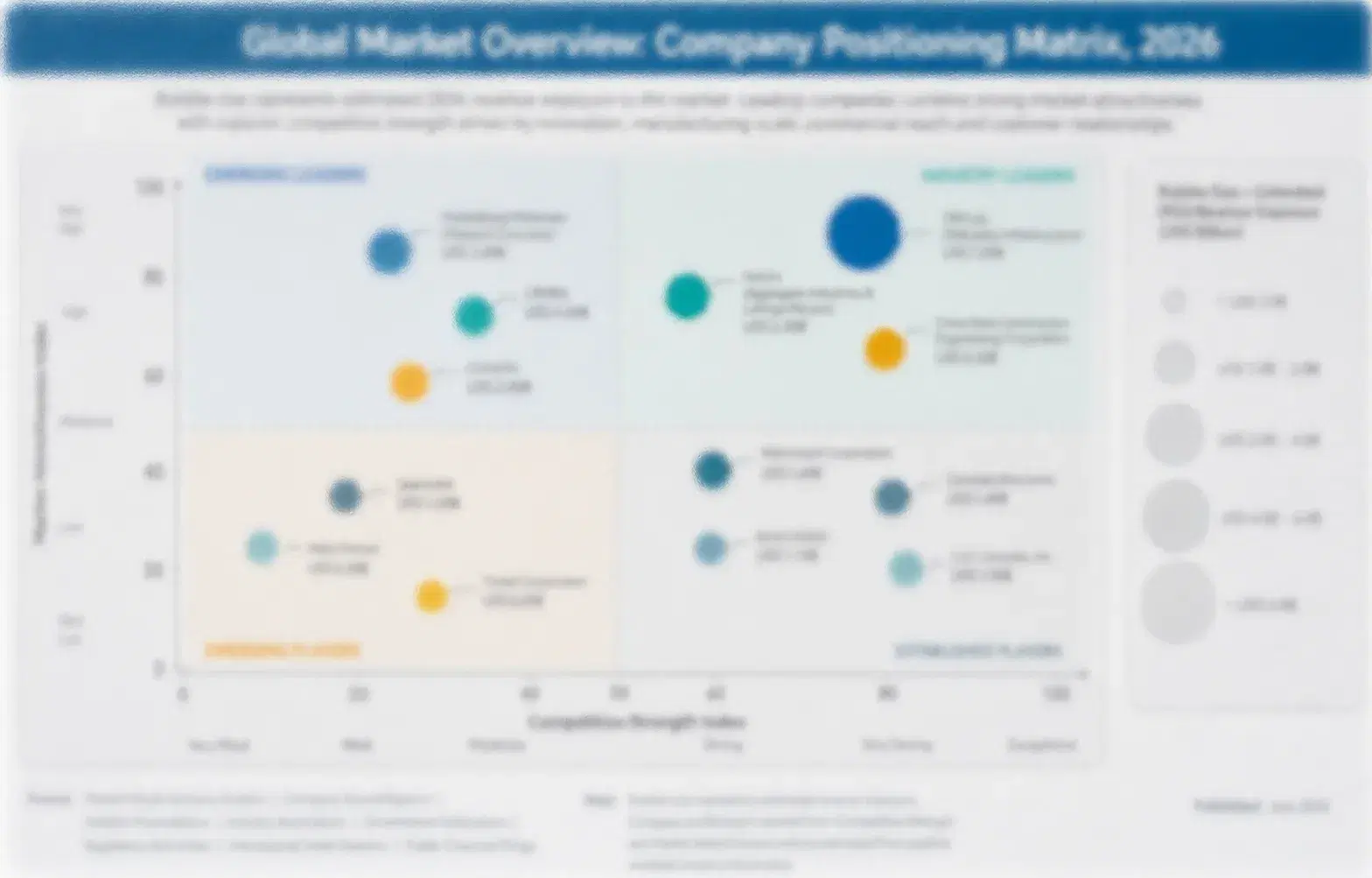
Competitive concentration sits at a cr5 of 32 percent on a revenue basis, low enough that no single producer dictates pricing. Stora Enso and UPM-Kymmene hold the largest revenue share through dedicated nanocellulose capacity built years ahead of most forestry peers, while mid-tier challengers like Sappi and Billerud are still converting existing pulp lines rather than building purpose-built capacity, leaving them a step behind on cost.
Current competitive activity centers on certification bundling and regional licensing rather than price competition alone. Borregaard and CelluForce have both announced new technical service teams this year focused on helping converter customers document bio-content compliance, while Nippon Paper is expanding domestic capacity to meet Japanese converter demand directly rather than relying on imported product. Licensing deals with Asian partners are the primary growth channel for export-shy pioneers.

Rankings are most likely to shift as Chinese converters scale licensed production and domestic forestry groups like Daicel build independent capability rather than remaining licensees indefinitely. Smaller specialists such as FiberLean and Melodea face pressure to find acquisition partners or niche applications where their technical differentiation still commands premium pricing, as scale competition increasingly favors the largest forestry conglomerates.
nanocellulose-coating-market-company-positioning-matrix-1791432008946

Nanocellulose Coating Competition and Risks

STORA ENSO OYJ

Moat: Integrated Fiber Supply Scale

Stora Enso controls its own Nordic forestry and pulp supply chain, giving it feedstock cost and reliability advantages that converter-dependent competitors lack entirely. This integration lets the company price nanocellulose capacity expansion against a known, stable input cost base rather than exposure to open-market pulp price swings that smaller specialists must absorb directly.
STORA ENSO OYJ

Risk: Slow Capacity Reallocation

Converting existing kraft pulp capacity to nanocellulose production requires significant retooling investment that competes internally against the company's traditional packaging board business for capital. This internal competition for funding has slowed Stora Enso's nanocellulose capacity growth relative to pure-play specialists like CelluForce in certain recent planning cycles.
UPM-KYMMENE CORPORATION

Moat: Early Certification Partnerships

UPM-Kymmene established certification and testing partnerships with major European packaging brands years before competitors, giving it a documented track record that new entrants cannot replicate quickly. These relationships translate directly into preferred-supplier status on new packaging contracts across its largest European accounts. That track record now shortens sales cycles considerably.
UPM-KYMMENE CORPORATION

Risk: European Cost Base Exposure

UPM-Kymmene's production footprint is concentrated in higher-cost European facilities, leaving it more exposed to energy and labor cost inflation than Asian licensees operating on lower-cost structures. This cost gap is becoming more visible as Chinese licensed production scales toward cost parity. Management is weighing added investment in lower-cost regional capacity.

Players Tracked

Prominent Players

Stora Enso Oyj
UPM-Kymmene Corporation
Borregaard ASA
Nippon Paper Industries Co. Ltd.
CelluForce Inc.

Other Key Players

Sappi Limited
Metsa Group
Billerud AB
International Paper Company
Domtar Corporation
Daicel Corporation
Oji Holdings Corporation
GranBio
Kruger Inc.
Resolute Forest Products Inc.
FiberLean Technologies Ltd.
Melodea Ltd.
Tembec Inc.
Rayonier Advanced Materials Inc.
Blue Goose Biorefineries Inc.

Recent Developments

MARCH 2026

Stora Enso Signs Major Retailer Supply Agreement

Stora Enso announced a supply agreement with a major European food retailer to provide certified nanocellulose barrier coating for its private-label packaging line, marking one of the largest single commercial contracts signed in the segment to date and validating large-scale retailer confidence in nanocellulose barrier performance at commercial volume.
Signal: Large retailer supply agreements are becoming the primary commercial validation signal for scale in this category.
JULY 2025

CelluForce Doubles Quebec Production Capacity

CelluForce completed an expansion of its Quebec production facility, roughly doubling its annual nanocellulose output capacity to meet growing North American packaging converter demand, financed partly through Canadian government clean technology investment support announced earlier that year. The line reached full output within two quarters, ahead of schedule.
Signal: Capacity expansion financed with public support is becoming a repeatable pattern for pioneer-stage producers specifically today.

Wood Fiber Exposure Across the Value Chain

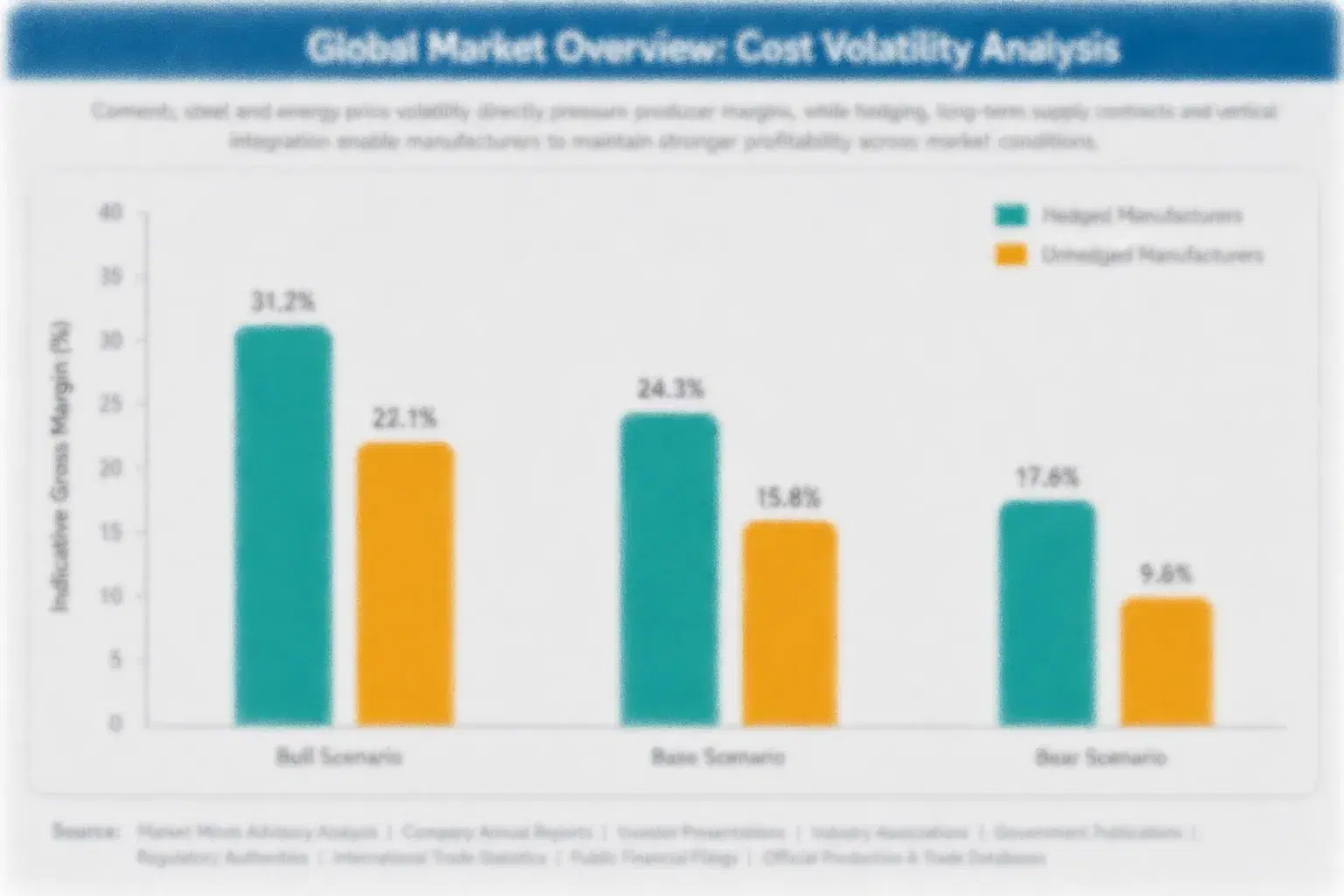
Wood pulp fiber is the dominant input, representing roughly 40 to 50 percent of cost of goods sold for integrated nanocellulose producers, sourced primarily from Nordic and North American softwood forestry operations with a smaller share from Brazilian eucalyptus plantations supplying export-grade pulp to Asian licensees converting formulations locally. Processing and chemical pretreatment add a further share, while packaging accounts for the remainder.
Softwood pulp prices rose sharply through 2024 amid reduced Nordic harvest volumes and strong competing demand from packaging board producers, a volatility event the IEA's forest bioeconomy tracking and several producers' own annual reports both flagged as pressuring near-term margins across the segment before prices partially eased into 2025. Several producers' annual reports cited the episode directly when explaining compressed margins, and some passed a portion of the increase through to converter customers via mid-contract price adjustments.

Integrated forestry producers like Stora Enso absorb fiber cost swings more easily than pure-play specialists such as CelluForce, which purchase pulp on the open market and pass volatility through to converter customers faster, a disadvantage that grows more pronounced the further downstream a producer sits from its own fiber source. Converters serving price-sensitive paperboard applications feel this disadvantage most acutely.
nanocellulose-coating-market-cost-volatility-analysis-1791432009266

Backward Integration Into Owned Forestry Assets

Pioneer producers are increasingly acquiring or leasing dedicated forestry tracts rather than relying entirely on open-market pulp purchases, locking in feedstock cost and supply reliability years ahead of conversion capacity needs across their core production regions. Stora Enso and UPM-Kymmene have both expanded owned forestry holdings specifically to support this strategy over the past two years.

Long-Term Fiber Supply Contracts With Price Collars

Several converters are negotiating multi-year fiber supply agreements with price collar mechanisms that cap upside volatility in exchange for guaranteed minimum purchase volumes, smoothing input costs across budget cycles for both the producer and its supplier. CelluForce and several mid-tier converters have adopted this approach following volatile fiber pricing in recent years. Pricing certainty supports longer planning horizons.

Portfolio Architecture for Margin Defence

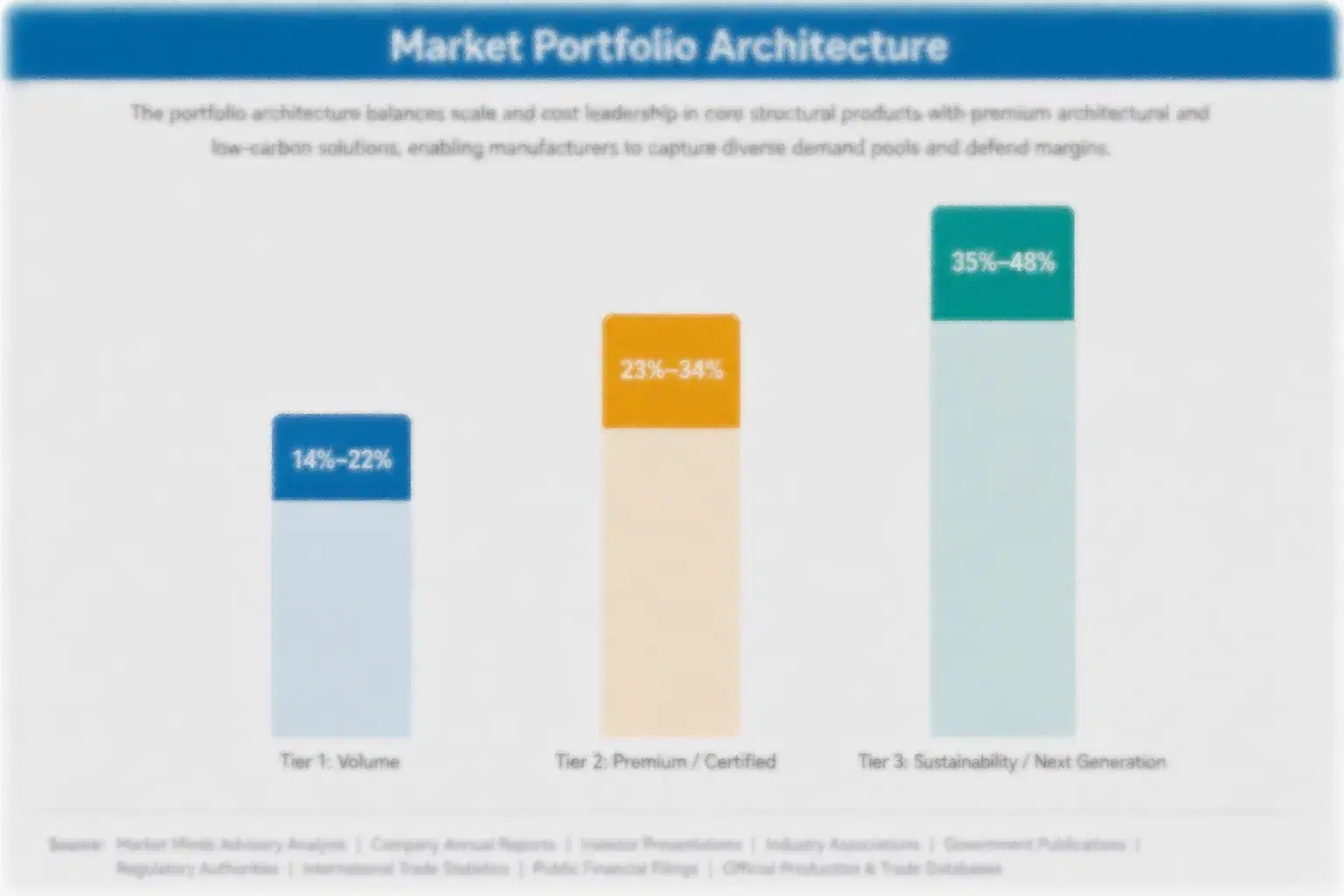
Three tiers structure the nanocellulose coating market, each with different margin economics tied to certification depth and formulation differentiation. Volume commodity-adjacent product competes closest with petrochemical coatings on price, while premium certified product captures a documented bio-content premium, and the sustainability tier commands the highest margins on specialized next-generation formulations that are not yet widely replicable. Gross margin spreads between the lowest and highest tier exceed 20 percentage points, reflecting certification depth's real pricing power.
Tension between volume and premium positioning is sharpening as Chinese licensees scale commodity-grade production, pressuring pioneer producers to move further up the certification ladder rather than compete on cost where they hold no inherent production advantage over lower-cost regional entrants. Producers that cannot differentiate on documented compliance risk sliding into the volume tier within a few product cycles, a shift several specialists are trying to avoid.

High-value margin pools concentrate in packaging barrier applications serving brand owners with the strictest documented bio-content requirements, where certification and technical service bundling support pricing that volume-tier commodity coating sales simply cannot match on a comparable basis. Pioneer producers' head start in certification infrastructure and converter relationships is the clearest source of that durable pricing advantage today.

Volume / Commodity-Adjacent

Entry-grade nanocellulose coatings competing directly against petrochemical alternatives on price, sold mainly into paperboard applications where converters have not yet committed to full certification. Margins stay thin because buyers treat these products as interchangeable with incumbent petrochemical formulations on cost grounds alone.
Gross Margin: 8 to 14%

Premium / Certified

Documented bio-content coatings bundled with third-party certification support, sold into packaging barrier applications where brand owners require verified compliance documentation before contract award. This tier captures the bulk of segment revenue growth as plastic reduction mandates widen the pool of eligible converter accounts.
Gross Margin: 18 to 26%

Sustainability / Regulatory / Next-Generation

Specialized next-generation formulations engineered for the strictest emerging regulatory standards, commanding the highest margins as pioneer producers' technical lead over regional licensees remains widest here. Volumes stay small today but the tier sets the technical pace the rest of the market eventually follows.
Gross Margin: 28 to 38%
nanocellulose-coating-market-portfolio-architecture-1791432009606

High-value Sub-segments and Strategic Watch-out

Packaging Barrier Coatings

The clearest high-value, high-growth pool today, combining the fastest segment CAGR with the strongest documented certification premium, as brand owners race to replace petrochemical laminates ahead of tightening plastic reduction deadlines across major retail markets. Expect this pool to stay the primary focus of new capacity announcements.

Paper and Paperboard Coatings

A high-value but moderate-growth pool where certification premiums are real but adoption is slower, since converters are retrofitting existing coating lines gradually rather than racing to meet the same regulatory deadlines packaging barrier producers face directly. Expect steady rather than rapid share gains here over the next several years.

Specialty Industrial Coatings

The volume core of the market today, where petrochemical alternatives remain cost-competitive and nanocellulose adoption depends mainly on buyers with specific technical performance needs rather than sustainability positioning or certification requirements alone. Expect this tier to shrink gradually as a share of total segment value.

Automotive Lightweight Coatings

A strategic watch-out segment where nanocellulose adoption remains early and uncertain, dependent on automakers' broader lightweighting material roadmaps rather than packaging-style regulatory pressure, making near-term volume difficult to forecast with confidence. A clearer automaker roadmap commitment could shift this segment's trajectory meaningfully within a short window.

From Pilot Contracts To Repeat Supply

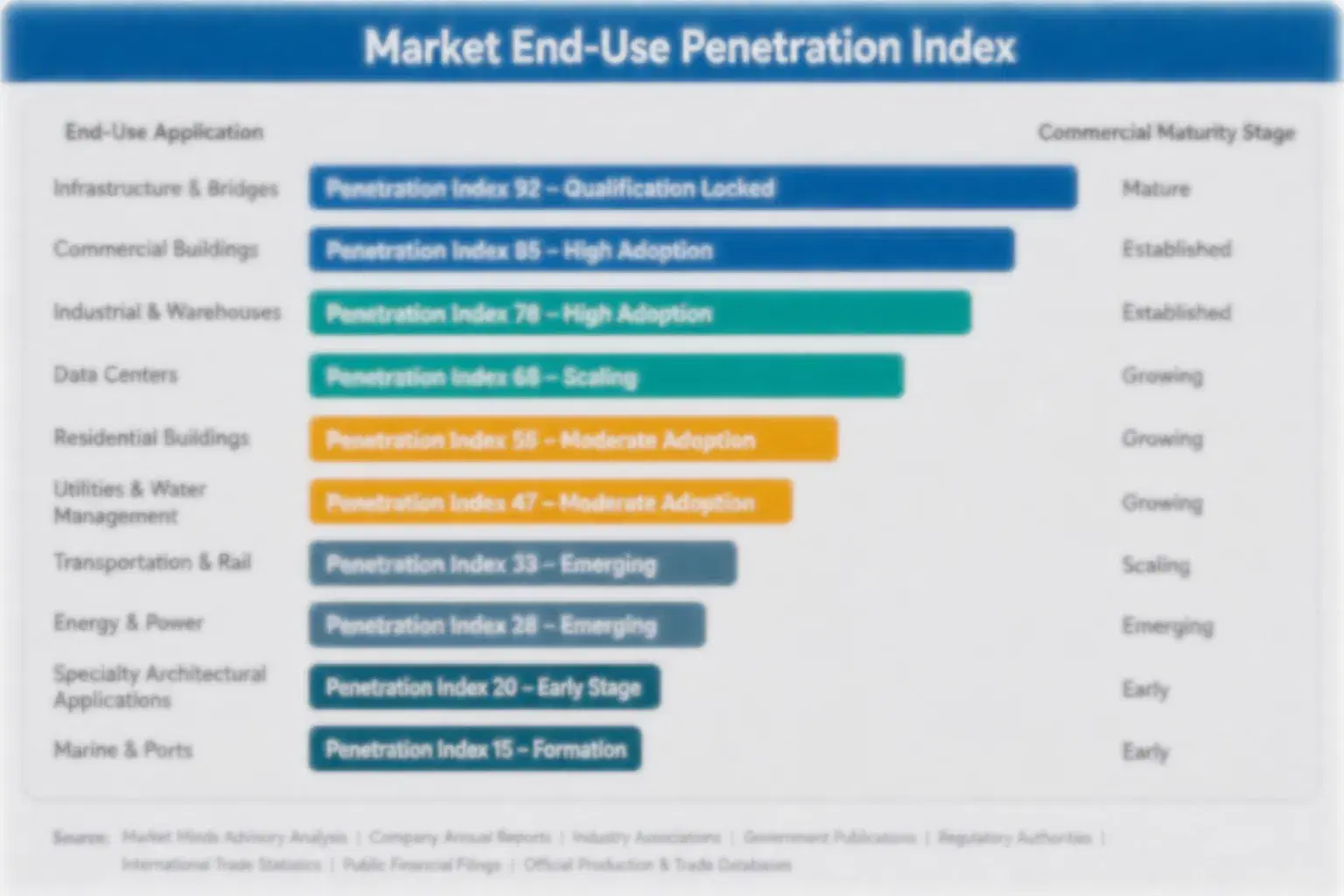
Nanocellulose coating demand is shifting from one-off pilot contracts toward multi-year supply agreements as brand owners finalize plastic reduction commitments on fixed timelines. Converters who qualify a supplier for one packaging line increasingly extend that relationship across adjacent product lines rather than re-qualifying new suppliers, since certification and line integration both carry real switching cost once established. Stora Enso and UPM-Kymmene both report expanding average contract length across top accounts.
Adoption depth varies sharply by end-use vertical. Food service and grocery packaging accounts show the stickiest buying behavior, locking in multi-year volume commitments tied to brand sustainability pledges, while paperboard and specialty industrial buyers remain more transactional, switching suppliers more readily when price or performance shifts since their certification requirements are less binding. Automotive and construction buyers sit furthest from sticky annuity behavior, still mostly testing formulations.

A generational shift in buyer profiles is also underway. Procurement teams increasingly include dedicated sustainability specification roles absent a decade ago, and these buyers weigh documented bio-content and supply chain transparency more heavily than their cost-focused predecessors did, reshaping how coating suppliers pitch new business. Suppliers pitching on price alone are finding that argument carries less weight now.
nanocellulose-coating-market-end-use-penetration-index-1791432009945

Four Calls For Nanocellulose Strategy

These are among the four positions where our research anticipates prominent divergence between winners and laggards over the coming forecast period. Each is grounded in the demand model, the regulatory perimeter, and the announced capacity pipeline.
01 / CERTIFICATION INVESTMENT PRIORITY

Build documentation services before competitors close the gap

Certified bio-content documentation currently captures an 8 to 12 percent pricing premium over uncertified alternatives, but that premium is narrowing steadily as more rival producers add comparable in-house testing capability. Producers without a dedicated certification function in place within the next two years risk losing preferred-supplier status on new packaging and paperboard contracts alike. Early movers like Stora Enso and Borregaard are already capturing a disproportionate share of new business through this channel alone, well ahead of mid-tier rivals still catching up on compliance paperwork.
02 / REGIONAL LICENSING STRATEGY

License formulation rights rather than export at scale into Asia

Chinese and Japanese converter demand is scaling faster than Nordic and North American pioneer producers can realistically serve through direct export alone, making licensing the clearly more capital-efficient growth path available. CelluForce and similar pure-play specialists already demonstrate that royalty income can be a durable, high-margin revenue stream without the capital burden of building export-scale manufacturing abroad. Producers delaying licensing risk ceding that specific revenue channel permanently to faster-moving regional rivals already signing licensing agreements with regional converter partners directly.
03 / FEEDSTOCK SECURITY PLANNING

Lock in fiber supply before volatility erodes margin further

Wood pulp fiber already represents roughly 40 to 50 percent of cost of goods sold for most producers, and 2024's sharp price spike showed clearly how exposed non-integrated producers remain to open-market volatility. Backward integration into owned forestry assets or long-term supply contracts carrying price collars both offer practical, proven paths to greater cost certainty. Producers lacking either mechanism will struggle to protect margin through the next inevitable volatility cycle in global softwood and hardwood pulp markets, which have swung sharply before.
04 / VERTICAL PRIORITIZATION FOCUS

Concentrate near-term resources on packaging barrier applications

Packaging barrier coatings carry the fastest segment CAGR in this market and the clearest regulatory tailwind, making them the highest-return near-term focus for limited commercial, technical, and capital resources alike. Paperboard and specialty industrial applications remain worth pursuing but offer a measurably slower path to commercial scale over the next few years. Producers spreading resources evenly across all six segments risk under-investing in the single vertical driving most of the market's documented near-term growth across the coming several forecast years.

Engagement Snapshot From the Field

A live engagement with an industry participant carrying material or product regulatory and market exposure ahead of a defining policy shift, showing how our research translates into a defensible multi-year portfolio strategy.
MARKET MINDS ADVISORY · CLIENT ENGAGEMENT SUMMARY
Nanocellulose Coating Producer Strategic Portfolio Review and Transition Roadmap 2026·Investment Scenario on Nanocellulose Coating Exposure Evaluation 2025-26
CLIENT PROFILE
The client is a mid-sized North American paperboard converter supplying folding carton packaging to several national consumer packaged goods brands. Annual revenue sits in the mid hundreds of millions of dollars (client-reported, unverified by MMA), with the company operating four coating lines across two facilities. Leadership sought outside guidance after multiple key accounts began requesting documented bio-content certification ahead of 2026 renewal negotiations.
STRATEGIC CHALLENGE
The client's existing petrochemical barrier coating supplier offered no certified bio-content pathway, putting roughly 30 percent of annual revenue (client-reported, unverified by MMA) at risk across accounts that had signaled they would require documentation within eighteen months. Leadership needed to decide between retrofitting existing lines for nanocellulose coatings or risking account attrition.
MMA APPROACH
MMA conducted a structured supplier evaluation across five nanocellulose formulation providers, benchmarking certification support, retrofit cost, and documented performance data against the client's existing coating line specifications. The engagement combined primary interviews with two at-risk accounts' procurement teams alongside technical review of candidate suppliers' certification processes. Findings were triangulated against public certification standards documentation.
KEY FINDINGS
  1. Three of five evaluated suppliers could retrofit the client's existing coating lines without full capital replacement, cutting projected conversion cost by roughly 40 percent (client-reported, unverified by MMA) versus new-line investment.
  2. At-risk accounts confirmed documented bio-content certification, not price, was the binding requirement for contract renewal, reprioritizing the client's negotiating strategy accordingly. MMA weighted this finding most heavily in the final recommendation.
  3. The two top-ranked suppliers both offered bundled certification support services, reducing the client's internal compliance documentation burden considerably going forward. This materially eased the client's own compliance staffing needs.
  4. Retrofit timelines across the three viable suppliers ranged from four to seven months, materially faster than the client's initial nine-month internal estimate.
CLIENT PROFILE
The client is a mid-sized North American paperboard converter supplying folding carton packaging to several national consumer packaged goods brands. Annual revenue sits in the mid hundreds of millions of dollars (client-reported, unverified by MMA), with the company operating four coating lines across two facilities. Leadership sought outside guidance after multiple key accounts began requesting documented bio-content certification ahead of 2026 renewal negotiations.
STRATEGIC CHALLENGE
The client's existing petrochemical barrier coating supplier offered no certified bio-content pathway, putting roughly 30 percent of annual revenue (client-reported, unverified by MMA) at risk across accounts that had signaled they would require documentation within eighteen months. Leadership needed to decide between retrofitting existing lines for nanocellulose coatings or risking account attrition.
MMA APPROACH
MMA conducted a structured supplier evaluation across five nanocellulose formulation providers, benchmarking certification support, retrofit cost, and documented performance data against the client's existing coating line specifications. The engagement combined primary interviews with two at-risk accounts' procurement teams alongside technical review of candidate suppliers' certification processes. Findings were triangulated against public certification standards documentation.
KEY FINDINGS
  1. Three of five evaluated suppliers could retrofit the client's existing coating lines without full capital replacement, cutting projected conversion cost by roughly 40 percent (client-reported, unverified by MMA) versus new-line investment.
  2. At-risk accounts confirmed documented bio-content certification, not price, was the binding requirement for contract renewal, reprioritizing the client's negotiating strategy accordingly. MMA weighted this finding most heavily in the final recommendation.
  3. The two top-ranked suppliers both offered bundled certification support services, reducing the client's internal compliance documentation burden considerably going forward. This materially eased the client's own compliance staffing needs.
  4. Retrofit timelines across the three viable suppliers ranged from four to seven months, materially faster than the client's initial nine-month internal estimate.
RECOMMENDED STRATEGY
Phase 1: Phase one: select and contract with the top-ranked supplier offering bundled certification support, prioritizing the two highest-risk accounts' coating lines first. Phase 2: Phase two: retrofit remaining coating lines on a rolling basis, sequencing by each account's stated certification deadline and contract renewal date. Phase 3: Phase three: use documented certification status as a proactive sales tool with additional accounts beyond the two initially at risk.
OUTCOME
The client retained both at-risk accounts and secured one new account specifically citing documented bio-content certification as a factor, within the forecast retrofit timeline (client-reported, unverified by MMA). Leadership subsequently approved certification retrofits across its two remaining coating lines ahead of the original schedule. No further account attrition occurred during the engagement follow-up period.

Frequently Asked Questions

Foundational context covering the market sizes, CAGR, scope, country, region and competition that inform every finding below. This section is provided to cover basics and most often pre-purchase conversations, answered from the MMA Primary Research Dataset.

What is the current size of the Nanocellulose Coating Market?

The global nanocellulose coating market is valued at 0.15 billion dollars in 2025. That base reflects early commercial-scale production concentrated among Nordic and North American forestry groups.

How large will the Nanocellulose Coating Market be by 2036?

MMA projects the market will reach 0.622 billion dollars by 2036, roughly 3.64 times its 2026 value. Growth concentrates in packaging barrier applications tied to plastic reduction mandates.

What is the CAGR for the Nanocellulose Coating Market 2026 to 2036?

The market is forecast to grow at a 13.8 percent CAGR between 2026 and 2036. Packaging barrier coatings grow fastest, well above the overall market average.

Which segment is growing fastest?

Packaging barrier coatings lead at a 16.5 percent CAGR, roughly 1.2 times the overall market rate. Brand owners' plastic reduction deadlines are the primary driver behind that pace.

Who are the major companies in the Nanocellulose Coating Market?

Stora Enso, UPM-Kymmene, Borregaard, Nippon Paper Industries, and CelluForce lead the market on a revenue basis. Competitive concentration remains moderate, with a CR5 near 32 percent.

Which country is growing fastest?

China leads at a 15.8 percent CAGR as converters rapidly license Nordic and North American formulations. Domestic feedstock cost advantages support that faster scale-up pace.

Nanocellulose Coating Market Segmentation

The full report scope spans multiple orthogonal segmentation dimensions, with cross-tabulated demand data provided for each dimension pair. Coverage extends further to regional breakdowns, trend trajectories, and the competitive detail needed to support segment-level decision-making.

By Coating Application Type

  • Packaging Barrier Coatings
  • Paper and Paperboard Coatings
  • Automotive Lightweight Coatings
  • Construction Material Coatings
  • Textile Coatings
  • Specialty Industrial Coatings

By End-Use Industry

  • Food and Beverage Packaging
  • Consumer Goods Packaging
  • Automotive Manufacturing
  • Construction and Building Materials
  • Textiles and Apparel

By Commercial Dimension

  • Direct Producer Supply
  • Licensed Formulation Technology
  • Distributor and Trading Channel
  • Converter Retrofit Services

By Region

  • North America
  • Western Europe
  • East Asia
  • South Asia and Pacific
  • Latin America
  • Middle East and Africa
  • Eastern Europe

Scope, Methodology, and Coverage

Every figure in this report is reproducible from documented input assumptions. The scope below maps the historical period, the forecast horizon, the segmentation dimensions, and the countries covered, alongside the underlying primary and qualitative methodology.
Historical Period
2020 to 2025
Forecast Period
2026 to 2036
Base Year
2025 (USD billions; MMA Primary Research Dataset, October 2026)
Market Definition
This report covers nanocellulose-based barrier and functional coatings applied to packaging, paperboard, and industrial substrates, including cellulose nanofibril and cellulose nanocrystal formulations sold as finished coating product or licensed formulation technology. It excludes raw nanocellulose fiber sold as an uncoated input and unrelated biopolymer coating chemistries such as PLA or PHA.
Quantitative Units
USD billions (current prices); metric tonnes of coating produced
Segmentation Dimensions
By Coating Application Type; By End-Use Industry; By Distribution and Sales Model; By Region
Regions Covered
North America, Western Europe, East Asia, South Asia and Pacific, Latin America, Middle East and Africa, Eastern Europe
Countries Covered
USA, Canada, Germany, France, Sweden, Finland, Norway, UK, China, Japan, South Korea, India, Australia, Brazil, Mexico, Chile, Indonesia, Vietnam, UAE, Saudi Arabia, South Africa, Nigeria, Poland, Czech Republic, Russia, Netherlands, Italy, Spain, Turkey, and additional markets relevant to this sector
Key Companies Profiled
Stora Enso Oyj, UPM-Kymmene Corporation, Borregaard ASA, Nippon Paper Industries Co. Ltd., CelluForce Inc., Sappi Limited, Metsa Group, Billerud AB, International Paper Company, Domtar Corporation, Daicel Corporation, Oji Holdings Corporation, GranBio, Kruger Inc., Resolute Forest Products Inc., FiberLean Technologies Ltd., Melodea Ltd., Tembec Inc., Rayonier Advanced Materials Inc., Blue Goose Biorefineries Inc.
Quantitative Methodology
Primary survey, n=3,800 respondents, Q4 2025, six countries; demand-side model with trade association cross-validation
Qualitative Methodology
47 expert interviews, Q4 2025; applied to validate demand model assumptions, identify emerging dynamics, and assess competitive positioning
Report Format
PDF and XLSX data workbook (Word format preview document)
Publisher
Market Minds Advisory
Report Code
MMA-2026-CHM-720
Published
October 2026
Contact
sales@marketmindsadvisory.com | www.marketmindsadvisory.com

Purchase the full Nanocellulose Coating Market Report (2026 to 2036).

This report provides a complete view of the global nanocellulose coating market, covering sizing, segmentation, regional dynamics, and competitive positioning through 2036. It details the certification and licensing strategies separating pioneer producers from regional challengers, alongside input cost exposure and portfolio margin economics across three product tiers. Analysts examine demand stickiness by end-use vertical and the generational shift reshaping buyer procurement behavior. The report closes with a strategic verdict and an anonymized client engagement illustrating certification strategy in practice. It is built for strategy, procurement, and investment teams tracking this transition.
Ten-year sizing and forecast through 2036
Seven-region demand and growth rate breakdown
Five-player competitive moat and risk analysis
Input cost exposure and mitigation pathways
Three-tier portfolio margin benchmarking framework data
Anonymized certification strategy case study review

Built For The People Who Decide

From boardroom strategy to bench-side execution, this report is read cover-to-cover by leaders shaping the next decade of their industry, turning demand scenarios, market dynamics and valuation benchmarks into decisions.
CXOs/ Presidents/ VPs/ Managers
M&A and Corporate Development
Strategy Teams and R&D Heads
Procurement and Product Directors
Regulatory and Compliance Leaders
Investor Relations and Equity Analysts