Flexible Batteries Market
Flexible Batteries Market Outlook from 2026 to 2033
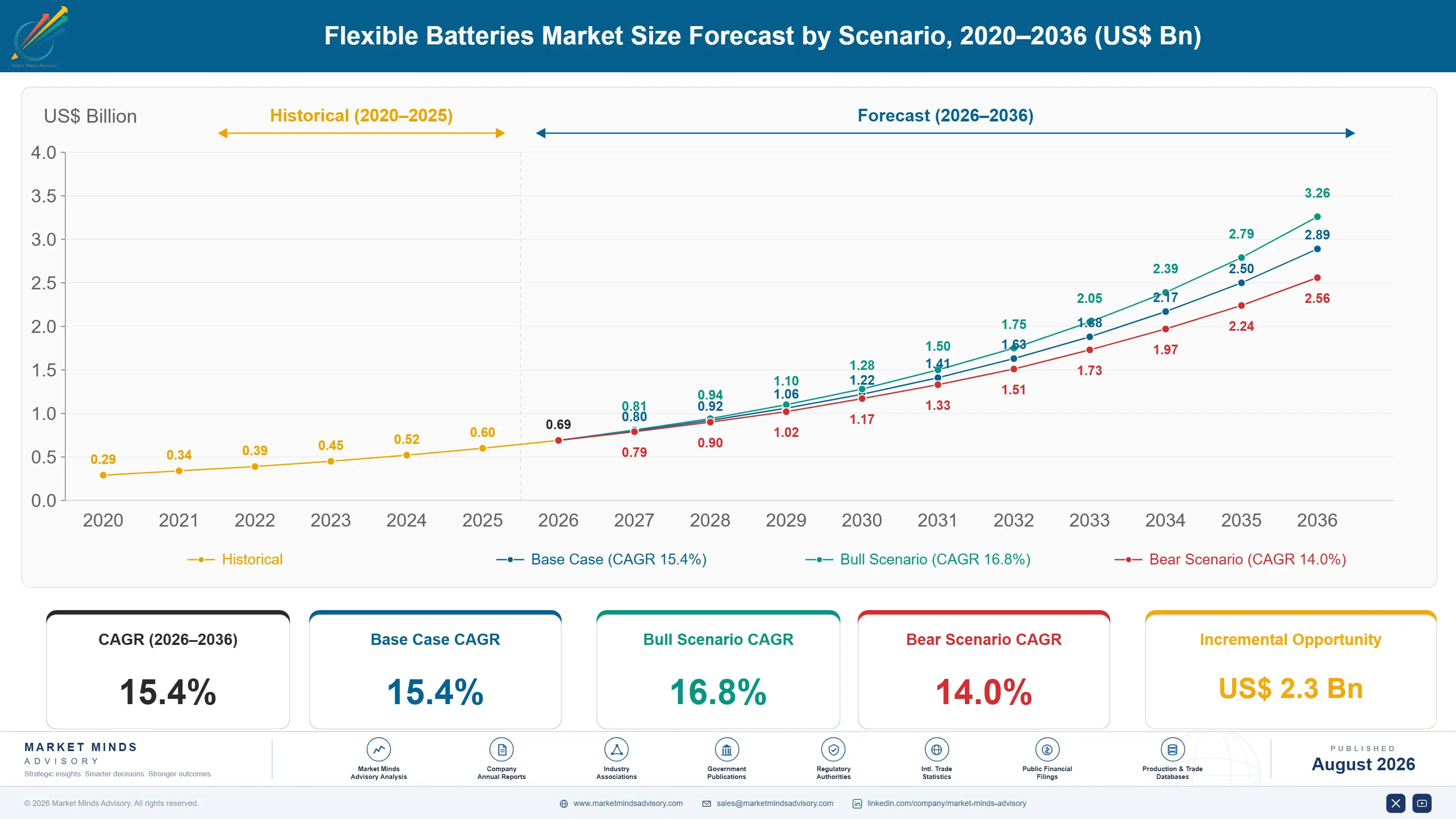
The flexible batteries market is poised for robust expansion, driven by the surging demand for lightweight, thin, and bendable power sources across various applications. The market was valued at USD 0.85 billion in 2026 and is projected to reach USD 3.12 billion by 2033, reflecting a CAGR of 20.3% during the forecast period. This growth is underpinned by the proliferation of wearable electronics, flexible displays, and advancements in medical devices, all of which require innovative energy storage solutions that traditional rigid batteries cannot provide.
The increasing integration of flexible batteries in next-generation consumer electronics, smart cards, and IoT devices further accelerates market momentum. Technological advancements in battery chemistry and manufacturing processes have enabled the development of highly durable and efficient flexible batteries, meeting the evolving requirements of end-users. As industries continue to prioritize miniaturization and design flexibility, the flexible batteries market is expected to witness significant investments and strategic collaborations, shaping a dynamic and competitive landscape.

Flexible Batteries Market Scenario & Strategic Insights
The flexible batteries market is characterized by rapid technological innovation and a shift towards miniaturized, portable electronic devices. Manufacturers are focusing on enhancing battery performance, flexibility, and safety to cater to the growing needs of sectors such as healthcare, consumer electronics, and smart packaging. The adoption of flexible batteries in medical patches, smart textiles, and flexible displays is particularly notable, as these applications demand power solutions that can conform to various shapes and withstand mechanical stress.
Strategic partnerships between battery manufacturers, material suppliers, and device OEMs are becoming increasingly prevalent, facilitating the development of customized solutions and accelerating time-to-market. Additionally, the market is witnessing increased R&D investments aimed at improving energy density, cycle life, and environmental sustainability of flexible batteries. Regulatory support for eco-friendly and safe battery technologies further bolsters market growth, while the competitive landscape is marked by both established players and innovative startups vying for market share.
| Attribute | 2026 (USD Billion) | 2033 (USD Billion) | CAGR (2026 – 2033) |
| Market Size | 0.85 | 3.12 | 20.3% |
Flexible Batteries Market Trends
- Proliferation of Wearable and Portable Electronics
The rapid adoption of wearable devices such as fitness trackers, smartwatches, and health monitoring patches is a significant trend driving the flexible batteries market. These devices require power sources that are not only lightweight and thin but also capable of bending and flexing with the device. Flexible batteries offer the ideal solution, enabling innovative product designs and enhanced user comfort. As consumer demand for compact and ergonomic electronics continues to rise, manufacturers are increasingly integrating flexible batteries to differentiate their offerings and meet evolving market expectations.
- Advancements in Battery Chemistry and Manufacturing Techniques
Continuous innovation in battery chemistry, including the development of solid-state, lithium-polymer, and printed batteries, is transforming the flexible batteries landscape. These advancements have led to improvements in energy density, safety, and flexibility, making flexible batteries suitable for a broader range of applications. Additionally, novel manufacturing techniques such as roll-to-roll printing and 3D printing are enabling cost-effective mass production of flexible batteries, further driving market growth and enabling new application areas.
- Integration in Smart Packaging and IoT Devices
The integration of flexible batteries in smart packaging and Internet of Things (IoT) devices is gaining momentum. Smart packaging solutions, equipped with sensors and communication modules, require thin and flexible power sources to maintain package integrity and functionality. Similarly, IoT devices deployed in diverse environments benefit from the adaptability and form factor of flexible batteries. This trend is expected to accelerate as industries seek to enhance product intelligence, traceability, and user engagement through embedded electronics.
Segment & Category Analysis for Flexible Batteries Market
By Battery Type
- Thin-Film Batteries
- Printed Batteries
- Solid-State Batteries
- Lithium-Polymer Batteries
- Zinc-Carbon Batteries
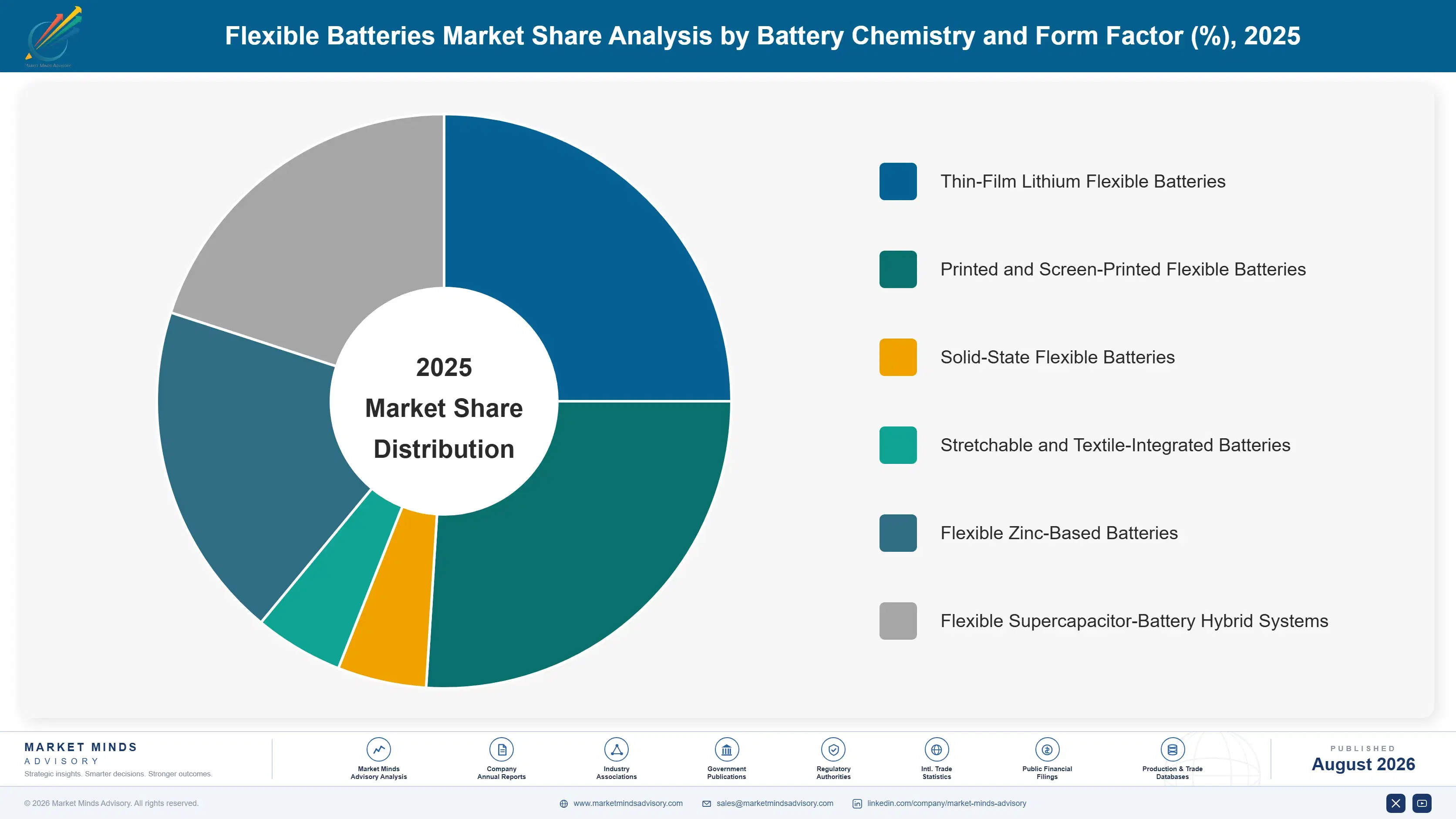
The battery type segment is a critical determinant of performance, cost, and application suitability in the flexible batteries market. Thin-film batteries are widely used due to their ultra-thin profile and compatibility with flexible substrates, making them ideal for smart cards and wearable devices. Printed batteries, leveraging advanced printing technologies, offer scalability and customization for disposable electronics and smart packaging. Solid-state and lithium-polymer batteries provide enhanced safety and energy density, expanding their use in medical devices and flexible displays. Zinc-carbon batteries, while less prevalent, are valued for their low cost and environmental friendliness in specific applications.

By Capacity
- Below 10 mAh
- 10–100 mAh
- Above 100 mAh
Flexible batteries are categorized by capacity to address diverse power requirements across applications. Batteries with capacities below 10 mAh are typically used in RFID tags, smart labels, and low-power medical patches. The 10–100 mAh segment caters to wearables, smart cards, and small IoT devices, balancing size and energy needs. Batteries above 100 mAh are increasingly being developed for more demanding applications such as flexible smartphones, tablets, and larger medical devices. The ongoing trend towards higher capacity flexible batteries is expected to unlock new opportunities in consumer electronics and industrial sectors.
By Application
- Wearable Devices
- Medical Devices Smart Cards Flexible Displays Smart Packaging
- IoT Devices
Application-wise, wearable devices represent the largest market share, driven by the need for compact, lightweight, and flexible power sources. Medical devices, including patches and implants, are a rapidly growing segment, leveraging flexible batteries for patient comfort and device miniaturization. Smart cards and flexible displays benefit from the thin form factor and adaptability of flexible batteries, while smart packaging and IoT devices utilize them for enhanced functionality and connectivity. The diversification of applications underscores the versatility and broad market potential of flexible batteries.
By Material
- Lithium
- Zinc Nickel Silver
- Others
Material selection plays a pivotal role in determining the performance, safety, and cost of flexible batteries. Lithium-based batteries dominate the market due to their high energy density and long cycle life, making them suitable for demanding applications. Zinc and nickel materials are favored for their safety and environmental benefits, particularly in disposable and low-power devices. Silver-based batteries offer high conductivity and are used in specialized applications. Ongoing research into alternative materials aims to further enhance the flexibility, sustainability, and affordability of flexible batteries.
By End-User Industry
- Consumer Electronics
- Healthcare Industrial Packaging
- Automotive
The end-user industry segmentation highlights the diverse adoption of flexible batteries across sectors. Consumer electronics lead the market, driven by the proliferation of wearable devices and flexible gadgets. The healthcare sector is witnessing rapid uptake, with flexible batteries powering medical patches, sensors, and implants. Industrial applications include sensors and monitoring devices, while the packaging industry leverages flexible batteries for smart packaging solutions. The automotive sector, though nascent, is exploring flexible batteries for in-cabin electronics and next-generation vehicle designs.

Growth Drivers and Opportunities in Flexible Batteries Market
- Rising Demand for Wearable and Portable Devices
The exponential growth in wearable technology and portable electronics is a primary driver for the flexible batteries market. Consumers increasingly seek devices that are lightweight, ergonomic, and capable of withstanding daily wear and tear. Flexible batteries enable manufacturers to design products that conform to the human body or integrate seamlessly into clothing and accessories. This trend is expected to intensify as advancements in sensor technology and wireless connectivity fuel the development of new wearable applications, creating sustained demand for flexible power solutions.
- Technological Advancements and Material Innovations
Continuous innovation in battery materials, chemistries, and manufacturing processes is unlocking new opportunities for the flexible batteries market. The development of high-performance, safe, and environmentally friendly materials is enabling the production of batteries with improved flexibility, energy density, and longevity. These advancements are expanding the application scope of flexible batteries beyond traditional markets, facilitating their adoption in emerging sectors such as smart packaging, flexible displays, and medical implants. Strategic investments in R&D are expected to yield further breakthroughs, driving market growth.
Emerging Opportunities for Flexible Batteries Market
- Expansion into Smart Packaging and Logistics
The integration of flexible batteries into smart packaging solutions presents a significant growth opportunity. As industries seek to enhance product tracking, authentication, and consumer engagement, the demand for intelligent packaging equipped with sensors, displays, and communication modules is rising. Flexible batteries provide the necessary power in a form factor that does not compromise package integrity, enabling innovative packaging designs and functionalities across pharmaceuticals, food, and consumer goods sectors.
- Adoption in Next-Generation Medical Devices
Flexible batteries are increasingly being adopted in next-generation medical devices, including wearable patches, implantable sensors, and drug delivery systems. These applications require power sources that are biocompatible, lightweight, and capable of conforming to the human body. The ability of flexible batteries to meet these requirements is driving their uptake in the healthcare sector, supporting the development of advanced diagnostic, monitoring, and therapeutic devices that improve patient outcomes and quality of care.
Growth Restrain factors and Challanges in Flexible Batteries Market
- Technical Limitations and Manufacturing Challenges
Despite significant advancements, the flexible batteries market faces technical limitations related to energy density, cycle life, and mechanical durability. Achieving high energy density while maintaining flexibility and safety remains a complex challenge, particularly for applications requiring prolonged operation or high power output. Manufacturing processes for flexible batteries are also more intricate and costly compared to traditional batteries, posing scalability and cost-competitiveness issues. These challenges necessitate ongoing R&D investments and collaboration across the value chain to develop viable solutions that meet market demands.
In addition, the lack of standardized testing and certification protocols for flexible batteries can hinder market adoption, as end-users require assurance of performance, reliability, and safety. Addressing these technical and regulatory challenges is critical for unlocking the full potential of flexible batteries and accelerating their integration into mainstream applications.
- Environmental and Regulatory Concerns
The use of certain materials and chemicals in flexible batteries raises environmental and regulatory concerns, particularly regarding end-of-life disposal and recycling. While efforts are underway to develop eco-friendly and recyclable battery materials, the current landscape is characterized by varying degrees of compliance with environmental regulations across regions. This can create barriers to market entry and expansion, especially in regions with stringent environmental standards.
Furthermore, the absence of harmonized regulations and recycling infrastructure for flexible batteries can impede the development of a sustainable value chain. Market participants must proactively address these concerns by investing in green technologies, adopting circular economy principles, and engaging with regulatory bodies to shape favorable policies that support sustainable growth.
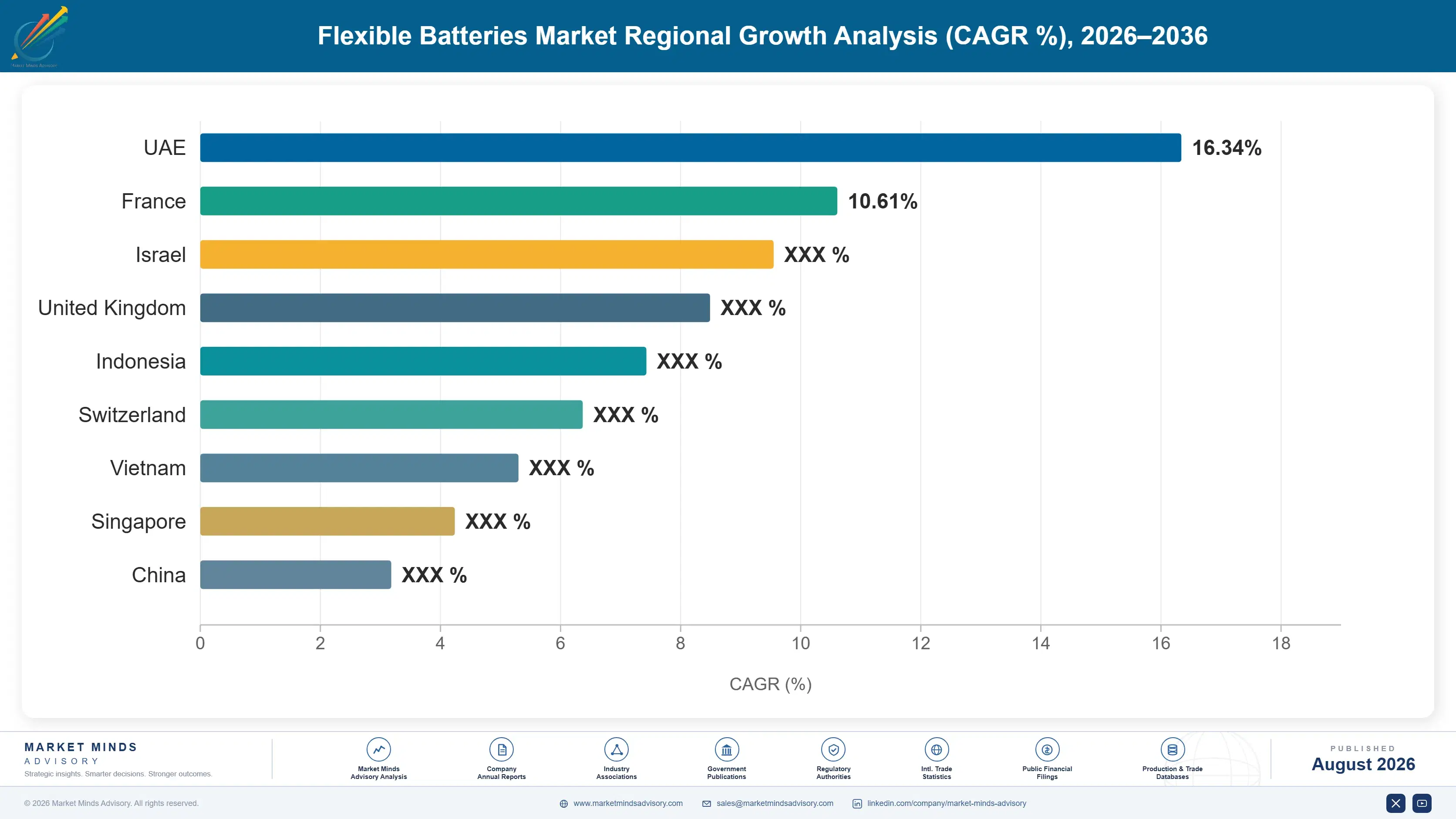
Flexible Batteries Market Regional Analysis
| Region | Market Share (2025) | Key Market Highlight |
| Asia-Pacific | 38% | Rapid adoption in consumer electronics and wearables |
| North America | 27% | Strong R&D ecosystem and early adoption in healthcare |
| Europe | 21% | Focus on sustainability and smart packaging applications |
| South America | 8% | Emerging demand in industrial and medical sectors |
| Middle East & Africa | 6% | Gradual uptake in IoT and smart packaging |
Asia-Pacific
Asia-Pacific dominates the flexible batteries market, accounting for the largest share due to the presence of major electronics manufacturers, robust supply chains, and high consumer demand for wearable and portable devices. Countries such as China, Japan, and South Korea are at the forefront of innovation, with significant investments in R&D and manufacturing infrastructure. The region’s dynamic consumer electronics industry and growing adoption of smart packaging and medical devices further bolster market growth.
North America
North America is a key market for flexible batteries, driven by a strong focus on technological innovation and early adoption of advanced healthcare and wearable technologies. The presence of leading research institutions, startups, and established battery manufacturers fosters a vibrant ecosystem for product development and commercialization. Regulatory support for sustainable and safe battery technologies, coupled with increasing investments in IoT and smart packaging, positions North America as a significant contributor to market expansion.
Europe
Europe’s flexible batteries market is characterized by a strong emphasis on sustainability, eco-friendly materials, and smart packaging solutions. The region’s stringent environmental regulations and commitment to circular economy principles drive the adoption of recyclable and low-impact battery technologies. European manufacturers are also investing in advanced manufacturing processes and collaborating with end-users to develop customized solutions for medical, automotive, and industrial applications.
South America
South America is an emerging market for flexible batteries, with growing demand in industrial automation, medical devices, and smart packaging. While the region currently accounts for a smaller share of the global market, increasing investments in technology infrastructure and rising awareness of the benefits of flexible batteries are expected to drive future growth. Brazil and Argentina are key markets, supported by government initiatives to promote innovation and digital transformation.
Middle East & Africa
The Middle East & Africa region is witnessing gradual uptake of flexible batteries, primarily in IoT, smart packaging, and select healthcare applications. Market growth is supported by increasing investments in digital infrastructure, smart city initiatives, and the adoption of advanced technologies in logistics and supply chain management. While the market is still in its nascent stage, rising awareness and pilot projects are expected to pave the way for broader adoption in the coming years.

Competition Landscape in Flexible Batteries Market
The flexible batteries market is highly competitive, characterized by the presence of established battery manufacturers, innovative startups, and material suppliers. Companies are focusing on product differentiation, technological innovation, and strategic collaborations to strengthen their market position. The competitive landscape is further shaped by ongoing R&D investments, patent filings, and the pursuit of cost-effective manufacturing processes. As the market evolves, players are increasingly targeting niche applications and emerging markets to capture new growth opportunities.
Major Players in Flexible Batteries Market
- Panasonic Corporation
- Samsung SDI Co., Ltd.
- LG Chem Ltd.
- Enfucell Oy
- Blue Spark Technologies, Inc.
- Ultralife Corporation
- BrightVolt Inc.
- STMicroelectronics N.V.
- Imprint Energy, Inc.
- Jenax Inc.
- Molex LLC
- Cymbet Corporation
- FlexEl LLC
- NEC Energy Solutions, Inc.
- Rocket Electric Co., Ltd.
- ProLogium Technology Co., Ltd.
- Paper Battery Co.
- Lion Smart GmbH
- PolyPlus Battery Company
- Energy Diagnostics SRL
Recent Developments in Flexible Batteries Market
- In January 2024, Panasonic Corporation announced the launch of a new line of ultra-thin flexible lithium-ion batteries for wearable medical devices, enhancing energy density and safety.
- In March 2024, LG Chem Ltd. entered into a strategic partnership with a leading European smart packaging company to co-develop flexible battery solutions for intelligent packaging applications.
- In November 2023, Enfucell Oy secured a patent for its next-generation printed battery technology, enabling higher capacity and improved flexibility for IoT devices.
- In July 2023, Blue Spark Technologies, Inc. expanded its manufacturing facility in the United States to increase production capacity for flexible batteries used in healthcare and logistics.
- In September 2023, Jenax Inc. introduced a new flexible battery designed specifically for integration into smart textiles and wearable electronics.
- In May 2023, Imprint Energy, Inc. received funding from a consortium of investors to accelerate the commercialization of its zinc-based flexible battery technology for medical and industrial applications.
FAQ for Flexible Batteries Market
- What are the primary applications driving the flexible batteries market growth?
The primary applications include wearable devices, medical devices, smart cards, flexible displays, smart packaging, and IoT devices. These sectors require lightweight, thin, and bendable power sources that traditional batteries cannot provide, fueling the demand for flexible batteries.
- What is the projected market size and growth rate for the flexible batteries market by 2033?
The flexible batteries market is expected to reach USD 3.12 billion by 2033, growing at a CAGR of 20.3% from a base value of USD 0.85 billion in 2026. This robust growth is driven by technological advancements and expanding application areas.
- Which regions are expected to lead the flexible batteries market during the forecast period?
Asia-Pacific is anticipated to lead the market, followed by North America and Europe. The dominance of Asia-Pacific is attributed to its strong electronics manufacturing base, high consumer demand, and significant investments in R&D and production capabilities.
- What are the key challenges faced by the flexible batteries market?
Key challenges include technical limitations related to energy density and durability, high manufacturing costs, lack of standardized testing protocols, and environmental concerns regarding material disposal and recycling. Addressing these challenges is essential for sustained market growth.
- Who are the major players operating in the flexible batteries market?
Major players include Panasonic Corporation, Samsung SDI Co., Ltd., LG Chem Ltd., Enfucell Oy, Blue Spark Technologies, Inc., Ultralife Corporation, BrightVolt Inc., STMicroelectronics N.V., Imprint Energy, Inc., Jenax Inc., and others. These companies are actively engaged in product innovation, strategic partnerships, and capacity expansion to strengthen their market position.
Contact us today to access the full report and propel your business forward!