Market Minds Advisory
Chef Bases Market

Chef Bases Market: Chef Bases Market: Heat Rejection Into The Cold Box, Compressor Placement and What A Cook Line Actually Costs Per Metre

A refrigerated drawer sitting directly under a char grill is asked to hold food cold while something above it radiates heat downward, and most specifications treat that as an afterthought.

Lead Analyst

Published

September 2026

Make Smarter Decisions with Customized Research Insights

Request a free sample report and evaluate market opportunities, growth trends, and competitive dynamics relevant to your business needs.

2025 MARKET VALUE$0.9BMarket Size 2025
2036 FORECAST VALUE$1.6BBase Case , 2026 to 2036
CAGR 2026 TO 20365.8 %Bull 7.0% / Bear 4.6%
INCREMENTAL OPPORTUNITY$0.7BNet 10- year value creation
EXPANSION MULTIPLE1.76x2036 value over 2026 base
Strategic Levers
M&A Pipeline
Regional Outlook
Country Rankings
Competitive Intelligence
Segmental Deep-dive
Call-Us : 91 93563 13602

Executive Snapshot and Market Trajectory.

A chef base is refrigeration underneath cooking equipment, which is an engineering contradiction the category mostly ignores. A unit holding food at temperature while a char grill radiates downward onto its top runs a duty cycle nothing in a specification sheet describes. Around 17% are rated against it.
Remote condenser chef bases grow at 8.7%, half again the market rate of 5.8%, because moving the compressor out of the hot line solves the failure that self-contained units keep producing. Refrigerated drawer bases follow at 7.4%. Ambient storage bases grow slowest at 2.3%, specified in the places where refrigeration was never actually needed at all. Roughly 57% of service calls originate in the refrigeration system itself.
Cook line length is the real constraint. Kitchens are priced by the metre, an equipment stand that stores nothing wastes the most expensive floor space anywhere in the whole building, and a chef base converts it into working refrigeration. Concentration is high at 43% held by the top five participants, and India grows fastest of any country covered at 10.4%. A metre of cook line carries around USD 1,900 of annual rent.
Market Definition
This market covers refrigerated and ambient equipment stands designed to sit beneath cooking equipment on a commercial cook line, spanning refrigerated drawer bases, refrigerated door bases, remote condenser chef bases, freezer chef bases, ambient storage bases, and modular multi-compartment bases. Sizing is at manufacturer net revenue. Standalone undercounter refrigeration not designed for equipment loading, worktop refrigerated preparation counters, cooking equipment itself, and walk-in refrigeration are excluded.
Base Year Value
$0.9B in 2025 (MMA Primary Research Dataset, September 2026)
Forecast Period
2026 to 2036, eleven discrete annual values
CAGR
5.8% base case. Bull 7.0%. Bear 4.6%.
Fastest Growth Segment
Remote Condenser Chef Bases: 8.7% CAGR
Fastest Growth Country
India: 10.4% CAGR
Fastest Growth Region
South Asia and Pacific: 7.9% CAGR
Largest Region
North America: 36% of 2025 global value
Market Leaders
Duke Manufacturing, True Manufacturing, Continental Refrigeration, Randell, Delfield. Source: MMA Primary Research Dataset, July 2026.
Primary Survey
n=3,800 procurement and R&D decision-makers, Q4 2025, six countries
Methodology
Demand-side build-up, cross-validated against public data, 47 expert interviews

Chef Bases Market Forecast Scenarios

chef-bases-market-size-forecast-scenario-1790024945308
Growth of 4.6% between 2020 and 2025 reflects a collapse in new kitchen construction followed by a rebuild around different priorities. Equipment purchasing stopped through 2020 and returned from 2022 into kitchens designed for higher throughput in smaller footprints, which is what a chef base solves. Replacement of units installed a decade earlier also resumed across the same period.
Three mechanisms carry the base case. Remote condenser units grow at 8.7% as operators recognise that compressor placement rather than refrigeration capacity determines reliability on a hot line. Indian demand expands at 10.4% on organised food service and central kitchen construction. Cook line real estate is being evaluated per metre in urban markets where kitchen rent is high enough to make a non-storing equipment stand genuinely indefensible. All three are visible in shipment data already.
The bull case is ambient heat load entering specifications. If units were rated against the equipment above them rather than in isolation, the ones engineered for that duty would separate from those that are not. The bear case is foodservice capital spending contracting. Chef bases are bought during builds and refits rather than as emergency replacements, which ties demand to construction closely.

Refrigeration Under A Grill

The engineering problem here is stated nowhere in the category's marketing. A chef base holds product at refrigeration temperature while a griddle, fryer or char grill sits directly on top radiating heat downward and pulling ambient air temperature on the line well above what any standard test condition assumes. Around 17% of units carry a rating against that condition, which means most specifications are written against a laboratory that resembles no kitchen anywhere. Nothing in the category's marketing acknowledges the contradiction at all.
TOP FIVE CONCENTRATION43%Combined net revenue share held by the five largest manufacturers
AMBIENT HEAT RATING17%Share of units rated against heat from equipment above them
AVERAGE UNIT PRICEUSD 6,400Weighted manufacturer price across every chef base type
COMPRESSOR FAILURE SHARE57%Portion of service calls originating at the refrigeration system
COOK LINE SPACE VALUEUSD 1,900Annual rent attributable to a single metre of cook line
REMOTE CONDENSER SHARE22%Proportion of installations siting the compressor away from line
Compressor placement follows directly from that and decides reliability. Roughly 57% of service calls originate in the refrigeration system, and a self-contained unit is asking its condenser to reject heat into air already heated by the equipment above it. Remote condensers move that work outside the line entirely and reach around 22% of installations, mostly in operations that learned the difference by replacing compressors repeatedly.
Cook line space is the commercial argument nobody makes properly. A metre of cook line carries around USD 1,900 of annual rent, which makes a stand that stores nothing an expensive piece of furniture. Kitchen designers count those metres and equipment buyers do not.
"Nobody would design a refrigerator to sit inside an oven, and that is roughly what a self-contained chef base under a char grill is being asked to do. The compressor fails and everybody blames the refrigeration rather than the geometry."
Director, Commercial Refrigeration and Kitchen Systems Practice · MMA Foodservice Equipment Practice · September 2026

Market Trends

Remote Condensers Move Heat Off The Line

Remote condenser chef bases grow at 8.7% against 5.8% for the market because siting the compressor away from the cook line removes the contradiction at the heart of the product. A self-contained unit rejects heat into air that the equipment above it has already heated, which is why roughly 57% of service calls originate in refrigeration. Remote installation reaches about 22% of units and concentrates in operations that learned the lesson by replacing compressors. Installation cost is the barrier rather than any technical difficulty. Installation cost sits on a construction budget while the benefit lands on an operating one.
Market Impact: India grows at 10.4% annually

Cook Line Area Gets Priced Per Metre Properly

Urban commercial kitchens now cost enough that operators evaluate cook line length against rent explicitly, and a metre of line carries around USD 1,900 annually in the markets where this matters most. That arithmetic makes an equipment stand storing nothing genuinely indefensible and a refrigerated base carrying mise en place obviously worthwhile. Kitchen designers have begun presenting the comparison directly to operators, which is converting specifications that previously defaulted to open stands on capital cost alone. Kitchen designers already count metres against a floor plan, which makes them the natural audience for the argument rather than an equipment buyer.
Market Impact: Drawers grow 1.6 points faster

Market Opportunities and Growth Drivers

Indian Central Kitchen Construction Drives Volume Demand

India grows fastest of any country covered at 10.4%, driven by organised food service chains and cloud kitchen operators building production capacity at a pace no developed market approaches. Those facilities specify cook lines from scratch rather than retrofitting existing kitchens, which favours integrated refrigerated bases over separate equipment stands. Domestic refrigeration manufacturing serves them at costs imported units cannot match, and specification quality is rising as operators accumulate service history. Cloud kitchen operators buying whole cook lines evaluate the equipment technically rather than selecting from a dealer catalogue, which changes what a manufacturer needs to be able to answer.
Market Impact: Only 17% carry loaded ratings

Drawer Configurations Replace Doors On Working Lines

Refrigerated drawer bases grow at 7.4% because a drawer opens into the line rather than into the aisle behind a cook, which removes a movement that costs seconds on every single access across a service. Doors also dump more cold air than drawers when opened, which matters on a unit already fighting heat from above. The trade is mechanical complexity and drawer slide wear under heavy commercial duty, which is where service attention shifts once compressors are handled. Head chefs evaluate that difference directly, which is unusual in a category where purchasing departments normally decide everything.
Market Impact: Remote sits at 22% of installs

Market Restraints and Challenges

Units Are Rated Against Conditions No Kitchen Has

Around 17% of chef bases carry a performance rating against ambient heat from the equipment mounted above them, while nearly all are rated under standard test conditions that resemble no working cook line. The root cause is that no test standard requires it and publishing a harder figure invites unflattering comparison. Commercially it means units engineered for real duty compete against those that are not on numbers that flatter both. Participants publishing loaded ratings address it directly. Operators who have replaced a compressor already know which number they want to see.
Market Impact: Remote reaches 22% of installations

Remote Installation Cost Deters Correct Specification

Remote condenser configurations solve the fundamental heat rejection problem and reach only about 22% of installations, because siting a condenser externally requires refrigeration line runs, roof or wall penetration and a refrigeration contractor rather than a plumber. The root cause is that installation cost lands on a construction budget while the reliability benefit lands on an operating one. Commercially it splits the decision across two budgets. Mitigation runs to lifecycle presentations that combine both. Kitchen designers presenting the combined figure convert specifications that capital cost alone would certainly have lost.
Market Impact: Line rent reaches USD 1,900 yearly
3 additional market trends, 4 additional growth drivers, and 2 additional restraints and challenges are covered in the full report. Contact sales@marketmindsadvisory.com to access the complete intelligence.

Segment CAGR and Growth Architecture

Segmentation follows unit configuration, the dimension on which refrigeration architecture, access method, installation requirement and price all divide together. Six configurations are assessed at manufacturer net revenue. Standalone undercounter refrigeration, worktop preparation counters, cooking equipment itself, and walk-in refrigeration sit outside the defined scope here. Heat rejection architecture separates their reliability more than anything else does.
chef-bases-market-market-share-analysis-1790024945838

Remote Condenser Chef Bases

Remote condenser chef bases grow at 8.7%, half again the market rate of 5.8%, by removing the contradiction that defines the product. A self-contained unit under a char grill rejects condenser heat into air the grill has already heated, which is why roughly 57% of service calls originate in the refrigeration system rather than anywhere else. Siting the condenser externally removes that entirely and reaches around 22% of installations. The barrier is installation cost falling on a construction budget while the reliability benefit accrues to an operating one, which splits the decision across two people who rarely talk. Gulf kitchens specify it well above the global average for reasons that are entirely obvious.
CAGR 8.7%

Refrigerated Drawer Bases

Refrigerated drawer bases grow at 7.4% on a workflow argument rather than a refrigeration one. A drawer opens into the cook line while a door opens into the aisle behind, which removes a body movement repeated hundreds of times across a service and matters more to a head chef than any specification figure. Drawers also release less cold air than doors when opened, which helps a unit already fighting heat from the equipment above it. The trade is slide wear under heavy commercial duty, and that becomes the service issue once compressor placement is properly handled. Rated commercial slides cost a modest amount per drawer and remove most of that exposure entirely.
CAGR 7.4%
Full segment breakdown across 6 segments available in the complete report.

Regional Architecture and Country Demand Map

Shares record where units are installed rather than where refrigeration is assembled. North America sits above its standard band on cook line design convention, and Eastern Europe below on limited organised food service investment. Both deviations carry a stated reason in the relevant regional paragraph concerned.

North America

At 36% this sits above the standard band because the chef base as a product category developed here and cook line design convention assumes it. Duke, True, Randell and Delfield built the format and the specification language that describes it, and American kitchen designers treat refrigerated bases as the default rather than as an upgrade. Chain operators specify centrally across hundreds of sites. Growth of 5.1% reflects a large installed base entering replacement alongside central kitchen construction, rather than any expansion in outlet numbers. Central production kitchens serving multiple outlets have expanded quickly since 2022 and specify cook lines as coordinated systems rather than assembling them from separate catalogues, which favours whole-line suppliers.
Share: 36% | CAGR: 5.1% (2026 to 2036)

East Asia

The 21% position sits inside the standard band and Chinese organised food service expansion drives most of it alongside a refrigeration manufacturing base supplying equipment globally. Japanese commercial kitchens are unusually compact, which makes cook line space arithmetic more compelling there than almost anywhere and favours integrated bases strongly. Korean chain operators specify centrally in the North American pattern. Growth of 6.7% reflects Chinese expansion and Japanese replacement together across a market with rising specification standards. Chinese refrigeration manufacturers supplying equipment globally are also moving into their own specified ranges, which changes the competitive position of North American incumbents across every single market the two now contest directly with each other.
Share: 21% | CAGR: 6.7% (2026 to 2036)
Regional intelligence for 5 additional markets available in the complete report: Western Europe, South Asia and Pacific, Middle East and Africa, Latin America, Eastern Europe. Contact sales@marketmindsadvisory.com.
chef-bases-market-country-cagr-analysis-1790024946413

Four Moves Worth Making Now

These four address a category whose central engineering problem appears in almost no specification, whose reliability answer is blocked by a budget split, and whose strongest commercial argument concerns floor space rather than refrigeration. Each has been executed by at least one manufacturer already. Three of the four cost a calculation or a test programme rather than capital.

Publish Performance Under Loaded Line Conditions

Around 17% of chef bases carry a rating against ambient heat from equipment above them, while nearly all publish figures measured under standard conditions no working cook line resembles. Testing and publishing loaded performance costs a test programme rather than any redesign. Participants who did report specification inclusion rising roughly 2.2 times among operators who have already replaced a compressor and know exactly which number matters to them. No test standard requires the figure and publishing a harder number invites unflattering comparison, which is precisely why nobody has moved first on it yet.
Market Impact: Loaded rating specification inclusion rises roughly 2.2 times

Present Remote Condensers On Lifecycle Not Capital

Remote configurations solve the heat rejection problem and reach only about 22% of installations because installation cost lands on a construction budget while reliability benefits land on an operating one. Presenting combined lifecycle cost across both budgets costs a calculation rather than a product change. Participants who did report remote specification rising roughly 2.9 times, because the decision finally gets made by somebody looking at the whole figure. The two budgets are usually controlled by different people who rarely discuss the trade at all, which is why a technically correct answer keeps losing to a cheaper one.
Market Impact: Remote condenser specification rises roughly 2.9 times higher

Sell Cook Line Metres Rather Than Cubic Capacity

A metre of cook line carries around USD 1,900 of annual rent in the urban markets where kitchen space is expensive, and an equipment stand storing nothing occupies that space without returning anything for it. Presenting refrigerated bases against line rent costs a calculation. Participants who reframed the argument report conversion from open stands rising roughly 3.4 times among urban operators, who can verify the figure against their own lease. Kitchen designers already count metres against a floor plan and are the natural audience for the comparison, rather than an equipment buyer looking at a catalogue price.
Market Impact: Open stand conversion rises roughly 3.4 times higher

Specify Heavy Duty Slides On Drawer Configurations

Drawer bases grow at 7.4% on workflow advantages, and once compressor placement is properly handled the remaining service issue moves to slide wear under commercial duty cycles measured in hundreds of openings daily. Upgrading to rated slides adds a modest amount per drawer. Participants who did report drawer service calls falling roughly 46%, which protects the workflow argument that sold the configuration in the first place. Domestic-rated slides under commercial duty fail in a way that undermines the workflow argument entirely, and the component cost difference is under forty dollars per unit.
Market Impact: Drawer service calls fall by roughly 46% overall

Who Controls the Margin Pool

Concentration is high at 43% held by the top five, measured consistently on manufacturer net revenue rather than unit volume, which would overweight ambient stands shipped at a fraction of refrigerated unit prices. The leader to challenger gap rests on refrigeration engineering and chain specification relationships, both of which took decades to establish and neither of which a fabricator can assemble quickly.
Competition runs on three dimensions currently. Chain specification decides the largest volumes, because a central decision rolls across hundreds of sites and holds for the equipment's whole life. Refrigeration reliability decides repeat specification, and operators track service history closely enough to act on it. Price decides independent operator purchasing, where units are selected from whatever a foodservice dealer stocks and specification barely enters the conversation.

Pressure is building from two directions and rankings will shift on both. Indian and Chinese refrigeration manufacturers serving central kitchen construction are reaching specification capability in the fastest-growing part of the category at cost positions North American incumbents cannot approach. Meanwhile refrigerant regulation is tightening across Europe and North America, which advantages manufacturers who moved to natural refrigerants ahead of requirement rather than after it.
chef-bases-market-company-positioning-matrix-1790024946940

Competitive Moat and Risk Dimensions

DUKE MANUFACTURING

Moat: Cook Line System Integration

Supplying complete cook line systems rather than individual units lets a single manufacturer resolve the interface between refrigeration and cooking equipment that separate suppliers leave to a contractor, and chain operators specifying whole lines value that coordination heavily. A contractor left to resolve that interface usually resolves it badly.
DUKE MANUFACTURING

Risk: North American Revenue Concentration

Revenue weighted heavily toward a market where the category is already mature leaves growth dependent on replacement rather than expansion, while the fastest-growing markets are served by domestic manufacturers with cost positions that imported equipment cannot approach at all. Replacement alone is a slower business.
TRUE MANUFACTURING

Moat: Refrigeration Engineering And Service

Refrigeration system engineering validated across an enormous installed base, combined with service network depth that gets a failed unit running the same day, produces reliability and support that operators value well above any specification difference on paper. Same-day service depth is difficult to replicate at any scale.
TRUE MANUFACTURING

Risk: Self-Contained Format Weighting

A portfolio weighted toward self-contained units sits in the configuration that produces most compressor failures under hot line conditions, and remote configurations grow considerably faster. Shifting weight requires the installation conversation the company has historically avoided having with contractors. That conversation involves contractors rather than chefs.

Players Tracked

Prominent Players

Duke Manufacturing
True Manufacturing
Continental Refrigeration
Randell
Delfield

Other Key Players

Traulsen
Beverage-Air
Hoshizaki
Turbo Air
Victory Refrigeration
Silver King
Perlick
Foster Refrigerator
Williams Refrigeration
Gram Commercial
Coreco
Infrico
Blue Star Limited
Western Refrigeration
Fagor Industrial

Recent Developments

MARCH 2025

True Manufacturing publishes loaded line performance ratings

The company released refrigeration performance figures measured with cooking equipment operating above the unit rather than under standard ambient conditions alone. This was an internal testing and disclosure decision with no regulatory requirement, partnership or acquisition behind it. Standard condition figures continue to be published alongside the loaded ones.
Signal: Standard conditions describe a laboratory rather than any working kitchen. Publishing a harder number invites a comparison competitors avoided.
OCTOBER 2024

Blue Star Limited expands Indian commercial refrigeration capacity

The company added manufacturing capacity for commercial refrigeration serving cloud kitchen and organised food service operators building cook lines across India. This was organic capital investment with no joint venture, acquisition or licensing arrangement involved anywhere. Existing air conditioning production continued unchanged alongside the new lines.
Signal: Central kitchen construction is being served domestically rather than imported. Freight on heavy refrigeration equipment is decisive on price.
JUNE 2025

Foster Refrigerator completes natural refrigerant transition

The manufacturer converted its commercial refrigeration range to hydrocarbon refrigerants ahead of tightening European requirements on synthetic alternatives. This was organic product development funded internally, with no partnership, acquisition or licensing arrangement behind the conversion work. Existing synthetic refrigerant units remain supported in the field.
Signal: Moving before the requirement lands is cheaper than moving afterwards. Converting under deadline pressure leaves no room to optimise.

What The Unit Costs

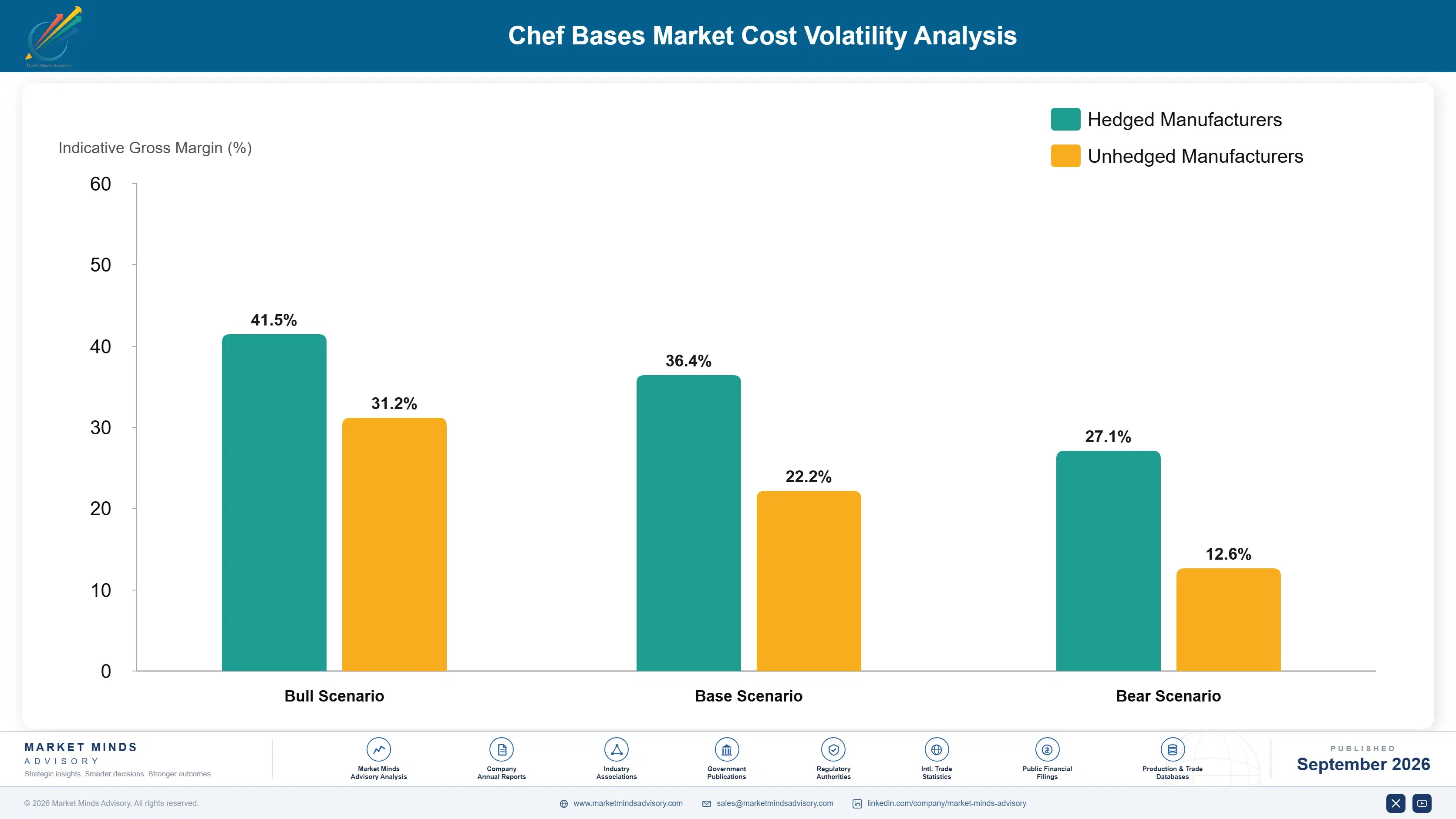
Refrigeration system and cabinet fabrication dominate everything else. The compressor, condenser and evaporator assembly runs roughly 34% of manufacturing cost, stainless cabinet and insulation about 27%, and drawer mechanisms or door hardware around 12% depending on configuration. Controls and electrical take a further 9%. Freight absorbs most of the remainder on a heavy unit that ships badly and requires specialist handling.
Stainless steel prices rose sharply through 2021 and 2022 on nickel and energy costs, while semiconductor availability constrained refrigeration controller supply in the same window, a movement the EIA documents for energy inputs and the US Census Bureau records in component trade data. Several manufacturers reported margin compression across commercial refrigeration ranges in their 2022 disclosures and repriced through dealer channels. Both movements landed inside one year.

Exposure divides by configuration and by manufacturing location rather than by company size. Self-contained participants carry full refrigeration system cost on every unit while remote configurations shift the condenser to a separate purchase, which changes the cost structure materially. Manufacturers producing in India and China for local demand avoid freight on a heavy product, which is much of why those positions are hard to contest.
chef-bases-market-cost-volatility-analysis-1790024947141

Convert refrigerant systems ahead of regulatory requirement

European and North American refrigerant regulation is tightening on synthetic alternatives and hydrocarbon conversion requires redesign of sealed systems rather than a component substitution. Moving ahead of requirement spreads engineering cost across normal development cycles. Waiting means converting under deadline pressure with less room to optimise anything properly. Sealed system redesign takes a full development cycle.

Dual source refrigeration controllers before scaling volume

Controllers come from a limited supplier base and semiconductor availability constrained commercial refrigeration production directly through the last cycle. Qualifying second sources avoids a position where one supplier sets price and delivery together. Qualification takes engineering time and certification work well ahead of any commercial need arising. Certification work extends the qualification timeline further.

Manufacture regionally for heavy specialist-handling equipment

Chef bases are heavy, awkward to handle and require specialist freight, which makes transport a meaningful share of landed cost on any long route. Producing closer to demand removes it along with duty. The constraint is that refrigeration assembly and testing capability must be built before regional volumes justify it. India and China have crossed that threshold already.

Portfolio Architecture for Margin Defence

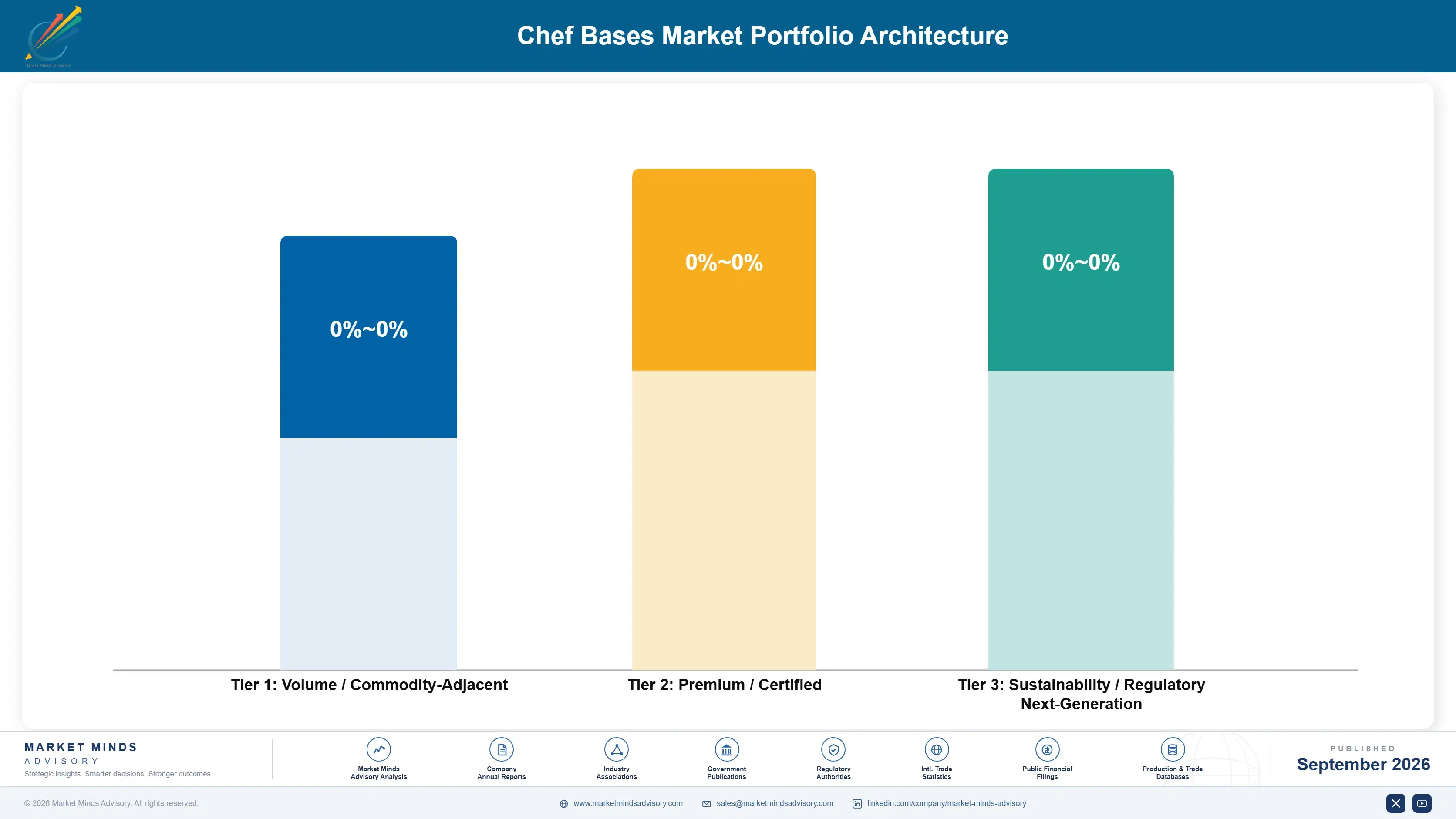
Margin architecture divides by whether refrigeration is involved and how it is configured, which the category name partly conceals. Ambient storage bases sold through foodservice dealers run at gross margins in the low twenties to low thirties, competing as fabricated stainless boxes against any workshop capable of welding and finishing a cabinet to a drawing. Nothing about a fabricated cabinet distinguishes one supplier from another.
Self-contained refrigerated door and drawer bases hold gross margins in the mid thirties to mid forties. The spread reflects how differently chain-specified and dealer-stocked units carry technical support cost. Drawer configurations earn a premium over doors on workflow grounds that head chefs evaluate directly, which is unusual in a category where most decisions are made by purchasing departments.

The highest-value pool is remote condenser systems and modular multi-compartment lines, at margins in the high forties to high fifties. Those specifications involve refrigeration contractors, lifecycle evaluation and whole-line coordination that few participants can support. Ambient stands carry volume and dealer presence. They defend nothing against a fabrication shop with a bending brake. Dealer presence is the argument for keeping that tier, and it is genuinely real.

Volume / Commodity-Adjacent

Ambient storage bases through foodservice dealers, competing as fabricated stainless boxes against any workshop able to weld to a drawing. The ten point range reflects differing dealer and freight terms.
Gross Margin: 22 to 32%

Premium / Certified

Self-contained refrigerated door and drawer bases. Drawer configurations earn a premium on workflow grounds that head chefs evaluate directly, which is unusual where purchasing departments normally decide. Slide rating becomes the service issue once compressors are handled.
Gross Margin: 35 to 45%

Sustainability / Regulatory / Next-Generation

Remote condenser systems and modular multi-compartment lines. These specifications involve refrigeration contractors, lifecycle evaluation and whole-line coordination that very few participants can actually support. Whole-line coordination is what these buyers are paying for.
Gross Margin: 47 to 58%
chef-bases-market-portfolio-architecture-1790024947645

High-value Sub-segments and Strategic Watch-out

Remote Condenser Chef Bases

Highest value and fastest growth at 8.7%, solving the heat rejection contradiction at the centre of the product. Split construction and operating budgets rather than any technical difficulty are what hold adoption back. Gulf kitchens specify it above the global average because ambient conditions demand it.
Gross Margin: 48 to 57%

Modular Multi-Compartment Bases

High value and strong growth, specified where whole cook lines are designed rather than assembled from separate units. Coordination between refrigeration and cooking equipment is what these buyers are actually paying for. A contractor left to resolve the equipment interface usually resolves it badly indeed.
Gross Margin: 44 to 53%

Refrigerated Drawer Bases

Volume core growing at 7.4% on workflow rather than refrigeration advantages. Slide wear under commercial duty becomes the dominant service issue once compressor placement has been properly addressed. Head chefs evaluate that workflow difference directly rather than through any purchasing department at all in this tier.
Gross Margin: 36 to 44%

Ambient Storage Bases

Strategic watch-out. Growing slowest at 2.3% and increasingly difficult to justify where cook line rent is priced properly. The fourteen point range reflects how differently fabricated and imported cabinets are priced. An open stand returns nothing for the most expensive floor space in the building.
Gross Margin: 20 to 34%

How Kitchens Actually Specify

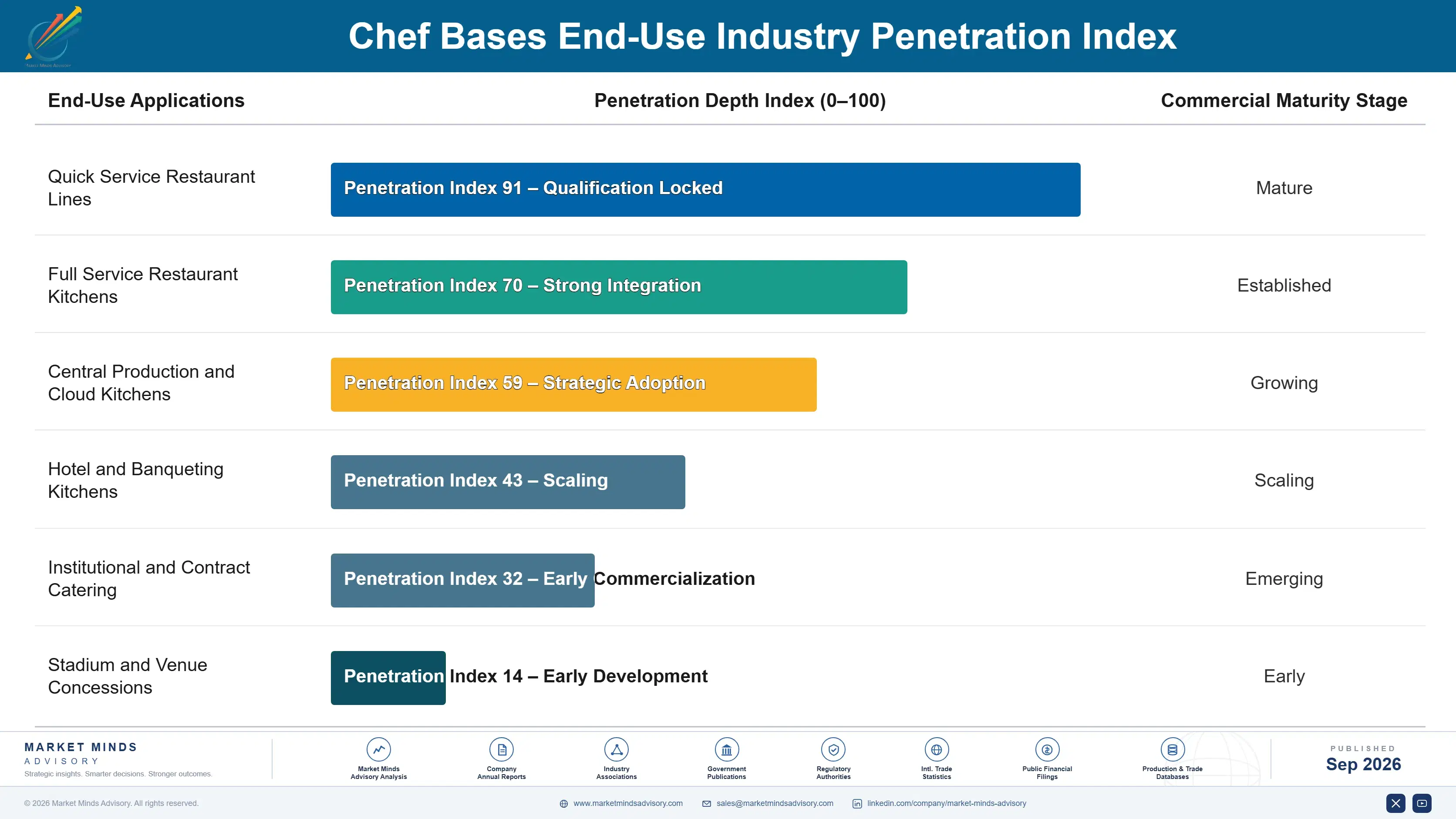
Demand here arrives with construction rather than with breakdown, which distinguishes it from most commercial kitchen equipment. A chef base is specified during a build or a refit because installing one means dismantling a cook line, so a failing unit is nursed along until the next project rather than replaced immediately. That ties the category to construction cycles considerably more tightly than to operator equipment budgets.
Stickiness varies sharply by who specified and what failed. Chain accounts that standardised a cook line configuration are extremely durable, since requalifying refrigeration against an established layout and service contract is genuinely disruptive. Operators who replaced compressors repeatedly switch decisively and do not return. Independent operators buying from a dealer have no attachment at all and take what is available when a project requires it.

Buyer profiles are shifting toward whole-line thinking. Kitchen designers increasingly specify cook lines as coordinated systems rather than assembling equipment from separate catalogues, which favours manufacturers who can supply and integrate the whole run. That change also brings cook line space arithmetic into the conversation, since a designer working to a floor plan is already counting metres that an equipment buyer never sees.
chef-bases-market-end-use-penetration-index-1790024948141

Where The Geometry Decides

These are among the four positions where our research anticipates prominent divergence between winners and laggards over the coming forecast period. Each is grounded in the demand model, the regulatory perimeter, and the announced capacity pipeline.
01 / LOADED RATING DISCLOSURE

Publish performance under a working grill

Around 17% of chef bases carry a performance rating against ambient heat from the cooking equipment mounted above them, while nearly all publish figures from standard test conditions that no working cook line resembles. Testing and publishing loaded performance costs a test programme rather than any redesign of the product. Participants who did it report specification inclusion rising roughly 2.2 times among operators who have already replaced a compressor and know which number matters, and no test standard currently requires the harder figure anyway.
02 / LIFECYCLE BUDGET PRESENTATION

Bridge the construction and operating budgets

Remote condenser configurations solve the heat rejection problem directly and reach only about 22% of installations, because installation cost falls on a construction budget while the reliability benefit accrues entirely to an operating one. Presenting combined lifecycle cost across both budgets costs a calculation rather than any product change whatsoever. Participants who did it report remote specification rising roughly 2.9 times, because somebody finally looks at the whole figure, since the two budgets are controlled by people who rarely talk.
03 / COOK LINE SPACE ECONOMICS

Sell metres of line, not cubic feet

A metre of commercial cook line carries around nineteen hundred dollars of annual rent in urban markets, and an equipment stand that stores nothing occupies that space without returning anything for it at all. Presenting refrigerated bases against measured line rent costs a calculation rather than a redesign. Participants who reframed the argument report conversion from open stands rising roughly 3.4 times among urban operators who verify it against their own lease, and kitchen designers already count metres against a floor plan.
04 / DRAWER SLIDE SPECIFICATION

Rate the slides for commercial duty

Drawer bases grow at 7.4% on workflow advantages that head chefs evaluate directly, and once compressor placement is handled properly the remaining service issue shifts entirely to slide wear under duty cycles measured in hundreds of daily openings. Upgrading to properly rated slides adds a modest amount per drawer assembly. Participants who did it report drawer service calls falling roughly 46%, which protects the workflow argument that sold the configuration originally, at a component cost difference under forty dollars per unit.

Engagement Snapshot From the Field

A live engagement with an industry participant carrying material or product regulatory and market exposure ahead of a defining policy shift, showing how our research translates into a defensible multi-year portfolio strategy.
MARKET MINDS ADVISORY · CLIENT ENGAGEMENT SUMMARY
Chef Bases Producer Strategic Portfolio Review and Transition Roadmap 2026·Investment Scenario on Chef Bases Exposure Evaluation 2025-26
CLIENT PROFILE
A commercial refrigeration manufacturer with chef base revenue near USD 84 million (client-reported, unverified by MMA), weighted approximately 79% to self-contained configurations and 21% to remote. No published rating covered loaded line conditions. Cook line space arithmetic appeared nowhere in sales material and drawer slides were specified to a domestic rather than commercial rating. Remote installation was never presented.
STRATEGIC CHALLENGE
Chain specification revenue had been flat for four years while central kitchen construction expanded rapidly, and management attributed the gap to imported price competition. A cost reduction across the self-contained range had been approved. Nobody had analysed service calls by root cause or asked kitchen designers what they evaluated. Neither question had been asked internally.
MMA APPROACH
MMA coded five years of service records by root cause rather than by product line, separating compressor, slide and control failures. Loaded line performance was measured against published standard ratings. Kitchen designers were interviewed on specification criteria, and cook line rent was calculated across eight urban markets from lease data.
KEY FINDINGS
  1. Coded service records showed 61% of calls traced to compressor failure on self-contained units under cooking equipment, against 14% on remote installations of the same capacity.
  2. Measured loaded performance ran 23% below published standard ratings, which explained holding temperature complaints that had been attributed to operator error. across three years of complaint records.
  3. All eleven kitchen designers interviewed evaluated cook line length against rent, and none had ever received that comparison from an equipment manufacturer.
  4. Drawer slides rated for domestic duty accounted for 31% of service calls on drawer configurations, at a component cost difference under USD 40 per unit.
CLIENT PROFILE
A commercial refrigeration manufacturer with chef base revenue near USD 84 million (client-reported, unverified by MMA), weighted approximately 79% to self-contained configurations and 21% to remote. No published rating covered loaded line conditions. Cook line space arithmetic appeared nowhere in sales material and drawer slides were specified to a domestic rather than commercial rating. Remote installation was never presented.
STRATEGIC CHALLENGE
Chain specification revenue had been flat for four years while central kitchen construction expanded rapidly, and management attributed the gap to imported price competition. A cost reduction across the self-contained range had been approved. Nobody had analysed service calls by root cause or asked kitchen designers what they evaluated. Neither question had been asked internally.
MMA APPROACH
MMA coded five years of service records by root cause rather than by product line, separating compressor, slide and control failures. Loaded line performance was measured against published standard ratings. Kitchen designers were interviewed on specification criteria, and cook line rent was calculated across eight urban markets from lease data.
KEY FINDINGS
  1. Coded service records showed 61% of calls traced to compressor failure on self-contained units under cooking equipment, against 14% on remote installations of the same capacity.
  2. Measured loaded performance ran 23% below published standard ratings, which explained holding temperature complaints that had been attributed to operator error. across three years of complaint records.
  3. All eleven kitchen designers interviewed evaluated cook line length against rent, and none had ever received that comparison from an equipment manufacturer.
  4. Drawer slides rated for domestic duty accounted for 31% of service calls on drawer configurations, at a component cost difference under USD 40 per unit.
RECOMMENDED STRATEGY
Phase 1: Phase one: cancel the cost reduction, upgrade drawer slides to commercial rating and publish loaded line performance figures. The slide difference costs under forty dollars. Phase 2: Phase two: build lifecycle presentations bridging construction and operating budgets for remote condenser specification. Both budgets have to see the same figure. Phase 3: Phase three: supply kitchen designers with cook line rent comparisons calculated for their own urban markets. Designers already count metres on a plan.
OUTCOME
Service calls fell by roughly two fifths within four quarters of the slide upgrade and published ratings (client-reported, unverified by MMA). Remote configuration share rose materially once lifecycle presentations reached specifiers, and designer-led specifications grew from a negligible base to a meaningful share of chain wins.

Frequently Asked Questions

Foundational context covering the market sizes, CAGR, scope, country, region and competition that inform every finding below. This section is provided to cover basics and most often pre-purchase conversations, answered from the MMA Primary Research Dataset.

What is the current size of the Chef Bases Market?

The market was valued at USD 0.86 billion in 2025, rising to USD 0.91 billion in 2026. Sizing is at manufacturer net revenue across six unit configurations.

How large will the Chef Bases Market be by 2036?

MMA forecasts USD 1.6 billion by 2036, an increase of USD 0.69 billion over the 2026 base. That represents expansion of 1.76 times across the forecast period.

What is the CAGR for the Chef Bases Market 2026 to 2036?

The base case CAGR is 5.8%, with a bull case of 7.0% and a bear case of 4.6%. Historical growth between 2020 and 2025 ran at 4.6%.

Which segment is growing fastest?

Remote condenser chef bases grow at 8.7%, half again the market rate, by moving the compressor off the hot line. Refrigerated drawer bases follow at 7.4%.

Who are the major companies in the Chef Bases Market?

Duke Manufacturing, True Manufacturing, Continental Refrigeration, Randell and Delfield lead on manufacturer net revenue, holding a combined 43%. Refrigeration engineering and chain specification relationships separate them.

Which country is growing fastest?

India grows fastest at 10.4%, on organised food service and cloud kitchen operators building cook lines from scratch rather than retrofitting existing kitchens. Integrated bases are specified from the outset there.

Report Segmentation Architecture

The full report scope spans multiple orthogonal segmentation dimensions, with cross-tabulated demand data provided for each dimension pair. Coverage extends further to regional breakdowns, trend trajectories, and the competitive detail needed to support segment-level decision-making.

By Unit Configuration

  • Refrigerated Drawer Bases
  • Refrigerated Door Bases
  • Remote Condenser Chef Bases
  • Freezer Chef Bases
  • Ambient Storage Bases
  • Modular Multi-Compartment Bases

By End-Use Industry

  • Quick Service Restaurant Lines
  • Full Service Restaurant Kitchens
  • Central Production and Cloud Kitchens
  • Hotel and Banqueting Kitchens
  • Institutional and Contract Catering
  • Stadium and Venue Concessions

By Commercial Dimension

  • Chain Central Specification
  • Kitchen Design Consultancy
  • Foodservice Dealer Distribution
  • Direct Manufacturer Sales
  • Construction Contractor Procurement
  • Institutional Tender Procurement

By Region

  • North America
  • East Asia
  • Western Europe
  • South Asia and Pacific
  • Middle East and Africa
  • Latin America
  • Eastern Europe

Scope, Methodology, and Coverage

Every figure in this report is reproducible from documented input assumptions. The scope below maps the historical period, the forecast horizon, the segmentation dimensions, and the countries covered, alongside the underlying primary and qualitative methodology.
Historical Period
2020 to 2025
Forecast Period
2026 to 2036
Base Year
2025 (USD billions; MMA Primary Research Dataset, September 2026)
Market Definition
This market covers refrigerated and ambient equipment stands designed to sit beneath cooking equipment on a commercial cook line, spanning refrigerated drawer bases, refrigerated door bases, remote condenser chef bases, freezer chef bases, ambient storage bases, and modular multi-compartment bases. Sizing is at manufacturer net revenue across chain specification, design consultancy, dealer distribution, direct, contractor and institutional tender channels. Standalone undercounter refrigeration not designed for equipment loading, worktop refrigerated preparation counters, cooking equipment itself, and walk-in refrigeration are excluded throughout.
Quantitative Units
USD billions at manufacturer net revenue; volume in thousands of units shipped; performance in holding temperature under loaded line conditions.
Segmentation Dimensions
Unit configuration, end-use industry, commercial dimension, and geographic region.
Regions Covered
North America, East Asia, Western Europe, South Asia and Pacific, Middle East and Africa, Latin America, Eastern Europe
Countries Covered
United States, China, India, Germany, United Arab Emirates, Brazil
Key Companies Profiled
Duke Manufacturing, True Manufacturing, Continental Refrigeration, Randell, Delfield, Traulsen, Beverage-Air, Hoshizaki, Turbo Air, Victory Refrigeration, Silver King, Perlick, Foster Refrigerator, Williams Refrigeration, Gram Commercial, Coreco, Infrico, Blue Star Limited, Western Refrigeration, Fagor Industrial
Quantitative Methodology
Primary survey, n=3,800 respondents, Q4 2025, six countries; demand-side model with trade association cross-validation
Qualitative Methodology
47 expert interviews, Q4 2025; applied to validate demand model assumptions, identify emerging dynamics, and assess competitive positioning
Report Format
PDF and XLSX data workbook (Word format preview document)
Publisher
Market Minds Advisory
Report Code
MMA-2026-CON-815
Published
September 2026
Contact
sales@marketmindsadvisory.com | www.marketmindsadvisory.com

Purchase the full Chef Bases Market Report (2026 to 2036).

The full report sizes the chef bases market across six unit configurations, six end-use industries and six commercial dimensions for all seven global regions through 2036. It codes service records by root cause rather than by product line, separating compressor failures from slide and control issues. Loaded line performance is measured against published standard ratings to quantify the gap. Cook line rent is calculated from lease data across multiple urban markets and compared against equipment stand economics. Competitive assessment covers 20 participants on a consistent manufacturer net revenue basis.
Service records coded by root cause not product line
Loaded line performance measured against published ratings
Cook line rent calculated from urban market lease data
Kitchen designer specification criteria collected directly
Six unit configurations sized through 2036
Twenty participants assessed on manufacturer net revenue

Built For The People Who Decide

From boardroom strategy to bench-side execution, this report is read cover-to-cover by leaders shaping the next decade of their industry, turning demand scenarios, market dynamics and valuation benchmarks into decisions.
CXOs/ Presidents/ VPs/ Managers
M&A and Corporate Development
Strategy Teams and R&D Heads
Procurement and Product Directors
Regulatory and Compliance Leaders
Investor Relations and Equity Analysts