Carbon Nanotubes Market
Carbon Nanotubes Market Outlook from 2026 to 2033
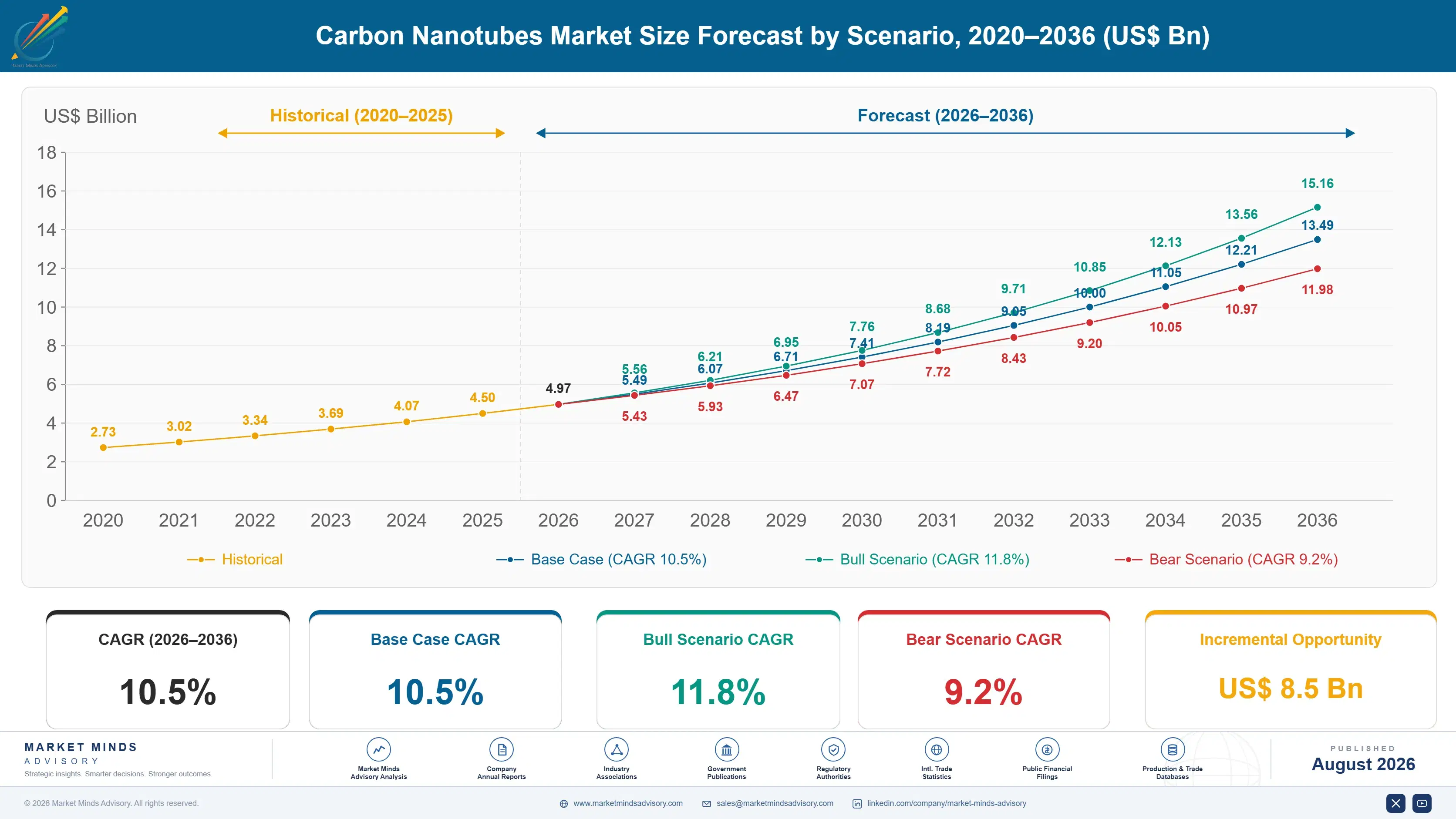
The Carbon Nanotubes Market is poised for robust expansion, driven by increasing demand across diverse industries such as electronics, automotive, energy, and healthcare. The market is expected to grow from a base value of USD 2.1 billion in 2026 to approximately USD 5.7 billion by 2033, registering a compound annual growth rate (CAGR) of 15.1% during the forecast period. The unique mechanical, electrical, and thermal properties of carbon nanotubes (CNTs) have positioned them as a critical material in the development of next-generation products, particularly in applications requiring lightweight, high-strength, and conductive materials.
The market’s growth trajectory is further supported by advancements in manufacturing technologies, enabling large-scale and cost-effective production of CNTs. Strategic collaborations among industry players, research institutions, and government bodies are fostering innovation and accelerating the commercialization of CNT-based products. As sustainability and energy efficiency become central to industrial strategies, the adoption of carbon nanotubes is expected to rise, particularly in renewable energy, battery technology, and environmental remediation applications.

Carbon Nanotubes Market Scenario & Strategic Insights
The Carbon Nanotubes Market is characterized by dynamic shifts in demand patterns, technological advancements, and evolving regulatory frameworks. The increasing integration of CNTs in composite materials, conductive films, and energy storage devices is reshaping the competitive landscape. Key industry participants are focusing on expanding their production capacities and enhancing product quality to cater to the growing requirements of end-use sectors. The market is also witnessing a surge in research and development activities aimed at improving the scalability and cost-effectiveness of CNT synthesis methods, such as chemical vapor deposition and arc discharge.
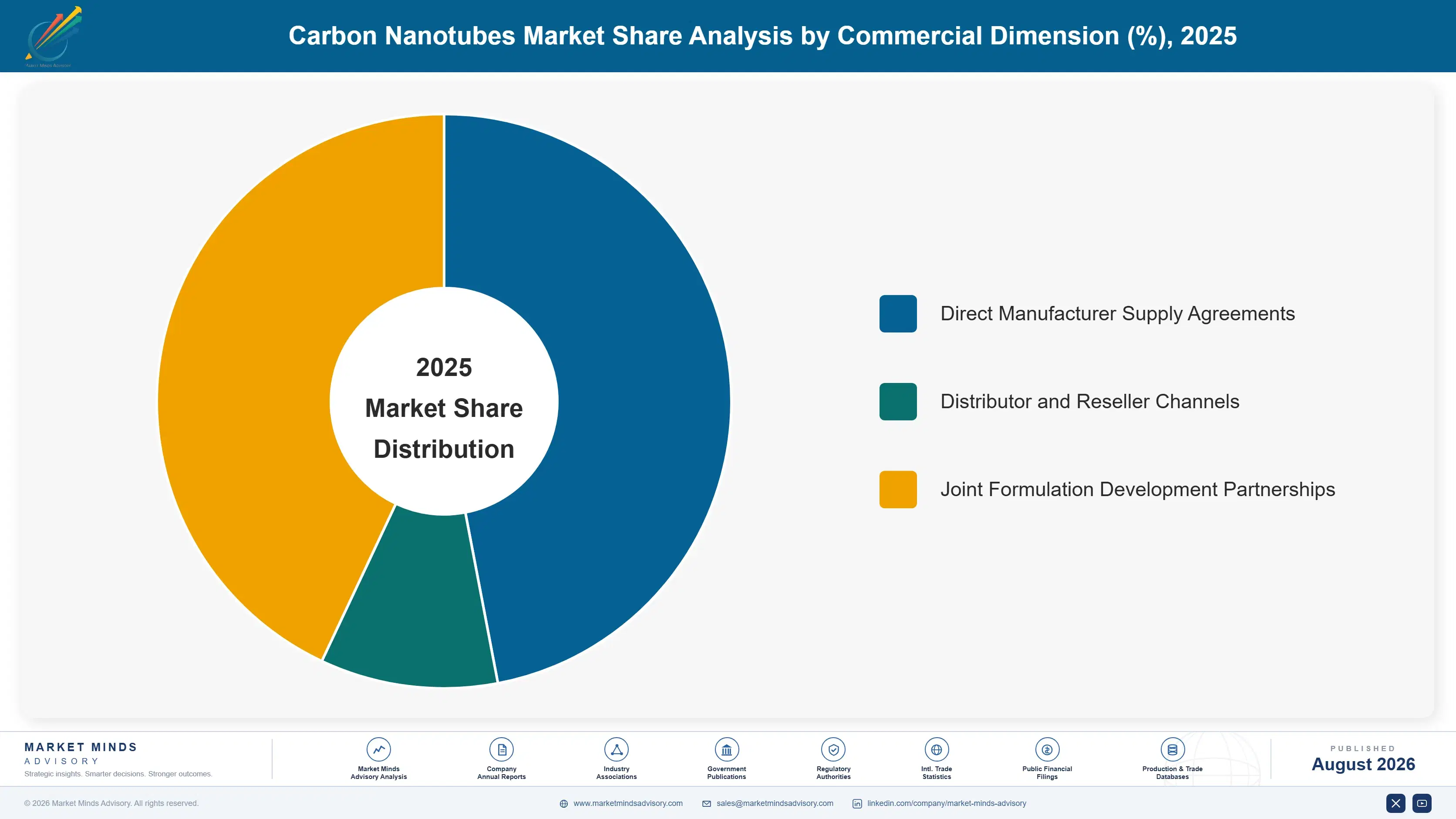
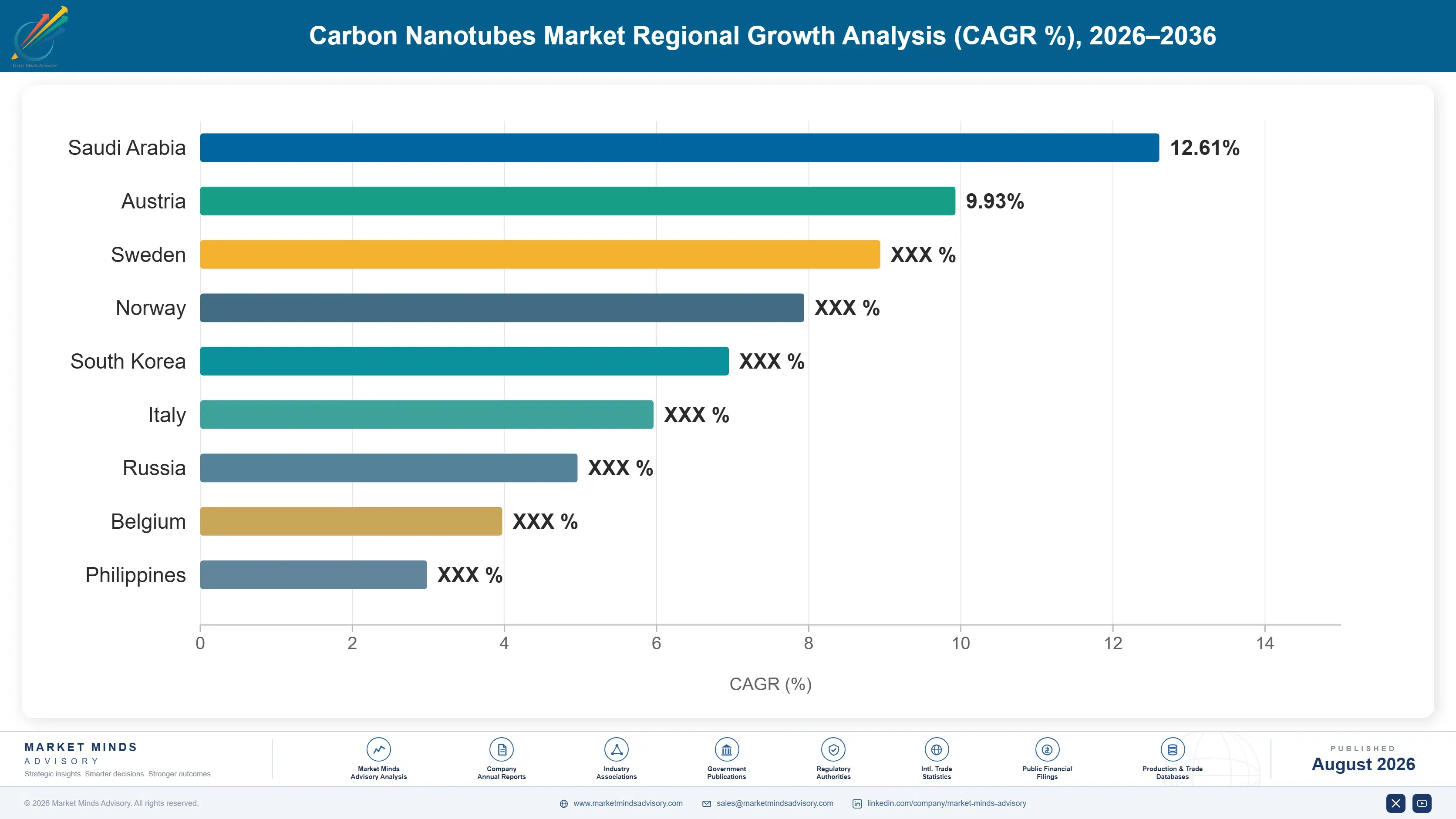
Strategic partnerships and mergers are becoming prevalent as companies seek to strengthen their market position and diversify their product portfolios. The Asia-Pacific region, led by China, Japan, and South Korea, continues to dominate the global market due to significant investments in nanotechnology and the presence of major electronics and automotive manufacturing hubs. Meanwhile, North America and Europe are witnessing increased adoption of CNTs in advanced materials and energy storage solutions, driven by stringent environmental regulations and a focus on sustainable innovation.
Despite the promising outlook, the market faces challenges related to the standardization of CNT quality, environmental concerns, and high production costs. Addressing these challenges through technological innovation and regulatory harmonization will be crucial for unlocking the full potential of carbon nanotubes across industries.
| Attribute | 2026 (USD Billion) | 2033 (USD Billion) | CAGR (2026 – 2033) |
| Market Size | 2.1 | 5.7 | 15.1% |
Carbon Nanotubes Market Trends
- Rising Adoption in Energy Storage and Conversion Applications
The Carbon Nanotubes Market is witnessing significant traction in the energy sector, particularly in lithium-ion batteries, supercapacitors, and fuel cells. CNTs enhance the electrical conductivity, mechanical strength, and cycle stability of electrodes, leading to improved energy density and longer battery life. As the demand for electric vehicles and renewable energy storage solutions accelerates, manufacturers are increasingly incorporating CNTs to achieve superior performance metrics. This trend is expected to drive substantial market growth, especially as battery technologies evolve to meet the requirements of next-generation mobility and grid storage systems.
- Integration in Lightweight and High-Strength Composites
Carbon nanotubes are being extensively utilized in the development of lightweight, high-strength composite materials for automotive, aerospace, and construction applications. The incorporation of CNTs into polymers and metals imparts exceptional mechanical properties, such as increased tensile strength and impact resistance, while reducing overall material weight. This trend aligns with the global push towards fuel efficiency and emission reduction, as lightweight vehicles and aircraft contribute to lower energy consumption. The ongoing research into CNT-reinforced composites is expected to unlock new applications and further expand the market’s scope.
- Advancements in Large-Scale and Cost-Effective Production Technologies
The scalability and cost of CNT production have historically been major barriers to widespread adoption. However, recent advancements in synthesis methods, such as chemical vapor deposition (CVD), have enabled the production of high-quality CNTs at lower costs and larger volumes. Companies are investing in process optimization and automation to enhance yield and consistency, making CNTs more accessible for commercial applications. This trend is anticipated to lower entry barriers for new market participants and accelerate the integration of CNTs in mass-market products.
Segment & Category Analysis for Carbon Nanotubes Market
By Product Type
- Single-Walled Carbon Nanotubes (SWCNT)
- Multi-Walled Carbon Nanotubes (MWCNT)
The product type segment is dominated by multi-walled carbon nanotubes (MWCNT) due to their relatively lower production costs and broader application base. MWCNTs are widely used in composite materials, conductive polymers, and coatings. Single-walled carbon nanotubes (SWCNT), while offering superior electrical and mechanical properties, are more expensive to produce and are primarily utilized in high-performance electronics and research applications. The ongoing advancements in SWCNT production methods are expected to gradually increase their market share during the forecast period.

By Method of Synthesis
- Chemical Vapor Deposition (CVD)
- Arc Discharge
- Laser Ablation
- Other Methods
Chemical vapor deposition (CVD) remains the most prevalent synthesis method for carbon nanotubes, offering scalability, cost-effectiveness, and control over CNT quality. Arc discharge and laser ablation methods are primarily used for research and specialty applications due to their ability to produce high-purity CNTs, albeit at higher costs and lower yields. The choice of synthesis method significantly impacts the properties and end-use suitability of CNTs, making it a critical consideration for manufacturers and end-users alike.
By Application
- Electronics & Semiconductors
- Energy Storage & Conversion
- Composites & Plastics
- Medical & Healthcare
- Others (Sensors, Environmental Remediation)
The electronics and semiconductors segment leads the application landscape, leveraging CNTs for their exceptional electrical conductivity and miniaturization potential. Energy storage and conversion applications, such as batteries and supercapacitors, represent a rapidly growing segment, driven by the global shift towards renewable energy and electric mobility. Composites and plastics utilize CNTs to enhance mechanical properties, while the medical and healthcare sector explores their use in drug delivery, biosensors, and imaging.
By End-Use Industry
- Automotive
- Aerospace & Defense Electrical & Electronics Healthcare & Life Sciences Energy & Power
- Others
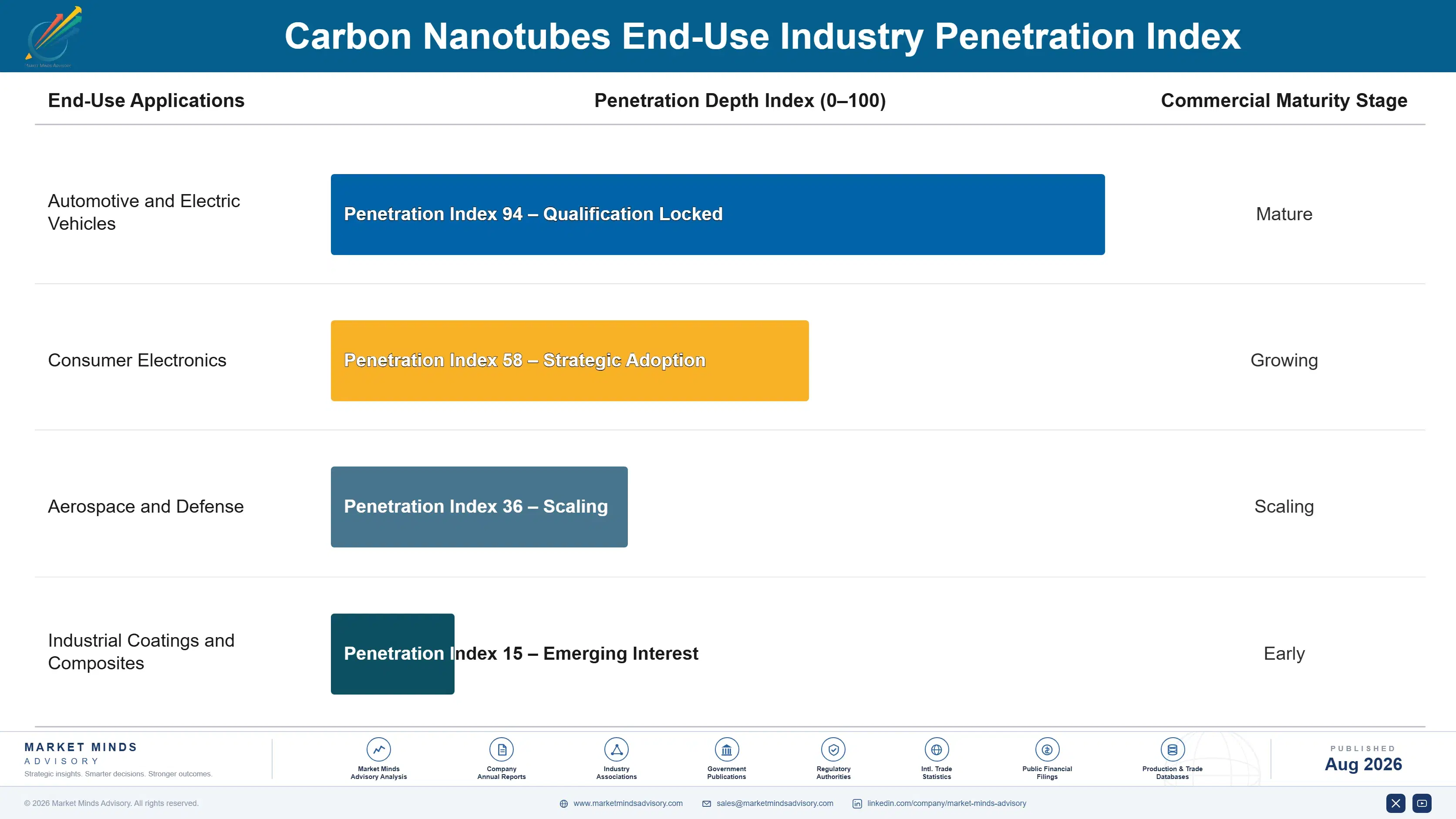
The automotive and aerospace industries are at the forefront of CNT adoption, seeking lightweight, durable materials to improve fuel efficiency and performance. The electrical and electronics sector benefits from CNTs’ superior conductivity and thermal management capabilities. Healthcare and life sciences are emerging as promising end-use industries, with ongoing research into CNT-based drug delivery systems and diagnostic tools.

By Region
- Asia-Pacific
- North America Europe South America
- Middle East & Africa
Asia-Pacific dominates the Carbon Nanotubes Market, driven by robust manufacturing infrastructure, significant investments in nanotechnology, and the presence of major end-use industries. North America and Europe are characterized by strong research and development activities and early adoption of advanced materials. South America and the Middle East & Africa are emerging markets, with increasing investments in infrastructure and industrial development expected to drive future growth.
Growth Drivers and Opportunities in Carbon Nanotubes Market
- Expansion of Electric Vehicle and Renewable Energy Sectors
The rapid growth of the electric vehicle (EV) market and the increasing deployment of renewable energy systems are major drivers for the Carbon Nanotubes Market. CNTs play a pivotal role in enhancing the performance of lithium-ion batteries, supercapacitors, and fuel cells, which are integral to EVs and renewable energy storage solutions. As governments worldwide implement policies to reduce carbon emissions and promote clean energy, the demand for high-performance energy storage materials is expected to surge, creating significant opportunities for CNT manufacturers.
- Rising Demand for Advanced Materials in Electronics and Healthcare
The electronics industry’s pursuit of miniaturization and enhanced device performance is fueling the adoption of CNTs in transistors, sensors, and flexible displays. Similarly, the healthcare sector is exploring CNTs for innovative applications such as targeted drug delivery, biosensors, and imaging agents. The unique properties of CNTs, including high surface area, biocompatibility, and electrical conductivity, make them ideal candidates for next-generation medical devices and diagnostic tools. These emerging applications are expected to drive market expansion and diversification.
Emerging Opportunities for Carbon Nanotubes Market
- Development of CNT-Based Environmental Remediation Solutions
Environmental concerns related to pollution and resource scarcity are prompting the development of CNT-based solutions for water purification, air filtration, and soil remediation. The high adsorption capacity and chemical stability of CNTs enable efficient removal of contaminants, heavy metals, and organic pollutants. As regulatory pressures mount and industries seek sustainable solutions, the adoption of CNT-enabled environmental technologies is anticipated to present lucrative growth opportunities.
- Integration in Smart Textiles and Wearable Electronics
The integration of carbon nanotubes into smart textiles and wearable electronics represents a promising frontier for market growth. CNTs impart conductivity, flexibility, and durability to fabrics, enabling the development of wearable sensors, energy-harvesting garments, and responsive clothing. The convergence of nanotechnology and the Internet of Things (IoT) is expected to accelerate innovation in this space, opening new avenues for CNT application in consumer and industrial markets.
Growth Restrain Factors and Challenges in Carbon Nanotubes Market
- High Production Costs and Scalability Issues
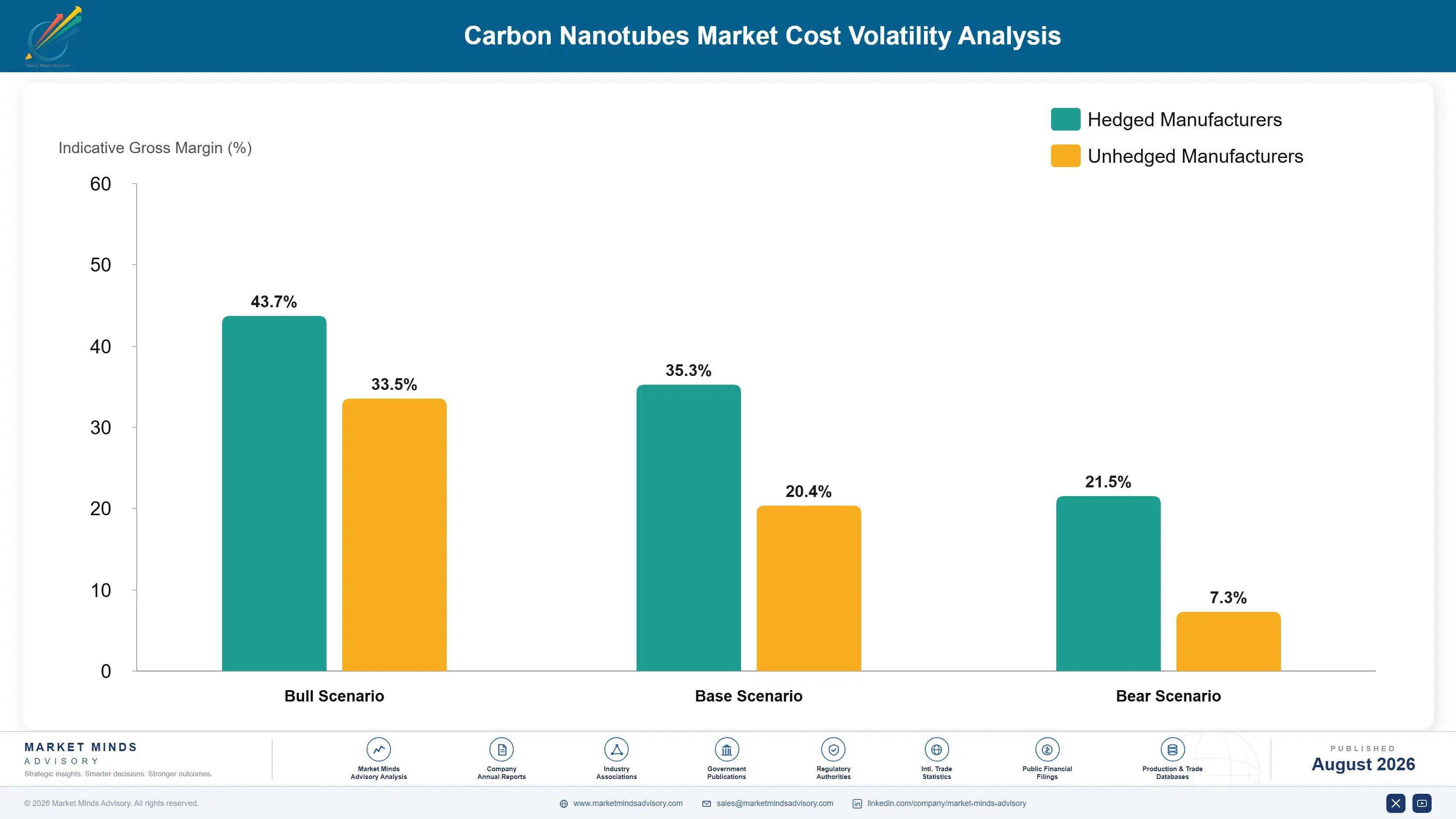
The high cost of CNT production remains a significant barrier to widespread adoption, particularly for single-walled carbon nanotubes (SWCNTs) that require sophisticated synthesis techniques. Despite advancements in chemical vapor deposition and other methods, achieving consistent quality at scale continues to challenge manufacturers. This cost barrier limits the penetration of CNTs in price-sensitive applications and restricts their use to high-value sectors. Addressing scalability and cost-effectiveness through process innovation and economies of scale will be critical for market expansion.
Additionally, the lack of standardized production protocols and quality benchmarks complicates the commercialization process. Variability in CNT properties can impact product performance and reliability, deterring potential end-users from adopting CNT-based solutions. Industry-wide efforts to establish standards and certification processes are essential to build confidence and facilitate broader market acceptance.
- Environmental, Health, and Regulatory Concerns
The potential environmental and health risks associated with CNT production, handling, and disposal pose challenges for market growth. Concerns regarding the toxicity and persistence of CNTs in biological and ecological systems have prompted regulatory scrutiny and the development of safety guidelines. Compliance with evolving regulations adds complexity and cost to manufacturing operations, particularly in regions with stringent environmental standards.
Furthermore, the lack of comprehensive toxicological data and long-term studies on CNT exposure limits the ability of regulators and industry stakeholders to assess risks accurately. Ongoing research into the environmental fate and health impacts of CNTs, coupled with transparent risk communication, will be vital to address these concerns and ensure responsible market development.
Carbon Nanotubes Market Regional Analysis
| Region | Market Share (2025) | Key Market Highlight |
| Asia-Pacific | 48% | Dominates due to strong manufacturing base, R&D investments, and government support. |
| North America | 23% | High adoption in electronics, energy storage, and advanced composites. |
| Europe | 18% | Focus on sustainability, automotive innovation, and regulatory compliance. |
| South America | 6% | Emerging market with growing industrial and infrastructure investments. |
| Middle East & Africa | 5% | Early-stage adoption, driven by energy and construction sectors. |
Asia-Pacific: The Asia-Pacific region leads the Carbon Nanotubes Market, accounting for nearly half of the total market share. The region’s dominance is attributed to the presence of major electronics and automotive manufacturing hubs, significant investments in nanotechnology research, and supportive government policies. China, Japan, and South Korea are at the forefront, driving innovation and large-scale production of CNTs.
North America: North America holds a substantial share of the market, driven by advanced research and development activities, early adoption of cutting-edge technologies, and a strong focus on energy storage and electronics applications. The United States is the primary contributor, with a robust ecosystem of academic institutions, startups, and established industry players.
Europe: Europe is characterized by a strong emphasis on sustainability, regulatory compliance, and automotive innovation. The region’s automotive and aerospace industries are key adopters of CNT-based composites, while ongoing research initiatives support the development of new applications in healthcare and environmental remediation.
South America: South America is an emerging market for carbon nanotubes, with increasing investments in industrial development and infrastructure projects. Brazil and Argentina are leading the adoption of CNTs in construction, energy, and automotive sectors, supported by favorable government policies and international collaborations.
Middle East & Africa: The Middle East & Africa region is at an early stage of CNT adoption, with growth primarily driven by the energy and construction industries. Investments in infrastructure development and renewable energy projects are expected to create new opportunities for CNT applications in the coming years.

Competition Landscape in Carbon Nanotubes Market
The Carbon Nanotubes Market is highly competitive, with a mix of established multinational corporations, specialized nanomaterials companies, and emerging startups. The competitive landscape is shaped by continuous innovation, strategic partnerships, and capacity expansions. Companies are investing in research and development to enhance product quality, reduce production costs, and develop application-specific CNT solutions. Intellectual property rights and proprietary technologies play a crucial role in differentiating market players. The market is also witnessing increased collaboration between industry and academia to accelerate the commercialization of CNT-based products.
Major Players:
- Arkema S.A.
- Showa Denko K.K.
- Nanocyl S.A.
- LG Chem Ltd.
- Cabot Corporation
- OCSiAl Group
- Toray Industries, Inc.
- Hyperion Catalysis International, Inc.
- Jiangsu Cnano Technology Co., Ltd.
- Thomas Swan & Co. Ltd.
- Cheap Tubes Inc.
- Raymor Industries Inc.
- Hanwha Chemical Corporation
- Kumho Petrochemical Co., Ltd.
- Arry International Group Limited
- Carbon Solutions, Inc.
- Nanoshel LLC
- NanoLab, Inc.
- Timesnano (Chengdu Organic Chemicals Co. Ltd.)
- Continental Carbon Nanotechnologies, Inc.
Recent Developments in Carbon Nanotubes Market
- In March 2024, OCSiAl Group announced the expansion of its CNT production facility in Luxembourg, aiming to double its annual output to meet rising global demand.
- In January 2024, LG Chem Ltd. entered into a strategic partnership with a leading automotive manufacturer to develop CNT-enhanced battery materials for electric vehicles.
- In November 2023, Showa Denko K.K. launched a new grade of multi-walled carbon nanotubes optimized for use in high-performance supercapacitors.
- In September 2023, Nanocyl S.A. secured funding from the European Union to advance research on CNT-based water purification systems.
- In July 2023, Cabot Corporation introduced a new CNT dispersion technology targeting the flexible electronics market.
- In May 2023, Arkema S.A. completed the acquisition of a specialty nanomaterials company to strengthen its CNT product portfolio and global footprint.
FAQ for Carbon Nanotubes Market
- What is the projected market size of the Carbon Nanotubes Market by 2033?
The Carbon Nanotubes Market is projected to reach approximately USD 5.7 billion by 2033, growing from a base value of USD 2.1 billion in 2026, with a compound annual growth rate (CAGR) of 15.1% during the forecast period.
- Which regions are expected to dominate the Carbon Nanotubes Market?
Asia-Pacific is expected to maintain its dominance in the Carbon Nanotubes Market, driven by strong manufacturing infrastructure, significant R&D investments, and the presence of major end-use industries. North America and Europe are also key markets, characterized by advanced research and early adoption of CNT technologies.
- What are the primary applications driving the growth of the carbon nanotubes market?
The primary applications include electronics and semiconductors, energy storage and conversion (such as batteries and supercapacitors), composites and plastics, and emerging uses in medical and healthcare devices. These applications leverage the unique mechanical, electrical, and thermal properties of CNTs.
- What are the main challenges facing the Carbon Nanotubes Market?
The main challenges include high production costs, scalability issues, lack of standardized quality benchmarks, and concerns regarding the environmental and health impacts of CNTs. Addressing these challenges through innovation and regulatory harmonization is crucial for market growth.
- Who are the major players in the Carbon Nanotubes Market?
Major players include Arkema S.A., Showa Denko K.K., Nanocyl S.A., LG Chem Ltd., Cabot Corporation, OCSiAl Group, Toray Industries, Inc., Hyperion Catalysis International, and several others. These companies are actively engaged in product development, capacity expansion, and strategic collaborations to strengthen their market position.
Contact us today to access the full report and propel your business forward.