Biocides Market

Biocides Market Outlook from 2026 to 2033

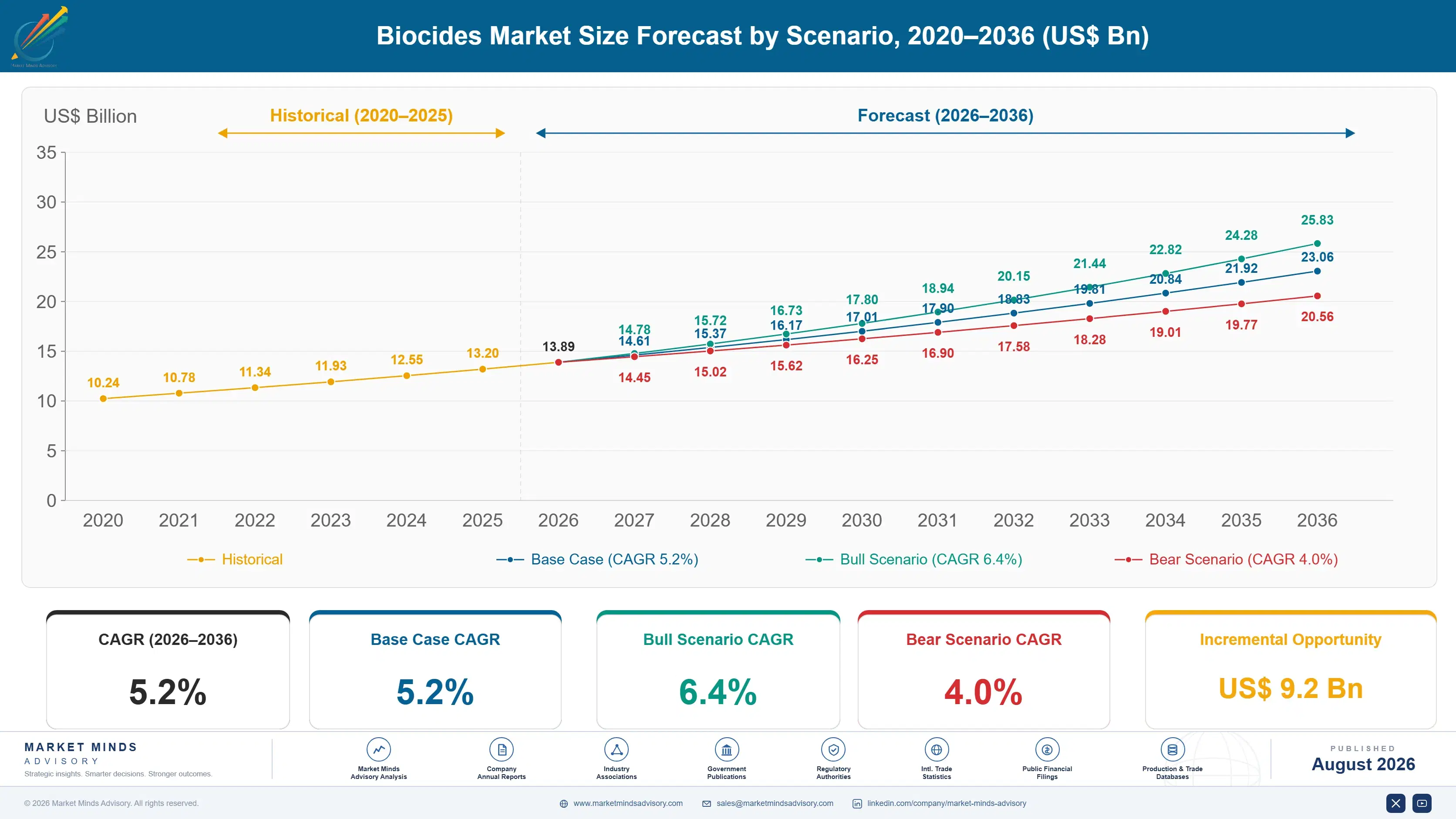
The global biocides market is poised for robust expansion, driven by increasing demand across water treatment, healthcare, agriculture, and industrial applications. In 2026, the biocides market is estimated to be valued at USD 11.8 billion, with projections indicating a rise to USD 16.7 billion by 2033, reflecting a CAGR of 5.2% during the forecast period. This growth is underpinned by heightened regulatory focus on hygiene, the proliferation of waterborne diseases, and the need for effective microbial control in various end-use sectors.

The market’s trajectory is further shaped by technological advancements in biocidal formulations, the emergence of eco-friendly and sustainable biocides, and the expansion of industrial and municipal water treatment infrastructure globally. The competitive landscape is marked by strategic collaborations, product innovations, and mergers & acquisitions, as key players seek to consolidate their positions and address evolving regulatory and environmental requirements.

Biocides Market

Biocides Market Scenario & Strategic Insights

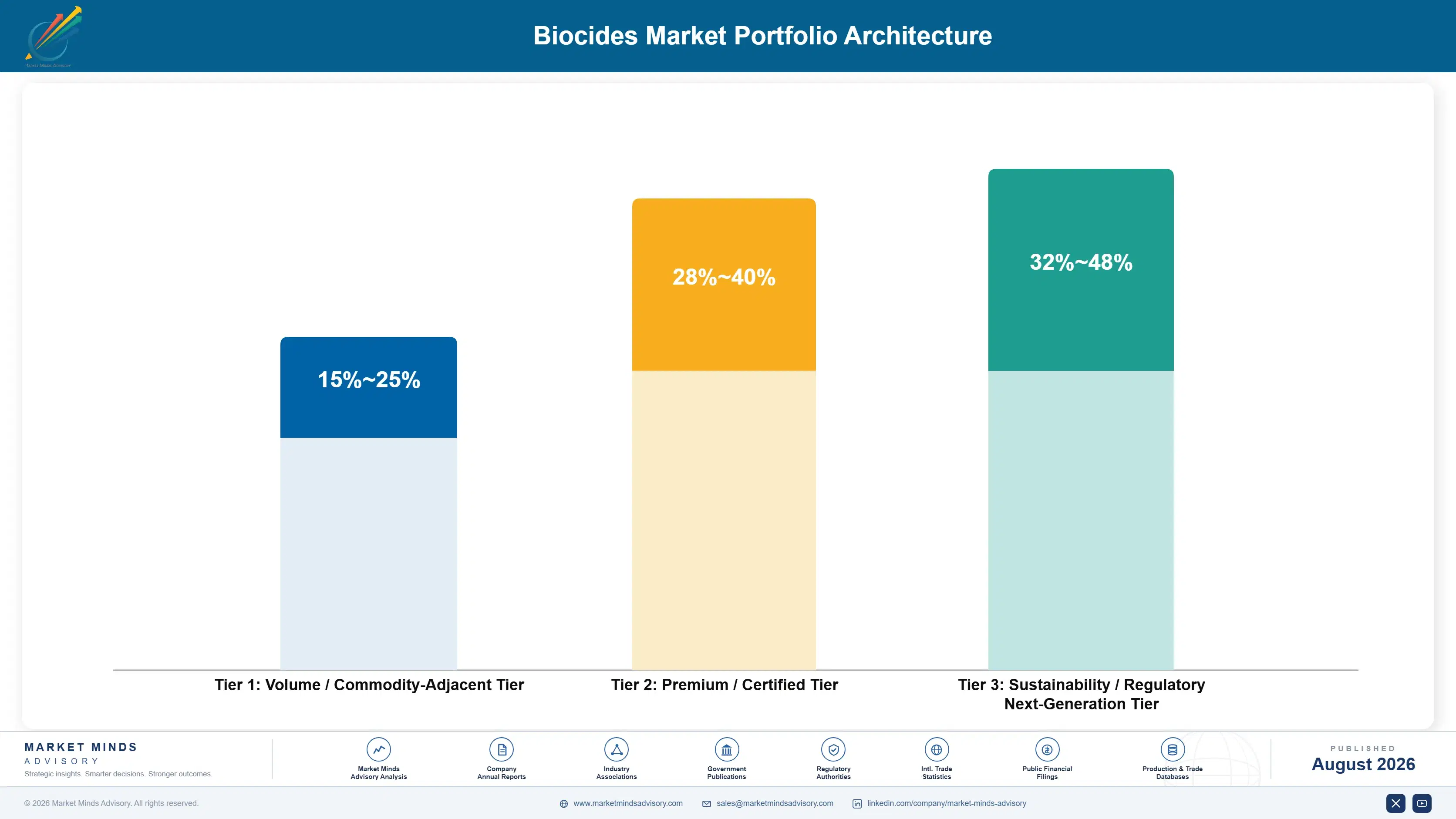
The biocides market is characterized by a dynamic interplay of regulatory, technological, and end-user trends. Regulatory agencies such as the U.S. Environmental Protection Agency (EPA) and the European Chemicals Agency (ECHA) have imposed stringent guidelines on the use and approval of biocidal products, compelling manufacturers to innovate and develop safer, more sustainable solutions. This regulatory rigor, while presenting compliance challenges, also acts as a catalyst for the adoption of next-generation biocides with improved efficacy and lower environmental impact.

Strategically, market participants are investing in research and development to introduce novel biocidal chemistries, including silver-based, organic acid, and natural biocides, to cater to the growing demand for green alternatives. The rising incidence of antimicrobial resistance and the need for effective infection control in healthcare and food processing environments are further propelling market growth. Moreover, the expansion of industrial water treatment and the increasing use of biocides in paints, coatings, and personal care products are broadening the market’s application landscape.

The competitive environment is witnessing heightened consolidation, with leading players acquiring niche technology providers to enhance their product portfolios and geographic reach. Partnerships with end-users and contract manufacturers are also prevalent, enabling companies to offer customized solutions and strengthen supply chain resilience.

Attribute2026 (USD Billion)2033 (USD Billion)CAGR (2026 – 2033)
Market Size11.816.75.2%

Biocides Market Trends

  • Shift Toward Sustainable and Eco-Friendly Biocides

The biocides market is witnessing a significant shift toward the adoption of sustainable and environmentally friendly products. Regulatory pressures and consumer awareness regarding the ecological impact of traditional chemical biocides are driving manufacturers to develop green alternatives. These include plant-based, biodegradable, and low-toxicity biocides that offer effective microbial control while minimizing environmental persistence and bioaccumulation. The trend is particularly pronounced in Europe and North America, where regulatory frameworks such as REACH and the Biocidal Products Regulation (BPR) are stringent. This transition is expected to accelerate as end-users in water treatment, agriculture, and personal care increasingly prioritize sustainability in procurement decisions.

  • Rising Demand from Water Treatment Applications

Water treatment remains the largest application segment for biocides, accounting for a substantial share of global demand. The proliferation of waterborne pathogens, coupled with the expansion of municipal and industrial water treatment infrastructure, is fueling the consumption of biocides for disinfection and microbial control. Emerging economies in Asia-Pacific and Latin America are investing heavily in water treatment facilities to address public health concerns and regulatory mandates. Additionally, the integration of advanced monitoring and dosing technologies is enhancing the efficiency and cost-effectiveness of biocide usage in water treatment processes.

  • Technological Advancements in Biocidal Formulations

Innovation in biocidal chemistries and delivery systems is a defining trend in the market. Manufacturers are developing synergistic blends, encapsulated biocides, and controlled-release formulations to improve efficacy, reduce dosage requirements, and extend product lifespans. These advancements are particularly relevant in applications such as paints and coatings, where long-term protection against microbial degradation is critical. Furthermore, the incorporation of nanotechnology and smart delivery mechanisms is enabling targeted action and minimizing unintended environmental impacts, thereby aligning with evolving regulatory and end-user expectations.

Segment & Category Analysis for Biocides Market

By Product Type

  • Oxidizing Biocides
    • Non-Oxidizing Biocides Metallic Biocides Organic Acid Biocides
    • Natural Biocides

The product type segment is central to the biocides market, with oxidizing and non-oxidizing biocides dominating due to their broad-spectrum efficacy and versatility. Oxidizing biocides, such as chlorine and hydrogen peroxide, are widely used in water treatment and industrial applications for their rapid action against a wide range of microorganisms. Non-oxidizing biocides, including isothiazolinones and glutaraldehyde, offer targeted control and are preferred in applications where material compatibility and long-term stability are critical. Metallic and organic acid biocides are gaining traction in niche applications, while natural biocides are emerging as sustainable alternatives in response to regulatory and consumer pressures.

Biocides Market Product Type

By Application

  • Water Treatment
    • Food & Beverage Personal Care Paints & Coatings Wood Preservation Oil & Gas
    • Agriculture

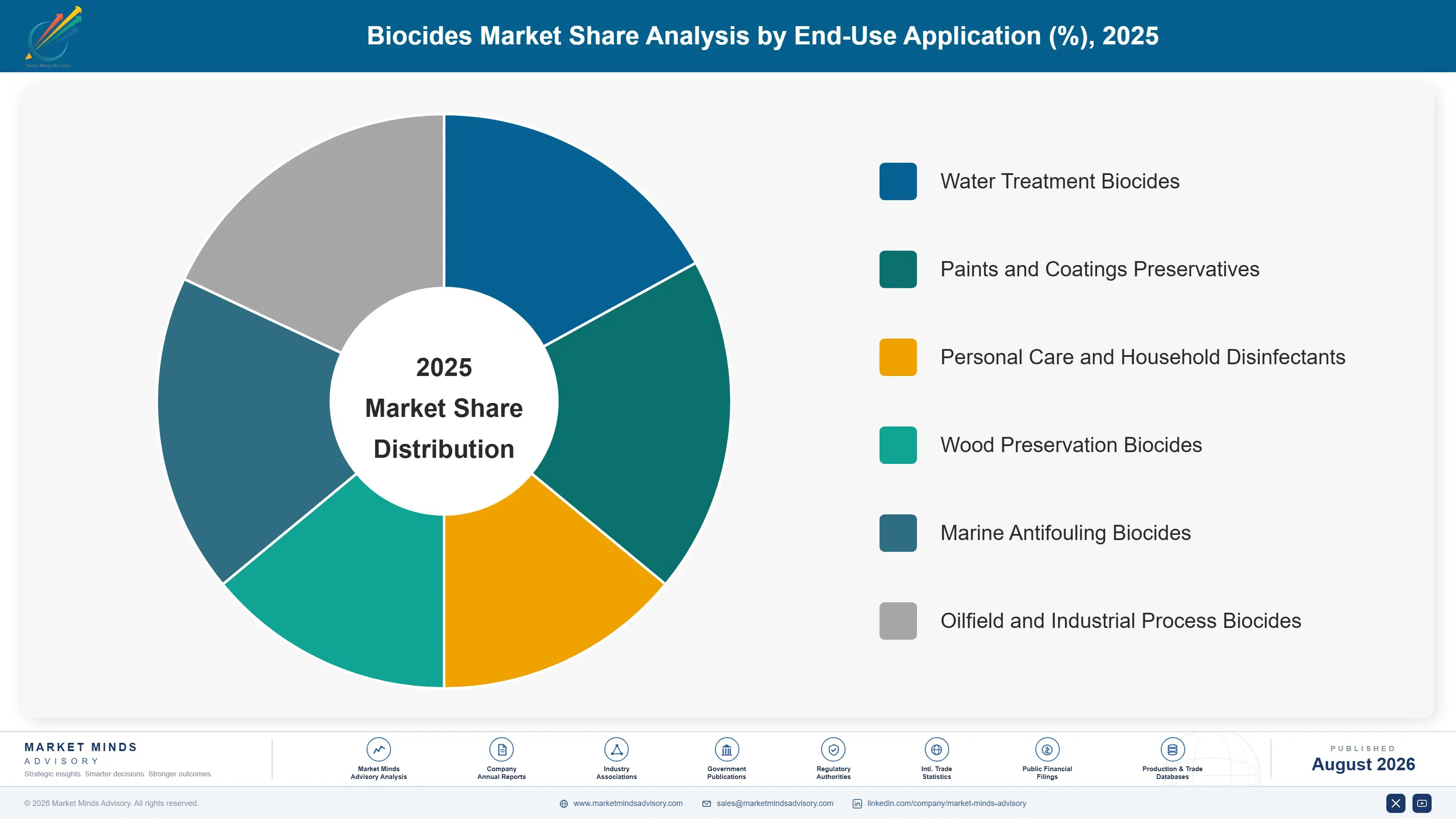
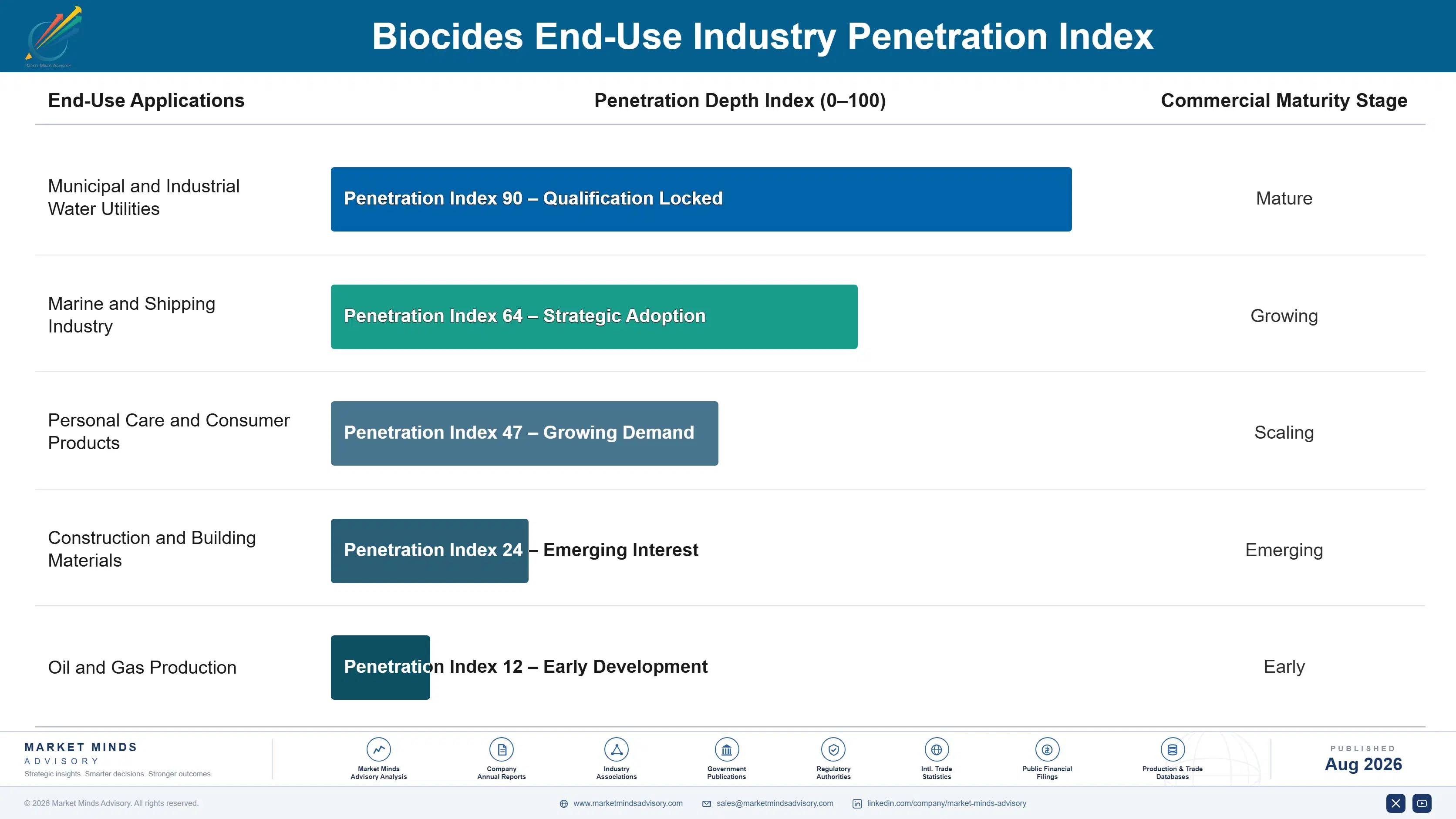
Application-wise, water treatment is the largest and fastest-growing segment, driven by the need for effective microbial control in municipal, industrial, and recreational water systems. The food & beverage sector relies on biocides for sanitation and preservation, ensuring product safety and shelf-life. Personal care applications are expanding with the inclusion of mild, skin-friendly biocides in cosmetics and hygiene products. Paints & coatings and wood preservation segments utilize biocides to prevent microbial degradation and extend product durability. The oil & gas industry employs biocides to control biofouling and corrosion, while agriculture uses them for crop protection and post-harvest treatment.

By End-Use Industry

  • Municipal
    • Industrial Commercial
    • Residential

The end-use industry segmentation highlights the diverse demand base for biocides. Municipal applications, particularly in water and wastewater treatment, represent a significant share, driven by regulatory mandates and public health imperatives. Industrial users, including manufacturing, energy, and chemical processing sectors, utilize biocides for process water treatment, equipment maintenance, and product preservation. Commercial and residential segments are witnessing increased adoption of biocidal products in cleaning, disinfection, and hygiene applications, especially in the wake of heightened awareness post-pandemic.

By Formulation

  • Liquid
    • Powder Granular
    • Tablets

Biocides are available in various formulations to suit specific application requirements. Liquid formulations are preferred for ease of dosing and rapid action, particularly in water treatment and cleaning applications. Powder and granular forms offer advantages in terms of storage stability and controlled release, making them suitable for paints, coatings, and wood preservation. Tablet formulations are gaining popularity in small-scale and household water treatment due to their convenience and precise dosing capabilities.

Biocides Market Formulation

By Region

  • Asia-Pacific
    • North America
    • Europe
    • South America
    • Middle East & Africa

Regional segmentation reveals distinct demand patterns and regulatory landscapes. Asia-Pacific leads in volume consumption, driven by rapid industrialization, urbanization, and infrastructure development. North America and Europe are characterized by mature markets with stringent regulatory oversight, fostering innovation in sustainable and high-performance biocides. South America and the Middle East & Africa are emerging as high-growth regions, supported by investments in water treatment and industrial expansion.

Growth Drivers and Opportunities in Biocides Market

  • Stringent Regulatory Standards and Hygiene Awareness

The implementation of stringent regulatory standards for water quality, food safety, and public health is a primary growth driver for the biocides market. Regulatory bodies across developed and emerging economies are mandating the use of effective biocidal agents to control microbial contamination in water, food processing, and healthcare environments. This regulatory impetus, coupled with heightened awareness of hygiene and infection control post-pandemic, is accelerating the adoption of biocides across diverse end-use sectors.

  • Expansion of Industrial and Municipal Water Treatment Infrastructure

The global expansion of water treatment infrastructure, particularly in emerging economies, presents significant growth opportunities for the biocides market. Governments and private sector players are investing in new water treatment plants and upgrading existing facilities to address water scarcity, pollution, and public health challenges. The increasing prevalence of waterborne diseases and the need for safe, potable water are driving demand for advanced biocidal solutions, creating a favorable environment for market growth.

Emerging Opportunities for Biocides Market

  • Development of Bio-Based and Green Biocides

The rising demand for sustainable and environmentally benign solutions is fostering the development of bio-based and green biocides. Innovations in plant-derived, enzyme-based, and microbial biocides are opening new avenues for market participants, particularly in applications where regulatory and consumer scrutiny of chemical residues is high. These emerging products offer competitive advantages in terms of safety, biodegradability, and regulatory compliance.

  • Integration of Smart and Controlled-Release Technologies

The integration of smart delivery systems and controlled-release technologies in biocidal formulations is creating new opportunities for enhanced efficacy and cost-effectiveness. Encapsulation, nanotechnology, and responsive release mechanisms enable targeted action, reduced dosage, and prolonged protection, addressing key challenges in applications such as paints, coatings, and industrial water treatment. These technological advancements are expected to drive differentiation and value creation in the market.

Growth Restrain factors and Challenges in Biocides Market

  • Regulatory Compliance and Environmental Concerns

The biocides market faces significant challenges related to regulatory compliance and environmental sustainability. Stringent approval processes, evolving safety standards, and restrictions on certain active ingredients can delay product launches and increase compliance costs for manufacturers. Environmental concerns regarding the persistence, toxicity, and bioaccumulation of traditional chemical biocides are prompting regulatory agencies to impose usage limitations and promote alternatives. These factors necessitate continuous investment in research, testing, and reformulation, impacting the pace of innovation and market entry.

In addition, the growing emphasis on environmental stewardship and corporate social responsibility is compelling end-users to seek greener alternatives, putting pressure on manufacturers to balance efficacy with sustainability. The transition to eco-friendly biocides requires overcoming technical and cost barriers, as well as ensuring compatibility with existing application systems.

  • Antimicrobial Resistance and Efficacy Challenges

The emergence of antimicrobial resistance (AMR) poses a critical challenge to the long-term effectiveness of biocidal products. Overuse and misuse of biocides in healthcare, agriculture, and industrial settings can contribute to the development of resistant microbial strains, undermining the efficacy of existing solutions. This challenge is compounded by the need for continuous monitoring, stewardship, and the development of novel modes of action to stay ahead of evolving pathogens.

Addressing AMR requires a multi-faceted approach, including responsible usage guidelines, investment in new chemistries, and collaboration between industry stakeholders and regulatory bodies. The need to maintain high efficacy while minimizing resistance risks adds complexity to product development and market positioning, necessitating ongoing vigilance and innovation.

Biocides Market Regional Analysis Table

RegionMarket Share (2025)Key Market Highlight
Asia-Pacific38%Rapid industrialization and urbanization driving demand for water treatment biocides.
North America27%Stringent regulatory standards and high adoption in healthcare and food sectors.
Europe22%Strong focus on sustainable and eco-friendly biocidal solutions.
South America8%Growing investments in industrial and municipal water treatment infrastructure.
Middle East & Africa5%Increasing demand for biocides in oil & gas and water treatment applications.

Regional Analysis for Biocides Market

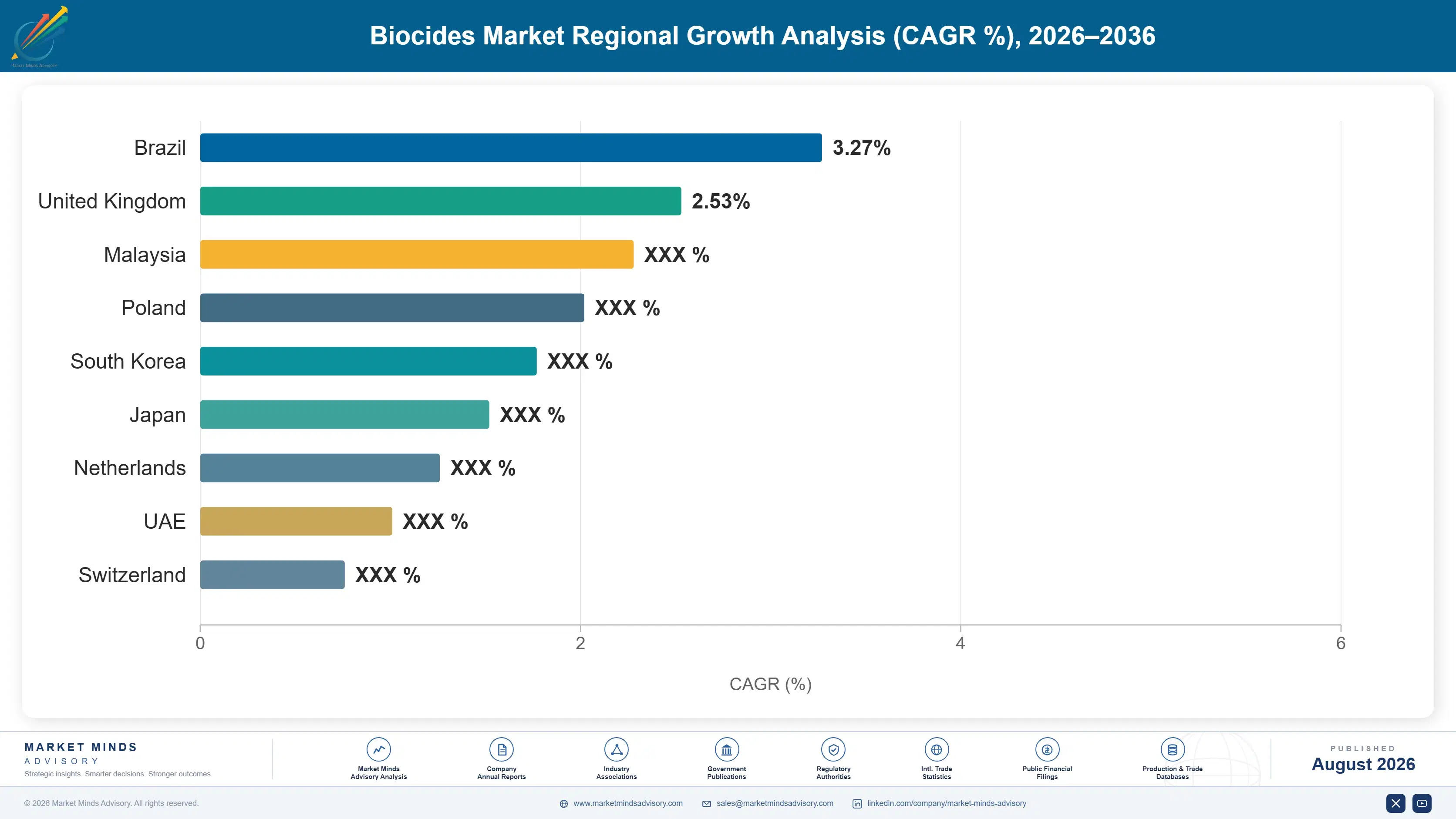
Asia-Pacific remains the largest and fastest-growing regional market for biocides, accounting for 38% of global market share in 2025. The region’s growth is fueled by rapid industrialization, urbanization, and significant investments in municipal and industrial water treatment infrastructure. Countries such as China, India, and Southeast Asian nations are witnessing increased demand for biocides in water treatment, agriculture, and manufacturing sectors, supported by government initiatives to improve public health and environmental standards.

North America holds a substantial share, driven by stringent regulatory standards, advanced healthcare infrastructure, and high adoption rates in food processing and personal care industries. The U.S. and Canada are at the forefront of innovation in sustainable and high-performance biocidal products, with a strong focus on compliance and safety.

Europe is characterized by a mature market landscape, with a pronounced emphasis on sustainability and eco-friendly biocides. Regulatory frameworks such as REACH and the Biocidal Products Regulation (BPR) are shaping product development and market entry strategies. The region’s demand is concentrated in water treatment, paints & coatings, and personal care applications.

South America and the Middle East & Africa are emerging as high-growth regions, albeit from a smaller base. In South America, investments in industrial and municipal water treatment are driving demand, while the Middle East & Africa region is witnessing increased usage of biocides in oil & gas, water treatment, and agriculture, supported by infrastructure development and regulatory reforms.

Biocides Market Regional

Competition Landscape in Biocides Market

The biocides market is highly competitive, with a mix of global conglomerates and regional players vying for market share. The landscape is characterized by continuous innovation, strategic collaborations, and mergers & acquisitions aimed at expanding product portfolios and geographic reach. Leading companies are investing in research and development to introduce advanced, sustainable, and high-efficacy biocidal solutions that comply with evolving regulatory standards. The market also witnesses partnerships with end-users and contract manufacturers to deliver customized solutions and enhance supply chain resilience. Competitive differentiation is increasingly based on sustainability credentials, product performance, and regulatory compliance.

Major Players in Biocides Market

  • Lonza Group AG
  • Solvay S.A.
  • BASF SE
  • Ecolab Inc.
  • LANXESS AG
  • Clariant AG
  • Kemira Oyj
  • The Dow Chemical Company
  • Troy Corporation
  • Albemarle Corporation
  • Akzo Nobel N.V.
  • Evonik Industries AG
  • Stepan Company
  • Thor Group Limited
  • Nouryon
  • Veolia Environnement S.A.
  • SUEZ Water Technologies & Solutions
  • Baker Hughes Company
  • ICL Group Ltd.
  • Cortec Corporation

Recent Developments in Biocides Market

  • In January 2024, Lonza Group AG launched a new range of biodegradable biocides targeting the water treatment and personal care sectors.
  • BASF SE, in March 2024, announced the expansion of its biocides production facility in Germany to meet rising demand in Europe.
  • Ecolab Inc. entered into a strategic partnership with a leading water utility in India in November 2023 to supply advanced biocidal solutions for municipal water treatment.
  • LANXESS AG introduced a new silver-based biocide in September 2023, designed for use in paints and coatings with enhanced antimicrobial efficacy.
  • In July 2023, Solvay S.A. acquired a minority stake in a biotech startup specializing in natural and enzyme-based biocides.
  • Kemira Oyj, in May 2023, unveiled a new controlled-release biocide formulation for industrial water treatment applications.

FAQ for Biocides Market

  1. What is the projected market size of the biocides market by 2033?

The global biocides market is projected to reach USD 16.7 billion by 2033, growing from an estimated USD 11.8 billion in 2026, at a CAGR of 5.2% during the forecast period.

  1. Which application segment holds the largest share in the biocides market?

Water treatment is the largest application segment, driven by the need for effective microbial control in municipal, industrial, and recreational water systems, as well as increasing investments in water infrastructure globally.

  1. What are the key growth drivers for the biocides market?

Key growth drivers include stringent regulatory standards for hygiene and water quality, rising awareness of infection control, and the expansion of industrial and municipal water treatment infrastructure, particularly in emerging economies.

  1. Which regions are expected to witness the fastest growth in the biocides market?

Asia-Pacific is expected to witness the fastest growth, supported by rapid industrialization, urbanization, and significant investments in water treatment and public health infrastructure.

  1. What are the major challenges faced by the biocides market?

The major challenges include regulatory compliance complexities, environmental concerns regarding chemical biocides, and the emergence of antimicrobial resistance, which necessitate continuous innovation and responsible usage practices.

Take action now! Contact us today to access the full report and propel your business forward.