At Home Molecular Testing Market
At Home Molecular Testing Market Outlook from 2026 to 2033
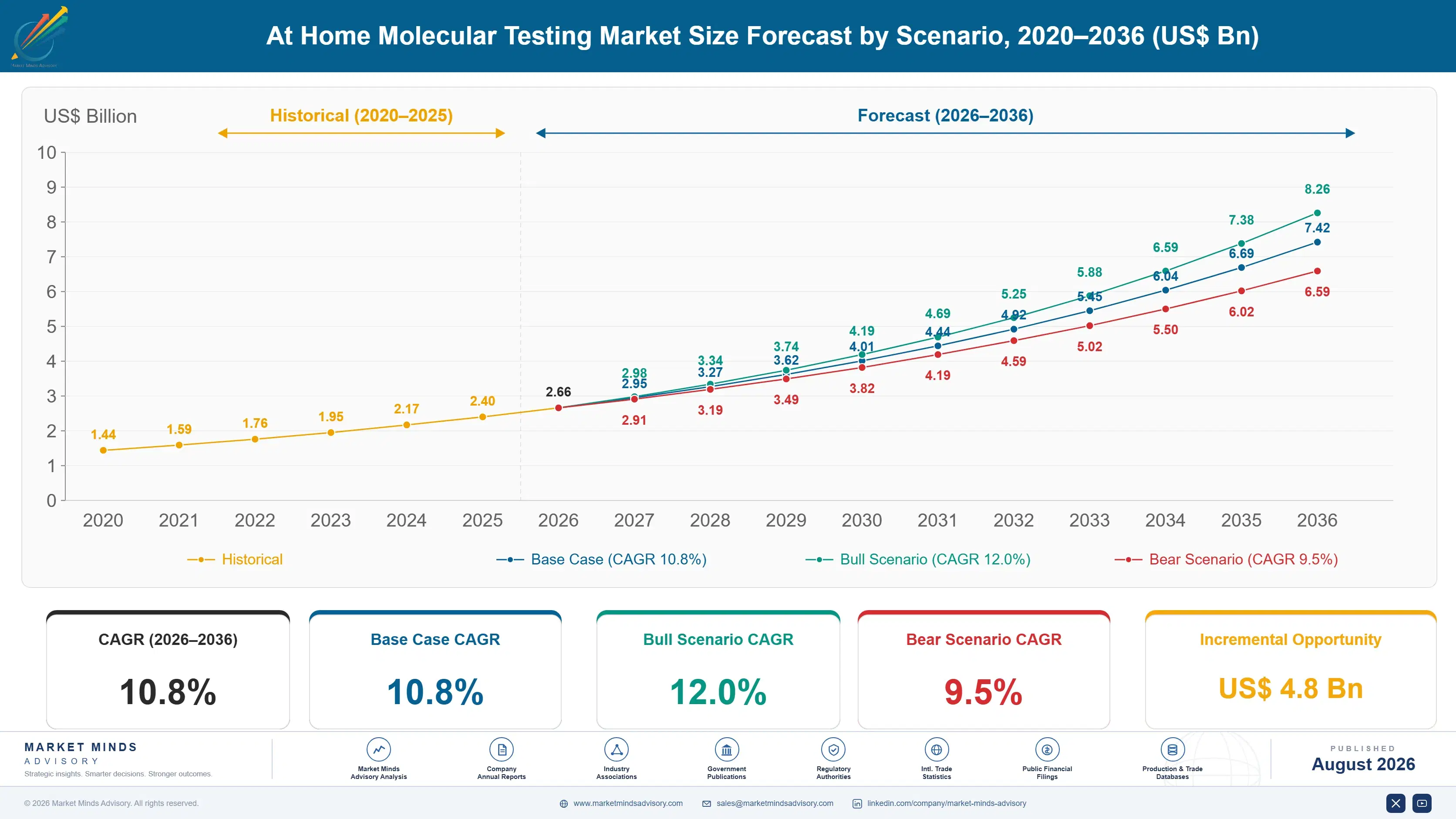
The at home molecular testing market is poised for significant expansion, driven by technological advancements, increased consumer awareness, and the growing demand for convenient diagnostic solutions. The market is projected to reach a value of USD 4.8 billion by 2033, up from USD 1.9 billion in 2026, reflecting a robust CAGR of 14.2% during the forecast period. The adoption of molecular testing kits for infectious diseases, genetic screening, and chronic condition monitoring is accelerating, as consumers seek rapid, reliable, and private health insights without the need for clinical visits.
The proliferation of telemedicine, coupled with regulatory support for home-based diagnostics, is further catalyzing market growth. Companies are investing in user-friendly platforms and expanding their test portfolios to cover a broader range of conditions. As healthcare systems worldwide emphasize early detection and personalized medicine, at home molecular testing is becoming an integral component of preventive healthcare strategies.

At Home Molecular Testing Market Scenario & Strategic Insights
The at home molecular testing market is undergoing a paradigm shift, with increasing acceptance among both consumers and healthcare providers. The COVID-19 pandemic served as a catalyst, normalizing home-based sample collection and remote result delivery. This shift has persisted post-pandemic, with consumers now expecting the same convenience for a variety of diagnostic needs, including respiratory infections, sexually transmitted diseases, and hereditary conditions. The market is characterized by rapid innovation, with companies leveraging advances in microfluidics, smartphone integration, and cloud-based analytics to enhance test accuracy and user experience.
Strategically, market participants are focusing on partnerships with telehealth providers, pharmacies, and insurance companies to broaden access and streamline distribution. Regulatory agencies in North America and Europe have introduced pathways for expedited approval of home-use molecular tests, further accelerating product launches. However, the market remains competitive, with differentiation hinging on test menu breadth, turnaround time, and data privacy assurances. As the market matures, consolidation is expected, with larger diagnostics firms acquiring innovative startups to bolster their at home testing capabilities.
| Attribute | 2026 (USD Billion) | 2033 (USD Billion) | CAGR (2026 – 2033) |
| Market Size | 1.9 | 4.8 | 14.2% |
At Home Molecular Testing Market Trends
- Expansion of Test Menus Beyond Infectious Diseases
Initially, at home molecular testing was dominated by infectious disease diagnostics, particularly during the COVID-19 pandemic. However, the market is witnessing a notable expansion into areas such as pharmacogenomics, hereditary cancer screening, and chronic disease monitoring. Companies are developing multiplexed assays that enable simultaneous detection of multiple biomarkers, catering to the growing demand for comprehensive health insights. This trend is expected to drive higher adoption rates among health-conscious consumers and those managing long-term conditions.
- Integration of Digital Health Platforms and AI
The integration of digital health platforms and artificial intelligence (AI) is transforming the user experience in at home molecular testing. Mobile applications now guide users through sample collection, provide real-time result interpretation, and facilitate teleconsultations with healthcare professionals. AI-driven analytics enhance the accuracy of test results and enable personalized health recommendations. This convergence of diagnostics and digital health is fostering greater consumer engagement and adherence to testing protocols.
- Focus on Data Security and Regulatory Compliance
As at home molecular testing involves sensitive genetic and health data, there is a heightened focus on data security and regulatory compliance. Companies are investing in robust encryption technologies and transparent data handling policies to build consumer trust. Regulatory bodies are also updating guidelines to address privacy concerns and ensure the safety and efficacy of home-use molecular tests. This trend is shaping product development and market entry strategies, particularly in regions with stringent data protection laws.
Segment & Category Analysis for At Home Molecular Testing Market
By Test Type
- Infectious Disease Testing
- Genetic Testing Oncology Testing Pharmacogenomics Testing
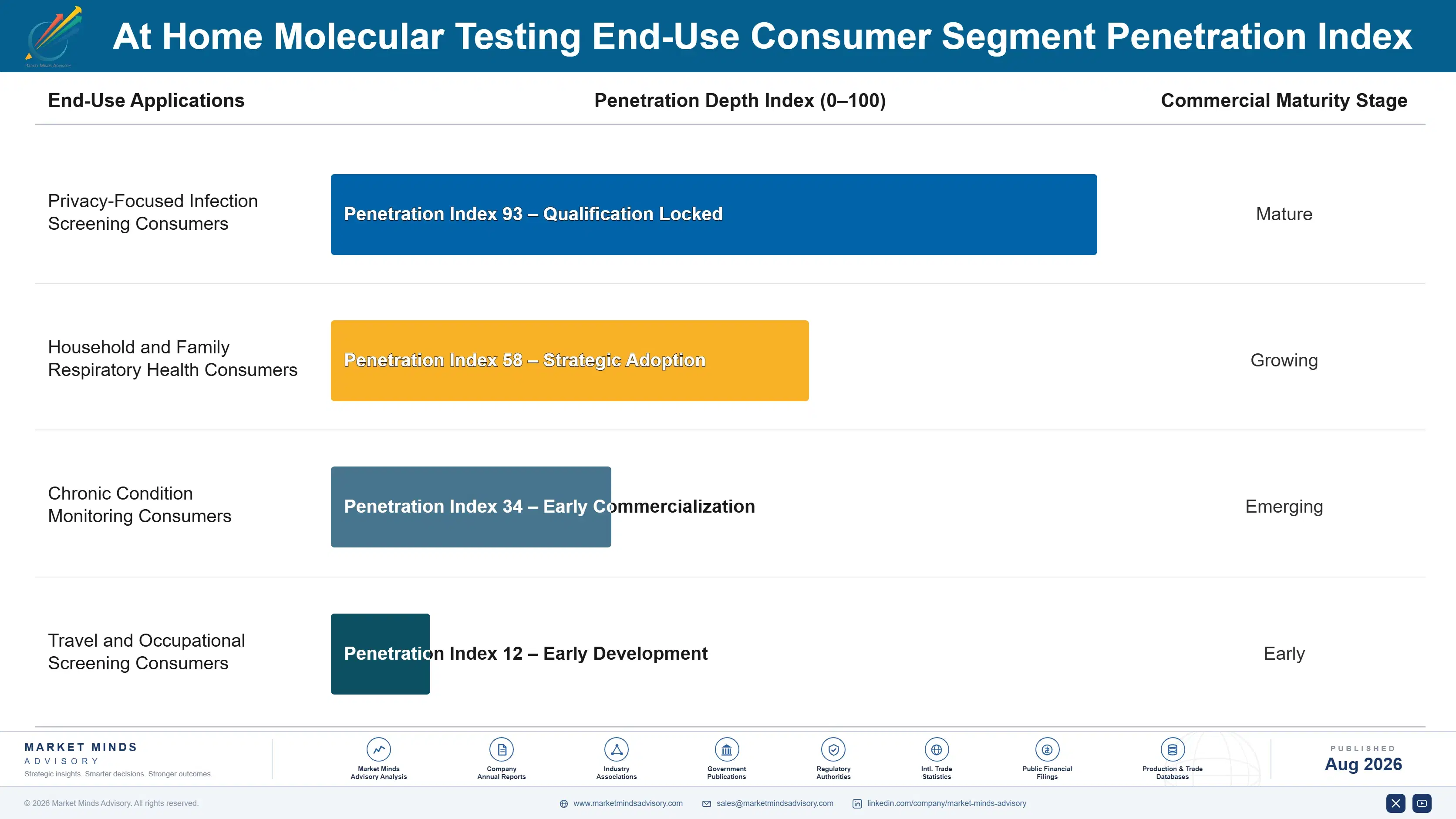
The test type segment is a key determinant of market dynamics, with infectious disease testing accounting for the largest share due to the legacy of COVID-19 and ongoing demand for respiratory and sexually transmitted infection diagnostics. Genetic and oncology testing are rapidly gaining traction, driven by consumer interest in ancestry, hereditary risk assessment, and early cancer detection. Pharmacogenomics and chronic disease monitoring are emerging segments, supported by advances in personalized medicine and the need for ongoing health management at home.

By Technology
- Polymerase Chain Reaction (PCR)
- Isothermal Nucleic Acid Amplification Next-Generation Sequencing (NGS)
- CRISPR-based Diagnostics
PCR remains the gold standard for molecular diagnostics, offering high sensitivity and specificity. However, isothermal amplification technologies are gaining popularity for their rapid turnaround and minimal equipment requirements, making them ideal for home use. Next-generation sequencing is being explored for comprehensive genomic profiling, while CRISPR-based diagnostics represent a frontier for ultra-rapid and cost-effective testing. The technology landscape is evolving, with companies balancing accuracy, speed, and user-friendliness.
By Sample Type
- Saliva
- Nasal Swab
- Blood (Fingerstick)
- Urine
Saliva and nasal swab samples dominate the at home molecular testing market due to their non-invasive nature and ease of collection. Blood-based tests, typically using fingerstick samples, are gaining acceptance for applications such as diabetes monitoring and genetic screening. Urine samples are primarily used for certain infectious disease and metabolic disorder tests. The choice of sample type influences user compliance, test accuracy, and market penetration, with ongoing innovation aimed at minimizing discomfort and maximizing reliability.
By Distribution Channel
- Online Pharmacies
- Retail Pharmacies Direct-to-Consumer (DTC) Platforms
- Healthcare Provider Networks
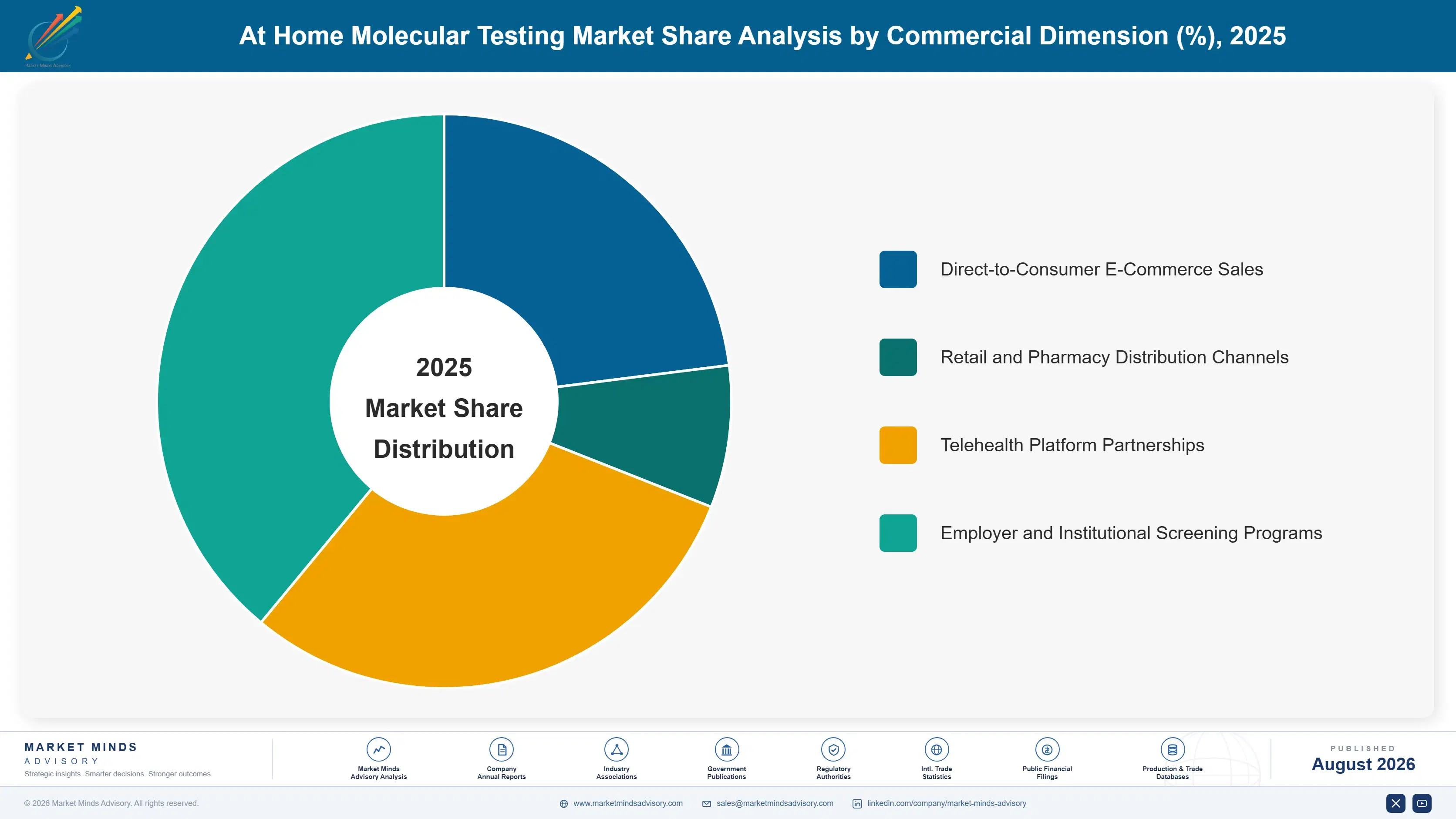
Online pharmacies and DTC platforms are the primary distribution channels, offering consumers convenience and privacy. Retail pharmacies are expanding their offerings to include at home molecular testing kits, often coupled with in-store guidance and telehealth support. Healthcare provider networks are integrating home testing into chronic disease management programs, enhancing patient engagement and outcomes. The distribution landscape is competitive, with companies leveraging omnichannel strategies to maximize reach.
By End User
- Individual Consumers
- Home Healthcare Providers Telehealth Companies
- Research & Academic Institutions
Individual consumers constitute the largest end user segment, reflecting the shift towards self-directed healthcare. Home healthcare providers and telehealth companies are increasingly adopting at home molecular testing to support remote patient monitoring and virtual care delivery. Research and academic institutions utilize these tests for population health studies and decentralized clinical trials. The end user mix is expected to diversify further as new applications and business models emerge.

Growth Drivers and Opportunities in At Home Molecular Testing Market
- Rising Prevalence of Chronic and Infectious Diseases
The increasing incidence of chronic diseases such as diabetes, cardiovascular disorders, and cancer, alongside persistent threats from infectious diseases, is fueling demand for at home molecular testing. Early detection and regular monitoring are critical for effective disease management, and home-based diagnostics offer a convenient solution. This trend is particularly pronounced in aging populations and regions with limited access to traditional healthcare facilities, creating substantial growth opportunities for market participants.
- Advancements in Molecular Diagnostic Technologies
Continuous innovation in molecular diagnostic technologies is enhancing the accuracy, speed, and affordability of at home testing kits. Miniaturization of devices, integration with smartphones, and the development of user-friendly interfaces are lowering barriers to adoption. Companies are also leveraging cloud-based analytics and AI to provide actionable health insights. These advancements are expanding the scope of at home molecular testing beyond traditional applications, opening new avenues for market growth.
Emerging Opportunities for At Home Molecular Testing Market
- Expansion into Preventive and Wellness Testing
There is a growing consumer interest in preventive healthcare and wellness monitoring, driving demand for at home molecular tests that assess genetic predispositions, nutritional deficiencies, and lifestyle-related risks. Companies are developing comprehensive wellness panels that empower individuals to make informed health decisions. This shift towards proactive health management represents a significant opportunity for market expansion beyond disease diagnostics.
- Integration with Telemedicine and Remote Care Models
The integration of at home molecular testing with telemedicine platforms is creating new opportunities for remote care delivery. Healthcare providers can remotely prescribe tests, monitor patient results, and adjust treatment plans in real time. This model enhances patient engagement, reduces healthcare costs, and improves outcomes, particularly for individuals in rural or underserved areas. The synergy between at home diagnostics and telehealth is expected to drive sustained market growth.
Growth Restrain factors and Challanges in At Home Molecular Testing Market
- Regulatory and Reimbursement Challenges
The at home molecular testing market faces significant regulatory hurdles, as authorities seek to ensure the safety, accuracy, and reliability of home-use diagnostics. Obtaining regulatory approval can be time-consuming and costly, particularly for novel technologies and multiplexed assays. Additionally, reimbursement policies for at home tests vary widely across regions, with limited coverage in some markets. These challenges can impede market entry and limit adoption, especially among price-sensitive consumers.
Furthermore, the evolving regulatory landscape requires companies to invest in ongoing compliance and post-market surveillance. This adds to operational complexity and may delay product launches. Companies must navigate these challenges by engaging with regulators, demonstrating clinical utility, and advocating for favorable reimbursement policies.
- Concerns Regarding Data Privacy and Test Accuracy
Data privacy is a critical concern in the at home molecular testing market, as tests often involve sensitive genetic and health information. Consumers are increasingly wary of data breaches and unauthorized use of their personal information. Companies must implement robust data protection measures and transparent privacy policies to build trust and comply with regulations such as GDPR and HIPAA.
In addition to privacy concerns, test accuracy and user error remain challenges. Improper sample collection or handling can lead to false results, undermining consumer confidence and potentially impacting health outcomes. Companies are addressing these issues through improved kit design, clear instructions, and digital support tools, but ongoing education and quality assurance are essential to maintain market credibility.
Regional Analysis for At Home Molecular Testing Market
- Asia-Pacific
The Asia-Pacific region is experiencing rapid growth in the at home molecular testing market, driven by rising healthcare awareness, expanding middle-class populations, and increasing smartphone penetration. Countries such as China, Japan, and South Korea are investing in digital health infrastructure and regulatory reforms to support home-based diagnostics. Local startups and multinational companies are launching affordable, culturally tailored testing solutions, contributing to market expansion.
- North America
North America holds a dominant share of the at home molecular testing market, supported by advanced healthcare systems, high consumer awareness, and favorable regulatory frameworks. The United States, in particular, has seen widespread adoption of home-based COVID-19 and genetic testing. Ongoing innovation, strong distribution networks, and integration with telehealth platforms are key drivers in this region. Reimbursement policies and data privacy regulations continue to shape market dynamics.
- Europe
Europe is a significant market for at home molecular testing, characterized by robust regulatory oversight and a focus on preventive healthcare. Countries such as the UK, Germany, and France are leading in terms of adoption, with government initiatives promoting early disease detection and personalized medicine. The region’s emphasis on data protection and quality standards is influencing product development and market entry strategies.
- South America
South America is an emerging market for at home molecular testing, with growth concentrated in Brazil, Argentina, and Chile. Economic development, urbanization, and increased healthcare spending are driving demand for accessible diagnostics. However, challenges related to affordability, distribution, and regulatory harmonization persist. Companies are exploring partnerships with local healthcare providers and pharmacies to expand reach.
- Middle East & Africa
The Middle East & Africa region presents untapped potential for at home molecular testing, particularly in urban centers with growing middle-class populations. Governments are investing in healthcare modernization and digital health initiatives, creating opportunities for market entry. However, limited infrastructure, regulatory variability, and affordability issues remain barriers to widespread adoption. Targeted education and awareness campaigns are essential to drive market growth in this region.

| Region | Market Share (2025) | Key Market Highlight |
| Asia-Pacific | 27% | Rapid adoption in China, Japan, and South Korea; digital health focus |
| North America | 38% | Advanced infrastructure, high consumer awareness, regulatory support |
| Europe | 22% | Preventive healthcare emphasis, strong data protection regulations |
| South America | 7% | Growth in Brazil and Argentina; affordability challenges |
| Middle East & Africa | 6% | Urban market potential, healthcare modernization initiatives |
Competition Landscape in At Home Molecular Testing Market
The at home molecular testing market is highly competitive, with a mix of established diagnostics companies, innovative startups, and digital health platforms. Market participants are differentiating through technology innovation, test menu expansion, and strategic partnerships. Mergers and acquisitions are common, as larger firms seek to enhance their home testing portfolios. The competitive landscape is also shaped by regulatory approvals, intellectual property, and brand reputation. Companies are investing in marketing, education, and customer support to build trust and drive adoption. As the market matures, consolidation is expected, with leading players leveraging scale and expertise to maintain their positions.
Major Players in At Home Molecular Testing Market
- Abbott Laboratories
- Thermo Fisher Scientific Inc.
- Roche Diagnostics
- Quest Diagnostics Incorporated
- Bio-Rad Laboratories, Inc.
- Hologic, Inc.
- Danaher Corporation (Cepheid)
- Siemens Healthineers AG
- Becton, Dickinson and Company (BD)
- QuidelOrtho Corporation
- Lucira Health, Inc.
- LetsGetChecked
- Everlywell, Inc.
- Cue Health Inc.
- OraSure Technologies, Inc.
- Myriad Genetics, Inc.
- Color Health, Inc.
- 23andMe, Inc.
- Helix OpCo LLC
- Detect, Inc.
Recent Developments in At Home Molecular Testing Market
- In March 2024, Roche Diagnostics launched a new at home multiplex respiratory panel for simultaneous detection of COVID-19, influenza, and RSV.
- In January 2024, Abbott Laboratories received FDA Emergency Use Authorization for its at home molecular COVID-19 test with smartphone integration.
- In November 2023, Lucira Health expanded its product line to include at home molecular tests for strep throat and influenza.
- In September 2023, Quest Diagnostics partnered with a major telehealth provider to offer at home genetic screening kits nationwide.
- In July 2023, Everlywell secured CE marking for its at home molecular HPV test, enabling expansion into European markets.
- In May 2023, Hologic, Inc. acquired a digital health startup to enhance its at home diagnostics and data analytics capabilities.
FAQ for At Home Molecular Testing Market
- What is the projected market size of the at home molecular testing market by 2033?
The at home molecular testing market is expected to reach USD 4.8 billion by 2033, growing from USD 1.9 billion in 2026, with a CAGR of 14.2% during the forecast period.
- Which regions are leading in the adoption of at home molecular testing?
North America leads the market due to advanced healthcare infrastructure and regulatory support, followed by Asia-Pacific and Europe, which are experiencing rapid growth and strong preventive healthcare initiatives.
- What are the main growth drivers for the at home molecular testing market?
Key growth drivers include the rising prevalence of chronic and infectious diseases, technological advancements in molecular diagnostics, and increasing consumer demand for convenient, private health solutions.
- What challenges does the at home molecular testing market face?
The market faces regulatory and reimbursement challenges, as well as concerns regarding data privacy and test accuracy, which can impact consumer trust and market adoption.
- How is technology influencing the at home molecular testing market?
Technology is playing a pivotal role, with innovations in PCR, isothermal amplification, AI-driven analytics, and smartphone integration enhancing test accuracy, speed, and user experience, thereby driving market growth.
Contact us today to access the full report and propel your business forward with comprehensive insights into the at-home molecular testing market.