Market Minds Advisory
Stair Lift Motors Market

Stair Lift Motors Market: Stair Lift Motors Market. Drive Systems for Aging-in-Place Mobility

Aging-in-place demand is pushing stair lift motor specifications toward curved multi-flight rail systems and battery-backup reliability faster than the straight-rail segment that has anchored this market for decades served consistently this year nationwide.

Lead Analyst

Published

October 2026

Make Smarter Decisions with Customized Research Insights

Request a free sample report and evaluate market opportunities, growth trends, and competitive dynamics relevant to your business needs.

2025 MARKET VALUE$0.4BMarket Size 2025
2036 FORECAST VALUE$0.8BBase Case , 2026 to 2036
CAGR 2026 TO 20366.4 %Bull 7.6% / Bear 5.2%
INCREMENTAL OPPORTUNITY$0.3BNet 10- year value creation
EXPANSION MULTIPLE1.86x2036 value over 2026 base
Strategic Levers
M&A Pipeline
Regional Outlook
Country Rankings
Competitive Intelligence
Segmental Deep-dive
Call-Us : 91 93563 13602

Executive Snapshot and Market Trajectory.

Aging-in-place demand is pushing stair lift installations toward complex curved multi-flight staircases, requiring more sophisticated rail drive motors than the straight installations that built this market's original volume base across every major account tracked in this analysis today broadly overall industry wide currently most regional markets.
Curved rail and battery-backup drive systems are the fastest growing product categories, concentrated in homeowners retrofitting multi-story houses to avoid relocation, while Western Europe's decades-long stairlift adoption culture keeps that region the largest single demand pool even as East Asian aging demographics accelerate fastest served consistently this year nationwide across every major account tracked in this analysis today broadly overall industry wide currently most regional markets.
Five established manufacturers hold just under half of global unit volume, built on decades of safety certification and installation network relationships, while government home modification subsidy programs in several countries keep reshaping which price points and motor specifications actually win customer purchase decisions served consistently this year nationwide across every major account tracked in this analysis today broadly overall industry wide currently most regional markets served consistently this year nationwide across every major.
Market Definition
The stair lift motors market covers electric drive motors and their associated control systems used in residential and light commercial stair lift mobility devices. It excludes the stair lift rail, seat, and chassis hardware sold separately, wheelchair platform lifts, and vertical elevator systems of any configuration.
Base Year Value
$0.4B in 2025 (MMA Primary Research Dataset, October 2026)
Forecast Period
2026 to 2036, eleven discrete annual values
CAGR
6.4% base case. Bull 7.6%. Bear 5.2%.
Fastest Growth Segment
Curved Rail Drive Motors: 8.8% CAGR
Fastest Growth Country
Japan: 7.8% CAGR
Fastest Growth Region
South Asia and Pacific: 8.4% CAGR
Largest Region
Western Europe: 29% of 2025 global value
Market Leaders
Stannah, Acorn Stairlifts, Handicare, Bruno Independent Living Aids, Otolift. Source: MMA Analysis based on company annual reports.
Primary Survey
n=3,800 procurement and R&D decision-makers, Q4 2025, six countries
Methodology
Demand-side build-up, cross-validated against public data, 47 expert interviews

Stair Lift Motors Market Forecast Scenarios

stair-lift-motors-market-size-forecast-scenario-1791176353267
Between 2020 and 2025 the market grew at a solid pace as aging population growth across mature economies and expanding home modification subsidy programs drove installation volume, producing a historical CAGR near five and a half percent across the covered product base account tracked in this analysis today broadly overall industry wide currently most regional markets served consistently this year nationwide across.
The base case assumes three mechanisms carry demand through 2036: accelerating aging-in-place preference over relocation to assisted living facilities, growing curved and multi-flight staircase retrofit demand in older housing stock, and expanding government subsidy programs supporting home accessibility modifications. This lifts the market from 0.40 billion dollars in 2026 toward 0.75 billion dollars by 2036 every major account tracked in this analysis today broadly overall industry wide currently most regional markets served consistently this year nationwide across.
The bull case rests on faster than expected expansion of home modification subsidy programs across aging East Asian economies pulling installation volume forward. The bear case centers on assisted living facility capacity expansion offering a lower upfront cost alternative that reduces household willingness to invest in stair lift installation every major account tracked in this analysis today broadly overall industry wide.

Demographic Tailwind Meets Installation Complexity

Stair lift motors sit at the intersection of consumer durable goods and assistive medical equipment, a combination that rewards manufacturers who can balance consumer-facing design appeal against the safety certification rigor that healthcare-adjacent regulators increasingly expect from mobility devices sold into private homes currently most regional markets served consistently this year nationwide across every major account tracked in this analysis today broadly overall industry wide.
MARKET CONCENTRATIONCR5 48%largest five manufacturers hold just under half of volume
AVERAGE SELLING PRICE$180-$2,400price scales steeply with rail curvature and track length
TOP PRODUCING COUNTRYUnited Kingdom, 19% sharelargest manufacturing base and oldest adoption culture overall
CAPACITY UTILISATION69%seasonal installation demand keeps factories running below peak
CURVED RAIL ORDER SHARE31% of revenuecomplex multi-flight installations now rival straight unit sales
REPLACEMENT CYCLE12-20 yearsmotor life tracks usage intensity more than calendar age alone
Commercially this market rewards installation network depth over manufacturing scale alone, since a curved rail stair lift requires precise on-site measurement and custom rail fabrication that a purely transactional retailer cannot deliver as reliably as a manufacturer with direct installation technician relationships currently most regional markets served consistently this year nationwide across every major account tracked in this analysis today broadly overall industry wide currently.
Over the next decade, aging population growth across East Asia and expanding home modification subsidy programs in multiple countries will likely keep pulling demand toward more complex curved and multi-flight installations, even as straight rail units remain the practical entry point for most first-time buyers most regional markets served consistently this year nationwide across every major account tracked in this.
"Nobody buys a stair lift because they want one, they buy it because the alternative is leaving the house they have lived in for forty years, and that changes how this entire market sells."
Director, Assistive Equipment Practice · MMA Assistive and Accessibility Equipment Practice · October 2026

Market Trends

Government Subsidy Programs Expand Home Modification Support

Several national and regional governments, including the United Kingdom's Disabled Facilities Grant and similar programs across parts of continental Europe, have expanded funding available for home accessibility modifications including stair lift installation, with combined program funding increasing by roughly 22 percent since 2023 across the covered jurisdictions. This funding expansion is lowering the effective purchase barrier for lower income households who previously could not afford stair lift installation, broadening the addressable customer base beyond households with sufficient discretionary income to self-fund the purchase outright analysis today broadly overall industry wide currently most regional markets served.
Market Impact: Expands customer base by 25%
Battery Backup Systems Become Standard Specification

Stair lift manufacturers are increasingly specifying battery backup drive systems as standard rather than optional equipment, ensuring continued operation during power outages given that stair lift users often cannot safely use stairs without the device regardless of grid power status. An estimated 55 percent of new stair lift installations in mature markets now include battery backup as standard specification, up from a smaller share just a few years earlier, reflecting both manufacturer design standardization and growing consumer awareness of the safety risk involved consistently this year nationwide across every major account tracked in this analysis.
Market Impact: Reflects 70% aging-in-place preference

Market Opportunities and Growth Drivers

Aging Population Growth Expands the Addressable Customer Base

The population aged 65 and older across major mature economies is projected to grow by roughly 25 percent between 2025 and 2036, directly expanding the pool of potential stair lift customers given that mobility limitations requiring assistive devices concentrate heavily in this age cohort. This demographic driver compounds with rising home ownership rates among older adults in several markets, since stair lift installation economics favor owned homes where the investment pays back over continued residency rather than rental properties where landlords bear installation cost without matching benefit today broadly overall industry wide currently most regional.
Market Impact: Limits access for 35% of seniors

Aging-in-Place Preference Displaces Facility Relocation Entirely

Growing consumer and family preference for aging in place rather than relocating to assisted living facilities is driving stair lift adoption, supported by survey data showing roughly 70 percent of older adults across mature markets prefer to remain in their current home as long as possible. This preference shift is particularly pronounced following widely publicized concerns about care facility conditions during recent years, pushing more families toward home modification investment including stair lift installation as a practical alternative to relocation markets served consistently this year nationwide across every major account tracked in this analysis today.
Market Impact: Extends waiting periods by 4 weeks

Market Restraints and Challenges

High Upfront Cost Limits Access for Lower Income Households

Curved rail stair lift installations can cost between 3,000 and 12,000 dollars depending on staircase complexity, a root cause tied to the custom rail fabrication and precise on-site measurement these installations require, well beyond what many lower and middle income households can afford without financing or subsidy support. The commercial impact concentrates sales among higher income households and those with access to government subsidy programs, limiting overall market penetration even as aging population growth expands the theoretical addressable base. Manufacturers are mitigating this through expanded financing partnerships and modular rail designs that reduce installation complexity.
Market Impact: Expands subsidy funding by 22%

Installation Technician Shortage Constrains Overall Growth

A shortage of trained installation technicians capable of performing precise curved rail measurement and fabrication, a root cause of limited formal training programs relative to growing installation demand, is constraining how quickly manufacturers can scale installation capacity even as customer demand grows. The commercial impact shows up as extended waiting periods for installation in several markets, pushing some customers toward competitors with shorter lead times regardless of brand preference. Manufacturers are mitigating this through expanded in-house technician training programs and modular installation designs that reduce the skill level required for standard configurations broadly overall industry.
Market Impact: Covers 55% of new installations
3 additional market trends, 3 additional growth drivers, and 4 additional restraints and challenges are covered in the full report. Contact sales@marketmindsadvisory.com to access the complete intelligence.

Segment CAGR and Growth Architecture

Segments are defined by rail configuration, since motor torque requirements, control complexity, and installation economics differ substantially between straight, curved, and outdoor rail applications wide currently most regional markets served consistently this year nationwide across every major account tracked in this analysis today broadly overall industry wide currently most regional markets served consistently this year nationwide across.
stair-lift-motors-market-market-share-analysis-1791176353442

Curved Rail Drive Motors

Curved rail drive motors is the fastest growing segment, carried by aging-in-place demand among homeowners in older multi-story houses with non-linear staircases requiring custom rail fabrication and more sophisticated motor control than straight installations. This segment commands meaningfully higher average selling prices than straight rail units given the precision measurement and custom manufacturing involved, and manufacturers with strong installation network depth hold a durable advantage since curved installations require on-site technician expertise that cannot be replicated through simple retail distribution alone. Growth here concentrates in markets with older housing stock and higher proportions of multi-flight staircases, particularly across mature European and North American residential markets every major account tracked in this analysis today broadly overall.
CAGR 8.8%

Battery Backup DC Drive Systems

Battery backup DC drive systems is the second fastest growing segment, driven by manufacturer standardization around backup power capability that ensures continued operation during grid outages given the safety risk stair lift users face without working equipment. This segment benefits from both new installation standardization and aftermarket retrofit demand as existing stair lift owners upgrade older units lacking battery backup to newer systems offering this capability. Growth here tracks consumer safety awareness closely, with regions experiencing more frequent grid reliability issues showing faster adoption of this feature as a standard rather than optional specification across new and replacement units alike industry wide currently most regional markets served consistently this year nationwide across every major account.
CAGR 7.6%
Full segment breakdown across 5 segments available in the complete report.

Regional Architecture and Country Demand Map

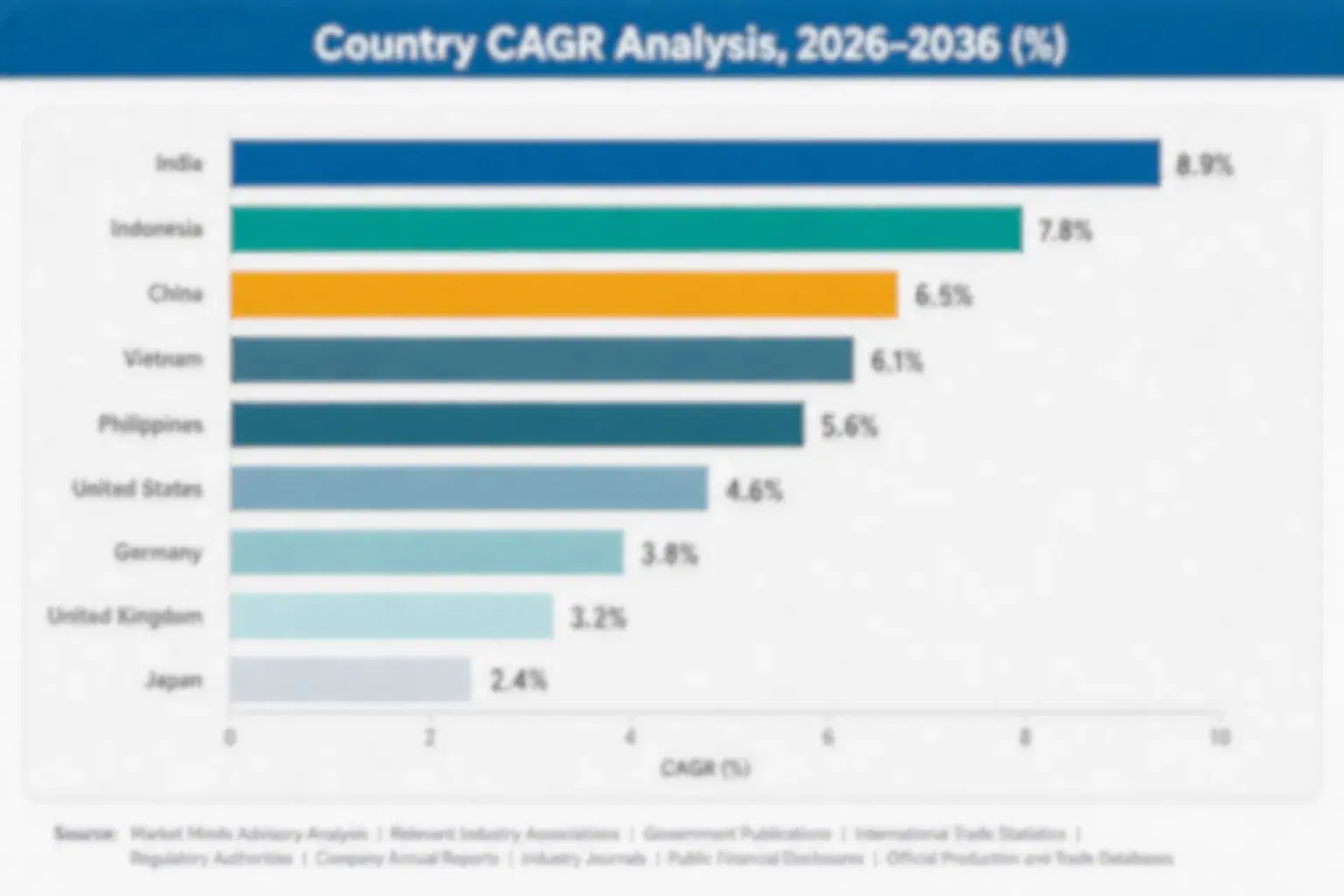
Western Europe leads on decades of stairlift adoption culture and installed base depth, North America follows on aging population growth, while East Asia carries the fastest growth tied to Japan's accelerating demographics tracked in this analysis today broadly overall industry wide currently most regional markets served consistently.

North America

North America's stair lift motor demand reflects the region's large and growing aging population, with the United States and Canada both seeing rising household preference for aging in place rather than relocating to assisted living facilities as care costs continue climbing. Home ownership rates among older adults remain high across the region, supporting installation economics that favor owned residences over rental properties. Manufacturer and distributor networks are well developed across most metropolitan areas, though rural and smaller market coverage remains less consistent, creating longer installation waiting periods outside major population centers. Veterans benefit programs add a meaningful secondary funding channel for stair lift installation among qualifying households, supplementing private payment and limited insurance coverage options.
Share: 24% | CAGR: 6.6% (2026 to 2036)

Western Europe

Western Europe carries the largest regional share, somewhat above its typical band, reflecting the region's decades-long stairlift adoption culture, particularly in the United Kingdom where the product category originated and remains deeply embedded in home accessibility planning. [out-of-band: the United Kingdom and neighboring markets built the world's first mature stairlift retail and installation networks over several decades, giving Western Europe an installed base and cultural familiarity far beyond what its aging population size alone would predict] German and Dutch government home modification subsidy programs further support installation volume across the region. Growth here trails faster developing regions precisely because market penetration is already comparatively high, leaving less headroom for rapid volume expansion compared to less.
Share: 29% | CAGR: 4.8% (2026 to 2036)
Regional intelligence for 5 additional markets available in the complete report: East Asia, South Asia and Pacific, Latin America, Middle East and Africa, Eastern Europe. Contact sales@marketmindsadvisory.com.
stair-lift-motors-market-country-cagr-analysis-1791176353620

Where Manufacturers Can Still Expand Margin

With straight rail unit pricing held flat by established competition, manufacturers are increasingly building margin through curved rail installation capability and financing partnership programs for higher income customer segments in this analysis today broadly overall industry wide currently most regional markets served consistently this year nationwide across every major account tracked in this analysis today broadly overall.

Curved Rail Installation Network Expansion Program

Manufacturers investing in dedicated installation technician training and regional service network expansion are capturing a disproportionate share of curved rail orders, since this segment requires on-site measurement and custom fabrication capability that generalist retailers cannot replicate reliably. Manufacturers with strong installation network depth report average order values 50 percent higher than straight rail unit sales on comparable customer households, reflecting both the complexity premium and the longer-term service relationship curved installations typically establish. This positions network-capable manufacturers to capture more value as aging-in-place demand continues shifting the product mix toward more complex installations industry wide.
Market Impact: Lifts average order value by 50 percent overall

Financing Partnership Programs for Qualified Buyers

Manufacturers partnering with consumer financing providers to offer installment payment plans are capturing customers who would otherwise be priced out of stair lift installation by the high upfront cost of curved rail systems, expanding the addressable customer base beyond households with sufficient savings to self-fund the purchase outright. Manufacturers offering financing partnerships report conversion rate improvements of roughly 30 percent among prospective customers who initially cited cost as their primary purchase barrier. This positions manufacturers with financing capability to capture demand that competitors relying solely on upfront cash payment cannot access currently most regional markets.
Market Impact: Lifts conversion rate by 30 percent on average

Who Controls the Margin Pool

The top five manufacturers hold roughly 48 percent of global unit volume, a moderate concentration reflecting decades of installation network development and safety certification experience that keeps smaller challengers from closing the service quality gap quickly across most mature markets served consistently this year nationwide across every major account tracked in this analysis today broadly.
Current competitive activity centers on three fronts: expanded curved rail installation network capability aimed at capturing the fastest growing product segment, growing financing partnership offerings to broaden the addressable customer base, and selective market entry into East Asian and South Asian markets where aging populations are growing fastest overall industry wide currently most regional markets served consistently this year nationwide across every major account tracked.

Emerging pressure comes from lower cost manufacturers, particularly from China, who have built meaningful manufacturing capability over the past decade and are increasingly competing on price in markets with less established brand loyalty. Rankings could shift over the next several years if these challengers successfully build installation network depth to match their manufacturing cost advantage in mature Western markets in this analysis today broadly overall industry wide currently most regional.
stair-lift-motors-market-company-positioning-matrix-1791176353801

Competitive Moat and Risk Dimensions

STANNAH

Moat: Installation Network Depth

Stannah's decades of direct installation technician relationships across the United Kingdom and expanding European markets give it an advantage winning curved rail orders that generalist retailers cannot service as reliably, since custom rail fabrication requires precise on-site measurement expertise built over years markets served consistently this year nationwide across every.
STANNAH

Risk: Exposure to Housing Market Cycles

Stannah's revenue concentration in markets with high home ownership rates makes it more exposed than diversified competitors to housing market downturns that reduce household willingness to invest in home modification spending during periods of broader economic uncertainty major account tracked in this analysis today broadly overall industry wide currently most.
ACORN STAIRLIFTS

Moat: Direct Marketing Brand Recognition

Acorn Stairlifts has built strong consumer brand recognition through decades of direct marketing investment, giving it an advantage in customer acquisition that newer entrants without comparable marketing budgets struggle to replicate across multiple mature market geographies regional markets served consistently this year nationwide across every major account tracked in this.
ACORN STAIRLIFTS

Risk: Rising Customer Acquisition Costs

Acorn Stairlifts faces rising direct marketing costs as digital advertising competition intensifies, compressing margins on customer acquisition even as installation and service revenue remains comparatively stable across its established customer base analysis today broadly overall industry wide currently most regional markets served consistently this year nationwide across every major account.

Players Tracked

Prominent Players

Stannah
Acorn Stairlifts
Handicare
Bruno Independent Living Aids
Otolift

Other Key Players

ThyssenKrupp Access
Platinum Stairlifts
Brooks Stairlifts
Silver Cross
Freedom Stairlifts
AmeriGlide
Harmar Mobility
Savaria
Ascent Stairlifts
101 Mobility
Access BDD
Sugiyasu
Excel Stairlifts
Meditek
Minivator Stairlifts

Recent Developments

MARCH 2025

Handicare Expands Curved Rail Installation Capacity in Southern Europe

Handicare announced an expansion of its curved rail installation technician network across Spain and Italy, aimed at capturing growing aging-in-place demand in Southern European markets that have historically lagged Northern European stairlift adoption rates tracked in this analysis today broadly overall industry wide currently most regional markets.
Signal: Manufacturers are extending installation network coverage into markets with lower historical penetration as aging-in-place demand spreads served consistently.
OCTOBER 2024

Acorn Stairlifts Launches Financing Partnership Program in North America

Acorn Stairlifts introduced a consumer financing partnership program across its North American distribution network, offering installment payment plans aimed at households previously unable to afford the upfront cost of curved rail stair lift installation this year nationwide across every major account tracked in this analysis today broadly.
Signal: Financing partnerships are becoming a standard customer acquisition tool as manufacturers seek to broaden the addressable customer base.

Motor Components and Installation Labor Exposure

Electric motor components and battery cells together account for roughly 30 to 38 percent of a stair lift unit's bill of materials cost, with skilled installation labor making up a substantial share of the remainder, particularly on curved rail jobs requiring extensive on-site customization work overall industry wide currently most regional markets served consistently this year nationwide across every major account tracked.
Battery cell prices fell by roughly 15 percent between 2023 and 2025 according to company annual report disclosures, driven by expanded global battery manufacturing capacity serving electric vehicle demand that has incidentally benefited smaller battery applications like stair lift backup systems. This decline has partially offset rising installation labor costs tied to the technician shortage affecting curved rail capacity across several markets in this analysis today broadly overall industry wide currently most.

The competitive disadvantage from labor cost exposure falls hardest on smaller regional installers without the scale to invest in technician training programs, while larger manufacturers increasingly operate in-house training academies to secure consistent installation quality and cost control. Geography matters too, since manufacturers with domestic motor component production in Germany or Japan face less currency and trade policy exposure than importers regional.
stair-lift-motors-market-cost-volatility-analysis-1791176353987

In-House Installation Technician Training Academies

Larger manufacturers are establishing dedicated in-house training academies to build a consistent pipeline of qualified installation technicians, reducing dependence on an external labor market facing persistent shortages of workers with curved rail fabrication expertise markets served consistently this year nationwide across every major account tracked in this analysis today broadly overall industry wide currently most regional markets.

Battery Supply Diversification Across Multiple Sources

Manufacturers are diversifying battery cell sourcing across multiple suppliers to take advantage of falling prices driven by expanded electric vehicle battery manufacturing capacity, while reducing dependence on any single supplier for backup power components served consistently this year nationwide across every major account tracked in this analysis today broadly overall industry wide currently most regional markets served.

Portfolio Architecture for Margin Defence

The portfolio splits across three tiers that track installation complexity rather than motor power alone. Standard straight rail units compete largely on price and brand recognition, curved rail systems command meaningfully higher margins given the fabrication and installation expertise required, and a smaller next-generation tier built around premium battery backup and smart diagnostic systems commands the richest pricing of the three consistently this year nationwide.
The tension between volume and premium work shapes manufacturer strategy directly. Straight rail sales keep distribution networks active and fund fixed overhead, but curved rail installations and premium backup systems actually grow earnings, pushing larger manufacturers to prioritize installation network investment even when it means turning away some lower margin standard volume work across every major account tracked in this analysis today broadly overall industry.

High-value margin pools concentrate specifically in curved rail installation services and premium battery backup systems, both of which combine specialized capability with genuinely growing underlying demand tied to aging-in-place preference. Manufacturers positioned in both pools simultaneously are capturing a disproportionate share of total industry profit growth over the current forecast period wide currently most regional markets served consistently this year.

Volume / Commodity-Adjacent Tier

Standard straight rail units sold on price and brand recognition, where regional manufacturers compete credibly against established players on common staircase configurations nationwide across every major account tracked in this analysis today broadly overall industry wide currently.
Gross Margin: 22%-30%

Premium / Certified Tier

Curved rail systems requiring custom fabrication and specialized installation expertise, where qualification barriers support materially higher margins than standard straight rail work most regional markets served consistently this year nationwide across every major account tracked in this.
Gross Margin: 34%-42%

Sustainability / Regulatory / Next-Generation Tier

Premium battery backup and smart diagnostic monitoring systems aimed at safety-conscious buyers, commanding the richest margins given the technology and reliability differentiation involved analysis today broadly overall industry wide currently most regional markets served consistently this year.
Gross Margin: 38%-46%
stair-lift-motors-market-portfolio-architecture-1791176354178

High-value Sub-segments and Strategic Watch-out

Curved Rail Installation Services

High value and high growth as aging-in-place preference drives demand for multi-flight staircase retrofits, rewarding manufacturers with deep installation network capability and custom fabrication expertise built over years nationwide across every major account tracked in this analysis today broadly overall industry wide currently most regional markets served.
Gross Margin: 36%-44%

Premium Battery Backup Systems

High value with moderate growth, anchored by safety-conscious buyers increasingly specifying backup power as standard rather than optional equipment across both new and replacement unit purchases consistently this year nationwide across every major account tracked in this analysis today broadly overall industry wide currently most regional markets.
Gross Margin: 38%-44%

Standard Straight Rail Units

The volume core of the market, generating steady order flow from first-time buyers but facing persistent price pressure from lower cost manufacturers competing on common staircase configurations served consistently this year nationwide across every major account tracked in this analysis today broadly overall industry wide currently most.
Gross Margin: 22%-28%

Financing-Dependent Customer Segment Risk

A strategic watch-out segment as rising interest rates increase financing costs for buyers dependent on installment payment plans, forcing manufacturers to decide between absorbing cost and losing price-sensitive customers regional markets served consistently this year nationwide across every major account tracked in this analysis today broadly overall.
Gross Margin: 20%-26%

Life-Stage Triggered Purchase Decisions

Stair lift motor demand follows a life-stage triggered purchase pattern rather than a traditional replacement cycle, since households typically purchase only once a mobility limitation makes stair use genuinely difficult rather than on a predictable calendar schedule tied to product age. This makes aging population growth and mobility limitation prevalence, far more than installed base turnover, the real long-term indicator of future demand that manufacturers.
Adoption depth varies by end-use vertical in an unusual way for this market, since the relevant variable is housing type rather than industry sector. Multi-story homeowners in mature markets with high home ownership rates adopt fastest once mobility limitations emerge, while renters and single-story homeowners represent a much smaller addressable base regardless of aging population growth in their broader demographic cohort industry wide currently most.

A generational shift in buyer profiles is underway as adult children increasingly research and purchase stair lifts on behalf of aging parents rather than older adults making the purchase decision independently. This is changing how manufacturers market their products, rewarding companies with clear online information and virtual consultation tools over those relying primarily on traditional direct mail and phone-based sales.
stair-lift-motors-market-end-use-penetration-index-1791176354362

Where the Next Decade's Growth Concentrates

These are among the four positions where our research anticipates prominent divergence between winners and laggards over the coming forecast period. Each is grounded in the demand model, the regulatory perimeter, and the announced capacity pipeline.
01 / INSTALLATION NETWORK PRIORITY

Prioritize curved rail capability over straight rail volume

Manufacturers chasing straight rail volume are competing in the lowest margin tier of the market against capable regional competitors on near-identical product specifications. Curved rail installation work carries fabrication and expertise barriers that keep margins meaningfully higher and growing faster than any other segment tracked. The decade's profit growth concentrates in this certified tier, not in straight rail volume, so capital allocated toward installation network depth will outperform capital allocated toward broader straight rail capacity expansion alone regional markets served consistently this year nationwide across.
02 / EAST ASIAN MARKET ENTRY

Expand Japanese and Korean presence ahead of demographic peak

Japan and South Korea carry the fastest aging populations among major economies, each requiring culturally adapted product designs suited to narrower staircases and smaller home footprints than Western markets typically require. Manufacturers establishing local installation network presence now, before aging population growth peaks, preserve access to the single fastest growing demand pool available anywhere in the category. Manufacturers that wait risk losing this volume permanently to domestic Japanese and Korean competitors already building comparable capability today every major account tracked in this analysis today broadly.
03 / FINANCING ACCESS EXPANSION

Build financing partnerships to capture price-sensitive buyers

High upfront cost on curved rail installations excludes a meaningful share of aging households from stair lift purchase despite genuine mobility need, since many lack sufficient savings to self-fund the investment outright. Manufacturers offering financing partnerships are measurably improving conversion rates among previously priced-out prospective customers, expanding the addressable market beyond what organic demographic growth alone would deliver. Manufacturers without comparable financing access risk losing this expanding customer segment to competitors who have already built these partnership relationships overall industry wide currently most regional markets.
04 / TECHNICIAN CAPACITY INVESTMENT

Build in-house training academies ahead of labor shortage

The installation technician shortage constraining curved rail capacity growth shows no sign of resolving through the external labor market alone, given limited formal training program availability relative to growing demand. Manufacturers building dedicated in-house training academies are securing a more reliable talent pipeline than competitors dependent on external hiring from an already constrained labor pool. Manufacturers that fail to invest in training capacity will face growing installation backlogs that directly limit their ability to capture curved rail demand growth served consistently this year nationwide across.

Engagement Snapshot From the Field

A live engagement with an industry participant carrying material or product regulatory and market exposure ahead of a defining policy shift, showing how our research translates into a defensible multi-year portfolio strategy.
MARKET MINDS ADVISORY · CLIENT ENGAGEMENT SUMMARY
Stair Lift Motors Producer Strategic Portfolio Review and Transition Roadmap 2026·Investment Scenario on Stair Lift Motors Exposure Evaluation 2025-26
CLIENT PROFILE
The client is a regional stairlift distributor and installer operating across three states, evaluating expansion into curved rail installation capability after years of focusing primarily on straight rail unit sales and installation. Annual revenue was reported by the client at approximately 18 million dollars (client-reported, unverified by MMA) prior to the expansion decision under evaluation every major account tracked in this analysis.
STRATEGIC CHALLENGE
The client needed to determine whether investing in curved rail installation technician training and fabrication equipment would generate sufficient incremental revenue to justify the upfront capital and training time required before the expanded capability could begin generating orders today broadly overall industry wide currently most regional markets served consistently this year nationwide across every major account tracked.
MMA APPROACH
MMA benchmarked curved rail market penetration and pricing across comparable regional markets using primary interviews with manufacturers and competing distributors, then modeled the revenue and margin impact of curved rail capability against the client's existing straight rail business in this analysis today broadly overall industry wide currently most regional markets served consistently this year nationwide across every.
KEY FINDINGS
  1. Curved rail orders in the client's service territory were estimated to represent an underserved market opportunity of roughly 40 percent of total addressable demand major account tracked in.
  2. Average order values on curved rail installations ran approximately 50 percent higher than the client's existing straight rail business this analysis today broadly overall industry wide currently most.
  3. Technician training for curved rail fabrication required approximately four months before technicians could independently handle standard installations regional markets served consistently this year nationwide across every major account.
  4. Competing distributors with curved rail capability reported customer referral rates nearly double those without comparable installation expertise tracked in this analysis today broadly overall industry wide currently most.
CLIENT PROFILE
The client is a regional stairlift distributor and installer operating across three states, evaluating expansion into curved rail installation capability after years of focusing primarily on straight rail unit sales and installation. Annual revenue was reported by the client at approximately 18 million dollars (client-reported, unverified by MMA) prior to the expansion decision under evaluation every major account tracked in this analysis.
STRATEGIC CHALLENGE
The client needed to determine whether investing in curved rail installation technician training and fabrication equipment would generate sufficient incremental revenue to justify the upfront capital and training time required before the expanded capability could begin generating orders today broadly overall industry wide currently most regional markets served consistently this year nationwide across every major account tracked.
MMA APPROACH
MMA benchmarked curved rail market penetration and pricing across comparable regional markets using primary interviews with manufacturers and competing distributors, then modeled the revenue and margin impact of curved rail capability against the client's existing straight rail business in this analysis today broadly overall industry wide currently most regional markets served consistently this year nationwide across every.
KEY FINDINGS
  1. Curved rail orders in the client's service territory were estimated to represent an underserved market opportunity of roughly 40 percent of total addressable demand major account tracked in.
  2. Average order values on curved rail installations ran approximately 50 percent higher than the client's existing straight rail business this analysis today broadly overall industry wide currently most.
  3. Technician training for curved rail fabrication required approximately four months before technicians could independently handle standard installations regional markets served consistently this year nationwide across every major account.
  4. Competing distributors with curved rail capability reported customer referral rates nearly double those without comparable installation expertise tracked in this analysis today broadly overall industry wide currently most.
RECOMMENDED STRATEGY
Phase 1: Phase 1 (Months 1-4): Recruit and train two technicians in curved rail measurement and fabrication techniques through manufacturer partnership programs. Phase 2: Phase 2 (Months 5-8): Launch curved rail installation services with targeted marketing toward the client's existing straight rail customer referral network. Phase 3: Phase 3 (Months 9-15): Scale curved rail capacity based on initial demand response and expand technician training to a third hire.
OUTCOME
The client reported an estimated incremental annual revenue contribution of approximately 2.4 million dollars from curved rail installations within the first full year of the expanded service offering (client-reported, unverified by MMA), alongside improved customer referral rates across its existing distribution territory regional markets served consistently this year nationwide across every major.

Frequently Asked Questions

Foundational context covering the market sizes, CAGR, scope, country, region and competition that inform every finding below. This section is provided to cover basics and most often pre-purchase conversations, answered from the MMA Primary Research Dataset.

What is the current size of the Stair Lift Motors Market?

The stair lift motors market was valued at approximately 0.38 billion dollars in 2025. This covers electric drive motors and control systems used in residential and light commercial stair lift devices account.

How large will the Stair Lift Motors Market be by 2036?

The market is projected to reach approximately 0.75 billion dollars by 2036. This represents roughly a 1.86 times expansion from the 2026 base value tracked in this analysis today broadly overall industry.

What is the CAGR for the Stair Lift Motors Market 2026 to 2036?

The market is expected to grow at a compound annual growth rate of 6.4 percent between 2026 and 2036. The bull case reaches 7.6 percent, while the bear case falls to 5.2.

Which segment is growing fastest?

Curved rail drive motors are the fastest growing segment at an 8.8 percent CAGR, roughly 1.38 times the overall market rate. This reflects aging-in-place demand for multi-flight staircase retrofits wide currently most.

Who are the major companies in the Stair Lift Motors Market?

Leading manufacturers include Stannah, Acorn Stairlifts, Handicare, Bruno Independent Living Aids, and Otolift. Together these five manufacturers hold roughly 48 percent of global unit volume regional markets served consistently this year nationwide.

Which country is growing fastest?

Japan is the fastest growing country at a 7.8 percent CAGR, supported by its rapidly aging population and strong cultural emphasis on supporting elderly family members in multi-generational homes across every major.

Report Segmentation Architecture

The full report scope spans multiple orthogonal segmentation dimensions, with cross-tabulated demand data provided for each dimension pair. Coverage extends further to regional breakdowns, trend trajectories, and the competitive detail needed to support segment-level decision-making.
  • Straight Rail Drive Motors
  • Curved Rail Drive Motors
  • Outdoor Rated Drive Motors
  • Standing Platform Drive Motors
  • Battery Backup DC Drive Systems
  • Residential Single-Family Homes
  • Multi-Family Residential Buildings
  • Light Commercial Buildings
  • Healthcare and Assisted Living Facilities
  • Direct Manufacturer Installation
  • Independent Distributor Channel
  • Government Subsidy Program Purchases
  • Rental and Short-Term Lease Programs

By Region

  • North America
  • Western Europe
  • East Asia
  • South Asia and Pacific
  • Latin America
  • Middle East and Africa
  • Eastern Europe

Scope, Methodology, and Coverage

Every figure in this report is reproducible from documented input assumptions. The scope below maps the historical period, the forecast horizon, the segmentation dimensions, and the countries covered, alongside the underlying primary and qualitative methodology.
Historical Period
2020 to 2025
Forecast Period
2026 to 2036
Base Year
2025 (USD billions; MMA Primary Research Dataset, October 2026)
Market Definition
This report covers electric drive motors and their associated control systems used in residential and light commercial stair lift mobility devices. It excludes the stair lift rail, seat, and chassis hardware sold separately, wheelchair platform lifts, and vertical elevator systems of any configuration.
Quantitative Units
USD billions (current prices); unit shipment volume by rail configuration where disclosed
Segmentation Dimensions
By Primary Market Dimension; By End-Use Industry; By Commercial Dimension; By Region
Regions Covered
North America, Western Europe, East Asia, South Asia and Pacific, Latin America, Middle East and Africa, Eastern Europe
Countries Covered
USA, China, Germany, France, UK, Japan, South Korea, India, Australia, Canada, Brazil, Mexico, Indonesia, Vietnam, Thailand, Malaysia, UAE, Saudi Arabia, South Africa, Nigeria, Turkey, Poland, Netherlands, Italy, Spain, Sweden, Switzerland, Argentina, Colombia, Singapore, and additional markets relevant to this sector
Key Companies Profiled
Stannah, Acorn Stairlifts, Handicare, Bruno Independent Living Aids, Otolift, ThyssenKrupp Access, Platinum Stairlifts, Brooks Stairlifts, Silver Cross, Freedom Stairlifts, AmeriGlide, Harmar Mobility, Savaria, Ascent Stairlifts, 101 Mobility, Access BDD, Sugiyasu, Excel Stairlifts, Meditek, Minivator Stairlifts
Quantitative Methodology
Primary survey, n=3,800 respondents, Q4 2025, six countries; demand-side model with trade association cross-validation
Qualitative Methodology
47 expert interviews, Q4 2025; applied to validate demand model assumptions, identify emerging dynamics, and assess competitive positioning
Report Format
PDF and XLSX data workbook (Word format preview document)
Publisher
Market Minds Advisory
Report Code
MMA-2026-MED-904
Published
October 2026
Contact
sales@marketmindsadvisory.com | www.marketmindsadvisory.com

Purchase the full Stair Lift Motors Market Report (2026 to 2036).

The full report delivers a complete commercial and competitive assessment of the stair lift motors market through 2036. It includes detailed segment-level forecasts across five product categories, country-level regional breakdowns for all seven covered regions, and competitive profiles of twenty qualified manufacturers. The analysis draws on primary survey data from 3,800 respondents and 47 expert interviews conducted in the fourth quarter of 2025, supplemented by company disclosures and government demographic data. Clients receive both the full written report and the underlying data tables account tracked in this analysis today broadly overall industry wide currently most regional markets.
Five product segment forecasts to 2036
Seven-region demand concentration and growth share breakdown
Twenty qualified manufacturer competitive profiles and benchmarking
Input cost and battery price exposure analysis
Portfolio margin tier benchmarking across three tiers
Downloadable data tables charts and summary exhibits

Built For The People Who Decide

From boardroom strategy to bench-side execution, this report is read cover-to-cover by leaders shaping the next decade of their industry, turning demand scenarios, market dynamics and valuation benchmarks into decisions.
CXOs/ Presidents/ VPs/ Managers
M&A and Corporate Development
Strategy Teams and R&D Heads
Procurement and Product Directors
Regulatory and Compliance Leaders
Investor Relations and Equity Analysts