Market Minds Advisory
Nicotine Pouches Market

Nicotine Pouches Market Opportunities and Forecast 2026-2036

Oral nicotine pouches are converting smokers and snus users at a pace regulators did not anticipate, and flavor bans now spreading across several countries threaten the exact product attribute driving the category's rapid adoption curve.

Lead Analyst

Bilal Shaikh

Published

November 2026

Make Smarter Decisions with Customized Research Insights

Request a free sample report and evaluate market opportunities, growth trends, and competitive dynamics relevant to your business needs.

2025 MARKET VALUE$9.2BMarket Size 2025
2036 FORECAST VALUE$44.9BBase Case , 2026 to 2036
CAGR 2026 TO 203615.5 %Bull 16.8% / Bear 14.2%
INCREMENTAL OPPORTUNITY$34.3BNet 10- year value creation
EXPANSION MULTIPLE4.22x2036 value over 2026 base
Strategic Levers
M&A Pipeline
Regional Outlook
Country Rankings
Competitive Intelligence
Segmental Deep-dive
Call-Us : 91 93563 13602

Nicotine Pouches Market Snapshot

Flavor variety and discreet, smoke-free use are pulling adult smokers and snus users toward nicotine pouches faster than any adjacent reduced-risk category has grown before, even as health authorities in several markets debate whether flavor availability is accelerating underage experimentation alongside legitimate adult switching.
The United States is leading adoption by an overwhelming margin, driven by Zyn's dominant brand position and a large population of adult smokers seeking smoke-free alternatives to combustible cigarettes and dip. High-strength pouches above 9 milligrams are growing fastest, appealing to heavier smokers transitioning away from cigarettes, while flavored mint and fruit variants drive the broadest volume across new and experienced users. Scandinavian markets retain cultural familiarity with oral tobacco alternatives through traditional snus consumption.
Five tobacco majors control the overwhelming majority of global volume, since nicotine pouches sit inside existing combustible and smokeless tobacco distribution networks that independent brands struggle to access at scale. Flavor restrictions are the dominant regulatory force shaping the category, with several European countries and US states actively debating or implementing bans on flavors beyond tobacco and mint, a move that would eliminate the exact attribute driving adult switching behavior.
Market Definition
The nicotine pouches market covers tobacco-free, smoke-free oral nicotine products sold in small pre-portioned pouches placed between the gum and lip, spanning ultra-low, low, medium, high, and extra-high nicotine strength tiers across flavored and tobacco-flavored variants. It excludes traditional snus, chewing tobacco, cigarettes, e-cigarettes and vaping products, and nicotine replacement therapy products regulated as pharmaceuticals.
Base Year Value
$9.2B in 2025 (MMA Primary Research Dataset, October 2026)
Forecast Period
2026 to 2036, eleven discrete annual values
CAGR
15.5% base case. Bull 16.8%. Bear 14.2%.
Fastest Growth Segment
High Strength Pouches (9 to 12mg): 19.5% CAGR
Fastest Growth Country
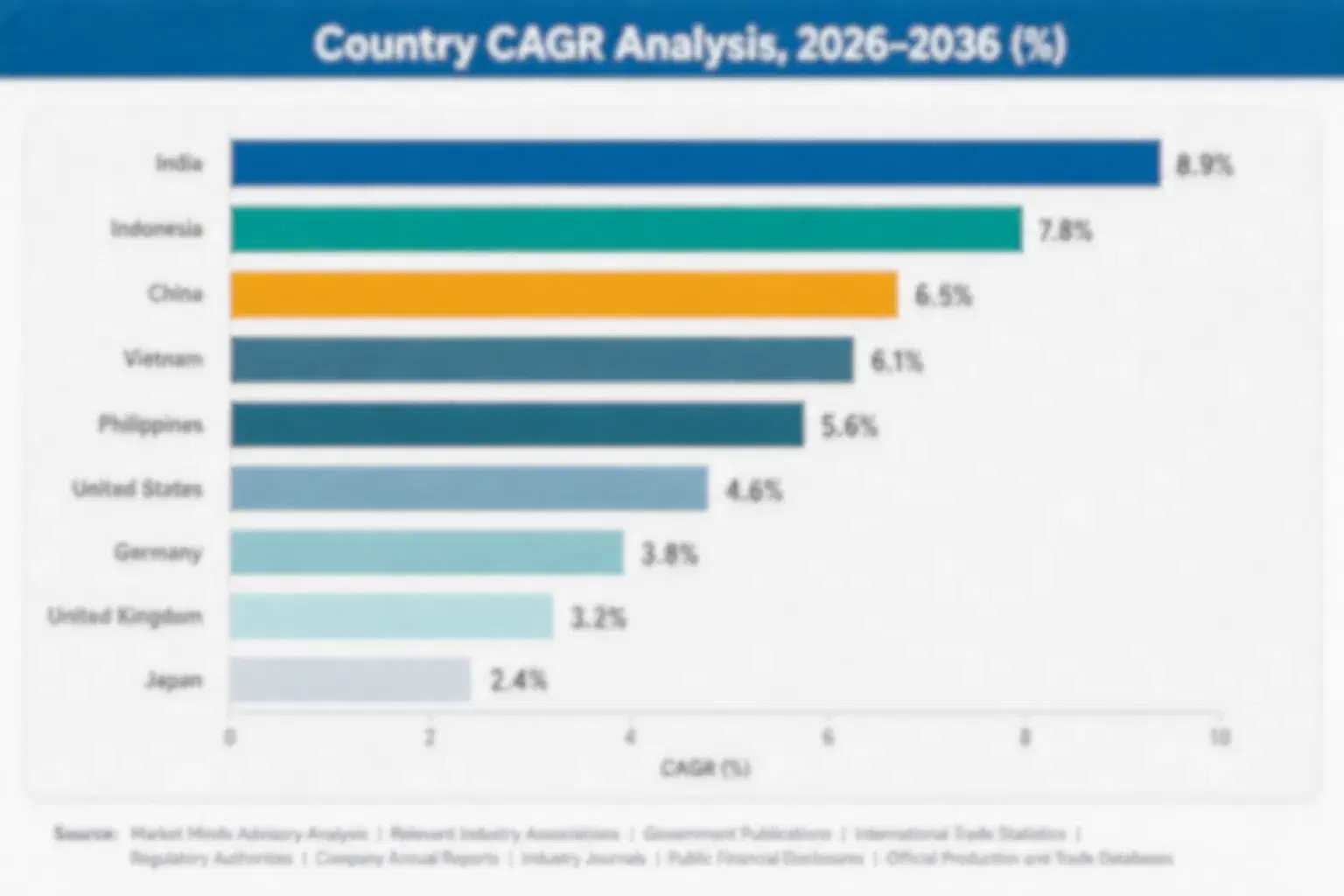
Philippines: 18.8% CAGR
Fastest Growth Region
South Asia and Pacific: 17.5% CAGR
Largest Region
North America: 48% of 2025 global value
Market Leaders
Philip Morris International, British American Tobacco, Altria, Imperial Brands, and Japan Tobacco International lead the market. Source: MMA Analysis based on company annual reports and investor filings.
Primary Survey
n=3,800 procurement and R&D decision-makers, Q4 2025, six countries
Methodology
Demand-side build-up, cross-validated against public data, 47 expert interviews

Nicotine Pouches Market Forecast Scenarios

nicotine-pouches-market-size-forecast-scenario-1791409992923
Nicotine pouch volume grew explosively between 2020 and 2025 as Zyn's breakout success in the United States proved the category viable, prompting rivals to launch competing brands quickly. Growth concentrated in North America and Scandinavia. The market grew at a historical compound annual growth rate of 14.5%, trailing the faster pace now expected as distribution broadens.
The base case assumes continued US volume growth as Zyn and competing brands expand retail distribution into convenience and grocery channels, alongside accelerating international expansion. Three mechanisms drive this: adult smoker conversion away from combustible cigarettes toward lower-risk alternatives, retail distribution broadening from specialty and gas station channels into mainstream grocery and pharmacy outlets, and international markets following the US adoption curve with a lag as regulations clarify. Together these mechanisms sustain exceptional growth even as the largest market begins to mature.
The bull case centers on faster international regulatory clarity letting more countries approve retail sale, lifting both volume and the premium pricing the category commands over cigarettes. The bear case is a severe flavor ban spreading from early-mover European countries to the United States, removing the attribute that has driven the majority of adult switching and slowing category growth across major markets.

Why Flavor Risk Is the Single Biggest Variable Here

Nicotine pouches occupy a unique position among reduced-risk nicotine products: genuinely smoke-free, genuinely discreet, and backed by the distribution muscle of the world's largest tobacco companies rather than independent startups fighting for shelf space alone. That combination explains why adoption curves here look steeper than almost any comparable consumer category in recent memory. This distribution advantage over independent startups explains much of the category's unusually rapid scaling. The same pressures carry over to the child resistant pouches market, where MMA forecasts USD 5.22 billion by 2036 at a 15.2% CAGR.
MARKET CONCENTRATION (CR5)78%Five tobacco majors control most of global volume
AVERAGE SELLING PRICE$5.80/canBlended global average retail price per standard can
TOP PRODUCING COUNTRY SHARE36%United States supplies over a third of output
CAPACITY UTILIZATION81%Manufacturers run lines above four fifths of capacity
INPUT SHARE OF COGS34%Nicotine salts and flavorings dominate input cost structure
TRADE INTENSITY15%Roughly a seventh of volume crosses an international border
Commercially, the market splits between mass-market flavored and mint variants driving broad volume, and high-strength variants capturing disproportionate value from heavier smokers actively quitting cigarettes. Independent brands compete mainly on flavor innovation and online direct-to-consumer distribution, since gaining shelf space in convenience and gas station retail increasingly requires the scale and retailer relationships that only major tobacco companies currently command. Independent brands increasingly pursue niche flavor positioning instead of broad distribution competition. The cooling agents market is a natural companion read, sized by MMA at USD 1.8 billion in 2025 with 7.4% annual growth ahead.
Over the next decade, one force dominates every strategic conversation: flavor regulation. Whether regulators ultimately preserve, restrict, or ban flavored variants beyond tobacco and mint will determine category growth trajectories more than any product innovation, distribution expansion, or competitive dynamic currently in motion. Companies that resolve this tension earliest will likely define category leadership for the next decade.
"This category grew up faster than the regulators did. Every tobacco major knows the flavor rules could change overnight, and every one of them is still racing to add flavors anyway."
Director, Consumer Products and Nicotine Category Practice · MMA Consumer Nicotine Products Practice · October 2026

Nicotine Pouches Market Trends

Flavor Restrictions Spread Across European and US Markets

Several European countries including Belgium and the Netherlands have already restricted or banned flavored nicotine pouch variants beyond tobacco and mint, while multiple US states are actively debating similar legislation following concerns about underage appeal. Industry trade associations are lobbying heavily to preserve flavor availability, arguing that flavor variety is central to adult smoker conversion rather than youth appeal specifically. Manufacturers are simultaneously developing tobacco-forward flavor profiles that could satisfy regulators while still differentiating from plain tobacco variants, hedging against the possibility that broader flavor bans eventually spread to their largest markets.
Market Impact: Converts smokers at roughly 2x rates
High-Strength Variants Drive Premium Pricing and Conversion

High-strength pouches above 9 milligrams of nicotine are growing faster than any other strength tier, appealing specifically to heavier adult smokers seeking a product strong enough to fully replace combustible cigarette nicotine delivery rather than supplement it. Manufacturers are pricing high-strength variants at a meaningful premium over standard strength products, capturing additional margin from the exact consumer segment most motivated to pay for an effective cigarette replacement. Public health researchers remain divided on whether high-strength products support complete smoking cessation or simply create a new, equally persistent nicotine dependency in a different delivery format.
Market Impact: Lifts retail distribution points over 50%

Nicotine Pouches Market Opportunities

Adult Smokers Seek Smoke-Free Cigarette Alternatives

Adult smokers increasingly want a nicotine delivery format that avoids secondhand smoke concerns, workplace and indoor smoking restrictions, and the health stigma now attached to combustible cigarettes, and nicotine pouches deliver nicotine without any smoke, vapor, or spit requirement that competing smokeless alternatives still carry. This combination of genuine discretion and smoke-free use is pulling smokers toward pouches at a rate that outpaces previous reduced-risk product categories including early vaping products, which still carried visible vapor and device charging requirements that pouches simply do not have. This pattern is strongest among heavy, long-term smokers.
Market Impact: Could remove 40% of volume

Major Tobacco Companies Commit Billions to Expansion

Philip Morris International, British American Tobacco, and Altria have each committed substantial capital expenditure toward nicotine pouch manufacturing capacity, retail distribution expansion, and marketing investment, treating the category as the primary growth vector for their smoke-free product portfolios as combustible cigarette volume continues its long-term decline across developed markets. This capital commitment is accelerating retail distribution into mainstream grocery, pharmacy, and big-box channels far faster than independent brands could achieve on their own, compressing the adoption timeline relative to previous reduced-risk tobacco product categories. This spending advantage is compounding as smaller independent brands struggle to match comparable distribution investment.
Market Impact: Raises compliance costs 10 to 15%

Nicotine Pouches Growth Barriers

Flavor Bans Threaten the Category's Primary Growth Driver

Flavor variety is the single most cited reason adult users choose nicotine pouches over plain tobacco-flavored alternatives or other reduced-risk products, yet flavor is also the primary target of regulators concerned about underage appeal and youth initiation. The root cause is a genuine policy tension: the same flavor attributes that help adult smokers switch away from cigarettes also make the product more appealing to underage users who were never smokers in the first place. Manufacturers are mitigating this by developing age-verification technology for online sales and funding marketing campaigns that explicitly target adult smokers rather than general consumers.
Market Impact: Threatens 40 to 50% of volume

Underage Use Concerns Draw Regulatory Scrutiny

Rising reports of underage nicotine pouch use, often obtained through retailers with lax age verification or through online sales channels, are drawing sustained regulatory and public health attention that threatens to slow category-wide growth through broader restrictions rather than product-specific rules. The underlying cause is retail and online distribution scaling faster than age-verification enforcement capability has kept pace. Several major manufacturers are mitigating this by funding independent retailer compliance monitoring programs and supporting stricter age-verification technology requirements for online direct-to-consumer sales channels specifically. Some smaller online retailers have voluntarily adopted stricter verification ahead of any legal requirement to do so.
Market Impact: Commands premiums of 15 to 25%
3 additional market trends, 3 additional growth drivers, and 3 additional restraints and challenges are covered in the full report. Contact sales@marketmindsadvisory.com to access the complete intelligence.

Fastest-Growing Nicotine Pouches Segments

Nicotine strength tier, not flavor or brand positioning alone, is the clearest segmentation lens, since regulatory attention, pricing power, and user switching behavior all vary primarily by how much nicotine a pouch delivers per use. Five tiers cover global volume: ultra-low, low, medium, high, and extra-high strength pouches, each serving distinct user profiles. each tier commanding distinct retail positioning.
nicotine-pouches-market-market-share-analysis-1791409993195

High Strength Pouches (9 to 12mg)

High-strength pouches are the fastest-growing tier because heavier adult smokers seeking a complete cigarette replacement need a nicotine delivery strong enough to match or exceed their prior cigarette consumption, a need lower-strength products cannot satisfy. Manufacturers have prioritized high-strength product launches and marketing specifically targeting long-term, heavy smokers rather than casual or never-smoking consumers, recognizing this segment's outsized willingness to pay for an effective replacement. Premium pricing on high-strength variants supports margin well above the category average, and several major brands have expanded high-strength product lines specifically to capture this segment ahead of competitors. Regulatory strength caps in some European markets remain the main constraint limiting broader high-strength availability outside North America.
CAGR 19.5%

Medium Strength Pouches (6 to 9mg)

Medium-strength pouches are the second-fastest tier, serving as the default entry point for new users transitioning from either combustible cigarettes or from lower-strength trial products, balancing meaningful nicotine delivery against the milder sensory experience newer users generally prefer. Retailers and manufacturers favor medium-strength products as the primary volume driver for mainstream retail distribution, since this tier avoids both the regulatory scrutiny facing extra-high-strength products and the weaker conversion appeal of ultra-low-strength trial formats. Brand positioning for medium-strength products increasingly emphasizes flavor variety rather than strength alone, since this tier competes primarily on sensory experience once users have made their initial strength tier decision. Capacity additions are concentrated among major brands expanding medium-strength flavor portfolios specifically.
CAGR 17.0%
Full segment breakdown across 5 segments available in the complete report.

Nicotine Pouches Demand by Region

North America dominates by an extraordinary margin, anchored by Zyn's breakout success and the world's largest population of adult smokers seeking cigarette alternatives. Western Europe follows on Scandinavian cultural familiarity, while East Asia trails far behind on regulatory restriction. South Asia and Pacific is growing fastest off a small base.

North America

North America carries a deliberately out of band share because the United States alone accounts for the large majority of global category volume, driven by Zyn's dominant brand position, extensive convenience and gas station retail distribution, and a uniquely large population of adult smokers actively seeking cigarette alternatives, concentrating global category growth inside the region far more than the standard band reflects. US manufacturing capacity, concentrated in facilities like Swedish Match's Owensboro, Kentucky plant now under Philip Morris International ownership, continues expanding to meet demand that has repeatedly outpaced supply forecasts. Canada contributes smaller but growing volume as similar brands expand north of the border, following regulatory approval in several provinces.
Share: 48% | CAGR: 16.0% (2026 to 2036)

Western Europe

Western Europe's demand is anchored by Scandinavian markets where oral tobacco alternatives have decades of cultural familiarity through traditional snus consumption, making the transition to tobacco-free nicotine pouches a comparatively smooth one for existing smokeless tobacco users. Sweden and Norway anchor regional demand through this established user base, while the United Kingdom is adopting pouches faster than most of continental Europe, aided by a regulatory environment generally more permissive toward reduced-risk nicotine products than several neighboring countries. Flavor restrictions in Belgium and the Netherlands are constraining growth in those specific markets relative to the regional average. Denmark and Finland round out Nordic regional demand with similarly high per-capita adoption rates tied to shared cultural history.
Share: 22% | CAGR: 14.0% (2026 to 2036)
Regional intelligence for 5 additional markets available in the complete report: East Asia, South Asia and Pacific, Latin America, Middle East and Africa, Eastern Europe. Contact sales@marketmindsadvisory.com.
nicotine-pouches-market-country-cagr-analysis-1791409993465

Where Nicotine Pouch Brands Can Expand Margin

Independent brands fighting for shelf space against tobacco majors face distribution disadvantages that are hard to overcome, so the clearest paths to margin expansion run through flavor innovation, direct-to-consumer channels, and strength tier positioning that major brands move slower to address. Four approaches stand out as genuinely available to independent and mid-sized brands within a normal planning cycle.

Building Scalable Direct-to-Consumer Subscription Channels Nationally

Independent brands that build direct-to-consumer subscription programs can bypass the retail shelf space constraints that favor major tobacco companies with established convenience store relationships, capturing full retail margin instead of splitting it with distributors and retailers. A mid-sized brand converting 25% of its volume to subscription can lift blended margin substantially, since subscription customers also show meaningfully higher retention than one-time retail purchasers switching between brands opportunistically. The primary investment required is in age-verification technology and logistics infrastructure, both manageable for brands with modest existing e-commerce capability. Subscription customers generate over twice the lifetime value of retail-only purchasers.
Market Impact: Lifts blended margin by 10 to 15 points

Developing Durable Tobacco-Forward Flavor Profile Portfolios

Brands that develop sophisticated tobacco-forward flavor profiles, rather than relying solely on mint and fruit flavors facing the heaviest regulatory scrutiny, can maintain flavor differentiation that survives even aggressive flavor restriction scenarios targeting sweeter, more youth-appealing variants specifically. This approach requires meaningful flavor science investment but creates a durable hedge against regulatory risk that brands relying entirely on restricted flavor categories do not have. Early movers in this space report tobacco-forward variants retaining roughly 80% of volume in markets where fruit and mint flavors were subsequently banned. This hedge becomes more valuable the longer regulatory uncertainty persists across major markets.
Market Impact: Retains roughly 80% of volume even after bans hit

Securing Private Label Manufacturing Contracts With Retailers

Manufacturers with spare production capacity can secure private label contracts with retailers seeking their own branded nicotine pouch lines, generating steady volume without the marketing and brand-building investment required to compete directly against major tobacco brands. This approach suits manufacturers with efficient production economics and quality certification but limited brand recognition of their own. Private label volume carries lower per-unit margin than branded sales but requires minimal incremental marketing spend, making it attractive for manufacturers seeking to maximize capacity utilization across existing production lines. Several manufacturers report private label volume now exceeding 20% of total production capacity.
Market Impact: Adds roughly 8 to 12 points of margin

Expanding Into Underserved International Markets Early

Brands that establish distribution relationships in markets just beginning to permit retail nicotine pouch sale can secure first-mover retail shelf positioning before major tobacco companies with slower international expansion processes arrive, similar to how early entrants in the United States captured durable brand loyalty ahead of competitors. This path requires navigating emerging regulatory frameworks directly but rewards brands willing to invest in regulatory and distribution relationships 2 to 3 years before a market fully matures. Early movers in newly opened markets report retail shelf share considerably higher than their global brand recognition would otherwise predict.
Market Impact: Secures shelf share 2 to 3 years ahead of rivals

Nicotine Pouches Margin Pool

Five tobacco majors control 78% of global volume, reflecting how thoroughly the category has consolidated around companies with existing combustible tobacco distribution networks and capital to fund rapid capacity expansion. Philip Morris International and British American Tobacco sit well ahead of the next tier on brand strength and retail distribution depth, while independent brands compete mainly on flavor innovation and direct-to-consumer channels.
Competition plays out across three dimensions: retail distribution depth into convenience and grocery channels, flavor and strength portfolio breadth that captures different user segments, and regulatory readiness that lets brands adapt quickly to shifting flavor and marketing restrictions. Companies that can credibly deliver on all three are winning the fastest-growing high-strength and flavor-forward segments, while smaller brands without distribution scale remain confined to online and niche specialty channels.

Emerging pressure is coming from independent brands building loyal direct-to-consumer followings through flavor innovation that major brands move slower to match, creating a competitive layer operating partly outside traditional retail distribution entirely. Regulatory shifts are also becoming an unexpected competitive factor, since companies that invested earliest in tobacco-forward flavor hedges and age-verification infrastructure are positioned to gain share if flavor restrictions eliminate competitors overly dependent on now-banned variants.
nicotine-pouches-market-company-positioning-matrix-1791409993775

Nicotine Pouches Supplier Positioning

PHILIP MORRIS INTERNATIONAL INC

Moat: Zyn's Dominant US Brand Position

Philip Morris International's Zyn brand holds a commanding share of the US nicotine pouch market, built on first-mover retail distribution and sustained marketing investment that competitors have struggled to match even with comparable product quality, reinforcing a brand loyalty advantage that compounds with every new retail door Zyn adds.
PHILIP MORRIS INTERNATIONAL INC

Risk: Regulatory Scrutiny of Market Dominance

Zyn's overwhelming US market share has drawn specific regulatory and congressional scrutiny regarding youth marketing and underage access, creating company-specific regulatory risk beyond the category-wide flavor restriction concerns facing every competitor equally. This dynamic could ultimately result in company-specific marketing restrictions or legal settlements that competitors facing more diffuse regulatory attention are less likely to encounter at comparable scale.
BRITISH AMERICAN TOBACCO PLC

Moat: Global Distribution Across Combustible Networks

British American Tobacco's existing global combustible tobacco distribution relationships let it launch Velo into new international markets faster than independent brands lacking comparable retail relationships, giving it a meaningful speed advantage in markets just beginning to permit nicotine pouch retail sale. This speed advantage compounds as more countries open to retail sale each year.
BRITISH AMERICAN TOBACCO PLC

Risk: Later US Market Entry

British American Tobacco entered the critical US market later than Philip Morris International's Zyn, leaving Velo chasing an established brand leader in the single largest and fastest-growing national market rather than competing from an early-mover position as it has in several international markets. Closing this gap will require sustained marketing investment over several years.

Players Tracked

Prominent Players

Philip Morris International Inc
British American Tobacco plc
Altria Group Inc
Imperial Brands PLC
Japan Tobacco International

Other Key Players

Swedish Match AB
Haypp Group AB
Turning Point Brands Inc
Dryft Sciences LLC
Rogue Holdings LLC
Fertin Pharma A/S
22nd Century Group Inc
Lucy Goods Inc
VPR Brands LP
Simply Snus Ltd
Nicokick Inc
Prilla Nicotine Pouches
GN Tobacco Sweden AB
Nordic Nicotine AB
Northerner AB

Recent Developments

JANUARY 2025

Philip Morris International Expands Zyn Manufacturing Capacity

Philip Morris International expanded Zyn manufacturing capacity at its Owensboro, Kentucky facility, adding production lines to address persistent supply shortages that had limited retail availability despite exceptionally strong consumer demand across US convenience and grocery channels. The expansion also includes new automated packaging lines to improve production efficiency considerably.
Signal: Signals even the category leader has struggled to build capacity fast enough to match consumer demand.
AUGUST 2024

British American Tobacco Acquires Niche US Nicotine Pouch Brand

British American Tobacco acquired a niche US nicotine pouch brand, strengthening Velo's domestic market position and acquiring established retail relationships to accelerate its competitive response to Zyn's dominant market share. The deal also brought an established regional distribution team with existing convenience retailer relationships across several southeastern states.
Signal: Signals acquisition remains a faster path to US retail access than organic brand building alone. directly.
APRIL 2025

Altria Forms Flavor Technology Joint Venture

Altria Group formed a joint venture with a flavor technology company to co-develop next-generation flavor encapsulation technology for its on! pouch brand, aiming to improve flavor longevity and consistency ahead of potential future flavor regulation changes. The partnership also includes joint research into longer-lasting flavor release mechanisms specifically.
Signal: Signals manufacturers are investing in flavor technology that could survive regulatory scrutiny better. ahead of any confirmed regulatory mandate.

Nicotine Salt and Flavor Supply Risk

Pharmaceutical-grade nicotine salts and flavor compounds together account for roughly 30 to 35% of manufacturer cost of goods sold, with the fibrous pouch material and packaging contributing a smaller but meaningful additional share. Nicotine salt supply traces back to a concentrated group of specialized chemical manufacturers, exposing category-wide input costs to a narrower supplier base than most consumer packaged goods categories.
Nicotine salt supply tightened meaningfully during 2023 and 2024 as category-wide demand growth outpaced specialized manufacturing capacity expansion, according to industry supply chain reporting, pushing several smaller brands toward allocation constraints and delayed product launches. Major tobacco companies with long-term supply agreements and in-house nicotine extraction capability absorbed the tightening considerably better than independent brands purchasing on shorter-term contracts from third-party suppliers. Several brands reported supply waiting lists.

Independent and smaller brands carry meaningfully greater exposure to nicotine salt and flavor supply constraints than major tobacco companies with vertically integrated extraction capability, since they lack the purchasing volume and capital to secure long-term supplier commitments. This disadvantage compounds during periods of tight supply, pushing some smaller brands toward private label manufacturing arrangements or acquisition by larger companies seeking their brand and customer base rather than their production capability.
nicotine-pouches-market-cost-volatility-analysis-1791409994141

Long-Term Nicotine Salt Supply Agreements

Manufacturers increasingly negotiate multi-year nicotine salt supply agreements with specialized chemical producers, securing committed volume allocation that protects against the allocation constraints smaller, shorter-term buyers faced during recent tight supply periods. This approach works best for manufacturers with forecastable volume and sufficient scale to interest suppliers in dedicated long-term arrangements. Several major manufacturers have already secured such agreements proactively.

Vertical Integration Into Nicotine Extraction

The largest tobacco companies are integrating backward into nicotine salt extraction and purification directly, reducing reliance on external chemical suppliers entirely and capturing margin that otherwise flows to specialized third-party manufacturers. This approach requires substantial capital investment that limits it mainly to the largest, best-capitalized category participants. This capital-intensive path has historically been limited to the five largest tobacco companies.

Diversifying Flavor Supplier Relationships

Manufacturers are diversifying flavor compound sourcing across multiple suppliers rather than relying on single-source relationships, reducing exposure to any individual supplier's capacity constraints or potential regulatory restrictions on specific flavor compounds that might affect one supplier more than others. Manufacturers pursuing this strategy report meaningfully fewer production disruptions during periods of broader industry-wide supply tightness.

Portfolio Architecture for Margin Defence

Manufacturers generally run a three-tier portfolio spanning mass-market mint and standard flavor variants, premium high-strength and flavor-forward products capturing heavier smokers, and next-generation tobacco-forward or alternative formulations designed to hedge against flavor regulation. Gross margin varies substantially across these tiers, with mass-market variants competing on price and distribution scale while premium and hedge-oriented products command meaningfully better economics tied to strength positioning and regulatory resilience. This spread is unusually wide for a product category this young.
The tension between mass-market volume and premium or hedge-oriented tiers shapes manufacturer investment directly, since mass-market products generate steady cash flow but face the most direct flavor regulation risk, while premium high-strength products carry less regulatory exposure but require sustained marketing investment to reach heavier-smoker audiences specifically. Manufacturers without a clear tier strategy risk concentration in exactly the variants most exposed to coming regulatory change.

High-value margin pools are concentrating in high-strength and tobacco-forward variants that combine premium pricing with meaningfully lower flavor-ban exposure than mint and fruit-forward mass-market products. Manufacturers positioned early in these categories are capturing a disproportionate share of total industry margin growth while also building resilience against the single largest risk facing the category today.

Volume / Commodity-Adjacent Tier

Mass-market mint and standard flavor variants sold on broad distribution and price accessibility to new and casual users, with the highest exposure to potential flavor restriction regulation. These products remain the primary entry point for new and price-sensitive users.
Gross Margin: 28-36%

Premium / Certified Tier

Premium high-strength and flavor-forward variants targeting heavier adult smokers seeking complete cigarette replacement, commanding pricing well above mass-market standard products. These variants anchor the category's margin growth as heavier smokers prioritize strength and effectiveness over price.
Gross Margin: 42-52%

Sustainability / Regulatory / Next-Generation Tier

Tobacco-forward and alternative formulations designed specifically to hedge against flavor regulation, commanding premium pricing tied to regulatory resilience rather than sensory appeal alone. Manufacturers investing early here are positioned for disproportionate resilience if flavor restrictions expand further.
Gross Margin: 38-48%
nicotine-pouches-market-portfolio-architecture-1791409994439

High-value Sub-segments and Strategic Watch-out

High Strength Pouches

High-strength pouches combine the fastest unit growth in the category with premium pricing tied to complete cigarette replacement appeal, making this the segment manufacturers are prioritizing most heavily for new product development investment over the next several years. Capital spending here is outpacing every other tier by a wide margin.
Gross Margin: 44-52%

Medium Strength Pouches

Medium-strength pouches command steady mainstream pricing despite moderate relative growth today, since this tier serves as the default entry point for new users, and manufacturers expect sustained volume as international markets open to retail sale. Demand is expected to stay resilient even if flavor restrictions tighten elsewhere in the portfolio.
Gross Margin: 34-42%

Low Strength Pouches

Low-strength pouches remain an important volume contributor for cautious new users and regulatory-constrained international markets, generating steady revenue even as growth moderates relative to higher-strength tiers domestically. This tier remains the most predictable source of category revenue even as growth moderates relative to higher-strength variants expanding faster currently.
Gross Margin: 26-34%

Flavor-Dependent Mass-Market Variants

Flavor-dependent mass-market variants face the most direct regulatory risk from potential flavor restrictions, making this segment the clearest candidate for volume disruption if major markets implement comprehensive flavor bans. Manufacturers should monitor this segment closely for signs of accelerating regulatory pressure specifically targeting these variants.
Gross Margin: 24-32%

Why Switching Behavior Rarely Reverses

Adult smokers who successfully switch to nicotine pouches rarely return to combustible cigarettes once established, since the switching decision typically follows meaningful health motivation and the pouch format delivers comparable nicotine satisfaction without the health stigma and smoke-related social friction cigarettes carry. This creates durable, annuity-like consumption once a smoker completes the initial switching period, generating dependable recurring revenue for whichever brand captured that customer during the critical early trial phase.
Adoption depth varies sharply by user vertical. Longtime heavy smokers switching for health reasons show the deepest, most durable commitment to the category once converted. Younger adult users entering nicotine use directly through pouches, rather than switching from cigarettes, represent a newer and more contested vertical actively drawing regulatory attention. International markets just beginning retail availability remain the least developed vertical, with brand loyalty still largely unformed.

Brand loyalty decisions are increasingly shaped by flavor availability and strength tier fit rather than price alone, reflecting a generational shift among adult nicotine users who treat product experience as more important than previous generations of smokeless tobacco users did. This shift rewards brands with broad flavor and strength portfolios over single-product competitors.
nicotine-pouches-market-end-use-penetration-index-1791409994737

What Nicotine Pouch Brands Should Prioritize

These are among the four positions where our research anticipates prominent divergence between winners and laggards over the coming forecast period. Each is grounded in the demand model, the regulatory perimeter, and the announced capacity pipeline.
01 / FLAVOR REGULATION HEDGING

Develop tobacco-forward flavors before bans force the issue

Brands relying entirely on mint and fruit flavors facing the heaviest regulatory scrutiny are exposed to sudden volume loss if flavor restrictions expand from early-mover European markets to the United States, their single largest market by a wide margin. Brands that develop sophisticated tobacco-forward flavor profiles now are building a hedge that preserves meaningful volume even under aggressive restriction scenarios, as early evidence from already-restricted markets demonstrates clearly. Brands that wait until regulation forces the issue will have far less time to develop viable alternatives.
02 / HIGH-STRENGTH PRODUCT INVESTMENT

Prioritize high-strength development for heavy smoker conversion

Heavy smokers seeking complete cigarette replacement are the segment most willing to pay premium pricing and most likely to generate durable, long-term brand loyalty once successfully converted away from combustible cigarettes entirely. Brands under-investing in high-strength product development are ceding this valuable segment to competitors already prioritizing it, and that competitive gap is widening rather than narrowing as major brands expand high-strength portfolios specifically. This segment deserves disproportionate development investment relative to its current share of total category volume today.
03 / INTERNATIONAL EXPANSION TIMING

Enter newly regulated markets ahead of major competitors

Markets just beginning to permit retail nicotine pouch sale offer first-mover brand positioning advantages similar to those Zyn captured in the United States, rewarding brands willing to invest in regulatory and distribution relationships before a market fully matures. Brands that wait for international markets to mature before entering risk facing entrenched competitors with multi-year head starts on retail relationships and brand recognition. This dynamic is reshaping where global category investment concentrates over the next several years as more markets open.
04 / AGE VERIFICATION INVESTMENT

Fund age-verification infrastructure ahead of regulatory mandates

Underage use concerns are the single most likely trigger for comprehensive regulatory restriction across the entire category, making age-verification investment a category-wide defensive priority rather than an individual brand choice alone. Brands that fund comprehensive age-verification technology and retailer compliance monitoring programs now are positioned to argue for continued flavor and marketing flexibility if regulators distinguish between responsible and irresponsible industry actors, well ahead of any congressional or state-level mandate. This investment protects the category's growth trajectory more than any single product innovation could.

Engagement Snapshot From the Field

A live engagement with an industry participant carrying material or product regulatory and market exposure ahead of a defining policy shift, showing how our research translates into a defensible multi-year portfolio strategy.
MARKET MINDS ADVISORY · CLIENT ENGAGEMENT SUMMARY
Nicotine Pouches Producer Strategic Portfolio Review and Transition Roadmap 2026·Investment Scenario on Nicotine Pouches Exposure Evaluation 2025-26
CLIENT PROFILE
The client is an independent nicotine pouch brand with annual revenue in the $60 million range (client-reported, unverified by MMA), selling primarily through direct-to-consumer online channels and a limited regional retail footprint across the southeastern United States. The company built its brand around fruit and dessert flavor variants that drove rapid early growth but faced mounting regulatory uncertainty as several states debated flavor restriction legislation.
STRATEGIC CHALLENGE
The client needed to evaluate whether to diversify its flavor portfolio toward tobacco-forward variants to hedge against potential flavor restrictions, without fully understanding the revenue impact of de-emphasizing the fruit and dessert flavors that had driven its initial growth and brand identity. and lacked independent data on how competitors' customer bases had responded to similar flavor transitions previously.
MMA APPROACH
MMA's team modeled revenue scenarios under three flavor restriction outcomes, benchmarked the client's existing customer base against survey data on flavor versus strength preference, and facilitated limited-market testing of two tobacco-forward flavor variants before recommending a phased portfolio diversification strategy. The team also benchmarked pricing and packaging approaches used by competitors that had already navigated comparable flavor transitions successfully.
KEY FINDINGS
  1. Survey data showed roughly 35% of the client's existing customer base would likely remain loyal even if fruit and dessert flavors were banned, provided a comparable tobacco-forward alternative existed.
  2. Limited-market testing of tobacco-forward variants achieved trial rates lower than the client's original fruit flavors, but repeat purchase rates among triallists were comparable.
  3. A full flavor ban affecting the client's current portfolio was modeled to reduce revenue by up to 45% without a tobacco-forward hedge product in place beforehand.
  4. The client's direct-to-consumer customer data proved more valuable for flavor preference modeling than industry-wide survey data, revealing meaningfully different preferences than broader category assumptions suggested.
CLIENT PROFILE
The client is an independent nicotine pouch brand with annual revenue in the $60 million range (client-reported, unverified by MMA), selling primarily through direct-to-consumer online channels and a limited regional retail footprint across the southeastern United States. The company built its brand around fruit and dessert flavor variants that drove rapid early growth but faced mounting regulatory uncertainty as several states debated flavor restriction legislation.
STRATEGIC CHALLENGE
The client needed to evaluate whether to diversify its flavor portfolio toward tobacco-forward variants to hedge against potential flavor restrictions, without fully understanding the revenue impact of de-emphasizing the fruit and dessert flavors that had driven its initial growth and brand identity. and lacked independent data on how competitors' customer bases had responded to similar flavor transitions previously.
MMA APPROACH
MMA's team modeled revenue scenarios under three flavor restriction outcomes, benchmarked the client's existing customer base against survey data on flavor versus strength preference, and facilitated limited-market testing of two tobacco-forward flavor variants before recommending a phased portfolio diversification strategy. The team also benchmarked pricing and packaging approaches used by competitors that had already navigated comparable flavor transitions successfully.
KEY FINDINGS
  1. Survey data showed roughly 35% of the client's existing customer base would likely remain loyal even if fruit and dessert flavors were banned, provided a comparable tobacco-forward alternative existed.
  2. Limited-market testing of tobacco-forward variants achieved trial rates lower than the client's original fruit flavors, but repeat purchase rates among triallists were comparable.
  3. A full flavor ban affecting the client's current portfolio was modeled to reduce revenue by up to 45% without a tobacco-forward hedge product in place beforehand.
  4. The client's direct-to-consumer customer data proved more valuable for flavor preference modeling than industry-wide survey data, revealing meaningfully different preferences than broader category assumptions suggested.
RECOMMENDED STRATEGY
Phase 1: Phase 1 (Months 1-3): Model revenue scenarios under three flavor restriction outcomes and benchmark customer flavor and strength preferences against survey data. Phase 2: Phase 2 (Months 4-6): Run limited-market testing of tobacco-forward flavor variants to validate trial and repeat purchase rates among existing customers. Phase 3: Phase 3 (Months 7-12): Execute phased portfolio diversification, introducing tobacco-forward variants nationally while maintaining existing flavor lines, with ongoing performance monitoring built into the rollout.
OUTCOME
The client launched two tobacco-forward flavor variants nationally and reported customer retention holding steady through a subsequent regional flavor restriction (client-reported, unverified by MMA), validating the hedging strategy, though the tobacco-forward variants grew more slowly than originally projected in the first two quarters. Overall brand revenue grew modestly despite the flavor transition disruption.

Frequently Asked Questions

Foundational context covering the market sizes, CAGR, scope, country, region and competition that inform every finding below. This section is provided to cover basics and most often pre-purchase conversations, answered from the MMA Primary Research Dataset.

What is the current size of the Nicotine Pouches Market?

The global nicotine pouches market reached $9.2 billion in base year 2025. Growth is driven primarily by adult smoker conversion in the United States and expanding international retail availability.

How large will the Nicotine Pouches Market be by 2036?

MMA projects the market will reach approximately $44.9 billion by 2036. This reflects continued smoker conversion alongside gradual international regulatory expansion across several large untapped markets.

What is the CAGR for the Nicotine Pouches Market 2026 to 2036?

The market is forecast to grow at a compound annual growth rate of 15.5% between 2026 and 2036. That pace reflects the category's still-early international expansion stage.

Which segment is growing fastest?

High-strength pouches are the fastest-growing segment, expanding at roughly 1.26 times the overall market CAGR. Heavy smokers seeking complete cigarette replacement are driving this growth.

Who are the major companies in the Nicotine Pouches Market?

Philip Morris International, British American Tobacco, Altria, Imperial Brands, and Japan Tobacco International lead the global market. Together they control an estimated 78% of global volume.

Which country is growing fastest?

The Philippines is the fastest-growing country market, expanding at roughly 18.8% annually. A large existing smoker population and relatively permissive regulation are driving this rapid adoption.

Nicotine Pouches Segmentation by Type and Use

The full report scope spans multiple orthogonal segmentation dimensions, with cross-tabulated demand data provided for each dimension pair. Coverage extends further to regional breakdowns, trend trajectories, and the competitive detail needed to support segment-level decision-making.

By Nicotine Strength Tier

  • Ultra-Low Strength Pouches
  • Low Strength Pouches
  • Medium Strength Pouches
  • High Strength Pouches
  • Extra-High Strength Pouches

By Flavor Category

  • Mint and Menthol
  • Fruit and Dessert
  • Tobacco-Forward
  • Unflavored and Original

By Commercial Dimension

  • Branded Retail
  • Direct-to-Consumer Online
  • Private Label
  • Convenience and Gas Station Channel

By Region

  • North America
  • Western Europe
  • East Asia
  • South Asia and Pacific
  • Latin America
  • Middle East and Africa
  • Eastern Europe

Scope, Methodology, and Coverage

Every figure in this report is reproducible from documented input assumptions. The scope below maps the historical period, the forecast horizon, the segmentation dimensions, and the countries covered, alongside the underlying primary and qualitative methodology.
Historical Period
2020 to 2025
Forecast Period
2026 to 2036
Base Year
2025 (USD billions; MMA Primary Research Dataset, October 2026)
Market Definition
The nicotine pouches market covers tobacco-free, smoke-free oral nicotine products sold in small pre-portioned pouches placed between the gum and lip, spanning ultra-low, low, medium, high, and extra-high nicotine strength tiers across flavored and tobacco-flavored variants. It excludes traditional snus, chewing tobacco, cigarettes, e-cigarettes and vaping products, and nicotine replacement therapy products regulated as pharmaceuticals.
Quantitative Units
USD billions (current prices); million cans of converted unit volume where applicable
Segmentation Dimensions
By Nicotine Strength Tier; By Flavor Category; By Commercial Dimension; By Region
Regions Covered
North America, Western Europe, East Asia, South Asia and Pacific, Latin America, Middle East and Africa, Eastern Europe
Countries Covered
USA, China, Germany, France, UK, Japan, South Korea, India, Australia, Canada, Brazil, Mexico, Indonesia, Vietnam, Thailand, Malaysia, UAE, Saudi Arabia, South Africa, Nigeria, Turkey, Poland, Netherlands, Italy, Spain, Sweden, Switzerland, Argentina, Colombia, Singapore, and additional markets relevant to this sector
Key Companies Profiled
Philip Morris International Inc, British American Tobacco plc, Altria Group Inc, Imperial Brands PLC, Japan Tobacco International, Swedish Match AB, Haypp Group AB, Turning Point Brands Inc, Dryft Sciences LLC, Rogue Holdings LLC, Fertin Pharma A/S, 22nd Century Group Inc, Lucy Goods Inc, VPR Brands LP, Simply Snus Ltd, Nicokick Inc, Prilla Nicotine Pouches, GN Tobacco Sweden AB, Nordic Nicotine AB, Northerner AB
Quantitative Methodology
Primary survey, n=3,800 respondents, Q4 2025, six countries; demand-side model with trade association cross-validation
Qualitative Methodology
47 expert interviews, Q4 2025; applied to validate demand model assumptions, identify emerging dynamics, and assess competitive positioning
Report Format
PDF and XLSX data workbook (Word format preview document)
Publisher
Market Minds Advisory
Report Code
MMA-2026-CHM-205
Published
October 2026
Contact
sales@marketmindsadvisory.com | www.marketmindsadvisory.com

Purchase the full Nicotine Pouches Market Report (2026 to 2036).

The full report provides detailed market sizing and ten-year forecasts across all five nicotine strength tiers and all seven world regions, supported by brand-level volume benchmarking and primary interview findings. It includes in-depth competitive profiles of the top five tobacco majors alongside independent brand coverage, nicotine salt and flavor supply chain analysis, and regulatory tracking across major flavor restriction jurisdictions. Strength-tier-specific margin and pricing data is broken out separately from headline market figures to support both strategic planning and tactical brand positioning decisions. Buyers receive the full data set in editable format alongside the formatted report document itself.
Ten-year market sizing across five strength tiers
Brand-level volume benchmarking on a consistent basis
Regulatory tracking across major flavor restriction jurisdictions
Nicotine salt and flavor supply chain analysis
Editable data tables alongside the formatted report
Primary interview findings from 47 industry experts

Built For The People Who Decide

From boardroom strategy to bench-side execution, this report is read cover-to-cover by leaders shaping the next decade of their industry, turning demand scenarios, market dynamics and valuation benchmarks into decisions.
CXOs/ Presidents/ VPs/ Managers
M&A and Corporate Development
Strategy Teams and R&D Heads
Procurement and Product Directors
Regulatory and Compliance Leaders
Investor Relations and Equity Analysts