Market Minds Advisory
Multi Functional Packaging Market

Multi Functional Packaging Market: When Sensors, Barriers, and Authentication Become One Purchase Decision

A commercial reading of multi-functional packaging, where sensors, active barriers, and authentication layers converge into single formats that food, pharma, and logistics buyers now specify as one requirement, not three.

Lead Analyst

Bilal Shaikh

Published

September 2026

Make Smarter Decisions with Customized Research Insights

Request a free sample report and evaluate market opportunities, growth trends, and competitive dynamics relevant to your business needs.

2025 MARKET VALUE$6.8BMarket Size 2025
2036 FORECAST VALUE$20.2BBase Case , 2026 to 2036
CAGR 2026 TO 203610.4 %Bull 11.6% / Bear 9.1%
INCREMENTAL OPPORTUNITY$12.7BNet 10- year value creation
EXPANSION MULTIPLE2.69x2036 value over 2026 base
Strategic Levers
M&A Pipeline
Regional Outlook
Country Rankings
Competitive Intelligence
Segmental Deep-dive
Call-Us : 91 93563 13602

Executive Snapshot and Market Trajectory

Multi-functional packaging is collapsing what used to be three separate purchase decisions, active protection, intelligent monitoring, and security authentication, into a single specification. Buyers increasingly refuse to source these functions from three different suppliers when one integrated format now exists and performs reliably in the field.
The market stands at USD 6.8 billion in 2025 and reaches USD 20.19 billion by 2036 at a 10.4% CAGR. Intelligent and connected packaging grows fastest at 17.2%, roughly 1.65 times the overall rate, as sensors and indicators become standard fittings on temperature-sensitive pharmaceutical and food shipments worldwide. East Asia holds 28% of value on deep electronics-grade sensor manufacturing scale, while South Korea posts the quickest national growth at 13.8% on that same base.
Concentration sits at roughly 27%, split across converters that bundle active, intelligent, and barrier functions into single laminate structures for brand and logistics customers directly. Two forces dominate the period ahead. Cold chain pharmaceutical and food logistics are pulling sensor-embedded formats into mainstream specification, and counterfeit-driven brand protection mandates are pushing authentication layers into consumer categories that never previously carried them at all before now.
Market Definition
The multi-functional packaging market covers packaging structures engineered to combine two or more of active protection, intelligent condition monitoring, and security authentication within a single integrated format, valued at converter selling prices. Single-function active, intelligent, barrier, or security packaging sold as a standalone product is excluded.
Base Year Value
$6.8B in 2025 (MMA Primary Research Dataset, August 2026)
Forecast Period
2026 to 2036, eleven discrete annual values
CAGR
10.4% base case. Bull 11.6%. Bear 9.1%.
Fastest Growth Segment
Intelligent and Connected Packaging: 17.2% CAGR
Fastest Growth Country
South Korea: 13.8% CAGR
Fastest Growth Region
South Asia and Pacific: 12.6% CAGR
Largest Region
East Asia: 28% of 2025 global value
Market Leaders
Amcor, Sealed Air, Avery Dennison, Sonoco Products, Mondi Group. Source: MMA Analysis based on company annual reports.
Primary Survey
n=3,800 procurement and R&D decision-makers, Q4 2025, six countries
Methodology
Demand-side build-up, cross-validated against public data, 47 expert interviews

Multi Functional Packaging Market Forecast Scenarios

multi-functional-packaging-market-size-forecast-scenario-1787324987409
Growth from 2020 to 2025 compounded near 9.4%, and pharmaceutical cold chain expansion did much of the early work here. Real-time temperature and humidity indicators moved from pilot programmes into standard specification across vaccine and biologics logistics, while brand owners in electronics and luxury goods began embedding authentication features to counter rising counterfeit volume worldwide.
Three mechanisms carry the base case to 10.4%. First, cold chain pharmaceutical logistics standardising on sensor-embedded packaging as regulatory traceability requirements tighten considerably across major markets globally each year. Second, counterfeit-driven brand protection mandates expanding authentication layers into consumer categories well beyond pharmaceuticals and electronics specifically. Third, converters bundling active and intelligent functions into single laminate structures, cutting the integration cost that previously kept multi-functional formats a premium niche product only.
The bull case at 11.6% assumes cold chain digitisation accelerates further and sensor costs fall enough to reach mainstream food packaging broadly and quickly. The bear case at 9.1% assumes integration costs stay elevated, brand owners default back to single-function packaging under margin pressure, and counterfeit enforcement remains inconsistent enough that authentication investment fails to show a clear return.

Why Convergence, Not Addition, Is Reshaping This Category

Three forces set demand here. Cold chain regulatory traceability drives the most durable volume, as pharmaceutical logistics increasingly require continuous condition monitoring rather than periodic spot checks. Brand protection against counterfeiting drives a second stream, since authentication layers now extend past luxury goods into pharmaceuticals, electronics, and food. Retailer specification drives a third stream, as shared condition data cuts disputed-claim costs.
MARKET CONCENTRATIONCR5: 27%Moderately fragmented across converters bundling several distinct functions
INTEGRATION PREMIUM20 to 35%Multi-functional format cost premium against assembled single-function equivalent
COLD CHAIN MANDATE COVERAGEOver 60 countriesCountries requiring pharmaceutical traceability and continuous condition monitoring
SENSOR COMPONENT SHAREAbout 35% of COGSShare of finished structure cost from sensor and electronic components
CERTIFICATION TIMELINE8 to 16 monthsTime to qualify a new multi-functional structure for regulated use
RECYCLABILITY COMPLIANCE RATEBelow 15%Share of multi-layer laminates meeting new recyclability thresholds
The commercial character is defined by convergence rather than addition. A converter that once sold a barrier film, a separate indicator label, and a separate tamper seal now increasingly sells one laminate structure performing all three functions simultaneously. That shift compresses the supplier list a brand owner manages, but it also raises the technical bar, since a single format failure now threatens protection, monitoring, and authentication together rather than one function alone.
The decade turns on whether integration cost keeps falling fast enough to reach categories beyond pharmaceuticals and premium electronics. Sensor and indicator components remain the most expensive layer to embed, and converters that solve that cost problem first capture categories still using single-function packaging. That shift matters more than any technology breakthrough, because it determines whether multi-functional packaging becomes a broad standard or stays a premium niche.
"Nobody wakes up wanting a sensor. They want to stop losing shipments to spoilage disputes and counterfeit claims, and the sensor is just how that problem finally gets solved."
Director, Smart and Active Packaging Practice · MMA Packaging / Smart and Active

Market Trends

Sensor Costs Are Pulling Monitoring Into Mainstream Logistics

Real-time temperature and humidity sensors, once confined to premium pharmaceutical shipments, are migrating into mainstream food and consumer electronics logistics as component costs continue falling and cloud connectivity becomes a standard converter offering rather than a custom integration project. That shift converts packaging from a passive container into an active data source, letting logistics operators and brand owners resolve disputed spoilage or damage claims with continuous condition records instead of after-the-fact inspection. Converters that master low-cost sensor embedding are winning specification battles against single-function incumbents across an increasing share of temperature-sensitive categories.
Market Impact: Covers over 60 countries now
Brand Protection Authentication Is Spreading Beyond Luxury Goods

Brand protection authentication, once a luxury goods speciality, is spreading into pharmaceuticals, electronics, and increasingly food as counterfeit volume grows sharply across nearly every consumer category tracked by industry bodies today. Serialised codes, forensic taggants, and blockchain-linked verification are converging onto the same packaging structures that already carry active protection and intelligent monitoring functions, since brand owners increasingly refuse to manage three separate supplier relationships for what they now consider one integrated packaging specification. That convergence is reshaping converter selection criteria toward multi-function technical depth rather than single-function manufacturing scale alone.
Market Impact: Losses exceed 500 billion dollars

Market Opportunities and Growth Drivers

Pharmaceutical Traceability Mandates Are Spreading Across Markets

Regulatory traceability requirements for pharmaceutical cold chain logistics, including serialisation mandates and continuous temperature monitoring rules adopted across major markets, are converting sensor-embedded packaging from an optional upgrade into a compliance requirement for biologics and vaccine distribution specifically today. That regulatory structure creates durable demand regardless of underlying sensor cost, since pharmaceutical manufacturers facing a monitoring mandate simply cannot ship without compliant packaging at all. Each new market adopting comparable traceability rules adds directly to addressable demand without requiring additional persuasion from converters already serving comparable regulatory environments elsewhere globally.
Market Impact: Costs 40 to 90% above single-functi

Counterfeit Losses Are Funding Authentication Adoption Directly

Counterfeit goods now cost brand owners more than USD 500 billion annually across pharmaceuticals, electronics, and consumer goods combined, and that considerable scale has pushed authentication technology from a luxury-goods speciality into a fully mainstream packaging specification across an expanding set of product categories worldwide right now. Brand protection budgets are increasingly funded directly from anti-counterfeiting loss reduction targets rather than general marketing spend, which gives converters offering integrated authentication a considerably stronger commercial argument than those selling protection or monitoring functions alone without any verification layer included at all.
Market Impact: Recycling rates fall below 15%

Market Restraints and Challenges

Integration Cost Remains The Primary Adoption Barrier

Integrating sensors, indicators, and authentication features into a single packaging structure costs considerably more than sourcing each function separately from a specialised supplier, and that premium remains the single biggest obstacle to adoption beyond pharmaceuticals and premium electronics. The root cause is that multi-functional converting still runs on relatively short production lines built for lower volume than commodity single-function packaging enjoys, denying it comparable scale economics. The commercial impact is that adoption concentrates in categories where regulatory mandate or brand protection budget can absorb the premium. Mitigation runs through component miniaturisation, shared platform architectures, and rising converting volume.
Market Impact: Sensor costs fell 35% since 2022

Recyclability Requirements Are Colliding With Multi-Layer Design

Multi-functional packaging structures combining active, intelligent, and barrier layers are considerably harder to recycle than single-material formats, since embedded electronics and multi-layer laminates resist the mechanical and chemical separation most recycling infrastructure was built around. The root cause is that recyclers were not designed to separate active chemistry, printed sensors, and barrier films from base substrate material efficiently. The commercial impact is growing regulatory scrutiny in jurisdictions tightening packaging recyclability requirements, threatening categories that rely on multi-functional formats. Mitigation runs through mono-material engineering, printed rather than embedded electronics, and design-for-recycling certification programmes.
Market Impact: Counterfeit losses exceed USD 500 b
3 additional market trends, 4 additional growth drivers, and 2 additional restraints and challenges are covered in the full report. Contact sales@marketmindsadvisory.com to access the complete intelligence.

Segment CAGR and Growth Architecture

Segmentation follows function type, a single technological logic describing precisely what capability the packaging structure actually performs beyond basic containment and physical protection. Each function carries its own cost structure, integration complexity, and regulatory driver, so commercial position tracks the capability itself rather than the industry ultimately buying the finished packaging structure at scale.
multi-functional-packaging-market-market-share-analysis-1787324987940

Intelligent and Connected Packaging

Intelligent and connected packaging grows fastest at 17.2%, about 1.65 times the overall 10.4% rate, as sensors, indicators, and cloud connectivity move from pharmaceutical pilot programmes into mainstream cold chain and premium food logistics specifically across most developed markets. Growth concentrates where continuous condition data resolves costly disputed-claim situations, since a shipper or receiver with continuous temperature records rarely loses an insurance or contractual dispute over spoilage. Component cost remains the primary constraint on broader adoption beyond regulated pharmaceutical categories currently. Sealed Air, Avery Dennison, and CCL Industries hold established positions in this segment. Falling sensor and cloud connectivity costs are the clearest signal of where near-term category expansion will happen next.
CAGR 17.2%

Active Packaging

Active packaging grows at 13.5%, combining oxygen scavengers, antimicrobial layers, and moisture control chemistry that extends shelf life and reduces spoilage-driven food waste across perishable categories worldwide and across pharmaceutical shelf-stable products too, particularly in humid climates. Adoption is concentrated in fresh food, pharmaceuticals, and premium consumer goods where shelf-life extension delivers a direct, quantifiable commercial return that justifies the added material cost involved for most category owners. Multisorb Technologies and Amcor hold strong positions built on decades of active chemistry formulation experience across multiple regulated categories. Regulatory approval timelines for new active chemistry formulations remain the primary constraint on how quickly new applications can reach commercial shelves at meaningful volume.
CAGR 13.5%
Full segment breakdown across 5 segments available in the complete report.

Regional Architecture and Country Demand Map

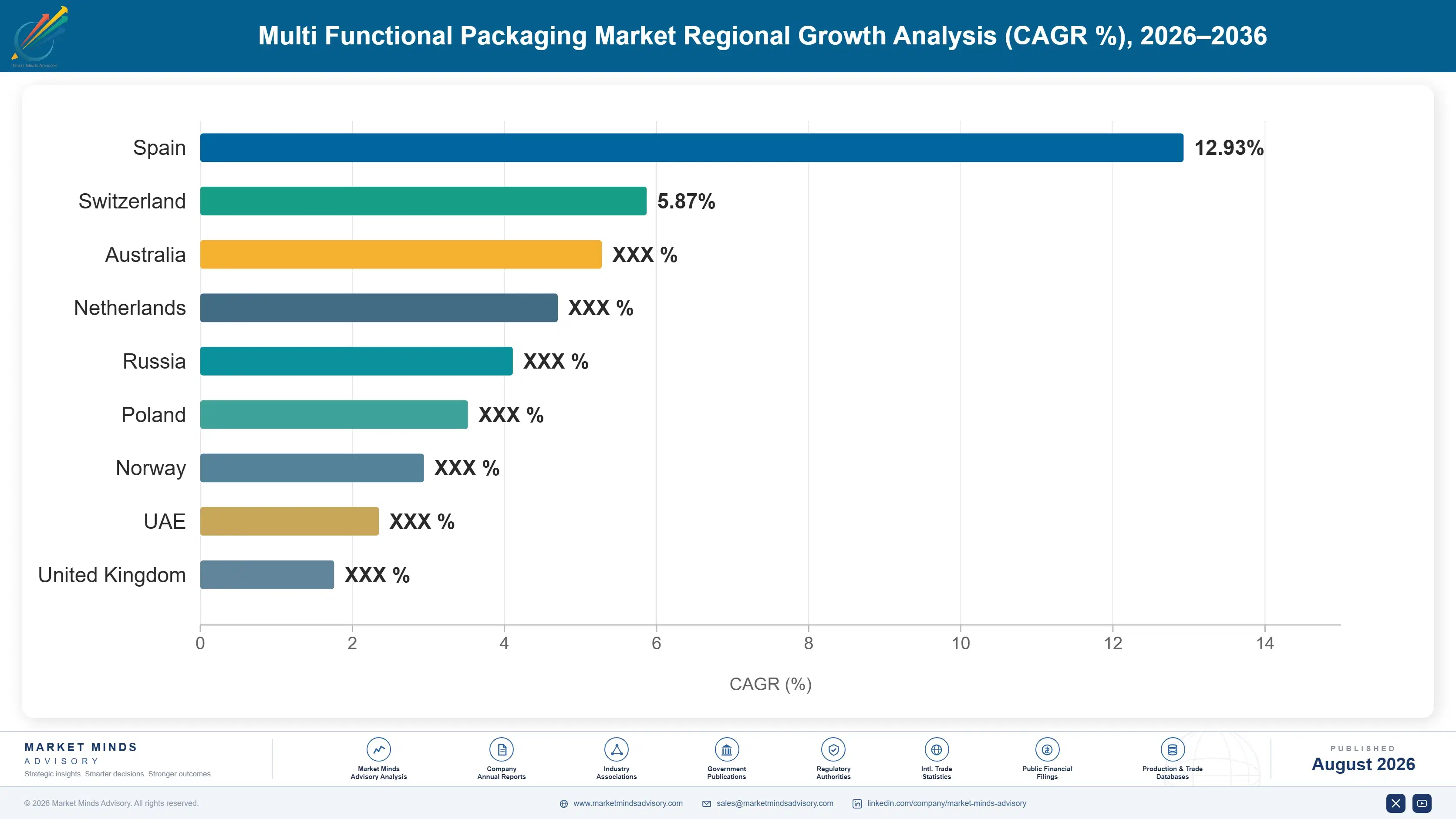
Electronics-grade sensor manufacturing scale and cold chain regulatory intensity, rather than population, set this seven-region value distribution across the market. East Asia leads on deep component manufacturing capability, North America follows on pharmaceutical cold chain regulation, and South Korea grows fastest on sensor and semiconductor manufacturing depth.

North America

North America holds 24% of value at 10.8% growth, on the strength of pharmaceutical cold chain regulation that increasingly mandates continuous condition monitoring across biologics and vaccine distribution networks nationally and at scale. FDA traceability requirements and comparable state-level rules are pushing sensor-embedded packaging from an optional upgrade into a documented compliance requirement for regulated shippers across most therapeutic categories. Sealed Air and Avery Dennison both hold strong domestic manufacturing and technical service positions built over decades of pharmaceutical and food industry relationships. Brand protection investment against counterfeiting is rising steadily across electronics and consumer goods categories too. Canadian demand follows comparable regulatory patterns, driven by shared pharmaceutical distribution networks across the shared border.
Share: 24% | CAGR: 10.8% (2026 to 2036)

Western Europe

Western Europe holds 22% of value at 9.0% growth, the slowest of the seven regions, shaped by packaging waste regulation that complicates multi-material sensor and electronics integration considerably more than in other major markets globally right now. The European Union's packaging and packaging waste regulation increasingly scrutinises recyclability, pushing converters toward mono-material and printed-electronics alternatives to the multi-layer laminates that dominate elsewhere globally. Mondi Group holds a strong regional position built on sustainable packaging engineering expertise specifically across several categories. German and French pharmaceutical cold chain demand remains solid despite the recyclability constraint noted above. Growth reflects a genuine trade-off between functional integration and regulatory recyclability pressure across the bloc.
Share: 22% | CAGR: 9.0% (2026 to 2036)
Regional intelligence for 5 additional markets available in the complete report: East Asia, South Asia and Pacific, Latin America, Middle East and Africa, Eastern Europe. Contact sales@marketmindsadvisory.com.
multi-functional-packaging-market-country-cagr-analysis-1787324988458

Where Multi-Functional Packaging Converters Hold Margin

Selling a converter's active layer, a separate intelligent label, and a separate authentication seal to three different suppliers is a business model brand owners are actively abandoning. The four moves below shift earnings toward what actually captures the convergence: sensor integration depth, cold chain compliance positioning, brand protection economics, and mono-material engineering built ahead of regulation.

Build Sensor Integration Depth Ahead Of Rivals

Converters that master low-cost sensor and indicator embedding, rather than outsourcing that layer to a specialist and simply laminating the result together, capture the highest-margin share of any multi-functional contract and control the customer relationship directly from end to end. That capability commands a genuine premium of 20 to 35% over assembled multi-supplier alternatives, since brand owners pay for integration reliability as much as for the sensor technology itself. Sealed Air and Avery Dennison built this depth over years, and it is not quickly replicated by converters entering from single-function backgrounds.
Market Impact: Commands 20 to 35% integration prem

Position Directly Against Cold Chain Compliance Deadlines

Pharmaceutical traceability mandates now cover more than 60 countries, and converters positioned with compliant sensor-embedded packaging before a mandate takes effect in a given market capture disproportionate early share that later entrants find genuinely difficult to displace afterward once contracts are signed and renewed. That compliance-driven demand persists regardless of underlying sensor cost, since pharmaceutical manufacturers facing a monitoring mandate cannot legally ship without compliant packaging at all. Converters tracking regulatory pipelines closely and pre-positioning technical capability ahead of enactment consistently outperform those reacting only after a deadline is formally announced.
Market Impact: Mandates now cover over 60 countrie

Quantify Counterfeit Loss Reduction For Brand Owners

Counterfeit goods cost brand owners more than USD 500 billion annually, and converters who quantify the specific loss reduction their authentication technology delivers for a given brand's product category convert an abstract security argument into a concrete return-on-investment calculation that finance and legal functions can approve quickly. That framing reaches budget holders who never respond to generic brand protection messaging alone, opening conversations that pure security positioning could never access on its own merits. Authentication layers embedded alongside active and intelligent functions justify a premium that stand-alone security labels cannot.
Market Impact: Prevents losses worth over 500 bill

Engineer Mono-Material Structures Ahead Of Recyclability Rules

Packaging waste regulation is tightening recyclability requirements across more than 22 jurisdictions worldwide, and multi-layer laminates combining active, intelligent, and barrier functions increasingly fail the mono-material thresholds several of them are now writing directly into binding national law and enforcement schedules. Converters who engineer mono-material or printed-electronics alternatives ahead of enforcement avoid the redesign scramble that catches unprepared competitors when a compliance deadline arrives suddenly. Mondi Group's early mono-material investment in Western Europe illustrates the pattern: regulatory foresight here converts directly into retained shelf space once mandatory recyclability testing actually begins across the bloc.
Market Impact: Recycling mandates now affect over

Who Controls the Margin Pool

Concentration sits at roughly 27% for the top five, split across converters that bundle active, intelligent, and barrier functions into unified laminate structures for pharmaceutical, food, and electronics customers. The gap between leaders and challengers is sensor integration depth and regulatory compliance positioning rather than raw manufacturing scale, broadly comparable across established players here. All participants are assessed on one basis, revenue from multi-functional structures, ex
Competition runs along three lines. First, sensor and indicator integration depth, since that increasingly determines which converters capture the highest-margin pharmaceutical and premium food contracts. Second, cold chain regulatory compliance positioning, which shapes brand relationships for years once a converter becomes the qualified supplier for a given mandate. Third, mono-material engineering capability, since packaging waste regulation is beginning to disqualify laminates that cannot demonstrate genuine recyclability.

Pressure is building from two directions. Large diversified packaging groups are acquiring specialist sensor and authentication technology firms to build integration depth faster than organic development allows. Meanwhile electronics-sector printed sensor specialists are entering packaging directly, bringing cost advantages traditional converters cannot easily match. Rankings should favour converters combining deep sensor integration with genuine mono-material engineering over those competing on laminate manufacturing scale alone.
multi-functional-packaging-market-company-positioning-matrix-1787324988979

Competitive Moat and Risk Dimensions

SEALED AIR

Moat: Sensor integration and technical scale

Sealed Air operates deep sensor and indicator integration capability built over years of pharmaceutical and food industry engineering, giving it a technical depth smaller converters cannot quickly replicate. Its established position across multiple cold chain categories provides customer relationships spanning decades of continuous supply. Continued investment in printed electronics and mono-material engineering positions it ahead of tightening recyclability regulation.
SEALED AIR

Risk: Integration cost limits smaller accounts

Its deep integration capability carries a cost structure that prices out smaller pharmaceutical and food brands unable to absorb the multi-functional premium over single-function alternatives. Component-level specialists entering with lower-cost printed sensor technology are targeting exactly these price-sensitive accounts directly. Maintaining premium positioning while component costs fall broadly remains a genuine ongoing commercial challenge for the business.
AVERY DENNISON

Moat: Labelling and authentication technology depth

Avery Dennison built deep labelling, indicator, and authentication technology capability across decades of brand protection and retail relationships spanning most major consumer categories. Its manufacturing footprint spans multiple regions, supporting global brand owners standardising specifications across markets. Continued investment in RFID and digital authentication technology positions it well against emerging printed-electronics competitors.
AVERY DENNISON

Risk: Exposure to retail volume cycles

Its labelling business remains meaningfully exposed to retail and consumer goods volume cycles, which move independently of the fast-expanding pharmaceutical cold chain segment driving category growth. Diversification into pharmaceutical-grade authentication requires technical capability the company is still actively building out. Component-level competitors entering the authentication space directly threaten its historical labelling-led market position.

Players Tracked

Prominent Players

Amcor
Sealed Air
Avery Dennison
Sonoco Products
Mondi Group

Other Key Players

DuPont Teijin Films
Multisorb Technologies
CCL Industries
Tekni-Plex
Klöckner Pentaplast
Sappi
Stora Enso
Uflex
Constantia Flexibles
ProAmpac
Berry Global
WestRock
International Paper
Smurfit Kappa
Huhtamaki

Recent Developments

NOVEMBER 2023

US Drug Supply Chain Security Act traceability requirements reach full enforcement

The United States Drug Supply Chain Security Act traceability requirements reached full enforcement, requiring serialised, sensor-compatible packaging across the pharmaceutical distribution chain nationally. This was regulatory implementation rather than a corporate transaction, and it converted sensor-embedded packaging into a documented compliance requirement across regulated pharmaceutical shipments overnight.
Signal: Regulatory enforcement deadlines convert o
MAY 2024

Major converter acquires specialist printed-sensor technology firm

A leading converter announced an acquisition of a specialist printed-sensor technology firm, adding low-cost temperature and humidity sensing capability directly into its existing laminate manufacturing platform. This was a genuine acquisition rather than a joint venture or minority stake, and it addressed an integration capability gap the converter previously lacked.
Signal: Acquiring component-level sensor technolog
MARCH 2025

European Union finalises updated packaging waste recyclability thresholds

The European Union finalised updated packaging waste regulation recyclability thresholds affecting multi-layer laminate structures, requiring converters to demonstrate genuine mono-material compliance pathways within a defined transition period. This was regulatory finalisation rather than a corporate transaction, and it forced multi-functional converters across the bloc to accelerate mono-material engineering programmes considerably.
Signal: Regulatory recyclability thresholds are no

Sensor Components And Semiconductor Supply Risk

Sensor components and electronic modules dominate cost structure for multi-functional packaging. Printed or embedded sensor chips, RFID inlays, and indicator chemistry together account for a substantial share of finished structure cost, sourced primarily from semiconductor and specialty chemical suppliers concentrated in East Asia. Base laminate substrate and active chemistry additives complete the structure, priced against polymer and specialty chemical commodity markets.
Semiconductor component shortages through 2021 and 2022 disrupted sensor chip supply broadly across industries, pushing lead times out considerably and lifting component costs well above pre-shortage levels for converters dependent on external sensor suppliers. Several converters disclosed the resulting margin pressure and delayed contract fulfilment across their annual reporting through that period, and IEA data recorded the parallel semiconductor manufacturing energy cost pressure that compounded the shortage across the industry.

Exposure divides sharply by sensor sourcing strategy rather than by converter size specifically. Converters with direct semiconductor supplier relationships or vertically integrated sensor manufacturing held cost considerably better than those buying components on spot markets during the shortage. The disadvantage compounds, because a converter unable to deliver sensor-embedded contracts during a shortage loses the pharmaceutical qualification status that competitors, once established, retain for years afterward.
multi-functional-packaging-market-cost-volatility-analysis-1787324989174

Diversify sensor sourcing across multiple semiconductor suppliers

Concentrating sensor component sourcing with a single semiconductor supplier ties production directly to that supplier's specific capacity and allocation decisions, which the recent shortage demonstrated quite expensively across the entire industry. Diversifying sourcing across multiple qualified suppliers spreads that exposure and improves component availability during any single supplier's capacity constraint or unexpected disruption considerably.

Secure multi-year semiconductor supply agreements early

Spot buying sensor components exposes converters to allocation cuts precisely when demand for multi-functional packaging is also rising sharply across the industry simultaneously and quite unpredictably each quarter. Multi-year supply agreements with semiconductor suppliers, even at modest committed volume, provide allocation priority and pricing stability that spot buyers competing during a shortage simply cannot access.

Invest in vertically integrated sensor manufacturing capability

Converters entirely dependent on external sensor suppliers cannot control allocation priority when a shortage hits, leaving no real alternative but to absorb delay and cost increases directly and pass them downstream. Vertically integrated sensor manufacturing, even at modest internal scale, preserves supply continuity and negotiating leverage that externally dependent competitors simply cannot access or replicate.

Portfolio Architecture for Margin Defence

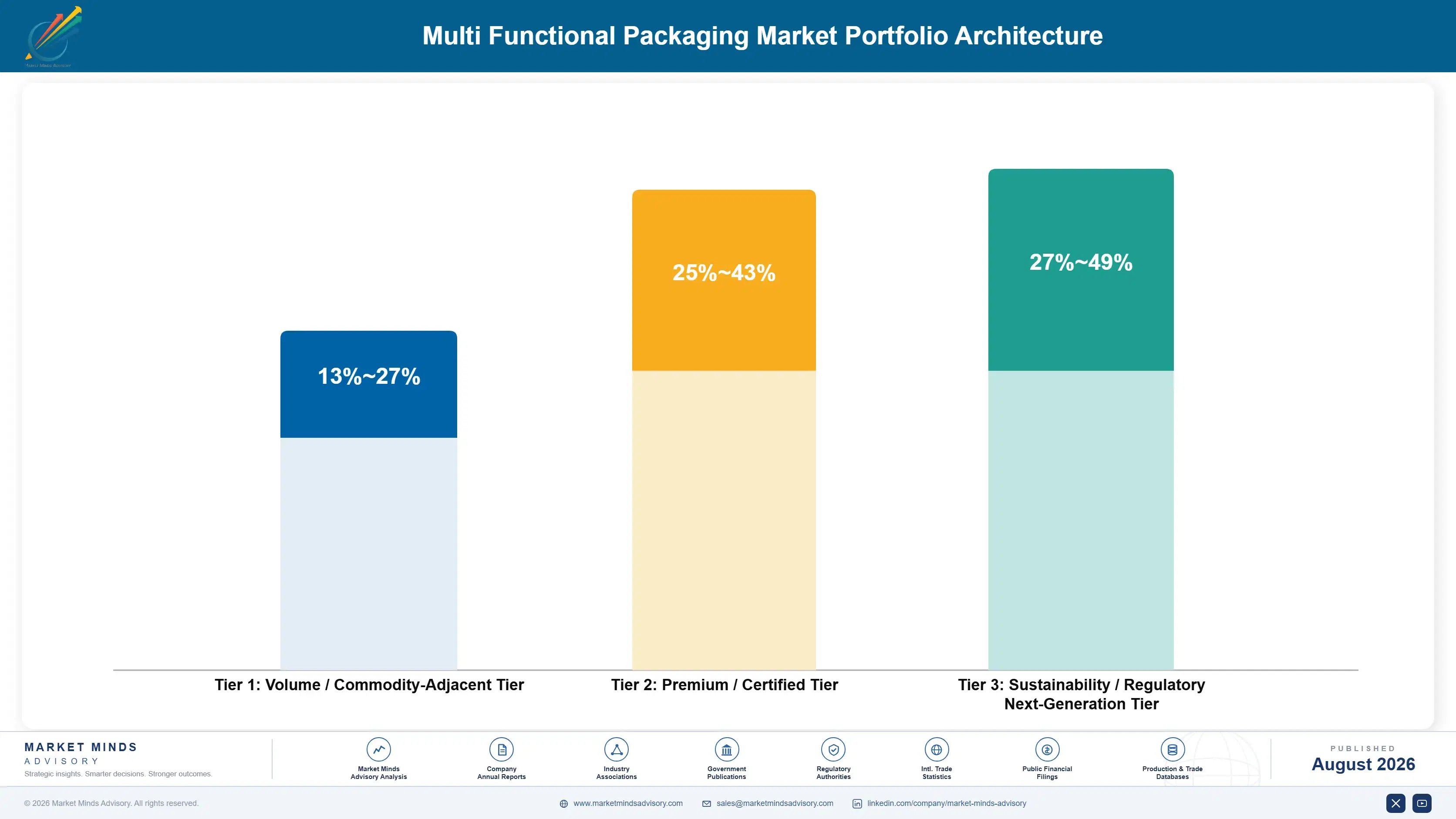
The portfolio splits into three tiers with genuinely different economics. Barrier-enhanced and single-active-function packaging is the volume tier, where material cost and manufacturing scale drive competition directly. Regulatory-compliant intelligent and authentication formats earn considerably more, because integration depth and compliance relationships narrow the qualified field. Fully converged multi-function structures sit differently again, priced against the integration problem they solv
The tension runs between standard barrier volume that fills laminating capacity and premium sensor-integrated work that earns the return. Single-function protective packaging generates the tonnage that keeps converting lines loaded and maintains brand relationships through which higher-value conversations eventually happen. Yet this material competes on cost against every qualified supplier serving the same regulatory-driven demand. Converters managing this well treat standard volume as capacity utilisation and direct investment toward integration depth.

High-value pools concentrate where integration complexity or regulatory urgency genuinely limits competition: sensor-embedded cold chain packaging solving traceability mandates directly, authentication layers addressing quantified counterfeit loss, and mono-material engineering meeting recyclability rules ahead of enforcement. All three resist the price competition defining standard single-function packaging, because the customer is purchasing a solved integration problem rather than comparing interchangeable laminate structures across suppliers.

Volume / Commodity-Adjacent Tier

Standard barrier-enhanced and single-active-function packaging sold into regulatory-driven food and pharmaceutical demand at scale. The range is wide because component-integrated producers earn respectably while those assembling from third-party suppliers frequently do not.
Gross Margin: 13-27%

Premium / Certified Tier

Regulatory-compliant intelligent and authentication formats carrying deep sensor integration and established brand relationships in the most demanding pharmaceutical and electronics categories. The range is wide because integration depth and compliance relationships vary considerably.
Gross Margin: 25-43%

Sustainability / Regulatory / Next-Generation Tier

Fully converged multi-function structures combining active, intelligent, and authentication layers addressing the integration problem directly and durably. The range is wide because sensor cost and mono-material engineering maturity still vary enormously by converter.
Gross Margin: 27-49%
multi-functional-packaging-market-portfolio-architecture-1787324989668

High-value Sub-segments and Strategic Watch-out

Intelligent and Connected Packaging

High value and the fastest growth at 17.2%, from a small base as sensors and connectivity move from pharmaceutical pilots into mainstream cold chain logistics globally. Component cost remains meaningfully higher than single-function alternatives, limiting near-term adoption to regulated and premium applications specifically for now across most markets.
Gross Margin: 29-49%

Active Packaging

High value with strong growth, protected by active chemistry formulation depth and shelf-life extension performance that brand owners can quantify directly and consistently. Regulatory approval timelines for new formulations create a durable barrier that newer specialist entrants find genuinely difficult to replicate quickly across most jurisdictions today.
Gross Margin: 25-43%

Enhanced Barrier and Protective Packaging

The volume core across barrier and protective packaging worldwide, and the category with the longest commercial history of the five segments listed in this section. Growth is steady but competition on cost is direct, holding margin below the intelligent and active tiers positioned above it consistently.
Gross Margin: 13-27%

Tamper-Evident Security Packaging

The strategic watch-out, growing slowest as packaging waste regulation increasingly disqualifies multi-layer laminates unable to demonstrate genuine mono-material recyclability across major markets worldwide right now. Compliance exposure limits addressable markets exactly where regulatory scrutiny is intensifying fastest, threatening this segment's competitive position over time considerably.
Gross Margin: 15-29%

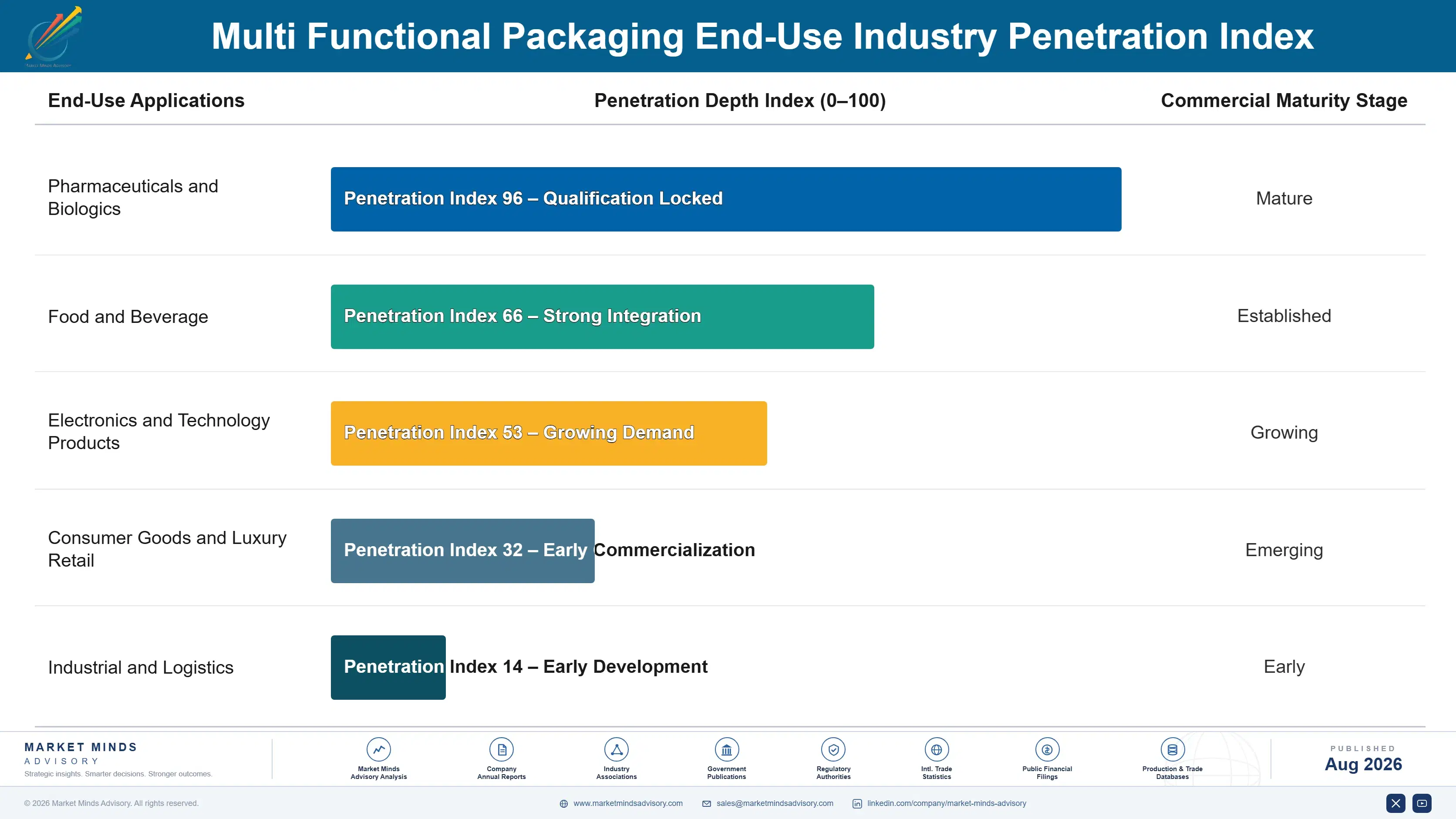
How Multi-Functional Specifications Actually Commit

Revenue commits differently depending on which function drives the purchase. Regulatory-mandated sensor packaging locks in quickly once a compliance deadline passes, since pharmaceutical manufacturers have no alternative but qualified suppliers and reorder without further evaluation. Voluntary brand protection adoption moves more slowly and stays genuinely reversible if counterfeit risk perception shifts. Understanding which driver applies shapes both pricing power and retention expectations.
Adoption depth varies sharply by buyer type. Pharmaceutical manufacturers facing direct regulatory mandate go deepest, standardising sensor-embedded packaging across their distribution network once compliance becomes mandatory. Premium food and electronics brands adopt more selectively, often piloting authentication or active formats before broader rollout. Commodity food packaging buyers weigh cost more heavily, since integration premiums are harder to justify without a direct regulatory driver.

Buyer profiles have shifted from packaging engineers toward compliance officers and brand protection functions with distinct priorities. A packaging engineer once compared material cost and barrier performance directly; a compliance officer now tracks traceability mandate coverage, and a brand protection function drives specification against counterfeit loss targets a purely technical evaluation would never have prioritised. Suppliers selling on barrier performance alone find decisions made by people who never saw their spec sheet.
multi-functional-packaging-market-end-use-penetration-index-1787324990158

Our Call On Multi-Functional Packaging

These are among the four positions where our research anticipates prominent divergence between winners and laggards over the coming forecast period. Each is grounded in the demand model, the regulatory perimeter, and the announced capacity pipeline.
01 / SENSOR INTEGRATION STRATEGY

Build sensor integration depth before rivals close the gap

Converters that master low-cost sensor and indicator embedding, rather than outsourcing that layer to a specialist and simply laminating the result together, capture the highest-margin share of any multi-functional contract and control the customer relationship directly. That capability commands a genuine 20 to 35% premium over assembled multi-supplier alternatives, since brand owners pay for integration reliability as much as for the sensor technology itself. Converters should prioritise this depth now, because it is not quickly replicated once rivals catch up.
02 / COLD CHAIN COMPLIANCE TIMING

Position ahead of traceability mandates, not after them

Pharmaceutical traceability mandates now cover more than 60 countries, and converters positioned with compliant sensor-embedded packaging before a mandate takes effect capture disproportionate early share that later entrants find genuinely difficult to displace afterward once contracts are signed. That compliance-driven demand persists regardless of underlying sensor cost, since pharmaceutical manufacturers facing a monitoring mandate cannot legally ship without compliant packaging at all. Converters should track regulatory pipelines closely, positioning technical capability ahead of enactment rather than reacting only after a deadline is formally announced.
03 / BRAND PROTECTION ECONOMICS

Quantify counterfeit loss reduction, not just security features

Counterfeit goods cost brand owners more than USD 500 billion annually, and converters who quantify the specific loss reduction their authentication technology delivers convert an abstract security argument into a concrete return-on-investment calculation that finance functions can approve quickly. That framing reaches budget holders who never respond to generic brand protection messaging alone, opening conversations pure security positioning could never access on its own merits. Authentication layers embedded alongside active and intelligent functions justify a premium that stand-alone security labels simply cannot.
04 / MONO-MATERIAL REGULATORY FORESIGHT

Engineer mono-material structures ahead of recyclability enforcement

Packaging waste regulation is tightening recyclability requirements across major markets, and multi-layer laminates combining active, intelligent, and barrier functions increasingly fail the mono-material thresholds several jurisdictions are now writing directly into binding national law and enforcement schedules. Converters who engineer mono-material or printed-electronics alternatives ahead of enforcement avoid the redesign scramble that catches unprepared competitors when a compliance deadline arrives suddenly and without warning. Regulatory foresight here converts directly into retained shelf space once mandatory recyclability testing actually begins across affected markets.

Engagement Snapshot From the Field

A live engagement with an industry participant carrying material or product regulatory and market exposure ahead of a defining policy shift, showing how our research translates into a defensible multi-year portfolio strategy.
MARKET MINDS ADVISORY · CLIENT ENGAGEMENT SUMMARY
Multi Functional Packaging Producer Strategic Portfolio Review and Transition Roadmap 2026·Investment Scenario on Multi Functional Packaging Exposure Evaluation 2025-26
CLIENT PROFILE
A multinational biologics manufacturer engaged MMA while evaluating a global shift to sensor-embedded cold chain packaging ahead of tightening traceability mandates across its largest export markets. The client reported annual cold chain packaging spend near USD 140 million and faced compliance deadlines in eight markets within a fourteen-month window, with sensor technology sourced inconsistently by region (client-reported, unverified by MMA).
STRATEGIC CHALLENGE
Standardising on a single sensor-embedded packaging platform would simplify qualification, but the client's regional distributors had already committed to different technology suppliers, creating integration and compatibility risk across markets. The board wanted cost certainty, but sensor component pricing and converter readiness both varied considerably across markets facing near-term compliance deadlines.
MMA APPROACH
MMA mapped the client's eight compliance-deadline markets against converter technical readiness and sensor supplier concentration, identifying where existing regional relationships could be retained versus where a single global platform was genuinely necessary. We modelled total integration cost across scenarios rather than sensor component price alone. We then assessed supplier semiconductor exposure against the client's compressed compliance timeline.
KEY FINDINGS
  1. Three of the eight markets faced semiconductor allocation constraints severe enough to threaten the client's compliance timeline without a dedicated supply agreement secured in advance.
  2. A single global sensor platform would have cost 30% more than a differentiated regional approach, without delivering meaningful integration benefit across markets (client-reported, unverified by MMA).
  3. Only two of six assessed converters could deliver certified sensor-embedded packaging at the client's required volume within the fourteen-month compliance window available.
  4. Existing regional distributor relationships with qualified sensor suppliers could be retained in five of the eight markets without triggering any costly requalification delay.
CLIENT PROFILE
A multinational biologics manufacturer engaged MMA while evaluating a global shift to sensor-embedded cold chain packaging ahead of tightening traceability mandates across its largest export markets. The client reported annual cold chain packaging spend near USD 140 million and faced compliance deadlines in eight markets within a fourteen-month window, with sensor technology sourced inconsistently by region (client-reported, unverified by MMA).
STRATEGIC CHALLENGE
Standardising on a single sensor-embedded packaging platform would simplify qualification, but the client's regional distributors had already committed to different technology suppliers, creating integration and compatibility risk across markets. The board wanted cost certainty, but sensor component pricing and converter readiness both varied considerably across markets facing near-term compliance deadlines.
MMA APPROACH
MMA mapped the client's eight compliance-deadline markets against converter technical readiness and sensor supplier concentration, identifying where existing regional relationships could be retained versus where a single global platform was genuinely necessary. We modelled total integration cost across scenarios rather than sensor component price alone. We then assessed supplier semiconductor exposure against the client's compressed compliance timeline.
KEY FINDINGS
  1. Three of the eight markets faced semiconductor allocation constraints severe enough to threaten the client's compliance timeline without a dedicated supply agreement secured in advance.
  2. A single global sensor platform would have cost 30% more than a differentiated regional approach, without delivering meaningful integration benefit across markets (client-reported, unverified by MMA).
  3. Only two of six assessed converters could deliver certified sensor-embedded packaging at the client's required volume within the fourteen-month compliance window available.
  4. Existing regional distributor relationships with qualified sensor suppliers could be retained in five of the eight markets without triggering any costly requalification delay.
RECOMMENDED STRATEGY
Phase 1: Phase 1 (0 to 5 months): Secure semiconductor supply agreements for the three allocation-constrained markets immediately, given tight component availability. Phase 2: Phase 2 (5 to 14 months): Deploy sensor-embedded packaging across all eight compliance-deadline markets, retaining qualified regional suppliers where feasible. Phase 3: Phase 3 (14 to 30 months): Extend the differentiated regional platform approach across remaining markets ahead of anticipated mandate expansion.
OUTCOME
The client met compliance deadlines across all eight markets using a differentiated regional platform rather than a single global standard that would have cost considerably more. Semiconductor supply agreements secured in advance prevented the allocation constraint from delaying any shipment, and the approach is now the client's standard framework for future markets (client-reported, unverified by MMA).

Frequently Asked Questions

Foundational context covering the market sizes, CAGR, scope, country, region and competition that inform every finding below. This section is provided to cover basics and most often pre-purchase conversations, answered from the MMA Primary Research Dataset.

What is the current size of the Multi Functional Packaging Market?

The global multi-functional packaging market is valued at USD 6.8 billion in 2025, covering active, intelligent, authentication, and barrier-enhancement packaging structures. Single-function active, intelligent, or barrier products sold separately are excluded from scope.

How large will the Multi Functional Packaging Market be by 2036?

The market is forecast to reach USD 20.19 billion by 2036 in the base case, about 2.69 times the 2026 level. That represents incremental value of roughly USD 12.68 billion across the forecast decade.

What is the CAGR for the Multi Functional Packaging Market 2026 to 2036?

The market grows at a 10.4% CAGR in the base case, with bull and bear scenarios at 11.6% and 9.1%. The spread turns mainly on cold chain digitisation pace and sensor cost trajectory.

Which segment is growing fastest?

Intelligent and connected packaging grows fastest at 17.2%, about 1.65 times the overall rate, as sensors and indicators become standard on cold chain shipments. Active packaging follows at 13.5% on shelf-life extension demand.

Who are the major companies in the Multi Functional Packaging Market?

Leading suppliers include Amcor, Sealed Air, Avery Dennison, Sonoco Products, and Mondi Group, holding roughly 27% between them. Converters combining sensor integration with mono-material engineering are increasingly capturing premium positioning.

Which country is growing fastest?

South Korea grows fastest at a 13.8% CAGR, building on deep semiconductor and sensor component manufacturing capability. China follows closely on export packaging demand and rising domestic sensor integration.

Report Segmentation Architecture

The full report scope spans multiple orthogonal segmentation dimensions, with cross-tabulated demand data provided for each dimension pair. Coverage extends further to regional breakdowns, trend trajectories, and the competitive detail needed to support segment-level decision-making.

By Function Type

  • Intelligent and Connected Packaging
  • Active Packaging
  • Authentication and Anti-Counterfeit Packaging
  • Enhanced Barrier and Protective Packaging
  • Tamper-Evident Security Packaging

By End-Use Industry

  • Pharmaceuticals and Biologics
  • Food and Beverage
  • Electronics and Technology Products
  • Consumer Goods and Luxury Retail
  • Industrial and Logistics

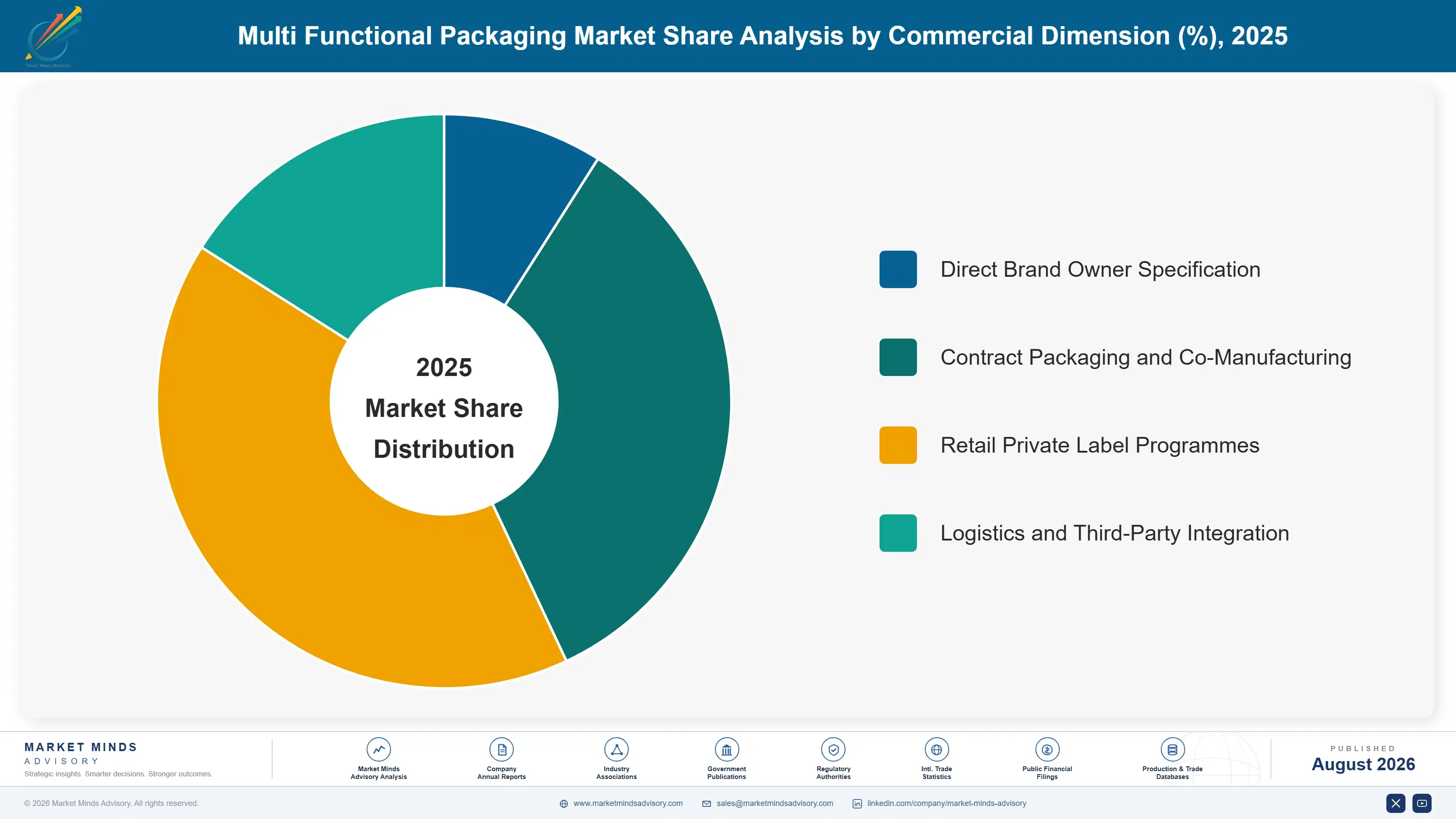
By Commercial Dimension

  • Direct Brand Owner Specification
  • Contract Packaging and Co-Manufacturing
  • Retail Private Label Programmes
  • Logistics and Third-Party Integration

By Region

  • North America
  • Western Europe
  • East Asia
  • South Asia and Pacific
  • Latin America
  • Middle East and Africa
  • Eastern Europe

Scope, Methodology, and Coverage

Every figure in this report is reproducible from documented input assumptions. The scope below maps the historical period, the forecast horizon, the segmentation dimensions, and the countries covered, alongside the underlying primary and qualitative methodology.
Historical Period
2020 to 2025
Forecast Period
2026 to 2036
Base Year
2025 (USD billions; MMA Primary Research Dataset, August 2026)
Market Definition
The multi-functional packaging market comprises packaging structures engineered to perform two or more of active protection, intelligent condition monitoring, and security authentication within a single integrated format, valued at converter selling prices. It spans oxygen scavenger and antimicrobial active systems, sensor and indicator-based intelligent packaging, tamper-evident and authentication security features, and enhanced barrier structures, when combined with at least one additional function in the same packaging structure. Single-function active, intelligent, barrier, or security packaging sold as a standalone product, and general logistics tracking software not embedded in the physical packaging, are excluded.
Quantitative Units
USD billions (current prices); packaging volume in metric tonnes by function type where applicable
Segmentation Dimensions
By Function Type; By End-Use Industry; By Commercial Dimension; By Region
Regions Covered
North America, Western Europe, East Asia, South Asia and Pacific, Latin America, Middle East and Africa, Eastern Europe
Countries Covered
USA, Canada, Germany, France, UK, Italy, Spain, Netherlands, China, Japan, South Korea, India, Australia, Vietnam, Malaysia, Thailand, Brazil, Mexico, Chile, Argentina, UAE, Saudi Arabia, South Africa, Egypt, Poland, Czechia, Hungary, Romania, and additional markets relevant to this sector
Key Companies Profiled
Amcor, Sealed Air, Avery Dennison, Sonoco Products, Mondi Group, DuPont Teijin Films, Multisorb Technologies, CCL Industries, Tekni-Plex, Klöckner Pentaplast, Sappi, Stora Enso, Uflex, Constantia Flexibles, ProAmpac, Berry Global, WestRock, International Paper, Smurfit Kappa, Huhtamaki
Quantitative Methodology
Primary survey, n=3,800 respondents, Q4 2025, six countries; demand-side model with trade association cross-validation
Qualitative Methodology
47 expert interviews, Q4 2025; applied to validate demand model assumptions, identify emerging dynamics, and assess competitive positioning
Report Format
PDF and XLSX data workbook (Word format preview document)
Publisher
Market Minds Advisory
Report Code
MMA-2026-PAC-204
Published
August 2026
Contact
sales@marketmindsadvisory.com | www.marketmindsadvisory.com

Purchase the full Multi Functional Packaging Market Report (2026 to 2036).

The full MMA Multi-Functional Packaging report sizes the market across five function types, five end-use industries, and seven regions through 2036. It profiles 20 suppliers on a consistent basis of multi-functional packaging revenue, scoring each on sensor integration depth, regulatory compliance positioning, brand protection economics, and mono-material engineering capability. Scenario models quantify how cold chain traceability mandates, counterfeit-driven brand protection spend, and packaging waste regulation move both volume and achievable margin by function type. The report also includes semiconductor supply chain risk mapping and mono-material transition tracking.
Five-function and five-industry market sizing through 2036
Twenty-supplier benchmark on multi-functional packaging revenue
Semiconductor sensor supply chain risk mapping by region
Cold chain traceability mandate tracking across major markets
Counterfeit loss and brand protection economics benchmarking
Mono-material recyclability transition tracking across converters

Built For The People Who Decide

From boardroom strategy to bench-side execution, this report is read cover-to-cover by leaders shaping the next decade of their industry, turning demand scenarios, market dynamics and valuation benchmarks into decisions.
CXOs/ Presidents/ VPs/ Managers
M&A and Corporate Development
Strategy Teams and R&D Heads
Procurement and Product Directors
Regulatory and Compliance Leaders
Investor Relations and Equity Analysts