Hollow Fiber Ceramic Membranes Market

Hollow Fiber Ceramic Membranes Market

Hollow Fiber Ceramic Membranes Market Outlook from 2026 to 2033

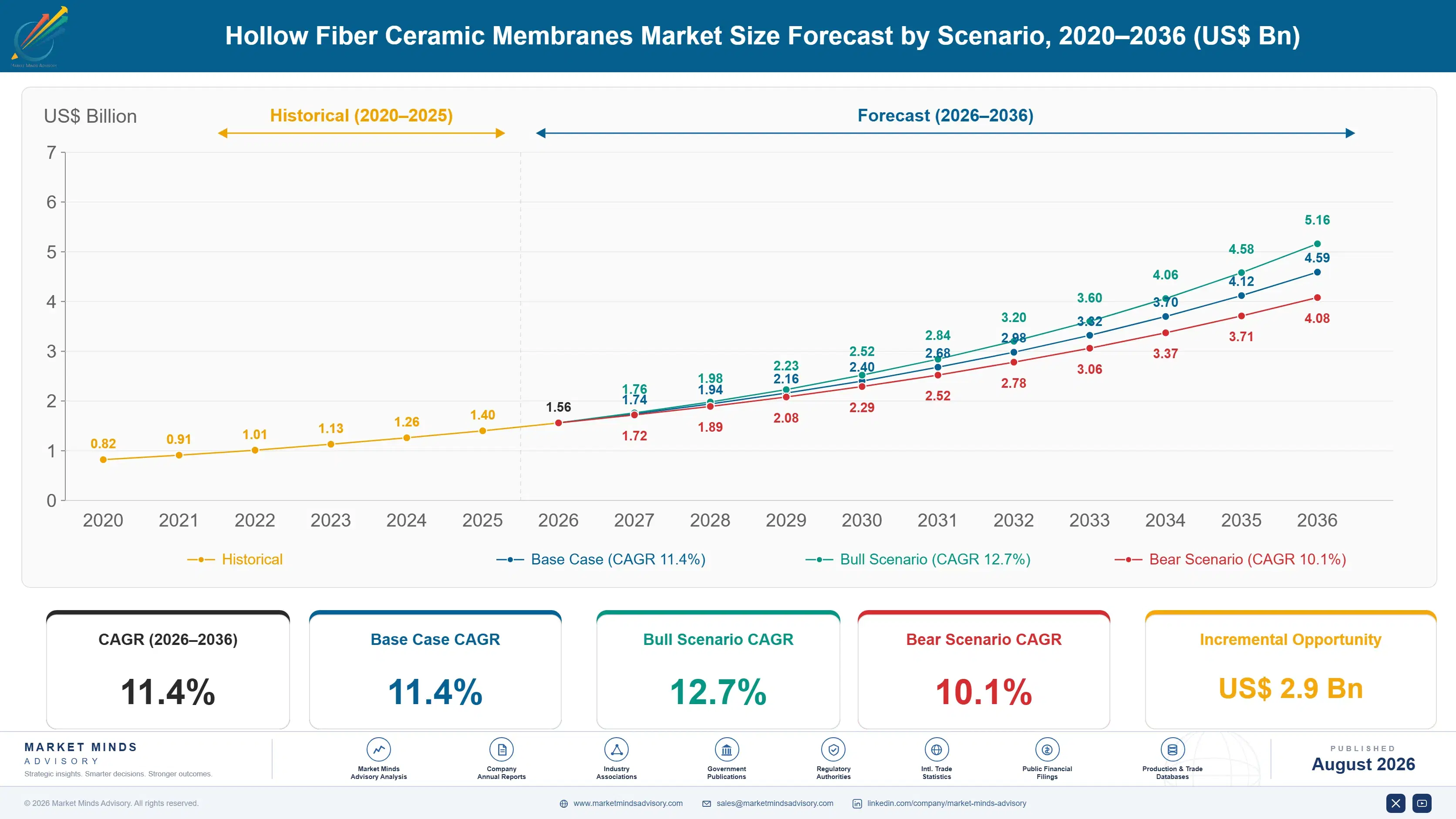
The hollow fiber ceramic membranes market poised for significant expansion from 2026 to 2033, driven by rising demand for advanced filtration technologies across water treatment, pharmaceuticals, food & beverage, and chemical processing industries. The market is projected to grow from a base value of USD 410 million in 2026 to USD 890 million by 2033, registering a robust CAGR of 11.5%. This growth is underpinned by the superior chemical, thermal, and mechanical stability of ceramic membranes compared to polymeric alternatives, making them highly suitable for harsh operating environments and applications requiring high purity.

Increasing regulatory emphasis on water reuse and stringent discharge standards are further catalyzing adoption, especially in industrial and municipal wastewater treatment. The market is also benefiting from ongoing technological advancements that enhance membrane performance, reduce fouling, and lower operational costs. As industries seek sustainable and efficient filtration solutions, hollow fiber ceramic membranes are emerging as a preferred choice due to their long service life and ability to handle aggressive feed streams.

Hollow Fiber Ceramic Membranes Market

Hollow Fiber Ceramic Membranes Market Scenario & Strategic Insights

The hollow fiber ceramic membranes market is characterized by a dynamic interplay of technological innovation, regulatory pressures, and evolving end-user requirements. The market’s growth trajectory is shaped by the increasing need for reliable separation and purification solutions in sectors such as water and wastewater treatment, pharmaceuticals, food & beverage, and chemicals. The unique properties of ceramic membranes, including high resistance to chemical corrosion, thermal stability, and mechanical strength, position them as a superior alternative to conventional polymeric membranes, particularly in demanding applications.

Strategically, market participants are focusing on expanding their product portfolios, investing in R&D to enhance membrane efficiency, and forging partnerships with end-users to deliver customized solutions. The Asia-Pacific region is emerging as a key growth engine, driven by rapid industrialization, urbanization, and government initiatives to improve water infrastructure. Meanwhile, North America and Europe continue to witness steady adoption, supported by stringent environmental regulations and a strong focus on sustainability. The competitive landscape is marked by both established players and innovative startups, fostering a climate of continuous improvement and technological advancement.

Attribute2026 (USD Million)2033 (USD Million)CAGR (2026 – 2033)
Market Size41089011.5%

Hollow Fiber Ceramic Membranes Market Trends

  • Rising Adoption in Water and Wastewater Treatment

The increasing scarcity of freshwater resources and the tightening of environmental regulations are driving the adoption of hollow fiber ceramic membranes in water and wastewater treatment applications. These membranes offer superior resistance to fouling, longer operational life, and the ability to operate under extreme pH and temperature conditions. Municipalities and industries are leveraging these attributes to achieve higher water recovery rates, reduce operational costs, and comply with stringent discharge standards. The trend is particularly pronounced in regions facing acute water stress, such as Asia-Pacific and the Middle East, where water reuse and desalination projects are gaining momentum.

  • Technological Advancements Enhancing Membrane Performance

Continuous innovation in membrane fabrication techniques, material science, and module design is significantly improving the performance of hollow fiber ceramic membranes. Advances such as the development of asymmetric membrane structures, incorporation of nanomaterials, and surface modification technologies are enhancing permeability, selectivity, and anti-fouling properties. These technological strides are enabling broader application across diverse industries, including pharmaceuticals, food & beverage, and biotechnology, where high purity and reliability are paramount. Manufacturers are also focusing on reducing production costs to make ceramic membranes more competitive with polymeric alternatives.

  • Expansion into Emerging Industrial Applications

Beyond traditional water treatment, hollow fiber ceramic membranes are finding increasing use in emerging applications such as bioreactors, solvent recovery, gas separation, and the treatment of challenging industrial effluents. Their robustness and ability to withstand aggressive chemicals make them ideal for processes involving harsh solvents, high temperatures, and abrasive particulates. This trend is opening new revenue streams for market players and driving the development of application-specific membrane solutions. The expansion into these niche segments is expected to contribute significantly to market growth over the forecast period.

Segment & Category Analysis for Hollow Fiber Ceramic Membranes Market

By Material Type

  • Alumina
    • Zirconia Titania Silica
    • Others

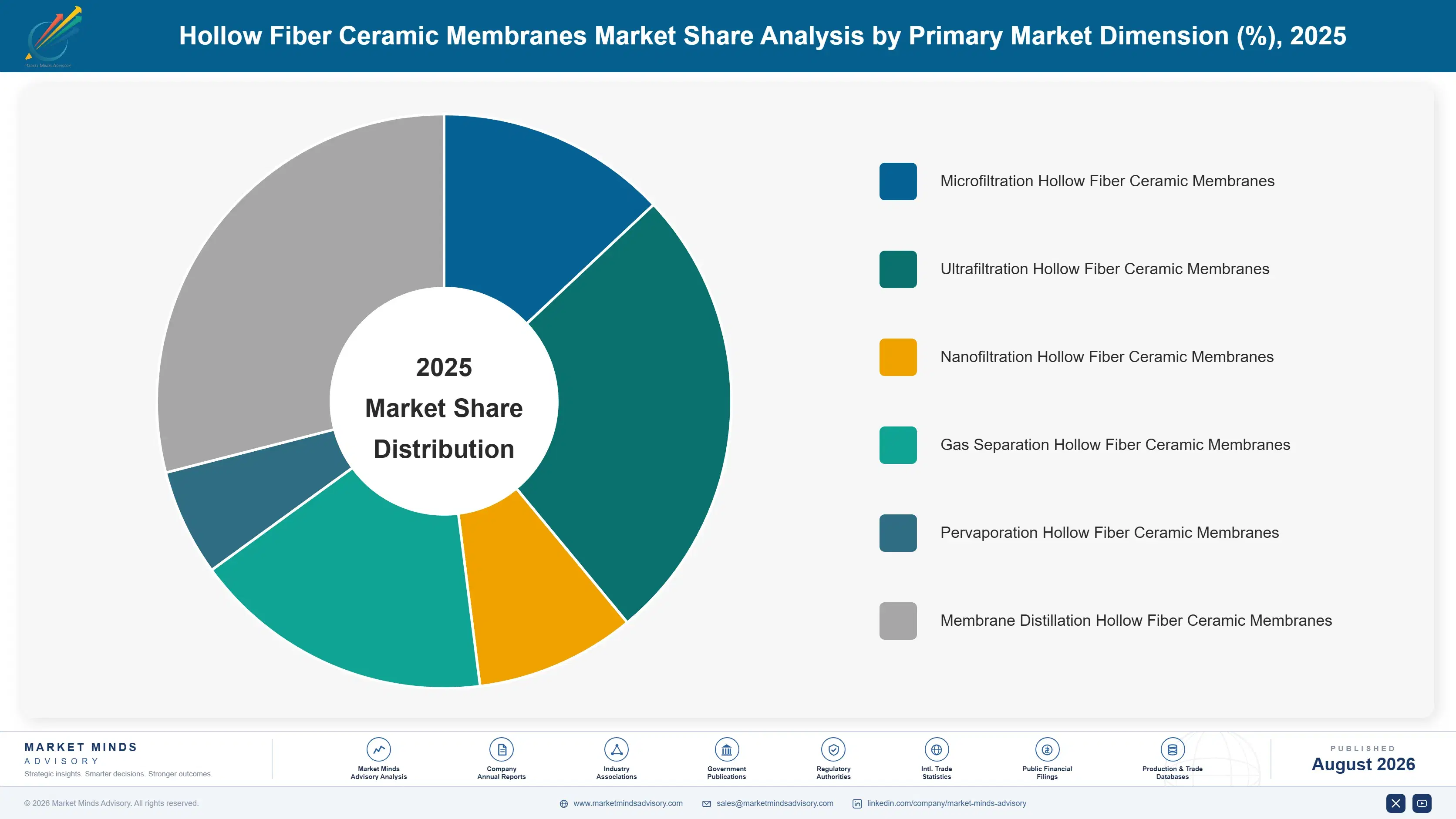
The material composition of hollow fiber ceramic membranes plays a critical role in determining their chemical resistance, mechanical strength, and application suitability. Alumina-based membranes dominate the market due to their excellent thermal stability and cost-effectiveness, making them suitable for a wide range of industrial applications. Zirconia and titania membranes are preferred for processes requiring higher chemical resistance and selectivity, such as pharmaceutical and specialty chemical manufacturing. Silica membranes, while less common, are gaining traction in niche applications due to their unique pore structures. The choice of material is often dictated by the specific requirements of the end-use industry and the nature of the feed stream.

Hollow Fiber Ceramic Membranes Market Material Type

By Application

  • Water & Wastewater Treatment
    • Food & Beverage Processing Pharmaceutical & Biotechnology Chemical Processing Gas Separation
    • Others

Water and wastewater treatment remains the largest application segment, driven by the need for efficient and sustainable filtration solutions in municipal and industrial settings. The food & beverage industry utilizes hollow fiber ceramic membranes for clarification, sterilization, and concentration processes, benefiting from their ability to maintain product quality and safety. In pharmaceuticals and biotechnology, these membranes are used for sterile filtration and separation of biomolecules, where high purity and reliability are essential. Chemical processing and gas separation represent emerging applications, leveraging the membranes’ robustness and selectivity for challenging separation tasks.

By Pore Size

  • Microfiltration
    • Ultrafiltration
    • Nanofiltration

The pore size of hollow fiber ceramic membranes determines their filtration capabilities and target contaminants. Microfiltration membranes are widely used for removing suspended solids, bacteria, and large particulates, making them ideal for pre-treatment and clarification processes. Ultrafiltration membranes offer finer separation, targeting viruses, proteins, and colloidal particles, and are extensively used in water purification and bioprocessing. Nanofiltration membranes, though less common, are gaining attention for their ability to remove dissolved salts and small organic molecules, opening new possibilities in water softening and specialty separations.

By End-User Industry

  • Municipal
    • Industrial Commercial
    • Residential

The municipal sector is a major consumer of hollow fiber ceramic membranes, primarily for large-scale water and wastewater treatment plants. Industrial end-users span a diverse range of sectors, including chemicals, pharmaceuticals, food & beverage, and power generation, each with unique filtration requirements. The commercial segment encompasses applications in hospitality, healthcare, and institutional facilities, where water quality and safety are critical. While residential use is currently limited, growing awareness of waterborne contaminants and the need for reliable home water purification solutions may drive future adoption.

By Module Configuration

  • Single-Ended
    • Double-Ended

Module configuration influences the operational flexibility, maintenance requirements, and scalability of hollow fiber ceramic membrane systems. Single-ended modules are favored for their simplicity and ease of maintenance, making them suitable for small to medium-scale applications. Double-ended modules offer higher packing density and improved flow distribution, catering to large-scale industrial and municipal installations. The choice of configuration is often guided by the specific process requirements, available space, and desired operational efficiency.

Hollow Fiber Ceramic Membranes Market Module Configuration

Growth Drivers and Opportunities in Hollow Fiber Ceramic Membranes Market

  • Stringent Environmental Regulations and Water Scarcity

The global push towards sustainable water management and the enforcement of stringent environmental regulations are key drivers for the hollow fiber ceramic membranes market. Governments and regulatory bodies are mandating higher standards for water discharge and encouraging water reuse, particularly in water-stressed regions. This regulatory landscape is compelling industries and municipalities to adopt advanced filtration technologies that can deliver high-quality effluent and support circular water use. Hollow fiber ceramic membranes, with their durability and ability to handle challenging feed streams, are well-positioned to meet these evolving requirements.

  • Technological Innovation and Cost Optimization

Ongoing advancements in membrane fabrication, module design, and process integration are creating new opportunities for market growth. Innovations such as the development of low-cost raw materials, energy-efficient manufacturing processes, and anti-fouling coatings are reducing the total cost of ownership and making ceramic membranes more accessible to a broader range of end-users. Additionally, the integration of hollow fiber ceramic membranes with other treatment technologies, such as advanced oxidation and biological processes, is enhancing overall system performance and opening new application areas.

Emerging Opportunities for Hollow Fiber Ceramic Membranes Market

  • Expansion into Industrial Gas Separation and Solvent Recovery

The unique properties of hollow fiber ceramic membranes, including their resistance to organic solvents and high temperatures, are enabling their use in industrial gas separation and solvent recovery applications. These emerging segments offer significant growth potential, as industries seek efficient and sustainable solutions for recovering valuable resources and reducing emissions. The ability to tailor membrane properties for specific separation tasks is further expanding the addressable market.

  • Adoption in Decentralized and Point-of-Use Water Treatment

The growing need for decentralized and point-of-use water treatment solutions, particularly in remote or underserved areas, presents a promising opportunity for hollow fiber ceramic membranes. Their compact design, low maintenance requirements, and ability to deliver consistent water quality make them ideal for small-scale and mobile applications. As awareness of waterborne health risks increases, demand for reliable and robust filtration technologies at the community and household levels is expected to rise.

Growth Restrain factors and Challenges in Hollow Fiber Ceramic Membranes Market

  • High Initial Investment and Cost Sensitivity

Despite their long-term operational benefits, the high initial capital investment required for hollow fiber ceramic membrane systems remains a significant barrier to widespread adoption, particularly in cost-sensitive markets. The manufacturing process for ceramic membranes is complex and energy-intensive, contributing to higher upfront costs compared to polymeric alternatives. This cost differential can deter small and medium-sized enterprises and municipalities with limited budgets from investing in ceramic membrane technology. Additionally, the lack of widespread awareness regarding the total cost of ownership and lifecycle benefits further exacerbates this challenge.

The market also faces competition from established polymeric membrane technologies, which are often perceived as more cost-effective for certain applications. Overcoming this perception requires concerted efforts by manufacturers to educate end-users about the long-term savings associated with reduced maintenance, longer service life, and superior performance of ceramic membranes. As production scales up and technological advancements drive down costs, the market is expected to gradually overcome this restraint.

  • Technical Challenges and Limited Standardization

Technical challenges related to membrane fouling, module design, and process integration can hinder the performance and reliability of hollow fiber ceramic membrane systems. While ceramic membranes are generally more resistant to fouling than polymeric counterparts, they are not immune to issues such as scaling and clogging, particularly in applications involving high concentrations of suspended solids or organic matter. Addressing these challenges requires ongoing research and development to improve membrane surface properties and cleaning protocols.

Another challenge is the lack of standardized testing and certification protocols for ceramic membranes, which can create uncertainty among end-users regarding product quality and performance. The absence of industry-wide standards also complicates the comparison of products from different manufacturers, potentially slowing market adoption. Collaborative efforts among industry stakeholders, research institutions, and regulatory bodies are needed to establish clear guidelines and promote best practices.

Hollow Fiber Ceramic Membranes Market Regional Analysis

RegionMarket Share (2025)Key Market Highlight
Asia-Pacific38%Rapid industrialization, strong government focus on water infrastructure, and rising adoption in China and India.
North America24%Stringent environmental regulations and significant investments in water reuse technologies.
Europe21%Advanced regulatory framework, high adoption in municipal and industrial sectors.
South America9%Growing demand for industrial water treatment and increasing awareness of water quality.
Middle East & Africa8%Water scarcity driving adoption of advanced filtration in desalination and reuse projects.

Regional Analysis for Hollow Fiber Ceramic Membranes Market

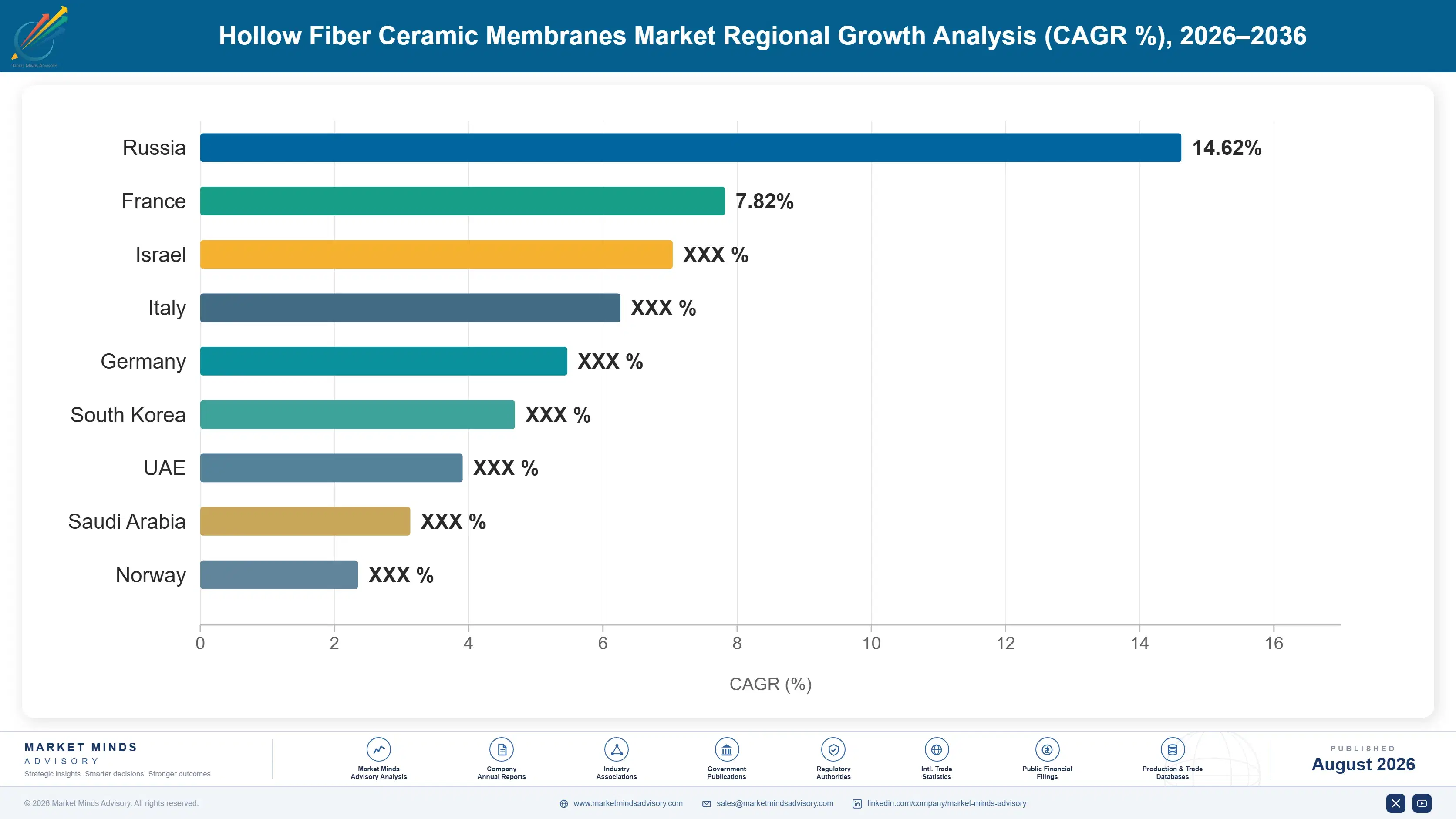
Asia-Pacific leads the hollow fiber ceramic membranes market, accounting for the largest share due to rapid industrialization, urbanization, and significant investments in water infrastructure. Countries such as China, India, and Japan are at the forefront, driven by government initiatives to address water scarcity and pollution. The region’s expanding manufacturing sector and increasing adoption of advanced water treatment technologies further bolster market growth.

North America holds a substantial market share, supported by stringent environmental regulations and a strong focus on water reuse and sustainability. The United States and Canada are key contributors, with robust investments in municipal and industrial water treatment projects. Europe follows closely, characterized by a mature regulatory environment and high adoption rates in both municipal and industrial sectors. The region’s emphasis on circular economy principles and resource efficiency is driving demand for advanced membrane technologies.

South America and the Middle East & Africa represent emerging markets with significant growth potential. In South America, increasing industrial activity and rising awareness of water quality issues are fueling demand for hollow fiber ceramic membranes. The Middle East & Africa region is witnessing growing adoption in desalination and water reuse projects, driven by acute water scarcity and the need for sustainable water management solutions.

Hollow Fiber Ceramic Membranes Market Regional

Competition Landscape in Hollow Fiber Ceramic Membranes Market

The hollow fiber ceramic membranes market is characterized by intense competition among global and regional players, each striving to enhance their technological capabilities and expand their market footprint. The competitive landscape is shaped by ongoing investments in research and development, strategic collaborations, and a focus on product differentiation. Leading companies are leveraging their expertise in material science and membrane engineering to develop high-performance products tailored to specific industry needs. The market also features a growing number of startups and niche players introducing innovative solutions and targeting emerging applications. Mergers, acquisitions, and partnerships are common strategies employed to strengthen market position and access new customer segments.

Major Players in Hollow Fiber Ceramic Membranes Market

  • Pall Corporation (Danaher)
  • Atech Innovations GmbH
  • TAMI Industries
  • METAWATER Co., Ltd.
  • ItN Nanovation AG
  • LiqTech International, Inc.
  • Nanostone Water, Inc.
  • Veolia Water Technologies
  • Hyflux Ltd.
  • Jiangsu Jiuwu Hi-Tech Co., Ltd.
  • Meidensha Corporation
  • LiqTech Holding A/S
  • Saint-Gobain
  • NGK Insulators, Ltd.
  • ClearBakk Water Solutions Inc.
  • Inopor GmbH
  • LENNTECH B.V.
  • Hunan Keensen Technology Co., Ltd.
  • Shanghai Corun Environmental Engineering Co., Ltd.
  • Shijiazhuang Jiulong Filter Equipment Co., Ltd.

Recent Developments in Hollow Fiber Ceramic Membranes Market

  • In January 2024, Pall Corporation launched a new generation of hollow fiber ceramic membranes with enhanced anti-fouling properties for industrial water treatment.
  • In October 2023, TAMI Industries announced a strategic partnership with a leading European chemical manufacturer to develop customized membrane solutions for solvent recovery.
  • In August 2023, Nanostone Water, Inc. expanded its production facility in the United States to meet growing demand from municipal and industrial clients.
  • In May 2023, LiqTech International, Inc. introduced a new line of low-cost ceramic membranes targeting small and medium-sized enterprises.
  • In March 2023, METAWATER Co., Ltd. secured a major contract for the supply of hollow fiber ceramic membranes for a large-scale municipal water reuse project in Japan.
  • In December 2022, Veolia Water Technologies completed the acquisition of a regional membrane manufacturer to strengthen its presence in the Asia-Pacific market.

FAQ for Hollow Fiber Ceramic Membranes Market

  1. What is the projected market size of the hollow fiber ceramic membranes market by 2033?

The hollow fiber ceramic membranes market is expected to reach approximately USD 890 million by 2033, growing at a CAGR of 11.5% from its 2026 base value of USD 410 million.

  1. Which regions are expected to drive the highest demand for hollow fiber ceramic membranes?

Asia-Pacific is anticipated to lead the market, driven by rapid industrialization, urbanization, and significant investments in water infrastructure, particularly in China and India. North America and Europe are also key markets due to stringent environmental regulations and advanced water treatment practices.

  1. What are the primary applications of hollow fiber ceramic membranes?

The main applications include water and wastewater treatment, food & beverage processing, pharmaceutical and biotechnology processes, chemical processing, and gas separation. Water and wastewater treatment remains the dominant application segment.

  1. What are the key growth drivers for the hollow fiber ceramic membranes market?

Key growth drivers include stringent environmental regulations, increasing water scarcity, technological advancements in membrane fabrication, and the need for efficient and sustainable filtration solutions across various industries.

  1. What are the main challenges facing the hollow fiber ceramic membranes market?

The market faces challenges such as high initial investment costs, technical issues related to membrane fouling and module design, and the lack of standardized testing and certification protocols. Overcoming these challenges requires ongoing innovation and industry collaboration.

Take Action Now! Contact us today to access the full report and propel your business forward with in-depth insights and strategic opportunities.