Glass Fiber Reinforced Plastic Composites Market
Glass Fiber Reinforced Plastic Composites Market Outlook from 2026 to 2033
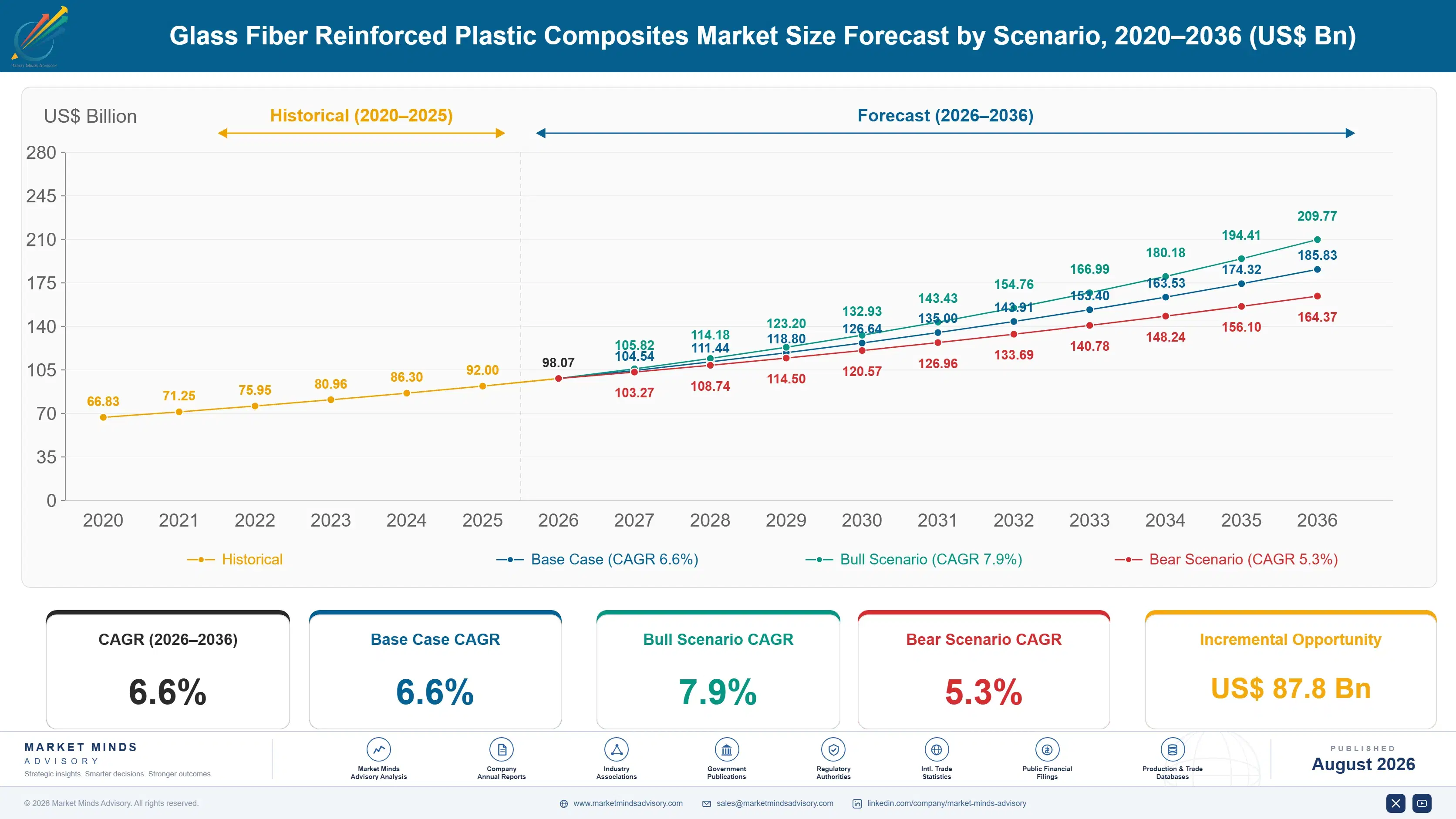
The global glass fiber reinforced plastic (GFRP) composites market is poised for robust expansion, driven by increasing demand across automotive, construction, aerospace, and wind energy sectors. In 2026, the market size is projected to reach USD 52.3 billion, with a forecasted CAGR of 6.2% from 2026 to 2033. The superior mechanical properties, lightweight nature, and cost-effectiveness of GFRP composites are fueling their adoption as substitutes for traditional materials such as steel and aluminum. The market’s growth trajectory is further supported by ongoing innovations in resin systems and manufacturing processes, which enhance product performance and broaden application scope.
The period from 2026 to 2033 will witness significant investments in research and development, particularly in the context of sustainability and recyclability. Regulatory pressures to reduce carbon emissions and improve energy efficiency are compelling industries to integrate advanced composite materials into their product lines. As a result, the global GFRP composites market is expected to achieve a value of USD 79.7 billion by 2033, reflecting its critical role in the evolving landscape of high-performance materials.

Glass Fiber Reinforced Plastic Composites Market Scenario & Strategic Insights
The Glass Fiber Reinforced Plastic Composites Market is characterized by a dynamic interplay of technological advancements, regulatory frameworks, and shifting end-user preferences. The automotive industry, in particular, is leveraging GFRP composites to achieve weight reduction, fuel efficiency, and enhanced safety standards. Simultaneously, the construction sector is increasingly utilizing these composites for infrastructure development, owing to their corrosion resistance and durability. The wind energy sector also represents a significant growth avenue, as GFRP composites are integral to the production of lightweight, high-strength turbine blades.
Strategically, market participants are focusing on expanding their production capacities and forming strategic alliances to strengthen their global footprint. The Asia-Pacific region, led by China and India, is emerging as a key production and consumption hub, driven by rapid industrialization and infrastructure investments. North America and Europe continue to innovate in composite technologies, with a strong emphasis on sustainability and regulatory compliance. The competitive landscape is marked by mergers, acquisitions, and collaborations aimed at enhancing product portfolios and market reach.
| Attribute | 2026 (USD Billion) | 2033 (USD Billion) | CAGR (2026 – 2033) |
| Market Size | 52.3 | 79.7 | 6.2% |
Glass Fiber Reinforced Plastic Composites Market Trends
- Sustainability and Recycling Initiatives
The increasing emphasis on environmental sustainability is shaping the GFRP composites market. Manufacturers are investing in the development of recyclable and bio-based resin systems to address end-of-life disposal challenges. Regulatory bodies in Europe and North America are enforcing stringent guidelines for waste management, prompting the adoption of closed-loop recycling processes. These initiatives are not only reducing the environmental footprint of GFRP composites but also enhancing their appeal in sectors such as automotive and construction, where green credentials are becoming a key differentiator.
- Technological Advancements in Manufacturing Processes
The market is witnessing significant advancements in manufacturing technologies, including automated fiber placement, resin transfer molding, and pultrusion. These innovations are improving production efficiency, reducing cycle times, and enabling the fabrication of complex geometries with high precision. The integration of digital technologies such as IoT and AI in manufacturing processes is further optimizing quality control and resource utilization. As a result, manufacturers are able to deliver high-performance GFRP composites tailored to specific end-user requirements, thereby expanding their application scope.
- Rising Demand from Renewable Energy Sector
The global shift towards renewable energy sources is driving demand for GFRP composites, particularly in wind turbine blade manufacturing. The lightweight and high-strength properties of GFRP enable the production of longer and more efficient blades, which are critical for enhancing energy output. Governments across Asia-Pacific, Europe, and North America are investing heavily in wind energy infrastructure, creating lucrative opportunities for GFRP composite manufacturers. This trend is expected to accelerate over the forecast period, supported by favorable policies and technological advancements in blade design.
Segment & Category Analysis for Glass Fiber Reinforced Plastic Composites Market
By Resin Type
- Polyester
- Vinyl Ester Epoxy Polyurethane
- Others
The choice of resin significantly influences the performance characteristics of GFRP composites. Polyester resins dominate the market due to their cost-effectiveness and versatility across various applications. Vinyl ester resins offer superior chemical resistance, making them suitable for corrosive environments, while epoxy resins are preferred for high-performance applications in aerospace and wind energy. Polyurethane and other specialty resins are gaining traction in niche segments, driven by their unique mechanical and thermal properties. The ongoing development of bio-based and recyclable resins is expected to further diversify the resin landscape in the coming years.

By Manufacturing Process
- Hand Lay-Up
- Spray-Up Resin Transfer Molding (RTM)Pultrusion Compression Molding
- Others
Manufacturing processes play a pivotal role in determining the quality, cost, and scalability of GFRP composites. The hand lay-up and spray-up methods are widely used for low-volume, custom applications, while RTM and pultrusion are preferred for high-volume, automated production. Compression molding is gaining popularity in the automotive sector for its ability to produce complex parts with consistent quality. The adoption of advanced manufacturing techniques is enabling manufacturers to meet the evolving demands of end-users, particularly in terms of precision, repeatability, and cost efficiency.
By End-Use Industry
- Automotive & Transportation
- Construction & Infrastructure Electrical & Electronics Wind Energy Aerospace & Defense Marine
- Others
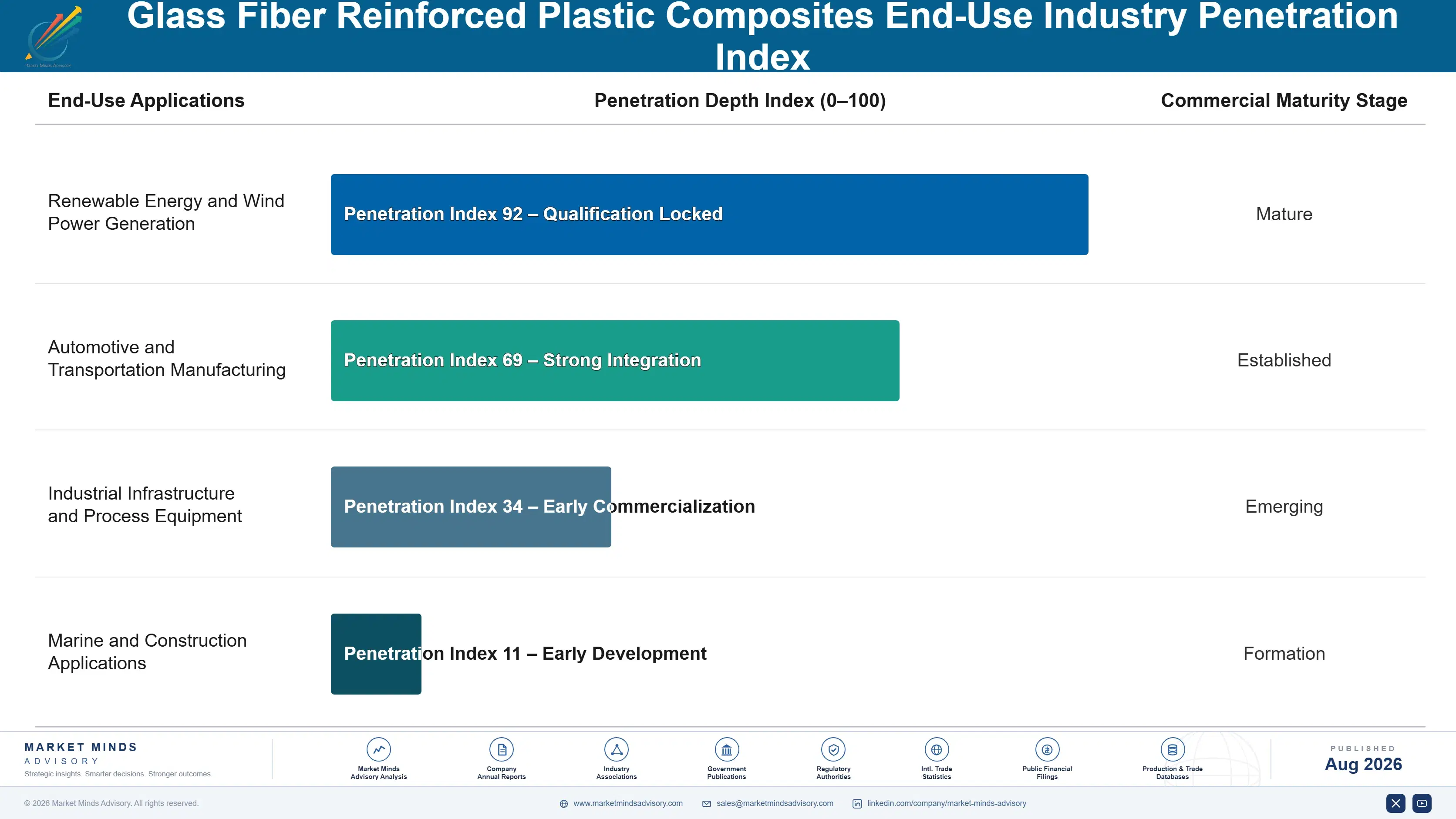
The automotive and transportation sector represents the largest end-use segment, driven by the need for lightweight materials to improve fuel efficiency and reduce emissions. The construction and infrastructure segment is leveraging GFRP composites for applications such as bridge decks, rebar, and cladding, owing to their durability and corrosion resistance. The wind energy sector is a rapidly growing market, with GFRP composites being essential for turbine blade manufacturing. Aerospace, marine, and electrical & electronics industries are also significant consumers, each with specific performance requirements that drive innovation in composite formulations.
By Form
- Roving
- Chopped Strand Mats Fabrics
- Others
GFRP composites are available in various forms, each tailored to specific manufacturing processes and end-use applications. Roving and chopped strand forms are commonly used in automotive and construction applications, while mats and fabrics are preferred for high-strength, structural components. The selection of form is influenced by factors such as desired mechanical properties, processing requirements, and cost considerations. Manufacturers are continually developing new forms and hybrid materials to address emerging application needs and enhance product performance.
By Application
- Pipes & Tanks
- Panels & Claddings Wind Turbine Blades Automotive Parts Electrical Components Sporting Goods
- Others
The application landscape for GFRP composites is diverse, with pipes and tanks accounting for a significant share due to their widespread use in chemical processing and water treatment industries. Panels and claddings are extensively used in construction for their aesthetic appeal and durability. Wind turbine blades represent a high-growth application, driven by the global expansion of wind energy capacity. Automotive parts, electrical components, and sporting goods are other key application areas, each contributing to the overall growth and diversification of the GFRP composites market.

Growth Drivers and Opportunities in Glass Fiber Reinforced Plastic Composites Market
- Increasing Demand for Lightweight and High-Strength Materials
The global push towards energy efficiency and emission reduction is driving the adoption of lightweight materials across multiple industries. GFRP composites offer an optimal balance of strength, weight, and cost, making them ideal for automotive, aerospace, and wind energy applications. The ability to replace traditional materials such as steel and aluminum with GFRP composites enables manufacturers to achieve significant weight savings, improve fuel efficiency, and meet stringent regulatory standards. This trend is expected to accelerate as industries continue to prioritize sustainability and performance.
- Expansion of Renewable Energy Infrastructure
The rapid expansion of renewable energy infrastructure, particularly wind energy, is creating substantial growth opportunities for GFRP composite manufacturers. The unique properties of GFRP, including high strength-to-weight ratio and corrosion resistance, make it the material of choice for wind turbine blades. Governments worldwide are investing in large-scale wind energy projects to meet climate goals and diversify energy sources. This, in turn, is driving demand for advanced GFRP composites and stimulating innovation in blade design and manufacturing processes.
Emerging Opportunities for Glass Fiber Reinforced Plastic Composites Market
- Development of Recyclable and Bio-Based Composites
The growing emphasis on sustainability is prompting manufacturers to develop recyclable and bio-based GFRP composites. Innovations in resin chemistry and recycling technologies are enabling the production of composites with reduced environmental impact. These developments are opening new market opportunities, particularly in regions with stringent environmental regulations. Companies that invest in sustainable product offerings are likely to gain a competitive edge and access new customer segments.
- Integration of Smart and Functional Materials
The integration of smart and functional materials into GFRP composites is an emerging trend with significant growth potential. Advances in nanotechnology and sensor integration are enabling the development of composites with enhanced properties, such as self-healing, damage detection, and improved thermal conductivity. These smart composites are finding applications in high-performance sectors such as aerospace, automotive, and infrastructure, where real-time monitoring and predictive maintenance are critical.
Growth Restrain Factors and Challenges in Glass Fiber Reinforced Plastic Composites Market
- Recycling and End-of-Life Disposal Challenges
The recycling and end-of-life disposal of GFRP composites remain significant challenges for the industry. Unlike metals, GFRP composites are difficult to recycle due to the cross-linked nature of thermoset resins and the complexity of separating glass fibers from the matrix. This has led to concerns regarding landfill accumulation and environmental impact, particularly as the volume of composite waste increases with the growth of end-use industries. Regulatory pressures are mounting, compelling manufacturers to invest in research and development of recycling technologies and alternative materials. However, the high cost and technical complexity of these solutions continue to hinder widespread adoption.
In addition to technical barriers, the lack of standardized recycling infrastructure and processes poses a challenge for the industry. The absence of clear guidelines and economic incentives for composite recycling limits the scalability of existing solutions. Addressing these challenges will require coordinated efforts from industry stakeholders, policymakers, and research institutions to develop cost-effective and scalable recycling methods.
- Volatility in Raw Material Prices
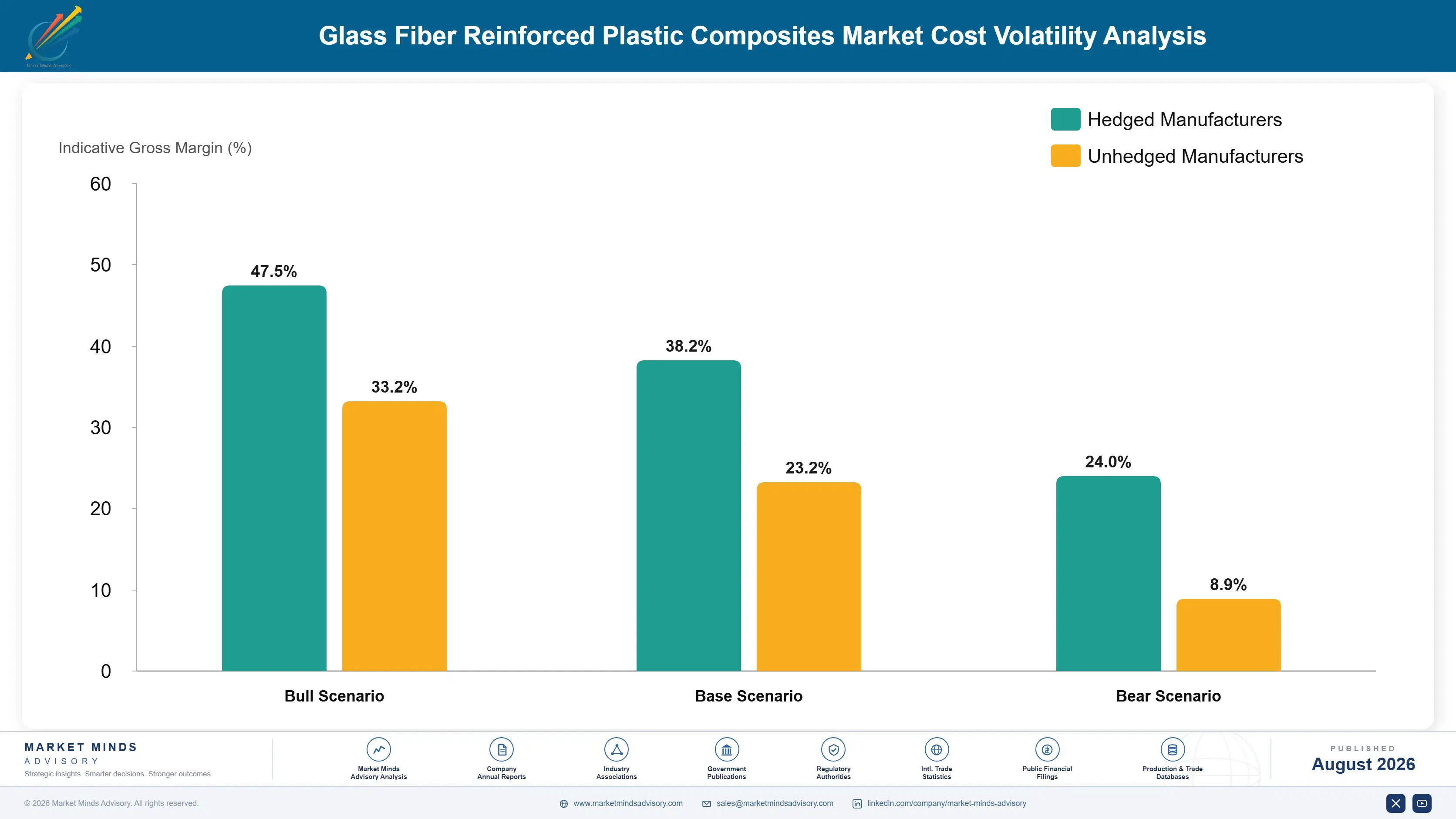
The global GFRP composites market is susceptible to fluctuations in raw material prices, particularly for glass fibers and resins. Price volatility can impact production costs and profit margins, making it challenging for manufacturers to maintain competitive pricing. Factors such as supply chain disruptions, geopolitical tensions, and changes in energy prices contribute to this volatility. The reliance on petrochemical-based resins further exposes the market to fluctuations in crude oil prices.
To mitigate these risks, manufacturers are exploring alternative raw materials, such as bio-based resins and recycled glass fibers. However, the transition to alternative materials involves significant research and development investments and may require modifications to existing manufacturing processes. The ability to manage raw material costs and secure stable supply chains will be critical for sustaining long-term growth in the GFRP composites market.
Glass Fiber Reinforced Plastic Composites Market Regional Analysis
| Region | Market Share (2025) | Key Market Highlight |
| Asia-Pacific | 41% | Rapid industrialization and infrastructure growth |
| North America | 24% | Strong focus on automotive and wind energy sectors |
| Europe | 21% | Leadership in sustainability and recycling initiatives |
| South America | 8% | Growing construction and transportation industries |
| Middle East & Africa | 6% | Infrastructure investments and emerging applications |
Asia-Pacific
Asia-Pacific is the largest and fastest-growing region in the global GFRP composites market, accounting for approximately 41% of the market share in 2025. The region’s growth is driven by rapid industrialization, urbanization, and significant investments in infrastructure development. China and India are leading consumers and producers of GFRP composites, supported by robust demand from automotive, construction, and wind energy sectors. The presence of a large manufacturing base and favorable government policies further enhance the region’s market potential.
North America
North America holds a significant share of the global GFRP composites market, with strong demand from the automotive, aerospace, and wind energy sectors. The region is characterized by a high level of technological innovation and a strong focus on sustainability. Regulatory initiatives aimed at reducing vehicle emissions and promoting renewable energy are driving the adoption of GFRP composites. The United States is the dominant market, supported by a well-established manufacturing ecosystem and ongoing investments in research and development.
Europe
Europe is a key market for GFRP composites, distinguished by its leadership in sustainability and recycling initiatives. The region is home to several major composite manufacturers and research institutions that are pioneering advancements in recyclable and bio-based composites. Stringent environmental regulations and a strong emphasis on circular economy principles are shaping market dynamics. Germany, France, and the United Kingdom are the leading markets, with significant demand from automotive, construction, and wind energy sectors.
South America
South America is an emerging market for GFRP composites, with growth driven by expanding construction and transportation industries. Brazil is the largest market in the region, supported by infrastructure development and increasing investments in renewable energy. The adoption of GFRP composites is expected to accelerate as awareness of their benefits grows and local manufacturing capabilities expand.
Middle East & Africa
The Middle East & Africa region is witnessing steady growth in the GFRP composites market, driven by infrastructure investments and emerging applications in oil & gas, construction, and transportation. The region’s market potential is supported by government initiatives to diversify economies and invest in sustainable development projects. While the market is still in its nascent stage, increasing awareness and adoption of advanced materials are expected to drive future growth.

Competition Landscape in Glass Fiber Reinforced Plastic Composites Market
The Glass Fiber Reinforced Plastic Composites Market is highly competitive, with a mix of multinational corporations and regional players vying for market share. The competitive landscape is shaped by continuous innovation, strategic partnerships, and capacity expansions. Leading companies are investing in research and development to enhance product performance, sustainability, and cost-effectiveness. Mergers, acquisitions, and collaborations are common strategies employed to strengthen market presence and expand product portfolios. The focus on developing recyclable and bio-based composites is intensifying, as companies seek to align with evolving regulatory standards and customer preferences.
Major Players:
- Owens Corning
- Jushi Group Co., Ltd.
- Chongqing Polycomp International Corp. (CPIC)
- PPG Industries, Inc.
- Saint-Gobain S.A.
- Nippon Electric Glass Co., Ltd.
- Taishan Fiberglass Inc.
- Johns Manville Corporation
- AGY Holding Corp.
- 3B-the Fibreglass Company
- Binani Industries Ltd.
- Taiwan Glass Ind. Corp.
- Asahi Fiber Glass Co., Ltd.
- Nitto Boseki Co., Ltd. (Nittobo)
- Sichuan Weibo New Material Group Co., Ltd.
- Ahlstrom-Munksjö
- Hexcel Corporation
- Gurit Holding AG
- Saertex GmbH & Co. KG
- SGL Carbon SE
Recent Developments in Glass Fiber Reinforced Plastic Composites Market
- In March 2024, Owens Corning announced the launch of a new line of recyclable GFRP composites targeting the automotive and construction sectors.
- In January 2024, Jushi Group expanded its production capacity in China to meet growing demand from wind energy and infrastructure projects.
- In November 2023, Saint-Gobain introduced a bio-based resin system for GFRP composites, enhancing sustainability credentials.
- In September 2023, PPG Industries partnered with a leading automotive OEM to develop lightweight GFRP components for electric vehicles.
- In July 2023, Nippon Electric Glass Co., Ltd. invested in advanced pultrusion technology to improve manufacturing efficiency and product quality.
- In May 2023, Hexcel Corporation collaborated with a European wind turbine manufacturer to supply high-performance GFRP materials for next-generation blades.
FAQ for Glass Fiber Reinforced Plastic Composites Market
- What is the projected market size of the Glass Fiber Reinforced Plastic Composites Market by 2033?
By 2033, the Glass Fiber Reinforced Plastic Composites Market is expected to reach USD 79.7 billion, growing at a CAGR of 6.2% from 2026 to 2033.
- Which end-use industry holds the largest share in the global GFRP composites market?
The automotive and transportation sector holds the largest share, driven by the need for lightweight, high-strength materials to improve fuel efficiency and reduce emissions.
- What are the key growth drivers for the global GFRP composites market?
Major growth drivers include increasing demand for lightweight materials, expansion of renewable energy infrastructure, and advancements in manufacturing technologies.
- What are the main challenges facing the global GFRP composites market?
The primary challenges include recycling and end-of-life disposal issues, as well as volatility in raw material prices, which can impact production costs and profitability.
- Which region is expected to dominate the global GFRP composites market during the forecast period?
Asia-Pacific is expected to dominate the market, supported by rapid industrialization, infrastructure development, and strong demand from automotive and wind energy sectors.
Contact us today to access the full report and propel your business forward.