Foam Pouch Market

Foam Pouch Market

Foam Pouch Market Outlook from 2026 to 2033

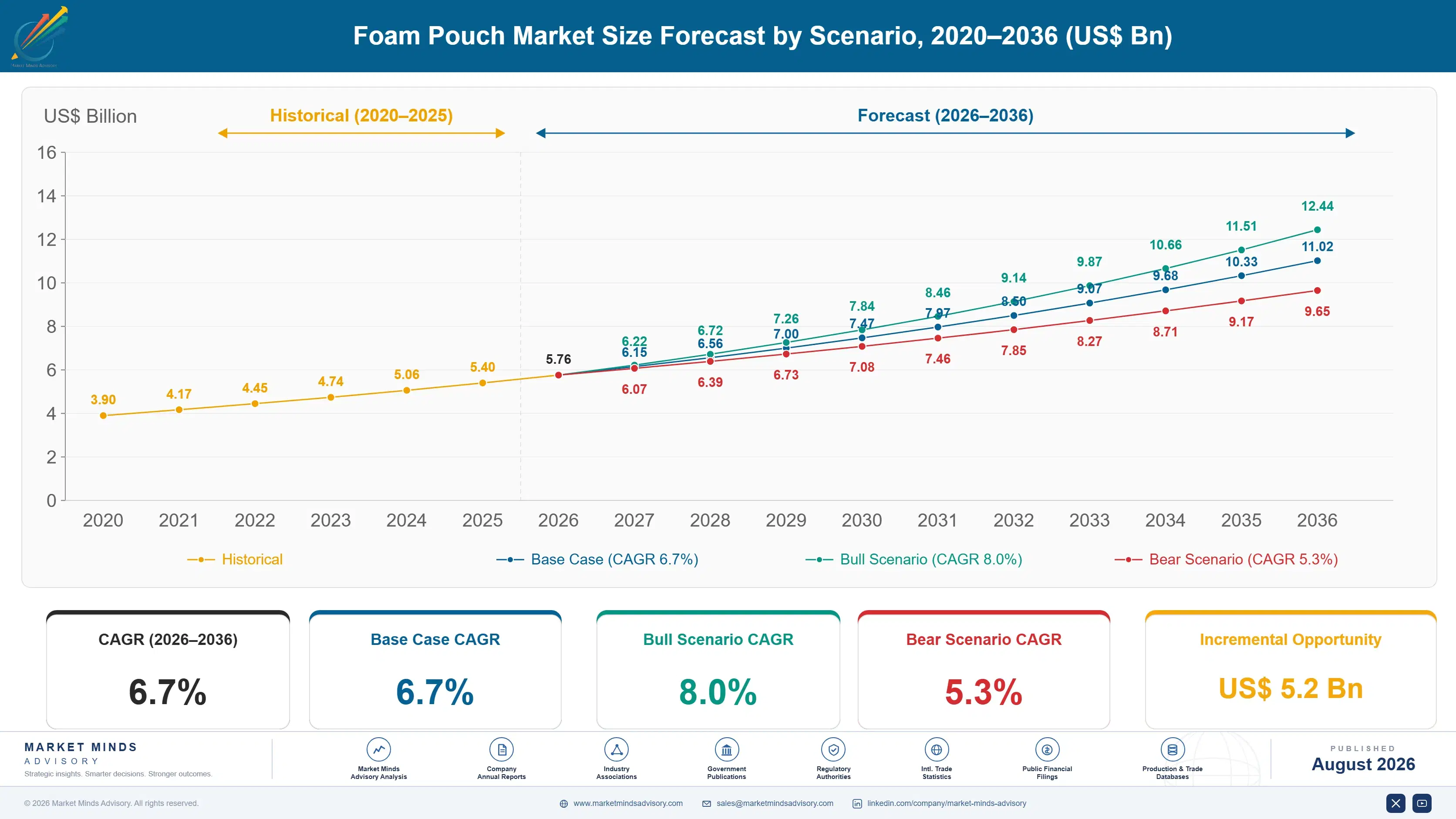
The global foam pouch market is poised for significant expansion between 2026 and 2033, driven by the increasing demand for protective packaging across various industries. The market is projected to grow from a base value of USD 1.2 billion in 2026 to USD 1.85 billion by 2033, reflecting a CAGR of 6.3%. This growth is underpinned by the rising need for lightweight, shock-absorbent, and cost-effective packaging solutions, particularly in the electronics, automotive, and e-commerce sectors. Foam pouches offer superior cushioning and protection, making them ideal for fragile and high-value items during transit and storage.

The adoption of foam pouches is further accelerated by the growing emphasis on sustainable packaging and the development of recyclable and biodegradable foam materials. As regulatory pressures mount and consumer awareness regarding environmental impact increases, manufacturers are innovating to provide eco-friendly alternatives without compromising on performance. The foam pouch market is thus witnessing a dynamic shift, with sustainability and customization emerging as key differentiators in a competitive landscape.

Foam Pouch Market

Foam Pouch Market Scenario & Strategic Insights

The foam pouch market is characterized by a robust demand trajectory, supported by the proliferation of e-commerce and the increasing need for efficient packaging solutions that minimize product damage. The versatility of foam pouches, which can be tailored to fit a wide range of product shapes and sizes, positions them as a preferred choice for manufacturers and retailers seeking to optimize logistics and enhance customer satisfaction. The market is also witnessing a surge in demand from the healthcare and pharmaceutical sectors, where the safe transportation of sensitive equipment and products is paramount.

Strategically, market players are focusing on product innovation, such as the introduction of anti-static and moisture-resistant foam pouches, to cater to specialized applications. Investments in advanced manufacturing technologies are enabling the production of high-quality, customizable foam pouches at scale, thereby improving operational efficiencies and reducing lead times. Additionally, partnerships and collaborations across the value chain are fostering the development of sustainable materials and closed-loop recycling systems, aligning with global sustainability goals.

The competitive landscape is marked by the presence of both global and regional players, each striving to expand their market share through mergers, acquisitions, and strategic alliances. The emphasis on research and development is evident, with companies seeking to differentiate their offerings through enhanced product performance, cost-effectiveness, and environmental stewardship. As the market evolves, the ability to anticipate and respond to changing customer preferences and regulatory requirements will be critical for sustained growth.

Attribute2026 (USD Billion)2033 (USD Billion)CAGR (2026 – 2033)
Market Size1.21.856.3%

Foam Pouch Market Trends

  1. Rising Demand for Sustainable and Eco-Friendly Foam Pouches

The foam pouch market is experiencing a notable shift towards sustainability, with manufacturers increasingly focusing on the development of recyclable and biodegradable foam materials. This trend is driven by stringent environmental regulations and growing consumer awareness regarding the ecological impact of packaging waste. Companies are investing in research to create foam pouches that offer the same protective qualities as traditional materials while being easier to recycle or compost. The adoption of bio-based polymers and the integration of recycled content into foam production are gaining traction, positioning sustainability as a key competitive advantage in the market.

  1. Customization and Product Innovation for Niche Applications

Customization is emerging as a significant trend in the foam pouch market, with end-users demanding tailored solutions to meet specific packaging requirements. Manufacturers are leveraging advanced manufacturing technologies, such as precision die-cutting and digital printing, to produce foam pouches in various shapes, sizes, and thicknesses. Innovations such as anti-static, flame-retardant, and moisture-resistant foam pouches are catering to the unique needs of industries like electronics, automotive, and healthcare. This trend is enabling companies to differentiate their offerings and address the evolving demands of a diverse customer base.

  1. Integration of Smart Packaging Features

The integration of smart packaging features, such as QR codes, RFID tags, and tamper-evident seals, is gaining momentum in the foam pouch market. These features enhance product traceability, security, and consumer engagement, particularly in high-value and sensitive product segments. Smart foam pouches are being adopted in sectors such as pharmaceuticals and electronics, where product authenticity and safety are critical. The convergence of packaging and digital technologies is opening new avenues for value-added services, including real-time tracking and interactive customer experiences, thereby elevating the role of foam pouches beyond traditional protective functions.

Segment & Category Analysis for Foam Pouch Market

By Material Type

  • Polyethylene (PE)
    • Polyurethane (PU)
    • Polypropylene (PP)
    • Biodegradable Foam
    • Others

The material type segment is a critical determinant of foam pouch performance and environmental impact. Polyethylene (PE) remains the most widely used material due to its excellent cushioning properties and cost-effectiveness. However, the market is witnessing increased adoption of biodegradable and recyclable materials, driven by sustainability imperatives. Polyurethane (PU) and polypropylene (PP) are preferred for applications requiring higher durability and resistance to chemicals. The choice of material influences not only the protective qualities of the pouch but also its recyclability and suitability for various end-use industries.

Foam Pouch Market Material Type

By Product Type

  • Flat Foam Pouches
    • Bubble-Lined Foam Pouches
    • Gusseted Foam Pouches
    • Zippered Foam Pouches
    • Custom-Shaped Foam Pouches

Product type segmentation reflects the diverse packaging needs across industries. Flat foam pouches are commonly used for lightweight and flat items, while bubble-lined and gusseted pouches offer enhanced protection for bulkier or more fragile products. Zippered and custom-shaped foam pouches cater to specialized applications, providing added security and a tailored fit. The ability to customize product types enables manufacturers to address specific customer requirements, enhancing the versatility and appeal of foam pouches in the market.

By End-Use Industry

  • Electronics & Electrical
    • Automotive
    • Healthcare & Pharmaceuticals
    • E-commerce & Retail
    • Food & Beverage
    • Others

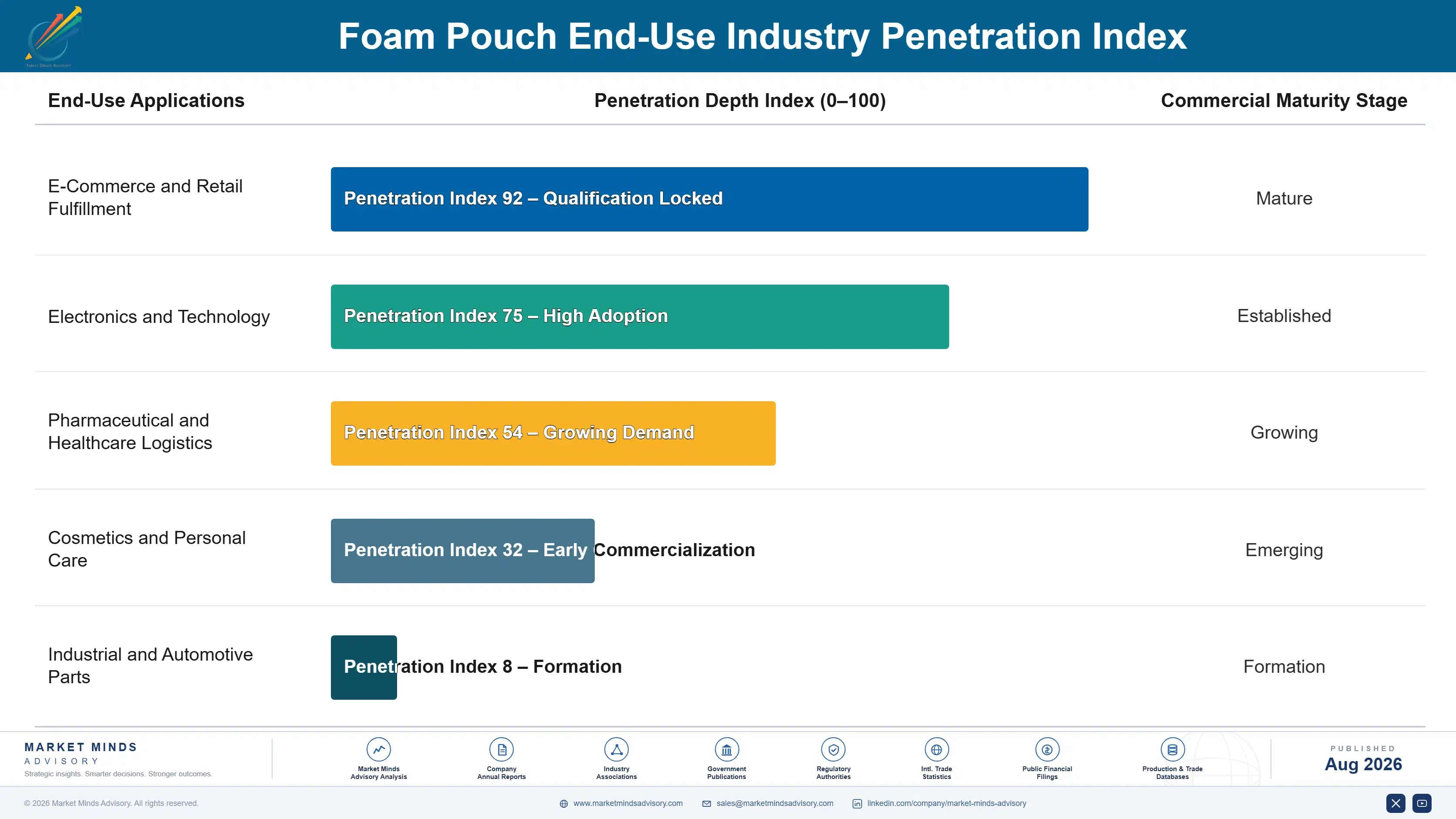
The end-use industry segment highlights the broad applicability of foam pouches. The electronics and electrical sector is a major consumer, utilizing foam pouches to protect sensitive components from shocks and static electricity. The automotive industry employs foam pouches for the safe transport of parts and accessories. Healthcare and pharmaceuticals require sterile and protective packaging for medical devices and drugs. The rapid growth of e-commerce and retail is fueling demand for reliable packaging solutions that ensure product integrity during shipping. Each industry presents unique requirements, driving innovation and diversification in foam pouch offerings.

By Thickness

  • Up to 2 mm
    • 2-4 mm
    • 4-6 mm
    • Above 6 mm

Thickness is a key parameter influencing the protective capabilities of foam pouches. Thinner pouches are suitable for lightweight items, offering basic protection against scratches and minor impacts. Medium-thickness pouches (2-4 mm and 4-6 mm) provide enhanced cushioning for moderately fragile products. Pouches above 6 mm are designed for heavy-duty applications, ensuring maximum shock absorption and protection. The availability of various thickness options allows customers to select the most appropriate solution based on product fragility, weight, and transportation conditions.

By Distribution Channel

  • Direct Sales
    • Distributors & Wholesalers
    • Online Retail
    • Specialty Stores

Distribution channels play a pivotal role in market reach and customer accessibility. Direct sales are preferred by large-scale manufacturers and industrial clients seeking customized solutions. Distributors and wholesalers facilitate bulk purchases and cater to small and medium enterprises. Online retail is gaining prominence, offering convenience and a wide selection of foam pouch products to a global customer base. Specialty stores focus on niche markets, providing expert advice and tailored solutions. The diversification of distribution channels enhances market penetration and supports the growth of the foam pouch market.

Foam Pouch Market Distribution Channel

Growth Drivers and Opportunities in Foam Pouch Market

  • Expansion of E-commerce and Logistics Sectors

The exponential growth of e-commerce and the corresponding expansion of logistics networks are major drivers for the foam pouch market. As online shopping becomes increasingly prevalent, the need for reliable and protective packaging solutions has surged. Foam pouches offer superior cushioning and shock absorption, minimizing product damage during transit and enhancing customer satisfaction. The rise of express delivery services and cross-border e-commerce further amplifies the demand for high-performance packaging, creating substantial growth opportunities for foam pouch manufacturers.

  • Technological Advancements and Product Innovation

Continuous advancements in foam manufacturing technologies are enabling the development of high-quality, customizable, and sustainable foam pouches. Innovations such as anti-static, flame-retardant, and moisture-resistant properties are expanding the application scope of foam pouches across various industries. The integration of smart packaging features, including RFID tags and QR codes, is enhancing product traceability and security. These technological developments not only improve product performance but also open new avenues for value-added services, driving market growth.

Emerging Opportunities for Foam Pouch Market

  • Adoption of Biodegradable and Recyclable Foam Materials

The increasing emphasis on environmental sustainability is creating opportunities for the adoption of biodegradable and recyclable foam materials in pouch manufacturing. Companies investing in the development of eco-friendly foam solutions are well-positioned to capture market share, particularly in regions with stringent environmental regulations. The shift towards sustainable packaging is expected to drive innovation and differentiation, enabling manufacturers to meet evolving customer preferences and regulatory requirements.

  • Penetration into Emerging Markets

The foam pouch market is witnessing growing demand in emerging economies, driven by rapid industrialization, urbanization, and the expansion of manufacturing and retail sectors. Countries in Asia-Pacific, Latin America, and the Middle East & Africa present untapped growth potential, with increasing investments in infrastructure and logistics. Market players focusing on these regions can benefit from favorable demographic trends, rising disposable incomes, and the proliferation of e-commerce, thereby expanding their global footprint.

Growth Restrain factors and Challenges in Foam Pouch Market

  • Environmental Concerns and Regulatory Pressures

The foam pouch market faces significant challenges related to environmental sustainability and regulatory compliance. Traditional foam materials, such as polyethylene and polyurethane, are derived from non-renewable resources and are not easily biodegradable, contributing to plastic waste and environmental pollution. Governments and regulatory bodies worldwide are implementing stringent regulations to curb plastic usage and promote sustainable packaging alternatives. Compliance with these regulations requires substantial investments in research and development, as well as changes in manufacturing processes. Companies that fail to adapt to evolving environmental standards risk losing market share and facing reputational damage.

In addition to regulatory pressures, growing consumer awareness regarding the environmental impact of packaging waste is influencing purchasing decisions. Customers are increasingly seeking eco-friendly packaging solutions, compelling manufacturers to innovate and adopt sustainable materials. The transition to biodegradable and recyclable foam materials presents technical and economic challenges, including higher production costs and potential trade-offs in product performance. Addressing these challenges is critical for long-term market sustainability and competitiveness.

  • Volatility in Raw Material Prices and Supply Chain Disruptions

The foam pouch market is susceptible to fluctuations in raw material prices, particularly for petroleum-based polymers such as polyethylene and polyurethane. Price volatility can impact production costs and profit margins, posing challenges for manufacturers in maintaining competitive pricing. Supply chain disruptions, caused by factors such as geopolitical tensions, natural disasters, or global pandemics, can further exacerbate raw material shortages and logistical bottlenecks. These disruptions may lead to delays in production and delivery, affecting customer satisfaction and market growth.

To mitigate these risks, companies are exploring alternative raw materials, diversifying supplier bases, and investing in supply chain resilience. However, the transition to new materials and suppliers may involve additional costs and operational complexities. Effective risk management strategies, including long-term contracts and inventory optimization, are essential to navigate the challenges posed by raw material price volatility and supply chain uncertainties.

Foam Pouch Market Regional Analysis

RegionMarket Share (2025)Key Market Highlight
Asia-Pacific38%Fastest growth, driven by e-commerce and manufacturing expansion
North America27%High adoption in electronics and healthcare sectors
Europe21%Strong focus on sustainability and regulatory compliance
South America8%Growing demand in automotive and consumer goods
Middle East & Africa6%Emerging market with increasing investments in logistics

Asia-Pacific

Asia-Pacific dominates the foam pouch market, accounting for the largest share due to rapid industrialization, urbanization, and the proliferation of e-commerce platforms. Countries such as China, India, and Japan are witnessing robust demand for protective packaging solutions, driven by the expansion of manufacturing, electronics, and retail sectors. The region’s focus on cost-effective and scalable packaging solutions, coupled with increasing investments in logistics infrastructure, is fueling market growth. Additionally, the adoption of sustainable packaging materials is gaining momentum, supported by government initiatives and rising environmental awareness.

North America

North America is a mature market for foam pouches, characterized by high adoption rates in the electronics, healthcare, and automotive industries. The region benefits from advanced manufacturing capabilities, a strong focus on product innovation, and stringent regulatory standards for packaging safety and sustainability. The presence of leading market players and a well-established distribution network further enhances market penetration. The growing emphasis on eco-friendly packaging and the integration of smart packaging technologies are shaping the competitive landscape in North America.

Europe

Europe is a significant market for foam pouches, driven by the region’s commitment to sustainability and regulatory compliance. The European Union’s directives on packaging waste and recyclability are prompting manufacturers to invest in biodegradable and recyclable foam materials. The electronics, automotive, and healthcare sectors are major consumers of foam pouches, leveraging their protective qualities for sensitive and high-value products. The market is also witnessing increased demand for customized and value-added packaging solutions, reflecting the diverse needs of European industries.

South America

South America is an emerging market for foam pouches, with growing demand from the automotive, consumer goods, and e-commerce sectors. The region’s expanding manufacturing base and increasing investments in logistics infrastructure are creating opportunities for market growth. Brazil and Argentina are key markets, driven by rising disposable incomes and changing consumer preferences. However, the market faces challenges related to economic volatility and limited access to advanced packaging technologies, necessitating targeted strategies for market entry and expansion.

Middle East & Africa

The Middle East & Africa region presents untapped growth potential for the foam pouch market, supported by increasing investments in logistics, retail, and manufacturing sectors. The region’s strategic location as a global trade hub is driving demand for efficient and protective packaging solutions. While the market is still in its nascent stages, rising awareness of sustainable packaging and the adoption of modern retail formats are expected to accelerate growth. Companies focusing on capacity building and localization of manufacturing are well-positioned to capitalize on emerging opportunities in this region.

Foam Pouch Market Regional

Competition Landscape in Foam Pouch Market

The foam pouch market is highly competitive, with a mix of global and regional players striving to enhance their market presence through product innovation, strategic partnerships, and expansion initiatives. The competitive landscape is characterized by continuous investments in research and development, aimed at improving product performance, sustainability, and cost-effectiveness. Companies are also focusing on expanding their distribution networks and strengthening customer relationships to gain a competitive edge. Mergers, acquisitions, and collaborations are common strategies employed to achieve scale, diversify product portfolios, and enter new markets. The ability to adapt to changing market dynamics, regulatory requirements, and customer preferences is crucial for sustained success in the foam pouch market.

Major Players in Foam Pouch Market

  • Sealed Air Corporation
  • Pregis LLC
  • Smurfit Kappa Group
  • Storopack Hans Reichenecker GmbH
  • Automated Packaging Systems, Inc.
  • Polycell International Corp.
  • Jiffy Packaging Co.
  • FP International
  • ACH Foam Technologies, LLC
  • UFP Technologies, Inc.
  • Flexipack Limited
  • Sonoco Products Company
  • Intertape Polymer Group Inc.
  • Huhtamaki Group
  • Pactiv LLC
  • Pro-Pac Packaging Limited
  • Sancell Pty Ltd.
  • Novolex Holdings, Inc.
  • Alpacka Group
  • Nefab Group

Recent Developments in Foam Pouch Market

  • In January 2024, Sealed Air Corporation launched a new line of biodegradable foam pouches targeting the electronics and healthcare sectors.
  • Pregis LLC announced the expansion of its manufacturing facility in Texas in March 2024 to meet growing demand for sustainable packaging solutions.
  • Smurfit Kappa Group introduced a range of recyclable foam pouches in October 2023, focusing on the European market.
  • Storopack Hans Reichenecker GmbH partnered with a leading e-commerce platform in December 2023 to supply customized foam pouch solutions.
  • Automated Packaging Systems, Inc. unveiled an anti-static foam pouch product line in July 2023, catering to the electronics industry.
  • Polycell International Corp. invested in advanced digital printing technology for foam pouches in September 2023 to enhance customization capabilities.

FAQ for Foam Pouch Market

  1. What is the projected market size of the foam pouch market by 2033?

The foam pouch market is expected to reach USD 1.85 billion by 2033, growing from USD 1.2 billion in 2026, at a CAGR of 6.3% during the forecast period.

  1. Which regions are expected to drive the growth of the foam pouch market?

Asia-Pacific is anticipated to lead the market growth, followed by North America and Europe, due to rapid industrialization, expansion of e-commerce, and increasing demand for protective packaging solutions.

  1. What are the key trends shaping the foam pouch market?

Key trends include the shift towards sustainable and eco-friendly foam materials, increased customization and product innovation, and the integration of smart packaging features such as RFID and QR codes.

  1. What are the main challenges faced by the foam pouch market?

The market faces challenges such as environmental concerns related to traditional foam materials, regulatory pressures for sustainable packaging, and volatility in raw material prices impacting production costs.

  1. Who are the major players in the foam pouch market?

Major players include Sealed Air Corporation, Pregis LLC, Smurfit Kappa Group, Storopack Hans Reichenecker GmbH, Automated Packaging Systems, Inc., Polycell International Corp., and others, all of whom are actively investing in product innovation and market expansion.

Take action now! Contact us today to access the full report and propel your business forward