EPP Foam Packaging Market
EPP Foam Packaging Market Outlook from 2026 to 2033
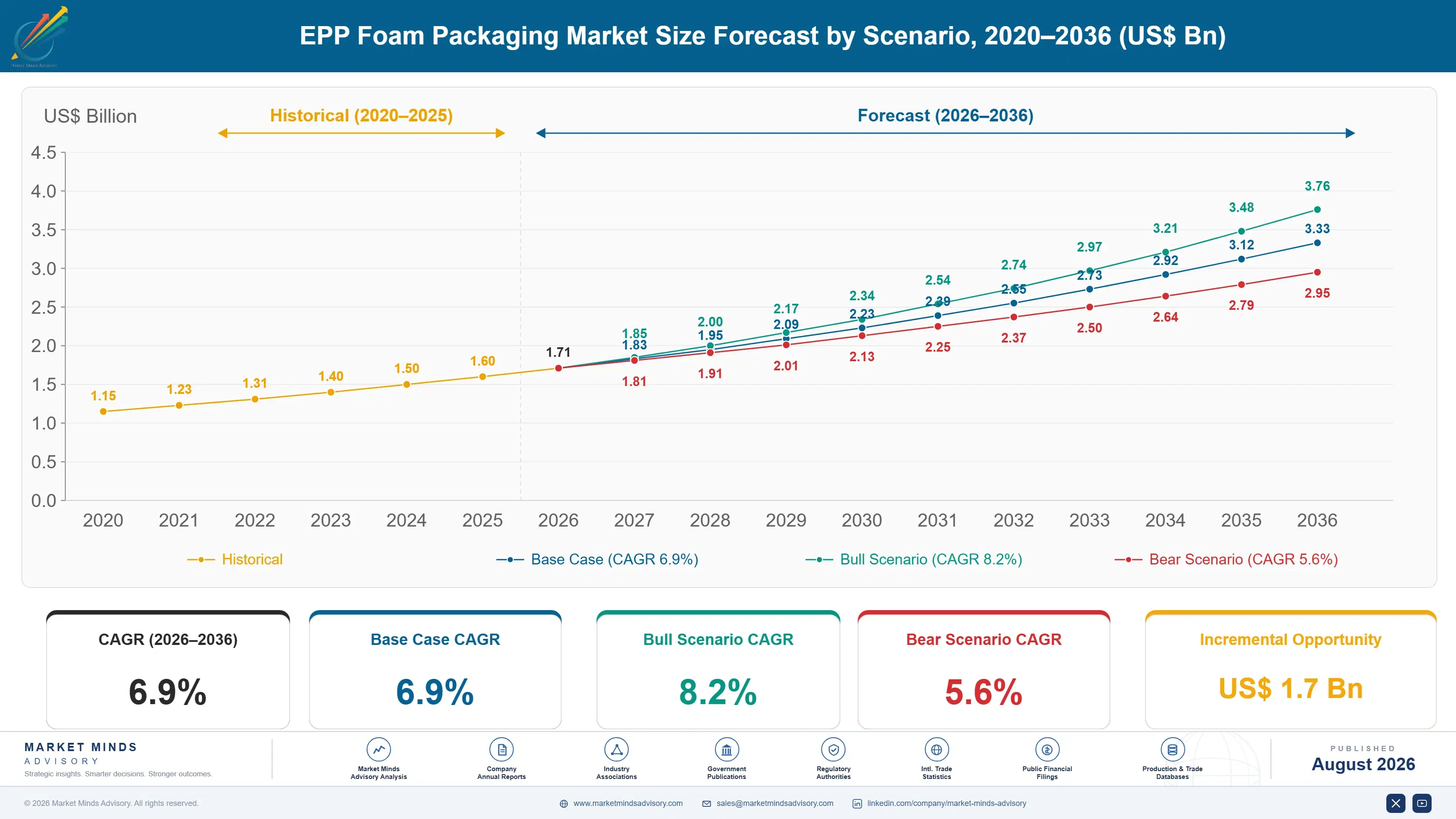
The Expanded Polypropylene (EPP) foam packaging market is poised for robust expansion over the forecast period, driven by its superior cushioning, lightweight properties, and recyclability. The global EPP foam packaging market size is estimated at USD 1.45 billion in 2026 and is projected to reach USD 2.31 billion by 2033, reflecting a CAGR of 6.9% during 2026–2033. The market’s growth is underpinned by increasing demand from automotive, electronics, and consumer goods sectors, where EPP foam’s shock absorption and thermal insulation capabilities are highly valued. Additionally, the shift toward sustainable and reusable packaging solutions is accelerating EPP foam adoption.
EPP foam packaging’s versatility and performance advantages have positioned it as a preferred material for protective packaging applications. Its ability to withstand multiple impacts without deformation, combined with its chemical resistance and ease of molding, makes it suitable for a wide array of end-use industries. As regulatory pressures mount for environmentally friendly packaging, EPP foam’s recyclability and low environmental footprint are expected to further bolster its market penetration.

EPP Foam Packaging Market Scenario & Strategic Insights
The EPP foam packaging market is characterized by a dynamic interplay of technological innovation, evolving consumer preferences, and stringent regulatory frameworks. Manufacturers are increasingly investing in advanced molding technologies and material formulations to enhance the performance characteristics of EPP foam, such as improved energy absorption, fire resistance, and surface finish. These advancements are enabling the development of customized packaging solutions tailored to the specific needs of high-value sectors like automotive components, sensitive electronics, and medical devices.
Strategically, market participants are focusing on expanding their production capacities and establishing regional manufacturing hubs to cater to the growing demand in emerging economies. The Asia-Pacific region, in particular, is witnessing significant investments due to its burgeoning manufacturing sector and rising e-commerce activities. Furthermore, collaborations between EPP foam producers and end-user industries are fostering innovation in design and application, thereby expanding the scope of EPP foam packaging beyond traditional markets.
Sustainability remains a central theme, with companies emphasizing closed-loop recycling systems and the use of bio-based EPP resins. Regulatory compliance with environmental standards, such as the European Union’s directives on packaging waste, is shaping product development and market strategies. As the market evolves, agility in responding to customer requirements and regulatory changes will be critical for sustained growth and competitive differentiation.
| Attribute | 2026 (USD Billion) | 2033 (USD Billion) | CAGR (2026 – 2033) |
| Market Size | 1.45 | 2.31 | 6.9% |
EPP Foam Packaging Market Trends
- Sustainability and Circular Economy Initiatives
The EPP foam packaging market is increasingly influenced by sustainability imperatives. Manufacturers are prioritizing the development of recyclable and reusable EPP foam solutions, aligning with global trends toward circular economy models. The adoption of closed-loop recycling systems, where used EPP foam is collected, processed, and reintroduced into the production cycle, is gaining traction. Additionally, the integration of bio-based raw materials and the reduction of carbon footprints in manufacturing processes are becoming standard practices. These sustainability initiatives are not only addressing regulatory requirements but also enhancing brand value and customer loyalty among environmentally conscious clients.
- Technological Advancements in EPP Foam Processing
Technological innovation is a key trend shaping the EPP foam packaging market. Advances in molding technologies, such as improved bead fusion and precision shaping, are enabling the production of complex, lightweight, and high-strength packaging components. Enhanced material formulations are delivering superior performance attributes, including better thermal insulation, fire retardancy, and resistance to chemicals and UV radiation. These technological improvements are expanding the application scope of EPP foam packaging, making it suitable for high-value and sensitive products in automotive, electronics, and healthcare sectors.
- Expansion of E-Commerce and Direct-to-Consumer Channels
The rapid growth of e-commerce and direct-to-consumer (D2C) business models is driving demand for robust and lightweight protective packaging solutions. EPP foam’s ability to provide superior shock absorption and protection during transit makes it an ideal choice for shipping fragile and high-value goods. E-commerce companies are increasingly specifying EPP foam packaging to minimize product damage, reduce returns, and enhance customer satisfaction. This trend is particularly pronounced in regions with high internet penetration and growing online retail activity, such as Asia-Pacific and North America.
Segment & Category Analysis for EPP Foam Packaging Market
By Product Type
- Molded EPP Foam
- Sheet EPP Foam
- Bead EPP Foam
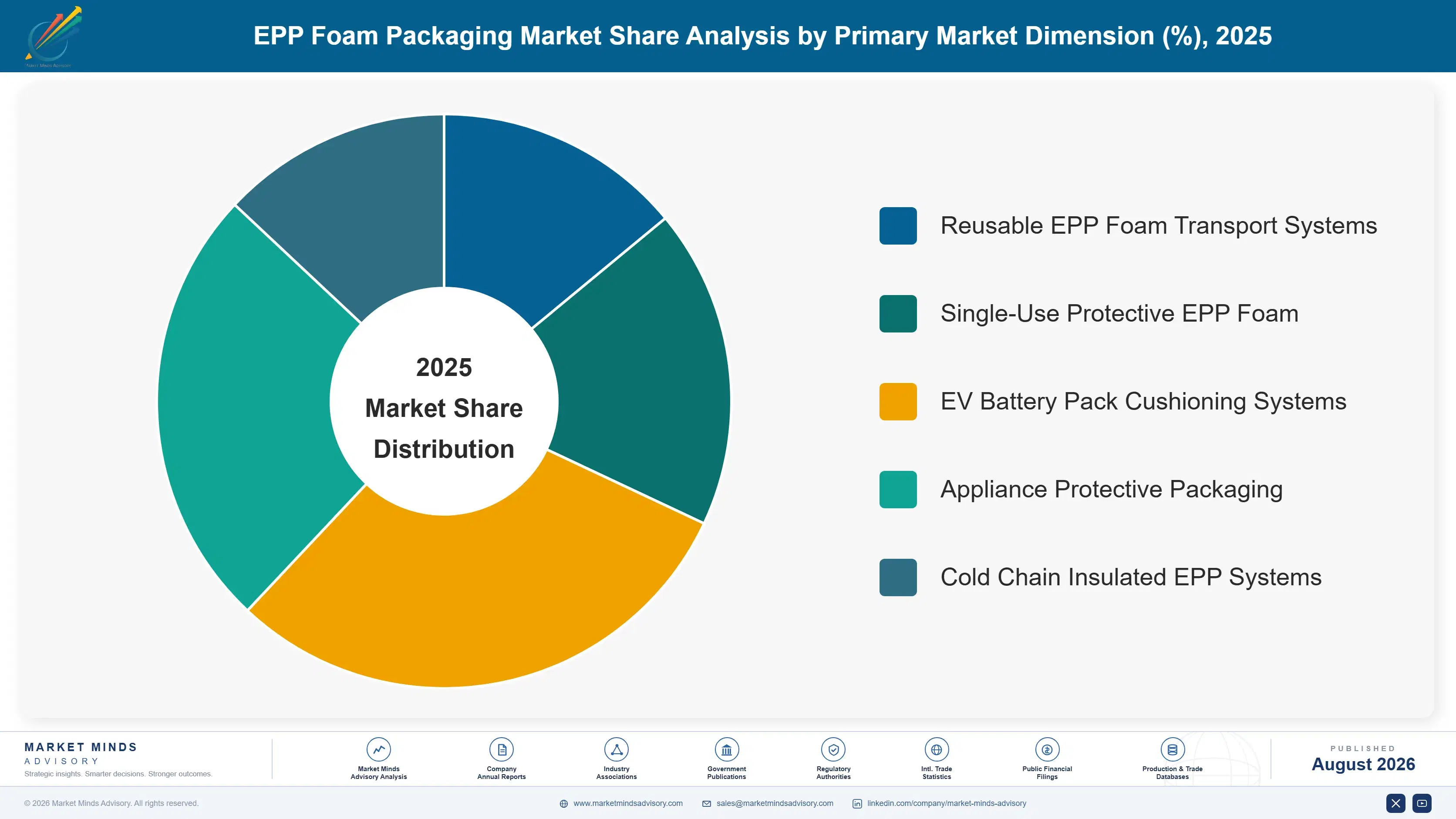
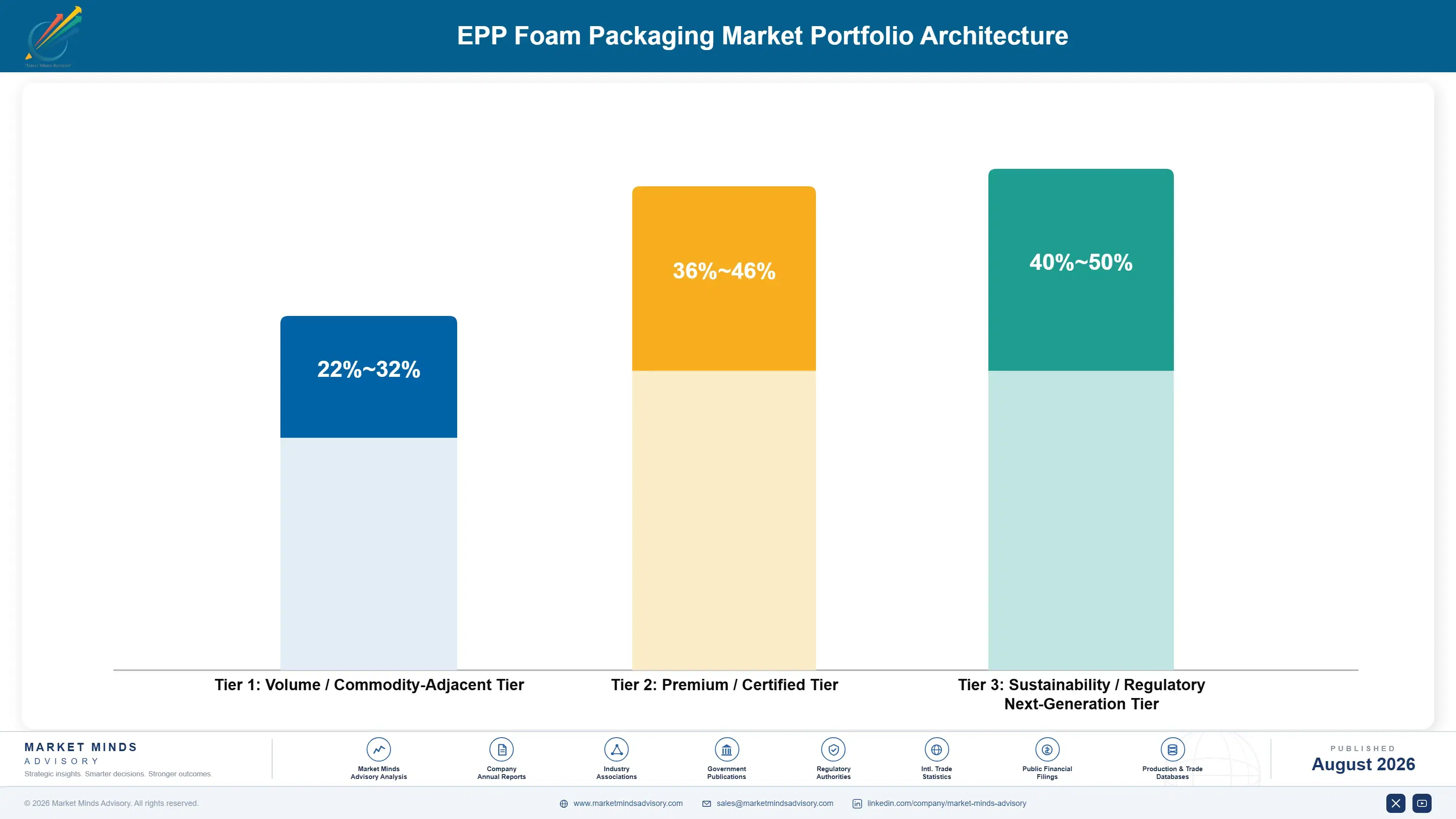
The product type segment in the EPP foam packaging market is dominated by molded EPP foam, which is widely used due to its ability to be customized into complex shapes and sizes. Molded EPP foam offers superior impact resistance and is extensively utilized in automotive and electronics packaging. Sheet EPP foam is preferred for applications requiring flat, lightweight, and flexible packaging solutions, such as cushioning layers and dividers. Bead EPP foam, while less common, is used in specialized applications where loose fill or custom molding is required. The versatility across product types allows manufacturers to cater to diverse packaging needs across industries.

By Density
- Low Density EPP Foam
- Medium Density EPP Foam
- High Density EPP Foam
EPP foam packaging is available in various densities, each offering distinct performance characteristics. Low-density EPP foam is favored for lightweight packaging applications where cost efficiency and basic protection are priorities. Medium-density EPP foam strikes a balance between cushioning and structural integrity, making it suitable for a broad range of consumer goods and electronics. High-density EPP foam provides maximum protection and is often used for heavy or sensitive items, such as automotive parts and industrial equipment. The ability to select the appropriate density enables end-users to optimize packaging performance and cost.
By End-Use Industry
- Automotive
- Electronics & Electrical
- Consumer Goods
- Food & Beverage
- Healthcare & Medical Devices
- Industrial Equipment
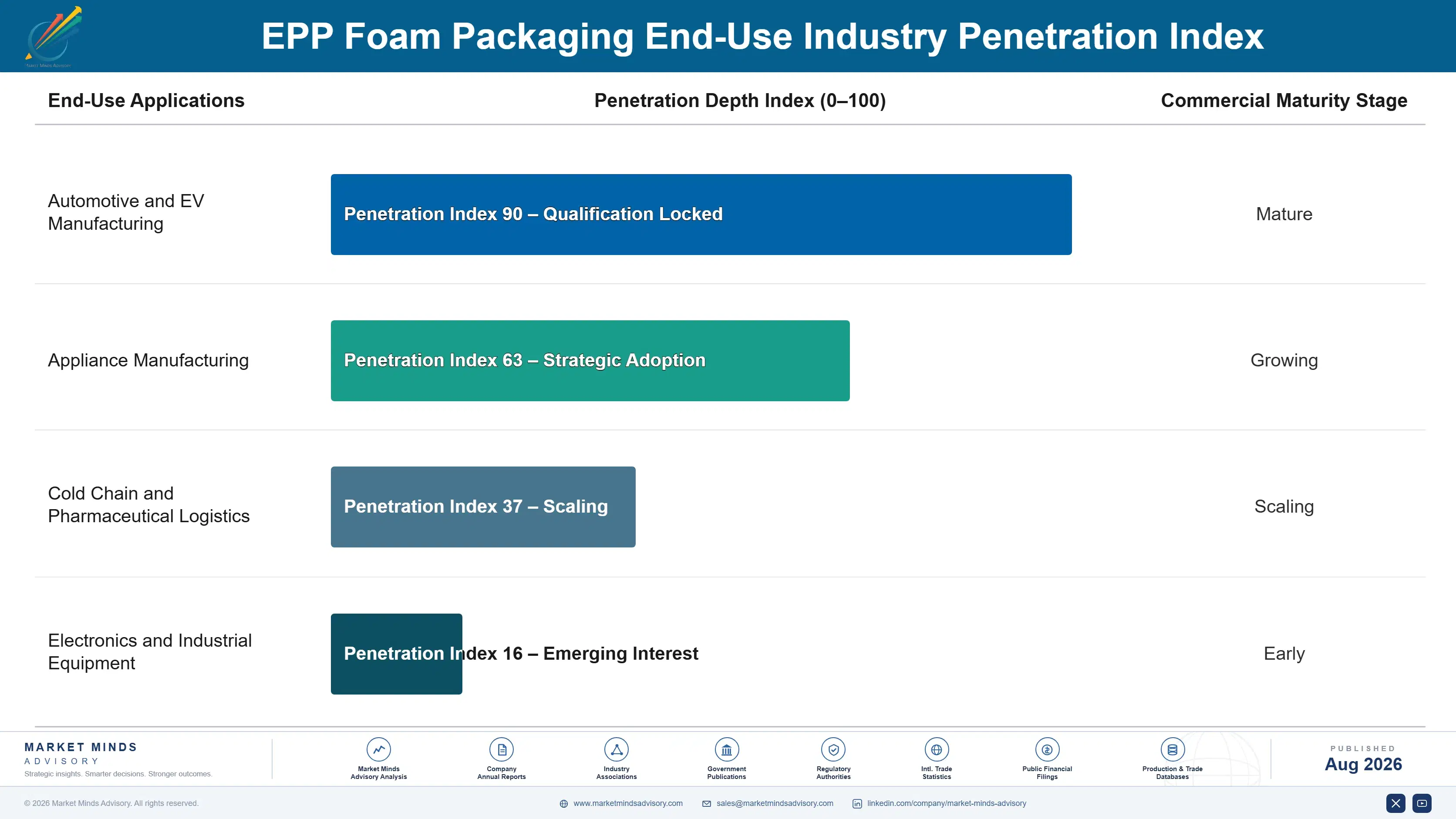
The automotive sector is a major consumer of EPP foam packaging, utilizing it for the protection of components during transit and assembly. Electronics and electrical industries leverage EPP foam’s anti-static and shock-absorbing properties to safeguard delicate devices. Consumer goods manufacturers use EPP foam for packaging a wide array of products, from appliances to toys. The food and beverage industry is increasingly adopting EPP foam for insulated packaging solutions, while the healthcare sector values its hygienic and protective qualities for medical devices. Industrial equipment manufacturers also rely on EPP foam for heavy-duty protective packaging.
By Application
- Protective Packaging
- Insulated Packaging Returnable Transit Packaging
- Component Packaging
Protective packaging remains the largest application segment, driven by the need to prevent damage during shipping and handling. Insulated packaging is gaining prominence in food, beverage, and pharmaceutical logistics, where temperature control is critical. Returnable transit packaging is an emerging application, particularly in automotive and industrial supply chains, where reusable EPP foam containers reduce waste and cost. Component packaging, tailored for specific parts or assemblies, is also witnessing growth as manufacturers seek customized solutions for high-value products.
By Distribution Channel
- Direct Sales
- Distributors & Wholesalers
- Online Retail
Direct sales channels are prevalent among large-scale end-users who require customized EPP foam packaging solutions and value close collaboration with manufacturers. Distributors and wholesalers play a crucial role in reaching small and medium enterprises, offering a range of standard EPP foam products. Online retail is an emerging channel, particularly for small-volume purchases and standardized packaging solutions. The increasing digitization of procurement processes is expected to further boost online sales of EPP foam packaging in the coming years.

Growth Drivers and Opportunities in EPP Foam Packaging Market
- Rising Demand from Automotive and Electronics Sectors
The automotive and electronics industries are significant growth drivers for the EPP foam packaging market. Automotive manufacturers rely on EPP foam for the safe transportation of components, as well as for in-vehicle packaging solutions that enhance occupant safety and comfort. The electronics sector, characterized by the need for high-performance protective packaging, is increasingly adopting EPP foam due to its anti-static properties and ability to absorb shocks. The ongoing expansion of these industries, particularly in emerging markets, is expected to sustain robust demand for EPP foam packaging.
- Shift Toward Sustainable and Reusable Packaging Solutions
The global emphasis on sustainability is creating new opportunities for EPP foam packaging. As regulatory bodies and consumers demand environmentally responsible packaging, EPP foam’s recyclability and reusability are becoming key differentiators. Companies are investing in closed-loop recycling systems and developing bio-based EPP foam products to meet these expectations. The shift toward reusable packaging solutions, especially in automotive and industrial supply chains, is opening up new avenues for market growth and innovation.
Emerging Opportunities for EPP Foam Packaging Market
- Expansion in E-Commerce and Cold Chain Logistics
The rapid growth of e-commerce and the increasing complexity of cold chain logistics present significant opportunities for EPP foam packaging. EPP foam’s lightweight, insulating, and protective properties make it ideal for shipping perishable goods, pharmaceuticals, and high-value electronics. As online retail and global supply chains continue to expand, demand for advanced packaging solutions like EPP foam is expected to rise, particularly in regions with high e-commerce penetration.
- Adoption in Healthcare and Medical Device Packaging
The healthcare sector is emerging as a promising market for EPP foam packaging, driven by the need for hygienic, protective, and temperature-controlled packaging solutions. EPP foam’s chemical resistance, ease of sterilization, and ability to maintain product integrity during transit make it suitable for medical devices, diagnostic equipment, and pharmaceutical products. As healthcare logistics become more sophisticated, the adoption of EPP foam packaging is anticipated to increase.
Growth Restrain Factors and Challenges in EPP Foam Packaging Market
- Volatility in Raw Material Prices and Supply Chain Disruptions
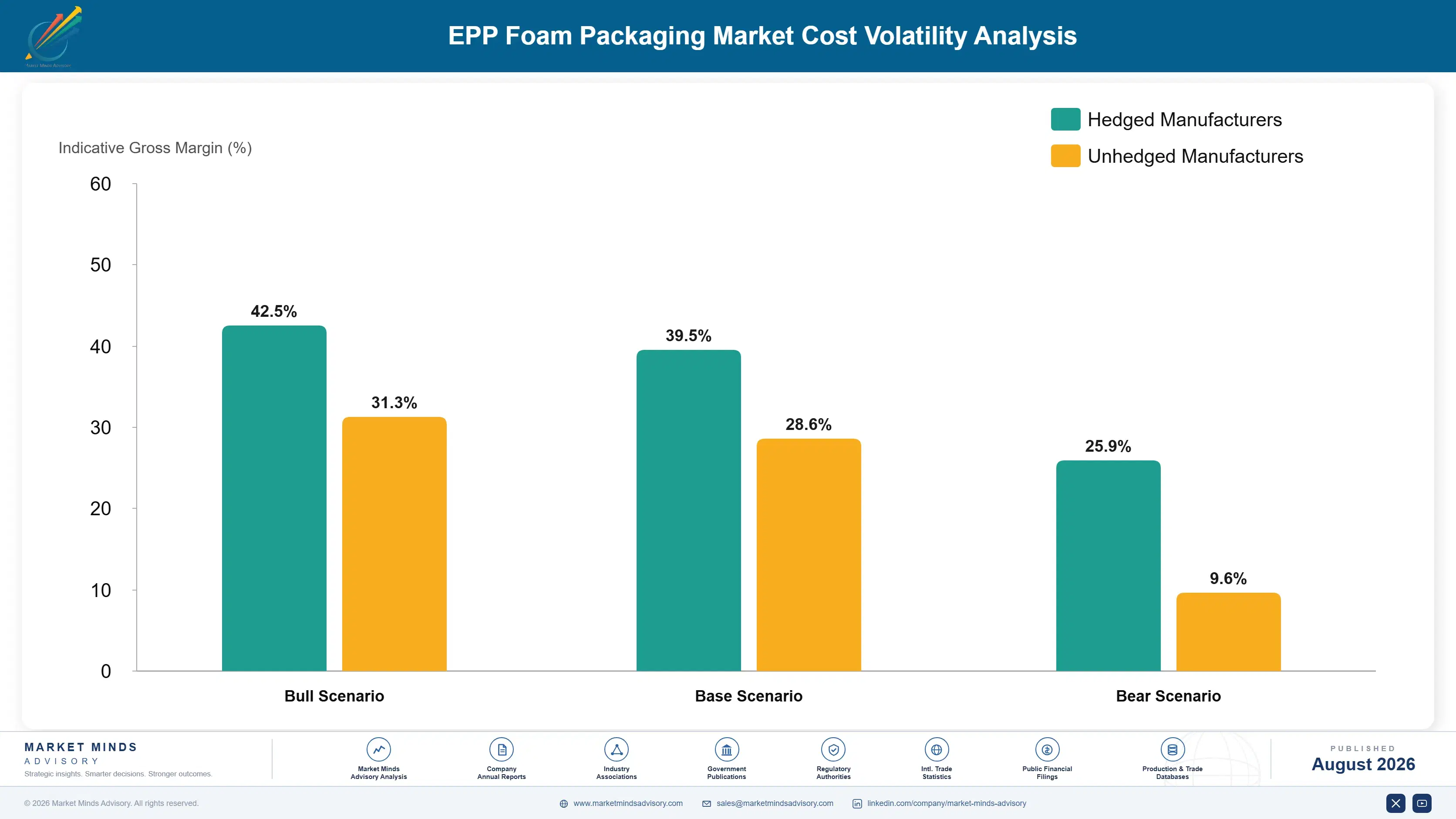
The EPP foam packaging market is susceptible to fluctuations in the prices of raw materials, particularly polypropylene resins derived from petrochemicals. Volatility in crude oil prices, geopolitical tensions, and supply chain disruptions can lead to unpredictable cost structures for manufacturers. These challenges are further compounded by global events such as the COVID-19 pandemic, which exposed vulnerabilities in supply chains and logistics networks. As a result, manufacturers are compelled to adopt risk mitigation strategies, such as diversifying suppliers and investing in local production capabilities, to ensure business continuity and cost competitiveness.
In addition to price volatility, the availability of high-quality raw materials can be constrained by regulatory restrictions and environmental concerns related to petrochemical production. This has prompted some manufacturers to explore alternative feedstocks and invest in the development of bio-based EPP foam. However, the transition to sustainable raw materials presents its own set of technical and economic challenges, including scalability, performance consistency, and cost parity with conventional materials.
- Competition from Alternative Packaging Materials
The EPP foam packaging market faces intense competition from alternative materials such as expanded polystyrene (EPS), polyethylene foam, and biodegradable packaging solutions. While EPP foam offers superior performance in terms of durability and recyclability, cost-sensitive end-users may opt for less expensive alternatives, especially in markets where environmental regulations are less stringent. The proliferation of biodegradable and compostable packaging materials, driven by consumer demand for eco-friendly solutions, poses a particular challenge to EPP foam’s market share.
To address this challenge, EPP foam manufacturers are focusing on product differentiation through innovation, such as the development of hybrid materials and enhanced recycling technologies. Educating end-users about the long-term benefits and total cost of ownership associated with EPP foam packaging is also critical for maintaining market relevance. Nevertheless, the competitive landscape necessitates continuous investment in research and development to stay ahead of emerging alternatives.
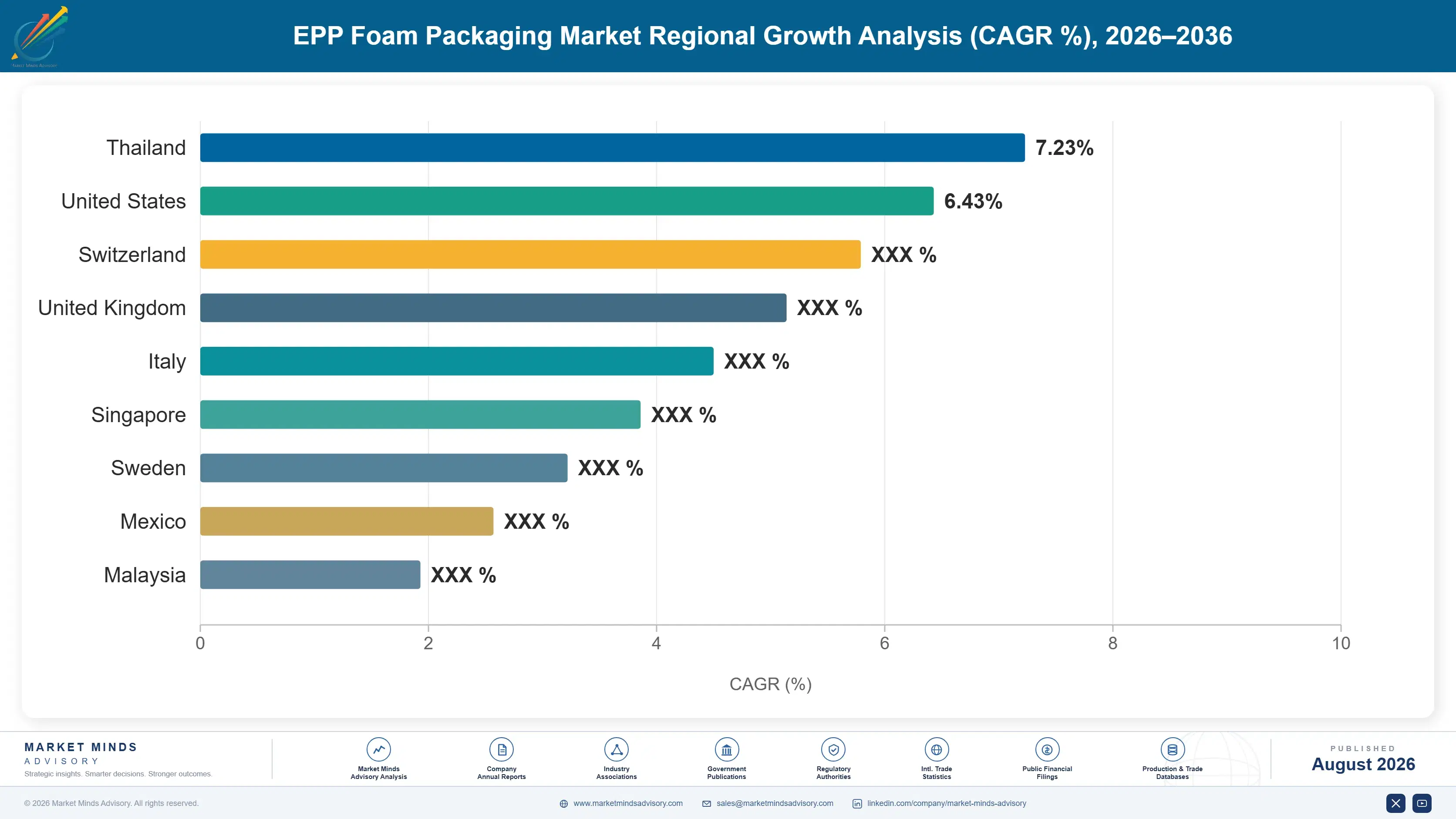
EPP Foam Packaging Market Regional Analysis
| Region | Market Share (2025) | Key Market Highlight |
| Asia-Pacific | 39% | Fastest-growing region, driven by automotive and electronics manufacturing expansion. |
| North America | 27% | Strong demand from automotive and e-commerce sectors; focus on sustainability. |
| Europe | 22% | Stringent environmental regulations driving adoption of recyclable packaging. |
| South America | 7% | Growing industrialization and adoption in consumer goods packaging. |
| Middle East & Africa | 5% | Emerging market with increasing investments in logistics and healthcare packaging. |
Asia-Pacific
Asia-Pacific holds the largest share of the EPP foam packaging market, underpinned by rapid industrialization, robust automotive and electronics manufacturing, and expanding e-commerce activities. China, Japan, South Korea, and India are key contributors, with significant investments in advanced packaging technologies and capacity expansion. The region’s focus on sustainable packaging and regulatory support for recycling initiatives further accelerates EPP foam adoption.
North America
North America is a mature market characterized by high demand from the automotive, electronics, and e-commerce sectors. The United States and Canada are leading adopters of EPP foam packaging, driven by stringent safety standards and a strong emphasis on sustainability. The region’s well-established recycling infrastructure and focus on innovation support continued market growth.
Europe
Europe’s EPP foam packaging market is shaped by rigorous environmental regulations and a strong commitment to circular economy principles. Countries such as Germany, France, and the UK are at the forefront of adopting recyclable and reusable packaging solutions. The automotive and healthcare sectors are major end-users, and ongoing investments in recycling technologies are expected to drive further market expansion.
South America
South America is an emerging market for EPP foam packaging, with growth driven by increasing industrialization and rising demand for consumer goods. Brazil and Argentina are key markets, with expanding automotive and electronics industries. The adoption of EPP foam packaging is supported by growing awareness of its protective and sustainable attributes.
Middle East & Africa
The Middle East & Africa region is witnessing gradual growth in the EPP foam packaging market, fueled by investments in logistics, healthcare, and industrial sectors. The region’s focus on improving supply chain efficiency and adopting advanced packaging solutions is expected to create new opportunities for EPP foam manufacturers.

Competition Landscape in EPP Foam Packaging Market
The EPP foam packaging market is highly competitive, with a mix of global and regional players vying for market share through product innovation, capacity expansion, and strategic partnerships. Leading companies are investing in research and development to enhance the performance and sustainability of EPP foam products. Mergers, acquisitions, and collaborations are common strategies to strengthen market presence and expand geographic reach. The competitive landscape is also shaped by the entry of new players offering bio-based and hybrid EPP foam solutions, intensifying the need for continuous innovation and customer engagement.
Major Players in EPP Foam Packaging Market
- JSP Corporation
- BASF SE
- Kaneka Corporation
- Hanwha Corporation
- Sonoco Products Company
- DS Smith Plc
- Furukawa Electric Co., Ltd.
- Clark Foam Products Corporation
- Knauf Industries
- SSW PearlFoam GmbH
- The Woodbridge Group
- Dongshing Industry Inc.
- Pregis LLC
- K. K. Nag Ltd.
- Synbra Holding BV
- ACH Foam Technologies
- EPE Corporation
- Armacell International S.A.
- FOAMTECH Ltd.
- Polyfoam Australia Pty Ltd.
Recent Developments in EPP Foam Packaging Market
- In January 2024, JSP Corporation announced the launch of a new line of bio-based EPP foam packaging solutions targeting the electronics and healthcare sectors.
- In November 2023, BASF SE expanded its EPP foam production capacity in Germany to meet rising demand from automotive and industrial clients.
- In September 2023, Kaneka Corporation introduced a closed-loop recycling program for EPP foam packaging in Japan, enhancing its sustainability credentials.
- In July 2023, Hanwha Corporation partnered with a leading e-commerce company in South Korea to supply customized EPP foam packaging for fragile goods.
- In May 2023, Sonoco Products Company acquired a regional EPP foam manufacturer in North America to strengthen its market presence and product portfolio.
- In March 2023, DS Smith Plc launched an initiative to integrate recycled EPP foam into its packaging solutions for the European market.
FAQ for EPP Foam Packaging Market
- What is the projected market size of the EPP foam packaging market by 2033?
The EPP foam packaging market is projected to reach USD 2.31 billion by 2033, growing from an estimated USD 1.45 billion in 2026, reflecting a CAGR of 6.9% during the forecast period.
- Which regions are expected to drive the highest growth in the EPP foam packaging market?
Asia-Pacific is expected to drive the highest growth, supported by rapid industrialization, expanding automotive and electronics manufacturing, and increasing e-commerce activities. North America and Europe will also contribute significantly due to their focus on sustainability and advanced packaging technologies.
- What are the main applications of EPP foam packaging?
The main applications of EPP foam packaging include protective packaging, insulated packaging, returnable transit packaging, and component packaging. These applications span across industries such as automotive, electronics, consumer goods, food & beverage, and healthcare.
- What are the key growth drivers for the EPP foam packaging market?
Key growth drivers include rising demand from automotive and electronics sectors, increasing emphasis on sustainable and reusable packaging solutions, and the expansion of e-commerce and cold chain logistics.
- What challenges does the EPP foam packaging market face?
The market faces challenges such as volatility in raw material prices, supply chain disruptions, and competition from alternative packaging materials like EPS, polyethylene foam, and biodegradable solutions. Addressing these challenges requires innovation, supply chain resilience, and continuous investment in sustainability initiatives.
Unlock exclusive industry insights. Contact us today to access the full market report and gain a competitive edge in the global EPP foam packaging industry.