Electric Sub Meter Market
Electric Sub Meter Market Outlook from 2026 to 2033
The electric sub meter market is poised for robust expansion over the forecast period, driven by increasing demand for energy monitoring and management across residential, commercial, and industrial sectors. The market size is projected to grow from USD 2.1 billion in 2026 to USD 4.3 billion by 2033, reflecting a compound annual growth rate (CAGR) of 10.7%. This growth is underpinned by the global emphasis on energy efficiency, regulatory mandates for sub-metering, and the proliferation of smart grid infrastructure. The adoption of electric sub meters is further accelerated by the need for granular energy consumption data, which enables end-users to optimize usage and reduce operational costs.
Technological advancements, such as the integration of IoT and wireless communication capabilities, are transforming the electric sub meter landscape. These innovations facilitate real-time monitoring, remote data access, and predictive maintenance, enhancing the value proposition for utilities and consumers alike. As sustainability goals become more prominent, electric sub meters are increasingly recognized as critical tools for achieving energy conservation targets and supporting distributed energy resources.

Electric Sub Meter Market Scenario & Strategic Insights
The electric sub meter market is experiencing a paradigm shift as utilities, property managers, and industrial operators seek more sophisticated solutions for energy allocation and billing. The transition from traditional metering to advanced sub-metering systems is being propelled by regulatory frameworks that mandate accurate energy measurement at the tenant or departmental level. This shift is particularly pronounced in multi-tenant commercial buildings, residential complexes, and industrial facilities where equitable energy billing and consumption transparency are paramount.
Strategically, market participants are focusing on product innovation, interoperability, and cybersecurity to address evolving customer requirements. The integration of electric sub meters with building management systems (BMS) and energy management platforms is becoming standard practice, enabling holistic energy oversight. Furthermore, partnerships between meter manufacturers, software providers, and utility companies are fostering the development of end-to-end solutions that streamline installation, data analytics, and reporting. As the market matures, differentiation will increasingly hinge on value-added services, such as predictive analytics, demand response integration, and lifecycle management.
| Attribute | 2026 (USD Billion) | 2033 (USD Billion) | CAGR (2026 – 2033) |
| Market Size | 2.1 | 4.3 | 10.7% |
Electric Sub Meter Market Trends
- Integration of IoT and Smart Technologies
The convergence of electric sub meters with IoT platforms is a defining trend in the market. Smart sub meters equipped with wireless communication modules, such as Zigbee, LoRaWAN, and NB-IoT, enable real-time data transmission and remote monitoring. This connectivity allows utilities and facility managers to access granular consumption data, detect anomalies, and implement predictive maintenance strategies. The proliferation of smart city initiatives and digital transformation in the energy sector is further accelerating the adoption of IoT-enabled sub meters, paving the way for enhanced operational efficiency and customer engagement.
- Regulatory Mandates and Energy Efficiency Programs
Governments and regulatory bodies worldwide are enacting policies that require the deployment of sub-metering systems in new and existing buildings. These mandates are aimed at promoting energy conservation, reducing carbon emissions, and ensuring fair billing practices. In regions such as North America and Europe, building codes and energy efficiency standards are compelling property owners to retrofit legacy infrastructure with advanced sub meters. Compliance with these regulations not only drives market growth but also fosters innovation in meter design, data security, and interoperability.
- Rising Adoption in Emerging Markets
The electric sub meter market is witnessing significant traction in emerging economies, particularly in Asia-Pacific and Latin America. Rapid urbanization, expanding commercial real estate, and increasing electrification rates are creating substantial demand for sub-metering solutions. Governments in these regions are investing in smart grid projects and energy management programs, providing a fertile ground for market expansion. Local manufacturers are also entering the market with cost-effective solutions tailored to regional requirements, intensifying competition and driving adoption.
Segment & Category Analysis for Electric Sub Meter Market
By Phase Type
- Single Phase
- Three Phase
The phase type segment is a critical determinant in the electric sub meter market, as it aligns with the specific requirements of residential, commercial, and industrial applications. Single-phase sub meters are predominantly used in residential and small commercial settings due to their compatibility with standard electrical systems. In contrast, three-phase sub meters cater to larger commercial buildings and industrial facilities where higher loads and complex distribution networks are prevalent. The growing industrialization and expansion of commercial infrastructure are expected to drive the demand for three-phase sub meters, while ongoing urbanization will sustain the market for single-phase solutions.

By Application
- Residential
- Commercial
- Industrial
Application-based segmentation highlights the diverse use cases for electric sub meters. In residential settings, sub meters facilitate individual billing in multi-family dwellings and support energy conservation initiatives. The commercial segment, encompassing offices, shopping malls, and hotels, relies on sub meters for tenant-level billing and energy management. Industrial applications focus on monitoring departmental energy usage, optimizing production processes, and ensuring compliance with sustainability standards. The commercial and industrial segments are anticipated to exhibit higher growth rates, driven by regulatory mandates and the pursuit of operational efficiency.
By Communication Technology
- Wired
- Wireless
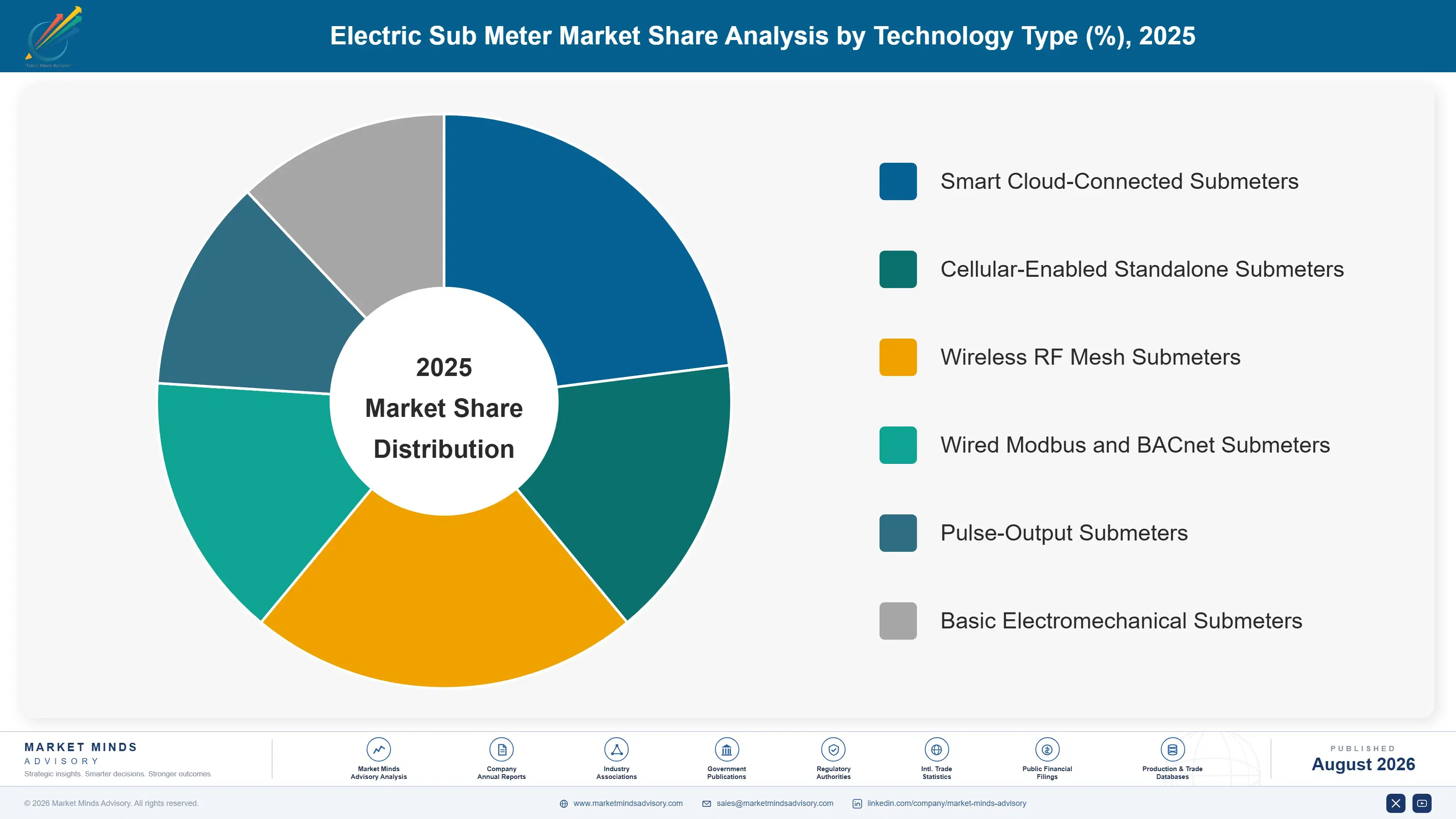
Communication technology is a pivotal factor influencing sub meter selection and deployment. Wired sub meters, utilizing protocols such as Modbus and RS-485, offer reliability and security, making them suitable for mission-critical applications. However, wireless sub meters are gaining prominence due to their ease of installation, scalability, and compatibility with IoT ecosystems. Wireless technologies enable remote monitoring, reduce infrastructure costs, and support integration with cloud-based analytics platforms. The shift towards wireless solutions is expected to accelerate as digital transformation initiatives gain momentum across industries.
By End-User
- Utilities
- Property Managers Industrial Operators
- Government & Public Sector
The end-user landscape for electric sub meters is broad, encompassing utilities, property managers, industrial operators, and government entities. Utilities deploy sub meters to enhance grid visibility, manage distributed energy resources, and implement demand response programs. Property managers utilize sub meters for equitable billing and tenant engagement, while industrial operators leverage them for process optimization and sustainability reporting. Government and public sector organizations are increasingly adopting sub meters to comply with energy efficiency mandates and reduce operational costs. Each end-user segment presents unique requirements, driving product differentiation and service innovation.
By Installation Type
- New Installations
- Retrofit Installations
Installation type segmentation reflects the market’s dual focus on new construction and the modernization of existing infrastructure. New installations are driven by building codes and green building certifications that mandate sub-metering in new developments. Retrofit installations, on the other hand, address the need to upgrade legacy systems for compliance and operational efficiency. The retrofit segment is particularly significant in mature markets with aging building stock, while new installations dominate in rapidly urbanizing regions. Both segments offer substantial growth opportunities, supported by regulatory incentives and technological advancements.

Growth Drivers and Opportunities in Electric Sub Meter Market
- Regulatory Support and Energy Efficiency Initiatives
Regulatory frameworks mandating sub-metering in commercial and residential buildings are a primary growth driver for the electric sub meter market. Governments worldwide are implementing policies to promote energy efficiency, reduce greenhouse gas emissions, and ensure transparent billing. These initiatives create a favorable environment for market expansion, compelling property owners and utilities to invest in advanced sub-metering solutions. The alignment of sub-metering with broader sustainability goals further enhances its adoption, positioning it as a critical enabler of energy transition strategies.
- Technological Advancements and Digital Transformation
The integration of advanced technologies, such as IoT, cloud computing, and data analytics, is unlocking new opportunities for electric sub meter manufacturers and service providers. Smart sub meters equipped with real-time monitoring, remote diagnostics, and predictive maintenance capabilities are transforming energy management practices. These innovations enable utilities and end-users to optimize consumption, reduce operational costs, and enhance grid resilience. The ongoing digital transformation in the energy sector is expected to drive sustained demand for intelligent sub-metering solutions.
Emerging Opportunities for Electric Sub Meter Market
- Expansion in Smart City and Green Building Projects
The proliferation of smart city initiatives and green building certifications presents significant growth opportunities for the electric sub meter market. Municipalities and developers are increasingly incorporating sub-metering systems into new urban developments to support energy management, demand response, and sustainability objectives. The integration of sub meters with building automation systems and smart grid infrastructure enables holistic energy oversight, driving adoption in both public and private sector projects.
- Growth in Distributed Energy Resources (DER) Integration
The rise of distributed energy resources, such as rooftop solar, battery storage, and electric vehicles, is creating new use cases for electric sub meters. Accurate measurement and allocation of energy generated and consumed at the premises level are essential for effective DER integration. Sub meters facilitate net metering, peer-to-peer energy trading, and participation in demand response programs, unlocking additional revenue streams for end-users and utilities. This trend is expected to accelerate as DER adoption increases globally.
Growth Restrain factors and Challanges in Electric Sub Meter Market
- High Initial Investment and Cost Sensitivity
The upfront cost associated with the deployment of advanced electric sub meters, particularly those with smart and wireless capabilities, can be a significant barrier for some end-users. Small property owners and operators in price-sensitive markets may be reluctant to invest in sub-metering solutions due to budget constraints. This cost sensitivity is further exacerbated in regions with limited regulatory enforcement or low awareness of the long-term benefits of sub-metering. As a result, market penetration may be slower in certain segments, necessitating targeted education and incentive programs to drive adoption.
In addition to the initial hardware and installation costs, ongoing maintenance and software subscription fees can add to the total cost of ownership. End-users may also face challenges related to system integration, data management, and cybersecurity, which require additional investment in technical expertise and support services. Addressing these challenges will be critical for market participants seeking to expand their customer base and achieve sustainable growth.
- Data Privacy and Cybersecurity Concerns
The increasing digitization of electric sub meters and their integration with IoT platforms raise significant concerns regarding data privacy and cybersecurity. Unauthorized access to metering data or control systems can compromise customer privacy, disrupt operations, and expose utilities to regulatory penalties. Ensuring the security of communication networks, data storage, and analytics platforms is therefore a top priority for market stakeholders.
The complexity of securing interconnected devices and systems is compounded by the diversity of communication protocols and vendor solutions in the market. Utilities and property managers must implement robust cybersecurity frameworks, conduct regular vulnerability assessments, and comply with evolving data protection regulations. Failure to address these concerns can undermine customer trust and impede the adoption of advanced sub-metering technologies.
Electric Sub Meter Market Regional Analysis
| Region | Market Share (2025) | Key Market Highlight |
| Asia-Pacific | 38% | Rapid urbanization, government smart grid investments, and strong growth in China and India. |
| North America | 27% | Stringent energy efficiency regulations, high adoption of smart meters, and retrofit demand. |
| Europe | 22% | Regulatory mandates for sub-metering, focus on sustainability, and advanced infrastructure. |
| South America | 8% | Urban expansion, rising electrification, and increasing awareness of energy management. |
| Middle East & Africa | 5% | Infrastructure modernization, government initiatives, and growing commercial sector. |
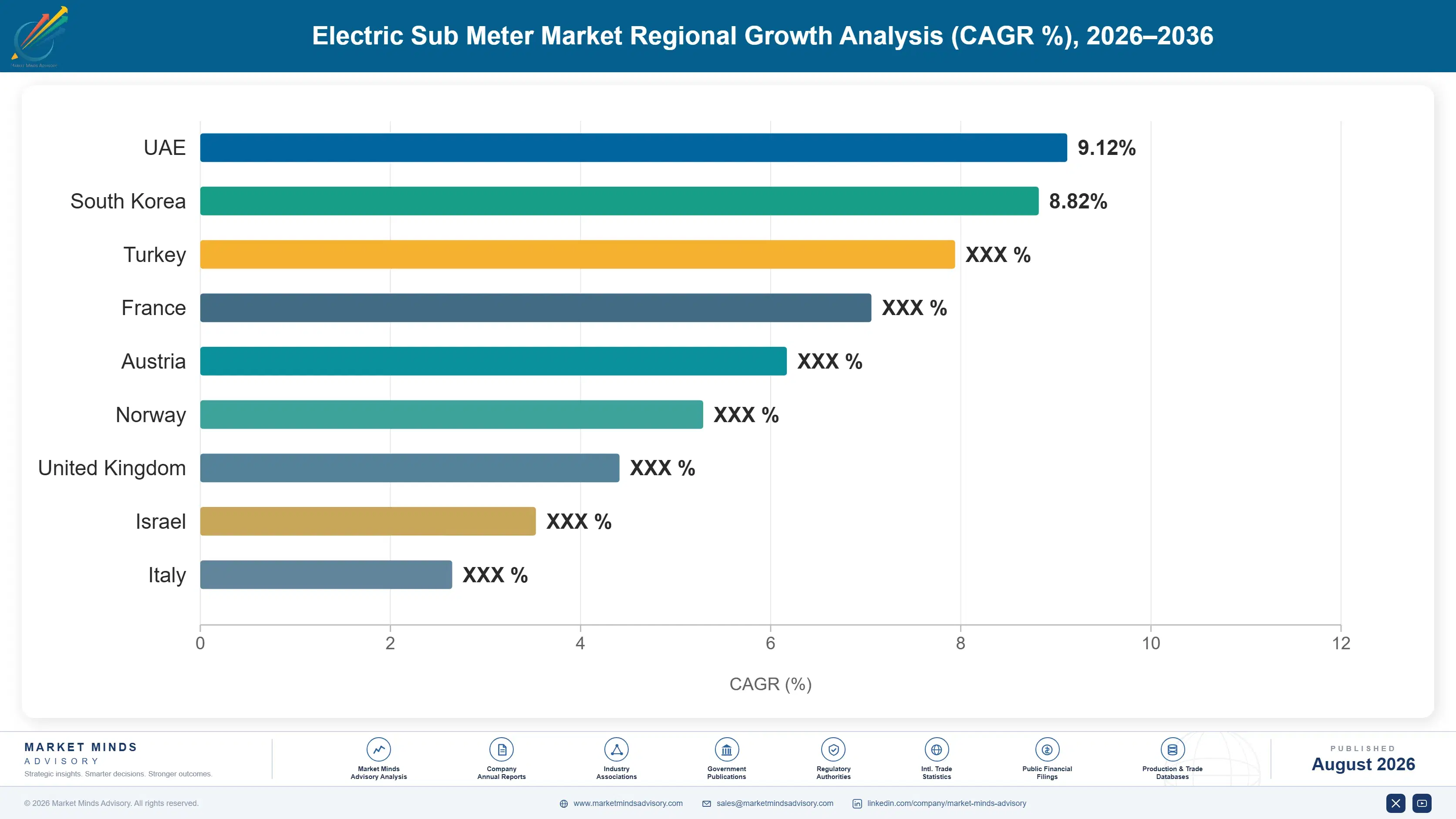
Asia-Pacific is the largest and fastest-growing region in the electric sub meter market, driven by rapid urbanization, expanding commercial real estate, and government investments in smart grid infrastructure. China and India are at the forefront, with large-scale deployments in residential and commercial sectors. The region benefits from supportive regulatory frameworks and a growing emphasis on energy efficiency.
North America holds a significant share, underpinned by stringent energy efficiency regulations, widespread adoption of smart metering technologies, and a mature retrofit market. The United States and Canada are leading adopters, with utilities and property managers investing in advanced sub-metering solutions to comply with building codes and sustainability targets.
Europe is characterized by regulatory mandates for sub-metering, a strong focus on sustainability, and advanced infrastructure. Countries such as Germany, the UK, and France are implementing policies that require sub-metering in multi-tenant buildings, driving market growth. The region also benefits from a high level of technological innovation and integration with building management systems.
South America is witnessing steady growth, fueled by urban expansion, rising electrification rates, and increasing awareness of energy management benefits. Brazil and Mexico are key markets, with government initiatives supporting the adoption of sub-metering solutions in commercial and residential sectors.
Middle East & Africa is an emerging market, with infrastructure modernization and government initiatives driving demand for electric sub meters. The region is experiencing growth in the commercial sector, particularly in the Gulf Cooperation Council (GCC) countries, where energy efficiency is becoming a priority.

Competition Landscape in Electric Sub Meter Market
The electric sub meter market is highly competitive, with a mix of global and regional players vying for market share. The competitive landscape is characterized by continuous product innovation, strategic partnerships, and a focus on value-added services. Leading manufacturers are investing in R&D to enhance the functionality, interoperability, and cybersecurity of their offerings. Market participants are also expanding their geographic footprint through mergers, acquisitions, and collaborations with utilities and technology providers. As the market evolves, differentiation will increasingly depend on the ability to deliver integrated solutions that address the diverse needs of end-users across residential, commercial, and industrial segments.
Major Players in Electric Sub Meter Market
- Schneider Electric SE
- Siemens AG
- Landis+Gyr Group AG
- Honeywell International Inc.
- ABB Ltd.
- Itron Inc.
- Eaton Corporation plc
- Kamstrup A/S
- Leviton Manufacturing Co., Inc.
- General Electric Company
- Holley Technology Ltd.
- Elster Group GmbH (Honeywell)
- Sensus (Xylem Inc.)
- Secure Meters Ltd.
- Aclara Technologies LLC
- Iskraemeco d.d.
- EKM Metering Inc.
- Carlo Gavazzi Holding AG
- L&T Electrical & Automation
- Jiangsu Linyang Energy Co., Ltd.
Recent Developments in Electric Sub Meter Market
- In March 2023, Schneider Electric launched a new range of IoT-enabled sub meters with advanced analytics and cybersecurity features, targeting commercial and industrial applications.
- In January 2023, Siemens AG announced a strategic partnership with a leading utility in Europe to deploy smart sub-metering solutions across multi-tenant buildings.
- In September 2022, Landis+Gyr Group AG expanded its product portfolio with the introduction of wireless sub meters designed for rapid deployment in retrofit projects.
- In July 2022, Honeywell International Inc. acquired a regional sub-metering solutions provider to strengthen its presence in the Asia-Pacific market.
- In May 2022, ABB Ltd. unveiled a cloud-based energy management platform that integrates with its latest generation of electric sub meters for real-time monitoring and reporting.
- In February 2022, Itron Inc. collaborated with a major North American utility to pilot advanced sub-metering solutions for distributed energy resource management.
FAQ for Electric Sub Meter Market
- What is the projected size of the electric sub meter market by 2033?
The electric sub meter market is expected to reach USD 4.3 billion by 2033, growing from USD 2.1 billion in 2026, at a CAGR of 10.7% during the forecast period.
- Which regions are expected to drive the highest growth in the electric sub meter market?
Asia-Pacific is anticipated to lead the market in terms of growth and market share, driven by rapid urbanization, government investments in smart grid projects, and strong demand in China and India.
- What are the key trends shaping the electric sub meter market?
Major trends include the integration of IoT and smart technologies, regulatory mandates for sub-metering, and rising adoption in emerging markets, particularly in Asia-Pacific and Latin America.
- What are the main challenges faced by the electric sub meter market?
The market faces challenges such as high initial investment costs, cost sensitivity in certain regions, and concerns regarding data privacy and cybersecurity due to increased digitization and connectivity.
- Who are the leading players in the electric sub meter market?
Leading players include Schneider Electric SE, Siemens AG, Landis+Gyr Group AG, Honeywell International Inc., ABB Ltd., Itron Inc., Eaton Corporation plc, Kamstrup A/S, and Leviton Manufacturing Co., Inc., among others.
Contact us today to access the full report and gain exclusive insights into the electric sub-meter market, helping you stay ahead in this rapidly evolving industry.