Drilling Polymers Market
Drilling Polymers Market Outlook from 2026 to 2033
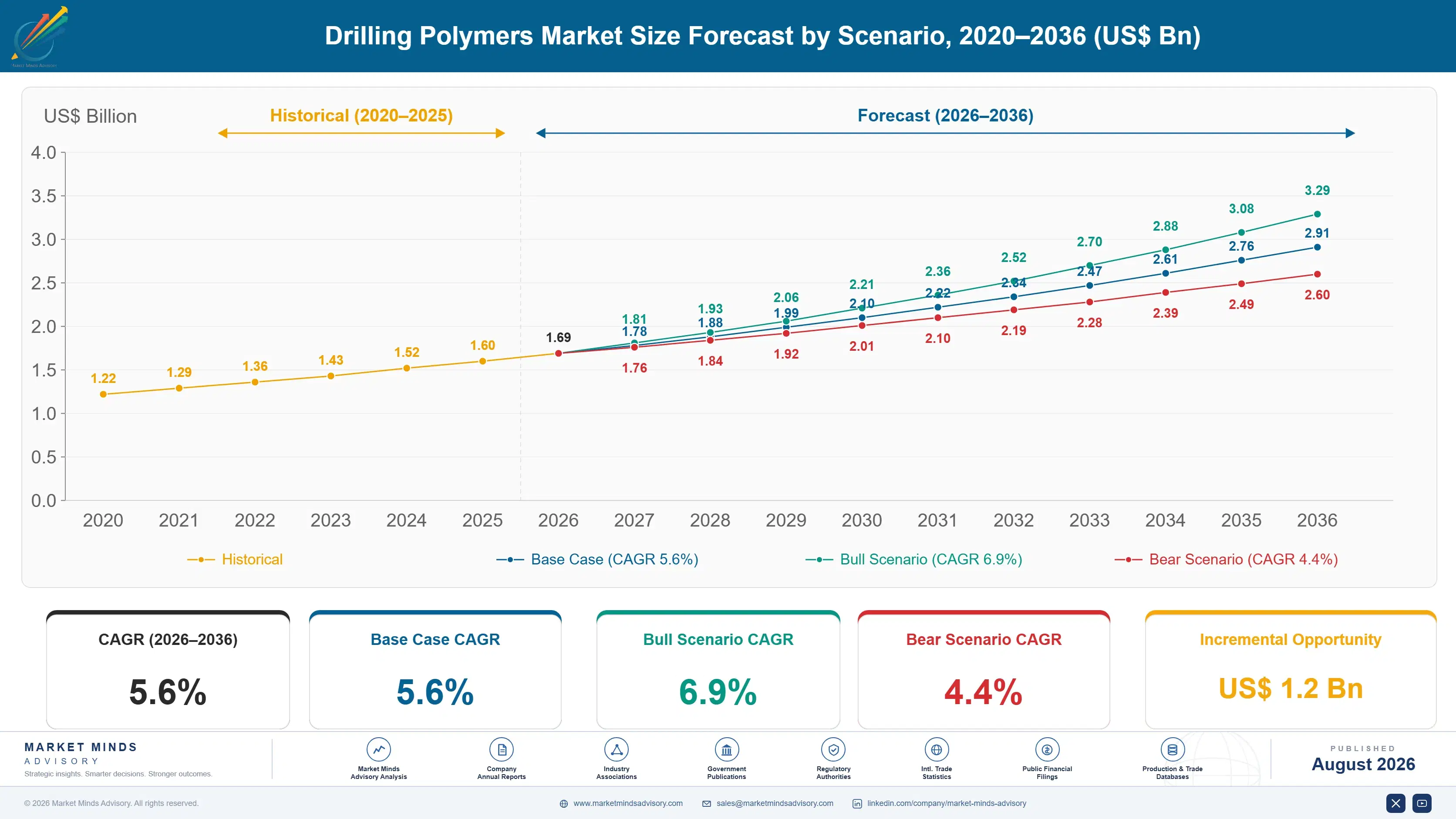
The global drilling polymers market is poised for robust expansion, driven by the increasing complexity of oil and gas exploration activities and the growing demand for advanced drilling fluids. The market size is projected to reach USD 1.85 billion by 2033, up from an estimated USD 1.25 billion in 2026, reflecting a CAGR of 5.7% during the forecast period. Drilling polymers play a pivotal role in enhancing drilling efficiency, stabilizing boreholes, and minimizing environmental impact, making them indispensable in both onshore and offshore drilling operations.
Technological advancements and the shift towards unconventional hydrocarbon resources are further catalyzing the adoption of high-performance drilling polymers. The market is witnessing increased investment in research and development to formulate polymers that can withstand extreme downhole conditions and comply with stringent environmental regulations. As the energy sector continues to evolve, the drilling polymers market is expected to experience sustained growth, supported by rising exploration activities in emerging regions.

Drilling Polymers Market Scenario & Strategic Insights
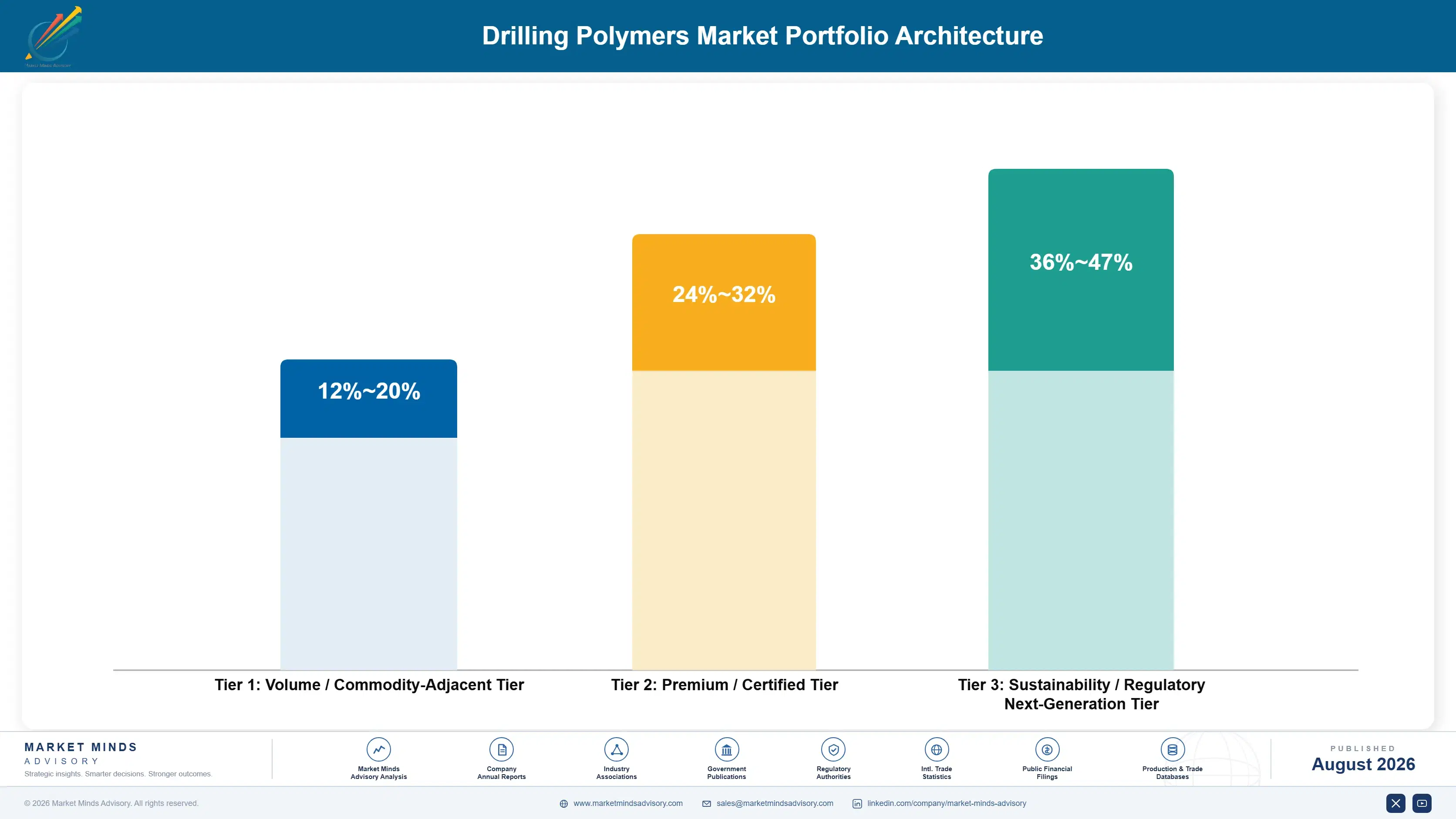
The drilling polymers market is characterized by a dynamic interplay of technological innovation, regulatory compliance, and evolving end-user requirements. The sector is witnessing a paradigm shift towards the use of environmentally friendly and biodegradable polymers, driven by global sustainability initiatives and stricter environmental standards. This transition is compelling manufacturers to invest in green chemistry and develop products that offer both operational efficiency and reduced ecological footprint.
Strategically, market participants are focusing on expanding their product portfolios and strengthening their distribution networks to cater to the diverse needs of oil and gas operators. Partnerships, mergers, and acquisitions are becoming increasingly prevalent as companies seek to enhance their technological capabilities and geographic reach. The market’s competitive landscape is further shaped by the emergence of regional players, particularly in Asia-Pacific and the Middle East, who are leveraging cost advantages and local expertise to capture market share.
The drilling polymers market is also influenced by fluctuations in crude oil prices, which directly impact exploration budgets and drilling activities. Despite these challenges, the long-term outlook remains positive, underpinned by the ongoing demand for energy and the continuous search for new hydrocarbon reserves.
| Attribute | 2026 (USD Billion) | 2033 (USD Billion) | CAGR (2026 – 2033) |
| Market Size | 1.25 | 1.85 | 5.7% |
Drilling Polymers Market Trends
- Rising Adoption of Biodegradable and Eco-Friendly Polymers
The drilling polymers market is experiencing a significant shift towards the adoption of biodegradable and eco-friendly polymers. Regulatory authorities across major oil-producing regions are imposing stringent guidelines to minimize the environmental impact of drilling operations. As a result, manufacturers are investing in the development of polymers derived from renewable sources and those that degrade naturally without leaving harmful residues. This trend is not only helping companies comply with environmental standards but also enhancing their brand reputation and market positioning.
- Integration of Advanced Polymer Technologies for High-Temperature and High-Pressure Wells
With the increasing exploration of deepwater and ultra-deepwater reserves, there is a growing demand for drilling polymers that can withstand extreme downhole conditions. Advanced polymer technologies are being integrated into drilling fluids to provide superior thermal stability, salt tolerance, and rheological properties. These innovations enable efficient drilling in challenging environments, reduce non-productive time, and improve overall wellbore integrity. The trend towards high-performance polymers is expected to accelerate as operators venture into more complex geological formations.
- Expansion of Application Scope Beyond Oil & Gas
While oil and gas exploration remains the primary application area, drilling polymers are finding new opportunities in geothermal energy, mining, and construction sectors. The versatility of these polymers in stabilizing boreholes, controlling fluid loss, and enhancing drilling efficiency is driving their adoption in non-traditional markets. This diversification is providing manufacturers with additional revenue streams and mitigating the risks associated with fluctuations in oil prices.
Segment & Category Analysis for Drilling Polymers Market
By Polymer Type
- Polyacrylamide (PAM)
- Xanthan Gum Carboxymethyl Cellulose (CMC) Polyanionic Cellulose (PAC)S tarch Derivatives
- Others
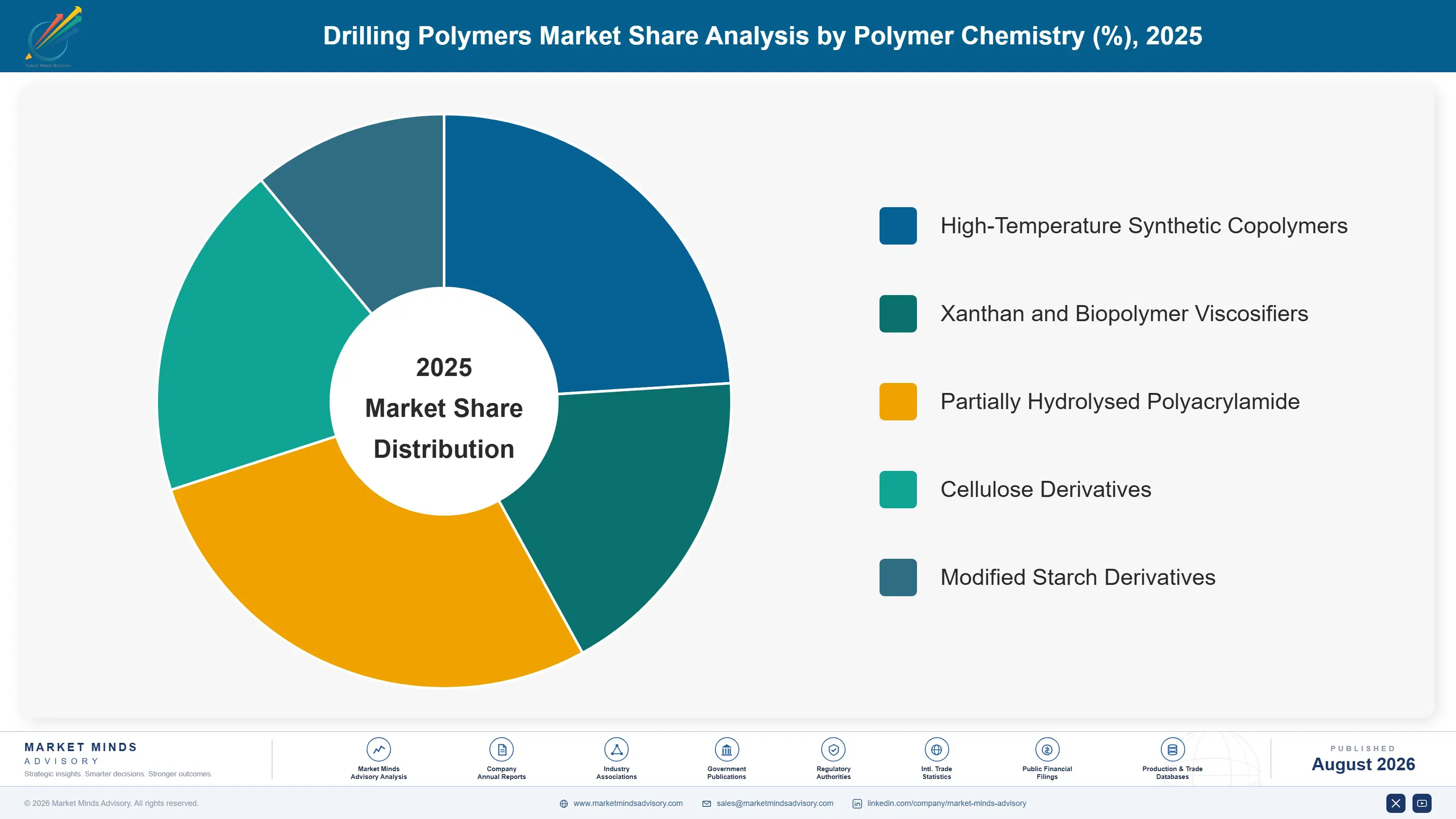
The polymer type segment is dominated by polyacrylamide and xanthan gum, owing to their superior viscosity and fluid loss control properties. Polyacrylamide is widely used in both water-based and oil-based drilling fluids, while xanthan gum is favored for its high tolerance to salinity and temperature variations. Carboxymethyl cellulose and polyanionic cellulose are also gaining traction due to their biodegradability and compatibility with various drilling environments. The ongoing research into novel starch derivatives and other specialty polymers is expected to further diversify this segment.

By Application
- Onshore Drilling
- Offshore Drilling
Onshore drilling remains the largest application segment, driven by the extensive exploration activities in regions such as North America, the Middle East, and Asia-Pacific. However, offshore drilling is witnessing faster growth, particularly in deepwater and ultra-deepwater projects. The unique challenges associated with offshore environments, such as high pressure, temperature, and corrosive conditions, are fueling the demand for advanced drilling polymers that offer enhanced performance and reliability.
By Function
- Viscosifiers
- Shale Inhibitors Fluid Loss Reducers Lubricants Dispersants
- Others
Drilling polymers serve multiple functions within drilling fluids, with viscosifiers and fluid loss reducers accounting for the largest share. Viscosifiers are essential for maintaining optimal fluid rheology, while fluid loss reducers prevent the invasion of drilling fluids into the formation. Shale inhibitors and lubricants are increasingly being used to address specific drilling challenges, such as wellbore instability and torque reduction. The development of multifunctional polymers that combine several properties is an emerging trend in this segment.
By End-User Industry
- Oil & Gas
- Geothermal Energy Mining Construction
- Others
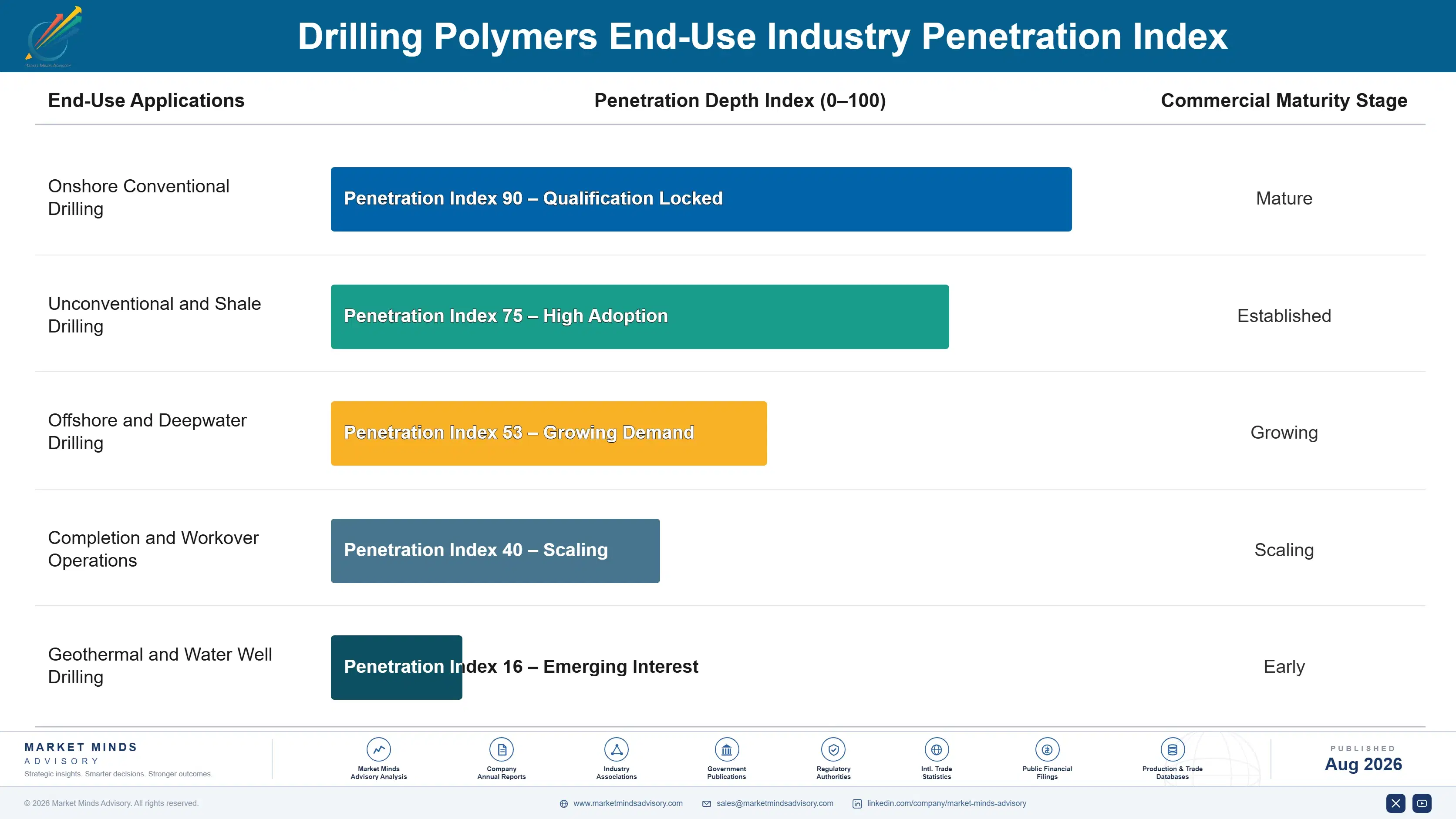
The oil and gas industry is the predominant end-user of drilling polymers, accounting for the majority of global demand. However, the growing adoption of drilling polymers in geothermal energy and mining is expanding the market’s scope. In construction, these polymers are used for foundation drilling and tunneling applications, where they help stabilize boreholes and improve drilling efficiency. The diversification of end-user industries is expected to drive steady market growth over the forecast period.

By Region
- North America
- Asia-Pacific Europe Middle East & Africa
- South America
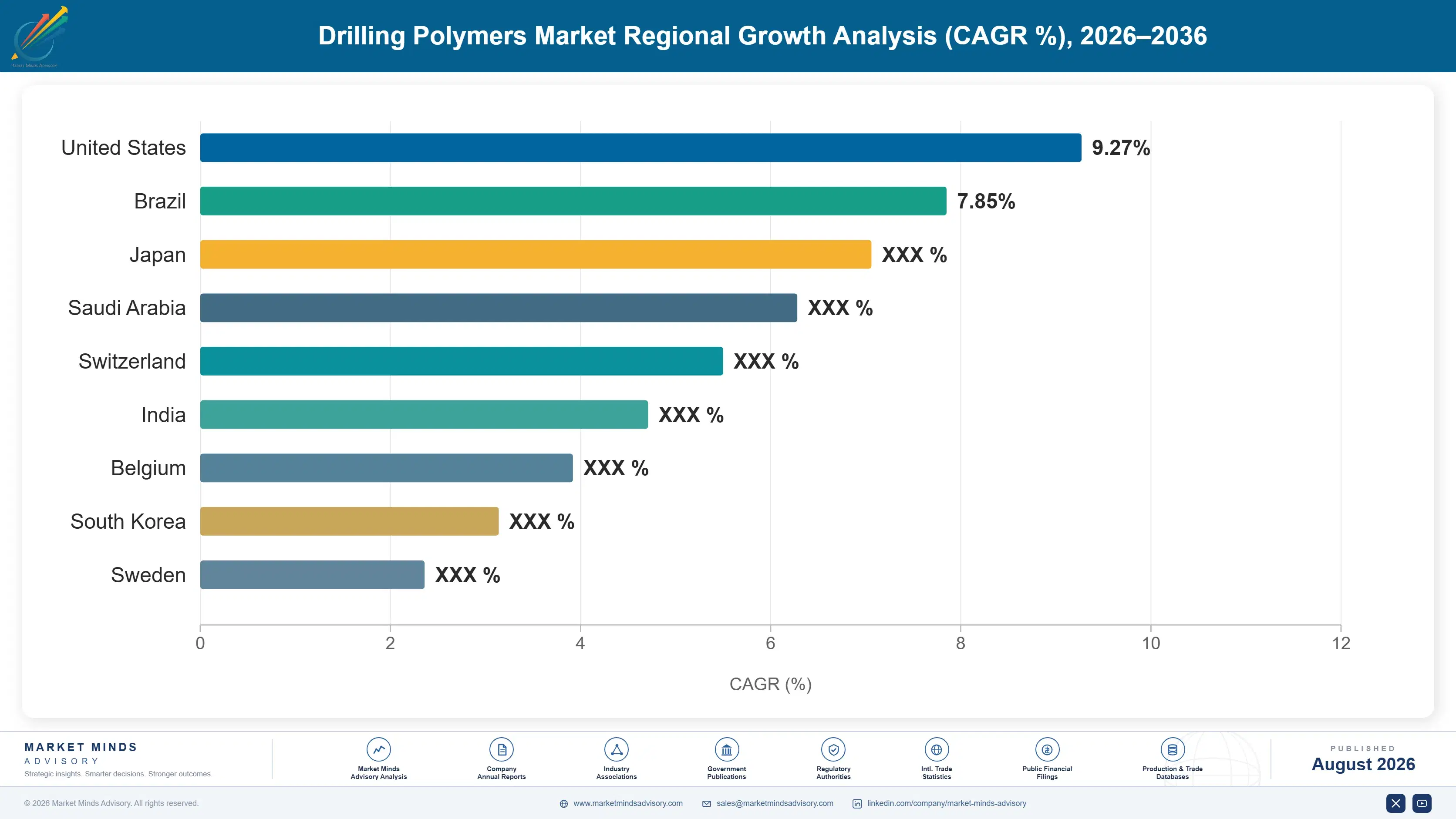
Regional dynamics play a crucial role in shaping the drilling polymers market. North America leads in terms of consumption, supported by the shale boom and advanced drilling technologies. Asia-Pacific is emerging as a high-growth region, driven by increasing exploration activities in China, India, and Southeast Asia. The Middle East & Africa region is characterized by large-scale oil and gas projects, while Europe and South America are witnessing steady demand due to ongoing exploration and production activities.
Growth Drivers and Opportunities in Drilling Polymers Market
- Increasing Exploration and Production Activities
The global surge in oil and gas exploration and production (E&P) activities is a primary driver for the drilling polymers market. As conventional reserves mature, operators are venturing into deeper and more challenging reservoirs, necessitating advanced drilling fluids and polymers. The expansion of shale gas and tight oil projects, particularly in North America and China, is further boosting demand. These activities require polymers that can enhance drilling efficiency, reduce operational risks, and ensure wellbore stability, thereby creating significant growth opportunities for market participants.
- Technological Advancements and Product Innovation
Continuous innovation in polymer chemistry and drilling fluid formulations is opening new avenues for market growth. The development of high-performance polymers with improved thermal stability, salt resistance, and biodegradability is enabling operators to tackle complex drilling environments. Companies investing in research and development are well-positioned to capitalize on emerging opportunities, such as the growing adoption of smart polymers and nanotechnology-based additives. These advancements not only improve drilling performance but also help meet evolving regulatory and environmental requirements.
Emerging Opportunities for Drilling Polymers Market
- Expansion into Geothermal and Mining Sectors
Beyond oil and gas, the application of drilling polymers in geothermal energy and mining presents untapped growth potential. Geothermal drilling requires polymers that can withstand high temperatures and aggressive downhole conditions, while mining operations benefit from polymers that enhance borehole stability and fluid management. As global demand for renewable energy and minerals rises, the drilling polymers market is expected to witness increased adoption in these sectors, diversifying revenue streams for manufacturers.
- Development of Sustainable and Green Polymers
The growing emphasis on sustainability is driving the development of green and biodegradable drilling polymers. Regulatory pressures and stakeholder expectations are compelling companies to innovate and offer products with minimal environmental impact. The successful commercialization of such polymers can unlock new market segments, particularly in regions with stringent environmental regulations. This trend is likely to accelerate as the industry moves towards more responsible and sustainable drilling practices.
Growth Restrain factors and Challenges in Drilling Polymers Market
- Volatility in Crude Oil Prices and Exploration Budgets
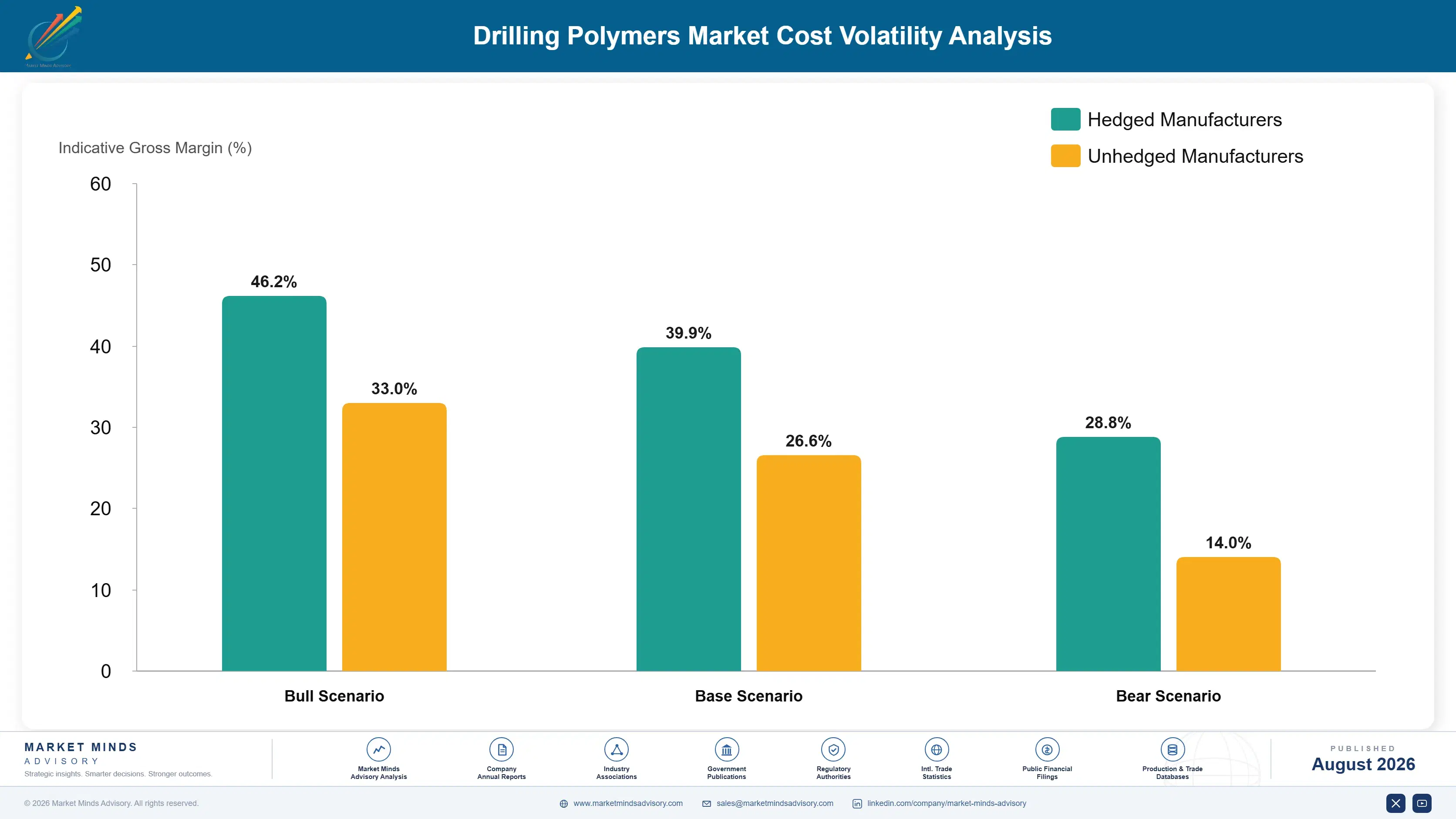
The drilling polymers market is highly sensitive to fluctuations in crude oil prices, which directly influence exploration and production budgets. Periods of low oil prices often lead to reduced drilling activity, project delays, and budget cuts, adversely affecting the demand for drilling polymers. This volatility creates uncertainty for manufacturers and suppliers, making it challenging to plan investments and manage inventory. Additionally, the cyclical nature of the oil and gas industry can result in periods of oversupply or underutilization of production capacities, impacting profitability and market stability.
Furthermore, the dependence on the oil and gas sector exposes the drilling polymers market to geopolitical risks and regulatory changes that can disrupt supply chains and market dynamics. Companies must adopt flexible business strategies and diversify their customer base to mitigate these risks and ensure long-term growth.
- Stringent Environmental Regulations and Compliance Costs
Increasingly stringent environmental regulations regarding the use and disposal of drilling fluids and additives pose significant challenges for the drilling polymers market. Compliance with these regulations often requires substantial investments in research and development to formulate environmentally friendly products and implement sustainable manufacturing processes. The associated costs can be prohibitive, particularly for small and medium-sized enterprises, limiting their ability to compete with larger players.
In addition, the approval process for new products can be lengthy and complex, delaying time-to-market and hindering innovation. Companies must navigate a complex regulatory landscape across different regions, each with its own set of standards and requirements. Failure to comply can result in fines, reputational damage, and loss of market access, underscoring the importance of proactive regulatory management and continuous product improvement.
Drilling Polymers Market Regional Analysis
| Region | Market Share (2025) | Key Market Highlight |
| Asia-Pacific | 31% | Rapid growth in exploration activities, especially in China, India, and Southeast Asia |
| North America | 29% | Dominance in shale gas and tight oil drilling, advanced polymer adoption |
| Europe | 17% | Steady demand from mature oilfields and emerging geothermal projects |
| South America | 13% | Increasing offshore exploration, particularly in Brazil and Argentina |
| Middle East & Africa | 10% | Large-scale oil & gas projects, focus on cost-effective and high-performance polymers |
Asia-Pacific
Asia-Pacific is emerging as the fastest-growing region in the drilling polymers market, driven by robust exploration activities in China, India, and Southeast Asia. The region benefits from favorable government policies, increasing investments in energy infrastructure, and the presence of significant untapped hydrocarbon reserves. Local manufacturers are leveraging cost advantages and technological advancements to cater to both domestic and international markets.
North America
North America remains a key market, supported by the shale revolution and the adoption of advanced drilling technologies. The United States and Canada are at the forefront of unconventional resource development, driving demand for high-performance drilling polymers. The region also benefits from a well-established supply chain and a strong focus on innovation and sustainability.
Europe
Europe’s drilling polymers market is characterized by steady demand from mature oilfields and a growing emphasis on geothermal energy projects. Stringent environmental regulations are prompting the adoption of eco-friendly polymers, while ongoing exploration in the North Sea and Eastern Europe supports market stability. The region is also witnessing increased collaboration between industry players and research institutions.
South America
South America is witnessing increased offshore exploration, particularly in Brazil and Argentina. The region’s vast hydrocarbon reserves and favorable investment climate are attracting global oil and gas companies, driving demand for advanced drilling polymers. However, market growth is tempered by economic and political uncertainties in certain countries.
Middle East & Africa
The Middle East & Africa region is characterized by large-scale oil and gas projects, with a focus on cost-effective and high-performance drilling polymers. Countries such as Saudi Arabia, UAE, and Nigeria are investing in advanced drilling technologies to enhance production efficiency and meet global energy demand. The region also presents opportunities for local manufacturers to expand their footprint.

Competition Landscape in Drilling Polymers Market
The drilling polymers market is highly competitive, with a mix of global giants and regional players vying for market share. The competitive landscape is shaped by continuous innovation, strategic partnerships, and a focus on sustainability. Leading companies are investing in research and development to introduce advanced polymers that address evolving industry needs, such as high-temperature stability and environmental compliance. Mergers, acquisitions, and collaborations are common strategies employed to expand product portfolios and geographic reach. Regional players are leveraging their understanding of local markets and cost advantages to compete with established multinationals.
Major Players in Drilling Polymers Market
- BASF SE
- Solvay S.A.
- SNF Group
- Kemira Oyj
- Schlumberger Limited
- Halliburton Company
- Baker Hughes Company
- Dow Inc.
- Ashland Global Holdings Inc.
- Lubrizol Corporation
- Clariant AG
- Croda International Plc
- Shandong Tongli Chemical Co., Ltd.
- Kemira Chemicals, Inc.
- CP Kelco
- Global Drilling Fluids and Chemicals Limited
- Zibo Xinye Chemical Co., Ltd.
- Oilfield Chemical Company
- Universal Drilling Fluids
- Tytan Organics Pvt. Ltd.
Recent Developments in Drilling Polymers Market
- In January 2024, BASF SE launched a new line of biodegradable drilling polymers targeting environmentally sensitive drilling operations.
- In November 2023, Solvay S.A. announced a strategic partnership with a leading oilfield services provider to co-develop high-performance polymers for deepwater drilling.
- In September 2023, SNF Group expanded its production capacity in Asia-Pacific to meet rising regional demand for drilling polymers.
- In July 2023, Halliburton Company introduced a next-generation polymer-based drilling fluid system designed for ultra-high temperature wells.
- In May 2023, Clariant AG received regulatory approval for its new eco-friendly drilling polymer in the European market.
- In March 2023, Baker Hughes Company acquired a specialty chemicals firm to enhance its drilling polymers portfolio and strengthen its market position.
FAQ for Drilling Polymers Market
- What are drilling polymers and why are they important in drilling operations?
Drilling polymers are specialized chemical additives used in drilling fluids to enhance their properties, such as viscosity, fluid loss control, and wellbore stability. They are essential for efficient drilling operations, minimizing formation damage, and ensuring the integrity of the borehole, especially in challenging geological conditions.
- What factors are driving the growth of the drilling polymers market?
The primary growth drivers include increasing oil and gas exploration activities, technological advancements in polymer chemistry, and the rising demand for environmentally friendly drilling solutions. Expansion into new application areas such as geothermal energy and mining is also contributing to market growth.
- How are environmental regulations impacting the drilling polymers market?
Stringent environmental regulations are prompting manufacturers to develop biodegradable and eco-friendly polymers. Compliance with these regulations requires significant investment in research and development, but it also opens up new market opportunities, particularly in regions with strict environmental standards.
- Which regions are expected to witness the highest growth in the drilling polymers market?
Asia-Pacific is projected to experience the fastest growth due to rapid exploration activities and increasing energy demand. North America remains a key market, driven by the shale boom and technological innovation, while Europe, South America, and the Middle East & Africa also present significant opportunities.
- Who are the major players in the drilling polymers market?
The market is dominated by global companies such as BASF SE, Solvay S.A., SNF Group, Kemira Oyj, Schlumberger Limited, Halliburton Company, Baker Hughes Company, Dow Inc., Ashland Global Holdings Inc., and Lubrizol Corporation, among others. These players focus on innovation, strategic partnerships, and geographic expansion to maintain their competitive edge.
Contact us today to access the full report and propel your business forward.