Cell Culture Media Market
Cell Culture Media Market Outlook from 2026 to 2033
Cell Culture Media Market Overview – Executive Summary
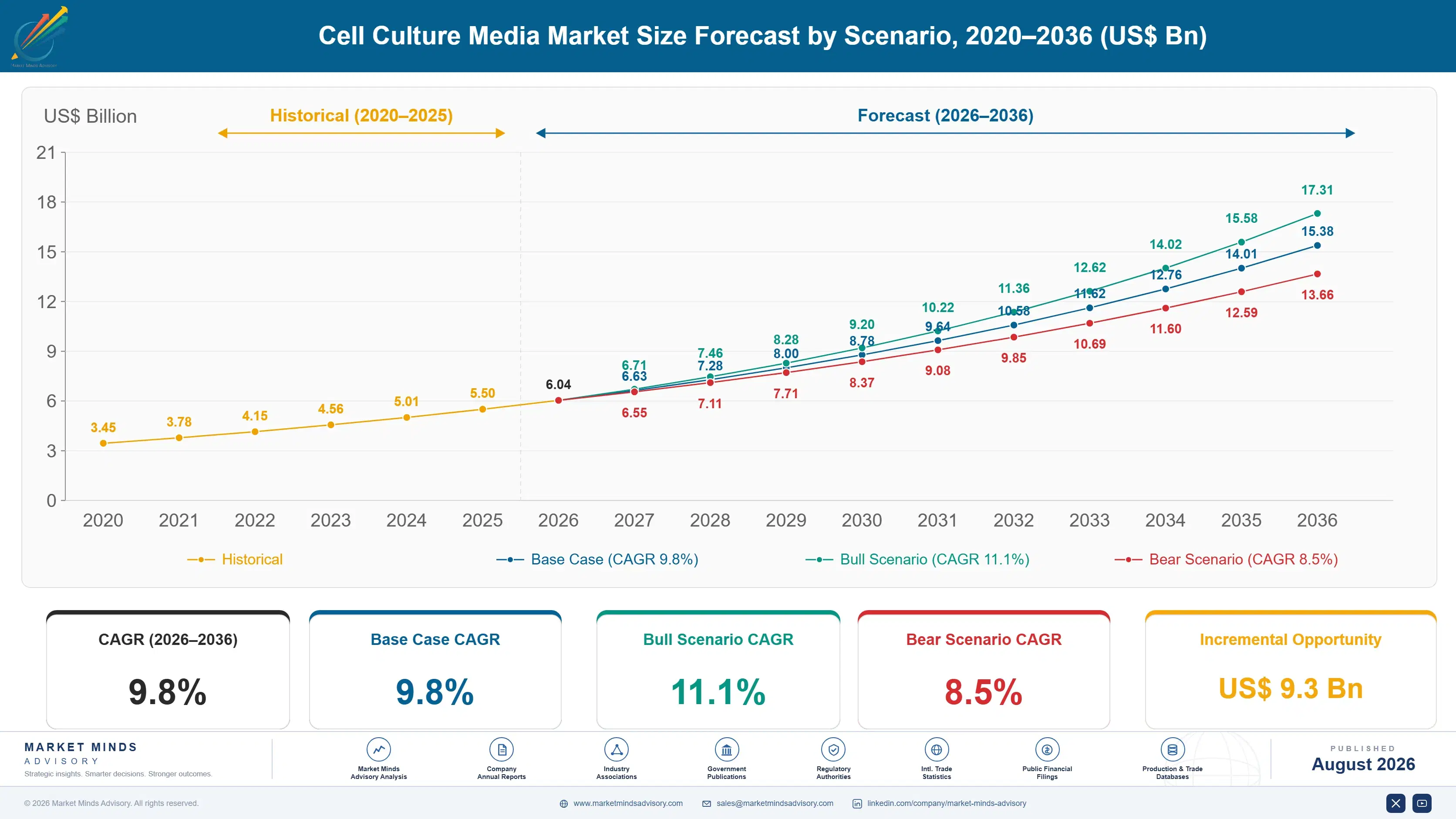
Few life sciences segments are growing with the same momentum as cell culture media right now. Sitting at USD 3.7 billion in 2026, the market is on track to more than double and reach USD 7.1 billion by 2033 a compound annual growth rate of 9.7% that reflects how deeply cell-based workflows have become embedded in modern drug development and manufacturing.
That kind of sustained expansion rarely comes from a single source, and here it doesn’t. Demand is building simultaneously across biopharmaceutical production, vaccine manufacturing, regenerative medicine, and oncology research. Each of these areas has its own growth logic, yet all share a common dependency on reliable, reproducible culture systems. When any one of them accelerates as cell and gene therapies have done over the past several years the ripple effect on media demand is immediate.
Technology has also done its part. The gradual shift away from serum-supplemented formulations toward serum-free and chemically defined alternatives has not just addressed longstanding concerns about lot-to-lot variability and animal welfare it has opened up entirely new possibilities for scalable, GMP-compliant manufacturing. For organizations building out commercial-scale biologics pipelines, that combination of consistency and regulatory tractability is close to non-negotiable.
The contract services sector adds another layer of tailwind. As CROs and CMOs absorb a growing share of drug development activity, they bring with them concentrated and highly specific demand for premium media products. This outsourcing dynamic rewards suppliers who can offer both technical flexibility and supply chain reliability qualities that are increasingly defining competitive position in this market.

Market Scenario & Strategic Insights
The competitive environment in cell culture media has become noticeably more complex over the past few years. What was once a market dominated by a handful of established suppliers offering fairly standardized product lines has evolved into a space where differentiation on formulation depth, technical support, and supply chain robustness can meaningfully move commercial outcomes.
At the center of current R&D investment is the continued refinement of media for specialized cell types. The rationale is straightforward: regional market access, local regulatory knowledge, and proximity to academic and clinical research clusters all matter for a product category where technical consultation is as important as the product itself. Several significant deals in recent years reflect this logic.
The outsourcing trend deserves particular attention. When a pharmaceutical company shifts cell line development or upstream bioprocessing to a contract organization, that CRO or CMO typically consolidates its media sourcing around a small number of preferred suppliers. Winning that preferred status requires demonstrating not just product quality, but the ability to scale supply, respond to custom formulation requests, and support tech transfer processes without friction. For media suppliers, the CRO and CMO channel is both an opportunity and a demanding qualification test.
Personalized medicine adds a different kind of complexity. Patient-derived cell therapies CAR-T being the most prominent current example often require media that can support small-batch, highly variable processes with consistent outcomes. That is a fundamentally different challenge from optimizing a bioreactor run for a monoclonal antibody, and the suppliers developing solutions for it are building capabilities that may define market leadership over the next decade.
Cost and scalability remain friction points. Advanced chemically defined formulations carry a significant price premium over traditional alternatives, and scaling their production while maintaining batch consistency is technically demanding.
| Attribute | 2026 (USD Billion) | 2033 (USD Billion) | CAGR (2026 – 2033) |
| Market Size | 3.7 | 7.1 | 9.7% |
Cell Culture Media Market Trends
- Transition to Serum-Free and Chemically Defined Media
The industry is witnessing a marked shift from traditional serum-containing media to serum-free and chemically defined formulations. This trend is driven by the need for greater consistency, reduced risk of contamination, and improved regulatory compliance. Serum-free media eliminate the variability associated with animal-derived components, enabling more reproducible results in both research and manufacturing settings. Chemically defined media further enhance process control, supporting the development of high-quality biopharmaceuticals and cell therapies. This transition is expected to accelerate as regulatory agencies increasingly favor animal component-free products.
- Rising Adoption in Biopharmaceutical Manufacturing
The expansion of the biopharmaceutical sector is a significant driver for the cell culture media market. Cell culture media are essential for the production of monoclonal antibodies, vaccines, recombinant proteins, and gene therapies. As the pipeline of biologics and biosimilars grows, manufacturers are seeking advanced media solutions that optimize cell growth, productivity, and product quality. The demand for media tailored to specific cell lines and production processes is increasing, prompting suppliers to invest in R&D and customization capabilities. This trend is further supported by the rise of single-use technologies and continuous manufacturing.
- Integration of Automation and Digital Technologies
Automation and digitalization are transforming cell culture processes, enhancing efficiency, scalability, and data integrity. Automated bioreactors, real-time monitoring systems, and data analytics platforms are being integrated into cell culture workflows, enabling precise control over media composition and process parameters. These technologies facilitate high-throughput screening, process optimization, and quality assurance, reducing manual intervention and the risk of human error. The adoption of digital solutions is expected to drive innovation in media development and support the scaling up of cell-based manufacturing.
Segment & Category Analysis for Cell Culture Media Market
By Product Type
- Classical Media
- Serum-Free Media Chemically Defined Media Protein-Free Media Specialty Media
- Custom Media
The product type segment is central to the cell culture media market, with classical media historically dominating due to their widespread use in academic and industrial research. However, the demand for serum-free, chemically defined, and protein-free media is rapidly increasing, driven by the need for reproducibility and regulatory compliance in biopharmaceutical manufacturing. Specialty and custom media are gaining traction as researchers and manufacturers seek tailored solutions for specific cell types and applications. The shift towards advanced media formulations is expected to continue, supported by ongoing innovation and the growing complexity of cell-based products.

By Application
- Biopharmaceutical Production
- Tissue Engineering & Regenerative Medicine
- Vaccine Production
- Cancer Research
- Stem Cell Research
- Diagnostics
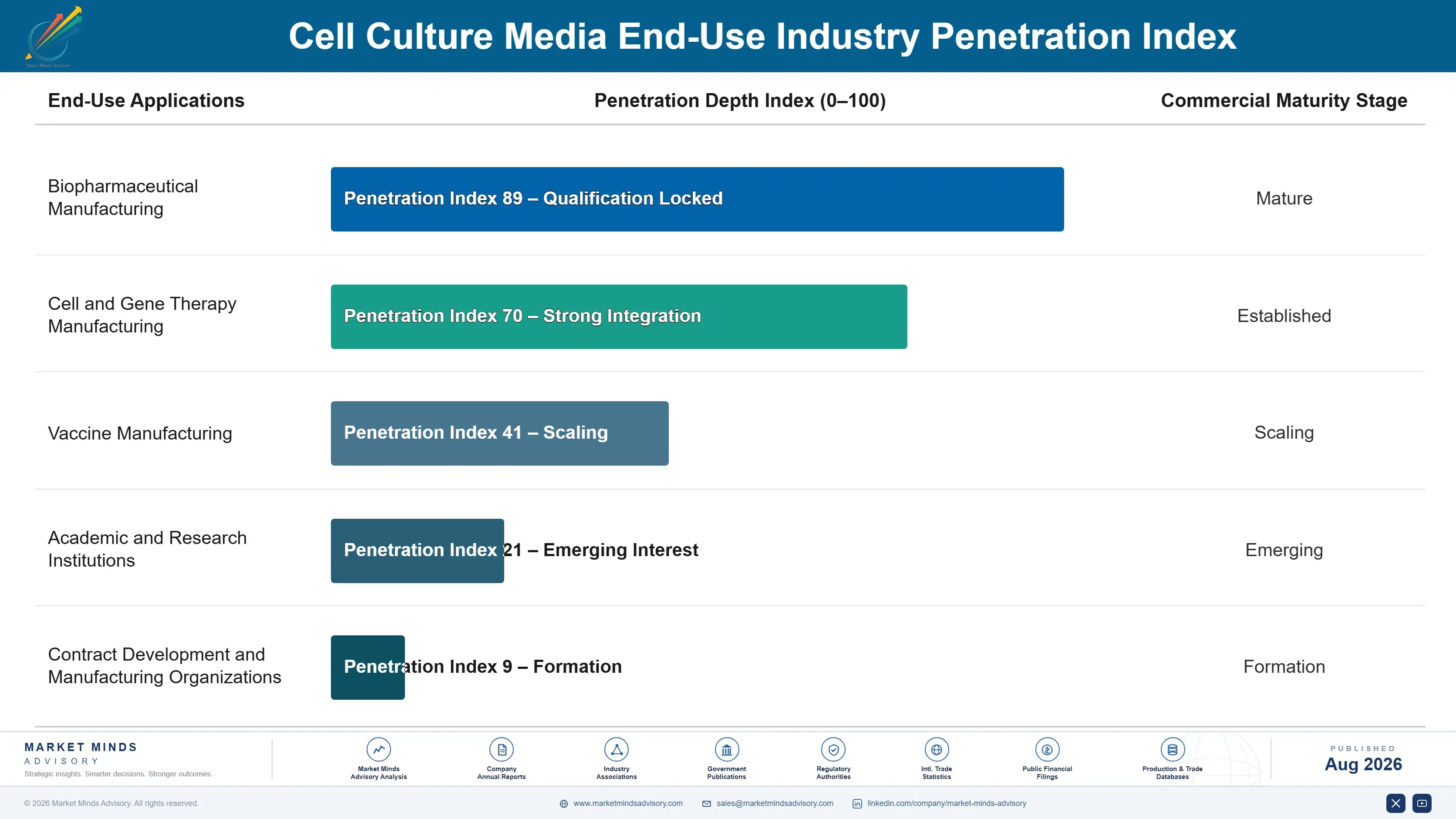
Application-wise, biopharmaceutical production represents the largest share of the market, reflecting the critical role of cell culture media in the manufacture of therapeutic proteins, antibodies, and vaccines. Tissue engineering and regenerative medicine are emerging as high-growth segments, driven by advances in stem cell research and the development of cell-based therapies. Cancer research and diagnostics also contribute significantly to market demand, as cell culture media are essential for in vitro studies and assay development. The diversification of applications is broadening the market’s scope and creating new opportunities for media suppliers.
By Source
- Animal-Derived Media
- Plant-Derived Media
- Synthetic Media
The source of cell culture media is a key consideration for end-users, particularly in regulated environments. Animal-derived media have traditionally been used due to their ability to support robust cell growth, but concerns over contamination, variability, and ethical issues are driving a shift towards plant-derived and synthetic alternatives. Plant-derived media offer a safer and more sustainable option, while synthetic media provide the highest level of consistency and control. The adoption of non-animal sources is expected to increase, particularly in clinical and commercial applications.
By Form
- Liquid Media
- Powdered Media
Cell culture media are available in both liquid and powdered forms, each offering distinct advantages. Liquid media are convenient and ready-to-use, making them popular in research laboratories and small-scale production. Powdered media, on the other hand, offer longer shelf life and cost-effectiveness, particularly for large-scale manufacturing. The choice of form depends on the specific requirements of the application, with manufacturers offering a range of options to meet diverse customer needs. The trend towards bulk purchasing and large-scale production is expected to drive demand for powdered media.
By End User
- Pharmaceutical & Biotechnology Companies
- Academic & Research Institutes Contract Research Organizations (CROs) Contract Manufacturing Organizations (CMOs)
- Hospitals & Diagnostic Laboratories
End users of cell culture media span a wide range of organizations, with pharmaceutical and biotechnology companies representing the largest segment due to their extensive use of cell culture in drug development and manufacturing. Academic and research institutes are key drivers of innovation, while CROs and CMOs are increasingly important as outsourcing partners for research and production activities. Hospitals and diagnostic laboratories also utilize cell culture media for clinical testing and research. The diverse end-user base underscores the market’s broad applicability and growth potential.

Market Growth Drivers and Opportunities
- Expansion of the Biopharmaceutical and Cell Therapy Industries
Cell therapy, in particular, represents a step-change in what culture media is asked to do. Unlike traditional biologics manufacturing, which optimizes for product secreted by cells, cell therapy manufacturing treats the cells themselves as the product. That distinction has significant implications: the media must support not only proliferation but specific differentiation outcomes, phenotypic stability, and functional activity. The quality and composition of the media is not a background variable it directly shapes the therapeutic.
As more cell therapies move through clinical trials and into commercial approval, the manufacturing infrastructure supporting them including media supply will need to scale considerably. Early evidence suggests that this scale-up will favor suppliers who invested early in serum-free and defined formulations, since these are far easier to validate and reproduce at commercial volumes than serum-based alternatives.
- Technological Advancements and Customization
The pace of innovation in media formulation has picked up meaningfully, driven by better analytical tools, improved understanding of cellular metabolism, and the growing use of design-of-experiment approaches in media optimization. What this means in practice is that suppliers can now develop tailored formulations faster, with greater confidence in their performance characteristics, than was possible even five years ago.
Digital integration is emerging as a further differentiator. Suppliers who can offer data-rich media products where formulation history, performance data, and process compatibility information are readily accessible are providing a form of value that goes beyond the physical product. For customers operating in regulated environments, that documentation and traceability infrastructure is not a luxury; it is a practical requirement.
Emerging Opportunities for Cell Culture Media Market
- Growth in Emerging Markets
Emerging economies in Asia-Pacific, Latin America, and the Middle East are witnessing increased investment in biotechnology and life sciences infrastructure. Governments and private sector players are establishing research centers, biomanufacturing facilities, and innovation hubs, driving demand for cell culture media. The expansion of local biopharmaceutical industries and the adoption of advanced research methodologies are creating new opportunities for media suppliers to penetrate untapped markets and establish strategic partnerships.
- Integration of Artificial Intelligence and Data Analytics
The integration of artificial intelligence (AI) and data analytics into cell culture processes is opening new avenues for innovation. AI-driven platforms can analyze vast datasets to identify optimal media compositions, predict cell behavior, and streamline process development. These technologies enable rapid prototyping, reduce experimental costs, and enhance reproducibility. As AI adoption increases, media suppliers can leverage data-driven insights to develop next-generation products and offer value-added services to their customers.
Growth Restrain factors and Challenges in Cell Culture Media Market
- High Cost and Complexity of Advanced Media
The development and production of advanced cell culture media, particularly serum-free and chemically defined formulations, involve significant costs and technical complexities. These media require high-purity raw materials, stringent quality control, and sophisticated manufacturing processes. The resulting higher prices can be a barrier for small and medium-sized enterprises (SMEs) and academic institutions with limited budgets. Additionally, the transition from traditional to advanced media may necessitate process optimization and validation, further increasing costs and operational challenges.
The complexity of scaling up production for commercial applications adds another layer of difficulty. Manufacturers must ensure batch-to-batch consistency, regulatory compliance, and supply chain reliability. Any deviation in media quality can impact cell growth and product yield, posing risks to both research and manufacturing outcomes. Addressing these challenges requires ongoing investment in R&D, quality assurance, and process optimization.
- Regulatory and Quality Assurance Challenges
The regulatory landscape for cell culture media is becoming increasingly stringent, particularly for products used in clinical and commercial biomanufacturing. Regulatory agencies require comprehensive documentation, traceability, and validation of media components to ensure safety and efficacy. Meeting these requirements can be resource-intensive, particularly for companies operating in multiple jurisdictions with varying standards.
Quality assurance is critical to prevent contamination, variability, and product recalls. Manufacturers must implement robust quality management systems and adhere to Good Manufacturing Practices (GMP). The need for continuous monitoring, testing, and documentation adds to operational complexity and cost. Failure to comply with regulatory and quality standards can result in delays, penalties, and reputational damage, underscoring the importance of compliance in the cell culture media market.
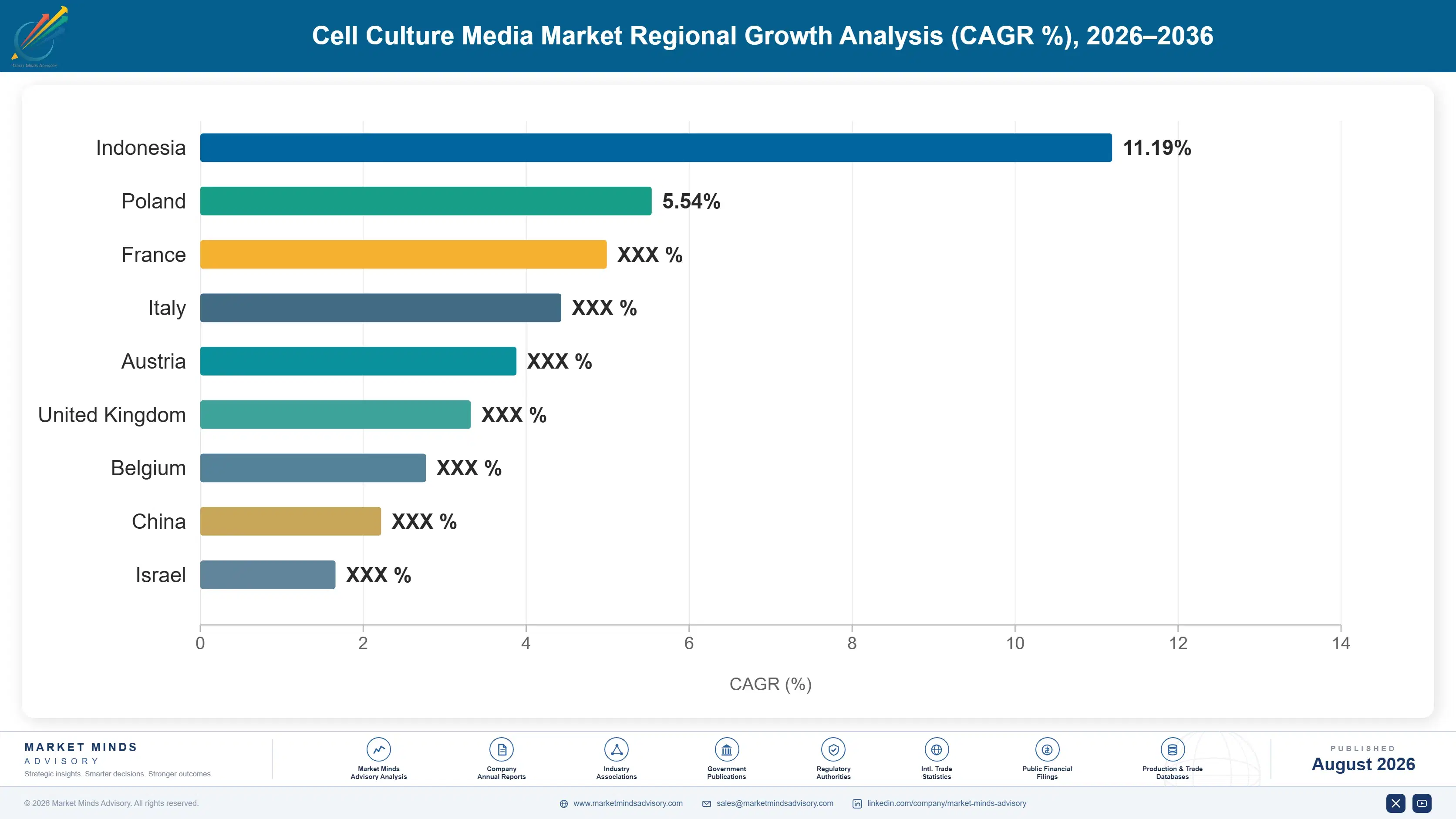
Cell Culture Media Market Regional Analysis
| Region | Market Share (2025) | Key Market Highlight |
| Asia-Pacific | 32% | Fastest-growing region, driven by investments in biotech and expanding pharma sector |
| North America | 29% | Largest market for biopharmaceutical production and advanced research infrastructure |
| Europe | 23% | Strong regulatory framework and focus on cell therapy and regenerative medicine |
| South America | 9% | Growing adoption in academic research and emerging local biomanufacturing |
| Middle East & Africa | 7% | Increasing investments in healthcare and biotechnology infrastructure |
Asia-Pacific
Asia-Pacific is emerging as the fastest-growing region in the cell culture media market, supported by significant investments in biotechnology, pharmaceutical manufacturing, and research infrastructure. Countries such as China, India, South Korea, and Japan are at the forefront, with government initiatives aimed at fostering innovation and self-sufficiency in biomanufacturing. The region’s large patient population, rising healthcare expenditure, and expanding clinical research activities are driving demand for cell culture media. Local and international players are establishing manufacturing facilities and R&D centers to capitalize on the region’s growth potential.
North America
North America remains a dominant force in the cell culture media market, owing to its advanced research infrastructure, strong biopharmaceutical industry, and high adoption of innovative technologies. The United States, in particular, is a global leader in biologics production, cell therapy development, and academic research. The presence of major industry players, robust funding for life sciences, and a favorable regulatory environment contribute to the region’s market leadership. North America is also at the forefront of adopting automation, digitalization, and advanced media formulations.
Europe
Europe holds a significant share of the cell culture media market, characterized by a strong regulatory framework, emphasis on quality, and a focus on regenerative medicine and cell therapy. Countries such as Germany, the United Kingdom, and France are leading centers for biopharmaceutical research and manufacturing. The region’s commitment to ethical sourcing, sustainability, and compliance with stringent quality standards drives the adoption of serum-free and chemically defined media. Collaborative initiatives between academia, industry, and government are fostering innovation and market growth.
South America
South America is experiencing steady growth in the cell culture media market, driven by increasing investment in academic research, biotechnology, and local biomanufacturing. Brazil and Argentina are key markets, with expanding research capabilities and government support for life sciences. The region’s growing focus on vaccine production, diagnostics, and agricultural biotechnology is creating new opportunities for media suppliers. However, challenges related to regulatory harmonization and infrastructure development persist.
Middle East & Africa
The Middle East & Africa region is gradually expanding its presence in the cell culture media market, supported by investments in healthcare, biotechnology, and research infrastructure. Countries such as the United Arab Emirates, Saudi Arabia, and South Africa are investing in biomanufacturing facilities, academic institutions, and innovation hubs. The region’s focus on improving healthcare outcomes, addressing infectious diseases, and developing local biopharmaceutical capabilities is driving demand for cell culture media. Market growth is expected to accelerate as infrastructure and regulatory frameworks mature.

Competition Landscape in Cell Culture Media Market
The cell culture media market is highly competitive, with a mix of global leaders, regional players, and specialized suppliers. Major companies are focusing on product innovation, strategic partnerships, and geographic expansion to strengthen their market position. The competitive landscape is characterized by frequent mergers and acquisitions, as well as collaborations with research institutions and biomanufacturers. Companies are investing in advanced manufacturing technologies, quality assurance, and regulatory compliance to meet the evolving needs of the market. The ability to offer customized, high-quality media solutions is a key differentiator in this dynamic environment.
Major Players in Cell Culture Media Market
- Thermo Fisher Scientific Inc.
- Merck KGaA
- Cytiva (Danaher Corporation)
- Lonza Group AG
- Corning Incorporated
- Sartorius AG
- FUJIFILM Irvine Scientific, Inc.
- Becton, Dickinson and Company (BD)
- HiMedia Laboratories Pvt. Ltd.
- Takara Bio Inc.
- STEMCELL Technologies Inc.
- Eppendorf AG
- PromoCell GmbH
- GE Healthcare Life Sciences
- Sigma-Aldrich (Merck Group)
- CellGenix GmbH
- MP Biomedicals, LLC
- Capricorn Scientific GmbH
- PAN-Biotech GmbH
- Bio-Techne Corporation
Recent Developments in Cell Culture Media Market
- In January 2024, Thermo Fisher Scientific launched a new range of chemically defined media for stem cell applications, enhancing reproducibility and scalability.
- In November 2023, Merck KGaA expanded its cell culture media manufacturing facility in Germany to meet growing demand for biopharmaceutical production.
- In September 2023, Cytiva introduced an AI-driven platform for optimizing cell culture media formulations, reducing development time and costs.
- In July 2023, Lonza Group AG announced a strategic partnership with a leading Asian biopharmaceutical company to supply custom media solutions for monoclonal antibody production.
- In May 2023, FUJIFILM Irvine Scientific opened a new R&D center in the United States focused on developing advanced media for cell and gene therapy.
- In March 2023, Sartorius AG acquired a specialty media manufacturer to expand its portfolio of serum-free and animal component-free products.
FAQ for Cell Culture Media Market
- What is the projected size of the cell culture media market by 2033?
The cell culture media market is expected to reach USD 7.1 billion by 2033, growing from USD 3.7 billion in 2026 at a CAGR of 9.7% during the forecast period.
- Which factors are driving the growth of the cell culture media market?
Key growth drivers include the expansion of the biopharmaceutical and cell therapy industries, technological advancements in media formulations, and increasing demand for serum-free and chemically defined media to ensure consistency and regulatory compliance.
- What are the major challenges faced by the cell culture media market?
The market faces challenges such as the high cost and complexity of advanced media, regulatory and quality assurance requirements, and the need for process optimization during scale-up for commercial manufacturing.
- Which regions are expected to witness the fastest growth in the cell culture media market?
Asia-Pacific is anticipated to be the fastest-growing region, driven by investments in biotechnology, expanding pharmaceutical manufacturing, and increasing research activities in countries like China, India, and South Korea.
- Who are the leading players in the cell culture media market?
Leading players include Thermo Fisher Scientific Inc., Merck KGaA, Cytiva (Danaher Corporation), Lonza Group AG, Corning Incorporated, Sartorius AG, FUJIFILM Irvine Scientific, and Becton, Dickinson and Company, among others. These companies are focusing on innovation, quality, and strategic partnerships to maintain their competitive edge.