Ceiling Tiles Market
Ceiling Tiles Market Outlook from 2026 to 2033
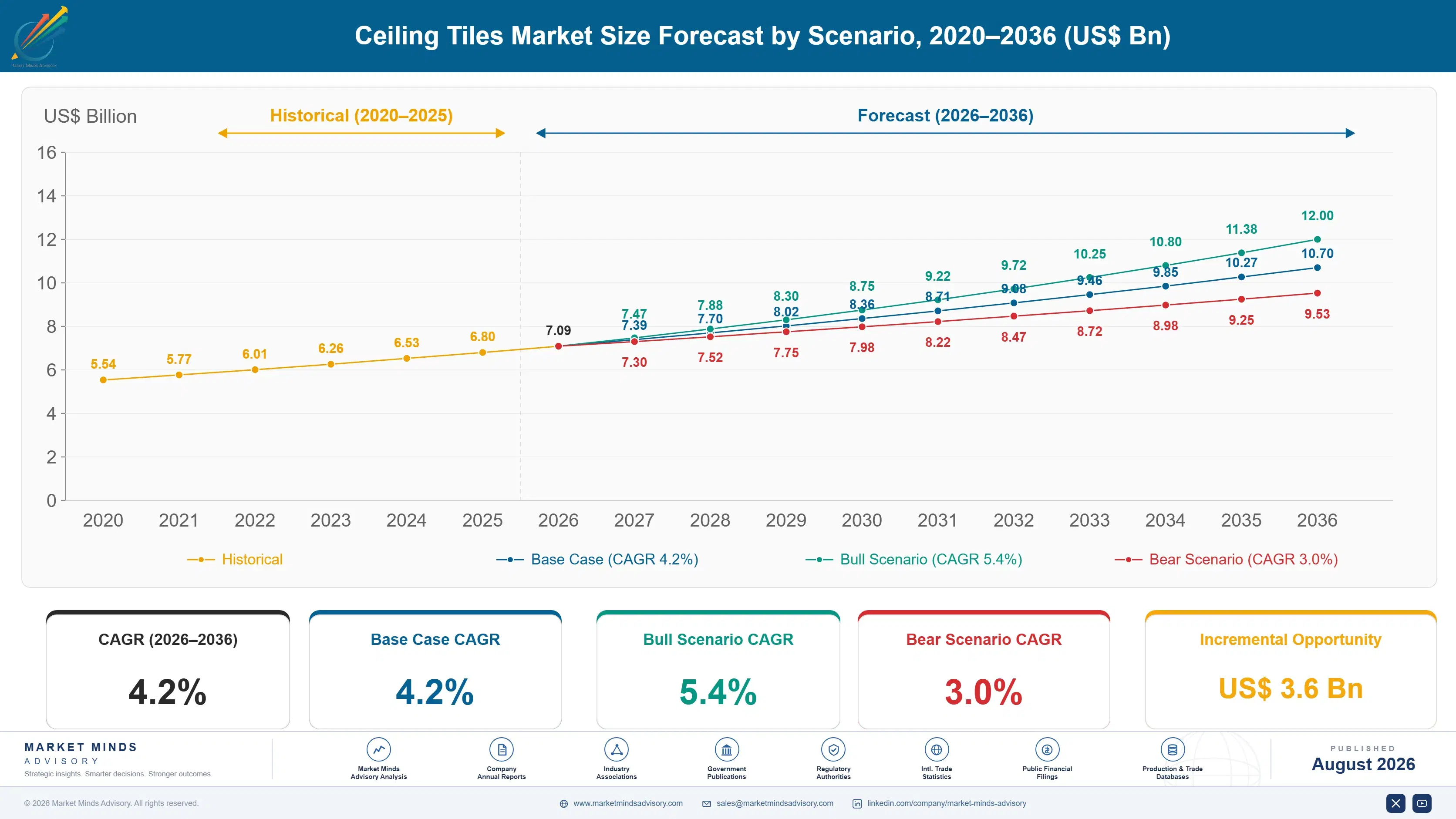
The global ceiling tiles market is poised for robust expansion, driven by increasing demand for modern interior solutions in both commercial and residential construction. In 2026, the market is estimated to be valued at USD 8.2 billion, with projections indicating a rise to USD 13.7 billion by 2033, reflecting a CAGR of 7.5% during the forecast period. This growth is underpinned by the rising emphasis on aesthetic enhancement, acoustic performance, and energy efficiency in building design. The adoption of innovative materials and sustainable manufacturing practices is further catalyzing market momentum.
The ceiling tiles market is witnessing significant transformation due to evolving architectural trends and regulatory standards. Enhanced focus on green building certifications and the integration of advanced technologies, such as antimicrobial coatings and modular systems, are shaping product development. The market landscape is also characterized by strategic collaborations, capacity expansions, and product launches, as key players seek to strengthen their competitive positioning and address the diverse needs of end-users.

Ceiling Tiles Market Scenario & Strategic Insights
The ceiling tiles market is experiencing dynamic shifts as construction activities surge globally, particularly in emerging economies. Urbanization and infrastructure development are fueling demand for efficient, cost-effective, and visually appealing ceiling solutions. The commercial sector, encompassing offices, healthcare facilities, educational institutions, and retail spaces, remains a primary driver, with stakeholders prioritizing acoustic control and fire resistance. Meanwhile, residential applications are gaining traction due to rising disposable incomes and consumer awareness regarding interior aesthetics.
Strategic insights reveal that manufacturers are increasingly investing in research and development to introduce lightweight, durable, and eco-friendly ceiling tiles. The integration of recycled content and low-VOC materials aligns with sustainability goals and regulatory mandates. Furthermore, digitalization in construction processes, such as Building Information Modeling (BIM), is facilitating precise customization and installation, reducing project timelines and costs. Market participants are also leveraging digital marketing and e-commerce platforms to expand their reach and enhance customer engagement.
The competitive landscape is marked by mergers, acquisitions, and partnerships aimed at portfolio diversification and geographic expansion. Companies are focusing on strengthening their supply chains and distribution networks to ensure timely delivery and service excellence. As the market evolves, adaptability to changing consumer preferences and compliance with stringent building codes will be critical for sustained growth.
| Attribute | 2026 (USD Billion) | 2033 (USD Billion) | CAGR (2026 – 2033) |
| Market Size | 8.2 | 13.7 | 7.5% |
Ceiling Tiles Market Trends
- Sustainable and Recycled Materials Adoption
The ceiling tiles market is witnessing a pronounced shift towards sustainability, with manufacturers increasingly incorporating recycled and bio-based materials into their product lines. This trend is driven by stringent environmental regulations and growing consumer demand for green building solutions. Companies are investing in closed-loop manufacturing processes and certifications such as LEED and BREEAM to enhance their market appeal. The use of recycled mineral fibers, gypsum, and metal not only reduces environmental impact but also offers cost advantages, positioning sustainable ceiling tiles as a preferred choice for eco-conscious projects.
- Technological Advancements in Acoustic and Thermal Performance
Innovations in ceiling tile technology are enhancing acoustic and thermal properties, addressing the needs of modern workspaces and public buildings. Advanced sound-absorbing materials and micro-perforated designs are being developed to improve indoor comfort and productivity. Additionally, ceiling tiles with integrated insulation are gaining popularity in regions with extreme climates, contributing to energy efficiency and occupant well-being. These advancements are particularly valued in sectors such as healthcare, education, and hospitality, where noise reduction and thermal regulation are critical.
- Customization and Modular Design Solutions
The demand for customizable and modular ceiling tile systems is on the rise, reflecting the growing emphasis on flexible and adaptive interior spaces. Modular ceiling tiles allow for easy installation, maintenance, and replacement, reducing downtime and operational disruptions. Customization options, including a wide range of colors, textures, and patterns, enable architects and designers to create unique visual effects and brand-specific environments. This trend is further supported by digital design tools and BIM integration, which streamline project planning and execution.
Segment & Category Analysis for Ceiling Tiles Market
By Material Type
- Mineral Fiber
- Metal Gypsum PVC Wood
- Others
The material type segment is pivotal in the ceiling tiles market, with mineral fiber tiles dominating due to their cost-effectiveness, fire resistance, and acoustic properties. Metal tiles are favored for their durability and modern aesthetics, particularly in commercial and industrial settings. Gypsum tiles offer versatility and ease of installation, while PVC and wood tiles cater to niche applications requiring specific design or moisture resistance. The choice of material significantly influences performance characteristics, installation methods, and overall project costs, making it a critical consideration for end-users and specifiers.

By Application
- Commercial
- Residential Industrial
- Institutional
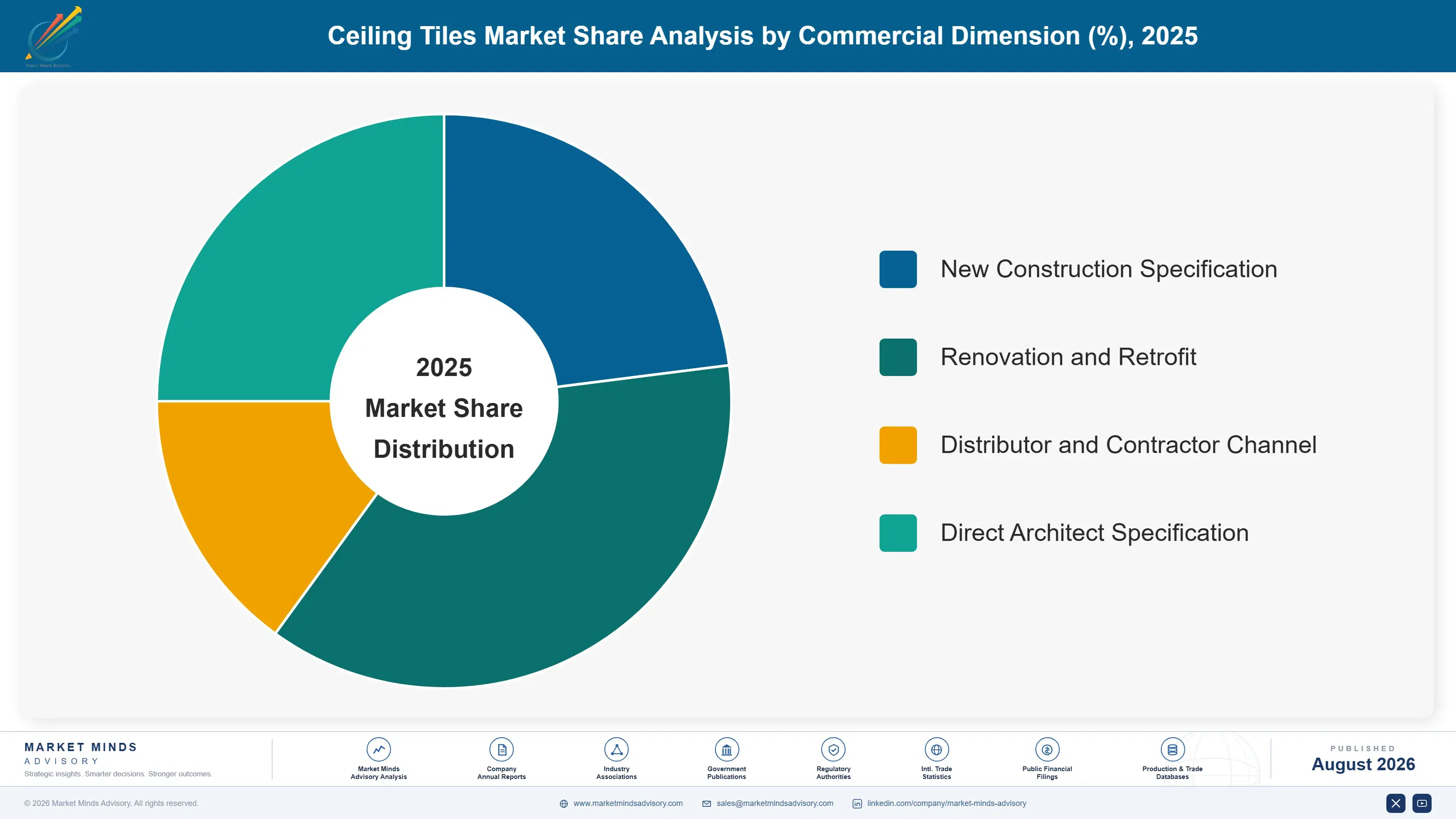
Application-wise, the commercial sector accounts for the largest share of the ceiling tiles market, driven by the proliferation of office spaces, retail outlets, and hospitality venues. The residential segment is expanding steadily as homeowners seek to enhance interior aesthetics and functionality. Industrial applications prioritize durability and compliance with safety standards, while institutional settings such as schools and hospitals demand superior acoustic and hygienic performance. Each application segment presents unique requirements, influencing product selection and market strategies.
By Installation Type
- Drop/Suspended
- Surface-Mounted
Installation type is a key differentiator in the ceiling tiles market. Drop or suspended ceiling systems are widely used in commercial and institutional buildings due to their flexibility, ease of access to utilities, and acoustic benefits. Surface-mounted tiles are preferred in residential and retrofit projects where ceiling height is a constraint or a seamless appearance is desired. The choice between these installation methods depends on project specifications, budget, and desired performance outcomes, shaping demand patterns across regions.
By Property
- Acoustic
- Fire-Resistant Moisture-Resistant Thermal-Insulating
- Decorative
Ceiling tiles are increasingly being categorized based on their functional properties. Acoustic tiles are essential in environments where noise control is paramount, such as offices and educational institutions. Fire-resistant tiles comply with safety regulations and are mandatory in many commercial and public buildings. Moisture-resistant and thermal-insulating tiles are gaining traction in regions with challenging climatic conditions, while decorative tiles cater to the growing demand for unique interior designs. The ability to offer multi-functional properties is becoming a key competitive advantage for manufacturers.
By Distribution Channel
- Direct Sales
- Distributors/Wholesalers Online Retail
- Specialty Stores
The distribution channel landscape for ceiling tiles is evolving, with direct sales and distributor networks remaining dominant due to the technical nature of the product and the need for project-specific consultation. However, online retail is emerging as a significant channel, especially for residential and small-scale commercial buyers seeking convenience and a wider product selection. Specialty stores cater to niche markets and offer personalized services. The effectiveness of distribution strategies directly impacts market penetration and customer satisfaction.

Growth Drivers and Opportunities in Ceiling Tiles Market
- Rising Construction and Infrastructure Development
The global surge in construction activities, particularly in emerging economies, is a primary growth driver for the ceiling tiles market. Urbanization, population growth, and government investments in infrastructure are fueling demand for new commercial, residential, and institutional buildings. Ceiling tiles are integral to modern construction, offering solutions for aesthetics, acoustics, and energy efficiency. As construction standards evolve and building codes become more stringent, the adoption of advanced ceiling tile systems is set to accelerate, presenting significant opportunities for market expansion.
- Increasing Focus on Indoor Environmental Quality
Heightened awareness of indoor environmental quality (IEQ) is propelling demand for ceiling tiles with enhanced acoustic, thermal, and hygienic properties. Building owners and occupants are prioritizing comfort, productivity, and health, driving the adoption of products that contribute to superior indoor environments. Innovations such as antimicrobial coatings, low-emission materials, and integrated lighting solutions are gaining traction. This trend is particularly pronounced in sectors such as healthcare, education, and hospitality, where occupant well-being is paramount.
Emerging Opportunities for Ceiling Tiles Market
- Integration of Smart and Adaptive Technologies
The integration of smart technologies into ceiling tile systems is an emerging opportunity, enabling features such as embedded lighting, sensors, and climate control. These innovations enhance building intelligence, energy management, and occupant experience. As smart buildings become more prevalent, demand for technologically advanced ceiling solutions is expected to rise, offering new avenues for differentiation and value creation.
- Expansion into Untapped Markets and Retrofit Projects
Significant growth potential exists in untapped markets, particularly in developing regions where modernization and renovation activities are increasing. Retrofit projects in aging buildings present opportunities for ceiling tile manufacturers to offer solutions that improve aesthetics, functionality, and compliance with updated regulations. Tailored products and flexible installation options can address the unique challenges of retrofit applications, expanding the addressable market.
Growth Restrain factors and Challanges in Ceiling Tiles Market
- Volatility in Raw Material Prices and Supply Chain Disruptions
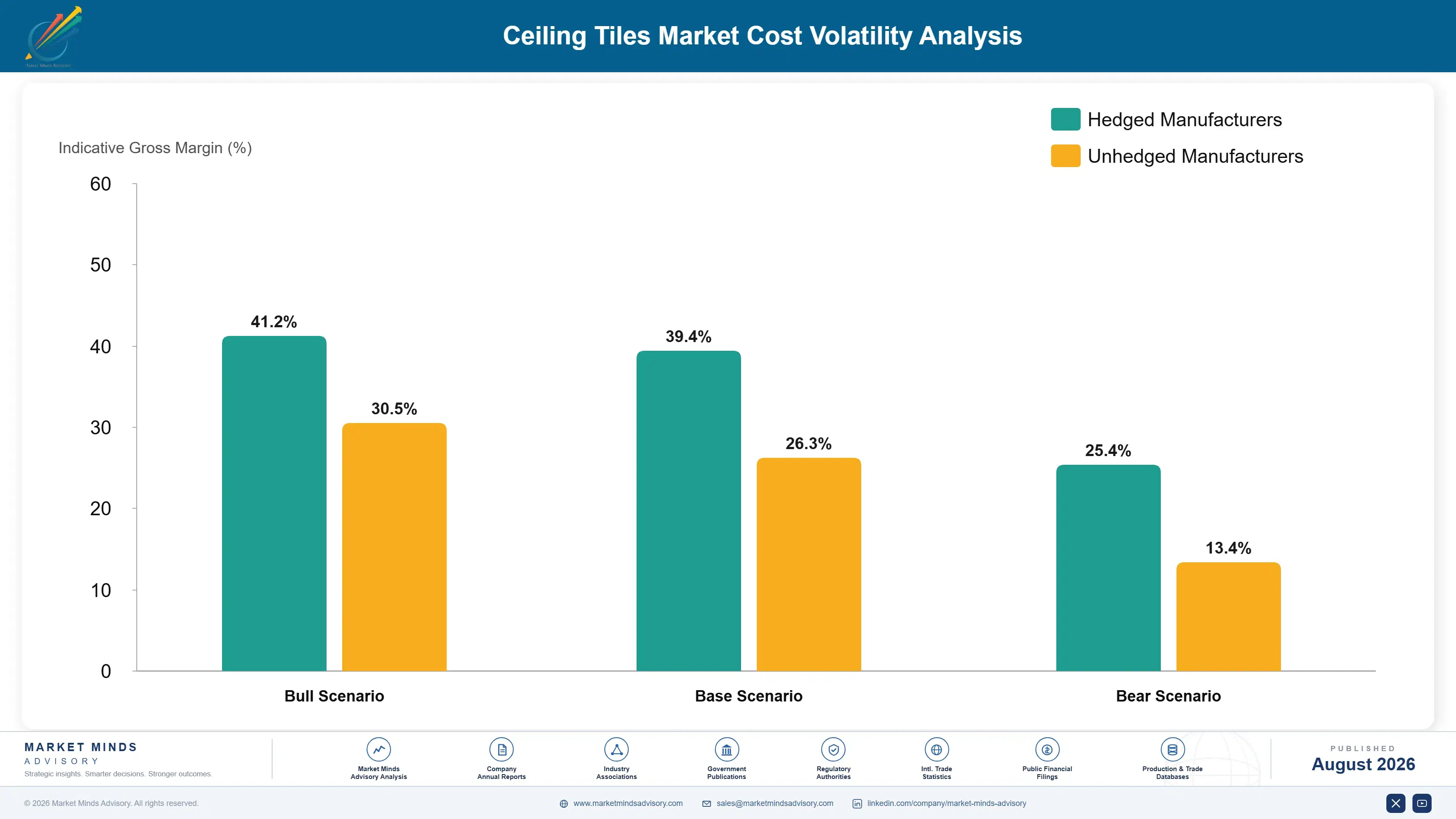
The ceiling tiles market is susceptible to fluctuations in raw material prices, particularly for mineral fibers, metals, and gypsum. Price volatility can impact production costs and profit margins, posing challenges for manufacturers in maintaining competitive pricing. Additionally, global supply chain disruptions, as witnessed during the COVID-19 pandemic, have highlighted vulnerabilities in sourcing and logistics. Companies are increasingly focusing on supply chain resilience, strategic sourcing, and inventory management to mitigate these risks. However, persistent volatility and disruptions can hinder market growth and delay project timelines.
Another challenge is the dependence on imported raw materials in certain regions, which exposes manufacturers to currency fluctuations and trade policy uncertainties. Efforts to localize supply chains and develop alternative material sources are underway, but these initiatives require significant investment and time. The ability to adapt to changing market dynamics and ensure uninterrupted supply will be crucial for sustained growth in the ceiling tiles market.
- Intense Competition and Price Sensitivity
The ceiling tiles market is characterized by intense competition, with numerous global and regional players vying for market share. Price sensitivity among end-users, particularly in cost-conscious markets, exerts downward pressure on margins and limits the scope for premium product offerings. Manufacturers must balance the need for innovation and quality with cost competitiveness, often leading to commoditization of standard products. Differentiation through value-added features, branding, and customer service is essential to overcome price-based competition.
Furthermore, the entry of low-cost manufacturers, especially from Asia-Pacific, has intensified competition and challenged established players. Market participants are responding by investing in automation, process optimization, and product innovation to enhance efficiency and value proposition. Navigating the competitive landscape requires agility, strategic partnerships, and a deep understanding of customer needs.
Ceiling Tiles Market Regional Analysis
| Region | Market Share (2025) | Key Market Highlight |
| Asia-Pacific | 36% | Rapid urbanization and infrastructure investments drive robust demand. |
| North America | 28% | Strong focus on green building standards and renovation activities. |
| Europe | 22% | Emphasis on energy efficiency and regulatory compliance. |
| South America | 8% | Growing construction sector and increasing adoption in commercial spaces. |
| Middle East & Africa | 6% | Infrastructure modernization and rising hospitality sector investments. |
Asia-Pacific
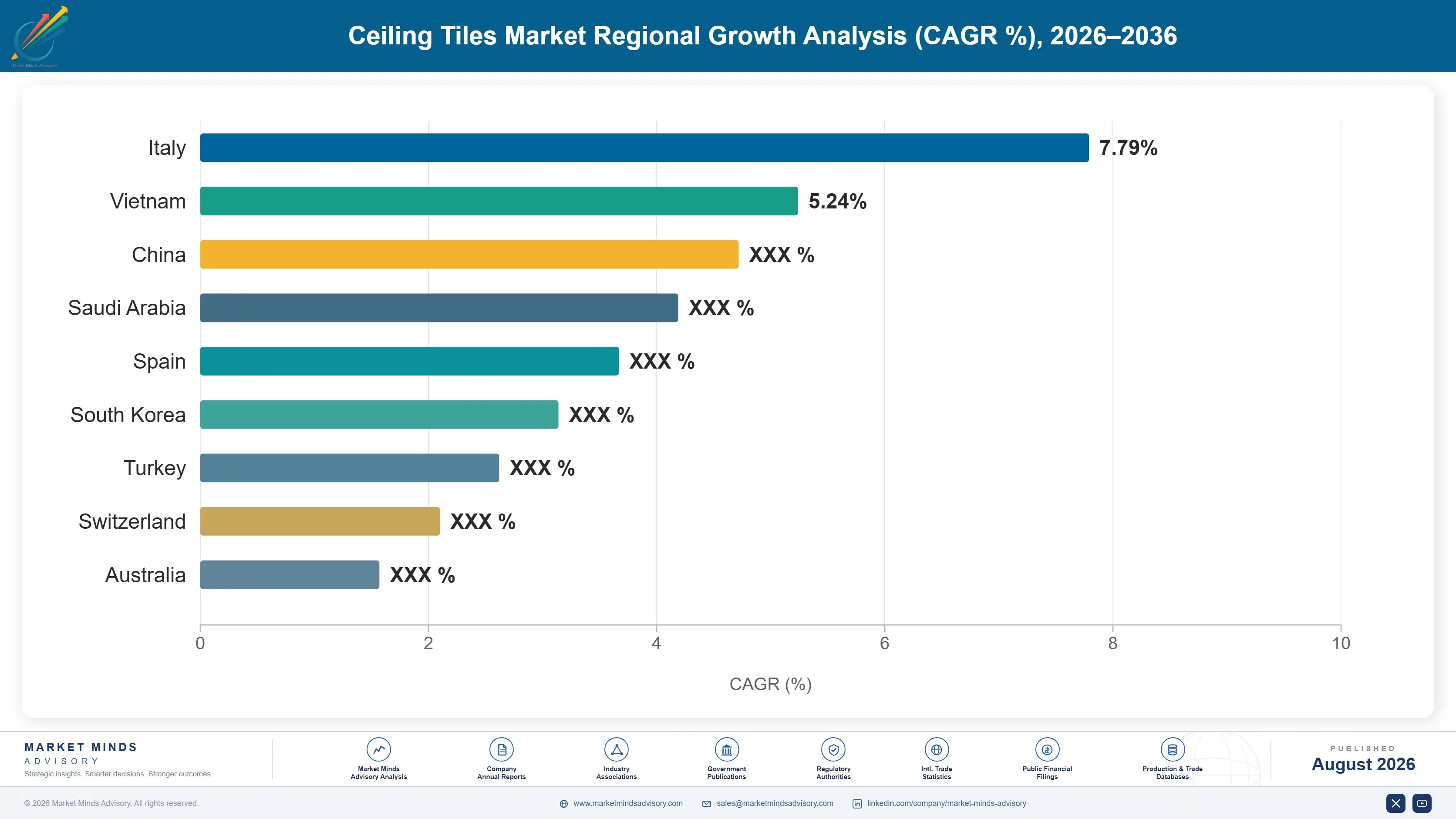
Asia-Pacific leads the ceiling tiles market, accounting for the largest share due to rapid urbanization, population growth, and significant investments in infrastructure and commercial real estate. Countries such as China, India, and Southeast Asian nations are witnessing a construction boom, driving demand for modern ceiling solutions. The region’s focus on sustainable building practices and adoption of advanced materials further supports market growth. Local manufacturers are expanding their product portfolios to cater to diverse customer requirements, while international players are increasing their presence through joint ventures and partnerships.
North America
North America is a mature market characterized by high adoption of ceiling tiles in both new construction and renovation projects. The region’s emphasis on green building certifications, energy efficiency, and indoor air quality drives demand for innovative and sustainable ceiling solutions. The commercial sector, particularly offices, healthcare, and education, is a major contributor to market growth. Ongoing investments in infrastructure modernization and the trend towards open-plan workspaces are shaping product development and market strategies.
Europe
Europe’s ceiling tiles market is driven by stringent building codes, energy efficiency mandates, and a strong focus on sustainability. The region is witnessing increased adoption of recycled and low-emission materials, supported by regulatory frameworks such as the EU Green Deal. Renovation of aging building stock and the integration of smart technologies are key trends. The market is highly competitive, with established players investing in R&D and product differentiation to maintain their market position.
South America
South America is experiencing steady growth in the ceiling tiles market, fueled by expanding construction activities in commercial and residential sectors. Brazil, Argentina, and Chile are key markets, with increasing investments in infrastructure and urban development. The adoption of ceiling tiles is rising as builders and architects seek cost-effective and aesthetically pleasing solutions. However, economic volatility and regulatory challenges may impact market growth in the region.
Middle East & Africa
The Middle East & Africa region presents significant opportunities for ceiling tile manufacturers, driven by infrastructure modernization, urbanization, and growth in the hospitality sector. Countries such as the UAE, Saudi Arabia, and South Africa are investing in large-scale construction projects, including hotels, airports, and commercial complexes. The demand for premium and customized ceiling solutions is increasing, although market penetration remains lower compared to other regions due to economic and regulatory factors.

Competition Landscape in Ceiling Tiles Market
The ceiling tiles market is highly competitive, with a mix of global giants and regional players vying for market share. Companies are focusing on innovation, sustainability, and customer-centric solutions to differentiate themselves. Strategic initiatives such as mergers, acquisitions, and partnerships are common, aimed at expanding product portfolios and geographic reach. Investments in R&D, automation, and digitalization are enhancing operational efficiency and product quality. The market also witnesses frequent product launches and capacity expansions as players seek to capitalize on emerging opportunities and address evolving customer needs.
Major Players in Ceiling Tiles Market
- Armstrong World Industries, Inc.
- Saint-Gobain S.A.
- USG Corporation
- Knauf Gips KG
- Rockwool International A/S
- OWA Ceiling Systems
- SAS International
- Hunter Douglas N.V.
- CertainTeed Corporation
- Georgia-Pacific LLC
- Rockfon (ROCKWOOL Group)
- New Ceiling Tiles LLC
- Renhurst Ceiling Systems
- Techno Ceiling Products
- Burgess CEP
- BYUCKSAN Corporation
- Everest Industries Limited
- Halstead Ceilings
- Yaret Industrial Group
- Shanghai Simon Wall Ceiling Manufacture Co., Ltd.
Recent Developments in Ceiling Tiles Market
- In January 2024, Armstrong World Industries announced the launch of a new line of sustainable mineral fiber ceiling tiles with enhanced acoustic performance.
- In November 2023, Saint-Gobain completed the acquisition of a leading ceiling tile manufacturer in Southeast Asia to strengthen its regional presence.
- In September 2023, USG Corporation introduced antimicrobial ceiling tiles targeting healthcare and educational facilities.
- In July 2023, Knauf Gips KG expanded its production capacity in Europe to meet rising demand for gypsum-based ceiling solutions.
- In May 2023, Rockwool International launched a new range of fire-resistant ceiling tiles for commercial and industrial applications.
- In March 2023, OWA Ceiling Systems partnered with a leading architectural firm to develop customizable modular ceiling systems for premium office spaces.
FAQ for Ceiling Tiles Market
- What is the projected market size of the ceiling tiles market by 2033?
The ceiling tiles market is projected to reach USD 13.7 billion by 2033, growing from an estimated USD 8.2 billion in 2026, at a CAGR of 7.5% during the forecast period.
- Which material type dominates the ceiling tiles market?
Mineral fiber ceiling tiles currently dominate the market due to their cost-effectiveness, fire resistance, and superior acoustic properties, making them a preferred choice for commercial and institutional applications.
- What are the key growth drivers for the ceiling tiles market?
Major growth drivers include rising construction and infrastructure development, increasing focus on indoor environmental quality, and the adoption of sustainable and innovative ceiling tile solutions across various end-use sectors.
- Which region holds the largest share in the ceiling tiles market?
Asia-Pacific holds the largest market share, driven by rapid urbanization, infrastructure investments, and a booming construction sector, particularly in China, India, and Southeast Asia.
- What are the main challenges faced by ceiling tile manufacturers?
Key challenges include volatility in raw material prices, supply chain disruptions, intense market competition, and price sensitivity among end-users, all of which impact profitability and market growth.
Contact us today to access the full report and propel your business forward with detailed insights and strategic guidance.