Market Minds Advisory
Wireless Polysomnography Market

Wireless Polysomnography Market: Solving Access By Destroying The Fee

An attended overnight study pays around 1,400 dollars and an unattended home recording pays about 210, so the technology that finally fixed the waiting list also removed most of the revenue behind it.

Lead Analyst

Published

September 2026

Make Smarter Decisions with Customized Research Insights

Request a free sample report and evaluate market opportunities, growth trends, and competitive dynamics relevant to your business needs.

2025 MARKET VALUE$0.9BMarket Size 2025
2036 FORECAST VALUE$2.1BBase Case , 2026 to 2036
CAGR 2026 TO 20368.0 %Bull 9.2% / Bear 6.8%
INCREMENTAL OPPORTUNITY$1.1BNet 10- year value creation
EXPANSION MULTIPLE2.16x2036 value over 2026 base
Strategic Levers
M&A Pipeline
Regional Outlook
Country Rankings
Competitive Intelligence
Segmental Deep-dive
Call-Us : 91 93563 13602

Executive Snapshot and Market Trajectory

This category solved its own access problem and lost most of the money doing it. An attended laboratory study pays around 1,400 dollars, an unattended home recording about 210, and the waiting list that justified everything has been shortened by the cheaper option.
North America takes 31% of value on sleep laboratory density and reimbursement structure together, with East Asia at 25% on rising diagnosis rates and domestic device manufacture. Wireless full-montage systems grow at 12.0%, half again the market rate of 8.0%, because they carry the electroencephalography that home respiratory testing cannot, and therefore reach the disorders it cannot diagnose at all. Reduced-channel devices carry the volume and almost none of the remaining margin in it.
Concentration reaches 48%. Roughly 78% of adults with the condition remain undiagnosed, which is the demand argument everybody makes, while about 12% of home recordings fail and need repeating, which is the operational reality nobody puts in a brochure. Scoring software grows at 10.2% because technologist time rather than device availability is what actually limits how many studies a service can process each week. Nobody solved that with hardware.
Market Definition
The market covers wireless and ambulatory systems used to record sleep physiology for diagnostic purposes, spanning wireless full-montage polysomnography systems, home sleep apnea test devices, wearable and reduced-channel recorders, wireless electrode and sensor consumables, sleep scoring and analysis software, and ambulatory electroencephalography add-on modules. Positive airway pressure therapy devices and masks, surgical and oral appliance treatments, consumer sleep tracking products without regulatory clearance, and sleep laboratory construction or staffing services are excluded from scope.
Base Year Value
$0.9B in 2025 (MMA Primary Research Dataset, August 2026)
Forecast Period
2026 to 2036, eleven discrete annual values
CAGR
8.0% base case. Bull 9.2%. Bear 6.8%.
Fastest Growth Segment
Wireless Full-Montage Polysomnography Systems: 12.0% CAGR
Fastest Growth Country
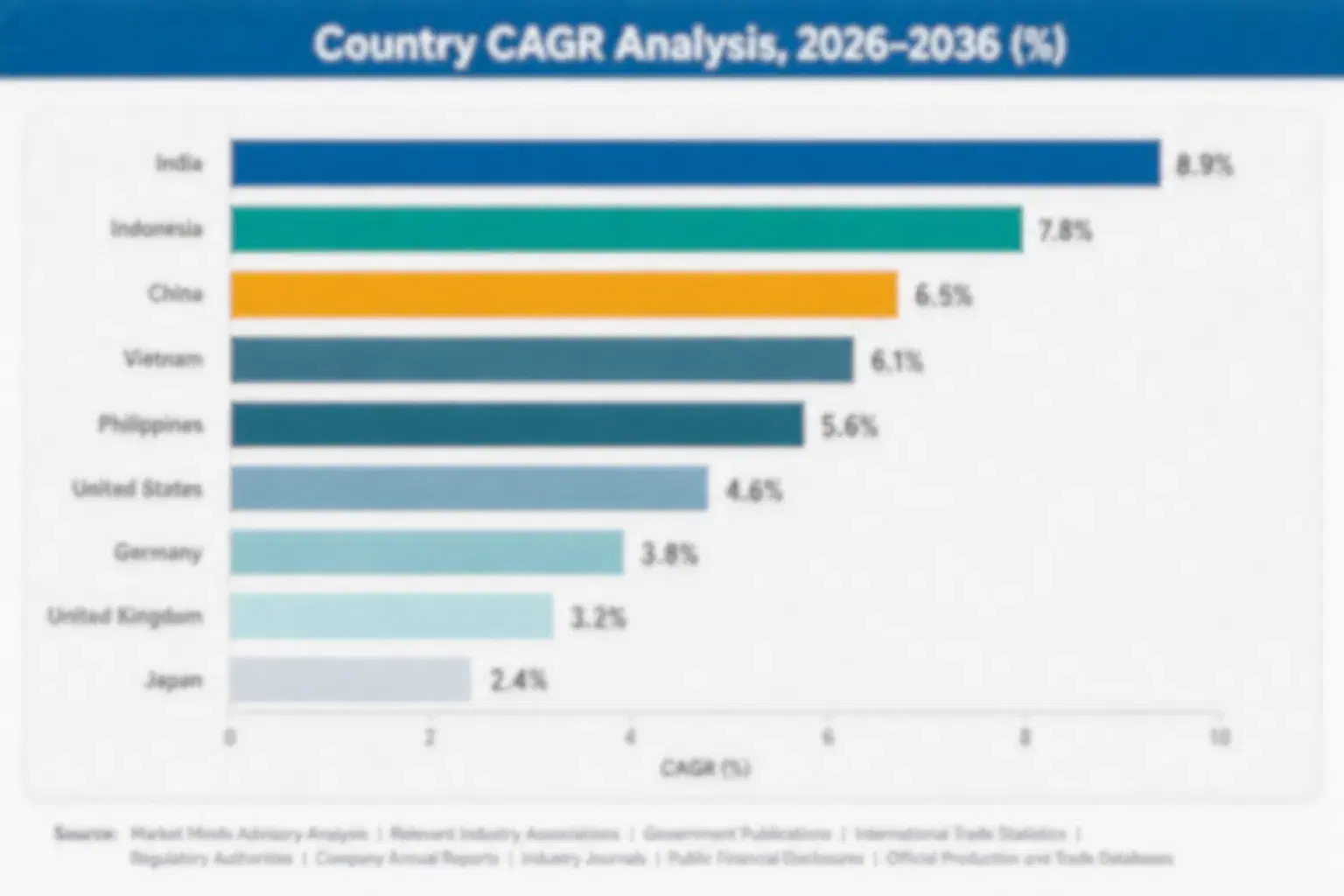
India: 10.0% CAGR
Fastest Growth Region
South Asia and Pacific: 10.2% CAGR
Largest Region
North America: 31% of 2025 global value
Market Leaders
Philips, ResMed, Natus Medical, Nihon Kohden, Compumedics. Source: MMA Analysis based on disclosed sleep diagnostic device and software revenue, company annual reports 2025.
Primary Survey
n=3,800 procurement and R&D decision-makers, Q4 2025, six countries
Methodology
Demand-side build-up, cross-validated against public data, 47 expert interviews

Wireless Polysomnography Market Forecast Scenarios

wireless-polysomnography-market-size-forecast-scenario-1787715999831
Growth from 2020 to 2025 ran at 6.8% and the composition of it changed completely. Home respiratory testing volume rose sharply as laboratories closed overnight beds and payers pushed studies out of facilities, while attended laboratory volume fell. Unit counts climbed and revenue per study collapsed, which is why a category reporting strong procedure growth spent the period explaining disappointing revenue to anybody who asked about it.
The 8.0% base case rests on three mechanisms. Wireless full-montage systems keep taking share because they record electroencephalography and therefore diagnose the disorders respiratory testing cannot see. Automated scoring software keeps growing as technologist time becomes the binding cost in any laboratory. And Asian diagnosis rates keep rising from a base where the overwhelming majority of cases have never been identified at all. None of the three restores the attended fee.
The bull case at 9.2% assumes consumer wearable screening notifications keep funnelling people into diagnostic pathways, which converts a passive undiagnosed population into presenting patients. The bear case at 6.8% is reimbursement continuing to compress toward the cheapest adequate test, since a payer comparing a 210 dollar recording against a 1,400 dollar study reaches an obvious conclusion every time.

Cheaper Test, Smaller Market

Almost every access problem in medicine is solved by making the test cheaper, and this category shows what that costs. An attended overnight study pays around 1,400 dollars and requires a bed, a technologist and roughly twenty wired electrodes. An unattended home recording pays about 210. The eleven week waiting list has genuinely shortened, and revenue per patient fell by rather more than the wait did.
FIVE-FIRM CONCENTRATION48%Share of category revenue held by the largest device suppliers
IN-LAB STUDY REIMBURSEMENT$1,400Facility payment for one attended overnight sleep study
HOME STUDY REIMBURSEMENT$210Payment for one unattended home recording session performed
FAILED STUDY RATE12%Home recordings requiring repeat because of signal loss
LABORATORY WAITING TIME11 weeksTypical wait for an attended overnight laboratory appointment
UNDIAGNOSED PREVALENCE SHARE78%Adults with the condition who remain entirely undiagnosed
What home testing gives up is worth understanding precisely. Respiratory home devices record airflow, effort and oxygen saturation but no electroencephalography, so they cannot stage sleep, cannot identify narcolepsy or parasomnias, and divide events by recording time rather than sleep time, which understates severity. A patient with insomnia and suspected apnoea gets an answer to half the question. That gap is the entire commercial argument for wireless full-montage systems.
The operational reality is messier than the marketing. Around 12% of home recordings fail and require repeating, because an electrode detaches overnight with nobody there to reattach it, or a link drops and the recorder keeps going. A failed study costs a patient another week and the provider a second deployment. Suppliers who publish failure rates are rare, and they tend to win technical evaluations.
"Everybody sells the undiagnosed millions. Nobody sells the twelve percent of studies that come back unreadable, which is the number the person actually running the service cares about most."
Director, Neurodiagnostic Devices Practice · MMA Neurodiagnostic and Sleep Devices Practice · August 2026

Market Trends

Full Montage Goes Wireless And Leaves The Laboratory

Wireless systems carrying electroencephalography, electro-oculography and chin electromyography record everything an attended study records without the bed or the overnight technologist, which is the only way to diagnose non-respiratory sleep disorders outside a laboratory. Growth at 12.0% follows that capability rather than any price argument. Electrode application remains the practical constraint, since a patient applying twenty sensors unsupervised is a failure rate waiting to happen unless the headset design does the work instead. Payment tiers recognise that capability in a way they recognise almost nothing else at all about these devices.
Market Impact: Cuts an 11 week waiting list

Consumer Wearables Funnel People Into Diagnostic Pathways

Regulatory clearances for sleep apnoea notification features on consumer wristworn devices created a screening layer nobody in this industry built or controls, and it directs people who had no symptoms complaint toward clinical assessment. Roughly 78% of affected adults remain undiagnosed, so a notification reaching even a fraction of them matters. Sleep services report presentation volumes rising from patients who arrived holding a phone rather than a referral, which changes triage entirely. Nobody in this industry built the funnel and nobody in it controls any part of the flow now.
Market Impact: Grows India fastest at 10.0%

Market Opportunities and Growth Drivers

Eleven Week Waits Push Testing Out Of Laboratories

Attended studies require an overnight bed and a technologist watching a single patient, which caps throughput at one study per bed per night and produces waiting lists running to roughly eleven weeks in most developed systems. Home recording removes both constraints and scales with device inventory rather than with real estate. Health systems adopted it for access reasons rather than clinical ones, and the clinical debate followed the operational decision rather than preceding it. A device inventory scales in a way that an overnight bed simply never can at all.
Market Impact: Pays $210 against $1,400 studies

Asian Diagnosis Rates Rise From A Very Low Base

Sleep medicine capacity across Chinese and Indian cities is being built rather than replaced, and India grows fastest of any country at 10.0% as respiratory and neurology departments establish sleep services for the first time. Diagnosis rates sit far below Western levels against prevalence that is no lower. Domestic device manufacture supplies most of that expansion at price points international suppliers rarely match, so unit growth and revenue growth diverge sharply here. Prevalence there is no lower than in Western populations and the diagnosis rate is a fraction of it.
Market Impact: Fails 12% of home recordings

Market Restraints and Challenges

Home Reimbursement Sits At A Seventh Of Laboratory

An unattended recording pays around 210 dollars against roughly 1,400 for an attended laboratory study, so every study migrating out of a facility removes revenue from the pathway even while it serves the patient better. Root cause is that payment follows facility resource rather than diagnostic value. Commercial impact is a category with rising procedure counts and compressing revenue. Mitigation runs through full-montage positioning, where the clinical capability justifies a different payment tier. A payer comparing the two numbers reaches an obvious conclusion, and reaches it every single time it looks.
Market Impact: Grows full montage at 12.0%

One In Eight Home Recordings Comes Back Unusable

Roughly 12% of home studies fail and require repeating, usually because an electrode detached overnight with nobody present to notice or a wireless link dropped while the recorder continued regardless. Root cause is the absence of the attending technologist the laboratory model provided. Commercial impact is repeat deployments, delayed diagnosis and provider frustration. Mitigation involves headset designs that reduce sensor placement error, on-device signal quality checks and immediate alerting when a channel is lost. Providers rank this number above every device specification and suppliers very rarely publish it openly anywhere.
Market Impact: Reaches 78% undiagnosed adult population
3 additional market trends, 2 additional growth drivers, and 4 additional restraints and challenges are covered in the full report. Contact sales@marketmindsadvisory.com to access the complete intelligence.

Segment CAGR and Growth Architecture

Segmentation follows system and product type: what physically records the study, what supports it and what interprets the result afterwards. Six categories cover the market without overlap. Care setting, clinical indication and payment route are treated as separate commercial dimensions throughout this report rather than as segmentation logic in their own right entirely, since each cuts across everything.
wireless-polysomnography-market-market-share-analysis-1787716000115

Wireless Full-Montage Polysomnography Systems

Systems carrying electroencephalography, electro-oculography and chin electromyography alongside respiratory channels grow at 12.0%, half again the market rate of 8.0%, because they are the only way to stage sleep and identify narcolepsy, periodic limb movement or parasomnias outside an attended laboratory. That capability supports a payment tier the 210 dollar respiratory recording never reaches. Electrode application by an unsupervised patient is the practical limitation, and headset designs that place sensors reliably matter considerably more commercially than amplifier specifications ever have. Payment tiers recognise the broader clinical capability in a way they recognise almost nothing else about these devices, which is the whole reason the segment grows faster than the market does.
CAGR 12.0%

Sleep Scoring and Analysis Software

Automated scoring and analysis platforms grow at 10.2% because technologist time rather than device cost has become the binding constraint on how many studies a service can actually process each week. A scorer reviewing an automated output works several times faster than one scoring from raw signal. Regulatory clearance and inter-scorer agreement evidence both gate adoption, and services adopt cautiously because a scoring error propagates into a diagnosis. Software also travels across borders in a way hardware cannot, which changes the commercial geography completely. A cleared algorithm ships instantly into any market where it holds approval, which is a commercial geography no hardware supplier ever gets to enjoy anywhere at all.
CAGR 10.2%
Full segment breakdown across 6 segments available in the complete report.

Regional Architecture and Country Demand Map

Geography follows sleep medicine infrastructure and payment structure rather than prevalence, which varies little between regions. North America leads on laboratory density and reimbursement, East Asia on diagnosis rates rising fastest. Prevalence itself varies remarkably little from one region of the world to the next.

North America

Sleep laboratory density is the highest anywhere and the payment structure separating attended and unattended studies is the most explicit, which is why migration out of facilities has gone furthest here and revenue per study has fallen the most. Independent diagnostic testing facilities and payer-directed home testing programmes both grew rapidly. Consumer wearable clearance for apnoea notification arrived here first and services report presentations from patients holding a device rather than a physician referral. Automated scoring adoption is well advanced. Study failure rates are measured and reported more openly here than anywhere, largely because independent testing facilities compete on their service performance rather than on any single device specification alone.
Share: 31% | CAGR: 7.2% (2026 to 2036)

Western Europe

National health systems adopted home testing for waiting list reasons rather than through payment incentives, so the revenue compression has been less abrupt than in North America but the volume shift is comparable. Sleep medicine sits within respiratory or neurology departments rather than as a separate specialty in most countries. German and Nordic services run structured pathways with good full-montage access. Device procurement runs through hospital tender, which favours suppliers with established service networks over anybody arriving with better specifications. Full-montage wireless adoption is concentrated in university hospitals, and general referral pathways still send most patients toward reduced-channel recording regardless of what the clinical question in front of them happens to be.
Share: 21% | CAGR: 6.4% (2026 to 2036)
Regional intelligence for 5 additional markets available in the complete report: East Asia, South Asia and Pacific, Latin America, Middle East and Africa, Eastern Europe. Contact sales@marketmindsadvisory.com.
wireless-polysomnography-market-country-cagr-analysis-1787716000437

Selling What Home Testing Misses

Home recordings pay around 210 dollars against 1,400 for attended studies, roughly 12% of them fail, waiting lists run about eleven weeks and some 78% of affected adults remain undiagnosed. Four levers work on capability tiering, failure reduction, scoring throughput and screening funnels rather than on device pricing, which almost nobody wins on here.

Position Full Montage Against The Capability Gap

Respiratory home testing cannot stage sleep or identify narcolepsy, periodic limb movement and parasomnias, so a patient with insomnia and suspected apnoea receives an answer to half the question. Wireless full-montage systems close that gap and support a payment tier the 210 dollar recording never reaches. Competing on price against reduced-channel devices is a contest with no winner, while competing on what those devices physically cannot measure is a contest with very few entrants. Very few entrants can build the neural signal chain that particular contest actually demands of them anyway.
Market Impact: Reaches well beyond the $210 home payment tier

Engineer Out The Twelve Percent Failure Rate

Roughly 12% of home recordings return unusable because a sensor detached overnight or a wireless link dropped while recording continued regardless, and every failure costs a repeat deployment and another week of delay. Headset designs that place electrodes reliably, on-device signal checks and immediate alerting all reduce it measurably. Providers running services care about this number far more than about amplifier specifications, and almost no supplier publishes it openly. A supplier who measures and publishes the number wins technical evaluations that any specification sheet never wins for anybody at all.
Market Impact: Reduces a 12% rate of unusable home recordings

Sell Scoring Throughput Rather Than Recorders

Technologist time rather than device cost limits how many studies a service processes each week, and a scorer reviewing automated output works several times faster than one working from raw signal. Software grows at 10.2% for exactly that reason. It also crosses borders in a way hardware never does, since a cleared algorithm ships instantly while a device needs distribution, service and spare parts everywhere it goes. Clearance and agreement evidence gate adoption. Nothing in the hardware roadmap addresses the constraint that services here actually feel every single week themselves.
Market Impact: Grows the scoring software segment at 10.2% annually

Build Referral Pathways From Consumer Notifications

Consumer wristworn devices now issue sleep apnoea notifications to people with no symptom complaint, reaching into a population where roughly 78% remain undiagnosed, and nobody in this industry built or controls that funnel. Services report patients presenting with a phone rather than a referral. Suppliers who help providers triage that flow, with structured intake and appropriate test selection, capture volume created entirely outside their own commercial effort. Volume arriving from a channel nobody in the industry built is still volume, and triaging it well is the only way to keep it.
Market Impact: Taps into a 78% undiagnosed adult population directly

Who Controls the Margin Pool

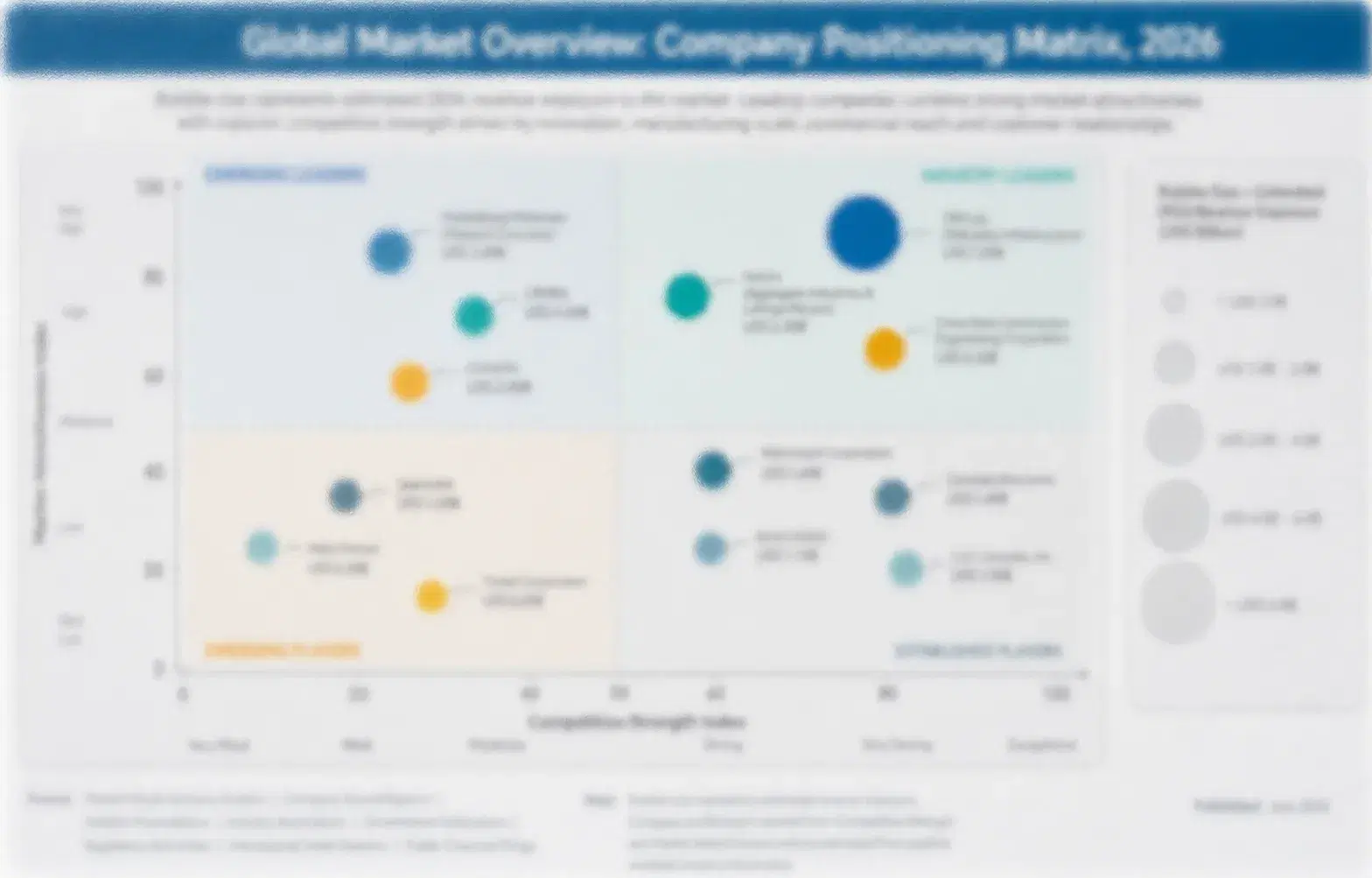
Measured on disclosed sleep diagnostic device and software revenue, the five largest suppliers hold a CR5 of 48%, which reflects a market where regulatory clearance and hospital service networks matter more than manufacturing scale. Philips and ResMed hold broad positions spanning diagnostics and therapy, Natus and Nihon Kohden bring neurodiagnostic depth including the electroencephalography capability full-montage recording requires, and Compumedics holds established laboratory system positions built over decades. Nobody spans the whole range with equal credibility anywhere.
Three contests define activity. Full-montage wireless competes on electrode design and signal integrity rather than on price. Reduced-channel home devices compete almost purely on cost per deployment through payer-directed programmes. And scoring software competes on clearance status and inter-scorer agreement evidence. Consumables compete on interface lock-in rather than on anything else.

Pressure builds from domestic Asian manufacturers supplying reduced-channel recorders at prices international suppliers cannot approach, and from consumer device makers who now sit upstream of the whole pathway. Rankings shift toward whoever holds full-montage capability and scoring software together. Neurodiagnostic engineering and cleared algorithms are the two capabilities a fast follower finds hardest to assemble quickly at all.
wireless-polysomnography-market-company-positioning-matrix-1787716000740

Competitive Moat and Risk Dimensions

RESMED

Moat: Therapy Pathway And Data Platform

ResMed connects diagnosis to therapy through a data platform that follows a patient from test to treatment adherence, which places its diagnostic products inside a pathway it also supplies downstream. That continuity is genuinely difficult for a diagnostics-only competitor to match. A provider choosing a test device is frequently also choosing the reporting environment its therapy patients already sit inside.
RESMED

Risk: Reimbursement Compression Downstream

Home testing pays around 210 dollars against 1,400 for attended studies, and payer pressure on the diagnostic step continues while therapy reimbursement faces its own scrutiny separately. A pathway position amplifies exposure to payment decisions rather than insulating against them. Volume growth accompanied by revenue compression is the pattern across the whole diagnostic half.
NATUS MEDICAL

Moat: Neurodiagnostic Signal Capability

Natus brings electroencephalography engineering built for neurology into sleep recording, which is exactly the capability full-montage wireless systems require and which respiratory device manufacturers have found genuinely difficult to acquire. Clean multi-channel neural signal from a wireless headset is a hard problem. That expertise took decades to build inside a different clinical field entirely and does not transfer quickly.
NATUS MEDICAL

Risk: Volume Sits In Reduced Channels

Most study volume runs through reduced-channel respiratory devices where neurodiagnostic capability is irrelevant and price decides everything, which leaves the strongest technical position addressing the smaller share of studies performed. Full-montage growth at 12.0% is genuine but starts from a modest base. Payer preference continues to push toward the cheapest adequate test.

Players Tracked

Prominent Players

Philips
ResMed
Natus Medical
Nihon Kohden
Compumedics

Other Key Players

Lowenstein Medical
SOMNOmedics
Cadwell Industries
Nox Medical
Neurosoft
BMC Medical
Wellue Health
Onera Health
EnsoData
Cerebra Health
Vyaire Medical
Neuroelectrics
Recorders and Medicare Systems
Sleepiz
Withings

Recent Developments

JANUARY 2025

Payer programme directs routine apnoea testing to home devices

A large payer extended its policy directing uncomplicated suspected apnoea testing to unattended home recording before any attended study would be authorised. This was a coverage policy decision rather than any commercial arrangement, and it applied across all contracted providers in all of the affected regions concerned.
Signal: Coverage policy rather than any clinical preference now decides where the great majority of studies happen.
MAY 2025

Wireless full-montage headset receives clearance for unsupervised use

A wireless full-montage system received regulatory clearance for unsupervised patient application at home, covering electroencephalography channels alongside respiratory recording. This was a regulatory approval rather than any corporate transaction, and headset design rather than amplifier performance was the central element of the whole technical submission.
Signal: Electrode placement reliability rather than raw signal specification is what regulators and providers both actually scrutinise.
SEPTEMBER 2025

Sleep service reports referral surge from consumer device notifications

A hospital sleep service reported a measurable rise in presentations from patients referred by consumer wristworn device apnoea notifications rather than by symptom-driven physician referral. This was a clinical service observation rather than any commercial development involving any of the consumer device manufacturers concerned in any way.
Signal: A screening funnel built entirely outside this industry now feeds patients directly into clinical diagnostic services.

Radios, Amplifiers And Electrodes

The cost base splits between durable recorder hardware and the disposables that go on the patient. Low-energy wireless radio modules, biopotential amplifier integrated circuits, lithium cells, moulded housings and headset assemblies, together with disposable electrodes, adhesives and airflow sensors, account for 33 to 42% of finished system cost. Cloud compute for automated scoring adds a recurring cost per study. Amplifier and radio silicon comes from the general semiconductor market.
The volatility that mattered was semiconductor allocation through 2021 and 2022. Low-energy radio module and biopotential amplifier lead times extended from weeks to well beyond a year, and SEMI industry data records the capacity and allocation conditions across that period. Medical device manufacturers were deprioritised behind automotive and consumer customers almost everywhere. Several suppliers redesigned recorder boards around whatever silicon they could obtain and revalidated under timelines nobody enjoyed.

Exposure divides by design flexibility and by disposable strategy. Suppliers who single-sourced radio modules carried the longest outages, since a medical redesign carries revalidation in months. Those with multi-sourced boards shipped throughout. Disposable electrode margin also matters more than recorder margin over a device lifetime, so suppliers who treated consumables as an afterthought gave away the recurring revenue that funds everything else.
wireless-polysomnography-market-cost-volatility-analysis-1787716001071

Design recorder boards around multi-sourced radio silicon

Single-sourced low-energy radio modules and amplifier circuits stopped shipments entirely when allocation tightened, and a cleared medical device redesign carries revalidation measured in many months rather than weeks. Designing for multiple qualified parts costs engineering effort and some performance compromise upfront. It converts an allocation crisis into a purchasing decision, which is the difference between shipping product and simply stopping.

Treat disposable electrodes as the revenue line

Electrodes, adhesives and airflow sensors are consumed at every study and accumulate across a recorder lifetime into more revenue than the hardware ever produced. Designing proprietary sensor interfaces costs goodwill with providers who dislike being locked in. It converts a capital sale into a recurring stream, which is the only way this category funds development at current device pricing.

Price scoring compute into the per-study model

Automated scoring consumes cloud compute at every study and that cost recurs indefinitely, unlike hardware, which is paid for once and depreciates. Building it into a per-study fee rather than absorbing it protects margin as volumes grow. It requires providers to accept a recurring charge alongside a capital purchase, which several have resisted until throughput gains made the arithmetic obvious.

Portfolio Architecture for Margin Defence

Margin follows what a device can measure rather than what it costs to build, which is the clearest pattern in the category. Reduced-channel recorders earn thinly against domestic Asian manufacturers and payer-directed price pressure. Wireless electrode consumables earn moderately and accumulate steadily. Ambulatory neurodiagnostic modules earn reasonably in a small field. Full-montage wireless systems earn well on capability nobody else offers. Scoring and analysis software earns best, because it carries no manufacturing cost at all.
The tension is that the volume runs through the products with the worst economics. Payer policy directs uncomplicated cases to reduced-channel home recording at around 210 dollars, which is most studies performed, while full-montage systems address the smaller share where the clinical question is broader. A supplier chasing study volume competes on cost per deployment; one chasing capability accepts a narrower base and a considerably better margin on it.

High-value pools sit in three places. Scoring software, which has no unit manufacturing cost and addresses the technologist time constraint every service actually feels. Full-montage wireless capability, where electroencephalography engineering is a genuine barrier. And disposable electrode streams, which accumulate quietly across a recorder lifetime into more revenue than the hardware sale produced.

Volume / Commodity-Adjacent

Reduced-channel home recorders and wearable devices supplied into payer-directed programmes on cost per deployment. The 10-point range separates manufacturers with domestic component supply from those buying silicon and sensors on open markets.
Gross Margin: 26-36%

Premium / Certified

Wireless electrode consumables, ambulatory neurodiagnostic modules and mid-tier recording systems sold through hospital tender and service networks. The 12-point spread reflects how differently consumable streams and capital equipment behave across an installed base over time.
Gross Margin: 48-60%

Sustainability / Regulatory / Next-Generation

Wireless full-montage systems and cleared automated scoring software addressing capability and throughput rather than unit cost. The 22-point range is wide because hardware-based full-montage economics and zero-marginal-cost software economics sit within one tier.
Gross Margin: 62-84%
wireless-polysomnography-market-portfolio-architecture-1787716001381

High-value Sub-segments and Strategic Watch-out

Automated Scoring Software

Highest margin and second fastest growth at 10.2%, carrying no manufacturing cost and addressing technologist time, which is the real constraint on service throughput. The risk is that clearance and inter-scorer agreement evidence gate adoption, and services move cautiously because errors propagate directly into patient diagnoses.
Gross Margin: 76-84%

Wireless Full-Montage Systems

Fastest growth at 12.0%, defended by electroencephalography engineering that respiratory device manufacturers have found genuinely difficult to acquire. The risk is that most study volume still runs through reduced-channel devices where the capability is simply irrelevant to the clinical question. The base is growing from a small one.
Gross Margin: 62-72%

Disposable Electrode Streams

The quiet recurring core, consumed at every study and accumulating across a recorder lifetime into more revenue than the hardware sale itself produced. Suppliers hold it because it funds development at device pricing that would otherwise support almost none at all. Nobody talks about it much.
Gross Margin: 50-60%

Reduced-Channel Price Compression

The strategic watch-out. Payer policy directs most studies to home recording paying around 210 dollars, and domestic Asian manufacturers supply those devices considerably cheaper. The risk is winning the volume that carries almost none of the category's remaining margin. Winning it is not obviously worth doing.
Gross Margin: 24-34%

One Study, Then Therapy

A diagnostic study happens once per patient in most cases, which would make this a poor recurring business were it not for two things. Disposable electrodes and sensors are consumed at every study and accumulate across a device lifetime, and therapy follow-up generates repeat assessment in systems that require it. The recorder is bought once and depreciates over six or seven years, so the installed base determines what a supplier actually earns.
Stickiness comes from clearance, integration and consumable interfaces rather than from any contract. A service that validated a workflow, trained staff and integrated results does not change device supplier casually, and proprietary sensor connections raise that cost further. Payer-directed programmes are the least sticky, retendering on cost per deployment. Academic and tertiary services are stickiest, since full-montage capability is scarce.

The purchaser has moved from clinician to payer and now partly to the patient. Sleep physicians once specified equipment and hospitals bought it. Payer coverage policy now determines which test a patient receives before any clinician is involved, and consumer device notifications increasingly determine who presents at all. A supplier selling to the sleep physician alone now addresses the least influential participant in the pathway.
wireless-polysomnography-market-end-use-penetration-index-1787716001675

Capability Beats Cost Here

These are among the four positions where our research anticipates prominent divergence between winners and laggards over the coming forecast period. Each is grounded in the demand model, the regulatory perimeter, and the announced capacity pipeline.
01 / CAPABILITY TIER POSITIONING

Sell what the cheap test cannot see

Respiratory home recording cannot stage sleep or identify narcolepsy, periodic limb movement and parasomnias, so a patient presenting with insomnia alongside suspected apnoea receives an answer to only half of the actual clinical question. Wireless full-montage systems close that gap and they support a payment tier that a 210 dollar respiratory recording never reaches anywhere at all. Competing on price against reduced-channel devices is a contest with no winner available to anybody, while competing on capability has very few entrants.
02 / FAILURE RATE ENGINEERING

Twelve percent unusable is the real specification

Roughly 12% of all home recordings come back unusable because a sensor detached overnight with nobody present, or a wireless link dropped while the recorder carried on recording regardless of it. Every single failure costs a repeat deployment, another week of patient delay and some of the provider's confidence in the supplier. Headset designs that place electrodes reliably, on-device signal checks and immediate channel alerting all reduce it measurably, and almost nobody in the trade publishes their own number openly.
03 / THROUGHPUT SOFTWARE FOCUS

Technologist hours limit every sleep service

Technologist time rather than any device availability determines how many studies any service can actually process each week, and a scorer reviewing an automated output works several times faster than one working through the raw signal from the start. Scoring software grows at 10.2% for precisely that reason, and it carries no unit manufacturing cost whatsoever. It also crosses national borders instantly, where a physical device requires distribution, service and spare parts in every single market it ever enters anywhere.
04 / SCREENING FUNNEL CAPTURE

Consumer devices now feed your waiting room

Wristworn consumer products now issue sleep apnoea notifications to people with no symptom complaint at all, reaching into a population where roughly 78% of all affected adults remain entirely undiagnosed and would never otherwise have presented. Nobody in this industry built that funnel and nobody in it controls any part of it. Suppliers helping providers triage the resulting flow, with structured intake and appropriate test selection built in, capture volume created entirely outside their own commercial effort and at nobody's expense.

Engagement Snapshot From the Field

A live engagement with an industry participant carrying material or product regulatory and market exposure ahead of a defining policy shift, showing how our research translates into a defensible multi-year portfolio strategy.
MARKET MINDS ADVISORY · CLIENT ENGAGEMENT SUMMARY
Wireless Polysomnography Producer Strategic Portfolio Review and Transition Roadmap 2026·Investment Scenario on Wireless Polysomnography Exposure Evaluation 2025-26
CLIENT PROFILE
A sleep diagnostic device manufacturer supplying recorders and consumables across European and Asian markets, with reported diagnostic revenue of 74 million dollars (client-reported, unverified by MMA). Roughly 68% came from reduced-channel home recorders. The company held no full-montage wireless product and no cleared scoring software of any kind at all at the point the work began.
STRATEGIC CHALLENGE
Reduced-channel recorder pricing had fallen for three consecutive years as payer programmes tendered on cost per deployment and Asian manufacturers undercut consistently. Management was preparing a manufacturing cost programme and a further price reduction. Neither addressed a competitor cost base well below their own, nor the absence of any product outside the segment being compressed.
MMA APPROACH
MMA analysed revenue and margin by product line against payer coverage policy and study mix, a reconciliation the company had never assembled. Twenty-three expert interviews with sleep physicians, service managers, technologists and payer medical directors established where clinical need and payment tiers actually diverged. The analysis treated capability tiering and scoring throughput rather than manufacturing cost as the routes available.
KEY FINDINGS
  1. Service managers ranked study failure rate above every device specification, and the company had never measured or published its own figure for it.
  2. Sleep physicians described sending patients for repeat attended studies whenever the clinical question extended beyond respiratory events, at considerable cost and delay.
  3. Technologist availability rather than recorder inventory limited weekly study throughput at every service interviewed across both of the regions the company served.
  4. Asian competitors held a cost base well below the client on reduced-channel devices, which no plant efficiency programme could realistically close at all.
CLIENT PROFILE
A sleep diagnostic device manufacturer supplying recorders and consumables across European and Asian markets, with reported diagnostic revenue of 74 million dollars (client-reported, unverified by MMA). Roughly 68% came from reduced-channel home recorders. The company held no full-montage wireless product and no cleared scoring software of any kind at all at the point the work began.
STRATEGIC CHALLENGE
Reduced-channel recorder pricing had fallen for three consecutive years as payer programmes tendered on cost per deployment and Asian manufacturers undercut consistently. Management was preparing a manufacturing cost programme and a further price reduction. Neither addressed a competitor cost base well below their own, nor the absence of any product outside the segment being compressed.
MMA APPROACH
MMA analysed revenue and margin by product line against payer coverage policy and study mix, a reconciliation the company had never assembled. Twenty-three expert interviews with sleep physicians, service managers, technologists and payer medical directors established where clinical need and payment tiers actually diverged. The analysis treated capability tiering and scoring throughput rather than manufacturing cost as the routes available.
KEY FINDINGS
  1. Service managers ranked study failure rate above every device specification, and the company had never measured or published its own figure for it.
  2. Sleep physicians described sending patients for repeat attended studies whenever the clinical question extended beyond respiratory events, at considerable cost and delay.
  3. Technologist availability rather than recorder inventory limited weekly study throughput at every service interviewed across both of the regions the company served.
  4. Asian competitors held a cost base well below the client on reduced-channel devices, which no plant efficiency programme could realistically close at all.
RECOMMENDED STRATEGY
Phase 1: Phase one: measure and publish study failure rate, addressing the specification service managers actually rank first above everything else on offer. Phase 2: Phase two: develop or license full-montage wireless capability, entering the tier where clinical need justifies a payment level above simple home recording. Phase 3: Phase three: acquire cleared scoring software, addressing the technologist constraint that limits weekly throughput at every single service that was interviewed.
OUTCOME
Published failure rate data was cited in two tender wins within three quarters, having previously been treated internally as a liability. A full-montage licensing agreement was concluded during the period (client-reported, unverified by MMA). Scoring software acquisition discussions opened. Reduced-channel pricing continued to erode as the plan had assumed rather than attempted to prevent.

Frequently Asked Questions

Foundational context covering the market sizes, CAGR, scope, country, region and competition that inform every finding below. This section is provided to cover basics and most often pre-purchase conversations, answered from the MMA Primary Research Dataset.

What is the current size of the Wireless Polysomnography Market?

The market was worth 0.9 billion dollars in 2025, covering full-montage systems, home apnoea recorders, wearables, consumables, scoring software and ambulatory modules. It reaches 0.97 billion dollars in 2026.

How large will the Wireless Polysomnography Market be by 2036?

MMA forecasts 2.10 billion dollars by 2036, an increase of 1.13 billion dollars over the 2026 base. That represents an expansion multiple of 2.16 times across the forecast period.

What is the CAGR for the Wireless Polysomnography Market 2026 to 2036?

The base case compounds at 8.0% annually. The bull case reaches 9.2% if consumer screening notifications keep funnelling patients in, while the bear case sits at 6.8% on continued reimbursement compression.

Which segment is growing fastest?

Wireless full-montage polysomnography systems, at 12.0%, half again the market rate of 8.0%. They record electroencephalography, which respiratory home devices cannot, and therefore diagnose far more.

Who are the major companies in the Wireless Polysomnography Market?

Philips, ResMed, Natus Medical, Nihon Kohden and Compumedics lead on disclosed sleep diagnostic device and software revenue. Nox Medical, SOMNOmedics and EnsoData hold notable positions.

Which country is growing fastest?

India at 10.0%, as respiratory and neurology departments establish sleep services in cities that previously offered nothing. Prevalence there matches Western levels while diagnosis rates do not.

Report Segmentation Architecture

The full report scope spans multiple orthogonal segmentation dimensions, with cross-tabulated demand data provided for each dimension pair. Coverage extends further to regional breakdowns, trend trajectories, and the competitive detail needed to support segment-level decision-making.

By System Type

  • Wireless Full-Montage Polysomnography Systems
  • Home Sleep Apnea Test Devices
  • Wearable and Reduced-Channel Recorders
  • Wireless Electrode and Sensor Consumables
  • Sleep Scoring and Analysis Software
  • Ambulatory Electroencephalography Add-On Modules

By End-Use Industry

  • Hospital Sleep Laboratories
  • Independent Diagnostic Testing Facilities
  • Respiratory and Neurology Departments
  • Home Care and Mobile Diagnostic Services
  • Academic and Research Sleep Centres
  • Occupational and Transport Health Screening

By Commercial Dimension

  • Hospital Capital Tender Purchase
  • Payer-Directed Programme Supply
  • Consumable Subscription Supply
  • Software Licensing and Per-Study Fees
  • Distributor and Dealer Channels
  • Direct Patient Pay Services

By Region

  • North America
  • Western Europe
  • East Asia
  • South Asia and Pacific
  • Latin America
  • Middle East and Africa
  • Eastern Europe

Scope, Methodology, and Coverage

Every figure in this report is reproducible from documented input assumptions. The scope below maps the historical period, the forecast horizon, the segmentation dimensions, and the countries covered, alongside the underlying primary and qualitative methodology.
Historical Period
2020 to 2025
Forecast Period
2026 to 2036
Base Year
2025 (USD billions; MMA Primary Research Dataset, August 2026)
Market Definition
Scope covers wireless, portable and ambulatory systems, consumables and software used to record and interpret sleep physiology for diagnostic purposes, spanning wireless full-montage polysomnography systems recording electroencephalography and associated channels, home sleep apnea test devices, wearable and reduced-channel recorders, wireless electrode and sensor consumables, sleep scoring and analysis software, and ambulatory electroencephalography add-on modules. Positive airway pressure therapy devices, masks and humidifiers, surgical and oral appliance treatments for sleep disordered breathing, consumer sleep tracking products marketed without regulatory clearance for a diagnostic claim, wired laboratory polysomnography systems installed as fixed equipment, and sleep laboratory construction or staffing services are excluded from the market size and all derived figures.
Quantitative Units
USD billions (current prices); studies performed; reimbursement per study; devices in installed base; study failure rate
Segmentation Dimensions
By System Type; By End-Use Industry; By Commercial Dimension; By Region
Regions Covered
North America, Western Europe, East Asia, South Asia and Pacific, Latin America, Middle East and Africa, Eastern Europe
Countries Covered
USA, China, Japan, Germany, India, UK, France, South Korea, Canada, Brazil, Australia, Italy, Spain, Mexico, Poland
Key Companies Profiled
Philips, ResMed, Natus Medical, Nihon Kohden, Compumedics, Lowenstein Medical, SOMNOmedics, Cadwell Industries, Nox Medical, Neurosoft, BMC Medical, Wellue Health, Onera Health, EnsoData, Cerebra Health, Vyaire Medical, Neuroelectrics, Recorders and Medicare Systems, Sleepiz, Withings
Quantitative Methodology
Primary survey, n=3,800 respondents, Q4 2025, six countries; demand-side model with trade association cross-validation
Qualitative Methodology
47 expert interviews, Q4 2025; applied to validate demand model assumptions, identify emerging dynamics, and assess competitive positioning
Report Format
PDF and XLSX data workbook (Word format preview document)
Publisher
Market Minds Advisory
Report Code
MMA-2026-MED-151
Published
August 2026
Contact
sales@marketmindsadvisory.com | www.marketmindsadvisory.com

Purchase the full Wireless Polysomnography Market Report (2026 to 2036).

The full report runs to 160 pages and covers all six system type segments, seven regions and 20 profiled suppliers in detail. It includes the complete segment CAGR set, regional reimbursement and laboratory capacity comparison, and study economics modelled across attended and unattended pathways. Company profiles carry evaluation on disclosed sleep diagnostic device and software revenue, with moat and risk assessment for the top five suppliers. The competitive section extends to 13 tracked coverage, clearance and referral developments across 2024 and 2025. Primary research inputs include a quantitative survey of 3,800 respondents and 47 expert interviews conducted in Q4 2025.
Six system type segments with individual CAGR forecasts
Seven regional markets with reimbursement and laboratory capacity comparison
Twenty supplier profiles on consistent revenue evaluation basis
Thirteen tracked coverage and clearance developments with commercial interpretation
Study economics modelled across attended and unattended diagnostic pathways
Study failure rates assessed as a determinant of provider selection

Built For The People Who Decide

From boardroom strategy to bench-side execution, this report is read cover-to-cover by leaders shaping the next decade of their industry, turning demand scenarios, market dynamics and valuation benchmarks into decisions.
CXOs/ Presidents/ VPs/ Managers
M&A and Corporate Development
Strategy Teams and R&D Heads
Procurement and Product Directors
Regulatory and Compliance Leaders
Investor Relations and Equity Analysts