Market Minds Advisory
Western Europe Industrial Drum Market

Western Europe Industrial Drum Market: Competing Against Your Own Output

European reuse rules are pushing fillers toward reconditioned drums, which means manufacturers are being asked by law to compete against refurbished versions of the containers they built and sold five years ago.

Lead Analyst

Published

September 2026

Make Smarter Decisions with Customized Research Insights

Request a free sample report and evaluate market opportunities, growth trends, and competitive dynamics relevant to your business needs.

2025 MARKET VALUE$11.4BMarket Size 2025
2036 FORECAST VALUE$20.8BBase Case , 2026 to 2036
CAGR 2026 TO 20365.6 %Bull 6.8% / Bear 4.4%
INCREMENTAL OPPORTUNITY$8.7BNet 10- year value creation
EXPANSION MULTIPLE1.72x2036 value over 2026 base
Strategic Levers
M&A Pipeline
Regional Outlook
Country Rankings
Competitive Intelligence
Segmental Deep-dive
Call-Us : 91 93563 13602

Executive Snapshot and Market Trajectory

A steel drum returns to service around six times before anyone scraps it, which means every drum sold becomes a competitor within eighteen months. European reuse rules now push fillers toward that second-hand supply deliberately. Manufacturers are competing against their own output and the regulation is on the other side.
East Asia holds 30% of value on chemical production concentrated across the region, while Western Europe at 22% is where reuse obligations bite hardest and where reconditioning networks are densest. Reconditioned and reusable drums grow at 8.4%, half again the market rate of 5.6%, and they sell at roughly 58% below a new equivalent, which is a discount no new-drum manufacturer can answer with efficiency.
Concentration reaches 33%, higher than most rigid packaging, because certification and reconditioning approvals both take time to hold. Residue liability is the quiet constraint: a drum that carried hazardous material still contains some, and European waste rules follow it. Whoever accepts that drum back accepts the disposal problem attached to it. Enough operators refuse that exposure to make reconditioning capacity a geographic constraint rather than a technical one. That is where the real positions sit.
Market Definition
The market covers industrial drums from roughly one hundred to two hundred and forty litres supplied to chemical, petrochemical, lubricant, food and pharmaceutical fillers, including tight-head steel drums, open-head steel drums, high density polyethylene drums, fibre and composite drums, reconditioned and reusable drums, and United Nations certified hazardous goods drums. Intermediate bulk containers, jerry cans and containers below one hundred litres, road tankers, closures and fitments sold separately, and filling equipment are excluded.
Base Year Value
$11.4B in 2025 (MMA Primary Research Dataset, August 2026)
Forecast Period
2026 to 2036, eleven discrete annual values
CAGR
5.6% base case. Bull 6.8%. Bear 4.4%.
Fastest Growth Segment
Reconditioned and Reusable Drums: 8.4% CAGR
Fastest Growth Country
India: 7.6% CAGR
Fastest Growth Region
South Asia and Pacific: 7.8% CAGR
Largest Region
East Asia: 30% of 2025 global value
Market Leaders
Greif, Mauser Packaging Solutions, Schütz, Time Technoplast, Balmer Lawrie. Source: MMA Analysis based on disclosed industrial packaging revenue, company annual reports 2025.
Primary Survey
n=3,800 procurement and R&D decision-makers, Q4 2025, six countries
Methodology
Demand-side build-up, cross-validated against public data, 47 expert interviews

Western Europe Industrial Drum Market Forecast Scenarios

western-europe-industrial-drum-market-size-forecast-scenario-1787699287263
Growth from 2020 to 2025 ran at 4.6% and steel pricing moved the reported total more than volume ever did. Hot rolled coil and cold rolled steel swung violently through 2021 and 2022, which lifted drum prices without lifting units and then partially reversed. Reconditioning volume expanded quietly as fillers sought cost relief, and most manufacturers read that as cyclical rather than permanent.
The 5.6% base case rests on three mechanisms. European packaging reuse obligations keep tightening, which moves volume toward reconditioned drums and toward container designs built to survive multiple cycles. Plastic drums keep taking share from steel wherever weight matters for road freight limits and manual handling rules. And Asian chemical output keeps expanding, which pulls new drum demand along with it at a pace European markets have not seen for two decades.
The bull case at 6.8% assumes reuse obligations extend to further categories and manufacturers capture the reconditioning value rather than ceding it to independent operators. The bear case at 4.4% is chemical consolidation moving volume toward intermediate bulk containers, which removes drum demand permanently rather than deferring it, and which has already happened across several European commodity chemical categories.

The Drum That Comes Back

Every drum a manufacturer sells comes back as a competitor. A steel drum survives roughly six reconditioning cycles and returns to the market at around 58% below the price of a new one, which is a gap no amount of manufacturing efficiency closes. European reuse obligations now push fillers toward that supply as policy. Manufacturers argue against refurbished versions of containers they built, with regulation on the other side.
FIVE-FIRM CONCENTRATION33%Share of industrial packaging revenue held by leading manufacturers
NEW STEEL DRUM PRICE$38Typical selling price for a new tight head steel drum
TOP PRODUCING COUNTRYChina 29%Chinese share of global industrial drum manufacturing output
RECONDITIONING CYCLES6 turnsTimes a steel drum returns to service before final scrapping
RECONDITIONED DISCOUNT58%Discount a reconditioned drum carries against a new equivalent
EMPTY WEIGHT GAP9 kgWeight difference between steel and plastic empty drums
Residue is the constraint that governs who can participate. A drum that carried a hazardous substance still contains some when it comes back, and European waste rules follow that material to whoever accepts the container. Reconditioners carry cleaning cost, disposal cost and liability for anything the declaration form omitted. Plenty of capable operators decline the work, which limits capacity geographically.
Weight decides the steel and plastic split more than preference does. An empty steel drum runs roughly nine kilograms heavier than a plastic equivalent, which matters against road freight weight limits and against manual handling rules that European workplaces enforce seriously. Plastic wins where the payload is dense and the handling is manual. Steel holds where reconditioning economics work, since plastic survives fewer cycles.
"No other manufacturer I can think of is legally encouraged to lose sales to its own five-year-old products. The people who worked this out early bought reconditioners. The rest are still writing papers about it."
Director, Industrial Packaging Practice · MMA Industrial Packaging Practice · August 2026

Market Trends

Reuse Obligations Turn Reconditioning Into Regulated Growth

European packaging rules increasingly require reuse rather than merely recycling, which converts drum reconditioning from a cost-driven alternative into a compliance route fillers actively seek out. A steel drum survives around six cycles and returns at roughly 58% below new pricing, so the commercial and regulatory arguments now point the same way for the first time. Growth at 8.4% follows. Manufacturers who acquired reconditioning capacity capture that value while the rest watch it move to independent operators they cannot easily displace. Ownership of the second life is the question. Independents took it first.
Market Impact: Limits capacity across 3 waste categories

Plastic Displaces Steel Where Weight Actually Matters

An empty steel drum runs roughly nine kilograms heavier than a plastic equivalent, which becomes decisive against road freight weight limits and against manual handling rules European workplaces enforce carefully. Dense payloads and manual handling both push toward plastic regardless of any material preference. Steel retains ground where reconditioning economics dominate, since polyethylene walls fatigue and a plastic drum survives far fewer cycles. The two materials are therefore not competing on price at all but on entirely different operational constraints. A logistics manager and a safety officer decide this, and neither of them ever sees a packaging quotation at all.
Market Impact: Adds demand across 2 growth economies

Market Opportunities and Growth Drivers

European Waste Rules Concentrate Residue Handling Capacity

A returned drum carries residue of whatever it held, and European waste rules follow that material to whoever accepts the container, which means reconditioners take on cleaning cost, disposal cost and liability for anything a declaration form failed to mention. Many otherwise capable operators simply decline the work. Capacity is therefore limited geographically rather than technically, and operators who built compliant cleaning and disposal capability hold positions that manufacturing scale does not threaten in any way. Pre-acceptance testing makes the exposure manageable. Geography rather than technology limits it here. Scale does not threaten it.
Market Impact: Undercuts new pricing by 58%

Asian Chemical Output Expands New Drum Demand

Chinese and Indian chemical production has grown steadily and new capacity fills into new drums rather than into any established reconditioning pool, which is why regional demand behaves so differently from European demand. India grows fastest of any country at 7.6% as specialty chemical and agrochemical output expands. Reconditioning networks in those markets are thinner, so the second-hand supply that suppresses European new-drum volume has not yet developed at comparable scale anywhere in the region. New capacity fills into new containers rather than into any pool of returns. Demand behaves differently there.
Market Impact: Removes volume above 2 thresholds

Market Restraints and Challenges

Reconditioned Supply Undercuts New Drum Pricing Permanently

A reconditioned steel drum returns at roughly 58% below a new equivalent and survives around six cycles before scrapping, which puts a permanent ceiling on what any manufacturer can charge in a mature market. Root cause is that the container is durable enough to outlive its first use several times over. The commercial impact is compressed pricing across steel drum ranges regardless of manufacturing efficiency. Mitigation runs through acquiring reconditioning capacity, which several manufacturers have now done deliberately. Several manufacturers moved late and paid more. Acquisition prices keep rising. Ownership answers what efficiency cannot.
Market Impact: Extends life across 6 cycles

Bulk Format Substitution Removes Drum Volume Permanently

Chemical consolidation reduces the number of filling sites while raising volume at each, and past a certain throughput an intermediate bulk container or a road tanker becomes obviously cheaper per litre than drums. Root cause is scale economics rather than any failing in the drum itself. The commercial impact is volume that never returns, unlike volume lost to a competitor. Mitigation involves targeting categories where batch size, contamination risk or distribution structure keeps drums genuinely necessary. Defending everything defends nothing effectively. Some categories are simply gone. Selection beats broad defence.
Market Impact: Saves 9 kilograms per empty drum
3 additional market trends, 4 additional growth drivers, and 2 additional restraints and challenges are covered in the full report. Contact sales@marketmindsadvisory.com to access the complete intelligence.

Segment CAGR and Growth Architecture

Segmentation follows drum construction and certification status: what the container is made from and what it is approved to carry, rather than which industry fills it or how it is commercially supplied. Six constructions cover the market without overlap. End-use industry and commercial arrangement are treated as separate dimensions throughout this report. Certification status cuts across constructions.
western-europe-industrial-drum-market-market-share-analysis-1787699287558

Reconditioned and Reusable Drums

A steel drum survives around six reconditioning cycles and returns at roughly 58% below new pricing, and European reuse obligations now direct fillers toward that supply as compliance rather than as cost saving. Growth at 8.4%, half again the market rate of 5.6%, follows regulation and economics pointing the same way for the first time. What limits participation is residue liability rather than reconditioning capability, since European waste rules follow the returned material to whoever accepted the drum. Manufacturers who acquired reconditioning capacity capture value the rest are steadily losing to independents. Independents who built residue capability early hold ground that manufacturing scale does not threaten at all. Liability decides participation.
CAGR 8.4%

UN Certified Hazardous Goods Drums

Design type approval is granted against a specific construction and tested by drop and stack performance, which makes certified drums a qualified component inside a filler's dangerous goods documentation rather than a purchased commodity. Growth at 6.6% follows chemical and agrochemical output together with enforcement that European authorities apply consistently. Reconditioned drums re-entering hazardous service require their own re-marking approval and traceability to the original manufacturer, which is a procedural barrier that keeps reconditioning competition weaker here than in general industrial service. Approval coverage across construction families rather than individual designs is what separates manufacturers here, and most certify reactively when a customer finally asks them to. Reactive certification costs more.
CAGR 6.6%
Full segment breakdown across 6 segments available in the complete report.

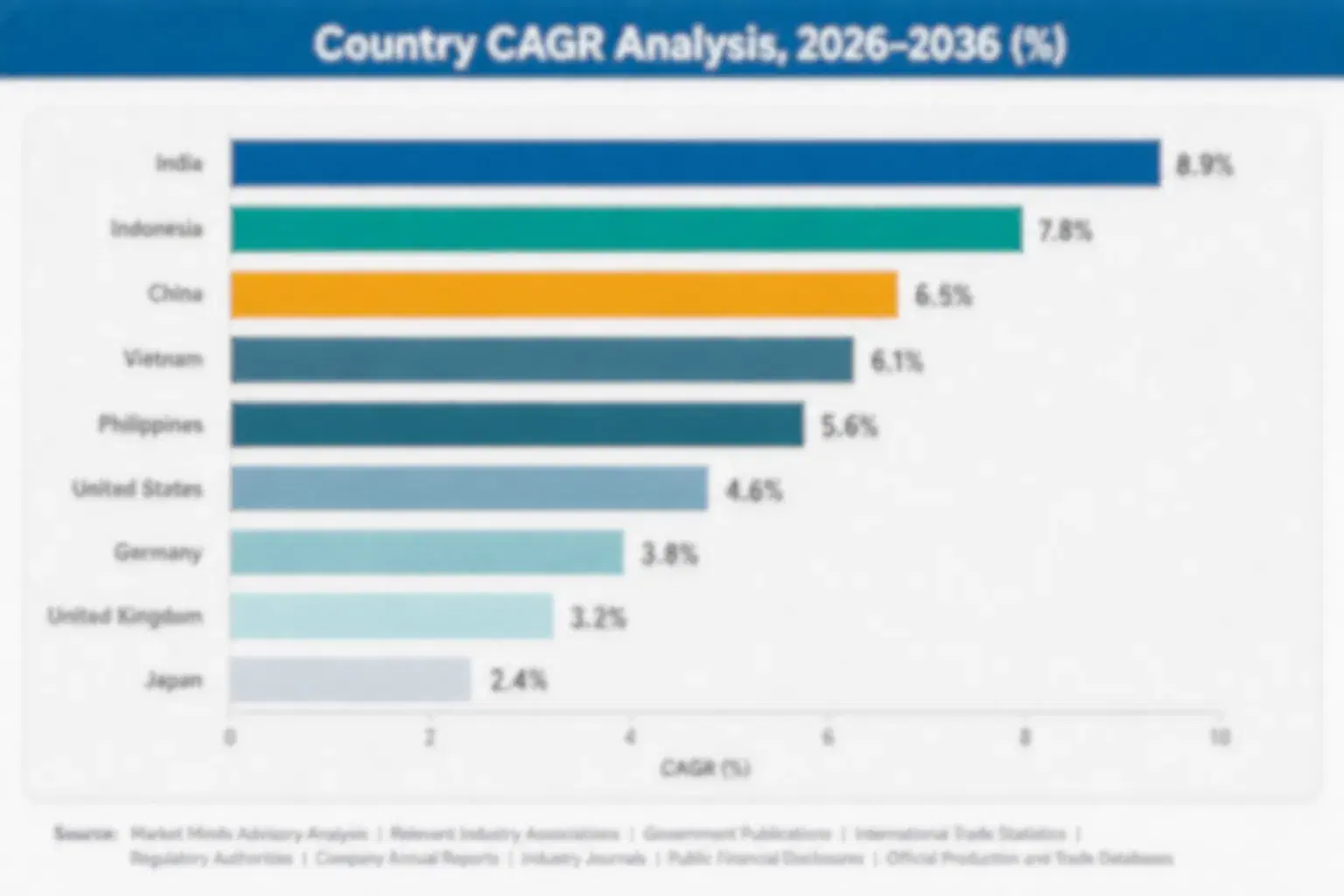
Regional Architecture and Country Demand Map

Geography follows chemical production volume together with the maturity of reconditioning networks, which suppress new drum demand wherever they are dense. East Asia leads on production scale, Western Europe on reuse regulation, and India grows fastest of all countries. Residue liability limits participation everywhere. Density decides economics.

North America

American reconditioning networks are dense and long established, and independent operators handle much of the returned drum population without manufacturer involvement, which suppresses new drum volume in the same way European reuse rules now do deliberately. Chemical filling along the Gulf Coast and lubricant blending nationally generate most demand. Residue liability under federal and state waste rules limits which operators will accept hazardous service returns. Plastic drums have taken meaningful share where manual handling and freight weight limits favour them, though steel retains ground in reconditioning-driven service. Independent reconditioners captured much of the second life value before manufacturers recognised what was happening, and buying them back has become considerably more expensive since.
Share: 25% | CAGR: 5.0% (2026 to 2036)

Western Europe

European reuse obligations have converted reconditioning from a cost alternative into a compliance route, which is why this region matters commercially out of proportion to its 22% share. German, Dutch and Belgian chemical clusters generate dense drum flows over short distances, which makes reconditioning economics work better here than in geographies with long return hauls. Residue liability under European waste rules is enforced seriously and limits capacity. Several manufacturers have acquired reconditioning operations specifically to capture value that would otherwise move permanently to independent operators. Return hauls stay short inside those clusters, which is what makes the economics work where geographies with dispersed filling sites struggle badly. Manufacturers moved late here.
Share: 22% | CAGR: 4.0% (2026 to 2036)
Regional intelligence for 5 additional markets available in the complete report: East Asia, South Asia and Pacific, Latin America, Middle East and Africa, Eastern Europe. Contact sales@marketmindsadvisory.com.
western-europe-industrial-drum-market-country-cagr-analysis-1787699287853

Capturing The Second Drum Life

A drum returns roughly six times at 58% below new pricing, residue liability limits who can recondition it, weight decides the steel and plastic split, and bulk substitution removes volume permanently. Four levers work on reconditioning ownership, residue capability, weight positioning and category selection rather than on manufacturing cost. Efficiency answers none of it.

Acquire Reconditioning Capacity Before Independents Consolidate

Every drum sold returns as a competitor at roughly 58% below new pricing across around six cycles, and European reuse obligations now direct fillers toward that supply deliberately. Manufacturers who acquired reconditioning operations capture the value across the whole container life rather than only its first use. Those who did not are watching it move permanently to independents who become progressively harder to buy as they consolidate. The economics of the acquisition improve every year the decision is deferred for somebody else. Independents are consolidating quickly. Deferral raises the price.
Market Impact: Captures value across all 6 of the container cycles

Build Residue Handling Capability Competitors Refuse

European waste rules follow returned residue to whoever accepted the drum, which means cleaning cost, disposal cost and liability for anything the declaration form omitted. Enough operators decline that work that reconditioning capacity is limited geographically rather than technically across 3 major waste categories. Building compliant cleaning and disposal capability creates a position manufacturing scale cannot threaten. The liability is genuine and manageable through pre-acceptance testing, and the protection it buys considerably exceeds the exposure involved. Refusal is what creates the opening. Testing manages the exposure. Refusal creates the opening here.
Market Impact: Covers all 3 of the regulated waste categories

Position Plastic On Weight Not On Price

An empty steel drum runs roughly 9 kilograms heavier than a plastic equivalent, which decides outcomes against road freight weight limits and manual handling rules that European workplaces enforce carefully. Manufacturers quote plastic against steel on unit price and lose the argument that actually matters to a customer's logistics and safety functions. Reframing around payload per vehicle and manual handling compliance reaches decision makers who never see a packaging quotation and who care nothing about cost per drum. Price was never the argument. Safety officers decide this. Logistics decides the specification.
Market Impact: Saves a full 9 kilograms on every drum

Target Categories Bulk Formats Cannot Reach

Chemical consolidation pushes volume toward intermediate bulk containers past a certain throughput, and that volume never returns once it moves. Manufacturers defending drum volume across all categories spread effort thinly against a substitution they cannot stop. Concentrating on categories where batch size stays small, contamination risk requires dedicated containers, or distribution runs through many small customers protects roughly 2 thirds of remaining volume properly. The rest is worth conceding deliberately rather than defending expensively and losing anyway. Conceding early preserves the effort. Bulk substitution never reverses. Some volume is already gone.
Market Impact: Protects 2 thirds of the genuinely defensible volume

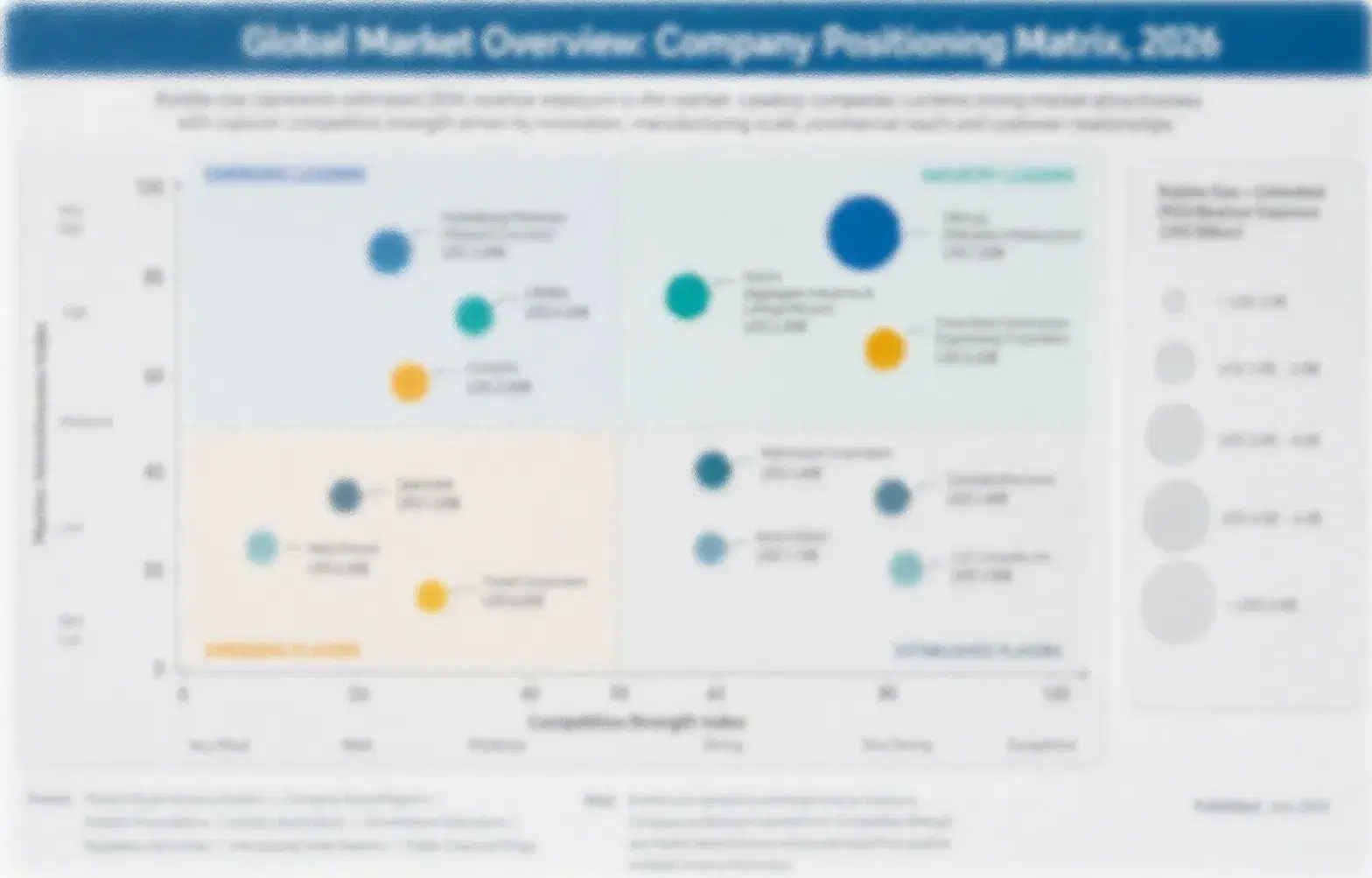
Who Controls the Margin Pool

Measured on disclosed industrial packaging revenue, the five largest manufacturers hold a CR5 of 33%, which is higher than most rigid packaging because certification and reconditioning approvals both take years to assemble. Greif, Mauser and Schütz operate manufacturing and reconditioning networks together, which is increasingly the model that matters, while several capable manufacturers compete on drum quality alone and find quality decides considerably less than they expected. Comparable drums do not produce comparable businesses.
Three contests define activity. New drum supply competes on price and proximity among manufacturers whose products are genuinely comparable once certified. Reconditioning competes on residue handling capability and network density rather than on any manufacturing capability. Certified hazardous goods service competes on held design approvals and, for reconditioners, on re-marking authority that traces back to an original manufacturer's approval. A manufacturer organised around the first contest is rarely equipped for the others.

Pressure builds as European reuse obligations formalise what was already happening commercially, which strengthens independent reconditioners at manufacturers' expense. Rankings shift toward whoever owns capacity across both the first life and the second. Independents consolidating now become progressively more expensive to acquire later. Deferring the decision raises its price.
western-europe-industrial-drum-market-company-positioning-matrix-1787699288135

Competitive Moat and Risk Dimensions

GREIF

Moat: Combined Manufacturing Reconditioning Network

Greif operates drum manufacturing alongside reconditioning capacity across overlapping geographies, which lets it capture value across a container's whole life rather than only its first sale. That combination cannot be assembled quickly, because reconditioning depends on residue handling approvals and local network density. A manufacturer competing on new drum quality alone is competing for one cycle out of roughly six.
GREIF

Risk: Bulk Format Substitution Exposure

Chemical consolidation moves volume toward intermediate bulk containers past certain throughput thresholds, and that volume never returns to drums in any form. Network scale across manufacturing and reconditioning protects share of a category that is itself shrinking in several commodity chemical applications. Breadth defends position within drums without defending drums against the alternative.
SCHÜTZ

Moat: Reconditioning Traceability And Certification

Schütz built a return and reconditioning system with traceability back to original manufacture, which is what re-marking a certified drum for hazardous service actually requires. Independent reconditioners without that chain cannot serve the same applications regardless of their cleaning capability. The system took years to establish and its value rises as European reuse obligations extend into regulated categories.
SCHÜTZ

Risk: Return Logistics Cost Exposure

A returned drum is mostly air and travels poorly relative to its residual value, so reconditioning economics depend on dense flows over short distances that not every geography provides. Long return hauls erode the margin the system was built to capture. The model works best precisely where competition from independent operators is also strongest.

Players Tracked

Prominent Players

Greif
Mauser Packaging Solutions
Schütz
Time Technoplast
Balmer Lawrie

Other Key Players

Sonoco Products
Nampak
Fustiplast
Industrial Container Services
Skolnik Industries
Müller GmbH
Jokey Group
Curtec
Sicagen India
Zhuhai Zhongfu
Shandong Longquan
Pact Group
Supreme Industries
Nilkamal
Hoover Ferguson Group

Recent Developments

MARCH 2025

Drum manufacturer acquires independent European reconditioning operator

A drum manufacturer acquired an independent reconditioning business operating across two European countries, an acquisition rather than any joint venture or supply agreement. Reuse obligations were directing filler volume toward reconditioned supply, and the value was moving permanently outside the manufacturer's reach with every passing year.
Signal: Independent reconditioners become progressively more expensive to acquire as reuse obligations formalise their commercial position. Timing decides price.
JULY 2025

Chemical filler converts commodity volume to intermediate bulk containers

A European chemical filler moved several commodity product lines from drums to intermediate bulk containers after site consolidation raised throughput per location, an operational decision rather than any corporate transaction. Per litre economics had crossed the threshold where drums stopped making sense for those particular products.
Signal: Volume lost to bulk substitution never returns, unlike volume lost to a competing drum manufacturer. Nothing brings it back.
NOVEMBER 2025

Reconditioner commissions dedicated hazardous residue handling facility

A reconditioning operator commissioned dedicated residue cleaning and disposal capability for hazardous goods drums, an organic capital investment rather than any acquisition. Regional capacity had been refusing that work because European waste rules assign liability for undeclared residues to whoever accepts the container. Nobody else would take it.
Signal: Residue liability rather than cleaning capability is what actually limits reconditioning capacity across European markets. Few will accept it.

What A Drum Costs To Make

Steel dominates on the metal side and polymer on the plastic side, and neither manufacturer has much else to work with. Cold rolled steel accounts for 54 to 62% of a steel drum's manufacturing cost, while high density polyethylene runs 56 to 64% for plastic equivalents. Forming and welding energy follows and is markedly higher in Europe. For reconditioners the picture inverts entirely, since cleaning and disposal dominate.
Steel was the volatility that mattered. Hot rolled and cold rolled coil pricing moved violently through 2021 and 2022 alongside European energy costs, which IEA industrial energy data documents across that period, and manufacturers quoting fixed annual prices absorbed the movement on an input that is roughly three fifths of their cost. Those with indexed pass-through clauses did not. Reported margins separated sharply that year.

Exposure divides by business model rather than by scale. Manufacturers selling new drums carry raw material risk on a product frequently priced before the steel is purchased. Reconditioners carry cleaning, disposal and return freight costs instead, which move with energy, labour and waste handling charges rather than with metals. European operators face higher energy and disposal cost, while Asian manufacturers benefit from regional steel supply.
western-europe-industrial-drum-market-cost-volatility-analysis-1787699288374

Index steel and polymer separately by drum type

Steel and polyethylene move on entirely different cycles and a manufacturer producing both carries two unrelated exposures that a single contractual index cannot capture at all. Separating them by drum type costs negotiation effort and removes a mismatch that showed up sharply in 2022. Manufacturers on blended indices absorbed movements they had no commercial ability to recover afterward.

Price reconditioning against residue class not volume

Cleaning and disposal costs vary enormously by what a drum previously held, and pricing reconditioning per unit ignores the only variable that genuinely matters to the operator's cost base. Charging by residue class aligns revenue with actual handling cost and disposal liability. It requires pre-acceptance testing rather than reliance on a declaration form, which is worth the effort involved.

Locate reconditioning within dense return flows

A returned drum is mostly air and travels poorly relative to its residual value, so reconditioning margin erodes quickly across long return hauls regardless of processing efficiency. Placing capacity inside dense chemical clusters keeps return legs short and the economics intact. It also puts the operation where independent competition is strongest, which is a trade worth making deliberately.

Portfolio Architecture for Margin Defence

Margin follows position in the container's life rather than manufacturing capability. New steel drums are comparable once certified and priced against reconditioned supply sitting 58% below them. Plastic drums earn modestly better where weight decides the specification. Certified hazardous goods drums earn more on approval coverage. Reconditioning earns most of all, because residue handling liability limits who can participate and network density limits where they can do it.
The tension is that manufacturing and reconditioning need different capital and produce different returns, yet a manufacturer without reconditioning is selling into a market its own products undercut. Manufacturing fills a plant and generates scale. Reconditioning generates margin across five further cycles and requires waste handling approvals, local networks and liability appetite that most manufacturers have never developed. Building both is expensive and owning only one is increasingly untenable in Europe.

High-value pools sit in three places. Reconditioning capacity with compliant residue handling, which limits participation more effectively than any technical barrier. Certified hazardous goods service including re-marking authority traceable to original manufacture. And plastic drum positions sold on weight against freight and manual handling constraints rather than on price against steel.

Volume / Commodity-Adjacent

New steel drums in general industrial service, comparable once certified and priced against reconditioned supply. The 7-point range separates manufacturers with indexed steel clauses and hedged energy from those quoting fixed annual prices on their dominant input.
Gross Margin: 11-18%

Premium / Certified

United Nations certified hazardous goods drums and plastic drums specified on weight and chemical compatibility. The 7-point spread separates manufacturers holding approval coverage across construction families from those certifying reactively for individual customer requirements.
Gross Margin: 22-29%

Sustainability / Regulatory / Next-Generation

Reconditioning operations, reusable drum systems with traceability, and certified re-marking service for hazardous goods. The 18-point range is wide because residue handling capability, network density and re-marking authority command very different returns on different capital bases.
Gross Margin: 27-45%
western-europe-industrial-drum-market-portfolio-architecture-1787699288564

High-value Sub-segments and Strategic Watch-out

Reconditioning With Residue Capability

Highest value and fastest growth at 8.4%, where European waste liability rather than cleaning technology limits who will participate at all. The risk is that an undeclared residue creates disposal and liability exposure considerably larger than the revenue any single reconditioning contract ever generated. Testing manages it.
Gross Margin: 40-45%

Certified Re-Marking Service

High value with steady growth, since returning a certified drum to hazardous service requires traceability back to original manufacture that independent operators frequently cannot demonstrate. The risk is that regulators simplify the re-marking pathway, which would remove the barrier and the position together. Traceability is the product.
Gross Margin: 34-39%

New Steel Drums

The volume core, comparable across certified manufacturers and permanently undercut by reconditioned supply at a large discount. Manufacturers hold the position because it carries plant utilisation, and utilisation is what makes certified and plastic work economically possible. Nobody exits it deliberately. Utilisation funds everything else here.
Gross Margin: 12-17%

Bulk Format Substitution

The strategic watch-out. Chemical site consolidation raises throughput per location and pushes volume toward intermediate bulk containers past a threshold that varies by product. The risk is that this volume never returns in any form, which distinguishes it entirely from share lost to a competitor.
Gross Margin: 17-22%

Six Lives Per Sale

A drum generates revenue once for its manufacturer and roughly five more times for whoever reconditions it, which is the central architectural fact of this market and the one most manufacturers organised themselves to ignore. New drum demand tracks chemical filling volume, while reconditioning revenue tracks the installed drum population, and the two move on entirely different cycles.
Stickiness concentrates in the second life rather than the first. New drum supply is requoted annually against comparable certified manufacturers within a supply radius. Reconditioning relationships are far harder to move, because residue handling approvals, local network density and return logistics are all specific to an operator. Certified re-marking is stickier still, since traceability back to original manufacture is something an alternative operator frequently cannot establish at all.

The buyer changes with each life too. New drums are purchased by procurement comparing certified manufacturers on landed cost. Reconditioned drums increasingly reach sustainability and compliance functions responding to reuse obligations rather than to price. Residue handling is scrutinised by environmental and safety teams who ask questions procurement never raises. Manufacturers organised only for the first conversation are absent from the two that are growing.
western-europe-industrial-drum-market-end-use-penetration-index-1787699288748

Owning The Whole Life

These are among the four positions where our research anticipates prominent divergence between winners and laggards over the coming forecast period. Each is grounded in the demand model, the regulatory perimeter, and the announced capacity pipeline.
01 / RECONDITIONING CAPACITY OWNERSHIP

Buy the operators before they consolidate further

Every drum sold returns to the market as a competitor at roughly 58% below new pricing, across around six cycles before anybody finally scraps the container. European reuse obligations now direct filler volume toward that supply as a matter of compliance rather than cost, which formalises a shift that was already well underway commercially. Manufacturers who acquired reconditioning operations capture value across the whole container life, and the independent operators still available are becoming measurably more expensive with every passing year.
02 / RESIDUE LIABILITY APPETITE

Take the waste exposure competitors keep refusing

European waste rules follow a returned drum's residue to whoever accepted the container, which brings cleaning cost, disposal cost and liability for anything the declaration form failed to mention accurately. Enough operators decline that work entirely that reconditioning capacity ends up limited geographically rather than by any technical constraint on the cleaning itself. Building genuinely compliant capability creates a commercial position that manufacturing scale alone cannot threaten in any way, and pre-acceptance testing makes the exposure genuinely manageable in practice.
03 / WEIGHT ARGUMENT POSITIONING

Nine kilograms decides more than price does

An empty steel drum runs roughly nine kilograms heavier than the plastic equivalent does, which quietly settles the specification against road freight weight limits and against manual handling rules European workplaces enforce with genuine seriousness. Manufacturers keep quoting plastic against steel on unit price, and they lose the only argument their customer actually cares about. Reframing the argument around payload per vehicle and handling compliance reaches the logistics and safety functions who never see a packaging quotation at any point.
04 / SUBSTITUTION CATEGORY SELECTION

Concede the volume that is already gone

Chemical site consolidation steadily raises throughput per individual location and it pushes product past the threshold where intermediate bulk containers become obviously cheaper per litre than drums can ever be. That volume never returns in any form at all, which makes it fundamentally different from share lost to a competing drum manufacturer. Concentrating the defence on categories with small batches, contamination risk or fragmented distribution protects what is genuinely defensible, instead of spending expensively on volume that is already leaving.

Engagement Snapshot From the Field

A live engagement with an industry participant carrying material or product regulatory and market exposure ahead of a defining policy shift, showing how our research translates into a defensible multi-year portfolio strategy.
MARKET MINDS ADVISORY · CLIENT ENGAGEMENT SUMMARY
Western Europe Industrial Drum Producer Strategic Portfolio Review and Transition Roadmap 2026·Investment Scenario on Western Europe Industrial Drum Exposure Evaluation 2025-26
CLIENT PROFILE
A European industrial drum manufacturer operating five plants across three countries, supplying steel and plastic drums to chemical, lubricant and agrochemical fillers, with reported revenue of 218 million dollars (client-reported, unverified by MMA). Roughly 91% of revenue came from new drum sales. A small reconditioning operation existed at one site and had never been extended to any other location.
STRATEGIC CHALLENGE
New drum volume had declined for three consecutive years while reconditioned supply expanded across the same customer base. Management was pursuing manufacturing cost reduction and a plastic drum range extension. Neither addressed why volume was moving to reconditioned containers, or why the company's own reconditioning capability had remained confined to a single site for a decade.
MMA APPROACH
MMA traced returned drum flows across the customer base using data the company held on delivery volumes but had never analysed against reconditioner activity. Eighteen expert interviews with chemical filling, sustainability and compliance leads established how reuse obligations were changing purchasing. The analysis treated reconditioning ownership and residue liability, rather than manufacturing cost, as the causes of the volume decline.
KEY FINDINGS
  1. Roughly two thirds of lost volume had gone to reconditioned drums rather than to competing manufacturers, and the company had recorded it as competitive loss throughout.
  2. Sustainability and compliance functions were driving reconditioned purchasing, and none of them had ever been contacted by the company's commercial organisation at all.
  3. The single reconditioning site declined hazardous goods work because nobody internally would accept residue liability under European waste rules for undeclared contents.
  4. Reconditioning expansion modelled materially better returns than the manufacturing cost programme already underway (client-reported, unverified by MMA). Payback modelled inside two years on capability already partly held.
CLIENT PROFILE
A European industrial drum manufacturer operating five plants across three countries, supplying steel and plastic drums to chemical, lubricant and agrochemical fillers, with reported revenue of 218 million dollars (client-reported, unverified by MMA). Roughly 91% of revenue came from new drum sales. A small reconditioning operation existed at one site and had never been extended to any other location.
STRATEGIC CHALLENGE
New drum volume had declined for three consecutive years while reconditioned supply expanded across the same customer base. Management was pursuing manufacturing cost reduction and a plastic drum range extension. Neither addressed why volume was moving to reconditioned containers, or why the company's own reconditioning capability had remained confined to a single site for a decade.
MMA APPROACH
MMA traced returned drum flows across the customer base using data the company held on delivery volumes but had never analysed against reconditioner activity. Eighteen expert interviews with chemical filling, sustainability and compliance leads established how reuse obligations were changing purchasing. The analysis treated reconditioning ownership and residue liability, rather than manufacturing cost, as the causes of the volume decline.
KEY FINDINGS
  1. Roughly two thirds of lost volume had gone to reconditioned drums rather than to competing manufacturers, and the company had recorded it as competitive loss throughout.
  2. Sustainability and compliance functions were driving reconditioned purchasing, and none of them had ever been contacted by the company's commercial organisation at all.
  3. The single reconditioning site declined hazardous goods work because nobody internally would accept residue liability under European waste rules for undeclared contents.
  4. Reconditioning expansion modelled materially better returns than the manufacturing cost programme already underway (client-reported, unverified by MMA). Payback modelled inside two years on capability already partly held.
RECOMMENDED STRATEGY
Phase 1: Phase one: build residue handling capability at the existing reconditioning site and accept hazardous goods work with pre-acceptance testing throughout. Phase 2: Phase two: acquire or establish reconditioning capacity within the two densest customer clusters before independent operators there consolidate further. Timing decides the price. Phase 3: Phase three: reach sustainability and compliance functions directly, since they now decide reconditioned volume and procurement does not. Procurement no longer decides it.
OUTCOME
Residue handling capability was commissioned and hazardous goods reconditioning began within two quarters. One independent operator in a dense customer cluster was acquired on terms management described as considerably better than those available a year later (client-reported, unverified by MMA). Commercial coverage extended to sustainability and compliance contacts across the twenty largest accounts.

Frequently Asked Questions

Foundational context covering the market sizes, CAGR, scope, country, region and competition that inform every finding below. This section is provided to cover basics and most often pre-purchase conversations, answered from the MMA Primary Research Dataset.

What is the current size of the Western Europe Industrial Drum Market?

The market was worth 11.4 billion dollars in 2025, covering steel, plastic, fibre, reconditioned and certified hazardous goods drums. It reaches 12.04 billion dollars in 2026.

How large will the Western Europe Industrial Drum Market be by 2036?

MMA forecasts 20.75 billion dollars by 2036, an increase of 8.71 billion dollars over the 2026 base. That represents an expansion multiple of 1.72 times across the forecast period.

What is the CAGR for the Western Europe Industrial Drum Market 2026 to 2036?

The base case compounds at 5.6% annually. The bull case reaches 6.8% if manufacturers capture reconditioning value, while the bear case sits at 4.4% on substitution toward intermediate bulk containers.

Which segment is growing fastest?

Reconditioned and reusable drums, at 8.4%, half again the market rate of 5.6%. A steel drum survives around six cycles and returns at roughly 58% below new pricing.

Who are the major companies in the Western Europe Industrial Drum Market?

Greif, Mauser Packaging Solutions, Schütz, Time Technoplast and Balmer Lawrie lead on disclosed industrial packaging revenue. Fustiplast, Müller GmbH and Industrial Container Services hold strong regional positions.

Which country is growing fastest?

India at 7.6%, as specialty chemical, agrochemical and pharmaceutical intermediate production expand together. China remains the largest producer at roughly 29% of global drum output.

Report Segmentation Architecture

The full report scope spans multiple orthogonal segmentation dimensions, with cross-tabulated demand data provided for each dimension pair. Coverage extends further to regional breakdowns, trend trajectories, and the competitive detail needed to support segment-level decision-making.

By Drum Construction

  • Tight-Head Steel Drums
  • Open-Head Steel Drums
  • High Density Polyethylene Drums
  • Fibre and Composite Drums
  • Reconditioned and Reusable Drums
  • UN Certified Hazardous Goods Drums

By End-Use Industry

  • Industrial and Specialty Chemicals
  • Petrochemicals and Lubricants
  • Agrochemicals and Crop Protection
  • Food, Oils and Ingredients
  • Pharmaceutical Intermediates
  • Paints, Coatings and Adhesives

By Commercial Dimension

  • Direct Filler Supply
  • Reconditioning Service Contract
  • Managed Return and Reuse Programme
  • Certified Design Supply Agreement
  • Distributor and Stock Supply
  • Spot and Transactional Supply

By Region

  • North America
  • Western Europe
  • East Asia
  • South Asia and Pacific
  • Latin America
  • Middle East and Africa
  • Eastern Europe

Scope, Methodology, and Coverage

Every figure in this report is reproducible from documented input assumptions. The scope below maps the historical period, the forecast horizon, the segmentation dimensions, and the countries covered, alongside the underlying primary and qualitative methodology.
Historical Period
2020 to 2025
Forecast Period
2026 to 2036
Base Year
2025 (USD billions; MMA Primary Research Dataset, August 2026)
Market Definition
Scope covers industrial drums of approximately one hundred to two hundred and forty litres supplied to chemical, petrochemical, lubricant, food, agrochemical and pharmaceutical fillers, spanning tight-head steel drums, open-head steel drums, high density polyethylene drums, fibre and composite drums, reconditioned and reusable drums, and United Nations certified hazardous goods drums. Intermediate bulk containers, jerry cans and containers below one hundred litres, road tankers and ISO tanks, closures, bungs and fitments sold separately, and filling and closing equipment are excluded. Western European dynamics are examined as the analytical focus within the global category.
Quantitative Units
USD billions (current prices); drums produced; reconditioning cycles per unit; residue disposal volume; certified design count
Segmentation Dimensions
By Drum Construction; By End-Use Industry; By Commercial Dimension; By Region
Regions Covered
North America, Western Europe, East Asia, South Asia and Pacific, Latin America, Middle East and Africa, Eastern Europe
Countries Covered
Germany, Netherlands, Belgium, France, Italy, Spain, UK, China, India, USA, Japan, Brazil, Turkey, Poland, Saudi Arabia
Key Companies Profiled
Greif, Mauser Packaging Solutions, Schütz, Time Technoplast, Balmer Lawrie, Sonoco Products, Nampak, Fustiplast, Industrial Container Services, Skolnik Industries, Müller GmbH, Jokey Group, Curtec, Sicagen India, Zhuhai Zhongfu, Shandong Longquan, Pact Group, Supreme Industries, Nilkamal, Hoover Ferguson Group
Quantitative Methodology
Primary survey, n=3,800 respondents, Q4 2025, six countries; demand-side model with trade association cross-validation
Qualitative Methodology
47 expert interviews, Q4 2025; applied to validate demand model assumptions, identify emerging dynamics, and assess competitive positioning
Report Format
PDF and XLSX data workbook (Word format preview document)
Publisher
Market Minds Advisory
Report Code
MMA-2026-PAC-110
Published
August 2026
Contact
sales@marketmindsadvisory.com | www.marketmindsadvisory.com

Purchase the full Western Europe Industrial Drum Market Report (2026 to 2036).

The full report runs to 172 pages and covers all six drum construction segments, seven regions and 20 profiled companies, with Western European dynamics examined as the analytical focus throughout. It includes the complete segment CAGR set, regional reconditioning network density mapping, and analysis of how reuse obligations redirect volume between new and refurbished supply. Company profiles carry evaluation on disclosed industrial packaging revenue, with moat and risk assessment for the top five manufacturers. The competitive section extends to 15 tracked corporate and regulatory developments across 2024 and 2025. Primary research inputs include a quantitative survey of 3,800 respondents and 47 expert interviews conducted in Q4 2025.
Six drum construction segments with individual CAGR forecasts
Seven regional markets with reconditioning network density mapping
Twenty company profiles on consistent revenue evaluation basis
Fifteen tracked developments with commercial interpretation and context
Reuse obligation analysis across new and reconditioned supply channels
Bulk format substitution risk mapped by end-use category

Built For The People Who Decide

From boardroom strategy to bench-side execution, this report is read cover-to-cover by leaders shaping the next decade of their industry, turning demand scenarios, market dynamics and valuation benchmarks into decisions.
CXOs/ Presidents/ VPs/ Managers
M&A and Corporate Development
Strategy Teams and R&D Heads
Procurement and Product Directors
Regulatory and Compliance Leaders
Investor Relations and Equity Analysts