Market Minds Advisory
Wearable Healthcare Devices Market

Wearable Healthcare Devices Market: Consumer Wellness Meets Clinical Monitoring

Continuous glucose monitors now sell to people without diabetes, cardiac patches chase CMS reimbursement codes, and Apple's device lock-in collides with Dexcom's clinical specialization as consumer wellness and prescription-grade monitoring merge into one contested category.

Lead Analyst

Alice Ballenger

Published

September 2026

Make Smarter Decisions with Customized Research Insights

Request a free sample report and evaluate market opportunities, growth trends, and competitive dynamics relevant to your business needs.

2025 MARKET VALUE$31.5BMarket Size 2025
2036 FORECAST VALUE$88.1BBase Case , 2026 to 2036
CAGR 2026 TO 20369.8 %Bull 11.0% / Bear 8.6%
INCREMENTAL OPPORTUNITY$53.5BNet 10- year value creation
EXPANSION MULTIPLE2.55x2036 value over 2026 base
Strategic Levers
M&A Pipeline
Regional Outlook
Country Rankings
Competitive Intelligence
Segmental Deep-dive
Call-Us : 91 93563 13602

Executive Snapshot and Market Trajectory

Wearable healthcare devices are splitting into two buyer categories that used to be one. Consumers buy smartwatches for wellness data, while payers now reimburse continuous glucose monitors and cardiac patches as clinical tools, and device makers are racing to serve both without diluting either.
Continuous glucose monitoring wearables lead growth at 13.5% annually, nearly 1.4 times the market average, as Dexcom's Stelo and Abbott's Lingo pull the category beyond diagnosed diabetics into general metabolic wellness. Remote cardiac monitoring follows behind on expanding CMS reimbursement codes. East Asia now holds the largest regional share at 29%, ahead of North America, on the back of Chinese and South Korean consumer electronics manufacturing scale and rapid smartwatch penetration across younger, health-conscious buyers.
Competitive intensity concentrates around clinical validation rather than hardware specs, since prescription-grade CGM and arrhythmia detection sit inside strict FDA clearance pathways that consumer fitness brands cannot bypass. Apple and Samsung command platform breadth and brand trust, but Dexcom, Abbott, and Masimo hold sensor accuracy patents that took over a decade to validate clinically, keeping the highest-margin segments away from pure consumer entrants despite aggressive smartwatch feature expansion.
Market Definition
The wearable healthcare devices market covers body-worn or body-attached electronic devices that continuously or intermittently capture physiological, biochemical, or biomechanical data for clinical monitoring, chronic disease management, or FDA/CE-regulated diagnostic support, including smartwatches with cleared health features, continuous glucose monitors, cardiac monitoring patches, multi-parameter biosensor patches, smart hearables with health sensing, and wearable drug delivery devices. It excludes implantable devices, hospital bedside monitoring equipment, non-wearable home diagnostic devices, and consumer fitness trackers that carry no regulatory clearance or clinical monitoring function.
Base Year Value
$31.5B in 2025 (MMA Primary Research Dataset, August 2026)
Forecast Period
2026 to 2036, eleven discrete annual values
CAGR
9.8% base case. Bull 11.0%. Bear 8.6%.
Fastest Growth Segment
Continuous Glucose Monitoring Wearables: 13.5% CAGR
Fastest Growth Country
India: 15.4% CAGR
Fastest Growth Region
South Asia and Pacific: 11.8% CAGR
Largest Region
East Asia: 29% of 2025 global value
Market Leaders
Apple Inc., Samsung Electronics, Abbott Laboratories, Dexcom Inc., Masimo Corporation. Source: MMA Analysis based on company annual reports.
Primary Survey
n=3,800 procurement and R&D decision-makers, Q4 2025, six countries
Methodology
Demand-side build-up, cross-validated against public data, 47 expert interviews

Wearable Healthcare Devices Market Forecast Scenarios

wearable-healthcare-devices-market-size-forecast-scenario-1787665318449
Between 2020 and 2025 the market grew at an estimated 8.8% annually, propelled first by pandemic-era remote monitoring adoption and later by consumer smartwatch health features reaching mainstream price points. Early growth concentrated in fitness-adjacent wellness tracking rather than regulated clinical devices. Clinical-grade adoption accelerated only after 2023, when Dexcom and Abbott began pursuing over-the-counter glucose monitoring alongside their prescription businesses, widening the addressable buyer base substantially.
The base case carries the market to 9.8% CAGR through 2036 on three mechanisms. First, CMS and comparable payers abroad keep expanding remote patient monitoring reimbursement, converting wearables into billable clinical services. Second, non-diabetic CGM adoption widens the buyer pool well beyond the 38 million diagnosed diabetics in the United States alone. Third, cardiac monitoring patches replace bulkier Holter monitors as AI arrhythmia detection algorithms clear FDA review, moving hospital-grade diagnostics onto consumer wrists.
The bull case reaches 11.0% if Medicare finalizes RPM reimbursement parity with in-clinic visits, pulling forward adoption among smaller health systems that currently lack billing infrastructure. The bear case falls to 8.6% if payers tighten prior-authorization requirements for CGM outside diagnosed diabetes, a restriction several insurers piloted in 2025, slowing the non-clinical wellness expansion that drives incremental unit growth.

The Convergence of Consumer Wellness and Clinical Monitoring

Three converging forces set the pace here. Payers are learning to reimburse continuous monitoring the way they reimburse office visits, semiconductor miniaturization keeps shrinking sensor packages toward truly disposable form factors, and a generation raised on fitness trackers now expects its blood glucose and heart rhythm data delivered the same way. None of these forces alone would move a market this size this quickly.
MARKET CONCENTRATIONCR5: 42%Top five players hold roughly two-fifths of category revenue
AVERAGE DEVICE ASP$180Blended price across consumer and clinical-grade wearable categories
TOP MANUFACTURING HUBChina: 34%Single country supplies over a third of global assembly
SENSOR REPLACEMENT CYCLE14 monthsAverage interval before patients replace prescribed monitoring sensors
COMPONENT TRADE INTENSITY61% importedShare of semiconductor and battery inputs sourced cross-border
SEMICONDUCTOR COST SHARE29% of COGSChipsets and sensors dominate total bill of materials
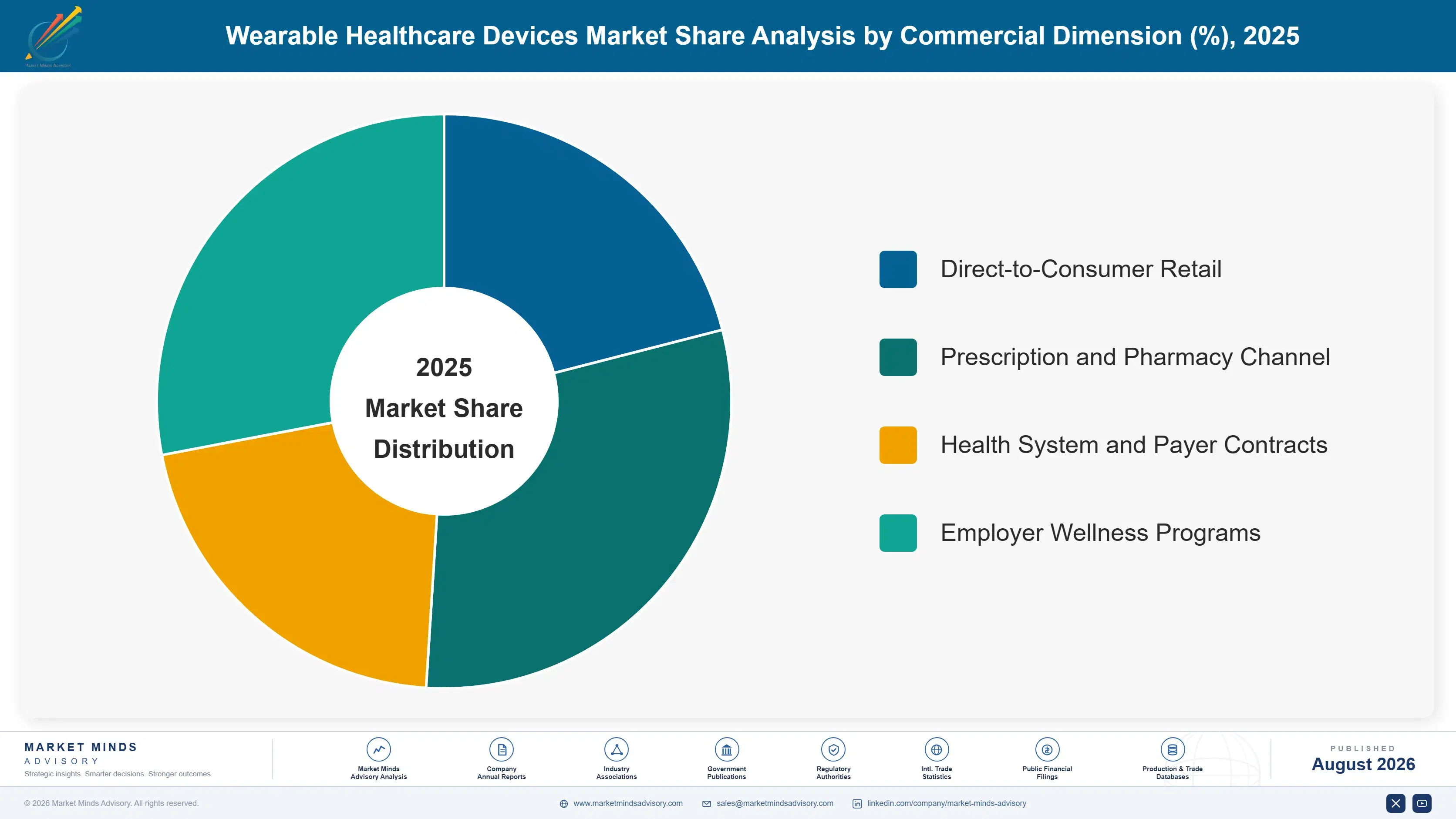
Commercial character splits sharply by channel. Consumer electronics giants sell through retail and carrier channels on brand and platform lock-in, while medical device specialists sell through prescription and payer channels on clinical validation and reimbursement codes. The two rarely compete directly for the same purchase decision, even when their hardware looks similar on a store shelf, because the buyer, the price point, and the regulatory bar differ completely.
Looking to 2036, three shifts matter most. Regulatory clearance pathways will keep tightening as more consumer brands chase medical claims, sensor accuracy will become the primary competitive battleground rather than app design, and payers will increasingly dictate which devices patients can access at all, shifting negotiating leverage away from consumers and toward health systems and insurers.
"The device that wins here won't be the one with the best sensor. It'll be the one whose manufacturer figured out how to get a payer to pay for it, because clinical accuracy without a billing code is just an expensive gift."
Director, Connected Health and Medical Wearables Practice · MMA Medical Devices Practice · August 2026

Market Trends

Non-Prescription CGM Opens a Wellness Market

Dexcom launched Stelo in August 2024 and Abbott followed with Lingo, both over-the-counter continuous glucose monitors sold without a prescription to people managing prediabetes or general metabolic wellness rather than diagnosed diabetes. The FDA cleared both as the first OTC CGM category, a regulatory first that separates glucose sensing from insulin-dependent clinical use entirely. Early retail pricing sits near USD 99 for a 30-day supply, materially below prescription CGM out-of-pocket cost. That price point pulls in a buyer base roughly ten times larger than the diagnosed diabetic population these companies served previously, reshaping unit economics across the category.
Market Impact: Addresses 589 million diabetic patients
CMS Expands Remote Patient Monitoring Billing Codes

CMS added and expanded remote physiologic monitoring codes, including 99453 through 99458, and 2024 rulemaking extended reimbursement to shorter monitoring windows and remote therapeutic monitoring for musculoskeletal and respiratory data alongside cardiac and glucose readings. That change lets clinics bill for wearable-generated data with as few as two days of readings in a 30-day period rather than the sixteen days previously required. Private payers including UnitedHealthcare and Cigna have followed with comparable coverage policies. The effect converts wearables from a wellness expense patients pay themselves into a recurring, billable clinical service line for health systems and remote monitoring vendors alike.
Market Impact: Covers over 300 approved hospitals

Market Opportunities and Growth Drivers

Chronic Disease Prevalence Drives Continuous Monitoring Demand

The International Diabetes Federation estimates roughly 589 million adults live with diabetes worldwide as of 2024, with prevalence still climbing across middle-income countries as diets and urbanization shift. Cardiovascular disease remains the leading global cause of death, and the American Heart Association's 2024 statistical update put annual United States cardiovascular costs above USD 400 billion. Wearable glucose and cardiac monitoring directly address both burdens by catching deterioration between clinical visits rather than waiting for scheduled appointments. That chronic disease base, not wellness enthusiasm, is what makes reimbursement economically justifiable to payers evaluating cost offsets against avoided hospitalizations.
Market Impact: Delays rollout 12 to 18 months

Hospital-at-Home Programs Expand Reimbursed Remote Monitoring

CMS's Acute Hospital Care at Home waiver, renewed into 2025, lets qualifying health systems treat patients at home for conditions once requiring inpatient admission, and continuous wearable vital sign monitoring makes that clinically defensible. More than 300 hospitals across over 40 health systems had been approved under the waiver by early 2025. Each enrolled patient wears biosensor patches tracking heart rate, respiratory rate, and oxygen saturation continuously, with clinical staff alerted to deviations remotely. That shift in where acute care happens is pulling wearable procurement upstream from individual clinicians toward health system supply chains.
Market Impact: Delays deals 3 to 6 months

Market Restraints and Challenges

Reimbursement Fragmentation Slows Cross-Border Market Expansion

Remote monitoring reimbursement varies sharply by country and even by payer within the United States, since no harmonized global framework defines which wearable-generated data qualifies for billing. The root cause is regulatory: CMS, NHS England, and Germany's DiGA fast-track process each built separate qualification criteria independently, with no mutual recognition between them. That fragmentation forces device makers to run separate clinical evidence packages and separate reimbursement submissions market by market, slowing international rollout by roughly 12 to 18 months per country. Several manufacturers are now pursuing bundled value-based contracts with large self-insured employers, sidestepping national reimbursement timelines for early revenue.
Market Impact: Expands addressable buyers 10-fold

Continuous Biometric Data Raises Privacy And Security Exposure

Continuous glucose and cardiac data streaming from a consumer device sits in a regulatory gap, since HIPAA governs data inside clinical entities but the same data flowing through a wearable app often falls outside protection. The root cause: makers built health features onto consumer platforms never designed to handle protected health information. A 2023 data broker investigation found health app data, including glucose readings, sold to advertising networks without consent. That has slowed enterprise adoption, since health systems now demand independent security audits before integration. Manufacturers are responding with on-device processing and end-to-end encryption that keeps biometric data off servers.
Market Impact: Adds CMS codes 99453-99458 billing
3 additional market trends, 3 additional growth drivers, and 3 additional restraints and challenges are covered in the full report. Contact sales@marketmindsadvisory.com to access the complete intelligence.

Segment CAGR and Growth Architecture

Segmentation follows device type, a single technology and clinical-function logic spanning smartwatches, continuous glucose monitors, cardiac monitoring patches, multi-parameter biosensor patches, smart hearables, and wearable drug delivery devices. Each carries distinct sensor architecture, regulatory pathway, and buyer channel, so commercial position tracks what the device measures, how accurately it performs, and how it is cleared for clinical or consumer sale.
wearable-healthcare-devices-market-market-share-analysis-1787665319046

Continuous Glucose Monitoring Wearables

Continuous glucose monitoring wearables grow fastest at 13.5% annually, nearly 1.4 times the overall market rate, as Dexcom's Stelo and Abbott's Lingo pull sensing beyond diagnosed diabetes into general metabolic wellness. These adhesive sensor patches, typically worn on the upper arm for 10 to 15 days, measure interstitial glucose continuously and transmit readings to a paired smartphone app. Prescription CGM for insulin-dependent diabetics remains the segment's revenue base, led by Dexcom's G7 and Abbott's FreeStyle Libre franchises, both scaled across more than 60 countries. The over-the-counter tier now compounds fastest, since it reaches people managing prediabetes, weight, or general metabolic health without requiring a diabetes diagnosis or physician prescription, a buyer pool many times larger than the clinical base alone.
CAGR 13.5%

Remote Cardiac Monitoring Patches and ECG Wearables

Remote cardiac monitoring and ECG wearables grow second-fastest at 11.8%, driven by AI-assisted arrhythmia detection algorithms clearing FDA review faster than traditional Holter monitor workflows allow. Adhesive patches from iRhythm's Zio franchise and wrist-worn ECG features from Apple Watch and Withings ScanWatch capture continuous or on-demand rhythm data over periods spanning 14 days to several weeks, replacing bulkier ambulatory monitors that patients tolerated poorly. Cardiologists increasingly order patch-based monitoring as a first-line diagnostic rather than a fallback, since patch wear compliance runs measurably higher than with wired Holter devices. CMS reimbursement for extended wear periods, combined with growing atrial fibrillation prevalence tied to an aging population, keeps demand compounding well ahead of the broader wearable healthcare category.
CAGR 11.8%
Full segment breakdown across 6 segments available in the complete report.

Regional Architecture and Country Demand Map

East Asia now leads on Chinese, South Korean, and Japanese electronics manufacturing scale and smartwatch adoption, narrowly ahead of North America's reimbursement-driven demand. Western Europe follows on public healthcare integration, while South Asia and Pacific posts the fastest growth as smartphone-linked wearables reach first-time buyers across India and Southeast Asia.

North America

North America holds 26% of global value, anchored by CMS reimbursement codes that convert wearables into billable clinical services rather than one-time retail purchases. The United States drives nearly all of this share, with Apple, Dexcom, Abbott, and Masimo all headquartered domestically and shipping first to American regulators and payers before international rollout. Employer-sponsored wellness programs increasingly subsidize fitness-adjacent devices, while Medicare Advantage plans cover cardiac and glucose monitoring for qualifying chronic conditions. Canada follows a slower, single-payer reimbursement path that lags American billing code adoption by roughly two years. Growth of 10.3% reflects continued expansion of remote patient monitoring codes and the rollout of over-the-counter CGM into mainstream pharmacy chains nationwide.
Share: 26% | CAGR: 10.3% (2026 to 2036)

Western Europe

Regulatory harmonization under the EU Medical Device Regulation shapes Western Europe's 21% share more than any single national market does. Germany's DiGA fast-track pathway lets digital and wearable health applications secure reimbursement within weeks of federal approval, a model France and Belgium are now adapting for their own systems. The UK's NHS has piloted remote cardiac and glucose monitoring across several integrated care systems, reducing outpatient appointment volume measurably where deployed. Public healthcare budgets constrain per-patient device spending more tightly than in the United States, favoring devices with proven cost-offset data over premium consumer features. Growth of 8.3% trails the global rate as procurement cycles move through centralized health technology assessment bodies rather than direct-to-consumer retail channels.
Share: 21% | CAGR: 8.3% (2026 to 2036)
Regional intelligence for 5 additional markets available in the complete report: East Asia, South Asia and Pacific, Latin America, Middle East and Africa, Eastern Europe. Contact sales@marketmindsadvisory.com.
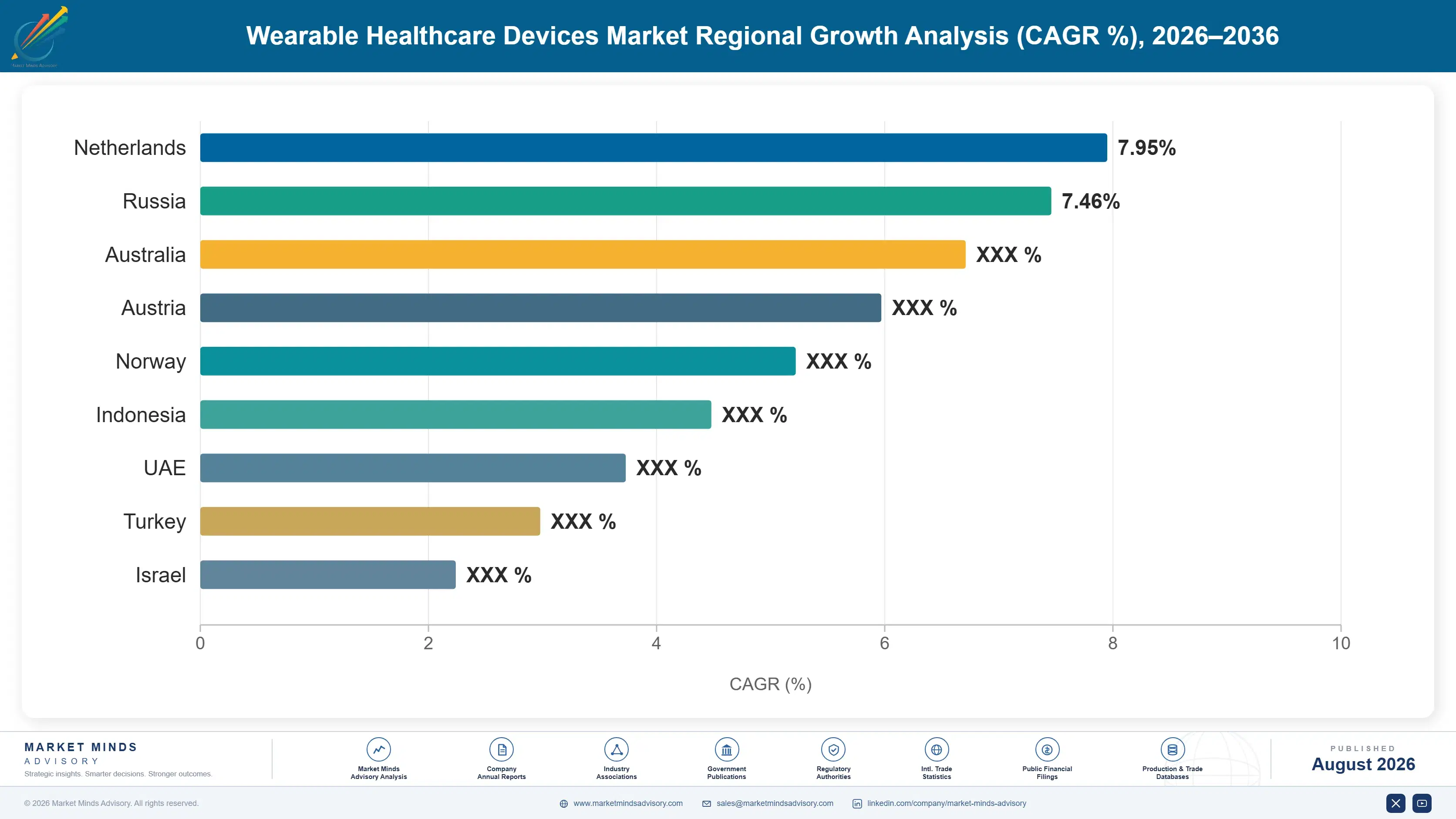
wearable-healthcare-devices-market-country-cagr-analysis-1787665319578

Where Wearable Health Margin Actually Concentrates

Device makers today face a familiar tension: hardware margins compress toward consumer electronics norms while software, data, and reimbursement services increasingly carry the profit. The four moves below shift revenue toward defensible, recurring streams instead of one-time device sales, drawing on how clinical-grade wearable leaders already separate hardware economics from the services layered on top.

Bundle Sensors With Subscription Data Services

Dexcom and Abbott both pair hardware with companion app subscriptions that layer coaching, trend alerts, and clinician data sharing atop the base sensor. Sensor replacement remains the recurring hardware revenue, but subscription tiers add USD 5 to 15 in monthly margin per user, carrying software-level gross margins above 70%, well exceeding hardware margins that typically run 25% to 35%. Whoop built its entire model around this structure, selling the wearable near cost while charging a mandatory annual subscription. Device makers slow to add a services layer are ceding the highest-margin part of the relationship to competitors.
Market Impact: Adds subscription revenue carrying over 70% gross margins

Sell Clinical-Grade Data Into Health System Contracts

Hospital-at-home programs and remote patient monitoring vendors need continuous data feeds, not devices, and manufacturers that sell directly into health system contracts capture per-patient monitoring fees running USD 40 to 80 per month rather than a single retail sale. VitalConnect and Biotricity built their entire commercial model around this B2B channel, bypassing consumer retail margin pressure. Health systems value single-vendor accountability for data quality and device support, which lets contracted suppliers negotiate multi-year agreements instead of competing purchase by purchase. This channel insulates revenue from consumer retail seasonality and price competition that squeezes margins in the smartwatch segment.
Market Impact: Captures USD 40 to 80 monthly per patient

Expand Over-The-Counter Categories Beyond Diagnosed Patients

The Stelo and Lingo launches proved that regulatory clearance for over-the-counter sale, not prescription status, is what actually gates category size. Extending that non-prescription pathway to cardiac rhythm monitoring and other biosensor categories could roughly double the addressable buyer pool within 5 years, based on the 10-fold expansion CGM saw moving from prescription-only to OTC sale. Companies pursuing FDA de novo clearance for OTC versions of prescription-only devices are effectively buying access to a retail channel that dwarfs clinical channel volume. The first mover in each category captures disproportionate shelf space and brand association before competitors follow.
Market Impact: Roughly doubles the addressable buyer pool within 5 years

Monetize De-Identified Population Health Datasets Commercially

Millions of continuously collected biometric readings carry research and actuarial value well beyond the original clinical purpose, and manufacturers sitting on years of longitudinal data are beginning to license de-identified, aggregated datasets to pharmaceutical researchers, academic institutions, and insurers building actuarial models. Fitbit's research partnerships and Oura's population health collaborations point toward this model, which can generate over USD 1 million in annual licensing revenue without an additional consumer sale. Privacy regulation limits how granular that data can be before consent requirements apply. This converts an existing data asset into incremental margin costing almost nothing to produce.
Market Impact: Generates well over $1 million in annual licensing revenue

Who Controls the Margin Pool

Concentration sits at a moderate 42% for the top five, evaluated on global wearable device revenue across consumer and clinical-grade categories. Apple's platform breadth gives it the largest share, but the gap to the next tier is narrower than CR5 suggests, since Samsung, Abbott, and Dexcom each hold defensible positions in adjacent categories Apple does not contest. No single company dominates both consumer wellness and clinical monitoring.
Competitive activity runs along three fronts. Sensor accuracy validation drives clinical credibility, where Dexcom and Abbott compete on FDA clearance breadth rather than app design. Platform lock-in drives consumer retention, where Apple and Samsung bundle health features into broader device families that raise switching costs beyond the wearable itself. Reimbursement channel access drives institutional sales, where specialists like iRhythm and VitalConnect compete for health system contracts consumer brands rarely pursue.

Pressure is building from OTC category expansion, where non-traditional entrants could contest share as regulatory pathways simplify. Huawei and Xiaomi are pushing into markets outside China with health-adjacent features, pressuring price points established medical device specialists have not had to defend before. Rankings will shift toward whichever companies bridge consumer retail scale with clinical reimbursement credibility, since neither advantage secures the fastest-growing segments.
wearable-healthcare-devices-market-company-positioning-matrix-1787665320111

Competitive Moat and Risk Dimensions

APPLE INC.

Moat: Platform Lock-In And Scale

Apple Watch ships bundled with iPhone platform integration that no competitor can replicate, giving it default distribution to hundreds of millions of existing iPhone owners. FDA-cleared AFib and ECG features add clinical credibility on top of that installed base advantage, and Apple's retail and carrier distribution network dwarfs what specialized medical device companies can access independently.
APPLE INC.

Risk: Consumer Brand, Not Clinical Specialist

Apple's clinical claims remain narrower than dedicated medical device makers, limited mostly to arrhythmia detection rather than the continuous physiological monitoring that CGM and cardiac patch specialists provide. Regulatory scrutiny of consumer health claims is intensifying, and any adverse clinical event tied to an Apple Watch health feature carries reputational risk disproportionate to that single product line's revenue contribution.
DEXCOM INC.

Moat: Clinical Accuracy Patents And Trust

Dexcom's sensor accuracy, validated across more than a decade of clinical trials and real-world use, underpins physician trust that a new entrant cannot buy or replicate quickly. Its G7 platform and Stelo OTC extension both draw on the same sensor chemistry and manufacturing scale, giving Dexcom cost and credibility advantages across both prescription and wellness channels simultaneously.
DEXCOM INC.

Risk: Single-Category Revenue Concentration

Nearly all Dexcom revenue depends on glucose sensing, leaving it far more exposed than diversified competitors to any single reimbursement policy change, patent challenge, or competitive breakthrough in sensor technology. Abbott's FreeStyle Libre franchise already competes directly for the same prescription and OTC buyers, and any pricing pressure in that rivalry hits Dexcom's entire business at once.

Players Tracked

Prominent Players

Apple Inc.
Samsung Electronics
Abbott Laboratories
Dexcom Inc.
Masimo Corporation

Other Key Players

Medtronic plc
Garmin Ltd.
iRhythm Technologies
Philips Healthcare
Withings
Google LLC
Huawei Technologies
Xiaomi Corporation
Whoop Inc.
Oura Health
VitalConnect
Biotricity Inc.
Omron Healthcare
Polar Electro
Insulet Corporation

Recent Developments

AUGUST 2024

Dexcom Launches Stelo, First OTC Continuous Glucose Monitor

Dexcom launched Stelo, the first over-the-counter continuous glucose monitor cleared for sale without a prescription, targeting adults with type 2 diabetes not using insulin and people managing metabolic wellness. The launch followed FDA clearance earlier in 2024, positioning Dexcom ahead of Abbott in the non-prescription category by months.
Signal: Signals that glucose monitoring is expanding into a mainstream wellness category well beyond diagnosed diabetes management.
FEBRUARY 2025

Masimo Completes Sale of Consumer Audio Business

Masimo completed the divestiture of its consumer audio division, Sound United, to a private equity buyer for roughly USD 350 million, following pressure from activist investors to refocus on its core medical device and healthcare wearable business. The sale was a divestiture, not a merger or acquisition.
Signal: Signals that medical device specialists are shedding consumer diversification to concentrate capital on clinical-grade monitoring growth.
JUNE 2025

Samsung and Abbott Sign Glucose Data Integration Agreement

Samsung and Abbott signed a commercial data integration agreement letting Samsung Galaxy Watch users view FreeStyle Libre glucose readings directly within Samsung Health, without requiring a separate Abbott app. The agreement was a data-sharing and integration partnership, not a joint venture, equity investment, or acquisition of either company.
Signal: Signals consumer smartwatch platforms are moving to integrate clinical wearable data rather than compete against specialists directly.

Semiconductor and Battery Cost Exposure

Semiconductor chipsets and sensor components account for roughly 29% of cost of goods sold, sourced predominantly from Taiwanese foundries including TSMC and packaging facilities across Malaysia and the Philippines. Lithium-ion battery cells add another 15% to 20%, drawing on cathode supply chains concentrated in China and South Korea. Flexible printed circuit assembly, subcontracted to Chinese and Vietnamese manufacturers, rounds out the remaining input cost category.
The 2021 to 2022 global semiconductor shortage showed the exposure directly, when foundry capacity constraints pushed lead times for specialized sensor chipsets past 40 weeks and forced several wearable makers to redesign products. Apple's fiscal year 2022 annual report disclosed supply constraints affecting multiple product lines, including wearables. Battery-grade lithium carbonate prices spiked through 2022 before falling in 2023 and 2024, per IEA minerals reporting.

Smaller wearable makers without long-term foundry supply agreements absorb chip price spikes immediately, while Apple and Samsung negotiate multi-year capacity commitments that smooth cost volatility. Clinical device specialists like Dexcom carry additional exposure through FDA-regulated manufacturing changes, since substituting a sensor component often requires re-validation before deployment, a process consumer electronics makers do not face. Companies without integrated component sourcing trail on both cost and delivery reliability during disruptions.
wearable-healthcare-devices-market-cost-volatility-analysis-1787665320307

Lock Multi-Year Foundry Capacity Agreements

Securing multi-year semiconductor capacity commitments ahead of demand, rather than buying on the spot market, is what let Apple and Samsung avoid the worst of the 2021-2022 shortage while smaller competitors redesigned products around whatever chips remained available. The premium paid for guaranteed allocation is real, but far cheaper than a stalled product launch.

Diversify Battery Cell Sourcing Beyond China

Battery cell supply concentrated in a single country creates a single point of failure that lithium price volatility exposes directly. Qualifying a second cell supplier, even at a modest cost premium, preserves negotiating leverage and production continuity if geopolitical tension or export restriction disrupts the primary source, a risk that has grown more concrete since 2023.

Stage Component Redesign Behind Validated Alternatives

Regulatory revalidation costs make emergency component substitution expensive for clinical-grade devices specifically. Qualifying alternate sensor and chip suppliers in advance, before a shortage forces the decision, keeps FDA revalidation work off the critical path and lets manufacturers switch suppliers within weeks rather than the many months a reactive requalification process otherwise requires once a shortage actually hits.

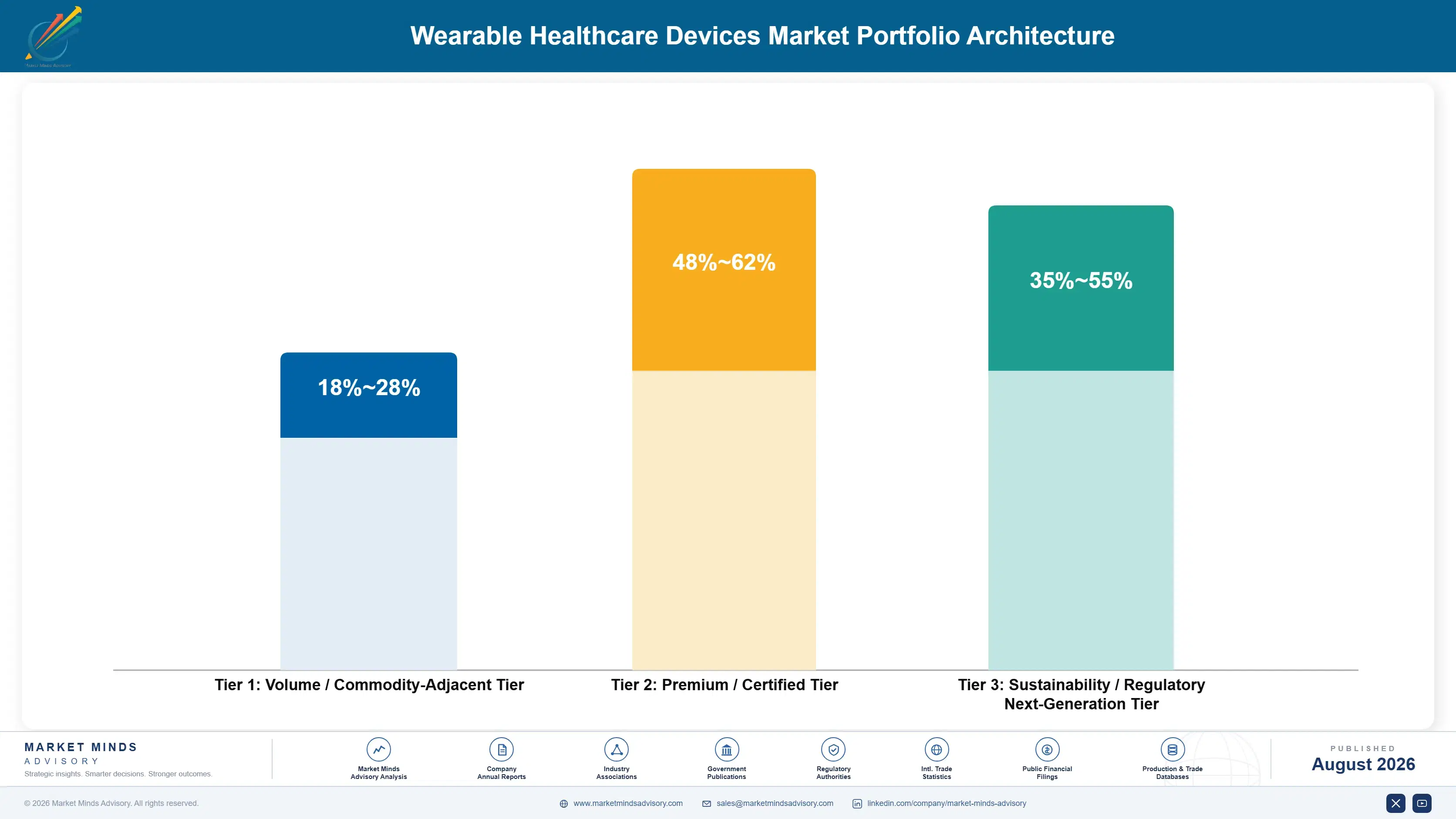
Portfolio Architecture for Margin Defence

The portfolio splits into three tiers with different margin economics. Volume consumer wearables compete on price and brand against a crowded field of Chinese and Western smartwatch makers, earning modestly. Premium certified clinical devices, cleared through FDA prescription or OTC pathways, earn substantially more because reimbursement and clinical trust insulate pricing from consumer comparison. Next-generation devices addressing conditions no current wearable monitors sit in a third tier carrying the highest theoretical margin and highest technical risk.
The tension runs between reach and margin. Volume smartwatches generate the unit numbers that build brand awareness and data scale, useful for training algorithms that eventually differentiate premium products. Volume alone caps profitability, since consumer electronics buyers compare specs and price relentlessly across similar hardware. Premium clinical devices carry the opposite constraint: strong margins but a narrower population defined by diagnosis, prescription, or payer coverage.

High-value margin pools concentrate wherever regulatory clearance and reimbursement combine, which is precisely why CGM and cardiac patch specialists have historically outearned pure consumer wearable brands despite selling far fewer units. Next-generation categories carry the largest theoretical upside but remain unproven commercially, making them a genuine bet on future clearance rather than a current earner.

Volume / Commodity-Adjacent Tier

Mass-market smartwatches and fitness-adjacent wearables sold through consumer retail and carrier channels, competing primarily on price, battery life, and app platform breadth against a crowded field of similarly specified devices.
Gross Margin: 18-28%

Premium / Certified Tier

FDA-cleared prescription and OTC continuous glucose monitors, cardiac monitoring patches, and other clinically validated devices sold through pharmacy, prescription, and payer-reimbursed channels where clinical trust and regulatory clearance insulate pricing.
Gross Margin: 48-62%

Sustainability / Regulatory / Next-Generation Tier

Emerging categories including non-invasive glucose sensing, continuous blood pressure monitoring, and multi-parameter biosensor patches targeting conditions no current cleared wearable addresses, still working through clinical validation and regulatory review before commercial launch becomes possible at meaningful scale.
Gross Margin: 35-55%
wearable-healthcare-devices-market-portfolio-architecture-1787665320839

High-value Sub-segments and Strategic Watch-out

Continuous Glucose Monitoring (OTC and Prescription)

The fastest-growing and highest-value segment, carrying strong reimbursed pricing on the prescription side and rapidly scaling volume on the OTC side. Dexcom and Abbott both draw the bulk of their wearable revenue from this category, and margin expansion continues as manufacturing scale improves against a genuinely growing buyer base.
Gross Margin: 48-62%

Remote Cardiac Monitoring Patches

Strong reimbursed margins under CMS remote monitoring codes, growing steadily as AI-assisted arrhythmia detection expands clinical adoption. Growth trails CGM because the diagnosed atrial fibrillation population, while substantial and aging, expands more slowly than the metabolic wellness buyer base now entering glucose monitoring for the first time.
Gross Margin: 42-58%

Consumer Smartwatches and Fitness Wearables

The volume core of the category, generating the bulk of unit shipments at consumer electronics margins. Apple, Samsung, Huawei, and Xiaomi compete intensely on price and features here, and while unit growth stays healthy, margin expansion is limited by direct spec-for-spec competition across nearly identical hardware.
Gross Margin: 18-28%

Non-Invasive Glucose and Blood Pressure Sensing

The category every major player wants but nobody has cleared at scale. Multiple companies have pursued non-invasive glucose sensing for over a decade without a durable FDA clearance, and continuous cuffless blood pressure faces similar validation hurdles, making this a high-risk bet on a breakthrough that keeps slipping.
Gross Margin: 35-55%

Recurring Revenue Beyond The Hardware

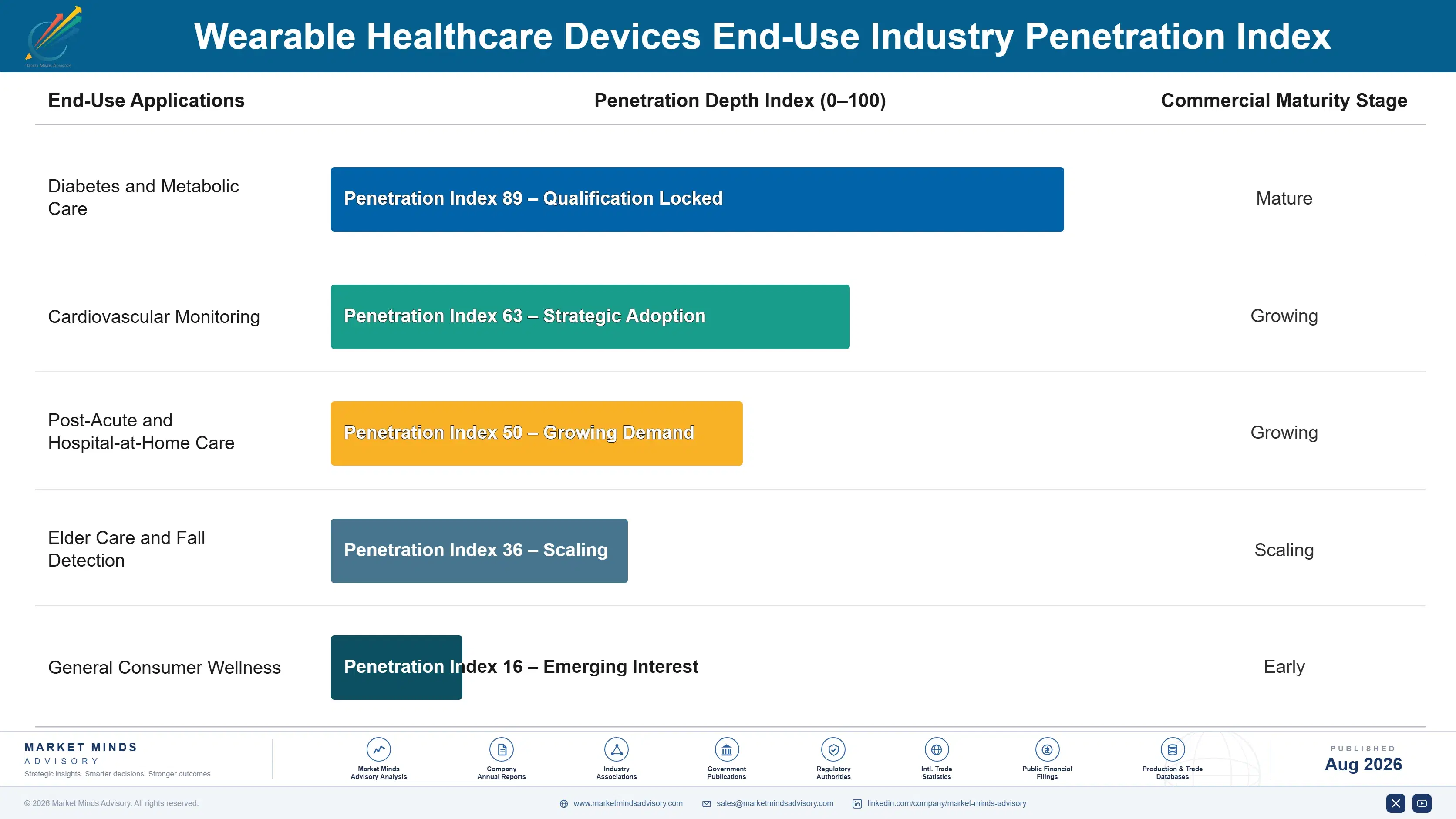
Clinical-grade wearables behave like annuities rather than one-time purchases. CGM sensors require replacement every 10 to 15 days, cardiac patches every one to two weeks, turning what looks like a device sale into a recurring consumable revenue stream that dwarfs the hardware price over a usage period. Consumer smartwatches lack this replacement cycle, relying instead on subscriptions and hardware upgrade cycles running two to three years.
Adoption depth varies sharply by vertical. Diagnosed diabetics using prescription CGM show the highest stickiness, since discontinuing monitoring carries clinical risk patients and physicians recognize. Cardiac patients show time-limited adoption tied to a defined diagnostic window, ending once the diagnostic question is answered. Consumer wellness buyers show the weakest stickiness, with abandonment rates well above either clinical category, since nothing beyond personal motivation sustains wear.

Younger buyers increasingly treat continuous health data as a baseline expectation rather than a novelty, having grown up alongside fitness tracking and smartphone health apps. Older patients are being introduced to wearables through clinical prescription rather than consumer purchase, often for the first time. That generational split is reshaping the sales channel, pulling younger buyers toward direct retail while pushing older, sicker patients toward physician-directed prescription and payer pathways.
wearable-healthcare-devices-market-end-use-penetration-index-1787665321408

Where MMA Sees Divergence Ahead

These are among the four positions where our research anticipates prominent divergence between winners and laggards over the coming forecast period. Each is grounded in the demand model, the regulatory perimeter, and the announced capacity pipeline.
01 / REIMBURSEMENT STRATEGY PRIORITY

Prioritize payer relationships over pure sensor accuracy improvements

Clinical accuracy alone no longer differentiates leading wearable makers, since FDA-cleared sensor performance has converged across the top competitors in this category. What separates winners now is whether a device carries a billing code payers will actually reimburse, because that single distinction determines whether a hospital system procures a device at scale or leaves it to individual consumer purchase decisions. Companies investing primarily in incremental sensor accuracy over payer relationship building are optimizing the wrong variable for this specific decade of growth.
02 / OTC CATEGORY EXPANSION

Expect over-the-counter clearance to reshape category economics broadly

The Stelo and Lingo launches were not a one-off marketing event but a template other device categories will follow as manufacturers realize prescription requirements were gating market size more than clinical necessity demanded. Cardiac rhythm monitoring, hearing health, and eventually blood pressure sensing are all plausible candidates for a similar non-prescription pathway within the coming decade, each capable of multiplying its addressable buyer base the same way CGM already has. Manufacturers that build OTC clearance strategy into product roadmaps now will capture first-mover shelf space before competitors file their applications.
03 / DATA PRIVACY POSITIONING

Build auditable data privacy before regulation forces the issue

Data broker investigations into health app data sales have already drawn regulatory attention, and comprehensive federal privacy legislation covering consumer health data remains a matter of when rather than if, though no sweeping law exists yet. Companies that build on-device processing and auditable consent architecture now, ahead of any mandate, will face materially lower compliance cost when new rules eventually arrive than those that retrofit privacy protection under regulatory deadline pressure. This is a rare case where getting ahead of regulation is cheaper than reacting to it.
04 / HOSPITAL-AT-HOME SALES STRATEGY

Build health system sales channels ahead of consumer scale

Hospital-at-home programs and CMS reimbursement expansion are pulling wearable procurement decisions upstream from individual clinicians to health system supply chains, a channel most consumer-focused device makers have never had to sell into before. Building institutional sales capability, clinical validation dossiers, and multi-year contracting relationships positions a manufacturer for the coming wave of health system-driven procurement, while companies that only understand direct-to-consumer retail will find themselves locked out of the fastest-growing institutional demand. The companies that move first into this channel will define the reference contracts everyone else has to match.

Engagement Snapshot From the Field

A live engagement with an industry participant carrying material or product regulatory and market exposure ahead of a defining policy shift, showing how our research translates into a defensible multi-year portfolio strategy.
MARKET MINDS ADVISORY · CLIENT ENGAGEMENT SUMMARY
Wearable Healthcare Devices Producer Strategic Portfolio Review and Transition Roadmap 2026·Investment Scenario on Wearable Healthcare Devices Exposure Evaluation 2025-26
CLIENT PROFILE
A consumer electronics manufacturer with an established smartwatch line approached MMA while evaluating whether to pursue FDA clearance for a cardiac rhythm monitoring feature. The client reported annual wearable division revenue near USD 2.8 billion, with health-adjacent features representing a growing but still minority share of that total, and no prior experience navigating FDA medical device clearance pathways internally (client-reported, unverified by MMA).
STRATEGIC CHALLENGE
Leadership was split between engineering teams eager to add clinical claims and a legal function wary of regulatory exposure and liability from a consumer brand entering medical device territory for the first time. Competitors were already shipping FDA-cleared arrhythmia detection, creating competitive pressure to act quickly, while the company had no established relationship with FDA reviewers or experience estimating realistic clearance timelines and cost.
MMA APPROACH
MMA benchmarked FDA de novo and 510(k) clearance timelines across comparable consumer wearable cardiac features, modeled the incremental reimbursement revenue opportunity against clearance cost, and assessed the competitive window before rival clearances closed the first-mover advantage. We also evaluated a partnership route, licensing existing cleared algorithm technology, against building clearance capability internally from scratch.
KEY FINDINGS
  1. Comparable de novo clearances for similar cardiac features took a median of 14 months from submission, materially faster than the client's internal engineering estimate of over two years.
  2. Licensing an existing cleared arrhythmia detection algorithm would cost roughly USD 40 million upfront but cut time to market by an estimated 9 months against internal development.
  3. Reimbursement modeling showed the feature would generate meaningful incremental revenue only if paired with CMS remote monitoring billing eligibility, not from device sales alone.
  4. Two competitors were independently pursuing similar clearances, giving the client an estimated 8 to 14 month window before the first-mover advantage closed entirely.
CLIENT PROFILE
A consumer electronics manufacturer with an established smartwatch line approached MMA while evaluating whether to pursue FDA clearance for a cardiac rhythm monitoring feature. The client reported annual wearable division revenue near USD 2.8 billion, with health-adjacent features representing a growing but still minority share of that total, and no prior experience navigating FDA medical device clearance pathways internally (client-reported, unverified by MMA).
STRATEGIC CHALLENGE
Leadership was split between engineering teams eager to add clinical claims and a legal function wary of regulatory exposure and liability from a consumer brand entering medical device territory for the first time. Competitors were already shipping FDA-cleared arrhythmia detection, creating competitive pressure to act quickly, while the company had no established relationship with FDA reviewers or experience estimating realistic clearance timelines and cost.
MMA APPROACH
MMA benchmarked FDA de novo and 510(k) clearance timelines across comparable consumer wearable cardiac features, modeled the incremental reimbursement revenue opportunity against clearance cost, and assessed the competitive window before rival clearances closed the first-mover advantage. We also evaluated a partnership route, licensing existing cleared algorithm technology, against building clearance capability internally from scratch.
KEY FINDINGS
  1. Comparable de novo clearances for similar cardiac features took a median of 14 months from submission, materially faster than the client's internal engineering estimate of over two years.
  2. Licensing an existing cleared arrhythmia detection algorithm would cost roughly USD 40 million upfront but cut time to market by an estimated 9 months against internal development.
  3. Reimbursement modeling showed the feature would generate meaningful incremental revenue only if paired with CMS remote monitoring billing eligibility, not from device sales alone.
  4. Two competitors were independently pursuing similar clearances, giving the client an estimated 8 to 14 month window before the first-mover advantage closed entirely.
RECOMMENDED STRATEGY
Phase 1: Phase 1 (0 to 6 months): License the existing cleared arrhythmia algorithm rather than building internally, prioritizing speed to market over full internal ownership of the technology. Phase 2: Phase 2 (6 to 18 months): Pursue FDA de novo clearance in parallel with reimbursement code applications, rather than sequencing clearance before reimbursement strategy work begins. Phase 3: Phase 3 (18 to 36 months): Scale the feature across the full product line and pursue CMS remote monitoring billing eligibility to convert the clearance into recurring revenue.
OUTCOME
The client licensed the arrhythmia algorithm and received FDA de novo clearance within 13 months, ahead of one of the two competing programs. The feature shipped in the company's flagship smartwatch and contributed a reported USD 180 million in incremental annual revenue within the first year, primarily through reimbursement eligibility (client-reported, unverified by MMA).

Frequently Asked Questions

Foundational context covering the market sizes, CAGR, scope, country, region and competition that inform every finding below. This section is provided to cover basics and most often pre-purchase conversations, answered from the MMA Primary Research Dataset.

What is the current size of the Wearable Healthcare Devices Market?

The wearable healthcare devices market reached USD 31.5 billion in 2025. It spans consumer smartwatches with health features through prescription continuous glucose monitors and cardiac monitoring patches.

How large will the Wearable Healthcare Devices Market be by 2036?

MMA forecasts the market will reach USD 88.1 billion by 2036, expanding roughly 2.55 times its 2026 base value. Continuous glucose monitoring and remote cardiac monitoring drive most of that incremental growth.

What is the CAGR for the Wearable Healthcare Devices Market 2026 to 2036?

The base case CAGR runs at 9.8% annually through 2036. Bull scenarios reach 11.0% on faster reimbursement expansion, while bear scenarios fall to 8.6% if payer restrictions tighten around non-diagnostic use.

Which segment is growing fastest?

Continuous glucose monitoring wearables grow fastest at 13.5% annually, nearly 1.4 times the overall market rate. Over-the-counter sales to non-diabetic users are the primary driver behind that acceleration.

Who are the major companies in the Wearable Healthcare Devices Market?

Apple, Samsung Electronics, Abbott Laboratories, Dexcom, and Masimo lead the market on a consistent global device revenue basis. Together they hold roughly 42% of category revenue.

Which country is growing fastest?

India posts the fastest national growth at roughly 15.4% annually, driven by rising smartphone penetration and domestic wearable brands reaching first-time buyers. Growth concentrates in basic vital-sign tracking rather than prescription devices.

Report Segmentation Architecture

The full report scope spans multiple orthogonal segmentation dimensions, with cross-tabulated demand data provided for each dimension pair. Coverage extends further to regional breakdowns, trend trajectories, and the competitive detail needed to support segment-level decision-making.

By Device Type

  • Smartwatches and Fitness-Health Hybrids
  • Continuous Glucose Monitors
  • Cardiac Monitoring Patches and ECG Wearables
  • Multi-Parameter Biosensor Patches
  • Smart Hearables
  • Wearable Drug Delivery Devices

By End-Use Industry

  • Diabetes and Metabolic Care
  • Cardiovascular Monitoring
  • Post-Acute and Hospital-at-Home Care
  • Elder Care and Fall Detection
  • General Consumer Wellness

By Commercial Dimension

  • Direct-to-Consumer Retail
  • Prescription and Pharmacy Channel
  • Health System and Payer Contracts
  • Employer Wellness Programs

By Region

  • North America
  • Western Europe
  • East Asia
  • South Asia and Pacific
  • Latin America
  • Middle East and Africa
  • Eastern Europe

Scope, Methodology, and Coverage

Every figure in this report is reproducible from documented input assumptions. The scope below maps the historical period, the forecast horizon, the segmentation dimensions, and the countries covered, alongside the underlying primary and qualitative methodology.
Historical Period
2020 to 2025
Forecast Period
2026 to 2036
Base Year
2025 (USD billions; MMA Primary Research Dataset, August 2026)
Market Definition
The wearable healthcare devices market covers body-worn electronic devices that continuously or intermittently capture physiological, biochemical, or biomechanical data for clinical monitoring, chronic disease management, or regulated diagnostic support. It spans consumer smartwatches with cleared health features, continuous glucose monitors, cardiac monitoring patches, multi-parameter biosensor patches, smart hearables with health sensing, and wearable drug delivery devices. It excludes implantable devices, hospital bedside monitoring equipment, and consumer fitness trackers carrying no regulatory clearance or clinical monitoring function.
Quantitative Units
USD billions (current prices); unit shipments in millions where applicable
Segmentation Dimensions
By Device Type; By End-Use Industry; By Commercial Dimension; By Region
Regions Covered
North America, Western Europe, East Asia, South Asia and Pacific, Latin America, Middle East and Africa, Eastern Europe
Countries Covered
USA, China, Germany, France, UK, Japan, South Korea, India, Australia, Canada, Brazil, Mexico, Indonesia, Vietnam, Thailand, Malaysia, UAE, Saudi Arabia, South Africa, Nigeria, Turkey, Poland, Netherlands, Italy, Spain, Sweden, Switzerland, Argentina, Colombia, Singapore, and additional markets relevant to this sector
Key Companies Profiled
Apple Inc., Samsung Electronics, Abbott Laboratories, Dexcom Inc., Masimo Corporation, Medtronic plc, Garmin Ltd., iRhythm Technologies, Philips Healthcare, Withings, Google LLC, Huawei Technologies, Xiaomi Corporation, Whoop Inc., Oura Health, VitalConnect, Biotricity Inc., Omron Healthcare, Polar Electro, Insulet Corporation
Quantitative Methodology
Primary survey, n=3,800 respondents, Q4 2025, six countries; demand-side model with trade association cross-validation
Qualitative Methodology
47 expert interviews, Q4 2025; applied to validate demand model assumptions, identify emerging dynamics, and assess competitive positioning
Report Format
PDF and XLSX data workbook (Word format preview document)
Publisher
Market Minds Advisory
Report Code
MMA-2026-MED-118
Published
August 2026
Contact
sales@marketmindsadvisory.com | www.marketmindsadvisory.com

Purchase the full Wearable Healthcare Devices Market Report (2026 to 2036).

The full MMA Wearable Healthcare Devices report sizes the market across six device types, five end-use applications, four commercial channels, and seven regions through 2036. It profiles 20 participants on a consistent global device revenue basis, scoring leaders on sensor accuracy validation, reimbursement channel access, and platform distribution reach. Scenario models quantify how CMS reimbursement expansion, OTC clearance pathways, and semiconductor supply volatility move both demand and realizable price. The report also includes delivered-cost modeling by device type, a payer reimbursement policy tracker, and a competitive positioning assessment built for product strategy, market access, and investment teams.
Six-way device type segmentation with growth forecasts
Twenty-company competitive profiles on consistent revenue basis
Seven-region market sizing with country-level detail
CMS and global reimbursement policy tracking module
Semiconductor and battery input cost modeling
Bull, base, and bear demand scenario forecasts

Built For The People Who Decide

From boardroom strategy to bench-side execution, this report is read cover-to-cover by leaders shaping the next decade of their industry, turning demand scenarios, market dynamics and valuation benchmarks into decisions.
CXOs/ Presidents/ VPs/ Managers
M&A and Corporate Development
Strategy Teams and R&D Heads
Procurement and Product Directors
Regulatory and Compliance Leaders
Investor Relations and Equity Analysts