Market Minds Advisory
Water Testing Kit Market

Water Testing Kit Market: Regulation Writes The Shopping List

Enforceable drinking water limits now reach four parts per trillion for certain compounds, a threshold no field kit can approach, which pushes the fastest growing demand toward accredited laboratories instead.

Lead Analyst

Published

September 2026

Make Smarter Decisions with Customized Research Insights

Request a free sample report and evaluate market opportunities, growth trends, and competitive dynamics relevant to your business needs.

2025 MARKET VALUE$2.6BMarket Size 2025
2036 FORECAST VALUE$5.5BBase Case , 2026 to 2036
CAGR 2026 TO 20367.0 %Bull 8.2% / Bear 5.8%
INCREMENTAL OPPORTUNITY$2.7BNet 10- year value creation
EXPANSION MULTIPLE1.97x2036 value over 2026 base
Strategic Levers
M&A Pipeline
Regional Outlook
Country Rankings
Competitive Intelligence
Segmental Deep-dive
Call-Us : 91 93563 13602

Executive Snapshot and Market Trajectory

Nothing in this category is tested because somebody wanted to know. Every parameter exists because a regulation requires it, which means demand changes the day a limit changes and stays flat for years in between while everybody waits. That is an unusual demand pattern.
North America takes 30% of value because enforceable limits now reach four parts per trillion for certain compounds, a threshold that puts the work into accredited laboratories rather than anywhere near a field kit. East Asia takes 26% on monitoring network scale. Trace contaminant sample preparation kits grow at 10.5%, half again the market rate of 7.0%, which is where that regulatory pressure actually lands. Field formats are watching all of that from outside it.
Concentration reaches 47%. The uncomfortable tension is that the most valuable new requirement in the category cannot be met by a kit at all, since parts per trillion detection needs instrumentation, accreditation and a nine day turnaround rather than a colour change in a tube. Roughly 63% of testing volume already runs through accredited facilities where method compliance matters far more than reagent price ever does to anybody anywhere.
Market Definition
The market covers reagent kits, consumables and test formats used to measure water quality parameters, spanning laboratory reagent kits and standards, field colorimetric and titration kits, test strips and consumer home kits, microbiological test media and kits, portable electrochemical sensor kits, and trace contaminant sample preparation kits. Analytical instruments and mass spectrometers, continuous online monitoring hardware, laboratory testing services sold as services, water treatment chemicals and equipment, and soil or air testing products are excluded from scope.
Base Year Value
$2.6B in 2025 (MMA Primary Research Dataset, August 2026)
Forecast Period
2026 to 2036, eleven discrete annual values
CAGR
7.0% base case. Bull 8.2%. Bear 5.8%.
Fastest Growth Segment
Trace Contaminant Sample Preparation Kits: 10.5% CAGR
Fastest Growth Country
India: 9.0% CAGR
Fastest Growth Region
South Asia and Pacific: 9.2% CAGR
Largest Region
North America: 30% of 2025 global value
Market Leaders
Thermo Fisher Scientific, Hach, Merck KGaA, Agilent Technologies, LaMotte. Source: MMA Analysis based on disclosed water analysis product revenue, company annual reports 2025.
Primary Survey
n=3,800 procurement and R&D decision-makers, Q4 2025, six countries
Methodology
Demand-side build-up, cross-validated against public data, 47 expert interviews

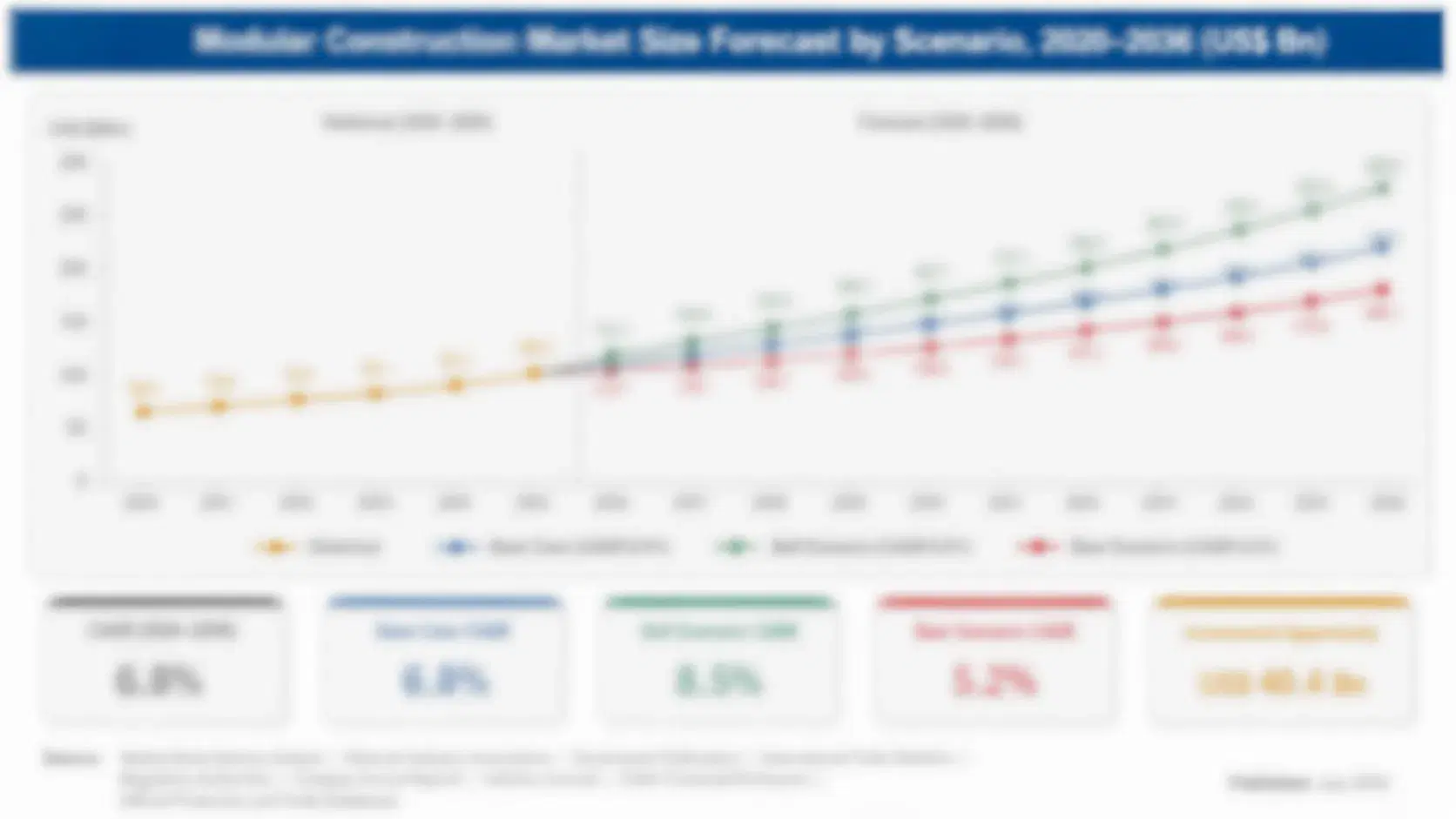
Water Testing Kit Market Forecast Scenarios

water-testing-kit-market-size-forecast-scenario-1787712305982
Growth from 2020 to 2025 ran at 5.8% and it was almost entirely regulatory. New enforceable limits on per- and polyfluoroalkyl substances created a testing requirement at thresholds three orders of magnitude below anything the category routinely measured before, and lead service line inventory rules added a second wave of sampling. Neither had anything to do with demand from utilities, who would have preferred not to look.
The 7.0% base case rests on three mechanisms. Trace contaminant testing keeps expanding as compliance monitoring schedules mature and as more compounds move onto regulated lists. National monitoring networks across Asia keep growing in both station count and parameter breadth. And rural water programmes across South Asia keep building district laboratories that need reagents, media and reference standards they have never previously purchased. None of the three depends on new chemistry.
The bull case at 8.2% assumes additional trace compounds move onto enforceable lists, since each addition creates testing demand overnight across every regulated supply. The bear case at 5.8% is compliance schedules settling into routine after the initial monitoring surge, which would return the category to the slow parameter-by-parameter growth it managed for the two decades before this.

Limits Create The Demand

This category has no discretionary demand worth speaking of. A utility tests for a compound because a rule says it must, at a frequency the rule sets, using a method the rule specifies, and it reports the result to a regulator who will act on it. Curiosity does not feature anywhere in the process. Around 94 contaminants carry enforceable limits, and each one is a line of revenue for somebody.
FIVE-FIRM CONCENTRATION47%Share of category revenue held by the largest suppliers
TRACE REGULATORY LIMIT4 pptEnforceable drinking water threshold for two key compounds
ACCREDITED LABORATORY SHARE63%Testing volume performed inside formally accredited laboratory facilities
REGULATED PARAMETER COUNT94Contaminants carrying enforceable limits under major drinking rules
FIELD KIT UNIT PRICE$2.40Typical cost of a single field colorimetric test
SAMPLE TURNAROUND TIME9 daysInterval between sample collection and reported laboratory result
The newest requirement broke the category's own model. Enforceable limits of four parts per trillion for certain fluorinated compounds are three orders of magnitude below what field kits and strips can resolve, which means the fastest growing testing requirement in a generation cannot be served by most of the products in this market. It goes to accredited laboratories running instrumentation, with a nine day turnaround.
Underneath that sits a market split in two. Roughly 63% of testing volume runs through accredited laboratories where method compliance and documentation matter more than reagent price, and the remainder runs through field kits at around two dollars forty a test where price is essentially the whole decision. Very few suppliers serve both well, because the buyers and the specifications share almost nothing.
"Everybody in this business is chasing the fluorinated compounds, and most of them sell products that physically cannot see them. That is not a strategy problem, it is an arithmetic one, and it does not resolve with better marketing."
Director, Environmental Analytics Practice · MMA Analytical Reagents and Environmental Testing Practice · August 2026

Market Trends

Trace Limits Push Testing Into Accredited Laboratories

Enforceable thresholds at four parts per trillion require instrumentation, isotope-labelled internal standards and accreditation that no field format approaches, so the fastest growing requirement in the category bypasses most of the products in it entirely. Sample preparation kits and reference standards grow at 10.5% because those are the consumables that instrumentation actually needs. Suppliers whose portfolios sit in colorimetric and strip formats are watching demand grow in a place their products cannot physically reach. Repositioning a colorimetric range for screening is the only honest response available to them at all.
Market Impact: Covers 94 enforceable contaminant limits

National Monitoring Networks Expand Station And Parameter Counts

Surface water, groundwater and drinking water monitoring networks across East and South Asia keep adding stations and adding parameters to each station's schedule, which multiplies reagent and media consumption without any change in analytical method. Chinese network expansion has been the largest single volume addition anywhere. Procurement runs through public tender at prices that international suppliers frequently decline to match, so domestic manufacturers capture most of the resulting volume. Parameter breadth grows faster than station count in most of these networks, which multiplies reagent consumption per sampling visit quite considerably.
Market Impact: Grows India fastest at 9.0%

Market Opportunities and Growth Drivers

Every New Enforceable Limit Creates Demand Overnight

A regulator adding a compound to an enforceable list creates compliance monitoring obligations across every regulated supply simultaneously, which produces a step change in demand rather than any gradual adoption curve. Around 94 contaminants now carry enforceable limits under the major drinking water rules. Suppliers who track rulemaking dockets and prepare methods before finalisation reach the market with validated products while competitors are still reading the notice and planning their response. There is no gradual adoption to model here, only a date and a schedule that follows on from it.
Market Impact: Misses limits by 1000 times

Rural Water Programmes Build District Testing Laboratories

National rural drinking water programmes across South Asia are constructing and accrediting district-level water quality laboratories in places that previously sent samples hundreds of kilometres or simply did not test at all. India grows fastest of any country at 9.0% on exactly this. Those laboratories need reagents, culture media and reference standards on recurring schedules, which converts a construction programme into a durable consumables market lasting well beyond the building phase. A construction programme becomes a consumables market the moment the first laboratory is accredited and starts running actual samples.
Market Impact: Delays capacity by 12 months

Market Restraints and Challenges

Field Kits Cannot Reach Regulatory Detection Thresholds

Colorimetric and strip formats resolve at concentrations thousands of times above the four parts per trillion that enforceable trace limits now require, so they simply cannot produce a compliance result. Root cause is optical and chemical detection physics that no reformulation overcomes. Commercial impact is a large product base excluded from the fastest growing requirement in the category. Mitigation involves repositioning field formats for screening, operational control and rapid response rather than compliance reporting. That is a genuinely large market, and it is simply not the one growing fastest here.
Market Impact: Requires 4 parts per trillion

Accreditation Gates Who Can Produce Accepted Results

A regulator accepts a result only from an accredited laboratory using a specified method, which means testing capacity cannot expand faster than accreditation does regardless of how much demand exists. Root cause is quality assurance requirements that take a year or more to satisfy properly. Commercial impact is a bottleneck that turnaround times of nine days already reflect. Mitigation runs through supporting customer accreditation directly, which several suppliers now treat as a commercial function. Turnaround extended well beyond what utilities had planned for during the whole of the initial compliance surge itself.
Market Impact: Adds parameters across 94 limits
4 additional market trends, 2 additional growth drivers, and 3 additional restraints and challenges are covered in the full report. Contact sales@marketmindsadvisory.com to access the complete intelligence.

Segment CAGR and Growth Architecture

Segmentation follows test format and product type: what physically ships to the customer and how the measurement is produced. Six categories cover the market without overlap. Analyte class, water type and end-user setting are treated as separate commercial dimensions throughout this report rather than as segmentation logic in their own right, since each cuts across all six formats.
water-testing-kit-market-market-share-analysis-1787712306314

Trace Contaminant Sample Preparation Kits

Solid phase extraction cartridges, isotope-labelled internal standards, certified reference materials and fluoropolymer-free consumables grow at 10.5%, half again the market rate of 7.0%, because enforceable limits at four parts per trillion demand every one of them. Contamination control is the whole technical problem: a sample path containing any fluoropolymer component will produce a false positive at these concentrations, which rules out much of the labware a laboratory already owns. Internal standard supply is narrow and expensive, and it constrains how quickly testing capacity can expand anywhere. Testing capacity across whole markets has been limited by standard availability rather than by any laboratory willingness to take the work on at all.
CAGR 10.5%

Laboratory Reagent Kits and Standards

Prepared reagents, buffers, calibration standards and method-specific kits for accredited laboratory work grow at 7.5%, following regulated parameter counts and monitoring schedules rather than any change in analytical technique. Roughly 63% of testing volume runs through accredited facilities where method compliance and documentation matter considerably more than unit price does. Switching supplier means revalidating a method, so accounts are durable once won and difficult to displace afterwards. Certificate of analysis quality and lot traceability decide more purchases here than chemistry ever does. A laboratory changing reagent supplier repeats validation, documents it and accepts an audit consequence, which almost nobody undertakes for a saving measured in a few single percentage points anywhere.
CAGR 7.5%
Full segment breakdown across 6 segments available in the complete report.

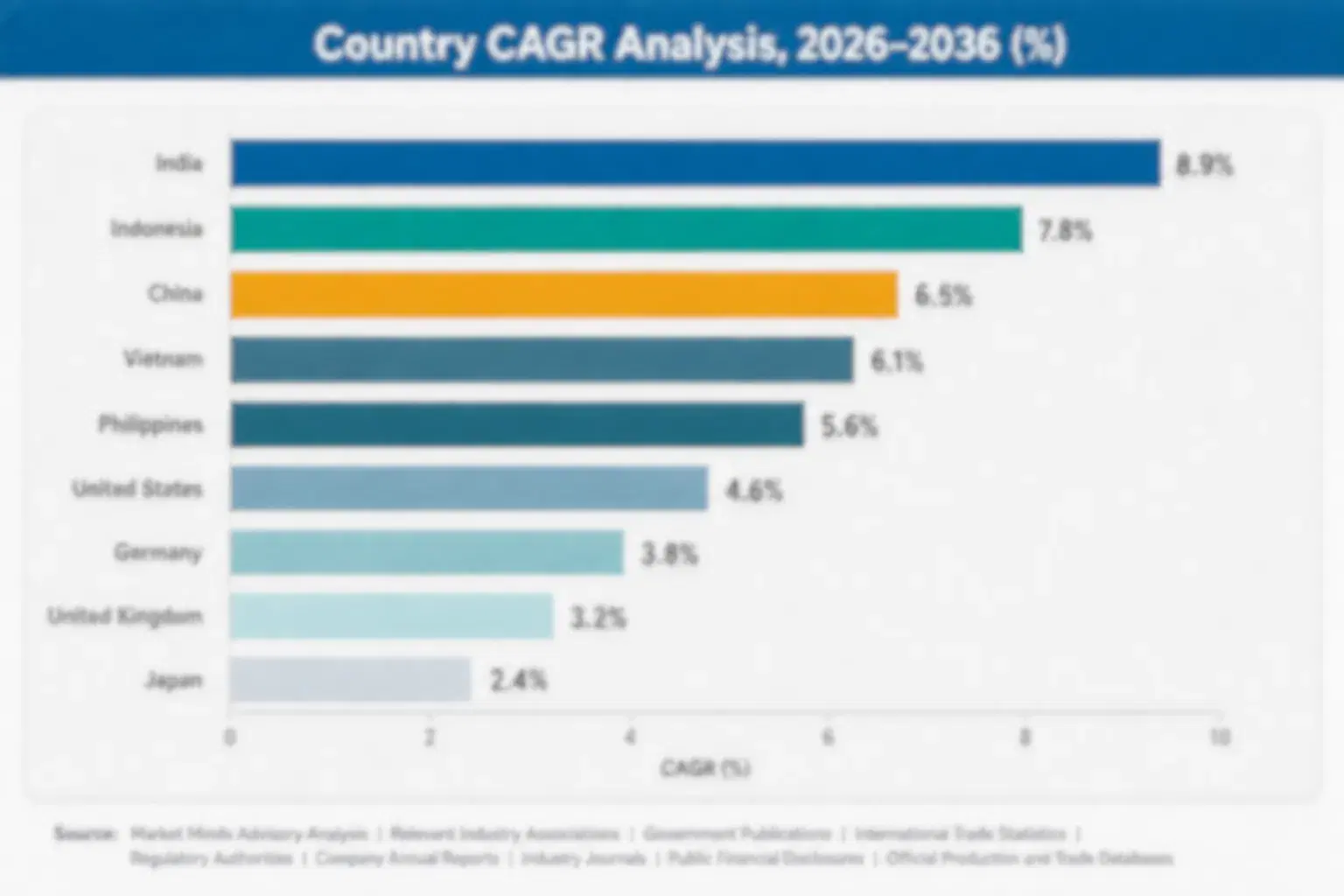
Regional Architecture and Country Demand Map

Geography follows regulatory stringency and monitoring network scale rather than population or water volume. North America leads on trace limit enforcement, East Asia on station and parameter counts, India grows fastest. Water volume and population size predict remarkably little about where the spending actually lands.

North America

Enforceable trace limits at four parts per trillion, set by the Environmental Protection Agency, created the largest single testing requirement this category has seen in decades and pushed it entirely into accredited laboratories. Lead service line inventory rules added a second sampling wave across municipal supplies. Commercial laboratory capacity became the binding constraint rather than reagent availability, and turnaround times extended accordingly. Consumer home test kits grew sharply after contamination events, mostly selling reassurance rather than any result a regulator would accept. Municipal budgets absorbed the cost with visible reluctance, and several utilities delayed voluntary sampling until the compliance schedule itself finally made it entirely unavoidable for them. Nobody volunteered.
Share: 30% | CAGR: 6.2% (2026 to 2036)

Western Europe

European Commission drinking water rules set the parameter list and member state implementation determines monitoring frequency, which produces a market that grows in steps as directives are transposed rather than continuously. Trace contaminant limits are being introduced on a different timetable from North America and at different thresholds. Accredited laboratory networks are mature and consolidated, with method validation practices that make supplier switching genuinely slow. Bottled and mineral water producers add a substantial private testing requirement across France, Germany and Italy. Trace contaminant testing capacity is concentrated in a small number of national reference laboratories, which will become the binding constraint here in exactly the way it already has across North America.
Share: 21% | CAGR: 5.4% (2026 to 2036)
Regional intelligence for 5 additional markets available in the complete report: East Asia, South Asia and Pacific, Latin America, Middle East and Africa, Eastern Europe. Contact sales@marketmindsadvisory.com.
water-testing-kit-market-country-cagr-analysis-1787712306591

Following The Rulemaking Docket Closely

Around 94 contaminants carry enforceable limits, trace thresholds reach four parts per trillion, roughly 63% of volume runs through accredited laboratories and field kits sell near two dollars forty. Four levers work on regulatory anticipation, contamination control, accreditation support and screening repositioning rather than on price, which decides only the field half of it.

Track Rulemaking Before Any Limit Is Finalised

A compound moving onto an enforceable list creates monitoring obligations across every regulated supply at once, producing a step change rather than an adoption curve. Suppliers who follow rulemaking dockets and develop validated methods during the comment period arrive with product on the day the rule takes effect, while competitors spend 12 months catching up. Regulatory affairs therefore functions as a commercial intelligence unit here, which very few suppliers organise it to be. Nobody else in the commercial organisation reads a Federal Register notice for a demand signal at all.
Market Impact: Gains 12 months of lead on 94 limits

Solve Contamination Control, Not Just Detection

At four parts per trillion, any fluoropolymer component anywhere in the sample path produces a false positive, which rules out a great deal of the labware a laboratory already owns and trusts. Suppliers offering verified fluoropolymer-free consumables, blanks and full sample path documentation solve the problem laboratories actually have. Detection sensitivity is the advertised specification; contamination control is what determines whether a laboratory can produce a defensible result at all. A single contaminated blank invalidates an entire batch of 20 samples, which is the cost laboratories are actually trying to avoid here.
Market Impact: Prevents false positives at the 4 ppt limit

Support Customer Accreditation As A Commercial Function

A result counts only from an accredited laboratory using a specified method, so capacity expands at the speed accreditation allows and no faster, which is why turnaround runs to 9 days. Suppliers who help customers achieve and maintain accreditation, supplying validation data, proficiency materials and method documentation, become embedded in a way reagent quality alone never achieves. It costs technical service headcount and it wins accounts that then last for years. Accreditation support is a technical service function that behaves commercially rather more like a genuine sales channel in practice.
Market Impact: Shortens a 12 month accreditation path for customers

Reposition Field Formats For Screening And Response

Field kits at around two dollars forty cannot reach regulatory thresholds and never will, so selling them against compliance requirements is a losing argument that damages credibility. Positioning them for operational control, rapid response, distribution network screening and locations with no laboratory access is honest and commercially sound. That is a genuinely large market on its own terms, and it stops the format competing in a contest physics has already settled. Operational control testing runs at 10 or more samples daily per plant, which is volume no compliance schedule ever generates.
Market Impact: Sells $2.40 screening tests honestly and profitably instead

Who Controls the Margin Pool

Measured on disclosed water analysis product revenue, the five largest suppliers hold a CR5 of 47%, which understates the split running through the category. Thermo Fisher, Merck and Agilent serve accredited laboratory work where method validation and documentation decide purchases, Hach spans both laboratory and field formats with an unusually broad range, and LaMotte holds established field and education positions. Almost nobody competes across the whole span with equal credibility. That is unusual in an analytical consumables market.
Three contests define activity. Trace contaminant consumables compete on contamination control and internal standard supply rather than on price. Laboratory reagents compete on lot traceability and method validation support. And field kits compete almost purely on unit cost through tender and distributor channels. Microbiological media compete on shelf life and lot consistency alone.

Pressure builds from domestic Asian reagent manufacturers winning public tenders on price, and from instrument makers bundling consumables into their own platforms. Rankings shift toward whoever anticipated the trace limit rules early enough to arrive with validated methods. Whoever secured internal standard supply early holds a position competitors cannot simply buy their way into now.
water-testing-kit-market-company-positioning-matrix-1787712306880

Competitive Moat and Risk Dimensions

THERMO FISHER SCIENTIFIC

Moat: Instrument Platform And Consumable Integration

Thermo Fisher supplies the instrumentation trace analysis requires alongside the consumables, standards and sample preparation products that feed it, which places its materials inside methods laboratories have already validated. Revalidating a method to change consumable supplier is expensive and slow. A competitor with equivalent chemistry faces a laboratory with no reason to repeat validation work for a marginal saving.
THERMO FISHER SCIENTIFIC

Risk: Internal Standard Supply Concentration

Isotope-labelled internal standards for trace fluorinated analysis come from a very small number of specialist synthesis producers, and availability rather than price has constrained testing capacity expansion in several markets. A platform position does not help when the standards cannot be obtained. That dependency sits outside the group's control entirely.
HACH

Moat: Utility Relationship And Range Breadth

Hach holds long-established relationships across municipal water utilities alongside a range spanning field, laboratory and process formats, which lets a single supplier serve an operator's daily control testing and its compliance work together. That breadth is genuinely difficult to assemble. Utilities value one accountable supplier across a testing programme more than they value the best individual product in each category.
HACH

Risk: Field Portfolio Excluded From Growth

The fastest growing requirement sits at four parts per trillion where colorimetric and strip formats cannot produce a compliance result under any circumstances, which excludes a substantial part of the range from the category's main growth driver. Breadth defends the relationship without participating in the expansion. Trace work migrates toward specialist laboratory suppliers instead.

Players Tracked

Prominent Players

Thermo Fisher Scientific
Hach
Merck KGaA
Agilent Technologies
LaMotte

Other Key Players

Waters Corporation
Shimadzu
Xylem
Palintest
Tintometer
IDEXX Laboratories
Bio-Rad Laboratories
Hanna Instruments
Chemetrics
Micrology Laboratories
Restek
Phenomenex
PerkinElmer
Metrohm
Endress+Hauser

Recent Developments

JANUARY 2025

Compliance monitoring schedule begins under new trace contaminant limits

Initial compliance monitoring began across regulated public water systems under enforceable trace contaminant limits, a regulatory milestone rather than any commercial transaction. Accredited laboratory capacity rather than reagent availability proved the binding constraint, and reported turnaround times extended well beyond what utilities had planned for.
Signal: Laboratory capacity rather than consumable supply now limits how fast compliance testing can actually proceed anywhere.
JUNE 2025

Supplier launches verified fluoropolymer-free sample path consumables

A consumables supplier launched a verified fluoropolymer-free range covering bottles, filters, tubing and pipette tips with documented blank data, an organic product development rather than any acquisition or licensing arrangement. Contamination from labware had been producing false positives at the concentrations the new limits require laboratories to reach.
Signal: Contamination control has now become a product category in its own right at these detection levels.
SEPTEMBER 2025

Rural water programme accredits additional district testing laboratories

A national rural drinking water programme completed accreditation for a further tranche of district-level water quality laboratories, a public infrastructure milestone rather than any corporate development. Each facility requires recurring reagent, culture media and reference standard supply on schedules set by the monitoring rules themselves.
Signal: Laboratory construction programmes convert into durable consumables demand lasting well beyond the initial construction phase itself.

Solvents, Standards And Media

Four input families carry the cost and they behave nothing like one another. High-purity solvents including acetonitrile and methanol, certified reference materials and isotope-labelled internal standards, culture media and biological components, and specialised plasticware together account for 32 to 41% of finished product cost. Internal standard synthesis sits with a handful of specialist producers worldwide. Solvent supply depends on petrochemical production where analytical grades are a small fraction of output.
The volatility that mattered was high-purity solvent supply. Acetonitrile is a byproduct of acrylonitrile manufacture, so its availability tracks a production decision nobody makes for the analytical market, and supply tightened when downstream demand fell through 2020 and again with feedstock movement that EIA data records. Merck KGaA Annual Report 2024 documents the sourcing changes retained since. Laboratories rationed solvent and postponed method development work.

Exposure divides by portfolio position rather than by scale. Suppliers of trace contaminant consumables depend on isotope-labelled standards from very few producers, which is the tightest dependency here. Field kit manufacturers face commodity reagents and tender price pressure with nowhere to pass cost. Laboratory reagent suppliers sit between the two, with method validation lock-in permitting modest price increases customers would rather not revalidate around.
water-testing-kit-market-cost-volatility-analysis-1787712307211

Secure isotope-labelled standard supply under contract

Internal standards for trace fluorinated analysis come from very few specialist synthesis producers, and availability rather than price has constrained testing capacity across whole markets during the initial compliance surge. Contracted supply costs commitment against volumes that regulatory timetables make difficult to forecast. It protects the one input that stops a laboratory producing any defensible result at all.

Hold buffer stock on high-purity analytical solvents

Acetonitrile availability follows acrylonitrile production decisions made entirely for other markets, so analytical grade supply tightens without warning and without any relationship to laboratory demand. Buffer inventory ties up working capital and carries stability dating that limits how long it can be held. It bought continuity for suppliers who did it while competitors rationed and postponed method work.

Verify and document fluoropolymer-free consumable sourcing

At four parts per trillion any fluoropolymer in the sample path produces a false positive, which means every component from bottle to pipette tip needs verified sourcing and blank data. Establishing that costs supplier auditing and verification across a whole range. It converts a laboratory problem into a purchasable solution, which is a better commercial position than selling reagents.

Portfolio Architecture for Margin Defence

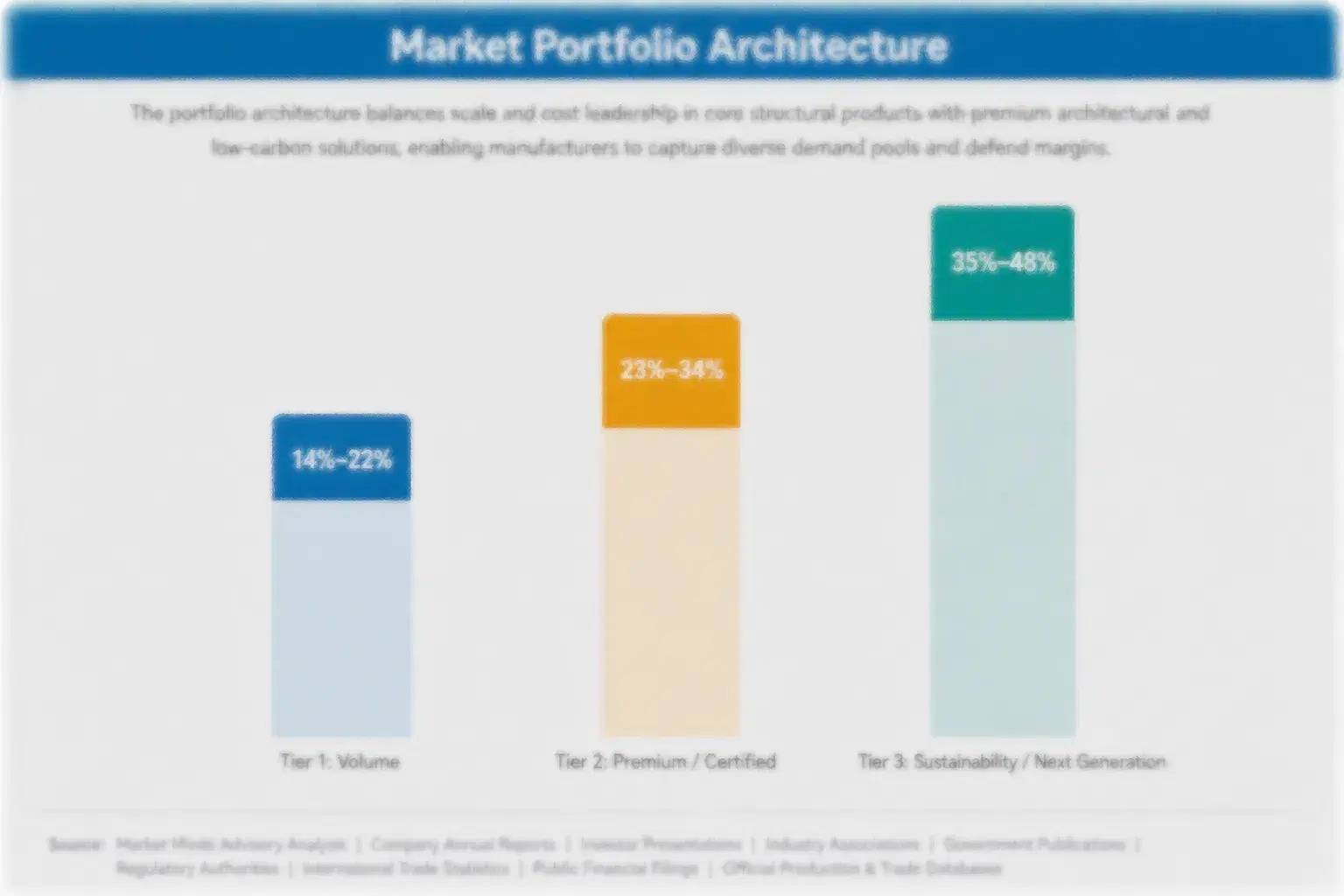
Margin follows method lock-in rather than chemical complexity, which is the pattern most new entrants misjudge. Field colorimetric kits and strips earn thinly against tender pricing and commodity reagents. Microbiological media earn modestly in a competitive field. Portable sensor kits earn moderately on hardware content. Laboratory reagents and standards earn well through validation lock-in. Trace contaminant consumables and certified reference materials earn best, because a validated method cannot change supplier casually.
The tension is that the volume and the value have moved apart. Field kits carry enormous unit volume at around two dollars forty a test into markets where price is the entire decision, while trace consumables carry small volume at prices that reflect scarcity and validation lock-in together. A supplier weighted to field formats grows with monitoring station counts; one weighted to trace work grows with regulatory stringency, and those two curves have diverged sharply.

High-value pools sit in three places. Trace contaminant sample preparation and internal standards, where supply scarcity and validation lock-in reinforce one another. Certified reference materials, where accreditation requirements make traceability non-negotiable. And accreditation support services, which are not products at all but embed a supplier inside a customer's quality system for years.

Volume / Commodity-Adjacent

Field colorimetric kits, strips and commodity reagents sold through tender and distributor channels on unit price. The 10-point range separates manufacturers with in-house reagent formulation from those assembling kits out of purchased components at market prices.
Gross Margin: 24-34%

Premium / Certified

Laboratory reagent kits, buffers, culture media and calibration standards supplied into accredited method workflows. The 12-point spread reflects how differently validated method accounts and open tender laboratory purchasing behave across otherwise identical product chemistry.
Gross Margin: 50-62%

Sustainability / Regulatory / Next-Generation

Trace contaminant sample preparation, isotope-labelled internal standards and certified reference materials for regulated ultra-trace work. The 18-point range is wide because scarce internal standards and routine reference materials command entirely different pricing within the same tier.
Gross Margin: 62-80%
water-testing-kit-market-portfolio-architecture-1787712307513

High-value Sub-segments and Strategic Watch-out

Isotope-Labelled Internal Standards

Highest margin in the category, produced by very few specialist synthesis houses and required for every defensible ultra-trace result anywhere. The risk is that the same scarcity constraining competitors also constrains supply to whoever holds the position today. Scarcity cuts in both directions here equally.
Gross Margin: 72-80%

Fluoropolymer-Free Consumable Ranges

Fastest growing consumable position at 10.5%, solving contamination control that detection sensitivity alone never addresses at four parts per trillion. The risk is that verification becomes a routine expectation rather than a differentiator once every supplier documents it properly. Differentiation of this kind has a shelf life.
Gross Margin: 62-72%

Accredited Laboratory Reagents

The value core, running through roughly 63% of testing volume under validated methods that make supplier switching slow and expensive. Suppliers hold it because validation lock-in produces account durability that almost nothing else in analytical consumables matches. Nobody gives up a validated account here voluntarily.
Gross Margin: 52-62%

Field Kit Compliance Exclusion

The strategic watch-out. Colorimetric and strip formats cannot reach enforceable trace thresholds and never will, which excludes them from the category's main growth driver. The risk is continuing to sell them against compliance requirements physics has already settled. Physics settled that argument some time ago.
Gross Margin: 24-32%

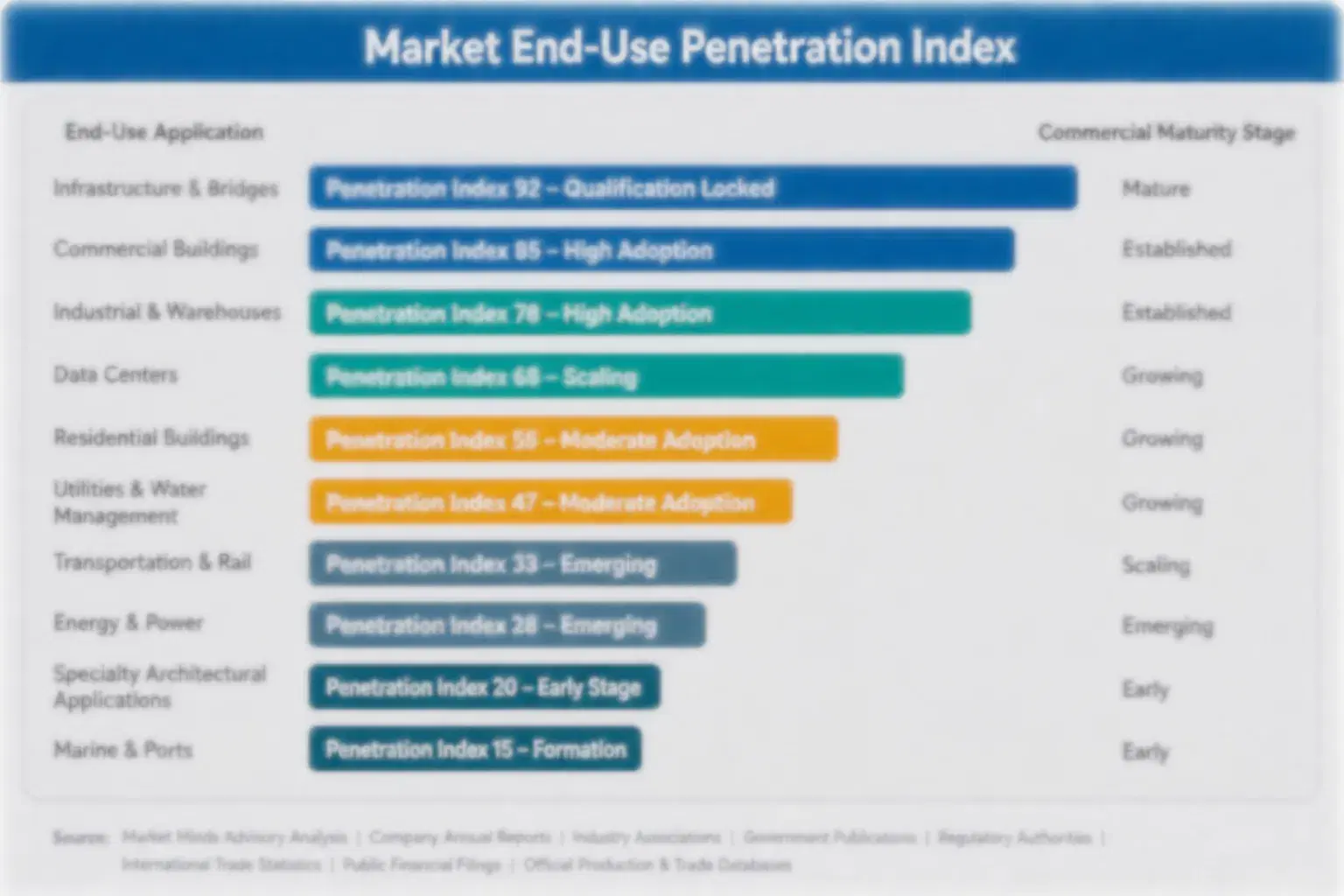
Scheduled By Rule

Consumption follows a monitoring calendar rather than any operational need, which makes it among the most forecastable demand in analytical chemistry. A regulation specifies which parameters, at what frequency, using which method, and a utility executes that schedule whether or not anything has changed in the water. Volume therefore tracks regulated parameter counts and supply system numbers directly, and a supplier who reads the rule can model annual consumption without asking.
Stickiness comes entirely from method validation. An accredited laboratory that validated a method against a specific reagent lot, standard and consumable set cannot substitute another without repeating validation, documenting it and accepting the audit consequence. That makes accredited accounts durable across many years and makes the initial method development decision disproportionately valuable. Field kit buyers have no such constraint and retender on price whenever permitted.

The purchaser has moved from laboratory manager toward procurement and quality functions together. A laboratory chemist once chose reagents on performance and familiarity. Public tender procurement now weighs unit price against specification compliance, while quality managers weigh accreditation documentation and traceability. Neither buyer cares about what a chemist cared about, and suppliers still selling on chemistry find the conversation has moved on.
water-testing-kit-market-end-use-penetration-index-1787712307797

Read The Rule First

These are among the four positions where our research anticipates prominent divergence between winners and laggards over the coming forecast period. Each is grounded in the demand model, the regulatory perimeter, and the announced capacity pipeline.
01 / REGULATORY ANTICIPATION CAPABILITY

The docket is the demand forecast

A single compound moving onto an enforceable list creates compliance monitoring obligations across every single regulated supply simultaneously, producing a step change in demand rather than any gradual adoption curve that a competitor can respond to afterwards. Suppliers tracking the rulemaking dockets and validating their methods during the comment period arrive with validated product on the very day a rule takes effect. Competitors then spend roughly 12 months catching up, by which point most of the accounts have already been decided.
02 / CONTAMINATION CONTROL POSITIONING

Blanks matter more than sensitivity now

At just four parts per trillion, any fluoropolymer component anywhere in the whole sample path will readily produce a false positive, which rules out a very great deal of the labware an accredited laboratory already owns and had previously trusted completely. Verified fluoropolymer-free consumables supplied with documented blank data solve the problem that laboratories genuinely have. Detection sensitivity is the specification everybody advertises, while contamination control alone determines whether a defensible result can be produced at all in the end.
03 / ACCREDITATION SUPPORT EMBEDDING

Sell into the quality system, not the bench

A regulator accepts results only from an accredited laboratory using a specified and documented method, so testing capacity expands at exactly the speed that accreditation allows and never any faster than that. Suppliers providing validation data, proficiency testing materials and full method documentation become deeply embedded inside a customer's quality system in a way that reagent performance alone never achieves anywhere. It costs technical service headcount and it wins accounts that then hold firm for a great many years afterwards.
04 / FIELD FORMAT HONESTY

Stop selling strips against compliance limits

Colorimetric and strip formats resolve at concentrations thousands of times above enforceable trace thresholds, so selling them against compliance requirements is an argument that physics had settled long before any commercial team ever joined it. Repositioning them for operational control, distribution network screening, rapid incident response and locations with no laboratory access at all is both honest and commercially sound. That remains a genuinely large market on its own quite separate terms, and it is not the one growing fastest here.

Engagement Snapshot From the Field

A live engagement with an industry participant carrying material or product regulatory and market exposure ahead of a defining policy shift, showing how our research translates into a defensible multi-year portfolio strategy.
MARKET MINDS ADVISORY · CLIENT ENGAGEMENT SUMMARY
Water Testing Kit Producer Strategic Portfolio Review and Transition Roadmap 2026·Investment Scenario on Water Testing Kit Exposure Evaluation 2025-26
CLIENT PROFILE
An analytical reagent manufacturer supplying water testing products across European and Asian markets, with reported water analysis revenue of 118 million dollars (client-reported, unverified by MMA). Roughly 72% came from field colorimetric kits and general laboratory reagents. The company held no trace contaminant consumable range and no isotope-labelled standard supply arrangement of any kind at all.
STRATEGIC CHALLENGE
Field kit tenders were being lost to domestic Asian manufacturers on price while European laboratory reagent volume grew only with parameter counts. Management was preparing a manufacturing cost programme and a field kit price reduction. Neither engaged with the fact that the category's growth had moved to detection levels the company's products could not physically reach.
MMA APPROACH
MMA analysed revenue and margin by format against regulatory driver and detection requirement, a mapping the company had never constructed. Twenty-four expert interviews with accredited laboratory directors, utility compliance managers, procurement officers and regulators established where testing demand was actually forming. The analysis treated regulatory anticipation and contamination control rather than manufacturing cost as the available routes.
KEY FINDINGS
  1. Growth in the category had concentrated in detection ranges the company's entire field portfolio was physically incapable of reaching under any formulation change.
  2. Accredited laboratory customers cited contamination from labware, not detection sensitivity, as by far their most persistent practical problem at these trace concentrations.
  3. Isotope-labelled internal standards were unobtainable on reasonable lead times, and laboratories reported that constraint as directly limiting their own capacity expansion plans.
  4. The company's regulatory affairs function had never been asked to track rulemaking dockets as a genuine source of commercial demand forecasting information.
CLIENT PROFILE
An analytical reagent manufacturer supplying water testing products across European and Asian markets, with reported water analysis revenue of 118 million dollars (client-reported, unverified by MMA). Roughly 72% came from field colorimetric kits and general laboratory reagents. The company held no trace contaminant consumable range and no isotope-labelled standard supply arrangement of any kind at all.
STRATEGIC CHALLENGE
Field kit tenders were being lost to domestic Asian manufacturers on price while European laboratory reagent volume grew only with parameter counts. Management was preparing a manufacturing cost programme and a field kit price reduction. Neither engaged with the fact that the category's growth had moved to detection levels the company's products could not physically reach.
MMA APPROACH
MMA analysed revenue and margin by format against regulatory driver and detection requirement, a mapping the company had never constructed. Twenty-four expert interviews with accredited laboratory directors, utility compliance managers, procurement officers and regulators established where testing demand was actually forming. The analysis treated regulatory anticipation and contamination control rather than manufacturing cost as the available routes.
KEY FINDINGS
  1. Growth in the category had concentrated in detection ranges the company's entire field portfolio was physically incapable of reaching under any formulation change.
  2. Accredited laboratory customers cited contamination from labware, not detection sensitivity, as by far their most persistent practical problem at these trace concentrations.
  3. Isotope-labelled internal standards were unobtainable on reasonable lead times, and laboratories reported that constraint as directly limiting their own capacity expansion plans.
  4. The company's regulatory affairs function had never been asked to track rulemaking dockets as a genuine source of commercial demand forecasting information.
RECOMMENDED STRATEGY
Phase 1: Phase one: develop a verified fluoropolymer-free consumable range with documented blank data, addressing the problem laboratories actually raise most often. Phase 2: Phase two: contract isotope-labelled standard supply, securing the input that constrains everybody else who is attempting to enter trace testing work. Phase 3: Phase three: reposition field formats onto screening and operational control, and stop competing against compliance thresholds altogether from now on.
OUTCOME
A fluoropolymer-free consumable range entered validation with three accredited laboratories within two quarters. An internal standard supply agreement was concluded, which competitors had been unable to secure (client-reported, unverified by MMA). Field kit repositioning stabilised tender losses by removing the company from contests it could not win. Regulatory affairs began reporting docket activity into commercial planning for the first time.

Frequently Asked Questions

Foundational context covering the market sizes, CAGR, scope, country, region and competition that inform every finding below. This section is provided to cover basics and most often pre-purchase conversations, answered from the MMA Primary Research Dataset.

What is the current size of the Water Testing Kit Market?

The market was worth 2.6 billion dollars in 2025, covering laboratory reagents, field kits, strips, microbiological media, sensor kits and trace preparation consumables. It reaches 2.78 billion dollars in 2026.

How large will the Water Testing Kit Market be by 2036?

MMA forecasts 5.47 billion dollars by 2036, an increase of 2.69 billion dollars over the 2026 base. That represents an expansion multiple of 1.97 times across the forecast period.

What is the CAGR for the Water Testing Kit Market 2026 to 2036?

The base case compounds at 7.0% annually. The bull case reaches 8.2% if further compounds gain enforceable limits, while the bear case sits at 5.8% on compliance schedules settling into routine.

Which segment is growing fastest?

Trace contaminant sample preparation kits, at 10.5%, half again the market rate of 7.0%. Enforceable limits at four parts per trillion require extraction cartridges, labelled standards and contamination-free consumables.

Who are the major companies in the Water Testing Kit Market?

Thermo Fisher Scientific, Hach, Merck KGaA, Agilent Technologies and LaMotte lead on disclosed water analysis product revenue. Waters, Palintest and Hanna Instruments hold notable positions.

Which country is growing fastest?

India at 9.0%, as national rural water programmes build and accredit district-level testing laboratories across states with almost no prior capacity. Those laboratories need recurring consumable supply.

Report Segmentation Architecture

The full report scope spans multiple orthogonal segmentation dimensions, with cross-tabulated demand data provided for each dimension pair. Coverage extends further to regional breakdowns, trend trajectories, and the competitive detail needed to support segment-level decision-making.

By Test Format

  • Laboratory Reagent Kits and Standards
  • Field Colorimetric and Titration Kits
  • Test Strips and Consumer Home Kits
  • Microbiological Test Media and Kits
  • Portable Electrochemical Sensor Kits
  • Trace Contaminant Sample Preparation Kits

By End-Use Industry

  • Municipal Drinking Water Utilities
  • Wastewater and Discharge Operators
  • Commercial Environmental Laboratories
  • Industrial Process and Effluent Monitoring
  • Food, Beverage and Bottled Water
  • Government and Regulatory Laboratories

By Commercial Dimension

  • Public Tender Procurement
  • Validated Method Account Supply
  • Distributor and Dealer Channels
  • Instrument Platform Bundled Supply
  • Donor and Programme Funded Supply
  • Direct Consumer Retail

By Region

  • North America
  • Western Europe
  • East Asia
  • South Asia and Pacific
  • Latin America
  • Middle East and Africa
  • Eastern Europe

Scope, Methodology, and Coverage

Every figure in this report is reproducible from documented input assumptions. The scope below maps the historical period, the forecast horizon, the segmentation dimensions, and the countries covered, alongside the underlying primary and qualitative methodology.
Historical Period
2020 to 2025
Forecast Period
2026 to 2036
Base Year
2025 (USD billions; MMA Primary Research Dataset, August 2026)
Market Definition
Scope covers reagent kits, consumables, media and prepared test formats used to measure chemical, physical and microbiological water quality parameters across drinking water, wastewater, industrial process water, environmental surface and groundwater, and beverage applications, spanning laboratory reagent kits and standards, field colorimetric and titration kits, test strips and consumer home kits, microbiological test media and kits, portable electrochemical sensor kits, and trace contaminant sample preparation kits including extraction cartridges, labelled internal standards and certified reference materials. Analytical instrumentation including chromatography and mass spectrometry hardware, continuous online monitoring equipment, laboratory analysis sold as a testing service, water treatment chemicals and equipment, and soil, air or food matrix testing products are excluded from the market size and all derived figures.
Quantitative Units
USD billions (current prices); tests performed; cost per test; regulated parameters monitored; accredited laboratory count
Segmentation Dimensions
By Test Format; By End-Use Industry; By Commercial Dimension; By Region
Regions Covered
North America, Western Europe, East Asia, South Asia and Pacific, Latin America, Middle East and Africa, Eastern Europe
Countries Covered
USA, China, Germany, India, Japan, UK, France, Canada, Brazil, South Korea, Italy, Australia, Mexico, Poland, Saudi Arabia
Key Companies Profiled
Thermo Fisher Scientific, Hach, Merck KGaA, Agilent Technologies, LaMotte, Waters Corporation, Shimadzu, Xylem, Palintest, Tintometer, IDEXX Laboratories, Bio-Rad Laboratories, Hanna Instruments, Chemetrics, Micrology Laboratories, Restek, Phenomenex, PerkinElmer, Metrohm, Endress+Hauser
Quantitative Methodology
Primary survey, n=3,800 respondents, Q4 2025, six countries; demand-side model with trade association cross-validation
Qualitative Methodology
47 expert interviews, Q4 2025; applied to validate demand model assumptions, identify emerging dynamics, and assess competitive positioning
Report Format
PDF and XLSX data workbook (Word format preview document)
Publisher
Market Minds Advisory
Report Code
MMA-2026-CHM-121
Published
August 2026
Contact
sales@marketmindsadvisory.com | www.marketmindsadvisory.com

Purchase the full Water Testing Kit Market Report (2026 to 2036).

The full report runs to 170 pages and covers all six test format segments, seven regions and 20 profiled suppliers in detail. It includes the complete segment CAGR set, regional regulatory stringency and monitoring network comparison, and detection threshold analysis mapping each format against enforceable limits. Company profiles carry evaluation on disclosed water analysis product revenue, with moat and risk assessment for the top five suppliers. The competitive section extends to 15 tracked regulatory, product and infrastructure developments across 2024 and 2025. Primary research inputs include a quantitative survey of 3,800 respondents and 47 expert interviews conducted in Q4 2025.
Six test format segments with individual CAGR forecasts
Seven regional markets with regulatory stringency and network comparison
Twenty supplier profiles on consistent revenue evaluation basis
Fifteen tracked regulatory and product developments with commercial interpretation
Detection thresholds mapped against enforceable limits by format
Internal standard and solvent supply constraints assessed for capacity risk

Built For The People Who Decide

From boardroom strategy to bench-side execution, this report is read cover-to-cover by leaders shaping the next decade of their industry, turning demand scenarios, market dynamics and valuation benchmarks into decisions.
CXOs/ Presidents/ VPs/ Managers
M&A and Corporate Development
Strategy Teams and R&D Heads
Procurement and Product Directors
Regulatory and Compliance Leaders
Investor Relations and Equity Analysts