Market Minds Advisory
Voyage Data Recorders Market

Voyage Data Recorders Market: Voyage Data Recorders Market. International Maritime Mandates Sustain Fleet-Wide Retrofit Demand

International maritime safety mandates are sustaining voyage data recorder adoption, as shipowners equip vessels with tamper-proof incident recording systems required for regulatory compliance and casualty investigation. investigation needs. Costs remain a factor.

Lead Analyst

Published

October 2026

Make Smarter Decisions with Customized Research Insights

Request a free sample report and evaluate market opportunities, growth trends, and competitive dynamics relevant to your business needs.

2025 MARKET VALUE$0.8BMarket Size 2025
2036 FORECAST VALUE$1.5BBase Case , 2026 to 2036
CAGR 2026 TO 20366.4 %Bull 7.7% / Bear 5.1%
INCREMENTAL OPPORTUNITY$0.7BNet 10- year value creation
EXPANSION MULTIPLE1.86x2036 value over 2026 base
Strategic Levers
M&A Pipeline
Regional Outlook
Country Rankings
Competitive Intelligence
Segmental Deep-dive
Call-Us : 91 93563 13602

Executive Snapshot and Market Trajectory.

Voyage data recorder demand continues climbing as international maritime safety mandates expand vessel class coverage, pushing shipowners toward mandatory retrofit installation across fleet segments previously exempt from recording requirements entirely. Insurance underwriters increasingly require documented compliance before issuing coverage for affected vessels. Several flag states lead enforcement.
Simplified voyage data recorders for smaller vessels are growing fastest within the category, expanding at nearly nine percent annually as regulatory coverage extends to cargo ships and passenger vessels below the tonnage thresholds that triggered mandates for larger ships years earlier. East Asia anchors volume given China's enormous shipbuilding output and expanding domestic fleet, while Western Europe leads on premium simplified units tied to established maritime safety culture and insurer-driven retrofit incentives.
Competition splits between established marine electronics manufacturers with decades of bridge system integration experience and specialized recorder firms competing on tamper-resistance certification, a division shaping how shipowners source retrofit equipment across their fleets. Expanding International Maritime Organization coverage requirements and tightening casualty investigation standards are pulling specifications toward longer data retention capacity and stronger certification. Classification society approval increasingly separates qualified suppliers from disqualified ones in procurement.
Market Definition
This report covers shipboard systems that continuously record navigational, operational, and bridge audio data for incident investigation and regulatory compliance, including full voyage data recorders and simplified voyage data recorders for smaller vessel classes. It excludes automatic identification system transponders sold as standalone products, electronic chart display systems, and satellite communication equipment sold independently of the recording function.
Base Year Value
$0.8B in 2025 (MMA Primary Research Dataset, October 2026)
Forecast Period
2026 to 2036, eleven discrete annual values
CAGR
6.4% base case. Bull 7.7%. Bear 5.1%.
Fastest Growth Segment
Simplified Voyage Data Recorders for Smaller Vessels: 9.3% CAGR
Fastest Growth Country
China: 8.1% CAGR
Fastest Growth Region
South Asia and Pacific: 8.4% CAGR
Largest Region
East Asia: 27% of 2025 global value
Market Leaders
Furuno Electric, JRC (Japan Radio Company), Raytheon Anschutz, Danelec Marine, Consilium AB. Source: MMA Analysis based on company annual reports.
Primary Survey
n=3,800 procurement and R&D decision-makers, Q4 2025, six countries
Methodology
Demand-side build-up, cross-validated against public data, 47 expert interviews

Voyage Data Recorders Market Forecast Scenarios

voyage-data-recorders-market-size-forecast-scenario-1791015334998
Voyage data recorder demand grew steadily across 2020 to 2025 at roughly 5.0 percent annually, supported throughout by expanding International Maritime Organization coverage requirements that continued regardless of broader shipping industry economic conditions. Growth accelerated modestly toward the end of the period as several major flag states finalized stricter casualty investigation data retention standards. Growth remained consistent across most years.
The base case assumes 6.4 percent annual growth through 2036, anchored on three concurrent mechanisms: continued expansion of regulatory coverage to smaller vessel classes previously exempt from recording mandates, rising global fleet size that expands the addressable installed base requiring equipment, and tightening casualty investigation standards that favor longer data retention and tamper-resistant designs. These mechanisms reinforce one another across most major maritime flag state jurisdictions. Capacity growth plans continue extending across most forecast years ahead.
The bull case centers on accelerated regulatory coverage expansion in Asia that would require substantially more retrofit installation than currently budgeted across the region's rapidly growing fleet. The bear case assumes shipping industry capital spending slowdown amid freight rate pressure delays discretionary retrofit timing, extending the service life of existing recorders beyond typical replacement cycles.

Regulatory Coverage Expansion Redraws Fleet Priorities

The voyage data recorders market reaches an estimated 0.809 billion dollars in 2026, continuing steady growth driven by expanding regulatory coverage and global fleet size across most major shipping economies. Cargo and container vessel operators account for the large majority of unit demand, though passenger and offshore support vessel segments represent a smaller but steadily growing buyer segment as coverage requirements expand.
MARKET CONCENTRATION LEVEL58%Reflects consolidation among established marine electronics manufacturers today
AVERAGE UNIT PRICE$42,000Varies substantially between simplified and full voyage data recorder configurations
LEADING SUPPLIER SHARE19%Reflects strong classification society relationships built across multiple decades
SIMPLIFIED RECORDER PENETRATION34%Represents growing share of installed base tied to coverage
AVERAGE DATA RETENTION CAPACITY48 hoursExtends further for premium units exceeding minimum regulatory requirements
CLASSIFICATION SOCIETY APPROVAL RATE71%Reflects share of installations meeting formal maritime certification standards
Average unit prices vary substantially across the category, from moderate pricing for simplified voyage data recorders to significantly higher pricing for full configurations with extended retention and premium bridge integration, which fragments the market into distinct procurement tiers rather than one uniform price curve. East Asia's shipbuilding scale gives the region outsized influence over unit volume even though Western Europe commands higher average unit value on premium simplified retrofit installations.
Looking ahead, manufacturers are racing to expand data retention capacity and tamper-resistance certification coverage, since margins on basic simplified units continue compressing under competitive shipyard tender pressure. The companies that control classification society approval breadth and casualty investigation data integrity, not just basic recording hardware, are positioned to capture disproportionate value as regulatory coverage intensifies through the decade.
"Nobody budgets for the black box until the investigation that follows an incident makes it the only thing that matters."
Director, Maritime Electronics and Safety Systems Practice · MMA Technology Practice · October 2026

Market Trends

Cloud Data Offload Reduces Investigation Retrieval Time

Manufacturers are increasingly offering cloud-based data offload capability that automatically transmits recorded voyage data to shore-based servers whenever a vessel reaches port connectivity, reducing the time investigators need to physically retrieve the protective capsule after an incident. This capability proves especially valuable for fleet operators managing dozens of vessels across multiple routes, since centralized data access lets safety teams monitor recording system health remotely rather than discovering equipment failures only during incident investigation, when the gap matters most. Several major fleet operators now require this capability in formal safety specifications.
Market Impact: Adds over 18,000 newly covered vessels

Expanding Vessel Class Coverage Drives Retrofit Demand

International Maritime Organization coverage requirements continue extending to smaller cargo and passenger vessel classes previously exempt from mandatory recording equipment, directly expanding the addressable retrofit market across fleet segments that historically operated without recorders entirely. This has consolidated retrofit procurement toward manufacturers with proven simplified recorder designs even where dozens of marine electronics firms technically compete, since shipowners facing new compliance deadlines require demonstrated classification society approval before installation. Operators without proven simplified designs increasingly lose large fleet retrofit contracts. This trend is expected to continue through most of the decade ahead.
Market Impact: Adds 11 percent to demand

Market Opportunities and Growth Drivers

Expanding Regulatory Coverage Widens Addressable Fleet

International Maritime Organization and flag state regulators continue lowering the tonnage and passenger capacity thresholds that trigger mandatory voyage data recorder installation, directly expanding the addressable fleet of vessels legally required to install equipment regardless of vessel age or trade route. Each threshold reduction forces a wave of retrofit installation, since newly covered vessels typically have limited transition time before enforcement deadlines take effect across their respective flag state jurisdictions and classification society requirements. Many flag states now coordinate enforcement timelines across neighboring maritime jurisdictions. This dynamic is expected to persist through most of the forecast decade.
Market Impact: Delays entry 1 to 2 years

Growing Global Fleet Size Expands Installed Base

The global commercial shipping fleet continues expanding as international trade volume grows, with each new vessel construction requiring voyage data recorder installation from initial commissioning rather than retrofitting equipment years later. Shipbuilders increasingly specify recorders during initial vessel design rather than treating them as a post-delivery addition, creating predictable procurement demand tied directly to new vessel construction and delivery schedules across major shipbuilding economies worldwide. Suppliers with proven shipyard integration experience increasingly win larger construction contracts. This trend shows no signs of slowing across most major shipbuilding regions. Momentum continues.
Market Impact: Adds 15 percent to maintenance cost

Market Restraints and Challenges

Extended Classification Approval Delays Market Entry

Classification society approval processes for new voyage data recorder models extend well beyond typical commercial electronics timelines, since maritime regulators require extensive environmental and tamper-resistance testing before approving a product for shipboard installation across covered vessel classes. The root cause is that recorder failures during an actual incident carry serious safety and legal consequences, making classification societies understandably conservative about approval pace. Manufacturers are responding by investing in parallel testing programs that compress certain validation phases. Suppliers investing early in testing still gain meaningful time-to-market advantage. Peer manufacturers often request direct introductions before committing resources.
Market Impact: Cuts retrieval time 40 percent

Harsh Marine Environment Shortens Component Service Life

Voyage data recorders deployed in harsh marine environments face accelerated component degradation from vibration, humidity, and temperature extremes that shortens service life relative to comparable electronics deployed in controlled onshore environments, increasing replacement frequency across large fleet installations. This drives meaningful maintenance costs for fleet operators managing dozens of vessels across varied climate conditions. Manufacturers are addressing this through improved sealing technology and marine-grade component selection. Suppliers achieving meaningful service life improvements increasingly command premium pricing. This trend shows no signs of slowing across most major fleet operating regions. Insurance underwriters increasingly factor this risk into premium calculations.
Market Impact: Reaches 29 percent of fleet
3 additional market trends, 4 additional growth drivers, and 4 additional restraints and challenges are covered in the full report. Contact sales@marketmindsadvisory.com to access the complete intelligence.

Segment CAGR and Growth Architecture

Voyage data recorders segment by configuration complexity rather than vessel type, since the same core recording architecture applies whether the system serves a large container ship, a passenger ferry, or a smaller cargo vessel recently brought under expanded regulatory coverage. Secondary classification by retention duration remains useful for engineering planning purposes. Retention duration increasingly shapes installation cost considerations.
voyage-data-recorders-market-market-share-analysis-1791015335273

Simplified Voyage Data Recorders for Smaller Vessels

Simplified voyage data recorders provide the core mandatory recording functions at lower cost and complexity than full configurations, making them the practical choice for smaller vessel classes recently brought under expanded regulatory coverage requirements. This segment is growing at nearly nine percent annually, roughly 1.5 times the overall market rate, as International Maritime Organization coverage thresholds continue extending to smaller cargo and passenger vessels previously exempt from mandatory installation. Demand concentrates heavily among fleet operators managing older, smaller vessels facing imminent compliance deadlines, creating a multi-year retrofit opportunity as coverage expansion continues across major flag state jurisdictions. Few competitors can match this engineering depth quickly across comparable installations. Strongly. Consistently.
CAGR 9.3%

Full Voyage Data Recorders for Larger Vessels

Full voyage data recorders capture comprehensive bridge audio, radar, and navigational data across extended retention periods, remaining the dominant configuration for larger commercial vessels already subject to established recording mandates for over a decade. This segment is growing at 5.4 percent annually, roughly in line with the overall market rate, as the configuration continues dominating volume across established large vessel classes. Demand concentrates among shipowners operating container ships, tankers, and large passenger vessels where comprehensive data capture remains the regulatory standard requiring periodic equipment renewal. Few competitors can match this reliability track record quickly. Growth here depends heavily on continued large vessel order volume. Momentum continues. Strongly across fleets. Consistently.
CAGR 5.4%
Full segment breakdown across 7 segments available in the complete report.

Regional Architecture and Country Demand Map

East Asia leads on shipbuilding output and expanding domestic fleet scale, with Western Europe close behind on established maritime safety culture and insurer-driven retrofit demand. South Asia and Pacific posts the fastest growth as fleet registration expands. Regional fleet registration and shipbuilding capacity shape procurement priorities.

North America

The United States anchors regional demand through its flag state registry requirements and growing offshore support vessel fleet requiring compliant recording equipment under expanding coverage thresholds. Cargo and container shipping lines represent the largest buyer segment, though passenger cruise operators are expanding their share of new installations as regulatory coverage broadens. Canada's smaller commercial fleet contributes modest complementary demand, particularly in Arctic shipping routes facing comparable safety requirements. Several large shipping lines have formalized multi-year sourcing commitments with preferred vendors. These commitments provide suppliers with multi-year production planning visibility ahead of demand. Several brands now offer expedited delivery for emergency compliance replacement requests. This locks in favorable pricing ahead of anticipated logistics cost increases.
Share: 22% | CAGR: 5.9% (2026 to 2036)

Western Europe

Norway, Germany, and the United Kingdom anchor regional demand through established maritime safety culture and mature flag state registries with long-standing recording equipment requirements built over decades of regulatory development. Insurer-driven retrofit incentives represent a distinctive regional demand mechanism, with underwriters offering premium discounts for documented compliance. Nordic countries contribute a smaller but technically sophisticated demand pool tied to Arctic shipping safety standards. Equipment certified under one national maritime standard typically satisfies requirements across the bloc. Offshore wind interconnection crew transfer vessels are adding a distinct new demand category. Permitting reforms in several countries aim to accelerate future retrofit timelines. This variation complicates pan-European marketing but rarely blocks product sales entirely.
Share: 24% | CAGR: 4.9% (2026 to 2036)
Regional intelligence for 5 additional markets available in the complete report: East Asia, South Asia and Pacific, Latin America, Middle East and Africa, Eastern Europe. Contact sales@marketmindsadvisory.com.
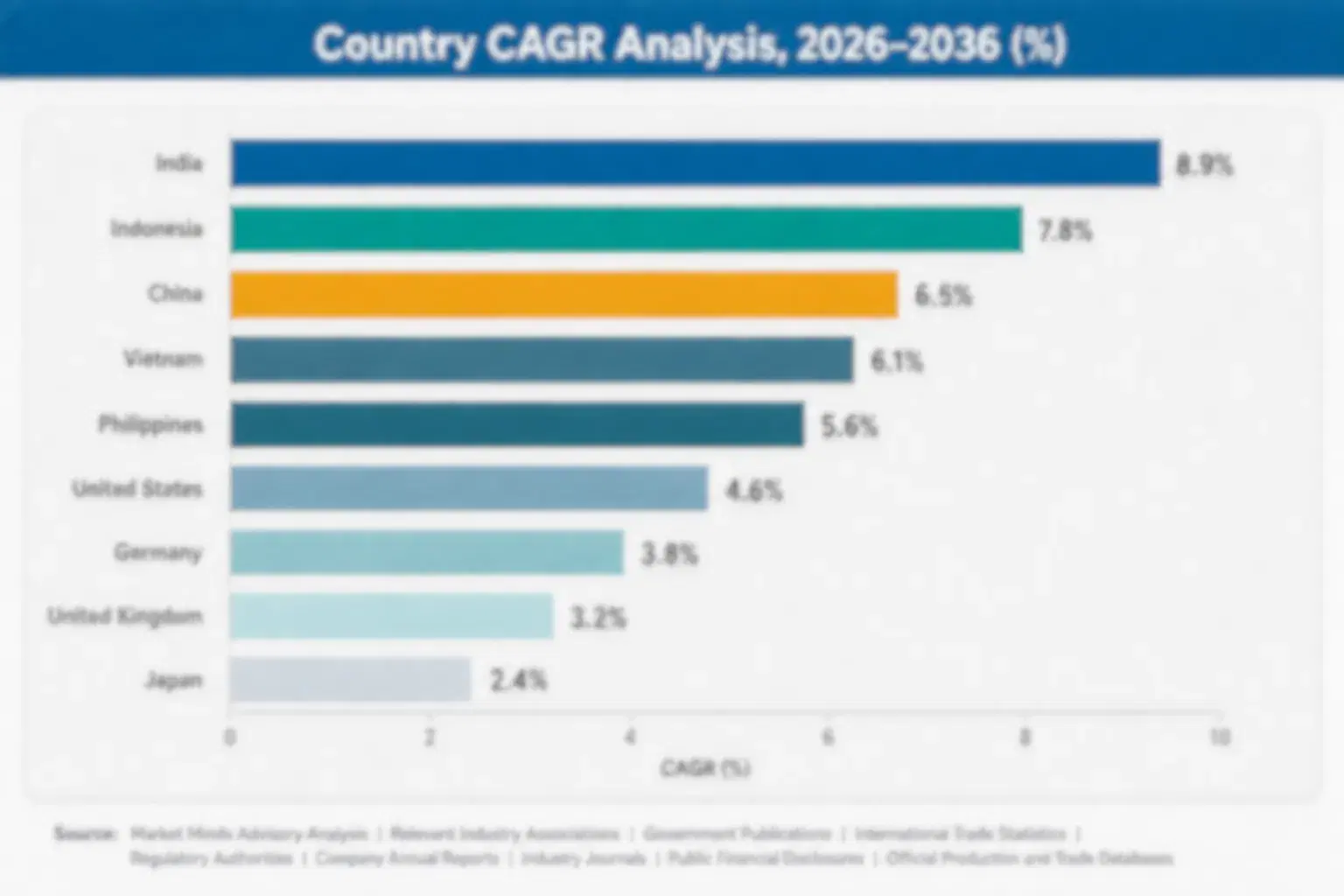
voyage-data-recorders-market-country-cagr-analysis-1791015335559

Monetizing Fleet-Wide Data Access Depth

Hardware margins on standard simplified recorders continue compressing under competitive shipyard tender pressure, pushing manufacturers toward recurring revenue tied to cloud data subscriptions, long-term maintenance contracts, and classification certification support that protect margin more durably than one-time unit sales alone. The levers below concentrate where recurring revenue holds up best over time. Suppliers investing early build durable differentiation.

Cloud Data Offload and Fleet Monitoring Subscriptions

Manufacturers offering subscription access to cloud data offload and fleet-wide recorder health monitoring capture recurring revenue that smooths the lumpiness of one-time hardware sales, since fleet operators increasingly value centralized visibility over managing recorder status vessel by vessel. This locks shipowners into the manufacturer's own cloud platform rather than competing data services, since original equipment makers carry recorder-specific diagnostic data that independent platforms struggle to match. These subscriptions carry margins roughly 26 to 33 percentage points above standalone hardware sales. Smaller independent platform vendors rarely match this diagnostic depth consistently.
Market Impact: Adds 26 to 33 percentage points of margin

Classification Certification Maintenance and Support Agreements

Shipowners increasingly pay for certification maintenance agreements covering ongoing classification society compliance and software update validation across the vessel's full operating life, turning what was once a one-time qualification cost into an ongoing service relationship with predictable renewal economics. Manufacturers offering this structure report contract renewal rates above 65 percent among fleet operators managing multiple certified vessels, since continuous certification support reduces regulatory risk exposure for the shipowner. Early adopters are locking in multi-year compliance service commitments across their fleets. Few competitors can match this ongoing compliance breadth quickly across large fleet networks.
Market Impact: Achieves above 65 percent annual contract renewal rate

Who Controls the Margin Pool

Concentration in voyage data recorders sits at 58 percent across the top five suppliers on a global revenue basis, reflecting a category where classification society relationships and bridge integration expertise favor established marine electronics manufacturers. Furuno Electric and JRC hold the broadest shipyard distribution networks, while Raytheon Anschutz carries comparable scale across both simplified and full configuration product lines. The gap between the leading tier and smaller specialized challengers remains substantial.
Current activity centers on cloud data offload capability and tamper-resistance certification rather than basic recording reliability, which has largely converged across established suppliers. Manufacturers increasingly bundle fleet monitoring subscriptions and certification maintenance agreements into large shipyard bids, since the data access and compliance relationship now generates a larger share of lifetime contract value than standard hardware supply alone.

Pressure is building from Chinese manufacturers expanding export capacity and undercutting established players on price for standard simplified installations in price-sensitive emerging fleet markets, though full configuration and premium cloud-integrated systems still favor established suppliers with proven classification society track records. Regional marine electronics integrators are also gaining share in markets favoring customization, suggesting rankings among the second tier shift within the forecast window.
voyage-data-recorders-market-company-positioning-matrix-1791015335840

Competitive Moat and Risk Dimensions

FURUNO ELECTRIC

Moat: Broadest Shipyard Distribution Network

Furuno Electric's position rests on an extensive shipyard distribution network spanning multiple shipbuilding regions, letting shipowners source consistent equipment and service across borders, a breadth that smaller regional competitors cannot replicate without years of relationship investment. This presence also speeds parts delivery for operators running mixed-fleet multinational operations.
FURUNO ELECTRIC

Risk: Exposure to Commodity Price Competition

Furuno Electric's broad standard-product portfolio faces growing exposure as Chinese manufacturers enter basic simplified recorder segments, particularly for fleet operators prioritizing price over cloud integration and certification depth. A prolonged price war would weigh disproportionately on commodity segment results significantly. Margin pressure intensifies each passing year.
RAYTHEON ANSCHUTZ

Moat: Deep Bridge Integration Expertise

Raytheon Anschutz built its position on specialized bridge system integration engineering that connects recorders directly with broader navigation and monitoring platforms, a technical depth that commands premium pricing among shipowners managing complex vessel electronics. This advantage also lets Raytheon command premium pricing for complex retrofit projects.
RAYTHEON ANSCHUTZ

Risk: Limited Simplified Product Scale

Raytheon Anschutz's premium integration focus limits its natural extension into basic simplified recorder segments, where competitors with broader standard-product coverage capture price-sensitive customers that Raytheon's positioning cannot easily reach. Closing this gap would require years of standard-product manufacturing investment. This limitation persists across most markets served.

Players Tracked

Prominent Players

Furuno Electric
JRC (Japan Radio Company)
Raytheon Anschutz
Danelec Marine
Consilium AB

Other Key Players

Kongsberg Maritime
Wartsila Voyage
L3Harris Technologies
Transas Marine
Sperry Marine
Chart Software
Rutter Inc
Em-trak Marine Electronics
ChartWorld International
Alphatron Marine
Headway Technology Group
Zenitel Marine
Litton Marine Systems
SAM Electronics
Marinesoft Co

Recent Developments

AUGUST 2025

Furuno Electric completed an organic capacity expansion at its recorder manufacturing facility, adding dedicated production lines for simplified voyage data recorders, responding to sustained order growth from shipowners facing expanded regulatory coverage deadlines. The expansion supports anticipated multi-year regulatory compliance demand growth. Deliveries begin soon.
Signal: Signals confidence that simplified recorder demand will keep expanding faster than full configuration replacement cycles. Peers may follow suit.
FEBRUARY 2026

Danelec Marine signed a multi-year supply agreement with a major Asian container shipping line to guarantee recorder availability across its expanding fleet, supporting the line's compliance with newly tightened classification society data retention standards. Terms were not fully disclosed to the public. The deal reflects deepening ties.
Signal: Shows major shipping lines securing guaranteed recorder supply ahead of anticipated regulatory deadlines. Deals may follow.

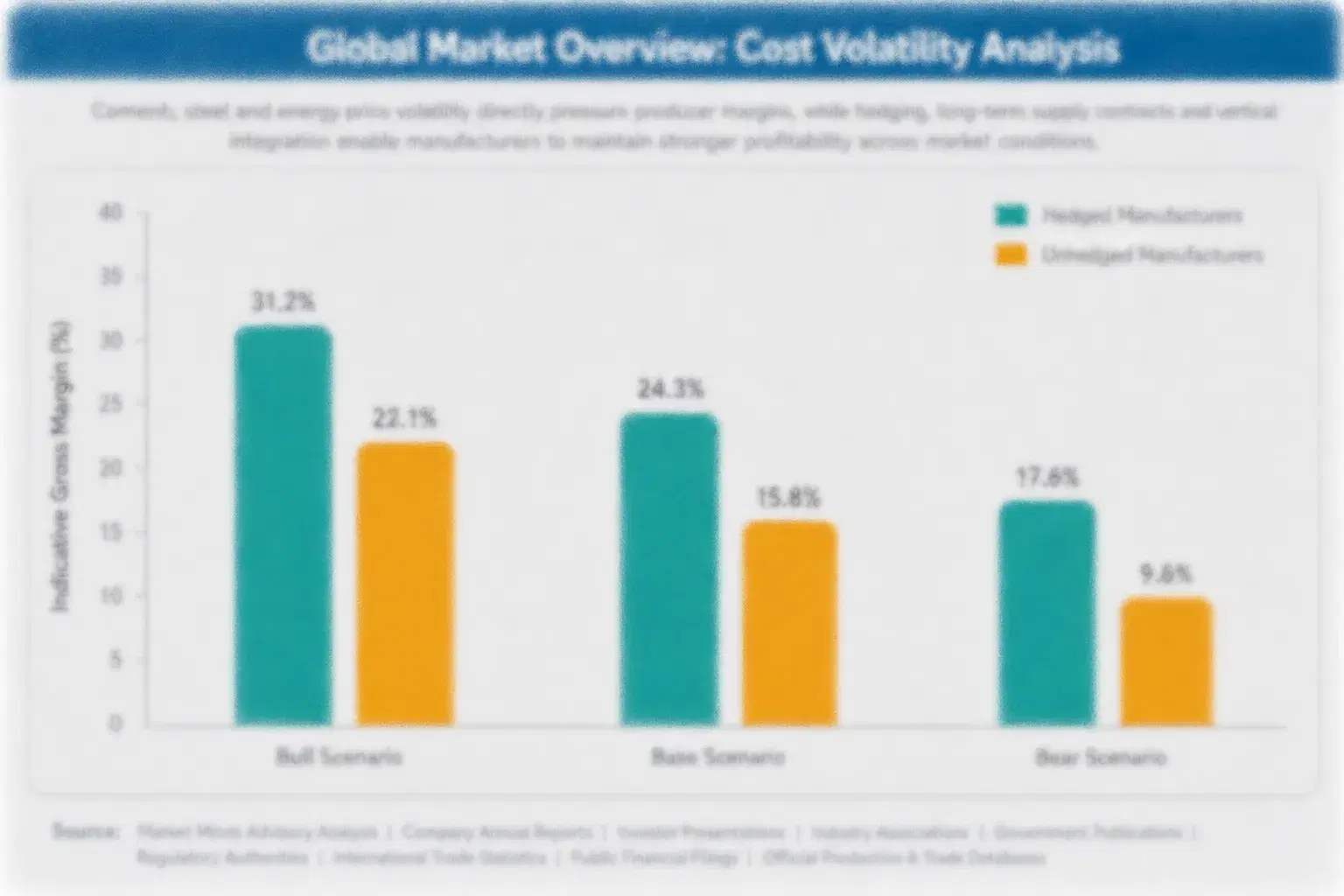
Memory Storage and Protective Capsule Costs

Protective capsule materials, primarily specialized alloys designed to survive fire and impact, represent roughly 28 to 34 percent of cost of goods sold for voyage data recorder units, while memory storage and sensor interface components add another 16 to 20 percent. Capsule alloy supply concentrates heavily in Japan and Germany, while memory components source more broadly across global semiconductor suppliers, leaving distinct exposure profiles.
The 2021 to 2022 global semiconductor shortage disrupted voyage data recorder production as memory storage allocation fell behind higher-priority consumer electronics customers at constrained fabrication facilities worldwide. The IEA's 2023 critical minerals review noted that downstream marine electronics manufacturers absorbed substantial production delays during this period, since most recorder manufacturers lacked the purchasing scale to secure priority allocation against larger consumer electronics customers. Interoperability testing adds further validation time before deployment approval.

Smaller manufacturers without long-term component supply agreements carried disproportionate exposure during this period, often facing multi-month production delays that larger competitors avoided through pre-negotiated allocation commitments. Furuno Electric and Raytheon Anschutz negotiate annual volume agreements directly with component suppliers that smooth exposure across cycles, giving them a durable cost and delivery advantage. This gap compounds further over successive volatility episodes industry-wide.
voyage-data-recorders-market-cost-volatility-analysis-1791015336046

Multi-Year Memory Component Supply Agreements

Locking in memory storage and sensor interface component volumes through multi-year supply agreements with priority allocation clauses shields manufacturers from spot market shortages and lets them quote stable delivery timelines to shipyard customers even during broader semiconductor supply disruptions affecting the wider marine electronics industry significantly. This also shortens delivery timelines during emergency procurement situations.

Platform-Agnostic Memory Component Architecture Qualification Program

Several manufacturers are redesigning recorder architecture to accept memory components from multiple qualified suppliers, reducing single-source dependency that amplified shortage impact during the recent semiconductor crunch while preserving the certification specifications required for classification society approval. This qualification process typically spans twelve to eighteen months before adoption. Vendors view this as a long-term resilience investment worth pursuing further.

Portfolio Architecture for Margin Defence

Portfolio economics in voyage data recorders split across three tiers, with gross margins ranging from the high teens on basic simplified units to the high thirties on fully integrated full configurations with cloud subscriptions attached. The spread between tiers has widened over the past several years as commodity simplified pricing compresses while premium full configuration pricing holds firm on integration complexity. Few manufacturers successfully compete at both ends of this spectrum simultaneously.
Volume concentrates in simplified categories by unit count, but value concentrates disproportionately in full configuration systems and the cloud subscriptions attached to them, creating the familiar tension where manufacturers must sustain simplified-tier scale to cover fixed costs while channeling investment toward the higher-margin tiers that actually drive profit growth across the business. This divide has become more pronounced with each successive product generation released.

High-value pools concentrate specifically around large fleet operators who value cloud data access and certification maintenance over unit price alone. Manufacturers positioned to serve these accounts capture disproportionate profitability relative to unit volume, while pure simplified sellers compete almost entirely on price and face the thinnest margins anywhere across the category. The gap between these two groups continues widening rather than narrowing over time.

Basic simplified voyage data recorders sold at high volume into smaller vessel classes meeting minimum regulatory thresholds, competing primarily on unit price with minimal differentiation. Replacement typically follows standard retrofit procurement cycles.
Gross Margin

Full configuration systems carrying classification society certification, commanding premium pricing on extended retention capacity and bridge integration capability bundled into the purchase. Buyers increasingly expect this capability as a baseline requirement now.
Gross Margin

Cloud-integrated systems with fleet monitoring subscriptions and certification maintenance support, often tied to insurer compliance requirements and casualty investigation standards. Few competitors can match this combination without years of investment.
Gross Margin
voyage-data-recorders-market-portfolio-architecture-1791015336236

High-value Sub-segments and Strategic Watch-out

Cloud-Integrated Fleet Monitoring Platforms

Cloud-integrated recorder platforms combine premium pricing with the category's fastest adoption curve among large fleet operators, positioning this segment as the clearest profit expansion opportunity through 2036 for manufacturers with existing cloud integration capability. Early movers are locking in multi-year platform sourcing agreements now. Momentum continues.

Classification Certification Service Contracts

Certification maintenance services tied to classification society compliance carry strong margins and steady, regulation-driven purchasing cycles, though volume growth stays moderate since enforcement intensity builds gradually across jurisdictions. Enforcement building gradually supports consistent demand across jurisdictions. Early entrants gain lasting integration advantage over time. Momentum continues.

Basic Simplified Recorder Equipment

The largest unit volume pool by count, carrying the thinnest margins and facing continuous price pressure from Chinese commodity manufacturers, this segment remains essential for absorbing fixed manufacturing overhead across the business. Few manufacturers exit this tier without losing meaningful production scale. Capital flows accordingly across the organization.

Regulatory Coverage Saturation Risk

Slower-than-expected regulatory coverage expansion in key markets threatens to delay the retrofit wave longer than manufacturers have planned for, requiring careful capacity allocation decisions between simplified and full configuration product lines. Capital reallocation decisions made now will shape future positioning. Diversification reduces single-market dependency risk over time.

Regulatory Cycles Anchor Recurring Demand

Demand in voyage data recorders behaves like a compliance annuity tied to regulatory coverage cycles and vessel service life rather than discretionary capital spending, since vessels must maintain functioning recording equipment for the full operating life of the ship regardless of broader shipping market conditions. Expanding regulatory coverage and classification society mandates generate recurring compliance revenue that persists across economic cycles affecting other maritime capital categories. This reflects multi-decade asset planning that fleet operators rely on.
Adoption stickiness and depth vary sharply by end-use vertical. Large shipping lines retain certified supplier relationships deeply once established, since switching mid-fleet risks compatibility and classification approval complications across their vessel network. Smaller independent shipowners show shallower stickiness, often selecting based on price for individual vessel retrofits, while passenger cruise operators sit between these extremes, favoring suppliers with proven certification depth.

Buyer profiles are shifting generationally as procurement consolidates from individual ship captains toward centralized fleet safety management teams overseeing standardized recording equipment deployment across multiple vessels simultaneously. This favors manufacturers offering integrated cloud platforms and guaranteed certification support over smaller specialists who once won individual vessel business through direct relationships with ship captains and local agents.
voyage-data-recorders-market-end-use-penetration-index-1791015336422

Where to Commit Capital Next

These are among the four positions where our research anticipates prominent divergence between winners and laggards over the coming forecast period. Each is grounded in the demand model, the regulatory perimeter, and the announced capacity pipeline.
01 / SIMPLIFIED RECORDER CAPACITY

Expand simplified capacity ahead of coverage expansion

Simplified voyage data recorders for smaller vessels are growing at nearly nine percent annually, well above the category average, driven by International Maritime Organization coverage thresholds extending to vessel classes previously exempt from recording mandates. Manufacturers that expand qualified simplified recorder capacity now, before the current coverage expansion cycle peaks, will capture durable share before regional competitors close the remaining engineering gap. Waiting risks ceding the fastest-growing segment to better-positioned incumbents with longer qualification lead times already secured, while also gaining preferred positioning for subsequent multi-year coverage cycles.
02 / CLOUD PLATFORM BUILDOUT

Build dedicated fleet monitoring service capability

Cloud data offload subscriptions and certification maintenance agreements reward manufacturers who demonstrate reliable fleet connectivity capability, commanding margins well above standard hardware sales across the broader category and across most shipowner account relationships. Building dedicated cloud platform capability turns a declining-margin hardware category into a durable, high-margin recurring revenue stream that smaller competitors struggle to replicate without comparable engineering scale. Manufacturers without this capability today are already losing large fleet accounts to better-equipped rivals, since early contracts establish the performance baseline used in future renewal negotiations.
03 / REGIONAL MARKET POSITIONING

Prioritize South Asia and Pacific ahead of saturation

South Asia and Pacific posts the fastest regional CAGR in the category, driven by India's rapidly expanding commercial fleet registration requiring compliant recording equipment across thousands of newly registered vessels simultaneously. Manufacturers establishing distribution and certification infrastructure now, well ahead of broader market awareness, will capture disproportionate share before competitors recognize the full scale of the opportunity. Entering after the growth wave peaks means competing against already-entrenched early movers on distinctly worse commercial terms, since first-mover certification networks become difficult for later entrants to displace.
04 / CERTIFICATION BREADTH INVESTMENT

Prioritize certification depth over price competition

Margin data shows certified premium and cloud-integrated systems carry margins roughly double commodity simplified units, and that gap has widened rather than closed over the past several years of pricing observation across the category. Manufacturers chasing unit cost reduction in commodity tiers compete directly against persistently lower-cost Chinese producers on their single worst competitive terms available anywhere in the category. Investing instead in broader certification coverage protects margin and builds switching costs around proven compliance that compounds over successive purchase and renewal cycles.

Engagement Snapshot From the Field

A live engagement with an industry participant carrying material or product regulatory and market exposure ahead of a defining policy shift, showing how our research translates into a defensible multi-year portfolio strategy.
MARKET MINDS ADVISORY · CLIENT ENGAGEMENT SUMMARY
Voyage Data Recorders Producer Strategic Portfolio Review and Transition Roadmap 2026·Investment Scenario on Voyage Data Recorders Exposure Evaluation 2025-26
CLIENT PROFILE
A regional shipping line operating fourteen vessels approached MMA to assess whether standardizing on cloud-integrated voyage data recorders across its fleet would improve compliance reporting consistency ahead of expanding classification society data retention requirements. MMA was engaged directly by the line's fleet safety management division. The engagement was commissioned ahead of the line's annual fleet planning cycle.
STRATEGIC CHALLENGE
The line's fourteen vessels ran recorders from five different manufacturers, creating fragmented data formats that complicated corporate-level compliance reporting and slowed incident investigation response when issues arose across the fleet. Leadership needed an evidence-based case for standardization investment. Leadership also wanted a repeatable process for evaluating future equipment standardization decisions.
MMA APPROACH
MMA conducted a vessel-by-vessel equipment audit across all fourteen ships, cataloging recorder age, certification status, and cloud connectivity capability for each installed system. The engagement produced a phased standardization plan balancing retrofit cost against long-term compliance reporting efficiency gains. Findings informed a revised multi-year fleet standardization roadmap for safety leadership.
KEY FINDINGS
  1. Four of fourteen vessels operated recorders with certification nearing expiration, an immediate compliance exposure requiring urgent attention. These vessels required immediate attention to maintain compliant operating status.
  2. Standardizing onto one vendor's cloud platform was projected to cut annual compliance reporting labor by approximately 32 percent (client-reported, unverified by MMA).
  3. Two vessels had recorders old enough that replacement parts were no longer manufactured, creating acute failure risk during active operations. These vessels faced elevated failure risk requiring urgent replacement planning.
  4. Full fleet standardization cost was estimated at approximately 2.4 million dollars (client-reported, unverified by MMA) across all fourteen vessels. This estimate included equipment, installation, and commissioning costs.
CLIENT PROFILE
A regional shipping line operating fourteen vessels approached MMA to assess whether standardizing on cloud-integrated voyage data recorders across its fleet would improve compliance reporting consistency ahead of expanding classification society data retention requirements. MMA was engaged directly by the line's fleet safety management division. The engagement was commissioned ahead of the line's annual fleet planning cycle.
STRATEGIC CHALLENGE
The line's fourteen vessels ran recorders from five different manufacturers, creating fragmented data formats that complicated corporate-level compliance reporting and slowed incident investigation response when issues arose across the fleet. Leadership needed an evidence-based case for standardization investment. Leadership also wanted a repeatable process for evaluating future equipment standardization decisions.
MMA APPROACH
MMA conducted a vessel-by-vessel equipment audit across all fourteen ships, cataloging recorder age, certification status, and cloud connectivity capability for each installed system. The engagement produced a phased standardization plan balancing retrofit cost against long-term compliance reporting efficiency gains. Findings informed a revised multi-year fleet standardization roadmap for safety leadership.
KEY FINDINGS
  1. Four of fourteen vessels operated recorders with certification nearing expiration, an immediate compliance exposure requiring urgent attention. These vessels required immediate attention to maintain compliant operating status.
  2. Standardizing onto one vendor's cloud platform was projected to cut annual compliance reporting labor by approximately 32 percent (client-reported, unverified by MMA).
  3. Two vessels had recorders old enough that replacement parts were no longer manufactured, creating acute failure risk during active operations. These vessels faced elevated failure risk requiring urgent replacement planning.
  4. Full fleet standardization cost was estimated at approximately 2.4 million dollars (client-reported, unverified by MMA) across all fourteen vessels. This estimate included equipment, installation, and commissioning costs.
RECOMMENDED STRATEGY
Phase 1: Phase one: immediately replace recorders on the four vessels with expiring certification within the current operating quarter. This phase carries the highest near-term compliance urgency. Phase 2: Phase two: migrate the remaining ten vessels to the standardized cloud platform over an eighteen-month rolling schedule. Smaller vessels received implementation support throughout this transition period. Phase 3: Phase three: establish a fleet-wide compliance tracking dashboard covering all fourteen vessels under one unified reporting view. The dashboard highlights fleet-wide compliance performance outcomes achieved.
OUTCOME
The line completed phase one replacement within the current operating quarter and began phase two migration on schedule, reporting a measurable reduction in compliance reporting time at converted vessels (client-reported, unverified by MMA). Fleet safety leadership adopted the standardization framework as a template for future equipment categories beyond recorders alone.

Frequently Asked Questions

Foundational context covering the market sizes, CAGR, scope, country, region and competition that inform every finding below. This section is provided to cover basics and most often pre-purchase conversations, answered from the MMA Primary Research Dataset.

What is the current size of the Voyage Data Recorders Market?

The global voyage data recorders market is valued at 0.76 billion dollars in 2025. Demand is sustained by expanding international maritime safety mandates and regulatory coverage.

How large will the Voyage Data Recorders Market be by 2036?

The market is projected to reach 1.504 billion dollars by 2036, up from 0.809 billion dollars in 2026. This represents a cumulative increase of 0.695 billion dollars across the forecast decade.

What is the CAGR for the Voyage Data Recorders Market 2026 to 2036?

The market is forecast to grow at a 6.4 percent CAGR between 2026 and 2036. Bull and bear scenarios range between 5.1 and 7.7 percent depending on coverage expansion pace.

Which segment is growing fastest?

Simplified voyage data recorders for smaller vessels lead at a 9.3 percent CAGR, roughly 1.5 times the overall market rate. Expanding regulatory coverage thresholds drive this growth.

Who are the major companies in the Voyage Data Recorders Market?

Furuno Electric, JRC, Raytheon Anschutz, Danelec Marine, and Consilium AB lead the category, together holding a 58 percent combined share of the global voyage data recorders market.

Which country is growing fastest?

China leads country-level growth at an 8.1 percent CAGR, driven by its enormous shipbuilding output and rapidly expanding domestic commercial fleet across the entire country.

Report Segmentation Architecture

The full report scope spans multiple orthogonal segmentation dimensions, with cross-tabulated demand data provided for each dimension pair. Coverage extends further to regional breakdowns, trend trajectories, and the competitive detail needed to support segment-level decision-making.

By Product Type

    By End-Use Industry

      By Commercial Dimension

        By Region

        • North America
        • Western Europe
        • East Asia
        • South Asia and Pacific
        • Latin America
        • Middle East and Africa
        • Eastern Europe

        Scope, Methodology, and Coverage

        Every figure in this report is reproducible from documented input assumptions. The scope below maps the historical period, the forecast horizon, the segmentation dimensions, and the countries covered, alongside the underlying primary and qualitative methodology.
        Historical Period
        2020 to 2025
        Forecast Period
        2026 to 2036
        Base Year
        2025 (USD billions; MMA Primary Research Dataset, October 2026)
        Market Definition
        This report covers shipboard systems that continuously record navigational, operational, and bridge audio data for incident investigation and regulatory compliance, including full voyage data recorders and simplified voyage data recorders for smaller vessel classes. It excludes automatic identification system transponders sold as standalone products, electronic chart display systems, and satellite communication equipment sold independently of the recording function.
        Quantitative Units
        USD billions
        Segmentation Dimensions
        Regions Covered
        North America, Western Europe, East Asia, South Asia and Pacific, Latin America, Middle East and Africa, Eastern Europe
        Countries Covered
        Key Companies Profiled
        Furuno Electric, JRC (Japan Radio Company), Raytheon Anschutz, Danelec Marine, Consilium AB, Kongsberg Maritime, Wartsila Voyage, L3Harris Technologies, Transas Marine, Sperry Marine, Chart Software, Rutter Inc, Em-trak Marine Electronics, ChartWorld International, Alphatron Marine, Headway Technology Group, Zenitel Marine, Litton Marine Systems, SAM Electronics, Marinesoft Co
        Quantitative Methodology
        Primary survey, n=3,800 respondents, Q4 2025, six countries; demand-side model with trade association cross-validation
        Qualitative Methodology
        47 expert interviews, Q4 2025; applied to validate demand model assumptions, identify emerging dynamics, and assess competitive positioning
        Report Format
        PDF and XLSX data workbook (Word format preview document)
        Publisher
        Market Minds Advisory
        Report Code
        MMA-2026-TEC-834
        Published
        October 2026
        Contact
        sales@marketmindsadvisory.com | www.marketmindsadvisory.com

        Purchase the full Voyage Data Recorders Market Report (2026 to 2036).

        The full report expands every section summarized here into complete analytical depth. It includes the full segmentation model across all six segments, detailed profiles of all twenty tracked competitors, and the complete regional dataset across all seven markets covered in this research program. It also adds extended trend, driver, and restraint coverage well beyond the two visible items shown in each category here, along with full input cost and portfolio tier analysis. Buyers additionally receive the underlying primary survey dataset and full expert interview summary notes.
        Complete six-segment MECE breakdown with margins
        Full twenty-company competitive profile set included
        All seven regional markets with demand mechanisms
        Extended trend, driver, and restraint library
        Primary survey dataset access, n=3,800 respondents
        Expert interview summary notes, 47 interviews

        Built For The People Who Decide

        From boardroom strategy to bench-side execution, this report is read cover-to-cover by leaders shaping the next decade of their industry, turning demand scenarios, market dynamics and valuation benchmarks into decisions.
        CXOs/ Presidents/ VPs/ Managers
        M&A and Corporate Development
        Strategy Teams and R&D Heads
        Procurement and Product Directors
        Regulatory and Compliance Leaders
        Investor Relations and Equity Analysts