

Market Minds Advisory
Veterinary Sutures Market

Veterinary Sutures Market: Human Product, Repackaged, And The Buyer Counts Packets

Around 91% of veterinary suture derives from existing human surgical platforms, while the buyer running sterilisation surgery at a fixed fee counts every packet opened against a margin measured in single dollars.

Lead Analyst

Published

September 2026

Make Smarter Decisions with Customized Research Insights

Request a free sample report and evaluate market opportunities, growth trends, and competitive dynamics relevant to your business needs.

2025 MARKET VALUE$0.5BMarket Size 2025
2036 FORECAST VALUE$0.9BBase Case , 2026 to 2036
CAGR 2026 TO 20366.0 %Bull 7.2% / Bear 4.8%
INCREMENTAL OPPORTUNITY$0.4BNet 10- year value creation
EXPANSION MULTIPLE1.79x2036 value over 2026 base
Strategic Levers
M&A Pipeline
Regional Outlook
Country Rankings
Competitive Intelligence
Segmental Deep-dive
Call-Us : 91 93563 13602

Executive Snapshot and Market Trajectory

Roughly 91% of veterinary suture derives from human surgical platforms. Same filament chemistry, same needle geometry, different box and a lower price, which means the category inherits its technology rather than developing any, and always has done. Nobody in the trade pretends otherwise at all.
North America takes 30% of value on procedure volume and pricing together, with East Asia and Western Europe both at 24% behind it. Routine sterilisation consumes 58% of all suture used. Barbed and knotless systems grow at 9.0%, half again the market rate of 6.0%, as closure time savings start mattering to practices that measure theatre minutes properly. Practices that treat theatre time as fixed overhead reach an entirely different conclusion about it though.
Concentration reaches 62% because the human suture majors supply this category from existing lines. The buyer is unusual though: a high-volume sterilisation clinic working at a fixed fee near 58 dollars counts packets, which is why natural gut persists here decades after human surgery abandoned it entirely. Indian and Chinese manufacturers matching those same specifications at roughly 40% lower cost are now moving outward from their own domestic markets.
Market Definition
The market covers surgical suture materials supplied for veterinary use, spanning synthetic absorbable monofilament, synthetic absorbable braided, non-absorbable synthetic, natural absorbable gut, barbed and knotless suture systems, and antibacterial-coated suture. Surgical staplers and clips, tissue adhesives and sealants, surgical mesh, wound dressings, general surgical instruments, and suture supplied for human clinical use are excluded from scope.
Base Year Value
$0.5B in 2025 (MMA Primary Research Dataset, August 2026)
Forecast Period
2026 to 2036, eleven discrete annual values
CAGR
6.0% base case. Bull 7.2%. Bear 4.8%.
Fastest Growth Segment
Barbed and Knotless Suture Systems: 9.0% CAGR
Fastest Growth Country
India: 8.0% CAGR
Fastest Growth Region
South Asia and Pacific: 8.2% CAGR
Largest Region
North America: 30% of 2025 global value
Market Leaders
Ethicon, Medtronic, B. Braun, Dolphin Sutures, DemeTECH. Source: MMA Analysis based on disclosed surgical suture revenue attributable to veterinary channels, company annual reports 2025.
Primary Survey
n=3,800 procurement and R&D decision-makers, Q4 2025, six countries
Methodology
Demand-side build-up, cross-validated against public data, 47 expert interviews

Veterinary Sutures Market Forecast Scenarios

veterinary-sutures-market-size-forecast-scenario-1787708585722
Growth from 2020 to 2025 ran at 5.0% and was interrupted rather than driven by anything within the category itself. Ethylene oxide sterilisation capacity in North America contracted following emission rules, which constrained supply of sterile single-use devices across the board and pushed lead times out. Veterinary orders sat behind human orders in every allocation decision made, which practices discovered abruptly and remembered afterwards.
The 6.0% base case rests on three mechanisms. Barbed and knotless closure keeps taking share as practices begin measuring theatre time as a cost rather than treating it as fixed. Antibacterial coating adoption keeps following human surgical practice with its usual lag. And Asian companion animal surgical volume keeps rising sharply as clinical capacity is built in cities where routine sterilisation was uncommon a decade ago. None of the three depends on new chemistry.
The bull case at 7.2% assumes barbed closure moves into routine sterilisation rather than staying in specialty surgery, which would change consumption per procedure meaningfully. The bear case at 4.8% is continued price compression from Indian and Chinese manufacturers producing to the same specifications at costs the established suppliers cannot approach at any volume they might reach.

Inherited Technology, Counted Packets

This category does not develop its own technology and has never needed to. Around 91% of veterinary suture comes from human surgical platforms: the same poliglecaprone and polydioxanone filaments, the same swaged needle geometries, the same coating chemistry, sold through veterinary distribution in different packaging at lower prices. Development happens in human surgery and arrives here several years later. Manufacturers describe this as portfolio efficiency and they are entirely correct to.
FIVE-FIRM CONCENTRATION62%Share of category revenue held by the largest suture suppliers
SUTURE COST PER STERILISATION$2.40Typical suture cost for one routine sterilisation procedure
STERILISATION SHARE OF VOLUME58%Suture consumed in routine spay and castration surgery
HUMAN PLATFORM DERIVATION91%Veterinary lines derived from existing human surgical platforms
PATIENT WEIGHT RANGE350 timesRatio between the heaviest and lightest patients requiring suture
HIGH-VOLUME CLINIC FEE$58Typical fixed fee charged by high-volume sterilisation clinics
The buyer, however, is nothing like a hospital purchasing department. Routine sterilisation consumes 58% of all veterinary suture, much of it in high-volume clinics and shelter programmes working at a fixed fee near 58 dollars per animal. Suture at roughly 2.40 dollars per procedure is a visible line against that. Nobody in human surgery has ever counted packets this way, and it explains commercial behaviour that looks irrational from outside.
Sizing compounds the problem. A patient population running from a two kilogram cat to a seven hundred kilogram horse needs filament sizes and needle geometries across a range no human catalogue contemplates, at volumes per item that would not justify a production run on their own. Human platform derivation is what makes those long tail sizes possible at all.
"The product is a human suture in a veterinary wrapper and everyone in the trade knows it. What nobody outside understands is that the customer opening the packet is doing arithmetic on two dollars and forty cents."
Director, Surgical Consumables Practice · MMA Veterinary Surgical Consumables Practice · August 2026

Market Trends

Barbed Closure Moves From Specialty Toward Routine

Knotless barbed suture removes knot tying from closure, saving several minutes per procedure and eliminating the knot as a failure point. Growth at 9.0% has come from specialty and referral surgery where theatre time is genuinely costed. The interesting question is whether it reaches routine sterilisation, where per-procedure cost discipline is severe and the time saved matters most because volume is highest. Practices that measure theatre minutes reach a different conclusion from those that do not. The arithmetic is not difficult; nobody has simply presented it to them properly yet.
Market Impact: Anchors 58% of suture volume

Indian And Chinese Manufacturers Match The Specifications

Suture chemistry and needle manufacture are well characterised and no longer proprietary in any meaningful sense, which is why manufacturers in India and China now produce to established specifications at costs the incumbents cannot approach. They supply their own domestic markets first and increasingly export into price-sensitive channels elsewhere. High-volume sterilisation programmes buying on cost per packet were the natural first customers, and shelter purchasing across several markets has already moved decisively in that direction. Export channels in Europe and Latin America followed once domestic capacity exceeded home demand entirely.
Market Impact: Grows India fastest at 8.0%

Market Opportunities and Growth Drivers

Sterilisation Volume Anchors Fifty-Eight Percent Of Demand

Ovariohysterectomy and castration are by a wide margin the most performed veterinary surgical procedures anywhere, and together they consume 58% of all suture used in the category. High-volume clinics and shelter programmes perform dozens daily under fixed-fee models. That base is unusually predictable, since sterilisation volume tracks companion animal population rather than clinical events, and it grows steadily wherever pet ownership rises without depending on any surgical innovation at all. Companion animal population growth carries it forward without needing a single new product to appear anywhere in the catalogue at all.
Market Impact: Squeezes $2.40 against $58 fees

Asian Urban Surgical Capacity Built From Nothing

Routine sterilisation was uncommon across most Chinese and Indian cities a decade ago and is now becoming standard practice as companion animal clinics open and owner expectations shift. India grows fastest of any country at 8.0%, supported additionally by large publicly funded street dog sterilisation programmes that consume considerable suture volume at very low unit prices. Clinical capacity rather than owner demand paces both markets, since surgery requires trained veterinarians who take years to produce. Domestic manufacturers supply almost all of that volume already, which shapes who benefits from the growth.
Market Impact: Spans a 350 times weight range

Market Restraints and Challenges

Fixed-Fee Surgery Makes Every Packet Visible

A high-volume clinic performing sterilisation at a fixed fee near 58 dollars treats suture at roughly 2.40 dollars per procedure as a line worth managing, which no hospital purchasing department has ever done. Root cause is that the procedure price is set by charitable or public funding rather than by cost recovery. Commercial impact is severe price pressure and persistent use of cheaper materials. Mitigation runs through multi-procedure packaging and cassette formats that lower cost per use genuinely. Unit price discounting barely moves the figure that buyer actually watches at all.
Market Impact: Saves 4 minutes per closure

Long Tail Sizing Cannot Justify Its Own Production

Filament sizes and needle geometries must cover patients across a weight range of roughly 350 times, from cats to horses, at volumes per item that would never justify a dedicated production run. Root cause is species diversity against a small addressable market. Commercial impact is that veterinary-specific development is economically impossible for most items. Mitigation is precisely the human platform derivation that critics object to, since shared production is what keeps the long tail available. A supplier discontinuing its slow-moving sizes simply pushes surgeons toward whoever still stocks them instead.
Market Impact: Undercuts pricing by 40% typically
2 additional market trends, 3 additional growth drivers, and 4 additional restraints and challenges are covered in the full report. Contact sales@marketmindsadvisory.com to access the complete intelligence.

Segment CAGR and Growth Architecture

Segmentation follows suture material and construction: what the filament is made of, how it is built, and what it is coated with. Six categories cover the market without overlap. Procedure type, species and purchasing channel are treated as separate commercial dimensions throughout this report rather than as segmentation logic in their own right entirely.
veterinary-sutures-market-market-share-analysis-1787708585901

Barbed and Knotless Suture Systems

Barbed filament anchors into tissue along its length, removing knot tying from closure entirely and saving several minutes per procedure while eliminating the knot as a mechanical failure point. Growth at 9.0%, half again the market rate of 6.0%, has come almost entirely from specialty and referral surgery where theatre time is genuinely costed rather than treated as fixed overhead. Unit price is far above conventional filament, which is precisely why routine sterilisation has not adopted it despite standing to gain the most from the time saved. Sterilisation stands to gain most from the time saved and has adopted least of anywhere, which is the clearest unresolved question in the whole category.
CAGR 9.0%

Antibacterial-Coated Suture

Triclosan-coated filament reduces bacterial colonisation on the suture surface and has been standard in much of human surgery for years, arriving here with the usual lag that characterises everything in this category. Growth at 7.8% follows referral and specialty adoption where surgical site infection carries real cost and real reputational weight. Routine sterilisation has largely not moved, since the coated premium sits awkwardly against a procedure priced near 58 dollars and the infection rate in healthy young animals is already low. Purchasing groups negotiating across many sites at once compare the coated premium directly against conventional filament and generally decline it, which limits adoption to practices choosing their own catalogue.
CAGR 7.8%
Full segment breakdown across 6 segments available in the complete report.

Regional Architecture and Country Demand Map

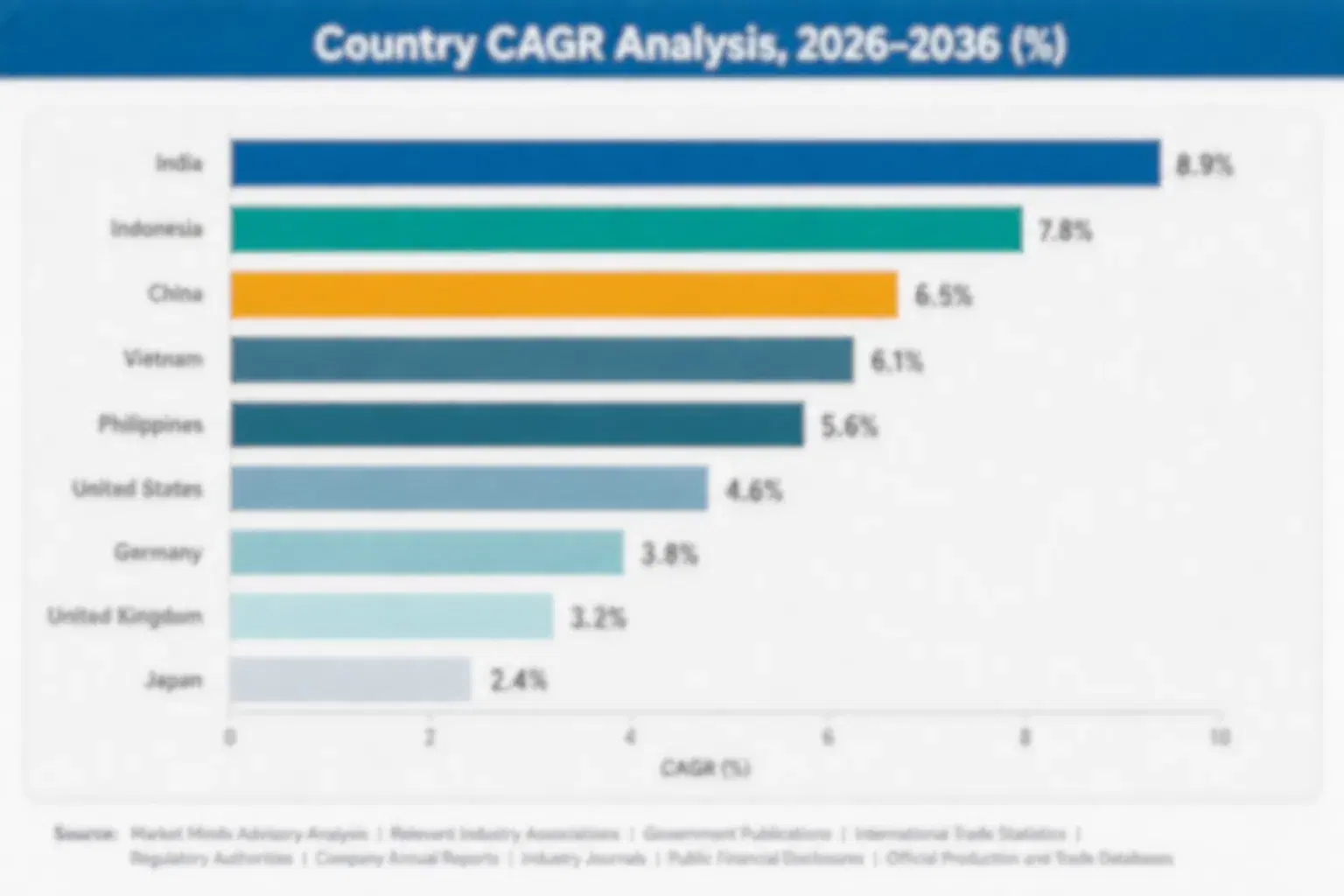
Geography follows surgical procedure volume multiplied by realised pricing rather than animal population alone. North America leads modestly, East Asia and Western Europe sit level behind it, and India grows fastest from a very low base. Animal population numbers alone tell you very little at all here.

North America

Companion animal surgical volume is the highest anywhere and sterilisation programmes are extensive, running through private practice, shelter networks and subsidised high-volume clinics that perform dozens of procedures daily at fixed fees. Specialty referral surgery drives barbed and antibacterial-coated adoption ahead of every other region. The ethylene oxide sterilisation capacity contraction following emission rules hit supply here hardest, and practices that found veterinary orders deprioritised behind human ones have diversified suppliers deliberately since. Distribution runs through a small number of large veterinary wholesalers. High-volume sterilisation clinics operating at fixed fees near 58 dollars per animal are more numerous here than anywhere, and their purchasing behaviour sets pricing expectations that reach well beyond their own segment.
Share: 30% | CAGR: 5.2% (2026 to 2036)

Western Europe

Surgical volume per animal is high and clinical standards are well established, with specialty referral networks across Britain, Germany, the Netherlands and Scandinavia driving premium suture adoption. Sterilisation practice varies considerably by country, since several Northern European markets sterilise routinely while parts of Southern Europe do so far less. Procurement runs increasingly through corporate practice groups negotiating across their estates rather than through individual practice ordering. Equine surgery carries meaningful weight given breeding and sport horse operations across Ireland, France and Britain. Antibacterial-coated formats reached veterinary practice earlier here than in most regions, following human surgical adoption across the same hospital systems that many of these suppliers already served directly.
Share: 24% | CAGR: 4.4% (2026 to 2036)
Regional intelligence for 5 additional markets available in the complete report: East Asia, South Asia and Pacific, Latin America, Middle East and Africa, Eastern Europe. Contact sales@marketmindsadvisory.com.
veterinary-sutures-market-country-cagr-analysis-1787708586083

Selling Into A Counted Budget

Around 91% of product derives from human platforms, sterilisation consumes 58% of volume at roughly 2.40 dollars per procedure against fixed fees near 58 dollars, and Asian manufacturers match the specifications. Four levers work on cost per use, time economics, channel position and long tail availability instead of price, which nobody wins on here.

Reduce Cost Per Use, Not Unit Price

A high-volume clinic paying roughly 2.40 dollars of suture into a 58 dollar procedure responds to cost per use rather than to the price printed on a packet. Multi-procedure cassettes, longer lengths and pack configurations matched to actual sterilisation workflow lower that figure without discounting the product itself. It requires understanding how a clinic performing 30 procedures daily actually opens and consumes packets, which very few suppliers have ever bothered to observe directly. Cost per use is the number that decides, and the unit price simply is not at all.
Market Impact: Cuts the $2.40 suture cost per sterilisation procedure

Cost Theatre Minutes Before Selling Barbed Closure

Barbed suture saves roughly four minutes per closure and costs several times conventional filament, so the argument only works where theatre time carries a costed value. Referral surgery already reaches that conclusion. High-volume sterilisation would gain most from the time saved and has adopted least, because nobody has done the arithmetic with them. Suppliers presenting a cost per theatre minute alongside the unit price convert practices that reject the product on price alone. A clinic performing 30 procedures daily recovers 2 hours of theatre time weekly, which is the figure that actually persuades anybody.
Market Impact: Values the 4 minutes of theatre time saved

Hold Distribution Position Against Specification Matching

Indian and Chinese manufacturers produce to established specifications at costs incumbents cannot approach, typically undercutting by around 40%, so the defensible position is channel rather than product. Wholesaler relationships, corporate group contracts and shelter programme supply arrangements decide what a practice actually orders. Suppliers who treat distribution as logistics rather than as the competitive position lose share to products that are genuinely equivalent and considerably cheaper than their own. Wholesaler buyers decide what sits on the shelf, and a practice orders what is there rather than what it once specified.
Market Impact: Defends every account against a 40% price undercut

Keep The Long Tail Sizes Genuinely Available

Filament and needle combinations covering a patient weight range of roughly 350 times include many items that sell in tiny quantities and could never justify their own production run. Human platform derivation is what keeps them economically viable, and a supplier who quietly discontinues slow-moving sizes forces surgeons toward whoever still stocks them. Availability across the full range is a genuine commercial position, not merely an inventory obligation to be minimised. Wholesaler buyers say plainly that availability rather than headline pricing decides who holds the everyday conventional filament volume itself.
Market Impact: Stocks across the full 350 times weight range

Who Controls the Margin Pool

Measured on disclosed surgical suture revenue attributable to veterinary channels, the five largest suppliers hold a CR5 of 62%, which is high because the human suture majors serve this category from existing production lines rather than dedicated ones. Ethicon and Medtronic supply the broadest portfolios, B. Braun holds a substantial European position, Dolphin Sutures leads Indian manufacture, and DemeTECH holds a growing position in cost-competitive supply.
Three contests define activity. Routine sterilisation supply competes almost purely on cost per use through wholesalers and shelter programme contracts. Specialty referral supply competes on barbed and coated formats where surgeons hold genuine preferences. And long tail sizing competes on availability, where a supplier who stocks the awkward gauges keeps the account. Natural gut survives entirely on price in programmes that can afford nothing else.

Pressure builds as Indian and Chinese manufacturers match specifications at roughly 40% lower cost and move outward from their domestic markets. Rankings shift toward whoever holds wholesaler and corporate group contracts. Product differentiation was never the defence here and is less so now. A wholesaler buyer deciding what sits on the shelf settles more volume than any surgeon preference does now.
veterinary-sutures-market-company-positioning-matrix-1787708586266

Competitive Moat and Risk Dimensions

ETHICON

Moat: Human Platform Breadth And Distribution

Ethicon supplies veterinary channels from human surgical production lines carrying the widest filament, needle and coating range available anywhere, which makes the awkward long tail sizes economically possible and keeps surgeons from splitting orders. Distribution through major veterinary wholesalers is long established. A competitor matching one specification still cannot match availability across a catalogue built for a far larger market.
ETHICON

Risk: Specification Matching Removes Differentiation

Suture chemistry and needle manufacture carry no meaningful proprietary protection, and Indian and Chinese manufacturers now produce to the same specifications at roughly 40% lower cost. Portfolio breadth defends the account without defending the price on high-volume items. Sterilisation programmes buying on cost per packet have already moved in several markets.
DOLPHIN SUTURES

Moat: Cost Position And Domestic Scale

Manufacturing in India with domestic polymer and needle supply produces a cost position that established suppliers cannot approach at any volume, alongside a home market where publicly funded programmes consume enormous quantities. That base funds capacity which then serves export channels. Cost advantage built on location and scale is considerably harder to erode than one built on a product feature.
DOLPHIN SUTURES

Risk: Premium Format Portfolio Gap

The growth in this category sits in barbed, knotless and antibacterial-coated formats where specialty surgeons hold genuine preferences and price sensitivity is far lower. A portfolio concentrated in conventional filament competes entirely in the segment where pricing is worst. Building premium format capability requires development spending that a cost-led model does not naturally fund.

Players Tracked

Prominent Players

Ethicon
Medtronic
B. Braun
Dolphin Sutures
DemeTECH

Other Key Players

Vetsuture
Unisur Lifecare
Healthium Medtech
Peters Surgical
Assut Medical
Katsan
Serag-Wiessner
Meril Life Sciences
Lotus Surgicals
CP Medical
AD Surgical
Shanghai Pudong Jinhuan Medical
Ningbo Chengye Medical
Jorgensen Laboratories
Aspen Surgical

Recent Developments

APRIL 2025

Shelter purchasing consortium moves sterilisation suture supply

A shelter and high-volume clinic purchasing consortium moved its sterilisation suture supply to a lower cost manufacturer, a procurement decision rather than any corporate transaction. Fixed-fee procedure economics had made suture cost per procedure a line the consortium was actively managing across every member facility involved.
Signal: Cost per procedure buying moves substantial volume in single decisions that no product feature can influence.
AUGUST 2025

Multi-procedure cassette format launched for high-volume clinics

A manufacturer launched a cassette suture format configured for high-volume sterilisation workflow, an organic product development rather than any acquisition or licensing arrangement. Clinics performing dozens of procedures daily had been opening individual packets in a pattern that wasted both filament and handling time considerably.
Signal: Lowering cost per use rather than unit price is the only pricing argument this buyer accepts.
DECEMBER 2025

Indian manufacturer expands export supply into European channels

An Indian suture manufacturer expanded export supply into European veterinary distribution channels through wholesaler agreements, a commercial supply arrangement rather than any merger or joint venture. Domestic sterilisation programme volumes had funded manufacturing capacity well beyond what the home market alone could possibly absorb on its own.
Signal: Domestic programme scale is now funding capacity that then competes directly in higher priced export markets.

Polymer, Needle Wire, Sterilisation

Three inputs carry the cost. Medical grade polymer including polyglactin, polydioxanone, poliglecaprone, polypropylene and nylon, stainless steel needle wire, and terminal sterilisation together account for 29 to 37% of finished cost, with packaging and labelling adding further. Polymer supply comes from a small number of specialist producers in North America, Western Europe and increasingly China. Needle wire drawing and swaging capacity is similarly concentrated in a handful of plants.
The volatility that mattered was ethylene oxide sterilisation capacity. EPA action on ethylene oxide emissions led to facility closures and operating restrictions across North American sterilisation providers from 2019 onward, which constrained sterile single-use device supply industry wide and extended lead times considerably. Veterinary orders sat behind human medical orders in every allocation decision taken. Practices found suture unavailable for scheduled surgery and remembered which suppliers had told them honestly.

Exposure divides by sterilisation access and polymer sourcing rather than by scale. Suppliers holding contracted or owned sterilisation capacity carried supply through the constrained period; those buying it on the open market did not. Indian and Chinese manufacturers with domestic polymer, needle and sterilisation supply hold cost positions of roughly 40% below Western production, which no Western efficiency programme closes.
veterinary-sutures-market-cost-volatility-analysis-1787708586455

Contract sterilisation capacity rather than buying it spot

Ethylene oxide capacity contracted sharply following emission rules and veterinary orders were deprioritised behind human medical ones in every allocation made. Contracted capacity costs commitment against volumes that may not materialise in any given quarter. It converts an outright supply failure into a scheduling problem, which for a practice with surgery booked is an entirely different conversation to have.

Qualify gamma and electron beam sterilisation alternatives

Single-route sterilisation leaves a product line undeliverable whenever that route is restricted, and requalification under existing registrations takes months nobody has once supply has already stopped. Validating alternative methods costs testing work against material compatibility that varies by polymer. It removes the dependence that turned an emissions rule into an industry-wide device shortage lasting well over a year.

Source polymer from more than one qualified producer

Medical grade polymer comes from a small number of specialist producers, and single sourcing concentrates both pricing exposure and allocation risk in one supplier relationship. Qualifying a second producer costs validation work against volumes that may never move to them. It provides negotiating position on the largest input line and protects continuity when a producer reallocates capacity elsewhere.

Portfolio Architecture for Margin Defence

Margin follows format rather than material science, since the material science is shared with human surgery in almost every case. Natural gut earns thinly and is bought purely on price by programmes that cannot afford anything else. Conventional synthetic filament earns moderately against specification matching from Asian manufacturers. Antibacterial-coated formats earn well on referral surgery adoption. Barbed and knotless systems earn best, on a genuine functional difference that price comparison alone does not settle.
The tension is that 58% of volume sits in the segment with the worst pricing. Routine sterilisation consumes most of the category at cost per packet discipline that no premium format survives, while the better margins sit in specialty formats used in a small fraction of procedures. A supplier chasing volume competes against manufacturers roughly 40% cheaper, and one chasing margin accepts a much smaller addressable base.

High-value pools sit in three places. Barbed and knotless systems, where a functional advantage supports pricing that conventional filament never commands. Antibacterial coating in referral surgery, where infection cost is real. And long tail sizing availability, which is a service position rather than a product one but keeps accounts that would otherwise fragment across suppliers.

Volume / Commodity-Adjacent

Natural gut and conventional synthetic filament supplied into sterilisation programmes on cost per packet. The 8-point range separates Asian manufacturers with domestic polymer and needle supply from Western producers competing on the same specifications.
Gross Margin: 22-30%

Premium / Certified

Branded synthetic absorbable and non-absorbable filament sold through veterinary wholesalers into general practice. The 12-point spread reflects how differently corporate group contract pricing and independent practice list pricing behave across the same catalogue.
Gross Margin: 42-54%

Sustainability / Regulatory / Next-Generation

Barbed and knotless systems together with antibacterial-coated formats sold into specialty and referral surgery. The 16-point range is wide because barbed system pricing and coated filament pricing follow entirely different competitive logic from one another.
Gross Margin: 56-72%
veterinary-sutures-market-portfolio-architecture-1787708586646

High-value Sub-segments and Strategic Watch-out

Barbed and Knotless Systems

Highest margin and fastest growth at 9.0%, supported by a genuine functional difference that saves roughly four minutes per closure. The risk is that adoption stalls outside referral surgery, since routine sterilisation rejects the unit price without ever costing theatre time. Nobody has done that arithmetic with them.
Gross Margin: 60-72%

Antibacterial-Coated Filament

Strong growth at 7.8% following human surgical practice into referral and specialty work where surgical site infection carries real cost. The risk is that healthy young sterilisation patients show low infection rates anyway, which limits the argument to complex surgery. Complex surgery is where the case holds.
Gross Margin: 52-62%

Conventional Synthetic Filament

The volume core, carrying most of the 58% consumed in routine sterilisation at pricing that specification matching has already compressed. Suppliers hold it because wholesaler and programme relationships depend on supplying the everyday items reliably. Losing it removes the wholesaler relationship that carries everything else.
Gross Margin: 24-32%

Specification Matched Import Pressure

The strategic watch-out. Indian and Chinese manufacturers produce to identical specifications at roughly 40% lower cost and are moving outward from domestic markets into export channels. The risk is that channel position is the only remaining defence available. Product differentiation was never really the defence here.
Gross Margin: 20-28%

Consumed Every Single Procedure

Suture is consumed entirely at every procedure, which makes demand a direct function of surgical volume with no installed base, no replacement cycle and no upgrade decision anywhere in it. A practice performing 40 sterilisations weekly consumes a predictable quantity indefinitely. That produces revenue quality most device categories would envy, and it also means no equipment sale anchors the relationship and no switching cost exists beyond surgeon familiarity.
Stickiness therefore rests on habit and availability rather than on anything contractual. Surgeons develop genuine preferences for how a particular filament handles and knots, and they resist changing without reason. Referral surgeons are stickiest, since technique and material are learned together. High-volume sterilisation clinics are least sticky of all, buying on cost per use with no preference that survives a meaningful price difference in any market.

The buyer has moved from surgeon to procurement. Individual practices once ordered what their surgeons preferred through a local wholesaler representative. Corporate practice groups, shelter consortia and public sterilisation programmes now negotiate across many sites at once, comparing cost per procedure and standardising catalogues. That buyer has no handling preference, and surgeon familiarity carries considerably less weight in the decision than it once did.
veterinary-sutures-market-end-use-penetration-index-1787708586831

Cost Per Use Decides

These are among the four positions where our research anticipates prominent divergence between winners and laggards over the coming forecast period. Each is grounded in the demand model, the regulatory perimeter, and the announced capacity pipeline.
01 / COST PER USE DESIGN

The buyer counts packets, not prices

A high-volume clinic paying roughly 2.40 dollars of suture into a procedure priced near 58 dollars manages that line in a way no hospital purchasing department anywhere has ever had to. Discounting the unit price barely moves the number that buyer is actually watching. Multi-procedure cassettes, longer filament lengths and pack configurations matched to real sterilisation workflow lower cost per use directly, and they require understanding how a clinic doing 30 procedures daily actually opens and consumes its packets each day.
02 / THEATRE MINUTE COSTING

Barbed closure fails on price, wins on time

Barbed suture saves roughly four minutes on every single closure and costs several times conventional filament, so the argument only works where theatre time carries a genuinely costed value rather than simply being treated as unavoidable fixed overhead. Referral surgery reached that conclusion years ago and adopted the format accordingly. High-volume sterilisation stands to gain most of anybody from the time saved and has adopted least of all, because nobody has ever sat down and done the arithmetic with them.
03 / CHANNEL POSITION DEFENCE

Distribution is the moat, not the product

Suture chemistry and needle manufacture carry no meaningful proprietary protection anywhere at all, and Indian and Chinese manufacturers now produce to identical specifications at roughly 40% lower cost across every conventional format. Product differentiation was never really the defence in this category, and it is considerably less so now than before. Wholesaler relationships, corporate group contracts and programme supply arrangements decide what a practice actually ends up ordering, which makes the channel the one position genuinely worth defending at all here.
04 / LONG TAIL AVAILABILITY

Stocking awkward sizes keeps whole accounts

Filament and needle combinations covering patients across a body weight range of roughly 350 times include a great many items selling in quantities that could never justify a dedicated production run of their own. Human platform derivation is exactly what keeps all of those economically viable, whatever the critics may say about it. A supplier quietly discontinuing its slow-moving sizes pushes those surgeons toward whoever still stocks them, and the everyday conventional volume follows them straight out of the account.

Engagement Snapshot From the Field

A live engagement with an industry participant carrying material or product regulatory and market exposure ahead of a defining policy shift, showing how our research translates into a defensible multi-year portfolio strategy.
MARKET MINDS ADVISORY · CLIENT ENGAGEMENT SUMMARY
Veterinary Sutures Producer Strategic Portfolio Review and Transition Roadmap 2026·Investment Scenario on Veterinary Sutures Exposure Evaluation 2025-26
CLIENT PROFILE
A surgical suture manufacturer supplying veterinary channels across North American and European markets from human surgical production lines, with reported veterinary channel revenue of 46 million dollars (client-reported, unverified by MMA). Roughly 74% came from conventional synthetic filament. No barbed or knotless format existed anywhere in the veterinary catalogue at all when the review began.
STRATEGIC CHALLENGE
Conventional filament pricing had fallen for three consecutive years as Asian manufacturers matched specifications at substantially lower cost, and two shelter purchasing consortia had moved supply away entirely. Management was preparing a price reduction and a manufacturing cost programme. Neither addressed a competitor whose cost base was roughly 40% below their own on identical products.
MMA APPROACH
MMA analysed volume and realised pricing by channel and format against competitor cost position, a comparison the company had never constructed. Eighteen expert interviews with high-volume clinic managers, referral surgeons and wholesaler buyers established how purchasing decisions are actually made. The analysis treated format positioning and channel access rather than unit pricing as the routes available to the business.
KEY FINDINGS
  1. High-volume clinics were buying on cost per procedure rather than unit price, and none of the client's pack configurations had been designed around that arithmetic.
  2. Referral surgeons interviewed used barbed closure routinely and sourced it elsewhere, since the client offered no equivalent format in its veterinary catalogue at all.
  3. Asian competitors held a cost position roughly 40% below the client on identical specifications, which no plant efficiency programme could realistically close.
  4. Wholesaler buyers reported that long tail size availability, not headline pricing, determined which supplier held the everyday conventional filament volume in each account.
CLIENT PROFILE
A surgical suture manufacturer supplying veterinary channels across North American and European markets from human surgical production lines, with reported veterinary channel revenue of 46 million dollars (client-reported, unverified by MMA). Roughly 74% came from conventional synthetic filament. No barbed or knotless format existed anywhere in the veterinary catalogue at all when the review began.
STRATEGIC CHALLENGE
Conventional filament pricing had fallen for three consecutive years as Asian manufacturers matched specifications at substantially lower cost, and two shelter purchasing consortia had moved supply away entirely. Management was preparing a price reduction and a manufacturing cost programme. Neither addressed a competitor whose cost base was roughly 40% below their own on identical products.
MMA APPROACH
MMA analysed volume and realised pricing by channel and format against competitor cost position, a comparison the company had never constructed. Eighteen expert interviews with high-volume clinic managers, referral surgeons and wholesaler buyers established how purchasing decisions are actually made. The analysis treated format positioning and channel access rather than unit pricing as the routes available to the business.
KEY FINDINGS
  1. High-volume clinics were buying on cost per procedure rather than unit price, and none of the client's pack configurations had been designed around that arithmetic.
  2. Referral surgeons interviewed used barbed closure routinely and sourced it elsewhere, since the client offered no equivalent format in its veterinary catalogue at all.
  3. Asian competitors held a cost position roughly 40% below the client on identical specifications, which no plant efficiency programme could realistically close.
  4. Wholesaler buyers reported that long tail size availability, not headline pricing, determined which supplier held the everyday conventional filament volume in each account.
RECOMMENDED STRATEGY
Phase 1: Phase one: bring the existing human barbed platform into the veterinary catalogue, entering the only segment where pricing is genuinely defensible. Phase 2: Phase two: redesign pack configurations around high-volume sterilisation workflow, competing on cost per use rather than on the unit price alone. Phase 3: Phase three: guarantee long tail size availability contractually with wholesalers, defending the conventional volume that funds everything else in the range.
OUTCOME
The barbed platform entered the veterinary catalogue within two quarters and referral accounts previously sourcing elsewhere consolidated back. Cassette configurations recovered one of the two lost consortia (client-reported, unverified by MMA). Conventional filament pricing continued to erode as expected, but wholesaler buyers cited guaranteed size availability as the reason the everyday volume stayed in place.

Frequently Asked Questions

Foundational context covering the market sizes, CAGR, scope, country, region and competition that inform every finding below. This section is provided to cover basics and most often pre-purchase conversations, answered from the MMA Primary Research Dataset.

What is the current size of the Veterinary Sutures Market?

The market was worth 0.5 billion dollars in 2025, covering synthetic absorbable, non-absorbable, natural gut, barbed and antibacterial-coated formats. It reaches 0.53 billion dollars in 2026.

How large will the Veterinary Sutures Market be by 2036?

MMA forecasts 0.95 billion dollars by 2036, an increase of 0.42 billion dollars over the 2026 base. That represents an expansion multiple of 1.79 times across the forecast period.

What is the CAGR for the Veterinary Sutures Market 2026 to 2036?

The base case compounds at 6.0% annually. The bull case reaches 7.2% if barbed closure moves into routine sterilisation, while the bear case sits at 4.8% on continued price compression.

Which segment is growing fastest?

Barbed and knotless suture systems, at 9.0%, half again the market rate of 6.0%. Knotless closure saves roughly four minutes per procedure and removes a mechanical failure point.

Who are the major companies in the Veterinary Sutures Market?

Ethicon, Medtronic, Braun, Dolphin Sutures and DemeTECH lead on disclosed suture revenue attributable to veterinary channels. Healthium Medtech and Peters Surgical hold notable regional positions.

Which country is growing fastest?

India at 8.0%, driven by urban companion clinics and by large publicly funded street dog sterilisation programmes. Domestic manufacturers supply almost all of that volume today.

Report Segmentation Architecture

The full report scope spans multiple orthogonal segmentation dimensions, with cross-tabulated demand data provided for each dimension pair. Coverage extends further to regional breakdowns, trend trajectories, and the competitive detail needed to support segment-level decision-making.

By Suture Material Type

  • Synthetic Absorbable Monofilament
  • Synthetic Absorbable Braided
  • Non-Absorbable Synthetic
  • Natural Absorbable Gut
  • Barbed and Knotless Suture Systems
  • Antibacterial-Coated Suture

By End-Use Industry

  • Companion Animal General Practice
  • Veterinary Referral Surgery
  • High-Volume Sterilisation Clinics
  • Equine Surgical Facilities
  • Production Animal Veterinary Services
  • Veterinary Teaching Hospitals

By Commercial Dimension

  • Veterinary Wholesaler Distribution
  • Corporate Group Negotiated Supply
  • Shelter and Programme Consortium Purchase
  • Direct Practice Ordering
  • Public Sterilisation Programme Tender
  • Teaching Institution Supply

By Region

  • North America
  • Western Europe
  • East Asia
  • South Asia and Pacific
  • Latin America
  • Middle East and Africa
  • Eastern Europe

Scope, Methodology, and Coverage

Every figure in this report is reproducible from documented input assumptions. The scope below maps the historical period, the forecast horizon, the segmentation dimensions, and the countries covered, alongside the underlying primary and qualitative methodology.
Historical Period
2020 to 2025
Forecast Period
2026 to 2036
Base Year
2025 (USD billions; MMA Primary Research Dataset, August 2026)
Market Definition
Scope covers surgical suture materials manufactured and supplied for veterinary use across companion, equine, production and exotic animal surgery, spanning synthetic absorbable monofilament, synthetic absorbable braided, non-absorbable synthetic, natural absorbable gut, barbed and knotless suture systems, and antibacterial-coated suture. Surgical staplers, clips and ligation devices, tissue adhesives and sealants, surgical mesh and implants, wound dressings and bandaging, general surgical instruments, and suture supplied for human clinical use are excluded from the market size and all derived figures.
Quantitative Units
USD billions (current prices); packets consumed; suture cost per procedure; procedures performed; cost per theatre minute
Segmentation Dimensions
By Suture Material Type; By End-Use Industry; By Commercial Dimension; By Region
Regions Covered
North America, Western Europe, East Asia, South Asia and Pacific, Latin America, Middle East and Africa, Eastern Europe
Countries Covered
USA, China, Germany, UK, India, Japan, France, Brazil, Canada, Australia, Italy, Netherlands, Mexico, Poland, Turkey
Key Companies Profiled
Ethicon, Medtronic, B. Braun, Dolphin Sutures, DemeTECH, Vetsuture, Unisur Lifecare, Healthium Medtech, Peters Surgical, Assut Medical, Katsan, Serag-Wiessner, Meril Life Sciences, Lotus Surgicals, CP Medical, AD Surgical, Shanghai Pudong Jinhuan Medical, Ningbo Chengye Medical, Jorgensen Laboratories, Aspen Surgical
Quantitative Methodology
Primary survey, n=3,800 respondents, Q4 2025, six countries; demand-side model with trade association cross-validation
Qualitative Methodology
47 expert interviews, Q4 2025; applied to validate demand model assumptions, identify emerging dynamics, and assess competitive positioning
Report Format
PDF and XLSX data workbook (Word format preview document)
Publisher
Market Minds Advisory
Report Code
MMA-2026-MED-136
Published
August 2026
Contact
sales@marketmindsadvisory.com | www.marketmindsadvisory.com

Purchase the full Veterinary Sutures Market Report (2026 to 2036).

The full report runs to 150 pages and covers all six suture material segments, seven regions and 20 profiled suppliers in detail. It includes the complete segment CAGR set, regional surgical volume and pricing comparison, and cost per procedure analysis across practice types from referral surgery to high-volume sterilisation. Company profiles carry evaluation on disclosed suture revenue attributable to veterinary channels, with moat and risk assessment for the top five suppliers. The competitive section extends to 12 tracked procurement, product and supply developments across 2024 and 2025. Primary research inputs include a quantitative survey of 3,800 respondents and 47 expert interviews conducted in Q4 2025.
Six suture material segments with individual CAGR forecasts
Seven regional markets with surgical volume and pricing comparison
Twenty supplier profiles on consistent revenue evaluation basis
Twelve tracked procurement and product developments with commercial interpretation
Cost per procedure modelled across referral and high-volume practice types
Sterilisation capacity constraint assessed against supply continuity risk

Built For The People Who Decide

From boardroom strategy to bench-side execution, this report is read cover-to-cover by leaders shaping the next decade of their industry, turning demand scenarios, market dynamics and valuation benchmarks into decisions.
CXOs/ Presidents/ VPs/ Managers
M&A and Corporate Development
Strategy Teams and R&D Heads
Procurement and Product Directors
Regulatory and Compliance Leaders
Investor Relations and Equity Analysts