Market Minds Advisory
Veterinary Pregnancy Test Kit Market

Veterinary Pregnancy Test Kit Market: Competing Against The Veterinarian's Arm

A test kit here competes not with another kit but with a trained arm and an ultrasound probe, and its commercial case rests on the daily cost of an open cow.

Lead Analyst

Published

September 2026

Make Smarter Decisions with Customized Research Insights

Request a free sample report and evaluate market opportunities, growth trends, and competitive dynamics relevant to your business needs.

2025 MARKET VALUE$0.4BMarket Size 2025
2036 FORECAST VALUE$0.9BBase Case , 2026 to 2036
CAGR 2026 TO 20367.6 %Bull 8.8% / Bear 6.4%
INCREMENTAL OPPORTUNITY$0.5BNet 10- year value creation
EXPANSION MULTIPLE2.09x2036 value over 2026 base
Strategic Levers
M&A Pipeline
Regional Outlook
Country Rankings
Competitive Intelligence
Segmental Deep-dive
Call-Us : 91 93563 13602

Executive Snapshot and Market Trajectory

This kit competes with a veterinarian's arm. Rectal palpation and transrectal ultrasound already detect bovine pregnancy accurately from around day 28, so a test sells against an existing service rather than against another test, which is an unusual position for a diagnostic.
Western Europe takes 26% of value because milk recording penetration is the highest anywhere and a pregnancy result added to a sample already being collected monthly costs nothing further to obtain. Cattle carry 84% of test volume. Milk-based PAG assays grow at 11.4%, half again the market rate of 7.6%, riding that existing sample stream rather than creating a new one. Blood formats grow at rather less than two thirds of that same annual pace.
Concentration sits at 48% and the commercial argument is entirely economic. Every day a cow stays open past target costs roughly 4.50 dollars in lost production and extended calving interval, and earlier detection shortens that. Persistent glycoprotein after embryonic loss remains the honest limitation of the whole approach. Producers who understand that use the test well; those who do not simply blame the kit for it instead of the biology.
Market Definition
The market covers test kits and assay products used to determine pregnancy status in animals, spanning blood-based and milk-based pregnancy-associated glycoprotein ELISA kits, canine and feline relaxin rapid tests, equine progesterone and eCG assays, lateral flow point-of-care pregnancy tests, and progesterone milk and serum assays. Ultrasound equipment, palpation services, veterinary laboratory service revenue, general reproductive hormone therapeutics, and semen or embryo products are excluded from scope.
Base Year Value
$0.4B in 2025 (MMA Primary Research Dataset, August 2026)
Forecast Period
2026 to 2036, eleven discrete annual values
CAGR
7.6% base case. Bull 8.8%. Bear 6.4%.
Fastest Growth Segment
Milk-Based PAG ELISA Kits: 11.4% CAGR
Fastest Growth Country
India: 9.8% CAGR
Fastest Growth Region
South Asia and Pacific: 9.7% CAGR
Largest Region
Western Europe: 26% of 2025 global value
Market Leaders
IDEXX Laboratories, Zoetis, Neogen, IDvet, Bio-Tracking. Source: MMA Analysis based on disclosed veterinary reproductive diagnostics revenue, company annual reports 2025.
Primary Survey
n=3,800 procurement and R&D decision-makers, Q4 2025, six countries
Methodology
Demand-side build-up, cross-validated against public data, 47 expert interviews

Veterinary Pregnancy Test Kit Market Forecast Scenarios

veterinary-pregnancy-test-kit-market-size-forecast-scenario-1787708578858
Growth from 2020 to 2025 ran at 6.4% and milk-based testing was the whole story within it. Blood sampling requires a separate visit, restraint and handling, while a milk sample from routine recording already sits in the tube. Once laboratories could report pregnancy alongside fat, protein and somatic cell count from the same sample, adoption followed the recording infrastructure rather than any sales effort.
The 7.6% base case rests on three mechanisms. Milk recording enrolment keeps expanding in Europe and increasingly in Chinese and Indian organised dairy, carrying pregnancy testing along with it at almost no incremental collection cost. Herd sizes keep rising, which makes individual palpation by a veterinarian progressively less practical. And canine relaxin testing keeps growing steadily as companion animal breeding moves toward managed programmes. Recording enrolment rather than assay availability sets the pace throughout.
The bull case at 8.8% assumes organised dairy consolidation in India and China accelerates, since a farm with 3,000 cows tests systematically and a farm with three does not. The bear case at 6.4% is veterinary service competition holding firm, because a herd veterinarian scanning weekly delivers a same-day result that no laboratory turnaround can match on timing.

Testing Against A Free Alternative

The competitor is a service, not a product. Rectal palpation by an experienced veterinarian detects bovine pregnancy from around day 35 and transrectal ultrasound from roughly day 28, both delivering a result on the spot with no laboratory involved at all. A glycoprotein assay reaches the same window and sends a sample away. Selling into that situation means arguing about labour and scheduling rather than diagnostic performance.
FIVE-FIRM CONCENTRATION48%Share of category revenue held by the leading assay suppliers
EARLIEST DETECTION WINDOWDay 28Days after breeding when a reliable result becomes available
DAILY OPEN COW COST$4.50Daily loss for each cow beyond the target breeding interval
EUROPEAN RECORDING PENETRATION62%European dairy herds enrolled in routine milk recording programmes
BOVINE SHARE OF VOLUME84%Share of test volume performed on dairy and beef cattle
POST-CALVING EXCLUSION PERIOD60 daysInterval after calving before a result becomes genuinely reliable
Milk changed the argument. Around 62% of European dairy herds are enrolled in routine milk recording, which means a sample is already collected monthly and already travelling to a laboratory for component analysis. Adding a pregnancy result to that sample costs nothing to collect and nothing to transport. That explains why the milk segment grows at 11.4% while blood-based testing, which requires a separate visit, grows far slower.
The honest limitation is that a positive can be wrong. Pregnancy-associated glycoprotein persists in circulation for weeks after embryonic loss, so an animal that has lost the pregnancy continues testing positive. Carryover from the previous pregnancy makes results unreliable inside about 60 days of calving. Producers who understand both facts use the test well.
"Everyone benchmarks these kits against each other. The actual competitor is a veterinarian who arrives on Tuesday anyway, scans forty cows in an hour and tells you the answer before leaving the yard."
Director, Production Animal Diagnostics Practice · MMA Veterinary Diagnostics Practice · August 2026

Market Trends

Milk Recording Streams Carry Pregnancy Testing Free

Roughly 62% of European dairy herds submit milk samples monthly for component and somatic cell analysis, and those samples already reach a laboratory without any additional collection cost. Adding a pregnancy result to the same tube requires no visit, no restraint and no handling. Growth at 11.4% follows recording enrolment rather than any diagnostic argument. Suppliers positioned inside recording organisations reach herds that a direct sales approach would never economically justify contacting at all. Recording bodies are farmer-owned cooperatives with their own procurement rhythms, which makes that access contractual rather than transactional.
Market Impact: Recovers $4.50 daily per cow

Herd Size Growth Makes Individual Palpation Impractical

A veterinarian palpating 60 cows is a routine morning; palpating 3,000 on a Chinese or American megafarm is not a proposition anybody entertains. Rising average herd size therefore shifts the balance toward batch testing that a technician can sample and a laboratory can process in volume. That shift favours assays independently of their diagnostic merit. Consolidation in organised dairy across Asia is doing more for kit demand than any performance improvement has managed. Technician sampling crews have grown alongside those operations, taking work that veterinarians once performed personally on every visit.
Market Impact: Grows India fastest at 9.8%

Market Opportunities and Growth Drivers

Days Open Carry A Quantified Daily Cost

Every day a cow remains open past the target breeding interval costs roughly 4.50 dollars in lost milk production and extended calving interval, which makes the value case arithmetic rather than argument. Detecting an open cow at day 28 instead of day 60 recovers a month of that cost per animal and returns her to breeding sooner. Producers respond to this calculation readily, since it is one of very few veterinary purchases with a directly computable return. A herd of 500 cows makes that arithmetic impossible for anybody to dismiss.
Market Impact: Persists for 3 weeks post-loss

Organised Dairy Consolidation Across India And China

India grows fastest of any country at 9.8% as organised dairy operations with hundreds of animals replace the smallholdings that dominate its enormous cattle population. Chinese megafarms already run reproductive programmes at a scale that demands systematic testing rather than individual examination. Testing penetration across both remains very low relative to animal numbers, which is precisely the growth headroom. Recording infrastructure rather than assay availability is what limits how quickly it converts. Cooperative dairy structures in India already collect milk daily, which is exactly the sample stream testing needs to grow.
Market Impact: Loses 3 days on turnaround

Market Restraints and Challenges

Glycoprotein Persists After Embryonic Loss Occurs

Pregnancy-associated glycoprotein remains detectable for weeks after an embryo dies, so an animal that has lost the pregnancy keeps returning a positive result. Root cause is placental protein clearance kinetics, which no assay refinement addresses because the biology rather than the test is producing the answer. Commercial impact is producer distrust after a confirmed open cow tested positive. Mitigation runs through retesting protocols and through clear labelling of the confirmation window, which better suppliers now emphasise. Nobody has produced an assay that distinguishes a live pregnancy from a recently lost one.
Market Impact: Rides 62% of European herds

Veterinary Ultrasound Delivers Results Without Any Wait

A herd veterinarian with a portable scanner examines cows during a visit already scheduled and gives the answer before leaving the yard, while an assay sends a sample away and reports days later. Root cause is that the competing method is a service bundled into existing herd work. Commercial impact is that timing rather than accuracy decides the purchase. Mitigation involves on-farm lateral flow formats, which trade some sensitivity for a same-day answer producers value. Scanner ownership among herd practitioners keeps rising, which makes the competing method cheaper every year.
Market Impact: Shifts herds above 3,000 animals
3 additional market trends, 2 additional growth drivers, and 4 additional restraints and challenges are covered in the full report. Contact sales@marketmindsadvisory.com to access the complete intelligence.

Segment CAGR and Growth Architecture

Segmentation follows assay format and sample type: what is tested, in which matrix, using which detection chemistry. Six categories cover the market without overlap. Species, herd type and testing setting are treated as separate commercial dimensions throughout this report rather than as segmentation logic in their own right, since they cut across every format listed.
veterinary-pregnancy-test-kit-market-market-share-analysis-1787708579137

Milk-Based PAG ELISA Kits

A milk sample collected for routine component and somatic cell recording already travels to a laboratory, so adding a pregnancy result costs nothing to collect and nothing to transport. Growth at 11.4%, half again the market rate of 7.6%, follows recording enrolment rather than any argument about diagnostic performance. Around 62% of European dairy herds are enrolled, which is why the region leads. The same glycoprotein persistence after embryonic loss applies here as in blood, and producers need telling. Recording organisations are frequently farmer-owned cooperatives with multi-year supplier contracts rather than annual tenders, which makes the channel durable once won and effectively closed to everybody else until it reopens once again.
CAGR 11.4%

Canine and Feline Relaxin Rapid Tests

Relaxin is produced only by placental tissue, which makes it a genuinely specific pregnancy marker in dogs and cats from around day 22 to 25 after breeding. Growth at 9.6% follows managed breeding programmes and clinic point-of-care testing rather than production economics of any kind. Volumes are modest against cattle, which carry 84% of testing, but pricing per test is considerably better. Litter size cannot be determined, so ultrasound and radiography retain a role that no assay displaces. Breeders testing a bitch at day 25 want the answer during the appointment rather than three days later, which is why clinic point-of-care formats hold this segment almost entirely and laboratory assays have never made progress in it.
CAGR 9.6%
Full segment breakdown across 6 segments available in the complete report.

Regional Architecture and Country Demand Map

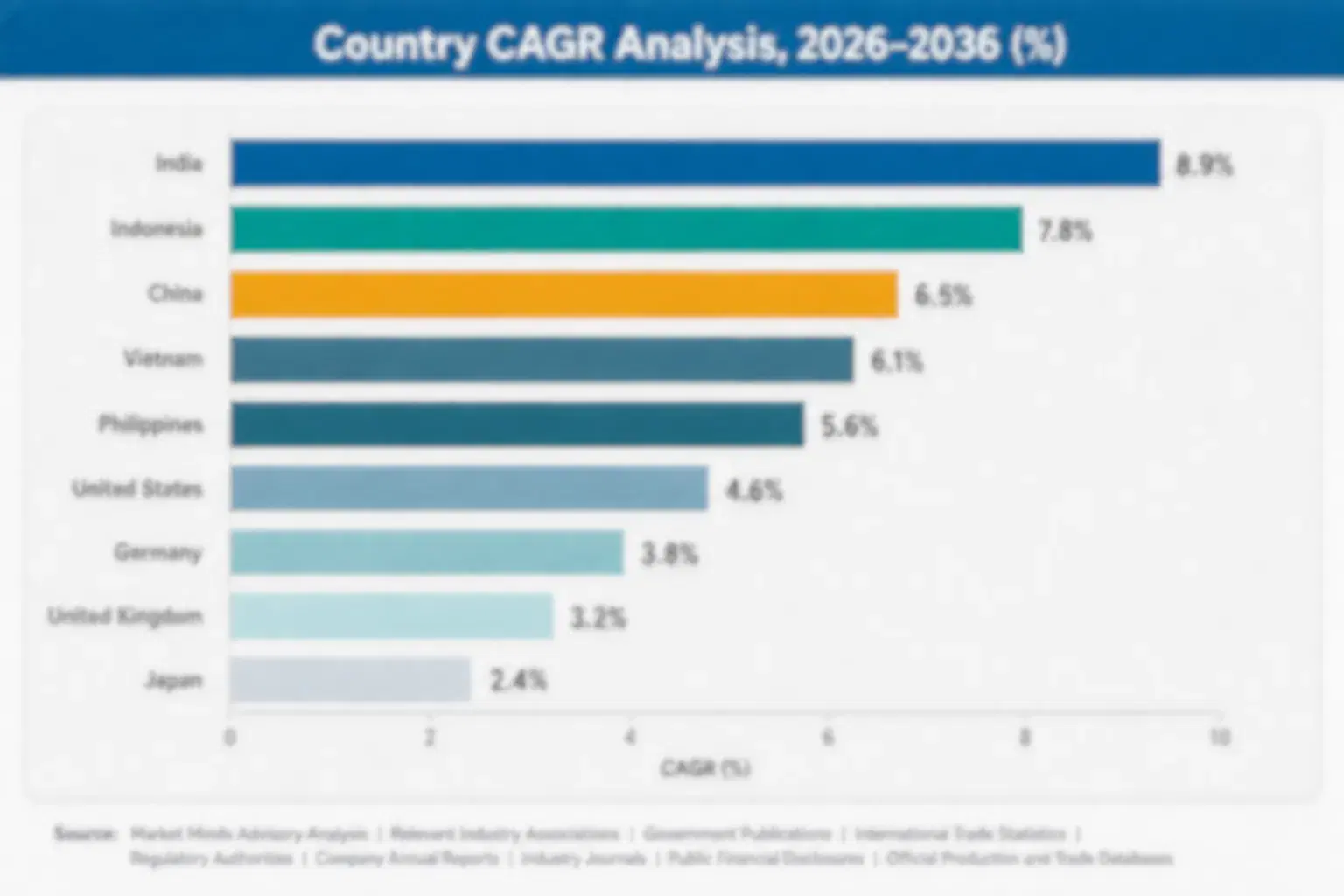
Geography follows milk recording infrastructure rather than cattle numbers, since a sample already being collected carries a pregnancy result at no further cost. Western Europe leads on enrolment, East Asia on herd scale, India grows fastest. Cattle numbers alone predict almost nothing about where testing revenue lands.

North America

American and Canadian dairy runs large herds with sophisticated reproductive programmes, and blood-based testing is comparatively well established through herd veterinarians and technician services. Milk recording enrolment sits below European levels, which limits the cheapest route to testing. Beef cow-calf operations across the plains states test far less systematically than dairy, since the economic case per animal is weaker and handling costs more. Veterinary ultrasound competition is strong here because scanner ownership among herd practitioners is high. Beef testing therefore concentrates around weaning and preconditioning work when animals are already in the chute, which produces a seasonal demand pattern that dairy testing does not share at all across the year.
Share: 25% | CAGR: 7.0% (2026 to 2036)

Western Europe

Milk recording penetration of roughly 62% across European dairy herds is the highest anywhere, and recording organisations in the Netherlands, Denmark, France and Germany have integrated pregnancy testing directly into monthly sample processing. That infrastructure is the reason the region leads on value despite holding fewer cattle than several others. Regulatory attention to antibiotic use and reproductive efficiency reinforces systematic herd monitoring. Equine assay demand from breeding operations in Ireland, France and the United Kingdom is meaningful. Recording organisations here are typically farmer-owned cooperatives holding multi-year supplier contracts, so channel access is won slowly and then held for years rather than contested annually on price the way laboratory tenders elsewhere are.
Share: 26% | CAGR: 6.0% (2026 to 2036)
Regional intelligence for 5 additional markets available in the complete report: East Asia, South Asia and Pacific, Latin America, Middle East and Africa, Eastern Europe. Contact sales@marketmindsadvisory.com.
veterinary-pregnancy-test-kit-market-country-cagr-analysis-1787708579410

Selling Against A Scheduled Visit

Cattle carry 84% of volume, roughly 62% of European herds already submit milk samples, a day open costs about 4.50 dollars, and the real competitor arrives with an ultrasound probe. Four levers work on sample stream access, economic proof, result timing and honest labelling rather than on assay chemistry, which nobody here competes on.

Embed Inside Existing Milk Recording Streams

Around 62% of European dairy herds already submit milk samples monthly for component analysis, and a pregnancy result added to that tube costs nothing to collect or transport. Suppliers positioned inside recording organisations reach herds that direct selling could never economically justify contacting. It is a channel argument rather than a product one, and it explains the whole difference in growth between milk and blood formats across every market where recording exists. Recording contracts run for years rather than being tendered annually, so winning one is slow and losing one is slower still.
Market Impact: Accesses roughly 62% of all European dairy herds

Prove The Days Open Arithmetic Per Herd

A cow open past target costs roughly 4.50 dollars daily in lost production and extended calving interval, and detecting her at day 28 rather than day 60 recovers about a month of that per animal. Very few veterinary purchases carry a return this directly computable. Suppliers who present the herd-level figure rather than assay specifications close considerably faster, because the producer is making a financial decision and has been offered a technical one instead. A 500 cow herd converts that per-animal figure into a number nobody argues with for long.
Market Impact: Demonstrates a $4.50 daily saving per open animal

Offer Same-Day Formats Where Timing Decides

A herd veterinarian scanning during a scheduled visit answers immediately while a laboratory assay reports three days later, and for many producers that gap decides the purchase regardless of accuracy. On-farm lateral flow formats trade some sensitivity for a same-day answer, which suits operations without regular veterinary scanning. Positioning them as a complement to laboratory testing rather than a replacement avoids the sensitivity comparison that suppliers consistently lose when it is made directly. Same-day formats typically detect from around day 30, a small window concession against a 3 day turnaround advantage that decides many purchases.
Market Impact: Closes a 3 day laboratory result timing gap

Label The Confirmation Window Honestly Upfront

Glycoprotein persists for weeks after embryonic loss and carries over for around 60 days following calving, so positives outside those windows are genuinely unreliable. Suppliers who state this plainly and supply a retesting protocol retain producers who would otherwise blame the assay for biology. Those who market accuracy without the caveat generate the distrust that has held penetration back in several markets. Honesty about limitation is a commercial position here, not merely a compliance one. A retesting protocol costs nothing to supply and prevents most of the complaint from arising at all.
Market Impact: Covers the full 60 day post-calving exclusion period

Who Controls the Margin Pool

Measured on disclosed veterinary reproductive diagnostics revenue, the five largest suppliers hold a CR5 of 48%, which is comparatively unconcentrated for a diagnostics category and reflects how much of the market is reached through recording organisations and laboratory networks rather than through direct supplier relationships. IDEXX and Zoetis hold broad laboratory and point-of-care positions, Neogen and IDvet supply assay kits into laboratory channels, and Bio-Tracking holds a long established blood-based position.
Three contests define activity. Milk-based assays compete on laboratory and recording organisation relationships rather than on kit performance. On-farm lateral flow formats compete on turnaround against veterinary scanning. And companion animal relaxin tests compete inside clinics on point-of-care convenience, where the buying logic has nothing to do with production economics at all. Equine assays compete inside breeding operations on timing during a short season.

Pressure builds as domestic Chinese and Indian manufacturers enter at prices established suppliers cannot approach, particularly in lateral flow. Rankings shift toward whoever holds laboratory channel access. Veterinary ultrasound remains the competitor nobody in this category lists. Recording organisation contracts, once won, prove genuinely difficult for any competitor to dislodge before renewal comes around.
veterinary-pregnancy-test-kit-market-company-positioning-matrix-1787708579693

Competitive Moat and Risk Dimensions

IDEXX LABORATORIES

Moat: Laboratory Network And Instrument Base

IDEXX runs veterinary reference laboratory networks and an installed analyser base that place its pregnancy assays inside sample flows already established for other testing. That channel position matters more here than assay chemistry, since the sample arrives regardless. A competitor with an equivalent kit still needs a route to the sample, and building laboratory network access takes years.
IDEXX LABORATORIES

Risk: Recording Organisation Channel Dependence

Milk-based testing reaches herds through recording organisations that are frequently farmer-owned cooperatives with their own supplier preferences and procurement processes. That access is contractual rather than owned. A recording body switching assay supplier moves substantial volume in a single decision, and the relationship cannot be defended by product performance alone in a category this comparable.
ZOETIS

Moat: Production Animal Commercial Reach

Zoetis holds production animal commercial relationships built across vaccines, therapeutics and reproductive management, which puts pregnancy testing alongside products a herd already buys. Selling a diagnostic into an existing reproductive programme conversation is considerably easier than opening one. That breadth is genuinely difficult for a diagnostics-only supplier to match at comparable cost of sale.
ZOETIS

Risk: Assay Commoditisation Below Price

Glycoprotein ELISA chemistry is well characterised and no longer proprietary in any meaningful sense, which is why domestic Chinese and Indian manufacturers are entering at prices established suppliers cannot approach. Commercial reach defends the relationship without defending the price. In price-sensitive markets the kit becomes a line item compared directly on cost per test.

Players Tracked

Prominent Players

IDEXX Laboratories
Zoetis
Neogen
IDvet
Bio-Tracking

Other Key Players

MSD Animal Health
Virbac
Bio-X Diagnostics
Ringbio
Bionote
Bioguard
Woodley Equipment Company
Hipra
Thermo Fisher Scientific
Antech Diagnostics
Kernel Bio-tech
Fassisi
BioChek
Shenzhen Lvshiyuan Biotechnology
Creative Diagnostics

Recent Developments

FEBRUARY 2025

Recording organisation adds pregnancy result to monthly milk panel

A European milk recording organisation added a pregnancy result to its standard monthly sample panel across enrolled herds, a service extension rather than any corporate transaction. Samples were already being collected and processed for component and somatic cell analysis, so the addition carried no incremental collection cost whatsoever.
Signal: Bundling into an existing panel removes the purchase decision that has limited testing penetration for years.
JUNE 2025

Domestic Chinese manufacturer launches lateral flow pregnancy assay

A Chinese diagnostics manufacturer launched an on-farm lateral flow bovine pregnancy assay priced substantially below imported alternatives, an organic product launch rather than any acquisition or licensing arrangement. Glycoprotein detection chemistry is well characterised and no longer carries meaningful proprietary protection anywhere in the category.
Signal: Commoditised chemistry means price competition arrives wherever a domestic manufacturer simply decides to enter the category.
OCTOBER 2025

Supplier publishes revised confirmation window guidance for producers

An assay supplier published revised guidance on retesting intervals and post-calving exclusion windows following producer complaints about positive results in cows subsequently confirmed open. The publication was a labelling and education initiative rather than any change to the underlying assay chemistry itself in any way.
Signal: Managing expectations about glycoprotein persistence has now become a commercial necessity rather than a regulatory formality.

What An Assay Kit Costs

Manufacturing is antibody production, plate coating, reagent formulation and packaging, which places most of the cost in biological inputs rather than in equipment. Monoclonal and polyclonal antibodies, recombinant antigens, microplates, conjugates and buffers account for 34 to 44% of kit cost. Antibody supply comes largely from specialist contract producers in North America and Western Europe, with growing capacity in China and India serving domestic manufacturers directly.
The volatility that mattered was antibody and reagent supply through 2021 and 2022, when human diagnostics demand absorbed contract antibody production capacity and immunoassay reagent lead times extended considerably. Plastics consumables including microplates and pipette tips were constrained at the same time, which EIA petrochemical feedstock price data reflects across the period. Veterinary volumes are small enough that suppliers were deprioritised whenever allocation decisions were made.

Exposure divides by antibody sourcing rather than by scale. Suppliers buying antibodies from contract producers carry pricing and allocation risk they cannot control. Those producing antibodies internally hold a materially better cost position and better supply security. Domestic Chinese and Indian manufacturers with local antibody supply hold cost positions that international suppliers relying on Western contract production cannot approach at any volume.
veterinary-pregnancy-test-kit-market-cost-volatility-analysis-1787708579983

Bring antibody production inside the business

Antibodies and recombinant antigens carry most of the biological input cost and all of the allocation risk, since contract producers serve human diagnostics customers first when capacity tightens. Internal production costs capital and specialist capability that smaller suppliers cannot justify. It removes both the pricing exposure and the deprioritisation that left veterinary kit supply short during the constrained period.

Qualify a second antibody source deliberately

Single-sourced antibodies leave a kit undeliverable when the contract producer allocates capacity elsewhere, and requalification under an existing registration takes months nobody has when supply has already stopped. Qualifying a second source in advance costs validation work against volumes that may never move. It converts an outage into a switch, which is the difference between disruption and a genuine inconvenience.

Weight volume toward laboratory format kits

Laboratory ELISA formats process many samples per plate and spread reagent cost across far more results than individual on-farm devices manage. Weighting volume toward laboratory channels improves reagent efficiency considerably. It requires laboratory and recording organisation relationships that take years to build, and it concedes the on-farm timing argument to whoever supplies the lateral flow formats instead.

Portfolio Architecture for Margin Defence

Margin follows channel position rather than assay complexity, which is unusual and worth stating plainly. On-farm lateral flow kits earn modestly and face domestic manufacturer entry directly. Bovine blood ELISA earns moderately against well characterised chemistry that anybody can reproduce. Milk-based ELISA earns better through laboratory and recording channel access. Companion animal relaxin and equine assays earn best, on clinic pricing and specificity that production formats never command.
The tension is that the highest volume sits in the most reproducible chemistry. Cattle carry 84% of testing on glycoprotein assays that carry no meaningful proprietary protection, while the better margins sit in companion animal formats with a fraction of the volume. A supplier chasing volume competes on price against manufacturers with lower cost bases, and one chasing margin accepts a much smaller addressable base.

High-value pools sit in three places. Companion animal relaxin testing sold at clinic point-of-care pricing. Laboratory channel positions inside milk recording organisations, which are contractual rather than technical barriers. And internal antibody production, which is a cost position rather than a product but determines who can compete on price at all. Each is defensible in a different way.

Volume / Commodity-Adjacent

On-farm lateral flow kits and commodity bovine blood ELISA competing directly on cost per test. The 8-point range reflects the gap between suppliers producing antibodies internally and those buying them from contract producers at market prices.
Gross Margin: 30-38%

Premium / Certified

Laboratory milk and blood ELISA supplied through recording organisation and reference laboratory channels. The 10-point spread separates suppliers holding contracted channel access from those selling kits into laboratories on open tender each renewal.
Gross Margin: 50-60%

Sustainability / Regulatory / Next-Generation

Companion animal relaxin rapid tests and equine assays sold at clinic point-of-care pricing. The 16-point range is wide because canine clinic pricing and equine breeding operation pricing follow entirely different commercial logic from one another.
Gross Margin: 60-76%
veterinary-pregnancy-test-kit-market-portfolio-architecture-1787708580278

High-value Sub-segments and Strategic Watch-out

Canine Relaxin Rapid Tests

Highest margin and strong growth at 9.6%, sold at clinic point-of-care pricing on a marker that is genuinely placenta-specific. The risk is that volume remains a small fraction of cattle testing, so margin never translates into meaningful absolute contribution. Cattle formats simply dominate the volume everywhere.
Gross Margin: 68-76%

Milk-Based Laboratory ELISA

Fastest growth at 11.4%, riding milk recording sample streams that cost nothing further to collect across roughly 62% of European herds. The risk is channel dependence, since a recording organisation switching supplier moves substantial volume in one decision. Contracts run for years, which cuts both ways.
Gross Margin: 52-60%

Bovine Blood ELISA Volume

The volume core, carrying most cattle testing on chemistry that is well characterised and no longer proprietary in any meaningful sense. Suppliers hold it for scale and channel presence while domestic manufacturers steadily compress the pricing available in it. Exiting it removes laboratory channel presence entirely.
Gross Margin: 31-38%

Veterinary Ultrasound Substitution

The strategic watch-out. Scanner ownership among herd veterinarians keeps rising and a scheduled visit delivers an answer immediately, while an assay reports days later. The risk is a competitor that suppliers in this category consistently decline to name at all. Naming it would be a start.
Gross Margin: 28-36%

Repeat Testing By Calendar

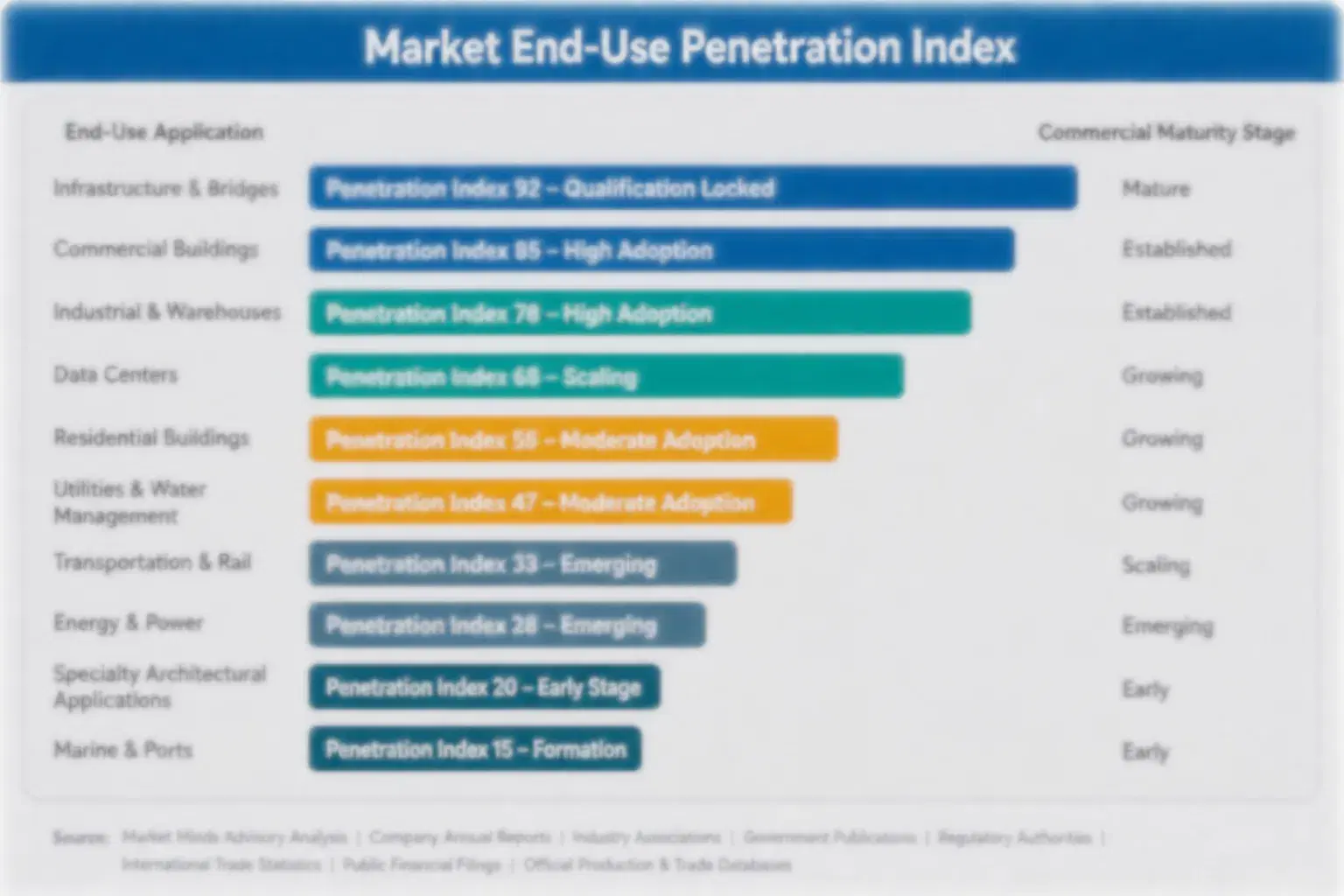
Reproductive testing is calendar-driven rather than event-driven, which makes it unusually predictable revenue. A dairy herd breeds continuously, confirms at a fixed interval after service, rechecks before dry-off and repeats the cycle across every animal every year. Volume therefore follows herd size and breeding programme design rather than any purchasing decision made annually. Once a protocol is written into herd management software, testing continues until somebody changes it.
Stickiness varies sharply by setting. Milk recording herds are the stickiest, since the pregnancy result arrives inside a service the producer already buys and never separately reconsiders. Large housed dairy operations follow, running documented protocols that persist through staff changes. Beef cow-calf operations are least sticky, testing when handling is already scheduled and skipping when it is not. Companion animal clinics sit apart, testing per case with no protocol involved at all.

The buyer has shifted from veterinarian to herd manager. Reproductive testing was once ordered by the herd veterinarian during a visit, which made the veterinarian the commercial audience entirely. Larger operations now employ reproductive managers who design protocols, select suppliers and negotiate laboratory contracts directly. That buyer weighs cost per test and turnaround rather than clinical relationship.
veterinary-pregnancy-test-kit-market-end-use-penetration-index-1787708580605

Where The Sample Already Goes

These are among the four positions where our research anticipates prominent divergence between winners and laggards over the coming forecast period. Each is grounded in the demand model, the regulatory perimeter, and the announced capacity pipeline.
01 / SAMPLE STREAM ACCESS

The cheapest test rides a sample already collected

Roughly 62% of European dairy herds already submit milk samples monthly for component and somatic cell analysis, and adding a pregnancy result to that tube costs nothing further at all to collect or transport anywhere. Suppliers positioned inside recording organisations reach herds that a direct sales approach could never economically justify contacting at all. That channel position explains the entire growth difference between milk and blood formats across every market where recording exists, and the barrier is contractual rather than technical.
02 / ECONOMIC PROOF SELLING

Sell the arithmetic, not the assay

A cow open past target costs roughly 4.50 dollars every day in lost production and extended calving interval, and detecting her at day 28 rather than day 60 recovers roughly a month of that cost on every single animal in the herd. Very few veterinary purchases anywhere carry a return this directly computable by the producer themselves. Suppliers presenting herd-level figures close considerably faster than those presenting sensitivity and specificity data to a buyer who is making a straightforward financial decision.
03 / SERVICE COMPETITOR RECOGNITION

Your competitor arrives with an ultrasound probe

A herd veterinarian scanning during an already scheduled visit detects pregnancy from around day 28 and gives the answer before leaving the yard, while a laboratory assay sends the sample away and reports three days later. Suppliers benchmarking their kits against other kits are measuring the wrong contest entirely and have been for years. On-farm lateral flow formats address the timing gap directly, trading some sensitivity for a same-day result that a great many producers plainly value rather more than accuracy.
04 / LIMITATION DISCLOSURE DISCIPLINE

Glycoprotein persistence is biology, not assay failure

Pregnancy-associated glycoprotein stays detectable for weeks after embryonic loss and carries over for around 60 days following calving, so any positive falling outside those windows is genuinely unreliable regardless of which supplier happens to have made the kit. Producers who receive a positive result on a cow subsequently confirmed open blame the assay rather than the underlying biology. Suppliers stating the confirmation window plainly and supplying clear retesting protocols retain the trust that competitors marketing accuracy alone steadily lose over time.

Engagement Snapshot From the Field

A live engagement with an industry participant carrying material or product regulatory and market exposure ahead of a defining policy shift, showing how our research translates into a defensible multi-year portfolio strategy.
MARKET MINDS ADVISORY · CLIENT ENGAGEMENT SUMMARY
Veterinary Pregnancy Test Kit Producer Strategic Portfolio Review and Transition Roadmap 2026·Investment Scenario on Veterinary Pregnancy Test Kit Exposure Evaluation 2025-26
CLIENT PROFILE
A veterinary diagnostics manufacturer supplying bovine pregnancy ELISA kits across European and Latin American markets, with reported assay revenue of 31 million dollars (client-reported, unverified by MMA). Roughly 71% came from blood-based formats sold to veterinary laboratories on annual tender. No relationship existed with any milk recording organisation anywhere in either of those regions at all.
STRATEGIC CHALLENGE
Blood kit pricing had fallen for three consecutive years as laboratories tendered on cost per test and regional manufacturers undercut consistently. Management was preparing a further price reduction and a reagent cost programme. Neither addressed the fact that the growth in the category was happening inside a sample stream the company had no access to whatsoever.
MMA APPROACH
MMA analysed volume and pricing by channel against milk recording enrolment across the client's markets, a comparison the company had never constructed internally. Nineteen expert interviews with recording organisation managers, laboratory directors and reproductive managers established how testing is actually procured. The analysis treated channel access rather than kit pricing as the cause of declining realised prices.
KEY FINDINGS
  1. Blood kit tenders were being decided purely on cost per test, and the client's cost base could not win against manufacturers producing their own antibodies internally.
  2. Milk-based testing was growing three times faster in the client's markets, entirely inside recording organisation sample streams the company had never approached commercially.
  3. Recording organisations interviewed described supplier selection as a multi-year contracted relationship, not an annual tender, which changes the commercial approach required completely.
  4. Producer complaints about positive results in cows later confirmed open were being blamed on kit quality, when the cause was glycoprotein persistence after embryonic loss.
CLIENT PROFILE
A veterinary diagnostics manufacturer supplying bovine pregnancy ELISA kits across European and Latin American markets, with reported assay revenue of 31 million dollars (client-reported, unverified by MMA). Roughly 71% came from blood-based formats sold to veterinary laboratories on annual tender. No relationship existed with any milk recording organisation anywhere in either of those regions at all.
STRATEGIC CHALLENGE
Blood kit pricing had fallen for three consecutive years as laboratories tendered on cost per test and regional manufacturers undercut consistently. Management was preparing a further price reduction and a reagent cost programme. Neither addressed the fact that the growth in the category was happening inside a sample stream the company had no access to whatsoever.
MMA APPROACH
MMA analysed volume and pricing by channel against milk recording enrolment across the client's markets, a comparison the company had never constructed internally. Nineteen expert interviews with recording organisation managers, laboratory directors and reproductive managers established how testing is actually procured. The analysis treated channel access rather than kit pricing as the cause of declining realised prices.
KEY FINDINGS
  1. Blood kit tenders were being decided purely on cost per test, and the client's cost base could not win against manufacturers producing their own antibodies internally.
  2. Milk-based testing was growing three times faster in the client's markets, entirely inside recording organisation sample streams the company had never approached commercially.
  3. Recording organisations interviewed described supplier selection as a multi-year contracted relationship, not an annual tender, which changes the commercial approach required completely.
  4. Producer complaints about positive results in cows later confirmed open were being blamed on kit quality, when the cause was glycoprotein persistence after embryonic loss.
RECOMMENDED STRATEGY
Phase 1: Phase one: approach recording organisations directly with a milk format, since the growth sits in a channel the company has never contacted. Phase 2: Phase two: qualify a second antibody source and assess internal production, because the cost base determines whether blood tenders can be won. Phase 3: Phase three: publish confirmation window guidance and retesting protocols, converting a persistent complaint into a demonstrated point of supplier credibility.
OUTCOME
Two recording organisation contracts were concluded within four quarters, opening a channel the company had no previous presence in. Milk format volume reached a meaningful share of assay revenue by the end of the period (client-reported, unverified by MMA). Published confirmation window guidance measurably reduced producer complaints, and laboratory directors surveyed cited it as a genuine differentiator.

Frequently Asked Questions

Foundational context covering the market sizes, CAGR, scope, country, region and competition that inform every finding below. This section is provided to cover basics and most often pre-purchase conversations, answered from the MMA Primary Research Dataset.

What is the current size of the Veterinary Pregnancy Test Kit Market?

The market was worth 0.4 billion dollars in 2025, covering blood, milk, relaxin, equine, lateral flow and progesterone assay formats. It reaches 0.43 billion dollars in 2026.

How large will the Veterinary Pregnancy Test Kit Market be by 2036?

MMA forecasts 0.90 billion dollars by 2036, an increase of 0.47 billion dollars over the 2026 base. That represents an expansion multiple of 2.09 times across the forecast period.

What is the CAGR for the Veterinary Pregnancy Test Kit Market 2026 to 2036?

The base case compounds at 7.6% annually. The bull case reaches 8.8% if organised dairy consolidation accelerates, while the bear case sits at 6.4% on continued veterinary ultrasound competition.

Which segment is growing fastest?

Milk-based PAG ELISA kits, at 11.4%, half again the market rate of 7.6%. A sample already collected for milk recording carries a pregnancy result at no further cost.

Who are the major companies in the Veterinary Pregnancy Test Kit Market?

IDEXX Laboratories, Zoetis, Neogen, IDvet and Bio-Tracking lead on disclosed veterinary reproductive diagnostics revenue. Bio-X Diagnostics, Ringbio and Bionote hold notable regional positions in several markets.

Which country is growing fastest?

India at 9.8%, as organised dairy operations replace smallholdings across an enormous cattle population where testing penetration remains negligible today. Recording infrastructure is the binding constraint there.

Report Segmentation Architecture

The full report scope spans multiple orthogonal segmentation dimensions, with cross-tabulated demand data provided for each dimension pair. Coverage extends further to regional breakdowns, trend trajectories, and the competitive detail needed to support segment-level decision-making.

By Assay Format

  • Blood-Based PAG ELISA Kits
  • Milk-Based PAG ELISA Kits
  • Canine and Feline Relaxin Rapid Tests
  • Equine Progesterone and eCG Assays
  • Lateral Flow Point-of-Care Pregnancy Tests
  • Progesterone Milk and Serum Assays

By End-Use Industry

  • Dairy Cattle Operations
  • Beef Cow-Calf Operations
  • Companion Animal Clinics
  • Equine Breeding Operations
  • Veterinary Reference Laboratories
  • Small Ruminant and Camelid Production

By Commercial Dimension

  • Milk Recording Organisation Supply
  • Reference Laboratory Tender Supply
  • On-Farm Direct Purchase
  • Veterinary Practice Distribution
  • Contracted Herd Health Programmes
  • Distributor and Dealer Supply

By Region

  • North America
  • Western Europe
  • East Asia
  • South Asia and Pacific
  • Latin America
  • Middle East and Africa
  • Eastern Europe

Scope, Methodology, and Coverage

Every figure in this report is reproducible from documented input assumptions. The scope below maps the historical period, the forecast horizon, the segmentation dimensions, and the countries covered, alongside the underlying primary and qualitative methodology.
Historical Period
2020 to 2025
Forecast Period
2026 to 2036
Base Year
2025 (USD billions; MMA Primary Research Dataset, August 2026)
Market Definition
Scope covers test kits and assay products used to determine pregnancy status in production and companion animals, spanning blood-based and milk-based pregnancy-associated glycoprotein ELISA kits, canine and feline relaxin rapid tests, equine progesterone and eCG assays, lateral flow point-of-care pregnancy tests, and progesterone milk and serum assays. Ultrasound and imaging equipment, palpation and veterinary examination services, standalone laboratory service revenue, reproductive hormone therapeutics, oestrus detection systems, and semen or embryo transfer products are excluded from the market size and all derived figures.
Quantitative Units
USD billions (current prices); tests performed; cost per test; herds enrolled; detection window in days
Segmentation Dimensions
By Assay Format; By End-Use Industry; By Commercial Dimension; By Region
Regions Covered
North America, Western Europe, East Asia, South Asia and Pacific, Latin America, Middle East and Africa, Eastern Europe
Countries Covered
USA, Germany, France, Netherlands, China, India, Brazil, New Zealand, UK, Canada, Denmark, Australia, Poland, Turkey, Japan
Key Companies Profiled
IDEXX Laboratories, Zoetis, Neogen, IDvet, Bio-Tracking, MSD Animal Health, Virbac, Bio-X Diagnostics, Ringbio, Bionote, Bioguard, Woodley Equipment Company, Hipra, Thermo Fisher Scientific, Antech Diagnostics, Kernel Bio-tech, Fassisi, BioChek, Shenzhen Lvshiyuan Biotechnology, Creative Diagnostics
Quantitative Methodology
Primary survey, n=3,800 respondents, Q4 2025, six countries; demand-side model with trade association cross-validation
Qualitative Methodology
47 expert interviews, Q4 2025; applied to validate demand model assumptions, identify emerging dynamics, and assess competitive positioning
Report Format
PDF and XLSX data workbook (Word format preview document)
Publisher
Market Minds Advisory
Report Code
MMA-2026-MED-135
Published
August 2026
Contact
sales@marketmindsadvisory.com | www.marketmindsadvisory.com

Purchase the full Veterinary Pregnancy Test Kit Market Report (2026 to 2036).

The full report runs to 155 pages and covers all six assay format segments, seven regions and 20 profiled suppliers in detail. It includes the complete segment CAGR set, regional milk recording enrolment comparison, and days-open economic analysis at herd level across dairy system types. Company profiles carry evaluation on disclosed veterinary reproductive diagnostics revenue, with moat and risk assessment for the top five suppliers. The competitive section extends to 13 tracked channel, product and guidance developments across 2024 and 2025. Primary research inputs include a quantitative survey of 3,800 respondents and 47 expert interviews conducted in Q4 2025.
Six assay format segments with individual CAGR forecasts
Seven regional markets with milk recording enrolment comparison
Twenty supplier profiles on consistent revenue evaluation basis
Thirteen tracked channel and product developments with commercial interpretation
Days-open economic analysis modelled across dairy system types
Veterinary ultrasound substitution assessed as a competing method

Built For The People Who Decide

From boardroom strategy to bench-side execution, this report is read cover-to-cover by leaders shaping the next decade of their industry, turning demand scenarios, market dynamics and valuation benchmarks into decisions.
CXOs/ Presidents/ VPs/ Managers
M&A and Corporate Development
Strategy Teams and R&D Heads
Procurement and Product Directors
Regulatory and Compliance Leaders
Investor Relations and Equity Analysts