Market Minds Advisory
Vacuum Isolation Valve Market

Vacuum Isolation Valve Market: Vacuum Isolation Valve Market: Particle Specifications, Design-In Lock and Seal Chemistry Risk, 2026 to 2036

A valve that sheds particles ruins wafers worth more than the tool it sits in, which is why this reads as an industrial valve market and behaves entirely as a semiconductor equipment component one.

Lead Analyst

Published

September 2026

Make Smarter Decisions with Customized Research Insights

Request a free sample report and evaluate market opportunities, growth trends, and competitive dynamics relevant to your business needs.

2025 MARKET VALUE$1.6BMarket Size 2025
2036 FORECAST VALUE$4.0BBase Case , 2026 to 2036
CAGR 2026 TO 20368.8 %Bull 10.0% / Bear 7.6%
INCREMENTAL OPPORTUNITY$2.3BNet 10- year value creation
EXPANSION MULTIPLE2.32x2036 value over 2026 base
Strategic Levers
M&A Pipeline
Regional Outlook
Country Rankings
Competitive Intelligence
Segmental Deep-dive
Call-Us : 91 93563 13602

Executive Snapshot and Market Trajectory.

Anyone benchmarking this against industrial valves plans badly. Some 66% of demand originates in wafer fabrication equipment, so the cycle that matters is semiconductor capital spending rather than any industrial one, and the two move quite independently. Planning against the wrong cycle is the standard error here.
The specification is contamination rather than pressure. A valve shedding particles into a deposition or etch chamber destroys product worth far more than the tool, so the tightest processes demand fewer than 0.05 particles per actuation across thousands of cycles. Pendulum and throttle valves grow at 13.2%, half again the market rate of 8.8%, because advanced etch and deposition need active pressure control rather than simple isolation. Isolation alone is no longer enough.
Five manufacturers hold 71% of measured shipment revenue, which is exceptional concentration and follows directly from qualification. Getting a valve into a new tool platform takes around 26 months, and once there it stays for the platform's life because no equipment maker requalifies a component mid-programme. Share is decided at design-in, years before any revenue appears. A supplier excluded once waits an entire platform generation for another opportunity.
Market Definition
The vacuum isolation valve market covers valves that isolate, transfer or control pressure within evacuated process environments, spanning gate, angle, pendulum and throttle, transfer and slit, butterfly, and ball and poppet architectures rated for high and ultra-high vacuum service. Sizing is measured at manufacturer shipment revenue including spares and refurbishment. Vacuum pumps, gauges, chambers, mass flow controllers, foreline components, general industrial process valves and complete gas delivery systems sold separately are excluded.
Base Year Value
$1.6B in 2025 (MMA Primary Research Dataset, September 2026)
Forecast Period
2026 to 2036, eleven discrete annual values
CAGR
8.8% base case. Bull 10.0%. Bear 7.6%.
Fastest Growth Segment
Pendulum and Throttle Valves: 13.2% CAGR
Fastest Growth Country
India: 15.8% CAGR
Fastest Growth Region
South Asia and Pacific: 11.0% CAGR
Largest Region
East Asia: 52% of 2025 global value
Market Leaders
VAT Group, MKS Instruments, Pfeiffer Vacuum, Kitz SCT, Irie Koken. Source: MMA Analysis based on company annual reports and measured shipment revenue.
Primary Survey
n=3,800 procurement and R&D decision-makers, Q4 2025, six countries
Methodology
Demand-side build-up, cross-validated against public data, 47 expert interviews

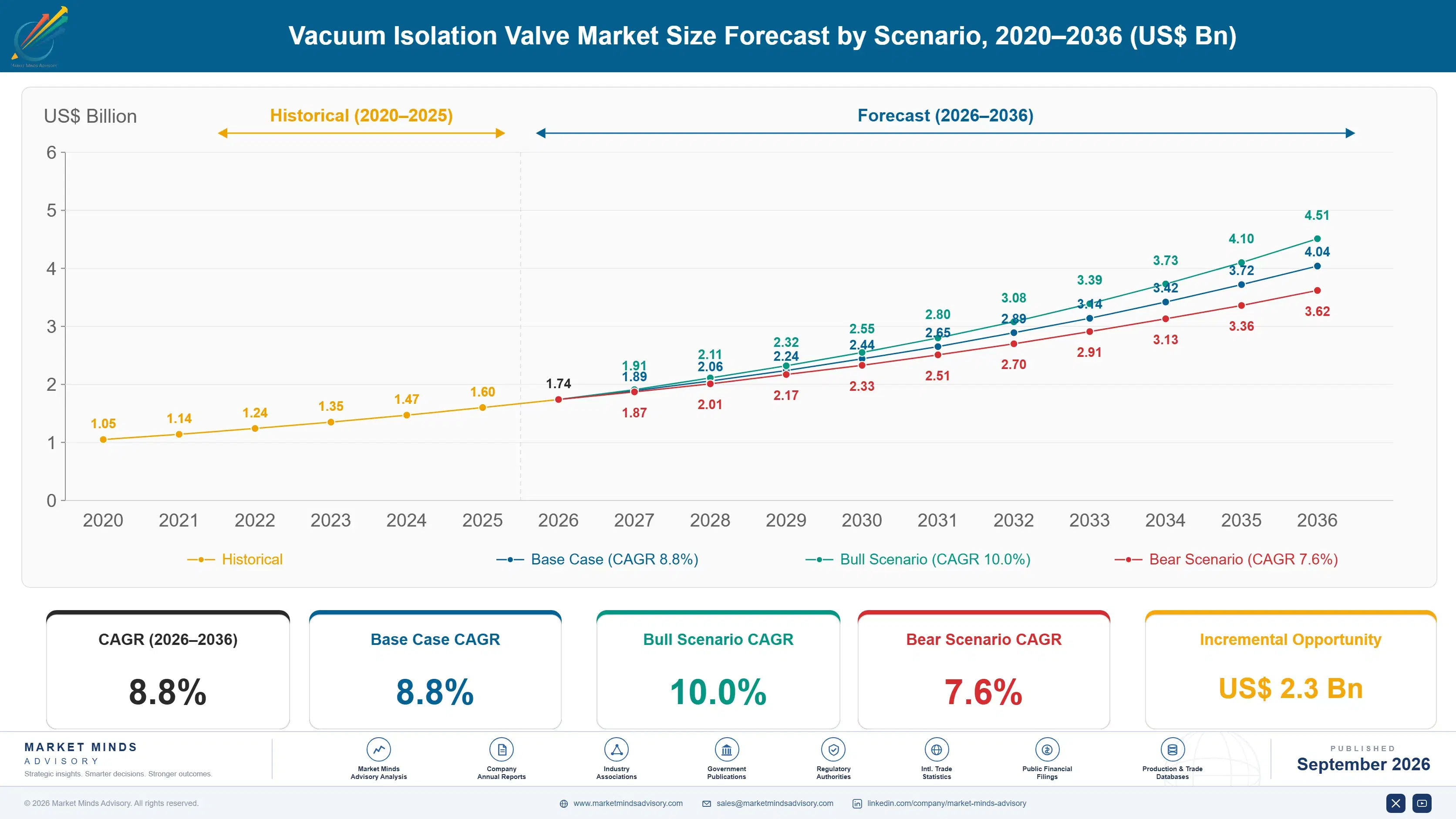
Vacuum Isolation Valve Market Forecast Scenarios

vacuum-isolation-valve-market-size-forecast-scenario-1788414444121
Between 2020 and 2025 the market compounded at 7.6% and did so in a pattern nobody would call growth. Semiconductor capital spending surged through 2021 and 2022, contracted through the memory downturn and recovered on artificial intelligence investment. Valve demand tracked that shape almost exactly, with a lag of two or three quarters as equipment makers worked through component inventory.
The 8.8% base case rests on three commercial mechanisms. Valve content per tool keeps rising as advanced logic and memory processes add chambers and require active pressure control, so demand grows faster than tool count alone would suggest. Aftermarket revenue at 37% of the total provides a base that continues through capital spending troughs. And new fabrication capacity in Japan, the United States, Europe and India adds installed base that generates spares demand for decades afterwards.
The bull case is advanced packaging and high bandwidth memory capacity expanding faster than currently assumed, since both add vacuum process steps to a supply chain that previously had few. The bear case is restriction of perfluorinated elastomers under chemical regulation, which would force requalification of sealing across an installed base where every change costs an equipment maker a programme delay.

Particles, Not Pressure, Decide Everything Here

A vacuum isolation valve does something conceptually simple and physically difficult: it seals a chamber without shedding anything into it. A single particle landing on a wafer during deposition destroys the die beneath it, and a tool processing a hundred wafers an hour multiplies that quickly. The tightest process specifications now permit fewer than 0.05 particles per actuation, sustained across many thousands of cycles in aggressive plasma chemistry.
TOP FIVE CONCENTRATION71%Share of measured shipment revenue held by leading manufacturers
SEMICONDUCTOR DEMAND SHARE66%Portion of demand originating in wafer fabrication equipment
VALVE COUNT PER TOOL24 valvesIsolation valves fitted to a typical advanced process tool
AFTERMARKET REVENUE SHARE37%Portion of revenue from spares, seals and refurbishment
PARTICLE SPECIFICATION0.05 per cycleParticles generated per actuation on the tightest process specifications
QUALIFICATION DURATION26 monthsTime to qualify a valve into a new tool platform
That requirement, rather than any pressure rating, explains why this market is concentrated. Meeting it demands sealing materials that neither outgas nor degrade, mechanisms that avoid sliding contact in the chamber, and manufacturing cleanliness closer to semiconductor practice than to valve making. Very few companies can do it, and the five that do best hold 71% of shipment revenue, which is exceptional for anything described as a valve.
The commercial mechanism is qualification. Getting a valve approved into a new process tool platform takes around 26 months of testing, and once qualified it remains for the platform's life, because no equipment maker re-runs process qualification to save on a part. Share is therefore decided at design-in, years before any revenue is recognised, which makes position slow to change.
"The thing outsiders miss is that nobody buys these on price and nobody ever has. An equipment maker choosing a valve is choosing something it cannot change for a decade, and the cost of getting it wrong is measured in scrapped wafers rather than in the price of the part."
Director, Semiconductor Equipment and Vacuum Systems Practice · MMA Technology and Semiconductor Equipment Practice · September 2026

Market Trends

Active Pressure Control Displaces Simple Isolation

Advanced etch and deposition processes hold chamber pressure within tight windows that change through a recipe, which requires a valve that modulates conductance continuously rather than one that simply opens or closes. Pendulum and throttle designs do that, and they carry control electronics, position feedback and calibration that isolation valves never needed. High aspect ratio etch for memory and gate-all-around logic have both increased the number of steps requiring it. Growth at 13.2% is half again the market rate of 8.8%, and the content is worth several times an equivalent isolation valve on the same tool.
Market Impact: Adds 6 vacuum process steps
Valve Count Per Tool Rises Faster Than Tool Count

An advanced process tool now carries around 24 isolation valves across its chambers, load locks and transfer modules, against considerably fewer a decade ago, because processes have added chambers and cluster architectures have grown. Aggressive plasma chemistry also shortens seal and bellows life, which lifts replacement demand alongside. The practical effect is that valve demand grows faster than wafer fabrication equipment spending in unit terms, which is why forecasts built from tool shipments alone understate this market consistently. Forecasts built from tool shipment counts alone understate this market consistently, which is why component suppliers are so often caught short.
Market Impact: Generates 20 years of spares

Market Opportunities and Growth Drivers

Advanced Logic And Memory Add Vacuum Process Steps

Gate-all-around transistor architectures, backside power delivery and high aspect ratio memory etch all add process steps performed under vacuum, and each step needs chambers, transfer modules and the valves isolating them. That raises valve content per wafer independently of how many wafers are made. High bandwidth memory adds further steps through stacking and bonding operations that barely existed as volume processes a few years ago. Demand therefore rises even in periods when wafer starts are flat, which is not how component suppliers to this industry historically behaved. Component suppliers never behaved this way before.
Market Impact: Locks position for 26 months

New Fabrication Capacity Creates Decades Of Spares Demand

Fabs under construction in Japan, the United States, Germany and India install tools that will consume seals, bellows and refurbishment for twenty years afterwards, which converts a capital spending event into an annuity. Aftermarket already represents 37% of revenue and behaves quite differently from new valve sales, continuing through capital spending troughs when equipment orders stop entirely. India grows at 15.8%, the fastest of any country in this market, from a base near zero as its first advanced facilities reach installation. Capital events convert into annuities here. Nothing else in this market behaves that way.
Market Impact: Lags demand by 3 quarters

Market Restraints and Challenges

Design-In Lock Prevents Any Rapid Share Change

Qualifying a valve into a new tool platform takes around 26 months, and once qualified it stays for the platform's production life because requalification forces an equipment maker to re-run process qualification for a saving that never justifies the delay. The root cause is that the cost of failure sits in scrapped wafers rather than in the component. Commercial impact is a market where a supplier excluded at design-in waits years for another opportunity. Mitigation runs through engaging tool developers during concept design, supplying evaluation units without charge, and targeting new platform programmes rather than established ones.
Market Impact: Worth 4 times isolation content

Demand Follows A Capital Cycle Nobody Can Forecast

Some 66% of demand originates in wafer fabrication equipment, whose spending swings violently with memory pricing, logic node transitions and now artificial intelligence investment, and valve orders arrive two or three quarters behind with additional inventory distortion on top. The root cause is a component position three steps removed from end demand. Commercial impact is capacity planning against a signal that arrives late and amplified. Participants mitigate through aftermarket revenue that continues through troughs, diversification into scientific, coating and space applications, and manufacturing flexibility that tolerates swings without permanent capacity commitments.
Market Impact: Fits 24 valves per tool
3 additional market trends, 4 additional growth drivers, and 2 additional restraints and challenges are covered in the full report. Contact sales@marketmindsadvisory.com to access the complete intelligence.

Segment CAGR and Growth Architecture

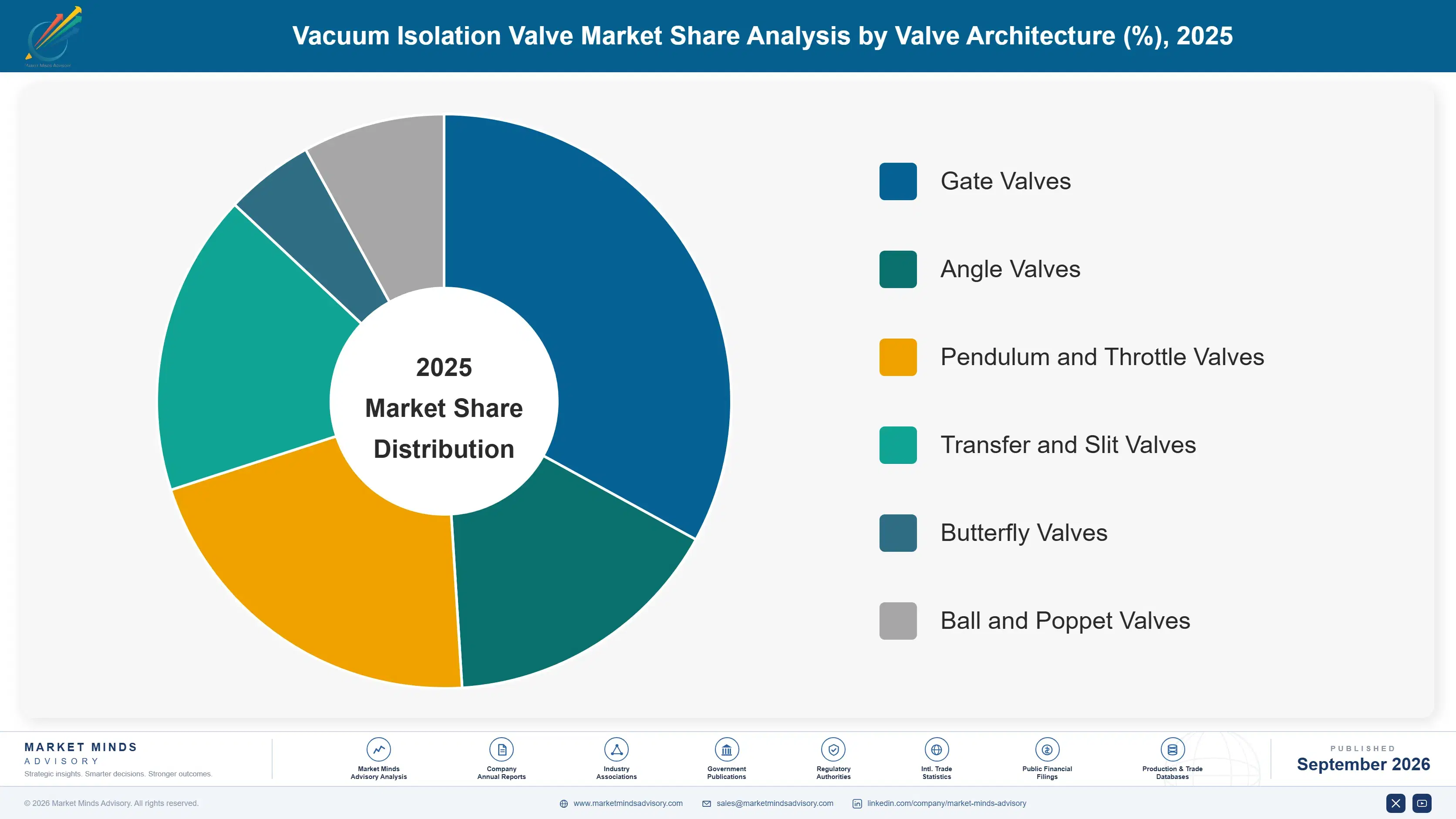
Segmentation follows valve architecture, which determines the function performed, the contamination behaviour achievable and the price commanded. Gate, angle, pendulum and throttle, transfer and slit, butterfly, and ball and poppet designs each occupy a defined position on a process tool, and substitution between them is essentially never possible once a tool is designed. Positions are fixed early.
vacuum-isolation-valve-market-market-share-analysis-1788414444650

Pendulum and Throttle Valves

These modulate chamber conductance continuously to hold pressure within windows that shift through a process recipe, which simple isolation valves cannot do at all. They carry control electronics, position feedback and calibration, and are worth several times an isolation valve on the same tool. Advanced etch and deposition have both increased the number of steps requiring active control, particularly high aspect ratio memory etch and gate-all-around logic patterning. Growth at 13.2% is half again the market rate of 8.8%. Control accuracy under changing gas loads is where suppliers differentiate, and it is genuinely difficult to achieve repeatably across thousands of cycles. Suppliers differentiate on control accuracy rather than on sealing at all.
CAGR 13.2%

Transfer and Slit Valves

Slit valves seal the narrow opening through which wafers pass between transfer chambers and process chambers, actuating on every single wafer and therefore accumulating cycle counts faster than anything else on the tool. That makes particle generation and seal life the dominant specifications, since a failure here contaminates the transfer path rather than one chamber. Cluster tool architectures with more process modules multiply the count directly. Growth at 11.4% tracks chamber count rather than wafer starts. The aftermarket attaching to these valves is proportionally the largest in the market, because they wear fastest and replacement is scheduled rather than reactive. Scheduled replacement rather than reactive failure is how these are handled on any well run tool.
CAGR 11.4%
Full segment breakdown across 6 segments available in the complete report.

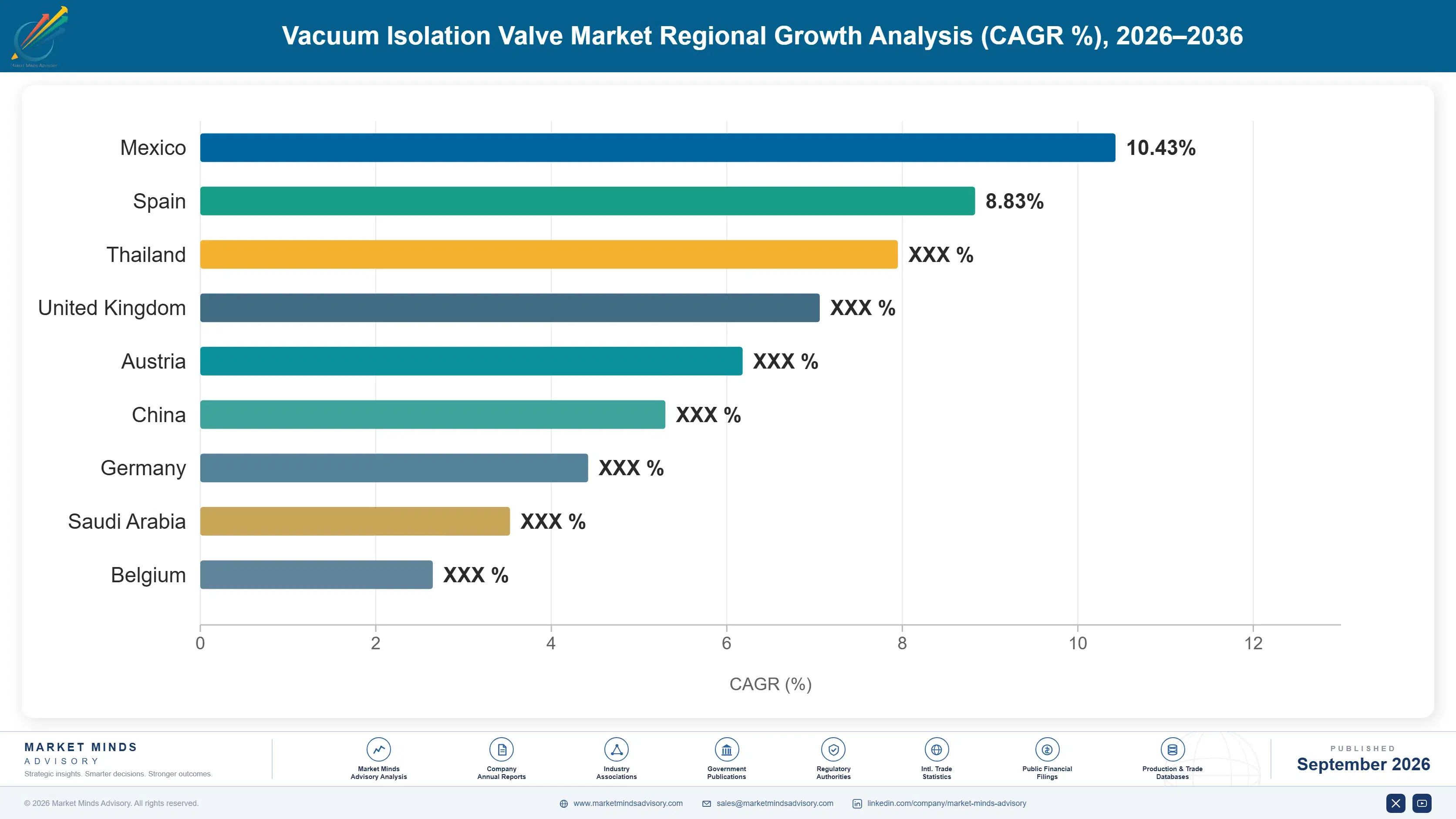
Regional Architecture and Country Demand Map

Demand follows wafer fabrication equipment installation rather than economic size or general manufacturing activity. East Asia dominates because Taiwan, Korea, China and Japan between them take the overwhelming majority of advanced process tools built anywhere. General manufacturing activity is a poor guide, and economic size is worse.

East Asia

Taiwan, Korea, China and Japan take the overwhelming majority of advanced process tools built anywhere, which puts East Asia at 52%, far above the 30% ceiling of the standard band, and the concentration is a fact of the semiconductor industry rather than an artefact of measurement. Taiwanese foundry capacity and Korean memory investment carry the largest volumes. Chinese domestic equipment programmes are developing local valve supply where export controls restrict access. Japanese demand combines a substantial equipment manufacturing base with new domestic fabrication capacity, and Japanese valve makers hold strong positions with their domestic tool builders. Domestic Chinese valve development driven by supply security rather than by cost will remove part of the market established suppliers currently serve.
Share: 52% | CAGR: 9.6% (2026 to 2036)

North America

At 20% the region sits just below the standard band, and the composition explains it: this is where several of the largest process equipment makers design their tools, so design-in decisions are taken here even when the valves ultimately ship to fabs in Asia. New domestic fabrication capacity is adding installed base that will generate spares demand for decades. Advanced packaging investment is opening demand among assembly and test companies unfamiliar with vacuum practice. Proximity to tool developers during concept design matters more commercially here than proximity to any fab does. Advanced packaging investment here is opening demand among assembly and test companies with no prior vacuum experience, which is a different sale entirely.
Share: 20% | CAGR: 9.4% (2026 to 2036)
Regional intelligence for 5 additional markets available in the complete report: Western Europe, South Asia and Pacific, Latin America, Middle East and Africa, Eastern Europe. Contact sales@marketmindsadvisory.com.
vacuum-isolation-valve-market-country-cagr-analysis-1788414445163

Where Valve Margin Is Genuinely Won

Four positions carry margin in a market where the purchase decision happens years before the revenue. Each depends on being present at a moment that cannot be revisited, which is why competitive positions here move so slowly and why a supplier excluded once waits an entire platform generation. Timing rather than product decides all four.

Engage Tool Developers During Concept Design

Qualification takes around 26 months and a valve chosen at design-in stays for the platform's production life, so the commercial decision is made in an engineering conversation years before any purchase order exists. Suppliers present during concept design shape the specification toward what they build; suppliers arriving at the request for quotation are bidding against a specification somebody else wrote. Free evaluation units and applications engineering are the cost of that access. Most competitors still organise around procurement relationships rather than engineering ones. Applications engineering is the cost of that access and most competitors will not pay it.
Market Impact: Wins the 26 month qualification cycle far earlier

Build The Aftermarket Into The Original Design

Aftermarket represents 37% of revenue and continues through capital spending troughs when new tool orders stop completely, which makes it the stabilising half of this business rather than an afterthought. Designing valves for field seal replacement and factory refurbishment rather than disposal captures that revenue instead of ceding it to third-party rebuilders. It requires deliberate design choices and a spares operation nobody funds during a boom. Suppliers who built it are considerably less exposed to a cycle nobody can forecast reliably. Third-party rebuilders take this revenue wherever manufacturers neglect to design for it properly.
Market Impact: Secures the whole 37% of the aftermarket revenue

Qualify Alternative Seal Chemistry Ahead Of Restriction

Proposed restrictions on perfluorinated substances would reach the elastomers sealing almost every qualified valve, and replacing them triggers 3 successive requalification stages through valve, tool and customer process. Manufacturers qualifying alternatives now will have compliant product available when buyers need it; those waiting for legal certainty will be qualifying while competitors are shipping. The requalification chain runs to years rather than months. This is engineering investment against a regulatory outcome that is not yet certain, which is exactly why so few are funding it. Regulatory certainty will arrive far too late to be useful.
Market Impact: Avoids all 3 of the requalification stages later

Follow Vacuum Into Advanced Packaging Early

Hybrid bonding and through-silicon via processing bring vacuum equipment into assembly and test operations that historically used almost none, which opens 2 new buyer types unfamiliar with vacuum practice and often served by equipment makers this industry does not know. Volume per site is smaller than a logic fab and sites are considerably more numerous. Establishing relationships with those equipment makers before their platforms freeze is the same design-in problem in a new place. It is the clearest new demand available anywhere in this market. Nobody holds an incumbent position there yet.
Market Impact: Reaches 2 entirely new categories of equipment buyer

Who Controls the Margin Pool

Measured on shipment revenue, the basis used throughout this section, the top five hold 71%. That concentration is unusual for anything called a valve and follows directly from qualification barriers and particle performance requirements that very few manufacturers can meet repeatably. The gap between leaders and the rest is installed design-in position across process tool platforms rather than any difference in manufacturing capability.
Competition runs on particle performance, cycle life and applications engineering presence during tool development rather than on price, which no equipment maker optimises when scrapped wafers are the alternative. European and Japanese manufacturers hold the most demanding positions. American suppliers benefit from proximity to tool developers headquartered there. Chinese manufacturers are developing domestic capability rapidly where export controls restrict access to established suppliers.

Pressure comes from two directions. Chinese domestic valve development, driven by supply security rather than cost, will remove a market that established suppliers currently serve. And elastomer restriction would force requalification across the installed base, opening design-in decisions that have been closed for years. Rankings shift where manufacturers qualified alternative sealing early and built positions on new packaging equipment platforms rather than defending existing ones.
vacuum-isolation-valve-market-company-positioning-matrix-1788414445682

Competitive Moat and Risk Dimensions

VAT GROUP

Moat: Design-in breadth across platforms

Qualified positions across a very wide range of process tool platforms give the company revenue that arrives automatically as those tools ship, without competing for individual orders at any point. Particle performance and cycle life capability built over decades set specifications competitors must then meet. Manufacturing scale supports development spending smaller suppliers cannot approach.
VAT GROUP

Risk: Exposure to semiconductor cycle

Concentration in wafer fabrication equipment means revenue swings with a capital cycle the company neither influences nor forecasts, arriving late and amplified through equipment maker inventory behaviour. Chinese domestic substitution driven by supply security removes a market regardless of product quality. Elastomer restriction would reopen design-in decisions the company currently benefits from holding closed.
MKS INSTRUMENTS

Moat: Subsystem integration position

Supplying pressure control, gas delivery and vacuum components as integrated subsystems rather than individual parts gives the company a position in tool architecture that a component supplier cannot reach, since the equipment maker buys a solved problem rather than a valve. Control expertise supports the pendulum and throttle segment growing fastest. Subsystem breadth creates engagement during tool development.
MKS INSTRUMENTS

Risk: Debt and cycle exposure together

Balance sheet debt taken on through acquisition sits alongside exposure to a semiconductor capital cycle that swings sharply, which constrains investment flexibility precisely when a downturn creates opportunities to gain position. Integration across acquired businesses has proved slow. Specialist valve manufacturers compete effectively on individual component performance where an equipment maker chooses part by part.

Players Tracked

Prominent Players

VAT Group
MKS Instruments
Pfeiffer Vacuum
Kitz SCT
Irie Koken

Other Key Players

Edwards Vacuum
Agilent Technologies
ULVAC
Nor-Cal Products
HVA LLC
Presys
SMC Corporation
Parker Hannifin
Swagelok
Ham-Let
Vacuum Research Corporation
Leybold
Shimadzu
Anest Iwata
Fujikin

Recent Developments

MARCH 2025

Valve manufacturer expands Southeast Asian production capacity

A leading vacuum valve manufacturer expanded assembly and testing capacity in Malaysia, an organic capacity expansion rather than any acquisition. Proximity to Asian equipment manufacturing and assembly and test customers was cited alongside cost, with cleanroom assembly capability the substantial part of the investment. Cleanroom capability dominated it.
Signal: Capacity is following the equipment makers rather than the fabs, which is where design-in actually happens.
NOVEMBER 2024

Equipment maker qualifies second valve source on process platform

A process equipment manufacturer completed qualification of an additional valve supplier on an existing platform, a supplier qualification decision rather than any corporate transaction. Supply security following recent shortages was cited as the reasoning rather than component pricing or performance concerns. Requalification took most of a year.
Signal: Second-sourcing on an existing platform is rare enough that supply security must have outweighed the delay.
JULY 2025

Industry body reports record wafer fabrication equipment billings

A semiconductor industry association reported wafer fabrication equipment billings at record levels, driven by advanced logic and high bandwidth memory investment. Component suppliers typically see the effect two to three quarters afterwards, with inventory positions at equipment makers distorting the signal further. Inventory positions distorted it further.
Signal: Component suppliers read this data late and amplified, which is why their capacity planning goes wrong.

Stainless Alloy, Elastomers And Machining

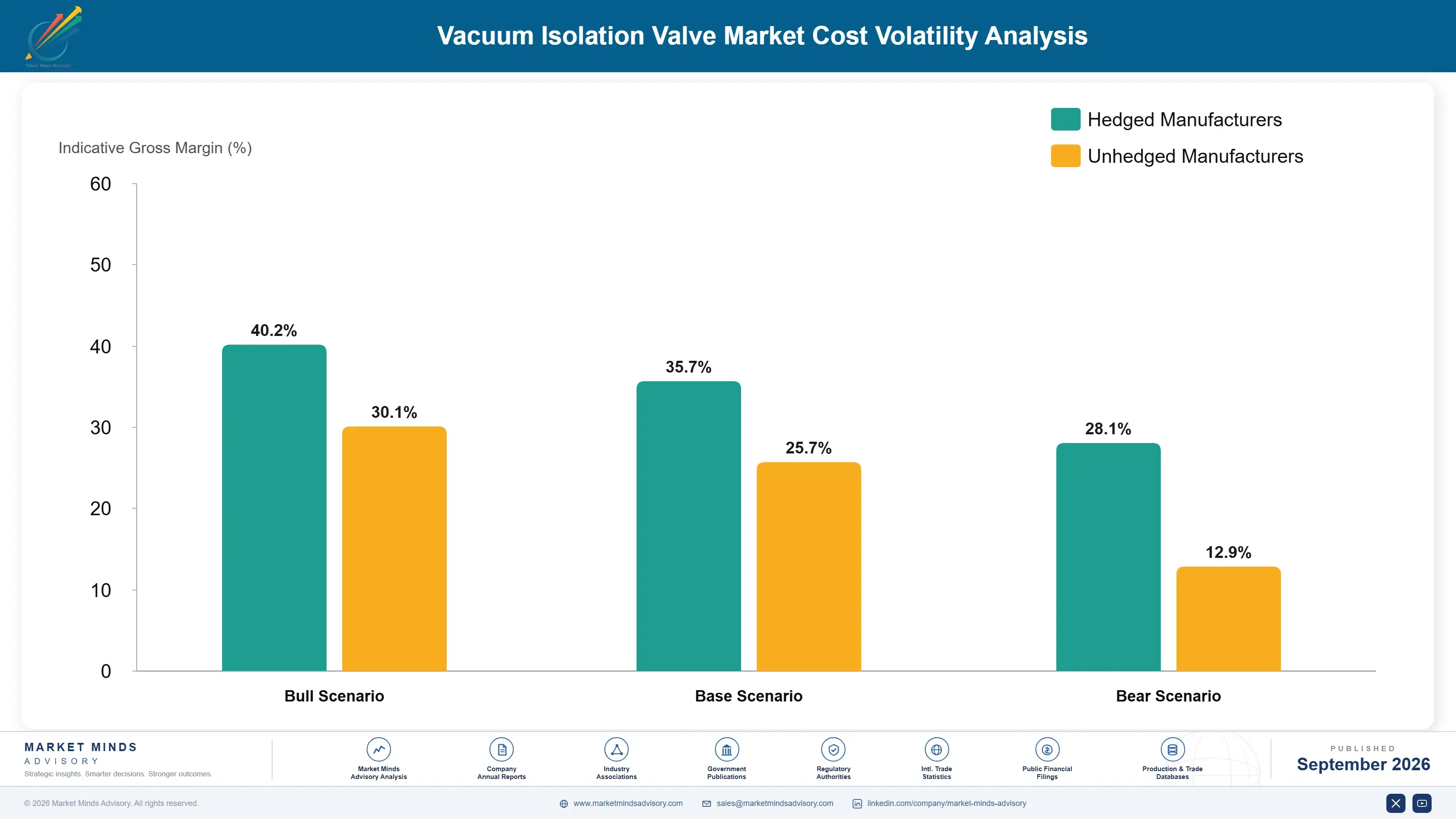
Stainless steel and aluminium account for roughly 26% of manufactured cost, precision machining around 29%, elastomer seals between 11 and 18% depending on chemistry, and actuators, electronics and cleanroom assembly the balance. The alloys are specified for vacuum service with controlled surface finish and low outgassing, and nickel and chromium content drives their cost, with supply concentration documented in USGS commodity reporting each year.
Nickel moved violently through 2022, with the London Metal Exchange suspending trading after an unprecedented price movement, and perfluoroelastomer pricing rose sharply as chemical producers reduced fluoropolymer capacity in response to regulatory pressure. Manufacturers holding fixed-price equipment maker agreements absorbed both, and several disclosed margin pressure in results covering that window. SEMI reporting documented component lead times extending across the same period. Both fell on qualified materials nobody could substitute.

The disadvantage mechanism is material qualification rather than purchasing scale. A supplier whose valve is qualified with one specific elastomer compound cannot substitute a cheaper equivalent without triggering requalification, so it pays whatever that compound costs. Alloy grades are similarly locked by specification. Larger manufacturers negotiate better terms on identical materials but face the same substitution constraint, which limits how much scale helps in this market.
vacuum-isolation-valve-market-cost-volatility-analysis-1788414445876

Qualifying multiple elastomer compounds in parallel

Testing and qualifying two or more seal compounds against the same valve specification removes the single-source exposure that qualification otherwise creates, and it positions the manufacturer for chemical restriction at the same time. It costs testing time and equipment maker engagement that nobody wants to fund, and it is the only genuine answer to both problems at once.

Alloy purchasing agreements across multi-year platforms

Committing alloy volume against known platform production runs secures pricing across the years a qualified valve remains in production, which matches the exposure period precisely. It requires confidence in equipment maker forecasts that the semiconductor cycle makes genuinely difficult, so most manufacturers commit less than the exposure would justify. Most commit far less than the exposure justifies.

Machining capacity flexed through subcontract partners

Precision machining at roughly 29% of cost is the largest single line and the one most exposed to cycle swings, since fixed capacity idles through downturns. Qualified subcontract partners absorbing peak volume let a manufacturer size internal capacity to trough demand, at the cost of margin during booms and considerable qualification effort beforehand. Qualification of partners takes time.

Portfolio Architecture for Margin Defence

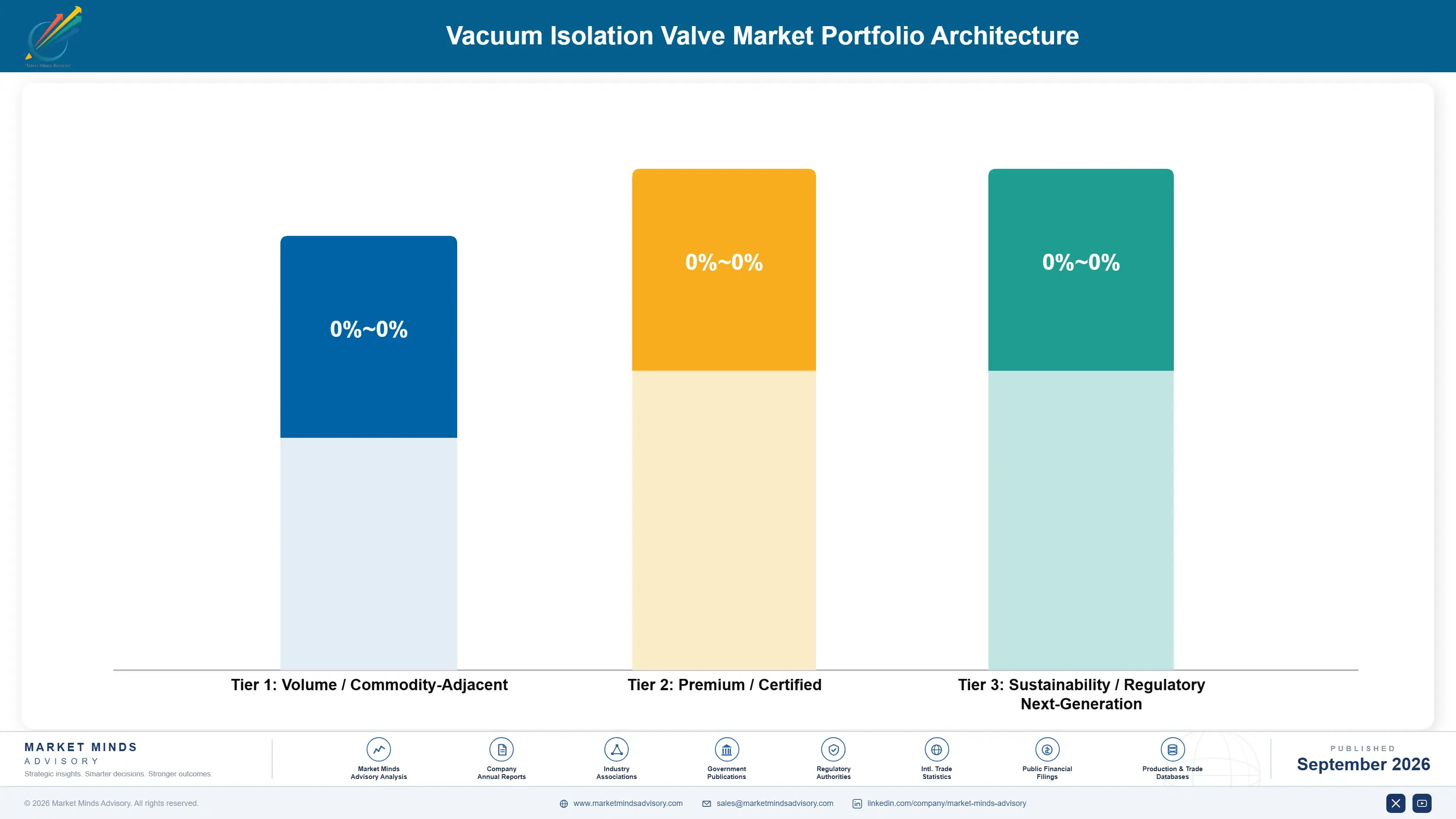
Margin separates by whether the valve does something a simpler product cannot. Isolation valves at conventional specifications are qualified across several suppliers and priced accordingly, with the outcome decided by machining efficiency and material terms. Pendulum and throttle valves, slit valves at the tightest particle specifications and anything carrying control electronics are chosen on capability, and pricing reflects the cost of the alternative rather than the cost of the part.
The volume against premium tension runs through the aftermarket rather than through new valve mix. Spares and refurbishment at 37% of revenue carry better margin than new valve sales and continue through capital spending troughs, which makes them the stabilising half of the business. But capturing them requires designing for serviceability and funding spares operations during booms. Most manufacturers underfund it and cede the revenue to third-party rebuilders.

High-value pools sit where qualification or capability creates the barrier: pendulum and throttle control, tightest-specification slit valves, and captive aftermarket on an installed base. Each is defended by a design-in decision taken years earlier that no competitor can revisit. The pools are narrow in unit terms and carry a disproportionate share of this industry's profit.

Volume / Commodity-Adjacent

Conventional isolation, angle and ball valves for research, coating and less demanding industrial vacuum applications where several suppliers qualify. Returns depend on machining efficiency and material purchasing rather than on any capability the customer values.
Gross Margin: 28 to 36%

Premium / Certified

Gate and slit valves qualified into semiconductor process tool platforms at demanding particle specifications. The 10 point range reflects whether the supplier holds sole qualification or shares the platform with a second qualified source.
Gross Margin: 40 to 50%

Sustainability / Regulatory / Next-Generation

Pendulum and throttle valves with active control, tightest-specification slit valves and captive aftermarket revenue. The 14 point range reflects how completely a closed design-in position removes competitive pressure on pricing.
Gross Margin: 48 to 62%
vacuum-isolation-valve-market-portfolio-architecture-1788414446374

High-value Sub-segments and Strategic Watch-out

Active Pressure Control Valves

Highest value position, worth several times an isolation valve on the same tool and growing at 13.2% as advanced processes require conductance modulation rather than simple sealing. Control accuracy under changing gas load is genuinely hard to achieve repeatably. Position is settled at design-in years earlier.
Gross Margin: 50 to 62%

Captive Aftermarket And Refurbishment

Carries 37% of revenue at better margin than new sales and continues through capital troughs when orders stop entirely. Capturing it requires designing for serviceability and funding spares operations during booms, which most manufacturers neglect. Designing for field seal replacement is what actually decides who captures it.
Gross Margin: 46 to 58%

Standard Process Isolation Valves

The volume core qualified into platforms and shipping automatically as tools do, with margin set by whether the position is sole-sourced. Necessary for scale and for the aftermarket base it eventually generates rather than attractive alone. Sole-sourced positions price entirely differently from shared ones on the same platform.
Gross Margin: 36 to 46%

Research And Industrial Coating Valves

Sold into laboratories, accelerators and thin film applications where several suppliers qualify and purchasing runs through distributors on price. Steady, uncorrelated with the semiconductor cycle, and permanently low margin in every market. Uncorrelated with the semiconductor cycle, which is the only genuine argument for holding it at all.
Gross Margin: 28 to 36%

How Design-In Decides Everything

The annuity here is unusually clean and unusually hard to obtain. A valve qualified into a process tool platform ships with every tool built on that platform for its production life, with no reselling, and generates spares for twenty years afterwards. Each design-in win is worth an enormous multiple of the first order, and each loss is a decade-long exclusion.
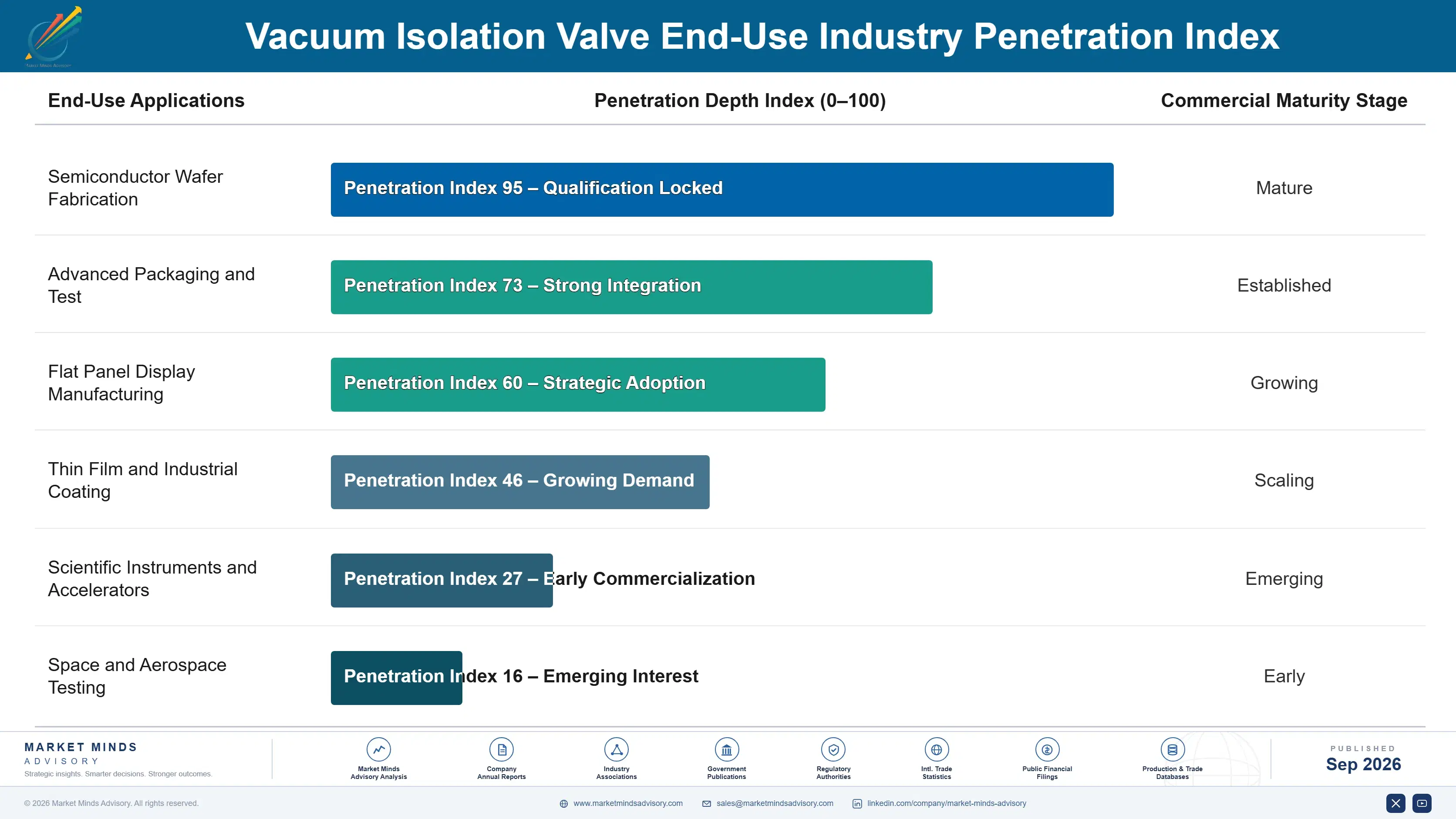
Adoption depth varies sharply by customer type. Process equipment makers specify deeply, testing particle generation, cycle life and outgassing against their own process requirements, and they switch essentially never. Assembly and test companies entering vacuum processing specify loosely because they lack the experience to do otherwise and depend heavily on supplier guidance. Research and coating buyers purchase through distributors on catalogue specification and treat products as broadly interchangeable.

The buyer profile has not changed much, which is itself the point. This has always been sold by applications engineers to design engineers during tool development, and procurement involvement arrives only after the technical decision is settled. What has changed is the arrival of packaging and assembly customers who have never bought vacuum components before, and who need a different conversation entirely.
vacuum-isolation-valve-market-end-use-penetration-index-1788414446861

Where Manufacturers Should Compete

These are among the four positions where our research anticipates prominent divergence between winners and laggards over the coming forecast period. Each is grounded in the demand model, the regulatory perimeter, and the announced capacity pipeline.
01 / CONCEPT DESIGN PRESENCE

Be in the room before the specification is written

Qualification takes around 26 months and a valve chosen at design-in stays for the platform's entire production life, so the commercial decision is settled in an engineering conversation years before any purchase order exists anywhere in the customer organisation. Suppliers present during concept design shape specifications toward what they build, while those arriving at the request for quotation bid against something a competitor already wrote for them. Most manufacturers still organise around procurement relationships rather than around engineering ones entirely.
02 / AFTERMARKET DESIGN INTENT

Design for refurbishment before the boom ends

Spares and refurbishment carry 37% of revenue at better margin than new valve sales and continue through capital spending troughs when equipment orders stop completely, which makes them the genuinely stabilising half of this business rather than an afterthought to it. Capturing that revenue requires designing for field seal replacement and funding a spares operation during booms when every resource is being pulled toward new production work instead. Most manufacturers underfund it and cede the revenue to third-party rebuilders instead.
03 / SEAL CHEMISTRY PREPARATION

Qualify alternative elastomers before restriction forces it

Proposed restrictions on perfluorinated substances reach the elastomers sealing almost every currently qualified valve, and substituting one triggers three successive requalification stages through the valve, the tool and then the customer's own qualified process. Manufacturers qualifying alternatives now will have compliant product when buyers need it, while those waiting for legal certainty will still be qualifying while their competitors are already shipping. The requalification chain runs to years, which is exactly why so few are funding any of the work today.
04 / PACKAGING PLATFORM ENTRY

Follow vacuum into assembly and test now

Hybrid bonding and through-silicon via processing are bringing vacuum equipment into assembly and test operations that historically used almost none, which opens two entirely new buyer types served by equipment makers this industry does not yet know at all. Volume per site is smaller than a logic fab while the number of sites is considerably larger than that. Establishing position before those platforms freeze is the same design-in problem in a place where nobody currently holds any incumbent advantage at all.

Engagement Snapshot From the Field

A live engagement with an industry participant carrying material or product regulatory and market exposure ahead of a defining policy shift, showing how our research translates into a defensible multi-year portfolio strategy.
MARKET MINDS ADVISORY · CLIENT ENGAGEMENT SUMMARY
Vacuum Isolation Valve Producer Strategic Portfolio Review and Transition Roadmap 2026·Investment Scenario on Vacuum Isolation Valve Exposure Evaluation 2025-26
CLIENT PROFILE
A European manufacturer of vacuum components and valves with annual revenue reported at approximately USD 220 million (client-reported, unverified by MMA). The business held qualified positions on several established process tool platforms, sold spares through distributors rather than directly, and had built no presence at all with the equipment makers now serving advanced packaging customers.
STRATEGIC CHALLENGE
Revenue swung violently with the semiconductor capital cycle and management had no means of dampening it, while a competitor appeared to be winning design-in positions on new platforms the client had not been invited to bid for. A proposal to develop alternative seal chemistry had been deferred twice as speculative spending.
MMA APPROACH
MMA traced how design-in decisions had actually been made across nine recent platform programmes, measured what proportion of the client's installed base aftermarket was being captured by third-party rebuilders, and assessed the requalification exposure that elastomer restriction would create across the qualified portfolio. Competitor engagement patterns were then mapped directly.
KEY FINDINGS
  1. Design-in decisions on all nine programmes had been settled during concept design, before any formal request for quotation, and the client had been absent from every one of those conversations.
  2. Third-party rebuilders were capturing roughly half of the aftermarket on the client's own installed base, because the valves had never been designed for field seal replacement at all.
  3. Elastomer restriction would require requalification across most of the qualified portfolio, and the client held no alternative compound tested against any of its own specifications.
  4. Advanced packaging equipment makers were freezing platform designs during the assessment period, and no established valve supplier had yet established a position with several of them.
CLIENT PROFILE
A European manufacturer of vacuum components and valves with annual revenue reported at approximately USD 220 million (client-reported, unverified by MMA). The business held qualified positions on several established process tool platforms, sold spares through distributors rather than directly, and had built no presence at all with the equipment makers now serving advanced packaging customers.
STRATEGIC CHALLENGE
Revenue swung violently with the semiconductor capital cycle and management had no means of dampening it, while a competitor appeared to be winning design-in positions on new platforms the client had not been invited to bid for. A proposal to develop alternative seal chemistry had been deferred twice as speculative spending.
MMA APPROACH
MMA traced how design-in decisions had actually been made across nine recent platform programmes, measured what proportion of the client's installed base aftermarket was being captured by third-party rebuilders, and assessed the requalification exposure that elastomer restriction would create across the qualified portfolio. Competitor engagement patterns were then mapped directly.
KEY FINDINGS
  1. Design-in decisions on all nine programmes had been settled during concept design, before any formal request for quotation, and the client had been absent from every one of those conversations.
  2. Third-party rebuilders were capturing roughly half of the aftermarket on the client's own installed base, because the valves had never been designed for field seal replacement at all.
  3. Elastomer restriction would require requalification across most of the qualified portfolio, and the client held no alternative compound tested against any of its own specifications.
  4. Advanced packaging equipment makers were freezing platform designs during the assessment period, and no established valve supplier had yet established a position with several of them.
RECOMMENDED STRATEGY
Phase 1: Phase one: move applications engineers into equipment maker concept design engagement rather than waiting for formal request for quotation processes. Phase 2: Phase two: redesign the highest volume valve families for field seal replacement and take the aftermarket back from third-party rebuilders directly. Phase 3: Phase three: fund parallel elastomer qualification immediately rather than waiting for regulatory certainty that is going to arrive far too late anyway.
OUTCOME
Within fifteen months the client had secured two design-in positions on new platforms, raised captured aftermarket share by 19 percentage points, and completed qualification of one fully alternative seal compound (client-reported, unverified by MMA). Advanced packaging engagement is now underway with three separate equipment makers.

Frequently Asked Questions

Foundational context covering the market sizes, CAGR, scope, country, region and competition that inform every finding below. This section is provided to cover basics and most often pre-purchase conversations, answered from the MMA Primary Research Dataset.

What is the current size of the Vacuum Isolation Valve Market?

The market was valued at USD 1.6 billion in 2025 and reaches USD 1.74 billion in 2026. Around two thirds of demand originates in wafer fabrication equipment rather than industrial applications.

How large will the Vacuum Isolation Valve Market be by 2036?

MMA forecasts USD 4.04 billion by 2036, an increase of USD 2.30 billion over the 2026 base. That represents an expansion multiple of 2.32 times.

What is the CAGR for the Vacuum Isolation Valve Market 2026 to 2036?

The base case CAGR is 8.8%, with a bull case of 10.0% and a bear case of 7.6%. The historical rate between 2020 and 2025 was 7.6%.

Which segment is growing fastest?

Pendulum and throttle valves grow at 13.2%, half again the market rate of 8.8%. Advanced etch and deposition need active pressure control rather than simple isolation.

Who are the major companies in the Vacuum Isolation Valve Market?

VAT Group, MKS Instruments, Pfeiffer Vacuum, Kitz SCT and Irie Koken lead on measured shipment revenue. Together they account for roughly 71% of the market.

Which country is growing fastest?

India grows fastest at 15.8%, as its first advanced fabrication and packaging facilities reach installation from a base that had been very close to zero.

Report Segmentation Architecture

The full report scope spans multiple orthogonal segmentation dimensions, with cross-tabulated demand data provided for each dimension pair. Coverage extends further to regional breakdowns, trend trajectories, and the competitive detail needed to support segment-level decision-making.

By Valve Architecture

  • Gate Valves
  • Angle Valves
  • Pendulum and Throttle Valves
  • Transfer and Slit Valves
  • Butterfly Valves
  • Ball and Poppet Valves

By End-Use Industry

  • Semiconductor Wafer Fabrication
  • Advanced Packaging and Test
  • Flat Panel Display Manufacturing
  • Thin Film and Industrial Coating
  • Scientific Instruments and Accelerators
  • Space and Aerospace Testing

By Supply Route and Product Stage

  • Equipment Maker Design-In Supply
  • Fab Direct Replacement Purchase
  • Spares and Seal Kits
  • Factory Refurbishment Programmes
  • Distributor and Catalogue Sales
  • Research Tender Procurement

By Region

  • East Asia
  • North America
  • Western Europe
  • South Asia and Pacific
  • Latin America
  • Middle East and Africa
  • Eastern Europe

Scope, Methodology, and Coverage

Every figure in this report is reproducible from documented input assumptions. The scope below maps the historical period, the forecast horizon, the segmentation dimensions, and the countries covered, alongside the underlying primary and qualitative methodology.
Historical Period
2020 to 2025
Forecast Period
2026 to 2036
Base Year
2025 (USD billions; MMA Primary Research Dataset, September 2026)
Market Definition
The vacuum isolation valve market covers valves that isolate, transfer or control pressure within evacuated process environments, spanning gate, angle, pendulum and throttle, transfer and slit, butterfly, and ball and poppet architectures rated for high and ultra-high vacuum service. Sizing is measured at manufacturer shipment revenue including spares and refurbishment. Vacuum pumps, gauges, chambers, mass flow controllers, foreline components, general industrial process valves and complete gas delivery systems sold separately are excluded.
Quantitative Units
USD billions at manufacturer shipment revenue, with supporting unit volumes and valve content per tool by region
Segmentation Dimensions
Valve architecture, end-use industry, supply route and product stage, region
Regions Covered
East Asia, North America, Western Europe, South Asia and Pacific, Latin America, Middle East and Africa, Eastern Europe
Countries Covered
Taiwan, South Korea, China, Japan, Singapore, Malaysia, India, Australia, United States, Canada, Germany, Switzerland, Netherlands, France, United Kingdom, Poland, Israel, Brazil
Key Companies Profiled
VAT Group, MKS Instruments, Pfeiffer Vacuum, Kitz SCT, Irie Koken, Edwards Vacuum, Agilent Technologies, ULVAC, Nor-Cal Products, HVA LLC, Presys, SMC Corporation, Parker Hannifin, Swagelok, Ham-Let, Vacuum Research Corporation, Leybold, Shimadzu, Anest Iwata, Fujikin
Quantitative Methodology
Primary survey, n=3,800 respondents, Q4 2025, six countries; demand-side model with trade association cross-validation
Qualitative Methodology
47 expert interviews, Q4 2025; applied to validate demand model assumptions, identify emerging dynamics, and assess competitive positioning
Report Format
PDF and XLSX data workbook (Word format preview document)
Publisher
Market Minds Advisory
Report Code
MMA-2026-TEC-651
Published
September 2026
Contact
sales@marketmindsadvisory.com | www.marketmindsadvisory.com

Purchase the full Vacuum Isolation Valve Market Report (2026 to 2036).

The full report treats this as the semiconductor equipment component market it actually is rather than as an industrial valve category, which is the framing error that makes every forecast built on industrial cycles wrong. It sizes six valve architectures with individual growth rates, seven regions built from wafer fabrication equipment installation, and the valve content per tool that grows faster than tool shipments do. Competitive analysis covers twenty manufacturers on a consistent shipment revenue basis, with design-in position and particle performance treated as the decisive variables. Input cost modelling breaks out alloy, elastomer and machining exposure against qualification lock.
Six valve architectures with individual growth rates
Valve content per tool tracked across process generations
Design-in positions mapped by tool platform
Aftermarket capture rates against installed base
Twenty manufacturers on consistent shipment revenue basis
Alloy, elastomer and machining cost exposure

Built For The People Who Decide

From boardroom strategy to bench-side execution, this report is read cover-to-cover by leaders shaping the next decade of their industry, turning demand scenarios, market dynamics and valuation benchmarks into decisions.
CXOs/ Presidents/ VPs/ Managers
M&A and Corporate Development
Strategy Teams and R&D Heads
Procurement and Product Directors
Regulatory and Compliance Leaders
Investor Relations and Equity Analysts