Market Minds Advisory
Uveal Melanoma Treatment Market

Uveal Melanoma Treatment Market: Downstream Economics, Genotype Limited Eligibility and the Liver as a Battleground

Radiotherapy controls the eye tumour in more than 95% of cases and half of those patients still die of liver disease, so the entire commercial market sits downstream of a treatment that already worked.

Lead Analyst

Alice Ballenger

Published

September 2026

Make Smarter Decisions with Customized Research Insights

Request a free sample report and evaluate market opportunities, growth trends, and competitive dynamics relevant to your business needs.

2025 MARKET VALUE$0.8BMarket Size 2025
2036 FORECAST VALUE$3.2BBase Case , 2026 to 2036
CAGR 2026 TO 203613.6 %Bull 14.8% / Bear 12.2%
INCREMENTAL OPPORTUNITY$2.3BNet 10- year value creation
EXPANSION MULTIPLE3.58x2036 value over 2026 base
Strategic Levers
M&A Pipeline
Regional Outlook
Country Rankings
Competitive Intelligence
Segmental Deep-dive
Call-Us : 91 93563 13602

Executive Snapshot and Market Trajectory

Uveal melanoma is the clearest case in oncology of a cancer that gets cured and kills the patient anyway. Radiotherapy controls the eye tumour in more than 95% of cases. Roughly half of those patients still develop liver metastases, often years later, because the tumour seeded before anyone saw it.
The commercial market therefore sits entirely downstream of a treatment that works. Bispecific T cell engager therapy is the fastest growing segment at 20.4%, half again the market rate of 13.6%, and it is the first systemic treatment ever to extend survival in this disease. Liver directed delivery and perfusion follows at 16.8%, because roughly 90% of metastases appear in the liver first.
Concentration is high at 68%, and the geography of this market is set by ancestry rather than by health spending. The only approved systemic therapy requires a tissue type carried by roughly 45% of patients of European descent and a small minority of East Asian and African patients, which caps the addressable population in most of the world. North America and Western Europe together hold 70% of the market for that reason alone.
Market Definition
Therapies and procedures used to treat primary and metastatic uveal melanoma, covering bispecific T cell engager systemic therapy, liver directed delivery and perfusion systems, ocular plaque brachytherapy and proton beam radiotherapy, immune checkpoint inhibitor therapy, surgical enucleation and resection, and laser and transpupillary thermotherapy. Measured at manufacturer and procedure revenue. Diagnostic imaging, genetic prognostic testing, cutaneous melanoma therapies and ocular prosthetics are excluded.
Base Year Value
$0.8B in 2025 (MMA Primary Research Dataset, August 2026)
Forecast Period
2026 to 2036, eleven discrete annual values
CAGR
13.6% base case. Bull 14.8%. Bear 12.2%.
Fastest Growth Segment
Bispecific T Cell Engager Therapy: 20.4% CAGR
Fastest Growth Country
Poland: 20.8% CAGR
Fastest Growth Region
South Asia and Pacific: 15.8% CAGR
Largest Region
North America: 38% of 2025 global value
Market Leaders
Immunocore Holdings, Delcath Systems, Bristol Myers Squibb, Merck, Eckert and Ziegler. Source: MMA Primary Research Dataset, July 2026.
Primary Survey
n=3,800 procurement and R&D decision-makers, Q4 2025, six countries
Methodology
Demand-side build-up, cross-validated against public data, 47 expert interviews

Uveal Melanoma Treatment Market Forecast Scenarios

uveal-melanoma-treatment-market-size-forecast-scenario-1787641249295
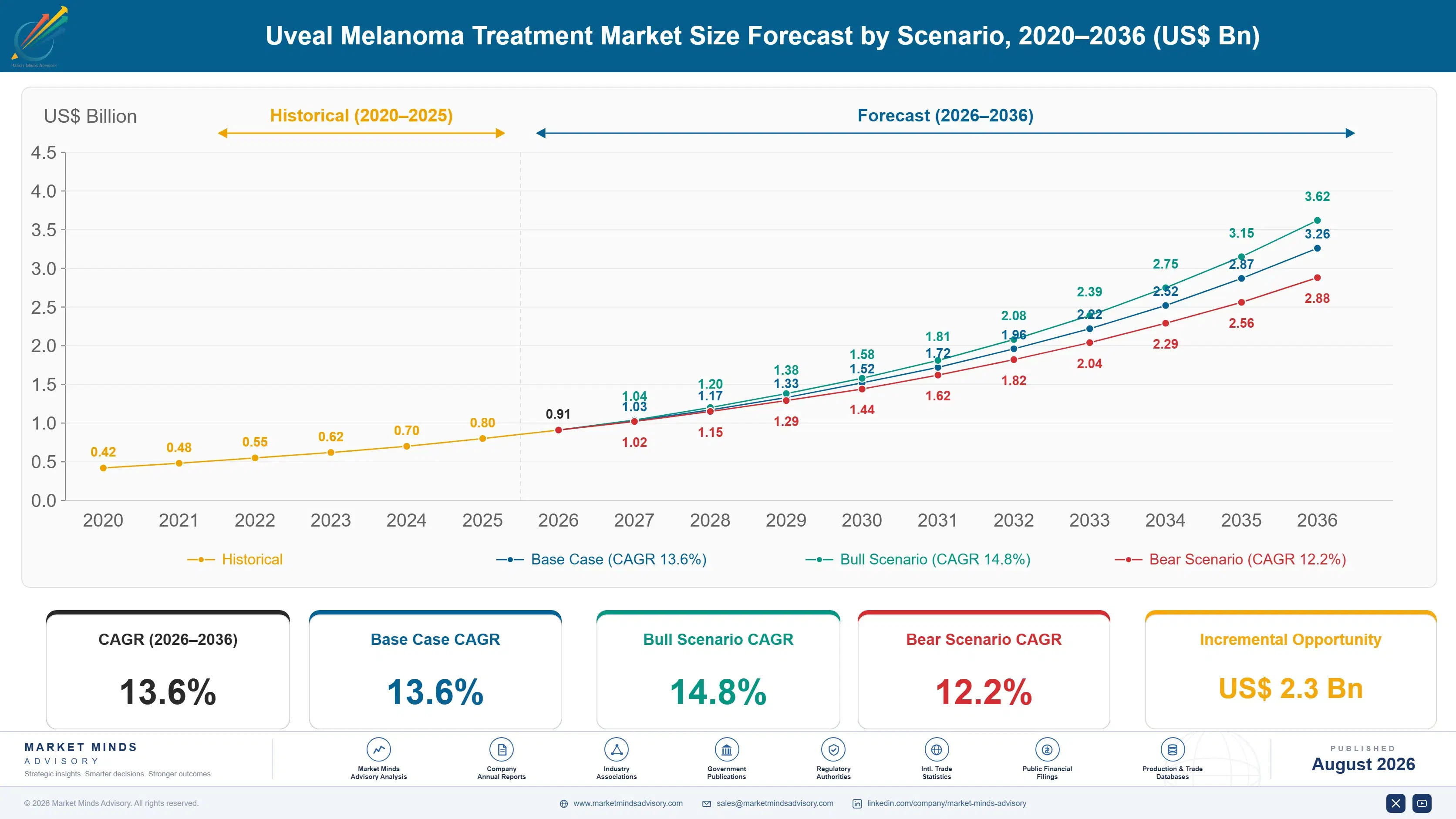
Nothing changed in this disease for thirty years and then two things changed at once. The first systemic therapy to show a survival benefit reached approval in 2022, and a hepatic delivery system followed shortly afterwards. Before that, metastatic uveal melanoma had no treatment with evidence behind it. The 12.4% historical rate is the arrival of a market rather than the growth of one.
The 13.6% base case rests on three mechanisms. Reimbursement for the approved systemic therapy keeps expanding, and each new listing converts a diagnosed population into a treated one overnight. Liver directed delivery is establishing itself where systemic therapy is unavailable or the genotype does not permit it, which is most of the world. And prognostic gene testing at diagnosis now identifies high risk patients years before metastasis, creating a surveillance population entering treatment earlier.
The 14.8% bull case turns on a systemic therapy without the tissue type restriction reaching approval, which would multiply the addressable population outside European ancestry populations several times over. The 12.2% bear case is health technology assessment: several national bodies have questioned whether the survival benefit justifies a course cost near 390,000 dollars, and one negative decision removes a whole country.

Treating What Radiotherapy Already Cured

The primary tumour is a solved problem and has been for years. Plaque brachytherapy and proton beam radiotherapy control the eye tumour in more than 95% of cases, preserve the globe in most, and cost a fraction of what systemic oncology costs. Nobody is building a business on that. The commercial market exists because local control does not prevent distant disease, and roughly half of patients develop metastases regardless.
TOP FIVE CONCENTRATION68%Combined treated patient volume held by leading suppliers
LOCAL TUMOUR CONTROL95%Eye tumours controlled by radiotherapy without further recurrence
METASTATIC CONVERSION RATE50%Share of patients developing distant disease despite local cure
ELIGIBLE GENOTYPE PREVALENCE45%Portion of patients carrying the required tissue type marker
HEPATIC METASTASIS SHARE90%Proportion of distant disease appearing first in liver
ANNUAL THERAPY COSTUSD 390,000Typical cost of a full systemic treatment course
The reason is timing. Uveal melanoma seeds through the bloodstream early, often before the tumour is large enough to be visible, so the cells are already gone by the time treatment begins. Metastases then sit dormant for years, sometimes more than a decade, before appearing almost always in the liver. Around 90% of distant disease presents hepatically, which is unusually concentrated and creates a genuine role for organ directed delivery.
Eligibility is where this market diverges from every other oncology category. The approved systemic therapy binds a peptide presented by one specific tissue type, carried by roughly 45% of patients of European descent and a considerably smaller minority elsewhere. Addressable population is set by ancestry rather than by incidence or spending, which makes the geographic model unlike anything in oncology.
"This is the only cancer I know where the surgeon and the radiation oncologist do their jobs almost perfectly and the patient still dies eight years later. Everything commercial in this market is a response to that one uncomfortable fact."
Director, Oncology and Specialty Therapeutics Practice · MMA Healthcare and Life Sciences Practice · August 2026

Market Trends

Genotype Eligibility Redraws the Geographic Opportunity Map

The approved bispecific therapy works only in patients carrying a specific tissue type, present in roughly 45% of people of European descent and in a considerably smaller share of East Asian, South Asian and African populations. That is not a reimbursement problem or an access problem, and no commercial effort changes it. Countries with predominantly European ancestry populations therefore represent a far larger addressable market than incidence or health spending would suggest. Companies building launch sequences on gross domestic product rather than on population genetics have consistently overestimated several markets and underestimated others.
Market Impact: Identifies risk 5 years earlier
Liver Directed Delivery Competes Directly With Systemic Therapy

Roughly 90% of uveal melanoma metastases appear first in the liver, which is unusual enough to support an entire treatment approach built around one organ. Percutaneous hepatic perfusion delivers chemotherapy at concentrations systemic dosing could never tolerate, filtering the effluent before it reaches circulation. Growth runs at 16.8%, second fastest in the market, and adoption concentrates precisely where systemic therapy is unavailable or the genotype excludes the patient. The two approaches are not really competing for the same patient in most cases, though commercial teams on both sides describe it that way.
Market Impact: Adds 12 reimbursed national markets

Market Opportunities and Growth Drivers

Prognostic Gene Testing Identifies Patients Years Before Metastasis

Gene expression profiling of the primary tumour at diagnosis separates patients into risk classes with considerable accuracy, and high risk patients face metastatic rates far above the population average. That information arrives years before any metastasis appears, which creates a surveillance population under intensive hepatic imaging rather than an undifferentiated group of survivors. Metastases get detected smaller and earlier, at a point where liver directed therapy and systemic treatment both work better. Testing at diagnosis has become routine across specialist ocular oncology centres, and the treatment market inherits the resulting pipeline of identified patients.
Market Impact: Course cost near 390,000 dollars

Reimbursement Listings Convert Diagnosed Patients Into Treated Ones

Every national reimbursement decision in this disease behaves like a switch rather than a ramp, because the diagnosed population already exists and has been waiting without options. When a country lists the approved systemic therapy, treated patient volume in that market rises within a quarter rather than over years, which is unlike almost any other oncology launch. The corollary is equally sharp: a negative health technology assessment removes an entire country from the addressable market until a resubmission succeeds. Launch sequencing therefore matters more here than commercial effort inside any individual market.
Market Impact: Incidence near 5 per million

Market Restraints and Challenges

Course Cost Draws Health Technology Assessment Scrutiny

A full course of the approved systemic therapy runs near 390,000 dollars against a survival benefit measured in months rather than years, and several national assessment bodies have said publicly that the arithmetic is difficult. The root cause is that rarity offers no relief from cost effectiveness thresholds in most systems, and an orphan designation changes the evidence requirements rather than the price test. Commercially each negative decision removes a country entirely. Manufacturers are responding with outcome based agreements, confidential discounts and patient access schemes, which work but take years to negotiate in each market separately.
Market Impact: Limits eligibility to 45% of patients

Small Patient Numbers Make Trial Recruitment Genuinely Difficult

Uveal melanoma affects roughly five people per million annually, and the metastatic population eligible for any given trial is a fraction of that once genotype, prior therapy and liver function criteria apply. The root cause is simple rarity, and it means a phase three trial requires dozens of sites across multiple countries and still recruits slowly. That lengthens development timelines, raises cost per patient enrolled considerably, and deters companies with alternative uses for the same capital. The responses that work are international consortium trials, registry based evidence generation and single arm designs with external comparators.
Market Impact: Addresses 90% of metastatic disease
3 additional market trends, 4 additional growth drivers, and 2 additional restraints and challenges are covered in the full report. Contact sales@marketmindsadvisory.com to access the complete intelligence.

Segment CAGR and Growth Architecture

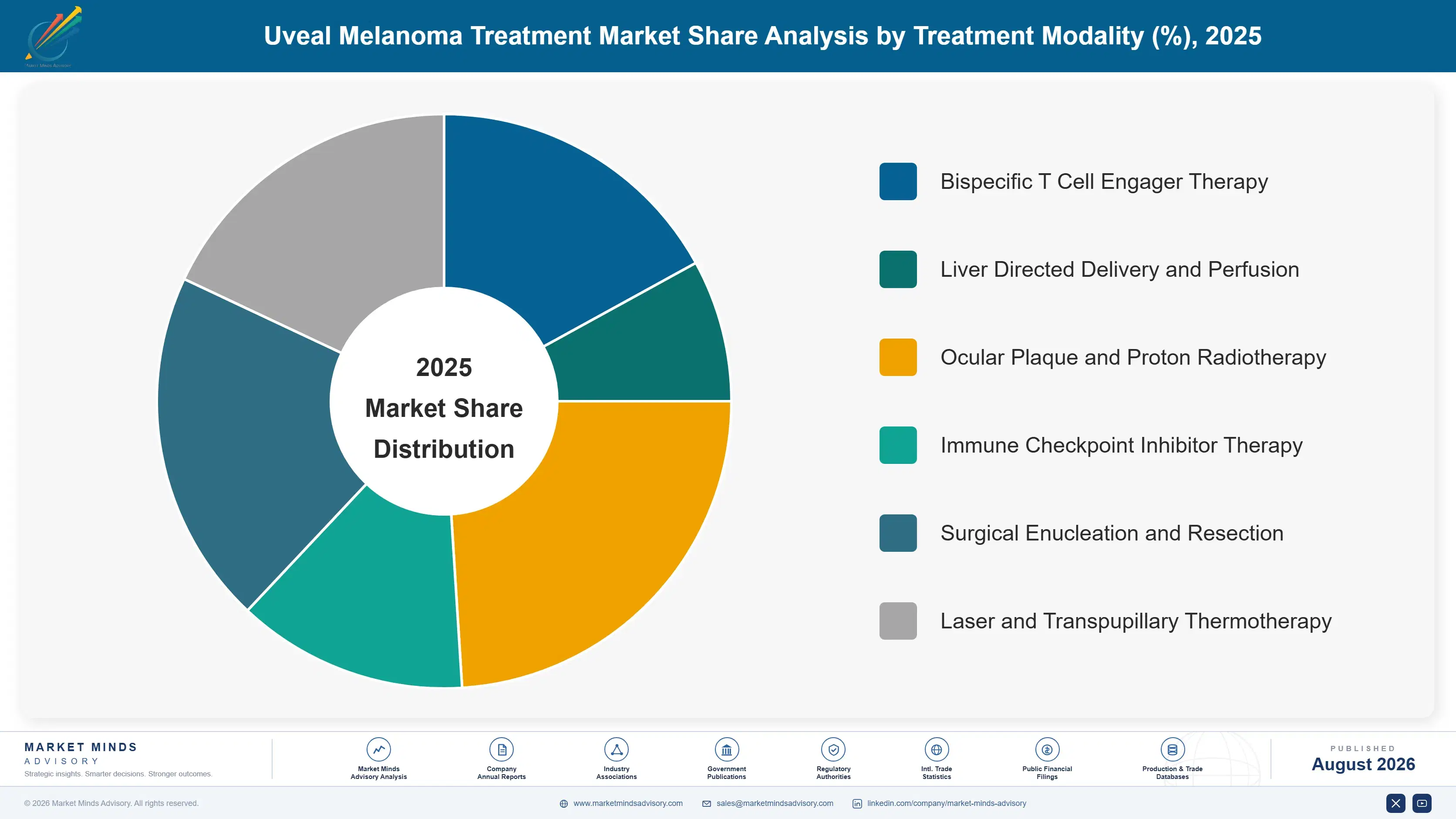
Segmentation follows treatment modality, since modality determines the stage treated, the specialist involved and the economics entirely. Six modalities cover the disease, from an ocular radiotherapy plaque sutured to the eye through to a systemic therapy costing near 390,000 dollars a course. Growth sits wholly in metastatic treatment, because local control was solved decades ago.
uveal-melanoma-treatment-market-market-share-analysis-1787641249878

Bispecific T Cell Engager Therapy

A soluble T cell receptor fused to an antibody fragment, which binds a melanoma peptide presented by one specific tissue type and recruits T cells to the tumour. At 20.4% this is the fastest growing modality in the market, half again the market rate of 13.6%, and it is the first therapy in this disease ever to demonstrate a survival benefit in a randomised trial. Eligibility is the binding constraint rather than access: roughly 45% of patients of European descent carry the required tissue type and considerably fewer elsewhere. Administration requires weekly infusion with monitoring for cytokine release, which restricts delivery to centres equipped for it. Very few centres outside major cities can offer it at all.
CAGR 20.4%

Liver Directed Delivery and Perfusion

Percutaneous hepatic perfusion and related isolated delivery approaches, which flood the liver with chemotherapy at concentrations systemic dosing could never tolerate and filter the effluent before it returns to circulation. Growth of 16.8% is second fastest in the market, and the rationale is anatomical rather than pharmacological: roughly 90% of metastases appear in the liver first. Adoption concentrates in patients excluded by genotype from systemic therapy, which is most of the world outside European ancestry populations. The procedure is technically demanding, requires interventional radiology capability and a specific perfusion system, and centres performing it regularly report considerably better outcomes than occasional users. Case volume is the variable that decides outcomes here, not the equipment itself.
CAGR 16.8%
Full segment breakdown across 6 segments available in the complete report.

Regional Architecture and Country Demand Map

North America holds the largest share at 38% and Western Europe follows at 32%, together carrying 70% of the market because the required tissue type is concentrated in populations of European descent. East Asia and South Asia sit well below their population weight for the same reason.

North America

This 38% share sits above the standard band, and the justification is population genetics rather than commercial dominance: the required tissue type is carried by roughly 45% of people of European descent, who make up the majority of the American patient population. Incidence of uveal melanoma is also highest in fair skinned populations, so the diagnosed pool is proportionally larger before any access question arises. Ocular oncology is concentrated in a modest number of specialist centres that also perform plaque brachytherapy and proton beam treatment, which makes referral pathways short and adoption fast. Reimbursement for the approved systemic therapy is established across commercial and Medicare coverage. Canadian provincial listing followed later and more narrowly.
Share: 38% | CAGR: 13.0% (2026 to 2036)

Western Europe

At 32% this share also exceeds the standard band, for the same reason: uveal melanoma incidence and the required tissue type are both concentrated in populations of Northern European descent. Nordic countries record among the highest incidence rates anywhere, and Denmark, Sweden and Norway treat proportionally more patients than population size suggests. Reimbursement has been secured across most major markets though the negotiations were difficult, with several health technology assessment bodies questioning cost effectiveness at a course price near 390,000 dollars before agreeing confidential arrangements. Ocular oncology centres are few, highly specialised and well networked across borders, which spreads practice change quickly. Growth of 12.0% reflects markets already largely converted.
Share: 32% | CAGR: 12.0% (2026 to 2036)
Regional intelligence for 5 additional markets available in the complete report: East Asia, South Asia and Pacific, Latin America, Middle East and Africa, Eastern Europe. Contact sales@marketmindsadvisory.com.
uveal-melanoma-treatment-market-country-cagr-analysis-1787641250447

Where Value Sits in This Disease

Nothing in this market is won by treating the eye, because that problem was solved decades ago and the economics are modest. Value accrues to whoever reaches the metastatic patient, whoever can treat the patients genotype excludes from systemic therapy, and whoever secures a reimbursement listing first. Four routes carry weight, and three of them are access rather than science.

Sequence Launches by Population Genetics Not Wealth

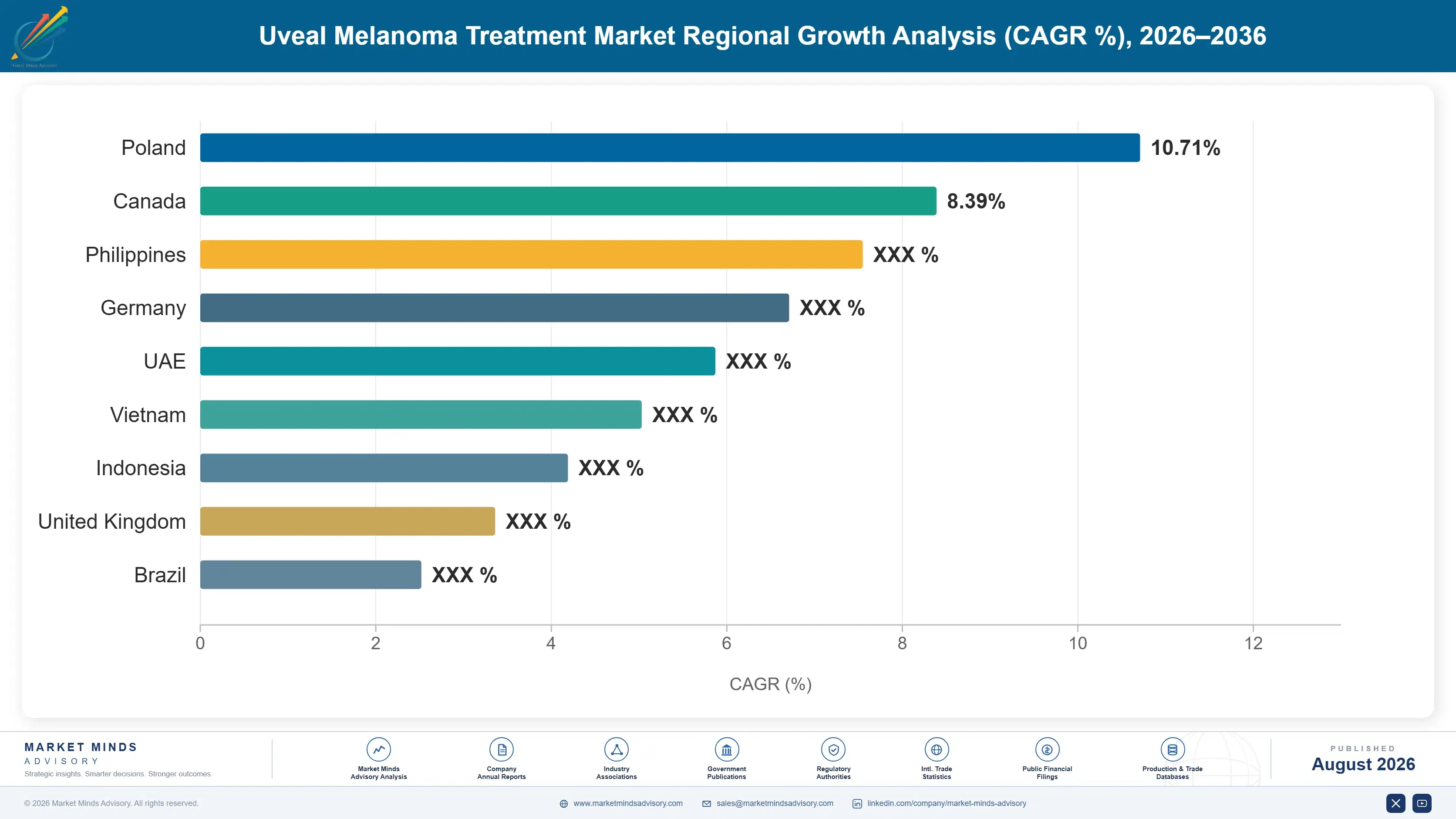
The approved systemic therapy requires a tissue type carried by roughly 45% of people of European descent and considerably fewer elsewhere, which means addressable population does not track health spending in the usual way. Poland grows at 20.8%, faster than any other country covered, because eligibility is high and reimbursement is arriving. Several wealthy Asian markets will never justify the same commercial investment regardless of how the negotiation goes. Companies that sequenced launches on gross domestic product have consistently misallocated effort, and correcting that costs a year each time. Population data settles this argument quickly.
Market Impact: Targets the 45% of patients who are eligible

Own the Patients Systemic Therapy Cannot Reach

More than half of metastatic patients worldwide are excluded from the approved systemic therapy by genotype alone, and that population has no approved alternative with evidence behind it. Liver directed delivery grows at 16.8% precisely because roughly 90% of metastases go to the liver first, making an organ directed approach anatomically sensible rather than merely available. The commercial position is unusually clean, since it does not require displacing anything. Building interventional radiology capability at ocular oncology referral centres is the practical constraint, and it takes time rather than money. Capability building takes time here.
Market Impact: Serves the 55% excluded by their genotype alone

Treat Reimbursement Listing as the Whole Sales Cycle

Diagnosed patients in this disease already exist and have been waiting without options, so a national listing converts a population into treated volume within a quarter rather than over years. That makes health technology assessment submission the single most valuable commercial activity available, worth more than any field force. Outcome based agreements and confidential discounts have secured listings that straight pricing could not at a course cost near 390,000 dollars. Each negative decision removes an entire country until resubmission, which is why preparation quality matters more than negotiation speed. Preparation quality decides everything.
Market Impact: Converts 12 separate national markets through listing decisions

Follow Prognostic Testing Into the Surveillance Population

Gene expression profiling at diagnosis identifies high risk patients roughly 5 years before any metastasis appears, creating a defined surveillance group under intensive hepatic imaging rather than a diffuse population of survivors. Metastases in that group get caught smaller, when both liver directed and systemic therapy perform considerably better. Commercially this is a referral relationship rather than a product, built with ocular oncology centres at the point of diagnosis rather than with hepatologists years later. Companies present at diagnosis capture the patient at metastasis without competing for them. That relationship is worth building early.
Market Impact: Reaches identified patients a full 5 years earlier

Who Controls the Margin Pool

Concentration is high for an oncology category. The top five account for 68% of treated patient volume and associated product and procedure revenue, the basis applied consistently here. Immunocore leads on the systemic side with the only therapy demonstrating a survival benefit, and the distance to any challenger is substantial because no competing systemic agent has completed a positive randomised trial in this disease.
Competition runs on three fronts with almost no overlap. Systemic therapy is effectively uncontested for the eligible genotype, and the contest there is against health technology assessment bodies rather than against another company. Liver directed delivery competes with checkpoint inhibitors used off label and with liver directed embolisation, on evidence quality and centre capability. Primary ocular radiotherapy is a mature equipment and isotope business fought on service and price.

Rankings will shift if a systemic therapy without the tissue type restriction reaches approval, which would open populations currently unreachable and reprice the whole opportunity. Several candidates are in development and none has yet produced randomised evidence. The other pressure point is health technology assessment: a negative decision in a major market would cost more than any competitor currently can.
uveal-melanoma-treatment-market-company-positioning-matrix-1787641251006

Competitive Moat and Risk Dimensions

IMMUNOCORE HOLDINGS

Moat: Only Proven Survival Benefit

This remains the sole therapy in metastatic uveal melanoma with a randomised trial showing extended overall survival, in a disease where every previous systemic approach failed to demonstrate one. Clinical guidelines name it, specialist centres default to it for eligible patients, and no competitor can displace that position without completing an equivalent trial in a population this small.
IMMUNOCORE HOLDINGS

Risk: Genotype Ceiling Exposure

Eligibility is fixed at roughly 45% of patients of European descent and considerably lower elsewhere, which places a hard ceiling on the addressable population that no commercial activity can raise. A competitor reaching approval without that restriction would open populations this product can never serve, and several such candidates are in development.
DELCATH SYSTEMS

Moat: Hepatic Delivery Position

Percutaneous hepatic perfusion addresses the roughly 90% of metastases that appear in the liver first, and it serves the majority of patients worldwide whose genotype excludes them from systemic therapy. The procedural nature of the treatment builds centre level relationships and operator experience that competing approaches would need years to replicate at comparable outcome quality.
DELCATH SYSTEMS

Risk: Centre Capability Constraint

The procedure requires interventional radiology capability, a specific perfusion system and enough case volume to maintain operator proficiency, which limits how quickly the treated population can expand. Centres performing it occasionally report worse outcomes than regular users, so growth depends on building capability carefully rather than on selling more systems.

Players Tracked

Prominent Players

Immunocore Holdings
Delcath Systems
Bristol Myers Squibb
Merck
Eckert and Ziegler

Other Key Players

IsoAid
Theragenics
Best Medical International
Ion Beam Applications
Varian Medical Systems
Elekta
Sirtex Medical
Boston Scientific
Terumo
Iovance Biotherapeutics
Replimune
Philogen
IDEAYA Biosciences
Pfizer
Novartis

Recent Developments

MARCH 2025

National assessment body agrees confidential access arrangement

A European health technology assessment body concluded a confidential patient access arrangement covering the approved systemic therapy, following an initial finding that the published price failed conventional cost effectiveness thresholds. Treated volume in that market rose within a single quarter, since the diagnosed population had been waiting without alternatives.
Signal: Listing decisions convert waiting patients into treated volume faster than any commercial launch activity ever does
JUNE 2025

Hepatic perfusion system gains additional European treatment centres

A liver directed delivery manufacturer added treatment centres across several European markets, concentrating on ocular oncology referral hospitals with existing interventional radiology capability. Centre selection prioritised expected case volume over geographic coverage, reflecting evidence that occasional operators achieve worse outcomes. Coverage will follow capability rather than lead it.
Signal: Building operator proficiency matters considerably more here than placing systems in as many hospitals as possible
SEPTEMBER 2025

Prognostic testing adopted as standard at diagnosis in guidelines

Updated clinical guidance established gene expression profiling of the primary tumour as standard practice at diagnosis, formalising risk stratification that many specialist centres already performed. High risk patients enter structured hepatic surveillance years before any metastasis appears, which changes when and how the treatment market reaches them.
Signal: Risk stratification at diagnosis quietly hands the metastatic market a defined pipeline of identified future patients

What Treating This Disease Costs

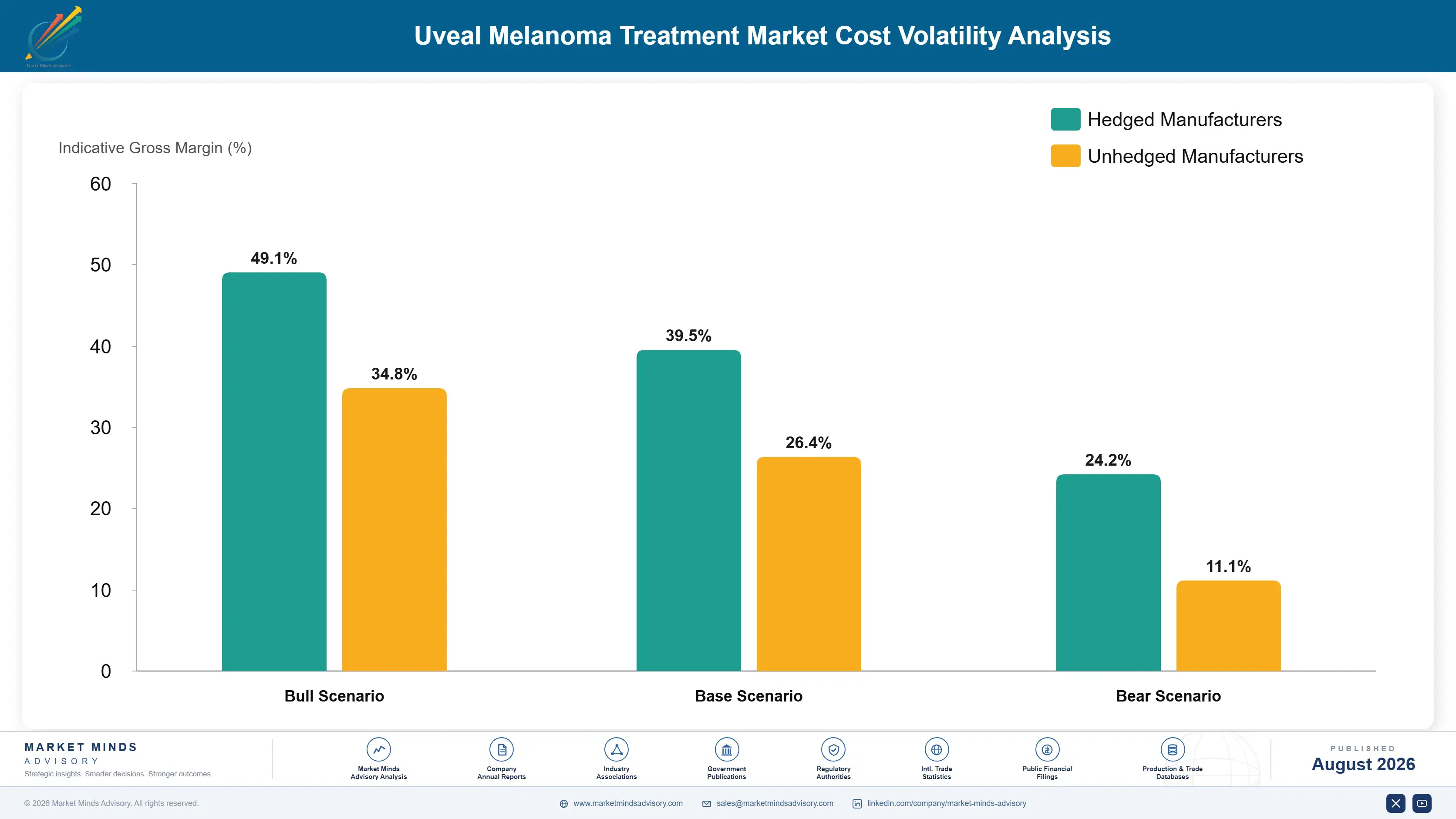
Cost structure differs completely between the two halves of this market. For the systemic therapy, biologics manufacture in mammalian cell culture accounts for roughly 22% of cost of goods, with fill finish, cold chain and quality release covering much of the rest, sourced from European and American contract manufacturers. For ocular radiotherapy the dominant input is isotope supply, principally iodine and ruthenium sources from a handful of reactors worldwide.
Medical isotope supply has been the fragile part for years, and reactor outages have repeatedly disrupted availability across nuclear medicine. Ageing research reactors in Europe and North America supply a disproportionate share of global demand, and unplanned maintenance at any one of them tightens supply everywhere within weeks. Company annual reports across the isotope sector documented the resulting price movement. Plaque brachytherapy programmes have postponed treatments during shortages.

Exposure divides by which half of the market a company sits in. A systemic therapy manufacturer carries biologics capacity risk and cold chain cost, both manageable and neither cheap. An isotope dependent radiotherapy supplier carries a genuine single point of failure it cannot engineer around, since building a reactor is not a commercial decision. Smaller markets sit last in allocation when supply tightens.
uveal-melanoma-treatment-market-cost-volatility-analysis-1787641251229

Contract isotope supply across multiple reactor sources

Suppliers holding allocation agreements with reactors on more than one continent avoid the worst of an unplanned outage, since maintenance schedules rarely coincide. The cost is a premium over spot purchasing and a commitment to volumes that may not be needed. For a brachytherapy programme the alternative is postponing treatment in a cancer where delay matters, which settles it.

Dual source biologics capacity before demand scales

Mammalian cell culture capacity for a therapy treating a rare disease is easy to secure until demand rises, at which point a single contract manufacturer becomes a constraint on growth rather than a supplier. Qualifying a second site requires comparability work over months and regulatory notification everywhere. Doing it before reimbursement expansion arrives is considerably cheaper.

Concentrate procedures at higher volume treatment centres

Liver directed perfusion outcomes correlate strongly with operator case volume, and occasional users report materially worse results than regular ones. Concentrating referrals at fewer centres improves outcomes, reduces per procedure cost through better utilisation of the system, and strengthens the evidence base that reimbursement decisions rest on. It also slows geographic expansion, which commercial teams generally dislike.

Portfolio Architecture for Margin Defence

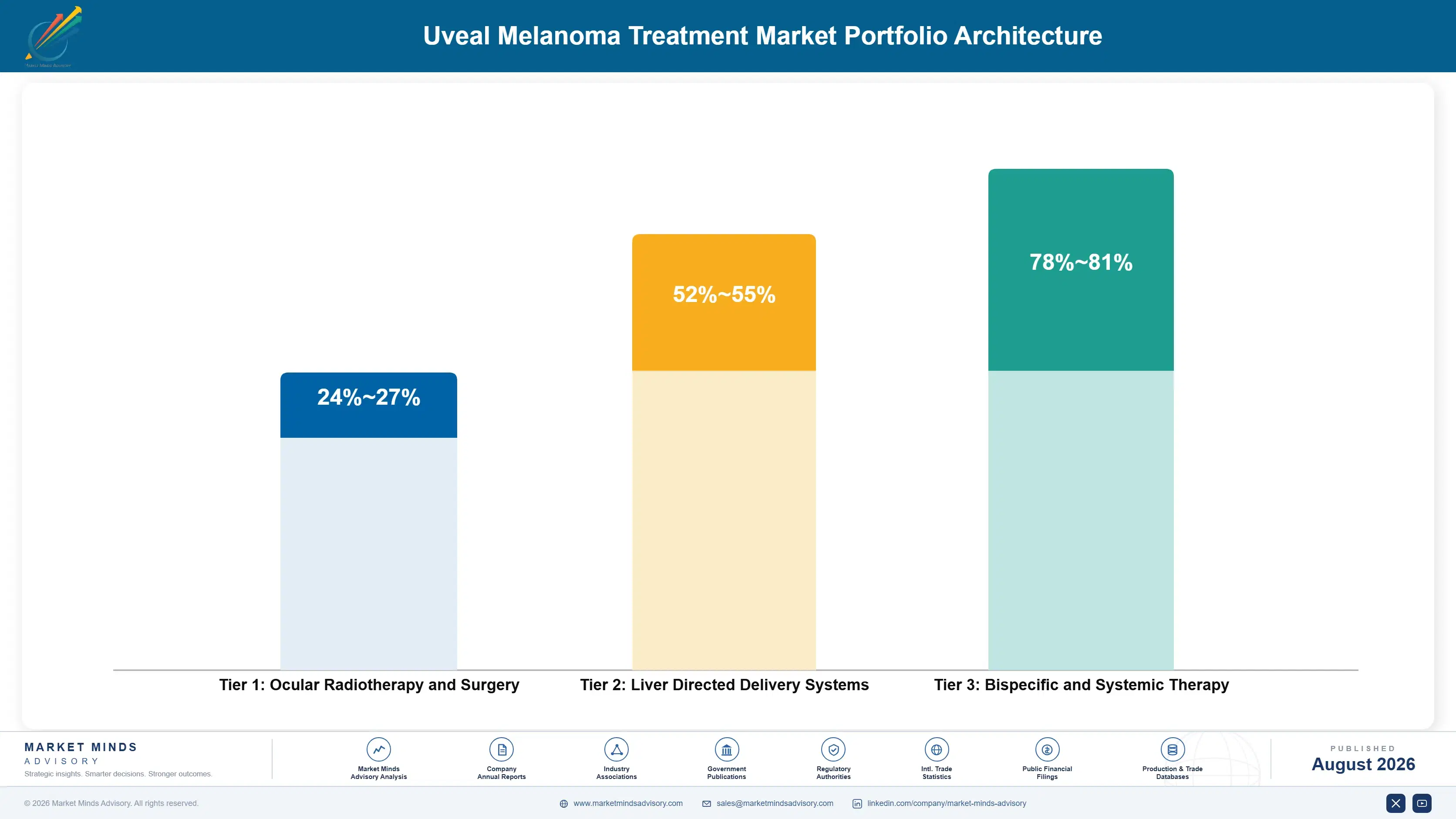
Margin architecture here divides along the line between a product and a procedure. The systemic therapy carries biologics economics, with gross margin among the highest in oncology once manufacturing scale is reached and a course price near 390,000 dollars behind it. Liver directed delivery earns device and disposable margins, which are good but not comparable. Ocular radiotherapy earns isotope and equipment margins, which are modest and have been for decades.
The tension is between margin and reach. The systemic therapy earns most and can treat fewer than half of patients worldwide because of genotype. Liver directed delivery earns less per patient and can reach almost everyone, since the anatomy does not vary by ancestry. Primary radiotherapy reaches every patient at diagnosis and earns least of all. Nothing in this market combines high margin with broad reach.

High value pools concentrate in metastatic systemic therapy for eligible patients and in liver directed delivery for everyone else, which together account for most of the value in a disease where local treatment has been effective and cheap for decades. Primary radiotherapy will remain a modest business regardless of what happens downstream, and no amount of equipment innovation changes that.

Ocular Radiotherapy and Surgery

Plaque brachytherapy sources, proton beam capacity and surgical enucleation, all mature and priced against established procedure reimbursement. Isotope supply constraints affect cost and availability more than any competitive dynamic does.
Gross Margin: 24-27%

Liver Directed Delivery Systems

Perfusion systems and single use disposables sold into interventional radiology suites at ocular oncology referral centres. Margin holds because operator proficiency and outcome data make centre relationships genuinely difficult for a competitor to displace.
Gross Margin: 52-55%

Bispecific and Systemic Therapy

Biologic systemic therapy priced near 390,000 dollars a course with the only randomised survival evidence in this disease. Margin is the best in the market and depends entirely on reimbursement listings holding at that price point.
Gross Margin: 78-81%
uveal-melanoma-treatment-market-portfolio-architecture-1787641251779

High-value Sub-segments and Strategic Watch-out

Bispecific T Cell Engager Therapy

The fastest growing modality at 20.4% and the only systemic option with randomised survival evidence behind it, which makes clinical position effectively uncontested for eligible patients. Genotype caps the addressable population near 45% of European descent patients, and no commercial activity changes that ceiling. Nothing raises it.
Gross Margin: 78-81%

Liver Directed Delivery and Perfusion

Second fastest at 16.8% and the only approach that reaches the majority of patients worldwide whom genotype excludes from systemic therapy. Roughly 90% of metastases go to the liver first, which makes the anatomical logic unusually clean and the competitive position genuinely defensible. Capability limits growth.
Gross Margin: 52-55%

Immune Checkpoint Inhibitor Therapy

Growing at 9.4% on off label use in patients without other options, despite response rates in uveal melanoma far below those seen in cutaneous disease. It persists because clinicians treating a patient with nothing else available will try something, which is not a durable commercial position.
Gross Margin: 68-71%

Ocular Plaque and Proton Radiotherapy

Growing at only 7.2% and structurally unable to grow faster, since it already controls more than 95% of primary tumours and incidence is not rising. Isotope supply fragility is the operational risk, and it has forced treatment postponements during reactor outages more than once. Supply risk persists.
Gross Margin: 24-27%

How Patients Reach This Market

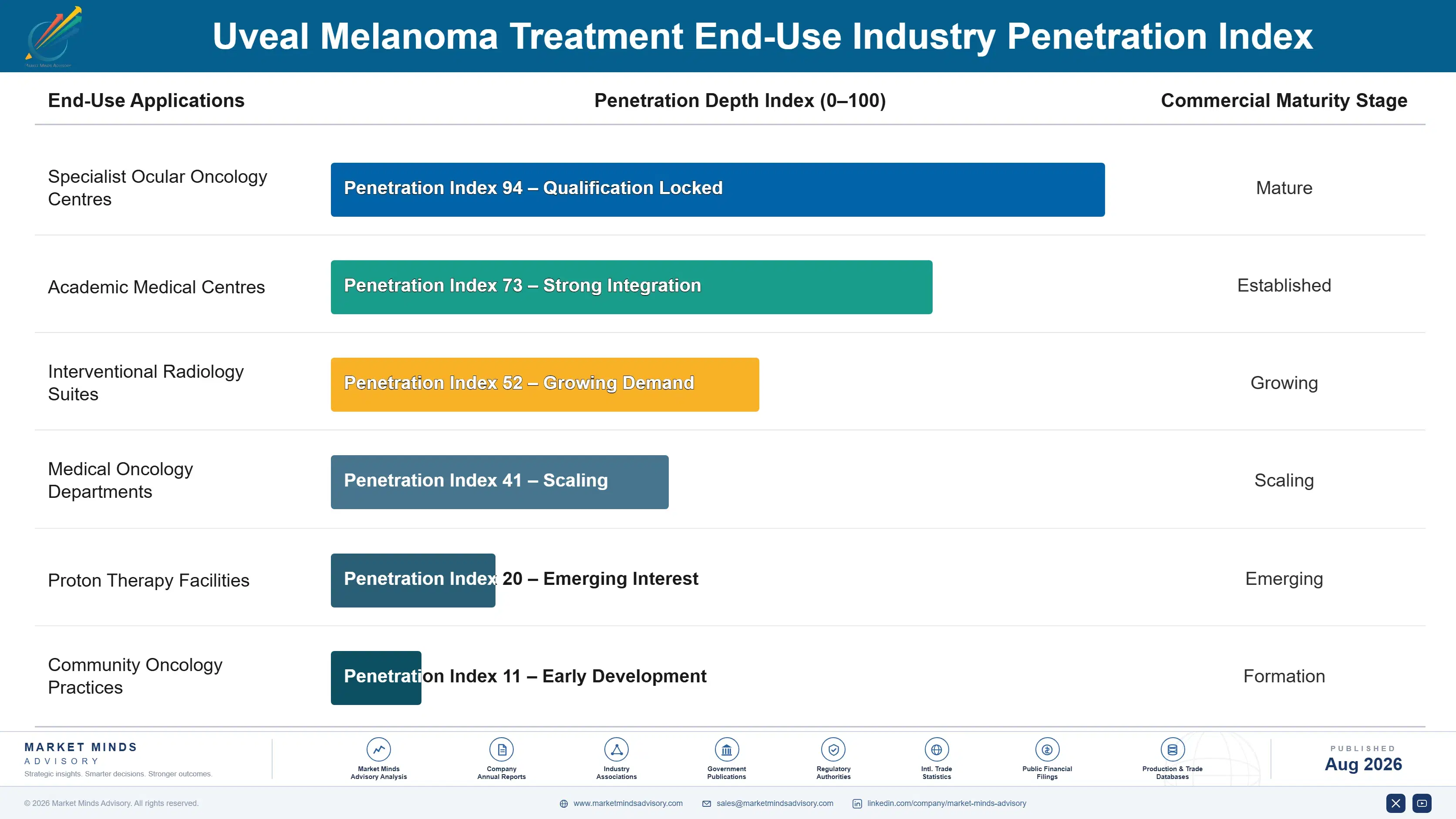
Demand in this disease arrives on a delay nobody else in oncology deals with. A patient treated for a primary tumour today may enter the metastatic market in five years or in fifteen, and roughly half never enter it at all. Today's diagnosed population is a forward order book with an uncertain delivery date, and prognostic testing is the only tool that sharpens the estimate.
Stickiness works differently here because the referral pathway is short and highly concentrated. Ocular oncology is practised at a modest number of specialist centres in each country, and those centres direct nearly every patient in their catchment. Winning a centre wins its whole referral population for years, since practice changes slowly in rare disease. There is almost no patient level marketing here.

The buyer has changed in an unusual direction. Treatment decisions once sat entirely with the ocular oncologist, who managed the eye and referred onward when metastasis appeared. They now involve medical oncologists, interventional radiologists and reimbursement committees from diagnosis onward, because prognostic testing identifies the future metastatic patient years ahead. Companies still selling only to the ocular oncologist are arriving in the wrong room.
uveal-melanoma-treatment-market-end-use-penetration-index-1787641252302

Where This Market Actually Pays

These are among the four positions where our research anticipates prominent divergence between winners and laggards over the coming forecast period. Each is grounded in the demand model, the regulatory perimeter, and the announced capacity pipeline.
01 / GENOTYPE LED PRIORITISATION

Population genetics, not wealth, sizes each market

The approved systemic therapy requires a tissue type carried by roughly 45% of people of European descent and by a considerably smaller minority elsewhere, which sets addressable population by ancestry rather than by health spending. Poland grows at 20.8%, faster than any country covered, because eligibility is high and listings are arriving, while several wealthier Asian markets will never justify comparable investment. Companies that sequenced launches on gross domestic product have misallocated commercial effort repeatedly, and each correction costs roughly a year.
02 / EXCLUDED PATIENT CAPTURE

The majority worldwide have no systemic option

More than half of all metastatic patients globally are excluded from the only approved systemic therapy by genotype alone, and that population has no alternative with randomised evidence behind it. Liver directed delivery grows at 16.8% because roughly 90% of metastases appear in the liver first, which makes an organ directed approach anatomically sound rather than merely available. The commercial position is unusually clean, since capturing those patients requires displacing nothing at all and competing against no approved product anywhere.
03 / REIMBURSEMENT ACCESS PRIORITY

A listing decision is worth more than a salesforce

Diagnosed patients in this disease already exist and have been waiting without options, so a national reimbursement listing converts a population into treated volume inside a quarter rather than over years. That makes health technology assessment submission quality the single highest value commercial activity available, well ahead of any field based effort. A course cost near 390,000 dollars means each negative decision removes an entire country until resubmission, and resubmissions take years that patients in this disease simply do not have available.
04 / DIAGNOSIS POINT POSITIONING

Reach the patient years before metastasis appears

Gene expression profiling at diagnosis identifies high risk patients roughly 5 years before metastasis, creating a defined surveillance population under hepatic imaging rather than a diffuse group of survivors. Metastases caught early respond considerably better to both liver directed and systemic treatment, which makes early identification clinically and commercially valuable at once. Companies present at ocular oncology centres from the point of diagnosis capture those patients at metastasis years later without ever having to compete for the referral at all.

Engagement Snapshot From the Field

A live engagement with an industry participant carrying material or product regulatory and market exposure ahead of a defining policy shift, showing how our research translates into a defensible multi-year portfolio strategy.
MARKET MINDS ADVISORY · CLIENT ENGAGEMENT SUMMARY
Uveal Melanoma Treatment Producer Strategic Portfolio Review and Transition Roadmap 2026·Investment Scenario on Uveal Melanoma Treatment Exposure Evaluation 2025-26
CLIENT PROFILE
A specialty oncology company holding a metastatic uveal melanoma therapy approved in several markets, with commercial operations across North America and Western Europe. Annual product revenue was approximately 340 million dollars (client-reported, unverified by MMA), concentrated in four countries. No presence existed in Eastern Europe or Latin America, and Asian market entry had been planned on economic size alone.
STRATEGIC CHALLENGE
Growth had slowed as the initial reimbursed markets converted their waiting patient populations, and the next wave of launches required committing resource across very different geographies. Management wanted to know which markets justified investment and in what order. The commercial plan ranked countries by health spending, and nobody had modelled eligibility by population genetics.
MMA APPROACH
MMA modelled eligible patient populations country by country using tissue type prevalence and uveal melanoma incidence data, rather than population size or health expenditure. Reimbursement pathway timelines and precedent decisions were mapped across nineteen national assessment bodies. Forty-seven expert interviews with ocular oncologists, medical oncologists and access specialists established how referral and funding decisions are actually made in each system.
KEY FINDINGS
  1. Eligible patient population in two prioritised Asian markets was roughly 70% smaller than the commercial plan assumed, because tissue type prevalence had never been applied to the estimate.
  2. Poland, Czechia and Hungary together carried an eligible population comparable to a large Western European market, with reimbursement pathways moving faster than expected.
  3. Treated volume rose within a single quarter of listing in 9 of the 11 markets examined, confirming that access rather than promotion drives adoption in this disease.
  4. Ocular oncology referral in every market examined ran through fewer than 12 specialist centres, making national field forces largely unnecessary above a small threshold.
CLIENT PROFILE
A specialty oncology company holding a metastatic uveal melanoma therapy approved in several markets, with commercial operations across North America and Western Europe. Annual product revenue was approximately 340 million dollars (client-reported, unverified by MMA), concentrated in four countries. No presence existed in Eastern Europe or Latin America, and Asian market entry had been planned on economic size alone.
STRATEGIC CHALLENGE
Growth had slowed as the initial reimbursed markets converted their waiting patient populations, and the next wave of launches required committing resource across very different geographies. Management wanted to know which markets justified investment and in what order. The commercial plan ranked countries by health spending, and nobody had modelled eligibility by population genetics.
MMA APPROACH
MMA modelled eligible patient populations country by country using tissue type prevalence and uveal melanoma incidence data, rather than population size or health expenditure. Reimbursement pathway timelines and precedent decisions were mapped across nineteen national assessment bodies. Forty-seven expert interviews with ocular oncologists, medical oncologists and access specialists established how referral and funding decisions are actually made in each system.
KEY FINDINGS
  1. Eligible patient population in two prioritised Asian markets was roughly 70% smaller than the commercial plan assumed, because tissue type prevalence had never been applied to the estimate.
  2. Poland, Czechia and Hungary together carried an eligible population comparable to a large Western European market, with reimbursement pathways moving faster than expected.
  3. Treated volume rose within a single quarter of listing in 9 of the 11 markets examined, confirming that access rather than promotion drives adoption in this disease.
  4. Ocular oncology referral in every market examined ran through fewer than 12 specialist centres, making national field forces largely unnecessary above a small threshold.
RECOMMENDED STRATEGY
Phase 1: Phase one: reprioritise launch sequencing on eligible population rather than health spending, which moves three Eastern European markets ahead of two Asian ones. Phase 2: Phase two: reduce planned field force in every market to coverage of the specialist centres that actually refer, since fewer than 12 exist in each. Phase 3: Phase three: redirect the resulting savings into health technology assessment submission quality, which converts populations far faster than promotional activity does.
OUTCOME
The client resequenced its launch plan within a quarter and secured Polish reimbursement ahead of the original schedule. Field force spend fell by roughly 40% while treated patient volume grew faster than in the preceding two years, and two Asian market entries were deferred indefinitely (client-reported, unverified by MMA).

Frequently Asked Questions

Foundational context covering the market sizes, CAGR, scope, country, region and competition that inform every finding below. This section is provided to cover basics and most often pre-purchase conversations, answered from the MMA Primary Research Dataset.

What is the current size of the Uveal Melanoma Treatment Market?

The market was valued at 0.78 billion dollars in 2025, covering primary ocular treatment and metastatic systemic and liver directed therapy. It reaches an estimated 0.89 billion dollars during 2026.

How large will the Uveal Melanoma Treatment Market be by 2036?

MMA forecasts 3.19 billion dollars by 2036, an increase of 2.30 billion dollars over the 2026 base. That represents an expansion multiple of 3.58 times across the forecast period.

What is the CAGR for the Uveal Melanoma Treatment Market 2026 to 2036?

The base case compound annual growth rate is 13.6%, with a bull case of 14.8% and a bear case of 12.2%. Genotype unrestricted therapy and reimbursement decisions separate those scenarios.

Which segment is growing fastest?

Bispecific T cell engager therapy grows at 20.4%, half again the market rate of 13.6%, as the only systemic option with randomised survival evidence. Liver directed delivery follows at 16.8%.

Who are the major companies in the Uveal Melanoma Treatment Market?

Immunocore Holdings, Delcath Systems, Bristol Myers Squibb, Merck and Eckert and Ziegler lead on treated patient volume and associated revenue. Together they account for 68% of the market.

Which country is growing fastest?

Poland grows fastest at 20.8%, because tissue type prevalence and disease incidence are both high across the population while reimbursement listings have only recently begun arriving.

Report Segmentation Architecture

The full report scope spans multiple orthogonal segmentation dimensions, with cross-tabulated demand data provided for each dimension pair. Coverage extends further to regional breakdowns, trend trajectories, and the competitive detail needed to support segment-level decision-making.

By Treatment Modality

  • Bispecific T Cell Engager Therapy
  • Liver Directed Delivery and Perfusion
  • Ocular Plaque and Proton Radiotherapy
  • Immune Checkpoint Inhibitor Therapy
  • Surgical Enucleation and Resection
  • Laser and Transpupillary Thermotherapy

By End-Use Industry

  • Specialist Ocular Oncology Centres
  • Academic Medical Centres
  • Interventional Radiology Suites
  • Medical Oncology Departments
  • Proton Therapy Facilities
  • Community Oncology Practices

By Commercial Dimension

  • National Reimbursement Listings
  • Private Insurance Coverage
  • Named Patient and Compassionate Access
  • Hospital Tender Procurement
  • Outcome Based Agreements
  • Clinical Trial Supply

By Region

  • North America
  • Western Europe
  • East Asia
  • South Asia and Pacific
  • Latin America
  • Middle East and Africa
  • Eastern Europe

Scope, Methodology, and Coverage

Every figure in this report is reproducible from documented input assumptions. The scope below maps the historical period, the forecast horizon, the segmentation dimensions, and the countries covered, alongside the underlying primary and qualitative methodology.
Historical Period
2020 to 2025
Forecast Period
2026 to 2036
Base Year
2025 (USD billions; MMA Primary Research Dataset, August 2026)
Market Definition
Therapies, devices and procedures used to treat primary and metastatic uveal melanoma worldwide, covering bispecific T cell engager systemic therapy, liver directed delivery and perfusion systems, ocular plaque brachytherapy and proton beam radiotherapy, immune checkpoint inhibitor therapy, surgical enucleation and resection, and laser and transpupillary thermotherapy. Measured at manufacturer and procedure revenue. Diagnostic imaging, prognostic gene expression testing, cutaneous and mucosal melanoma therapies, ocular prosthetics and supportive care are excluded from scope.
Quantitative Units
USD billions (current prices); patients treated; USD per treatment course by modality
Segmentation Dimensions
Treatment modality; end-use industry; commercial dimension; region
Regions Covered
North America, Western Europe, East Asia, South Asia and Pacific, Latin America, Middle East and Africa, Eastern Europe
Countries Covered
United States, Canada, United Kingdom, Germany, France, Italy, Spain, Denmark, Sweden, Netherlands, Poland, Czechia, Japan, China, South Korea, Australia, India, Brazil, Argentina, Israel
Key Companies Profiled
Immunocore Holdings, Delcath Systems, Bristol Myers Squibb, Merck, Eckert and Ziegler, IsoAid, Theragenics, Best Medical International, Ion Beam Applications, Varian Medical Systems, Elekta, Sirtex Medical, Boston Scientific, Terumo, Iovance Biotherapeutics, Replimune, Philogen, IDEAYA Biosciences, Pfizer, Novartis
Quantitative Methodology
Primary survey, n=3,800 respondents, Q4 2025, six countries; demand-side model with trade association cross-validation
Qualitative Methodology
47 expert interviews, Q4 2025; applied to validate demand model assumptions, identify emerging dynamics, and assess competitive positioning
Report Format
PDF and XLSX data workbook (Word format preview document)
Publisher
Market Minds Advisory
Report Code
MMA-2026-HLT-145
Published
August 2026
Contact
sales@marketmindsadvisory.com | www.marketmindsadvisory.com

Purchase the full Uveal Melanoma Treatment Market Report (2026 to 2036).

The full report treats uveal melanoma as a market defined by what happens after a successful primary treatment, since radiotherapy controls more than 95% of eye tumours and half of those patients develop metastases anyway. It sizes all six treatment modalities independently through 2036, models eligible patient populations country by country using tissue type prevalence rather than health spending, and maps reimbursement pathways across nineteen national assessment bodies. Regional chapters cover all seven regions, with population genetics assessed separately from access and incidence. Competitive profiling covers 20 participants on one consistent treated patient volume basis.
Six treatment modalities sized independently through 2036
Eligible populations modelled using tissue type prevalence data
Reimbursement pathways mapped across nineteen national assessment bodies
Liver directed and systemic approaches compared by patient segment
Referral centre concentration measured market by market
Twenty participants profiled on one consistent evaluation basis

Built For The People Who Decide

From boardroom strategy to bench-side execution, this report is read cover-to-cover by leaders shaping the next decade of their industry, turning demand scenarios, market dynamics and valuation benchmarks into decisions.
CXOs/ Presidents/ VPs/ Managers
M&A and Corporate Development
Strategy Teams and R&D Heads
Procurement and Product Directors
Regulatory and Compliance Leaders
Investor Relations and Equity Analysts