Market Minds Advisory
Utility-Scale Flexible Electrical Conduit Market

Utility-Scale Flexible Electrical Conduit Market: Utility-Scale Flexible Electrical Conduit Market: Tracker Whips, Domestic Content and Delivery Risk, 2026 to 2036

Single-axis tracker rows move every day and need a flexible connection at each one, turning a commodity raceway product into a consumable that solar construction schedules cannot be built without.

Lead Analyst

Published

September 2026

Make Smarter Decisions with Customized Research Insights

Request a free sample report and evaluate market opportunities, growth trends, and competitive dynamics relevant to your business needs.

2025 MARKET VALUE$1.4BMarket Size 2025
2036 FORECAST VALUE$3.3BBase Case , 2026 to 2036
CAGR 2026 TO 20368.2 %Bull 9.4% / Bear 7.0%
INCREMENTAL OPPORTUNITY$1.8BNet 10- year value creation
EXPANSION MULTIPLE2.20x2036 value over 2026 base
Strategic Levers
M&A Pipeline
Regional Outlook
Country Rankings
Competitive Intelligence
Segmental Deep-dive
Call-Us : 91 93563 13602

Executive Snapshot and Market Trajectory.

Flexible conduit became a solar consumable rather than an electrical accessory. A single-axis tracker row rotates through the day, so every row needs a flexible connection that a rigid raceway cannot provide, and utility plants now consume around 1.8 kilometres of it per megawatt. Nobody planned for that.
That mechanism sets the growth. Liquidtight flexible non-metallic conduit grows at 12.3%, half again the market rate of 8.2%, because it is the material tracker whips are actually specified in and because ultraviolet failures on early plants forced buyers toward properly rated product. Conduit represents about 1.4% of total plant capital cost, which is small enough that nobody optimises it and large enough that shortages stop work. Shortages have stopped commissioning on finished plants.
Five manufacturers hold 38% of measured shipment volume, and the contest is distribution reach rather than extrusion capability. Conduit is specified late, bought last and delivered against construction schedules that slip constantly, so availability beats price on most projects. United States domestic content rules carry a premium near 22% for qualifying product, which has reshaped North American sourcing entirely. Documented material origin now decides eligibility.
Market Definition
The utility-scale flexible electrical conduit market covers flexible raceway products used to route power and control cabling within generation, storage and transmission facilities of 1 MW and above, spanning liquidtight flexible non-metallic, PVC-coated flexible metal, liquidtight flexible metal, interlocked aluminium armour, corrugated high density polyethylene innerduct and stainless steel constructions. Sizing is measured at manufacturer shipment revenue. Rigid conduit, cable tray, busway, direct-buried cable, fittings and connectors sold separately, and installation labour are excluded.
Base Year Value
$1.4B in 2025 (MMA Primary Research Dataset, September 2026)
Forecast Period
2026 to 2036, eleven discrete annual values
CAGR
8.2% base case. Bull 9.4%. Bear 7.0%.
Fastest Growth Segment
Liquidtight Flexible Non-Metallic Conduit: 12.3% CAGR
Fastest Growth Country
India: 11.6% CAGR
Fastest Growth Region
South Asia and Pacific: 10.4% CAGR
Largest Region
East Asia: 35% of 2025 global value
Market Leaders
Atkore, ABB Installation Products, Electri-Flex Company, Anamet Electrical, Dura-Line. Source: MMA Analysis based on company annual reports and measured shipment volume.
Primary Survey
n=3,800 procurement and R&D decision-makers, Q4 2025, six countries
Methodology
Demand-side build-up, cross-validated against public data, 47 expert interviews

Utility-Scale Flexible Electrical Conduit Market Forecast Scenarios

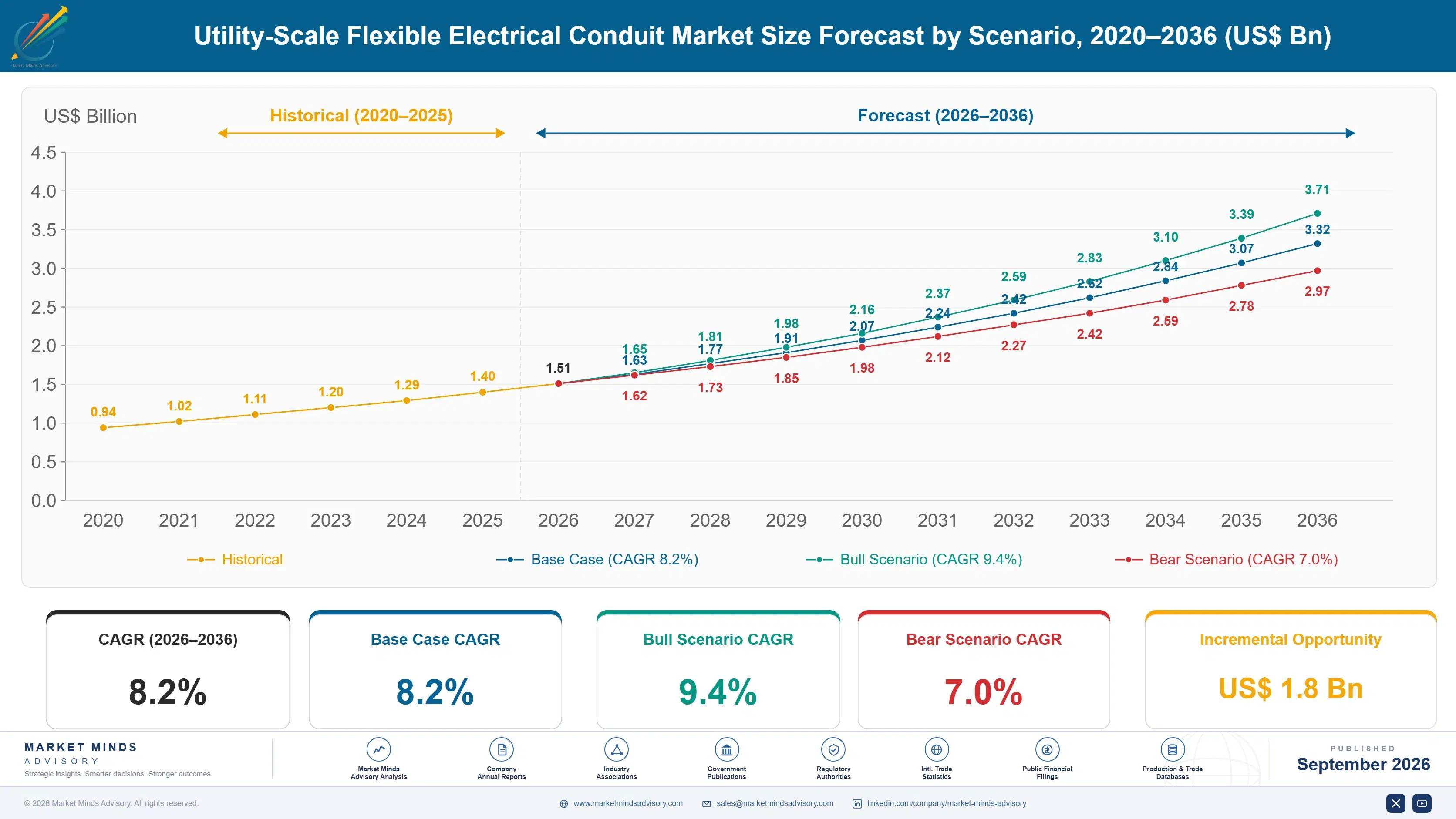
utility-scale-flexible-electrical-conduit-market-size-forecast-scenario-1788412488525
Between 2020 and 2025 the market compounded at 7.0%, tracking utility-scale solar and storage construction rather than any electrical industry cycle. Resin and steel pricing moved violently over the same window, which lifted revenue in years when volume was flat and depressed it when prices normalised. Several developers discovered mid-decade that conduit availability, not module supply, was holding up commissioning on projects that were otherwise complete.
The 8.2% base case rests on three commercial mechanisms. Tracker penetration continues to rise across utility-scale solar, and each tracker row carries a flexible whip that fixed-tilt plant does not need. Battery storage sites concentrate a great deal of cabling into small footprints, with conduit content per megawatt well above solar. And domestic content rules in the United States and India create a protected price band for qualifying product that importers cannot reach at any price.
The bull case is storage attachment rates on new solar rising faster than currently assumed, since storage carries substantially more conduit per megawatt than generation does. The bear case is developers moving toward pre-assembled wiring harnesses and direct-buried cable systems that engineer conduit out of the design entirely, which several large engineering contractors are already testing.

How A Raceway Became A Solar Consumable

A single-axis tracker rotates its module row from east to west across the day, so the connection between moving row and fixed collection system flexes hundreds of thousands of times. Rigid conduit cannot do that. Flexible conduit can, and utility-scale solar therefore consumes it at roughly 1.8 kilometres per megawatt, which turned a fitting-shop product into a bulk consumable bought by the container.
TOP FIVE CONCENTRATION38%Share of measured shipment volume held by leading manufacturers
PLANT COST SHARE1.4%Share of total plant capital cost represented by conduit
STANDARD ORDER LEAD TIME6 weeksTypical quoted delivery from order for standard catalogue product
RESIN COST SHARE46%Polymer resin as portion of finished non-metallic conduit cost
TRACKER CONDUIT CONTENT1.8 km/MWFlexible conduit length required per megawatt of tracker plant
DOMESTIC CONTENT PREMIUM22%Price premium for product meeting domestic content sourcing rules
The commercial character follows from where conduit sits in a project. It represents about 1.4% of plant capital cost, so nobody value-engineers it, and it is specified late in detailed design and ordered close to installation. Construction schedules slip constantly, which means orders arrive compressed and urgent. Distributors holding stock capture that business; manufacturers quoting a six week lead time do not, whatever their pricing looks like.
Material specification tightened after real failures. Early utility plants in desert conditions saw non-metallic conduit crack and degrade under ultraviolet exposure and daily thermal cycling that indoor-rated product was never designed for, and some of those failures required rework across entire rows. Sunlight resistance ratings and temperature range now appear explicitly in specifications, which pushed volume toward properly rated product and away from the cheapest available.
"What makes this market interesting is that nobody in it is trying to win on product. The material is understood, the standards are settled, and the whole contest is about whether a truck arrives at a site in Texas on the day the crew is standing there waiting for it."
Director, Electrical Infrastructure and Construction Products Practice · MMA Energy and Power Practice · September 2026

Market Trends

Tracker Penetration Converts Conduit Into A Volume Consumable

Fixed-tilt solar plant needs conduit at the combiner and inverter, and very little elsewhere. A single-axis tracker plant needs a flexible whip at every row, because the row moves and the cable has to move with it through several hundred thousand cycles. That takes consumption to roughly 1.8 kilometres per megawatt, an order of magnitude above what the same plant would have used a decade ago. Tracker share of new utility-scale solar keeps rising because the energy yield gain pays for the mechanism, and every point of tracker penetration converts directly into conduit volume nobody had to sell for.
Market Impact: Adds 3 circuits per container
Domestic Content Rules Create Protected Regional Pricing

United States tax credit adders for domestic content and Indian domestic manufacturing requirements both reward projects using locally made electrical components, and conduit qualifies. Qualifying product commands a premium near 22% over imported equivalent, which is enormous for a commodity extrusion. Manufacturers with domestic lines have added capacity specifically against it, and importers cannot reach those projects at any price at all. The rules also require documentation through the supply chain, which favours manufacturers who can trace resin and steel origin rather than simply asserting it. Documentation is now the barrier.
Market Impact: Covers 30 GW annual pipeline

Market Opportunities and Growth Drivers

Battery Storage Carries More Conduit Than Generation Does

A battery storage site concentrates enormous cabling into a small footprint, with each container requiring power, control, communications and safety circuits routed separately and flexibly enough to allow container removal for service. Conduit content per megawatt runs well above utility solar as a result. Storage attachment on new solar projects keeps rising as evening peak coverage becomes the point of the plant, and standalone storage procurement has moved to multi-gigawatt-hour scale in several markets. Each gigawatt hour of storage carries conduit demand that developers routinely underestimate at the budget stage.
Market Impact: Moves 46% of product cost

Indian Solar Buildout Runs On Domestic Component Rules

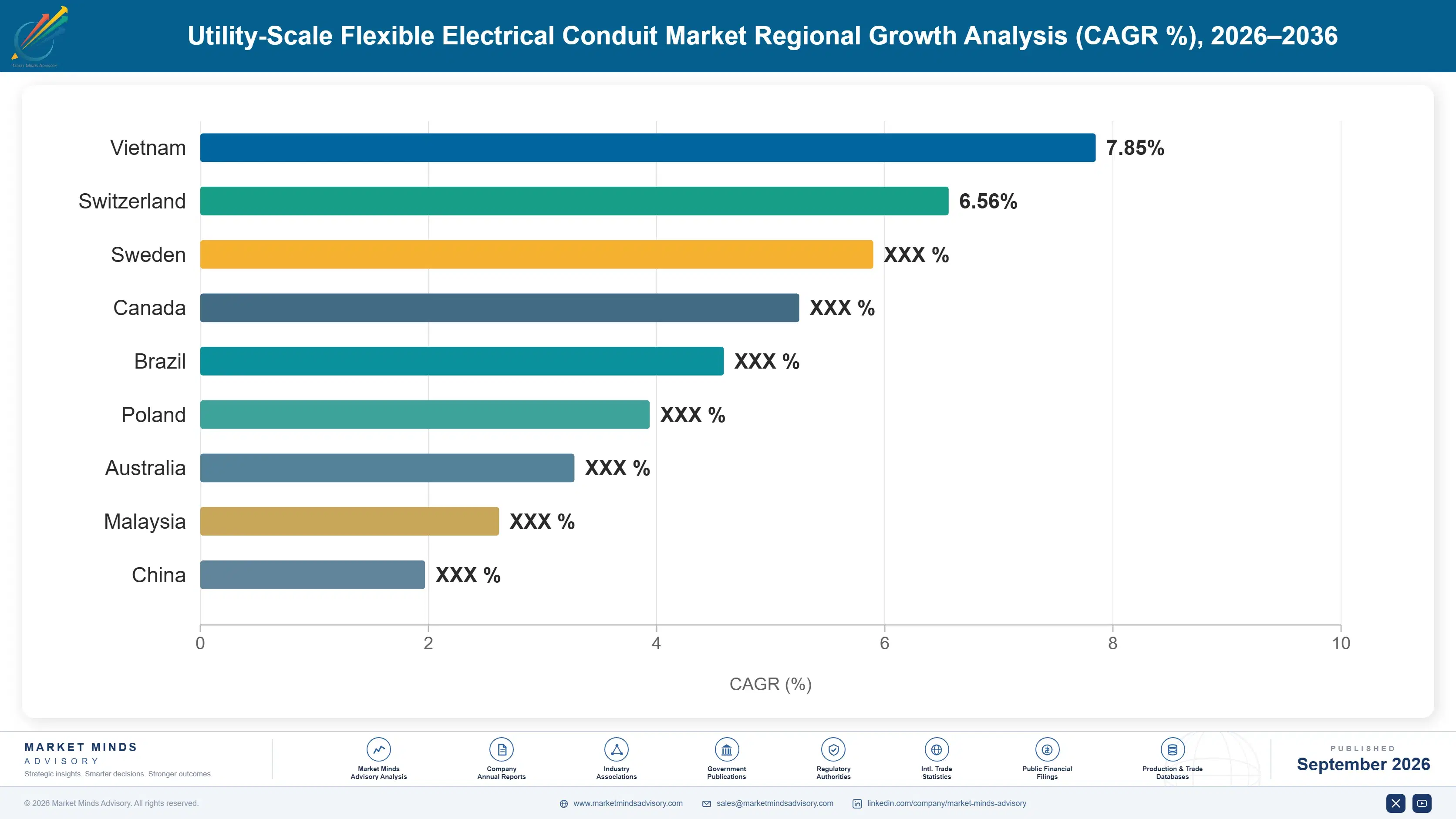
India is adding utility-scale solar at a pace second only to China, and domestic manufacturing requirements attached to government-supported projects extend well beyond modules into electrical balance of plant. Local extrusion capacity has grown against that demand, and imported conduit is effectively excluded from a large share of the pipeline. Growth of 11.6% makes India the fastest growing country in this market. The buyer is typically a large engineering contractor procuring across several projects at once rather than a site purchasing individually, which changes the commercial relationship entirely. Volume dwarfs the alternatives.
Market Impact: Removes 40% of install labour

Market Restraints and Challenges

Resin And Steel Pricing Swings Faster Than Contracts Adjust

Polymer resin accounts for roughly 46% of non-metallic conduit cost, and PVC and nylon pricing moved violently through the 2021 to 2023 period as feedstock and energy costs surged, with American Chemistry Council resin data documenting the movement. Galvanised steel strip for metallic conduit moved separately and no less sharply. The root cause is a product with high material content, thin conversion margin and customer contracts written months before delivery. Manufacturers mitigate through index-linked project pricing, resin purchasing agreements and shorter quotation validity periods, though distributors resist all three because they price to contractors on fixed terms.
Market Impact: Consumes 1.8 kilometres per megawatt

Engineering Contractors Are Designing Conduit Out

Several large solar engineering contractors are testing pre-assembled wiring harnesses, direct-buried cable systems and integrated tracker cable management that reduce or eliminate conduit from the design. The root cause is labour cost: installing conduit is slow field work performed by electricians in difficult conditions, and anything that moves that labour into a factory is commercially attractive. Commercial impact would be severe if adoption spreads beyond trials. Manufacturers are responding by supplying pre-cut and pre-assembled conduit assemblies themselves, which captures the labour saving rather than losing the volume to it. Volume follows the design.
Market Impact: Carries a 22% price premium
4 additional market trends, 3 additional growth drivers, and 2 additional restraints and challenges are covered in the full report. Contact sales@marketmindsadvisory.com to access the complete intelligence.

Segment CAGR and Growth Architecture

Segmentation follows conduit construction and material, which determines environmental rating, flexibility, cost and where in a plant the product can be used. Non-metallic, coated metallic, armoured and polyethylene constructions each occupy distinct positions, and specifications name them individually rather than describing performance requirements. Growth differs sharply between them, and substitution across constructions is rare once a specification names one.
utility-scale-flexible-electrical-conduit-market-market-share-analysis-1788412489059

Liquidtight Flexible Non-Metallic Conduit

This is the material tracker whips are specified in, and it carries most of the volume growth in the market as a result. A non-metallic construction flexes repeatedly without fatigue, resists the moisture and soil chemistry of a solar site, and costs considerably less than coated metallic equivalents. Sunlight resistance and temperature ratings became mandatory in specifications after early ultraviolet failures, which pushed volume toward properly rated product and away from the cheapest imports. Growth at 12.3% is half again the market rate of 8.2%. Resin at roughly 46% of cost makes this segment the most exposed to petrochemical price movement of any in the market. Import competition is severe wherever content rules permit it.
CAGR 12.3%

PVC-Coated Flexible Metal Conduit

Coated flexible metal serves the parts of a plant where mechanical protection matters more than cost: inverter skids, substation interfaces, battery container connections and anywhere rodent damage or vehicle movement is a genuine risk. The polyvinyl chloride jacket adds corrosion resistance in coastal and high-humidity sites where bare metallic conduit degrades quickly. Storage sites use it heavily because container removal for service demands both flexibility and physical durability. Growth at 9.6% tracks storage attachment rates closely. Pricing is roughly triple the non-metallic equivalent, which keeps it confined to applications where the specification genuinely requires it rather than spreading across whole plants. Specification position built over decades protects the established names here.
CAGR 9.6%
Full segment breakdown across 6 segments available in the complete report.

Regional Architecture and Country Demand Map

Demand follows utility-scale construction volume and local content rules rather than electricity consumption. East Asia leads because China builds more utility-scale solar and storage than the rest of the world combined and manufactures most of the conduit that goes into it. Content rules do the rest.

East Asia

China installs more utility-scale solar and storage than the rest of the world combined, and East Asia at 35% sits above the 30% ceiling of the standard band for exactly that reason. Domestic extrusion capacity is enormous and pricing is a fraction of Western levels, which also makes the region the source of most exported conduit. Tracker penetration on Chinese projects has risen quickly, converting fixed-tilt demand into whip demand across a very large pipeline. Japanese and Korean volumes are modest and specification driven, concentrated in storage and substation applications where material quality matters more than delivered cost does. Export volume follows the same cost position everywhere content rules permit it.
Share: 35% | CAGR: 9.0% (2026 to 2036)

North America

Domestic content adders under United States tax credit rules carry a premium near 22% for qualifying conduit, which has reshaped sourcing across the region completely and pulled extrusion capacity back onshore. Tracker penetration on American utility solar is among the highest anywhere, so conduit consumption per megawatt runs at the top of the range. The distribution model dominates here: contractors buy from stocking distributors against compressed schedules rather than from manufacturers directly. Storage attachment on new projects in Texas and California is lifting content per megawatt further, and interconnection queues suggest the pipeline is understated. Origin documentation has become as commercially important as the product itself, and suppliers who cannot produce it lose access to the best projects.
Share: 24% | CAGR: 8.6% (2026 to 2036)
Regional intelligence for 5 additional markets available in the complete report: South Asia and Pacific, Western Europe, Middle East and Africa, Latin America, Eastern Europe. Contact sales@marketmindsadvisory.com.
utility-scale-flexible-electrical-conduit-market-country-cagr-analysis-1788412489585

Where Conduit Margin Actually Comes From

Four positions carry margin in a product nobody buys on performance. Each rests on availability, documentation or assembly capability built before the order arrives, because conduit is specified late and bought urgently, and a manufacturer who is not already positioned cannot become so inside a project schedule. The product itself decides almost nothing here.

Hold Stock Where Schedules Actually Slip

Conduit is specified late and ordered close to installation, against construction programmes that slip constantly, so orders arrive compressed and urgent. A 6 week quoted lead time loses to stock on a shelf regardless of price, and contractors pay materially more for immediate availability without negotiating. Regional stocking positions near active pipelines convert that urgency into margin, and the working capital involved is modest against the premium earned. Manufacturers selling only on quoted lead times are competing for the small share of orders placed early. Placement of that stock matters far more than its volume.
Market Impact: Beats a 6 week quoted lead time outright

Qualify And Document Domestic Content Origin

Qualifying product commands a premium near 22% in the United States and reaches Indian projects that imports cannot access at all. The requirement is not merely domestic extrusion; it demands documented resin and steel origin through the supply chain, which manufacturers who buy opportunistically cannot produce. Building that traceability takes a supplier qualification programme rather than a certificate. Developers and their tax advisers now audit the documentation, and a supplier who cannot produce it costs the project its credit adder outright. A failed claim costs the project its adder, which nobody forgets.
Market Impact: Secures the full 22% domestic content price premium

Supply Pre-Assembled Whips Instead Of Bulk

Contractors are attacking conduit installation labour because it is slow field work in difficult conditions, and several engineering firms are testing designs that remove conduit entirely. Supplying pre-cut, pre-fitted tracker whips captures roughly 40% of that installation labour saving inside the product price rather than losing the volume to a competing design. It requires assembly capability and accurate project-specific data, which most extruders do not have. The manufacturers who move first take the value the contractor is currently trying to engineer away. Project-specific data has to come from the contractor early.
Market Impact: Captures 40% of the installation labour value directly

Index Project Pricing To Resin Movement

Resin at roughly 46% of non-metallic conduit cost, against thin conversion margin, means a fixed price quoted months before delivery is a bet rather than a commercial decision. Index-linked project pricing moves that exposure to the developer, who carries commodity risk across the whole project anyway and is better placed to absorb it. Distributors resist because they quote contractors on fixed terms. Selling direct to developers on large projects sidesteps that resistance entirely and is where the practice is spreading fastest. Large developers accept indexation more readily than distributors ever will.
Market Impact: Covers 46% of the product cost exposure properly

Who Controls the Margin Pool

Measured on shipment volume, the basis used throughout this section, the top five hold 38%. That is fragmented for an industrial product, and it reflects a market where regional distribution reach matters more than manufacturing scale. The gap between leaders and the rest is not extrusion capability, which is widely available. It is stocking depth near active project pipelines and the documentation to support domestic content claims.
Competition runs on availability, domestic content qualification and increasingly on pre-assembly capability rather than on price per metre. Distributors hold considerable power in North America and Europe, since contractors buy from stock rather than from manufacturers. Chinese producers hold volume and export aggressively wherever content rules do not exclude them. Indian manufacturers have grown quickly behind domestic requirements attached to government-supported project pipelines.

Pressure builds from two directions. Engineering contractors testing harness and direct-buried designs threaten the volume itself, and manufacturers who do not move into pre-assembly will watch that value migrate elsewhere. And domestic content rules are fragmenting a market that used to trade globally, rewarding regional producers over efficient exporters. Rankings shift where manufacturers built stocking positions and traceability rather than chasing extrusion cost.
utility-scale-flexible-electrical-conduit-market-company-positioning-matrix-1788412490108

Competitive Moat and Risk Dimensions

ATKORE

Moat: Domestic manufacturing and distribution depth

Extensive United States extrusion and metal forming capacity paired with deep distributor relationships gives the company both domestic content qualification and the stocking reach that urgent orders require. Documented material origin through its own supply chain is something opportunistic buyers cannot replicate. That combination captures the premium and the urgency at the same time, which few competitors manage.
ATKORE

Risk: Exposure to resin price normalisation

Earnings through recent years benefited from elevated PVC pricing that lifted revenue without volume growth, and normalisation removes that support entirely. The company also depends heavily on a North American construction pipeline that interconnection queues and policy continuity both influence. Domestic content advantage would erode quickly if the credit rules that create it were revised or allowed to lapse.
ABB INSTALLATION PRODUCTS

Moat: Specification position across brands

Long-established brands appear by name in engineering specifications and owner's engineer standards, which means the product is often selected before any competitive comparison happens. Coated metallic products in particular hold specification positions built over decades in harsh environment applications. Global manufacturing lets the company serve domestic content requirements in several jurisdictions at once, which purely regional producers cannot do.
ABB INSTALLATION PRODUCTS

Risk: Premium position against commodity pricing

Specification-led positions are strongest in coated metallic products, which is the slower growing part of the market, while the fastest growth sits in non-metallic conduit where price competition is severe and brand carries far less weight. Chinese and Indian producers compete effectively there. Defending specification position requires continued engagement with engineering firms that is expensive to sustain across many markets.

Players Tracked

Prominent Players

Atkore
ABB Installation Products
Electri-Flex Company
Anamet Electrical
Dura-Line

Other Key Players

Southwire
Cantex
JM Eagle
Wheatland Tube
Champion Fiberglass
HellermannTyton
Flexicon
Kopex International
Delikon Electrical Steel Conduit
International Metal Hose
Legrand
Prysmian
Zhejiang Kaibo Pipe Industry
Hebei Chongyi Pipe Manufacturing
Ningbo Rongxin Electrical

Recent Developments

FEBRUARY 2025

Atkore reports polyvinyl chloride pricing normalisation across conduit

Reported results described continued normalisation of polyvinyl chloride conduit pricing following several years of elevated levels, with volume holding while realised pricing declined. Management pointed to solar and data centre construction as the demand areas supporting volume through the period. Volume held while realised pricing fell.
Signal: Revenue in this market has been carried by material pricing far more than by any underlying volume growth.
AUGUST 2024

Manufacturer commissions additional domestic extrusion capacity

A conduit manufacturer commissioned an additional United States extrusion line, an organic capacity expansion rather than any acquisition, positioned explicitly against domestic content requirements attached to federal clean energy tax credits and the traceability documentation those requirements demand. Traceability was cited as the harder requirement to satisfy.
Signal: Tax credit adders have pulled commodity extrusion capacity back onshore in a way freight economics never would.
MAY 2025

Solar engineering contractor signs multi-project conduit supply agreement

A large American solar engineering contractor signed a multi-year supply agreement covering flexible conduit across a portfolio of projects, a supply agreement rather than any joint venture. Delivery commitments against shifting construction schedules were reported as the central negotiated term. Pricing terms were secondary throughout.
Signal: Contractors are now buying certainty of delivery rather than price, which changes what suppliers must actually offer.

Resin, Steel Strip And Freight

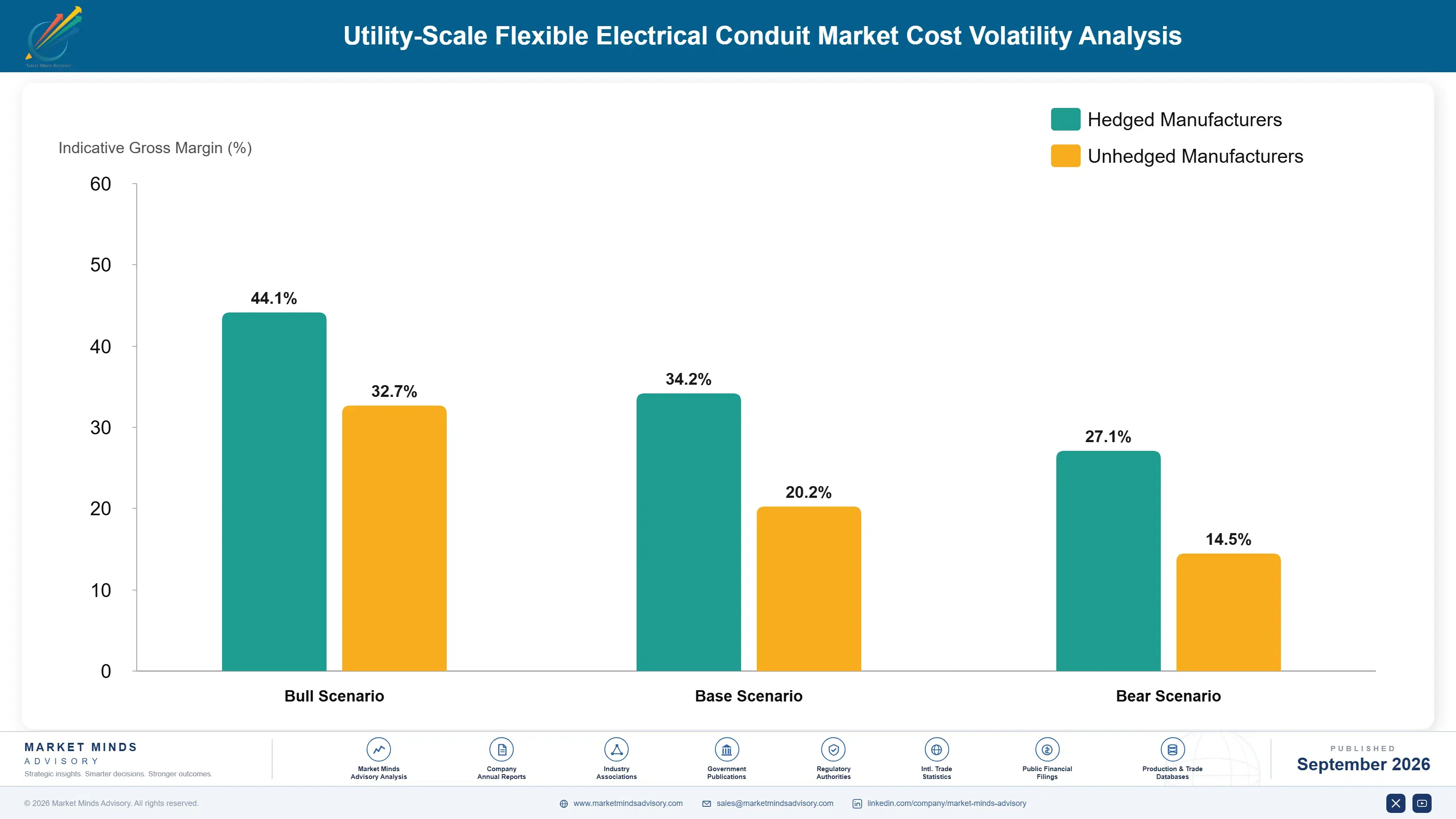
Polymer resin accounts for roughly 46% of non-metallic conduit cost, galvanised steel strip around 41% of metallic product cost, and freight between 8 and 14% depending on distance and product density. Polyvinyl chloride and nylon resin depend on ethylene and chlorine feedstock whose pricing follows natural gas and naphtha, which EIA energy price reporting tracks directly across the relevant producing regions.
Resin pricing moved violently through the 2021 to 2023 period as feedstock and energy costs surged, with American Chemistry Council data documenting the movement. Conduit manufacturers who had quoted projects on fixed terms months ahead absorbed the difference, and several disclosed margin pressure in results covering that period. The subsequent normalisation reduced revenue without any loss of volume, which caught investors reading the top line rather than the tonnage.

The disadvantage mechanism is contract structure rather than purchasing scale. A manufacturer with index-linked project pricing and resin supply agreements passes movement through; one quoting fixed prices to distributors months ahead of delivery absorbs it entirely. Freight exposure varies enormously by product, since conduit is bulky and light and shipping costs approach material costs on long routes. That is why regional extrusion beats efficient distant production almost everywhere.
utility-scale-flexible-electrical-conduit-market-cost-volatility-analysis-1788412490302

Index-linked project pricing on long lead orders

Tying project pricing to published resin indices moves feedstock movement to the developer, who already carries commodity exposure across the whole project and absorbs it more easily. Distributors resist because they quote contractors on fixed terms, so the practice spreads fastest on direct sales to developers on large projects. Large developers accept it readily.

Shorter quotation validity on volatile products

Reducing quotation validity from ninety days to thirty on resin-heavy products limits the exposure window considerably without requiring any customer to accept indexation. Contractors dislike it because it complicates their own bidding, which is why it works best where the manufacturer holds a genuine availability advantage. It works poorly without an availability advantage behind it.

Regional extrusion against freight exposure

Conduit is bulky and light, so freight approaches material cost on long routes and erases any advantage from cheaper distant production. Extruding within the region served removes that exposure entirely and simultaneously satisfies domestic content requirements, which is why regional capacity keeps being added despite apparently higher conversion costs. Content rules reward it twice over.

Portfolio Architecture for Margin Defence

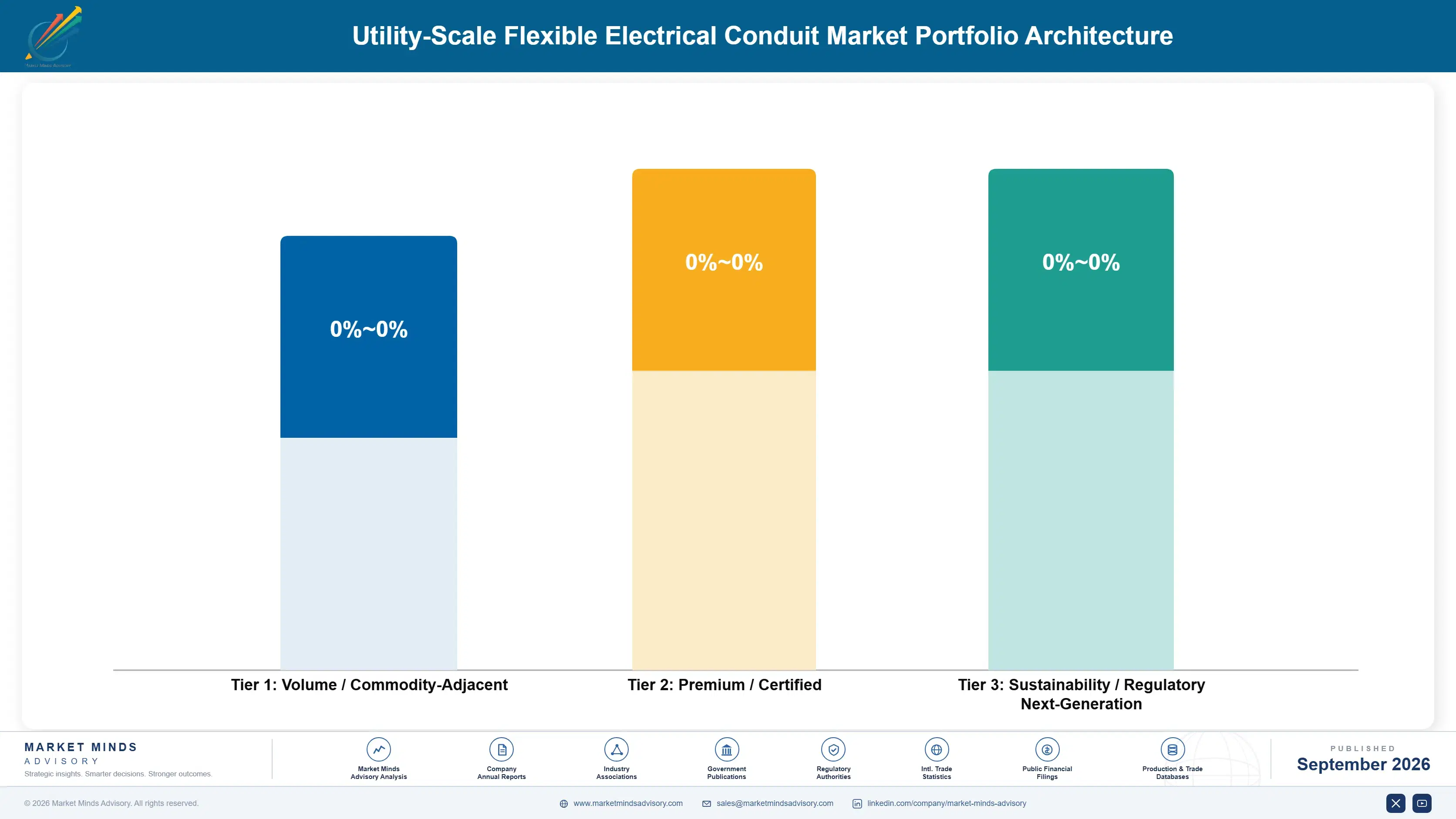
Margin separates by whether the product is bought on availability or on price per metre. Bulk non-metallic conduit ordered early against a defined schedule is a commodity, quoted against several suppliers and won on cents. The same product supplied from stock to a contractor whose crew is already on site earns a materially different price, and the difference has nothing to do with the product itself.
The volume against premium tension runs through inventory rather than through product mix. Holding stock near active pipelines captures the urgent orders that carry margin, but it ties working capital to a forecast of where construction will actually happen, and construction moves. Manufacturers who hold too little watch distributors capture the value; those who hold too much in the wrong region carry it for years. Placement decides the outcome far more than volume does.

High-value pools sit where documentation, assembly or availability create a barrier: domestic content qualified product with traceable origin, pre-assembled tracker whips, and stock positioned against gigascale project schedules. None is defended by product technology, which is freely available. All three are defended by commitments made before the order exists.

Volume / Commodity-Adjacent

Bulk non-metallic and corrugated polyethylene conduit ordered early against defined schedules and quoted competitively on price per metre. Margin depends on resin purchasing terms and extrusion utilisation rather than on anything the customer values.
Gross Margin: 13 to 19%

Premium / Certified

Coated metallic and specification-named product for harsh environment, storage and substation applications. The 8 point range reflects how much of the price reflects genuine specification position rather than simply being the available option on the day.
Gross Margin: 22 to 30%

Sustainability / Regulatory / Next-Generation

Domestic content qualified product with documented origin, and pre-assembled tracker whip assemblies capturing installation labour. The 10 point range reflects how differently content premiums and assembly value land across individual projects and jurisdictions.
Gross Margin: 28 to 38%
utility-scale-flexible-electrical-conduit-market-portfolio-architecture-1788412490800

High-value Sub-segments and Strategic Watch-out

Domestic Content Qualified Product

Highest margin position available, carrying a premium near 22% and reaching projects imports cannot access at all. It rests entirely on tax credit rules continuing, which makes the capacity committed against it a political rather than commercial exposure. Nothing about the product itself defends it.
Gross Margin: 30 to 38%

Pre-Assembled Tracker Whips

Captures installation labour value that contractors are currently trying to engineer out of the design entirely. Requires assembly capability and project-specific data that most extruders lack, which is exactly what keeps the position defensible for those who build it. Contractors are actively trying to remove the volume.
Gross Margin: 27 to 35%

Bulk Non-Metallic Conduit

The volume core carrying most tonnage and keeping extrusion lines loaded, sold on price per metre against several qualified suppliers. Necessary for scale rather than attractive on returns, and the segment most exposed to resin price movement. Extrusion utilisation decides whether it earns anything at all.
Gross Margin: 13 to 19%

Imported Uncertified Product

Excluded from domestic content projects and increasingly from specifications that now name sunlight resistance and temperature ratings explicitly. Revenue continues in price-driven markets, but no manufacturer should commit new capacity against a position this exposed. The specification changes that closed this position are permanent ones.
Gross Margin: 8 to 14%

Who Buys And When

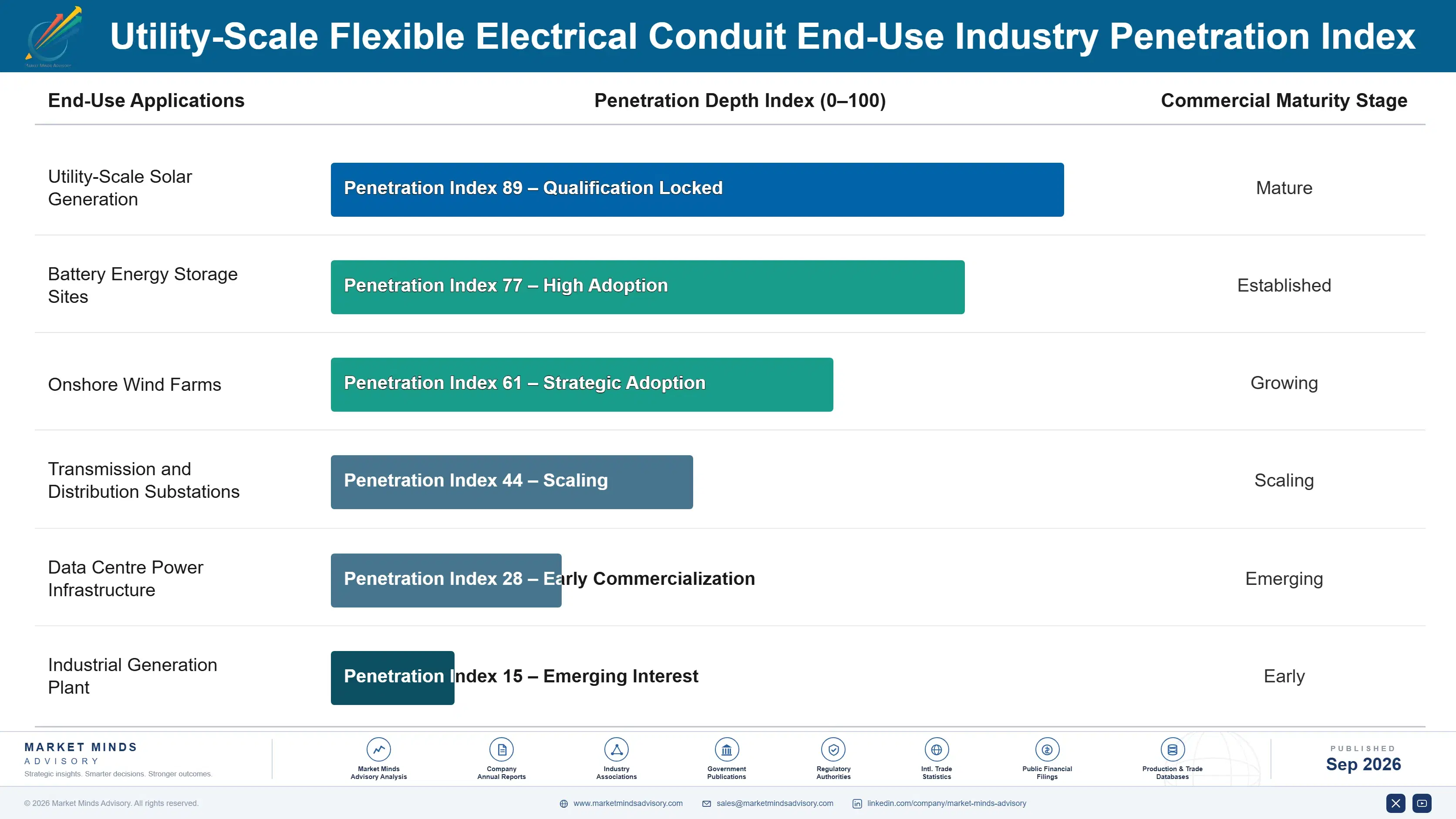
There is no replacement cycle here at all. Conduit is installed once and stays, so every metre sold is new construction. What creates recurring economics instead is the multi-project supply agreement: a contractor building a portfolio commits volume across several sites, and the supplier holding it captures each project without bidding. Those agreements now turn on delivery commitments rather than on price per metre.
Adoption depth varies sharply by buyer type. Large engineering contractors specify deeply, naming material ratings, testing requirements and origin documentation, and they audit compliance because a failed domestic content claim costs the project its credit adder. Smaller contractors buy from whatever distributor has stock and treat products as interchangeable. Gulf and Indian gigascale developers sit apart, committing production capacity months ahead in quantities no distributor could supply.

The buyer profile has shifted meaningfully. Conduit was once specified by an electrical designer and bought by a site purchasing clerk on price. It now sits with procurement organisations managing schedule risk across portfolios, and with tax advisers checking origin documentation that never used to matter. Both ask questions about supply chain and delivery certainty rather than about product, which favours suppliers who can answer them in writing.
utility-scale-flexible-electrical-conduit-market-end-use-penetration-index-1788412491288

Where Suppliers Should Compete

These are among the four positions where our research anticipates prominent divergence between winners and laggards over the coming forecast period. Each is grounded in the demand model, the regulatory perimeter, and the announced capacity pipeline.
01 / INVENTORY PLACEMENT DISCIPLINE

Hold stock near pipelines, not near factories

Conduit is specified late and ordered urgently against construction programmes that slip constantly, so a six week quoted lead time loses to stock on a shelf regardless of what the price says. Regional stocking near active project pipelines converts that urgency into margin for a working capital commitment that is modest against the premium earned. Manufacturers selling only on quoted lead times are competing for the small minority of orders that were ever placed early enough to matter at all.
02 / ORIGIN DOCUMENTATION CAPABILITY

Build traceability before the auditor asks for it

Domestic content qualification commands a premium near 22% and reaches projects that imported product cannot access at any price at all, whatever the manufacturing cost advantage looks like. The requirement extends beyond local extrusion to documented resin and steel origin through the whole supply chain, which manufacturers buying opportunistically on the spot market simply cannot produce afterwards. Developers and their tax advisers audit it directly, and a supplier who fails costs the project its credit adder outright, which nobody forgets.
03 / ASSEMBLY VALUE CAPTURE

Sell finished whips before contractors remove conduit

Engineering contractors are attacking conduit installation labour because it is slow field work in difficult conditions, and several are testing designs that eliminate the product from the plant design entirely. Supplying pre-cut and pre-fitted tracker whips captures roughly 40% of that labour value inside the product price instead of losing the volume outright to a competing design that removes conduit. Most extruders lack the assembly capability, which is precisely what makes the position worth taking while it is still open.
04 / RESIN EXPOSURE STRUCTURE

Index long-dated project quotes to resin

Resin represents roughly 46% of non-metallic conduit cost against a thin conversion margin, so a fixed price quoted months before delivery is a commodity bet rather than any kind of commercial decision. Developers already carry commodity exposure across the whole project and absorb indexation far more comfortably than a conduit manufacturer holding no hedge at all can. Distributor resistance is real, which is why the practice spreads fastest on direct sales into large projects where no distributor sits in between.

Engagement Snapshot From the Field

A live engagement with an industry participant carrying material or product regulatory and market exposure ahead of a defining policy shift, showing how our research translates into a defensible multi-year portfolio strategy.
MARKET MINDS ADVISORY · CLIENT ENGAGEMENT SUMMARY
Utility-Scale Flexible Electrical Conduit Producer Strategic Portfolio Review and Transition Roadmap 2026·Investment Scenario on Utility-Scale Flexible Electrical Conduit Exposure Evaluation 2025-26
CLIENT PROFILE
A solar engineering, procurement and construction contractor building utility-scale projects across the southern United States, with annual revenue reported at approximately USD 1.9 billion (client-reported, unverified by MMA). Electrical balance of plant was procured project by project through regional stocking distributors, with conduit treated as a commodity purchase requiring no particular management attention at all.
STRATEGIC CHALLENGE
Two projects had been delayed by conduit availability after schedule changes compressed the ordering window, and a third had lost its domestic content credit adder because a supplier could not document resin origin. Management could not tell whether the answer was holding inventory, changing suppliers or redesigning to use less conduit altogether.
MMA APPROACH
MMA modelled conduit consumption per megawatt across the client's project types, mapped supplier domestic content documentation capability against actual credit requirements, and priced the labour content of field conduit installation against pre-assembled alternatives. Distributor stocking positions near the client's pipeline were assessed directly rather than taken on assurance. Tax adviser requirements were confirmed directly.
KEY FINDINGS
  1. Conduit represented about 1.4% of plant capital cost but had caused schedule delay on two projects, making it a disproportionate risk relative to any procurement attention it received.
  2. Only two of the seven suppliers used could document resin and steel origin to the standard the client's tax advisers actually required for a domestic content claim to survive audit.
  3. Pre-assembled tracker whips would remove roughly 40% of conduit installation labour, worth considerably more than the assembly premium suppliers were quoting for the service.
  4. Distributor stock near the client's Texas pipeline was thinner than assumed, and the apparent availability advantage of buying locally did not survive examination at project scale.
CLIENT PROFILE
A solar engineering, procurement and construction contractor building utility-scale projects across the southern United States, with annual revenue reported at approximately USD 1.9 billion (client-reported, unverified by MMA). Electrical balance of plant was procured project by project through regional stocking distributors, with conduit treated as a commodity purchase requiring no particular management attention at all.
STRATEGIC CHALLENGE
Two projects had been delayed by conduit availability after schedule changes compressed the ordering window, and a third had lost its domestic content credit adder because a supplier could not document resin origin. Management could not tell whether the answer was holding inventory, changing suppliers or redesigning to use less conduit altogether.
MMA APPROACH
MMA modelled conduit consumption per megawatt across the client's project types, mapped supplier domestic content documentation capability against actual credit requirements, and priced the labour content of field conduit installation against pre-assembled alternatives. Distributor stocking positions near the client's pipeline were assessed directly rather than taken on assurance. Tax adviser requirements were confirmed directly.
KEY FINDINGS
  1. Conduit represented about 1.4% of plant capital cost but had caused schedule delay on two projects, making it a disproportionate risk relative to any procurement attention it received.
  2. Only two of the seven suppliers used could document resin and steel origin to the standard the client's tax advisers actually required for a domestic content claim to survive audit.
  3. Pre-assembled tracker whips would remove roughly 40% of conduit installation labour, worth considerably more than the assembly premium suppliers were quoting for the service.
  4. Distributor stock near the client's Texas pipeline was thinner than assumed, and the apparent availability advantage of buying locally did not survive examination at project scale.
RECOMMENDED STRATEGY
Phase 1: Phase one: consolidate conduit purchasing to the two suppliers with audited origin documentation, accepting a modest unit price increase across the portfolio. Phase 2: Phase two: negotiate a multi-project supply agreement with delivery commitments and committed stock holding written into the terms rather than assumed. Phase 3: Phase three: convert tracker whip supply to pre-assembled units on new projects and reallocate the field labour saved to other electrical scope.
OUTCOME
Within eight months the client had consolidated to two documented suppliers, secured committed stock holding under a portfolio agreement, and reported electrical balance of plant installation hours down 9% on projects using pre-assembled whips (client-reported, unverified by MMA). No further domestic content claims have been lost since the change.

Frequently Asked Questions

Foundational context covering the market sizes, CAGR, scope, country, region and competition that inform every finding below. This section is provided to cover basics and most often pre-purchase conversations, answered from the MMA Primary Research Dataset.

What is the current size of the Utility-Scale Flexible Electrical Conduit Market?

The market was valued at USD 1.4 billion in 2025 and reaches USD 1.51 billion in 2026. Demand tracks utility-scale solar and storage construction rather than any electrical industry cycle.

How large will the Utility-Scale Flexible Electrical Conduit Market be by 2036?

MMA forecasts USD 3.32 billion by 2036, an increase of USD 1.81 billion over the 2026 base. That represents an expansion multiple of 2.20 times.

What is the CAGR for the Utility-Scale Flexible Electrical Conduit Market 2026 to 2036?

The base case CAGR is 8.2%, with a bull case of 9.4% and a bear case of 7.0%. The historical rate between 2020 and 2025 was 7.0%.

Which segment is growing fastest?

Liquidtight flexible non-metallic conduit grows at 12.3%, half again the market rate of 8.2%. It is the material single-axis tracker whips are specified in almost universally.

Who are the major companies in the Utility-Scale Flexible Electrical Conduit Market?

Atkore, ABB Installation Products, Electri-Flex Company, Anamet Electrical and Dura-Line lead on measured shipment volume. Together they account for roughly 38% of the market today.

Which country is growing fastest?

India grows fastest at 11.6%, driven by utility-scale solar additions second only to China and by domestic manufacturing requirements extending into electrical balance of plant.

Report Segmentation Architecture

The full report scope spans multiple orthogonal segmentation dimensions, with cross-tabulated demand data provided for each dimension pair. Coverage extends further to regional breakdowns, trend trajectories, and the competitive detail needed to support segment-level decision-making.

By Conduit Construction and Material

  • Liquidtight Flexible Non-Metallic
  • PVC-Coated Flexible Metal
  • Liquidtight Flexible Metal
  • Interlocked Aluminium Armour
  • Corrugated Polyethylene Innerduct
  • Stainless Steel Flexible

By End-Use Industry

  • Utility-Scale Solar Generation
  • Battery Energy Storage Sites
  • Onshore Wind Farms
  • Transmission and Distribution Substations
  • Data Centre Power Infrastructure
  • Industrial Generation Plant

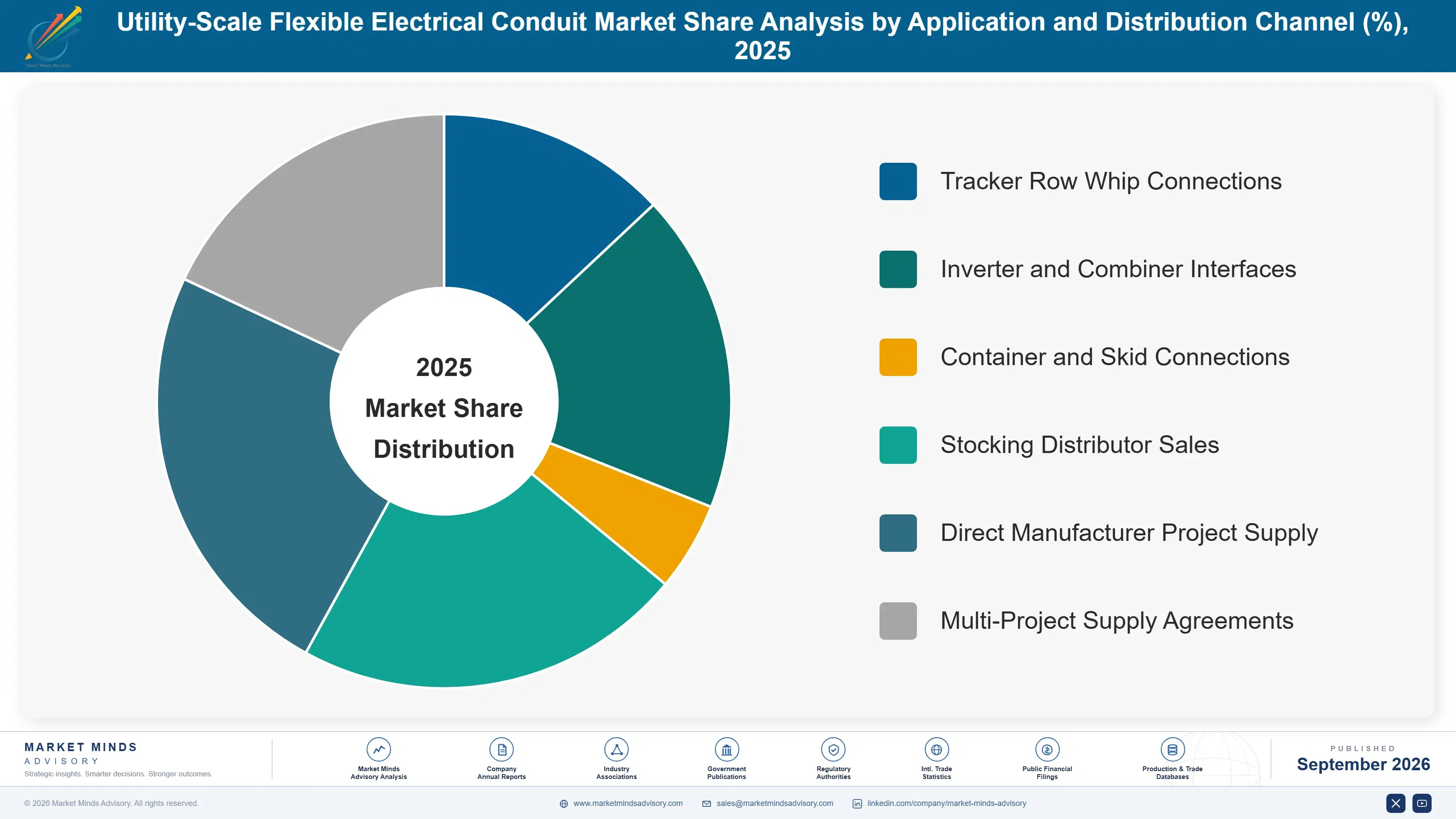
By Application and Distribution Channel

  • Tracker Row Whip Connections
  • Inverter and Combiner Interfaces
  • Container and Skid Connections
  • Stocking Distributor Sales
  • Direct Manufacturer Project Supply
  • Multi-Project Supply Agreements

By Region

  • East Asia
  • North America
  • South Asia and Pacific
  • Western Europe
  • Middle East and Africa
  • Latin America
  • Eastern Europe

Scope, Methodology, and Coverage

Every figure in this report is reproducible from documented input assumptions. The scope below maps the historical period, the forecast horizon, the segmentation dimensions, and the countries covered, alongside the underlying primary and qualitative methodology.
Historical Period
2020 to 2025
Forecast Period
2026 to 2036
Base Year
2025 (USD billions; MMA Primary Research Dataset, September 2026)
Market Definition
The utility-scale flexible electrical conduit market covers flexible raceway products used to route power and control cabling within generation, storage and transmission facilities of 1 MW and above, spanning liquidtight flexible non-metallic, PVC-coated flexible metal, liquidtight flexible metal, interlocked aluminium armour, corrugated high density polyethylene innerduct and stainless steel constructions. Sizing is measured at manufacturer shipment revenue. Rigid conduit, cable tray, busway, direct-buried cable, fittings and connectors sold separately, and installation labour are excluded.
Quantitative Units
USD millions at manufacturer shipment revenue, with supporting volume in kilometres and conduit content per megawatt by region
Segmentation Dimensions
Conduit construction and material, end-use industry, application and distribution channel, region
Regions Covered
East Asia, North America, South Asia and Pacific, Western Europe, Middle East and Africa, Latin America, Eastern Europe
Countries Covered
China, India, Japan, South Korea, Australia, United States, Canada, Mexico, Brazil, Chile, Spain, Italy, Germany, Netherlands, Poland, Romania, Saudi Arabia, United Arab Emirates
Key Companies Profiled
Atkore, ABB Installation Products, Electri-Flex Company, Anamet Electrical, Dura-Line, Southwire, Cantex, JM Eagle, Wheatland Tube, Champion Fiberglass, HellermannTyton, Flexicon, Kopex International, Delikon Electrical Steel Conduit, International Metal Hose, Legrand, Prysmian, Zhejiang Kaibo Pipe Industry, Hebei Chongyi Pipe Manufacturing, Ningbo Rongxin Electrical
Quantitative Methodology
Primary survey, n=3,800 respondents, Q4 2025, six countries; demand-side model with trade association cross-validation
Qualitative Methodology
47 expert interviews, Q4 2025; applied to validate demand model assumptions, identify emerging dynamics, and assess competitive positioning
Report Format
PDF and XLSX data workbook (Word format preview document)
Publisher
Market Minds Advisory
Report Code
MMA-2026-ENE-531
Published
September 2026
Contact
sales@marketmindsadvisory.com | www.marketmindsadvisory.com

Purchase the full Utility-Scale Flexible Electrical Conduit Market Report (2026 to 2036).

The full report sizes conduit demand from conduit content per megawatt across plant types rather than from generic construction spend, which is the sizing error that makes tracker and storage demand invisible. It covers six conduit constructions with individual growth rates, seven regions built from utility-scale pipelines and local content rules, and the specification changes that followed ultraviolet failures on early plants. Competitive analysis covers twenty manufacturers on a consistent shipment volume basis, with stocking reach and origin documentation treated as the decisive variables. Input cost modelling breaks out resin, steel strip and freight exposure by contract structure.
Six conduit constructions with individual growth rates
Conduit content per megawatt by plant type
Domestic content qualification and premium mapping
Distributor stocking depth against project pipelines
Twenty manufacturers on consistent shipment volume basis
Resin, steel strip and freight cost exposure

Built For The People Who Decide

From boardroom strategy to bench-side execution, this report is read cover-to-cover by leaders shaping the next decade of their industry, turning demand scenarios, market dynamics and valuation benchmarks into decisions.
CXOs/ Presidents/ VPs/ Managers
M&A and Corporate Development
Strategy Teams and R&D Heads
Procurement and Product Directors
Regulatory and Compliance Leaders
Investor Relations and Equity Analysts