Market Minds Advisory
Utility Based Shunt Reactor Market

Utility Based Shunt Reactor Market: Utility Based Shunt Reactor Market: Reactive Absorption for Cable-Dense and Lightly Loaded Transmission Networks, 2026 to 2036

Undergrounding and offshore export cable generate capacitive charging current that overhead lines never did, forcing transmission operators to buy absorption capacity from transformer factories already rationing delivery slots. three years ahead of need.

Lead Analyst

Published

September 2026

Make Smarter Decisions with Customized Research Insights

Request a free sample report and evaluate market opportunities, growth trends, and competitive dynamics relevant to your business needs.

2025 MARKET VALUE$2.4BMarket Size 2025
2036 FORECAST VALUE$5.5BBase Case , 2026 to 2036
CAGR 2026 TO 20367.8 %Bull 9.0% / Bear 6.6%
INCREMENTAL OPPORTUNITY$2.9BNet 10- year value creation
EXPANSION MULTIPLE2.12x2036 value over 2026 base
Strategic Levers
M&A Pipeline
Regional Outlook
Country Rankings
Competitive Intelligence
Segmental Deep-dive
Call-Us : 91 93563 13602

Executive Snapshot and Market Trajectory.

Shunt reactor demand is not driven by electricity consumption. It is driven by cable. Every kilometre of underground or subsea circuit generates roughly 20 times the charging current of the equivalent overhead line, and somebody has to absorb it before voltage rises past equipment ratings. That is the market.
That single mechanism explains the geography. Networks that are undergrounding at scale, connecting offshore wind through long export cables, or running 1000 kV alternating current lines at light load buy reactors in volume, while networks that are not buy almost none. Variable units with on-load tap changers grow at 11.7%, half again the market rate of 7.8%, because renewable output swings reactive requirements hour by hour. Fixed units still hold most of the volume.
Five suppliers hold 68% of measured order intake, and the constraint sits in their factories rather than their order books. Reactors compete for the same winding bays, core steel and testing halls as power transformers, where backlogs now run three to four years. Delivery date, not price, decides most awards. European cable rules and Chinese ultra-high-voltage programmes set the underlying demand. Nothing about this follows electricity demand growth.
Market Definition
Utility based shunt reactors are inductive reactive power absorption devices connected in shunt to transmission networks at 66 kV and above, supplied as fixed oil-immersed units, variable units with on-load tap changers, dry-type air-core units, thyristor-controlled units, neutral earthing reactors and gas-insulated designs. Scope covers utility and transmission system operator procurement including offshore platform and cable compensation duty. Series reactors, current-limiting reactors, capacitor banks, static VAR compensators, STATCOM plant and distribution-level reactors below 66 kV are excluded.
Base Year Value
$2.4B in 2025 (MMA Primary Research Dataset, September 2026)
Forecast Period
2026 to 2036, eleven discrete annual values
CAGR
7.8% base case. Bull 9.0%. Bear 6.6%.
Fastest Growth Segment
Variable Shunt Reactors: 11.7% CAGR
Fastest Growth Country
India: 10.6% CAGR
Fastest Growth Region
South Asia and Pacific: 10.0% CAGR
Largest Region
East Asia: 32% of 2025 global value
Market Leaders
Hitachi Energy, Siemens Energy, GE Vernova, Toshiba Energy Systems and Solutions, TBEA. Source: MMA Analysis based on company annual reports and utility award records.
Primary Survey
n=3,800 procurement and R&D decision-makers, Q4 2025, six countries
Methodology
Demand-side build-up, cross-validated against public data, 47 expert interviews

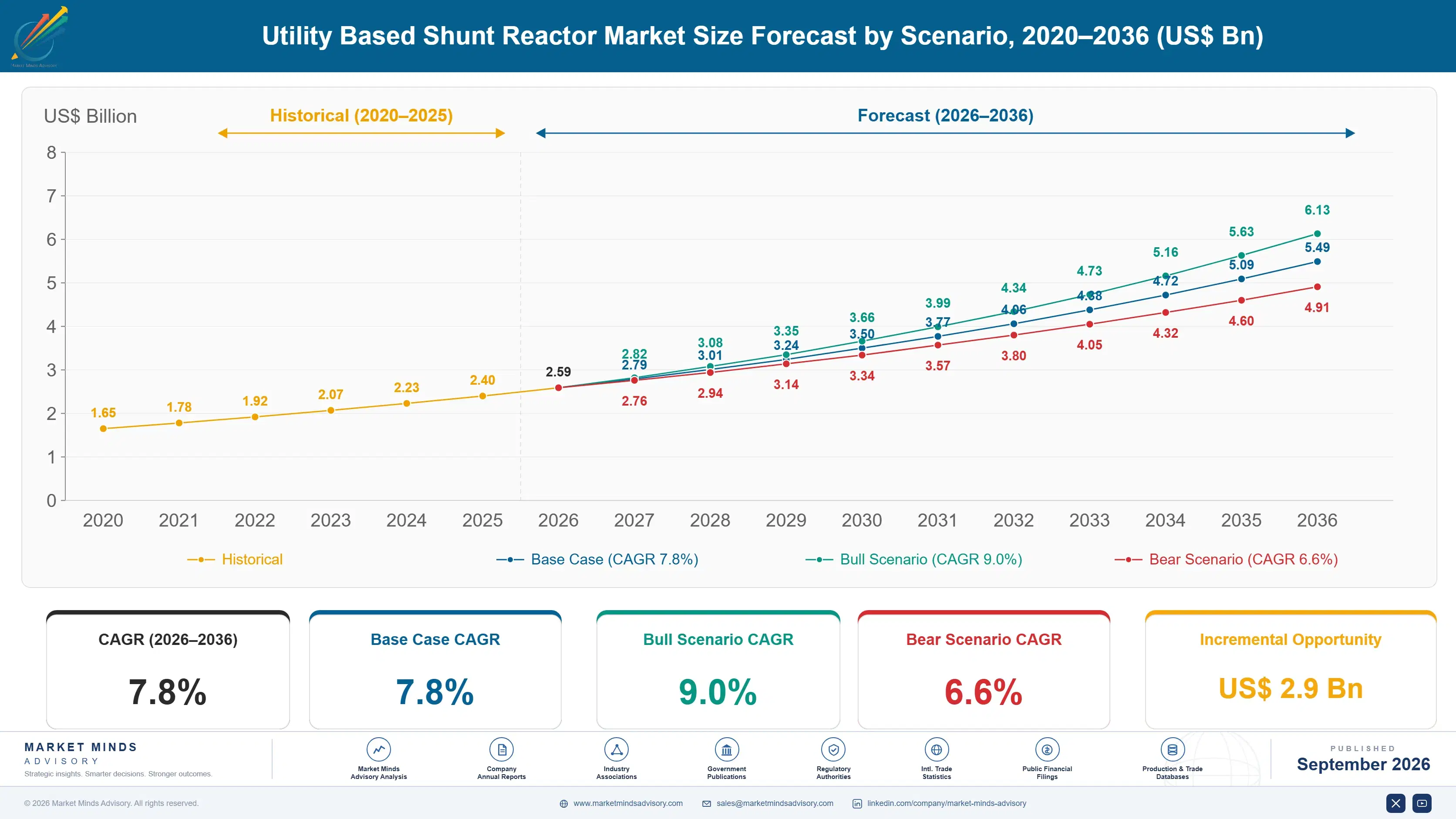
Utility Based Shunt Reactor Market Forecast Scenarios

utility-based-shunt-reactor-market-size-forecast-scenario-1788410891226
Between 2020 and 2025 the market compounded at 6.6%, and almost all of that came from two places: European offshore wind export circuits and Chinese ultra-high-voltage construction. Utilities elsewhere ordered replacements and little else. Award volumes were lumpy, tied to individual transmission projects rather than any steady replacement rhythm, and several years turned entirely on whether two or three large schemes reached financial close.
The 7.8% base case rests on three commercial mechanisms. Undergrounding of new transmission has become the default where public opposition blocks overhead routes, and each buried kilometre carries reactor duty with it. Offshore wind export cables at 220 kV and above require compensation at both ends, sometimes at an intermediate platform. And factory capacity, not demand, now sets the delivery ceiling, which holds pricing firm and converts backlog into revenue on a predictable schedule.
The bull case is European undergrounding policy hardening into a requirement rather than a preference, which would add reactor content to projects already permitted. The bear case is the transformer capacity expansions now under construction arriving together in 2028 and 2029, relieving the shortage and returning the market to competitive tendering on price rather than delivery slot.

Why Cable Kilometres, Not Load Growth, Decide Reactor Orders

A shunt reactor does one thing: it absorbs reactive power that a lightly loaded or cable-rich circuit produces on its own. Overhead lines make some. Cables make an enormous amount, roughly 20 times as much per kilometre at the same voltage, because conductor and earthed sheath sit millimetres apart. Without absorption, voltage at the open end climbs past what the switchgear and transformers can tolerate.
TOP FIVE CONCENTRATION68%Share of measured global order intake held by leaders
TYPICAL UNIT PRICEUSD 1.8mAverage for a large oil-immersed transmission class unit
FACTORY LEAD TIME38 monthsQuoted delivery from award for large units today
CABLE CHARGING RATIO20xBuried circuit against equivalent overhead line at same voltage
ASSET SERVICE LIFE40 yearsDesign life before scheduled utility replacement becomes due
CORE STEEL COST SHARE31%Grain oriented electrical steel as portion of cost
Reactor demand correlates almost perfectly with two things nobody tracks together: how much new transmission is being buried instead of strung, and how much offshore generation is being connected by alternating current rather than direct current. Neither has anything to do with electricity demand growth. A network can add 30% more load through existing overhead corridors and buy no reactors at all, as most of the world did.
The supply side complicates it further. Reactors are built on transformer production lines, from the same core steel, the same copper winding operations and the same vacuum drying and testing plant. When transformer demand surged, reactors went to the back of a queue for capacity that took years to build. Utilities that once tendered on price now tender on who can deliver inside a construction programme.
"The odd thing about this market is that reactor demand rises when the grid is used less. Light loading is exactly when charging current dominates and voltage runs high. So a transmission operator investing in spare capacity for future load is buying reactors to manage the years before that load arrives."
Director, Grid Equipment and Transmission Infrastructure Practice · MMA Energy and Power Practice · September 2026

Market Trends

On-Load Tap Changers Move Switching Duty Into the Reactor

Fixed reactors are switched in and out by circuit breakers, and with renewable output swinging reactive requirements several times a day, those breakers were reaching mechanical end of life in a fraction of their expected service. Variable shunt reactors solve it by varying absorption continuously across roughly 50 to 100% of rated capacity through an on-load tap changer, so the circuit breaker stops operating. The tap changer wears instead, and it is far cheaper to maintain. European transmission operators now specify variable units by default on cable circuits, and the segment compounds at 11.7% against a market growing 7.8%.
Market Impact: Adds 1 reactor per cable end
SF6 Phase-Out Reaches Gas-Insulated Reactor Designs

European Union fluorinated gas regulation sets phase-down dates for sulphur hexafluoride in new high-voltage equipment, and gas-insulated reactors installed in substations and offshore platforms fall inside it. Alternatives using fluoronitrile mixtures or clean air at raised pressure exist, but they change insulation distances and therefore the whole enclosure geometry, which means requalification rather than substitution. Manufacturers that started the work early now hold approvals that competitors will spend three years matching. For space-constrained offshore platforms, where the alternative to gas insulation is a larger deck, this decides which supplier can bid at all.
Market Impact: Requires 2 units per circuit

Market Opportunities and Growth Drivers

Public Opposition Is Burying Transmission That Would Have Been Overhead

Route consent for new overhead transmission has become slow enough across Western Europe that several operators now plan partial undergrounding from the outset rather than fight and lose. Germany's direct current corridors were legislated as predominantly underground after exactly that experience. Every buried kilometre brings reactive absorption duty that the overhead equivalent would not have needed, and on a long alternating current cable section the reactor cost is a material line item rather than an accessory. The driver is entirely political in origin, which makes it durable: consent conditions do not relax when equipment prices rise.
Market Impact: Extends delivery to 38 months

Offshore Wind Export Circuits Require Compensation at Both Ends

An alternating current export cable from an offshore wind farm generates so much charging current that beyond roughly 80 kilometres it consumes its own capacity carrying it. Compensation at the onshore landing point alone is insufficient; the offshore end needs absorption too, and on longer routes an intermediate platform sometimes carries a third unit. Europe's installed offshore capacity and the connection programmes now committed through 2032 create a reactor requirement that scales with cable route length rather than turbine count, which is why this demand grows faster than offshore capacity itself.
Market Impact: Slips 18 months per project

Market Restraints and Challenges

Transformer Backlogs Ration Reactor Manufacturing Capacity

Reactors are built where transformers are built, and transformer demand from grid replacement, data centre connection and renewable interconnection filled those factories through the end of the decade. Quoted lead times of 38 months on large units are common, and reactors lose priority because transformer orders are larger. The root cause is a decade of underinvestment in winding capacity and the steel supply base behind it. Manufacturers are adding bays, but a high-voltage test hall takes three years to commission. Utilities respond with framework agreements placed years ahead of defined projects, which secures slots but ties up capital.
Market Impact: Cuts 4 daily breaker operations

Project-Linked Demand Makes Order Intake Genuinely Lumpy

A reactor is bought as part of a transmission scheme, not on a replacement cycle, so a single delayed interconnector moves a manufacturer's regional intake by a visible margin. Consent, financing and marine installation windows all sit outside the supplier's control, and slippage of 18 months on a large offshore connection is unremarkable. The root cause is that transmission projects are permitted individually rather than programmed. Suppliers mitigate through geographic spread and by holding framework positions with several operators at once, and some now accept partial payment on award to fund long-lead material regardless of when civil works actually begin.
Market Impact: Affects 3 approval cycles ahead
3 additional market trends, 3 additional growth drivers, and 2 additional restraints and challenges are covered in the full report. Contact sales@marketmindsadvisory.com to access the complete intelligence.

Segment CAGR and Growth Architecture

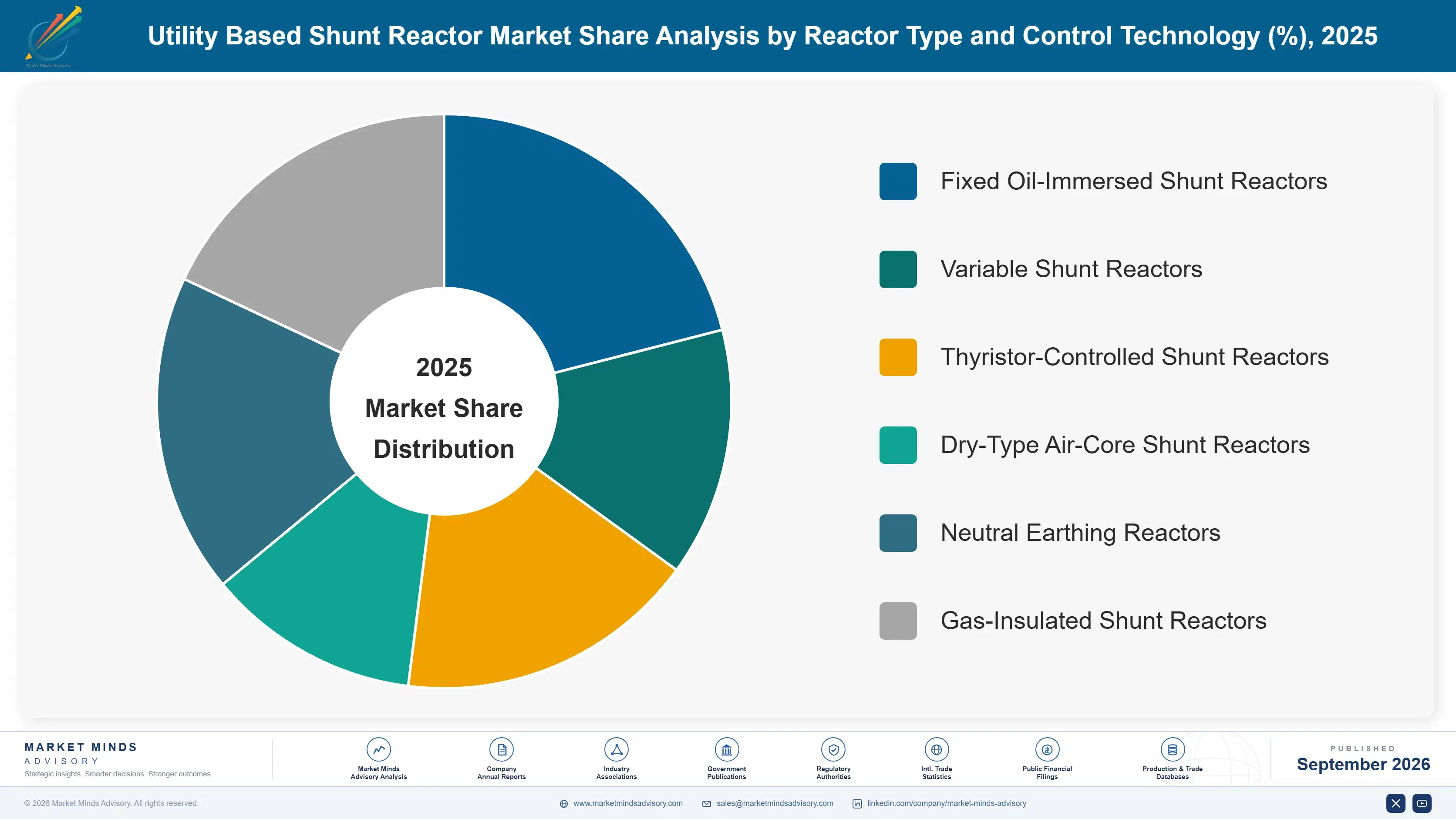
Segmentation follows reactor construction and control technology, which is how utilities specify and how manufacturers organise production. Fixed oil-immersed units remain the volume core. Variable units, thyristor controlled designs, dry-type air-core units, neutral earthing reactors and gas-insulated designs each serve duties the fixed unit handles badly, and each carries different factory economics. None of them is a substitute.
utility-based-shunt-reactor-market-market-share-analysis-1788410891772

Variable Shunt Reactors

A variable shunt reactor uses an on-load tap changer to adjust absorption continuously across roughly 50 to 100% of rated capacity, removing the need to switch the whole unit in and out with a circuit breaker. That matters because renewable generation now moves network reactive requirements several times a day, and transmission circuit breakers were never designed for that frequency of operation. European transmission operators specify variable units as standard on cable-connected circuits, and adoption is spreading to conventional lines where load patterns have become less predictable. Growth at 11.7% is half again the market rate of 7.8%. The tap changer adds cost and one maintenance item, which is why the fixed unit still wins on circuits with stable loading.
CAGR 11.7%

Thyristor-Controlled Shunt Reactors

Thyristor control varies absorption electronically within a single cycle rather than mechanically over seconds, which suits networks where voltage disturbance rather than daily variation is the problem. These units appear where a static VAR compensator would be over-specified but a fixed reactor cannot respond quickly enough, typically on circuits feeding large industrial load or connecting weak network areas. Harmonic generation from the thyristor switching requires filtering, which adds substation footprint and cost that utilities weigh carefully. Growth at 10.6% comes mainly from grid connection points serving electrolysers, smelters and data centre campuses, where load steps are large enough to move voltage on their own. Suppliers here compete against power electronics specialists rather than transformer makers.
CAGR 10.6%
Full segment breakdown across 6 segments available in the complete report.

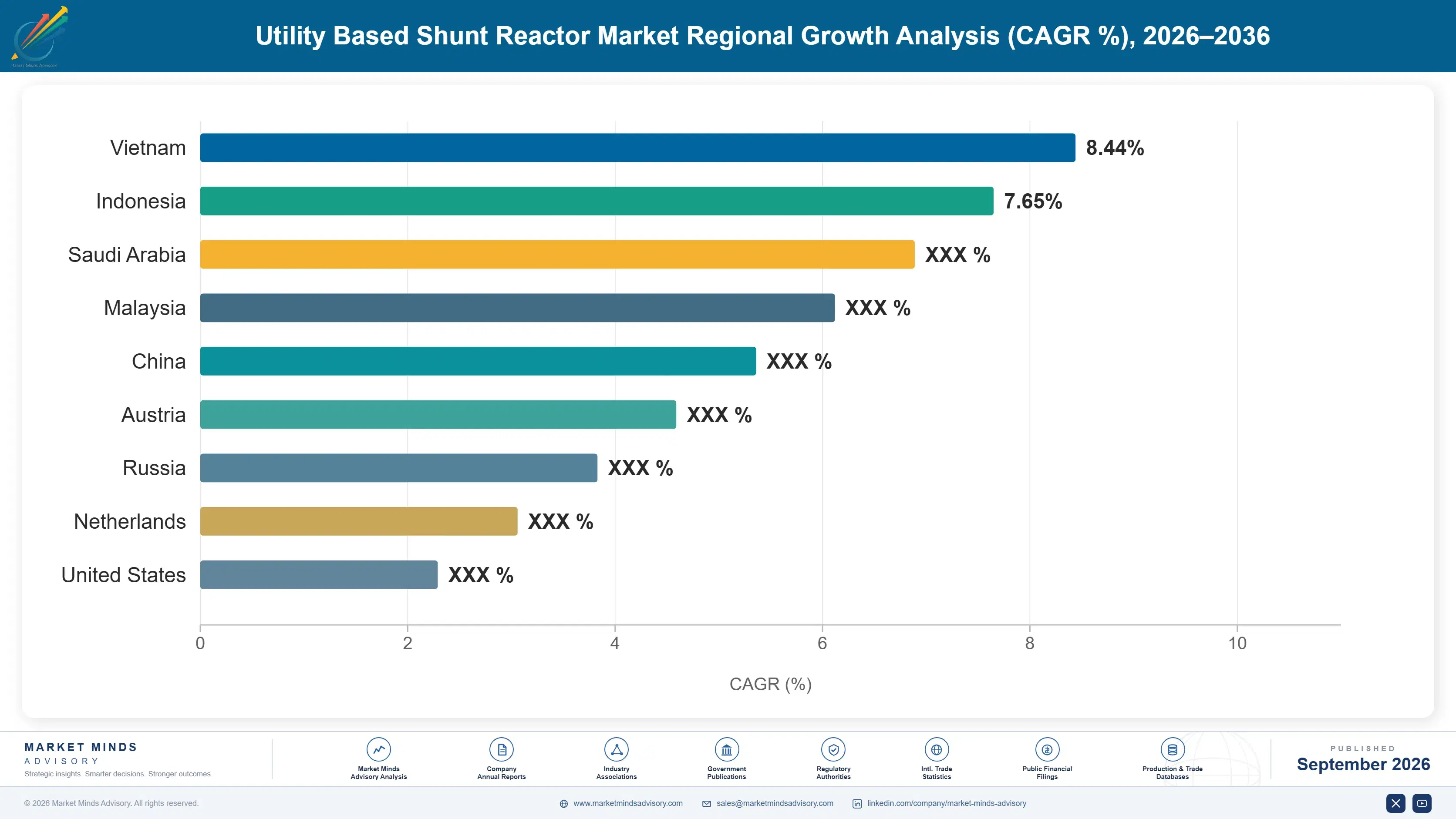
Regional Architecture and Country Demand Map

Regional position tracks cable kilometres and ultra-high-voltage construction rather than electricity consumption. East Asia and Western Europe together take more than half the market because one is building 1000 kV alternating current corridors and the other is burying transmission and connecting offshore wind. The rest buy sparingly.

East Asia

China's 1000 kV alternating current corridors carry charging current on a scale that exists nowhere else, and the single-phase reactors absorbing it run to 320 MVAr each. Every substation on those routes carries a full set. East Asia sits at 32%, above the 30% ceiling of the standard band, and the justification is that no other region operates a commercial ultra-high-voltage alternating current network at all. Japan and Korea add steady undergrounding demand in dense urban networks where overhead routes were never available. Domestic manufacturers hold the ultra-high-voltage specification almost entirely, having developed it alongside the grid operator, and international suppliers compete mainly at 500 kV and below across the region.
Share: 32% | CAGR: 9.0% (2026 to 2036)

Western Europe

Two forces run in parallel here. Offshore wind export circuits in the North Sea and Irish Sea need compensation at both cable ends, and onshore transmission is increasingly buried because route consent for overhead lines has become unreliable. Germany legislated its direct current corridors as predominantly underground; the alternating current reinforcement around them still needs reactors. Britain, the Netherlands and Denmark contribute connection programmes committed through 2032. Regional growth of 6.6% understates the activity because these are replacement-free additions to an already large installed base rather than a market starting from nothing. Award sizes are large and the supplier list short, because offshore and variable duty both narrow the field considerably before price enters the discussion at all.
Share: 22% | CAGR: 6.6% (2026 to 2036)
Regional intelligence for 5 additional markets available in the complete report: North America, South Asia and Pacific, Latin America, Middle East and Africa, Eastern Europe. Contact sales@marketmindsadvisory.com.
utility-based-shunt-reactor-market-country-cagr-analysis-1788410892294

Where Reactor Margin Actually Sits

Four positions carry disproportionate margin in a market where delivery date now decides awards. Each depends on capacity, approval or design work done years before the order arrives, which is why competitive positions here shift slowly and why late entrants find the good positions already occupied when they look. Two of the four are closing.

Sell the Delivery Slot Rather Than the Reactor

With lead times near 38 months, a confirmed delivery date inside a utility's construction programme is worth more than a 10% price advantage, because a late reactor idles an entire transmission scheme. Suppliers holding uncommitted factory capacity can price that scarcity directly, and framework agreements signed 3 years ahead of defined projects convert it into predictable loading. The discipline is refusing marginal orders that consume a slot better sold later. Most manufacturers still fill capacity on a first-come basis, which leaves the premium unclaimed. The slot is the product now.
Market Impact: Beats a 10% price advantage on every award

Hold the Variable Reactor Approval Position Early

Variable units grow at 11.7% against a market at 7.8%, and utility approval for a tap-changer design on transmission duty takes 2 to 3 years of type testing and reference operation. A supplier already on the approved list captures that growth without competing for it, while a newcomer spends the growth period qualifying. The tap changer itself comes from a small number of specialist makers, so securing supply agreements with them is part of the same position. Several manufacturers deferred this work and are now buying their way in. Approval decides everything.
Market Impact: Captures 11.7% segment growth without competing per order

Build Offshore Capability Before the Tender

Offshore platform reactors carry a premium near 40% over equivalent onshore units, and the qualification involves motion tolerance, salt corrosion systems and maintenance-free intervals that onshore designs simply do not have. Developers will not accept a first-of-type on a platform where replacement means a jack-up vessel. The approval therefore follows demonstrated service rather than test certificates, which makes it a 5 year position to build and a durable one once held. Suppliers without an offshore reference are excluded from bidding, not merely disadvantaged. Nobody accepts a first-of-type unit offshore, ever.
Market Impact: Earns a 40% premium on every platform unit

Qualify SF6 Alternatives Ahead of the Deadline

European fluorinated gas phase-down dates apply to new gas-insulated equipment including reactors, and alternative insulation changes clearance distances enough to require full requalification rather than a gas swap. Manufacturers who began that work early hold approvals competitors need roughly 3 years to match. On space-constrained offshore platforms and urban substations, where gas insulation is the only way to fit the equipment, the approval decides eligibility outright. The window to build this position closes as the deadline approaches and buyers stop specifying the old technology. Late qualification earns nothing at all.
Market Impact: Holds a 3 year approval lead over rivals

Who Controls the Margin Pool

Measured on transmission-class order intake, the basis used throughout this section, the top five hold 68%. The gap between the leaders and the next tier is not technological. It is factory capacity at high voltage, specifically vacuum drying vessels and high-voltage test halls. That is a decade of capital investment, and it is why the ranking has barely moved in fifteen years despite competent challengers.
Competition currently runs on delivery date, offshore qualification and SF6-free approval rather than price. Utilities have moved to framework agreements that lock capacity years ahead, which rewards suppliers with predictable output and penalises those managing an uneven backlog. Domestic content requirements shape awards in China, India and Brazil, and increasingly in North America. Chinese manufacturers hold the ultra-high-voltage specification almost exclusively, competing abroad mainly at 500 kV.

Pressure is building from two directions. Indian manufacturers with new high-voltage test capacity are winning export orders in the Middle East and Africa at ratings they could not previously bid. And the capacity expansions announced across the industry arrive between 2028 and 2029, which will end the delivery-slot premium and return tendering to price. Rankings shift where suppliers used shortage years building approval positions rather than clearing backlog.
utility-based-shunt-reactor-market-company-positioning-matrix-1788410892817

Competitive Moat and Risk Dimensions

HITACHI ENERGY

Moat: Deepest high-voltage factory network

The company operates transformer and reactor plants across Europe, Asia and the Americas with high-voltage test capability at several sites, letting it place an order where capacity exists rather than where the customer sits. Competitors with two qualified plants cannot. It also carries the longest offshore reference list in the industry, which decides eligibility before price is discussed.
HITACHI ENERGY

Risk: Capacity commitments constrain flexibility

Framework agreements signed through the shortage years commit a large share of that capacity at pre-inflation pricing. When expansions arrive across the industry in 2028 and 2029, the company will be delivering committed volume at older pricing while competitors bid freely on new work. The position that secured the backlog then limits response to a softer market.
SIEMENS ENERGY

Moat: Grid technologies order backlog

The grid technologies business carries a backlog measured in years, and reactor orders ride alongside transformer, switchgear and high-voltage direct current packages sold to the same transmission operators. That bundling advantage is real: a utility buying a complete substation rarely tenders the reactor separately. It also gives early sight of reactor requirements on projects still in engineering.
SIEMENS ENERGY

Risk: Execution risk on bundled scope

Bundled substation packages expose the reactor line to delays originating elsewhere in the scope, and a project held up by civil works or a converter station still occupies the reactor slot allocated to it. Margin on fixed-price bundles agreed before recent input cost movement is thinner than standalone equipment sales. The company is still working through legacy contract exposure.

Players Tracked

Prominent Players

Hitachi Energy
Siemens Energy
GE Vernova
Toshiba Energy Systems and Solutions
TBEA

Other Key Players

Mitsubishi Electric
Fuji Electric
Hyosung Heavy Industries
Hyundai Electric
LS Electric
Bharat Heavy Electricals
Crompton Greaves Power and Industrial Solutions
Transformers and Rectifiers India
Baoding Tianwei Baobian Electric
China XD Group
Shandong Electrical Engineering and Equipment
Efacec
Trench Group
Nissin Electric
Wilson Transformer

Recent Developments

MARCH 2025

Hitachi Energy expands transformer and reactor winding capacity

The company announced further organic capacity expansion across its transformer operations, adding winding bays and high-voltage testing capability at existing sites. The investment was framed around grid equipment shortages rather than any single order, and reactor production shares the same constrained plant as transformers throughout the network.
Signal: Capacity, not demand, has been the binding constraint in this market for the whole of the current cycle.
SEPTEMBER 2025

Siemens Energy reports record grid technologies backlog

Reported results showed the grid technologies segment carrying an order backlog extending several years, driven by transmission reinforcement and renewable connection. Management noted capacity expansion underway across transformer and high-voltage plant, with delivery dates rather than pricing described as the principal customer concern. Reactors sit inside that same constraint.
Signal: When customers negotiate delivery slots rather than unit price, the market has stopped clearing on cost entirely.
JUNE 2025

Indian manufacturer commissions extra-high-voltage reactor test capability

A domestic Indian transformer manufacturer commissioned test facilities covering extra-high-voltage reactor ratings, extending its addressable range beyond what it could previously certify. The investment positions it for export tenders in the Middle East and Africa at ratings that had been effectively closed to it before.
Signal: Test hall capacity, not winding skill, has been the real barrier keeping challengers out of the largest ratings.

Core Steel, Copper and Insulation Exposure

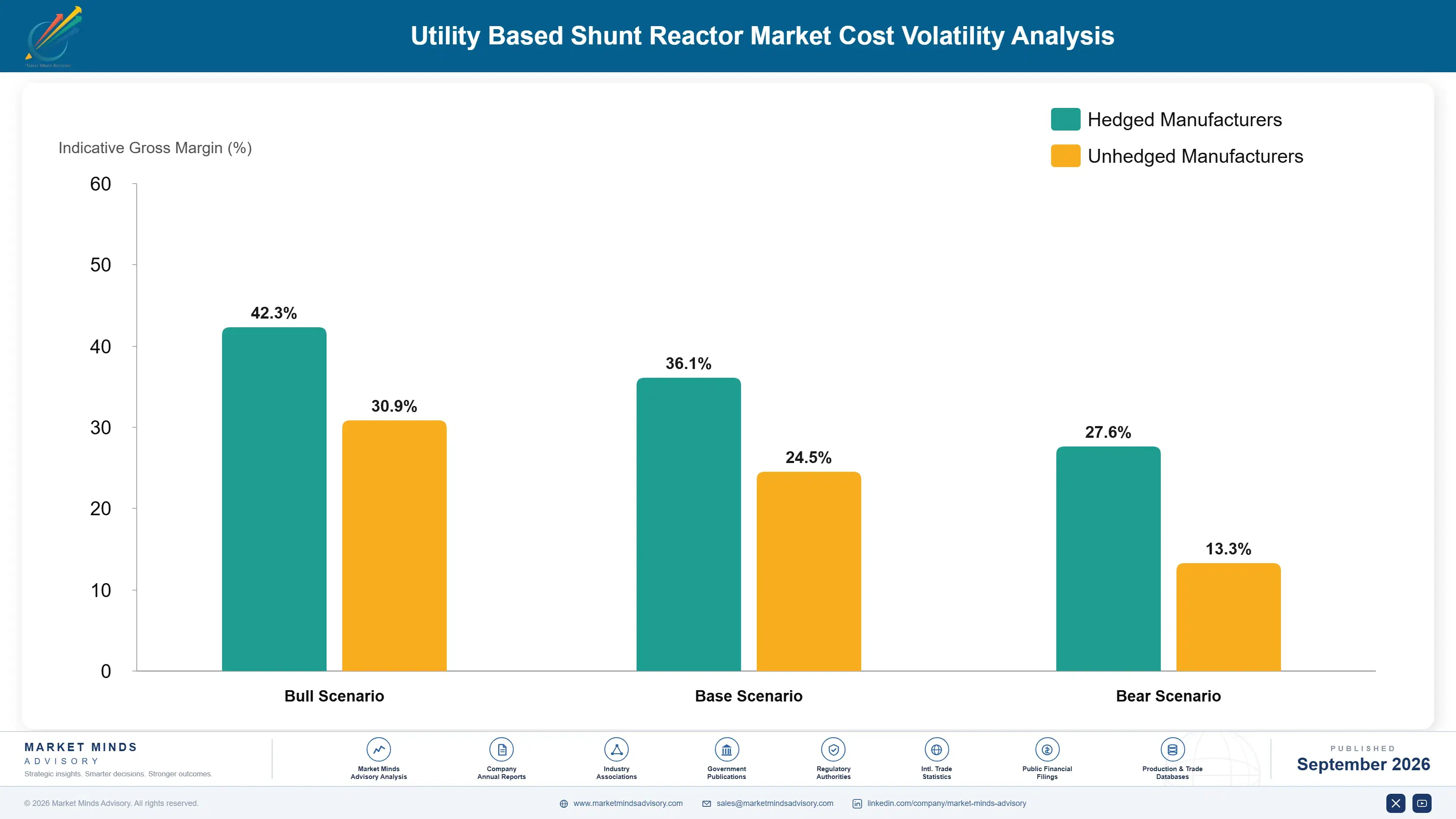
Grain oriented electrical steel accounts for roughly 31% of manufactured cost, copper winding conductor a further 24%, and mineral or ester insulating fluid together with cellulose insulation around 11%. The steel comes from a small number of mills in Japan, China, Korea, Germany and the United States, and qualifying a new grade for high-voltage duty is an engineering programme, not a purchase.
Electrical steel pricing moved sharply through the 2022 to 2024 period as transformer demand outran mill capacity, and manufacturers reported input cost pressure and contract repricing across the sector in annual reports through that window. Energy costs at the mills themselves compounded it, with IEA data showing European industrial power at multiples of pre-2021 levels. Reactor makers with annual steel contracts absorbed the movement; those buying on spot did not.

The disadvantage mechanism is contract structure rather than scale. A manufacturer with multi-year steel agreements and index-linked customer contracts passes the movement through; one bidding fixed-price on a 38 month delivery absorbs three years of input drift on its own account. European producers carry the additional energy cost of their own operations. Chinese and Indian manufacturers with domestic mill relationships face neither the volatility nor the freight exposure.
utility-based-shunt-reactor-market-cost-volatility-analysis-1788410893011

Index-linked customer contracts on long deliveries

Tying the contract price of a 38 month delivery to published steel and copper indices moves input drift back to the buyer, and utilities increasingly accept it because the alternative is a risk premium built into the fixed price instead. Negotiating the index basis matters more than the escalation formula itself. Buyers now expect it.

Multi-year electrical steel supply agreements

Committing volume to a mill across several years secures allocation during shortage and dampens price movement, at the cost of flexibility if demand softens. Given that qualification of an alternative grade takes an engineering programme rather than a purchase order, the flexibility being given up is largely theoretical. Allocation matters more than price in a shortage.

Design optimisation to reduce core mass

Reactor core geometry and gap design determine how much electrical steel a given rating consumes, and careful optimisation reduces mass by a meaningful margin without changing performance. It requires design engineering time that shortage-period order books rarely allow, which is why most manufacturers defer it. The saving compounds across every unit built to that design.

Portfolio Architecture for Margin Defence

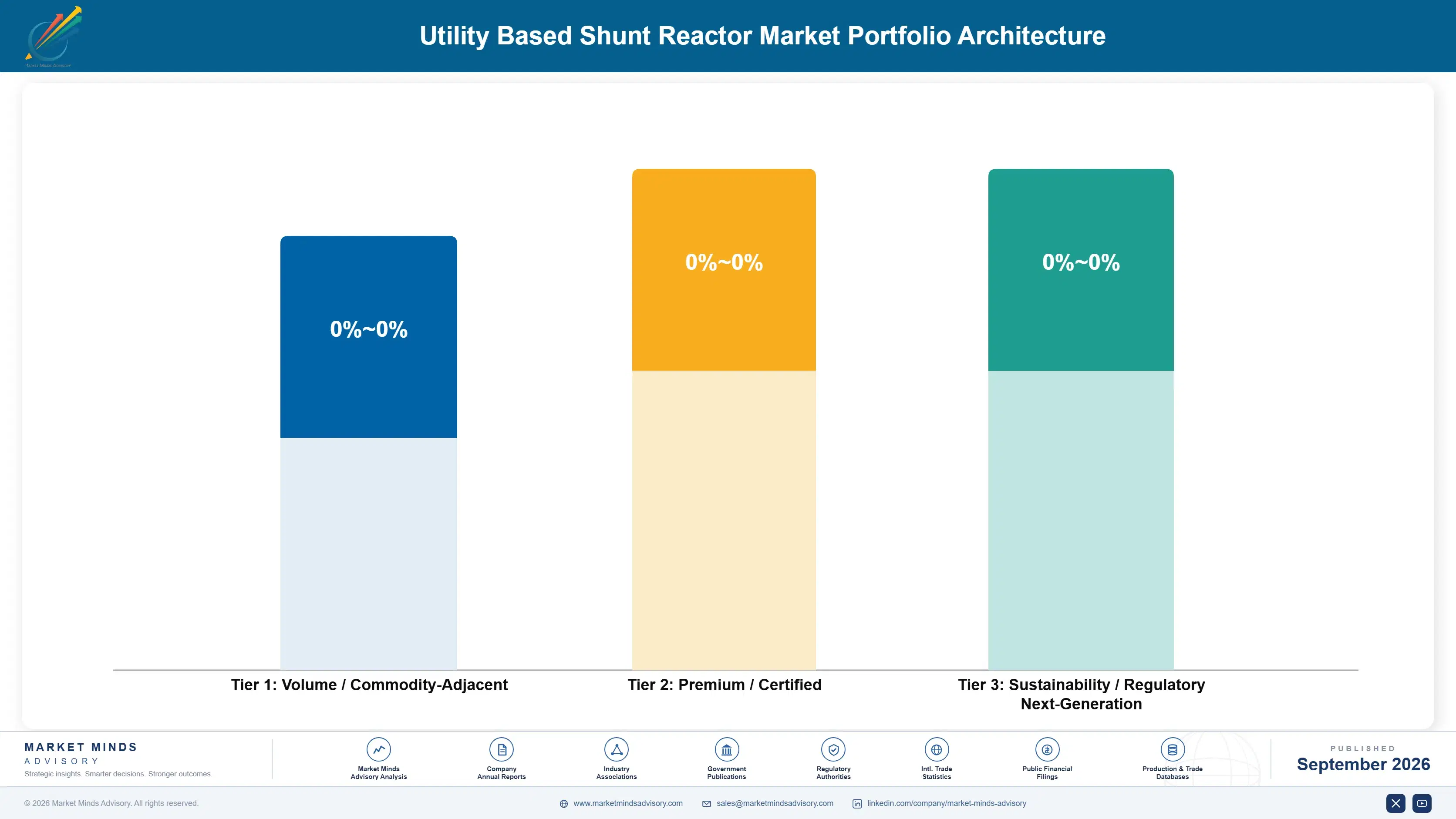
Margin in this market separates by whether the product is specified on price or on eligibility. Fixed oil-immersed reactors at conventional ratings are tendered against a written specification that several suppliers meet, and margin reflects that. Variable units, offshore designs and SF6-free gas-insulated reactors are specified against an approval list, and the supplier holding the approval prices differently because the alternative is a redesigned project.
The volume tension is real. Fixed units carry the factory loading that keeps winding bays and test halls occupied, and no manufacturer can run a premium-only book without stranding capacity. But during a shortage every hour of capacity carries an opportunity cost, and the discipline is deciding how much volume work to accept against slots that could carry better-margin units. Most suppliers manage this badly, filling on a first-come basis.

High-value pools concentrate where qualification took years: offshore platform units, ultra-high-voltage ratings in China, and variable reactors on European cable circuits. Each is defended by approval rather than patent, which makes the position durable but also means it decays if reference operation lapses. The pools are small in unit terms and large in margin terms. Losing one takes years to rebuild.

Volume / Commodity-Adjacent

Fixed oil-immersed shunt reactors and neutral earthing reactors at conventional transmission ratings, tendered against open specifications that several qualified suppliers meet. Margin depends on factory loading and steel contract position rather than any product differentiation.
Gross Margin: 14 to 19%

Premium / Certified

Variable shunt reactors with on-load tap changers and thyristor-controlled units, sold against utility approval lists that take years to enter. The 7 point range reflects wide variation in tap changer sourcing terms and in whether the supplier holds framework pricing.
Gross Margin: 22 to 29%

Sustainability / Regulatory / Next-Generation

Offshore platform reactors and SF6-free gas-insulated designs, where eligibility rather than price decides the award. The 10 point range reflects how few suppliers qualify on any given tender, which varies enormously between projects and voltage classes.
Gross Margin: 28 to 38%
utility-based-shunt-reactor-market-portfolio-architecture-1788410893501

High-value Sub-segments and Strategic Watch-out

Offshore Platform Reactors

Highest value pool in the market and growing with committed European and Asian offshore connection programmes. Qualification rests on demonstrated service rather than certificates, so the supplier list stays short and pricing holds well above onshore equivalents. Lead times here run longest of anywhere in the market.
Gross Margin: 30 to 38%

Variable Shunt Reactors

Fastest growing segment at 11.7% with margin protected by approval lists rather than technology. Growth is broad across European and increasingly Asian transmission operators, and the constraint on capture is tap changer supply rather than any question of demand. Approval rather than capacity gates entry to this segment.
Gross Margin: 24 to 29%

Fixed Oil-Immersed Reactors

The volume core that keeps factories loaded and cash flowing, with margin set by steel contracts and utilisation. Necessary rather than attractive, and the segment where capacity expansions arriving in 2028 will compress pricing first and hardest. Utilisation decides almost everything about returns in this segment.
Gross Margin: 14 to 19%

SF6-Insulated Legacy Designs

Facing regulatory phase-down in Europe with a defined end date, and buyers are already specifying alternatives on new projects. Revenue continues through retrofit and spares, but any capital committed to this technology now has a short window to earn back. No new capacity should go here at all.
Gross Margin: 18 to 24%

How Utilities Actually Buy Reactors

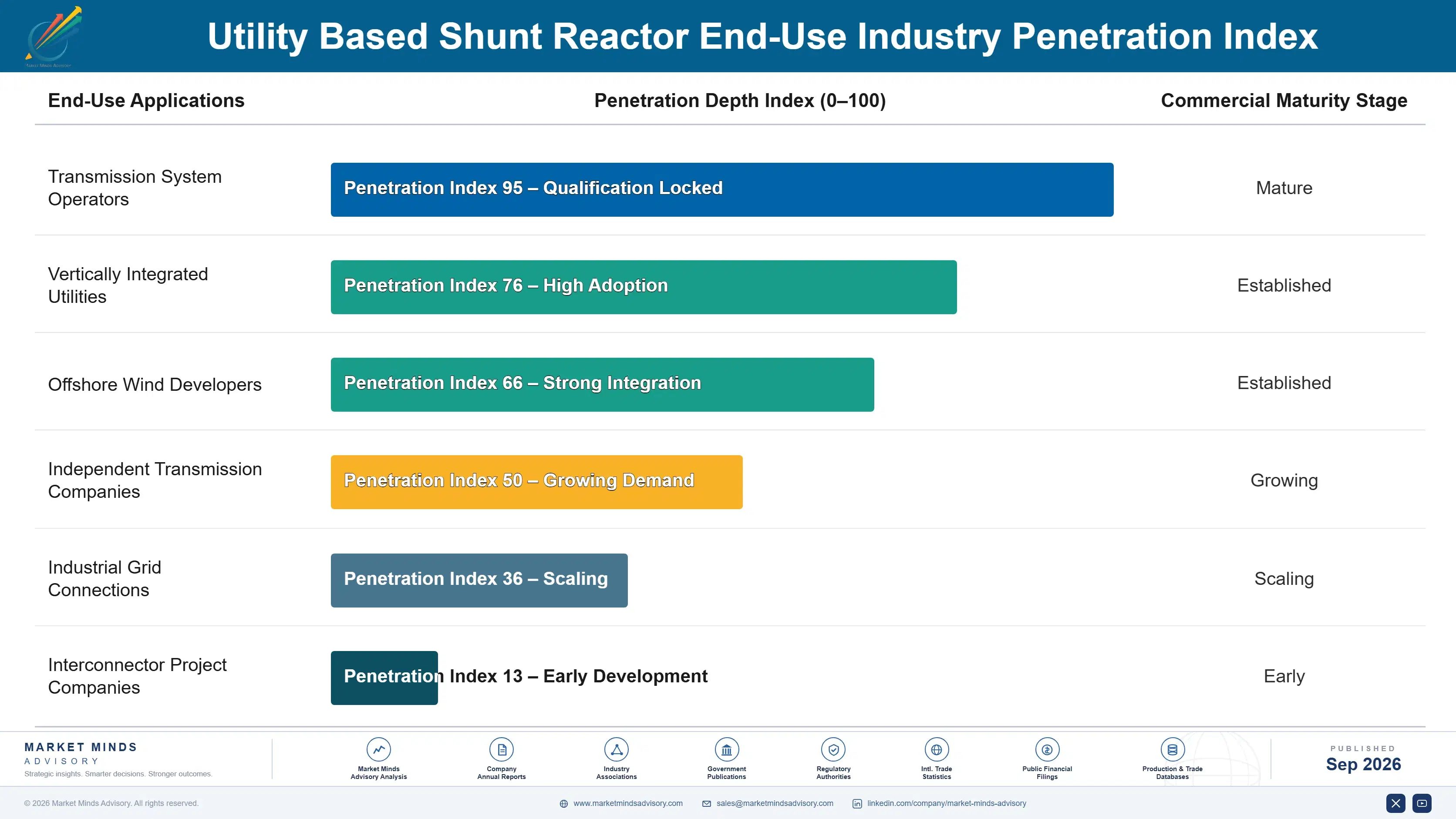
There is no replacement cycle here worth planning against. A shunt reactor is designed for 40 years and often runs longer, so almost every order ties to a new transmission scheme rather than an ageing asset. What creates annuity economics instead is the framework agreement: an operator commits volume across several years to secure factory slots, and the supplier holding it captures those projects without bidding each one.
Adoption depth varies sharply by network type. Cable-dense urban networks and offshore connection programmes specify reactors as a matter of course, and the specification runs deep, covering variable control, monitoring and offshore qualification. Overhead-dominated networks buy them only at specific problem locations, and the specification stays basic. A third group, long lightly loaded corridors in India, Brazil and the western United States, buys heavily but on price.

The buyer profile has changed. Reactor procurement sat with substation engineers who specified to a standard and bought on price. It now sits with programme managers responsible for delivery dates across a portfolio of projects, and their question is when rather than how much. That shift is why framework agreements spread so quickly, and it favours suppliers who can talk credibly about capacity.
utility-based-shunt-reactor-market-end-use-penetration-index-1788410893987

Where To Compete And Why

These are among the four positions where our research anticipates prominent divergence between winners and laggards over the coming forecast period. Each is grounded in the demand model, the regulatory perimeter, and the announced capacity pipeline.
01 / CAPACITY SLOT DISCIPLINE

Sell delivery dates while the shortage still holds

Lead times near 38 months have made the delivery slot worth more than any price advantage, and utilities are now paying for certainty rather than negotiating unit cost, which reverses how this market cleared for thirty years. Suppliers who fill capacity on a first-come basis are handing that premium to whichever customer happened to order first, which is not a commercial decision at all. The window closes when announced expansions arrive together in 2028 and 2029, so capture it now.
02 / APPROVAL POSITION BUILDING

Use shortage years to qualify, not just to deliver

Variable, offshore and SF6-free approvals each take between two and five years to obtain, and every one of them decides eligibility on a tender rather than merely influencing the price a supplier can quote. A manufacturer that spends the shortage years simply clearing backlog emerges with a full factory and no defensible commercial position whatsoever. One that spends engineering time on qualification instead emerges holding precisely the segments that keep their margin once capacity relief finally arrives in 2028 and 2029.
03 / STEEL CONTRACT STRUCTURE

Index long deliveries or price the drift in

Grain oriented electrical steel is 31% of manufactured cost, and a 38 month fixed-price delivery quietly absorbs three full years of movement in that input on the manufacturer's own account. Utilities now accept index-linked terms readily, because the risk premium buried inside a fixed price is visibly worse for them than the index itself. Manufacturers still quoting fixed prices on long deliveries are carrying a risk that their own customers would willingly take back from them tomorrow, at no cost.
04 / REGIONAL ROUTE SELECTION

Follow buried and submarine circuit kilometres

Reactor demand correlates with cable route kilometres, not with electricity consumption or installed generation capacity, and that distinction decides where a sales organisation should actually be spending its time. Coverage built around large power markets misses the mechanism entirely and lands effort in overhead-dominated networks that buy almost nothing year after year, whatever their size. Tracking undergrounding decisions and offshore connection consents gives two to three years of warning that conventional market sizing exercises have never once provided to anyone.

Engagement Snapshot From the Field

A live engagement with an industry participant carrying material or product regulatory and market exposure ahead of a defining policy shift, showing how our research translates into a defensible multi-year portfolio strategy.
MARKET MINDS ADVISORY · CLIENT ENGAGEMENT SUMMARY
Utility Based Shunt Reactor Producer Strategic Portfolio Review and Transition Roadmap 2026·Investment Scenario on Utility Based Shunt Reactor Exposure Evaluation 2025-26
CLIENT PROFILE
A European manufacturer of high-voltage transformers and reactors with three production sites and annual revenue reported at approximately USD 1.4 billion (client-reported, unverified by MMA). Reactors represented under a fifth of output and were treated internally as a way of filling gaps in transformer loading rather than as a business with its own commercial logic and margin profile.
STRATEGIC CHALLENGE
Order intake had filled capacity through 2029, but management could not tell whether the backlog was well composed. Reactor orders were accepted whenever a winding bay had a gap, with no view of what those slots might otherwise have carried. Competitors appeared to be winning offshore and variable work the client had never seriously bid for.
MMA APPROACH
MMA rebuilt the addressable market by reactor technology and duty rather than by voltage class, mapped approval requirements and typical qualification timelines for each, and interviewed transmission operators across four countries on how reactor awards were actually decided. Client backlog was then re-costed by slot opportunity rather than by contribution margin alone.
KEY FINDINGS
  1. Variable shunt reactors were growing at 11.7% against a market at 7.8%, and the client held no utility approval for a tap-changer design on transmission duty anywhere in Europe.
  2. Roughly 34% of accepted reactor orders occupied slots that could have carried higher-margin work, a cost never visible because contribution margin on each individual order was positive.
  3. Offshore platform tenders excluded the client at prequalification for lack of reference operation, not on price or capability, and no amount of competitive bidding would have changed that outcome.
  4. Buyers had shifted from substation engineers to programme managers, and the client's sales approach still led with technical specification rather than with confirmed delivery dates and capacity visibility.
CLIENT PROFILE
A European manufacturer of high-voltage transformers and reactors with three production sites and annual revenue reported at approximately USD 1.4 billion (client-reported, unverified by MMA). Reactors represented under a fifth of output and were treated internally as a way of filling gaps in transformer loading rather than as a business with its own commercial logic and margin profile.
STRATEGIC CHALLENGE
Order intake had filled capacity through 2029, but management could not tell whether the backlog was well composed. Reactor orders were accepted whenever a winding bay had a gap, with no view of what those slots might otherwise have carried. Competitors appeared to be winning offshore and variable work the client had never seriously bid for.
MMA APPROACH
MMA rebuilt the addressable market by reactor technology and duty rather than by voltage class, mapped approval requirements and typical qualification timelines for each, and interviewed transmission operators across four countries on how reactor awards were actually decided. Client backlog was then re-costed by slot opportunity rather than by contribution margin alone.
KEY FINDINGS
  1. Variable shunt reactors were growing at 11.7% against a market at 7.8%, and the client held no utility approval for a tap-changer design on transmission duty anywhere in Europe.
  2. Roughly 34% of accepted reactor orders occupied slots that could have carried higher-margin work, a cost never visible because contribution margin on each individual order was positive.
  3. Offshore platform tenders excluded the client at prequalification for lack of reference operation, not on price or capability, and no amount of competitive bidding would have changed that outcome.
  4. Buyers had shifted from substation engineers to programme managers, and the client's sales approach still led with technical specification rather than with confirmed delivery dates and capacity visibility.
RECOMMENDED STRATEGY
Phase 1: Phase one: reprice reactor slots against opportunity cost and decline volume work that displaces variable or offshore capacity, accepting a temporary intake reduction. Phase 2: Phase two: begin tap-changer design qualification with two transmission operators, targeting approval inside 30 months using existing type test infrastructure. Phase 3: Phase three: pursue an onshore reference with an offshore-adjacent duty to build the service record that platform prequalification actually requires.
OUTCOME
Within eleven months the client had entered approval testing with two operators, declined an estimated USD 40 million of volume reactor intake in favour of better-margin work, and reported reactor gross margin up 4.1 percentage points (client-reported, unverified by MMA). Offshore prequalification remains a longer programme still in progress at the time of reporting.

Frequently Asked Questions

Foundational context covering the market sizes, CAGR, scope, country, region and competition that inform every finding below. This section is provided to cover basics and most often pre-purchase conversations, answered from the MMA Primary Research Dataset.

What is the current size of the Utility Based Shunt Reactor Market?

The market was valued at USD 2.4 billion in 2025 and reaches USD 2.59 billion in 2026. Growth is driven by transmission undergrounding and offshore cable connection rather than electricity demand.

How large will the Utility Based Shunt Reactor Market be by 2036?

MMA forecasts USD 5.49 billion by 2036, an increase of USD 2.90 billion over the 2026 base. That represents an expansion multiple of 2.12 times across the forecast period.

What is the CAGR for the Utility Based Shunt Reactor Market 2026 to 2036?

The base case CAGR is 7.8%, with a bull case of 9.0% and a bear case of 6.6%. The historical rate between 2020 and 2025 was 6.6%.

Which segment is growing fastest?

Variable shunt reactors with on-load tap changers grow at 11.7%, half again the market rate of 7.8%. Renewable output swings now move reactive requirements several times daily.

Who are the major companies in the Utility Based Shunt Reactor Market?

Hitachi Energy, Siemens Energy, GE Vernova, Toshiba Energy Systems and Solutions, and TBEA lead on transmission-class order intake. Together they account for roughly 68% of the market.

Which country is growing fastest?

India grows fastest at 10.6%, driven by long 765 kV lines that run at light load for years after commissioning. That is exactly when charging current makes reactors mandatory.

Report Segmentation Architecture

The full report scope spans multiple orthogonal segmentation dimensions, with cross-tabulated demand data provided for each dimension pair. Coverage extends further to regional breakdowns, trend trajectories, and the competitive detail needed to support segment-level decision-making.

By Reactor Type and Control Technology

  • Fixed Oil-Immersed Shunt Reactors
  • Variable Shunt Reactors
  • Thyristor-Controlled Shunt Reactors
  • Dry-Type Air-Core Shunt Reactors
  • Neutral Earthing Reactors
  • Gas-Insulated Shunt Reactors

By End-Use Industry

  • Transmission System Operators
  • Vertically Integrated Utilities
  • Offshore Wind Developers
  • Independent Transmission Companies
  • Industrial Grid Connections
  • Interconnector Project Companies

By Application and Circuit Type

  • Overhead Transmission Line Compensation
  • Underground Cable Circuit Compensation
  • Submarine Export Cable Compensation
  • Substation Busbar Compensation
  • Neutral Point Earthing
  • Offshore Platform Installation

By Region

  • North America
  • Western Europe
  • East Asia
  • South Asia and Pacific
  • Latin America
  • Middle East and Africa
  • Eastern Europe

Scope, Methodology, and Coverage

Every figure in this report is reproducible from documented input assumptions. The scope below maps the historical period, the forecast horizon, the segmentation dimensions, and the countries covered, alongside the underlying primary and qualitative methodology.
Historical Period
2020 to 2025
Forecast Period
2026 to 2036
Base Year
2025 (USD billions; MMA Primary Research Dataset, September 2026)
Market Definition
Utility based shunt reactors are inductive reactive power absorption devices connected in shunt to transmission networks at 66 kV and above, supplied as fixed oil-immersed units, variable units with on-load tap changers, dry-type air-core units, thyristor-controlled units, neutral earthing reactors and gas-insulated designs. Scope covers utility and transmission system operator procurement including offshore platform and cable compensation duty. Series reactors, current-limiting reactors, capacitor banks, static VAR compensators, STATCOM plant and distribution-level reactors below 66 kV are excluded.
Quantitative Units
USD billions at manufacturer level, with supporting unit volumes and installed MVAr capacity by region
Segmentation Dimensions
Reactor type and control technology, end-use industry, application and circuit type, region
Regions Covered
North America, Western Europe, East Asia, South Asia and Pacific, Latin America, Middle East and Africa, Eastern Europe
Countries Covered
China, India, Japan, South Korea, Germany, United Kingdom, France, Netherlands, Denmark, Poland, United States, Canada, Brazil, Chile, Saudi Arabia, United Arab Emirates, South Africa, Australia
Key Companies Profiled
Hitachi Energy, Siemens Energy, GE Vernova, Toshiba Energy Systems and Solutions, TBEA, Mitsubishi Electric, Fuji Electric, Hyosung Heavy Industries, Hyundai Electric, LS Electric, Bharat Heavy Electricals, Crompton Greaves Power and Industrial Solutions, Transformers and Rectifiers India, Baoding Tianwei Baobian Electric, China XD Group, Shandong Electrical Engineering and Equipment, Efacec, Trench Group, Nissin Electric, Wilson Transformer
Quantitative Methodology
Primary survey, n=3,800 respondents, Q4 2025, six countries; demand-side model with trade association cross-validation
Qualitative Methodology
47 expert interviews, Q4 2025; applied to validate demand model assumptions, identify emerging dynamics, and assess competitive positioning
Report Format
PDF and XLSX data workbook (Word format preview document)
Publisher
Market Minds Advisory
Report Code
MMA-2026-ENE-491
Published
September 2026
Contact
sales@marketmindsadvisory.com | www.marketmindsadvisory.com

Purchase the full Utility Based Shunt Reactor Market Report (2026 to 2036).

The full report sizes utility shunt reactor demand from cable route kilometres and transmission construction pipelines rather than from electricity consumption, which is the sizing error most commonly made in this market. It maps six reactor technologies with individual growth rates, seven regions with share and CAGR detail, and the approval requirements that decide eligibility on variable, offshore and SF6-free tenders. Competitive analysis covers twenty manufacturers on a consistent order intake basis, with factory capacity and test hall constraints treated as the primary competitive variable. Input cost modelling breaks out electrical steel, copper and insulation exposure with contract structure analysis.
Six reactor technologies with individual growth rates
Seven regions sized by cable route kilometres
Approval timelines for variable and offshore qualification
Twenty manufacturers on consistent order intake basis
Factory capacity and test hall constraint mapping
Electrical steel and copper cost exposure modelling

Built For The People Who Decide

From boardroom strategy to bench-side execution, this report is read cover-to-cover by leaders shaping the next decade of their industry, turning demand scenarios, market dynamics and valuation benchmarks into decisions.
CXOs/ Presidents/ VPs/ Managers
M&A and Corporate Development
Strategy Teams and R&D Heads
Procurement and Product Directors
Regulatory and Compliance Leaders
Investor Relations and Equity Analysts