Market Minds Advisory
Unstable Angina Therapeutics Market

Unstable Angina Therapeutics Market: A Diagnosis Being Assayed Out of Existence

A more sensitive blood test reclassified a large share of these patients as heart attacks, so the addressable population shrank without a single person having less chest pain than before.

Lead Analyst

Alice Ballenger

Published

September 2026

Make Smarter Decisions with Customized Research Insights

Request a free sample report and evaluate market opportunities, growth trends, and competitive dynamics relevant to your business needs.

2025 MARKET VALUE$1.9BMarket Size 2025
2036 FORECAST VALUE$2.6BBase Case , 2026 to 2036
CAGR 2026 TO 20363.2 %Bull 4.4% / Bear 2.0%
INCREMENTAL OPPORTUNITY$0.7BNet 10- year value creation
EXPANSION MULTIPLE1.37x2036 value over 2026 base
Strategic Levers
M&A Pipeline
Regional Outlook
Country Rankings
Competitive Intelligence
Segmental Deep-dive
Call-Us : 91 93563 13602

Executive Snapshot and Market Trajectory

This category is shrinking because of a laboratory assay rather than because of anything happening to patients. High sensitivity troponin testing detects myocardial injury at roughly ten times lower concentrations, and around 41% of people previously called unstable angina now carry an infarction label instead.
Whatever remains is almost entirely generic. Aspirin, clopidogrel, heparin, beta blockers and statins together cost around 38 dollars for a standard acute course, and roughly 94% of the regimen has no patent protection anywhere. Value falls considerably faster than volume, which is an uncomfortable combination for anybody forecasting this on prevalence. Rising coronary burden across Asia produces treated patients without producing revenue, which decouples this indication from epidemiology entirely.
The differentiated spend has migrated into the catheter laboratory. Around 46% of drug value is now administered during the procedure rather than on a ward, in intravenous antithrombotics chosen by an interventional cardiologist in the moment. Parenteral antithrombotics grow at 4.8%, half again the market rate of 3.2%, on exactly that concentration. The decision maker, the budget and the timescale all differ from ward prescribing. Most commercial organisations here have never restructured to reflect it.
Market Definition
Pharmacological treatment of unstable angina in the acute and early post-event period, covering oral antiplatelet agents, parenteral antithrombotics, anti-ischaemic agents, lipid lowering therapy initiated acutely, beta blockers and rate control, and adjunctive and supportive therapy. Measured at manufacturer net selling value attributable to this indication. Excludes percutaneous and surgical revascularisation, cardiac devices, chronic stable angina maintenance therapy, and diagnostic testing.
Base Year Value
$1.9B in 2025 (MMA Primary Research Dataset, August 2026)
Forecast Period
2026 to 2036, eleven discrete annual values
CAGR
3.2% base case. Bull 4.4%. Bear 2.0%.
Fastest Growth Segment
Parenteral Antithrombotics: 4.8% CAGR
Fastest Growth Country
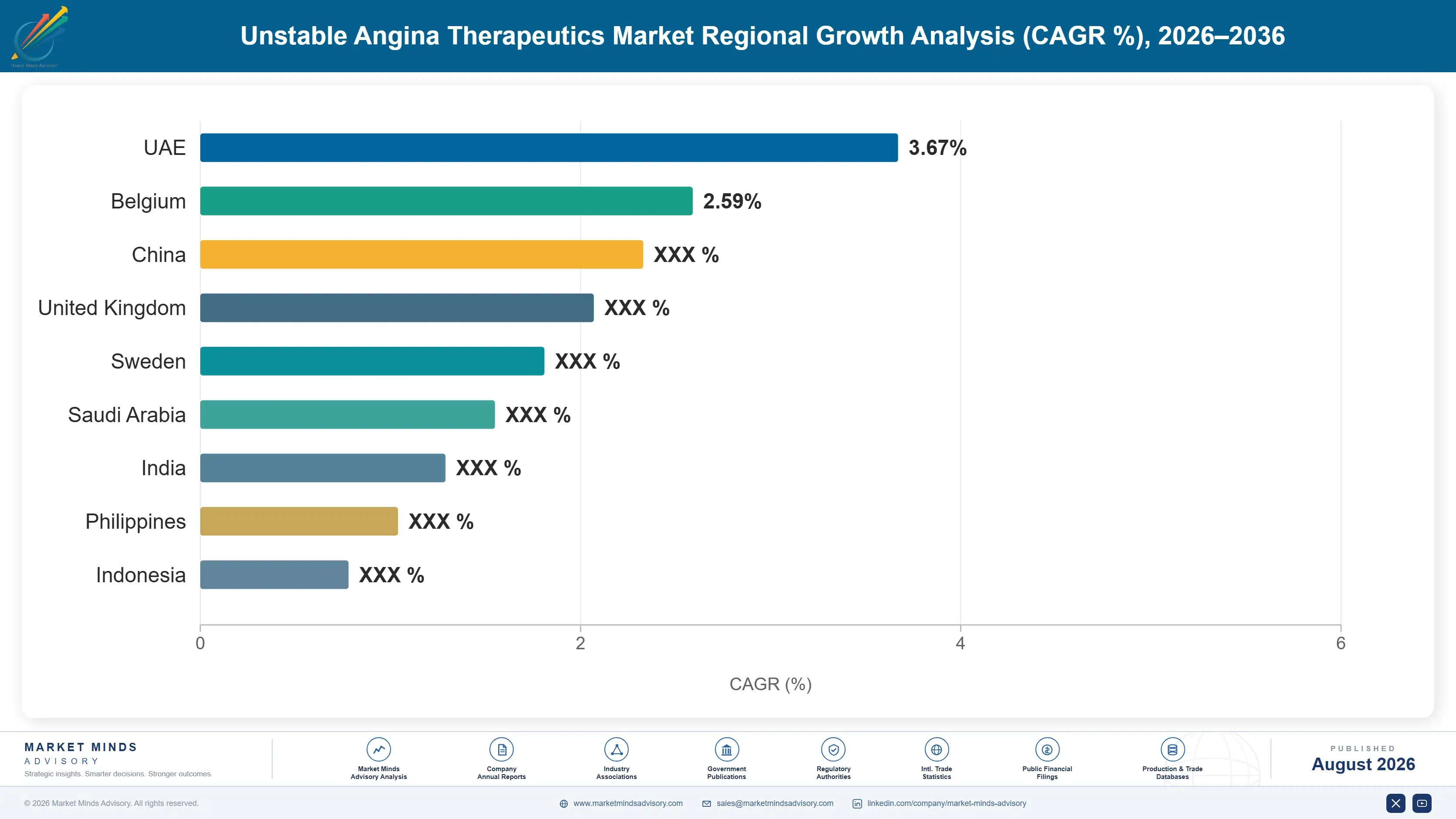
Philippines: 6.6% CAGR
Fastest Growth Region
South Asia and Pacific: 5.0% CAGR
Largest Region
East Asia: 28% of 2025 global value
Market Leaders
Sanofi, AstraZeneca, Chiesi Farmaceutici, Viatris, Teva. Source: MMA Primary Research Dataset, July 2026.
Primary Survey
n=3,800 procurement and R&D decision-makers, Q4 2025, six countries
Methodology
Demand-side build-up, cross-validated against public data, 47 expert interviews

Unstable Angina Therapeutics Market Forecast Scenarios

unstable-angina-therapeutics-market-size-forecast-scenario-1787641061625
Growth ran near 2.4% between 2020 and 2025 as high sensitivity troponin assays spread through emergency departments and steadily reclassified patients out of this diagnosis into myocardial infarction. Generic entry across the antiplatelet class removed most remaining branded value during the same period. Volume held up reasonably well because coronary disease burden kept rising, particularly across Asia, while value did not follow it.
Base case 3.2% rests on three mechanisms. Parenteral antithrombotics grow at 4.8% as differentiated spend concentrates inside the catheter laboratory rather than on wards. Anti-ischaemic agents grow at 3.8% serving the residual population with ongoing symptoms and no obstructive lesion to treat. And the Philippines grows fastest of any country at 6.6% on rising coronary burden and expanding insurance coverage together. None of the three depends on coronary prevalence, which keeps rising while this label keeps shrinking.
The bull case at 4.4% assumes catheter laboratory capacity expanding across middle income markets, since that is where the remaining differentiated agents are actually used. The bear case at 2.0% is troponin reclassification continuing to erode the diagnosis faster than coronary burden grows, which would shrink the addressable population regardless of how many people present with chest pain.

Reclassified, Genericised, Relocated

Three things happened to this market at once and none of them involved a patient getting better or worse. High sensitivity troponin assays detect myocardial injury at roughly ten times lower concentrations than the previous generation, which means around 41% of people who would once have been diagnosed with unstable angina now meet the criteria for myocardial infarction instead. The disease is being redefined by a laboratory rather than shrinking clinically.
TOP FIVE CONCENTRATION36%Originators hold few positions against widespread generic supply
RECLASSIFIED TO INFARCTION41%Former cases now labelled as myocardial infarction instead
GENERIC SHARE OF REGIMEN94%Portion of standard treatment available without any patent protection
STANDARD REGIMEN COST38 USDPrice of the core acute drug course for one patient
TROPONIN SENSITIVITY GAIN10xDetection improvement over the assay generation it replaced
CATHETER LABORATORY SHARE46%Drug value administered during procedure rather than on wards
The second change was genericisation, which is essentially complete. Aspirin, clopidogrel, unfractionated and low molecular weight heparin, beta blockers and statins are all off patent, and around 94% of a standard regimen carries no protection at all. A complete acute course costs roughly 38 dollars. Value therefore declines faster than volume, and anybody forecasting this indication from coronary disease prevalence reaches a badly misleading answer.
The third change relocated whatever value remains. Around 46% of drug spend is now administered inside the catheter laboratory rather than on a ward, in intravenous antithrombotics selected by an interventional cardiologist during a procedure rather than prescribed by a physician afterwards. That shifts the conversation to a different specialty, budget and timescale entirely.
"The population did not shrink. Somebody built a better assay and a large share of these patients woke up with a different diagnosis on the chart. Nothing about their chest pain changed at all."
Director, Cardiovascular Therapeutics Practice · MMA Healthcare and Life Sciences Practice · August 2026

Market Trends

Assay sensitivity reclassifying patients out of the diagnosis

High sensitivity troponin detects injury at roughly ten times lower concentrations than earlier assays, and around 41% of patients previously labelled unstable angina now meet infarction criteria instead. The addressable population is therefore shrinking through measurement rather than through any change in disease burden. Anybody forecasting from coronary prevalence rather than from diagnostic coding is modelling a population that no longer carries this label in most health systems. Diagnostic coding data is published and accessible, and it is the only reliable basis for sizing what actually remains under this label.
Market Impact: Philippines growing fastest at 6.6%

Differentiated value migrating into the catheter laboratory

Around 46% of drug value is now administered during the procedure rather than on a ward, in intravenous antithrombotics chosen by an interventional cardiologist in the moment. Parenteral antithrombotics grow at 4.8% accordingly, faster than anything given orally afterwards. The decision maker, the budget and the timescale all differ from ward prescribing, which most commercial organisations in this indication have never restructured to reflect properly. Protocol inclusion in a catheter laboratory tends to persist once established, since changing a procedural routine carries more friction than price alone justifies. Promotion changes nothing there.
Market Impact: Anti-ischaemic agents growing 3.8%

Market Opportunities and Growth Drivers

Coronary burden and insurance coverage expanding together

The Philippines grows fastest of any country at 6.6% as coronary disease burden rises and insurance coverage widens at the same time, which converts presenting patients into treated patients rather than merely diagnosed ones. Catheter laboratory capacity is expanding alongside both. Suppliers organised around established cardiology markets are covering populations where the diagnosis is being reclassified away faster than the underlying disease burden is growing. Coverage expansion rather than disease burden is what converts a presentation into a course of treatment anybody pays for. Reclassification runs ahead of burden growth in established markets, which reverses the usual relationship entirely.
Market Impact: Around 94% of regimen generic

Residual population needing anti-ischaemic therapy specifically

Patients with genuinely normal troponin and continuing ischaemic symptoms are now a smaller and clinically harder group, frequently involving microvascular disease or coronary spasm rather than an obstructive lesion anybody can stent. Anti-ischaemic agents grow at 3.8% serving exactly that population. They receive no procedure, no device and comparatively little attention, which makes them the part of this indication most genuinely underserved. As reclassification removes the clearer cases, this group grows proportionally larger and considerably harder to manage well. Nobody has prioritised them commercially, and the clinical need keeps growing.
Market Impact: Assays detect 10 times lower

Market Restraints and Challenges

Complete genericisation removing value from rising volume

Around 94% of a standard regimen has no patent protection and a complete acute course costs roughly 38 dollars, so rising coronary burden produces volume without producing revenue. The root cause is that the therapeutic questions in this indication were settled years ago with molecules that have since expired. Commercially it decouples value from epidemiology entirely. Parenteral agents and procedural positioning are where anything differentiated survives. Nothing promotional changes an arithmetic that the patent office settled years ago. Rising volume produces no revenue at all here. Parenteral positioning is the only survivor.
Market Impact: Around 41% now reclassified

Diagnostic redefinition shrinking the addressable population

A more sensitive assay moved roughly 41% of these patients into a myocardial infarction diagnosis, which changes the guideline pathway, the coding and the treatment protocol applied to them. The root cause is measurement improvement rather than anything clinical. Commercially it shrinks the indication even where disease burden grows. Following diagnostic coding rather than prevalence is the only reliable way to size what actually remains. Guideline pathway, coding and treatment protocol all change with the label, not just the name on a chart. Coding rather than prevalence sizes what genuinely remains.
Market Impact: Procedure share reaches 46%
4 additional market trends, 3 additional growth drivers, and 2 additional restraints and challenges are covered in the full report. Contact sales@marketmindsadvisory.com to access the complete intelligence.

Segment CAGR and Growth Architecture

Six segments split by therapy class, because class determines where the agent is administered, which specialty selects it, whether patent protection remains and the value it carries per patient. Formulation and dosing variants sit inside each class. Care setting and channel dimensions are handled separately within the framework. Class decides the setting and the specialty together.
unstable-angina-therapeutics-market-market-share-analysis-1787641062156

Parenteral Antithrombotics

Growing at 4.8%, half again the market rate of 3.2%, intravenous antithrombotics carry around 46% of drug value in this indication and are selected inside the catheter laboratory by an interventional cardiologist during the procedure itself. That places the decision with a different specialty, a different budget and a timescale measured in minutes rather than in ward rounds. Growth follows catheter laboratory capacity, particularly across middle income markets where that capacity is expanding fastest. Protocol changes move an entire institution at once rather than patient by patient, which makes each position high value and considerably less stable than its apparent persistence suggests. Capacity expansion in middle income markets is where the growth actually sits.
CAGR 4.8%

Anti-Ischaemic Agents

At 3.8% anti-ischaemic therapy serves the residual population with normal troponin and continuing symptoms, which increasingly means microvascular disease or coronary spasm rather than an obstructive lesion. These patients receive no procedure and no device, and they are consequently the least commercially attended group in the whole indication. As troponin reclassification removes the clearer cases, this population becomes proportionally larger and clinically more demanding to manage well. No revascularisation is available to them and no device applies, which leaves pharmacological management carrying the whole clinical burden for a group nobody has prioritised commercially. Reclassification is steadily increasing their share of whatever population still carries this diagnosis at all. Guidelines are only now addressing them.
CAGR 3.8%
Full segment breakdown across 6 segments available in the complete report.

Regional Architecture and Country Demand Map

East Asia holds 28% of value on coronary disease burden and catheter laboratory capacity that no other region matches for scale. North America follows at 24% on drug pricing rather than on patient numbers. South Asia and Pacific grows fastest of the seven regions covered here.

North America

High sensitivity troponin assays are implemented across essentially every emergency department here, which has reclassified this diagnosis further and faster than anywhere else. Drug pricing rather than patient numbers gives the region its share, with catheter laboratory agents carrying most of what value remains. Guideline pathways distinguish sharply between the reclassified and residual populations. Growth at 2.4% reflects reclassification offsetting an otherwise stable presenting population. Catheter laboratory agents carry most of what value remains, and the oral regimen is essentially a commodity purchase across every health system. Guideline pathways distinguish sharply between the reclassified and residual populations, which few commercial organisations have followed. Assay conversion here is essentially complete everywhere.
Share: 24% | CAGR: 2.4% (2026 to 2036)

Western Europe

Assay implementation is similarly complete and health technology assessment has removed most remaining branded positions across the oral regimen entirely. Catheter laboratory antithrombotic choice varies considerably between national systems and reflects local protocol as much as evidence. Anti-ischaemic prescribing for the residual population is more systematic here than elsewhere. Regional growth of 1.8% is the slowest anywhere on complete genericisation and continuing diagnostic reclassification. Anti-ischaemic prescribing for the residual non-obstructive population is more systematic here than in most regions, though it remains commercially neglected. Health technology assessment removed most remaining branded positions across the oral regimen some years ago now. Catheter laboratory antithrombotic choice varies considerably between national systems and reflects local protocol as much as evidence.
Share: 22% | CAGR: 1.8% (2026 to 2036)
Regional intelligence for 5 additional markets available in the complete report: East Asia, South Asia and Pacific, Latin America, Middle East and Africa, Eastern Europe. Contact sales@marketmindsadvisory.com.
unstable-angina-therapeutics-market-country-cagr-analysis-1787641062681

Four Moves in a Shrinking Label

The diagnosis is being redefined away, the regimen is generic and the remaining value moved into a procedure room. What is left is following the catheter laboratory, serving the residual population nobody wants, and forecasting from coding rather than from epidemiology. Almost nothing else is left to sell. Prevalence forecasts mislead badly. Coding is the only guide.

Sell into the catheter laboratory, not the ward

Around 46% of drug value is administered during the procedure rather than afterwards, selected by an interventional cardiologist in minutes rather than prescribed on a ward round. Parenteral antithrombotics grow at 4.8% on that concentration. Commercial organisations structured around general cardiology and hospital formulary work are reaching the wrong specialty entirely, and the budget follows the procedure rather than the admission. Protocol committees rather than prescribers decide it. Interventional cardiology and protocol committees hold the decision, and neither attends a formulary meeting. Structure follows the value. Formulary work reaches nobody who matters here.
Market Impact: Reaches the 46% of value spent in procedure

Serve the residual population nobody is attending to

Patients with normal troponin and continuing symptoms are increasingly those with microvascular disease or coronary spasm, who receive no procedure, no device and very little commercial attention. Anti-ischaemic agents grow at 3.8% serving them. As reclassification removes the clearer cases, this group becomes proportionally larger and considerably harder to manage, which makes it the one genuinely underserved position left in the indication. Nobody else is competing for them. No procedure, no device and very little attention from anybody selling anything into this indication. Reclassification keeps enlarging this group as a share of whatever population still carries the label.
Market Impact: Anti-ischaemic demand growing at 3.8% each single year

Forecast from coding rather than from prevalence

Around 41% of these patients now carry an infarction diagnosis because an assay improved by roughly ten times, and coronary prevalence figures say nothing about how many people still receive this label. Suppliers modelling from disease burden are sizing a population that has quietly moved into a different guideline pathway. Diagnostic coding data is published, accessible and the only reliable basis for anything in this indication. Coronary prevalence keeps rising while this label keeps shrinking, and reconciling the two is the whole forecasting problem. Nobody reads the coding data. Publication is free.
Market Impact: Accounts for the 41% of patients now reclassified

Follow procedural capacity into middle income markets

The Philippines grows fastest at 6.6% as coronary burden and insurance coverage rise together, and catheter laboratory capacity expansion is where the differentiated agents actually get used. A complete oral regimen costs around 38 dollars and offers nothing to compete on. Suppliers organised around established cardiology geographies are covering markets where reclassification is furthest advanced and value is falling fastest of all. Established markets are furthest along the reclassification curve. Catheter laboratory capacity expansion in middle income markets is where the remaining differentiated agents are actually used. Nothing else uses them.
Market Impact: Follows the 6.6% Philippine treatment access growth rate

Who Controls the Margin Pool

Participation is measured on annual net revenue attributable to this indication, and the top five hold 36%. Concentration is low and falling because around 94% of the regimen is generic, which leaves originators holding only parenteral agents and a small number of anti-ischaemic products with any protection remaining. The gap to challengers is procedural protocol position rather than anything about the molecules, most of which anybody can manufacture.
Competition runs on three fronts. Procedural protocol position decides catheter laboratory agents, which is where differentiated value concentrates entirely. Tender pricing decides the generic oral regimen across public systems. And clinical evidence decides anti-ischaemic prescribing for the residual population. Each front rewards a different capability, and very few participants hold more than one of them properly.

Pressure ahead comes from continued reclassification and from procedural capacity expanding in middle income markets. Expect suppliers with parenteral portfolios and catheter laboratory access to gain. Rankings shift on whoever reaches interventional cardiology rather than general medicine. Concentration should keep falling as protection expires. Oral generic manufacturers without parenteral capability look most exposed, since nothing they sell can escape tender pricing at any point.
unstable-angina-therapeutics-market-company-positioning-matrix-1787641063199

Competitive Moat and Risk Dimensions

SANOFI

Moat: Antithrombotic heritage and hospital presence

Long established antithrombotic positions and hospital relationships built across decades give the business presence in exactly the settings where acute coronary decisions are taken, even where the molecules themselves have long since lost protection. That familiarity influences protocol inclusion in a way that pricing alone does not, particularly where local guidelines were written around specific agents.
SANOFI

Risk: Complete generic erosion of value

Around 94% of the regimen in this indication is off patent and a full acute course costs roughly 38 dollars, which leaves almost nothing to defend commercially however strong the clinical heritage happens to be. Volume growth from rising coronary burden translates into very little revenue, and no promotional effort changes that arithmetic.
CHIESI FARMACEUTICI

Moat: Catheter laboratory parenteral positioning

Intravenous antithrombotic positioning inside the catheter laboratory reaches the setting carrying around 46% of drug value in this indication, where the decision is made by an interventional cardiologist during a procedure rather than by a physician on a ward. Protocol inclusion in a laboratory tends to persist.
CHIESI FARMACEUTICI

Risk: Procedural protocol displacement risk

Catheter laboratory antithrombotic choice follows local protocol and comparative trial evidence, both of which can shift a whole institution at once rather than patient by patient. A protocol change removes the entire volume from a site immediately, which makes the position high value and considerably less stable than its persistence usually suggests.

Players Tracked

Prominent Players

Sanofi
AstraZeneca
Chiesi Farmaceutici
Viatris
Teva

Other Key Players

Bristol Myers Squibb
Daiichi Sankyo
Sun Pharmaceutical Industries
Aurobindo Pharma
Cipla
Dr Reddys Laboratories
Zydus Lifesciences
Hikma Pharmaceuticals
Fresenius Kabi
Baxter International
Pfizer
Novartis
Sandoz
Gilead Sciences
Servier

Recent Developments

MARCH 2026

Emergency network completes high sensitivity assay conversion

An emergency care network completed conversion to high sensitivity troponin assays across all sites, reclassifying a substantial share of previously diagnosed unstable angina presentations into myocardial infarction under existing diagnostic criteria immediately. Coding shifted within a single quarter. Nobody's clinical presentation had altered in any way.
Signal: A single laboratory change moved all these patients between diagnoses without altering their symptoms at all
SEPTEMBER 2025

Catheter laboratory protocol change removes agent across institution

A cardiac centre changed its procedural antithrombotic protocol following comparative trial publication, removing an established agent from every case at the institution simultaneously rather than through gradual prescriber by prescriber change. The displaced agent lost the entire site immediately. No prescriber conversation preceded it. Evidence decided it.
Signal: Procedural protocol shifts move an entire institution at once, and never once patient by patient instead
JANUARY 2026

Insurance expansion converts presentations into treated patients

A national insurance expansion widened acute cardiac care coverage across a large population, converting patients who previously presented and were discharged into patients who received full acute pharmacotherapy and procedural assessment. Presenting volume was unchanged throughout. Treated volume rose sharply within two quarters. Burden was unchanged.
Signal: Coverage rather than any disease burden decides how many patients will ever actually get treated properly

Actives, Sterile Fill and Tenders

Active pharmaceutical ingredients carry around 42% of generic oral regimen cost, produced by a concentrated group of manufacturers largely in India and China. Sterile fill and finish absorbs roughly 37% of parenteral product cost, which is capacity intensive and expensive to qualify. Packaging, distribution and quality release take about 12%. Regulatory maintenance and pharmacovigilance account for the balance across both.
Cardiovascular active ingredient pricing moved with Chinese and Indian capacity across recent years, per published pharmaceutical ingredient market reporting and Viatris annual reporting for 2025 on input cost commentary. Generic manufacturers absorbed most movement, since tenders award on price against fixed budgets and a full acute course already costs around 38 dollars in total. Parenteral producers passed considerably more through, since sterile capacity narrows the qualified field and tender committees have fewer alternatives to threaten with.

Exposure divides on presentation rather than on scale. An oral generic manufacturer carries ingredient cost against tender pricing with essentially no pass through available. A parenteral producer carries sterile capacity cost supported by pricing that procedural positioning sustains. A manufacturer holding an anti-ischaemic agent with remaining protection carries neither exposure meaningfully, which is a considerably more comfortable position than either.
unstable-angina-therapeutics-market-cost-volatility-analysis-1787641063396

Secure active ingredient supply on multi-year agreements

Active ingredients carry over two fifths of oral generic cost and come from a concentrated manufacturing base where capacity swings between years. Multi-year supply agreements secure both price and availability, and the volume commitment is straightforward because acute coronary demand is planned nationally and forecast reliably from presentation data. Presentation data forecasts reliably. Commitment is straightforward.

Concentrate investment in parenteral rather than oral presentation

Around 46% of value sits in the catheter laboratory and parenteral agents grow at 4.8% while the oral regimen is entirely generic and priced accordingly. Sterile capacity is expensive to build and qualify, and it reaches the only part of this indication where anything differentiated survives commercially at all. Sterile capability is the barrier.

Support procedural protocol positions with comparative evidence

Catheter laboratory protocols move an institution at once and are decided on comparative trial evidence rather than promotion, which makes evidence generation the only defensible investment in that setting. Protocols also persist once established, so evidence supporting a position pays back across years rather than needing continuous renewal. Evidence outlasts promotion here. Positions persist for years.

Portfolio Architecture for Margin Defence

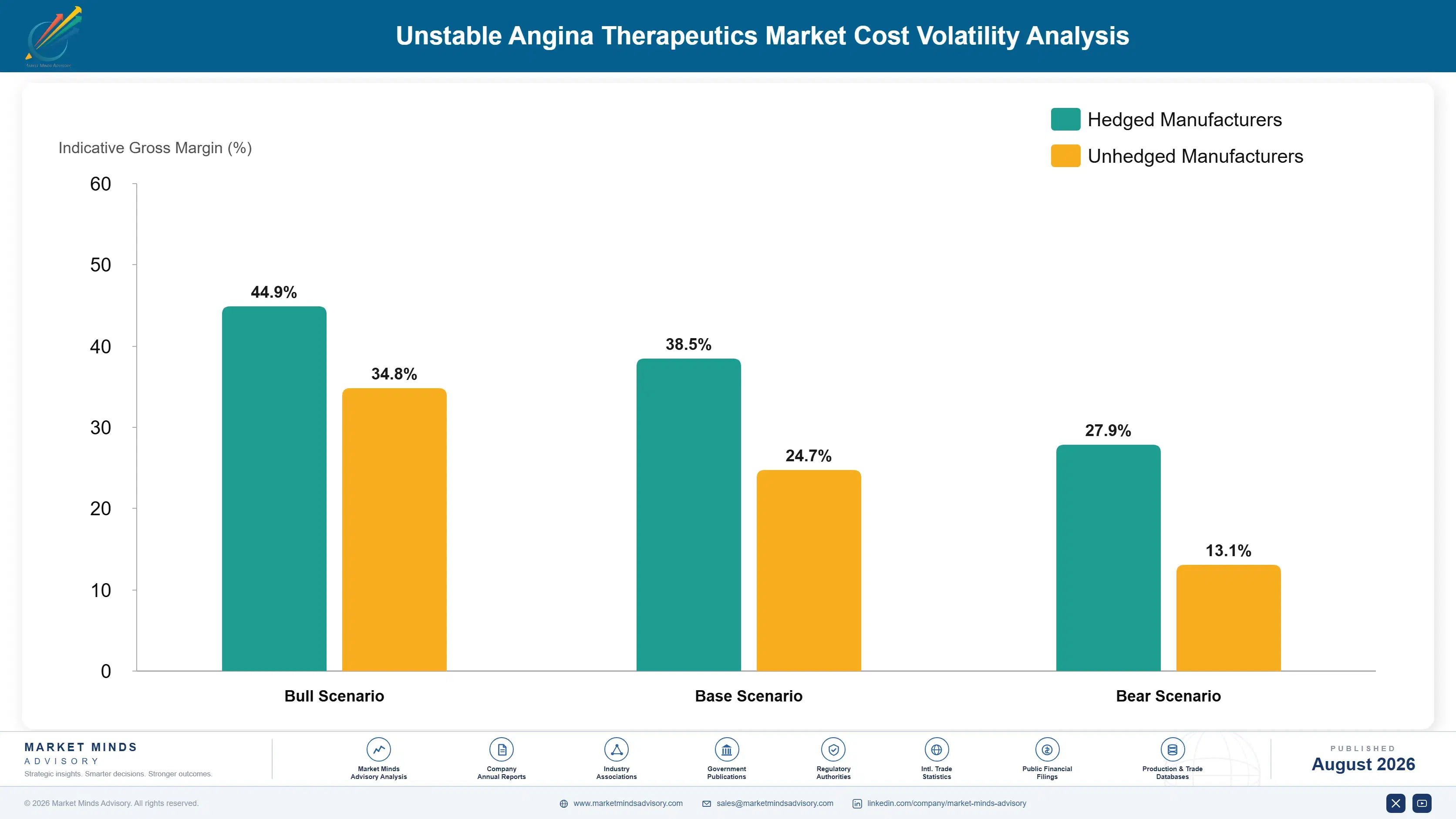
Margin here follows presentation and remaining protection rather than clinical importance, because the most essential agents in this indication are also the cheapest and the oldest. Generic oral antiplatelets, beta blockers and statins earn margins in the high single digits to high teens, procured through tenders that award on price with nothing else assessed. Clinical importance and commercial value have entirely separated at this level.
Generic parenteral antithrombotics do better in the high teens to low thirties, because sterile manufacturing narrows the qualified field considerably even where the molecule itself is long off patent. Approvals rather than chemistry decide who can supply these products. Molecule access is universal while manufacturing approval is not.

Protected parenteral agents and anti-ischaemic products hold the strongest position, reaching into the high fifties, where procedural protocol inclusion or remaining exclusivity supports pricing that the generic regimen cannot approach. Those margins depend on protocol positions holding and on the residual population being large enough to matter, neither of which is entirely within any supplier's control. Neither protocol durability nor the size of the residual population is entirely within any supplier's control.

Generic Oral Regimen Agents

Off patent products procured through tenders awarding purely on price. The nine point range reflects manufacturing scale and ingredient sourcing rather than any clinical difference between the available suppliers. Volume without revenue is the pattern.
Gross Margin: 9-18%

Generic Parenteral Antithrombotics

Sterile products where manufacturing capability narrows the qualified supplier field considerably. The thirteen point range reflects sterile capacity position and how many manufacturers hold the relevant approvals. Sterile capacity is the real barrier.
Gross Margin: 18-31%

Protected Parenteral and Anti-Ischaemic Agents

Agents holding protocol positions or remaining exclusivity inside a largely generic indication. The fourteen point range reflects protocol durability and how much of the residual population an agent actually serves.
Gross Margin: 44-58%
unstable-angina-therapeutics-market-portfolio-architecture-1787641063898

High-value Sub-segments and Strategic Watch-out

Parenteral Antithrombotics

High value and the fastest growth at 4.8%, carrying around 46% of drug value inside the catheter laboratory. Protocol changes move an entire institution at once rather than patient by patient. Interventional cardiology rather than general medicine decides who supplies them. Capacity expansion drives the growth.
Gross Margin: 30-48%

Anti-Ischaemic Agents

High value and growing at 3.8% serving patients with normal troponin and continuing symptoms. They receive no procedure and very little commercial attention, which makes them genuinely underserved. Microvascular disease and coronary spasm dominate this group clinically. Pharmacological management carries the entire clinical burden for them.
Gross Margin: 36-54%

Generic Oral Antiplatelets

The volume core, essential clinically and worth almost nothing commercially at roughly 38 dollars for a complete acute course. Rising coronary burden produces volume without producing revenue anywhere. Tender committees award purely on price with nothing else assessed at all. Clinical importance and commercial value have separated completely.
Gross Margin: 9-18%

Diagnostic Reclassification Exposure

The strategic watch-out. Around 41% of patients now carry a different diagnosis entirely, and the range reflects whether a supplier forecasts from coding data or from coronary disease prevalence. Coding data is published and almost nobody in the industry uses it. Prevalence based forecasting overstates this market badly.
Gross Margin: 0-40%

One Admission, Then Elsewhere

Demand here is episodic rather than chronic, which distinguishes it sharply from most cardiovascular therapeutics. An acute presentation generates a short intensive course of treatment and then the patient moves onto secondary prevention under a different diagnosis and a different guideline pathway. The indication therefore captures a few days of therapy per patient rather than years, which is why value per case is small. Chronic economics do not apply.
Stickiness sits almost entirely with procedural protocol rather than prescriber preference. A catheter laboratory protocol naming an antithrombotic governs every case at that institution until the protocol changes, at which point the entire volume moves at once. Ward prescribing of generic agents follows formulary and tender outcomes, and reopens with every procurement cycle without anybody in clinical practice being consulted.

The deciding party moved with the value. Interventional cardiologists and catheter laboratory protocol committees decide the agents carrying around 46% of spend. Hospital procurement decides the generic remainder on price. General cardiologists and physicians decide anti-ischaemic therapy for the residual population, which is the only part where a prescriber conversation still influences anything commercially. Three functions, three conversations.
unstable-angina-therapeutics-market-end-use-penetration-index-1787641064390

Where We Would Put Effort

These are among the four positions where our research anticipates prominent divergence between winners and laggards over the coming forecast period. Each is grounded in the demand model, the regulatory perimeter, and the announced capacity pipeline.
01 / PROCEDURAL SETTING ACCESS

The value moved to a different room

Around 46% of all drug value in this indication is now administered during the procedure rather than afterwards, selected by an interventional cardiologist within minutes rather than prescribed by a physician on a ward round. Parenteral antithrombotics are growing at 4.8% on exactly that concentration of remaining value. Commercial organisations that are still structured around general cardiology and hospital formulary work are reaching entirely the wrong specialty, and the budget itself follows the procedure rather than following the admission at all.
02 / RESIDUAL POPULATION FOCUS

Nobody is serving what remains

Patients with normal troponin and continuing ischaemic symptoms increasingly turn out to have microvascular disease or coronary spasm, receive neither a procedure nor a device, and attract very little commercial attention from anybody at all. Anti-ischaemic agents are growing at 3.8% serving precisely that population instead. As reclassification steadily removes the clearer cases from this diagnosis, that group becomes proportionally larger and considerably harder to manage well, which makes it the one genuinely underserved commercial position left anywhere in this indication.
03 / CODING BASED FORECASTING

Prevalence tells you nothing here

Around 41% of these patients now carry a myocardial infarction diagnosis simply because a blood assay improved by roughly ten times in sensitivity, and coronary disease prevalence figures say nothing at all about how many people still receive this particular label. Suppliers who are still modelling from disease burden are sizing a population that has quietly moved into an entirely different guideline pathway. Diagnostic coding data is published, freely accessible and remains the only reliable basis available to anybody here.
04 / PROCEDURAL CAPACITY FOLLOWING

Differentiated agents need a catheter lab

The Philippines grows fastest of any country covered here at 6.6% as coronary disease burden and insurance coverage rise together, and catheter laboratory capacity expansion is exactly where the differentiated agents in this indication actually get used at all. A complete oral regimen costs around 38 dollars in total and offers nothing whatsoever that is worth competing over. Suppliers still organised around the established cardiology geographies are covering markets where reclassification is furthest advanced and where value is falling fastest.

Engagement Snapshot From the Field

A live engagement with an industry participant carrying material or product regulatory and market exposure ahead of a defining policy shift, showing how our research translates into a defensible multi-year portfolio strategy.
MARKET MINDS ADVISORY · CLIENT ENGAGEMENT SUMMARY
Unstable Angina Therapeutics Producer Strategic Portfolio Review and Transition Roadmap 2026·Investment Scenario on Unstable Angina Therapeutics Exposure Evaluation 2025-26
CLIENT PROFILE
A cardiovascular pharmaceutical company supplying oral and parenteral acute coronary agents across European and Asian markets, at annual revenue near 520 million dollars (client-reported, unverified by MMA). Commercial coverage ran through general cardiology and hospital formulary relationships. Forecasting relied on coronary disease prevalence rather than on diagnostic coding data. Interventional coverage was absent. Coverage was formulary led.
STRATEGIC CHALLENGE
Revenue attributed to this indication had fallen for four consecutive years despite rising coronary disease burden in every market served. Management wanted to understand whether the decline reflected competitive loss or something structural they had not identified. Internal expectations and observed revenue had diverged for years. Something structural was at work.
MMA APPROACH
MMA reconciled diagnostic coding against coronary prevalence by market, traced where drug value was actually administered within the care pathway, assessed catheter laboratory protocol decision making, and sized the residual non-obstructive population. Interviews with 47 experts covered interventional cardiology, emergency medicine, hospital pharmacy and laboratory medicine. Coding data was reconciled separately.
KEY FINDINGS
  1. Diagnostic coding showed a substantial share of the previous population reclassified as myocardial infarction following assay conversion, which no commercial forecast had ever accounted for.
  2. Nearly half of drug value was administered inside the catheter laboratory, a setting the client's commercial organisation had almost no structured relationship with at all.
  3. Catheter laboratory protocols moved whole institutions at once on comparative evidence, making promotional coverage largely irrelevant to the outcome in that setting.
  4. The residual non-obstructive population was growing proportionally and receiving very little structured pharmacological attention from any manufacturer in the market. Nobody was addressing it.
CLIENT PROFILE
A cardiovascular pharmaceutical company supplying oral and parenteral acute coronary agents across European and Asian markets, at annual revenue near 520 million dollars (client-reported, unverified by MMA). Commercial coverage ran through general cardiology and hospital formulary relationships. Forecasting relied on coronary disease prevalence rather than on diagnostic coding data. Interventional coverage was absent. Coverage was formulary led.
STRATEGIC CHALLENGE
Revenue attributed to this indication had fallen for four consecutive years despite rising coronary disease burden in every market served. Management wanted to understand whether the decline reflected competitive loss or something structural they had not identified. Internal expectations and observed revenue had diverged for years. Something structural was at work.
MMA APPROACH
MMA reconciled diagnostic coding against coronary prevalence by market, traced where drug value was actually administered within the care pathway, assessed catheter laboratory protocol decision making, and sized the residual non-obstructive population. Interviews with 47 experts covered interventional cardiology, emergency medicine, hospital pharmacy and laboratory medicine. Coding data was reconciled separately.
KEY FINDINGS
  1. Diagnostic coding showed a substantial share of the previous population reclassified as myocardial infarction following assay conversion, which no commercial forecast had ever accounted for.
  2. Nearly half of drug value was administered inside the catheter laboratory, a setting the client's commercial organisation had almost no structured relationship with at all.
  3. Catheter laboratory protocols moved whole institutions at once on comparative evidence, making promotional coverage largely irrelevant to the outcome in that setting.
  4. The residual non-obstructive population was growing proportionally and receiving very little structured pharmacological attention from any manufacturer in the market. Nobody was addressing it.
RECOMMENDED STRATEGY
Phase 1: Phase one: rebase forecasting on diagnostic coding rather than coronary prevalence, since reclassification explains most of the revenue decline. Coding explains the gap. Phase 2: Phase two: restructure commercial coverage toward interventional cardiology and catheter laboratory protocol committees where the value now sits. Formulary work reaches nobody. Phase 3: Phase three: build an evidence position in non-obstructive ischaemic disease, which is growing proportionally and currently unattended. The group keeps growing.
OUTCOME
The company rebased its forecasting on coding data during 2026 and internal expectations aligned with observed revenue for the first time in years (client-reported, unverified by MMA). Interventional coverage was established, and evidence work in non-obstructive disease was funded. Prevalence based planning was abandoned entirely across every market served.

Frequently Asked Questions

Foundational context covering the market sizes, CAGR, scope, country, region and competition that inform every finding below. This section is provided to cover basics and most often pre-purchase conversations, answered from the MMA Primary Research Dataset.

What is the current size of the Unstable Angina Therapeutics Market?

MMA sizes it at USD 1.85 billion in 2025, rising to USD 1.91 billion in 2026. The figure covers acute and early pharmacotherapy attributable to this indication at net selling value.

How large will the Unstable Angina Therapeutics Market be by 2036?

USD 2.62 billion by 2036, an incremental USD 0.71 billion over the 2026 base and an expansion multiple of 1.37 times. Parenteral agents carry most of that gain.

What is the CAGR for the Unstable Angina Therapeutics Market 2026 to 2036?

3.2% in the base case, with a bull case at 4.4% and a bear case at 2.0%. Diagnostic reclassification pace drives most of the spread between them.

Which segment is growing fastest?

Parenteral antithrombotics at 4.8%, half again the market rate of 3.2%. They carry around 46% of drug value and are selected inside the catheter laboratory.

Who are the major companies in the Unstable Angina Therapeutics Market?

Sanofi, AstraZeneca, Chiesi Farmaceutici, Viatris and Teva lead on attributable revenue. Fifteen further participants are profiled in the full report on the same consistent net revenue basis.

Which country is growing fastest?

The Philippines at 6.6%, where rising coronary disease burden and widening insurance coverage are converting presenting patients into fully treated ones across the whole health system.

Report Segmentation Architecture

The full report scope spans multiple orthogonal segmentation dimensions, with cross-tabulated demand data provided for each dimension pair. Coverage extends further to regional breakdowns, trend trajectories, and the competitive detail needed to support segment-level decision-making.

By Therapy Class

  • Oral Antiplatelet Agents
  • Parenteral Antithrombotics
  • Anti-Ischaemic Agents
  • Lipid Lowering Therapy Initiated Acutely
  • Beta Blockers and Rate Control
  • Adjunctive and Supportive Therapy

By End-Use Industry

  • Emergency Departments
  • Catheter Laboratories
  • Coronary Care Units
  • General Cardiology Wards
  • Outpatient Cardiology Follow-Up
  • Clinical Trial Programmes

By Commercial Dimension

  • Hospital Formulary Supply
  • National Tender Procurement
  • Catheter Laboratory Protocol Supply
  • Retail and Specialty Pharmacy
  • Insurance Reimbursed Treatment
  • Clinical Study Supply

By Region

  • North America
  • Western Europe
  • East Asia
  • South Asia and Pacific
  • Latin America
  • Middle East and Africa
  • Eastern Europe

Scope, Methodology, and Coverage

Every figure in this report is reproducible from documented input assumptions. The scope below maps the historical period, the forecast horizon, the segmentation dimensions, and the countries covered, alongside the underlying primary and qualitative methodology.
Historical Period
2020 to 2025
Forecast Period
2026 to 2036
Base Year
2025 (USD billions; MMA Primary Research Dataset, August 2026)
Market Definition
Pharmacological treatment of unstable angina in the acute and early post-event period, covering oral antiplatelet agents, parenteral antithrombotics, anti-ischaemic agents, lipid lowering therapy initiated acutely, beta blockers and rate control, and adjunctive and supportive therapy. Measured at manufacturer net selling value attributable to this indication. Percutaneous and surgical revascularisation, cardiac devices, chronic stable angina maintenance therapy, and diagnostic testing are excluded from scope.
Quantitative Units
USD billions (net prices); treated episodes; USD per treated episode by therapy class
Segmentation Dimensions
Therapy class; end-use industry; commercial dimension; region
Regions Covered
North America, Western Europe, East Asia, South Asia and Pacific, Latin America, Middle East and Africa, Eastern Europe
Countries Covered
United States, Canada, Mexico, Germany, France, United Kingdom, Italy, Spain, China, Japan, South Korea, Taiwan, India, Philippines, Australia, Brazil, Argentina, Saudi Arabia, South Africa, Poland
Key Companies Profiled
Sanofi, AstraZeneca, Chiesi Farmaceutici, Viatris, Teva, Bristol Myers Squibb, Daiichi Sankyo, Sun Pharmaceutical Industries, Aurobindo Pharma, Cipla, Dr Reddys Laboratories, Zydus Lifesciences, Hikma Pharmaceuticals, Fresenius Kabi, Baxter International, Pfizer, Novartis, Sandoz, Gilead Sciences, Servier
Quantitative Methodology
Primary survey, n=3,800 respondents, Q4 2025, six countries; demand-side model with trade association cross-validation
Qualitative Methodology
47 expert interviews, Q4 2025; applied to validate demand model assumptions, identify emerging dynamics, and assess competitive positioning
Report Format
PDF and XLSX data workbook (Word format preview document)
Publisher
Market Minds Advisory
Report Code
MMA-2026-HLT-141
Published
August 2026
Contact
sales@marketmindsadvisory.com | www.marketmindsadvisory.com

Purchase the full Unstable Angina Therapeutics Market Report (2026 to 2036).

The full report treats unstable angina as a diagnosis being redefined by a laboratory assay rather than by anything clinical, which is why forecasting from coronary prevalence has misled this industry for a decade. It sizes all six therapy classes independently through 2036, reconciles diagnostic coding against disease burden by market, and traces where drug value is actually administered along the pathway. Regional chapters cover all seven regions with assay implementation assessed separately from coronary burden. Competitive profiling covers 20 participants on one consistent net revenue basis.
Six therapy classes sized independently through 2036
Diagnostic coding reconciled against coronary disease prevalence by market
Drug value traced by administration setting along the care pathway
Assay implementation assessed separately from coronary burden regionally
Residual non-obstructive population sized against reclassified cases
Twenty participants profiled on one consistent net revenue basis

Built For The People Who Decide

From boardroom strategy to bench-side execution, this report is read cover-to-cover by leaders shaping the next decade of their industry, turning demand scenarios, market dynamics and valuation benchmarks into decisions.
CXOs/ Presidents/ VPs/ Managers
M&A and Corporate Development
Strategy Teams and R&D Heads
Procurement and Product Directors
Regulatory and Compliance Leaders
Investor Relations and Equity Analysts