

Market Minds Advisory
Demand for Cassava Flour in USA

Demand for Cassava Flour in USA: Demand for Cassava Flour in USA. Grain-Free Baking and Import Sourcing Reshape a Niche Staple Ingredient.

Grain-free and gluten-free baking demand in the United States is pulling cassava flour from an African and Asian staple into premium pantry formulations, while root supply, cyanide safety, and import logistics decide who can scale.

Lead Analyst

Published

September 2026

Make Smarter Decisions with Customized Research Insights

Request a free sample report and evaluate market opportunities, growth trends, and competitive dynamics relevant to your business needs.

2025 MARKET VALUE$4.6BMarket Size 2025
2036 FORECAST VALUE$11.3BBase Case , 2026 to 2036
CAGR 2026 TO 20368.5 %Bull 9.8% / Bear 7.2%
INCREMENTAL OPPORTUNITY$6.3BNet 10- year value creation
EXPANSION MULTIPLE2.26x2036 value over 2026 base
Strategic Levers
M&A Pipeline
Regional Outlook
Country Rankings
Competitive Intelligence
Segmental Deep-dive
Call-Us : 91 93563 13602

Executive Snapshot and Market Trajectory.

Cassava flour is moving from a subsistence staple in Africa and Asia to a premium grain-free baking ingredient in the United States. American shoppers with celiac disease, paleo diets, or gluten sensitivity now buy it as a one-to-one wheat replacement, and brands are building entire product lines around the ingredient.
Organic and baking-grade cassava flour is growing fastest, helped by specialty retailers, e-commerce, and grain-free snack launches, while high-quality cassava flour for industrial bakeries broadens use. Most value still sits in Africa and Southeast Asia, where cassava is grown and eaten daily, but the United States leads premium demand and imports much of its supply from Thailand, Vietnam, and West Africa. Grain-free snack and tortilla makers are the newest large buyers.
Competition rests on root supply, safe detoxification, and consistent milling rather than brand alone, because raw cassava contains cyanogenic compounds and quality varies sharply between producers. Importers and US brands audit processors for heavy metals and residual cyanide, and long ocean transit adds cost, so integrated origin processors and established US distributors hold advantages over new entrants. Contamination scares would quickly reshuffle supplier rankings overnight.
Market Definition
Cassava flour comprises peeled, dried, and milled whole cassava root (Manihot esculenta) sold as a wheat-free flour for household baking and food manufacturing. The scope covers global production and trade with emphasis on United States demand, and excludes cassava starch and tapioca pearls, garri and fufu products sold as prepared foods, and animal feed chips.
Base Year Value
$4.6B in 2025 (MMA Primary Research Dataset, September 2026)
Forecast Period
2026 to 2036, eleven discrete annual values
CAGR
8.5% base case. Bull 9.8%. Bear 7.2%.
Fastest Growth Segment
Organic Cassava Flour: 11.5% CAGR
Fastest Growth Country
USA: 11.0% CAGR
Fastest Growth Region
South Asia and Pacific: 10.3% CAGR
Largest Region
Middle East and Africa: 26% of 2025 global value
Market Leaders
Bob's Red Mill, Otto's Naturals, Thai Wah, Ingredion, Cargill. Source: MMA Analysis, company annual reports.
Primary Survey
n=3,800 procurement and R&D decision-makers, Q4 2025, six countries
Methodology
Demand-side build-up, cross-validated against public data, 47 expert interviews

Demand for Cassava Flour in USA Market Forecast Scenarios

united-states-cassava-flour-market-size-forecast-scenario-1789749921332
Between 2020 and 2025, cassava flour grew quickly from a small base in the United States as grain-free and gluten-free diets went mainstream and home baking surged. Growth averaged 7.6% a year globally, with American demand expanding faster than staple consumption in Africa, while import supply from Thailand and Vietnam scaled up to meet new retail listings and food manufacturer trials.
The base case assumes 8.5% annual growth through 2036, built on three mechanisms: continued adoption of grain-free and gluten-free products in the United States, where cassava replaces wheat one for one in tortillas, breads, and snacks, expansion of standardized high-quality cassava flour processing in Nigeria, Ghana, and Southeast Asia, and rising urban demand for convenient flour in West Africa. Improved detoxification and testing standards support export growth. Lower freight rates would also help.
The bull case, reaching 9.8%, needs faster grain-free product launches and lower ocean freight and tariffs. The bear case, falling to 7.2%, reflects cassava disease outbreaks, drought, or safety incidents involving residual cyanide that erode consumer trust, plus competition from almond, coconut, and plantain flours that some brands prefer when cassava root prices rise or supply tightens.

Grain-Free Demand Meets Tropical Root Processing Limits

Cassava flour is a processing business built on a perishable root. Fresh cassava starts to deteriorate within a couple of days of harvest, so peeling, grating, drying, and milling must happen close to the fields, and value depends on how quickly and safely processors turn roots into stable flour. That geography places production in tropical countries while premium demand sits in the United States and Europe.
MARKET CONCENTRATION21% CR5Top five suppliers hold a modest combined market share
AVERAGE SELLING PRICE$3.40 per kgRetail baking-grade flour sells far above industrial grades
TOP PRODUCING COUNTRY34% shareLeading producer supplies about a third of world root output
ORGANIC SHARE14%Certified organic grades remain a small but rising niche
IMPORT DEPENDENCE82%Most American supply arrives from overseas processors each year
ROOT COST SHARE58% of COGSFresh roots dominate cost before drying and milling expenses
Safety and consistency set the price. Raw cassava contains cyanogenic glycosides that must be reduced through grating, pressing, and drying, and buyers test for residual cyanide, heavy metals, and microbial load. Processors with modern dryers, laboratories, and traceability earn premiums and win American retail listings, while small artisanal producers selling variable flour through informal channels struggle to reach consistent, large-volume customers.
American demand is driven by health and lifestyle choices rather than tradition. Shoppers with celiac disease, paleo and grain-free followers, and parents avoiding wheat allergens buy cassava flour because it bakes and browns more like wheat than most alternatives, though price is several times higher. Online retail and specialty grocers built the early market, and mainstream supermarkets are now listing branded packs and grain-free baking mixes.
"American shoppers think they are buying a trendy flour. What they are really buying is a root processing system in West Africa or Southeast Asia, and its quality controls decide whether the trend lasts."
Practice Lead, Agricultural Commodities and Food Ingredients Practice · MMA Agricultural Commodities and Food Ingredients Practice · September 2026

Market Trends

Grain-Free Product Launches Build Cassava Flour Demand Lines

American brands are launching grain-free tortillas, breads, crackers, pasta, and snack products built on cassava flour, and mainstream grocery chains are giving them shelf space beside conventional gluten-free lines. Cassava's neutral taste, stretch, and browning make it attractive for formulators seeking a one-to-one wheat replacement. This shift creates larger, more predictable orders for suppliers that can deliver consistent flour, and it pushes suppliers to publish testing data for buyers. Because cassava flour is priced at a large premium to wheat, brands market the products on quality and diet fit, and retailers reward launches that show repeat purchase.
Market Impact: gluten-free shoppers exceed 20% of households

Origin Processors Upgrade to Standardized Export-Grade Flour

Processors in Nigeria, Ghana, Thailand, and Vietnam are investing in flash dryers, hammer mills, and laboratories to make standardized high-quality cassava flour, and development agencies support programs that cut moisture, cyanide, and microbial variation. Larger, better-equipped plants can meet American and European audit standards, while artisanal producers are being consolidated into outgrower schemes. This professionalization raises cost but widens export supply and improves buyer confidence. Buyers now ask for lot-level cyanide, heavy metal, and microbial results, and origin processors that publish data win listings faster than mills that only provide generic supplier certificates.
Market Impact: processing capacity growing 9% annually

Market Opportunities and Growth Drivers

Wheat-Free Diets Widen the American Buyer Base

Celiac disease, non-celiac gluten sensitivity, and lifestyle diets such as paleo and grain-free eating have expanded the population buying wheat-free flour, and American shoppers are willing to pay several times the price of wheat flour for products that bake well. Physicians, dietitians, and social media influencers recommend cassava flour as a versatile alternative, and retailers have widened aisles accordingly. This demand base supports steady import volumes and repeat purchasing across households. Grocery chains have responded by adding dedicated grain-free aisles and private label cassava products, which signals that demand is broadening beyond specialty stores.
Market Impact: roots spoil within 48 hours

Origin Governments Promote Cassava Value-Addition Programs

Cassava is a hardy crop that grows on marginal land, and governments and development agencies in West Africa and Southeast Asia are promoting processing programs to add value to roots that would otherwise spoil. Export-oriented flour plants create rural jobs and foreign exchange, and international buyers are signing supply agreements that finance drying equipment. This institutional support expands supply capacity and lowers unit cost over time, helping American buyers secure volume. Development lenders finance dryers and outgrower training, and several plants now export directly to American brands, which reduces reliance on intermediaries and improves traceability.
Market Impact: testing adds 7% to unit cost

Market Restraints and Challenges

Root Perishability Limits Processing Reach and Raises Losses

Fresh cassava roots deteriorate within one to three days, and drying and milling must happen quickly, so supply depends on processing plants close to fields. The root cause is high moisture and enzymatic browning after harvest, combined with weak rural roads and cold chain gaps. Losses raise costs and limit quality. Mitigation includes mobile processing units, outgrower schemes, fast flash drying, and investment in rural logistics and storage near farms. Investments in mobile grating units and village-level dryers are extending reach, but rural road quality and power supply still limit how far processing can spread quickly.
Market Impact: grain-free launches up 18% in 2025

Cyanide and Heavy Metal Concerns Raise Testing Burden

Raw cassava contains cyanogenic glycosides, and poorly processed flour can carry residual cyanide, while some regions have soils with heavy metals that accumulate in roots. The root cause is variable processing and testing at small mills. A single safety incident can damage consumer trust and trigger recalls. Buyers respond with lot testing, certified suppliers, and traceability, though these steps raise cost and shut out many small producers. Some governments have introduced limits on residual cyanide, and American importers now reject lots that exceed conservative thresholds, so processors must invest in detoxification steps and laboratory capacity to keep export access.
Market Impact: export-grade plants expanding 11% yearly
3 additional market trends, 4 additional growth drivers, and 3 additional restraints and challenges are covered in the full report. Contact sales@marketmindsadvisory.com to access the complete intelligence.

Segment CAGR and Growth Architecture

Cassava flour is segmented by grade and certification, because safety testing, organic status, and milling specification determine price and buyer type more directly than root variety does. Organic and baking-grade products are attracting most investment as American retailers and brands pay premiums for documented, consistent flour suited to grain-free baking. Buyers therefore pay for certified consistency.
united-states-cassava-flour-market-market-share-analysis-1789749921603

Organic Cassava Flour

Organic cassava flour is the fastest-growing segment because American shoppers and brands seeking clean-label, grain-free products prefer certified organic ingredients, and retailers use organic claims to justify premium shelf pricing. Supply is limited because organic conversion requires documented farming practices, audits, and segregated processing, and many cassava farms in West Africa and Southeast Asia operate without certification. Processors that build organic outgrower programs and hold international certificates are signing multi-year contracts with American brands that want reliable volume and traceable sourcing stories for premium packs. Traceability stories tied to named farmer groups strengthen marketing, and processors report that certified lots sell out quickly when American retailers run seasonal grain-free promotions each year.
CAGR 11.5%

Baking-Grade Cassava Flour

Baking-grade cassava flour is the second-fastest segment, finely milled and tested for consistent particle size, moisture, and low cyanide, and sold in retail packs and to bakeries that need one-to-one wheat replacement. Achieving consistent texture requires controlled drying and milling, and quality varies more than for wheat flour, so buyers pay for suppliers with strong reputations. Brands invest in recipes and education to build repeat purchasing, and specialty grocers, online stores, and warehouse clubs are widening distribution across the United States. Warehouse clubs and online stores buy in large packs, which favors suppliers that can deliver stable quality at scale and provide lot testing documentation. Several brands also sell ready baking mixes using the flour.
CAGR 10.0%
Full segment breakdown across 6 segments available in the complete report.

Regional Architecture and Country Demand Map

Cassava flour value follows both root geography and premium demand. Africa and Asia grow and eat most of it, while the United States leads high-margin grain-free consumption and depends heavily on imports from tropical processing hubs. Growth is fastest from small bases in the coming decade.

North America

North America holds 22% share, driven almost entirely by United States demand from grain-free, gluten-free, and paleo households, specialty bakeries, and snack brands that buy cassava flour at premium prices. Bob's Red Mill and Otto's Naturals lead retail packs, and online marketplaces supply many shoppers. Nearly all supply is imported from Thailand, Vietnam, and West Africa, so freight, tariffs, and safety testing determine landed cost, and recalls or cyanide scares can quickly damage confidence. Warehouse clubs, natural food chains, and online marketplaces carry most packs, and grain-free tortilla and snack makers are becoming larger industrial buyers. Recalls or negative testing news spread quickly through social media, so brands invest in independent laboratory results and published sourcing information.
Share: 22% | CAGR: 9.5% (2026 to 2036)

Western Europe

Western Europe holds 18% share, with the United Kingdom, Germany, France, and the Netherlands importing cassava flour for gluten-free bakeries, health food stores, and African and Caribbean diaspora communities. European Union contaminant rules are strict, so buyers rely on tested suppliers, and importers in the Netherlands and Belgium serve as distribution hubs. Growth is steady, though grain-free lifestyle demand is less intense than in the United States. The United Kingdom has a large gluten-free market and established African and Caribbean retail channels, while German and French organic chains list premium packs. European buyers demand strict contaminant compliance and traceability documentation, which favors suppliers with laboratory data and importers with regulatory expertise in the Netherlands and Belgium.
Share: 18% | CAGR: 7.0% (2026 to 2036)
Regional intelligence for 5 additional markets available in the complete report: East Asia, South Asia and Pacific, Latin America, Middle East and Africa, Eastern Europe. Contact sales@marketmindsadvisory.com.
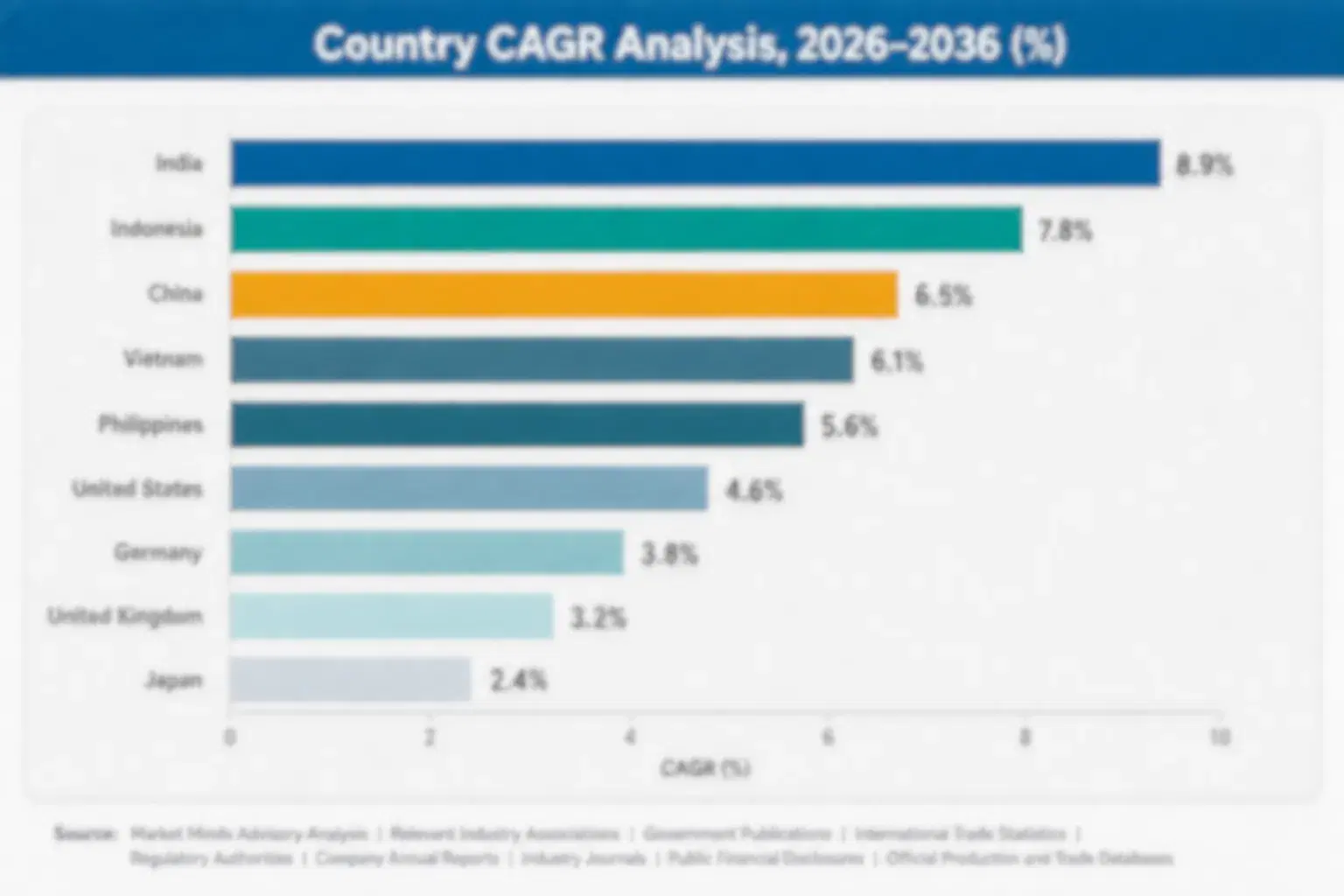
united-states-cassava-flour-market-country-cagr-analysis-1789749921937

Four Margin Levers Behind Cassava Flour Profits

Margin in cassava flour comes from safe, consistent processing and from reaching premium American retail channels, not from raw root volume. Processors that secure root supply, add certified organic and baking-grade lines, invest in testing, and sell directly to brands can earn several times the return of exporters selling variable bulk flour through traders.

Upgrading Bulk Flour to Baking-Grade Retail Products

Baking-grade cassava flour sells for two to three times the price per kilogram of industrial or bulk flour, because American shoppers and bakeries pay for consistent texture, low cyanide, and reliable supply. Upgrading requires controlled dryers, fine milling, and laboratory testing, which raise capital and compliance costs, but processors with committed brand customers report attractive returns. Early movers also secure multi-year supply agreements that later entrants find difficult to win. Payback typically arrives within three years once utilization passes 70%, and long-term customer contracts reduce the risk of stranded capacity for processors.
Market Impact: baking-grade earns 2 to 3 times bulk price

Building Organic Outgrower Programs for Certified Supply

Organic cassava flour earns premiums of 25% to 40% over conventional flour, and processors that organize smallholders into certified outgrower schemes secure both volume and traceability. Programs need training, audits, and segregated processing, and conversion takes years, but they reduce raw material risk and appeal to American brands that want farmer-linked sourcing stories. Certified supply is scarce, so early programs hold pricing power for many seasons. Certified programs also improve yields through better planting material and training, and the resulting farmer stories give American brands marketing content that supports premium shelf pricing and stronger consumer loyalty.
Market Impact: organic flour earns 25% to 40% premium overall

Investing in Testing to Win American Retail Listings

American retailers and brands reject lots that fail cyanide, heavy metal, or microbial tests, and awarding contracts increasingly depends on published laboratory results. Processors that invest in accredited testing, lot traceability, and certification win accounts priced roughly 10% higher than untested competitors and avoid costly recalls. Testing costs a few percent of revenue, but it protects relationships and opens supermarket and food manufacturer contracts that small mills cannot access. Documentation also shortens buyer audits and lets processors answer retailer questions quickly, which protects listings that could otherwise be lost after a single unexplained laboratory result.
Market Impact: tested lots earn roughly 10% higher prices overall

Selling Directly to Brands Under Annual Supply Agreements

Processors that sell directly to American brands and bakeries under annual agreements capture 8% to 15% more margin than those relying on traders, and gain forecasting visibility that supports production planning. Direct relationships allow joint work on particle size, moisture, and packaging specifications, which customers value. The approach requires dedicated technical support and dependable shipping, but produces sticky relationships that competitors struggle to displace over multiple product cycles. Brands also share sales forecasts, which lets processors schedule drying and milling efficiently, hold less finished inventory, and avoid the discounting that follows unsold stock at season end.
Market Impact: direct contracts add 8% to 15% margin overall

Who Controls the Margin Pool

Cassava flour is fragmented, with the top five suppliers holding about 21% of global revenue, the basis used throughout this section. Bob's Red Mill and Otto's Naturals lead branded American retail, Thai Wah, Ingredion, and Cargill supply cassava-based ingredients at scale, and many African and Asian processors and importers fill the long tail of the market. Consolidation remains limited so far.
Competitive activity centers on three fronts: securing root supply and outgrower programs, upgrading plants to meet American testing and certification standards, and building consumer brands and baking-mix products for grain-free shoppers. Importers are signing longer supply agreements to avoid shortages, while processors add laboratories, traceability software, and organic certification to reach premium retail accounts and protect themselves from recalls. Certification costs favor larger processors.

Emerging pressure comes from West African and Southeast Asian processors selling directly to American brands, bypassing importers, and from competing flours such as almond, coconut, and plantain that appeal to some grain-free buyers. Safety incidents could reshuffle rankings quickly. Rankings shift most through acquisitions of origin plants or brands, giving buyers new sourcing regions and letting sellers exit commodity bulk trade for higher-margin consumer products.
united-states-cassava-flour-market-company-positioning-matrix-1789749922302

Competitive Moat and Risk Dimensions

BOB'S RED MILL

Moat: Retail Distribution and Brand Trust

Bob's Red Mill sells a wide range of grains and flours through mainstream and specialty grocers, and its brand carries strong trust among gluten-free and health-focused shoppers. Established shelf relationships, testing programs, and consumer education let it introduce cassava flour to large audiences and hold pricing above smaller labels, while broad distribution gives it purchasing scale with overseas suppliers.
BOB'S RED MILL

Risk: Dependence on Imported Supply

Bob's Red Mill relies on overseas processors for cassava flour, exposing it to freight disruption, tariffs, and quality lapses at supplier plants. A safety incident could damage the wider brand, and competitors with vertically integrated origin processing may undercut costs or secure scarce organic supply during shortages.
OTTO'S NATURALS

Moat: Category Specialist Reputation and Focus

Otto's Naturals built its business around cassava flour and grain-free baking mixes, so it holds strong recognition among paleo and grain-free shoppers and close relationships with origin suppliers. Its specialist focus supports recipe development, community engagement, and quick response to consumer trends, giving it credibility that generalist flour brands find hard to replicate quickly.
OTTO'S NATURALS

Risk: Limited Scale Against Larger Rivals

As a specialist with modest scale, Otto's Naturals has less purchasing power than large flour brands and could struggle if mainstream competitors cut prices or secure limited organic supply. Concentration in one ingredient exposes it to category downturns, and supplier disruptions can quickly interrupt its product range.

Players Tracked

Prominent Players

Bob's Red Mill
Otto's Naturals
Thai Wah
Ingredion
Cargill

Other Key Players

Flour Mills of Nigeria
Dangote Group
Olam Agri
Sanguan Wongse Industries
Tereos
Anthony's Goods
Namaste Foods
Authentic Foods
King Arthur Baking Company
Pamela's Products
Wilmar International
Roquette Freres
Bunge Limited
Ardent Mills
Grupo Bimbo

Recent Developments

FEBRUARY 2026

Bob's Red Mill Expands Cassava Flour Sourcing Program

Bob's Red Mill expanded its cassava flour sourcing program with a second certified processor in Southeast Asia, adding capacity and reducing dependence on a single supplier. The move is a supplier qualification, not an acquisition. It supports growing grocery demand for grain-free baking flours and adds testing requirements.
Signal: Shows leading American brands diversifying cassava supply to protect retail growth and manage safety risk across categories.
NOVEMBER 2025

Otto's Naturals Signs Multi-Year Supply Agreement

Otto's Naturals signed a multi-year supply agreement with a West African processor to secure baking-grade and organic cassava flour, fixing volumes and quality specifications. The deal is a supply contract, not an equity transaction. It gives the brand predictable supply and the processor stable export volume.
Signal: Confirms multi-year origin agreements are becoming standard for premium grain-free cassava flour supply chains for grain-free flour brands.
JANUARY 2026

Ingredion Acquires Thai Cassava Processing Facility

Ingredion completed the acquisition of a mid-sized Thai cassava processing facility, expanding sourcing and drying capacity for cassava-based ingredients. The purchase strengthens supply for flour and starch customers in North America. The company said the plant will receive investment in testing and traceability systems to meet American audit standards.
Signal: Reflects global ingredient groups buying origin capacity to secure cassava supply and control quality across export markets.

What Drives Cassava Flour Costs

Fresh cassava roots account for roughly 55% to 60% of cost of goods, bought from smallholders within a short distance of each plant in Thailand, Vietnam, Nigeria, and Ghana. Energy for drying, labor for peeling and milling, and packaging make up most of the remainder, with testing and certification adding a smaller but growing share of processing cost. Testing is a smaller share.
Cassava root prices rose sharply in Thailand after drought and mosaic disease cut yields in 2019 and 2020, according to FAO cassava market assessments, and export flour prices followed. Thai Wah's 2022 annual report cited higher raw material and freight costs as pressures on margins, and processors responded with price increases, longer grower contracts, and investment in disease-resistant varieties. Prices stayed elevated into the following year.

Exposure varies by player type and geography. Processors with outgrower schemes and irrigated plots absorb shocks better than plants buying spot roots from many small farmers. American importers face ocean freight, tariffs, and currency risk on landed cost, while origin processors near ports and roads hold logistics advantages during periods of global shipping disruption. Insurance adds further differences.
united-states-cassava-flour-market-cost-volatility-analysis-1789749922657

Signing Outgrower Contracts With Price Bands

Processors agree acreage, variety, and price bands with smallholders before planting, providing farmers with income security and processors with predictable root supply. Technical support on disease-resistant planting material and harvest timing lifts yields and quality. Larger processors benefit most because they can guarantee volumes and finance inputs, while spot buyers face higher costs during shortages.

Diversifying Supply Across Several Origin Countries

Importers and brands qualify processors in Thailand, Vietnam, Nigeria, and Ghana so that drought, disease, or export restrictions in one country do not interrupt supply. Diversification raises complexity in testing and logistics because each origin has different contaminant profiles, but it protects continuity and supports marketing claims about geographically varied, traceable sourcing for premium consumer brands.

Locking In Freight and Adding Landed Cost Clauses

Buyers negotiate multi-quarter ocean freight contracts and index-linked price clauses that share shipping volatility with suppliers. This reduces surprise landed cost increases when freight spikes, though it limits gains when rates fall. Large importers benefit most because they can commit to container volumes, while small buyers rely on spot bookings and absorb larger swings.

Portfolio Architecture for Margin Defence

Cassava flour economics run from thin volume-tier margins on bulk industrial flour to rich returns on organic, baking-grade, and certified products, with gross margin roughly tripling between the volume tier and the top tier. Testing, certification, and consumer branding add pricing power over the same underlying root, and American buyers pay for reliability because safety failures are costly and supply comes from distant origins.
Volume and premium pull in different directions. Bulk flour sold to bakeries and food manufacturers fills plants but earns thin margins and exposes processors to root price swings and freight costs. Retail packs and organic grades earn steadier returns on smaller volumes, yet they require marketing spend and certification. Processors must balance the two so that idle capacity does not erode overall returns.

High-value pools concentrate in organic cassava flour, baking-grade retail packs, and grain-free baking mixes sold through American specialty grocers and online channels. These segments benefit from documented quality, brand loyalty, and limited competition from untested small mills. Suppliers that combine origin processing, certified supply, and direct brand relationships hold advantages that are difficult to replicate and can defend pricing when root costs rise.

Volume / Commodity-Adjacent Tier

Conventional whole-root and fermented cassava flour sold in bulk through traders to industrial bakeries and regional markets, with limited testing, thin spreads, and pricing driven by root supply and freight conditions globally.
Gross Margin: 10%-16%

Premium / Certified Tier

Baking-grade and organic cassava flour with certificates of analysis, fine milling, and traceability, sold under annual contracts to American brands, bakeries, and specialty retailers that require consistent quality and documentation year-round.
Gross Margin: 22%-32%

Sustainability / Regulatory / Next-Generation Tier

Farmer-linked, certified organic, and fair trade cassava flour and grain-free baking mixes with full traceability, positioned ahead of stricter contaminant rules and retailer sustainability requirements across export markets worldwide today.
Gross Margin: 28%-38%
united-states-cassava-flour-market-portfolio-architecture-1789749923048

High-value Sub-segments and Strategic Watch-out

Organic Cassava Flour

Organic cassava flour combines the fastest growth in the category with strong pricing power, because American brands and shoppers want certified, clean-label ingredients and supply is limited by conversion periods and audits. Processors with organic outgrower programs are signing multi-year contracts with premium customers seeking traceable sourcing stories.
Gross Margin: 28%-38%

Baking-Grade Cassava Flour

Baking-grade cassava flour offers strong growth and healthy premiums as specialty grocers, warehouse clubs, and online stores widen distribution, though quality variation and freight costs limit near-term returns. Brands that invest in recipes, testing, and education build repeat purchasing and stronger negotiating power against commodity suppliers.
Gross Margin: 24%-32%

Conventional Bulk Cassava Flour

Conventional bulk cassava flour remains the volume core of the category, moving the largest tonnage to industrial bakeries and staple markets. Margins are thin and volatile because pricing follows root supply and freight, and buyers switch suppliers, so returns depend on origin scale, drying efficiency, and logistics discipline.
Gross Margin: 10%-14%

Competing Alternative Flour Substitution

Almond, coconut, plantain, and other grain-free flours represent the main strategic watch-out, since brands may switch when cassava prices spike or when safety concerns make consumers cautious about the root. Multi-flour blends also dilute cassava content and reduce dependence on any single ingredient across categories.
Gross Margin: n/a (substitution risk)

Why Grain-Free Buyers Keep Repeat Purchasing

Cassava flour demand behaves like an annuity for brands that earn consumer trust. Once a household or bakery finds a cassava flour that bakes reliably and passes its safety expectations, switching risks failed recipes and wasted ingredients, so repeat purchases follow. Subscription sales, warehouse club packs, and annual supply agreements reinforce the pattern, and buyers often accept modest price rises to protect their routine.
Stickiness varies by end-use vertical. Households with celiac disease or allergies show the deepest loyalty because failed substitutions have real health consequences. Grain-free snack and tortilla manufacturers are also sticky, since reformulating recipes and testing safety is costly, while casual health shoppers experiment with several flours and switch readily on price, making that segment more volatile for suppliers to plan around.

Buyer profiles are shifting generationally. Younger shoppers discover cassava flour through social media, expect transparent sourcing and third-party testing, and reward brands that publish results and farmer stories. Older buyers with medical dietary needs still anchor steady demand through established brands. Suppliers must serve both cohorts, but growth is concentrated in younger consumers who prize clean labels, sustainability, and convenient baking mixes.
united-states-cassava-flour-market-end-use-penetration-index-1789749923369

MMA Verdict on Cassava Flour Strategy

These are among the four positions where our research anticipates prominent divergence between winners and laggards over the coming forecast period. Each is grounded in the demand model, the regulatory perimeter, and the announced capacity pipeline.
01 / ORIGIN PROCESSING INVESTMENT

Invest in Certified Origin Processing Capacity Early

Safe, consistent processing is the scarcest asset in this market, because raw roots spoil quickly and buyers reject lots that fail cyanide or heavy metal tests. Processors that build modern dryers, laboratories, and outgrower networks now will win multi-year American contracts ahead of later entrants. MMA recommends committing within the next two years, before capacity catches up with premium demand and pricing compresses, because premium American retailers are already selecting the small group of origin suppliers they will rely on for the next several years of planned grain-free launches.
02 / ORGANIC CERTIFICATION STRATEGY

Build Organic Outgrower Programs Before Supply Tightens

Organic cassava flour grows about 1.35 times faster than the market and earns premiums of 25% to 40%, yet certified supply is limited by multi-year conversion and audit requirements. Brands and processors that start programs now will hold advantaged positions when premium retailers finalize their supplier lists. MMA advises acting within the next two harvest cycles, before organic capacity becomes widely available and margins compress, since American retailers are choosing organic suppliers for launches planned over the next several product cycles.
03 / SAFETY TESTING DISCIPLINE

Publish Lot Testing Before a Safety Incident Forces It

A single cyanide or heavy metal incident could damage trust in the entire category, and American retailers are already asking for laboratory results on every lot. Investing in accredited testing and traceability costs a few percent of revenue but wins listings priced roughly 10% higher and protects against recalls. MMA regards published testing as the cheapest insurance available to any supplier serving American grain-free shoppers, particularly because social media amplifies any recall or negative testing story within days and consumers rarely return to a brand they distrust.
04 / SUPPLY DIVERSIFICATION PRIORITY

Diversify Origin Sourcing Beyond a Single Country

Drought, disease, or export restrictions in one producing country can cut supply and lift prices sharply, as Thailand demonstrated when mosaic disease reduced yields. Qualifying processors in several origins protects continuity and supports premium marketing claims, though it raises testing complexity. MMA recommends brands and importers qualify at least two origins now, since qualification takes many months and cannot be rushed during a shortage, and this matters most for smaller brands that cannot absorb the cost of an emergency shift to an unfamiliar supplier.

Engagement Snapshot From the Field

A live engagement with an industry participant carrying material or product regulatory and market exposure ahead of a defining policy shift, showing how our research translates into a defensible multi-year portfolio strategy.
MARKET MINDS ADVISORY · CLIENT ENGAGEMENT SUMMARY
Demand for Cassava Flour in USA Producer Strategic Portfolio Review and Transition Roadmap 2026·Investment Scenario on Demand for Cassava Flour in USA Exposure Evaluation 2025-26
CLIENT PROFILE
The client is a mid-sized American grain-free baking brand with roughly $55 million in annual revenue (client-reported, unverified by MMA), selling tortillas, baking mixes, and flour packs through grocery chains and online channels. About 70% of its cassava flour came from one Southeast Asian processor under annual purchase orders, with limited testing beyond the supplier's own certificates.
STRATEGIC CHALLENGE
A shipment delay and a failed heavy metal test on one lot exposed the client to supply and reputational risk, while two national grocers requested independent laboratory results and organic supply for planned expansions. Leadership needed a sourcing strategy that secured volume, documented safety, and controlled landed cost as sales scaled nationally.
MMA APPROACH
MMA mapped the cassava flour supply chain, benchmarked eight processors on testing, certification, and outgrower practices, and interviewed grocery buyers about documentation requirements. The engagement also modeled landed costs from Thailand, Vietnam, and Ghana and tested the economics of contracting organic supply from a second origin. Results were shared with management.
KEY FINDINGS
  1. Only three of the eight processors evaluated published lot-level cyanide and heavy metal results, and all three were already supplying premium American retail accounts.
  2. Qualifying a second origin in Ghana cut single-source dependence from 70% to about 45% while raising blended landed cost by only 3%.
  3. Organic cassava flour from certified outgrowers earned a premium of about 30%, and grocery buyers indicated they would list organic packs only with independent lot testing.
  4. Multi-year contracts with two processors could secure roughly 75% of projected volume at prices about 9% below recent spot levels during the first year.
CLIENT PROFILE
The client is a mid-sized American grain-free baking brand with roughly $55 million in annual revenue (client-reported, unverified by MMA), selling tortillas, baking mixes, and flour packs through grocery chains and online channels. About 70% of its cassava flour came from one Southeast Asian processor under annual purchase orders, with limited testing beyond the supplier's own certificates.
STRATEGIC CHALLENGE
A shipment delay and a failed heavy metal test on one lot exposed the client to supply and reputational risk, while two national grocers requested independent laboratory results and organic supply for planned expansions. Leadership needed a sourcing strategy that secured volume, documented safety, and controlled landed cost as sales scaled nationally.
MMA APPROACH
MMA mapped the cassava flour supply chain, benchmarked eight processors on testing, certification, and outgrower practices, and interviewed grocery buyers about documentation requirements. The engagement also modeled landed costs from Thailand, Vietnam, and Ghana and tested the economics of contracting organic supply from a second origin. Results were shared with management.
KEY FINDINGS
  1. Only three of the eight processors evaluated published lot-level cyanide and heavy metal results, and all three were already supplying premium American retail accounts.
  2. Qualifying a second origin in Ghana cut single-source dependence from 70% to about 45% while raising blended landed cost by only 3%.
  3. Organic cassava flour from certified outgrowers earned a premium of about 30%, and grocery buyers indicated they would list organic packs only with independent lot testing.
  4. Multi-year contracts with two processors could secure roughly 75% of projected volume at prices about 9% below recent spot levels during the first year.
RECOMMENDED STRATEGY
Phase 1: Phase 1 (Months 1-3): Qualify a second origin, commission independent lot testing, and negotiate multi-year contracts with price bands with legal review. Phase 2: Phase 2 (Months 4-9): Launch certified organic packs with published laboratory results and secure listings at two national grocers within two quarters. Phase 3: Phase 3 (Months 10-18): Diversify to three origins and publish farmer-linked sourcing stories across retail and online channels and track repeat purchase.
OUTCOME
Within eighteen months, the client secured two national grocery listings and reduced single-supplier exposure to 40% of volume (client-reported, unverified by MMA), while organic packs reached an estimated 22% of sales. Landed cost per kilogram fell about 6% through contracted pricing, and no quality rejections occurred during the scale-up period.

Frequently Asked Questions

Foundational context covering the market sizes, CAGR, scope, country, region and competition that inform every finding below. This section is provided to cover basics and most often pre-purchase conversations, answered from the MMA Primary Research Dataset.

What is the current size of the Demand for Cassava Flour in USA?

The global cassava flour market was valued at $4.6 billion in 2025. This covers peeled, dried, and milled whole-root flour, with United States demand leading premium growth.

How large will the Demand for Cassava Flour in USA be by 2036?

MMA projects the market will reach approximately $11.2 billion by 2036. This represents cumulative growth of roughly $6.3 billion over the full ten-year forecast window.

What is the CAGR for the Demand for Cassava Flour in USA 2026 to 2036?

The market is forecast to grow at an 8.5% compound annual rate between 2026 and 2036. The bull case reaches 9.8% while the bear case falls to 7.2%.

Which segment is growing fastest?

Organic Cassava Flour is the fastest-growing segment at 11.5% CAGR, roughly 1.35 times the overall market rate. Baking-Grade Cassava Flour follows as the second-fastest segment at 10.0%.

Who are the major companies in the Demand for Cassava Flour in USA?

Leading companies include Bob's Red Mill, Otto's Naturals, Thai Wah, Ingredion, and Cargill. These five players together hold an estimated 21% of total global market revenue.

Which country is growing fastest?

The United States is the fastest-growing major market, expanding at approximately 11.0% CAGR each year. Grain-free and gluten-free diets and specialty retail expansion are driving this above-market growth.

Report Segmentation Architecture

The full report scope spans multiple orthogonal segmentation dimensions, with cross-tabulated demand data provided for each dimension pair. Coverage extends further to regional breakdowns, trend trajectories, and the competitive detail needed to support segment-level decision-making.

By Primary Market Dimension

  • Organic Cassava Flour
  • Baking-Grade Cassava Flour
  • High-Quality Industrial Cassava Flour
  • Fermented Cassava Flour
  • Conventional Whole-Root Cassava Flour
  • Cassava Flour Blends

By End-Use Industry

  • Household and Retail Baking
  • Industrial and Commercial Bakeries
  • Snack and Tortilla Manufacturing
  • Foodservice and Catering
  • Staple Food Consumption

By Commercial Dimension

  • Direct Brand Supply Contracts
  • Importer and Distributor Channels
  • Online and Direct-to-Consumer Sales
  • Private Label Manufacturing

By Region

  • North America
  • Western Europe
  • East Asia
  • South Asia and Pacific
  • Latin America
  • Middle East and Africa
  • Eastern Europe

Scope, Methodology, and Coverage

Every figure in this report is reproducible from documented input assumptions. The scope below maps the historical period, the forecast horizon, the segmentation dimensions, and the countries covered, alongside the underlying primary and qualitative methodology.
Historical Period
2020 to 2025
Forecast Period
2026 to 2036
Base Year
2025 (USD billions; MMA Primary Research Dataset, September 2026)
Market Definition
Cassava flour comprises peeled, dried, and milled whole cassava root (Manihot esculenta) sold as a wheat-free flour for household baking and food manufacturing. The scope covers global production and trade with emphasis on United States demand, and excludes cassava starch and tapioca pearls, garri and fufu products sold as prepared foods, and animal feed chips.
Quantitative Units
USD billions (current prices); metric tons for volume references
Segmentation Dimensions
By Grade and Certification; By End-Use Industry; By Commercial Dimension; By Region
Regions Covered
North America, Western Europe, East Asia, South Asia and Pacific, Latin America, Middle East and Africa, Eastern Europe
Countries Covered
USA, China, Germany, France, UK, Japan, South Korea, India, Australia, Canada, Brazil, Mexico, Indonesia, Vietnam, Thailand, Malaysia, UAE, Saudi Arabia, South Africa, Nigeria, Ghana, Tanzania, Poland, Netherlands, Italy, Spain, Colombia, Paraguay, Switzerland, Singapore, and additional markets relevant to this sector
Key Companies Profiled
Bob's Red Mill, Otto's Naturals, Thai Wah, Ingredion, Cargill, Flour Mills of Nigeria, Dangote Group, Olam Agri, Sanguan Wongse Industries, Tereos, Anthony's Goods, Namaste Foods, Authentic Foods, King Arthur Baking Company, Pamela's Products, Wilmar International, Roquette Freres, Bunge Limited, Ardent Mills, Grupo Bimbo
Quantitative Methodology
Primary survey, n=3,800 respondents, Q4 2025, six countries; demand-side model with trade association cross-validation
Qualitative Methodology
47 expert interviews, Q4 2025; applied to validate demand model assumptions, identify emerging dynamics, and assess competitive positioning
Report Format
PDF and XLSX data workbook (Word format preview document)
Publisher
Market Minds Advisory
Report Code
MMA-2026-AGR-235
Published
September 2026
Contact
sales@marketmindsadvisory.com | www.marketmindsadvisory.com

Purchase the full Demand for Cassava Flour in USA Report (2026 to 2036).

The full report delivers a detailed assessment of global cassava flour supply, processing technology, and United States demand dynamics through 2036. It includes segment forecasts by grade and certification, country-level data for all seven world regions, and profiles of the twenty companies most relevant to sourcing and branding. Analysts also receive input cost modeling and portfolio margin benchmarking built from MMA's primary research dataset. A scenario planning module lets subscribers stress-test bull and bear assumptions against their own sourcing plans. Quarterly updates keep the whole dataset current throughout.
Ten-year segment and regional demand forecasts
United States import and sourcing flow tracking
Competitive benchmarking of top twenty suppliers
Root and freight cost sensitivity modeling tools
Regional demand mechanism comparative analysis included
Quarterly primary survey data update access

Built For The People Who Decide

From boardroom strategy to bench-side execution, this report is read cover-to-cover by leaders shaping the next decade of their industry, turning demand scenarios, market dynamics and valuation benchmarks into decisions.
CXOs/ Presidents/ VPs/ Managers
M&A and Corporate Development
Strategy Teams and R&D Heads
Procurement and Product Directors
Regulatory and Compliance Leaders
Investor Relations and Equity Analysts