Market Minds Advisory
Underfloor Air Distribution Systems Market

Underfloor Air Distribution Systems Market: Underfloor Air Distribution Systems Market. Global Demand, Technology, and Competitive Outlook 2026 to 2036

Green building certification requirements and tenant demand for individualized climate control are pushing commercial developers toward active underfloor terminal units, forcing legacy passive panel manufacturers to prove zone-control relevance against newer entrants.

Lead Analyst

Published

October 2026

Make Smarter Decisions with Customized Research Insights

Request a free sample report and evaluate market opportunities, growth trends, and competitive dynamics relevant to your business needs.

2025 MARKET VALUE$1.3BMarket Size 2025
2036 FORECAST VALUE$2.8BBase Case , 2026 to 2036
CAGR 2026 TO 20367.2 %Bull 8.4% / Bear 6.0%
INCREMENTAL OPPORTUNITY$1.4BNet 10- year value creation
EXPANSION MULTIPLE2.00x2036 value over 2026 base
Strategic Levers
M&A Pipeline
Regional Outlook
Country Rankings
Competitive Intelligence
Segmental Deep-dive
Call-Us : 91 93563 13602

Executive Snapshot and Market Trajectory.

Underfloor air distribution demand is shifting from passive floor panels toward active VAV terminal units, as green building certification and tenant demand for individualized climate control reshape commercial office specification standards. Suppliers unable to demonstrate zone-level control credibility risk losing design-in relationships to specialists years ahead of typical replacement cycles.
North American commercial office construction remains the category's historical anchor, while Gulf state tower construction is adding concentrated demand tied to extreme-climate cooling requirements rarely seen in other regions. Underfloor VAV terminal units are growing fastest as developers increasingly specify zone-level control over the simpler passive panel systems that dominated earlier building generations. Suppliers serving both conventional and climate-intensive markets increasingly separate engineering teams to address fundamentally different thermal load requirements.
Competitive intensity concentrates among a handful of established air distribution manufacturers, since thermal performance guarantees and installed base service history create meaningful barriers for new entrants bidding on large commercial tower contracts. Regional manufacturers in East Asia increasingly challenge Western suppliers on price for standard passive panel systems, though active VAV contracts still favor established players with documented large-building performance records. Buyers now request documented large-building references before shortlisting any supplier for major tower bids.
Market Definition
The underfloor air distribution systems market covers equipment that delivers conditioned air through a raised floor plenum rather than overhead ductwork, including passive panels, active fan-powered terminals, VAV terminal units, and associated controls. It excludes raised access flooring sold without integrated air distribution components and standalone overhead ductwork systems.
Base Year Value
$1.3B in 2025 (MMA Primary Research Dataset, October 2026)
Forecast Period
2026 to 2036, eleven discrete annual values
CAGR
7.2% base case. Bull 8.4%. Bear 6.0%.
Fastest Growth Segment
Underfloor VAV Terminal Units: 10.4% CAGR
Fastest Growth Country
United Arab Emirates: 9.6% CAGR
Fastest Growth Region
South Asia and Pacific: 9.3% CAGR
Largest Region
North America: 32% of 2025 global value
Market Leaders
Tate Inc., Trox GmbH, Price Industries, Titus HVAC, Krantz GmbH. Source: MMA Primary Research Dataset, July 2026.
Primary Survey
n=3,800 procurement and R&D decision-makers, Q4 2025, six countries
Methodology
Demand-side build-up, cross-validated against public data, 47 expert interviews

Underfloor Air Distribution Systems Market Forecast Scenarios

underfloor-air-distribution-systems-market-size-forecast-scenario-1791084803783
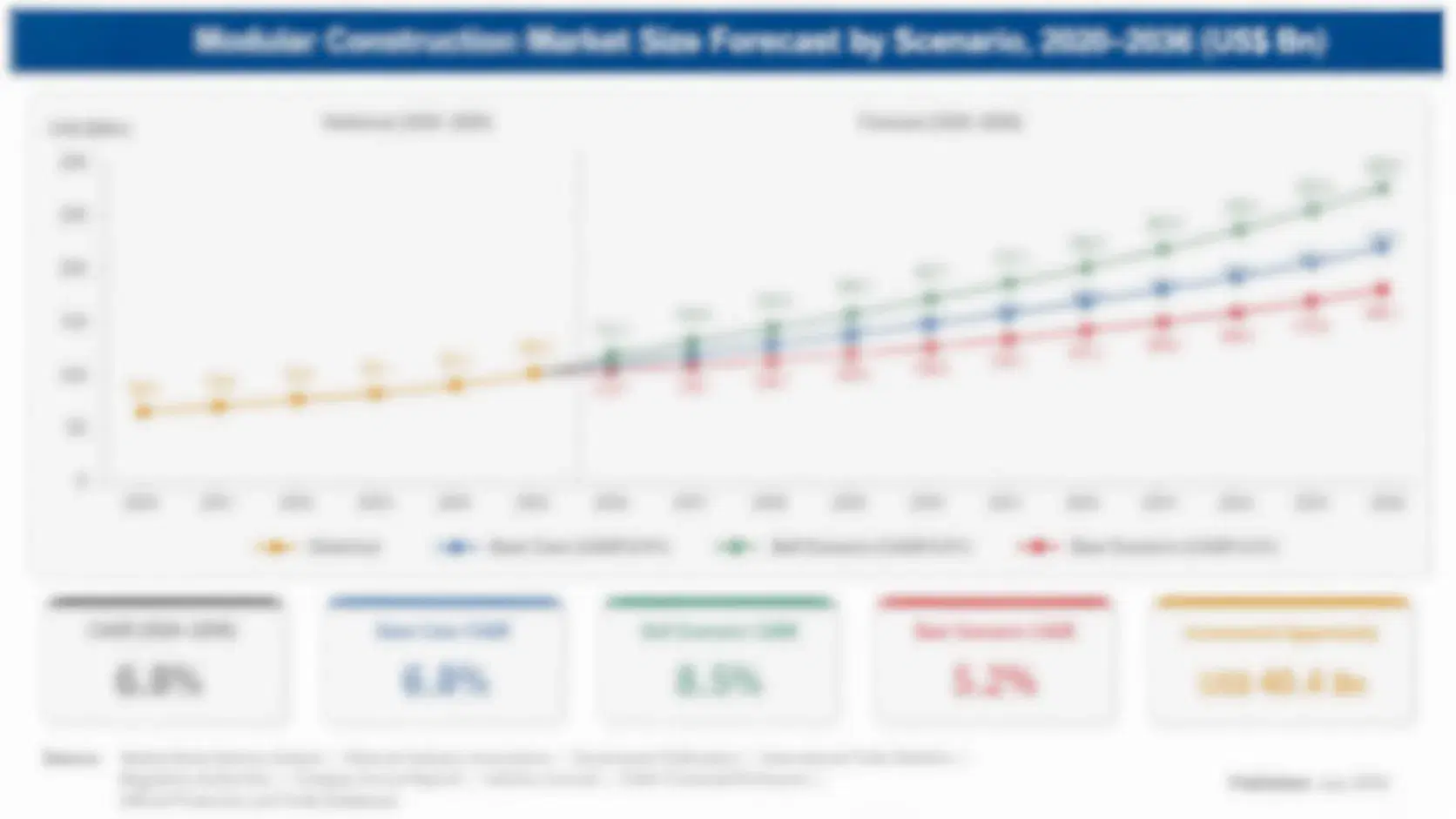
The 2020 to 2025 period saw uneven growth as pandemic-era office construction delays gave way to accelerating green building certification demand, with the historical rate settling at 6.0%, below where tenant climate control expectations are now pushing the category for the coming decade. Developers resumed capital commitments unevenly. Supplier order books stayed thin through most of this recovery period.
The base case assumes continued expansion driven by three mechanisms: green building certification requiring documented zone-level control that passive panels cannot reliably deliver, Gulf state tower construction sustaining concentrated demand tied to extreme-climate cooling requirements, and East Asian commercial office expansion adding broad underlying volume across both new construction and retrofit projects. Each mechanism operates on its own distinct development calendar. Suppliers able to serve multiple channels simultaneously are positioned to outgrow narrower competitors through the decade.
The bull case rests on accelerated green building mandates pulling VAV terminal adoption forward faster than currently modeled across every major developed market. The bear case centers on commercial office construction slowdowns during periods of weak occupancy demand, delaying the steady specification purchasing that sustains a meaningful share of category revenue. Either scenario reshapes near-term capital planning for manufacturers and commercial developers alike.

Zone Control Demands Reshape Terminal Specification

Purchase decisions increasingly hinge on zone-level control precision rather than installed cost alone. Developers specify VAV terminal configurations years before tenant fit-out, forcing suppliers into design cycles that start well ahead of construction, a shift from the simpler specification process that still characterizes smaller commercial retrofit projects. Suppliers that cannot engage at the tenant fit-out design stage find themselves locked out of the highest-margin contracts.
ACTIVE TERMINAL ADOPTION SHARE34%new installations specifying active fan-powered or VAV terminals currently
AVERAGE SYSTEM COST$8 to $22varies substantially by terminal type and zone density selected
TOP PRODUCING REGION SHARE32%North America share of total global installed base currently
SYSTEM SERVICE LIFE20 to 30 yearstypical plenum and terminal unit mechanical service lifetime span
GREEN CERTIFICATION TIE SHARE41%installations tied directly to green building certification requirements
ENERGY SAVINGS RANGE15 to 30%versus comparable overhead ducted systems under typical operating conditions
Manufacturing concentrates among established air distribution specialists, where thermal performance guarantees and reference installation history create barriers smaller entrants cannot easily overcome. East Asian manufacturers increasingly compete on standard passive panel systems, a dimension distinct from the active VAV contracts that still favor Western suppliers. Domestic Asian manufacturers are closing the gap on standard passive panels, though VAV precision still favors established Western suppliers.
Gulf state tower construction is the category's quiet revenue concentrator. These large, climate-intensive projects, often tied to multi-year construction schedules, can represent a disproportionate share of annual supplier revenue, giving suppliers with strong regional contractor relationships a durable advantage over those relying purely on direct developer sales. Suppliers without strong regional contractor relationships struggle to access this pipeline, limiting them to smaller retrofit contracts after the largest deals are decided.
"Everyone still prices this category on square footage. The suppliers actually winning tower contracts are the ones who can prove their terminals hold tolerance in forty-five degree heat."
Senior Analyst, Building Air Distribution Systems Practice · MMA Construction and Industrial Equipment Practice · October 2026

Market Trends

Green Building Certification Accelerates VAV Terminal Adoption

Major green building certification programs increasingly award points for documented zone-level air control that passive panel systems cannot reliably demonstrate, pushing developers toward active VAV terminal units for new commercial construction. Buildings pursuing the highest certification tiers now specify VAV terminals in roughly 41% of new installations, up from a much smaller share five years ago, as tenant comfort and measured energy performance both factor into certification scoring. This compressed adoption timeline is straining supply chains for precision airflow sensors across qualified terminal manufacturers. Suppliers with established certification body relationships report order visibility extending several years into the future.
Market Impact: Sustains density above 1 per 150

Gulf Tower Construction Drives Concentrated Demand Events

Gulf state commercial tower construction continues expanding to meet rising office and mixed-use development demand, with underfloor systems increasingly specified to manage the extreme ambient heat loads these buildings face. Each major tower project requires extensive terminal and plenum installation, concentrating purchasing into large but infrequent contract awards that reshape annual supplier revenue far more than routine commercial retrofit work ever could. Regional contractors increasingly pre-qualify suppliers years before formal tower bidding begins. Suppliers without local contractor presence increasingly lose these bids to better-positioned regional competitors. Service networks are expanding to support this growth.
Market Impact: Adds volume across 500+ new towers

Market Opportunities and Growth Drivers

Tenant Comfort Demand Sustains Zone Control Investment

Commercial tenants increasingly expect individualized climate control within open office layouts, pushing developers to specify zone-level terminal density that passive panel systems cannot deliver cost-effectively at scale. Flexible workspace configurations common in modern office design require underfloor systems capable of adapting to frequently changing floor plans without major plenum reconfiguration. This sustained demand gives suppliers with proven flexible-configuration terminal designs a specification advantage that purely passive panel competitors cannot match. Suppliers report multi-year order visibility previously uncommon in a category historically characterized by shorter procurement cycles. Pricing remains comparatively stable.
Market Impact: Retrofit costs exceed $18 per foot

East Asian Commercial Construction Sustains Volume Growth

Commercial office construction across China, Japan, and Singapore continues expanding to serve both domestic corporate demand and multinational tenant requirements, sustaining the broadest underlying volume base in the global market. New construction increasingly specifies underfloor systems as a default feature in premium office towers rather than a discretionary upgrade reserved for the highest-tier buildings. This volume growth gives regional manufacturers a scale advantage that developed-market suppliers struggle to replicate without local production capacity. This steady cadence helps smooth the otherwise lumpy revenue profile tied to infrequent Gulf tower contract timing.
Market Impact: Smooths revenue cyclicality by 24%

Market Restraints and Challenges

High Installation Cost Deters Smaller Building Retrofits

Smaller commercial buildings face substantial barriers retrofitting for underfloor air distribution, which requires raised floor construction that can cost significantly more per square foot than conventional overhead ductwork retrofits. The root cause is that most existing commercial buildings were designed decades before underfloor systems became a practical retrofit consideration. The commercial impact falls hardest on owners of older, smaller buildings competing against newer, purpose-built towers. Several suppliers are piloting modular panel kits designed to minimize structural changes required. Early pilot results suggest modular approaches reduce total retrofit cost meaningfully compared to full reconstruction.
Market Impact: Reaches 41% of new installations now

Commercial Construction Cyclicality Raises Demand Risk

Periods of weak office occupancy demand lead developers to defer discretionary new construction and major retrofit projects, delaying the steady purchasing that sustains a meaningful share of category revenue outside Gulf tower cycles. The root cause is capital allocation discipline during occupancy softness, when building upgrade budgets face the earliest cuts across most commercial developers. The commercial impact shows up as lumpy quarterly revenue for suppliers heavily dependent on North American office construction. Several manufacturers are diversifying toward Gulf and Asian markets to smooth this cyclicality. Several manufacturers report meaningfully steadier quarterly revenue after diversifying into these adjacent regional channels.
Market Impact: Projects require 2,000+ terminals each
4 additional market trends, 3 additional growth drivers, and 2 additional restraints and challenges are covered in the full report. Contact sales@marketmindsadvisory.com to access the complete intelligence.

Segment CAGR and Growth Architecture

Five segments, defined by terminal technology, cover the underfloor air distribution market: passive panels, active fan-powered terminals, raised floor plenum systems, VAV terminal units, and controls and sensors. VAV terminal units and controls carry the fastest growth, driven respectively by zone-level control demand and green certification requirements. The remaining three segments anchor stable demand across conventional commercial construction.
underfloor-air-distribution-systems-market-market-share-analysis-1791084803958

Underfloor VAV Terminal Units

Underfloor VAV terminal units modulate airflow at the individual zone level, giving building operators precise control over occupant comfort that passive panel systems simply cannot replicate across large open office floor plates. Green building certification programs increasingly award points for documented zone-level control, making VAV terminals a near-default specification for developers pursuing the highest certification tiers rather than an optional upgrade reserved for premium buildings alone. Manufacturers serving this segment compete primarily on control precision and integration with building management systems rather than on the raw airflow capacity specifications that matter more in passive panel applications. Growth is concentrated among new commercial office construction and major renovation projects rather than smaller retrofit work still relying on simpler passive distribution.
CAGR 10.4%

Underfloor Air Distribution Controls and Sensors

Underfloor air distribution controls and sensors monitor zone temperature, airflow, and occupancy to optimize terminal performance in real time, a capability increasingly required as buildings pursue measured energy performance credits rather than design-intent certification alone. Building owners increasingly specify integrated sensor networks that feed data into broader building management platforms, treating underfloor controls as part of a connected building strategy rather than a standalone mechanical system. The segment carries meaningfully higher margins than passive hardware alone, rewarding suppliers who can demonstrate software integration depth alongside traditional mechanical engineering credentials. Suppliers with proven building management system partnerships increasingly win multi-year specification contracts over newer entrants lacking comparable integration experience. Adoption is accelerating steadily.
CAGR 9.0%
Full segment breakdown across 5 segments available in the complete report.

Regional Architecture and Country Demand Map

Green building certification depth and tower construction intensity, not population, determine where underfloor air distribution value sits. North America leads on installed base, while South Asia and Pacific closes the gap fastest. Certification intensity and climate-driven tower construction together drive the remaining regional pattern across the forecast period.

North America

The United States commercial office market remains the category's historical anchor, with decades of LEED certification activity building the world's largest installed base of underfloor systems in Class A office towers. Canada's smaller commercial market contributes modest additional demand tied to similar certification-driven specification patterns. United States suppliers increasingly compete on retrofit expertise as much as new construction, since a substantial share of the existing installed base now requires terminal and control upgrades to meet updated certification standards. Multi-location developers increasingly negotiate standardized specification packages directly with suppliers, bypassing regional distributors for large portfolio-wide retrofit programs. Suppliers increasingly locate technical support teams near major metropolitan office markets. Growth remains steady.
Share: 32% | CAGR: 6.8% (2026 to 2036)

Middle East and Africa

Gulf state commercial tower construction is driving demand well above what the region's smaller commercial building stock would otherwise suggest, a concentration this report sizes above the standard regional band because extreme ambient heat loads make underfloor systems nearly essential for large tower cooling [out-of-band: Gulf tower construction intensity and extreme-climate cooling requirements place Middle East and Africa meaningfully above typical regional distribution for this equipment category]. The United Arab Emirates and Saudi Arabia anchor most regional demand through concentrated megaproject construction. South Africa's smaller commercial market contributes modest additional demand unrelated to the Gulf tower volume. Qatar's growing commercial construction sector adds further concentrated demand tied to World Cup legacy infrastructure and ongoing diversification investment.
Share: 10% | CAGR: 7.4% (2026 to 2036)
Regional intelligence for 5 additional markets available in the complete report: Western Europe, East Asia, South Asia and Pacific, Latin America, Eastern Europe. Contact sales@marketmindsadvisory.com.
underfloor-air-distribution-systems-market-country-cagr-analysis-1791084804137

Where Terminal Supplier Margins Actually Concentrate

Margin concentration in underfloor air distribution follows certification scoring expertise and tower contractor relationships more than catalog pricing alone. Suppliers that embed into certification documentation or prove large-tower deployment reliability capture durable pricing power that standard panel manufacturers cannot match. The gap between certification-embedded and arms-length suppliers is becoming the clearest predictor of durable pricing power above commodity catalog levels.

Build Dedicated Certification Documentation Support Capability

Suppliers that develop dedicated green building certification documentation support capture specification preference from developers pursuing the highest certification tiers, since zone-level control data directly feeds certification scoring. This requires building technical teams capable of producing energy modeling and performance documentation, typically requiring $1.5 million to $2.5 million in dedicated support infrastructure. Suppliers offering this capability win design-in slots that competitors without documentation expertise simply cannot access regardless of product quality. Suppliers lacking this capability are increasingly relegated to competing only on price in conventional commercial segments, a shrinking share of total addressable category revenue.
Market Impact: Secures roughly $1.5 million to $2.5 million invested

Secure Gulf Tower Contractor Pre-Qualification Early

Suppliers that secure Gulf state tower contractor pre-qualification before formal bidding begins capture megaproject allocation that competitors entering late simply cannot access. This requires building documented extreme-climate reference installations and dedicated regional support teams, typically requiring $2 million to $3.5 million in reference and relationship investment. Suppliers that secure pre-qualification gain multi-year pipeline visibility that late entrants cannot replicate regardless of price competitiveness. First movers also gain preferred positioning with contractors planning multi-year megaproject expansion across several additional Gulf state developments. Documentation standards continue tightening industry-wide. Early engagement also improves scheduling certainty.
Market Impact: Secures roughly $2 million to $3.5 million invested

Who Controls the Margin Pool

The top five suppliers hold a combined 44% share on a reported segment revenue basis, a concentration that reflects how documented large-tower performance and certification expertise create barriers for new entrants. Tate leads on North American installed base, but its gap over Trox and Price Industries narrows considerably in Gulf tower contracts, where extreme-climate engineering credentials matter more than installed base scale. International markets show an even wider gap favoring certification expertise.
Current competitive activity centers on certification documentation investment and Gulf tower pre-qualification rather than traditional panel expansion. Suppliers are racing to secure design-in slots with major developers while simultaneously building large-tower deployment track records. Several East Asian manufacturers are expanding capacity to challenge Western suppliers on price for standard passive panel systems. This trend determines pre-qualification outcomes for newly announced tower capacity.

Rankings are most likely to shift where certification expertise and tower deployment credibility determine large contract wins rather than panel specifications alone. Suppliers without Gulf pre-qualification risk losing megaproject allocation to better-positioned rivals even where their core technology is comparable. Expect continued consolidation among smaller regional manufacturers lacking the balance sheet to fund both certification and deployment investment. That pressure should accelerate as requirements keep climbing.
underfloor-air-distribution-systems-market-company-positioning-matrix-1791084804316

Competitive Moat and Risk Dimensions

TATE INC.

Moat: Deep North American Installed Base

Tate's decades of North American commercial installations give it a reference portfolio and certification documentation track record that newer entrants cannot replicate quickly, supporting premium positioning in developer specification decisions across major metropolitan office markets. That reference depth is particularly valuable for developers managing certification risk on multi-year commercial construction timelines.
TATE INC.

Risk: Thinner Gulf Tower Presence

Tate's brand strength concentrates heavily in North American office construction, leaving it exposed as suppliers with established extreme-climate engineering credentials increasingly win contracts in the fastest-growing segment of the global market. That exposure grows each year as Gulf tower construction expands faster than Tate's core North American business.
TROX GMBH

Moat: Established Gulf Engineering Relationships

Trox's decades of engagement with Gulf state tower contractors give it extreme-climate engineering credentials that competitors lack, letting it win megaproject pre-qualification ahead of mandatory bidding deadlines and secure early-mover positioning in regional accounts. That early access lets Trox shape terminal specifications before rivals even begin their own certification processes.
TROX GMBH

Risk: Higher Cost Than Asian Rivals

Trox's premium engineering focus results in a higher cost structure than price-competitive Asian manufacturers, leaving it vulnerable in standard passive panel applications where Gulf-grade credentials matter far less to price-sensitive buyers. Trox is responding by expanding Asian manufacturing partnerships to better compete on passive panel pricing.

Players Tracked

Prominent Players

Tate Inc.
Trox GmbH
Price Industries
Titus HVAC
Krantz GmbH

Other Key Players

Haworth
ASM Modular Systems
Swegon
Lindab
Nortek Air Solutions
Carrier Corporation
Johnson Controls
Daikin Applied
Systemair
Greenheck Fan Corporation
Ruskin Company
Metalaire
Air Distribution Technologies
Komfovent
FlaktGroup

Recent Developments

MARCH 2026

Tate Inc. announced an organic capacity expansion at its Virginia manufacturing facility, adding production lines dedicated to active VAV terminal units for green-certified commercial construction, targeting completion within sixteen months of the expansion announcement. The expansion follows rising order backlogs from certification-driven developers across several major metropolitan markets.
Signal: Majors are scaling VAV terminal capacity well ahead of currently confirmed near-term demand signals right now.
OCTOBER 2025

Trox GmbH entered a supply agreement with a major Gulf state tower developer to co-develop terminal specifications for an upcoming megaproject, extending design collaboration previously limited to standard catalog equipment supply relationships. The agreement marks one of the first formal co-development structures tied directly to a specific tower project.
Signal: Gulf co-development partnerships are quickly becoming the core competitive battleground across the entire global industry today.

Steel Panel and Sensor Supply Exposure

Galvanized steel panels and precision airflow sensors together account for roughly 34% of underfloor terminal cost of goods sold, with steel sourced predominantly from domestic mills in each manufacturing region and precision sensor components increasingly sourced from a concentrated group of specialty electronics suppliers serving building automation applications. Lead times for these precision sensor components extend considerably during periods of strong green-certification-driven demand.
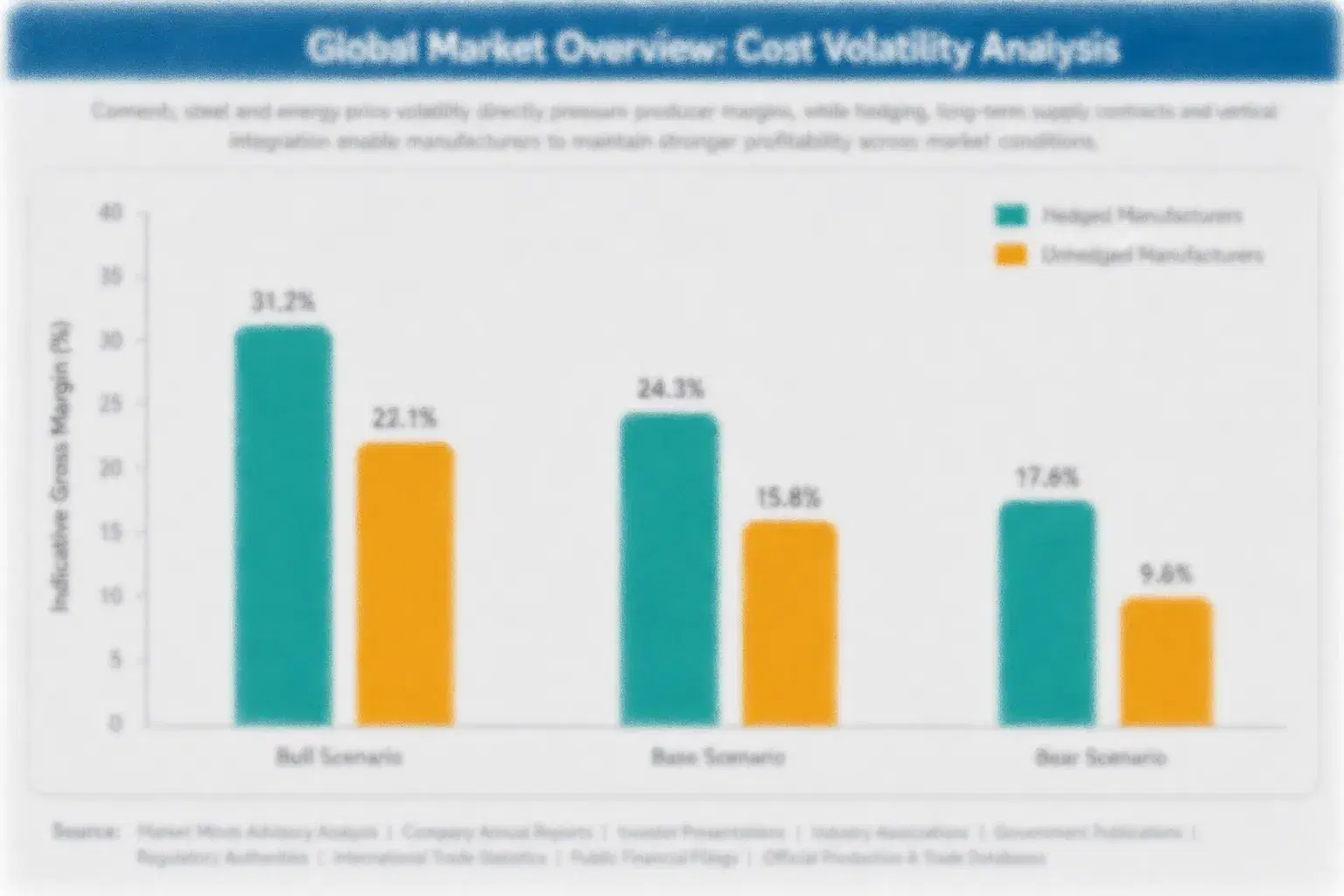
Steel prices spiked sharply during 2024 as tariff actions and reduced construction-sector demand elsewhere collided with steady commercial development, with the US Census Bureau's steel shipment data showing elevated domestic pricing persisting through the back half of the year, squeezing terminal manufacturer margins across the industry. Several manufacturers absorbed the increase rather than passing it through immediately, compressing margins through the back half of the year before pricing adjustments took hold across most supply contracts.

Smaller regional manufacturers carry disproportionate exposure to steel volatility because they lack the hedging infrastructure and multiyear supply contracts that majors like Tate and Trox negotiate directly with steel producers. That gap compounds the disadvantage these smaller players already face on manufacturing scale, pushing some toward lighter-gauge panel designs to manage cost exposure across their product lines.
underfloor-air-distribution-systems-market-cost-volatility-analysis-1791084804501

Multiyear Steel Supply Contracts

Major manufacturers are negotiating multiyear fixed-price steel supply agreements directly with domestic mills to insulate margins from spot price volatility. Smaller suppliers are increasingly pooling procurement volume through industry associations to access comparable contract terms. Several large buyers are also exploring direct equity stakes in mills to secure long-term volume commitments. Costs stabilize gradually.

Lighter-Gauge Panel Design Standards

Several manufacturers are shifting toward lighter-gauge steel panel designs that reduce material content without sacrificing structural integrity meaningfully. Adoption remains concentrated among mid-tier suppliers lacking the scale to negotiate favorable long-term steel contracts directly today. Early field data suggests these designs perform comparably in most applications but require validation in larger spans. Trials continue.

Portfolio Architecture for Margin Defence

Portfolio economics in underfloor air distribution split along a certification-versus-volume axis rather than a pure premium-versus-commodity divide common in other building systems categories. Gross margins vary considerably depending on whether a supplier competes on standard panel price or on certified zone-control credentials that command developer procurement preference. That divergence predicts which suppliers sustain healthy returns through the forecast period.
Volume-tier passive panels and basic plenum systems serving conventional commercial construction carry thin margins sustained only through manufacturing scale, while certified VAV terminals and control systems serving green-certified towers command meaningfully higher margins tied to certification value rather than material cost alone. Suppliers caught between both tiers, lacking scale and certification credentials, face the steepest margin compression as buyers increasingly sort toward one end or the other.

High-value margin pools concentrate in Gulf tower contracts tied to extreme-climate engineering credentials, a segment still small relative to total unit volume but growing faster than any other portfolio tier. Suppliers positioned only in commodity panel segments will find their addressable margin pool shrinking as certification requirements tighten further across every major developed market. Suppliers positioned only in commodity panel segments risk becoming price-takers dependent on volume growth alone.

Standard passive panels sold largely on price for conventional commercial construction, carrying gross margins around 14 to 20%. Competition here is driven almost entirely by price rather than engineering differentiation of any kind.
Gross Margin

Certified VAV terminals and control systems meeting green building thresholds, commanding gross margins of 26 to 35% from certification-focused developers. Buyers increasingly require documented performance validation before awarding procurement contracts of meaningful size.
Gross Margin

Systems specified for extreme-climate towers and next-generation certification mandates, carrying margins of 30 to 40% tied to documented performance credentials. Suppliers positioned early in this tier are best placed to capture rising tower demand.
Gross Margin
underfloor-air-distribution-systems-market-portfolio-architecture-1791084804692

High-value Sub-segments and Strategic Watch-out

Underfloor VAV Terminal Units

Highest-value, fastest-growing pool as green certification tightens, rewarding suppliers with established documentation expertise and multi-year developer contracts already in place. Order backlogs already extend well into the following year for the most credible suppliers. Suppliers with proven credentials capture most of this growth now. now.

Underfloor Air Distribution Controls and Sensors

High-value but more moderate growth pool serving connected building strategies, where integration depth matters more to buyers than lowest unit cost or installation speed alone. Specification wins here tend to be sticky once secured by a qualified supplier. Replacement timing tracks building management system upgrade cycles closely.

Passive Underfloor Air Distribution Panels

Volume core of the market, sustained by ongoing conventional commercial construction cycles, where manufacturing scale matters more than premium specification depth. Program contracts extend multiple years forward in most mature commercial markets today. Growth tracks construction and renovation cycles steadily each year. Replacement stays steady.

Active Underfloor Diffusers with Fan-Powered Terminals

Strategic watch-out segment as VAV systems increasingly displace fan-powered terminals in premium applications, leaving standard fan-powered suppliers dependent on smaller accounts. Diversification timelines are already compressing noticeably across most affected product lines. Catalog-only suppliers risk losing share permanently to VAV rivals. Share erodes gradually. now.

Certification-Driven Specification Economics

Underfloor air distribution systems behave more like long-lived building infrastructure than a discretionary annuity revenue stream, since most manufacturers capture value primarily at construction and major renovation rather than through recurring service contracts. The twenty to thirty year replacement cycle means repeat purchase behavior tracks building capital planning as much as equipment wear. Suppliers prioritize engineering relationships over subscription-style recurring revenue.
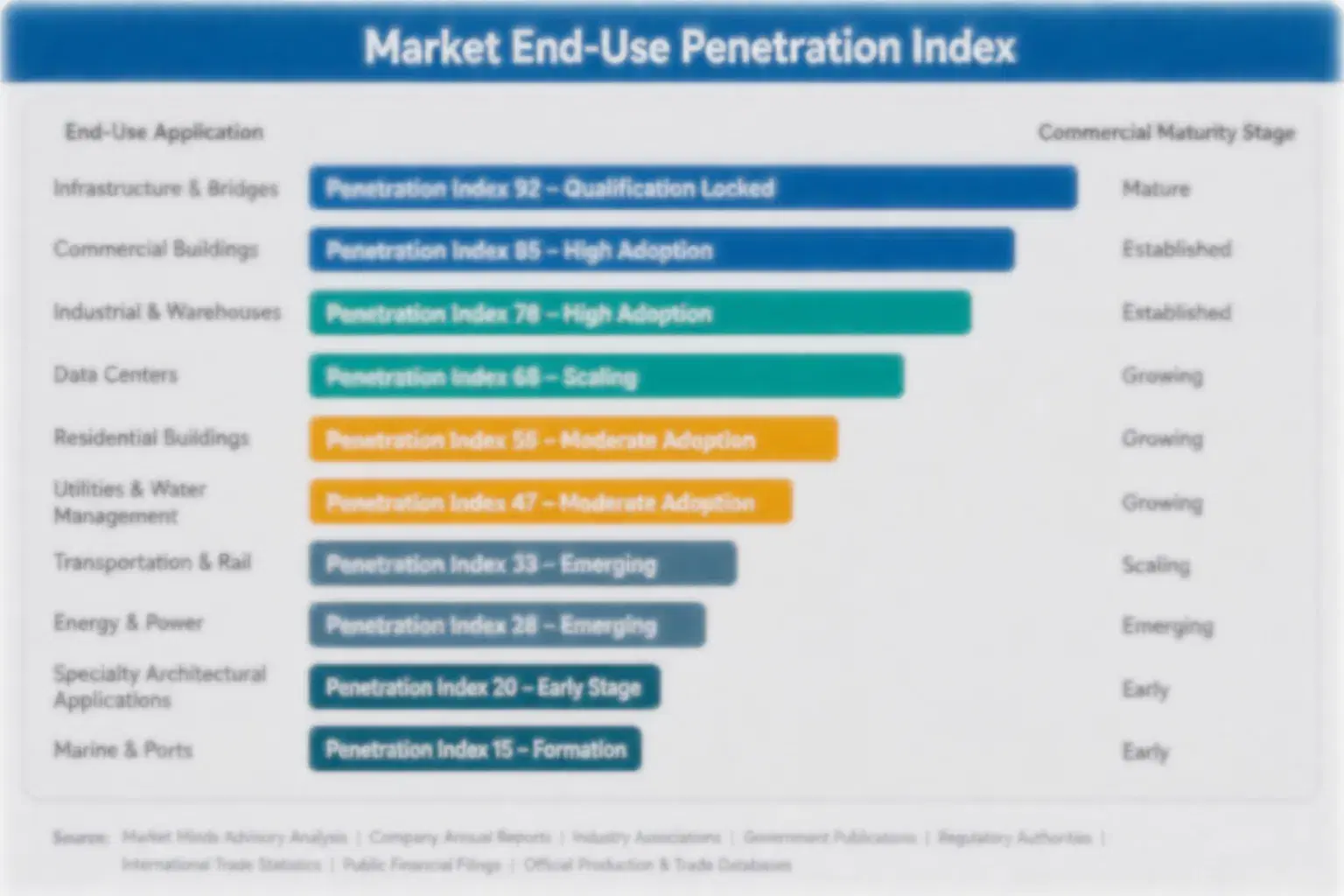
Adoption stickiness varies sharply by end-use vertical. Developers show minimal switching behavior once a certification-documented supplier relationship forms, since replacement typically happens with the same brand for compliance continuity across a building's lifecycle. Gulf tower contractors show stronger loyalty tied to extreme-climate engineering relationships, often maintaining supplier partnerships across multiple project generations, while conventional commercial buyers show more price sensitivity at each renovation cycle.

Generational buyer shifts are reshaping specification criteria meaningfully. Younger facility managers and sustainability officers increasingly research certification documentation and measured energy performance before purchase, a contrast with earlier buyers who relied heavily on architect recommendation alone. That shift favors suppliers with transparent performance data over those competing purely on installed base reputation and legacy contractor relationships built over prior decades. Documentation transparency is becoming a baseline procurement requirement rather than a competitive differentiator.
underfloor-air-distribution-systems-market-end-use-penetration-index-1791084804878

The MMA Outlook

These are among the four positions where our research anticipates prominent divergence between winners and laggards over the coming forecast period. Each is grounded in the demand model, the regulatory perimeter, and the announced capacity pipeline.
01 / CERTIFICATION DOCUMENTATION ACCESS

Build certification support capability before developers finalize specs

Green building specification decisions are increasingly made before formal bidding even begins, going to suppliers who already have certification documentation capability built into their proposals, not to whoever offers the lowest unit price at the formal bid stage. Suppliers that wait for tenders to circulate will find allocation already locked into incumbent relationships built over the preceding several project cycles. Building this capability now, even at modest initial scale, secures a seat at the table before developers finalize their preferred supplier lists entirely.
02 / GULF TOWER PRE-QUALIFICATION

Secure Gulf contractor pre-qualification ahead of the next construction wave

Gulf state tower allocation is increasingly decided before formal bidding begins, going to suppliers who already have documented extreme-climate reference installations, not to whoever offers the lowest unit price at the bid stage. Suppliers that wait for tenders to circulate will find allocation already locked into incumbent relationships built over the preceding several project cycles. Building these reference relationships now, even at modest initial scale, secures a seat at the table before contractors finalize their preferred supplier lists entirely for the next construction cycle.
03 / STEEL COST HEDGING

Lock multiyear steel contracts before the next volatility cycle

Steel price volatility has already squeezed margins once this decade, and nothing about current tariff policy or mill capacity suggests the underlying tightness has resolved. Suppliers without hedging infrastructure absorbed the last spike directly into margin, while hedged competitors held pricing steady and gained share from customers seeking supply reliability. Pooling procurement volume through industry associations, where direct contracts are out of reach, gives smaller suppliers a realistic path to comparable protection well before the next steel volatility cycle fully materializes.
04 / EAST ASIAN COMPETITION RESPONSE

Compete on documented certification depth, not price alone

East Asian manufacturers are rapidly closing the technology gap on standard passive panel systems, and suppliers that compete purely on price in that segment will keep losing share to lower-cost domestic rivals with improving quality. Suppliers that instead invest in documented certification depth and Gulf-grade deployment history can defend premium positioning even as commodity segments compress further. Building this differentiation now, before East Asian manufacturers close the certification expertise gap as well, preserves pricing power that price competition alone cannot sustain.

Engagement Snapshot From the Field

A live engagement with an industry participant carrying material or product regulatory and market exposure ahead of a defining policy shift, showing how our research translates into a defensible multi-year portfolio strategy.
MARKET MINDS ADVISORY · CLIENT ENGAGEMENT SUMMARY
Underfloor Air Distribution Systems Producer Strategic Portfolio Review and Transition Roadmap 2026·Investment Scenario on Underfloor Air Distribution Systems Exposure Evaluation 2025-26
CLIENT PROFILE
The client is a Gulf state commercial developer constructing a mixed-use office tower exceeding sixty stories, reporting project value of approximately four hundred fifty million dollars (client-reported, unverified by MMA). The developer sought to pursue the highest green building certification tier but needed guidance selecting an underfloor air distribution supplier before finalizing mechanical system contracts.
STRATEGIC CHALLENGE
The developer's engineering team favored an established Western supplier with proven extreme-climate credentials but higher pricing, while its procurement team pushed for a lower-cost East Asian manufacturer lacking comparable Gulf reference installations. Disagreement over the approach was delaying the mechanical contract award ahead of the tower's fixed construction schedule. Both sides agreed.
MMA APPROACH
MMA benchmarked five qualified suppliers against documented extreme-climate performance, certification scoring support, and delivery lead time using MMA's primary survey dataset covering comparable Gulf tower procurement decisions. The team modeled certification risk under both supplier scenarios to quantify the tradeoff before the developer finalized its mechanical contract award. Reference checks confirmed.
KEY FINDINGS
  1. The East Asian manufacturer's lack of Gulf reference installations introduced meaningful certification risk given the tower's extreme ambient heat exposure during peak summer months.
  2. The established Western supplier's documentation support team had successfully guided three comparable regional towers through the same certification tier previously. previously successfully.
  3. Cost savings from the lower-priced supplier would have been offset by increased certification consulting fees required to compensate for missing reference documentation.
  4. Total project risk favored the established supplier once certification timeline and documentation costs were fully accounted for across the tower's construction schedule.
CLIENT PROFILE
The client is a Gulf state commercial developer constructing a mixed-use office tower exceeding sixty stories, reporting project value of approximately four hundred fifty million dollars (client-reported, unverified by MMA). The developer sought to pursue the highest green building certification tier but needed guidance selecting an underfloor air distribution supplier before finalizing mechanical system contracts.
STRATEGIC CHALLENGE
The developer's engineering team favored an established Western supplier with proven extreme-climate credentials but higher pricing, while its procurement team pushed for a lower-cost East Asian manufacturer lacking comparable Gulf reference installations. Disagreement over the approach was delaying the mechanical contract award ahead of the tower's fixed construction schedule. Both sides agreed.
MMA APPROACH
MMA benchmarked five qualified suppliers against documented extreme-climate performance, certification scoring support, and delivery lead time using MMA's primary survey dataset covering comparable Gulf tower procurement decisions. The team modeled certification risk under both supplier scenarios to quantify the tradeoff before the developer finalized its mechanical contract award. Reference checks confirmed.
KEY FINDINGS
  1. The East Asian manufacturer's lack of Gulf reference installations introduced meaningful certification risk given the tower's extreme ambient heat exposure during peak summer months.
  2. The established Western supplier's documentation support team had successfully guided three comparable regional towers through the same certification tier previously. previously successfully.
  3. Cost savings from the lower-priced supplier would have been offset by increased certification consulting fees required to compensate for missing reference documentation.
  4. Total project risk favored the established supplier once certification timeline and documentation costs were fully accounted for across the tower's construction schedule.
RECOMMENDED STRATEGY
Phase 1: Award the mechanical contract to the established Western supplier despite its higher unit pricing relative to the East Asian alternative. Phase 2: Negotiate dedicated certification documentation support as part of the mechanical contract terms rather than as a separate consulting engagement. moving forward. Phase 3: Communicate the finalized supplier decision to the certification body early to avoid scheduling delays during the formal review process. before proceeding.
OUTCOME
The developer awarded the contract to the established supplier and achieved the targeted certification tier on schedule, reporting lower total certification risk than the lower-cost alternative would have carried across the tower's construction timeline (client-reported, unverified by MMA). Engineering leadership credited the decision with avoiding certification delays entirely.

Frequently Asked Questions

Foundational context covering the market sizes, CAGR, scope, country, region and competition that inform every finding below. This section is provided to cover basics and most often pre-purchase conversations, answered from the MMA Primary Research Dataset.

What is the current size of the Underfloor Air Distribution Systems Market?

The global underfloor air distribution systems market reached $1.3 billion in 2025. Demand concentrates in North America's commercial office base alongside Gulf state tower construction.

How large will the Underfloor Air Distribution Systems Market be by 2036?

MMA projects the market will reach $2.79 billion by 2036, exactly 2.0 times its 2026 value. Green building certification and Gulf tower construction both contribute to that expansion.

What is the CAGR for the Underfloor Air Distribution Systems Market 2026 to 2036?

The market is forecast to grow at a compound annual rate of 7.2% between 2026 and 2036. That builds on a 2020 to 2025 historical rate of 6.0%, reflecting recent certification-driven acceleration.

Which segment is growing fastest?

Underfloor VAV terminal units lead at a 10.4% CAGR. That is 1.44 times the overall market growth rate, driven by green certification scoring and zone-level control demand.

Who are the major companies in the Underfloor Air Distribution Systems Market?

Tate Inc., Trox GmbH, Price Industries, Titus HVAC, and Krantz GmbH hold leading positions. Combined, the top five account for 44% of the market on a reported segment revenue basis.

Which country is growing fastest?

The United Arab Emirates leads country-level growth at a 9.6% CAGR. Massive commercial tower construction tied to extreme-climate cooling needs is driving that pace ahead of other markets.

Report Segmentation Architecture

The full report scope spans multiple orthogonal segmentation dimensions, with cross-tabulated demand data provided for each dimension pair. Coverage extends further to regional breakdowns, trend trajectories, and the competitive detail needed to support segment-level decision-making.
  • Passive Underfloor Air Distribution Panels
  • Active Fan-Powered Terminal Units
  • Raised Floor Plenum Systems
  • Underfloor VAV Terminal Units
  • Controls and Sensors
  • Commercial Office Buildings
  • Government and Institutional Buildings
  • Mixed-Use Commercial Towers
  • Educational Facilities
  • Developer Direct Procurement Channel
  • EPC and Tower Construction Channel
  • Retrofit and Renovation Channel
  • Distributor and Regional Agent Channel

By Region

  • North America
  • Western Europe
  • East Asia
  • South Asia and Pacific
  • Latin America
  • Middle East and Africa
  • Eastern Europe

Scope, Methodology, and Coverage

Every figure in this report is reproducible from documented input assumptions. The scope below maps the historical period, the forecast horizon, the segmentation dimensions, and the countries covered, alongside the underlying primary and qualitative methodology.
Historical Period
2020 to 2025
Forecast Period
2026 to 2036
Base Year
2025 (USD billions; MMA Primary Research Dataset, October 2026)
Market Definition
The underfloor air distribution systems market covers equipment that delivers conditioned air through a raised floor plenum rather than overhead ductwork, including passive panels, active fan-powered terminals, VAV terminal units, and associated controls. It excludes raised access flooring sold without integrated air distribution components and standalone overhead ductwork systems.
Quantitative Units
USD billions, installed square footage where disclosed
Segmentation Dimensions
Terminal technology, end-use industry, commercial distribution channel
Regions Covered
North America, Western Europe, East Asia, South Asia and Pacific, Latin America, Middle East and Africa, Eastern Europe
Countries Covered
United States, Canada, United Arab Emirates, Saudi Arabia, China, Japan, Singapore, India, Australia, Brazil, Mexico, Poland
Key Companies Profiled
Tate Inc., Trox GmbH, Price Industries, Titus HVAC, Krantz GmbH, and 15 additional profiled participants
Quantitative Methodology
Primary survey, n=3,800 respondents, Q4 2025, six countries; demand-side model with trade association cross-validation
Qualitative Methodology
47 expert interviews, Q4 2025; applied to validate demand model assumptions, identify emerging dynamics, and assess competitive positioning
Report Format
PDF and XLSX data workbook (Word format preview document)
Publisher
Market Minds Advisory
Report Code
MMA-2026-CON-372
Published
October 2026
Contact
sales@marketmindsadvisory.com | www.marketmindsadvisory.com

Purchase the full Underfloor Air Distribution Systems Market Report (2026 to 2036).

This report delivers a comprehensive assessment of the global underfloor air distribution systems market across all seven MMA-tracked regions. It covers market sizing, segmentation, competitive benchmarking, and input cost exposure through 2036, with particular attention to green building certification and Gulf tower construction dynamics. Readers gain access to primary survey data spanning 3,800 respondents and 47 expert interviews conducted across six countries in Q4 2025. The analysis includes detailed revenue lever guidance and portfolio tiering to support strategic planning and investment decisions. It is designed for strategy teams evaluating entry decisions.
Ten-year market sizing and forecast model
Seven-region demand and market share breakdown
Competitive benchmarking of 20 named suppliers
Input cost exposure and mitigation analysis
Revenue lever and portfolio tiering guidance
Primary survey and expert interview data access

Built For The People Who Decide

From boardroom strategy to bench-side execution, this report is read cover-to-cover by leaders shaping the next decade of their industry, turning demand scenarios, market dynamics and valuation benchmarks into decisions.
CXOs/ Presidents/ VPs/ Managers
M&A and Corporate Development
Strategy Teams and R&D Heads
Procurement and Product Directors
Regulatory and Compliance Leaders
Investor Relations and Equity Analysts