Market Minds Advisory
Ultrasonic Air Bubble Detectors Market

Ultrasonic Air Bubble Detectors Market: Ultrasonic Air Bubble Detectors Market. Trends and Forecast 2026 to 2036

Rising infusion pump safety mandates and dialysis therapy volume are pushing hospitals toward non-invasive clamp-on ultrasonic detection, forcing manufacturers to prove sensitivity accuracy as regulatory bodies tighten air embolism prevention requirements globally.

Lead Analyst

Published

September 2026

Make Smarter Decisions with Customized Research Insights

Request a free sample report and evaluate market opportunities, growth trends, and competitive dynamics relevant to your business needs.

2025 MARKET VALUE$0.4BMarket Size 2025
2036 FORECAST VALUE$0.8BBase Case , 2026 to 2036
CAGR 2026 TO 20366.5 %Bull 7.7% / Bear 5.4%
INCREMENTAL OPPORTUNITY$0.4BNet 10- year value creation
EXPANSION MULTIPLE1.88x2036 value over 2026 base
Strategic Levers
M&A Pipeline
Regional Outlook
Country Rankings
Competitive Intelligence
Segmental Deep-dive
Call-Us : 91 93563 13602

Executive Snapshot and Market Trajectory.

Ultrasonic air bubble detection is shifting from a specialized dialysis safety feature into a standard requirement across infusion pumps and industrial fluid handling systems, as regulatory bodies tighten air embolism prevention standards and manufacturers race to qualify non-invasive clamp-on sensor designs across most product categories and clinical applications worldwide.
Commercial demand concentrates around non-invasive clamp-on detectors serving dialysis and infusion therapy applications, where regulatory compliance requirements increasingly determine purchasing decisions more than raw sensitivity specification comparisons alone across most hospital procurement processes. North America leads given concentrated medical device manufacturing infrastructure and the largest installed base of dialysis and infusion equipment requiring detector integration or replacement across hospital and outpatient care settings.
Competitive intensity remains moderate, with the top five manufacturers controlling roughly 48% of global revenue given the specialized sensor calibration expertise and regulatory certification required to compete effectively in medical device applications across most hospital procurement channels. Rising demand for miniaturized, low-power detector designs suited to portable and wearable infusion devices is reshaping competitive dynamics, favoring manufacturers with proven medical-grade reliability certification over industrial-focused competitors lacking healthcare compliance experience and regulatory approval history.
Market Definition
The Ultrasonic Air Bubble Detectors Market covers sensors that use ultrasonic transmission to detect air bubbles within fluid-filled tubing for medical infusion, dialysis, and industrial fluid handling applications, preventing embolism risk or process contamination. It excludes optical and capacitive bubble detection technologies, tracked as separate categories.
Base Year Value
$0.4B in 2025 (MMA Primary Research Dataset, September 2026)
Forecast Period
2026 to 2036, eleven discrete annual values
CAGR
6.5% base case. Bull 7.7%. Bear 5.4%.
Fastest Growth Segment
Non-Invasive Clamp-On Ultrasonic Detectors: 9.5% CAGR
Fastest Growth Country
India: 8.5% CAGR
Fastest Growth Region
South Asia and Pacific: 8.5% CAGR
Largest Region
North America: 30% of 2025 global value
Market Leaders
Leading participants include Sonotec, Introtek International, Elcam Medical, Zevex, and Transonic Systems. Source: MMA Analysis based on company annual reports.
Primary Survey
n=3,800 procurement and R&D decision-makers, Q4 2025, six countries
Methodology
Demand-side build-up, cross-validated against public data, 47 expert interviews

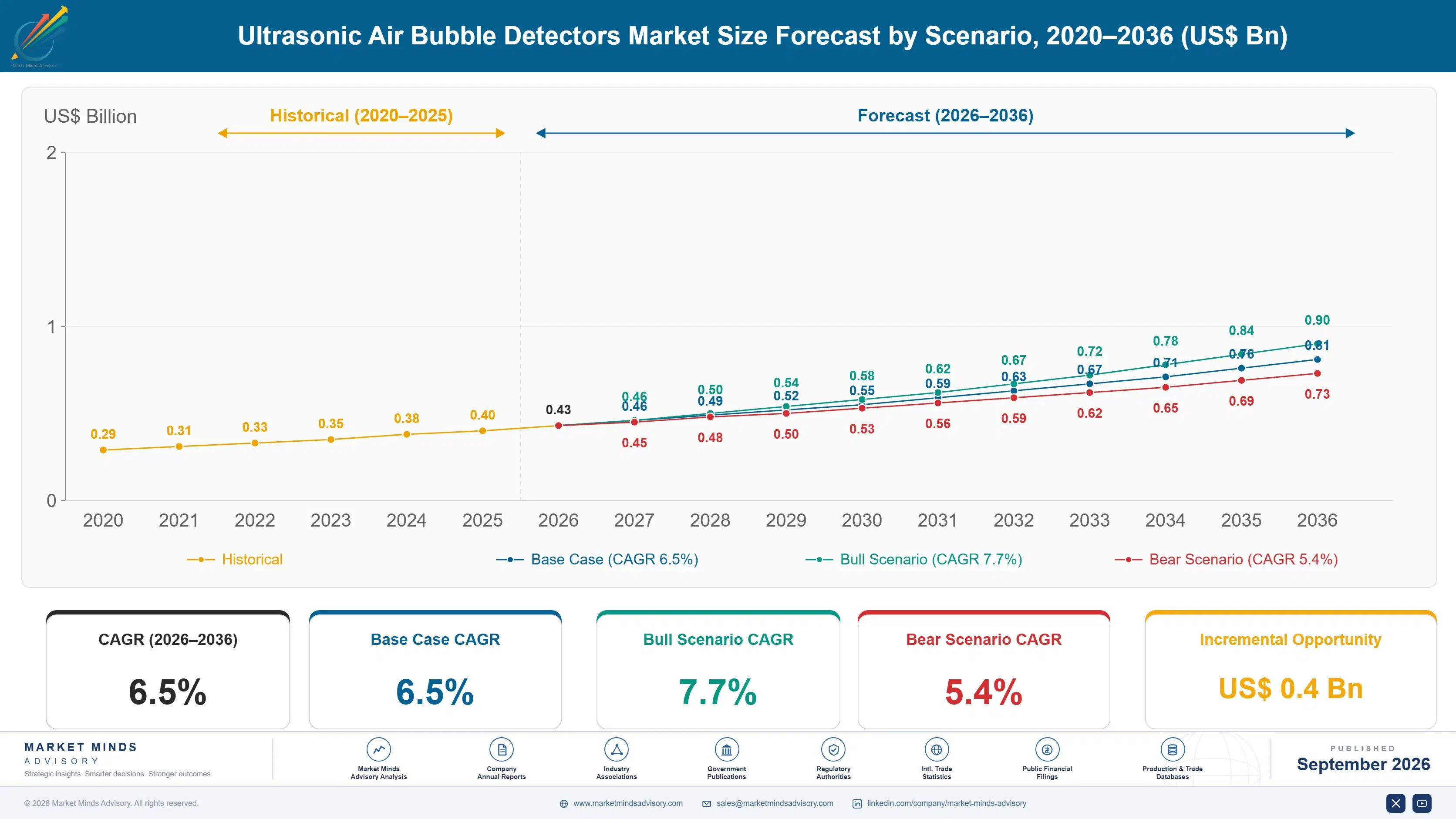
Ultrasonic Air Bubble Detectors Market Forecast Scenarios

ultrasonic-air-bubble-detectors-market-size-forecast-scenario-1789990323526
Ultrasonic air bubble detector demand grew steadily through 2020 to 2025 as rising dialysis therapy volume and infusion pump installed base expansion drove consistent replacement and new equipment demand across major healthcare markets. Growth remained relatively stable given the mature, established nature of core dialysis and infusion applications, pushing the historical CAGR to 5.8% by the period's close.
The base case assumes rising dialysis therapy volume and tightening infusion pump safety regulation keep expanding detector demand through the forecast decade. Three mechanisms drive this: regulatory bodies mandating air embolism prevention detection on an expanding range of infusion device categories, growing chronic kidney disease prevalence expanding dialysis therapy volume globally, and miniaturization enabling detector integration into portable and wearable infusion devices previously too compact for existing sensor form factors.
The bull case centers on accelerated regulatory mandate expansion requiring detection on device categories currently exempt from air embolism prevention requirements. The bear risk is hospital capital spending constraint: if healthcare capital budgets tighten meaningfully, equipment replacement cycles could lengthen, delaying new detector integration demand tied to infusion pump and dialysis machine fleet modernization programs across major healthcare systems.

Where Regulatory Compliance Determines Supplier Selection

Ultrasonic air bubble detection has moved from an optional safety enhancement into a mandatory compliance component across most modern infusion and dialysis equipment, since regulatory bodies increasingly require verified air embolism prevention capability before device market approval. Manufacturers competing for the largest hospital equipment contracts increasingly differentiate on regulatory certification breadth and clinical validation depth rather than raw detection sensitivity specifications alone.
MARKET CONCENTRATION48% CR5Top five manufacturers control global bubble detector revenue share
AVERAGE SELLING PRICE$45 per unitBlended average price across dialysis and infusion detector categories
TOP PRODUCING COUNTRY SHARE31%United States share of global bubble detector manufacturing output currently
DIALYSIS APPLICATION SHARE42% of revenueDialysis therapy portion of total global bubble detector market revenue
DETECTION SENSITIVITY THRESHOLD10 to 50 microlitersTypical minimum detectable air bubble volume across leading device categories
DEVICE REPLACEMENT CYCLE7 to 10 yearsTypical operational lifespan before detector unit replacement or upgrade
Dialysis applications represent the single largest revenue category, reflecting the sustained growth in chronic kidney disease prevalence and dialysis therapy volume across aging populations in developed and developing healthcare systems alike. The United States hosts substantial manufacturing capacity given concentrated medical device industry infrastructure, though component sourcing for specialized piezoelectric sensor elements often depends on international supply chains subject to periodic disruption.
Detection sensitivity thresholds continue tightening as regulatory bodies demand smaller minimum detectable bubble volumes, pushing manufacturers toward more sophisticated signal processing algorithms distinguishing genuine air bubbles from acoustic noise interference. Device replacement cycles running seven to ten years create durable, predictable revenue visibility for manufacturers holding existing installed base relationships, a stability that favors established players over newer entrants without comparable hospital procurement relationships.
"Bubble detection used to be a line item nobody thought about until something went wrong. Now hospitals audit it as carefully as any other patient safety system, and that shift has quietly rewritten who wins procurement contracts."
Director, Medical Device Technology and Patient Safety Practice · MMA Medical Devices Practice · September 2026

Market Trends

Non-Invasive Clamp-On Designs Replace In-Line Sensors

Non-invasive clamp-on ultrasonic detectors, which attach externally to existing tubing without requiring fluid path modification, are increasingly displacing traditional in-line sensor designs requiring dedicated tubing segments manufactured with embedded detection hardware. This shift reduces disposable tubing manufacturing cost and simplifies device sterilization procedures, since clamp-on sensors remain reusable across multiple patient sessions rather than requiring disposal with single-use tubing sets. Manufacturers offering validated clamp-on designs with proven clinical accuracy comparable to in-line alternatives are capturing disproportionate share of new equipment specifications, particularly among hospital systems seeking to reduce per-treatment disposable supply cost.
Market Impact: Dialysis therapy volume grows over 8%
Portable Infusion Device Miniaturization Drives Sensor Redesign

Growing demand for portable and wearable infusion devices supporting home-based chronic disease treatment is requiring detector manufacturers to redesign sensor components for significantly reduced size and power consumption compared to traditional hospital-grade equipment specifications across most product lines. This miniaturization trend is expanding the addressable market beyond hospital and outpatient clinical settings toward home healthcare applications previously underserved by bulkier legacy detector hardware designs. Manufacturers successfully miniaturizing detection capability without sacrificing sensitivity accuracy are capturing early positioning advantage in this emerging home healthcare demand category as portable infusion therapy adoption continues expanding.
Market Impact: Expands covered device categories by 25%

Market Opportunities and Growth Drivers

Rising Chronic Kidney Disease Prevalence Expands Dialysis Demand

Chronic kidney disease prevalence continues rising across aging populations in both developed and developing healthcare systems, driving sustained growth in dialysis therapy session volume and corresponding demand for reliable air bubble detection equipment protecting patients during treatment. This demographic-driven demand pattern operates somewhat independently of broader healthcare capital spending cycles, since dialysis represents essential ongoing treatment rather than discretionary equipment upgrade spending that hospitals can defer during budget-constrained periods. Manufacturers serving the dialysis equipment segment benefit from this durable demand floor across most global healthcare markets regardless of broader economic conditions affecting other medical device categories.
Market Impact: Certification delays add 2 years

Regulatory Mandates Expand Required Detection Coverage

Regulatory bodies across multiple major healthcare markets are expanding air embolism prevention detection requirements to cover a broader range of infusion device categories previously exempt from mandatory bubble detection specifications. This regulatory expansion creates a distinct compliance-driven demand channel independent of voluntary equipment upgrade decisions, since hospitals and device manufacturers must incorporate detection capability to maintain market approval and avoid regulatory enforcement action. Manufacturers with established regulatory certification track records across multiple jurisdictions are capturing disproportionate share of this expanding compliance-driven demand as newly covered device categories require detector integration.
Market Impact: False positive rates reach 5%

Market Restraints and Challenges

Regulatory Certification Delays Constrain New Product Launch

Medical device regulatory approval processes across major healthcare markets require extensive clinical validation testing before manufacturers can commercialize new detector designs, creating a multi-year gap between engineering development completion and eventual product revenue generation. The root cause is the inherent conservatism of medical device regulatory frameworks, which prioritize patient safety verification over speed to market given the safety-critical nature of air embolism prevention applications. Manufacturers are mitigating this by pursuing regulatory certification across multiple device variants simultaneously, spreading the multi-year approval investment cost across a broader eventual product portfolio rather than depending on any single device approval timeline.
Market Impact: Clamp-on adoption grows over 20% annually

Acoustic Interference Complicates Reliable Detection Accuracy

Ultrasonic bubble detection accuracy can be compromised by acoustic interference from tubing material variation, ambient equipment vibration, and fluid viscosity differences, creating false positive and false negative detection events that undermine clinical confidence in device reliability. The root cause is the inherent sensitivity of ultrasonic transmission to physical medium variation, which differs meaningfully across the wide range of tubing materials and fluid types used across different clinical applications. Manufacturers are mitigating this through advanced signal processing algorithms and machine learning classification models trained to distinguish genuine air bubbles from acoustic noise interference more reliably.
Market Impact: Home healthcare segment grows 15%
3 additional market trends, 4 additional growth drivers, and 2 additional restraints and challenges are covered in the full report. Contact sales@marketmindsadvisory.com to access the complete intelligence.

Segment CAGR and Growth Architecture

Ultrasonic air bubble detectors segment by mounting design and end-use application across six categories spanning clamp-on, in-line, dialysis, infusion, industrial, and portable device integration types sold across most healthcare and industrial markets worldwide. Each reflects a distinct mounting architecture and clinical or industrial workflow rather than overlapping product tiers within a single device family.
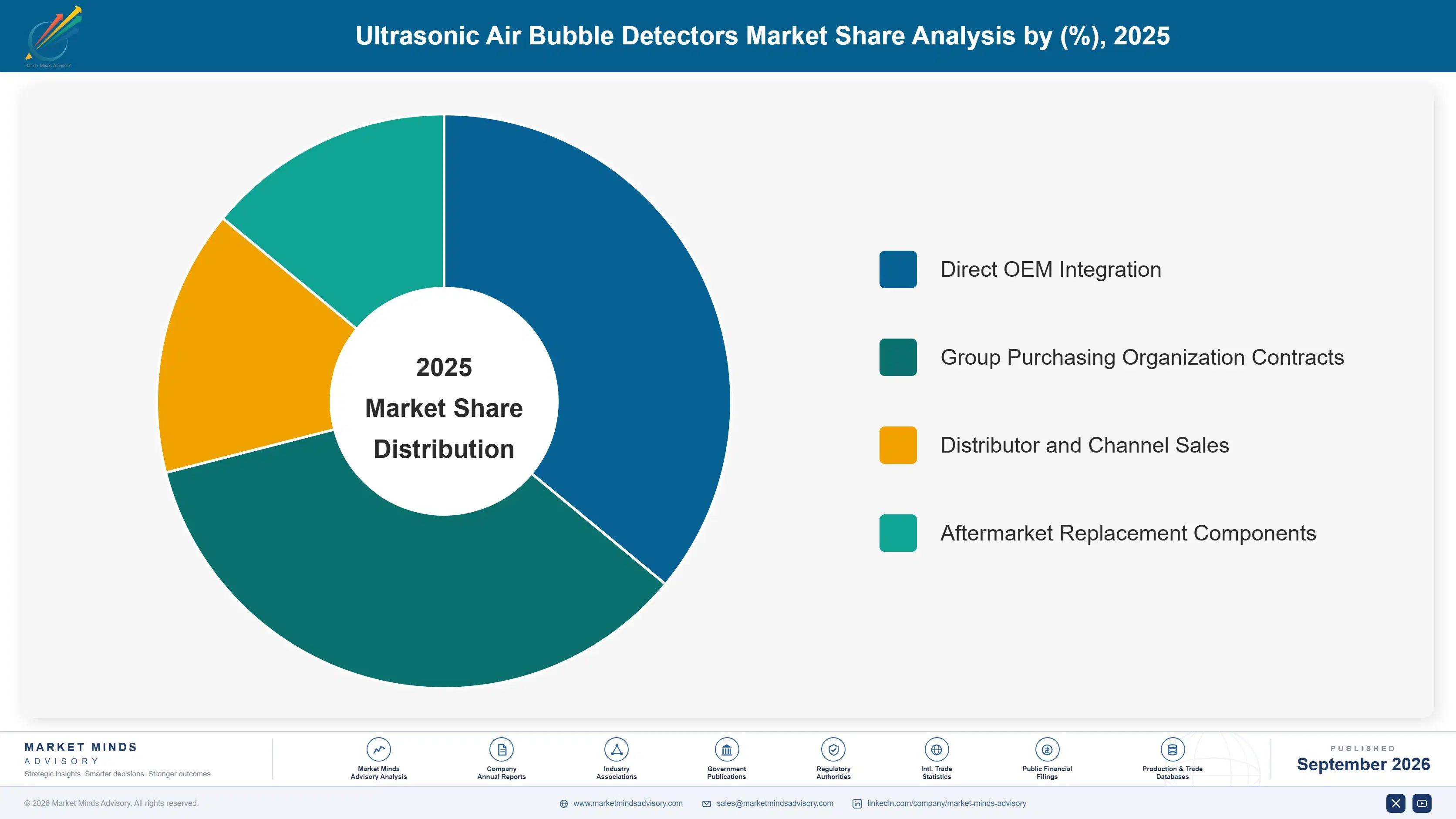
ultrasonic-air-bubble-detectors-market-market-share-analysis-1789990324355

Non-Invasive Clamp-On Ultrasonic Detectors

Non-invasive clamp-on ultrasonic detectors form the fastest-growing segment, expanding at 9.5% CAGR as hospitals seek to reduce disposable tubing cost by using reusable external sensor hardware that attaches to standard tubing without requiring dedicated embedded detection components. This design approach eliminates the need for manufacturers to produce specialized single-use tubing sets with integrated sensors, reducing per-treatment consumable cost meaningfully across high-volume dialysis and infusion applications. Regulatory bodies increasingly accept clamp-on detection accuracy as clinically equivalent to traditional in-line sensor designs, removing a historical adoption barrier that limited earlier clamp-on product generations. Manufacturers with proven clinical validation data supporting clamp-on accuracy claims are capturing disproportionate share of new hospital equipment specifications.
CAGR 9.5%

Portable and Wearable Device Detectors

Portable and wearable device detectors form the second-fastest-growing segment at 8.5% CAGR, driven by expanding home-based chronic disease treatment adoption requiring miniaturized, low-power sensor components suited to compact infusion device form factors and constrained power and space budgets. This segment benefits from broader healthcare system trends favoring outpatient and home-based care delivery over traditional hospital-based treatment, reducing overall healthcare system cost while improving patient quality of life through greater treatment flexibility and independence. Manufacturers successfully miniaturizing detection capability without sacrificing sensitivity accuracy are capturing early positioning advantage in this emerging demand category, since home healthcare device manufacturers increasingly specify detector components during initial product design rather than retrofitting existing platforms.
CAGR 8.5%
Full segment breakdown across 6 segments available in the complete report.

Regional Architecture and Country Demand Map

North America leads given concentrated medical device manufacturing infrastructure and the largest installed base of dialysis and infusion equipment requiring ongoing service and replacement, while South Asia and Pacific grows fastest as expanding dialysis therapy access and healthcare infrastructure investment drive rising demand across the region.

North America

The United States hosts the largest concentration of dialysis clinics and infusion therapy centers globally, supported by Medicare reimbursement policy that has historically favored outpatient dialysis facility expansion over hospital-based treatment. Domestic medical device manufacturers maintain deep regulatory expertise navigating FDA approval processes, giving them a meaningful advantage in bringing new detector designs to market ahead of international competitors facing unfamiliar regulatory pathways. Canada's smaller healthcare system follows similar procurement patterns, though public healthcare budget constraints somewhat limit equipment replacement cycle acceleration relative to the more fragmented American private healthcare system. Group purchasing organizations increasingly negotiate multi-year equipment contracts on behalf of large hospital networks, consolidating procurement decisions among fewer purchasing entities than in prior decades.
Share: 30% | CAGR: 7.0% (2026 to 2036)

Western Europe

Germany's advanced medical device manufacturing sector, anchored by established dialysis equipment producers, drives substantial regional demand alongside stringent European Union medical device regulation requiring extensive clinical validation before market approval. France and the United Kingdom maintain large public healthcare systems with centralized procurement processes that increasingly specify detailed air embolism prevention requirements in equipment tender specifications. Regional growth trails North America somewhat given more constrained public healthcare capital budgets limiting the pace of equipment replacement and upgrade cycles across most member state healthcare systems. Nordic countries are also investing steadily in home dialysis programs, requiring compact detector-equipped equipment suited to patient self-administered treatment settings outside traditional clinics. Reimbursement structures are also evolving to support home dialysis adoption.
Share: 23% | CAGR: 5.0% (2026 to 2036)
Regional intelligence for 5 additional markets available in the complete report: East Asia, South Asia and Pacific, Latin America, Middle East and Africa, Eastern Europe. Contact sales@marketmindsadvisory.com.
ultrasonic-air-bubble-detectors-market-country-cagr-analysis-1789990325210

Where Manufacturers Can Defend Pricing Power

Bubble detector manufacturers face steady price pressure from cost-conscious hospital procurement, but four commercial levers let disciplined companies defend margin and win the largest equipment contracts across the coming forecast decade. Each requires different capability investment, and manufacturers combining several simultaneously are pulling ahead of single-lever competitors across most healthcare and industrial segments today.

Regulatory Certification Breadth Across Multiple Jurisdictions

Manufacturers achieving regulatory approval across multiple major healthcare markets simultaneously capture larger addressable contract opportunities than competitors with certification limited to a single jurisdiction, since multinational hospital systems and device manufacturers prefer suppliers offering consistent global compliance documentation. This certification breadth requires substantial upfront investment across parallel regulatory approval processes, but creates a durable competitive moat since regulators rarely grant expedited approval to new entrants lacking established compliance track records. Manufacturers with broad certification coverage are commanding roughly 25% higher average contract values than competitors limited to narrower geographic market access.
Market Impact: Commands roughly 25% higher average contract values overall

Clinical Validation Data and Peer-Reviewed Publication

Manufacturers investing in rigorous clinical validation studies published in peer-reviewed medical journals capture premium positioning with hospital procurement committees increasingly demanding published evidence supporting detection accuracy claims rather than accepting manufacturer specifications alone across most procurement processes. This validation investment requires sustained clinical research partnership relationships and multi-year study timelines, but delivers meaningful credibility advantage that newer competitors without comparable published evidence cannot quickly replicate. Manufacturers with strong published clinical validation are winning hospital contracts at price points roughly 20% above competitors lacking comparable peer-reviewed evidence. Fee structures also tend to include ongoing royalty components tied to future device volume.
Market Impact: Wins contracts at prices roughly 20% above peers

Miniaturization Capability for Portable Device Integration

Manufacturers developing miniaturized, low-power detector components suited to portable and wearable infusion device integration access an expanding home healthcare demand channel that bulkier hospital-grade equipment manufacturers cannot serve without substantial redesign investment and engineering resources. This capability requires specialized engineering expertise in power-efficient signal processing distinct from traditional hospital equipment design, but positions manufacturers advantageously as home-based treatment adoption continues expanding globally. Manufacturers with proven miniaturization capability are capturing home healthcare device design wins at margins roughly 30% above standard hospital equipment contracts. This engineering advantage compounds further as home healthcare adoption keeps expanding.
Market Impact: Achieves margins roughly 30% above standard contracts overall

Group Purchasing Organization Contract Relationship Strategy

Manufacturers establishing preferred vendor relationships with major hospital group purchasing organizations capture access to consolidated multi-hospital procurement contracts that individual facility sales relationships cannot match in scale or contract duration across comparable markets. This requires navigating complex group purchasing organization qualification processes and often accepting negotiated volume pricing structures, but delivers meaningfully more predictable multi-year revenue than facility-by-facility sales relationships provide. Manufacturers with established group purchasing organization relationships report revenue predictability roughly 35% higher than competitors relying primarily on individual facility sales. These relationships also compound further as hospital consolidation trends continue expanding.
Market Impact: Achieves overall revenue predictability roughly 35% higher annually

Who Controls the Margin Pool

The ultrasonic air bubble detector market shows moderate concentration, with the top five manufacturers controlling roughly 48% of global revenue given the specialized sensor calibration expertise and regulatory certification required to compete effectively in medical device applications. Sonotec and Introtek International hold a substantial scale advantage over Elcam Medical and the remaining challengers, backed by decades of accumulated clinical validation and regulatory approval history competitors cannot quickly replicate.
Current competitive activity centers on non-invasive clamp-on design development and miniaturization for portable device integration, with major manufacturers announcing new product lines specifically targeting home healthcare and wearable infusion applications. Several manufacturers are pursuing regulatory certification expansion across multiple jurisdictions simultaneously, seeking to capture the largest addressable contract opportunities from multinational hospital systems and device manufacturers preferring consistent global compliance documentation.

Emerging pressure comes from specialized Asian manufacturers rapidly closing the technology gap with established Western and Japanese producers, supported by aggressive pricing strategies targeting cost-conscious healthcare systems in developing markets. Rankings could shift meaningfully over the coming decade as clinical validation depth and regulatory certification breadth, rather than raw manufacturing scale, become the primary basis for competitive differentiation across the highest-margin hospital procurement segment specifically.
ultrasonic-air-bubble-detectors-market-company-positioning-matrix-1789990326055

Competitive Moat and Risk Dimensions

SONOTEC

Moat: Deep Clinical Validation Portfolio

Sonotec maintains the industry's most extensive published clinical validation data supporting its detection accuracy claims, built through decades of continuous research partnerships with major dialysis and infusion equipment manufacturers. This validation depth creates substantial trust advantage with hospital procurement committees increasingly demanding published evidence rather than accepting manufacturer specifications alone.
SONOTEC

Risk: Slower Miniaturization Pace

Sonotec has moved more cautiously toward miniaturized designs suited to portable and wearable infusion devices compared to some competitors, potentially ceding ground in the fastest-growing home healthcare demand category. Accelerating miniaturization requires sustained engineering investment that could pressure near-term profitability if pursued too aggressively across product lines.
INTROTEK INTERNATIONAL

Moat: Broad Industrial and Medical Portfolio

Introtek International's diversified presence across both medical and industrial fluid handling applications gives it cross-selling advantages and manufacturing scale efficiencies that pure medical-focused competitors cannot access easily. This diversification also provides revenue stability during periods when either medical or industrial demand faces cyclical weakness independently.
INTROTEK INTERNATIONAL

Risk: Narrower Regulatory Certification Breadth

Introtek International has historically pursued regulatory certification in fewer jurisdictions than some medical-focused competitors, potentially limiting its addressable contract opportunities with multinational hospital systems requiring consistent global compliance documentation across regions and markets. Expanding certification breadth requires sustained multi-year investment across parallel regulatory approval processes.

Players Tracked

Prominent Players

Sonotec
Introtek International
Elcam Medical
Zevex
Transonic Systems

Other Key Players

Baxter International
Fresenius Medical Care
B. Braun Melsungen
Nipro Corporation
Terumo Corporation
ICU Medical
Smiths Medical
Moog Medical Devices
Fenwal
Advanced Sterilization Products
Delta Ohmeter
Sonoscape
Nihon Kohden
Deltatek
Xylem Analytics

Recent Developments

FEBRUARY 2025

Sonotec launched a new non-invasive clamp-on detector line specifically validated for compatibility with major dialysis machine manufacturers, targeting hospital systems seeking to reduce disposable tubing cost while maintaining detection accuracy comparable to embedded in-line sensor designs used widely across major treatment centers worldwide today and beyond.
Signal: Clamp-on validation partnerships with major equipment manufacturers are becoming an increasingly preferred adoption path overall today.
JUNE 2025

Introtek International announced a regulatory certification expansion into two additional major healthcare markets, extending its addressable contract opportunities with multinational hospital systems requiring consistent global compliance documentation across their entire equipment procurement portfolio and supply chain. This expansion reflects rising confidence in sustained multi-year global demand across the industry.
Signal: Regulatory certification expansion is becoming an increasingly critical competitive differentiator among most established manufacturers today globally.
OCTOBER 2025

Zevex completed the acquisition of a specialized miniaturized sensor design company, expanding its portable and wearable infusion device detector portfolio to serve growing home healthcare demand across multiple chronic disease treatment categories and patient populations. This acquisition strengthens the company's position in the fastest-growing home healthcare demand category.
Signal: Established manufacturers are increasingly acquiring miniaturization capability to capture this growing home healthcare demand quickly nationwide.

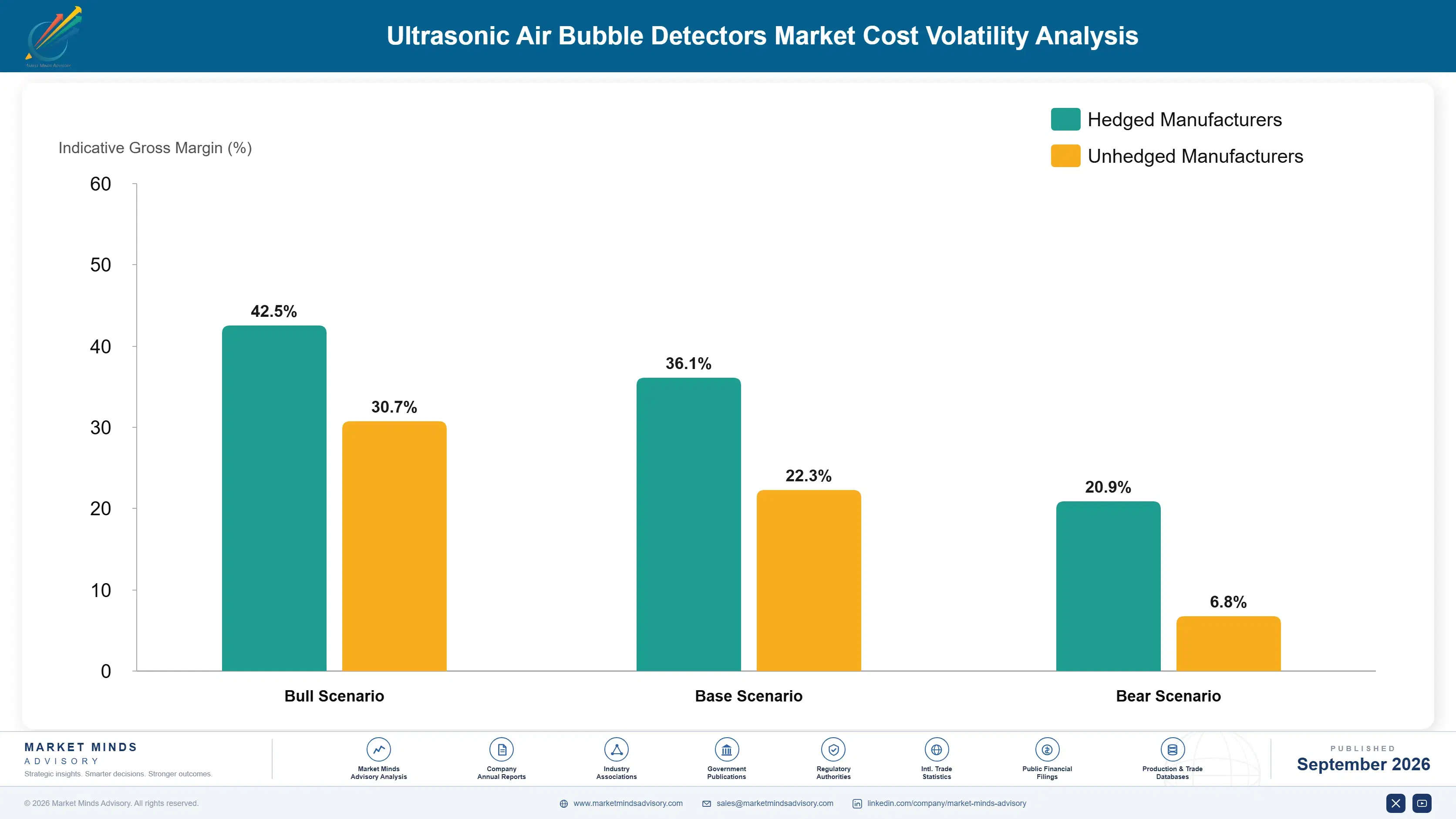
Piezoelectric Transducer Component Cost Exposure

Piezoelectric transducer elements and specialized signal processing chips represent approximately 42% of total device manufacturing cost for ultrasonic bubble detector producers, given the precision material sourcing and calibration engineering required for reliable detection accuracy across most product categories, price tiers, and application segments sold globally today. Piezoelectric ceramic material sourcing depends heavily on a concentrated group of specialized international suppliers.
Piezoelectric ceramic material prices rose an estimated 9% between 2023 and 2025 amid tightening global supply for specialized rare earth and lead-zirconate-titanate compounds, according to the US Census Bureau manufacturing survey tracking specialty materials pricing trends across multiple industrial and medical device manufacturing categories including sensors, actuators, and transducer components simultaneously across the broader economy and supply chain throughout the entire two-year reporting period covered.

This exposure disadvantages smaller manufacturers lacking negotiated volume material supply agreements, forcing them to absorb higher per-unit component costs than larger competitors with committed-use pricing arrangements secured well in advance of production needs and demand. Manufacturers with proprietary piezoelectric material formulation capability gain a meaningful and durable cost advantage over competitors dependent entirely on external ceramic material procurement from third-party suppliers.
ultrasonic-air-bubble-detectors-market-cost-volatility-analysis-1789990326422

Long-Term Ceramic Material Supply Agreements

Larger manufacturers negotiate multi-year volume purchase agreements directly with piezoelectric ceramic material suppliers to lock in pricing and secure allocation priority ahead of demand spikes affecting the broader specialty materials market. Smaller manufacturers without comparable purchasing scale remain exposed to spot market pricing swings, which materially compresses margin during tight supply cycles across the wider industry.

Proprietary Material Formulation Development

Some manufacturers are developing proprietary piezoelectric ceramic formulations to reduce dependence on standard commercially available material compositions subject to broader industrial and medical device demand cycles worldwide and across most economies. This approach requires substantial upfront research investment but delivers meaningful cost stability and product differentiation advantage over competitors dependent entirely on external material sourcing arrangements.

Multi-Supplier Material Sourcing Diversification

Manufacturers are qualifying multiple ceramic material suppliers across different geographic regions to reduce dependence on any single supplier experiencing capacity constraints or unexpected production disruption affecting delivery timelines. This diversification requires additional qualification cost and testing investment, but reduces the risk of production disruption tied to any single supplier relationship across the broader manufacturing operation.

Portfolio Architecture for Margin Defence

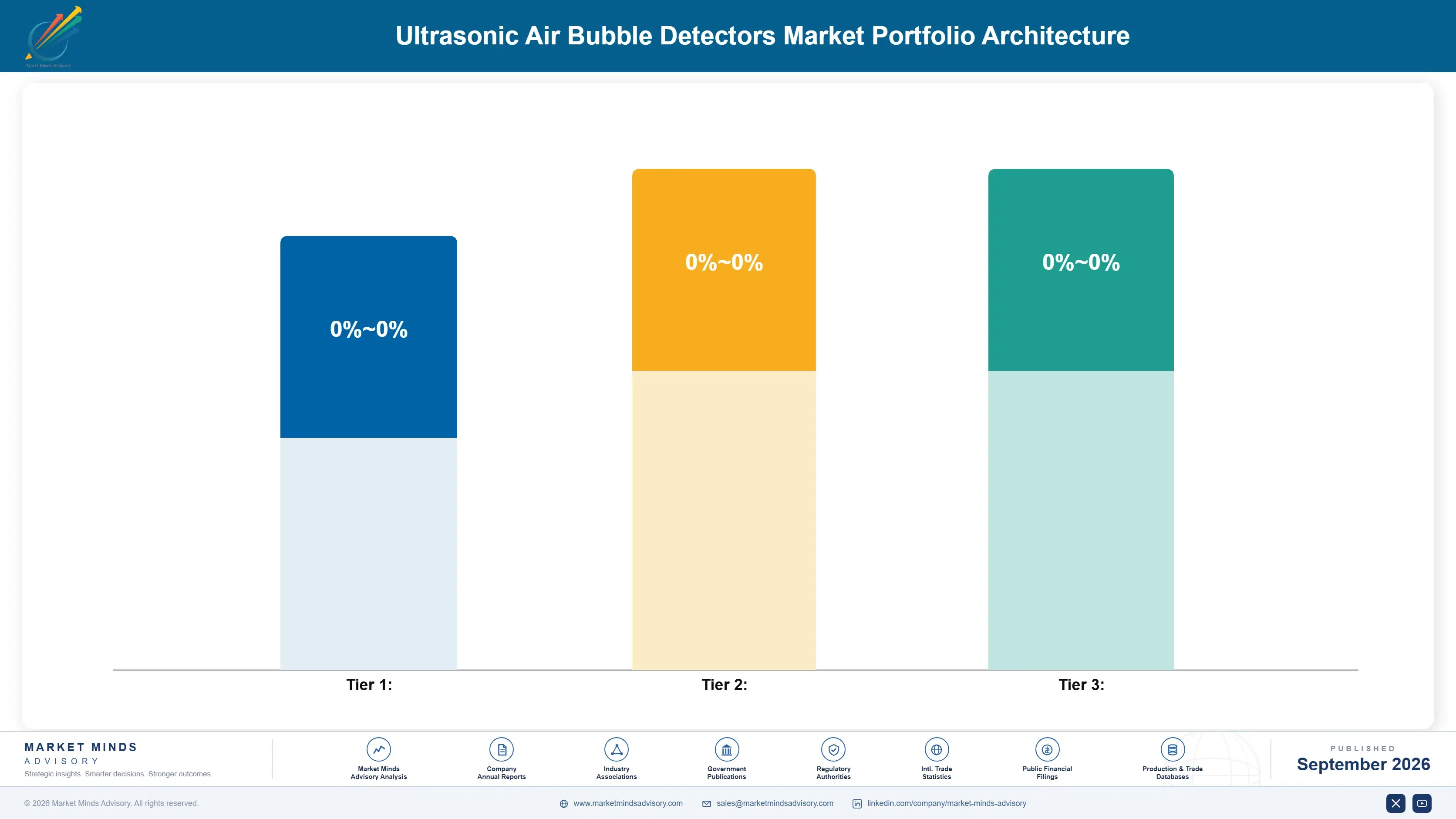
Ultrasonic bubble detector economics divide along three tiers driven by clinical validation and design sophistication. Standard in-line industrial sensors generate gross margins around 24 to 32%, while clinically validated medical-grade clamp-on detectors command 40 to 50%, and miniaturized portable device components with proprietary formulation reach 55 to 65% given the technical and regulatory differentiation competitors cannot quickly replicate.
Standard industrial and basic medical sensors still represent meaningful revenue given widespread installed base across existing equipment, but the highest-value pools now concentrate in clinically validated clamp-on and miniaturized portable device components serving hospital and home healthcare applications. Manufacturers must balance capital allocation between broad commodity accessibility and premium clinical validation investment, since the two require fundamentally different regulatory and engineering capability.

High-value margin pools concentrate specifically in clinically validated clamp-on detectors and miniaturized portable device components, since these command both premium pricing and multi-year design win commitment from hospital systems and device manufacturer customers. Manufacturers positioned across all three tiers rather than concentrated purely in commodity industrial sensors are best placed to capture disproportionate profit as home healthcare and regulatory compliance demand keeps expanding through the forecast period.

Standard in-line industrial and basic medical sensors sold to general fluid handling and entry-level device applications, competing mainly on price with gross margin around 24 to 32% amid intense competition.
Gross Margin

Clinically validated non-invasive clamp-on detectors passing multi-year regulatory and clinical accuracy testing, commanding gross margin of 40 to 50% through demonstrated compliance and durable hospital procurement trust across most markets.
Gross Margin

Miniaturized portable and wearable device components with proprietary material formulation, commanding the highest margin as home healthcare and regulatory compliance demand keeps accelerating globally across most major economies and demographics.
Gross Margin
ultrasonic-air-bubble-detectors-market-portfolio-architecture-1789990327129

High-value Sub-segments and Strategic Watch-out

Non-Invasive Clamp-On Ultrasonic Detectors

The fastest-growing and highest-value segment, commanding premium pricing as hospitals seek to reduce disposable tubing cost while maintaining validated detection accuracy. Manufacturers with proven clinical validation supporting clamp-on accuracy claims are capturing disproportionate share of this expanding category through the forecast period across major markets.

Portable and Wearable Device Detectors

A high-value segment growing steadily as home-based chronic disease treatment adoption expands and requires miniaturized, low-power sensor components suited to compact device form factors. Manufacturers successfully miniaturizing detection capability are capturing early positioning advantage as portable infusion therapy adoption continues expanding across most healthcare systems.

Dialysis Machine Integrated Detectors

The volume core of medical demand, sold heavily into established dialysis equipment manufacturers requiring embedded detection capability across most standard treatment machines. Growth remains solid but margin stays moderate given competitive intensity among numerous established manufacturers, making this segment primarily a scale play for most participants.

Industrial Fluid Handling Detectors

A strategic watch-out segment where growth trails the broader category as industrial applications represent a smaller and slower-growing addressable market than healthcare-focused categories increasingly dominating industry revenue and investment. Manufacturers overexposed to this narrower category risk meaningful revenue erosion absent diversification into higher-growth medical alternatives.

Why Hospitals Rarely Switch Suppliers

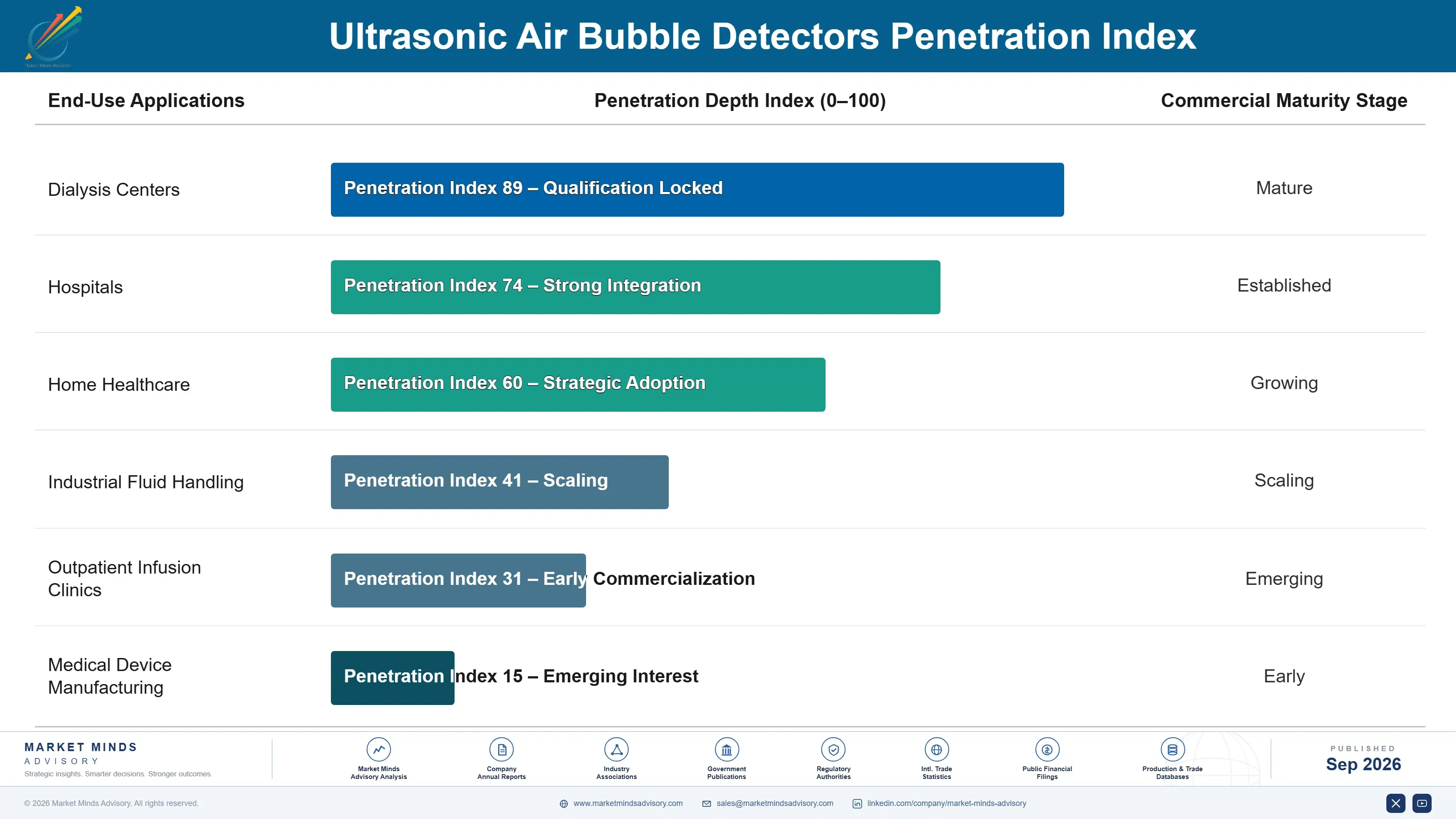
Bubble detector sales generate durable, multi-year revenue through equipment integration relationships rather than transactional unit sales, since a detector specified into a dialysis machine or infusion pump platform typically remains locked in for the entire operational lifespan of that equipment generation. Once a manufacturer clears regulatory qualification for a specific equipment platform, competitors face substantial switching cost and multi-year requalification timelines to displace the incumbent supplier from that integrated design.
Adoption depth varies sharply by end-use vertical. Hospital dialysis centers show near-total stickiness once equipment platforms are qualified, given the multi-year testing and regulatory certification cost required to switch suppliers mid-fleet. Home healthcare device manufacturers show more willingness to switch during new product development cycles, since they are not locked into existing installed equipment the way hospitals managing large existing fleets are constrained.

A generational shift is underway in buyer profile as procurement decisions increasingly involve clinical safety engineering teams rather than purely equipment purchasing specialists focused on unit cost alone. Younger biomedical engineers designing next-generation portable and home healthcare devices increasingly specify detector components earlier in the design cycle, giving qualified suppliers more influence over technical specifications than commodity procurement processes previously allowed.
ultrasonic-air-bubble-detectors-market-end-use-penetration-index-1789990327630

Where Manufacturers Should Focus Now

These are among the four positions where our research anticipates prominent divergence between winners and laggards over the coming forecast period. Each is grounded in the demand model, the regulatory perimeter, and the announced capacity pipeline.
01 / CLINICAL VALIDATION INVESTMENT

Published clinical validation now determines who wins procurement

Rigorous clinical validation published in peer-reviewed medical journals has become more consequential to winning hospital procurement contracts than raw detection sensitivity specifications alone, since committees increasingly demand published evidence over manufacturer claims. Manufacturers without comparable validated evidence increasingly find themselves excluded from the largest hospital equipment contracts regardless of underlying technical performance or price competitiveness relative to validated competitors. Investing in clinical validation now, despite its multi-year timeline and cost, compounds into a durable credibility advantage that late movers cannot easily close.
02 / REGULATORY CERTIFICATION BREADTH

Multi-jurisdiction certification opens the largest global contracts

Manufacturers achieving regulatory approval across multiple major healthcare markets simultaneously are capturing larger addressable contract opportunities than competitors with certification limited to a single jurisdiction, since multinational hospital systems prefer consistent global compliance documentation across regions. This certification breadth requires substantial upfront investment across parallel regulatory approval processes, but creates a durable competitive moat since regulators rarely grant expedited approval to new entrants lacking track records. Expanding certification coverage now will separate durable market leaders from competitors confined to narrower geographic market access.
03 / MINIATURIZATION ENGINEERING INVESTMENT

Home healthcare miniaturization deserves earlier strategic capital commitment

Home-based chronic disease treatment adoption is creating a meaningful new demand channel for miniaturized, low-power detector components that bulkier hospital-grade equipment manufacturers cannot serve without substantial redesign investment and engineering resources across most product lines. This capability requires specialized engineering expertise distinct from traditional hospital equipment design, positioning early movers advantageously as portable infusion therapy adoption continues expanding globally across most healthcare systems. Manufacturers that commit engineering capital to miniaturization now will capture disproportionate share before competitive intensity increases meaningfully.
04 / GROUP PURCHASING RELATIONSHIP STRATEGY

Group purchasing organization relationships deliver more predictable revenue

Manufacturers establishing preferred vendor relationships with major hospital group purchasing organizations capture access to consolidated multi-hospital procurement contracts that individual facility sales relationships cannot match in scale or contract duration across comparable healthcare markets. This requires navigating complex qualification processes and often accepting negotiated volume pricing structures, but delivers meaningfully more predictable multi-year revenue than facility-by-facility sales relationships provide. Manufacturers that build these relationships early will capture disproportionate share of consolidated hospital procurement spending before competitors recognize the full value.

Engagement Snapshot From the Field

A live engagement with an industry participant carrying material or product regulatory and market exposure ahead of a defining policy shift, showing how our research translates into a defensible multi-year portfolio strategy.
MARKET MINDS ADVISORY · CLIENT ENGAGEMENT SUMMARY
Ultrasonic Air Bubble Detectors Producer Strategic Portfolio Review and Transition Roadmap 2026·Investment Scenario on Ultrasonic Air Bubble Detectors Exposure Evaluation 2025-26
CLIENT PROFILE
The client operates a regional dialysis clinic network with 22 locations, previously sourcing bubble detector components from three different suppliers across its aging equipment fleet without a unified vendor consolidation strategy in place. Rising equipment maintenance cost and inconsistent detection accuracy performance across suppliers prompted leadership to evaluate standardizing on a single validated detector vendor.
STRATEGIC CHALLENGE
The client lacked a systematic framework for comparing detector reliability performance, regulatory certification status, and total cost of ownership across its fragmented supplier base spanning multiple equipment generations and clinic locations. Prior detection accuracy inconsistencies had created clinical staff confidence concerns, while leadership needed a defensible basis for a network-wide vendor consolidation decision.
MMA APPROACH
MMA benchmarked four bubble detector manufacturers against clinical validation depth, regulatory certification status, and total cost of ownership using primary interviews with comparable dialysis network technology buyers across the industry. The engagement modeled consolidation scenarios across single-vendor and dual-vendor deployment structures, weighing supply security against negotiated volume pricing advantages over a five-year equipment horizon.
KEY FINDINGS
  1. Consolidating from three suppliers to one reduced projected five-year total procurement cost by approximately 17% across the network (client-reported, unverified by MMA).
  2. The selected vendor's published clinical validation data covered roughly 40% more equipment platform configurations than the client's prior primary supplier (client-reported, unverified by MMA).
  3. Standardizing on one detector vendor reduced clinical staff training requirements and improved reported detection confidence scores meaningfully across all locations (client-reported, unverified by MMA).
  4. Dual-sourcing the highest-volume detector category reduced single-supplier disruption risk while adding only approximately 5% to total procurement cost (client-reported, unverified by MMA).
CLIENT PROFILE
The client operates a regional dialysis clinic network with 22 locations, previously sourcing bubble detector components from three different suppliers across its aging equipment fleet without a unified vendor consolidation strategy in place. Rising equipment maintenance cost and inconsistent detection accuracy performance across suppliers prompted leadership to evaluate standardizing on a single validated detector vendor.
STRATEGIC CHALLENGE
The client lacked a systematic framework for comparing detector reliability performance, regulatory certification status, and total cost of ownership across its fragmented supplier base spanning multiple equipment generations and clinic locations. Prior detection accuracy inconsistencies had created clinical staff confidence concerns, while leadership needed a defensible basis for a network-wide vendor consolidation decision.
MMA APPROACH
MMA benchmarked four bubble detector manufacturers against clinical validation depth, regulatory certification status, and total cost of ownership using primary interviews with comparable dialysis network technology buyers across the industry. The engagement modeled consolidation scenarios across single-vendor and dual-vendor deployment structures, weighing supply security against negotiated volume pricing advantages over a five-year equipment horizon.
KEY FINDINGS
  1. Consolidating from three suppliers to one reduced projected five-year total procurement cost by approximately 17% across the network (client-reported, unverified by MMA).
  2. The selected vendor's published clinical validation data covered roughly 40% more equipment platform configurations than the client's prior primary supplier (client-reported, unverified by MMA).
  3. Standardizing on one detector vendor reduced clinical staff training requirements and improved reported detection confidence scores meaningfully across all locations (client-reported, unverified by MMA).
  4. Dual-sourcing the highest-volume detector category reduced single-supplier disruption risk while adding only approximately 5% to total procurement cost (client-reported, unverified by MMA).
RECOMMENDED STRATEGY
Phase 1: Phase one: consolidate from three suppliers down to one single primary vendor within two quarters across all twenty-two clinic locations. Phase 2: Phase two: negotiate a comprehensive multi-year volume agreement with the primary vendor to lock in favorable long-term pricing terms overall. Phase 3: Phase three: maintain a qualified secondary backup supplier for the highest-volume detector category to preserve stronger network-wide supply security overall.
OUTCOME
The client completed vendor consolidation within five months, well ahead of the original seven-month target, achieving the full projected cost reduction while reporting improved clinical staff confidence in detection accuracy across the entire regional dialysis clinic network and its various facilities (client-reported, unverified by MMA).

Frequently Asked Questions

Foundational context covering the market sizes, CAGR, scope, country, region and competition that inform every finding below. This section is provided to cover basics and most often pre-purchase conversations, answered from the MMA Primary Research Dataset.

What is the current size of the Ultrasonic Air Bubble Detectors Market?

The Ultrasonic Air Bubble Detectors Market was valued at approximately $0.4 billion in 2025, the base year for this analysis. This figure covers global dialysis, infusion, and industrial detector revenue.

How large will the Ultrasonic Air Bubble Detectors Market be by 2036?

The market is projected to reach approximately $0.81 billion by 2036, driven by dialysis therapy growth and regulatory compliance mandates. This represents a 1.88x expansion over the 2026 starting value.

What is the CAGR for the Ultrasonic Air Bubble Detectors Market 2026 to 2036?

The market is forecast to grow at a compound annual growth rate of 6.5% between 2026 and 2036. The bull case reaches 7.7% while the bear case falls to 5.4%.

Which segment is growing fastest?

Non-Invasive Clamp-On Ultrasonic Detectors is the fastest-growing segment, expanding at 9.5% CAGR, roughly 1.46x the overall market rate. Demand is driven by hospitals reducing disposable tubing cost.

Who are the major companies in the Ultrasonic Air Bubble Detectors Market?

Leading participants include Sonotec, Introtek International, Elcam Medical, Zevex, and Transonic Systems, alongside numerous specialized medical device manufacturers. Competitive positioning centers on clinical validation depth and regulatory certification breadth.

Which country is growing fastest?

India is the fastest-growing country market, expanding at approximately 8.5% CAGR. Government healthcare infrastructure investment and rising dialysis therapy access are driving accelerating demand there.

Report Segmentation Architecture

The full report scope spans multiple orthogonal segmentation dimensions, with cross-tabulated demand data provided for each dimension pair. Coverage extends further to regional breakdowns, trend trajectories, and the competitive detail needed to support segment-level decision-making.
  • Non-Invasive Clamp-On Ultrasonic Detectors
  • In-Line Ultrasonic Detectors
  • Dialysis Machine Integrated Detectors
  • Infusion Pump Integrated Detectors
  • Industrial Fluid Handling Detectors
  • Portable and Wearable Device Detectors
  • Dialysis Centers
  • Hospitals
  • Home Healthcare
  • Industrial Fluid Handling
  • Outpatient Infusion Clinics
  • Medical Device Manufacturing
  • Direct OEM Integration
  • Group Purchasing Organization Contracts
  • Distributor and Channel Sales
  • Aftermarket Replacement Components

By Region

  • North America
  • Western Europe
  • East Asia
  • South Asia and Pacific
  • Latin America
  • Middle East and Africa
  • Eastern Europe

Scope, Methodology, and Coverage

Every figure in this report is reproducible from documented input assumptions. The scope below maps the historical period, the forecast horizon, the segmentation dimensions, and the countries covered, alongside the underlying primary and qualitative methodology.
Historical Period
2020 to 2025
Forecast Period
2026 to 2036
Base Year
2025 (USD billions; MMA Primary Research Dataset, September 2026)
Market Definition
The Ultrasonic Air Bubble Detectors Market covers sensors that use ultrasonic transmission to detect air bubbles within fluid-filled tubing for medical infusion, dialysis, and industrial fluid handling applications, preventing embolism risk or process contamination. It excludes optical and capacitive bubble detection technologies, tracked as separate categories.
Quantitative Units
USD Billion, unit shipments, CAGR percentage
Segmentation Dimensions
Mounting Design, End-Use Industry, Commercial Dimension, Region
Regions Covered
North America, Western Europe, East Asia, South Asia and Pacific, Latin America, Middle East and Africa, Eastern Europe
Countries Covered
United States, Canada, Germany, France, United Kingdom, China, Japan, South Korea, India, Australia, Brazil, Mexico, United Arab Emirates, Israel, Poland
Key Companies Profiled
Sonotec, Introtek International, Elcam Medical, Zevex, Transonic Systems, Baxter International, Fresenius Medical Care, B. Braun Melsungen, Nipro Corporation, Terumo Corporation, ICU Medical, Smiths Medical, Moog Medical Devices, Fenwal, Advanced Sterilization Products, Delta Ohmeter, Sonoscape, Nihon Kohden, Deltatek, Xylem Analytics
Quantitative Methodology
Primary survey, n=3,800 respondents, Q4 2025, six countries; demand-side model with trade association cross-validation
Qualitative Methodology
47 expert interviews, Q4 2025; applied to validate demand model assumptions, identify emerging dynamics, and assess competitive positioning
Report Format
PDF and XLSX data workbook (Word format preview document)
Publisher
Market Minds Advisory
Report Code
MMA-2026-MED-101
Published
September 2026
Contact
sales@marketmindsadvisory.com | www.marketmindsadvisory.com

Purchase the full Ultrasonic Air Bubble Detectors Market Report (2026 to 2036).

This report provides a comprehensive assessment of the global Ultrasonic Air Bubble Detectors Market through 2036. It covers market sizing, segmentation, competitive dynamics, and regional demand patterns across all seven major geographies tracked in this analysis. The analysis examines how clinical validation and regulatory certification are reshaping competitive positioning across the medical device industry, alongside piezoelectric material cost exposure across the broader global manufacturing supply chain. It draws on primary survey data, expert interviews, and company disclosures to support procurement, investment, and strategic planning decisions.
Ten-year market sizing and forecast model
Seven-region demand and competitive intensity breakdown
Five-vendor competitive benchmarking and moat analysis
Segment-level growth trajectory and margin analysis
Material cost exposure and mitigation pathways
Anonymized client case study with recommendations

Built For The People Who Decide

From boardroom strategy to bench-side execution, this report is read cover-to-cover by leaders shaping the next decade of their industry, turning demand scenarios, market dynamics and valuation benchmarks into decisions.
CXOs/ Presidents/ VPs/ Managers
M&A and Corporate Development
Strategy Teams and R&D Heads
Procurement and Product Directors
Regulatory and Compliance Leaders
Investor Relations and Equity Analysts