Market Minds Advisory
UK Banking-as-a-Service Market

UK Banking-as-a-Service Market: Licence Liability, Safeguarding Rules and the Middle Layer That Failed

An industry that spent five years selling access to a banking licence, then discovered the licence holder answers for every customer that somebody else happened to onboard onto its own permissions instead.

Lead Analyst

Published

September 2026

Make Smarter Decisions with Customized Research Insights

Request a free sample report and evaluate market opportunities, growth trends, and competitive dynamics relevant to your business needs.

2025 MARKET VALUE$2.1BMarket Size 2025
2036 FORECAST VALUE$9.1BBase Case , 2026 to 2036
CAGR 2026 TO 203614.2 %Bull 15.4% / Bear 13.0%
INCREMENTAL OPPORTUNITY$6.7BNet 10- year value creation
EXPANSION MULTIPLE3.77x2036 value over 2026 base
Strategic Levers
M&A Pipeline
Regional Outlook
Country Rankings
Competitive Intelligence
Segmental Deep-dive
Call-Us : 91 93563 13602

Executive Snapshot and Market Trajectory

The commercial premise of UK Banking-as-a-Service was that a brand could rent regulated capability without becoming regulated itself. That premise held until supervisors made clear the licence holder answers for every customer onboarded on its permissions, whoever it was that actually onboarded them originally.
Liability is now the organising fact of this market. Consumer Duty reached distributors as well as manufacturers from July 2023, mandatory reimbursement for authorised push payment fraud arrived in October 2024, and safeguarding proposals have been moving toward client money rules borrowed from investment business. Compliance absorbs roughly 28% of provider operating cost, which is a different business from the one anybody pitched in 2019. Nobody in this market priced for any of that.
The market has split into two viable shapes and one that failed. Licensed banks provide balance sheet and settlement access directly; processors supply technology without holding regulatory risk. The agency model in between, distributing another institution's permissions to programmes it did not underwrite, is where the failures clustered. Embedded lending grows fastest at 21.3% because it needs a balance sheet nobody can rent cheaply from anywhere. That barrier holds.
Market Definition
Revenue earned by regulated institutions and their technology providers supplying banking and payment capability to third-party brands operating in the United Kingdom, comprising platform fees, per-transaction and per-account charges, interchange share, and net interest earned on client balances. Excludes the brands' own end-customer revenue, traditional corporate banking, standalone merchant acquiring, and core banking software licensed to banks for their own internal use.
Base Year Value
$2.1B in 2025 (MMA Primary Research Dataset, August 2026)
Forecast Period
2026 to 2036, eleven discrete annual values
CAGR
14.2% base case. Bull 15.4%. Bear 13.0%.
Fastest Growth Segment
Embedded Lending and Credit: 21.3% CAGR
Fastest Growth Country
India: 16.2% CAGR
Fastest Growth Region
South Asia and Pacific: 16.2% CAGR
Largest Region
Western Europe: 88% of 2025 global value
Market Leaders
ClearBank, Modulr, Thredd, Banking Circle and LHV Bank lead on platform and transaction revenue from third-party programmes. Source: company annual reports and MMA Primary Research Dataset, July 2026.
Primary Survey
n=3,800 procurement and R&D decision-makers, Q4 2025, six countries
Methodology
Demand-side build-up, cross-validated against public data, 47 expert interviews

UK Banking-as-a-Service Market Forecast Scenarios

uk-banking-as-a-service-market-size-forecast-scenario-1787938824693
The 2020 to 2025 stretch divided sharply at the midpoint. Embedded finance funding was abundant through 2021 and programmes launched faster than anybody could supervise them, then Railsr entered administration in February 2023 and the market discovered what a distributed agent estate actually costs to control. Revenue still compounded near 12.8%, because the surviving providers absorbed programmes that the failures had released.
Three mechanisms carry the base case. Embedded lending expands because brands want credit products their customers already expect, and credit requires a balance sheet that only a licensed provider supplies. Safeguarding and client money services grow as regulatory expectations formalise, converting an obligation into a chargeable capability. And programme consolidation continues, with brands moving from several thin providers toward one that holds the permissions directly itself. Consolidation has been the quiet story of the last two years.
The bull catalyst is a large retail or telecoms brand launching a full banking proposition on a single provider, which historically pulls a dozen comparable programmes behind it. The bear risk is another provider failure inside a supervisory action: a second Railsr would freeze brand appetite for eighteen months regardless of how well the remaining providers happened to be run.

Renting A Licence Nobody Can Actually Rent

A brand buying Banking-as-a-Service is buying regulatory permissions it cannot obtain quickly and does not want to hold. That is genuinely valuable, and it is also the whole difficulty, because permissions do not transfer. The institution holding them remains accountable for financial crime controls, customer outcomes and complaint handling across every programme running on its rails, including programmes whose customers it has never seen.
MARKET CONCENTRATION CR558%Share of provider revenue held by the largest platforms
AVERAGE PROGRAMME REVENUEGBP 1.4mAnnual revenue earned from a typical brand programme
INTEREST INCOME SHARE37%Provider revenue derived from balances held for clients
PROGRAMME ONBOARDING TIME19 weeksElapsed period from signature to first live transaction
CLIENT PROGRAMME ATTRITION14%Brand programmes discontinued or migrated within a year
COMPLIANCE COST SHARE28%Operating cost absorbed by financial crime and oversight
Supervisors made that accountability explicit rather than creating it. Consumer Duty applied to distributors as well as product manufacturers from July 2023. Mandatory reimbursement for authorised push payment fraud took effect in October 2024, landing directly on the sending institution. Safeguarding proposals have moved steadily toward client money rules of the kind investment firms have carried for years. None of it was unexpected, and much of the market priced as though it would not arrive.
Interest income complicates the picture usefully. Around 37% of provider revenue derives from balances held on behalf of client programmes, which means the economics improved substantially when rates rose and will compress when they fall. Providers describing themselves as technology businesses are frequently reporting a net interest margin. That distinction matters enormously for anybody valuing them.
"Everybody in this market sells speed to launch. What they actually sell is somebody else's regulatory permissions plus an indemnity nobody reads carefully, and the second half is the entire business."
Director, Embedded Finance and Payments Practice · MMA Financial Services and Insurance Practice · August 2026

Market Trends

Providers Retreat From Distributed Agent Estates Entirely

The agency model, where an authorised institution allows distributors to onboard customers under its permissions, produced most of the supervisory difficulty this market has experienced. Oversight of an agent estate requires controls proportionate to the customers, not to the contract, and several providers discovered that only after a supervisor asked. The response has been consistent: agent onboarding paused, estates reviewed, and the model quietly replaced with direct programme relationships the provider underwrites itself. Revenue falls in the short run and the remaining book becomes considerably more defensible. That trade is worth making.
Market Impact: Grows embedded lending 21.3% yearly

Licensed Banks Reacquire Capability They Previously Partnered For

Established banks that once treated embedded finance as a partnership opportunity have started buying the capability outright, and NatWest acquiring Vodeno and Aion Bank in 2024 is the clearest example available. The logic is that a bank already carries the regulatory apparatus, the capital and the settlement access, so what it lacks is only the technology layer. Buying that layer is cheaper than building it and considerably faster than partnering. Independent providers now compete against acquirers who no longer need them at all. Partnering was never going to last as a permanent arrangement.
Market Impact: Supplies 37% of provider revenue

Market Opportunities and Growth Drivers

Embedded Credit Requires A Balance Sheet Brands Lack

Brands want to offer credit inside their own products because customers already expect it, and credit cannot be delivered by a technology layer alone. It needs capital, a lending permission, affordability assessment under consumer credit rules and the appetite to hold the exposure. Licensed providers supply all four, which is why embedded lending grows at 21.3% against a market rate of 14.2%. The barrier is genuine rather than technical, and it is the clearest example of something in this market that cannot simply be built by anybody. Capital is the moat here.
Market Impact: Absorbs 28% of operating cost

Interest Rates Transformed Provider Revenue Composition

Roughly 37% of provider revenue now derives from interest earned on balances held for client programmes, a share that was negligible when base rates sat near zero. Providers holding safeguarded funds and client balances found the same deposits suddenly generating meaningful income without any change to the product. That windfall funded investment several businesses could not otherwise have afforded and disguised weak unit economics elsewhere. It also created a dependency that will reverse whenever rates do, which few management teams discuss openly. A windfall is not the same thing as a business model.
Market Impact: Delays launch by 19 weeks

Market Restraints and Challenges

Regulatory Liability Cannot Be Contracted Away Downstream

An authorised institution remains accountable for customer outcomes and financial crime controls across every programme on its permissions, regardless of what the commercial agreement says about responsibility. The root cause is that permissions are granted to an entity rather than distributed through a supply chain. Commercially it means provider oversight cost scales with programme customers, not with programme revenue. Mitigation runs through tighter programme selection, oversight fees charged separately from transaction pricing, and exiting sectors whose customer profile generates disproportionate supervisory attention. No indemnity clause has ever persuaded a supervisor otherwise.
Market Impact: Cuts agent estates 40% typically

Programme Onboarding Runs Nineteen Weeks Against Promises

Brands are sold rapid launch and then spend an average nineteen weeks reaching first live transaction, because due diligence, financial crime assessment and scheme certification cannot compress the way software integration can. The root cause is that the slow parts are regulatory rather than technical. Commercially this creates disappointment at exactly the moment a client is most committed. Providers mitigate by staging diligence before contract signature, running scheme certification in parallel, and pricing an implementation fee that makes the elapsed time a shared concern. The technical integration was never the slow part.
Market Impact: Removes 3 partnership channels annually
3 additional market trends, 4 additional growth drivers, and 2 additional restraints and challenges are covered in the full report. Contact sales@marketmindsadvisory.com to access the complete intelligence.

Segment CAGR and Growth Architecture

Segmentation follows regulated capability, since that determines which permissions a provider must hold, what liability attaches and how the revenue is earned. Six capabilities describe the market completely, from basic payment accounts through to card programme management to the lending and client money services that require genuine balance sheet capacity sitting behind them somewhere.
uk-banking-as-a-service-market-market-share-analysis-1787938825224

Embedded Lending and Credit

The fastest capability grows at 21.3%, half again the market rate of 14.2%, and it grows because the barrier is real rather than technical. Offering credit inside a brand's own product requires capital, a lending permission, affordability assessment under consumer credit rules and appetite to hold the exposure through a cycle. No technology layer supplies any of that. Providers with a banking licence and a balance sheet can, which is why this is the one capability where a licensed institution holds a durable advantage over a processor. The risk is equally real: credit losses arrive on the provider's own accounts while the brand keeps the customer relationship and most of the goodwill attached to it.
CAGR 21.3%

Safeguarding and Client Money Services

Safeguarding grows at 17.6% because regulatory expectation converted an obligation into a chargeable service. Payment and e-money firms must protect customer funds, and supervisory proposals have moved steadily toward client money rules resembling those investment firms have carried for years, with reconciliation, segregation and audit requirements attached. Smaller firms cannot build that apparatus and increasingly buy it. Providers offering safeguarding accounts with proper reconciliation, daily attestation and independent audit support charge accordingly. The competitive question is whether a provider treats safeguarding as a deposit-gathering exercise generating interest income or as a genuine control service, because supervisors have started asking that question directly. Interest income and control quality are not the same product at all.
CAGR 17.6%
Full segment breakdown across 6 segments available in the complete report.

Regional Architecture and Country Demand Map

This is a United Kingdom market and effectively all revenue is earned domestically. Other regions appear as capital sources, technology development locations, scheme authorities and the group structures of European providers operating British subsidiaries, none of which represent programme revenue earned inside the United Kingdom.

North America

Share sits far below the standard band because programme revenue is earned where the regulated permissions apply, and these permissions are British. The influence is nonetheless substantial. Card scheme rules originating with Visa and Mastercard determine what a United Kingdom programme can offer and what it costs to run, Marqeta competes directly for issuing mandates here, and much of the venture capital that funded this market between 2019 and 2022 came from North American investors whose subsequent withdrawal shaped the consolidation that followed. None of that appears in the revenue counted. The influence is real, unpriced within this market, and entirely outside the control of any provider operating in it.
Share: 4% | CAGR: 13.6% (2026 to 2036)

Western Europe

Effectively the whole market sits here, far above the standard band, for the definitional reason that this report measures revenue earned from programmes operating under United Kingdom permissions. Around 58% of it concentrates among five providers, with Financial Conduct Authority supervision, Payment Systems Regulator rules and Bank of England settlement access shaping what any of them can offer. European ownership matters too: several providers operate under continental parents, and ClearBank obtained separate European authorisation, so British and European strategies now diverge deliberately rather than accidentally. Nothing about the British supervisory approach resembles what a European provider faces, which is why several participants now run two propositions rather than one and describe it as strategy.
Share: 88% | CAGR: 12.6% (2026 to 2036)
Regional intelligence for 5 additional markets available in the complete report: East Asia, South Asia and Pacific, Latin America, Middle East and Africa, Eastern Europe. Contact sales@marketmindsadvisory.com.
uk-banking-as-a-service-market-country-cagr-analysis-1787938825747

Where BaaS Margin Actually Survives

Four levers work on liability, capability and revenue quality rather than on programme volume, which supervisors have effectively capped for anybody running a distributed estate. Direct underwriting, balance sheet lending, priced oversight and interest income diversification each address something a provider genuinely controls in this particular market. Programme count is not on that list.

Underwrite Programmes Directly Instead Of Distributing Permissions

Providers that abandoned agency distribution and moved to direct programme relationships carry oversight cost proportionate to customers they actually assessed rather than to an estate somebody else assembled. Revenue falls initially, typically 25% to 35% as the agent book runs off, and the remaining programmes generate materially better contribution because supervisory attention drops and remediation cost stops recurring. The trade is growth for durability. Every provider that experienced a supervisory intervention in this market ran a distributed estate, and that correlation is not a coincidence anybody in the industry disputes.
Market Impact: Cuts the annual remediation cost by around 30%

Deploy Balance Sheet Where Processors Simply Cannot Follow

Embedded lending grows at 21.3% against a market rate of 14.2%, and it is the one capability a technology provider cannot replicate, because credit requires capital, a lending permission and appetite to hold exposure. Licensed providers deploying balance sheet into brand-distributed credit earn 400 to 700 basis points above their payment account economics on the same client relationship. The discipline is refusing to fund credit the brand designed but will not share losses on, which is precisely the arrangement most brands propose in the first conversation. The answer to that proposal is no.
Market Impact: Earns around 550 basis points above payment economics

Charge Oversight Separately From Transaction Pricing

Programme oversight cost scales with customer numbers and risk profile, while transaction pricing scales with volume, and those two things diverge badly for any programme serving many small customers. Providers billing an explicit monthly oversight and compliance fee alongside transaction pricing recover 18% to 24% more from high-supervision programmes and, more usefully, cause brands to reconsider propositions whose control cost exceeds their commercial value. The conversation is uncomfortable and it removes exactly the programmes that generate supervisory difficulty later on. Removing them before they launch is considerably cheaper than remediating them afterwards.
Market Impact: Recovers around 21% more from high supervision programmes

Reduce Dependence On Client Balance Interest Income

Interest on client balances supplies roughly 37% of provider revenue and arrived without any product being built, which makes it the most flattering line in this industry and the least defensible. When rates fall it compresses, and businesses valued on technology multiples will be revalued on what remains. Providers rebuilding pricing so that platform and transaction fees cover the cost base independently, treating interest as surplus rather than as budget, hold margins competitors will lose entirely. Very few have done the work while conditions still permit it. Conditions will not stay this way.
Market Impact: Removes a 37% revenue dependency on interest income

Who Controls the Margin Pool

Concentration is moderate and rising. The five largest providers hold around 58% of programme revenue, a share that grew through consolidation rather than competition, as failures released programmes survivors absorbed. The gap between licensed banks and technology-only providers is now the defining division in this market. Below the leading group sit specialists in issuing, foreign exchange and compliance services competing on capability rather than breadth.
Competition runs on three dimensions. Regulatory standing is first and now decisive, since brands conduct diligence on a provider's supervisory history rather than only its pricing. Balance sheet capacity is second, since credit cannot be delivered without it. Implementation speed is third and matters less than providers believe, since nineteen weeks is the realistic average and the slow parts are not technical.

Pressure is arriving from established banks rather than from new entrants. Institutions that once partnered are buying the technology layer outright, holding capital, permissions and settlement access already. Supervisory expectations meanwhile keep absorbing a rising share of provider cost. Rankings shift against providers holding neither a banking licence nor genuine specialist capability, since breadth without either has stopped being a position anybody buys.
uk-banking-as-a-service-market-company-positioning-matrix-1787938826270

Competitive Moat and Risk Dimensions

CLEARBANK

Moat: Clearing licence and settlement access

ClearBank holds a United Kingdom banking licence with direct settlement access, which lets it provide agency banking and safeguarding accounts that electronic money institutions cannot offer at all. Client funds sit at the Bank of England rather than with a commercial correspondent, a distinction supervisors and clients both value. Obtaining comparable status now means a licence application running years.
CLEARBANK

Risk: Revenue weighted toward interest income

A substantial portion of revenue derives from interest on client balances rather than from platform or transaction fees, which flattered results while rates were high and will compress when they fall. The underlying deposits arrived because of the licence rather than because of any product. Rebuilding fee income to cover the cost base becomes considerably harder once the surplus disappears.
MODULR

Moat: Payment rails and platform depth

Modulr holds direct access to United Kingdom payment schemes and built genuine platform depth across payroll, lending and accounting software clients, which produces embedded relationships that migrate slowly because they sit inside the client's own operational processes. Switching means rebuilding reconciliation and payment flows rather than swapping an interface. That integration takes years to establish with any client base.
MODULR

Risk: Supervisory attention on distribution

Regulatory intervention concerning oversight of distributed partners paused new agent onboarding and required remediation, which cost growth and management attention simultaneously. The episode illustrated that oversight obligations scale with the customers a partner brings rather than with contract value. Rebuilding supervisory confidence takes considerably longer than rebuilding the commercial pipeline that was interrupted.

Players Tracked

Prominent Players

ClearBank
Modulr
Thredd
Banking Circle
LHV Bank

Other Key Players

Griffin
Weavr
Currencycloud
Marqeta
Enfuce
Vodeno
Solaris
Railsr
Fiat Republic
Toqio
Swan
Treezor
Starling Engine
Zempler Bank
Paynetics UK

Recent Developments

FEBRUARY 2023

Railsr entered administration and was sold to a consortium

The embedded finance provider entered administration and its business was acquired by an investor consortium through a pre-pack arrangement, transferring programmes to new ownership. This was an insolvency followed by an acquisition, not a merger or joint venture, and it reset brand appetite across the market immediately.
Signal: Brands began conducting diligence on provider solvency and supervisory history rather than only on the pricing.
OCTOBER 2024

Mandatory reimbursement for push payment fraud took effect

The Payment Systems Regulator introduced compulsory reimbursement for victims of authorised push payment fraud on designated payment systems, with liability shared between sending and receiving institutions. This was regulatory implementation rather than any commercial arrangement, and it landed directly on providers carrying the payment permissions.
Signal: Fraud liability moved onto the licensed institution regardless of which brand actually held the customer relationship.
DECEMBER 2024

NatWest completed its acquisition of Vodeno and Aion Bank

NatWest Group completed the acquisition of technology provider Vodeno alongside Aion Bank, bringing embedded finance capability inside an established banking group rather than partnering for it. This was an acquisition rather than a merger or joint venture, and it removed a partnership channel independent providers had previously relied upon.
Signal: Established banks buying the technology layer no longer need the independent providers they once partnered with.

What Carrying Somebody Else's Customers Costs

Provider cost divides into four components that behave quite differently under pressure. Financial crime, compliance and programme oversight absorb roughly 28% of operating cost and scale with programme customers rather than with revenue. Technology and platform engineering account for near 31%, scheme and settlement charges near 22%, and client servicing with implementation delivery make up the remaining 19% for a typical provider.
The 2023 supervisory cycle demonstrated how quickly the largest component moves. Oversight expectations for distributed estates rose sharply after the Railsr administration, providers paused agent onboarding and commissioned remediation programmes, and compliance headcount grew faster than revenue across most of the market. ClearBank and NatWest both discussed elevated regulatory and control investment across that period in their annual reporting. None of that cost was recoverable from the programmes that generated it.

Exposure varies enormously by business model and it decides who competes. Providers running distributed agent estates carry oversight cost proportionate to customers they never assessed, while direct-relationship providers carry cost proportionate to programmes they underwrote. Licensed banks absorb capital and prudential reporting costs that processors avoid entirely, and processors carry no regulatory liability but also cannot offer credit, safeguarding or settlement access to anybody.
uk-banking-as-a-service-market-cost-volatility-analysis-1787938826465

Direct programme underwriting instead of agent distribution

Moving from distributed agent estates to direct programme relationships aligns oversight cost with customers the provider actually assessed. Revenue falls while the agent book runs off, typically over four to six quarters. Every provider that experienced supervisory intervention in this market operated a distributed estate, which is a correlation nobody in the industry seriously disputes any more.

Explicit oversight fees separated from transaction pricing

Billing programme oversight and compliance separately from transaction volume recovers cost from exactly the programmes that generate it and causes brands to reconsider propositions whose control burden exceeds commercial value. The conversation is an uncomfortable one at contract stage. It removes the programmes that would otherwise create supervisory difficulty eighteen months further down the line.

Offshore first line operations with retained second line

Alert review, testing and first line support delivered from Indian centres reduce the cost of an obligation that scales with customer numbers rather than revenue. Second line compliance and supervisory relationships stay onshore because they cannot credibly sit elsewhere. Most providers of scale in this market already operate this split without discussing it publicly.

Portfolio Architecture for Margin Defence

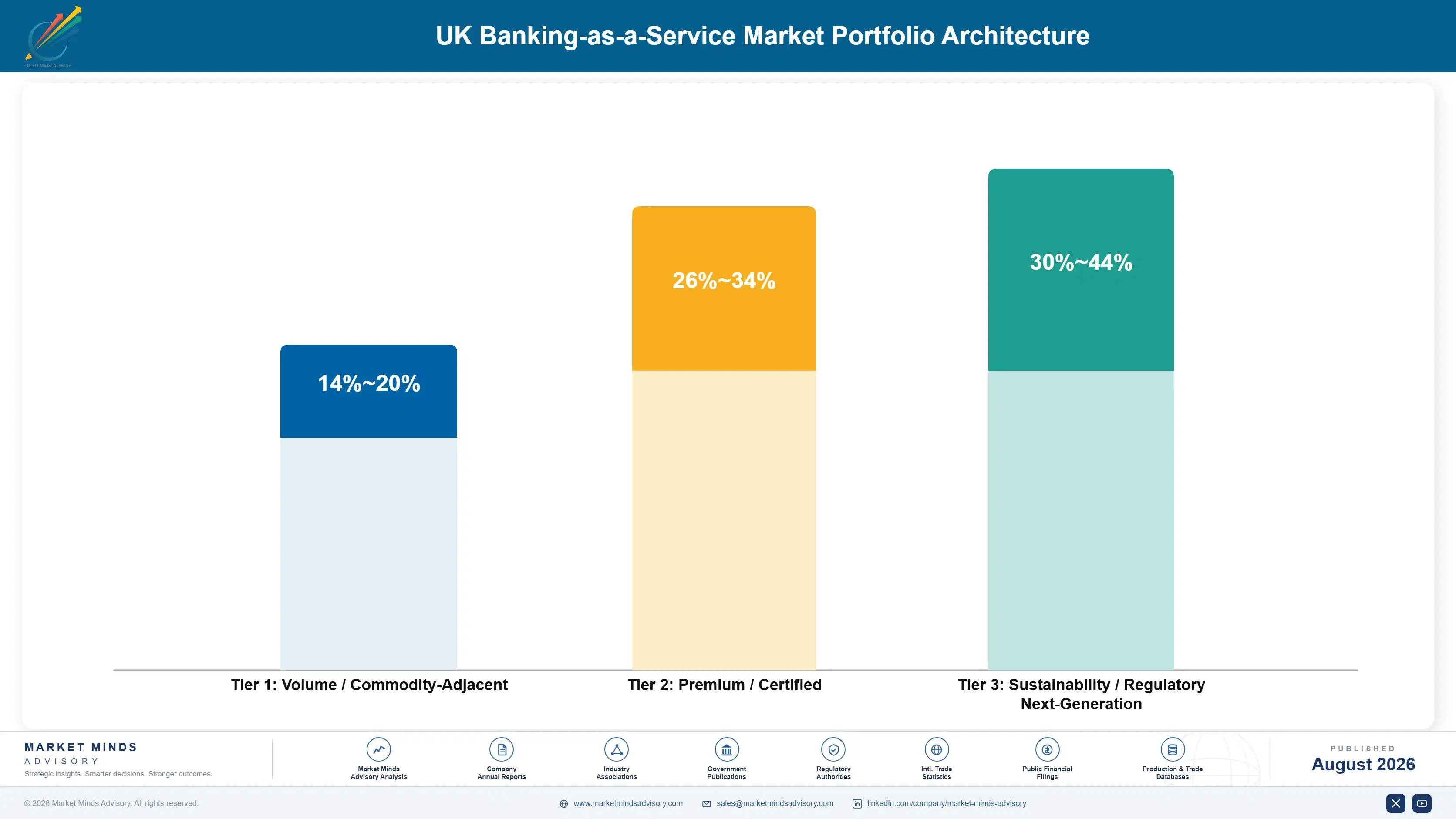
The provider portfolio separates by whether the capability requires permissions, capital or merely software. Payment accounts and agency banking form the volume core: essential to every programme, competed for by every provider, and priced accordingly. They exist because they anchor the client relationship and generate the balances that produce interest income, not because the transaction economics alone justify the oversight that they attract. Nobody earns much there.
Margin concentrates where a licence or a balance sheet creates a genuine barrier. Card issuing with full programme management, safeguarding with proper reconciliation, and embedded lending all require capability a brand cannot assemble and a processor cannot supply. The tension is that these same capabilities carry the regulatory liability, so the highest-margin services are also the ones that attract supervisory attention when a programme behaves badly somewhere downstream.

The highest-value pool is embedded lending, and it is the least crowded for the clearest possible reason. Credit needs capital, a lending permission and willingness to hold exposure through a cycle, which excludes every technology-only competitor immediately. That exclusion is durable in a way nothing else in this market currently is at all. It will stay that way.

Volume / Commodity-Adjacent

Payment accounts, agency banking and basic transaction processing for third-party programmes. Range spans six points because providers holding a banking licence earn interest on client balances that electronic money institutions must place elsewhere entirely.
Gross Margin: 14-20%

Premium / Certified

Card issuing with full programme management, scheme certification and dispute handling. Range spans eight points because programme complexity and dispute volume differ enormously between consumer and business propositions running identical technology.
Gross Margin: 26-34%

Sustainability / Regulatory / Next-Generation

Embedded lending, safeguarding with reconciliation, and compliance services sold as capability. Range spans fourteen points because lending margin depends on credit performance while safeguarding margin depends on whether interest income is counted within it.
Gross Margin: 30-44%
uk-banking-as-a-service-market-portfolio-architecture-1787938826957

High-value Sub-segments and Strategic Watch-out

Embedded Lending and Credit

High value and high growth at 21.3%, requiring capital and a lending permission that no technology provider holds. The ten point range reflects credit performance across the cycle, which has not yet been tested properly in brand-distributed lending. Nobody in this market has tested it properly yet.
Gross Margin: 34-44%

Safeguarding and Client Money

High value with moderate growth at 17.6%, as supervisory expectation converts an obligation into a chargeable service. The eight point range separates providers counting balance interest within the margin from those reporting it entirely separately. That distinction matters enormously to anybody trying to value the business.
Gross Margin: 28-36%

Payment Accounts and Agency Banking

The volume core and the anchor for every client relationship in the market. Every provider competes for it, pricing is transparent, and it generates the client balances that supply roughly 37% of industry revenue through interest. The oversight attention it attracts is not remotely proportionate.
Gross Margin: 14-20%

Distributed Agent Programme Liability

The strategic watch-out rather than a growth pool. Oversight obligations scale with customers a provider never assessed, remediation cost is not recoverable from the programmes generating it, and every supervisory intervention here involved a distributed estate. That is not a coincidence anybody here seriously disputes.
Gross Margin: Variable

Why Programmes Stay Once Live

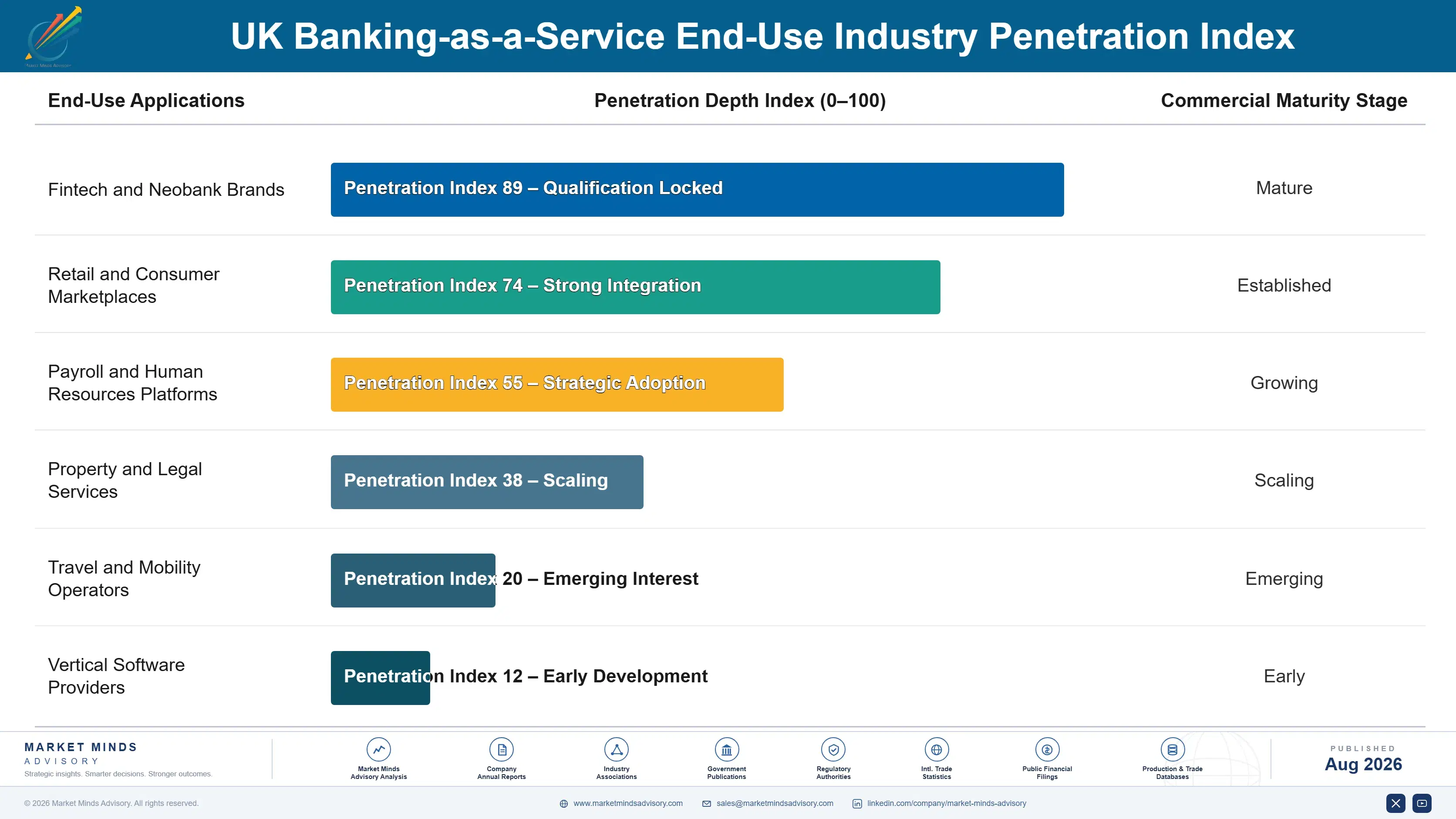
A live programme produces annuity economics that require almost nothing from the provider afterwards. Nineteen weeks of implementation, scheme certification and financial crime assessment create switching costs so high that brands tolerate poor service rather than repeat the exercise, and annual attrition sits near 14% concentrated among programmes that failed commercially rather than programmes that moved. That friction is worth more than any pricing advantage a competitor offers.
Stickiness varies sharply by how deeply the capability sits inside the client. Payroll platforms and accounting software embed payment flows into their own operational processes, so switching means rebuilding reconciliation rather than swapping an interface, and those clients almost never move. Consumer fintech brands are considerably less attached, since their programme is closer to a supplier relationship. Lending programmes are stickiest of all, because the loan book itself sits with the provider.

Client profiles are shifting away from the venture-funded brands that built this market. Established retailers, insurers and software vendors now account for a growing share of new programmes, and they buy differently: longer diligence, harder contracts, more attention to supervisory history, and far less tolerance for a provider that treats compliance as an obstacle. Few providers have adjusted accordingly.
uk-banking-as-a-service-market-end-use-penetration-index-1787938827444

Where UK BaaS Capital Belongs

These are among the four positions where our research anticipates prominent divergence between winners and laggards over the coming forecast period. Each is grounded in the demand model, the regulatory perimeter, and the announced capacity pipeline.
01 / PROGRAMME UNDERWRITING DISCIPLINE

Underwrite every programme directly or expect the supervisor

Every provider that experienced supervisory intervention in this market operated a distributed agent estate, and that correlation is one nobody in this industry now seriously disputes any more. Oversight obligations scale with the customers a partner brings in rather than with the contract value that partner signed. Moving to direct programme relationships costs 25% to 35% of revenue as the agent book runs off, and it removes remediation cost that otherwise recurs indefinitely without ever being recoverable from anybody at all.
02 / BALANCE SHEET DEPLOYMENT

Lend where technology providers simply cannot follow you

Embedded lending grows at 21.3%, half again the market rate of 14.2%, and it is the single capability a processor cannot replicate because credit needs capital, a lending permission and appetite to hold exposure. Licensed providers deploying balance sheet into brand-distributed credit earn 400 to 700 basis points above payment account economics on the identical client relationship. The discipline is refusing to fund credit a brand designed but will not share losses on, which is what most brands propose first.
03 / OVERSIGHT COST RECOVERY

Price supervision separately or subsidise the worst programmes

Oversight cost scales with programme customer numbers and their risk profile while transaction pricing scales with volume, and those two diverge badly for any brand serving many small accounts. Providers billing an explicit monthly oversight fee alongside transaction pricing recover some 18% to 24% more from high-supervision programmes and cause brands to reconsider propositions whose control burden exceeds their own commercial value entirely. The conversation is uncomfortable, and it removes exactly the programmes that would generate supervisory difficulty later on.
04 / INTEREST INCOME DEPENDENCY

Rebuild fee income before the rate cycle removes the choice

Interest on client balances supplies roughly 37% of provider revenue and arrived without any product being built, which makes it the most flattering line in this industry and easily the least defensible one. When rates fall it compresses, and businesses currently valued on technology multiples will be revalued on whatever fee income actually remains behind it. Rebuilding pricing so platform and transaction fees cover the cost base independently is work that becomes far harder once the surplus finally disappears altogether.

Engagement Snapshot From the Field

A live engagement with an industry participant carrying material or product regulatory and market exposure ahead of a defining policy shift, showing how our research translates into a defensible multi-year portfolio strategy.
MARKET MINDS ADVISORY · CLIENT ENGAGEMENT SUMMARY
UK Banking-as-a-Service Producer Strategic Portfolio Review and Transition Roadmap 2026·Investment Scenario on UK Banking-as-a-Service Exposure Evaluation 2025-26
CLIENT PROFILE
A United Kingdom authorised electronic money institution supplying accounts, payments and card issuing to third-party brands, holding a mid-market position by programme revenue. The business had grown programme count rapidly through a distributor network since 2021, and management had begun to suspect that oversight cost was rising faster than the revenue those distributors generated, without being able to demonstrate it.
STRATEGIC CHALLENGE
The board needed to establish whether the distributed model could be supervised adequately at its current scale, and what revenue would remain if it could not. It also faced a revenue base in which interest on client balances had grown to a share nobody had planned for, leaving the firm exposed to a rate cycle it had no ability to influence at all.
MMA APPROACH
MMA rebuilt contribution economics programme by programme, attributing financial crime, oversight, remediation and servicing cost to the distributor or direct relationship that generated it, and separated interest income from fee income across the whole book. Expert interviews with supervisory advisors, scheme representatives and brand-side buyers established what oversight standard was genuinely expected and what clients would accept being charged for.
KEY FINDINGS
  1. Distributor-originated programmes represented 44% of revenue while consuming 71% of financial crime and oversight resource, and generated negative contribution once remediation cost was properly attributed.
  2. Interest on client balances supplied 41% of total revenue, above the market pattern near 37%, and platform fees alone covered barely half of the fixed cost base.
  3. Average onboarding ran 23 weeks against a 12 week commercial promise, with the entire overrun sitting in diligence and financial crime assessment rather than in technical integration work.
  4. No programme in the book was charged separately for oversight, so the highest-supervision clients paid the same effective rate as the simplest ones did throughout.
CLIENT PROFILE
A United Kingdom authorised electronic money institution supplying accounts, payments and card issuing to third-party brands, holding a mid-market position by programme revenue. The business had grown programme count rapidly through a distributor network since 2021, and management had begun to suspect that oversight cost was rising faster than the revenue those distributors generated, without being able to demonstrate it.
STRATEGIC CHALLENGE
The board needed to establish whether the distributed model could be supervised adequately at its current scale, and what revenue would remain if it could not. It also faced a revenue base in which interest on client balances had grown to a share nobody had planned for, leaving the firm exposed to a rate cycle it had no ability to influence at all.
MMA APPROACH
MMA rebuilt contribution economics programme by programme, attributing financial crime, oversight, remediation and servicing cost to the distributor or direct relationship that generated it, and separated interest income from fee income across the whole book. Expert interviews with supervisory advisors, scheme representatives and brand-side buyers established what oversight standard was genuinely expected and what clients would accept being charged for.
KEY FINDINGS
  1. Distributor-originated programmes represented 44% of revenue while consuming 71% of financial crime and oversight resource, and generated negative contribution once remediation cost was properly attributed.
  2. Interest on client balances supplied 41% of total revenue, above the market pattern near 37%, and platform fees alone covered barely half of the fixed cost base.
  3. Average onboarding ran 23 weeks against a 12 week commercial promise, with the entire overrun sitting in diligence and financial crime assessment rather than in technical integration work.
  4. No programme in the book was charged separately for oversight, so the highest-supervision clients paid the same effective rate as the simplest ones did throughout.
RECOMMENDED STRATEGY
Phase 1: Phase one: pause distributor onboarding, review the existing agent estate, and exit programmes whose control burden exceeds their contribution to the business. Phase 2: Phase two: introduce explicit monthly oversight and compliance fees across the direct book, priced against programme risk profile rather than transaction volume. Phase 3: Phase three: rebuild platform and transaction pricing so fee income alone covers the fixed cost base, treating interest income as surplus rather than budget.
OUTCOME
The client reported contribution margin improving 6.2 points within five quarters despite revenue falling 19% (client-reported, unverified by MMA), as the distributor book ran off. Fee income rose to cover 83% of fixed costs against 51% previously. Remediation spend fell by roughly two thirds, which the board had identified as the binding constraint on any future licence application.

Frequently Asked Questions

Foundational context covering the market sizes, CAGR, scope, country, region and competition that inform every finding below. This section is provided to cover basics and most often pre-purchase conversations, answered from the MMA Primary Research Dataset.

What is the current size of the UK Banking-as-a-Service Market?

The market is valued at USD 2.1 billion in 2025, measured as revenue earned by regulated institutions and their technology providers supplying banking capability to third-party brands operating in Britain.

How large will the UK Banking-as-a-Service Market be by 2036?

MMA forecasts USD 9.05 billion by 2036, up from USD 2.40 billion in 2026. That represents incremental revenue of USD 6.65 billion and an expansion multiple of 3.77 times.

What is the CAGR for the UK Banking-as-a-Service Market 2026 to 2036?

The base case CAGR is 14.2%, with a bull case of 15.4% and a bear case of 13.0%. Embedded lending and formalised safeguarding services supply most of that growth.

Which segment is growing fastest?

Embedded lending and credit grows at 21.3%, half again the market rate of 14.2%. Credit requires capital and a lending permission that no technology-only provider actually holds.

Who are the major companies in the UK Banking-as-a-Service Market?

ClearBank, Modulr, Thredd, Banking Circle and LHV Bank lead on programme revenue, holding around 58% between them. That share grew through consolidation rather than through competition.

Which country is growing fastest?

India grows fastest at 16.2%, reflecting expanding engineering, alert review and first line support operations run for British providers. No programme revenue is earned there at all.

Report Segmentation Architecture

The full report scope spans multiple orthogonal segmentation dimensions, with cross-tabulated demand data provided for each dimension pair. Coverage extends further to regional breakdowns, trend trajectories, and the competitive detail needed to support segment-level decision-making.

By Regulated Capability

  • Payment Accounts and Agency Banking
  • Card Issuing and Programme Management
  • Embedded Lending and Credit
  • Safeguarding and Client Money Services
  • Foreign Exchange and Cross-Border Payments
  • Regulated Compliance and Onboarding Services

By End-Use Industry

  • Fintech and Neobank Brands
  • Retail and Consumer Marketplaces
  • Payroll and Human Resources Platforms
  • Property and Legal Services
  • Travel and Mobility Operators
  • Vertical Software Providers

By Commercial Dimension

  • Direct Licensed Bank Provision
  • Agency and Distributor Models
  • Processor and Technology Licensing
  • Revenue Share Arrangements
  • Fixed Platform Subscription
  • White Label Full Stack

By Region

  • North America
  • Western Europe
  • East Asia
  • South Asia and Pacific
  • Latin America
  • Middle East and Africa
  • Eastern Europe

Scope, Methodology, and Coverage

Every figure in this report is reproducible from documented input assumptions. The scope below maps the historical period, the forecast horizon, the segmentation dimensions, and the countries covered, alongside the underlying primary and qualitative methodology.
Historical Period
2020 to 2025
Forecast Period
2026 to 2036
Base Year
2025 (USD billions; MMA Primary Research Dataset, August 2026)
Market Definition
Revenue earned by regulated institutions and their technology providers supplying banking and payment capability to third-party brands operating in the United Kingdom, spanning payment accounts, agency banking, card issuing, embedded lending, safeguarding, cross-border payments and regulated onboarding services. Platform fees, per-transaction and per-account charges, interchange share and interest on client balances are included. End-customer revenue earned by the brands themselves, traditional corporate banking, standalone merchant acquiring and core banking software licensed to banks for internal use are excluded.
Quantitative Units
USD billions, provider programme revenue
Segmentation Dimensions
Regulated capability, end-use industry, commercial provision dimension, region
Regions Covered
North America, Western Europe, East Asia, South Asia and Pacific, Latin America, Middle East and Africa, Eastern Europe
Countries Covered
United Kingdom, with capital, engineering and scheme authority exposure across North America, Eastern Europe and South Asia and Pacific
Key Companies Profiled
ClearBank, Modulr, Thredd, Banking Circle, LHV Bank, Griffin, Weavr, Currencycloud, Marqeta, Enfuce
Quantitative Methodology
Primary survey, n=3,800 respondents, Q4 2025, six countries; demand-side model with trade association cross-validation
Qualitative Methodology
47 expert interviews, Q4 2025; applied to validate demand model assumptions, identify emerging dynamics, and assess competitive positioning
Report Format
PDF and XLSX data workbook (Word format preview document)
Publisher
Market Minds Advisory
Report Code
MMA-2026-TEC-411
Published
August 2026
Contact
sales@marketmindsadvisory.com | www.marketmindsadvisory.com

Purchase the full UK Banking-as-a-Service Market Report (2026 to 2036).

The full report treats United Kingdom Banking-as-a-Service as a regulatory liability business rather than a technology one, and shows which models survive that reading. It separates fee income from interest on client balances across the market, quantifies what oversight of a distributed agent estate actually costs against what it earns, and models the revenue that remains when agency distribution is withdrawn. Segment analysis covers all six regulated capabilities with particular attention to embedded lending as the one barrier no processor can cross. Competitive assessment ranks twenty participants on programme revenue. Regional coverage addresses capital sources, offshore operations and scheme authority as genuine influences on domestic economics.
Six regulated capability segmentation with growth rates
Fee income separated from client balance interest
Twenty participant assessment on programme revenue
Distributed estate oversight cost against programme contribution
Onboarding timeline decomposition by diligence stage
Embedded lending margin against payment account economics

Built For The People Who Decide

From boardroom strategy to bench-side execution, this report is read cover-to-cover by leaders shaping the next decade of their industry, turning demand scenarios, market dynamics and valuation benchmarks into decisions.
CXOs/ Presidents/ VPs/ Managers
M&A and Corporate Development
Strategy Teams and R&D Heads
Procurement and Product Directors
Regulatory and Compliance Leaders
Investor Relations and Equity Analysts