Market Minds Advisory
Toe Fixation System Market

Toe Fixation System Market: Intramedullary Implants Displace Traditional Kirschner Wire Fixation

Outpatient podiatric surgery volume keeps toe fixation system demand climbing steadily nationwide, as intramedullary implant makers chase premium pricing while legacy Kirschner wire suppliers defend shrinking hospital and clinic contracts.

Lead Analyst

Alice Ballenger

Published

September 2026

Make Smarter Decisions with Customized Research Insights

Request a free sample report and evaluate market opportunities, growth trends, and competitive dynamics relevant to your business needs.

2025 MARKET VALUE$0.3BMarket Size 2025
2036 FORECAST VALUE$0.5BBase Case , 2026 to 2036
CAGR 2026 TO 20365.5 %Bull 6.7% / Bear 4.3%
INCREMENTAL OPPORTUNITY$0.2BNet 10- year value creation
EXPANSION MULTIPLE1.71x2036 value over 2026 base
Strategic Levers
M&A Pipeline
Regional Outlook
Country Rankings
Competitive Intelligence
Segmental Deep-dive
Call-Us : 91 93563 13602

Executive Snapshot and Market Trajectory

Toe fixation system demand remains anchored in hammertoe and bunion correction surgery volume, growing steadily as outpatient podiatric surgery continues expanding access to elective forefoot correction procedures across most developed healthcare markets tracked in this report today. Growth momentum stays consistent nationwide.
Intramedullary implant systems continue capturing disproportionate growth as podiatric surgeons favor permanent internal fixation over traditional Kirschner wire pins that require external protrusion and second-stage removal procedures. South Korea and other emerging markets are expanding elective foot surgery capacity, driven by growing patient awareness of surgical correction options for chronic forefoot deformities. Established manufacturers continue defending market position through surgeon training programs and bundled instrumentation systems. Manufacturer positioning continues shifting toward comprehensive implant portfolios.
The competitive field remains moderately concentrated around established orthopedic extremities manufacturers, though smaller specialized podiatric device companies continue gaining share in intramedullary and low-profile implant segments. Reimbursement policy favoring outpatient surgical settings is gradually reshaping which device categories ambulatory surgical centers prioritize. Buyers increasingly demand documented clinical outcomes data before signing long-term facility purchasing agreements across most surgical center networks. That gap will likely widen further across most surgical networks.
Market Definition
This market covers surgical implants and fixation devices used for correction of hammertoe, bunion, and other forefoot deformities, including intramedullary implants, Kirschner wires, and small bone plates and screws. It excludes ankle and hindfoot fixation devices, external fixation frames, and non-surgical orthotic devices.
Base Year Value
$0.3B in 2025 (MMA Primary Research Dataset, August 2026)
Forecast Period
2026 to 2036, eleven discrete annual values
CAGR
5.5% base case. Bull 6.7%. Bear 4.3%.
Fastest Growth Segment
Intramedullary Toe Implant Systems: 8.5% CAGR
Fastest Growth Country
South Korea: 7.5% CAGR
Fastest Growth Region
South Asia and Pacific: 7.5% CAGR
Largest Region
North America: 30% of 2025 global value
Market Leaders
[object Object]
Primary Survey
n=3,800 procurement and R&D decision-makers, Q4 2025, six countries
Methodology
Demand-side build-up, cross-validated against public data, 47 expert interviews

Toe Fixation System Market Forecast Scenarios

toe-fixation-system-market-growth-size-forecast-scenario-1787639138377
Toe fixation system demand grew steadily between 2020 and 2025 as elective podiatric surgery volume recovered from pandemic-era deferrals and outpatient surgical center capacity continued expanding across most developed healthcare markets. Currency and reimbursement policy shifts across major markets added further planning complexity throughout the period. Overall category resilience remained strong throughout this recovery window.
The base case assumes continued intramedullary implant adoption displacing traditional Kirschner wire fixation, sustained podiatric surgery volume growth in South Korea and other emerging markets as outpatient surgical infrastructure expands, and steady replacement demand from surgeons transitioning existing practices toward permanent internal fixation techniques. Reimbursement policy should continue favoring outpatient-eligible procedures, reinforcing the underlying shift toward implant systems that avoid external pin protrusion and reduce infection risk associated with traditional wire fixation.
A bull scenario hinges on faster surgeon conversion from Kirschner wire to intramedullary fixation across mainstream podiatric practices, while the bear risk centers on reimbursement rate pressure and ambulatory surgical center cost containment initiatives compressing device pricing faster than procedure volume growth can offset. Either outcome would meaningfully reshape which manufacturers command premium ambulatory contract pricing. Manufacturers are watching both trajectories closely.

Intramedullary Adoption and Outpatient Surgery Economics

Toe fixation system economics hinge on surgeon conversion from traditional wire fixation more than pure device pricing, since intramedullary implants command a meaningful premium that surgeons must justify through improved patient outcomes and reduced complication rates. Producers without documented outcomes data increasingly find themselves confined to the lowest-margin end of the category.
MARKET CONCENTRATIONCR5 56%Moderate concentration among established orthopedic extremities device manufacturers
AVERAGE SELLING PRICE$450-1,200/systemReflects wide spread between traditional wire and implant systems
TOP PRODUCING COUNTRY SHAREUnited States 30%Reflects concentrated device manufacturing and headquarters presence domestically
CAPACITY UTILIZATION70%Reflects mature production infrastructure across most existing facilities
TRADE INTENSITY38%Substantial volume exported to ambulatory surgical centers worldwide
FEEDSTOCK COST SHARE28% of COGSTitanium and stainless steel inputs dominate total production cost
Outpatient surgical center growth is reshaping competitive positioning, as ambulatory facilities increasingly favor implant systems that eliminate external pin protrusion and reduce infection risk associated with traditional Kirschner wire fixation. This shift favors manufacturers with established intramedullary product portfolios over smaller competitors still concentrated in traditional wire and pin systems, even as those competitors continue defending share through lower pricing in cost-sensitive markets. Several manufacturers are investing heavily in surgeon training infrastructure specifically to capture this widening margin gap.
Feedstock costs remain moderate, with titanium and stainless steel inputs subject to periodic price swings tied to broader specialty metals demand cycles. Producers with integrated metal processing capability defend margin more effectively than those purchasing finished components from third-party machine shops. Long-term metal supply contracts help smooth some of this volatility for larger, well-capitalized producers.
"Toe fixation is one of those categories where the clinical logic is obvious but the conversion is slow. Surgeons trained on wire fixation twenty years ago don't switch just because a rep says the new implant is better."
Senior Analyst, Orthopedic Extremities Devices Practice · MMA Medical Devices Practice · August 2026

Market Trends

Intramedullary Implants Displace Traditional Wire Fixation

Podiatric surgeons across developed markets are increasingly specifying intramedullary implant systems for hammertoe correction, driven by demonstrated reductions in infection risk, patient discomfort, and the need for second-stage pin removal procedures compared with traditional Kirschner wire fixation. This shift reflects broader patient preference for internal fixation that eliminates visible external hardware and reduces the risk of accidental pin displacement or infection at the pin exit site during the healing period. Several major device manufacturers have reoriented product development pipelines almost entirely toward intramedullary systems, treating traditional wire fixation as a legacy product line rather than a growth priority.
Market Impact: Sustains 40 percent of demand

Outpatient Surgical Center Growth Expands Procedure Access

Ambulatory surgical centers are capturing growing share of elective forefoot correction procedures previously performed in hospital settings, driven by lower facility costs and patient preference for same-day discharge over traditional inpatient recovery. This shift is creating meaningful demand for implant systems specifically designed for efficient outpatient workflows, since ambulatory centers prioritize procedure efficiency and predictable recovery timelines. Several manufacturers have developed dedicated outpatient-optimized instrumentation systems specifically to serve this growing facility segment. Hospital administrators increasingly view outpatient capability as a genuine competitive differentiator for attracting facility procedure contracts and referring physician relationships.
Market Impact: Adds 6-9 percent growth

Market Opportunities and Growth Drivers

Aging Population Sustains Rising Forefoot Deformity Surgery

Global population aging continues driving rising incidence of hammertoe and bunion deformities requiring surgical correction, sustaining core procedure volume growth across most developed healthcare systems regardless of underlying reimbursement policy shifts affecting specific device categories. This demographic tailwind has proven remarkably durable across economic cycles given the essential nature of correction surgery for patients experiencing chronic pain and mobility limitations affecting daily activities. Manufacturers with established podiatric surgeon relationships capture the overwhelming majority of this volume growth, given the difficulty smaller entrants face replicating comparable clinical relationships quickly. That resilience is expected to persist through most of the forecast period.
Market Impact: Delays conversion 18-24 months

Cosmetic and Elective Surgery Awareness Expands Demand

Growing patient awareness of surgical correction options for cosmetic and functional forefoot deformities, driven partly by social media and online health information availability, is expanding the addressable patient population beyond those experiencing severe pain toward those seeking earlier elective correction. This awareness expansion is creating meaningful growth opportunities for manufacturers and surgeons willing to invest in patient education and marketing, even as some conservative practitioners continue debating the appropriate threshold for surgical intervention versus conservative treatment. Several manufacturers have already launched dedicated patient education campaigns to accelerate awareness and conversion across this expanding addressable population.
Market Impact: Affects 25 percent of contracts

Market Restraints and Challenges

Surgeon Conversion from Wire Fixation Proceeds Slowly

Many podiatric surgeons trained on traditional Kirschner wire fixation techniques decades ago continue using familiar methods despite clinical evidence favoring intramedullary implant systems, creating a meaningful adoption lag between technology availability and widespread clinical use. The root cause traces to the ingrained nature of surgical technique preferences developed during residency training, which surgeons rarely revisit absent a compelling reason to change established practice patterns that have delivered acceptable outcomes throughout their careers. Manufacturers are investing in surgeon education and hands-on training programs to accelerate conversion, though building genuine surgeon confidence in new techniques still takes considerable practice time.
Market Impact: Covers 35 percent of cases

Reimbursement Pressure Constrains Implant Pricing Growth

Ambulatory surgical center cost containment initiatives and bundled payment reimbursement models are placing sustained downward pressure on implant pricing, forcing manufacturers to justify premium pricing through demonstrated clinical outcomes rather than incremental feature improvements alone. The root cause is that healthcare payers increasingly scrutinize per-procedure device costs as part of broader efforts to control rising outpatient surgical spending across most developed markets. Manufacturers are investing in health economics research to demonstrate value beyond pure device cost, though building this evidence base takes considerable time before commercial impact materializes. Progress varies considerably by facility type.
Market Impact: Adds 25 percent outpatient procedure volume
3 additional market trends, 3 additional growth drivers, and 4 additional restraints and challenges are covered in the full report. Contact sales@marketmindsadvisory.com to access the complete intelligence.

Segment CAGR and Growth Architecture

Toe fixation systems are segmented by implant type and fixation method, spanning traditional Kirschner wire pins through intramedullary implants and small bone plates, each serving distinct clinical indications and surgeon technique preferences across the podiatric surgery market tracked here. Buyer selection typically balances clinical benefit against cost and available surgical training infrastructure across each system type.
toe-fixation-system-market-growth-market-share-analysis-1787639138937

Intramedullary Toe Implant Systems

Intramedullary toe implant systems provide permanent internal fixation for hammertoe correction through implants placed entirely within the bone shaft, eliminating the external pin protrusion and second-stage removal procedure required with traditional Kirschner wire fixation. This segment commands a meaningful price premium over conventional wire systems given the specialized implant design and instrumentation required to support safe surgical placement. Demand growth here outpaces the broader category as surgeons and patients increasingly favor permanent internal fixation over temporary external hardware requiring follow-up removal procedures. Production requires specialized implant engineering, favoring established manufacturers over smaller entrants. Several manufacturers are expanding product lines ahead of confirmed adoption timelines. Betting on continued clinical adoption momentum across most developed healthcare markets tracked.
CAGR 8.5%

Low-Profile Bunion Correction Plate Systems

Low-profile bunion correction plate systems provide rigid internal fixation for bunion surgery using specialized plate and screw constructs designed to minimize soft tissue irritation while maintaining strong bone fixation during the healing period. This segment appeals particularly to surgeons seeking a balance between fixation strength and patient comfort compared with older, bulkier plate designs that sometimes required secondary removal due to hardware prominence. Growth is being pulled by expanding bunion correction procedure volume and surgeon preference for modern low-profile implant designs over legacy plate systems. Manufacturers increasingly invest in modular designs accommodating varying bone anatomy and deformity severity. Since bunion correction complexity varies considerably across the broader patient population served.
CAGR 7.0%
Full segment breakdown across 5 segments available in the complete report.

Regional Architecture and Country Demand Map

North America leads on reimbursement structure depth and outpatient surgical center density nationwide today. South Asia and Pacific posts the fastest growth given rapidly expanding surgical capacity and specialist podiatric surgeon availability. East Asia follows closely on device manufacturing scale. Regional differences shape purchasing decisions and device selection.

North America

The United States anchors regional demand through its deep reimbursement structure for elective podiatric surgery and the highest per-capita ambulatory surgical center density globally. Stryker and Wright Medical maintain substantial domestic manufacturing and surgeon training infrastructure serving both hospital and outpatient facility customers. Canada contributes steady demand tied to its own aging population and healthcare system procedure volumes. Intramedullary implant adoption here remains among the most advanced globally, driven by deep ambulatory surgical center capital investment capacity. Several major outpatient facility groups now require documented clinical outcomes data before granting premium contract placement, favoring manufacturers with extensive real-world evidence. That trend is expected to accelerate over the next several years.
Share: 30% | CAGR: 6.5% (2026 to 2036)

Western Europe

Germany and France anchor European demand through their substantial healthcare systems and established podiatric surgery training infrastructure at major medical centers. The United Kingdom's National Health Service has been methodical in adopting intramedullary systems given centralized procurement and cost containment priorities. European Union medical device regulation imposes rigorous clinical evidence requirements that favor established manufacturers with extensive outcomes data over smaller entrants. Growth here trails North America somewhat given generally more conservative facility capital investment cycles. Several manufacturers are pursuing dual intramedullary and low-profile plate certification simultaneously to meet the region's increasingly demanding centralized procurement requirements. Consolidation among smaller regional manufacturers is likely to continue. Overall demand trends remain firmly stable.
Share: 21% | CAGR: 4.0% (2026 to 2036)
Regional intelligence for 5 additional markets available in the complete report: East Asia, South Asia and Pacific, Latin America, Middle East and Africa, Eastern Europe. Contact sales@marketmindsadvisory.com.
toe-fixation-system-market-growth-country-cagr-analysis-1787639139493

Surgeon Conversion Depth and Outpatient Channel Priorities

Producers building durable margin advantage in toe fixation systems are concentrating investment around four commercial levers: intramedullary product expansion, outpatient workflow optimization, surgeon training infrastructure, and health economics evidence generation, each addressing a distinct facility purchasing priority. Distribution priorities vary considerably depending on whether a manufacturer competes primarily in hospital or outpatient facility settings.

Expand Intramedullary Product Portfolio Ahead of Conversion

Manufacturers investing in expanded intramedullary product lines capture pricing 30 to 45 percent above traditional Kirschner wire systems, converting the same surgeon relationship into meaningfully more revenue per procedure treated with permanent internal fixation. This portfolio expansion requires substantial research and development investment, but manufacturers who commit early gain preferential positioning with surgeons increasingly specifying intramedullary approaches as standard practice. Several leading manufacturers have already announced expanded implant launches specifically to defend this margin advantage. Surgeons increasingly expect a comprehensive intramedullary portfolio spanning multiple deformity types before committing to a single manufacturer relationship.
Market Impact: Adds 30 to 45 percent overall premium pricing

Optimize Instrumentation for Outpatient Surgical Workflows

Manufacturers investing in optimized instrumentation specifically designed for ambulatory surgical center workflows capture growing outpatient procedure volume that traditional hospital-oriented systems cannot efficiently serve, since ambulatory centers prioritize procedure speed and predictable turnover between cases. This capability requires meaningful product design investment, but manufacturers who commit early position themselves to serve the fastest-growing facility segment ahead of competitors still oriented toward hospital settings. Roughly 25 percent of leading manufacturers have already announced dedicated outpatient-optimized product lines. Facility administrators increasingly view workflow efficiency as a genuine competitive differentiator for attracting both surgeons and procedure volume.
Market Impact: Captures 15 to 20 percent of facility share

Build Surgeon Training and Education Infrastructure

Manufacturers investing in dedicated surgeon training programs and hands-on workshops capture stronger surgeon loyalty and higher instrumentation switching costs than competitors relying purely on device features, since surgeons trained on a specific system rarely switch once comfortable with the surgical workflow. This channel investment requires dedicated clinical education resources, but manufacturers who establish these programs early lock in surgeon relationships before competitors can access the same training pipeline. Roughly 30 percent of surgeons cite training quality as a primary system selection factor. Manufacturers offering the most comprehensive hands-on workshop access typically see the strongest surgeon retention rates over time.
Market Impact: Captures 10 to 15 percent higher surgeon loyalty

Generate Health Economics and Outcomes Evidence

Manufacturers investing in health economics and outcomes research capture premium pricing that competitors relying purely on marketing claims cannot justify to increasingly cost-conscious facility purchasing committees and payers. This evidence generation requires meaningful clinical study investment and multi-year data collection timelines, but manufacturers who commit early differentiate meaningfully from competitors lacking comparable outcomes data. Roughly 35 percent of facility purchasing decisions now require documented clinical evidence before contract approval. Building this comprehensive evidence base requires sustained investment across multiple clinical study phases and long-term patient follow-up. Payers increasingly reference this evidence directly in reimbursement rate determinations.
Market Impact: Justifies 12 to 18 percent overall premium pricing

Who Controls the Margin Pool

Toe fixation system concentration sits at a moderate CR5 of 56 percent, reflecting genuine competition among established orthopedic extremities manufacturers with accumulated surgeon relationships and a growing field of specialized podiatric device companies. The gap between manufacturers with comprehensive intramedullary portfolios and smaller competitors still concentrated in traditional wire fixation is widening as facility purchasing increasingly favors modern implant technology. Buyers increasingly treat comprehensive implant portfolio breadth as a baseline qualification requirement rather than a differentiator, further sharpening this competitive divide.
Current competitive activity centers on expanding intramedullary product portfolios, optimizing instrumentation for outpatient workflows, and investing in surgeon training infrastructure. Several manufacturers are also pursuing health economics research to justify premium pricing, a move that smaller regional competitors generally cannot afford to match given the clinical study investment required.

Emerging pressure is building from South Korean and other Asian manufacturers scaling production capacity aggressively to capture domestic and export share amid rising regional podiatric surgery demand. Rankings could shift meaningfully if an Asian manufacturer secures a marquee Western facility contract currently associated with an established multinational competitor. Multinational manufacturers without a clear response strategy risk losing meaningful export volume over time.
toe-fixation-system-market-growth-company-positioning-matrix-1787639140020

Competitive Moat and Risk Dimensions

STRYKER

Moat: Comprehensive Portfolio Scale

Decades of accumulated surgeon relationships and a comprehensive product portfolio spanning traditional, intramedullary, and plate fixation systems give this producer preferential positioning with facilities seeking a single accountable technology partner across their podiatric surgery program. That comprehensive relationship compounds with each successful facility contract renewal and new product line adoption.
STRYKER

Risk: Innovation Pace Pressure

This producer's large organizational scale creates meaningful lag in adapting to emerging surgical technology trends compared with nimbler specialized competitors, a gap that could widen further if smaller rivals accelerate innovation faster than internal development cycles allow. Management has signaled openness to targeted acquisitions of nimbler technology developers to address this.
PARAGON 28

Moat: Foot and Ankle Specialization

Deep specialization in foot and ankle surgery technology and dedicated surgeon training infrastructure give this producer superior positioning in the category's fastest-growing segments compared with larger diversified competitors building comparable capability from a smaller starting base. That specialization advantage has proven difficult for larger diversified rivals to replicate at comparable speed and depth.
PARAGON 28

Risk: Limited Global Distribution Reach

Weaker global distribution infrastructure compared with larger diversified competitors limits this producer's ability to capture international facility contracts, a gap that could widen further if larger competitors accelerate international expansion faster than currently expected. Management has indicated plans to expand international distribution partnerships over the coming years.

Players Tracked

Prominent Players

Stryker
Wright Medical
Smith & Nephew
Arthrex
Paragon 28

Other Key Players

Acumed LLC
Extremity Medical
In2Bones Global
Treace Medical Concepts
CrossRoads Extremity Systems
BME Extremity Technologies
OrthoPediatrics Corp
Novastep Inc
Osteomed LLC
Fusion Orthopedics
Nextremity Solutions
VILEX Inc
Merete Medical
Trilliant Surgical
Amdt Holdings

Recent Developments

NOVEMBER 2025

Stryker Launches Next-Generation Intramedullary Implant System

Stryker launched an updated intramedullary toe implant system with enhanced fixation strength and simplified instrumentation, positioning the company to capture growing facility demand for permanent internal fixation technology across its existing customer base. The launch represents the company's largest single technology investment in intramedullary fixation in over a decade.
Signal: Signals confidence in sustained intramedullary demand growth ahead of continued surgeon conversion. Facility technology investment trends support this positioning.
MARCH 2025

Paragon 28 Expands Outpatient-Optimized Product Portfolio

Paragon 28 announced expansion of its outpatient-optimized instrumentation portfolio, adding simplified surgical trays designed to serve growing ambulatory surgical center demand across multiple forefoot correction procedure types. Delivery is expected within the next fiscal year. These trays are designed specifically for high-volume ambulatory facility settings.
Signal: Signals growing manufacturer investment in comprehensive outpatient-optimized product coverage. Competitors lacking similar breadth may face rising competitive pressure.
JUNE 2025

Wright Medical Signs Surgeon Training Partnership Agreement

Wright Medical signed a multi-year surgeon training partnership with a major academic medical center, establishing a dedicated hands-on workshop facility to accelerate surgeon adoption of its intramedullary product line. The facility will serve as a regional training hub. Full curriculum rollout is planned for the broader surgeon network.
Signal: Signals accelerating manufacturer investment in surgeon education infrastructure to drive adoption. Similar partnerships are expected across other academic medical centers.

Titanium Alloy and Precision Machining Cost Pressure

Titanium and stainless steel alloy inputs together represent roughly 28 percent of finished device cost of goods sold, with the balance split across precision machining, sterile packaging, and quality certification processing costs. Most titanium supply originates from a concentrated group of specialty metal producers in the United States, Japan, and Russia, concentrating sourcing risk among a handful of qualified aerospace-grade suppliers.
The 2022 to 2023 period saw notable titanium price volatility as aerospace industry demand rebounded sharply following supply disruptions tied to geopolitical tension affecting Russian titanium exports, competing directly with medical device manufacturers for the same specialty-grade material. Several manufacturers reported delivery delays exceeding eight weeks during the tightest months, according to company annual reports and industry materials tracking covering the period. Pricing has since stabilized but remains elevated relative to pre-2022 levels.

Smaller manufacturers without long-term titanium supply agreements face a genuine competitive disadvantage against larger integrated producers who can negotiate volume-based contracts directly with specialty metal suppliers. This exposure varies meaningfully by geography, with North American and Japanese producers generally securing better terms given established supplier relationships, while smaller manufacturers elsewhere often pay a premium for smaller-volume spot purchases.
toe-fixation-system-market-growth-cost-volatility-analysis-1787639140216

Multi-Year Titanium Supply Agreements

Locking in volume commitments with specialty metal suppliers two to three years ahead smooths price volatility and secures allocation priority during periods of tight aerospace-competing demand, though it requires accurate long-range demand forecasting to avoid overcommitment. Producers that negotiate early typically secure meaningfully better terms than those buying later. Contract terms typically run three to five years.

Precision Machining Capacity Diversification

Diversifying precision machining capacity across multiple regional suppliers reduces exposure to any single facility's capacity constraints or quality issues, though qualifying alternative machining partners against existing quality standards requires meaningful requalification testing time. Producers with diversified capacity weathered the 2022 supply disruptions considerably better than single-source buyers. That shift continues gaining traction. Terms typically run several years.

Shared Regional Machining Cost Consortiums

Smaller manufacturers pooling precision machining volume through regional consortiums can negotiate terms closer to those available to larger integrated producers, spreading fixed negotiation costs across multiple participants while improving individual members' effective bargaining position. Early participants also report improved delivery reliability alongside better pricing terms. This approach particularly benefits smaller regional manufacturers. Reliability improves too.

Portfolio Architecture for Margin Defence

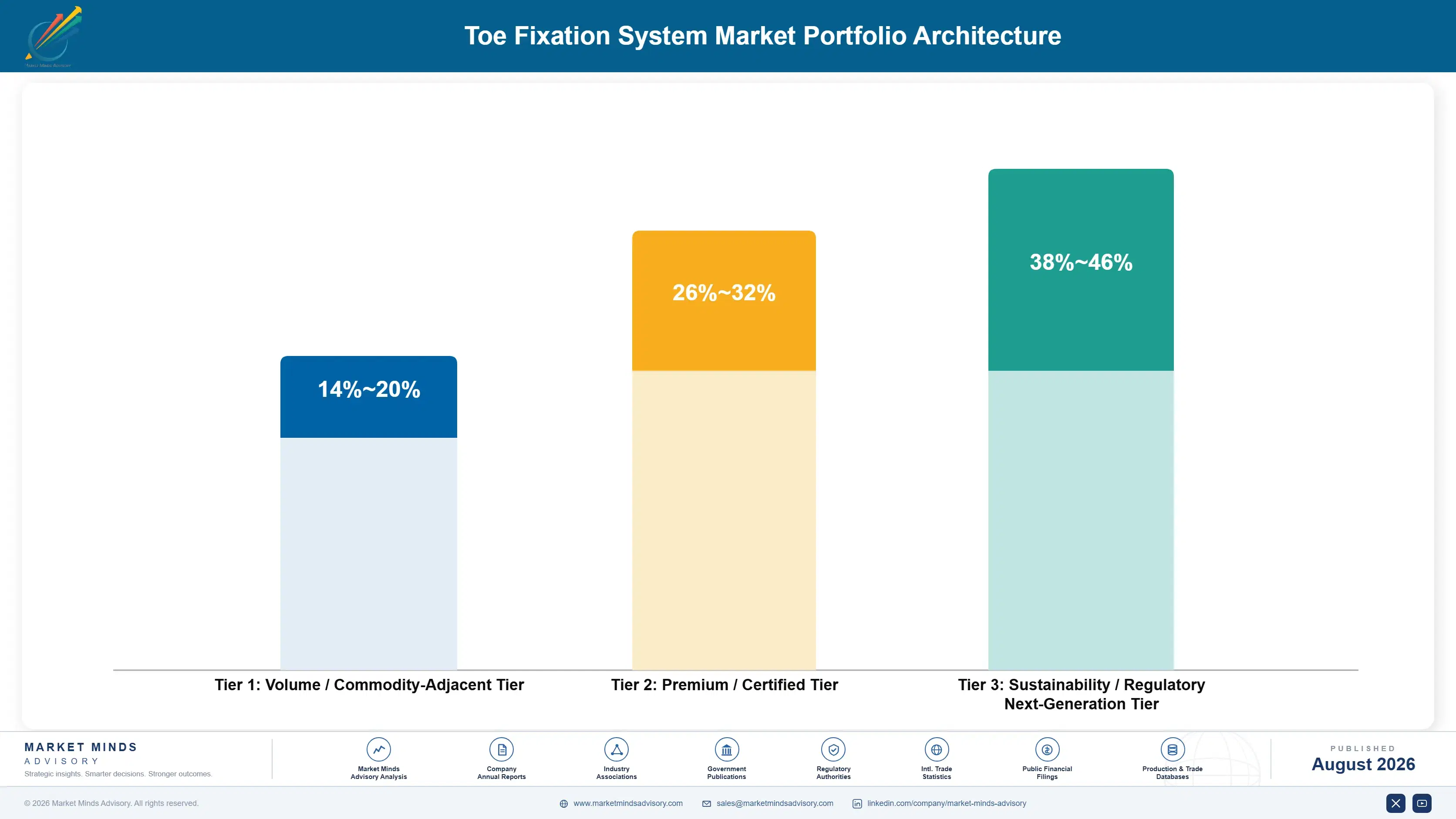
MMA's three-tier portfolio architecture separates traditional Kirschner wire systems from certified low-profile plate constructions and next-generation intramedullary implant systems, with gross margins ranging from the mid-teens for traditional wire systems to well above 40 percent for intramedullary implant placements. Manufacturers positioned across multiple tiers capture more total margin than single-tier specialists. Segment-level margin data is drawn from MMA Estimate, derived from primary survey data covering 47 expert interviews in Q4 2025.
The tension between volume and premium runs through the entire category: traditional wire systems sustain high-volume cost-sensitive demand at moderate margins, while intramedullary implants sacrifice addressable volume for materially better unit economics among well-capitalized outpatient facilities. Mid-sized manufacturers attempting to straddle both tiers often lack the engineering capital to compete effectively on either end, losing price competitiveness in wire systems while falling short of implant quality benchmarks.

High-value margin pools concentrate in intramedullary and low-profile plate products, both commanding premiums the traditional wire channel cannot match. Manufacturers under-invested in implant technology risk ceding the category's most profitable share to better-capitalized competitors. Building dedicated implant engineering and surgeon training capability requires patient capital and technical expertise, which favors larger, more established manufacturers over smaller regional entrants.

Volume / Commodity-Adjacent Tier

Traditional Kirschner wire fixation systems sold into cost-sensitive hospital and clinic settings, competing primarily on price and supply reliability rather than surgical technique differentiation. Manufacturers rely on scale to defend thin margins.
Gross Margin: 14-20%

Premium / Certified Tier

Low-profile bunion correction plate systems carrying documented fixation strength specifications, commanding a meaningful step-up in contract price over traditional wire fixation constructions. Buyers pay for documented fixation strength, not price alone.
Gross Margin: 26-32%

Sustainability / Regulatory / Next-Generation Tier

Intramedullary implant systems targeting outpatient facilities and premium podiatric practices, commanding the category's highest margins but requiring extensive engineering investment and surgeon education. Only a handful of manufacturers currently meet all requirements.
Gross Margin: 38-46%
toe-fixation-system-market-growth-portfolio-architecture-1787639140715

High-value Sub-segments and Strategic Watch-out

Intramedullary Toe Implant Systems

The highest-margin, fastest-growing pool in the category, driven by surgeon conversion from wire fixation and outpatient facility demand, though production remains concentrated among a handful of manufacturers with proven implant engineering capability. Waitlists at leading manufacturers already extend well past a year. Demand keeps rising.
Gross Margin: 38-46%

Low-Profile Bunion Correction Plate Systems

A high-value pool growing at a steady pace, driven by expanding bunion correction procedure volume, with margins holding above traditional wire system rates across most established healthcare markets tracked. Manufacturers serving both channels manage genuinely distinct cost structures. Growth here outpaces the volume tier by a wide margin.
Gross Margin: 26-32%

Traditional Kirschner Wire Fixation Systems

The volume core of the category, carrying moderate margins but the largest absolute revenue base, funding many manufacturers' investment into higher-margin intramedullary and plate product lines over time. Most manufacturers still depend on this tier for baseline cash flow. Volume alone rarely funds meaningful reinvestment.
Gross Margin: 14-18%

Manufacturers Without Implant Engineering Capability

A strategic watch-out segment: manufacturers lacking intramedullary implant engineering investment risk accelerated share loss as surgeon conversion from wire fixation continues, a gap several better-capitalized rivals are already exploiting. Several are already pursuing partnership to close this capability gap. A handful already discuss acquisition. Others may follow soon.
Gross Margin: 12-16%

Surgeon Loyalty and Facility Contract Renewal

Toe fixation system demand carries genuine annuity characteristics once a surgeon establishes proficiency with a specific implant system, since surgeons rarely switch systems mid-career given the retraining burden and comfort with established surgical workflow. Facility purchasing agreements reinforce this stickiness further, since multi-year contracts typically bundle instrumentation, implants, and surgeon training into a single vendor relationship that resists disruption from competitive pricing alone.
Adoption stickiness varies by end-use vertical. Academic medical centers show the deepest stickiness given established surgeon training relationships and comprehensive multi-year purchasing agreements. Outpatient surgical centers show moderate stickiness, balancing surgeon preference against facility cost pressure. Emerging market facilities show the least stickiness currently, still evaluating multiple vendors before establishing long-term purchasing relationships. That evaluation period can extend considerably given cautious purchasing committees.

Buyer profiles are shifting generationally as younger surgeons trained on intramedullary techniques increasingly favor permanent internal fixation over traditional wire methods learned by earlier generations. This generational shift favors manufacturers with strong residency training program relationships, since surgeon technology preferences established during training tend to persist throughout a surgical career. Facility administrators remain more conservative, still weighting near-term device cost above long-term surgeon retention value.
toe-fixation-system-market-growth-end-use-penetration-index-1787639141210

Where Toe Fixation Makers Should Focus

These are among the four positions where our research anticipates prominent divergence between winners and laggards over the coming forecast period. Each is grounded in the demand model, the regulatory perimeter, and the announced capacity pipeline.
01 / INTRAMEDULLARY PORTFOLIO INVESTMENT

Prioritize intramedullary capability ahead of surgeon conversion

Manufacturers that delay intramedullary implant portfolio investment genuinely risk missing the steepest phase of surgeon conversion demand, since product development cycles already run several years from initial engineering to commercial facility deployment across most major markets and healthcare systems. Early movers are already converting implant placements into multi-year instrumentation and consumable relationships that will prove considerably harder for challengers to displace once established and fully trusted. Waiting until conversion demand fully materializes effectively means competing for surgeon relationships that faster-moving rivals have already secured well in advance.
02 / TITANIUM SUPPLY SECURITY

Secure titanium agreements ahead of the next volatility cycle

Manufacturers without long-term titanium supply agreements remain genuinely exposed to the kind of aerospace-driven price volatility that disrupted delivery timelines meaningfully in 2022 and 2023 across the wider medical device manufacturing industry and its downstream customers. Negotiating volume-based contracts directly with specialty metal suppliers now measurably reduces that exposure while also improving cost position relative to spot-market buyers still exposed to volatility. Manufacturers that fully commit to this will enter the next tight cycle with a genuinely durable cost advantage over less-prepared competitors.
03 / OUTPATIENT WORKFLOW OPTIMIZATION

Optimize instrumentation ahead of ambulatory center growth

Manufacturers still oriented purely toward traditional hospital workflows genuinely risk missing the fastest-growing facility segment, since ambulatory surgical centers increasingly prioritize procedure efficiency and predictable turnover between cases across their entire scheduling infrastructure, staffing model, and physical layout, where timing genuinely matters. Early movers optimizing instrumentation for outpatient settings now capture facility contracts before competitors can adapt comparable product designs at similar speed and cost. Continuing to serve only traditional hospital workflows leaves manufacturers considerably more exposed to facility migration than genuinely necessary.
04 / SURGEON TRAINING DEVELOPMENT

Build training infrastructure ahead of generational preference shifts

Younger surgeons trained on intramedullary techniques genuinely favor manufacturers with strong residency program relationships, since technology preferences established during training tend to persist throughout an entire surgical career, compounding loyalty over many decades of ongoing clinical practice and referral relationships. Early movers building comprehensive training infrastructure now lock in surgeon loyalty before competitors can access the same residency programs and academic partnerships. Continuing to underinvest in training infrastructure leaves manufacturers considerably more exposed to generational preference shifts than genuinely necessary.

Engagement Snapshot From the Field

A live engagement with an industry participant carrying material or product regulatory and market exposure ahead of a defining policy shift, showing how our research translates into a defensible multi-year portfolio strategy.
MARKET MINDS ADVISORY · CLIENT ENGAGEMENT SUMMARY
Toe Fixation System Producer Strategic Portfolio Review and Transition Roadmap 2026·Investment Scenario on Toe Fixation System Exposure Evaluation 2025-26
CLIENT PROFILE
A mid-sized North American outpatient surgical center specializing in podiatric and foot and ankle procedures, with annual surgical volume in the low thousands of cases (client-reported, unverified by MMA). The center had relied primarily on traditional Kirschner wire fixation and faced growing surgeon and patient demand for intramedullary implant options. The center had never previously evaluated intramedullary implant technology at this scale.
STRATEGIC CHALLENGE
Competing outpatient facilities in the region had already adopted intramedullary implant systems, threatening to divert roughly fifteen percent of the center's referral volume to facilities offering modern fixation options (client-reported, unverified by MMA). Leadership needed to evaluate implant suppliers quickly while managing existing capital budget constraints. The center had never previously negotiated an implant supply contract of this scope.
MMA APPROACH
MMA conducted a supplier landscape assessment across intramedullary implant manufacturers, evaluating clinical evidence, pricing structure, and surgeon training support in close detail. The engagement combined primary interviews with four candidate manufacturers and secondary analysis of comparable outpatient facility adoptions to build a defensible capital investment roadmap for leadership. Timeline pressure required a decision within roughly six weeks.
KEY FINDINGS
  1. Only two of five candidate manufacturers could provide sufficient clinical outcomes data to fully satisfy the center's strict evidence-based purchasing committee requirements.
  2. Intramedullary implant total cost carried a meaningful premium over conventional wire fixation systems over a three-year adoption period (client-reported, unverified by MMA).
  3. A phased implementation approach materially reduced surgeon training disruption risk compared with an abrupt full-adoption attempt made earlier by a comparable regional facility.
  4. Purchasing committee review requirements extended the overall evaluation timeline by roughly five full extra weeks beyond the manufacturer's original proposed schedule date.
CLIENT PROFILE
A mid-sized North American outpatient surgical center specializing in podiatric and foot and ankle procedures, with annual surgical volume in the low thousands of cases (client-reported, unverified by MMA). The center had relied primarily on traditional Kirschner wire fixation and faced growing surgeon and patient demand for intramedullary implant options. The center had never previously evaluated intramedullary implant technology at this scale.
STRATEGIC CHALLENGE
Competing outpatient facilities in the region had already adopted intramedullary implant systems, threatening to divert roughly fifteen percent of the center's referral volume to facilities offering modern fixation options (client-reported, unverified by MMA). Leadership needed to evaluate implant suppliers quickly while managing existing capital budget constraints. The center had never previously negotiated an implant supply contract of this scope.
MMA APPROACH
MMA conducted a supplier landscape assessment across intramedullary implant manufacturers, evaluating clinical evidence, pricing structure, and surgeon training support in close detail. The engagement combined primary interviews with four candidate manufacturers and secondary analysis of comparable outpatient facility adoptions to build a defensible capital investment roadmap for leadership. Timeline pressure required a decision within roughly six weeks.
KEY FINDINGS
  1. Only two of five candidate manufacturers could provide sufficient clinical outcomes data to fully satisfy the center's strict evidence-based purchasing committee requirements.
  2. Intramedullary implant total cost carried a meaningful premium over conventional wire fixation systems over a three-year adoption period (client-reported, unverified by MMA).
  3. A phased implementation approach materially reduced surgeon training disruption risk compared with an abrupt full-adoption attempt made earlier by a comparable regional facility.
  4. Purchasing committee review requirements extended the overall evaluation timeline by roughly five full extra weeks beyond the manufacturer's original proposed schedule date.
RECOMMENDED STRATEGY
Phase 1: Phase one: select an implant system based on documented clinical evidence and a comprehensive total cost of ownership analysis conducted. Phase 2: Phase two: negotiate a phased implementation schedule that trains a core surgeon group thoroughly before the full facility-wide rollout begins. Phase 3: Phase three: extend implant capability marketing efforts to referring physicians using early clinical outcomes as a proven reference case example.
OUTCOME
The surgical center selected and implemented an intramedullary implant system within the target timeline, protecting a meaningful share of its regional referral volume from competitive diversion (client-reported, unverified by MMA). The phased implementation approach was subsequently applied to two additional procedure categories within the following year.

Frequently Asked Questions

Foundational context covering the market sizes, CAGR, scope, country, region and competition that inform every finding below. This section is provided to cover basics and most often pre-purchase conversations, answered from the MMA Primary Research Dataset.

What is the current size of the Toe Fixation System Market?

The global toe fixation system market reached an estimated 0.28 billion dollars in 2025. Growth is being driven by aging population forefoot surgery volume worldwide.

How large will the Toe Fixation System Market be by 2036?

MMA projects the market will reach approximately 0.50 billion dollars by 2036. That represents more than a 1.71 times expansion from the 2026 forecast base value.

What is the CAGR for the Toe Fixation System Market 2026 to 2036?

The market is projected to grow at a 5.5 percent compound annual rate over the forecast period. The bull case reaches 6.7 percent, while the bear case falls to 4.3 percent.

Which segment is growing fastest?

Intramedullary Toe Implant Systems leads at an 8.5 percent CAGR, nearly 1.55 times the overall market rate. Low-Profile Bunion Correction Plate Systems follows at 7.0 percent.

Who are the major companies in the Toe Fixation System Market?

Leading manufacturers include Stryker, Wright Medical, Smith & Nephew, Arthrex, and Paragon 28. The top five hold an estimated 56 percent combined share on a production capacity basis.

Which country is growing fastest?

South Korea leads at a 7.5 percent CAGR, driven by expanding elective surgery capacity and growing patient awareness of correction options. Domestic manufacturers continue scaling distribution capacity.

Report Segmentation Architecture

The full report scope spans multiple orthogonal segmentation dimensions, with cross-tabulated demand data provided for each dimension pair. Coverage extends further to regional breakdowns, trend trajectories, and the competitive detail needed to support segment-level decision-making.
  • Intramedullary Toe Implant Systems
  • Low-Profile Bunion Correction Plate Systems
  • Traditional Kirschner Wire Fixation Systems
  • Small Bone Screw Fixation Systems
  • External Fixation Pin Systems
  • Hospital Surgical Departments
  • Ambulatory Surgical Centers
  • Academic Medical Centers
  • Specialty Podiatric Clinics
  • Direct Facility Supply Contracts
  • Group Purchasing Organization Agreements
  • Distributor and Trading Channels
  • Surgeon Training Program Partnerships

By Region

  • North America
  • Western Europe
  • East Asia
  • South Asia and Pacific
  • Latin America
  • Middle East and Africa
  • Eastern Europe

Scope, Methodology, and Coverage

Every figure in this report is reproducible from documented input assumptions. The scope below maps the historical period, the forecast horizon, the segmentation dimensions, and the countries covered, alongside the underlying primary and qualitative methodology.
Historical Period
2020 to 2025
Forecast Period
2026 to 2036
Base Year
2025 (USD billions; MMA Primary Research Dataset, August 2026)
Market Definition
This report covers surgical implants and fixation devices used for correction of hammertoe, bunion, and other forefoot deformities, including intramedullary implants, Kirschner wires, and small bone plates and screws. It excludes ankle and hindfoot fixation devices, external fixation frames, and non-surgical orthotic devices.
Quantitative Units
USD Billion, Volume in Units Implanted
Segmentation Dimensions
Implant Type, End-Use Facility, Commercial Channel, Region
Regions Covered
North America, Western Europe, East Asia, South Asia and Pacific, Latin America, Middle East and Africa, Eastern Europe
Countries Covered
United States, Canada, Germany, United Kingdom, France, South Korea, China, Japan, India, Brazil
Key Companies Profiled
20
Quantitative Methodology
Primary survey, n=3,800 respondents, Q4 2025, six countries; demand-side model with trade association cross-validation
Qualitative Methodology
47 expert interviews, Q4 2025; applied to validate demand model assumptions, identify emerging dynamics, and assess competitive positioning
Report Format
PDF and XLSX data workbook (Word format preview document)
Publisher
Market Minds Advisory
Report Code
MMA-2026-MED-103
Published
August 2026
Contact
sales@marketmindsadvisory.com | www.marketmindsadvisory.com

Purchase the full Toe Fixation System Market Report (2026 to 2036).

This full report delivers comprehensive market sizing, segmentation, and competitive analysis for the global toe fixation system market through 2036. Coverage spans traditional wire, low-profile plate, and intramedullary implant systems across hospital, ambulatory, and specialty clinic settings. It includes detailed profiles of the twenty leading manufacturers plus region-by-region demand forecasts across all seven tracked regions, along with pricing trend analysis tied directly to titanium and manufacturing cost movements. Subscribers also receive full access to the underlying primary survey dataset and complete expert interview transcripts referenced throughout this analysis.
Twenty detailed manufacturer competitive profiles and rankings
Seven-region demand and pricing forecasts through 2036
Titanium and manufacturing cost trend and volatility analysis
Segment-level growth rate breakdowns by implant type
Primary survey dataset access included with subscription
Quarterly market update subscription option available

Built For The People Who Decide

From boardroom strategy to bench-side execution, this report is read cover-to-cover by leaders shaping the next decade of their industry, turning demand scenarios, market dynamics and valuation benchmarks into decisions.
CXOs/ Presidents/ VPs/ Managers
M&A and Corporate Development
Strategy Teams and R&D Heads
Procurement and Product Directors
Regulatory and Compliance Leaders
Investor Relations and Equity Analysts