Market Minds Advisory
Thoracic Vascular Stent Grafts Market

Thoracic Vascular Stent Grafts Market: The Arch Is The Last Unsolved Territory

Three vessels leaving the aortic arch supply the brain, which is why a device failure there causes a stroke rather than a leak, and why adoption moves far slower than the engineering does.

Lead Analyst

Published

September 2026

Make Smarter Decisions with Customized Research Insights

Request a free sample report and evaluate market opportunities, growth trends, and competitive dynamics relevant to your business needs.

2025 MARKET VALUE$1.6BMarket Size 2025
2036 FORECAST VALUE$4.2BBase Case , 2026 to 2036
CAGR 2026 TO 20369.2 %Bull 10.4% / Bear 8.0%
INCREMENTAL OPPORTUNITY$2.5BNet 10- year value creation
EXPANSION MULTIPLE2.41x2036 value over 2026 base
Strategic Levers
M&A Pipeline
Regional Outlook
Country Rankings
Competitive Intelligence
Segmental Deep-dive
Call-Us : 91 93563 13602

Executive Snapshot and Market Trajectory

Repairing the descending thoracic aorta is largely a solved problem. The arch is not, because three vessels leaving it supply the brain and a device that misbehaves there produces a stroke rather than an endoleak. That single difference governs how quickly anything new gets adopted. Adoption moves slower than engineering.
East Asia holds 35% of value because aortic dissection incidence in Chinese and Japanese populations runs well above Western rates, Chinese procedure volumes are the largest anywhere, and domestic manufacturers designed devices around local vessel dimensions. Multi-branch total arch devices grow at 13.8%, half again the market rate of 9.2%, from a base small enough that the percentage flatters it considerably. Base size flatters the percentage considerably.
Concentration is high at 79% and the category conceals two different diseases. An aneurysm is elective, planned on a computed tomography scan with weeks to order a custom device. An acute dissection arrives overnight with an aorta that is actively tearing, and what matters is whether a size that fits is already on the shelf. Inventory decides that second case. Suppliers running both pathways through one model serve one of them badly.
Market Definition
The market covers endovascular stent grafts and hybrid prostheses used to treat thoracic aortic disease, including straight tube descending thoracic grafts, tapered and conformable descending grafts, single-branch arch devices, multi-branch total arch devices, dissection-specific devices, and frozen elephant trunk hybrid prostheses. Abdominal aortic stent grafts, open surgical vascular grafts placed without an endovascular component, peripheral and coronary stents, delivery accessories sold separately and surgical instruments are excluded. Imaging equipment and surveillance services fall outside scope.
Base Year Value
$1.6B in 2025 (MMA Primary Research Dataset, August 2026)
Forecast Period
2026 to 2036, eleven discrete annual values
CAGR
9.2% base case. Bull 10.4%. Bear 8.0%.
Fastest Growth Segment
Multi-Branch Total Arch Devices: 13.8% CAGR
Fastest Growth Country
China: 10.6% CAGR
Fastest Growth Region
South Asia and Pacific: 11.2% CAGR
Largest Region
East Asia: 35% of 2025 global value
Market Leaders
Medtronic, W. L. Gore and Associates, Cook Medical, Terumo Aortic, Artivion. Source: MMA Analysis based on disclosed aortic and peripheral vascular device revenue, company annual reports 2025.
Primary Survey
n=3,800 procurement and R&D decision-makers, Q4 2025, six countries
Methodology
Demand-side build-up, cross-validated against public data, 47 expert interviews

Thoracic Vascular Stent Grafts Market Forecast Scenarios

thoracic-vascular-stent-grafts-market-size-forecast-scenario-1787693075703
Growth from 2020 to 2025 ran at 8.2% and two forces moved it in different directions. Elective aneurysm repair was deferred heavily through 2020 and recovered over roughly eighteen months, while acute dissection presentations continued regardless because nobody defers a tearing aorta. Chinese procedure volumes expanded quickly across the whole period as domestic manufacturers made devices available at prices imported products could not approach.
The 9.2% base case rests on three mechanisms. Branched arch devices are moving from investigational use into routine practice at high volume centres, opening anatomy that previously required open surgery with cardiopulmonary bypass. Endovascular treatment of uncomplicated type B dissection is being adopted earlier rather than after complications develop. And Asian procedure volumes keep rising on both disease incidence and expanding interventional capacity across provincial hospital networks. Each mechanism works independently of the other two.
The bull case at 10.4% turns on branched arch devices achieving stroke rates comparable to descending repair, which would open the arch to centres that currently refer those patients onward. The bear case at 8.0% is surveillance burden and late reintervention data prompting more conservative patient selection, since every implanted patient requires lifelong imaging that nobody has costed properly.

Two Diseases, One Device Category

Aneurysm and dissection share a device category and share almost nothing else. A thoracic aneurysm is found incidentally, measured over years and repaired electively, which leaves weeks to size the anatomy precisely and order a device built for that patient. An acute type B dissection arrives overnight with an aorta separating along its layers, and the only question that matters is whether a size which fits the patient is physically present in the hospital.
FIVE-FIRM CONCENTRATION79%Share of aortic device revenue held by leading manufacturers
DEVICE SYSTEM PRICE$21,400Typical cost of one thoracic stent graft system implanted
TOP CONSUMING COUNTRYChina 27%Chinese share of global thoracic endovascular procedures performed annually
OFF-SHELF ANATOMY COVERAGE64%Patients fitting available branched device size ranges without customisation
CUSTOM DEVICE LEAD TIME6 weeksManufacturing time for a patient specific branched arch prosthesis
LIFETIME SURVEILLANCE SCANS14Computed tomography examinations a treated patient typically undergoes
The arch is where the engineering effort now sits and where progress is slowest. Three vessels leaving it carry blood to the brain, so covering them without maintaining flow produces a stroke rather than an endoleak, and stroke is the complication that stops adoption dead. Branched devices address it and the available size matrix fits roughly 64% of patients. The rest need custom manufacture taking six weeks, which excludes every emergency.
Regional anatomy matters more here than in most device categories. Aortic dissection incidence in Chinese and Japanese populations runs well above Western rates, and vessel dimensions differ from the populations that Western devices were sized around. Chinese manufacturers designed to local anatomy and took most of their domestic market as a direct consequence.
"Everyone is racing to solve the arch and the honest position is that stroke rates decide it, not deliverability. One bad series at a proctored centre sets a device back three years."
Director, Aortic and Endovascular Devices Practice · MMA Medical Devices Practice · August 2026

Market Trends

Branched Arch Devices Move Into Routine Practice

Total arch repair once required open surgery with cardiopulmonary bypass and deep hypothermic circulatory arrest, which excluded a great many patients on operative risk alone. Branched endovascular devices maintain flow to the head vessels while excluding the diseased segment, and high volume centres are moving them from investigational use into routine practice. Growth at 13.8% reflects that transition. What governs the pace is stroke rate rather than technical success, since a neurological complication at a proctored centre reaches every other centre considering the technology within weeks. Marketing does nothing against that.
Market Impact: Performs 27% of global procedures

Earlier Intervention In Uncomplicated Type B Dissection

Uncomplicated type B dissection was managed medically for decades and repaired only when complications developed, by which point the aorta had frequently degenerated further. Evidence supporting earlier endovascular intervention has accumulated steadily, and practice at specialist centres has shifted toward treating in the subacute window rather than waiting. That expands the treated population considerably without any change in disease incidence. The devices used differ from aneurysm grafts in radial force and coverage strategy, which manufacturers selling a single portfolio into both indications frequently understate. The devices are genuinely different products.
Market Impact: Reaches 4 in 10 excluded patients

Market Opportunities and Growth Drivers

East Asian Dissection Incidence Exceeds Western Rates

Aortic dissection presents more frequently in Chinese and Japanese populations than in Western ones, and Chinese procedure volumes are consequently the largest anywhere, accounting for roughly 27% of thoracic endovascular procedures performed globally. Provincial interventional capacity continues expanding, which converts patients who previously died undiagnosed into treated cases. Domestic manufacturers designed devices around local vessel dimensions and hold most of that market as a result. Western suppliers have generally read this as procurement preference rather than as a question of anatomical fit. Fit rather than price is the issue. Sizing was never the response.
Market Impact: Sets adoption on 4% stroke rates

Endovascular Repair Reaches Patients Surgery Excluded

Open thoracic aortic repair requires cardiopulmonary bypass and frequently circulatory arrest, which places it beyond patients with limited cardiac or respiratory reserve, and that group is substantial among the elderly population this disease affects. Endovascular repair reaches them through a groin puncture instead. That expansion of the treatable population rather than any rise in disease incidence has driven most volume growth in this category over two decades, and branched arch devices extend the same logic to anatomy that remained surgical until recently. Population expansion rather than incidence drove this. Branched devices extend the same logic.
Market Impact: Excludes emergencies for 6 weeks

Market Restraints and Challenges

Stroke Risk Governs How Fast Arch Devices Spread

Covering the vessels that supply the brain means any embolic or flow disturbance during arch deployment produces a neurological deficit rather than a recoverable technical problem. Root cause is anatomy rather than device design, since manipulation in the arch dislodges atheroma regardless of how carefully it is performed. The commercial impact is that adoption depends on stroke rates at early centres, and a poor series reaches every other centre within weeks. Mitigation involves cerebral protection, careful patient selection and proctoring, none of which eliminates the risk. Selection discipline is the only lever.
Market Impact: Avoids circulatory arrest in 90 minutes

Custom Manufacturing Excludes Every Emergency Presentation

Patient specific branched devices take around six weeks to manufacture, which is entirely compatible with elective aneurysm planning and completely useless for an acute dissection arriving overnight. Root cause is that complex arch anatomy varies too widely for a small size matrix to cover, with off-the-shelf ranges fitting roughly 64% of patients. The commercial impact is that a supplier's real market share in emergencies is decided by what its size range covers. Mitigation runs through wider off-the-shelf matrices and physician-modified approaches, both of which carry their own limitations. Size matrix decides emergency share.
Market Impact: Treats within a 14 day window
3 additional market trends, 4 additional growth drivers, and 2 additional restraints and challenges are covered in the full report. Contact sales@marketmindsadvisory.com to access the complete intelligence.

Segment CAGR and Growth Architecture

Segmentation follows device configuration: how the prosthesis is constructed and which aortic segment it is designed to treat, rather than which disease it addresses or where it is implanted. Six configurations cover the market without overlap, from straight tube grafts through to hybrid prostheses. Clinical indication and purchasing route are treated separately here. Both cut across all six.
thoracic-vascular-stent-grafts-market-market-share-analysis-1787693076029

Multi-Branch Total Arch Devices

Total arch repair meant open surgery with cardiopulmonary bypass and circulatory arrest until recently, which excluded many patients on operative risk alone rather than on anatomy. Multi-branch devices maintain flow to all three head vessels while excluding the diseased segment, and growth at 13.8%, half again the market rate of 9.2%, comes from a base small enough that the percentage overstates the commercial reality. What determines the pace is stroke rate rather than deliverability, because a neurological complication at an early adopting centre reaches every other interested centre within weeks and sets the whole technology back years. Staged rollout through proctored centres is the only approach that has worked so far.
CAGR 13.8%

Single-Branch Arch Devices

A single-branch device preserves the left subclavian artery while extending the landing zone proximally, which addresses the most common arch problem without the complexity that three branches introduce. Growth at 11.4% reflects genuine clinical utility rather than novelty, since inadequate proximal landing zone is the limitation that most often forces a surgical alternative. Off-the-shelf availability is considerably better here than for total arch devices because the anatomy varies less. That combination of simpler deployment and stocked inventory makes this the configuration most centres adopt first when moving into the arch at all. Inadequate proximal landing zone is the limitation that most often forces a surgical alternative, and this configuration removes it.
CAGR 11.4%
Full segment breakdown across 6 segments available in the complete report.

Regional Architecture and Country Demand Map

Geography follows disease incidence and vessel anatomy rather than health system spending, which is unusual for a device category. East Asia leads on dissection rates and procedure volume, North America and Western Europe on elective aneurysm repair and device development. Vessel dimensions differ enough between populations to matter commercially.

North America

American practice is weighted toward elective aneurysm repair identified through incidental imaging, which suits custom device planning and the six week manufacturing timeline it requires. Branched arch devices are being adopted at high volume academic centres under investigational and early commercial pathways, with stroke rates watched closely across the specialty. Device pricing is the highest anywhere, which sustains development economics for complex configurations. Canadian provision is centralised through fewer centres with tighter device budgets. Mexican activity is limited and concentrated in private cardiovascular centres serving patients who fund treatment directly. Incidental imaging finds most of these aneurysms, which suits custom planning and the six week manufacturing cycle it requires. Pricing is the highest anywhere.
Share: 24% | CAGR: 8.4% (2026 to 2036)

Western Europe

European aortic centres contributed much of the clinical evidence underpinning endovascular thoracic repair and continue running the registries the specialty relies upon. German and Italian practice performs high volumes with strong outcome reporting, and several European manufacturers hold genuine positions in hybrid and branched configurations. Health technology assessment constrains device pricing more than American practice does. Frozen elephant trunk hybrid prostheses are used more widely here than elsewhere, reflecting a surgical tradition that remained comfortable with open arch work rather than moving entirely to endovascular alternatives. A surgical tradition that stayed comfortable with open arch work explains the regional preference for hybrid prostheses more than any device availability question does.
Share: 21% | CAGR: 7.6% (2026 to 2036)
Regional intelligence for 5 additional markets available in the complete report: East Asia, South Asia and Pacific, Latin America, Middle East and Africa, Eastern Europe. Contact sales@marketmindsadvisory.com.
thoracic-vascular-stent-grafts-market-country-cagr-analysis-1787693076304

Fitting Anatomy That Arrives Overnight

Off-the-shelf ranges fit roughly 64% of arch anatomy, custom manufacture takes about six weeks, and stroke rather than technical success governs adoption. Four levers work on inventory, anatomy, evidence and indication separation rather than on device specification, which every competitor is engineering toward anyway. Specification is where every competitor is already engineering. Nobody wins there alone.

Widen Off-The-Shelf Size Matrices For Emergencies

Custom branched devices take around six weeks to manufacture, which serves elective aneurysm planning perfectly and excludes every acute dissection arriving overnight. Available off-the-shelf ranges fit roughly 64% of patients, so a supplier's real emergency market share is decided by what its size matrix covers rather than by any clinical argument. Widening that matrix costs inventory carried at hospitals and regulatory work on additional sizes. It also converts a device that cannot be used at three in the morning into one that can. Emergency share follows the matrix. Nothing else moves it.
Market Impact: Extends coverage beyond the 64% of arch anatomy

Design Around East Asian Vessel Dimensions Deliberately

Aortic dissection presents more often in Chinese and Japanese populations and their vessel dimensions differ from the Western populations most devices were sized around. Chinese manufacturers designed to local anatomy and hold most of a market representing roughly 27% of global procedures. Western suppliers have read that as procurement preference and responded with pricing rather than with sizing. Building a size range for the anatomy that actually presents there is a development decision rather than a commercial one, and it addresses the largest single market in the category. Sizing is the answer.
Market Impact: Addresses 27% of the global thoracic procedure volume

Fund Stroke Outcome Registries Before Wide Launch

Arch device adoption depends entirely on neurological complication rates at early centres, and a poor series reaches the whole specialty within weeks. Registry participation and transparent stroke reporting from proctored centres builds the confidence that marketing cannot. Suppliers who launched broadly before establishing that record have watched adoption stall in ways discounting does not fix. The investment is clinical evidence and controlled rollout discipline, which is commercially painful and considerably cheaper than recovering from a publicised complication cluster. A 4% stroke rate at an early centre circulates through the specialty within weeks, and no discounting recovers from it.
Market Impact: Manages the whole 4% stroke rate adoption threshold

Separate Elective And Emergency Commercial Models

Elective aneurysm repair is planned over weeks with custom sizing and scheduled implantation, while acute dissection is decided in hours by whatever inventory the hospital holds. Those are different customers, different logistics and different conversations, and roughly 64% off-the-shelf coverage matters to only one of them. Companies running both through a single commercial model consistently serve emergency centres badly, since consignment stocking, on-call support and size availability are operational commitments a planned-implant organisation never had to make. Consignment stocking, on-call support and size availability are operational commitments a planned-implant organisation never had to make at all.
Market Impact: Serves 2 entirely distinct clinical decision making pathways

Who Controls the Margin Pool

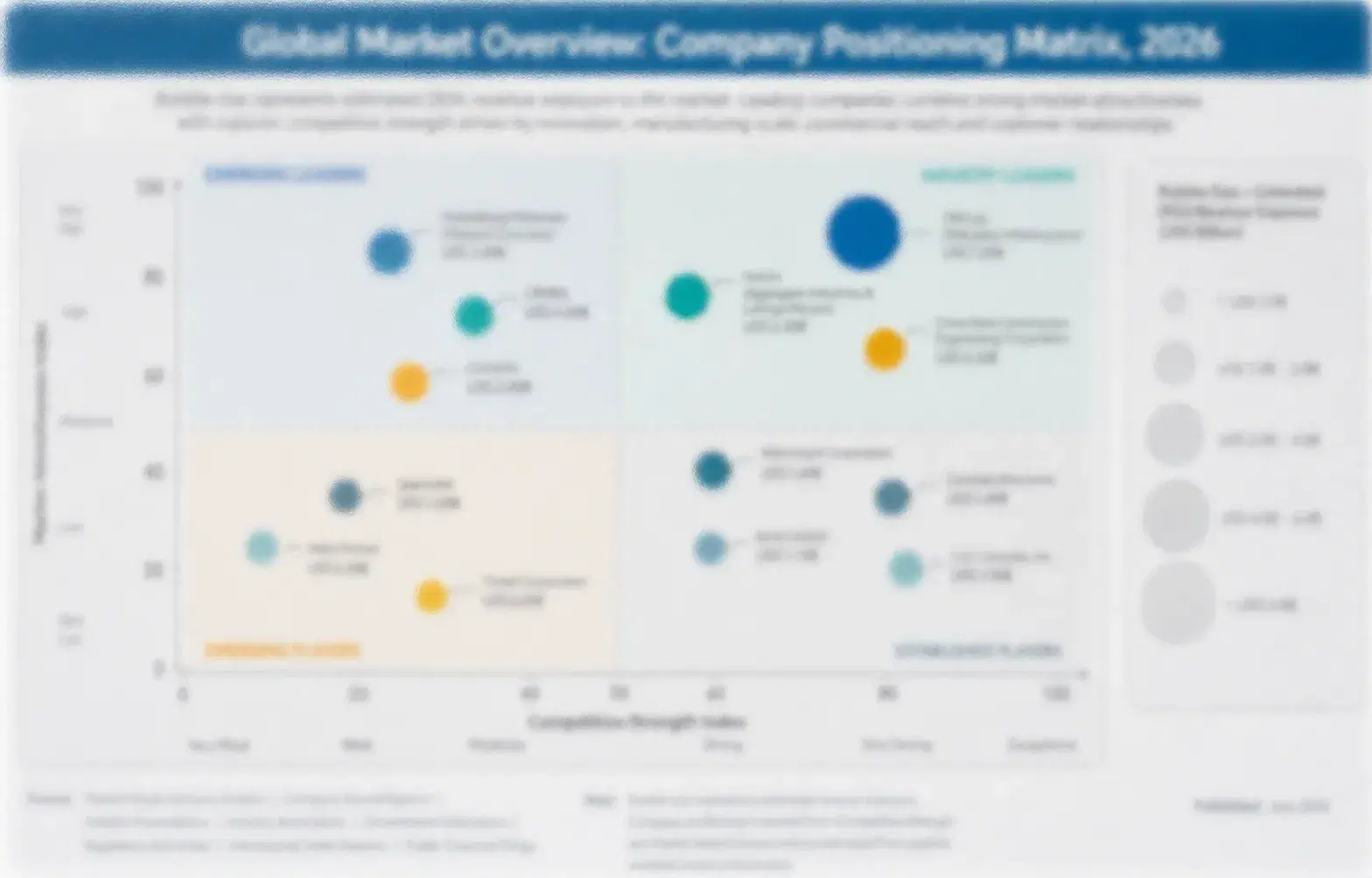
Measured on disclosed aortic and peripheral vascular device revenue, the five leading manufacturers hold a CR5 of 79%, which is high and reflects genuine regulatory, clinical and manufacturing barriers rather than any absence of interest. Medtronic, Gore and Cook hold the deepest descending thoracic positions, while Terumo Aortic and Artivion lead in hybrid and branched configurations that European surgical practice adopted earlier. Very few companies compete credibly across the whole range.
Three contests define activity. Descending thoracic repair competes on deliverability and conformability in a largely settled clinical field. Arch devices compete on stroke outcomes and off-the-shelf availability, where evidence matters more than specification. Dissection-specific configurations compete on radial force and coverage strategy, which manufacturers selling one portfolio into both indications routinely understate. A manufacturer strong in one of those three contests frequently holds no advantage in the others.

Pressure comes from Chinese manufacturers whose devices were designed around local anatomy and who hold most of the world's largest procedure market. Rankings shift wherever branched arch adoption accelerates, since that segment is contested by a different set of companies from those dominating straightforward descending repair. Heritage transfers only partially into the arch.
thoracic-vascular-stent-grafts-market-company-positioning-matrix-1787693076583

Competitive Moat and Risk Dimensions

MEDTRONIC

Moat: Descending Repair Clinical Heritage

Medtronic thoracic devices carry outcome literature and implanter familiarity accumulated across two decades of routine descending repair, and surgeons who trained on that platform continue using it. Aortic device selection is conservative because complications are catastrophic rather than inconvenient. A competitor with better conformability still competes against a body of evidence and habit that a specification sheet does not touch.
MEDTRONIC

Risk: Arch Segment Contest Exposure

Growth in this market concentrates in branched arch configurations at 13.8%, which is contested by a different set of companies from those leading descending repair and decided on stroke outcomes rather than on established familiarity. Heritage in the solved part transfers only partially. Defending position means competing where the evidence is being written rather than where it exists.
TERUMO AORTIC

Moat: Hybrid And Branched Configuration Depth

Terumo Aortic holds hybrid and branched positions built alongside European surgical practice that remained comfortable with open arch work, which produced configurations and clinical relationships competitors focused on pure endovascular repair never developed. Frozen elephant trunk usage across Europe reflects that. A purely endovascular competitor cannot serve the surgical arch cases these products address at all.
TERUMO AORTIC

Risk: Surgical Practice Dependency

Hybrid prostheses depend on surgeons remaining willing to perform open arch work, and every improvement in fully endovascular branched devices moves cases away from that approach. The dependency is on a practice pattern rather than on a technology position. Defending it means arguing for an operation that endovascular alternatives are progressively making avoidable for more patients.

Players Tracked

Prominent Players

Medtronic
W. L. Gore and Associates
Cook Medical
Terumo Aortic
Artivion

Other Key Players

Lifetech Scientific
MicroPort Scientific
Endospan
Braile Biomedica
Bentley InnoMed
Getinge
Cordis
Becton Dickinson
LeMaitre Vascular
Merit Medical Systems
Boston Scientific
Abbott
Penumbra
Optimed
Balton

Recent Developments

MARCH 2025

Multi-branch arch device receives expanded regulatory approval

A multi-branch total arch stent graft received expanded regulatory approval covering additional aortic anatomy, a regulatory decision rather than any corporate transaction. The submission included neurological outcome data from proctored implanting centres, which is the evidence the specialty examines before adopting anything intended for the aortic arch.
Signal: Stroke outcome data rather than deliverability decides arch approvals, and every implanter reads those numbers first.
JULY 2025

Chinese manufacturer expands thoracic device size range for local anatomy

A Chinese medical device manufacturer expanded the size range of its thoracic stent graft platform to cover additional vessel dimensions observed in domestic populations, an internal development rather than any partnership. Domestic anatomy differs from the Western populations most imported devices were originally sized around.
Signal: Anatomical fit rather than price is doing more of the work in the world's largest procedure market.
NOVEMBER 2025

Aortic society guidance supports earlier intervention in type B dissection

An aortic society updated guidance supporting endovascular intervention in uncomplicated type B dissection within the subacute window rather than awaiting complications. This was clinical guidance rather than any commercial event, and it expands the treated population without any change in underlying disease incidence. Volume rises regardless.
Signal: Treating earlier expands volume from the same disease burden, which is the cheapest growth available to anybody.

What A Graft Costs To Build

Materials are a modest share and everything around them is not. Nitinol stent frame, polyester or expanded polytetrafluoroethylene graft fabric, sutures and the delivery system together run 26 to 32% of device selling price, with the delivery catheter the largest single manufacturing element. Custom branched devices carry hand assembly that multiplies labour cost. Clinical evidence generation and regulatory maintenance consume considerably more than production does across a product's life.
The volatility that matters is nitinol and sterile conversion rather than fabric. Nitinol wire pricing moved on nickel market conditions through 2022, and ethylene oxide sterilisation capacity tightened in several markets following facility restrictions. Medtronic and Gore disclosures describe input and sterilisation pressures across that period. Manufacturers holding contracted nitinol supply and sterilisation slots continued shipping. Spot arrangements meant delays, and hospitals used whatever competitor device was stocked.

Exposure divides by configuration and inventory model. Straight tube graft producers carry conventional manufacturing cost against tender pricing. Custom branched device makers carry hand assembly, individual regulatory documentation and a six week production cycle. Suppliers holding consignment inventory at hospitals carry working capital across every stocked size. Widening an off-the-shelf matrix multiplies that working capital directly, which finance functions resist for understandable reasons.
thoracic-vascular-stent-grafts-market-cost-volatility-analysis-1787693076892

Contract nitinol supply and sterilisation capacity together

Nitinol pricing moved on nickel market conditions and sterilisation capacity tightened after facility restrictions, and manufacturers relying on spot arrangements faced delays. In an emergency-driven category a hospital that cannot obtain a device uses whatever competitor product is already stocked. Contracted supply costs commitment and prevents the specific failure that transfers an implant to a competitor permanently.

Model consignment inventory against genuine size utilisation

Widening an off-the-shelf matrix improves anatomical coverage and multiplies the working capital tied up in stocked sizes at every hospital. Some sizes are used constantly and others sit for years. Modelling utilisation by size before committing stock protects capital while still improving the coverage that decides emergency market share, which uniform stocking never achieves efficiently.

Separate custom production economics from platform costs

Custom branched devices carry hand assembly, individual verification and regulatory documentation per unit that bear no relation to platform manufacturing economics. Managing both inside one cost pool obscures the true margin on each and invites platform pricing pressure into custom work that faces no equivalent competition. Separating them preserves visibility that a blended view steadily removes.

Portfolio Architecture for Margin Defence

Margin follows how contested the configuration is rather than how much it costs to build. Straight tube descending grafts are a settled clinical field with several credible suppliers and tender pricing to match. Tapered and conformable devices earn better on deliverability in difficult anatomy. Dissection-specific configurations earn well where radial force and coverage strategy genuinely differ. Branched arch devices earn most, because very few companies can supply them at all.
The tension is that the highest margin configuration is the one where a single bad outcome series can halt adoption entirely. Arch device economics look excellent until stroke rates at an early centre reach the specialty, and no amount of pricing or promotion recovers from that. Suppliers who staged rollout through proctored centres and published outcomes have grown steadily. Those who launched broadly to capture the segment have generally moved slower in the end.

High-value pools sit in three places. Branched arch configurations supported by transparent neurological outcome data. Off-the-shelf size matrices wide enough to serve emergency presentations that custom manufacture cannot reach. And devices sized for East Asian anatomy, which is the largest procedure market and the one Western suppliers have addressed with pricing rather than with fit.

Volume / Commodity-Adjacent

Straight tube descending thoracic grafts supplied into a settled clinical field where several credible manufacturers meet the requirement adequately. The 7-point range separates suppliers with contracted nitinol and sterilisation capacity from those exposed to spot supply and periodic delivery interruption.
Gross Margin: 54-61%

Premium / Certified

Tapered and conformable descending grafts and dissection-specific configurations where deliverability, radial force and coverage strategy genuinely differentiate between products. The 7-point spread separates suppliers with implanter familiarity and outcome literature from those competing on specification alone.
Gross Margin: 66-73%

Sustainability / Regulatory / Next-Generation

Single-branch and multi-branch arch devices and hybrid prostheses. The 22-point range is very wide because branched configurations command scarcity pricing where few suppliers compete, while custom manufacture carries hand assembly costs that compress the underlying margin considerably.
Gross Margin: 62-84%
thoracic-vascular-stent-grafts-market-portfolio-architecture-1787693077177

High-value Sub-segments and Strategic Watch-out

Branched Arch Configurations

Highest value and fastest growth at 13.8%, supplied by very few companies into anatomy that recently required open surgery with circulatory arrest. The risk is stroke, since a poor outcome series at an early adopting centre reaches the whole specialty within weeks and halts adoption entirely.
Gross Margin: 81-84%

Wide Off-Shelf Emergency Matrices

Strong value in acute dissection where custom manufacture at six weeks is useless and stocked size decides what gets implanted. The risk is working capital, since every additional stocked size multiplies consignment inventory across every hospital that holds it. Capital tied up sits idle. Utilisation varies hugely.
Gross Margin: 70-73%

Straight Tube Descending Grafts

The volume core, supplied into a settled clinical field where several manufacturers meet requirements and tender pricing applies. Suppliers hold the line because this volume maintains the implanter relationships through which arch and dissection configurations reach the same operating theatres. Access is the real value.
Gross Margin: 55-58%

Custom Branched Manufacture

The strategic watch-out. Patient specific devices serve elective planning well and carry hand assembly, individual documentation and a six week cycle that excludes emergencies entirely. The risk is a cost structure that platform pricing pressure reaches whenever both sit inside one commercial conversation. Blended pricing erodes it.
Gross Margin: 63-66%

Implants That Never Come Out

A thoracic stent graft is implanted once and stays for life, which makes device revenue a single event per patient rather than any recurring stream. What recurs is surveillance, since every treated patient undergoes around fourteen computed tomography examinations across the years that follow, watching for endoleak, migration and continued aortic degeneration. That imaging burden is carried by health systems rather than by device economics.
Stickiness rests on implanter familiarity rather than on any contract. A surgeon who learned a platform's deployment sequence uses it for a career, because aortic complications are catastrophic and nobody experiments during a case that could end in paraplegia or stroke. That preference is stronger here than in almost any device category. Consignment stocking reinforces it further, since the device physically present at three in the morning is frequently the device that gets used.

Two purchasing patterns operate inside the same hospital. Elective aneurysm work is planned weeks ahead with custom sizing and scheduled implantation, involving procurement in an ordinary way. Emergency dissection consumes whatever is stocked, decided by a surgeon at night with no procurement involvement whatsoever. Treating consignment as a cost rather than as the mechanism that wins cases misreads this market.
thoracic-vascular-stent-grafts-market-end-use-penetration-index-1787693077490

Where The Arch Gets Won

These are among the four positions where our research anticipates prominent divergence between winners and laggards over the coming forecast period. Each is grounded in the demand model, the regulatory perimeter, and the announced capacity pipeline.
01 / EMERGENCY INVENTORY COVERAGE

The device on the shelf is the device used

Custom branched devices take around six weeks to manufacture, which serves elective aneurysm planning perfectly well and excludes every acute dissection that arrives overnight without any warning. Available off-the-shelf ranges fit roughly 64% of patients, so a supplier's genuine emergency market share is decided by what its size matrix covers rather than by any clinical argument it makes. Widening that matrix costs consignment inventory and regulatory work on additional sizes, and it converts a device nobody can use overnight into one they can.
02 / ANATOMICAL DESIGN TARGETING

Size for the population that actually presents

Aortic dissection presents considerably more often in Chinese and Japanese populations, and their vessel dimensions differ measurably from the Western populations around which most of these devices were originally sized during development. Chinese manufacturers designed their devices around local anatomy and now hold most of a market representing roughly 27% of all global procedures performed each year. Western suppliers have consistently read that as procurement preference and responded with pricing rather than with sizing, which addresses entirely the wrong problem.
03 / STROKE EVIDENCE DISCIPLINE

One bad series costs three years of adoption

Arch device adoption depends almost entirely on the neurological complication rates recorded at the earliest implanting centres, and a poor outcome series reaches the whole specialty within a matter of weeks. Registry participation and transparent stroke reporting from proctored centres builds confidence that no amount of marketing or discounting can subsequently manufacture. Suppliers who launched broadly before establishing that record have watched adoption stall in ways that pricing does not fix, which is considerably more expensive than staged rollout would have been.
04 / PATHWAY MODEL SEPARATION

Planned implants and overnight cases differ entirely

Elective aneurysm repair is planned across several weeks with custom sizing, scheduled theatre time and entirely ordinary procurement involvement throughout the whole process. An acute dissection is decided within hours by a surgeon working from whatever inventory the hospital already holds, with no procurement participation at all. Companies that run both of those pathways through a single commercial model consistently serve their emergency centres badly, because consignment stocking, on-call support and size availability are commitments a planned-implant organisation never had to make.

Engagement Snapshot From the Field

A live engagement with an industry participant carrying material or product regulatory and market exposure ahead of a defining policy shift, showing how our research translates into a defensible multi-year portfolio strategy.
MARKET MINDS ADVISORY · CLIENT ENGAGEMENT SUMMARY
Thoracic Vascular Stent Grafts Producer Strategic Portfolio Review and Transition Roadmap 2026·Investment Scenario on Thoracic Vascular Stent Grafts Exposure Evaluation 2025-26
CLIENT PROFILE
An aortic device manufacturer supplying descending thoracic grafts and a custom branched arch programme across 24 markets, with reported revenue of 186 million dollars (client-reported, unverified by MMA). Roughly 71% came from straight tube and tapered descending devices. Consignment inventory was managed as a working capital cost and had been reduced across two consecutive years to improve reported returns.
STRATEGIC CHALLENGE
Emergency dissection case share had declined steadily while elective volumes held, and a newly approved branched arch device was gaining adoption more slowly than modelled. Management attributed both to competitor pricing. Nobody had examined which cases the company was actually losing, or whether its stocked sizes were present when overnight decisions were made.
MMA APPROACH
MMA reviewed emergency implant records at eleven hospitals against what the client held in consignment at each site, which the company had never compared. Thirteen expert interviews with aortic surgeons and theatre managers established how overnight device selection actually happens. The analysis separated elective from emergency losses, which internal reporting had combined into a single share figure.
KEY FINDINGS
  1. Emergency cases were lost because the required size was not stocked rather than on price, and the inventory reduction programme had directly caused most of it.
  2. Surgeons selected overnight from what was physically present in the hospital, and procurement had no involvement in those decisions at all. Nobody had mapped that.
  3. The branched arch device had been launched broadly without proctored outcome reporting, and two early complications had circulated through the specialty quickly.
  4. Restoring targeted consignment stock by size modelled better returns than any pricing response to competitors would deliver (client-reported, unverified by MMA). Pricing was never the issue.
CLIENT PROFILE
An aortic device manufacturer supplying descending thoracic grafts and a custom branched arch programme across 24 markets, with reported revenue of 186 million dollars (client-reported, unverified by MMA). Roughly 71% came from straight tube and tapered descending devices. Consignment inventory was managed as a working capital cost and had been reduced across two consecutive years to improve reported returns.
STRATEGIC CHALLENGE
Emergency dissection case share had declined steadily while elective volumes held, and a newly approved branched arch device was gaining adoption more slowly than modelled. Management attributed both to competitor pricing. Nobody had examined which cases the company was actually losing, or whether its stocked sizes were present when overnight decisions were made.
MMA APPROACH
MMA reviewed emergency implant records at eleven hospitals against what the client held in consignment at each site, which the company had never compared. Thirteen expert interviews with aortic surgeons and theatre managers established how overnight device selection actually happens. The analysis separated elective from emergency losses, which internal reporting had combined into a single share figure.
KEY FINDINGS
  1. Emergency cases were lost because the required size was not stocked rather than on price, and the inventory reduction programme had directly caused most of it.
  2. Surgeons selected overnight from what was physically present in the hospital, and procurement had no involvement in those decisions at all. Nobody had mapped that.
  3. The branched arch device had been launched broadly without proctored outcome reporting, and two early complications had circulated through the specialty quickly.
  4. Restoring targeted consignment stock by size modelled better returns than any pricing response to competitors would deliver (client-reported, unverified by MMA). Pricing was never the issue.
RECOMMENDED STRATEGY
Phase 1: Phase one: restore consignment stock modelled by size utilisation rather than uniformly, targeting the sizes emergency presentations actually require. Uniform stocking wastes capital. Phase 2: Phase two: pause broad arch device promotion and establish proctored centres with transparent neurological outcome reporting instead. Confidence cannot be marketed into existence. Phase 3: Phase three: separate emergency and elective commercial coverage, since overnight decisions and planned procurement share no process whatsoever. The buyers are different people.
OUTCOME
Targeted restocking recovered emergency case share within a year at working capital well below the previous uniform model. Arch adoption resumed once proctored outcome data circulated, though a year later than originally planned (client-reported, unverified by MMA). Emergency and elective coverage were separated and on-call support was introduced at high volume dissection centres.

Frequently Asked Questions

Foundational context covering the market sizes, CAGR, scope, country, region and competition that inform every finding below. This section is provided to cover basics and most often pre-purchase conversations, answered from the MMA Primary Research Dataset.

What is the current size of the Thoracic Vascular Stent Grafts Market?

The market was worth 1.6 billion dollars in 2025, covering straight tube, tapered, single-branch, multi-branch, dissection-specific and hybrid thoracic prostheses. It reaches 1.75 billion dollars in 2026.

How large will the Thoracic Vascular Stent Grafts Market be by 2036?

MMA forecasts 4.21 billion dollars by 2036, an increase of 2.46 billion dollars over the 2026 base. That represents an expansion multiple of 2.41 times across the forecast period.

What is the CAGR for the Thoracic Vascular Stent Grafts Market 2026 to 2036?

The base case compounds at 9.2% annually. MMA's bull case reaches 10.4% if branched arch stroke rates match descending repair, while the bear case sits at 8.0% on more conservative patient selection.

Which segment is growing fastest?

Multi-branch total arch devices, at 13.8%, half again the market rate of 9.2%. They reach anatomy that previously required open surgery with cardiopulmonary bypass and circulatory arrest.

Who are the major companies in the Thoracic Vascular Stent Grafts Market?

Medtronic, Gore, Cook Medical, Terumo Aortic and Artivion lead on disclosed aortic and peripheral vascular device revenue. Lifetech Scientific, MicroPort, Endospan and Bentley InnoMed compete strongly at regional level.

Which country is growing fastest?

China at 10.6%, driven by dissection incidence above Western rates, expanding provincial interventional capacity and domestic devices sized for local anatomy. India follows on capacity growth.

Report Segmentation Architecture

The full report scope spans multiple orthogonal segmentation dimensions, with cross-tabulated demand data provided for each dimension pair. Coverage extends further to regional breakdowns, trend trajectories, and the competitive detail needed to support segment-level decision-making.

By Device Configuration

  • Straight Tube Descending Thoracic Grafts
  • Tapered and Conformable Descending Grafts
  • Single-Branch Arch Devices
  • Multi-Branch Total Arch Devices
  • Dissection-Specific Devices
  • Frozen Elephant Trunk Hybrid Prostheses

By End-Use Industry

  • Academic Aortic Centres
  • Tertiary Cardiovascular Hospitals
  • Emergency and Trauma Services
  • Vascular Surgery Units
  • Hybrid Operating Theatres
  • Clinical Research and Registry Sites

By Commercial Dimension

  • Consignment Stocked Supply
  • Custom Made Device Order
  • Direct Hospital Contract
  • Group Purchasing Agreement
  • Public Tender Procurement
  • Proctored Launch Placement

By Region

  • North America
  • Western Europe
  • East Asia
  • South Asia and Pacific
  • Latin America
  • Middle East and Africa
  • Eastern Europe

Scope, Methodology, and Coverage

Every figure in this report is reproducible from documented input assumptions. The scope below maps the historical period, the forecast horizon, the segmentation dimensions, and the countries covered, alongside the underlying primary and qualitative methodology.
Historical Period
2020 to 2025
Forecast Period
2026 to 2036
Base Year
2025 (USD billions; MMA Primary Research Dataset, August 2026)
Market Definition
Scope covers endovascular stent grafts and hybrid prostheses used to treat disease of the thoracic aorta, spanning straight tube descending thoracic grafts, tapered and conformable descending grafts, single-branch arch devices preserving the left subclavian artery, multi-branch total arch devices maintaining flow to all head vessels, dissection-specific configurations including uncovered distal extensions, and frozen elephant trunk hybrid prostheses. Abdominal aortic stent grafts, open surgical vascular grafts placed without any endovascular component, peripheral arterial and coronary stents, embolisation devices, and delivery accessories or guidewires sold separately are excluded. Imaging equipment, surveillance imaging services and surgical instruments fall outside the boundary.
Quantitative Units
USD billions (current prices); devices implanted; procedures performed; off-the-shelf anatomical coverage; custom device lead time
Segmentation Dimensions
By Device Configuration; By End-Use Industry; By Commercial Dimension; By Region
Regions Covered
North America, Western Europe, East Asia, South Asia and Pacific, Latin America, Middle East and Africa, Eastern Europe
Countries Covered
China, USA, Japan, Germany, Italy, India, South Korea, France, UK, Brazil, Turkey, Australia, Canada, Poland, Saudi Arabia
Key Companies Profiled
Medtronic, W. L. Gore and Associates, Cook Medical, Terumo Aortic, Artivion, Lifetech Scientific, MicroPort Scientific, Endospan, Braile Biomedica, Bentley InnoMed, Getinge, Cordis, Becton Dickinson, LeMaitre Vascular, Merit Medical Systems, Boston Scientific, Abbott, Penumbra, Optimed, Balton
Quantitative Methodology
Primary survey, n=3,800 respondents, Q4 2025, six countries; demand-side model with trade association cross-validation
Qualitative Methodology
47 expert interviews, Q4 2025; applied to validate demand model assumptions, identify emerging dynamics, and assess competitive positioning
Report Format
PDF and XLSX data workbook (Word format preview document)
Publisher
Market Minds Advisory
Report Code
MMA-2026-MED-157
Published
August 2026
Contact
sales@marketmindsadvisory.com | www.marketmindsadvisory.com

Purchase the full Thoracic Vascular Stent Grafts Market Report (2026 to 2036).

The full report runs to 175 pages and covers all six device configuration segments, seven regions and 20 profiled companies in detail. It includes the complete segment CAGR set, regional procedure volume and disease incidence data, and off-the-shelf anatomical coverage analysis across available size matrices. Company profiles carry evaluation on disclosed aortic and peripheral vascular device revenue, with moat and risk assessment for the top five manufacturers. The competitive section extends to 15 tracked corporate and clinical developments across 2024 and 2025, each with commercial interpretation. Primary research inputs include a quantitative survey of 3,800 respondents and 47 expert interviews conducted in Q4 2025.
Six device configuration segments with individual CAGR forecasts
Seven regional markets with procedure volume and incidence data
Twenty company profiles on consistent revenue evaluation basis
Fifteen tracked corporate and clinical developments with interpretation notes
Off-the-shelf anatomical coverage analysis across available size matrices
Emergency versus elective pathway economics modelled by centre type

Built For The People Who Decide

From boardroom strategy to bench-side execution, this report is read cover-to-cover by leaders shaping the next decade of their industry, turning demand scenarios, market dynamics and valuation benchmarks into decisions.
CXOs/ Presidents/ VPs/ Managers
M&A and Corporate Development
Strategy Teams and R&D Heads
Procurement and Product Directors
Regulatory and Compliance Leaders
Investor Relations and Equity Analysts