Market Minds Advisory
Thermal Management Technologies Market

Thermal Management Technologies Market: Thermal Management Technologies Market. Global Demand, Technology, and Competitive Outlook 2026 to 2036

AI chip power density is outpacing air cooling capacity, forcing data centers toward liquid cooling faster than planned, while legacy heat sink makers scramble to prove relevance in a thermal interface driven market.

Lead Analyst

Published

October 2026

Make Smarter Decisions with Customized Research Insights

Request a free sample report and evaluate market opportunities, growth trends, and competitive dynamics relevant to your business needs.

2025 MARKET VALUE$14.2BMarket Size 2025
2036 FORECAST VALUE$38.1BBase Case , 2026 to 2036
CAGR 2026 TO 20369.4 %Bull 10.7% / Bear 8.1%
INCREMENTAL OPPORTUNITY$22.6BNet 10- year value creation
EXPANSION MULTIPLE2.46x2036 value over 2026 base
Strategic Levers
M&A Pipeline
Regional Outlook
Country Rankings
Competitive Intelligence
Segmental Deep-dive
Call-Us : 91 93563 13602

Executive Snapshot and Market Trajectory.

Thermal management demand is being reshaped by AI chip power density that exceeds what traditional air cooling can dissipate, pulling data center operators toward liquid cooling faster than capital planning cycles typically allow. Suppliers unable to demonstrate liquid cooling credibility risk losing design-in relationships to specialists.
Taiwan and South Korea's advanced semiconductor packaging base drives the most technically demanding thermal requirements, while North American hyperscaler capital expenditure on AI infrastructure sustains the largest absolute liquid cooling volume globally. Electric vehicle battery thermal management adds a second major demand channel largely independent of data center cycles. Suppliers serving both channels increasingly separate engineering teams to address different thermal physics entirely. Procurement teams now budget for cooling pilots ahead of full deployment.
Competitive intensity is rising as data center cooling specialists like Vertiv and CoolIT push into territory traditionally served by component-level heat sink and thermal interface manufacturers, while certified thermal performance increasingly separates credible suppliers from commodity producers competing on price. Regulatory pressure around data center energy efficiency is accelerating liquid cooling adoption beyond what chip thermal design alone would require. Buyers increasingly specify efficiency metrics first.
Market Definition
The thermal management technologies market covers heat sinks, thermal interface materials, liquid cooling systems, vapor chambers and heat pipes, and thermal management fans used in electronics, data centers, and electric vehicle applications. It excludes HVAC building climate control systems and standalone industrial process cooling equipment unrelated to electronic component thermal management.
Base Year Value
$14.2B in 2025 (MMA Primary Research Dataset, October 2026)
Forecast Period
2026 to 2036, eleven discrete annual values
CAGR
9.4% base case. Bull 10.7%. Bear 8.1%.
Fastest Growth Segment
Liquid Cooling Systems for AI and High-Density Data Centers: 13.8% CAGR
Fastest Growth Country
Taiwan: 12.1% CAGR
Fastest Growth Region
South Asia and Pacific: 11.4% CAGR
Largest Region
East Asia: 34% of 2025 global value
Market Leaders
Boyd Corporation, Vertiv Holdings, Delta Electronics, Henkel Corporation, Laird Thermal Systems. Source: MMA Primary Research Dataset, July 2026.
Primary Survey
n=3,800 procurement and R&D decision-makers, Q4 2025, six countries
Methodology
Demand-side build-up, cross-validated against public data, 47 expert interviews

Thermal Management Technologies Market Forecast Scenarios

thermal-management-technologies-market-size-forecast-scenario-1791084793366
The 2020 to 2025 period saw accelerating growth as data center build-out and electric vehicle production both scaled rapidly, with the historical rate settling at 7.9%, below where AI-driven liquid cooling demand is now pushing the category for the coming decade. Supply chain constraints on specialty thermal materials occasionally slowed deployment timelines during peak construction years, a bottleneck that has since eased considerably.
The base case assumes continued expansion driven by three mechanisms: AI chip power density forcing liquid cooling adoption in hyperscale and enterprise data centers, electric vehicle production growth sustaining battery thermal management demand independent of chip cycles, and advanced semiconductor packaging in Taiwan and South Korea requiring increasingly sophisticated thermal interface materials. Each mechanism operates on a distinct adoption timeline. Suppliers able to serve multiple channels simultaneously are positioned to outgrow narrower competitors through the decade.
The bull case rests on AI infrastructure capital expenditure accelerating liquid cooling retrofits across existing data centers faster than currently modeled. The bear case centers on electric vehicle production growth slowing in key markets, delaying the battery thermal management volume that sustains a meaningful share of category revenue. Either scenario reshapes near-term capital planning for manufacturers and large buyers alike.

AI Power Density Forces Cooling Architecture Rethink

Purchase decisions increasingly hinge on thermal headroom rather than cost per unit alone. Chip designers specify power envelopes years before silicon ships, forcing thermal suppliers into design cycles that start well ahead of production, a shift from the reactive component sourcing that characterized the category a decade ago. Suppliers that cannot engage at the silicon design stage find themselves locked out of the highest-margin contracts.
LIQUID COOLING PENETRATION18%share of new data center deployments using liquid cooling currently
AVERAGE THERMAL MODULE COST$15 to $4,500varies substantially by application and cooling technology selected
TOP PRODUCING REGION SHARE34%East Asia share of total global manufacturing output currently
COMPONENT REPLACEMENT CYCLE4 to 7 yearstypical thermal module and interface material service lifetime span
DATA CENTER DEMAND SHARE29%category revenue tied directly to data center cooling applications
THERMAL INTERFACE MARGIN SHARE22%gross margin contribution from thermal interface material product lines
Manufacturing concentrates in East Asia, where Taiwan and South Korea's advanced semiconductor packaging base drives the most technically demanding thermal requirements globally. North American and European suppliers compete internationally primarily on liquid cooling systems integration rather than component price, a dimension increasingly separate from traditional heat sink manufacturing. Domestic Chinese manufacturers are closing the gap on commodity heat sinks, though advanced liquid cooling still favors established Taiwanese suppliers.
Data center liquid cooling is the category's fastest-moving revenue pool. Hyperscale operators now specify cooling architecture before finalizing chip procurement in some cases, reversing the traditional sequence where thermal design followed hardware selection, giving early-mover suppliers unusual influence over customer technology roadmaps. Suppliers without hyperscaler relationships struggle to access this design-stage influence, limiting them to competing after architecture decisions are finalized.
"Everyone still benchmarks this market on dollars per watt. The real competition now is who gets written into the chip reference design before the silicon even tapes out."
Senior Analyst, Electronics Thermal Systems Practice · MMA Electronics and Semiconductor Equipment Practice · October 2026

Market Trends

AI Chip Power Density Forces Liquid Cooling Adoption

Next-generation AI accelerator chips now exceed thermal design power levels that traditional air cooling can economically dissipate, forcing hyperscale data center operators toward direct liquid cooling and immersion technology years ahead of previous adoption timelines. Industry estimates suggest liquid cooling penetration in new AI-focused data center deployments could exceed 45% within three years, up from single digits as recently as 2023. This compressed timeline is straining supply chains for specialized cold plates and coolant distribution units across every major hyperscaler buildout program. Coolant distribution unit lead times have extended noticeably as demand outpaces current manufacturing capacity across qualified suppliers.
Market Impact: Backs over $200 billion capex

Semiconductor Packaging Advances Raise Thermal Requirements

Advanced packaging techniques including chiplet architectures and 3D stacking concentrate more processing power into smaller physical footprints, intensifying thermal density challenges beyond what previous generation thermal interface materials were designed to handle. Taiwan's leading foundries are working directly with thermal material suppliers to co-develop solutions for these advanced packaging formats, a collaboration depth that smaller regional suppliers struggle to replicate. This technical co-development relationship increasingly determines which suppliers win design-in slots for next-generation chip platforms. Suppliers without direct foundry collaboration increasingly find themselves relegated to legacy packaging formats with declining margin potential.
Market Impact: Sustains demand across 17 million vehicles

Market Opportunities and Growth Drivers

Hyperscaler Capital Expenditure Sustains Cooling Investment

Major hyperscale cloud operators have announced capital expenditure plans exceeding $200 billion collectively for AI infrastructure buildout over the next several years, with thermal management representing an increasingly significant line item within that spending. Data center operators increasingly treat cooling architecture as a competitive differentiator affecting total cost of ownership and achievable compute density per facility. This sustained spending gives thermal suppliers with proven hyperscale deployment experience a visibility advantage that smaller, less-tested competitors cannot match regardless of their technical specifications. Suppliers report multi-year order visibility previously unheard of in a category historically known for short lead times.
Market Impact: Retrofit costs exceed $5 million

Electric Vehicle Production Growth Sustains Battery Demand

Global electric vehicle production continues expanding, sustaining steady demand for battery thermal management systems that operate on an adoption curve largely independent of data center cycles. Battery pack thermal management increasingly determines vehicle range, charging speed, and battery longevity, pushing automakers toward more sophisticated liquid cooling architectures than earlier vehicle generations used. This volume growth gives automotive-focused thermal suppliers a scale advantage that purely electronics-focused competitors struggle to replicate without dedicated automotive qualification processes. Regional battery manufacturers increasingly co-develop thermal solutions directly with automakers rather than selling standardized components. Regulators are also tightening range disclosure rules.
Market Impact: Extends lead times by 8 weeks

Market Restraints and Challenges

High Liquid Cooling Retrofit Cost Deters Legacy Facilities

Data center operators running legacy air-cooled facilities face substantial costs retrofitting for liquid cooling, often requiring structural changes to power and plumbing infrastructure that can cost millions of dollars per facility. The root cause is that most existing data centers were designed decades before liquid cooling became a practical requirement for high-density AI workloads. The commercial impact falls hardest on operators of older facilities competing against newer, purpose-built AI data centers. Several operators are piloting modular liquid cooling retrofit kits designed to minimize structural changes required. Early pilots suggest modular approaches reduce retrofit cost compared to full reconstruction.
Market Impact: Could exceed 45% penetration by 2029

Specialty Material Supply Concentration Raises Risk

Advanced thermal interface materials and specialty coolants increasingly depend on a concentrated group of chemical suppliers, raising supply chain risk for thermal module manufacturers during periods of demand surge. The root cause is the specialized chemistry and manufacturing expertise required for high-performance thermal materials, which limits the number of qualified suppliers globally. The commercial impact shows up as extended lead times during demand spikes, particularly for suppliers without long-term supply agreements. Several manufacturers are qualifying secondary suppliers to reduce single-source dependency risk across their core product lines. Lead times remain the primary customer complaint across most affected product categories today.
Market Impact: Raises thermal density by over 60%
4 additional market trends, 3 additional growth drivers, and 2 additional restraints and challenges are covered in the full report. Contact sales@marketmindsadvisory.com to access the complete intelligence.

Segment CAGR and Growth Architecture

Five segments, defined by cooling technology, cover the thermal management market: heat sinks, thermal interface materials, liquid cooling systems, vapor chambers and heat pipes, and thermal management fans. Liquid cooling and vapor chamber technologies carry the fastest growth, driven respectively by AI data center density and advanced device miniaturization demands. The remaining three segments anchor stable replacement demand.
thermal-management-technologies-market-market-share-analysis-1791084793656

Liquid Cooling Systems for AI and High-Density Data Centers

Liquid cooling systems circulate coolant directly to or near chip surfaces, removing heat far more efficiently than air cooling can achieve at the power densities modern AI accelerators generate. Hyperscale data center operators increasingly specify direct-to-chip and immersion cooling architectures for new AI infrastructure builds, treating liquid cooling as a baseline requirement rather than an optional upgrade for the highest-density racks. Suppliers serving this segment compete primarily on coolant distribution unit reliability and serviceability rather than on the component-level efficiency metrics that matter more in traditional air-cooled server deployments. Growth is concentrated among hyperscale cloud operators and AI infrastructure buildouts rather than general enterprise data center replacement cycles, which still favor conventional air cooling for most workloads.
CAGR 13.8%

Vapor Chambers and Heat Pipes for Advanced Device Thermal Design

Vapor chambers and heat pipes use phase-change thermal transfer to move heat away from concentrated hot spots in increasingly compact device designs, a capability traditional solid heat sinks cannot replicate at comparable thickness. Smartphone and laptop manufacturers increasingly specify vapor chambers as processor power density rises within devices that are simultaneously getting thinner, creating design tension that only phase-change thermal solutions can resolve. The segment carries meaningfully higher unit costs than solid heat sink alternatives, but performance within tight thermal envelopes increasingly outweighs the cost premium as device manufacturers compete on sustained processor performance rather than peak benchmark scores alone. Suppliers with established device-level thermal engineering relationships increasingly win multi-generation design contracts over newer entrants lacking comparable integration experience.
CAGR 10.5%
Full segment breakdown across 5 segments available in the complete report.

Regional Architecture and Country Demand Map

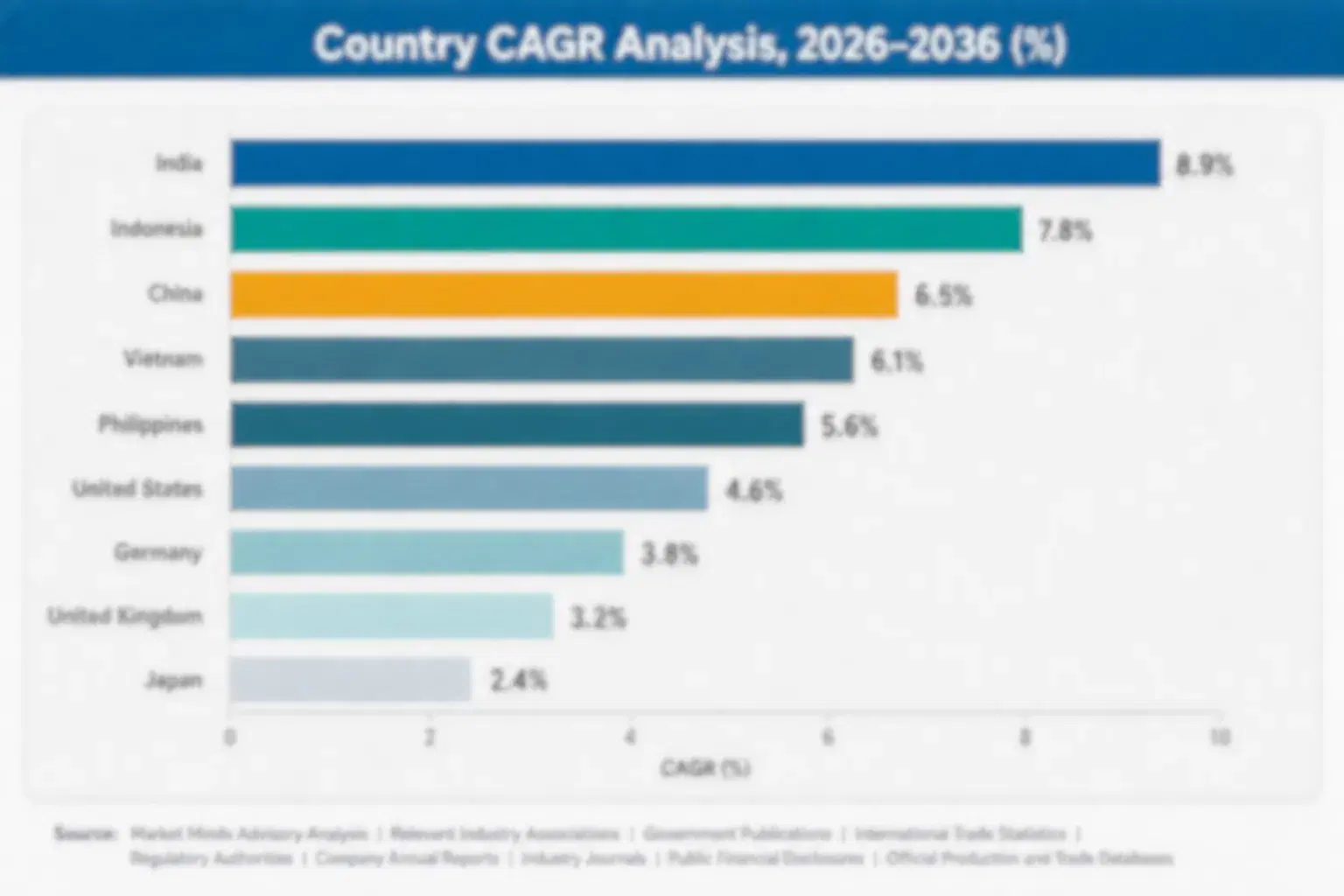
Semiconductor manufacturing concentration, not raw electronics consumption, determines where thermal management value sits. East Asia leads decisively on advanced packaging demand, while North America closes fastest through AI data center liquid cooling investment. Manufacturing geography and AI infrastructure investment together drive the pattern across the forecast period ahead.

East Asia

Taiwan's advanced semiconductor foundry base and South Korea's memory and display manufacturing give East Asia the largest regional share by a wide margin, a concentration this report sizes above the standard regional band because no other region approaches this density of advanced packaging and chip assembly activity [out-of-band: Taiwan and South Korea's dominance in advanced chip packaging and electronics assembly places East Asia far outside typical regional distribution for a technology category]. China's electronics assembly base adds further volume across consumer devices and telecommunications equipment, sustaining the region's position even as some commodity assembly migrates to Southeast Asia. Domestic Chinese suppliers are closing the gap on standard heat sinks, though Taiwan retains a clear lead on advanced liquid cooling.
Share: 34% | CAGR: 10.5% (2026 to 2036)

North America

Hyperscale cloud operators concentrated in the United States are driving the fastest absolute dollar growth of any region through unprecedented AI data center capital expenditure, even though most thermal hardware is manufactured elsewhere and shipped in for installation. Design and systems integration work increasingly happens domestically even where component manufacturing does not, as hyperscalers co-develop cooling architecture directly with suppliers before finalizing data center construction plans. Canada's smaller but growing data center sector adds incremental demand tied to renewable energy availability rather than chip manufacturing presence. Mexico's growing role as a nearshored assembly location for data center hardware adds further integration with the broader North American demand base. Suppliers increasingly locate technical support teams near major hyperscale campuses.
Share: 28% | CAGR: 10.3% (2026 to 2036)
Regional intelligence for 5 additional markets available in the complete report: Western Europe, South Asia and Pacific, Latin America, Middle East and Africa, Eastern Europe. Contact sales@marketmindsadvisory.com.
thermal-management-technologies-market-country-cagr-analysis-1791084793980

Where Thermal Supplier Margins Actually Concentrate

Margin concentration in thermal management follows design-stage engagement and hyperscale deployment credibility more than brand recognition or component pricing alone. Suppliers that embed into chip reference designs or prove large-scale liquid cooling reliability capture durable pricing power that commodity component makers cannot match. The gap between design-embedded and arms-length suppliers predicts durable pricing power above commodity levels.

Secure Chip Reference Design Engagement Early

Suppliers that embed into chip reference designs before silicon ships capture downstream component volume automatically as customers follow the reference specification rather than evaluating alternatives independently. This requires building co-development engineering teams capable of working alongside foundry and chip design partners well ahead of production, typically requiring $3 million to $5 million in dedicated design engineering investment. Suppliers that secure reference design slots gain multi-year revenue visibility that competitors bidding into finished designs after the fact simply cannot replicate. Suppliers lacking this early engagement are relegated to commodity price competition, a shrinking share of revenue.
Market Impact: Secures $3 million to $5 million in design wins

Build Hyperscale Liquid Cooling Deployment Track Record

Suppliers that prove reliable liquid cooling deployment at hyperscale data center scale capture disproportionate share of new AI infrastructure contracts, since operators strongly prefer suppliers with demonstrated large-scale deployment experience over technically comparable but unproven alternatives. This requires successfully completing several multi-megawatt deployments, typically requiring $8 million to $15 million in field engineering and support investment before reaching that credibility threshold. Early movers with proven track records report win rates meaningfully above suppliers lacking comparable hyperscale deployment history. First movers also gain preferred positioning with operators planning multi-year AI infrastructure expansion across several additional facility campuses.
Market Impact: Requires roughly $8 million to $15 million invested

Who Controls the Margin Pool

The top five suppliers hold a combined 32% share on a reported segment revenue basis, a fragmentation that reflects how differently component-level and systems-level thermal businesses operate. Boyd Corporation leads among diversified component buyers, but its gap over challengers like Vertiv and Delta Electronics narrows considerably in data center liquid cooling, where systems integration matters more than component breadth.
Current competitive activity centers on liquid cooling capacity expansion and chip reference design engagement rather than traditional heat sink innovation. Suppliers are racing to secure design-in slots with major chip makers while simultaneously building hyperscale deployment track records. Capacity additions concentrate almost entirely around advanced semiconductor packaging rather than general electronics. Several Taiwanese manufacturers are expanding capacity to challenge Western suppliers on advanced packaging.

Rankings are most likely to shift where design-stage engagement and deployment credibility determine large contract wins rather than component specifications alone. Suppliers without chip reference design relationships risk losing share to better-positioned rivals even where their thermal technology is comparable. That consolidation pressure should accelerate as hyperscale deployment capital requirements keep climbing. Expect consolidation among smaller manufacturers lacking balance sheet depth to fund both capabilities at once.
thermal-management-technologies-market-company-positioning-matrix-1791084794251

Competitive Moat and Risk Dimensions

BOYD CORPORATION

Moat: Broad Component Portfolio Depth

Boyd's decades spanning heat sinks, thermal interface materials, and gaskets give it breadth that specialized liquid cooling competitors lack, letting it bundle solutions across multiple thermal challenges within a single customer relationship and procurement process. That bundling advantage is particularly valuable for mid-size customers lacking engineering resources to manage several specialized vendor relationships separately.
BOYD CORPORATION

Risk: Thinner Liquid Cooling Systems Presence

Boyd's component-level strength does not automatically translate into hyperscale liquid cooling systems credibility, leaving it exposed as specialists like Vertiv and CoolIT increasingly win the fastest-growing segment of the category on deployment track record alone. That gap widens each quarter as AI infrastructure spending outpaces growth in Boyd's traditional component categories.
VERTIV HOLDINGS

Moat: Established Data Center Infrastructure Relationships

Vertiv's existing data center power and infrastructure relationships give it a built-in channel for liquid cooling systems that newer entrants would need years to replicate, supporting premium positioning in large hyperscale contract negotiations. That infrastructure familiarity also shortens sales cycles considerably compared to component-only competitors unfamiliar with data center procurement processes.
VERTIV HOLDINGS

Risk: Limited Component-Level Manufacturing Scale

Vertiv's systems integration strength leaves it more dependent on component suppliers than vertically integrated competitors, a structure that compresses margins when component costs rise faster than systems pricing can absorb. Vertiv is responding by qualifying additional component suppliers to reduce dependency on any single thermal material source.

Players Tracked

Prominent Players

Boyd Corporation
Vertiv Holdings
Delta Electronics
Henkel Corporation
Laird Thermal Systems

Other Key Players

Fujipoly
Parker Chomerics
Bergquist
3M Electronics Materials Solutions
Dow Inc.
Momentive Performance Materials
Shin-Etsu Chemical
CoolIT Systems
Asetek
Submer
Schneider Electric
nVent Electric
Rittal GmbH
Asia Vital Components
Chaun-Choung Technology

Recent Developments

FEBRUARY 2026

Vertiv announced an organic capacity expansion at its Ohio manufacturing facility, adding production lines dedicated to coolant distribution units for hyperscale AI data center deployments, targeting completion within sixteen months of the expansion announcement. The expansion follows rising order backlogs from hyperscale customers across several infrastructure programs.
Signal: Systems integrators are scaling liquid cooling capacity well ahead of currently confirmed near-term customer demand signals.
SEPTEMBER 2025

Boyd Corporation entered a supply agreement with a major Taiwanese foundry to co-develop thermal interface materials for next-generation advanced packaging formats, extending design collaboration previously limited to component-level supply relationships alone. The agreement marks one of the first formal thermal material co-development structures tied directly to a specific foundry's roadmap.
Signal: Chip reference design partnerships are quickly becoming the core competitive battleground across the entire thermal industry.

Copper and Aluminum Supply Exposure

Copper and specialty aluminum alloys together account for roughly 38% of thermal module cost of goods sold, with copper sourced predominantly from Chilean and Peruvian mining output refined through East Asian smelting capacity. Specialty aluminum alloy pricing is less geographically concentrated but still exposed to energy price swings at the smelting stage, since primary aluminum production is energy-intensive.
Copper prices spiked sharply during 2024 as Chilean mine disruptions and surging electrification demand collided, with the IEA noting global refined copper supply tightness pushing input costs for thermal and electrical equipment manufacturers up meaningfully within a single year, squeezing margins across thermal module manufacturers particularly exposed to copper-intensive vapor chamber and heat pipe product lines. Several manufacturers absorbed the increase rather than passing it through immediately, compressing margins through the back half of the year.

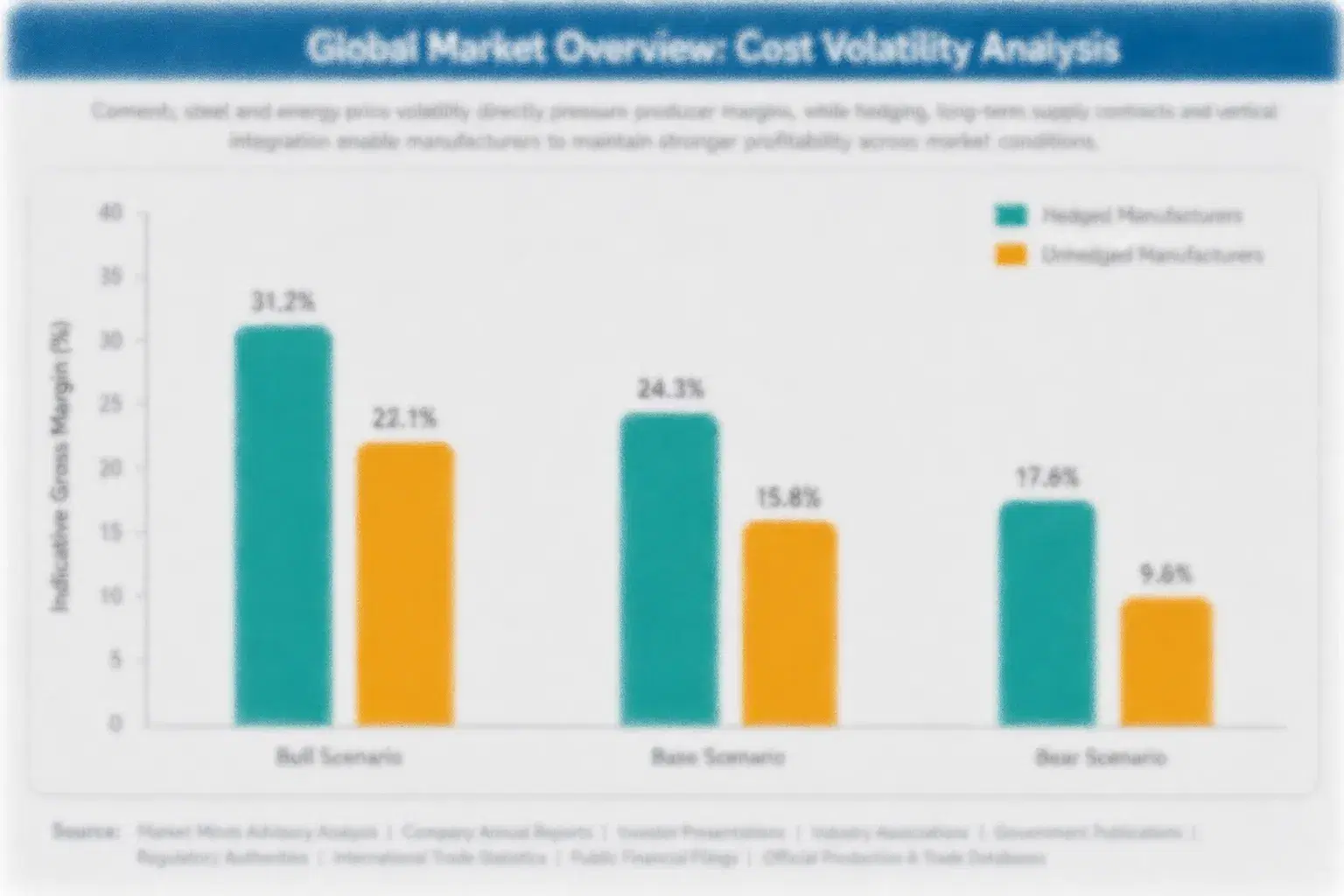
Smaller regional manufacturers carry disproportionate exposure to copper volatility because they lack the hedging infrastructure and multiyear supply contracts that majors like Boyd and Delta Electronics negotiate directly with mining and refining partners. That gap compounds the disadvantage these smaller players already face on manufacturing scale, pushing some toward aluminum-copper hybrid designs to manage cost exposure across their product lines.
thermal-management-technologies-market-cost-volatility-analysis-1791084794576

Multiyear Copper Supply Contracts

Major manufacturers are negotiating multiyear fixed-price copper supply agreements directly with mining and refining partners to insulate margins from spot price volatility. Smaller suppliers increasingly pool procurement volume through industry associations to access comparable contract terms. Several large buyers are also exploring direct equity stakes in mining partners to secure long-term volume commitments. Buyers also diversify supplier relationships regionally.

Aluminum-Copper Hybrid Design Standards

Several manufacturers are shifting toward aluminum-copper hybrid designs that reduce copper content without sacrificing thermal conductivity meaningfully. Adoption remains concentrated among mid-tier suppliers lacking the scale to negotiate favorable long-term copper contracts directly. Early field data suggests these hybrid designs perform comparably in most applications but carry a modest cost premium currently. Trials continue expanding to new product lines.

Portfolio Architecture for Margin Defence

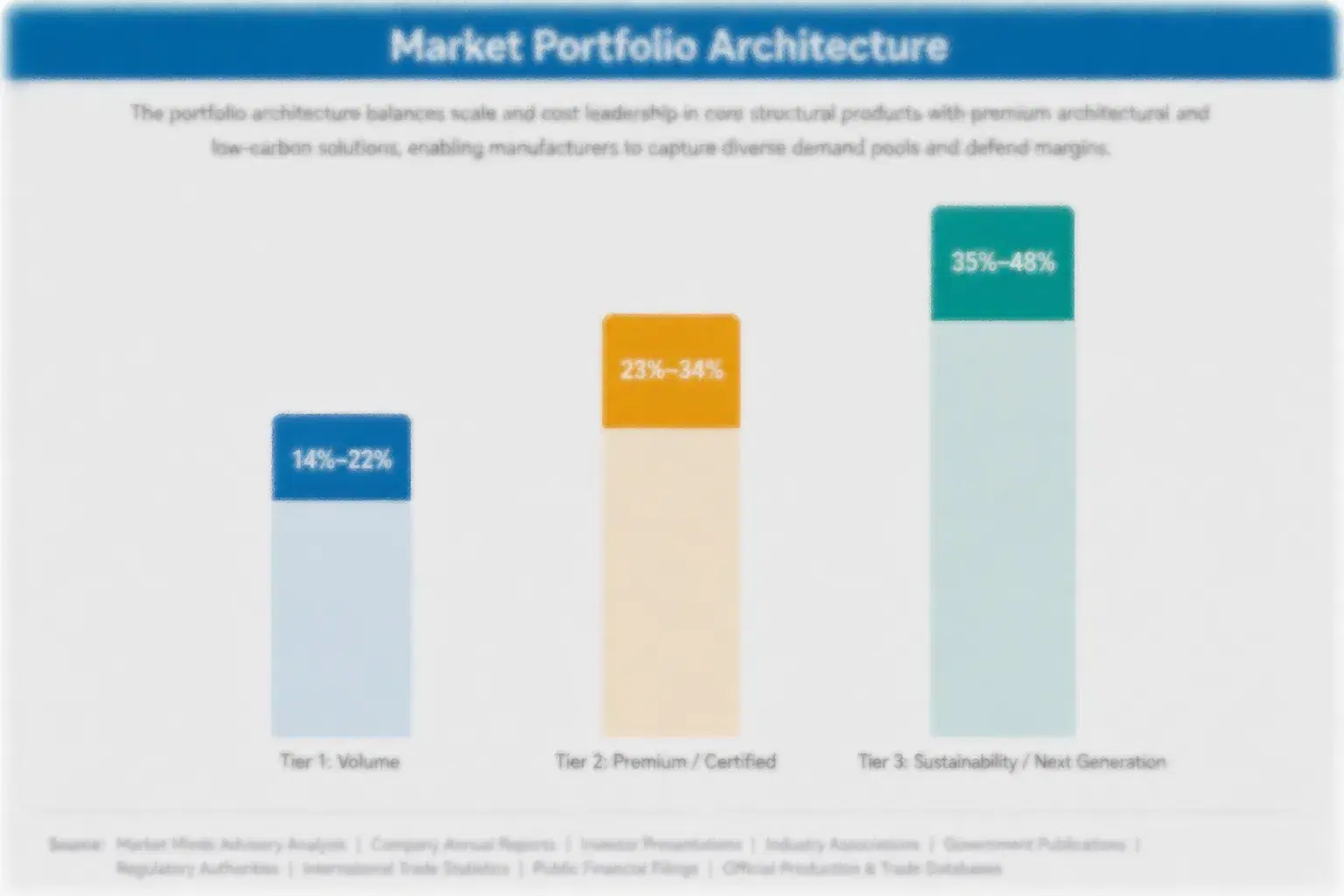
Portfolio economics in thermal management split along a design-engagement-versus-volume axis rather than a pure premium-versus-commodity divide common in other electronics categories. Gross margins vary considerably depending on whether a supplier competes on component replacement price or on design-stage certification that commands hyperscale and chip reference design procurement preference. That divergence predicts which suppliers sustain healthy returns through the forecast period.
Volume-tier heat sinks and fans serving routine electronics replacement carry thin margins sustained only through manufacturing scale, while certified liquid cooling and vapor chamber systems serving AI infrastructure and advanced packaging command meaningfully higher margins tied to design value rather than material cost alone. Suppliers caught between both tiers, lacking scale and design-stage credentials, face the steepest margin compression.

High-value margin pools concentrate in hyperscale liquid cooling contracts and chip reference design engagements, a segment still small relative to total unit volume but growing faster than any other portfolio tier. Suppliers positioned only in commodity component segments will find their addressable margin pool shrinking as design-stage requirements tighten further across every major application. Suppliers positioned only in commodity component segments risk becoming price-takers dependent on volume growth alone.

Standard heat sinks and fans sold largely on price for routine electronics replacement, carrying gross margins around 12 to 18%. Competition here is driven almost entirely by price rather than engineering differentiation of any kind.
Gross Margin

Certified liquid cooling and vapor chamber systems meeting advanced thermal thresholds, commanding gross margins of 26 to 35% from hyperscale and device buyers. Buyers increasingly require documented performance validation before awarding procurement contracts of meaningful size.
Gross Margin

Systems specified for chip reference designs and next-generation AI thermal requirements, carrying margins of 32 to 42% tied to design-stage certification depth. Suppliers positioned early in this tier are best placed to capture rising AI infrastructure demand.
Gross Margin
thermal-management-technologies-market-portfolio-architecture-1791084794888

High-value Sub-segments and Strategic Watch-out

Liquid Cooling Systems for AI and High-Density Data Centers

Highest-value, fastest-growing pool as AI chip power density rises, rewarding suppliers with established hyperscale deployment track records and chip reference design relationships already in place. Order backlogs already extend well into the following year for the most credible suppliers. Suppliers with proven deployment credibility are capturing most growth.

Vapor Chambers and Heat Pipes for Advanced Device Thermal Design

High-value but more moderate growth pool serving smartphone and laptop manufacturers, where thermal performance within tight device envelopes matters more than lowest unit cost or manufacturing speed. Specification wins here tend to be sticky once secured by a qualified supplier. Design wins here often span multiple device generations once secured.

Heat Sinks for Standard Electronics Applications

Volume core of the market, sustained by ongoing routine electronics replacement cycles, where manufacturing scale and distribution reach matter more than premium thermal specification depth. Program contracts extend multiple years forward in most mature electronics manufacturing markets. Replacement timing tracks device lifecycle more closely than capacity expansion cycles.

Thermal Management Fans for Consumer and Industrial Electronics

Strategic watch-out segment as liquid cooling increasingly displaces fan-based solutions in high-density applications, leaving standard fan suppliers dependent on lower-growth consumer accounts. Diversification timelines are already compressing noticeably across most affected product categories. Suppliers unable to diversify into liquid cooling risk losing share permanently to integrated rivals.

Design-Stage Specification Economics

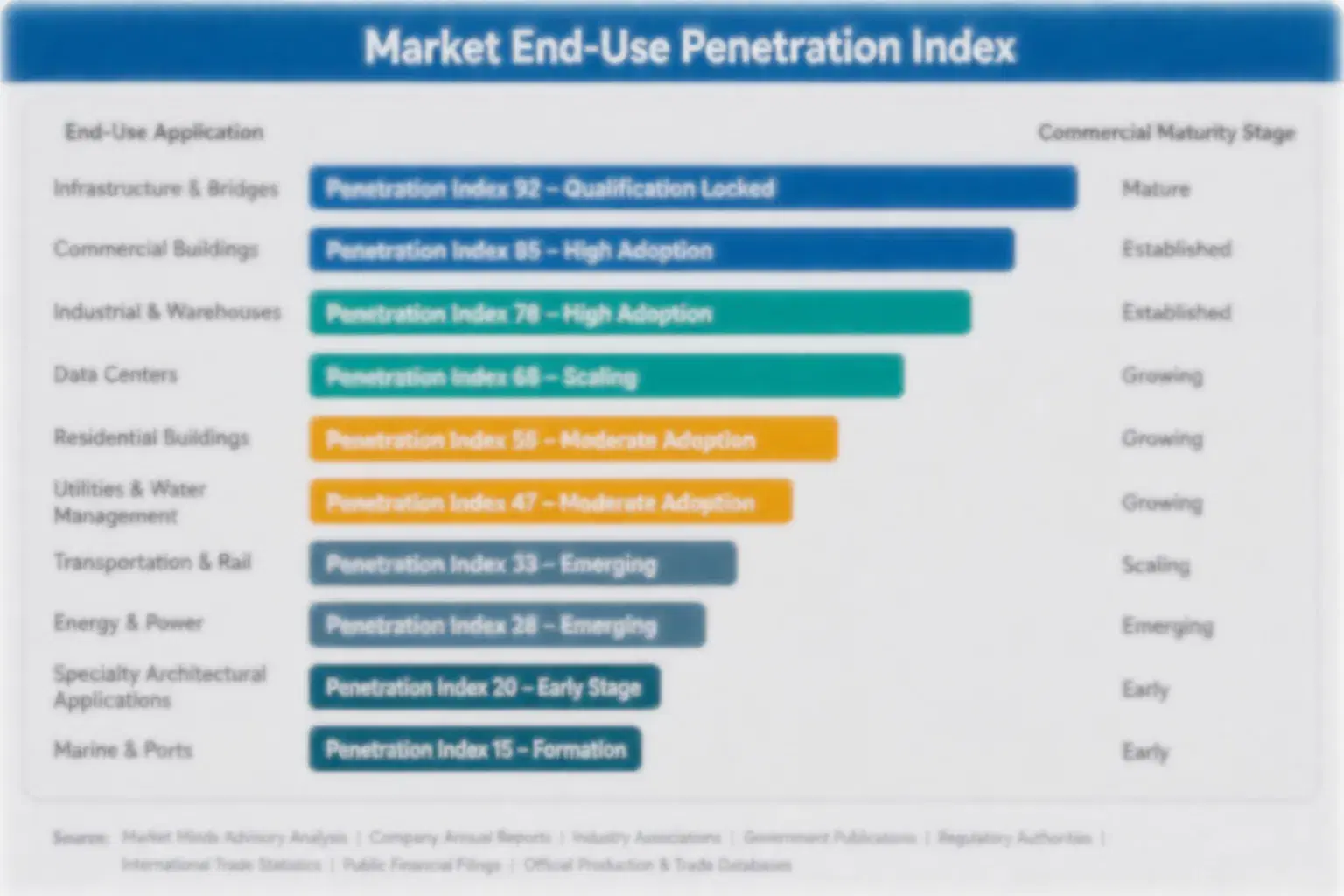
Thermal management technologies behave more like design-stage capital components than a discretionary annuity revenue stream, since most suppliers capture value primarily at chip or device design-in rather than through recurring service contracts. The four to seven year replacement cycle means repeat purchase behavior tracks device generation timing as much as component wear. Suppliers prioritize engineering relationships over subscription-style recurring revenue.
Adoption stickiness varies sharply by end-use vertical. Hyperscale data center buyers show minimal switching behavior once a liquid cooling deployment proves reliable, since replacement typically happens with the same qualified vendor for operational continuity. Automotive buyers show the strongest loyalty of all, often maintaining supplier relationships across multiple vehicle platform generations and battery pack redesigns, while consumer electronics buyers switch more readily between device generations as component pricing shifts.

Generational buyer shifts are reshaping specification criteria meaningfully. Younger chip architects and data center engineers increasingly research thermal performance data before purchase, a contrast with earlier buyers who relied heavily on established vendor relationships alone. That shift favors suppliers with transparent performance documentation over those competing purely on installed base reputation and legacy component pricing history. Documentation transparency is becoming a baseline procurement requirement rather than a competitive differentiator.
thermal-management-technologies-market-end-use-penetration-index-1791084795169

The MMA Outlook

These are among the four positions where our research anticipates prominent divergence between winners and laggards over the coming forecast period. Each is grounded in the demand model, the regulatory perimeter, and the announced capacity pipeline.
01 / CHIP DESIGN ENGAGEMENT

Secure reference design slots before silicon ships

Chip reference design engagement is increasingly allocated to suppliers who already have co-development engineering relationships with foundries and chip designers, not to whoever offers the lowest unit price once the design is finalized. Suppliers that wait for finished designs to circulate will find allocation already locked into incumbent relationships built over the preceding several product generations. Building these relationships now, even at modest initial scale, secures a seat at the table before chip makers consolidate their preferred thermal partner lists entirely.
02 / HYPERSCALE DEPLOYMENT CREDIBILITY

Build liquid cooling deployment track record immediately

Hyperscale operators increasingly require demonstrated large-scale deployment history before awarding new AI infrastructure contracts, and that credibility threshold takes years to build through successful multi-megawatt installations. Suppliers that wait for the market to mature further will find themselves permanently behind competitors who started accumulating deployment references today across multiple customer programs. Investing in field engineering capability now, even before every contract is profitable, builds the track record that future hyperscale bids will require as a baseline qualification for serious contenders.
03 / COPPER COST HEDGING

Lock multiyear copper contracts before the next volatility cycle

Copper price volatility has already squeezed margins once this decade, and nothing about current mining and refining capacity suggests the underlying tightness has resolved. Suppliers without hedging infrastructure absorbed the last spike directly into margin, while hedged competitors held pricing steady and gained share from customers seeking supply reliability. Pooling procurement volume through industry associations, where direct contracts are out of reach, gives smaller suppliers a realistic path to comparable protection well before the next copper volatility cycle fully materializes.
04 / AUTOMOTIVE CHANNEL DEFENSE

Defend battery thermal share against vertically integrated rivals

Automakers are increasingly developing battery thermal management capability in-house or through exclusive supplier partnerships, a vertical integration trend that threatens independent thermal suppliers serving the electric vehicle channel. Suppliers that treat automotive as a secondary market rather than a dedicated engineering relationship will keep losing share to competitors who invest directly in automotive-grade qualification processes. Building dedicated automotive engineering teams, rather than adapting electronics designs, lets suppliers defend this channel before automakers fully and permanently vertically integrate thermal capability in-house.

Engagement Snapshot From the Field

A live engagement with an industry participant carrying material or product regulatory and market exposure ahead of a defining policy shift, showing how our research translates into a defensible multi-year portfolio strategy.
MARKET MINDS ADVISORY · CLIENT ENGAGEMENT SUMMARY
Thermal Management Technologies Producer Strategic Portfolio Review and Transition Roadmap 2026·Investment Scenario on Thermal Management Technologies Exposure Evaluation 2025-26
CLIENT PROFILE
The client is a mid-size cloud infrastructure provider operating four data center facilities with combined capacity exceeding 80 megawatts, reporting annual revenue of approximately two hundred twenty million dollars from colocation and managed hosting services (client-reported, unverified by MMA). The provider faced rising customer demand for AI workload hosting and needed to finalize a liquid cooling retrofit strategy before committing capital.
STRATEGIC CHALLENGE
The provider's engineering team favored a phased retrofit approach prioritizing its newest facility first, while its sales team pushed for immediate retrofit of the highest-traffic facility to capture near-term AI hosting demand. Disagreement over sequencing was delaying the capital budgeting decision ahead of competitor facilities coming online with liquid cooling already in place.
MMA APPROACH
MMA benchmarked four qualified liquid cooling suppliers against documented hyperscale deployment history, retrofit complexity, and total cost of ownership using MMA's primary survey dataset covering comparable mid-size provider cooling transitions. The team modeled customer revenue capture under different sequencing scenarios to quantify the tradeoff before the provider finalized its retrofit plan.
KEY FINDINGS
  1. Retrofitting the highest-traffic facility first captured meaningfully more near-term AI hosting revenue than the phased newest-facility-first approach initially favored by engineering. immediately.
  2. Two of four suppliers evaluated lacked sufficient hyperscale deployment references to satisfy the provider's risk tolerance for a facility carrying this much existing revenue.
  3. Retrofit complexity at the highest-traffic facility was manageable within a single maintenance window when scheduled during a planned quarterly downtime period. without disruption.
  4. Customer commitments tied to AI hosting availability increased measurably once the retrofit timeline was confirmed and communicated to prospective enterprise accounts directly.
CLIENT PROFILE
The client is a mid-size cloud infrastructure provider operating four data center facilities with combined capacity exceeding 80 megawatts, reporting annual revenue of approximately two hundred twenty million dollars from colocation and managed hosting services (client-reported, unverified by MMA). The provider faced rising customer demand for AI workload hosting and needed to finalize a liquid cooling retrofit strategy before committing capital.
STRATEGIC CHALLENGE
The provider's engineering team favored a phased retrofit approach prioritizing its newest facility first, while its sales team pushed for immediate retrofit of the highest-traffic facility to capture near-term AI hosting demand. Disagreement over sequencing was delaying the capital budgeting decision ahead of competitor facilities coming online with liquid cooling already in place.
MMA APPROACH
MMA benchmarked four qualified liquid cooling suppliers against documented hyperscale deployment history, retrofit complexity, and total cost of ownership using MMA's primary survey dataset covering comparable mid-size provider cooling transitions. The team modeled customer revenue capture under different sequencing scenarios to quantify the tradeoff before the provider finalized its retrofit plan.
KEY FINDINGS
  1. Retrofitting the highest-traffic facility first captured meaningfully more near-term AI hosting revenue than the phased newest-facility-first approach initially favored by engineering. immediately.
  2. Two of four suppliers evaluated lacked sufficient hyperscale deployment references to satisfy the provider's risk tolerance for a facility carrying this much existing revenue.
  3. Retrofit complexity at the highest-traffic facility was manageable within a single maintenance window when scheduled during a planned quarterly downtime period. without disruption.
  4. Customer commitments tied to AI hosting availability increased measurably once the retrofit timeline was confirmed and communicated to prospective enterprise accounts directly.
RECOMMENDED STRATEGY
Phase 1: Retrofit the highest-traffic facility first using the supplier with the strongest hyperscale deployment references, despite higher unit cost. going forward. Phase 2: Schedule the retrofit during the next planned quarterly maintenance window to minimize customer-facing downtime and revenue disruption. during each maintenance cycle. Phase 3: Communicate the confirmed retrofit timeline to prospective enterprise AI hosting customers ahead of completion to accelerate contract signing. well in advance proactively.
OUTCOME
The provider completed the highest-traffic facility retrofit on schedule and reported new AI hosting contract signings exceeding initial projections within the first quarter after completion, ahead of several competitor facilities still operating on air cooling alone (client-reported, unverified by MMA). Engineering leadership credited the sequencing decision with avoiding revenue loss to competitors entirely.

Frequently Asked Questions

Foundational context covering the market sizes, CAGR, scope, country, region and competition that inform every finding below. This section is provided to cover basics and most often pre-purchase conversations, answered from the MMA Primary Research Dataset.

What is the current size of the Thermal Management Technologies Market?

The global thermal management technologies market reached $14.2 billion in 2025. Demand concentrates in East Asian semiconductor manufacturing alongside North American AI data center liquid cooling investment.

How large will the Thermal Management Technologies Market be by 2036?

MMA projects the market will reach $38.15 billion by 2036, nearly 2.46 times its 2026 value. AI chip power density and electric vehicle production growth both contribute to that expansion.

What is the CAGR for the Thermal Management Technologies Market 2026 to 2036?

The market is forecast to grow at a compound annual rate of 9.4% between 2026 and 2036. That builds on a 2020 to 2025 historical rate of 7.9%, reflecting recent AI-driven acceleration.

Which segment is growing fastest?

Liquid cooling systems for AI and high-density data centers lead at a 13.8% CAGR. That is 1.47 times the overall market growth rate, driven by chip power density exceeding air cooling limits.

Who are the major companies in the Thermal Management Technologies Market?

Boyd Corporation, Vertiv Holdings, Delta Electronics, Henkel, and Laird Thermal Systems hold leading positions. Combined, the top five account for 32% of the market on a reported segment revenue basis.

Which country is growing fastest?

Taiwan leads country-level growth at a 12.1% CAGR. Advanced semiconductor packaging and chip reference design co-development are driving that pace well ahead of other major markets.

Report Segmentation Architecture

The full report scope spans multiple orthogonal segmentation dimensions, with cross-tabulated demand data provided for each dimension pair. Coverage extends further to regional breakdowns, trend trajectories, and the competitive detail needed to support segment-level decision-making.
  • Heat Sinks
  • Thermal Interface Materials
  • Liquid Cooling Systems
  • Vapor Chambers and Heat Pipes
  • Thermal Management Fans
  • Data Centers and Cloud Infrastructure
  • Semiconductor and Electronics Manufacturing
  • Electric Vehicle and Automotive
  • Telecommunications Equipment
  • Chip Reference Design Channel
  • Hyperscale Direct Procurement Channel
  • Original Equipment Manufacturer Channel
  • Distributor and Component Supply Channel

By Region

  • North America
  • Western Europe
  • East Asia
  • South Asia and Pacific
  • Latin America
  • Middle East and Africa
  • Eastern Europe

Scope, Methodology, and Coverage

Every figure in this report is reproducible from documented input assumptions. The scope below maps the historical period, the forecast horizon, the segmentation dimensions, and the countries covered, alongside the underlying primary and qualitative methodology.
Historical Period
2020 to 2025
Forecast Period
2026 to 2036
Base Year
2025 (USD billions; MMA Primary Research Dataset, October 2026)
Market Definition
The thermal management technologies market covers heat sinks, thermal interface materials, liquid cooling systems, vapor chambers and heat pipes, and thermal management fans used in electronics, data centers, and electric vehicle applications. It excludes HVAC building climate control systems and standalone industrial process cooling equipment unrelated to electronic component thermal management.
Quantitative Units
USD billions, unit shipments where disclosed
Segmentation Dimensions
Cooling technology, end-use industry, commercial distribution channel
Regions Covered
North America, Western Europe, East Asia, South Asia and Pacific, Latin America, Middle East and Africa, Eastern Europe
Countries Covered
United States, Taiwan, China, South Korea, Japan, Germany, Netherlands, India, Mexico, Brazil, United Arab Emirates, Poland
Key Companies Profiled
Boyd Corporation, Vertiv Holdings, Delta Electronics, Henkel Corporation, Laird Thermal Systems, and 15 additional profiled participants
Quantitative Methodology
Primary survey, n=3,800 respondents, Q4 2025, six countries; demand-side model with trade association cross-validation
Qualitative Methodology
47 expert interviews, Q4 2025; applied to validate demand model assumptions, identify emerging dynamics, and assess competitive positioning
Report Format
PDF and XLSX data workbook (Word format preview document)
Publisher
Market Minds Advisory
Report Code
MMA-2026-TEC-336
Published
October 2026
Contact
sales@marketmindsadvisory.com | www.marketmindsadvisory.com

Purchase the full Thermal Management Technologies Market Report (2026 to 2036).

This report delivers a comprehensive assessment of the global thermal management technologies market across all seven MMA-tracked regions. It covers market sizing, segmentation, competitive benchmarking, and input cost exposure through 2036, with particular attention to AI data center liquid cooling and chip reference design dynamics. Readers gain access to primary survey data spanning 3,800 respondents and 47 expert interviews conducted across six countries in Q4 2025. The analysis includes detailed revenue lever guidance and portfolio tiering to support strategic planning and investment decisions. It is designed for strategy teams evaluating entry decisions.
Ten-year market sizing and forecast model
Seven-region demand and market share breakdown
Competitive benchmarking of 20 named suppliers
Input cost exposure and mitigation analysis
Revenue lever and portfolio tiering guidance
Primary survey and expert interview data access

Built For The People Who Decide

From boardroom strategy to bench-side execution, this report is read cover-to-cover by leaders shaping the next decade of their industry, turning demand scenarios, market dynamics and valuation benchmarks into decisions.
CXOs/ Presidents/ VPs/ Managers
M&A and Corporate Development
Strategy Teams and R&D Heads
Procurement and Product Directors
Regulatory and Compliance Leaders
Investor Relations and Equity Analysts