Market Minds Advisory
Terminal Sterilization Market

Terminal Sterilization Market: Constrained By Permits Rather Than By Demand

A device approved for ethylene oxide cannot simply move to radiation, because the method sits inside its regulatory filing, so every facility closure removes capacity that nothing can replace quickly.

Lead Analyst

Published

September 2026

Make Smarter Decisions with Customized Research Insights

Request a free sample report and evaluate market opportunities, growth trends, and competitive dynamics relevant to your business needs.

2025 MARKET VALUE$8.4BMarket Size 2025
2036 FORECAST VALUE$18.8BBase Case , 2026 to 2036
CAGR 2026 TO 20367.6 %Bull 8.8% / Bear 6.4%
INCREMENTAL OPPORTUNITY$9.8BNet 10- year value creation
EXPANSION MULTIPLE2.08x2036 value over 2026 base
Strategic Levers
M&A Pipeline
Regional Outlook
Country Rankings
Competitive Intelligence
Segmental Deep-dive
Call-Us : 91 93563 13602

Executive Snapshot and Market Trajectory

Sterilisation method is written into a device's regulatory approval, which means moving a product from ethylene oxide to radiation requires material testing, dose validation and a fresh submission. Switching is a multi-year project for each product rather than a decision anybody takes quickly. Capital does not translate into capacity here.
North America takes 31% of value because device manufacturing and contract sterilisation pricing both concentrate there, and this is a market where the default answer genuinely holds. X-ray irradiation grows at 11.4%, half again the market rate of 7.6%, because it delivers radiation penetration approaching gamma without depending on cobalt-60 from a handful of ageing reactors. That supply position has made operators reluctant to commit further capital to gamma installations anywhere.
Concentration sits at 44% and the binding constraint is regulatory rather than commercial. Emissions rules have closed or restricted ethylene oxide facilities in several jurisdictions, and each closure removes processing capacity that validated products cannot immediately move away from. Demand has never been the problem in this industry. Permits are, and they are getting harder rather than easier. Permits get harder rather than easier.
Market Definition
The market covers terminal sterilization of products in their final packaging, delivered through contract services and in-house processing equipment, including ethylene oxide processing, gamma irradiation, electron beam processing, X-ray irradiation, steam and moist heat sterilization, and vaporised hydrogen peroxide and novel chemistries. Aseptic processing without terminal sterilization, hospital reprocessing of reusable instruments, disinfectants and cleaning chemistries, and sterility testing services sold separately are excluded. Packaging materials and container manufacture fall outside scope.
Base Year Value
$8.4B in 2025 (MMA Primary Research Dataset, August 2026)
Forecast Period
2026 to 2036, eleven discrete annual values
CAGR
7.6% base case. Bull 8.8%. Bear 6.4%.
Fastest Growth Segment
X-Ray Irradiation: 11.4% CAGR
Fastest Growth Country
India: 10.0% CAGR
Fastest Growth Region
South Asia and Pacific: 9.6% CAGR
Largest Region
North America: 31% of 2025 global value
Market Leaders
Sotera Health, Steris, Getinge, Ionisos, Midwest Sterilization. Source: MMA Analysis based on disclosed sterilisation services and equipment revenue, company annual reports 2025.
Primary Survey
n=3,800 procurement and R&D decision-makers, Q4 2025, six countries
Methodology
Demand-side build-up, cross-validated against public data, 47 expert interviews

Terminal Sterilization Market Forecast Scenarios

terminal-sterilization-market-size-forecast-scenario-1787689994169
Growth from 2020 to 2025 ran at 6.6% and regulatory pressure shaped it more than device volumes did. Emissions rules on ethylene oxide tightened across several American jurisdictions and led to facility closures and restrictions that removed capacity abruptly. Device manufacturers found themselves unable to process products validated for a method whose available sites had shrunk, and pricing moved sharply wherever regional capacity became genuinely tight.
The 7.6% base case rests on three mechanisms. Radiation capacity keeps being built because ethylene oxide permitting has become unpredictable, and X-ray in particular avoids the cobalt supply constraint gamma carries. Single-use device volumes keep rising across surgery, diagnostics and drug delivery, each requiring terminal processing before release. And Asian device manufacturing continues expanding faster than regional sterilisation capacity has been installed to serve it. Each mechanism works independently of the others entirely.
The bull case at 8.8% turns on further ethylene oxide restrictions forcing widespread revalidation onto radiation, which would consume capacity and pricing power simultaneously across the industry. The bear case at 6.4% is device manufacturers accelerating in-house sterilisation investment to escape contract capacity risk, which would shift value away from the service providers who currently hold most of it.

Where Capacity Actually Comes From

The fact that governs this market is that sterilisation method is part of a device's regulatory approval rather than a processing choice made afterward. Moving a product from ethylene oxide to X-ray requires material compatibility testing, dose validation, packaging assessment and a regulatory submission, which together take around 26 months. Advice to switch modality treats a multi-year programme as a decision.
FIVE-FIRM CONCENTRATION44%Share of sterilisation services and equipment revenue held by leaders
CONTRACT PROCESSING PRICE$0.34 per unitTypical charge for terminally sterilising one packaged single use device
TOP PROCESSING COUNTRYUSA 29%American share of global terminal sterilization throughput by value
MODALITY CHANGE TIMELINE26 monthsDuration required to revalidate a device onto another method
OUTSOURCED PROCESSING SHARE72%Device volume sterilised through contract providers rather than in house
COBALT REACTOR SOURCES6Reactor sites supplying most of the world's gamma isotope
That rigidity is why permitting matters more than demand. Emissions regulation on ethylene oxide has closed or restricted facilities across several American jurisdictions, and each closure removes capacity that validated products cannot follow elsewhere quickly. Manufacturers with products locked to a method whose sites are shrinking face a genuine supply problem rather than a pricing one. Roughly 72% of volume runs through contract providers, concentrating that exposure.
Gamma carries a different constraint that receives far less attention. It depends on cobalt-60 produced in roughly six reactor sites worldwide, several of which are ageing and none of which exist primarily to serve sterilisation. That supply position is why gamma is the slowest growing modality here despite being the installed standard for decades. X-ray delivers comparable penetration from an electrical source and is taking its place in new capacity decisions.
"Everybody says the answer to ethylene oxide is radiation. The answer to ethylene oxide is a two-year revalidation programme per product line that nobody wants to pay for and no regulator is rushing."
Director, Sterilization and Medical Manufacturing Services Practice · MMA Medical Devices Practice · August 2026

Market Trends

X-Ray Displaces Gamma In New Capacity Decisions

X-ray irradiation delivers penetration approaching gamma while running from an electrical source that can be switched off, requires no isotope licensing and carries none of the transport and security burden cobalt handling involves. Growth at 11.4% comes almost entirely from new capacity rather than from converting existing gamma sites. Gamma depends on roughly six reactor sources worldwide, several ageing, and that supply position has made operators reluctant to commit further capital to it. The technology comparison is genuinely close and the supply chain comparison is not close at all. Capital is following that comparison.
Market Impact: Processes 72% through contractors

Emissions Regulation Removes Capacity Faster Than Replacement

Ethylene oxide emissions rules have closed or restricted facilities across several American jurisdictions, and each removal takes processing capacity that validated products cannot follow elsewhere within a useful timeframe. Building or expanding a permitted site takes years and increasingly faces local opposition regardless of technical controls. The commercial effect is regional scarcity that raises pricing sharply while manufacturers scramble for alternative slots. Providers holding permitted capacity in constrained regions have found themselves in an unusually strong position through no commercial effort at all. Providers holding permitted capacity nearby gained pricing power without competing for it at all.
Market Impact: Serves 26% of global value

Market Opportunities and Growth Drivers

Single Use Device Volumes Keep Rising Across Every Setting

Surgery, diagnostics, drug delivery and infusion have all moved decisively toward single use presentations, and every unit requires terminal processing before release. That converts clinical practice changes directly into sterilisation volume without any decision by the sterilisation industry itself. Roughly 72% of that volume goes through contract providers rather than manufacturer facilities, since permitted capacity is expensive and regulatorily hazardous to operate. Volume growth is therefore unusually predictable, which is rare in a market whose supply side is as constrained as this one has become. Supply rather than demand is the variable.
Market Impact: Requires 26 months to change

Asian Device Manufacturing Outgrows Regional Sterilisation Capacity

Chinese and Indian medical device manufacturing has expanded faster than sterilisation capacity has been installed to serve it, which leaves manufacturers shipping product across long distances for processing or waiting for slots. Domestic operators are building capacity now and specifying radiation more often than ethylene oxide, since new sites face permitting questions that older ones did not. Regional growth therefore favours modalities being installed rather than those already established, which is a different competitive picture from mature Western markets entirely. Older sites avoided the permitting scrutiny that new ones now face, which shapes what gets built.
Market Impact: Delays new sites by 4 years

Market Restraints and Challenges

Modality Is Locked Into The Regulatory Approval

A device's sterilisation method sits inside its regulatory filing, and changing it requires material compatibility testing, dose validation, packaging assessment and a submission that together take around 26 months. Root cause is that terminal sterilization affects the product itself rather than merely being a process applied to it. The commercial impact is that capacity shortages cannot be solved by switching modality, which is the advice most commonly offered and least frequently practical. Mitigation means validating products to more than one method at development, which very few manufacturers do. Very few manufacturers do it.
Market Impact: Avoids 6 reactor source dependencies

Permitting Constrains Supply Regardless Of Investment Appetite

Building or expanding a sterilisation facility requires emissions permits and increasingly faces local opposition that technical controls do not resolve, particularly for ethylene oxide. Root cause is public concern about a recognised carcinogen processed near residential areas, which is a political question rather than an engineering one. The commercial impact is that capital availability does not translate into capacity, so shortages persist even where returns are attractive. Mitigation runs toward radiation modalities that face lower permitting resistance, though those carry their own siting requirements. Siting questions follow radiation too. Capital does not create permission.
Market Impact: Locks products for 26 months
3 additional market trends, 4 additional growth drivers, and 2 additional restraints and challenges are covered in the full report. Contact sales@marketmindsadvisory.com to access the complete intelligence.

Segment CAGR and Growth Architecture

Segmentation follows sterilisation modality: the physical or chemical mechanism used to achieve sterility in the final package, rather than which product is processed or who operates the facility. Six modalities cover the market without overlap, from ethylene oxide through to novel chemistries. End-use industry and contracting route are handled separately here. Both cut across all six modalities.
terminal-sterilization-market-market-share-analysis-1787689994427

X-Ray Irradiation

X-ray delivers penetration approaching gamma from an electrical source that can be switched off, which removes isotope licensing, transport security and the disposal obligations that cobalt handling carries throughout its life. Growth at 11.4%, half again the market rate of 7.6%, comes almost entirely from new capacity decisions rather than from converting existing gamma installations. Capital cost per facility is higher and operating economics improve with throughput, so the modality suits large regional sites rather than distributed ones. What makes it commercially decisive is that a product validated for gamma frequently transfers to X-ray with far less revalidation work than a move from ethylene oxide would demand. That transfer economics argument is what is actually moving capital.
CAGR 11.4%

Vaporised Hydrogen Peroxide and Novel Chemistries

Vaporised hydrogen peroxide, nitrogen dioxide and comparable chemistries process at low temperature without ethylene oxide's residue, aeration time or emissions profile, which makes them attractive for heat sensitive and polymer-rich devices. Growth at 10.2% follows manufacturers seeking alternatives that permitting authorities do not contest. Penetration into complex lumens and dense packaging remains genuinely weaker than ethylene oxide achieves, which limits where these methods can substitute rather than merely complement. Suppliers presenting them as a general replacement generate validation failures that damage confidence in the whole category considerably. Suitability depends on device geometry and packaging density rather than on any general claim, and operators who map that honestly hold customers considerably longer than those who do not.
CAGR 10.2%
Full segment breakdown across 6 segments available in the complete report.

Regional Architecture and Country Demand Map

Geography follows device manufacturing location and permitting environment, and the two increasingly diverge. North America leads on manufacturing value and contract pricing while facing the tightest emissions constraints, and East Asia is installing capacity fastest to serve production already there. Permitting environment now shapes capacity more than demand does.

North America

American device manufacturing and contract sterilisation pricing both concentrate here, which puts the region at the top of the default band on value rather than on volume. Emissions regulation on ethylene oxide has closed or constrained facilities across several jurisdictions, and each removal created regional scarcity that manufacturers with validated products could not resolve quickly. Pricing rose sharply where capacity tightened. Radiation capacity is being built in response, with X-ray favoured for new sites. Canadian processing serves both domestic and cross-border volume. Mexican capacity has grown substantially with device manufacturing relocation into the region. Regional scarcity raised pricing sharply where capacity tightened, and manufacturers with validated products had no quick way to resolve it at all.
Share: 31% | CAGR: 6.8% (2026 to 2036)

Western Europe

European sterilisation capacity is mature and geographically distributed, with contract providers and manufacturer-operated sites both significant across the region. Emissions rules are strict and long-established, which meant European operators adapted ethylene oxide controls earlier and faced less abrupt disruption than American facilities experienced. German, French and Italian device manufacturing sustains steady demand. Gamma installations remain substantial and ageing, and replacement decisions increasingly favour X-ray. Energy costs affect radiation processing economics more than most operators publicly acknowledge, since electron and X-ray facilities consume considerable power continuously during operation. European operators adapted controls earlier and faced far less abrupt disruption than American facilities experienced, which is a genuine regional advantage. Ageing gamma remains substantial.
Share: 22% | CAGR: 6.0% (2026 to 2036)
Regional intelligence for 5 additional markets available in the complete report: East Asia, South Asia and Pacific, Latin America, Middle East and Africa, Eastern Europe. Contact sales@marketmindsadvisory.com.
terminal-sterilization-market-country-cagr-analysis-1787689994693

Owning Capacity That Is Permitted

Modality is locked into the regulatory filing for around 26 months, permitting rather than capital constrains new capacity, and roughly 72% of volume runs through contract providers. Four levers work on capacity position, validation support and modality mix rather than on processing price, which scarcity already sets. Processing technology decides very little of this.

Secure Permitted Capacity Ahead Of Regional Scarcity

Emissions regulation has removed ethylene oxide capacity across several jurisdictions and building replacement sites takes around four years while facing local opposition that technical controls do not resolve. Capital availability does not translate into capacity here. Operators who secured permits and built ahead of scarcity found themselves holding pricing power created by regulation rather than by any commercial action. Permitting work is unglamorous, slow and the single most valuable investment available in this industry today, and very few operators are pursuing it aggressively. Roughly 72% of volume runs through contract providers, which concentrates the benefit.
Market Impact: Anticipates the full 4 year site permitting delay

Fund Dual Modality Validation For Key Customers

Changing a device's sterilisation method takes around 26 months of material testing, dose validation and regulatory submission, which means a capacity shortage cannot be solved by switching. A provider funding or supporting dual validation at product development gives customers optionality and gives itself the ability to move volume between its own modalities when capacity tightens. Very few manufacturers validate to two methods because nobody has made the case commercially. The provider that does becomes considerably harder to replace at either site. Optionality is worth more than price here. Nobody has made that case yet.
Market Impact: Removes the whole 26 month modality switching barrier

Build X-Ray Rather Than Replacing Gamma Directly

Gamma depends on cobalt-60 from roughly six reactor sources worldwide, several ageing, while X-ray delivers comparable penetration from an electrical source requiring no isotope licensing, transport security or disposal obligation. Growth at 11.4% comes from new capacity rather than conversion. Operators replacing ageing gamma with more gamma are committing capital against a supply chain they cannot influence. Products validated for gamma also transfer to X-ray with considerably less revalidation than any move away from ethylene oxide would require. Capital committed to gamma now runs for a decade. Transfer economics decide the capital.
Market Impact: Escapes a 6 reactor isotope supply dependency entirely

Position Novel Chemistries Honestly By Device Type

Vaporised hydrogen peroxide and nitrogen dioxide process at low temperature without residue or aeration, and their penetration into complex lumens and dense packaging is genuinely weaker than ethylene oxide achieves. Growth at 10.2% depends on placing them where they work rather than presenting them as a general replacement. Validation failures from over-specification damage confidence across the whole category and reach competitors as well. Operators who map suitability by device geometry rather than by marketing position hold customers considerably longer. Over-specification damages the whole category, competitors included. Mapping suitability by geometry holds accounts far longer.
Market Impact: Directs a 10.2% growing modality toward suitable devices

Who Controls the Margin Pool

Measured on disclosed sterilisation services and equipment revenue, the five leading companies hold a CR5 of 44%, which reflects an industry where licensed capacity rather than technology creates position. Sotera Health and Steris operate the largest contract networks, while equipment builders including Getinge and Fedegari serve manufacturers processing in house rather than competing for outsourced volume at all. Licensed capacity rather than technology creates the position here.
Three contests define activity. Contract processing competes on permitted capacity within economic transport distance, where availability matters far more than price. Equipment supply competes on validation support and regulatory documentation for manufacturers running their own facilities. Novel chemistry providers compete on device suitability, which is a technical sale requiring honest mapping rather than broad claims. A provider strong in one of those three contests has little advantage in the others, since the buyer, the timing and the capability required all differ substantially.

Pressure comes from regional operators in Asia building modern radiation capacity while Western networks manage ageing gamma installations and contested ethylene oxide permits. Rankings shift wherever a jurisdiction restricts a modality, since that reallocates volume to whoever holds capacity nearby rather than to whoever competes best. Regulation reallocates volume, not competition.
terminal-sterilization-market-company-positioning-matrix-1787689994953

Competitive Moat and Risk Dimensions

SOTERA HEALTH

Moat: Permitted Network Geographic Coverage

Sotera operates permitted sterilisation capacity across a network no competitor matches, and permits rather than capital are what limit entry in this industry. Each site took years to license and several would be considerably harder to permit today than when they were built. A well-funded entrant can order equipment immediately and cannot obtain the permission to operate it for years.
SOTERA HEALTH

Risk: Ethylene Oxide Regulatory Exposure

A network weighted toward ethylene oxide capacity carries direct exposure to emissions regulation, litigation and local opposition that has already closed or restricted facilities. Those risks are political rather than technical and do not respond to engineering improvements. Defending that position requires arguing a public health case in venues where the commercial argument carries very little weight.
STERIS

Moat: Services And Equipment Combination

Steris supplies both contract processing and the equipment manufacturers use in house, which means it participates whichever route a customer chooses and understands both economics intimately. That dual position provides unusually good visibility into where volume is moving. A contract-only competitor loses entirely when a customer decides to bring processing inside its own facility.
STERIS

Risk: Ageing Gamma Installed Base

Substantial gamma capacity depends on cobalt-60 from roughly six reactor sources worldwide and requires periodic recharging that supply constraints could interrupt. Replacement decisions increasingly favour X-ray instead. Managing an ageing installed base while funding new modality capacity is a capital allocation problem that competitors building from scratch simply do not face.

Players Tracked

Prominent Players

Sotera Health
Steris
Getinge
Ionisos
Midwest Sterilization

Other Key Players

E-BEAM Services
BGS Beta-Gamma-Service
Gamma-Service Medical
Andersen Sterilizers
Belimed
Tuttnauer
MMM Group
Shinva Medical Instrument
Fedegari Group
Cosmed Group
Rad Source Technologies
IBA Industrial
ScandiNova Systems
Bioster
Sychem

Recent Developments

JANUARY 2025

Regulator finalises tightened ethylene oxide emissions requirements

An environmental regulator finalised tightened emissions requirements for commercial ethylene oxide sterilisation facilities, a regulatory action rather than any corporate transaction. Affected operators face control investment and in some locations continued operation is questionable, which removes capacity that validated products cannot follow elsewhere quickly. Capacity leaves the market.
Signal: Permits rather than demand set capacity in this industry, and the permitting environment keeps tightening steadily.
MAY 2025

Contract operator commissions new X-ray irradiation facility

A contract sterilisation operator commissioned a new X-ray irradiation facility through organic capital investment rather than any acquisition. X-ray was specified over gamma because it requires no isotope licensing, transport security or disposal obligation, and because cobalt supply depends on a small number of ageing reactor sources.
Signal: New capacity decisions are moving away from isotopes entirely, which will reshape modality mix over the next decade.
SEPTEMBER 2025

Device manufacturer completes dual modality validation across product family

A medical device manufacturer completed validation of a product family for both ethylene oxide and radiation processing, an internal regulatory programme rather than any commercial agreement. The stated rationale was capacity resilience following regional shortages that had disrupted supply of products locked to a single sterilisation method.
Signal: Dual validation is becoming a supply chain decision rather than a regulatory one, which very few manufacturers have made.

What Processing Costs

Cost structure differs completely by modality, which most comparisons obscure. Ethylene oxide processing carries gas, emission control, aeration time and monitoring at 31 to 37% of processing revenue, with control equipment the fastest rising element. Gamma carries cobalt-60 purchase and periodic recharging as a substantial recurring cost. Electron beam and X-ray carry electricity as the dominant variable input, which makes their economics track industrial power prices directly.
The volatility that matters divides along the same lines. Industrial electricity pricing moved sharply through 2022 across European markets, and IEA data documents increases that materially affected radiation processing economics. Cobalt-60 supply tightened alongside reactor maintenance schedules over the same period. Sotera Health and Steris disclosures describe both cost pressures. Operators with hedged power contracts and secured cobalt allocations held pricing. Spot-exposed operators passed increases to customers with few alternatives.

Exposure divides by modality mix and site location. Ethylene oxide operators carry emission control capital that regulation keeps increasing. Gamma operators carry isotope cost and supply risk they cannot influence. Radiation operators carry electricity intensity that regional power pricing determines entirely. An operator with a balanced modality portfolio absorbs shocks that single-modality competitors transmit straight into pricing or into margin.
terminal-sterilization-market-cost-volatility-analysis-1787689995230

Hedge industrial electricity across radiation facilities

Electron beam and X-ray processing consume power continuously during operation, and European industrial electricity pricing moved sharply through 2022 with direct effect on processing economics. Hedged supply contracts cost flexibility and protect margin on modalities that are otherwise growing fastest. Operators exposed to spot power watched the economics of their newest facilities deteriorate for reasons entirely outside the sterilisation industry.

Secure cobalt allocation before recharge cycles fall due

Gamma facilities require periodic cobalt-60 recharging from roughly six reactor sources worldwide, several of which are ageing and none of which exist primarily to serve sterilisation. Securing allocation ahead of scheduled recharge prevents a facility running below capacity when supply tightens. Leaving allocation to the recharge date leaves availability decided by reactor maintenance schedules.

Balance modality mix to absorb regulatory shocks

Single-modality operators transmit every cost or permitting shock straight into pricing or margin, while a balanced portfolio can shift volume internally when one method becomes constrained. Building that balance costs capital across technologies rather than concentrating it in the cheapest. It also converts a regulatory event from an existential problem into an internal reallocation exercise.

Portfolio Architecture for Margin Defence

Margin follows scarcity of permitted capacity rather than sophistication of the method. Gamma processing earns steadily and carries isotope cost and supply risk that no operator can influence. Ethylene oxide earns well where capacity is scarce and carries regulatory exposure that can remove a site entirely. X-ray earns strongly on new capacity into constrained regions. Equipment supply earns manufacturing margins on an entirely different commercial model.
The tension is that the highest returns come from exactly the exposure operators would prefer to avoid. Scarcity pricing in ethylene oxide exists because regulation is closing facilities, and holding capacity in that position is profitable and precarious simultaneously. Operators building radiation capacity earn less today and carry no regulatory tail risk. That trade-off between current return and permanence is the central capital allocation question in this industry.

High-value pools sit in three places. Permitted capacity in regions where regulation has created scarcity. X-ray facilities serving customers whose products transfer from gamma with modest revalidation. And dual modality validation support, which is not sold directly and makes a provider considerably harder to replace at any of its sites. None of the three follows from processing technology.

Volume / Commodity-Adjacent

Gamma irradiation and steam processing sold on throughput where capacity is available and providers are broadly interchangeable within transport distance. The 7-point range separates operators with secured cobalt allocation and efficient site utilisation from those exposed to isotope supply and recharge timing.
Gross Margin: 24-31%

Premium / Certified

Electron beam processing and equipment supply for in-house manufacturer facilities requiring validation and regulatory documentation support. The 7-point spread separates providers offering full validation assistance from those supplying capacity or equipment against a customer specification alone.
Gross Margin: 36-43%

Sustainability / Regulatory / Next-Generation

X-ray irradiation, novel low temperature chemistries and permitted ethylene oxide capacity in constrained regions. The 24-point range is very wide because scarcity pricing in restricted jurisdictions commands far more than new radiation capacity built into markets with adequate supply.
Gross Margin: 39-63%
terminal-sterilization-market-portfolio-architecture-1787689995507

High-value Sub-segments and Strategic Watch-out

Scarce Region Permitted Capacity

Highest returns available anywhere here, created by regulation removing competing capacity rather than by any commercial action the operator took. The risk is that the same regulation eventually reaches the surviving sites, which makes this the most profitable and least permanent position in the industry.
Gross Margin: 60-63%

X-Ray Capacity For Gamma Transfers

Strong value and fastest growth at 11.4%, serving customers whose products move from gamma with far less revalidation than any shift away from ethylene oxide demands. The risk is electricity intensity, since regional power pricing determines the economics of these facilities almost entirely. Power pricing decides it.
Gross Margin: 48-51%

Gamma Throughput Processing

The volume core, priced on throughput where providers are interchangeable within transport distance and cobalt supply constrains everybody equally. Operators hold the line because installed capacity is sunk and utilisation determines whether an ageing facility earns anything worth having at all. Utilisation is the whole question.
Gross Margin: 25-28%

Single Modality Exposure

The strategic watch-out. Operators concentrated in one method transmit every permitting, isotope or power shock straight into pricing or margin with no internal alternative. The risk is a regulatory action that converts a profitable position into a stranded facility within a single decision cycle. No internal alternative exists.
Gross Margin: 30-33%

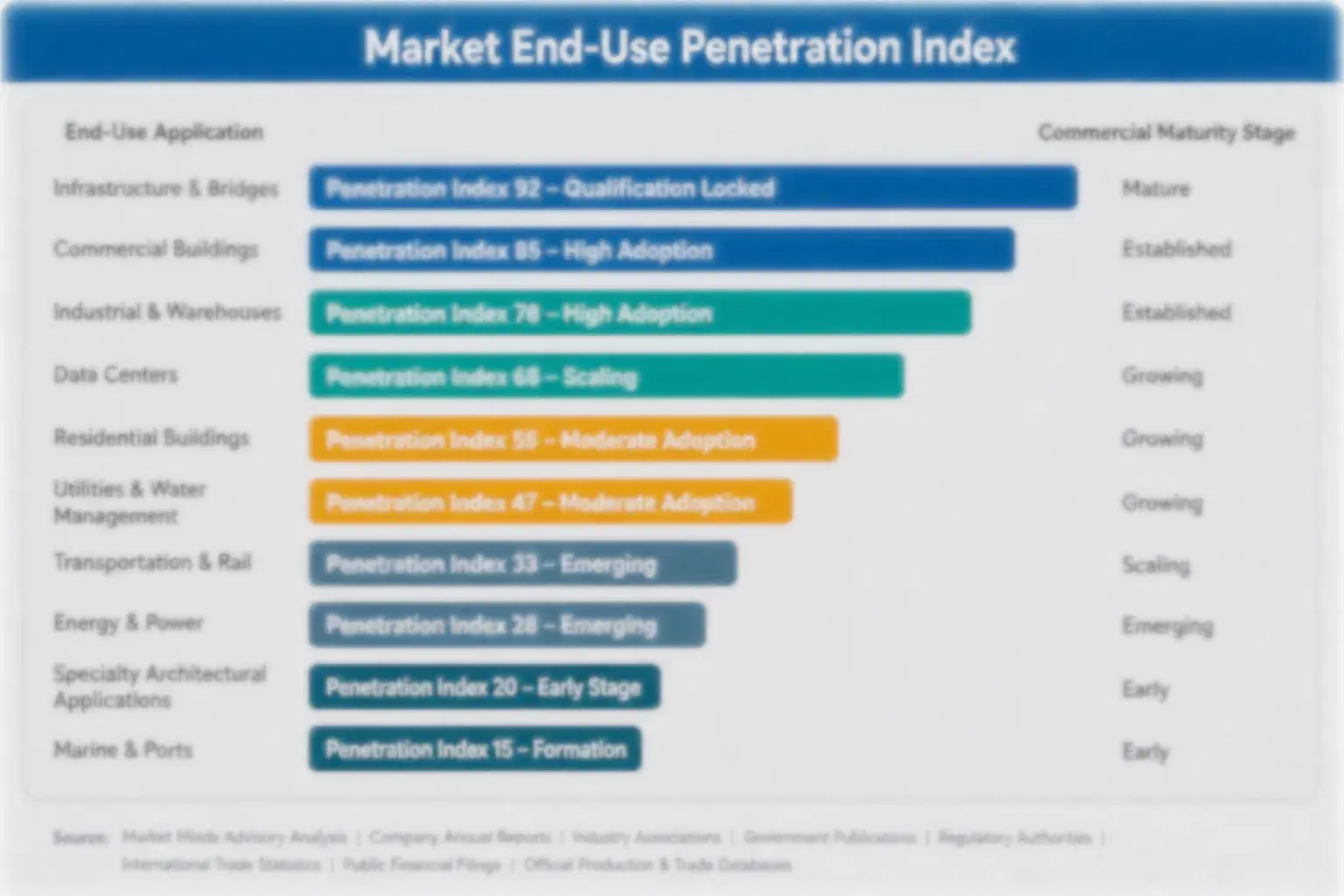
Volume Locked By Validation

Every unit a device manufacturer produces requires terminal processing before release, which ties sterilisation revenue directly to production volume with no purchasing decision in between. Roughly 72% of that volume runs through contract providers because permitted capacity is expensive to build and regulatorily hazardous to operate. The result is an annuity attached to somebody else's manufacturing schedule. Predictability of that kind is unusual in industrial services and sits entirely outside the provider's influence.
Stickiness is close to absolute once validation is complete. A product validated at a specific facility using a specific modality cannot move without revalidation taking around 26 months, so the provider holds that volume for the product's commercial life. That is the strongest switching cost in industrial services generally, and it explains why capacity availability rather than pricing decides which provider a manufacturer approaches when launching something new.

The decision has moved earlier and into different hands. Sterilisation modality is chosen during device development alongside materials and packaging, by regulatory and design engineers rather than by procurement or operations. A provider engaging at that stage is written into a filing for the product's life. A provider calling on manufacturing operations quotes for volume decided years earlier.
terminal-sterilization-market-end-use-penetration-index-1787689995776

Permits Decide This Industry

These are among the four positions where our research anticipates prominent divergence between winners and laggards over the coming forecast period. Each is grounded in the demand model, the regulatory perimeter, and the announced capacity pipeline.
01 / PERMITTED CAPACITY OWNERSHIP

Capital does not create capacity, permission does

Emissions regulation has removed ethylene oxide capacity across several jurisdictions while building replacement sites takes around four years and faces local opposition that technical controls do not resolve at all. Capital availability therefore does not translate into operating capacity anywhere in this industry. Operators who secured permits and built capacity ahead of scarcity now hold pricing power created entirely by regulation rather than by any commercial action, and permitting work remains the single most valuable and least contested investment available anywhere.
02 / DUAL VALIDATION SUPPORT

Give customers a second route in advance

Changing a device's sterilisation method requires material testing, dose validation and regulatory submission taking around 26 months, which means no capacity shortage can be solved by switching modality when it actually arrives. A provider funding dual validation during product development gives its customer genuine optionality and gives itself the ability to move volume between its own modalities when capacity tightens somewhere. Very few manufacturers currently validate to two separate methods, largely because nobody has yet made the commercial case to them properly.
03 / ISOTOPE INDEPENDENCE STRATEGY

Build X-ray instead of replacing gamma again

Gamma processing depends on cobalt-60 produced at roughly six reactor sites worldwide, several of them ageing and none existing primarily to serve the sterilisation industry at all. X-ray by contrast delivers comparable penetration from an electrical source that requires no isotope licensing, transport security or eventual disposal obligation whatsoever. Operators replacing ageing gamma installations with further gamma are committing long-lived capital against a supply chain they cannot influence in any way, while products already validated for gamma transfer to X-ray relatively easily.
04 / DEVELOPMENT STAGE ENGAGEMENT

The modality is chosen before manufacturing exists

Sterilisation modality is selected during device development alongside materials and packaging, by regulatory and design engineers rather than by the procurement or operations staff who later handle processing contracts. A provider engaged at that stage is written into the regulatory filing for the product's entire commercial life, which is the strongest switching cost available anywhere in industrial services. A provider calling on manufacturing operations instead is quoting for volume whose destination was settled years earlier by people it never met.

Engagement Snapshot From the Field

A live engagement with an industry participant carrying material or product regulatory and market exposure ahead of a defining policy shift, showing how our research translates into a defensible multi-year portfolio strategy.
MARKET MINDS ADVISORY · CLIENT ENGAGEMENT SUMMARY
Terminal Sterilization Producer Strategic Portfolio Review and Transition Roadmap 2026·Investment Scenario on Terminal Sterilization Exposure Evaluation 2025-26
CLIENT PROFILE
A contract sterilisation operator running eleven facilities across two continents, with reported revenue of 214 million dollars (client-reported, unverified by MMA). Roughly 58% of capacity was ethylene oxide and most of the remainder was ageing gamma requiring recharge within three years. Its commercial organisation called on manufacturing and procurement staff at customer sites and had no engagement with device development teams anywhere.
STRATEGIC CHALLENGE
Two ethylene oxide sites faced tightened emissions requirements with uncertain permitting outcomes, and gamma recharge capital was falling due simultaneously. Management planned to invest in emission controls at both sites and recharge the gamma installations. Nobody had modelled what happened if either permitting outcome went against the company. The base case was untested.
MMA APPROACH
MMA modelled revenue and capacity under three permitting scenarios rather than accepting continued operation as the base case, which management had assumed throughout. Thirteen expert interviews with device regulatory affairs staff, environmental specialists and customers established how modality decisions are actually taken and when. Cobalt supply commitments were assessed against reactor maintenance schedules independently.
KEY FINDINGS
  1. Under the adverse permitting scenario, roughly 41% of revenue was exposed at two sites with no internal alternative capacity available to absorb it at all.
  2. Customer modality decisions were made by regulatory and design engineers during development, and the company's commercial team had never contacted any of them.
  3. Gamma recharge capital would commit the company to isotope supply from ageing reactor sources for a further decade at considerable cost. Nobody had questioned that commitment.
  4. Building X-ray capacity modelled better returns than gamma recharge across every permitting scenario examined (client-reported, unverified by MMA). The comparison had never been run before.
CLIENT PROFILE
A contract sterilisation operator running eleven facilities across two continents, with reported revenue of 214 million dollars (client-reported, unverified by MMA). Roughly 58% of capacity was ethylene oxide and most of the remainder was ageing gamma requiring recharge within three years. Its commercial organisation called on manufacturing and procurement staff at customer sites and had no engagement with device development teams anywhere.
STRATEGIC CHALLENGE
Two ethylene oxide sites faced tightened emissions requirements with uncertain permitting outcomes, and gamma recharge capital was falling due simultaneously. Management planned to invest in emission controls at both sites and recharge the gamma installations. Nobody had modelled what happened if either permitting outcome went against the company. The base case was untested.
MMA APPROACH
MMA modelled revenue and capacity under three permitting scenarios rather than accepting continued operation as the base case, which management had assumed throughout. Thirteen expert interviews with device regulatory affairs staff, environmental specialists and customers established how modality decisions are actually taken and when. Cobalt supply commitments were assessed against reactor maintenance schedules independently.
KEY FINDINGS
  1. Under the adverse permitting scenario, roughly 41% of revenue was exposed at two sites with no internal alternative capacity available to absorb it at all.
  2. Customer modality decisions were made by regulatory and design engineers during development, and the company's commercial team had never contacted any of them.
  3. Gamma recharge capital would commit the company to isotope supply from ageing reactor sources for a further decade at considerable cost. Nobody had questioned that commitment.
  4. Building X-ray capacity modelled better returns than gamma recharge across every permitting scenario examined (client-reported, unverified by MMA). The comparison had never been run before.
RECOMMENDED STRATEGY
Phase 1: Phase one: redirect gamma recharge capital toward X-ray capacity, which serves the same customers with far less supply chain dependency attached. Phase 2: Phase two: build engagement with customer regulatory and design teams, where modality is selected years before any processing contract exists. Phase 3: Phase three: pursue dual validation support for major customers, creating internal routing flexibility if either permitting outcome goes badly. Flexibility is the objective.
OUTCOME
Gamma recharge was deferred at two sites and X-ray capacity approved instead. Development stage engagement produced modality specification at three customers within a year (client-reported, unverified by MMA). One ethylene oxide permitting outcome went against the company as modelled, and the prepared alternative capacity absorbed a meaningful share of the affected volume.

Frequently Asked Questions

Foundational context covering the market sizes, CAGR, scope, country, region and competition that inform every finding below. This section is provided to cover basics and most often pre-purchase conversations, answered from the MMA Primary Research Dataset.

What is the current size of the Terminal Sterilization Market?

The market was worth 8.4 billion dollars in 2025, covering ethylene oxide, gamma, electron beam, X-ray, steam and novel chemistry processing and equipment. It reaches 9.04 billion dollars in 2026.

How large will the Terminal Sterilization Market be by 2036?

MMA forecasts 18.80 billion dollars by 2036, an increase of 9.76 billion dollars over the 2026 base. That represents an expansion multiple of 2.08 times across the forecast period.

What is the CAGR for the Terminal Sterilization Market 2026 to 2036?

The base case compounds at 7.6% annually. MMA's bull case reaches 8.8% if further ethylene oxide restrictions force widespread revalidation, while the bear case sits at 6.4% on in-house capacity investment.

Which segment is growing fastest?

X-ray irradiation, at 11.4%, half again the market rate of 7.6%. It delivers penetration approaching gamma from an electrical source needing no cobalt supply at all.

Who are the major companies in the Terminal Sterilization Market?

Sotera Health, Steris, Getinge, Ionisos and Midwest Sterilization lead on disclosed sterilisation services and equipment revenue. E-BEAM Services, Fedegari, Shinva and BGS hold strong regional or modality positions.

Which country is growing fastest?

India at 10.0%, driven by device and pharmaceutical manufacturing expansion alongside export requirements demanding terminal processing to international standards. China follows on similar manufacturing growth.

Report Segmentation Architecture

The full report scope spans multiple orthogonal segmentation dimensions, with cross-tabulated demand data provided for each dimension pair. Coverage extends further to regional breakdowns, trend trajectories, and the competitive detail needed to support segment-level decision-making.

By Sterilisation Modality

  • Ethylene Oxide Processing
  • Gamma Irradiation
  • Electron Beam Processing
  • X-Ray Irradiation
  • Steam and Moist Heat Sterilization
  • Vaporised Hydrogen Peroxide and Novel Chemistries

By End-Use Industry

  • Single Use Medical Devices
  • Pharmaceutical and Combination Products
  • Laboratory Consumables
  • Implantable Devices and Biologics
  • Food and Agricultural Products
  • Packaging and Materials Processing

By Commercial Dimension

  • Contract Processing Service
  • In-House Equipment Purchase
  • Long Term Capacity Agreement
  • Validation Support Contract
  • Spot Processing Arrangement
  • Development Stage Specification

By Region

  • North America
  • Western Europe
  • East Asia
  • South Asia and Pacific
  • Latin America
  • Middle East and Africa
  • Eastern Europe

Scope, Methodology, and Coverage

Every figure in this report is reproducible from documented input assumptions. The scope below maps the historical period, the forecast horizon, the segmentation dimensions, and the countries covered, alongside the underlying primary and qualitative methodology.
Historical Period
2020 to 2025
Forecast Period
2026 to 2036
Base Year
2025 (USD billions; MMA Primary Research Dataset, August 2026)
Market Definition
Scope covers terminal sterilization of products within their final packaging, delivered through contract service providers and through equipment supplied for manufacturer in-house processing, spanning ethylene oxide processing, gamma irradiation using cobalt-60, electron beam processing, X-ray irradiation, steam and moist heat sterilization, and vaporised hydrogen peroxide, nitrogen dioxide and comparable novel low temperature chemistries. Aseptic processing and filling performed without terminal sterilization, hospital reprocessing of reusable instruments, high level disinfection, liquid disinfectants and cleaning chemistries, and standalone sterility testing or biological indicator supply are excluded. Sterile barrier packaging materials and container manufacture fall outside the boundary.
Quantitative Units
USD billions (current prices); units processed; pallets sterilised; permitted facilities operating; validation programmes completed
Segmentation Dimensions
By Sterilisation Modality; By End-Use Industry; By Commercial Dimension; By Region
Regions Covered
North America, Western Europe, East Asia, South Asia and Pacific, Latin America, Middle East and Africa, Eastern Europe
Countries Covered
USA, China, Germany, Japan, India, Mexico, France, Italy, South Korea, Malaysia, Brazil, Poland, Canada, Ireland, Saudi Arabia
Key Companies Profiled
Sotera Health, Steris, Getinge, Ionisos, Midwest Sterilization, E-BEAM Services, BGS Beta-Gamma-Service, Gamma-Service Medical, Andersen Sterilizers, Belimed, Tuttnauer, MMM Group, Shinva Medical Instrument, Fedegari Group, Cosmed Group, Rad Source Technologies, IBA Industrial, ScandiNova Systems, Bioster, Sychem
Quantitative Methodology
Primary survey, n=3,800 respondents, Q4 2025, six countries; demand-side model with trade association cross-validation
Qualitative Methodology
47 expert interviews, Q4 2025; applied to validate demand model assumptions, identify emerging dynamics, and assess competitive positioning
Report Format
PDF and XLSX data workbook (Word format preview document)
Publisher
Market Minds Advisory
Report Code
MMA-2026-MED-155
Published
August 2026
Contact
sales@marketmindsadvisory.com | www.marketmindsadvisory.com

Purchase the full Terminal Sterilization Market Report (2026 to 2036).

The full report runs to 175 pages and covers all six sterilisation modality segments, seven regions and 20 profiled companies in detail. It includes the complete segment CAGR set, regional capacity and device manufacturing data, and permitting environment analysis across fifteen national markets. Company profiles carry evaluation on disclosed sterilisation services and equipment revenue, with moat and risk assessment for the top five operators. The competitive section extends to 15 tracked corporate and regulatory developments across 2024 and 2025, each with commercial interpretation. Primary research inputs include a quantitative survey of 3,800 respondents and 47 expert interviews conducted in Q4 2025.
Six sterilisation modality segments with individual CAGR forecasts
Seven regional markets with capacity and manufacturing data
Twenty company profiles on consistent revenue evaluation basis
Fifteen tracked corporate and regulatory developments with interpretation notes
Permitting environment analysis across fifteen national markets
Revalidation timeline modelling by modality transition pathway

Built For The People Who Decide

From boardroom strategy to bench-side execution, this report is read cover-to-cover by leaders shaping the next decade of their industry, turning demand scenarios, market dynamics and valuation benchmarks into decisions.
CXOs/ Presidents/ VPs/ Managers
M&A and Corporate Development
Strategy Teams and R&D Heads
Procurement and Product Directors
Regulatory and Compliance Leaders
Investor Relations and Equity Analysts