Market Minds Advisory
Soy Protein Isolate Market

Soy Protein Isolate Market: Soy Protein Isolate Market. Meat Analogue Demand, Non-GMO Supply and Functional Grade Competition

Soy protein isolate holds the deepest functional track record in plant protein, yet non-GMO sourcing, pea competition and soybean crush margins now decide which producers keep contracts in meat analogues, sports nutrition and processed meat.

Lead Analyst

Published

September 2026

Make Smarter Decisions with Customized Research Insights

Request a free sample report and evaluate market opportunities, growth trends, and competitive dynamics relevant to your business needs.

2025 MARKET VALUE$5.2BMarket Size 2025
2036 FORECAST VALUE$9.4BBase Case , 2026 to 2036
CAGR 2026 TO 20365.5 %Bull 6.8% / Bear 4.2%
INCREMENTAL OPPORTUNITY$3.9BNet 10- year value creation
EXPANSION MULTIPLE1.71x2036 value over 2026 base
Strategic Levers
M&A Pipeline
Regional Outlook
Country Rankings
Competitive Intelligence
Segmental Deep-dive
Call-Us : 91 93563 13602

Executive Snapshot and Market Trajectory.

Soy protein isolate, at 90% protein or more, remains the benchmark for gelling, emulsifying and water binding in processed foods. Pea and other proteins now attack it on allergen and label grounds, yet no rival matches its price-performance across meat, dairy and nutrition formats today.
Meat analogue makers pull the fastest growth because isolate binds and texturises plant-based patties, nuggets and deli slices, while processed meat brine injection and sports nutrition supply steady volume. East Asia holds the largest share, since China and Japan combine soybean crushing, isolate plants and dense processed food output. Soybean prices and crush margins set producer profit, and gross margins usually run 18% to 32%. Gel strength decides qualification.
Five suppliers hold about 48% of value, led by ADM, Cargill, IFF, Fuji Oil and Shandong Yuwang, so scale in crushing decides cost. Non-GMO and identity-preserved grades earn premiums, and European labelling, United States soy checkoff programmes and Chinese import rules shape trade. Buyers audit protein content, sodium, and traceability for every batch of contracted supply from each plant. Suppliers also face pea competition and rising audit costs from large buyers. Compliance follows.
Market Definition
The market covers global sales of soy protein isolate containing at least 90% protein on a dry basis, produced from defatted soy flakes and sold to food, beverage, nutrition and animal-adjacent food makers. It excludes soy protein concentrate, soy flour, textured soy protein, soy milk, tofu and other whole-soy foods, and it excludes pea, wheat and other plant protein isolates.
Base Year Value
$5.2B in 2025 (MMA Primary Research Dataset, September 2026)
Forecast Period
2026 to 2036, eleven discrete annual values
CAGR
5.5% base case. Bull 6.8%. Bear 4.2%.
Fastest Growth Segment
Soy Isolates for Meat Analogues: 7.7% CAGR
Fastest Growth Country
China: 7.0% CAGR
Fastest Growth Region
South Asia and Pacific: 7.5% CAGR
Largest Region
East Asia: 34% of 2025 global value
Market Leaders
ADM, Cargill, IFF, Fuji Oil, Shandong Yuwang. Source: MMA Analysis, company annual reports.
Primary Survey
n=3,800 procurement and R&D decision-makers, Q4 2025, six countries
Methodology
Demand-side build-up, cross-validated against public data, 47 expert interviews

Soy Protein Isolate Market Forecast Scenarios

soy-protein-isolate-market-size-forecast-scenario-1789969841042
From 2020 to 2025 the market grew at about 4.7% a year. Meat analogue launches lifted volume in 2020 and 2021, then plant-based demand cooled and pea protein took share in premium lines. Soybean price spikes in 2021 and 2022 pushed isolate prices up, and Chinese and Indian capacity additions eased supply by 2024. Asian demand offset weaker European volumes during the period.
The base case of 5.5% rests on three named mechanisms. Processed food makers keep isolate for gel strength in sausages and analogues, where substitutes need blends. Chinese and Southeast Asian plant capacity lowers cost and widens access. Sports and clinical nutrition brands raise protein per serving, which lifts isolate volume per unit. Each mechanism is already visible in contract volumes and customer approvals today. Together they support growth above 4% even if analogue sales stall.
The bull case reaches 6.8% if meat analogue sales recover and Asian processed meat volumes expand faster than expected. The bear case falls to 4.2% if pea and fava isolates reach price parity and European buyers cut soy over allergen and deforestation rules. Both cases assume stable soybean supply. Pricing power differs sharply by grade tier.

Crush Margins, Non-GMO Premiums and Functional Grade Depth Set Soy Isolate Returns

Soy protein isolate is made by extracting protein from defatted soy flakes, precipitating it at its isoelectric point, neutralising and spray drying it. The result holds 90% protein or more, with a neutral taste and strong functionality. Few plant proteins match its gelling and emulsifying performance, which is why it stays in sausages, analogues and nutrition powders. Its cost per gram of protein stays competitive against pea and rice isolates.
MARKET CONCENTRATION48% CR5Top five suppliers hold nearly half of category sales
ISOLATE PROTEIN CONTENT90-92%Typical dry basis protein level in commercial isolate grades
SOYBEAN COST SHARE45% of COGSSoy flakes within total production cost of isolate makers
TOP PRODUCING COUNTRYChina 38%Largest national producer of isolate by volume worldwide
CAPACITY UTILISATION74%Average operating rate across global isolate plants in recent years
NON-GMO PREMIUM12-20%Price uplift for identity-preserved grades over standard product
Value concentrates in three places. Functional grades for processed meat and analogues carry the largest volume. Dispersible and high-solubility grades for beverages and sports nutrition earn higher prices. Identity-preserved and non-GMO grades add premiums of 12% to 20%, and each needs segregated supply, audits and separate plant runs, which raises cost and favours large crushers. Analogue-specific blends are the newest and fastest growing pool.
Supply follows soybean crushing. China, the United States, Brazil and Japan host most capacity, and producers buy flakes from integrated crushers or open markets. Plants run at about 74% utilisation, buyers hold one to two months of stock, and contracts renew annually. Qualification of a new supplier takes six to 12 months of trials. Chinese producers ship large volumes to Asian buyers.
"Soy isolate is not fashionable, and that is its strength. Buyers know exactly what it does in a sausage or a shake, and nothing else at this price does it as reliably. The risk is not a better protein; it is a bored procurement team asked to cut soy for label reasons."
Senior Analyst, Plant Protein Ingredients Practice · MMA Soy Protein Isolate Practice · September 2026

Market Trends

Meat Analogue Makers Blend Soy Isolate With Pea for Texture

Plant-based patties, nuggets and deli slices need gel strength and water binding that pea alone rarely delivers, so formulators blend soy isolate at 20% to 50% of protein content with pea, wheat or fava. Soy Isolates for Meat Analogues grow about 7.7% a year, and gross margins run 22% to 34%. The trend needs consistent gel strength, low off-flavour and clean labels, and it favours producers with application labs and technical support, while allergen labelling and consumer suspicion of ultra-processed foods cap growth in Europe. Brands reformulate with shorter ingredient lists.
Market Impact: Asia processes 40+ million tonnes

Chinese and Southeast Asian Isolate Capacity Lowers Global Cost

Shandong Yuwang, Yuxin and other Chinese producers added isolate lines during the 2020s, and Southeast Asian processors followed, using domestic crushing and lower plant cost. Added capacity of about 200,000 tonnes a year has pressed global prices down 6% to 10% in commodity grades. The trend benefits price-sensitive buyers in processed meat, and it forces Western producers toward specialty grades, while export quality, traceability and tariff exposure decide how far Asian suppliers can reach outside their home markets. Western producers respond with specialty grades, while Asian exporters seek approvals in Europe and the Americas.
Market Impact: servings now carry 20-30 grams protein

Market Opportunities and Growth Drivers

Processed Meat and Protein Fortification Sustain Isolate Volumes in Asia

Isolate binds water and fat in sausages, ham and surimi, and Asian processors add it to cut cost and raise protein content. China and Japan produce large volumes of processed meat and fish paste, while India and Southeast Asia expand packaged food output. The driver rewards producers with local plants and technical service, and it sustains volume even when analogue demand softens, while buyers qualify two or three suppliers per plant and value consistent gel strength across lots and stable delivery from each producer site. Demand also rises with urbanisation and packaged food consumption.
Market Impact: pea isolates priced 10-25% higher

Sports and Clinical Formulas Raise Protein Per Serving

Protein powders, ready-to-drink shakes and enteral formulas use isolate for its 90% protein content, complete amino acid profile and low fat. Brands raise protein per serving to 20 to 30 grams, and ageing populations increase clinical nutrition demand. The driver rewards dispersible grades with low sodium and clean flavour, and it supports price premiums of 10% to 15%, while whey price swings periodically push blended plant and dairy formulas toward more isolate use in shakes and bars. Brands also add isolate to bars, meal replacements and elderly nutrition products, widening the buyer base beyond athletes.
Market Impact: soy flakes cost 45% of COGS

Market Restraints and Challenges

Pea and Fava Isolates Win Allergen-Free and Non-Soy Label Positions

Soy is a major allergen in the United States and European Union, and many brands market soy-free products. Pea, fava and other isolates take those positions at prices 10% to 25% above soy. The root cause is consumer perception and label rules, not performance. Soy isolate loses some premium lines, and volume growth in Europe slows. Producers respond with non-GMO and identity-preserved grades, sustainability data on deforestation-free supply and blends with pea, though allergen labels stay a barrier for children and clinical products. Labelling rules in Europe reinforce that positioning across supermarket private labels.
Market Impact: analogue isolates grow 7.7% yearly

Soybean Price Swings and Crush Margin Volatility Squeeze Isolate Profits

Soy flakes make up about 45% of production cost, and soybean prices moved by 30% to 40% between 2020 and 2022. The root cause is weather, biofuel demand and trade policy that affect the whole soybean complex. Producers absorb increases because annual contracts reprice slowly, and margins compress by three to six points in spike years. Producers respond with flake supply contracts, hedging and price formulas linked to soybean indices, though smaller plants lack scale to negotiate favourable terms. Energy and chemical costs add to the pressure when gas prices rise alongside beans, particularly in Europe.
Market Impact: Asian lines add 200,000 tonnes yearly
3 additional market trends, 2 additional growth drivers, and 3 additional restraints and challenges are covered in the full report. Contact sales@marketmindsadvisory.com to access the complete intelligence.

Segment CAGR and Growth Architecture

The global soy protein isolate market is segmented by end-use application, which shows where functional performance and price tolerance differ. Five segments cover meat analogues, sports and clinical nutrition, processed meat, dairy alternatives and beverages, and bakery and snacks. Meat analogues and sports nutrition grow fastest, while processed meat still carries the largest volume in Asia.
soy-protein-isolate-market-market-share-analysis-1789969841308

Soy Isolates for Meat Analogues

Soy Isolates for Meat Analogues is the fastest-growing segment at 7.7% a year, about 1.40 times the overall market rate. Formulators use isolate for gel strength, water binding and texture in patties, nuggets and deli slices, often blended with pea, wheat or fava. Gross margins of 22% to 34% reward producers with application labs, low off-flavour grades and consistent lots. Growth depends on analogue sales recovering after the 2022 slowdown and on brands accepting soy on labels, while European allergen positioning and shorter ingredient lists limit gains. Asian analogue launches and hybrid meat products add volume, and suppliers that offer ready blends win large contracts. Hybrid meat and plant products add further volume too.
CAGR 7.7%

Soy Isolates for Sports and Clinical Nutrition

Soy Isolates for Sports and Clinical Nutrition grows at 6.6% a year, about 1.20 times the overall market rate, because protein powders, ready-to-drink shakes and enteral formulas need 90% protein, complete amino acids and low fat. Gross margins of 20% to 30% support investment in dispersible grades with low sodium and clean flavour. Ageing populations lift clinical demand, and brands raise protein per serving to 20 grams or more. Whey price swings push some formulas toward plant blends, while pea competition and allergen labels restrain gains in premium lines. Suppliers with certified quality systems, batch traceability and technical support hold the strongest positions. Asian sports nutrition brands add fresh regional volume growth.
CAGR 6.6%
Full segment breakdown across 5 segments available in the complete report.

Regional Architecture and Country Demand Map

East Asia leads at 34% because China and Japan combine soybean crushing, isolate plants and dense processed food output, with North America at 27% on United States crushers. South Asia and Pacific grows fastest. Western Europe sits below its band on pea competition and allergen labels.

North America

North America holds 27% share, inside its band, with growth at the global rate of 5.5%. ADM, Cargill and IFF, which absorbed DuPont's Solae business, run isolate plants close to United States soybean supply, and processed meat, sports nutrition and analogue brands buy locally. The United States soy checkoff programme funds application research, and FDA labelling rules make soy an allergen declaration. Pea competition limits growth in premium lines, but sports nutrition and clinical formulas hold volume. Canada adds non-GMO supply, and Mexico is counted in Latin America. Buyers value domestic supply, audit records and short lead times. Contract lengths run one to two years and renewals follow annual price reviews.
Share: 27% | CAGR: 5.5% (2026 to 2036)

Western Europe

Western Europe holds 16% share, below its band, which is justified because pea, fava and rapeseed proteins have taken non-soy label positions, soy allergen rules are strict and deforestation-free supply requirements raise cost. Growth trails the global rate at 4.0%. Because North America and East Asia take the top two slots, no separate commercial case is needed for Western Europe, but it remains the largest premium market for non-GMO and identity-preserved grades. Fuji Oil's Belgian site, Solae legacy plants in Denmark and Cargill's Dutch operations serve processed meat and dairy alternatives. Sustainability data decides who stays qualified. Retailers such as German discounters also push suppliers toward verified sustainability data and shorter ingredient lists.
Share: 16% | CAGR: 4.0% (2026 to 2036)
Regional intelligence for 5 additional markets available in the complete report: East Asia, South Asia and Pacific, Latin America, Middle East and Africa, Eastern Europe. Contact sales@marketmindsadvisory.com.
soy-protein-isolate-market-country-cagr-analysis-1789969841617

Four Margin Routes for Soy Isolate Producers

Margin in soy isolate comes from grade mix, crush integration, application support and identity-preserved supply rather than volume alone. The routes below apply to crushers, specialty ingredient groups and Asian producers, and each can start inside one planning cycle, with clear measures in gross margin points, cost per tonne and contract length. Payback usually runs two to three years.

Shifting Volume Toward Dispersible and High-Gel Functional Grades

Commodity isolate faces price pressure from Asian capacity, so producers that shift 20% to 30% of output to dispersible, high-solubility and high-gel grades lift blended gross margin by three to five points. Grades need spray drying changes, tighter specifications and application data, with capital of $8 million to $25 million per line. Producers should start with the two grades already requested by beverage and analogue buyers, publish gel strength and solubility data and offer trial lots, since formulators qualify few suppliers and rarely switch once a grade works in their recipe.
Market Impact: grade shift lifts gross margin by 3-5 points

Building Identity-Preserved and Non-GMO Supply Chains With Farmer Contracts

Non-GMO and deforestation-free isolate earns premiums of 12% to 20%, but needs segregated soybeans, audits and separate plant runs. Producers that sign farmer and crusher contracts, run dedicated campaigns and certify each lot capture premium volume worth 15% to 25% of output. Set-up cost runs $3 million to $10 million per plant. Producers should begin with European and Japanese customers who already require documentation, since buyers rarely accept partial traceability and audit failures remove a supplier from the approved list for a full contract cycle. Certification also protects supply during regional shortages.
Market Impact: non-GMO grades earn 12-20% price premiums over standard product

Securing Soybean Flake Supply Through Crush Integration and Indexed Pricing

Soy flakes account for about 45% of cost, so producers that integrate with crushers or sign flake contracts with price formulas cut margin volatility by 30% to 50%. Integration protects supply in tight years and lets producers capture meal and oil value. Producers should review contract terms yearly, match hedges to customer contract length and pass through index changes with a lag of one to two quarters, since smaller stand-alone plants lack the scale to negotiate and often absorb three to six points of margin in spike years. Indexation also improves customer planning.
Market Impact: flake contracts cut annual margin volatility by 30-50%

Offering Application Support and Blend Formulations for Analogue Makers

Analogue makers choose ingredients they can test in their own recipes, so producers that build application labs, publish gel and texture data and sell ready blends with pea or wheat win launches worth 8% to 15% of new product volume. Labs cost $1 million to $3 million. Producers should start with patties and deli slices, share sensory panels with technical teams and offer trial lots, since formulators qualify few suppliers and rarely switch after launch and faster launches raise pull-through volume and customer loyalty. Labs also shorten sampling cycles for new customers.
Market Impact: application labs win launches worth 8-15% of volume

Who Controls the Margin Pool

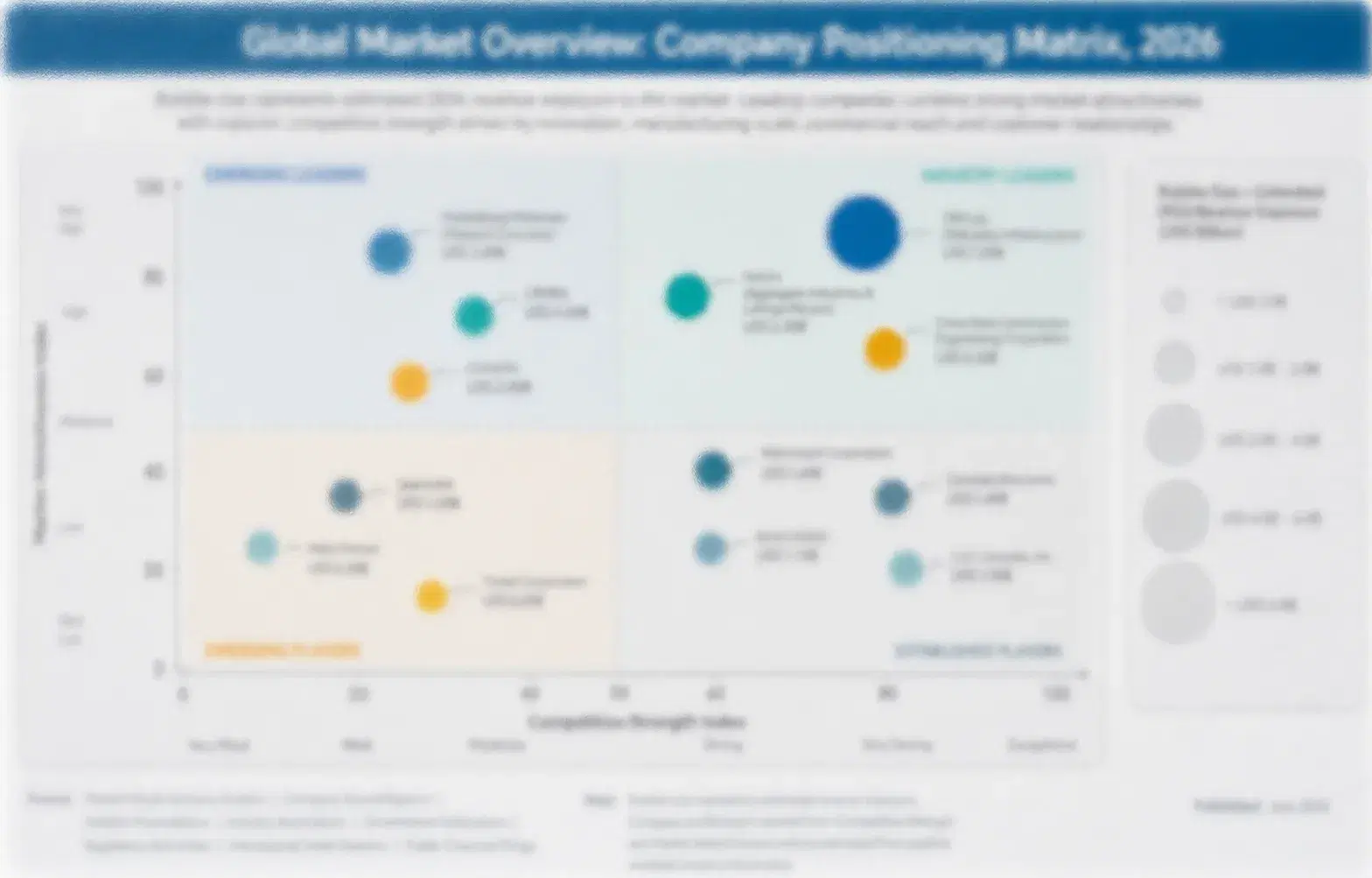
The global soy protein isolate market is moderately concentrated, with a CR5 of 48%, because crushers with integrated flake supply hold cost advantages while regional producers hold local accounts. This assessment measures participants on estimated soy isolate production capacity, held constant across all players. ADM, Cargill and IFF lead in the Americas, Fuji Oil in Japan and Shandong Yuwang in China. The gap between the leader and the fifth player is wide, since scale in crushing and drying decides cost per tonne.
Competition runs on four dimensions today: cost per tonne of protein, grade breadth, non-GMO and identity-preserved supply, and technical service. Large groups win on scale and global reach, Japanese producers win on specialty grades, and Chinese producers win on price. Buyers compare gel strength, solubility and sodium level, and a failed audit or delivery gap can move a contract within one annual cycle.

Emerging pressure comes from Chinese exporters, from pea and fava isolate producers and from crushers that add food-grade lines. Rankings shift where a producer wins a large analogue or nutrition contract, adds identity-preserved capacity or closes a plant, and consolidation continues among smaller regional producers as crush margins and utilisation stay tight.
soy-protein-isolate-market-company-positioning-matrix-1789969841890

Competitive Moat and Risk Dimensions

ADM

Moat: Crush Scale and Flake Integration

ADM, the American agricultural processor, crushes soybeans at very large scale and supplies flakes to its own protein plants, which lowers input cost and secures supply in tight years. Its global sales network, application labs and identity-preserved programmes let it serve meat, dairy alternative and nutrition customers with consistent grades and documents.
ADM

Risk: Commodity Exposure and Focus

ADM depends heavily on soybean crush margins, so isolate profit moves with oilseed cycles. Specialty growth competes for capital with other nutrition businesses, and pea and fava suppliers target its premium accounts, while Chinese exports pressure commodity grades in Asian markets. Its pricing power is limited in commodity grades.
CARGILL

Moat: Global Sourcing and Customer Reach

Cargill, the privately held American food group, sources soybeans across North and South America and sells isolate through long-standing relationships with food manufacturers worldwide. Its scale in logistics, quality systems and application support gives it stability in contracts, and its private ownership lets it invest through cycles without quarterly pressure on plant decisions.
CARGILL

Risk: Portfolio Priorities and Pea Competition

Cargill invests across pea, rice and other plant proteins, so soy isolate competes internally for capital. Its exposure to allergen-sensitive customers is real, and Asian producers price commodity grades aggressively, while transparency limits under private ownership make investment plans difficult for outsiders to assess. Investors see limited disclosure.

Players Tracked

Prominent Players

ADM
Cargill
IFF
Fuji Oil
Shandong Yuwang

Other Key Players

Yuxin Group
Wilmar International
Burcon NutraScience
Kerry Group
Ingredion
Roquette
CHS Inc
Glanbia Nutritionals
Sotexpro
Sonic Biochem
Hung Yang Foods
Bremil Group
Gushen Group
Shansong Biological
Cosucra

Recent Developments

JANUARY 2026

Shandong Yuwang Announces Isolate Capacity Expansion Targeting Export Markets in Southeast Asia

Shandong Yuwang announced an isolate capacity expansion targeting export markets in Southeast Asia, according to company communications. It is organic capacity expansion, not an acquisition, and it tests export pricing power. The plan covers spray drying lines and quality systems. Investment terms were not disclosed.
Signal: Confirms Chinese producers are pushing export volumes because domestic capacity is growing faster than local demand.
FEBRUARY 2026

ADM Signs Supply Agreement for Non-GMO Soy Isolate With European Meat Alternative Manufacturer

ADM signed a supply agreement for non-GMO soy isolate with a European meat alternative manufacturer, according to company communications. It is a supply agreement, not an acquisition, and it tests premium demand. The agreement covers annual volumes, audits and price formulas. Financial terms were not disclosed.
Signal: Shows identity-preserved soy still wins European contracts where documentation and functionality outweigh allergen concerns for brands.
MARCH 2026

Fuji Oil Completes Specialty Soy Protein Line Upgrade at Japanese Plant for Beverage Customers

Fuji Oil completed a specialty soy protein line upgrade at a Japanese plant for beverage customers, according to company communications. It is an organic upgrade, not an acquisition, and it tests premium grade demand. The upgrade covers dispersibility and sodium control. Investment terms were not disclosed.
Signal: Indicates Japanese producers are defending margin through specialty grades because commodity pricing is under Chinese pressure.

Soybean Flakes Drive Isolate Cost

Defatted soy flakes account for roughly 45% of production cost, energy for drying and extraction about 18%, chemicals and water treatment about 8%, packaging and freight about 9%, and labour and overheads about 20%. Flakes come from crushers in the United States, Brazil, Argentina and China, and identity-preserved beans come from segregated farms in the United States, Canada and Brazil.
The clearest recent shock came in 2021 and 2022. USDA Foreign Agricultural Service oilseeds reports show soybean prices rising roughly 30% to 40% on drought in South America and tight stocks, while EIA data show natural gas costs jumping in Europe after the war in Ukraine. Isolate producers absorbed part of the increase, and annual contracts repriced only after two to three quarters, compressing margins.

The disadvantage falls on stand-alone plants without integrated flake supply or energy contracts, because they cannot pass through swings on annual food contracts. Exposure varies by geography: European plants face gas cost, Asian plants face imported bean cost and tariffs, and American crushers hold the natural hedge of meal and oil revenue. Larger groups negotiate crop and energy terms in advance.
soy-protein-isolate-market-cost-volatility-analysis-1789969842180

Crush Integration and Indexed Flake Contracts

Producers integrate with crushers or sign flake contracts with price formulas linked to soybean indices. These steps cut margin swings by 30% to 50%. The main challenge is contract volume commitment when demand slows, so producers set flexible ranges and review terms yearly. Smaller plants often join buying groups to reach scale. Reviews occur yearly.

Energy Efficiency and Heat Recovery

Producers invest in heat recovery, better spray drying and lower-cost power to reduce energy per tonne by 10% to 20%. The main challenge is capital cost and downtime for retrofits, so larger producers lead while smaller plants phase upgrades over several years. Payback usually arrives within four years. Audits confirm savings each year after installation.

Formula Pricing and Pass-Through Clauses

Producers add price formulas that link isolate prices to soybean and energy indices with a lag of one to two quarters. These clauses recover 60% to 80% of cost spikes. The main challenge is buyer resistance in competitive tenders, so producers offer volume discounts in return for indexed terms. Contracts are reviewed every half year.

Portfolio Architecture for Margin Defence

Margins run from thin returns on commodity isolate sold into processed meat to strong returns on dispersible, identity-preserved and next-generation grades sold with technical support. Three tiers separate volume products, premium certified lines and sustainability-led solutions, and each draws on different crush access, plant configuration and customer relationships in a concentrated market with visible Asian price pressure. Margin gaps between tiers run to 12 points.
The tension between volume and premium is sharp. Commodity grades fill processed meat and bakery orders at low prices and face constant Chinese competition, while premium grades earn higher margins on smaller volumes and depend on qualification, documentation and application data. Producers that run only volume suffer when soybean costs spike, while premium-only producers struggle to fill plants. Mix management decides which risk dominates in each year.

High-value pools concentrate in dispersible grades for nutrition and beverages and in identity-preserved supply for European and Japanese buyers. They gather where customers pay for consistency, documentation and low sodium, not for protein content alone. Analogue-specific blends add a growing pool, and strong producers hold more than one, though each needs different plant settings.

Volume / Commodity-Adjacent

Standard functional isolate for processed meat, bakery and noodle makers, sold on price per tonne under annual contracts. Buyers focus on gel strength and cost, technical differentiation is limited, and Asian producers set the price floor.
Gross Margin: 14%-24%

Premium / Certified

Dispersible, high-solubility and low-sodium isolate with certified specifications, sold to beverage, sports nutrition and clinical brands. Buyers value batch consistency, audit records and technical support, and contracts run for one to two years.
Gross Margin: 22%-34%

Sustainability / Regulatory / Next-Generation

Non-GMO, deforestation-free and analogue-specific isolate with traceability, life cycle data and application support, sold to leading brands. Contracts run for several years and depend on documentation, functionality and secure identity-preserved supply.
Gross Margin: 26%-38%
soy-protein-isolate-market-portfolio-architecture-1789969842508

High-value Sub-segments and Strategic Watch-out

Soy Isolates for Meat Analogues

Meat analogue isolate combines the fastest growth with firm pricing, since brands accept gross margins of 22% to 34% for gel strength and texture. Application labs, low off-flavour grades and ready blends form the entry barrier, and producers that win reformulation slots hold volume for years.
Gross Margin: 22%-34%

Soy Isolates for Sports and Clinical Nutrition

Sports and clinical nutrition isolate delivers moderate growth with strong pricing, since brands accept gross margins of 20% to 30% for dispersible, low-sodium grades. Certified quality systems, batch traceability and technical support limit competition, though pea and whey substitution requires constant grade improvement. Prices stay firm.
Gross Margin: 20%-30%

Soy Isolates for Processed Meat

Processed meat isolate is the volume core, with value growing about 4.5% a year. Cost per tonne, delivery reliability and gel strength decide profit, and Asian and American producers hold most volume. Customers renew contracts yearly at prices linked to soybean indices. Plant utilisation stays critical.
Gross Margin: 14%-22%

Soy Isolates for Bakery and Snacks

Bakery and snack isolate is the strategic watch-out, since growth of about 4.0% a year trails the market, price competition is intense and wheat and pea proteins substitute easily. Producers should manage the line selectively and steer investment toward analogue and nutrition grades with stronger contracts.
Gross Margin: 12%-20%

Why Food Makers Rarely Switch Isolates

Soy isolate demand behaves like an annuity attached to recipes, plant settings and label claims. Once a food maker qualifies an isolate through gel, solubility and taste trials, reorders follow every month, and switching means new trials, process changes and sometimes new label copy. Buyers set annual volume plans around production schedules, so suppliers with consistent lots and reliable delivery earn steady volume. Trust, once earned, takes years to lose.
Adoption stickiness differs by end-use vertical. Processed meat and analogue makers are the deepest, since gel strength and water binding are central to product performance and reformulation is costly. Sports and clinical nutrition buyers are moderately sticky, driven by taste and protein labels. Bakery and snack buyers are more fluid, changing isolate when a cheaper grade or concentrate appears, though qualified suppliers with proven quality hold contracts for several years.

Buyer profiles are shifting between generations. Older purchasing teams bought isolate by protein content and price, while newer teams ask for allergen status, non-GMO documents and carbon footprint per tonne. Retailers and regulators add a third group that sets label expectations. Suppliers that publish traceability and life cycle data win newer buyers.
soy-protein-isolate-market-end-use-penetration-index-1789969842824

MMA Verdict on Soy Isolate Strategy

These are among the four positions where our research anticipates prominent divergence between winners and laggards over the coming forecast period. Each is grounded in the demand model, the regulatory perimeter, and the announced capacity pipeline.
01 / FUNCTIONAL GRADE MIX

Shift Volume to Dispersible and High-Gel Grades Before Commodity Prices Erode Margin

Soy Isolates for Meat Analogues grow at 7.7% a year, about 1.40 times the overall market rate, and premium grades earn stronger margins than commodity product. Producers should shift 20% to 30% of output to dispersible and high-gel grades, investing $8 million to $25 million per line and lifting blended margin by three to five points. Those that delay will lose accounts to Asian price competition over the next two years, while early movers hold better margins, stronger customer relationships and steadier plant utilisation.
02 / IDENTITY-PRESERVED SUPPLY STRATEGY

Build Non-GMO Supply Chains Before European and Japanese Buyers Tighten Audit Requirements

Non-GMO and deforestation-free isolate earns premiums of 12% to 20%, but needs segregated beans, audits and dedicated plant runs. Producers should sign farmer contracts, invest $3 million to $10 million per plant and certify every lot, capturing premium volume worth 15% to 25% of output. Those that delay will lose European and Japanese contracts over the next two years, while early movers hold documentation advantage, customer trust and secure long-term supply across every contract renewal, retailer review and buyer audit cycle.
03 / FLAKE COST PROTECTION

Secure Soybean Flake Supply Before Crush Margin Swings Erase Isolate Profit

Flakes account for about 45% of cost, and price spikes of 30% to 40% cut margins by three to six points. Producers should integrate with crushers or sign indexed contracts, cutting margin volatility by 30% to 50%, and review terms yearly. Those that delay will absorb the next spike alone over the next two years, while integrated rivals hold steady supply, stable margins and stronger negotiating positions with customers, farmers, crushers and lenders across every annual contract round and pricing review.
04 / ANALOGUE APPLICATION SUPPORT

Build Application Labs Before Analogue Makers Lock In Rival Blends

Analogue makers choose ingredients they can test in their own recipes, and application labs win launches worth 8% to 15% of new product volume. Producers should invest $1 million to $3 million in labs, publish gel and texture data and offer ready blends with pea or wheat. Those that delay will lose reformulation slots over the next two years, while early movers hold approvals, customer trust and stable repeat volume commitments across launch cycles, sampling rounds, pilot trials and annual supplier reviews.

Engagement Snapshot From the Field

A live engagement with an industry participant carrying material or product regulatory and market exposure ahead of a defining policy shift, showing how our research translates into a defensible multi-year portfolio strategy.
MARKET MINDS ADVISORY · CLIENT ENGAGEMENT SUMMARY
Soy Protein Isolate Producer Strategic Portfolio Review and Transition Roadmap 2026·Investment Scenario on Soy Protein Isolate Exposure Evaluation 2025-26
CLIENT PROFILE
The client is a mid-sized Asian soybean crusher with annual sales near $450 million (client-reported, unverified by MMA), producing soybean oil, meal and commodity soy protein isolate for regional processed meat makers. About 12% of sales came from isolate, margins were thin, and multinational food groups had asked for dispersible and non-GMO grades that the client could not supply.
STRATEGIC CHALLENGE
Isolate gross margin sat near 11% (client-reported, unverified by MMA), Chinese competitors were cutting prices, and premium customers required audits the client had never passed. Management had to decide whether to upgrade a drying line, build an identity-preserved supply chain or exit the isolate business, with limited capital and two plants. Key customers wanted samples within 12 months.
MMA APPROACH
MMA analysed sales, cost and customer data across 18 products, interviewed 14 food technologists, procurement heads and crushers, and ran a buyer survey on grade, documentation and price across three countries. It modelled margin by grade and scenario, compared upgrade, supply chain and exit options by payback and execution risk, and tested each against soybean and energy scenarios.
KEY FINDINGS
  1. A dispersible grade line upgrade would cost about $14 million and lift blended isolate margin by about five points (client-reported, unverified by MMA).
  2. A non-GMO supply chain with farmer contracts would cost about $5 million and open premium sales worth about 15% of isolate output (client-reported, unverified by MMA).
  3. Indexed flake pricing with customers would recover about 70% of cost spikes and cut margin volatility by about 40% (client-reported, unverified by MMA).
  4. Exiting isolate would free about $20 million of capital but lose meal and oil co-product value worth about $4 million a year (client-reported, unverified by MMA).
CLIENT PROFILE
The client is a mid-sized Asian soybean crusher with annual sales near $450 million (client-reported, unverified by MMA), producing soybean oil, meal and commodity soy protein isolate for regional processed meat makers. About 12% of sales came from isolate, margins were thin, and multinational food groups had asked for dispersible and non-GMO grades that the client could not supply.
STRATEGIC CHALLENGE
Isolate gross margin sat near 11% (client-reported, unverified by MMA), Chinese competitors were cutting prices, and premium customers required audits the client had never passed. Management had to decide whether to upgrade a drying line, build an identity-preserved supply chain or exit the isolate business, with limited capital and two plants. Key customers wanted samples within 12 months.
MMA APPROACH
MMA analysed sales, cost and customer data across 18 products, interviewed 14 food technologists, procurement heads and crushers, and ran a buyer survey on grade, documentation and price across three countries. It modelled margin by grade and scenario, compared upgrade, supply chain and exit options by payback and execution risk, and tested each against soybean and energy scenarios.
KEY FINDINGS
  1. A dispersible grade line upgrade would cost about $14 million and lift blended isolate margin by about five points (client-reported, unverified by MMA).
  2. A non-GMO supply chain with farmer contracts would cost about $5 million and open premium sales worth about 15% of isolate output (client-reported, unverified by MMA).
  3. Indexed flake pricing with customers would recover about 70% of cost spikes and cut margin volatility by about 40% (client-reported, unverified by MMA).
  4. Exiting isolate would free about $20 million of capital but lose meal and oil co-product value worth about $4 million a year (client-reported, unverified by MMA).
RECOMMENDED STRATEGY
Phase 1: Phase 1 (Months 1-9): Certify the non-GMO supply chain, open an application lab and sign two customers to indexed pricing terms. Phase 2: Phase 2 (Months 10-24): Upgrade the drying line for dispersible grades and qualify samples with three multinational beverage and nutrition brands. Phase 3: Phase 3 (Months 25-42): Scale premium volumes, review flake and energy contracts yearly and decide on further capacity as margin data develop.
OUTCOME
Within 42 months, premium grades reached 30% of isolate sales, blended margin rose by about five points and the client passed audits at two multinational customers (client-reported, unverified by MMA). Indexed pricing covered about 70% of sales, margin volatility fell, and the upgraded line ran above 80% utilisation.

Frequently Asked Questions

Foundational context covering the market sizes, CAGR, scope, country, region and competition that inform every finding below. This section is provided to cover basics and most often pre-purchase conversations, answered from the MMA Primary Research Dataset.

What is the current size of the Soy Protein Isolate Market?

The global soy protein isolate market was valued at $5.20 billion in 2025 on a producer sales basis. Growth reflects meat analogue, processed meat and nutrition demand, offset by pea competition and allergen labelling.

How large will the Soy Protein Isolate Market be by 2036?

The market is projected to reach $9.38 billion by 2036, up from $5.49 billion in 2026. The increase of $3.89 billion reflects analogue, nutrition and Asian processed food growth.

What is the CAGR for the Soy Protein Isolate Market 2026 to 2036?

The market is forecast to grow at a 5.5% CAGR from 2026 to 2036. The bull case reaches 6.8% and the bear case 4.2%, depending on analogue demand, pea competition and soybean costs.

Which segment is growing fastest?

Soy Isolates for Meat Analogues is the fastest-growing segment at 7.7% CAGR, roughly 1.40 times the overall market rate. Soy Isolates for Sports and Clinical Nutrition follows at 6.6% CAGR.

Who are the major companies in the Soy Protein Isolate Market?

Major companies include ADM, Cargill, IFF, Fuji Oil and Shandong Yuwang. Yuxin Group, Wilmar International, Burcon NutraScience, Kerry Group and Ingredion also hold meaningful positions in specific regions.

Which country is growing fastest?

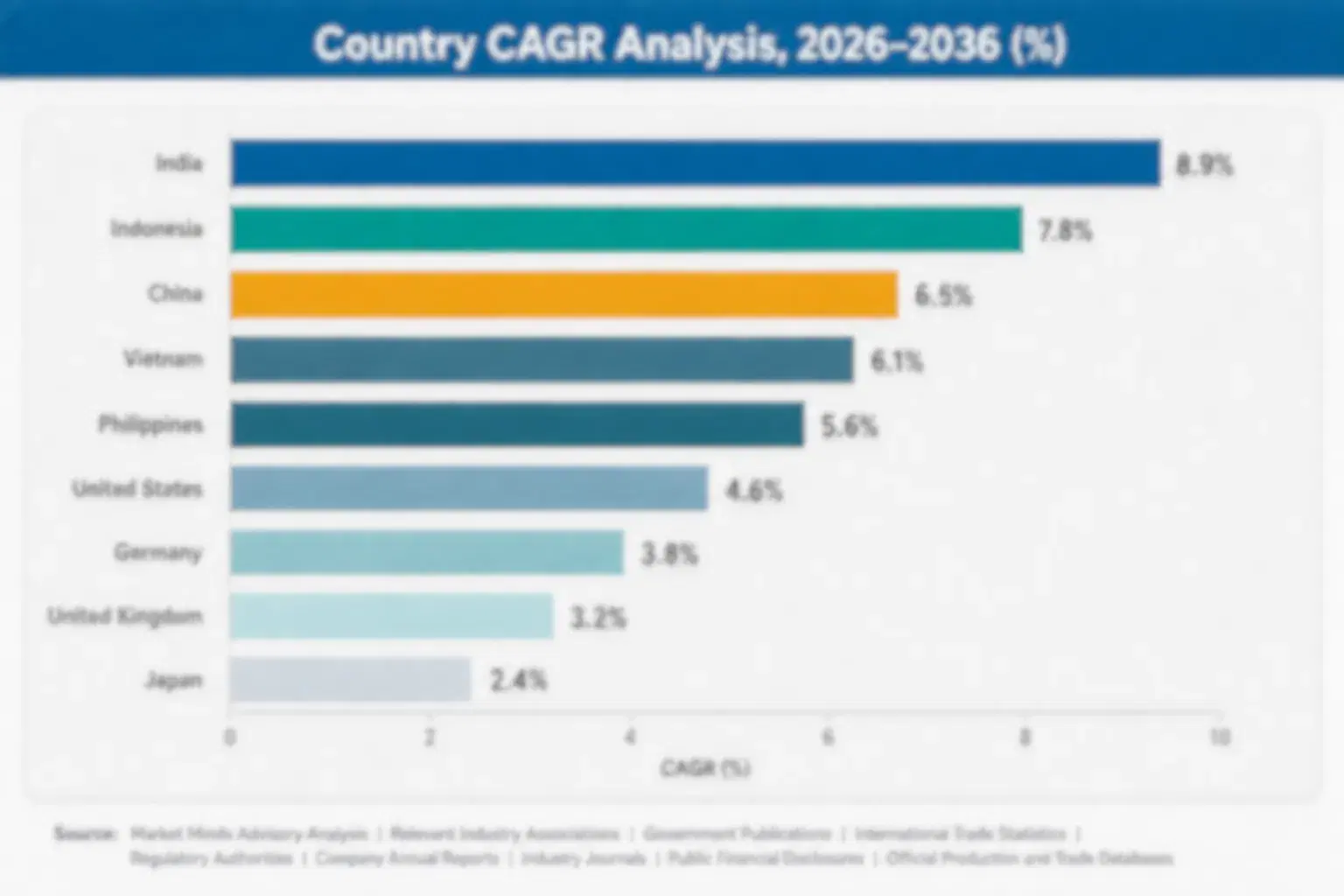
China is growing fastest at about 7.0% CAGR, because processed meat output, analogue launches and domestic isolate capacity expand together. India and Vietnam follow as packaged food sectors grow.

Report Segmentation Architecture

The full report scope spans multiple orthogonal segmentation dimensions, with cross-tabulated demand data provided for each dimension pair. Coverage extends further to regional breakdowns, trend trajectories, and the competitive detail needed to support segment-level decision-making.

By Primary Market Dimension

  • Functional Grade Isolate
  • Dispersible and High-Solubility Isolate
  • Injectable Brine Grade Isolate
  • Low-Sodium Isolate
  • Analogue-Specific Isolate

By End-Use Industry

  • Meat Analogues
  • Sports and Clinical Nutrition
  • Processed Meat
  • Bakery and Snacks

By Commercial Dimension

  • Direct Supply to Food Manufacturers
  • Ingredient Distributors
  • Private-Label Contract Supply
  • Non-GMO and Identity-Preserved Programmes
  • Programme and Service Contracts

By Region

  • North America
  • Western Europe
  • East Asia
  • South Asia and Pacific
  • Latin America
  • Middle East and Africa
  • Eastern Europe

Scope, Methodology, and Coverage

Every figure in this report is reproducible from documented input assumptions. The scope below maps the historical period, the forecast horizon, the segmentation dimensions, and the countries covered, alongside the underlying primary and qualitative methodology.
Historical Period
2020 to 2025
Forecast Period
2026 to 2036
Base Year
2025 (USD billions; MMA Primary Research Dataset, September 2026)
Market Definition
The market covers global sales of soy protein isolate containing at least 90% protein on a dry basis, produced from defatted soy flakes and sold to food, beverage, nutrition and animal-adjacent food makers. It excludes soy protein concentrate, soy flour, textured soy protein, soy milk, tofu and other whole-soy foods, and it excludes pea, wheat and other plant protein isolates.
Quantitative Units
USD billions (producer sales revenue); tonnes of isolate for volume references
Segmentation Dimensions
By Product Grade; By End-Use Industry; By Commercial Dimension; By Region
Regions Covered
North America, Western Europe, East Asia, South Asia and Pacific, Latin America, Middle East and Africa, Eastern Europe
Countries Covered
United States, Canada, China, Japan, South Korea, India, Vietnam, Indonesia, Australia, Germany, Netherlands, France, Belgium, Denmark, Poland, Brazil, Argentina, Mexico, Turkey, South Africa, and additional markets relevant to this sector
Key Companies Profiled
ADM, Cargill, IFF, Fuji Oil, Shandong Yuwang, Yuxin Group, Wilmar International, Burcon NutraScience, Kerry Group, Ingredion, Roquette, CHS Inc, Glanbia Nutritionals, Sotexpro, Sonic Biochem, Hung Yang Foods, Bremil Group, Gushen Group, Shansong Biological, Cosucra
Quantitative Methodology
Primary survey, n=3,800 respondents, Q4 2025, six countries; demand-side model with trade association cross-validation
Qualitative Methodology
47 expert interviews, Q4 2025; applied to validate demand model assumptions, identify emerging dynamics, and assess competitive positioning
Report Format
PDF and XLSX data workbook (Word format preview document)
Publisher
Market Minds Advisory
Report Code
MMA-2026-AGR-194
Published
September 2026
Contact
sales@marketmindsadvisory.com | www.marketmindsadvisory.com

Purchase the full Soy Protein Isolate Market Report (2026 to 2036).

The full report delivers a detailed assessment of the soy protein isolate market through 2036, covering grade, end-use and regional forecasts, competitive benchmarking of leading crushers and specialty producers, and input cost analysis. It combines MMA primary research, including a six-country survey of 3,800 respondents and 47 expert interviews, with public statistical and company data. Analysts also model soybean price paths, capacity additions and pea substitution scenarios. Clients receive grade margin ranges, plant maps and a case study on growth strategy. Supplier programme and contract frameworks are also included.
Ten-year grade and end-use demand forecasts
Soybean flake, energy, and freight cost tracking
Competitive benchmarking of leading isolate producers
Non-GMO and allergen labelling rule tracker
Regional market comparative analysis and forecasts included
Quarterly primary survey data update access

Built For The People Who Decide

From boardroom strategy to bench-side execution, this report is read cover-to-cover by leaders shaping the next decade of their industry, turning demand scenarios, market dynamics and valuation benchmarks into decisions.
CXOs/ Presidents/ VPs/ Managers
M&A and Corporate Development
Strategy Teams and R&D Heads
Procurement and Product Directors
Regulatory and Compliance Leaders
Investor Relations and Equity Analysts