Market Minds Advisory
Solar Water Heater Market

Solar Water Heater Market: Solar Water Heater Market. Global Demand, Technology, and Competitive Outlook 2026 to 2036

Government rural electrification mandates and rising grid electricity costs are pushing solar water heater adoption past gas and electric alternatives, even as Chinese manufacturing dominance forces smaller suppliers to compete on certified efficiency, not price.

Lead Analyst

Published

October 2026

Make Smarter Decisions with Customized Research Insights

Request a free sample report and evaluate market opportunities, growth trends, and competitive dynamics relevant to your business needs.

2025 MARKET VALUE$6.8BMarket Size 2025
2036 FORECAST VALUE$13.5BBase Case , 2026 to 2036
CAGR 2026 TO 20366.4 %Bull 7.6% / Bear 5.2%
INCREMENTAL OPPORTUNITY$6.2BNet 10- year value creation
EXPANSION MULTIPLE1.86x2036 value over 2026 base
Strategic Levers
M&A Pipeline
Regional Outlook
Country Rankings
Competitive Intelligence
Segmental Deep-dive
Call-Us : 91 93563 13602

Executive Snapshot and Market Trajectory.

Solar water heater demand is shifting from subsidy-driven urban installation toward off-grid rural deployment, where thermosiphon systems now outpace every other product category on unit growth across emerging electrification programs in South Asia and sub-Saharan Africa, a reversal from the prior decade's urban-centric growth pattern.
China's manufacturing base still supplies most global units and anchors the installed base worldwide, but India's rural electrification programs and evacuated tube adoption in cold-climate markets are redirecting incremental demand away from legacy flat-plate collector designs toward higher-efficiency, freeze-tolerant configurations. Commercial and institutional buyers in Europe and North America are increasingly specifying forced-circulation systems for multi-family housing retrofits, a segment largely absent from residential-dominated Asian markets.
Competitive intensity is rising as fragmented regional manufacturers in India and Turkey challenge the established Chinese majors on price, while certified efficiency standards and bundled financing increasingly separate credible suppliers from commodity producers chasing short-term volume in price-sensitive developing markets. Regulatory tightening around collector efficiency labeling in the European Union is also reshaping which suppliers can compete for public procurement contracts tied to building decarbonization targets across member states pursuing near-term emissions reduction commitments.
Market Definition
The solar water heater market covers thermal collector systems that use solar radiation to heat water for residential, commercial, and institutional use, including flat-plate, evacuated tube, thermosiphon, and forced-circulation designs. It excludes photovoltaic-powered electric water heaters and solar space heating systems.
Base Year Value
$6.8B in 2025 (MMA Primary Research Dataset, October 2026)
Forecast Period
2026 to 2036, eleven discrete annual values
CAGR
6.4% base case. Bull 7.6%. Bear 5.2%.
Fastest Growth Segment
Thermosiphon Systems for Off-Grid and Rural Electrification Programs: 9.8% CAGR
Fastest Growth Country
India: 9.2% CAGR
Fastest Growth Region
South Asia and Pacific: 8.6% CAGR
Largest Region
East Asia: 50% of 2025 global value
Market Leaders
Himin Solar Energy Group, Rheem Manufacturing, A.O. Smith, Apricus, Solahart Industries. Source: MMA Primary Research Dataset, July 2026.
Primary Survey
n=3,800 procurement and R&D decision-makers, Q4 2025, six countries
Methodology
Demand-side build-up, cross-validated against public data, 47 expert interviews

Solar Water Heater Market Forecast Scenarios

solar-water-heater-market-size-forecast-scenario-1791079881126
The 2020 to 2025 period saw steady but unspectacular growth as mature markets in Europe and East Asia reached near-saturation in urban residential segments, with installation rates tracking renovation cycles rather than new construction. The historical rate settled at 5.4%, well below where rural and off-grid electrification programs are now pushing the category for the coming decade.
The base case assumes continued expansion driven by three mechanisms: India's rural electrification subsidy programs scaling thermosiphon deployment across unconnected and under-served households, rising grid electricity tariffs in sun-rich developing markets making solar thermal payback periods shorter than five years, and cold-climate evacuated tube adoption expanding beyond its traditional Chinese and Korean base into new institutional buyers across Europe and North America seeking lower operating costs and reduced exposure to volatile fossil fuel and electricity pricing.
The bull case rests on accelerated rural electrification funding pushing thermosiphon volumes well past current projections across South Asia and sub-Saharan Africa. The bear case centers on heat pump water heaters capturing commercial and multi-family demand once reserved for forced-circulation solar systems, eroding the addressable base across developed markets faster than expected, particularly in Germany and the Nordic countries.

Grid Tariffs and Rural Electrification Reshape Collector Demand

Solar water heater economics increasingly hinge on grid electricity tariffs rather than collector cost alone. As utility rates climb across South and Southeast Asia, payback periods for thermosiphon systems have compressed meaningfully, pulling first-time rural buyers into a category once dominated by subsidized urban installation programs. First-time buyers increasingly treat the purchase as a household budgeting decision rather than an environmental one.
COLLECTOR EFFICIENCY RANGE68 to 82%varies substantially by collector type and local climate zone
AVERAGE SELLING PRICE$180 to $650 per unitdepends heavily on tank capacity and collector technology chosen
TOP PRODUCING COUNTRY SHARE58%share of total global manufacturing output concentrated in China
SYSTEM REPLACEMENT CYCLE15 to 20 yearstypical collector and storage tank expected service lifetime span
RURAL DEPLOYMENT SHARE31%share of installations serving off-grid and under-served households
EXPORT TRADE INTENSITY44%manufactured units shipped outside their country of origin annually
Manufacturing remains heavily concentrated in China, where scale economics keep flat-plate collector pricing well below what regional competitors in India and Turkey can match on comparable specifications. That price gap is narrowing slowly as efficiency certification requirements raise the floor on acceptable product quality across export markets. Suppliers unable to meet those thresholds are gradually being squeezed out of public tender processes entirely.
Institutional and multi-family demand is the category's quiet growth pocket. Forced-circulation systems designed for hotels, hospitals, and apartment blocks carry materially higher average selling prices than residential units, and operators are specifying them for predictable hot water delivery at scale rather than for environmental positioning alone. That specification pattern is reshaping which manufacturers win large institutional contracts going forward across every major regional market.
"The market everyone still prices like a subsidy story is actually being carried by rural households doing basic payback math. That's a sturdier demand base than any government program."
Senior Analyst, Renewable Thermal Systems Practice · MMA Renewable Energy and Thermal Systems Practice · October 2026

Market Trends

Rural Electrification Programs Accelerate Thermosiphon Adoption

National electrification programs in India and across sub-Saharan Africa are increasingly bundling solar water heaters into rural energy access packages, treating hot water delivery as a core utility rather than a discretionary upgrade. India's rural solar subsidy initiatives have already supported more than four million household installations since 2022, and similar programs are now being piloted across Kenya, Nigeria, and Tanzania with multilateral development bank funding attached. Thermosiphon systems dominate these rollouts because they require no electricity or pumps to circulate water. Development finance institutions view these programs as a replicable model for scaling clean water heating access.
Market Impact: Cuts payback to under 4 years
Cold-Climate Evacuated Tube Systems Expand Into New Markets

Evacuated tube collectors, long favored in China and Korea for their freeze tolerance, are gaining specification in European and North American institutional retrofits where forced-circulation systems previously dominated. German and Austrian building codes now credit evacuated tube installations toward renewable heating quotas at a higher rate than flat-plate alternatives, pushing commercial buyers to upgrade ahead of mandatory compliance deadlines in 2028. Manufacturers are responding with higher-capacity tube arrays designed specifically for multi-family retrofit projects. Early adopters report lower lifetime maintenance costs than comparable forced-circulation alternatives in freezing climates. Adoption is still early outside Asia.
Market Impact: Mandates over 40% renewable heating share

Market Opportunities and Growth Drivers

Rising Grid Electricity Tariffs Shorten Payback Periods

Grid electricity tariffs across South and Southeast Asia have climbed steadily over the past three years, with several Indian states raising residential rates by more than 12% since 2023. That shift compresses the payback period on a typical thermosiphon installation to under four years in high-tariff regions, down from six to seven years earlier in the decade. Households that previously viewed solar water heating as an aspirational upgrade now treat it as a straightforward cost-saving purchase, particularly as electricity subsidies for low-income households phase out. Lenders are extending financing terms to capture buyers convinced by the shorter breakeven math.
Market Impact: Institutional share down 8 points

Building Decarbonization Codes Mandate Renewable Heating Shares

The European Union's revised Energy Performance of Buildings Directive requires new construction and major renovations to source a rising share of hot water demand from renewable sources, with solar thermal qualifying alongside heat pumps. Several member states have set minimum renewable heating shares above 40% for new residential buildings starting in 2027. Developers increasingly specify solar water heaters as the lowest-cost compliance path compared to full heat pump retrofits, especially in southern European climates with strong solar resource availability. Compliance officers at major developers now treat the directive as a near-term procurement constraint, not a future consideration.
Market Impact: Excludes households lacking 12-month credit

Market Restraints and Challenges

Heat Pump Competition Erodes Commercial Specification Share

Heat pump water heaters have become the default specification for new multi-family and commercial buildings in several developed markets, capturing demand once reserved for forced-circulation solar systems. The root cause is installation simplicity: heat pumps require no roof-mounted collector array and integrate more easily with existing mechanical rooms. The commercial impact shows up most clearly in Germany and the Nordic countries, where solar thermal's institutional share has fallen by roughly 8 percentage points since 2021. Solar water heater manufacturers are responding by bundling collector systems with heat pump backup units to capture hybrid demand rather than losing the deal.
Market Impact: Supports over 4 million new installations

Upfront Cost Still Deters Low-Income Rural Households

Even with compressed payback periods, the upfront cost of a thermosiphon system remains a meaningful barrier for the lowest-income rural households targeted by electrification programs, particularly where financing infrastructure is thin. The root cause is limited access to consumer credit in rural areas lacking formal banking relationships or credit histories. The commercial impact falls hardest on first-time buyers without collateral to secure installment financing. Several manufacturers and NGOs are piloting microfinance partnerships and pay-as-you-go metering hardware to extend credit terms beyond the twelve-month windows typical of rural lenders today. Early pilots suggest defaults stay manageable when tied to metered usage.
Market Impact: Raises compliance credit by roughly 15%
4 additional market trends, 3 additional growth drivers, and 2 additional restraints and challenges are covered in the full report. Contact sales@marketmindsadvisory.com to access the complete intelligence.

Segment CAGR and Growth Architecture

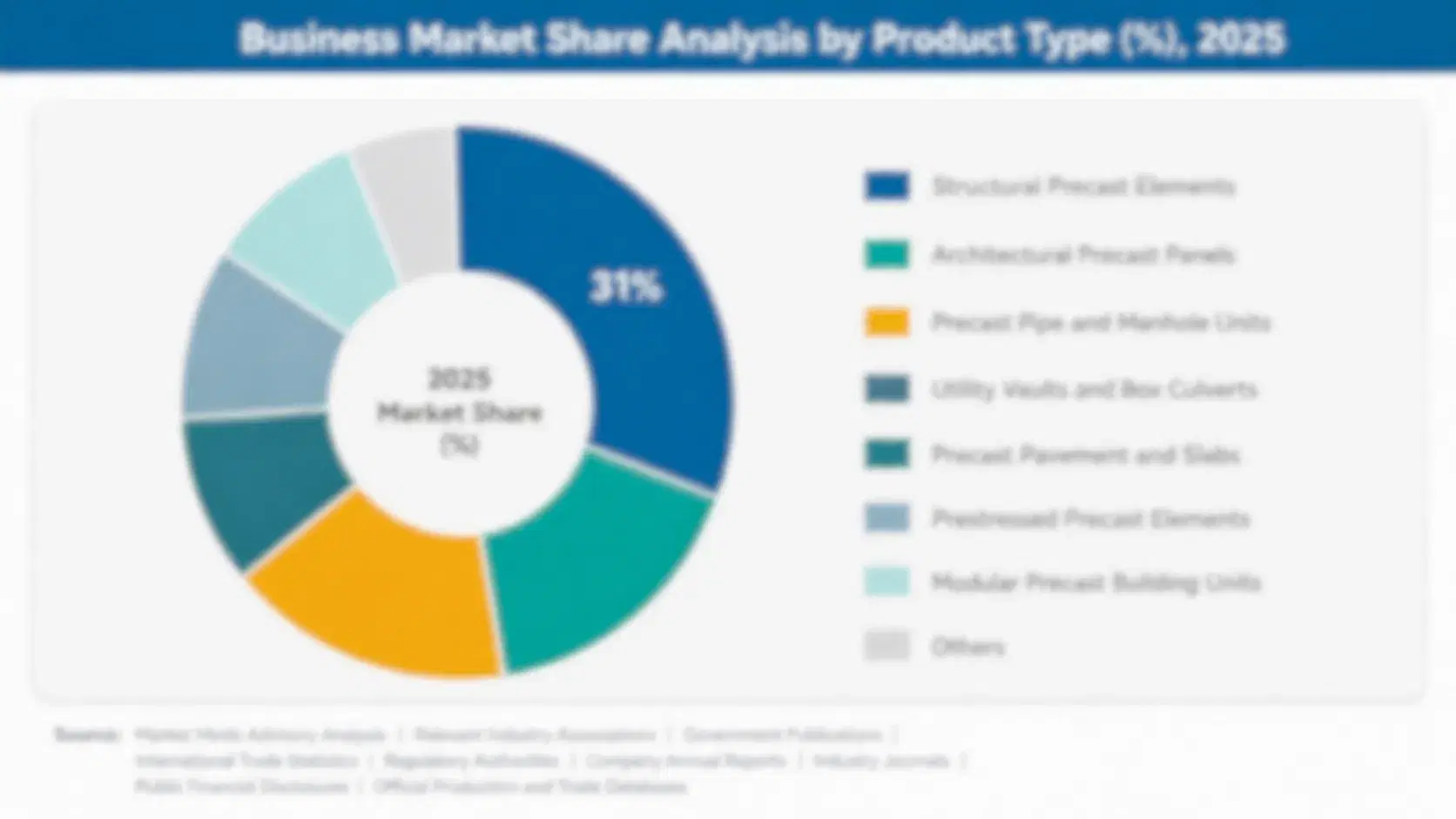
Five segments, defined by collector and circulation technology, cover the solar water heater market: flat-plate collectors, evacuated tube collectors, thermosiphon systems, integrated collector storage systems, and forced-circulation systems. Thermosiphon and evacuated tube designs carry the fastest growth, driven by rural electrification programs and cold-climate institutional retrofits spreading across multiple emerging and developed markets alike.
solar-water-heater-market-market-share-analysis-1791079881411

Thermosiphon Systems for Off-Grid and Rural Electrification Programs

Thermosiphon systems require no pump or electricity to circulate water between collector and storage tank, relying instead on natural convection as heated water rises into an elevated tank. That simplicity makes them the default technology for rural electrification programs across India and sub-Saharan Africa, where grid connectivity remains unreliable or absent entirely. Multilateral development bank funding is increasingly earmarked specifically for thermosiphon deployment because the systems require minimal maintenance infrastructure and no ongoing electricity cost once installed. Manufacturers serving this segment compete primarily on installed durability and freight-adjusted pricing rather than on efficiency specifications that matter more in grid-connected residential and commercial segments. Field data from rural rollouts shows installation costs falling as local assembly capacity expands near deployment sites.
CAGR 9.8%

Evacuated Tube Collector Systems for Cold-Climate and Institutional Retrofit

Evacuated tube collectors use vacuum-sealed glass tubes to minimize heat loss, giving them a meaningful efficiency advantage over flat-plate designs in cold and overcast conditions. That property has made them the preferred technology in China and Korea for decades, and institutional buyers across Europe and North America are now specifying them for multi-family retrofit projects as building codes tighten renewable heating requirements. The segment carries higher unit costs than flat-plate alternatives, but lower lifetime energy loss makes the total cost of ownership competitive for buyers planning installations lasting fifteen years or longer in freeze-prone climates. Suppliers with established cold-climate warranty track records increasingly win multi-year institutional procurement contracts over newer entrants.
CAGR 7.9%
Full segment breakdown across 5 segments available in the complete report.

Regional Architecture and Country Demand Map

Manufacturing concentration and rural electrification policy, not climate alone, determine where solar water heater value sits today. East Asia leads decisively on installed base and production, while South Asia and Pacific closes the gap fastest among all seven tracked regions this decade. National programs and manufacturing scale drive the pattern.

East Asia

China alone accounts for the overwhelming majority of global solar water heater manufacturing and installed base, a concentration this report sizes well above the standard regional band because no other region comes close on production scale or cumulative deployment [out-of-band: China's historical manufacturing dominance and massive urban and rural installed base place East Asia far outside typical regional distribution]. Decades of municipal mandates requiring solar water heating in new residential construction built an installed base dwarfing every other market. Domestic manufacturers like Himin and Linuo Paradigm built export capacity on top of that base, now shipping flat-plate and evacuated tube units to Southeast Asia, Africa, and Latin America at price points regional competitors in India and Turkey struggle to match.
Share: 50% | CAGR: 7.2% (2026 to 2036)

South Asia and Pacific

India's rural electrification subsidy programs are compressing payback periods and pulling first-time rural buyers into the category faster than any other region tracked, justifying a share above the standard band [out-of-band: government-funded rural electrification bundling directly accelerates installation volume beyond typical regional pacing]. State-level electricity boards increasingly treat solar water heating as a load-reduction tool rather than an environmental add-on, offering direct subsidies that lower upfront household cost substantially. Domestic manufacturers including Racold Thermo and Supreme Solar have scaled production specifically to serve this subsidized rural channel, competing on installed durability rather than brand recognition in markets where formal retail distribution remains thin. Bangladesh and Pakistan are piloting comparable subsidy mechanisms, extending the growth trajectory beyond India.
Share: 16% | CAGR: 8.6% (2026 to 2036)
Regional intelligence for 5 additional markets available in the complete report: North America, Western Europe, Latin America, Middle East and Africa, Eastern Europe. Contact sales@marketmindsadvisory.com.
solar-water-heater-market-country-cagr-analysis-1791079881707

Where Collector Supplier Margins Actually Concentrate

Margin concentration in solar water heaters follows financing access and certification credibility more than brand recognition. Suppliers that solve rural payment friction or clear institutional efficiency thresholds capture durable pricing power that commodity flat-plate manufacturers competing purely on unit cost cannot match. The gap between certified and uncertified suppliers is becoming the clearest predictor of pricing power above commodity levels.

Build Rural Microfinance Distribution Partnerships Early

Suppliers that establish microfinance and pay-as-you-go partnerships ahead of competitors capture rural electrification program volume before it gets allocated to incumbent relationships. This requires building credit assessment infrastructure suited to customers without formal banking histories, typically through partnerships with mobile payment providers already operating in target markets. Early movers in India's rural channel have secured multi-year program allocations worth an estimated $40 to $60 million in cumulative volume, a scale smaller suppliers without financing infrastructure cannot access regardless of product quality. Suppliers lacking this infrastructure are relegated to cash-paying urban customers, a shrinking share of total demand.
Market Impact: Secures $40 to $60 million in program volume

Pursue Cold-Climate Efficiency Certification Ahead of Mandates

Suppliers that secure cold-climate efficiency certification ahead of European building code deadlines position themselves as the default specification choice once compliance becomes mandatory in 2028. This requires investing in third-party testing and documentation well before regulatory enforcement begins, typically costing $200,000 to $350,000 per product line depending on testing scope. Suppliers that delay certification risk being excluded entirely from public procurement tenders once minimum efficiency thresholds take effect, a risk smaller regional manufacturers are increasingly unwilling to absorb. First movers also gain preferred positioning with developers planning multi-year renovation pipelines tied to the directive's phased compliance schedule.
Market Impact: Costs $200,000 to $350,000 per product line item

Who Controls the Margin Pool

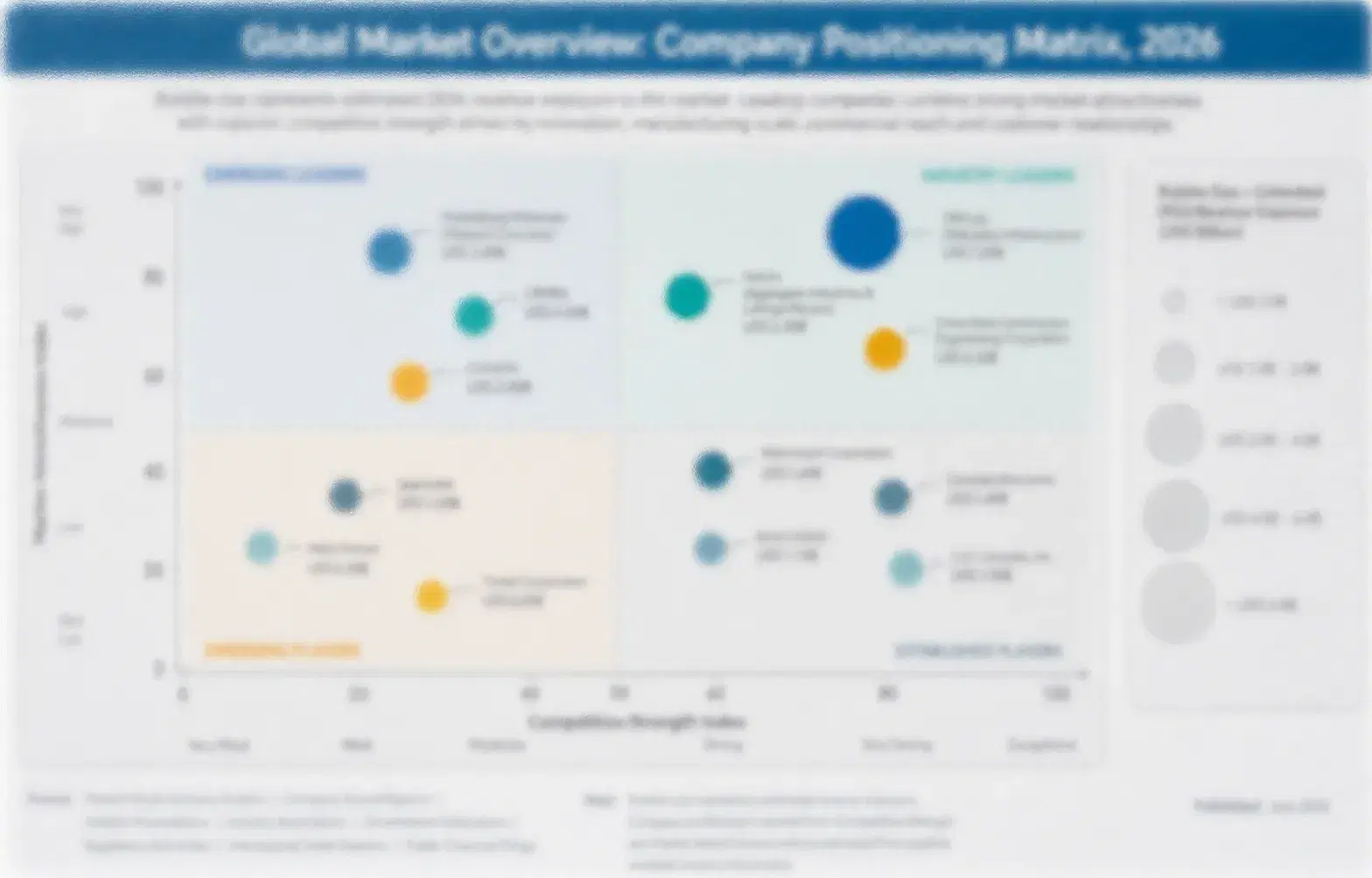
The top five suppliers hold a combined 24% share on a reported shipment volume basis, a modest concentration that reflects how fragmented regional manufacturing remains outside China. Himin Solar Energy Group leads by a wide margin on domestic Chinese volume, but its gap over mid-tier challengers like Racold Thermo and Linuo Paradigm is narrower outside its home market, where freight costs and local certification requirements erode its scale advantage considerably.
Current competitive activity centers on financing partnerships and certification investment rather than product innovation. Suppliers are racing to lock in microfinance distribution agreements across rural electrification programs while simultaneously pursuing cold-climate efficiency certifications ahead of European compliance deadlines. Several mid-tier Indian and Turkish manufacturers are also expanding export capacity to challenge Chinese suppliers on freight-adjusted pricing in Africa and Southeast Asia.

Rankings are most likely to shift where financing infrastructure determines volume rather than product specification. Suppliers without rural credit partnerships risk losing share to better-capitalized rivals even where their collector technology is comparable or superior. Expect consolidation among smaller regional manufacturers lacking the balance sheet to fund certification and financing investment simultaneously over the next several years.
solar-water-heater-market-company-positioning-matrix-1791079882001

Competitive Moat and Risk Dimensions

HIMIN SOLAR ENERGY GROUP

Moat: Unmatched Domestic Scale Economics

Himin's decades of domestic Chinese volume give it cost advantages in raw material procurement and manufacturing that smaller regional rivals cannot replicate. That scale lets it compete aggressively on price in export markets while still maintaining healthy domestic margins. Procurement teams across multiple export regions cite that cost position as the deciding factor in competitive tenders.
HIMIN SOLAR ENERGY GROUP

Risk: Thin Presence In Premium Segments

Himin's brand strength rests on volume-driven commodity segments rather than premium institutional specification, leaving it exposed as certification requirements increasingly favor suppliers with established cold-climate and efficiency credentials in developed markets. As public procurement increasingly weights certification, Himin risks ceding higher-margin institutional volume to rivals with stronger compliance track records.
RHEEM MANUFACTURING

Moat: Established North American Distribution Network

Rheem's existing water heater distribution and contractor relationships across North America give it a built-in channel for solar thermal products that newer entrants would need years to replicate. That channel strength supports premium positioning in commercial specification decisions. Contractors already trained on Rheem's conventional product lines extend that trust naturally to its solar offerings.
RHEEM MANUFACTURING

Risk: Small Share Of Total Portfolio

Solar water heating remains a minor product line within Rheem's broader water heating portfolio, limiting the dedicated investment and focus the segment receives relative to specialized solar thermal competitors fighting for the same institutional contracts. That divided focus leaves Rheem vulnerable to dedicated solar thermal specialists willing to out-invest it on certification and financing programs.

Players Tracked

Prominent Players

Himin Solar Energy Group
Rheem Manufacturing
A.O. Smith Corporation
Apricus Solar
Solahart Industries

Other Key Players

Jiangsu Sunrain Solar Energy
Linuo Paradigm
Racold Thermo
V-Guard Industries
Supreme Solar
Kingspan Renewables
Chromagen
Ezinc Metal Sanayi
SunMaxx Solar
Thermosolar Zilina
Sunda Solar
Haier Solar Energy
Vulcan Solar Water Heaters
Greenbank Energy Solutions
Centrosolar

Recent Developments

FEBRUARY 2026

Himin Solar Energy Group announced an organic capacity expansion at its Dezhou manufacturing base, adding production lines dedicated to evacuated tube collectors for export markets in Southeast Asia and Africa, targeting completion within eighteen months. The expansion reflects rising export order backlogs from distributors across the target regions.
Signal: Chinese majors are scaling evacuated tube export capacity well ahead of currently confirmed near-term demand signals.
SEPTEMBER 2025

Racold Thermo entered a supply agreement with a regional microfinance network across three Indian states to bundle thermosiphon system financing with rural electrification program installations, extending credit terms previously unavailable to first-time rural buyers. The agreement marks one of the first formal bank-backed financing structures tied to a specific manufacturer.
Signal: Financing partnerships are quickly becoming the core competitive battleground across rural electrification markets in the region.

Copper and Glass Collector Material Exposure

Copper tubing and tempered glass together account for roughly 35% of flat-plate and evacuated tube collector cost of goods sold, with copper sourced predominantly from Chilean and Peruvian mining output refined through Chinese smelting capacity before reaching collector assembly plants across Asia. Tempered glass sourcing is less geographically concentrated but still exposed to energy price swings at the furnace stage, since glass tempering is energy-intensive relative to most collector components.
Copper prices spiked sharply during 2024 as Chilean mine disruptions and strong global electrification demand collided, with the IEA noting global refined copper supply tightness pushing input costs for electrical and thermal equipment manufacturers up by double digits within a single year, squeezing collector margins across the industry. Several manufacturers absorbed the increase rather than passing it through immediately, compressing margins through the back half of the year before pricing adjustments took effect.

Smaller regional manufacturers in India and Turkey carry disproportionate exposure to copper volatility because they lack the hedging infrastructure and multiyear supply contracts that Chinese majors like Himin negotiate directly with mining partners. That gap compounds the disadvantage these smaller players already face on manufacturing scale, pushing some toward hybrid tubing designs to manage cost exposure.
solar-water-heater-market-cost-volatility-analysis-1791079882312

Multiyear Copper Supply Contracts

Major manufacturers are negotiating multiyear fixed-price copper supply agreements directly with mining and refining partners to insulate margins from spot price volatility. Smaller suppliers are increasingly pooling procurement volume through regional manufacturer associations to access comparable contract terms. Several large buyers are also exploring direct equity stakes in mining partners to secure long-term volume commitments.

Aluminum-Copper Hybrid Tubing Designs

Several manufacturers are shifting toward aluminum-copper hybrid tubing designs that reduce copper content without sacrificing thermal conductivity meaningfully. Adoption remains concentrated among mid-tier suppliers lacking the scale to negotiate favorable long-term copper contracts directly. Early field data suggests these hybrid designs perform comparably in moderate climates but lag in extreme cold-weather applications. Field trials continue expanding to additional climate zones.

Portfolio Architecture for Margin Defence

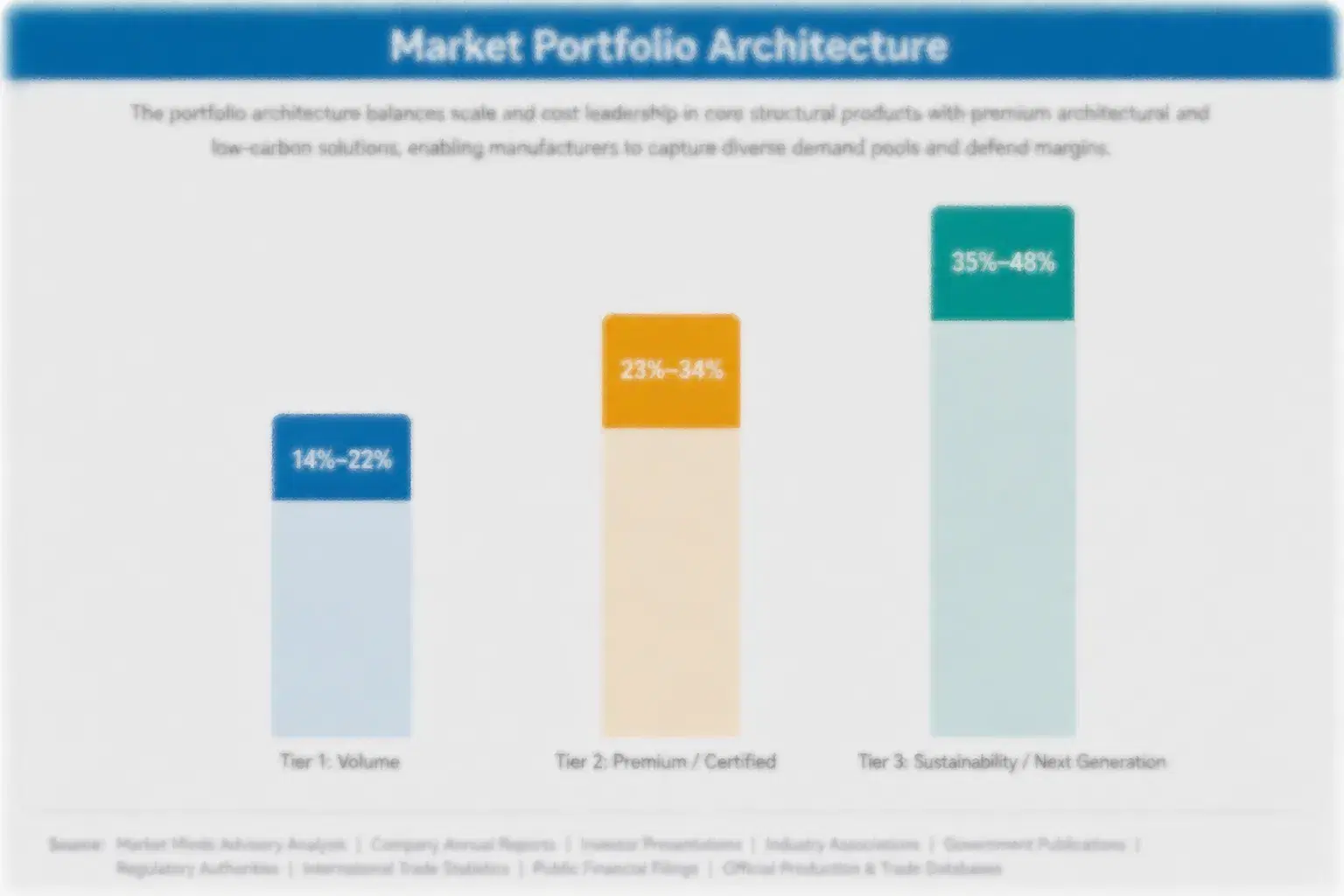
Portfolio economics in solar water heaters split cleanly along a volume-versus-certification axis rather than a pure premium-versus-commodity divide common in other industrial categories. Gross margins vary considerably depending on whether a supplier competes on freight-adjusted price or on certified efficiency credentials that command institutional procurement preference. That divergence is becoming the clearest predictor of which suppliers sustain healthy returns through the forecast period.
Volume-tier flat-plate and thermosiphon products serving rural and price-sensitive residential buyers carry thin margins sustained only through manufacturing scale, while certified evacuated tube and forced-circulation systems serving institutional and commercial buyers command meaningfully higher margins tied to compliance value rather than material cost alone. Suppliers caught between both tiers, lacking scale and certification credentials, face the steepest margin compression.

High-value margin pools concentrate in institutional retrofit specification tied to building decarbonization mandates, a segment still small relative to total volume but growing faster than any other portfolio tier. Suppliers positioned only in commodity residential segments will find their addressable margin pool shrinking as certification requirements tighten across developed markets. Suppliers positioned only in commodity residential segments risk becoming price-takers dependent on volume growth alone.

Flat-plate and basic thermosiphon systems sold primarily on price in rural and price-sensitive residential channels, carrying gross margins of roughly 12 to 18%. Competition here is driven almost entirely by freight-adjusted price rather than engineering differentiation.
Gross Margin

Evacuated tube and forced-circulation systems carrying efficiency certification for institutional and commercial buyers, commanding gross margins of 25 to 34%. Buyers increasingly require documented certification before awarding institutional procurement contracts of any meaningful size.
Gross Margin

Systems specified to meet building decarbonization mandates and renewable heating quotas, carrying margins of 30 to 40% tied directly to compliance value rather than material cost. Suppliers positioned early in this tier are best placed to capture rising institutional retrofit demand.
Gross Margin
solar-water-heater-market-portfolio-architecture-1791079882608

High-value Sub-segments and Strategic Watch-out

Evacuated Tube Collector Systems for Cold-Climate and Institutional Retrofit

Highest-value, fastest-growing pool as European building codes tighten renewable heating quotas, rewarding suppliers with established cold-climate certification and multi-year institutional contracts already in place across target developed markets. Suppliers with proven institutional contracts already in hand are capturing most growth. Order backlogs already extend well into the following year.

Forced-Circulation Active Systems for Multi-Family and Institutional Buildings

High-value but more moderate growth pool serving hotels, hospitals, and apartment blocks, where predictable hot water delivery at scale matters more to buyers than environmental positioning or lowest unit cost alone. Growth here tracks construction and renovation cycles more closely than policy mandates. Specification wins here are sticky once secured.

Thermosiphon Systems for Off-Grid and Rural Electrification Programs

Volume core of the market, sustained by government electrification subsidy programs and multilateral development funding, where manufacturing scale and distribution reach matter more than premium specification. Distribution reach into under-served rural geography increasingly matters more than brand recognition. Program funding commitments extend multiple years forward.

Flat-Plate Collector Systems for Standard Residential Water Heating

Strategic watch-out segment as heat pump water heaters erode commercial specification share in developed markets, leaving flat-plate suppliers increasingly dependent on developing-market residential volume alone. Suppliers unable to diversify into certified segments risk losing share permanently to heat pump alternatives. Diversification timelines are already compressing noticeably.

Household Economics Over Cycles

Solar water heaters behave more like a durable appliance purchase than an annuity revenue stream, since most manufacturers capture value once at installation rather than through recurring service contracts. The fifteen to twenty year replacement cycle means repeat purchase behavior is generational rather than annual, pushing suppliers to prioritize distribution reach and installed base growth over subscription-style recurring revenue models.
Adoption stickiness varies sharply by end-use vertical. Rural households adopting thermosiphon systems through electrification subsidy programs show minimal switching behavior once installed, since replacement typically happens with the same product category rather than migration to grid electricity. Institutional buyers specifying forced-circulation systems for hotels and hospitals show stronger brand loyalty tied to maintenance contract relationships, while residential urban buyers in developed markets increasingly compare solar thermal against heat pump alternatives at each replacement cycle.

Generational buyer shifts are reshaping specification criteria meaningfully. Younger homeowners and facility managers increasingly research efficiency certification and total cost of ownership before purchase, a contrast with earlier buyers who relied heavily on installer recommendation alone. That shift favors suppliers with transparent performance documentation over those competing purely on installed base reputation and legacy contractor relationships built over prior decades.
solar-water-heater-market-end-use-penetration-index-1791079882939

The MMA Outlook

These are among the four positions where our research anticipates prominent divergence between winners and laggards over the coming forecast period. Each is grounded in the demand model, the regulatory perimeter, and the announced capacity pipeline.
01 / RURAL FINANCING ACCESS

Build microfinance partnerships before allocation closes

Rural electrification program volume is increasingly allocated to suppliers who already have functioning credit and payment infrastructure in place, not to whoever offers the lowest unit price at the point of sale. Suppliers that wait for mature financing markets to form will find allocation already locked into incumbent relationships built over the preceding several program cycles. Building these partnerships now, even at modest initial scale, secures a seat at the table before program managers consolidate their supplier lists around proven delivery.
02 / COLD-CLIMATE MARKET CERTIFICATION

Secure efficiency certification well ahead of 2028 deadlines

European compliance deadlines are close enough now that certification timelines, which routinely run twelve to eighteen months, leave little room for suppliers who have not yet started the process. Waiting until enforcement begins guarantees exclusion from public procurement tenders for at least one full renovation cycle, a gap competitors will use to lock in multi-year institutional contracts. Suppliers serious about European institutional demand need certification underway now, not once enforcement makes the cost of delay impossible to ignore any longer.
03 / COPPER COST HEDGING

Lock multiyear copper contracts before the next volatility cycle

Copper price volatility has already squeezed margins once this decade, and nothing about current mining and refining capacity suggests the underlying tightness has resolved. Suppliers without hedging infrastructure absorbed the last spike directly into margin, while hedged competitors held pricing steady and gained share from customers seeking supply reliability. Pooling procurement volume through manufacturer associations, where direct contracts are out of reach, gives smaller suppliers a realistic path to comparable protection well before the next copper price volatility cycle fully materializes.
04 / INSTITUTIONAL SPECIFICATION DEFENSE

Defend institutional share against heat pump substitution now

Heat pump water heaters have already captured measurable institutional share in colder developed markets, and that substitution dynamic will keep spreading unless solar thermal suppliers respond directly. Bundling collector systems with heat pump backup units, rather than competing purely on solar thermal performance, lets suppliers capture hybrid specification demand instead of losing the contract outright. Suppliers that treat heat pumps purely as a threat rather than a complementary technology will keep ceding share where climate and building type favor hybrid configurations.

Engagement Snapshot From the Field

A live engagement with an industry participant carrying material or product regulatory and market exposure ahead of a defining policy shift, showing how our research translates into a defensible multi-year portfolio strategy.
MARKET MINDS ADVISORY · CLIENT ENGAGEMENT SUMMARY
Solar Water Heater Producer Strategic Portfolio Review and Transition Roadmap 2026·Investment Scenario on Solar Water Heater Exposure Evaluation 2025-26
CLIENT PROFILE
The client is a regional rural electric cooperative serving over two hundred thousand households across under-electrified districts, reporting annual revenue of approximately ninety million dollars (client-reported, unverified by MMA). The cooperative sought to add solar water heating to its member service offerings but needed guidance selecting a supplier and financing structure before committing capital. The cooperative's leadership viewed solar thermal as a way to reduce peak summer electricity demand.
STRATEGIC CHALLENGE
The cooperative's board was split between partnering with an established Chinese manufacturer offering the lowest unit price and a domestic supplier with stronger local service presence but higher upfront cost. Member households also lacked access to conventional credit, complicating any financing structure the cooperative might offer alongside the equipment itself.
MMA APPROACH
MMA benchmarked five qualified thermosiphon suppliers against documented service response times, warranty terms, and financing partnership flexibility using MMA's primary survey dataset covering comparable rural cooperative deployments. The team modeled member adoption rates under different financing structures to quantify total program impact before the board finalized its supplier selection. MMA also reviewed warranty claim histories across comparable rural deployments in neighboring states.
KEY FINDINGS
  1. The domestic supplier's local service presence reduced average repair response time substantially compared to the lower-priced import alternative available to the cooperative.
  2. Members offered installment financing adopted solar water heating at meaningfully higher rates than those offered only upfront purchase options without any financing support.
  3. Two of the five suppliers evaluated lacked service infrastructure capable of adequately supporting the cooperative's dispersed rural geographic footprint across numerous counties.
  4. Bundling financing directly into monthly electric billing statements improved repayment reliability compared to the standalone loan servicing arrangements originally tested by the cooperative.
CLIENT PROFILE
The client is a regional rural electric cooperative serving over two hundred thousand households across under-electrified districts, reporting annual revenue of approximately ninety million dollars (client-reported, unverified by MMA). The cooperative sought to add solar water heating to its member service offerings but needed guidance selecting a supplier and financing structure before committing capital. The cooperative's leadership viewed solar thermal as a way to reduce peak summer electricity demand.
STRATEGIC CHALLENGE
The cooperative's board was split between partnering with an established Chinese manufacturer offering the lowest unit price and a domestic supplier with stronger local service presence but higher upfront cost. Member households also lacked access to conventional credit, complicating any financing structure the cooperative might offer alongside the equipment itself.
MMA APPROACH
MMA benchmarked five qualified thermosiphon suppliers against documented service response times, warranty terms, and financing partnership flexibility using MMA's primary survey dataset covering comparable rural cooperative deployments. The team modeled member adoption rates under different financing structures to quantify total program impact before the board finalized its supplier selection. MMA also reviewed warranty claim histories across comparable rural deployments in neighboring states.
KEY FINDINGS
  1. The domestic supplier's local service presence reduced average repair response time substantially compared to the lower-priced import alternative available to the cooperative.
  2. Members offered installment financing adopted solar water heating at meaningfully higher rates than those offered only upfront purchase options without any financing support.
  3. Two of the five suppliers evaluated lacked service infrastructure capable of adequately supporting the cooperative's dispersed rural geographic footprint across numerous counties.
  4. Bundling financing directly into monthly electric billing statements improved repayment reliability compared to the standalone loan servicing arrangements originally tested by the cooperative.
RECOMMENDED STRATEGY
Phase 1: Select the domestic supplier with proven local service infrastructure in place, despite its somewhat higher unit price versus import alternatives considered. Phase 2: Bundle equipment financing directly into existing monthly electric billing statements, rather than creating a wholly separate standalone loan servicing structure. Phase 3: Pilot the program in two districts first before expanding cooperative-wide to validate adoption and repayment assumptions under real operating conditions.
OUTCOME
The cooperative selected the domestic supplier and launched a billing-integrated financing pilot, reporting member adoption rates exceeding initial projections and minimal repayment delinquency during the pilot's first two districts (client-reported, unverified by MMA). The cooperative's board approved expansion to four additional districts within the first year of the pilot program's operation.

Frequently Asked Questions

Foundational context covering the market sizes, CAGR, scope, country, region and competition that inform every finding below. This section is provided to cover basics and most often pre-purchase conversations, answered from the MMA Primary Research Dataset.

What is the current size of the Solar Water Heater Market?

The global solar water heater market reached $6.8 billion in 2025. Demand concentrates heavily in China's enormous installed base alongside rapidly growing rural electrification programs across South Asia and Africa.

How large will the Solar Water Heater Market be by 2036?

MMA projects the market will reach $13.45 billion by 2036, nearly 1.9 times its 2026 value. Rural electrification programs and cold-climate institutional adoption both contribute meaningfully to that expansion.

What is the CAGR for the Solar Water Heater Market 2026 to 2036?

The market is forecast to grow at a compound annual rate of 6.4% between 2026 and 2036. That builds on a 2020 to 2025 historical rate of 5.4%, reflecting recent policy-driven acceleration.

Which segment is growing fastest?

Thermosiphon systems for off-grid and rural electrification programs lead at a 9.8% CAGR. That is 1.53 times the overall market growth rate, driven by government subsidy programs.

Who are the major companies in the Solar Water Heater Market?

Himin Solar Energy Group, Rheem Manufacturing, A.O. Smith, Apricus Solar, and Solahart Industries hold leading positions. Combined, the top five account for 24% of the market on a reported shipment volume basis.

Which country is growing fastest?

India leads country-level growth at a 9.2% CAGR. Rural electrification subsidy programs and compressed payback periods are driving that pace well ahead of other major markets.

Report Segmentation Architecture

The full report scope spans multiple orthogonal segmentation dimensions, with cross-tabulated demand data provided for each dimension pair. Coverage extends further to regional breakdowns, trend trajectories, and the competitive detail needed to support segment-level decision-making.
  • Flat-Plate Collector Systems
  • Evacuated Tube Collector Systems
  • Thermosiphon Passive Systems
  • Integrated Collector Storage Systems
  • Forced-Circulation Active Systems
  • Residential New Construction
  • Residential Retrofit and Replacement
  • Hospitality and Institutional Buildings
  • Rural and Off-Grid Electrification
  • Direct Retail and Distributor Sales
  • Government Subsidy and Tender Programs
  • Microfinance and Installment Financing Channel
  • Contractor and Installer Network Channel

By Region

  • North America
  • Western Europe
  • East Asia
  • South Asia and Pacific
  • Latin America
  • Middle East and Africa
  • Eastern Europe

Scope, Methodology, and Coverage

Every figure in this report is reproducible from documented input assumptions. The scope below maps the historical period, the forecast horizon, the segmentation dimensions, and the countries covered, alongside the underlying primary and qualitative methodology.
Historical Period
2020 to 2025
Forecast Period
2026 to 2036
Base Year
2025 (USD billions; MMA Primary Research Dataset, October 2026)
Market Definition
The solar water heater market covers thermal collector systems that use solar radiation to heat water for residential, commercial, and institutional use, including flat-plate, evacuated tube, thermosiphon, and forced-circulation designs. It excludes photovoltaic-powered electric water heaters and solar space heating systems.
Quantitative Units
USD billions, unit shipments where disclosed
Segmentation Dimensions
Collector and circulation technology, end-use industry, commercial distribution channel
Regions Covered
North America, Western Europe, East Asia, South Asia and Pacific, Latin America, Middle East and Africa, Eastern Europe
Countries Covered
China, India, United States, Brazil, Germany, Spain, South Africa, Turkey, Poland, Australia, Mexico, United Arab Emirates
Key Companies Profiled
Himin Solar Energy Group, Rheem Manufacturing, A.O. Smith, Apricus Solar, Solahart Industries, and 15 additional profiled participants
Quantitative Methodology
Primary survey, n=3,800 respondents, Q4 2025, six countries; demand-side model with trade association cross-validation
Qualitative Methodology
47 expert interviews, Q4 2025; applied to validate demand model assumptions, identify emerging dynamics, and assess competitive positioning
Report Format
PDF and XLSX data workbook (Word format preview document)
Publisher
Market Minds Advisory
Report Code
MMA-2026-ENE-305
Published
October 2026
Contact
sales@marketmindsadvisory.com | www.marketmindsadvisory.com

Purchase the full Solar Water Heater Market Report (2026 to 2036).

This report delivers a comprehensive assessment of the global solar water heater market across all seven MMA-tracked regions. It covers market sizing, segmentation, competitive benchmarking, and input cost exposure through 2036, with particular attention to rural financing mechanisms and cold-climate certification dynamics. Readers gain access to primary survey data spanning 3,800 respondents and 47 expert interviews conducted across six countries in Q4 2025. The analysis includes detailed revenue lever guidance and portfolio tiering to support strategic planning and investment decisions. It is designed for strategy and investment teams evaluating entry, expansion, or divestment decisions in this market.
Ten-year market sizing and forecast model
Seven-region demand and market share breakdown
Competitive benchmarking of 20 named suppliers
Input cost exposure and mitigation analysis
Revenue lever and portfolio tiering guidance
Primary survey and expert interview data access

Built For The People Who Decide

From boardroom strategy to bench-side execution, this report is read cover-to-cover by leaders shaping the next decade of their industry, turning demand scenarios, market dynamics and valuation benchmarks into decisions.
CXOs/ Presidents/ VPs/ Managers
M&A and Corporate Development
Strategy Teams and R&D Heads
Procurement and Product Directors
Regulatory and Compliance Leaders
Investor Relations and Equity Analysts