Biometric Verification Steadily Displaces Contact-Only Chips
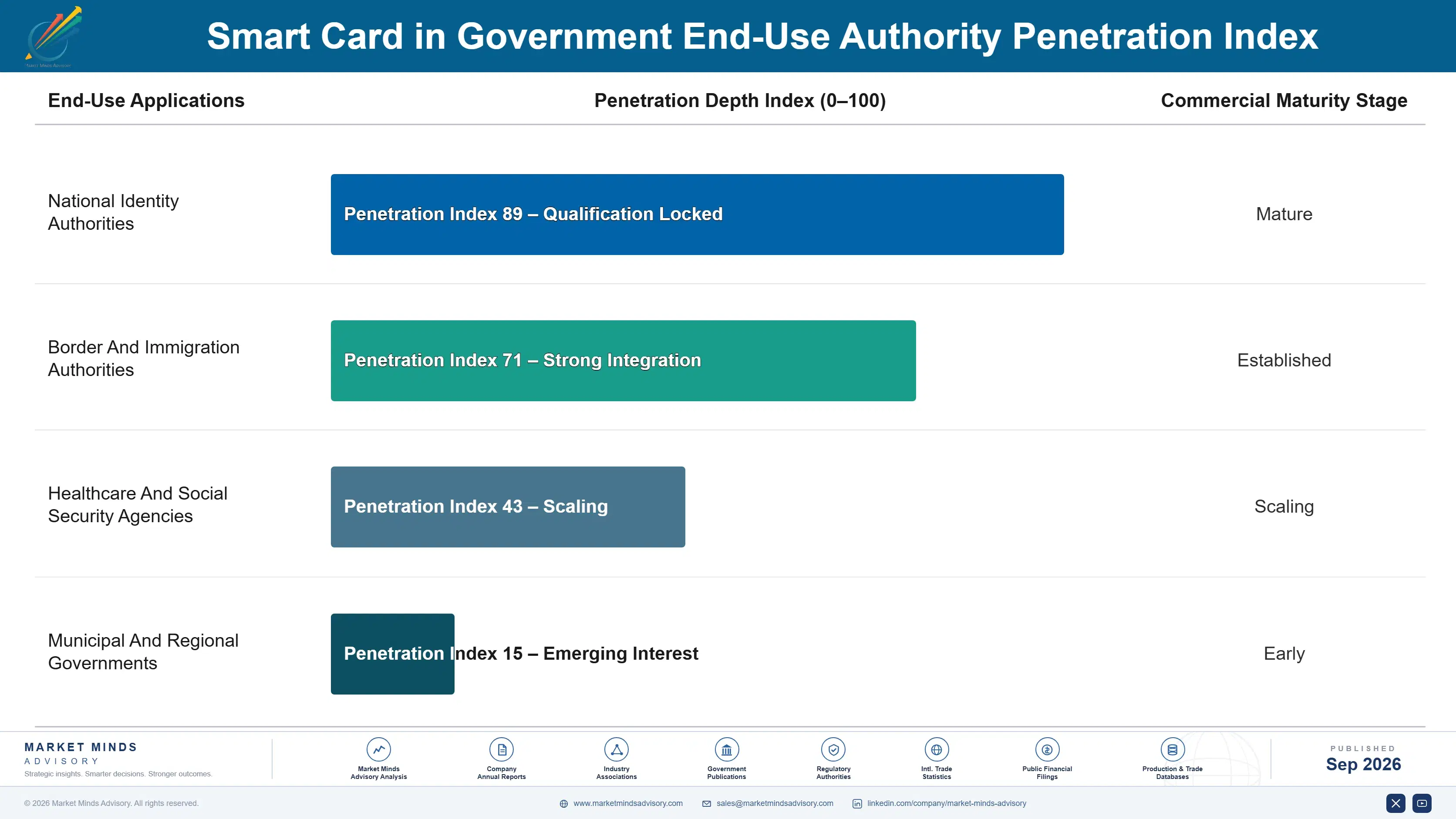
Identity authorities across major Asian and European markets are increasingly specifying biometric e-passport smart cards positioned against legacy contact-only chip designs, responding to cross-border travel security demand for embedded fingerprint and facial recognition data that speeds automated border processing without compromising verification accuracy. This shift has required manufacturers to invest in biometric sensor integration and security certification validation capability, a process that can take eighteen to thirty months per credential given required government procurement certification. Identity authorities are increasingly treating biometric specification as a competitive prerequisite for new travel document programmes, accelerating the transition well beyond contact-only retention.
Market Impact: Adds 8 percent mandate-driven volume