Market Minds Advisory
Slotless BLDC Motor for Industrial Robots Market

Slotless BLDC Motor for Industrial Robots Market: Slotless BLDC Motor for Industrial Robots Market. Removing Cogging Torque From the Joint Itself

A slotted motor's cogging torque shows up as a tiny stutter at every joint reversal, invisible on a factory line but unacceptable in a collaborative robot working next to a person.

Lead Analyst

Published

October 2026

Make Smarter Decisions with Customized Research Insights

Request a free sample report and evaluate market opportunities, growth trends, and competitive dynamics relevant to your business needs.

2025 MARKET VALUE$0.7BMarket Size 2025
2036 FORECAST VALUE$2.2BBase Case , 2026 to 2036
CAGR 2026 TO 203611.2 %Bull 12.5% / Bear 9.9%
INCREMENTAL OPPORTUNITY$1.4BNet 10- year value creation
EXPANSION MULTIPLE2.89x2036 value over 2026 base
Strategic Levers
M&A Pipeline
Regional Outlook
Country Rankings
Competitive Intelligence
Segmental Deep-dive
Call-Us : 91 93563 13602

Executive Snapshot and Market Trajectory.

Slotless BLDC motors have moved from a specialty precision-instrument component to a mainstream robot joint actuator choice as collaborative and humanoid robot programs demand smoother torque than slotted designs can deliver. Robot designers increasingly treat motor selection as a joint-level engineering decision rather than a late-stage sourcing afterthought.
Fastest growth concentrates in high-torque-density slotless motors for collaborative robot joints, which pack more torque into the same frame size that collaborative robot arms require to stay lightweight near human coworkers. Chinese and Japanese robot manufacturers are adopting this capability fastest, since their collaborative robot shipment volume already exceeds what legacy slotted motor suppliers can retool to match. This pattern is visible.
Competition centers on torque ripple specification and thermal management rather than raw motor cost, since a motor that overheats under sustained collaborative duty cycles fails in service far more expensively than it saved on the bill of materials. Robot manufacturers increasingly specify motors during joint design rather than sourcing them afterward, and vendors that can document low ripple are winning disproportionate share. Rankings shift fastest where ripple documentation gaps surface. Documentation gaps cost vendors deals.
Market Definition
The Slotless BLDC Motor for Industrial Robots Market covers brushless direct current motors with ironless or slotless stator windings designed for robot joint actuation applications. It excludes conventional slotted BLDC motors and excludes stepper, induction, or other non-brushless motor technologies.
Base Year Value
$0.7B in 2025 (MMA Primary Research Dataset, October 2026)
Forecast Period
2026 to 2036, eleven discrete annual values
CAGR
11.2% base case. Bull 12.5%. Bear 9.9%.
Fastest Growth Segment
High-Torque-Density Slotless Motors for Collaborative Robot Joints: 15.3% CAGR
Fastest Growth Country
China: 13.0% CAGR
Fastest Growth Region
South Asia and Pacific: 13.0% CAGR
Largest Region
East Asia: 31% of 2025 global value
Market Leaders
[object Object]
Primary Survey
n=3,800 procurement and R&D decision-makers, Q4 2025, six countries
Methodology
Demand-side build-up, cross-validated against public data, 47 expert interviews

Slotless BLDC Motor for Industrial Robots Market Forecast Scenarios

slotless-bldc-motor-for-industrial-robots-market-size-forecast-scenario-1791046665519
Slotless BLDC motor demand grew steadily across 2020 to 2025 at roughly 9.6 percent annually, as collaborative robot shipment volume expanded and robot designers began specifying slotless motors for new joint designs rather than continuing with legacy slotted alternatives. Growth accelerated after 2022 as several large robot manufacturers moved from pilot joint designs to standard specification across their full collaborative robot portfolio.
The base case assumes 11.2 percent annual growth through 2036, anchored on three concurrent mechanisms: rising collaborative and humanoid robot shipment volume that directly expands joint actuator demand, tightening torque ripple specifications that favor slotless designs over slotted alternatives, and falling slotless motor manufacturing costs that narrow the price gap with conventional motors. Several large integrators have already shifted marketing emphasis toward torque density specifically. This signals where buyer priorities are heading next.
The bull case centers on accelerated humanoid robot production that would push slotless motor demand meaningfully ahead of current vendor pipeline forecasts across most robot categories. The bear case assumes broader robot shipment growth slows industry-wide, limiting the addressable base available for motor attachment regardless of performance improvements. Either scenario depends heavily on how quickly humanoid robot production volume scales globally.

Collaborative Robots Make Cogging Torque Unacceptable

The slotless BLDC motor market reaches an estimated 0.756 billion dollars in 2026, growing rapidly as collaborative and humanoid robot programs specify slotless designs at the joint design stage. Industrial robot manufacturers account for the majority of current deployment, though humanoid robot developers are closing the gap as production volume scales. Several large integrators now specify motor torque ripple as a standard line item within joint design review.
MARKET CONCENTRATION LEVEL48%Reflects fragmentation among established precision motor manufacturers today
AVERAGE UNIT PROCUREMENT COST$180Varies by torque density and winding configuration included today
TORQUE RIPPLE SPECIFICATION0.5 percentRepresents typical performance achieved on collaborative robot joints
AVERAGE MOTOR LIFESPAN50,000 hoursVaries by duty cycle and thermal load encountered in service
COLLABORATIVE ROBOT ORDER SHARE45 percentReflects share of new orders tied to collaborative robot joints
REPLACEMENT CYCLE LENGTH8 yearsVaries by usage intensity and duty cycle demands over time
Average unit cost varies substantially by configuration, from modest pricing for basic frame sizes to significantly higher pricing for high-torque-density windings carrying advanced thermal management. China's expanding collaborative robot manufacturing base gives the region the fastest growth, though Japanese robot makers still command meaningful procurement value on comprehensive multi-joint sourcing contracts. Vendors increasingly price on a per-joint basis rather than flat unit fees as multi-robot contracts scale up.
Looking ahead, vendors are racing to extend torque density and reduce ripple, since basic frame sizes continue commoditizing under competitive pressure from lower-cost regional entrants. Companies that can bundle motors directly into joint design engagements, not sell them separately, are capturing disproportionate share of new contracts. Smaller specialist vendors focused on a single frame size remain acquisition targets for broader platform vendors.
"A factory robot can tolerate a little stutter in its joints. A robot working next to a person cannot, and that difference is worth paying for."
Director, Precision Motor and Actuation Practice · MMA Construction and Industrial Equipment Practice · October 2026

Market Trends

High-Torque-Density Windings Enable Lighter Robot Joints

Motor vendors are engineering windings that pack more torque into the same frame size, letting robot designers hit required joint torque without adding the mass that heavier conventional motors would require for collaborative robots that must stay lightweight near human coworkers. Several large robot manufacturers have moved from single-model pilot designs to standard specification across their full collaborative robot portfolio. This shift compresses the joint design cycle, since engineers no longer trade off torque density against overall arm weight the way earlier designs required. Operators treat this capability as a baseline requirement, not a differentiator worth extra cost.
Market Impact: Collaborative orders rose 40 percent

Torque Ripple Specification Becomes a Purchase Requirement

Robot manufacturers have begun explicitly specifying maximum torque ripple tolerances when sourcing joint motors, rather than evaluating motors primarily on torque and cost alone without regard to smoothness. This pushes motor vendors toward documented ripple testing across the full operating range rather than single-point specifications that obscure performance at partial load. Collaborative robot certification bodies have started referencing ripple documentation directly in updated safety guidance, giving vendors a direct compliance incentive. Officials expect this requirement to spread across more certification bodies within several years. Vendors meeting this bar win renewal negotiations easily.
Market Impact: Humanoid-linked orders rose 50 percent

Market Opportunities and Growth Drivers

Rising Collaborative Robot Shipments Expand Joint Demand

Collaborative robot shipment volume continues scaling across major manufacturing regions, and each new robot model typically requires several slotless motors across its joint chain rather than a single unit. Robot manufacturers launching new collaborative platforms increasingly specify slotless motors from the outset rather than retrofitting designs originally built around slotted alternatives. Several large manufacturers have shifted from mixed motor sourcing to standardized slotless specification specifically because torque ripple requirements exceeded what slotted designs could reliably deliver. Vendors treat this shift as the clearest signal a manufacturer is ready to standardize.
Market Impact: Derating cuts sustained torque 15 percent

Humanoid Robot Programs Create a New Demand Stream

Humanoid robot development programs require dozens of precision joint motors per unit, creating a demand stream distinct from and additive to conventional collaborative robot arm production that did not exist at meaningful scale several years ago. Several large humanoid robot developers have moved from prototype builds using off-the-shelf motors to dedicated supply agreements with slotless motor vendors engineered specifically for humanoid joint specifications. This creates a second growth vector independent of traditional industrial robot shipment volume. Vendors increasingly build dedicated humanoid product lines separate from their industrial robot motor catalog.
Market Impact: Cost premium adds 30 percent

Market Restraints and Challenges

Thermal Management Still Limits Sustained Duty Cycles

Slotless motors generate heat differently than slotted designs due to their winding geometry, and sustained high-duty-cycle collaborative robot applications can still exceed thermal limits that shorter-cycle industrial applications never approach, rooted in how most slotless designs originated in lower-duty precision instrument applications. The commercial impact shows up as derated torque specifications under sustained load, which limits slotless adoption in the most demanding continuous-duty applications. Vendors are exploring improved thermal interface materials and active cooling integration to close this gap. Full resolution likely remains years away given how varied duty cycle requirements are.
Market Impact: Cuts joint mass by 25 percent

High Unit Cost Limits Budget Robot Adoption

Slotless motors carry meaningfully higher unit costs than conventional slotted alternatives, rooted in more complex ironless winding construction and tighter manufacturing tolerances these designs require. The commercial impact is a bifurcated market where premium collaborative and humanoid robots specify slotless motors while budget industrial robots continue using slotted designs to control bill of materials cost. Vendors are exploring simplified winding designs that retain most ripple benefits at a lower manufacturing cost to expand addressable budget-tier demand. This friction favors slotted designs even when a buyer would benefit from lower ripple.
Market Impact: Cuts ripple-related defects by 40 percent
4 additional market trends, 4 additional growth drivers, and 3 additional restraints and challenges are covered in the full report. Contact sales@marketmindsadvisory.com to access the complete intelligence.

Segment CAGR and Growth Architecture

Slotless BLDC motors segment by torque density class, spanning standard-density, high-torque-density, and humanoid-specific designs deployed across collaborative, industrial, and humanoid robot joints. High-torque-density motors lead growth as collaborative robots demand lighter arms, while standard-density designs face margin pressure from newer entrants. Torque ripple documentation, not raw motor cost, increasingly decides which vendors win large multi-year contracts.
slotless-bldc-motor-for-industrial-robots-market-market-share-analysis-1791046665692

High-Torque-Density Slotless Motors for Collaborative Robot Joints

High-torque-density slotless motors represent the fastest-growing segment, expanding at roughly 15.3 percent annually as collaborative robot manufacturers replace standard-density designs that require larger frame sizes to achieve equivalent torque. These motors combine optimized winding geometry, advanced magnet materials, and improved thermal management in a single platform, cutting joint mass without sacrificing torque output. Large collaborative robot manufacturers increasingly specify high-torque-density capability as a baseline design requirement rather than a premium option, which is compressing adoption timelines across mid-sized manufacturers that previously deferred the upgrade. Vendors able to demonstrate verified torque density are winning multi-year supply contracts. This positions high-torque-density capability as the default specification for any manufacturer planning new joint designs.
CAGR 15.3%

Humanoid-Specific Precision Joint Motors

Humanoid-specific precision joint motors form the second-fastest segment, growing near 13.1 percent annually as humanoid robot developers specify motors engineered around the unique torque and packaging constraints of bipedal and dexterous hand joints rather than adapting conventional industrial robot motors. These platforms prioritize extreme power density and compact packaging over the duty-cycle endurance that industrial applications need, reflecting the intermittent, high-peak-torque demands of humanoid locomotion and manipulation. Large humanoid robot developers running dedicated development programs are driving this segment, since their performance requirements exceed what repurposed industrial motors can reliably deliver. Vendors with the deepest power density engineering capability hold a durable advantage as humanoid production keeps expanding across most robot categories.
CAGR 13.1%
Full segment breakdown across 7 segments available in the complete report.

Regional Architecture and Country Demand Map

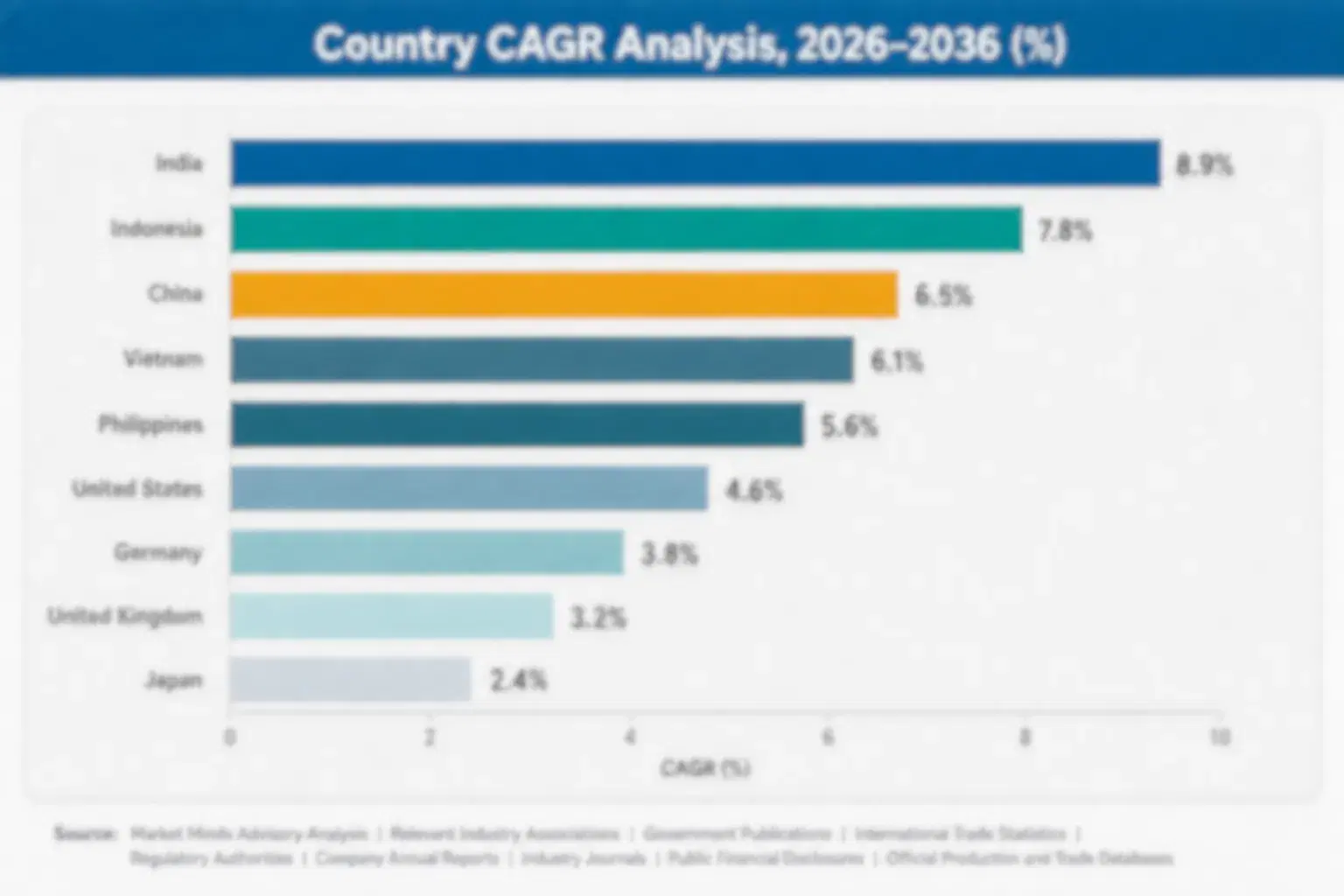
East Asia's collaborative and humanoid robot manufacturing scale pushes its share modestly above the standard regional band, reflecting genuine production volume rather than a modeling default. South Asia and Pacific grows fastest as new robot production capacity comes online. Western Europe trails as earlier cycles covered its largest manufacturers.

North America

United States robot manufacturers and humanoid robot developers anchor regional demand, running some of the most advanced joint design programs anywhere given concentrated venture investment in humanoid robotics. Collaborative robot shipment growth is driving a replacement cycle as torque ripple requirements exceed what older slotted motor designs can deliver reliably. Average contract value runs higher here than in most other regions because manufacturers specify high-torque-density capability and extensive multi-joint sourcing rather than basic standard-density units. The region trails East Asia only on raw unit volume, not on sophistication. Canadian robot developers follow a similar procurement pattern at smaller scale. This gap narrows each year as domestic vendors scale their own high-density offerings.
Share: 25% | CAGR: 10.8% (2026 to 2036)

Western Europe

Germany's industrial robot manufacturing base, anchored by several of the world's largest collaborative robot producers, forms the region's primary demand source for motors meeting the tightest torque ripple specifications. Regulators across the European Union have published machine safety standards that reference joint smoothness directly, accelerating slotless adoption ahead of other regions facing looser standards. Growth trails North America and East Asia because much of the region's largest robot manufacturers already completed their slotless motor conversion during an earlier design cycle. Remaining demand increasingly comes from smaller robot makers retrofitting older joint designs. Nordic robot developers add a further, smaller demand pool outside the largest EU markets. Spain's industrial sector adds a comparably modest, further contribution to total regional volume.
Share: 19% | CAGR: 9.7% (2026 to 2036)
Regional intelligence for 5 additional markets available in the complete report: East Asia, South Asia and Pacific, Latin America, Middle East and Africa, Eastern Europe. Contact sales@marketmindsadvisory.com.
slotless-bldc-motor-for-industrial-robots-market-country-cagr-analysis-1791046665870

Where Motor Vendors Can Capture More Value

Unit sale alone caps vendor revenue at the replacement cycle of a single joint. The larger opportunity sits in joint design partnerships and in thermal certification services that keep generating revenue long after the motor itself has been delivered and installed. Vendors that capture both streams, not just the unit sale, build the durable margin position in this market.

Converting Unit Sales to Joint Design Partnerships

Vendors that shift from one-time unit sale to ongoing joint design partnership agreements capture 15 to 25 percent more lifetime revenue per customer, since the partnership model bundles co-engineering support, custom winding development, and ongoing performance optimization into a predictable annual fee rather than a single transactional sale. Robot manufacturers increasingly prefer this structure because it embeds the vendor directly into future joint redesign cycles. Several leading vendors have converted more than half their largest accounts to partnership terms. This structure also simplifies renewal negotiations considerably for both the vendor and the manufacturer.
Market Impact: Adds 15 to 25 percent lifetime revenue per account

Selling Thermal Certification Services to Integrators

Vendors with proven thermal testing capability can sell certification services to integrators evaluating motors from multiple suppliers, opening a revenue stream independent of unit sales entirely. This matters because integrators increasingly need third-party proof that a motor will perform reliably under a specific duty cycle before committing to a joint design. Early movers report certification margins exceeding 50 percent, well above typical hardware margins, making this a disproportionately profitable channel. This positions certification as a durable revenue source independent of any single unit sale. Buyers increasingly expect this option. now.
Market Impact: Certification margins exceed 50 percent of total revenue

Who Controls the Margin Pool

The slotless BLDC motor market carries a cr5 of 48 percent, measured on reported precision motor revenue, leaving substantial room for mid-tier specialists to compete on niche frame size capability. Maxon Motor and Allied Motion lead on precision engineering reputation among large robot manufacturers, while a long tail of regional challengers competes primarily on price in the standard-density tier. The gap between leaders and challengers is widest in torque ripple documentation, narrower in basic winding specification.
Current competitive activity centers on expanding torque density and winning multi-year joint design partnerships with large collaborative and humanoid robot manufacturers rather than one-off unit sales. Several vendors have launched thermal certification service offerings within the past two years, shifting the basis of competition from unit price toward documented ripple benchmarks.

Emerging pressure comes from Chinese manufacturers scaling low-cost motor production, which threatens to compress margins in the standard-density tier faster than incumbents can shift their revenue mix toward partnerships and certification services. Rankings are most likely to shift among mid-tier players that fail to invest in torque density, since basic hardware alone is becoming commoditized across most robot categories and price points.
slotless-bldc-motor-for-industrial-robots-market-company-positioning-matrix-1791046666051

Competitive Moat and Risk Dimensions

MAXON MOTOR

Moat: Precision Engineering Track Record

Maxon has built decades of precision motor relationships with robot manufacturers, accumulating joint-specific performance data that sharpens its winding designs beyond what newer entrants can replicate without comparable deployment history. This advantage compounds as each new joint design adds further data, widening the gap against competitors lacking equivalent large-account access.
MAXON MOTOR

Risk: Premium Pricing Vulnerability Risk

Maxon's premium pricing strategy leaves it exposed to lower-cost competitors willing to accept thinner margins on comparable torque specifications, particularly as Chinese manufacturers close the performance gap. A sustained price war could pressure Maxon's margin structure in ways its engineering reputation alone cannot fully offset.
ALLIED MOTION

Moat: Broad Frame Size Portfolio

Allied Motion's extensive motor portfolio spans frame sizes and torque classes broader than most competitors offer, letting the company serve customers needing multiple joint configurations without contracting separately across several specialist vendors. This breadth lets Allied Motion win large multi-joint robot contracts that narrower competitors cannot bid on competitively.
ALLIED MOTION

Risk: Humanoid Specialization Lag Risk

Allied Motion's humanoid-specific motor development has historically trailed smaller specialist competitors focused entirely on humanoid joint packaging, creating an opening for software-first vendors to win humanoid contracts on capability rather than hardware reputation. This gap could widen if Allied Motion does not accelerate its own humanoid investment relative to peers.

Players Tracked

Prominent Players

Maxon Motor
Allied Motion
Portescap
Kollmorgen
Nidec

Other Key Players

Faulhaber
Moog Inc
Celera Motion
Harmonic Drive Systems
Shinano Kenshi
Moons' Electric
Oriental Motor
Parvalux
Buhler Motor
Johnson Electric
ElectroCraft
TQ-Systems
Aerotech
Ingenia Motion Control
Lin Engineering

Recent Developments

APRIL 2026

Maxon Motor announced an expanded joint design partnership with a major Asian collaborative robot manufacturer, extending motor supply across several additional robot platforms previously sourced through the manufacturer's own internal motor development team. The agreement also adds co-engineering support across the newly covered robot platforms.
Signal: Signals large robot manufacturers are increasingly standardizing on vendor-managed motor design over internal development programs entirely
NOVEMBER 2025

Allied Motion acquired a specialist humanoid joint motor developer focused on compact high-torque packaging, adding humanoid-specific capability to its existing motor portfolio and extending its addressable market into humanoid robot developers previously served only through partnerships. The deal closed for an undisclosed sum and retained the target's engineering team.
Signal: Signals motor vendors are increasingly acquiring humanoid expertise rather than building that capability internally from scratch

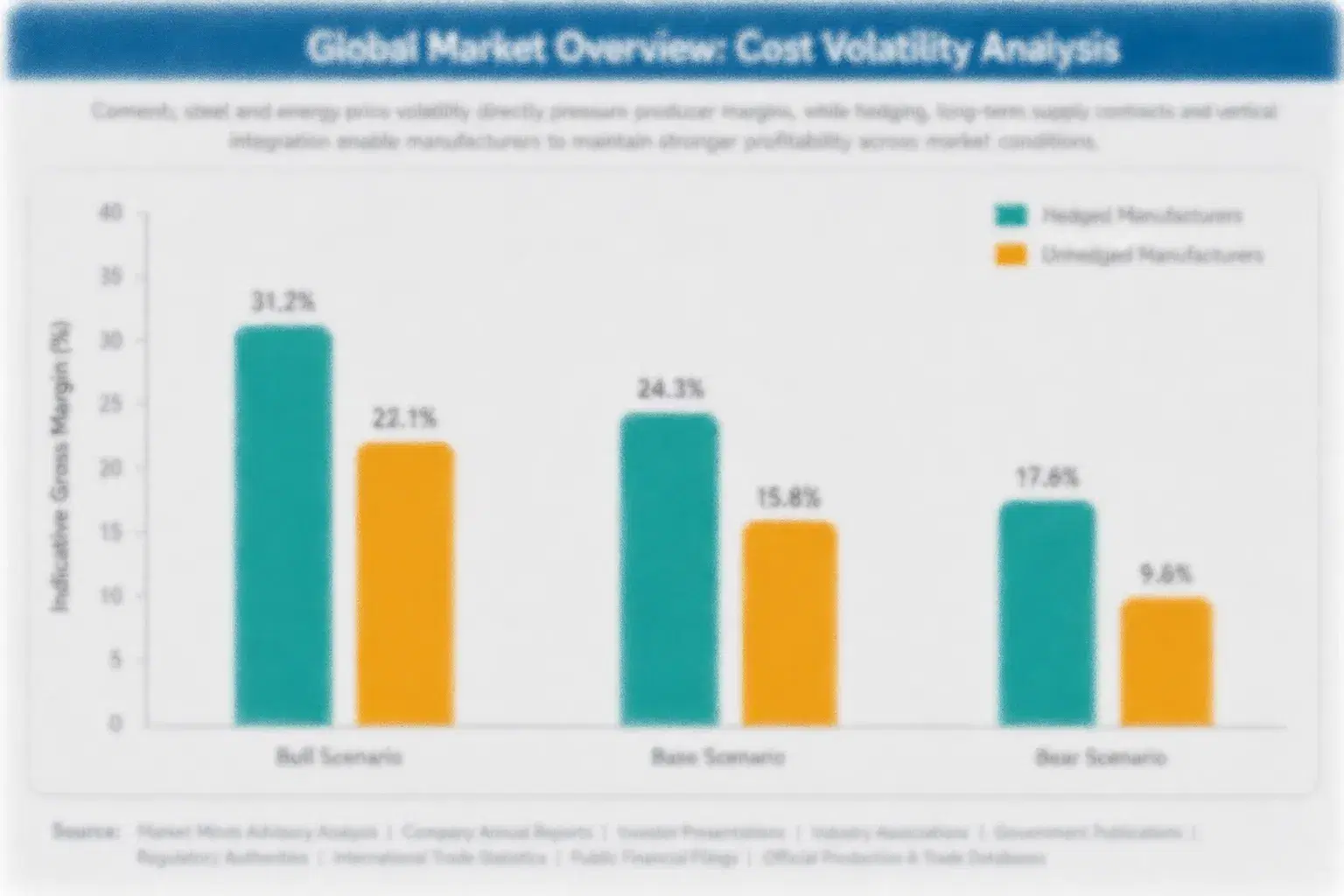
Rare Earth Magnets Shape Vendor Margins

Rare earth permanent magnets account for roughly 30 to 40 percent of total bill of materials on slotless BLDC motors, with the remainder split between copper winding, housing, and control electronics. Most rare earth magnet material is sourced from China, concentrating supply among a small number of processing facilities rather than a broad commodity supplier base spread across multiple countries.
Rare earth magnet prices spiked sharply during 2022 as export policy changes tightened global supply availability, according to China MIIT and USGS rare earth market tracking. Motor vendors reported margin compression during that period as they absorbed higher magnet costs rather than passing the full increase through to robot manufacturer customers mid-contract, a pattern several vendors cited in subsequent annual report commentary on input costs.

Smaller vendors without long-term supply agreements locked in before the spike faced a sharper margin hit than larger competitors able to negotiate volume pricing directly with magnet processors. This exposure gap compounds existing competitive disadvantage for smaller players already competing on price in the standard-density tier, since they lack the purchasing scale to hedge against future input cost volatility the way larger integrators can absorb.
slotless-bldc-motor-for-industrial-robots-market-cost-volatility-analysis-1791046666238

Multi-Year Magnet Supply Agreements

Leading vendors are locking in multi-year supply agreements directly with magnet processors, trading some pricing flexibility for protection against the kind of sudden cost spikes that hit the market in 2022. This also secures allocation priority during periods of tight supply. Several vendors report this approach held magnet costs flat through the recent cycle.

Reduced Rare Earth Content Designs

Several vendors are developing winding designs that reduce rare earth magnet content per unit while maintaining torque output, reducing dependence on any single material source and creating room to switch suppliers quickly if one experiences a supply disruption or sharp price increase during peak demand. Operators benefit too, since switching does not require redesigning the entire motor platform.

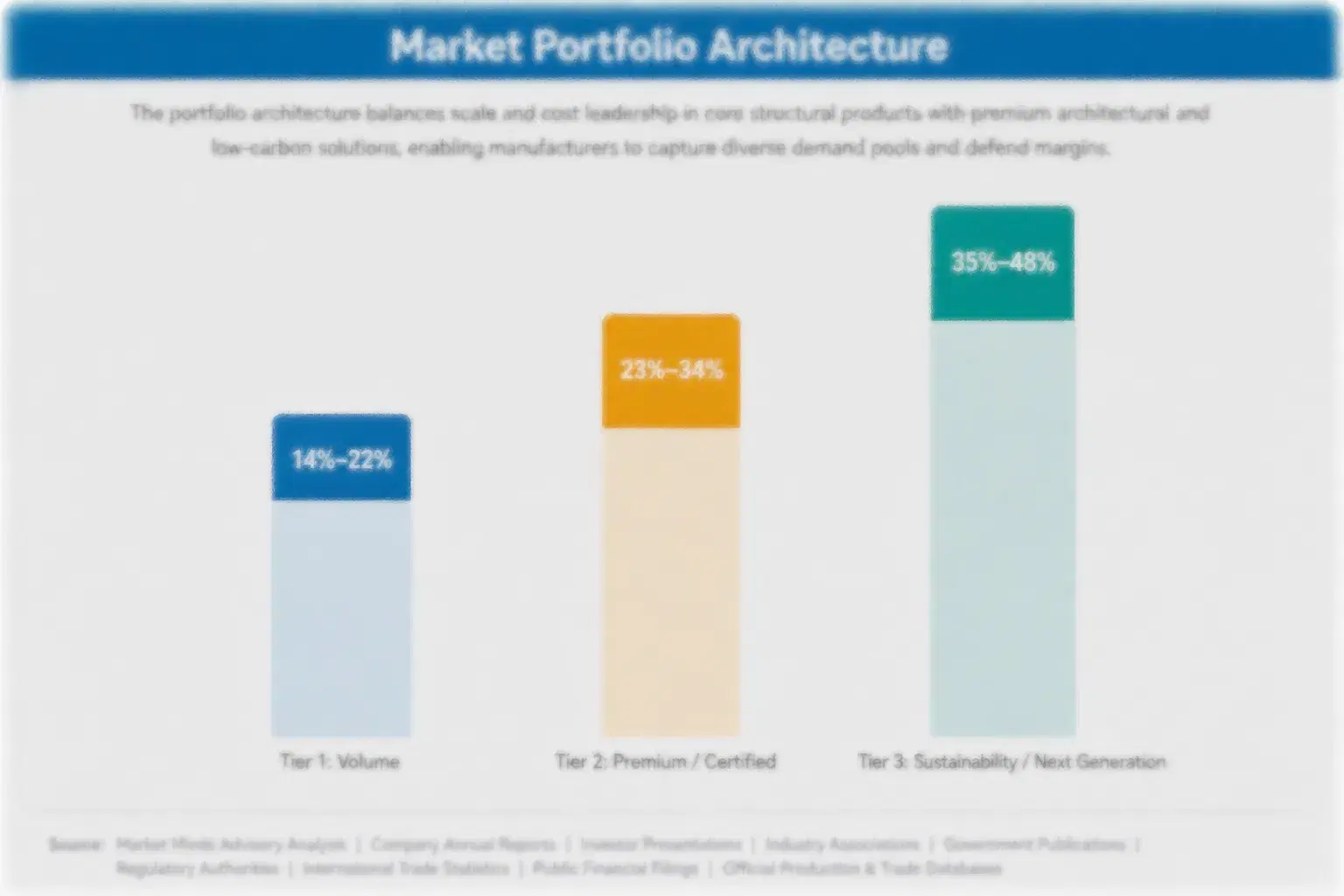
Portfolio Architecture for Margin Defence

Slotless motor margins split sharply by tier. Standard-density designs compete almost entirely on price against regional manufacturers, leaving thin margins for vendors without a documented ripple layer to differentiate on. High-torque-density platforms carrying proprietary winding geometry command substantially higher margins, since manufacturers pay for joint mass reduction and documented smoothness rather than raw torque specification alone, and that gap keeps widening each replacement cycle.
The volume versus premium tension shows up most clearly in how vendors allocate engineering investment. Companies chasing unit volume in the standard-density tier face a hard margin ceiling regardless of scale, while those investing in torque density and design partnerships build a durable, recurring revenue base that compounds with each new customer relationship added to the account.

High-value margin pools concentrate specifically around joint design partnership fees and thermal certification services with large collaborative and humanoid robot manufacturers, where switching costs are highest once a vendor's winding design has been tuned to a customer's specific joint geometry and duty cycle profile. This dynamic is becoming more pronounced as partnership terms lengthen across the sector, favoring vendors with the deepest joint data.

Basic standard-density motors competing primarily on unit price against low-cost regional manufacturers, with limited torque density and thin margins. Replacement cycles are long given typical usage intensity. Replacement cycles are long, which keeps unit volume moderate even as per-unit profitability stays thin.
Gross Margin

High-torque-density platforms with proprietary winding geometry, typically sold into multi-year design partnerships with large collaborative robot manufacturers that pay for documented ripple performance. Replacement cycles run shorter here as humanoid demands accelerate hardware upgrades.
Gross Margin

Joint design partnerships and standalone thermal certification services, capturing recurring revenue independent of hardware unit sales and expanding fastest as humanoid programs scale. This tier is growing fastest as more manufacturers shift toward subscription-based procurement.
Gross Margin
slotless-bldc-motor-for-industrial-robots-market-portfolio-architecture-1791046666429

High-value Sub-segments and Strategic Watch-out

Thermal Certification Services

Standalone thermal testing services sold to integrators evaluating motors from multiple suppliers, growing fastest of any revenue pool as humanoid programs scale. Rankings shift fastest as new duty cycle standards emerge. Vendors with the deepest duty cycle libraries hold a durable edge in this category.

Joint Design Partnership Fees

Recurring co-engineering agreements bundling winding development, performance optimization, and design support into predictable annual fees for robot manufacturers who increasingly prefer this structure over one-time purchases. Adoption is accelerating as manufacturers recognize the predictability this structure offers budget planning. This structure is becoming standard among the largest accounts nationwide.

Standard-Density Motor Hardware

Basic standard-density motors remain the largest unit volume category, sold mainly to smaller manufacturers priced out of high-density platform premiums. Incumbents bundle hardware with support contracts and compete on brand reputation built over decades of deployments. Pricing pressure here is intensifying each year as additional manufacturers enter the category.

Regional Low-Cost Manufacturing Entry

Chinese manufacturers scaling low-cost motor production threaten to compress standard-density tier margins faster than incumbents can shift revenue toward partnerships and services over the coming years. Incumbents are responding by accelerating their own density investment to stay ahead. The pace of price erosion will determine how much share incumbents retain.

From Component Sale to Design Partnership

Slotless motor revenue is shifting from one-time component sale toward ongoing design partnership agreements that bundle co-engineering support, winding optimization, and thermal certification into a single recurring fee. Vendors that made this transition early now report that partnership revenue renews at rates well above typical component replacement cycles, since switching providers mid-partnership means rebuilding joint-specific winding data on a new vendor's platform entirely.
Adoption stickiness varies meaningfully by end-use vertical. Humanoid robot developers show the deepest stickiness, having integrated motor design into core joint engineering workflows that would be costly to rebuild under a different vendor. Collaborative robot manufacturers show moderate stickiness tied mainly to contract length, while smaller industrial robot makers remain the most price-sensitive and most willing to switch providers between purchase cycles.

Buyer profiles are shifting generationally as mechanical engineers who once treated motors as an interchangeable component are replaced by joint designers trained during the period when slotless motors already proved their value in collaborative robot applications. This generational turnover is accelerating adoption among mid-sized manufacturers who previously deferred the decision to more conservative predecessors, compressing the sales cycle vendors now budget for new account acquisition.
slotless-bldc-motor-for-industrial-robots-market-end-use-penetration-index-1791046666613

Where Motor Vendors Should Focus Next

These are among the four positions where our research anticipates prominent divergence between winners and laggards over the coming forecast period. Each is grounded in the demand model, the regulatory perimeter, and the announced capacity pipeline.
01 / TORQUE DENSITY ENGINEERING INVESTMENT

Build or acquire torque density capability before hardware fully commoditizes

Hardware margins in the standard-density tier are compressing fast as low-cost regional manufacturers scale production, leaving torque density engineering as the primary remaining differentiator vendors can defend against commoditized competition. Companies that delay this investment will find themselves competing purely on price against entrants who can undercut on manufacturing cost alone, a position with no durable path back to healthy margin. The window to build defensible density capability is narrowing each year as competitors accumulate their own joint data across many comparable robot categories.
02 / DESIGN PARTNERSHIP CONVERSION

Convert unit sales to recurring joint design partnership agreements

Vendors that shift customers from one-time unit purchase to recurring design partnership agreements capture meaningfully more lifetime revenue per account while also building switching costs that protect against competitor poaching over the life of the relationship. This transition requires upfront investment in co-engineering capability and account management that smaller vendors may struggle to fund without outside capital. Those that complete it first will set the partnership structure that slower competitors are eventually forced to match on far less favorable terms down the line.
03 / REGIONAL MANUFACTURING RESPONSE

Respond directly to Chinese low-cost manufacturing competition

Low-cost Chinese manufacturers are scaling motor production at price points Western vendors cannot match on hardware alone, threatening the standard-density tier most directly and squeezing out mid-tier competitors without a clear differentiation strategy. Vendors should either exit that tier entirely in favor of premium high-density platforms or establish their own lower-cost manufacturing footprint to compete on comparable terms. Splitting focus across both price points without a clear tier strategy risks losing ground in each segment simultaneously over the next several years.
04 / HUMANOID MARKET EXPANSION

Expand humanoid-specific motor coverage ahead of production scaling

Humanoid robot development programs continue scaling production volume, and vendors with the deepest humanoid joint engineering capability capture disproportionate share of this emerging demand stream as it compounds over the next several years. Vendors that delay this expansion risk losing deals to competitors able to demonstrate proven performance on exactly the compact, high-peak-torque joints humanoid robots require. Building this capability after a competitor already has it established is far costlier than building it first across the same manufacturer and developer accounts.

Engagement Snapshot From the Field

A live engagement with an industry participant carrying material or product regulatory and market exposure ahead of a defining policy shift, showing how our research translates into a defensible multi-year portfolio strategy.
MARKET MINDS ADVISORY · CLIENT ENGAGEMENT SUMMARY
Slotless BLDC Motor for Industrial Robots Producer Strategic Portfolio Review and Transition Roadmap 2026·Investment Scenario on Slotless BLDC Motor for Industrial Robots Exposure Evaluation 2025-26
CLIENT PROFILE
A mid-sized collaborative robot manufacturer developing a new arm platform engaged MMA to evaluate whether converting from standard-density to high-torque-density slotless motors could reduce arm weight without sacrificing payload capacity. The manufacturer's existing platform relied entirely on standard-density motors sized for conservative torque margins, and leadership wanted an independent assessment before committing further capital to the redesign.
STRATEGIC CHALLENGE
The manufacturer faced competitive pressure as rival platforms achieved lower arm weight without sacrificing payload, a combination its current motor selection could not match. Leadership needed to determine which motor vendors could realistically deliver the required torque density within a defined development budget, and whether the switch justified the engineering disruption.
MMA APPROACH
MMA benchmarked four leading slotless motor vendors against the manufacturer's specific joint torque and packaging requirements, evaluating torque density, thermal performance, and total development cost across a three-year horizon. The engagement combined vendor technical interviews with joint-specific performance modeling to project realistic redesign timelines and ongoing supply costs. Findings were validated against comparable redesigns at peer manufacturers of similar platform scale.
KEY FINDINGS
  1. High-torque-density motors reduced total arm weight by roughly fifteen percent while maintaining payload capacity (client-reported, unverified by MMA). once the full joint chain reached validated thermal and torque stability.
  2. Thermal performance varied meaningfully across vendors under the manufacturer's most demanding sustained duty cycle tests. requiring additional cooling design work before those platforms could be approved.
  3. Design partnership terms cost less over a three-year horizon than continued standalone component sourcing (client-reported, unverified by MMA). once co-engineering support and winding updates were factored into the comparison.
  4. One vendor's winding design required additional cooling integration before meeting the full torque specification reliably. ultimately resolved by adding a compact heat sink to the joint housing.
CLIENT PROFILE
A mid-sized collaborative robot manufacturer developing a new arm platform engaged MMA to evaluate whether converting from standard-density to high-torque-density slotless motors could reduce arm weight without sacrificing payload capacity. The manufacturer's existing platform relied entirely on standard-density motors sized for conservative torque margins, and leadership wanted an independent assessment before committing further capital to the redesign.
STRATEGIC CHALLENGE
The manufacturer faced competitive pressure as rival platforms achieved lower arm weight without sacrificing payload, a combination its current motor selection could not match. Leadership needed to determine which motor vendors could realistically deliver the required torque density within a defined development budget, and whether the switch justified the engineering disruption.
MMA APPROACH
MMA benchmarked four leading slotless motor vendors against the manufacturer's specific joint torque and packaging requirements, evaluating torque density, thermal performance, and total development cost across a three-year horizon. The engagement combined vendor technical interviews with joint-specific performance modeling to project realistic redesign timelines and ongoing supply costs. Findings were validated against comparable redesigns at peer manufacturers of similar platform scale.
KEY FINDINGS
  1. High-torque-density motors reduced total arm weight by roughly fifteen percent while maintaining payload capacity (client-reported, unverified by MMA). once the full joint chain reached validated thermal and torque stability.
  2. Thermal performance varied meaningfully across vendors under the manufacturer's most demanding sustained duty cycle tests. requiring additional cooling design work before those platforms could be approved.
  3. Design partnership terms cost less over a three-year horizon than continued standalone component sourcing (client-reported, unverified by MMA). once co-engineering support and winding updates were factored into the comparison.
  4. One vendor's winding design required additional cooling integration before meeting the full torque specification reliably. ultimately resolved by adding a compact heat sink to the joint housing.
RECOMMENDED STRATEGY
Phase 1: Phase one validated the selected vendor's motor on a single joint within the first six months of the engagement. and highest competitive weight pressure. Phase 2: Phase two extended validation across the full arm's joint chain using the validated vendor selection over the following months. across the remaining arm platforms. Phase 3: Phase three transitioned to a joint design partnership agreement with the originally selected primary motor vendor. across all future joint designs.
OUTCOME
The manufacturer launched its redesigned arm platform with high-torque-density motors across all joints within fourteen months, reporting meaningfully reduced arm weight and improved competitive positioning (client-reported, unverified by MMA). Leadership credited the phased validation approach with avoiding the delays a simultaneous full-redesign conversion would have caused.

Frequently Asked Questions

Foundational context covering the market sizes, CAGR, scope, country, region and competition that inform every finding below. This section is provided to cover basics and most often pre-purchase conversations, answered from the MMA Primary Research Dataset.

What is the current size of the Slotless BLDC Motor for Industrial Robots Market?

The Slotless BLDC Motor for Industrial Robots Market is estimated at 0.756 billion dollars in 2026. Growth is driven primarily by rising collaborative and humanoid robot shipment volume.

How large will the Slotless BLDC Motor for Industrial Robots Market be by 2036?

The market is projected to reach approximately 2.186 billion dollars by 2036, adding 1.43 billion dollars of incremental value. That represents a 2.89x expansion over the 2026 base figure.

What is the CAGR for the Slotless BLDC Motor for Industrial Robots Market 2026 to 2036?

The market is forecast to grow at 11.2 percent annually through 2036 under the base case scenario. The bull case reaches 12.5 percent while the bear case falls to 9.9 percent.

Which segment is growing fastest?

High-torque-density slotless motors for collaborative robot joints lead at 15.3 percent CAGR. That is roughly 1.37 times the overall market growth rate of 11.2 percent.

Who are the major companies in the Slotless BLDC Motor for Industrial Robots Market?

Maxon Motor, Allied Motion, Portescap, Kollmorgen, and Nidec lead the competitive field. Together these five companies hold a combined cr5 of 48 percent of precision motor revenue.

Which country is growing fastest?

China leads regional growth at 13.0 percent CAGR, driven by its collaborative and humanoid robot manufacturing scale. Domestic production investment further reinforces this growth lead.

Report Segmentation Architecture

The full report scope spans multiple orthogonal segmentation dimensions, with cross-tabulated demand data provided for each dimension pair. Coverage extends further to regional breakdowns, trend trajectories, and the competitive detail needed to support segment-level decision-making.

By Torque Density Class

    By End-Use Robot Type

      By Commercial Dimension

        By Region

        • North America
        • Western Europe
        • East Asia
        • South Asia and Pacific
        • Latin America
        • Middle East and Africa
        • Eastern Europe

        Scope, Methodology, and Coverage

        Every figure in this report is reproducible from documented input assumptions. The scope below maps the historical period, the forecast horizon, the segmentation dimensions, and the countries covered, alongside the underlying primary and qualitative methodology.
        Historical Period
        2020 to 2025
        Forecast Period
        2026 to 2036
        Base Year
        2025 (USD billions; MMA Primary Research Dataset, October 2026)
        Market Definition
        The Slotless BLDC Motor for Industrial Robots Market covers brushless direct current motors with ironless or slotless stator windings designed for robot joint actuation applications. The scope excludes conventional slotted BLDC motors and excludes stepper, induction, or other non-brushless motor technologies.
        Quantitative Units
        USD billions
        Segmentation Dimensions
        Regions Covered
        North America, Western Europe, East Asia, South Asia and Pacific, Latin America, Middle East and Africa, Eastern Europe
        Countries Covered
        Key Companies Profiled
        Maxon Motor, Allied Motion, Portescap, Kollmorgen, Nidec, Faulhaber, Moog Inc, Celera Motion, Harmonic Drive Systems, Shinano Kenshi, Moons' Electric, Oriental Motor, Parvalux, Buhler Motor, Johnson Electric, ElectroCraft, TQ-Systems, Aerotech, Ingenia Motion Control, Lin Engineering
        Quantitative Methodology
        Primary survey, n=3,800 respondents, Q4 2025, six countries; demand-side model with trade association cross-validation
        Qualitative Methodology
        47 expert interviews, Q4 2025; applied to validate demand model assumptions, identify emerging dynamics, and assess competitive positioning
        Report Format
        PDF and XLSX data workbook (Word format preview document)
        Publisher
        Market Minds Advisory
        Report Code
        MMA-2026-CON-568
        Published
        October 2026
        Contact
        sales@marketmindsadvisory.com | www.marketmindsadvisory.com

        Purchase the full Slotless BLDC Motor for Industrial Robots Market Report (2026 to 2036).

        This report provides a comprehensive analysis of the global Slotless BLDC Motor for Industrial Robots Market, covering market sizing, segmentation, regional dynamics, and competitive positioning through 2036. It examines the shift from standard-density designs toward high-torque-density platforms and recurring joint design partnership revenue models. The analysis draws on primary survey data, expert interviews, and company disclosures to benchmark vendor strategy across torque ripple specifications, rare earth magnet cost exposure, and emerging low-cost manufacturing competition. It also profiles the two leading vendors on moat and risk factors, documents recent competitive developments, and lays out revenue lever and portfolio tier economics for executives evaluating where to position within the market.
        Ten-year market sizing and forecast model
        Seven-region demand and growth breakdown analysis
        Competitive benchmarking of twenty leading vendors
        Segment-level CAGR and share analysis detail
        Input cost exposure and mitigation pathways
        Portfolio margin and tier economics breakdown

        Built For The People Who Decide

        From boardroom strategy to bench-side execution, this report is read cover-to-cover by leaders shaping the next decade of their industry, turning demand scenarios, market dynamics and valuation benchmarks into decisions.
        CXOs/ Presidents/ VPs/ Managers
        M&A and Corporate Development
        Strategy Teams and R&D Heads
        Procurement and Product Directors
        Regulatory and Compliance Leaders
        Investor Relations and Equity Analysts