Market Minds Advisory
Robotic CNC Machine Tending Market

Robotic CNC Machine Tending Market: Robotic CNC Machine Tending Market. The Night Shift Nobody Has to Staff

Machine shops can't hire enough operators to run a third shift, so they're putting a robot at the machine door instead, turning tending from a staffing problem into a capital purchase decision.

Lead Analyst

Published

October 2026

Make Smarter Decisions with Customized Research Insights

Request a free sample report and evaluate market opportunities, growth trends, and competitive dynamics relevant to your business needs.

2025 MARKET VALUE$1.5BMarket Size 2025
2036 FORECAST VALUE$5.0BBase Case , 2026 to 2036
CAGR 2026 TO 203611.5 %Bull 12.8% / Bear 10.2%
INCREMENTAL OPPORTUNITY$3.3BNet 10- year value creation
EXPANSION MULTIPLE2.97x2036 value over 2026 base
Strategic Levers
M&A Pipeline
Regional Outlook
Country Rankings
Competitive Intelligence
Segmental Deep-dive
Call-Us : 91 93563 13602

Executive Snapshot and Market Trajectory.

Robotic CNC tending has moved from a large-shop novelty to a mainstream purchase for small and mid-sized machine shops, driven almost entirely by the inability to hire enough machine operators. Small shop owners increasingly treat it as the only realistic path to running unattended shifts.
Fastest growth concentrates in vision-guided collaborative tending cells built for low-volume shops, which let a single cell switch between part families without the custom fixturing and programming that traditional tending robots require. Chinese and American job shops running small batch sizes are adopting this capability fastest, since their part variety already exceeds what fixed tending programs can handle economically. Vendors treat this flexibility as the clearest signal a shop is ready to buy.
Competition centers on setup simplicity and part recognition reliability rather than raw cycle speed, since a cell that takes a technician all day to reprogram between jobs defeats the labor-saving purpose entirely. Integrators increasingly specify tending cells as part of the machine purchase package rather than sourcing separately, and vendors that can bundle both are winning disproportionate share of new shop contracts. That bar keeps rising each cycle.
Market Definition
The Robotic CNC Machine Tending Market covers robotic systems that load and unload workpieces from CNC machining centers, lathes, and grinders. It excludes the CNC machines themselves and excludes general-purpose material handling robots not configured with dedicated machine tending end effectors.
Base Year Value
$1.5B in 2025 (MMA Primary Research Dataset, October 2026)
Forecast Period
2026 to 2036, eleven discrete annual values
CAGR
11.5% base case. Bull 12.8%. Bear 10.2%.
Fastest Growth Segment
Vision-Guided Collaborative Tending Cells for Low-Volume Shops: 15.8% CAGR
Fastest Growth Country
China: 13.6% CAGR
Fastest Growth Region
South Asia and Pacific: 13.5% CAGR
Largest Region
East Asia: 30% of 2025 global value
Market Leaders
[object Object]
Primary Survey
n=3,800 procurement and R&D decision-makers, Q4 2025, six countries
Methodology
Demand-side build-up, cross-validated against public data, 47 expert interviews

Robotic CNC Machine Tending Market Forecast Scenarios

robotic-cnc-machine-tending-market-size-forecast-scenario-1791042334727
Robotic CNC tending demand grew steadily across 2020 to 2025 at roughly 9.9 percent annually, as large machine shops continued automating established production lines while small and mid-sized shops began adopting tending robots for the first time at meaningful scale. Growth accelerated after 2022 as collaborative robot pricing fell enough to bring small job shops into the buyer pool.
The base case assumes 11.5 percent annual growth through 2036, anchored on three concurrent mechanisms: a persistent machine operator labor shortage that shows no sign of easing, falling collaborative robot pricing that makes tending viable for smaller shops, and vision-guided part recognition that eliminates the custom fixturing previously required for low-volume work. Several large integrators have already shifted marketing emphasis toward setup simplicity specifically. This signals where buyer priorities are heading next.
The bull case centers on accelerated small shop adoption that would push collaborative tending cell demand meaningfully ahead of current vendor pipeline forecasts across most manufacturing segments. The bear case assumes a broader manufacturing capital spending slowdown that would reduce new machine purchases industry-wide, limiting the addressable base available for tending cell attachment. Either scenario depends heavily on how quickly collaborative robot pricing continues falling across most categories.

The Night Shift Nobody Has to Staff Anymore

The robotic CNC machine tending market reaches an estimated 1.672 billion dollars in 2026, growing rapidly as small and mid-sized shops join large manufacturers in adopting tending automation. Large automotive and aerospace suppliers account for a significant share of current deployment, though job shops are closing the gap as collaborative robot pricing declines. Several large integrators now bundle tending cell procurement with broader shop automation planning engagements.
MARKET CONCENTRATION LEVEL40%Reflects fragmentation among established industrial robot vendors today
AVERAGE CELL PROCUREMENT COST$55,000Varies by payload capacity and vision system configuration included
UNATTENDED RUNTIME ACHIEVED16 hoursRepresents typical overnight operation achieved on tended machines
AVERAGE SETUP TIME45 minutesVaries by part geometry and fixture configuration required today
SMALL SHOP ADOPTION SHARE35 percentReflects share of installations at shops under fifty employees
REPLACEMENT CYCLE LENGTH10 yearsVaries by usage intensity and shift pattern over time
Average cell cost varies substantially, from moderate pricing for basic fixed-program systems to significantly higher pricing for vision-guided platforms carrying advanced part recognition. China's expanding small shop manufacturing base gives the region the fastest growth, though American job shops still command meaningful procurement value on multi-machine tending integration projects. Vendors increasingly price on a per-cell basis rather than flat unit fees as installations scale across multiple machines.
Looking ahead, vendors are racing to extend part recognition reliability and reduce setup time, since basic fixed-program systems continue commoditizing under competitive pressure from lower-cost regional entrants. Companies that can bundle tending cells directly into machine procurement packages, not sell them separately, are capturing disproportionate share of new contracts. Smaller specialist vendors focused on a single vision system remain acquisition targets for broader platform vendors.
"The machine doesn't care if it runs at two in the afternoon or two in the morning. The robot is what makes two in the morning free."
Director, Machine Shop Automation Practice · MMA Construction and Industrial Equipment Practice · October 2026

Market Trends

Vision-Guided Part Recognition Eliminates Custom Fixturing

Tending cell vendors are embedding machine vision directly into robot arms, letting the system recognize and grip different part geometries without the custom fixturing and dedicated programming that traditional tending setups require for each new job. Several small job shops have moved from single-part pilot cells to standing multi-product tending programs running dozens of part numbers through the same machine each week. This shift compresses setup time between jobs from hours of manual fixture changes to a few minutes of vision calibration, which shops increasingly treat as a baseline requirement.
Market Impact: Operator vacancies rose 35 percent

Collaborative Robot Pricing Opens Small Shop Adoption

Collaborative robot prices have declined sharply over the past several years, pulling tending cell cost down into range for small job shops that previously could not justify the capital outlay against their machine budgets. Shops running a handful of CNC machines are now purchasing single-cell systems rather than relying entirely on manual operators for every shift. This broadens the addressable customer base well beyond the large automotive and aerospace suppliers that drove early market adoption, creating a second wave of demand. Officials expect this trend to continue as component costs keep declining across most sensor categories.
Market Impact: Extends machine runtime by 60 percent

Market Opportunities and Growth Drivers

Persistent Machine Operator Shortage Pushes Automation Forward

Skilled machine operators are becoming harder to recruit and retain across major manufacturing regions, pushing shops toward robotic tending regardless of upfront capital cost considerations. Shops that once relied on experienced operators to run overnight shifts now face multi-month hiring delays that tending robots sidestep entirely once installed and calibrated. Several shop owners have shifted from occasional robot supplementation to full unattended overnight operation specifically because manual staffing became unreliable at the volumes their production schedules require. Vendors treat this shift as the clearest signal a shop is ready to buy.
Market Impact: Failed picks add 12 percent downtime

Unattended Overnight Operation Extends Machine Utilization

Shops deploying tending robots are extending machine runtime well beyond standard daytime shifts, running cells unattended overnight and on weekends to maximize utilization of capital equipment that otherwise sits idle. This pattern shifts the economic case for tending robots from pure labor cost replacement toward capital equipment utilization, a framing that resonates with shop owners evaluating return on a machine purchase rather than a staffing decision. Several shops report running sixteen hours unattended on their highest-value machines nightly. Vendors increasingly market this metric directly to shop owners evaluating return on investment.
Market Impact: Leasing cuts entry cost 40 percent

Market Restraints and Challenges

Part Variety Still Limits Vision Recognition Reliability

Vision-guided tending systems still struggle with highly irregular or reflective part geometries that confuse recognition algorithms designed around simpler reference shapes, rooted in how most training datasets emphasize common part families over edge cases. The commercial impact shows up as failed pick attempts requiring manual intervention, which erodes the unattended operation shops expect from their investment. Vendors are exploring expanded training datasets drawn from irregular real-world parts and improved reflective surface handling to close the reliability gap. Full standardization likely remains years away given how varied part geometries are across shops.
Market Impact: Cuts setup time by 75 percent

High Upfront Capital Cost Limits Smallest Shop Adoption

Vision-guided tending platforms still carry capital costs beyond what the smallest job shops can justify against their machine budgets, rooted in the specialized sensor suites and recognition software these systems require. The commercial impact is a bifurcated market where mid-sized shops deploy owned cells while the smallest shops remain dependent on manual operators for overnight coverage. Vendors are exploring leasing and tending-as-a-service models that spread capital cost across multiple smaller shops sharing cell access. This friction favors incumbents even when a challenger offers measurably better recognition accuracy. Newer entrants without scale struggle most under this constraint.
Market Impact: Cell pricing fell 40 percent
4 additional market trends, 4 additional growth drivers, and 3 additional restraints and challenges are covered in the full report. Contact sales@marketmindsadvisory.com to access the complete intelligence.

Segment CAGR and Growth Architecture

Robotic CNC tending segments by control architecture, spanning fixed-program systems, vision-guided collaborative cells, and heavy-duty industrial tending platforms deployed across automotive, aerospace, and general machining shops. Vision-guided collaborative cells lead growth as small shops demand flexibility, while fixed-program systems face margin pressure from newer entrants. Setup simplicity, not raw cycle speed alone, increasingly decides which vendors win small shop contracts.
robotic-cnc-machine-tending-market-market-share-analysis-1791042335024

Vision-Guided Collaborative Tending Cells for Low-Volume Shops

Vision-guided collaborative tending cells represent the fastest-growing segment, expanding at roughly 15.8 percent annually as small job shops replace fixed-program systems that require custom fixturing for each part family. These systems combine machine vision, adaptive gripping, and collaborative safety features in a single platform, cutting setup time between jobs from hours to minutes. Small and mid-sized shops increasingly specify vision-guided capability as a baseline purchase requirement rather than a premium add-on, which is compressing adoption timelines across shops that previously deferred the investment entirely. Vendors able to demonstrate reliable recognition across varied part geometry are winning multi-cell fleet contracts. This positions vision-guided capability as the default specification for any shop planning overnight unattended operation.
CAGR 15.8%

Heavy-Duty Industrial Tending Platforms for High-Volume Lines

Heavy-duty industrial tending platforms form the second-fastest segment, growing near 13.1 percent annually as automotive and aerospace suppliers deploy higher-payload tending systems for larger, heavier workpieces that collaborative cells cannot safely handle. These platforms prioritize raw cycle speed and payload capacity over the flexibility that smaller shops need, reflecting the high-volume, low-variety production profile of their primary customers. Large tier-one suppliers running dedicated production lines for a single part number are driving this segment, since their volume justifies the specialized tooling investment. Vendors with the deepest payload engineering capability hold a durable advantage as high-volume lines keep expanding across most automotive regions. Lead times here run longer than collaborative cell orders, since each system requires facility-specific engineering review.
CAGR 13.1%
Full segment breakdown across 7 segments available in the complete report.

Regional Architecture and Country Demand Map

China's dense small shop manufacturing base gives East Asia narrow leadership over North America, where labor shortage pressure and higher shop margins drive adoption despite a smaller shop count. South Asia and Pacific expands fastest as new shops open. Western Europe trails as earlier cycles covered its largest operations.

North America

United States job shops face some of the most acute machine operator shortages anywhere, pushing even small shops with a handful of machines toward tending robots as the only realistic path to running unattended overnight shifts. Average contract value runs higher here than in most other regions because shops specify vision-guided capability and multi-machine integration rather than basic fixed-program units. Several state manufacturing grant programs now subsidize robotic tending purchases specifically to help smaller shops compete against larger, better-staffed competitors. The region trails East Asia only on raw shop count, not on sophistication. Canadian job shops follow a similar procurement pattern at smaller scale. This gap narrows each year as domestic vendors scale their own vision-guided offerings further.
Share: 25% | CAGR: 11.0% (2026 to 2036)

Western Europe

Germany's precision machining sector, anchored by automotive and aerospace component suppliers, forms the region's primary demand source for tending systems meeting the tightest part tolerance specifications. Skilled trades shortages across the European Union have pushed several national manufacturing associations to actively promote robotic tending adoption among small and mid-sized member shops. Growth trails North America and East Asia because much of the region's largest machining operations already completed their initial tending deployment during an earlier automation wave. Remaining demand increasingly comes from smaller shops retrofitting older equipment. Nordic precision shops add a further, smaller demand pool outside the largest EU markets. Spain's machining sector adds a comparably modest, further contribution to total regional volume.
Share: 20% | CAGR: 10.0% (2026 to 2036)
Regional intelligence for 5 additional markets available in the complete report: East Asia, South Asia and Pacific, Latin America, Middle East and Africa, Eastern Europe. Contact sales@marketmindsadvisory.com.
robotic-cnc-machine-tending-market-country-cagr-analysis-1791042335308

Where Tending Vendors Can Capture More Value

Equipment sale alone caps vendor revenue at the replacement cycle of a single cell. The larger opportunity sits in tending-as-a-service contracts and in part recognition software that keeps generating revenue long after the cell itself has been delivered and installed. Vendors that capture both streams, not just the equipment sale, build the durable margin position in this market.

Converting Equipment Sales to Tending Subscriptions

Vendors that shift from one-time equipment sale to recurring tending-as-a-service contracts capture 15 to 25 percent more lifetime revenue per shop, since the subscription model bundles software updates, vision model improvements, and cell maintenance into a predictable monthly fee rather than a single upfront payment. Shops increasingly prefer this structure because it shifts technology obsolescence risk onto the vendor, who must keep part recognition current to retain the contract. Several leading vendors have converted more than half their installed base to subscription terms. This structure also simplifies renewal negotiations considerably for both the vendor and the shop.
Market Impact: Adds 15 to 25 percent lifetime revenue per account

Selling Part Recognition Software Across Competitor Robots

Vendors with proven part recognition algorithms can license that software to shops running competitor robot arms, opening a revenue stream independent of hardware sales entirely. This matters because shops often standardize on arm hardware from one vendor for mechanical reasons while still wanting access to the best available recognition technology, creating a market for software sold separately from the platform. Early movers report software licensing margins exceeding 60 percent, well above typical hardware margins. This positions software, not hardware, as the durable competitive asset over time. Buyers increasingly expect this flexibility.
Market Impact: Software margins exceed 60 percent of total revenue

Who Controls the Margin Pool

The robotic CNC tending market carries a cr5 of 40 percent, measured on reported machine tending robot revenue, leaving substantial room for mid-tier specialists to compete on niche vision capability. FANUC and Universal Robots lead on installed base and integration network depth, while a long tail of regional challengers competes primarily on price in the fixed-program tier. The gap between leaders and challengers is widest in vision-guided software, narrower in basic arm hardware specification.
Current competitive activity centers on expanding vision system capability and winning multi-cell fleet contracts with small and mid-sized shops rather than one-off equipment sales. Several vendors have launched subscription-based tending-as-a-service offerings within the past two years, shifting the basis of competition from arm price toward documented setup simplicity.

Emerging pressure comes from Chinese manufacturers scaling lower-cost arm production, which threatens to compress margins in the fixed-program tier faster than incumbents can shift their revenue mix toward vision software and service contracts. Rankings are most likely to shift among mid-tier players that fail to invest in vision-guided capability, since basic hardware alone is becoming commoditized across most shop types and price points.
robotic-cnc-machine-tending-market-company-positioning-matrix-1791042335629

Competitive Moat and Risk Dimensions

FANUC

Moat: Broad Arm Portfolio Breadth

FANUC's extensive robot arm portfolio spans payload classes and reach configurations broader than most competitors offer, letting the company serve shops needing multiple tending applications without contracting separately across several specialist vendors. This breadth lets FANUC win large multi-cell shop contracts that narrower competitors cannot bid on competitively.
FANUC

Risk: Vision Software Lag Risk

FANUC's vision-guided software capability has historically trailed smaller specialist competitors focused specifically on machine vision, creating an opening for software-first vendors to win small shop contracts on capability rather than hardware reputation. This gap could widen if FANUC does not accelerate its own software investment relative to peers.
UNIVERSAL ROBOTS

Moat: Collaborative Robot Accessory Depth

Universal Robots has built the broadest third-party accessory and integration network in the collaborative robot category, giving small shops access to pre-built tending application software that larger industrial robot vendors have not matched at comparable price points. This network depth lowers the integration barrier for shops without dedicated automation engineering staff.
UNIVERSAL ROBOTS

Risk: Payload Capacity Limitation Risk

Universal Robots' collaborative platform caps out at payload and reach specifications below what heavy-duty industrial tending applications require, limiting its addressable market to lighter-duty shops and excluding it from the high-volume automotive and aerospace tier entirely without a heavier platform. Shops needing both light and heavy tending capability must therefore split purchases across two different vendor platforms.

Players Tracked

Prominent Players

FANUC
Universal Robots
ABB
Yaskawa
Doosan Robotics

Other Key Players

Kawasaki Heavy Industries
Nachi-Fujikoshi
Techman Robot
Hanwha Robotics
Kassow Robots
AUBO Robotics
Elite Robot
JAKA Robotics
Productive Robotics
Siasun Robotics
Comau
Epson Robots
Mitsubishi Electric
Omron Adept
Staubli Robotics

Recent Developments

MARCH 2026

FANUC announced an expanded tending-as-a-service agreement with a network of small machine shops across the United States, extending vision-guided coverage to dozens of additional facilities previously relying entirely on manual overnight operators under a prior staffing arrangement. The agreement adds vision calibration support across the newly covered shop network.
Signal: Signals small shops are increasingly standardizing on vendor-managed tending service over hiring overnight machine operators nationwide
AUGUST 2025

Universal Robots acquired a specialist part recognition software developer focused on reflective and irregular geometry handling, adding advanced vision capability to its existing collaborative platform and extending its addressable market into shops previously served only through third-party integrators. The deal closed for an undisclosed sum, retaining the target's engineering team.
Signal: Signals robot vendors are increasingly acquiring vision software rather than building recognition capability internally from scratch

Vision Sensors and Servo Motors Shape Margins

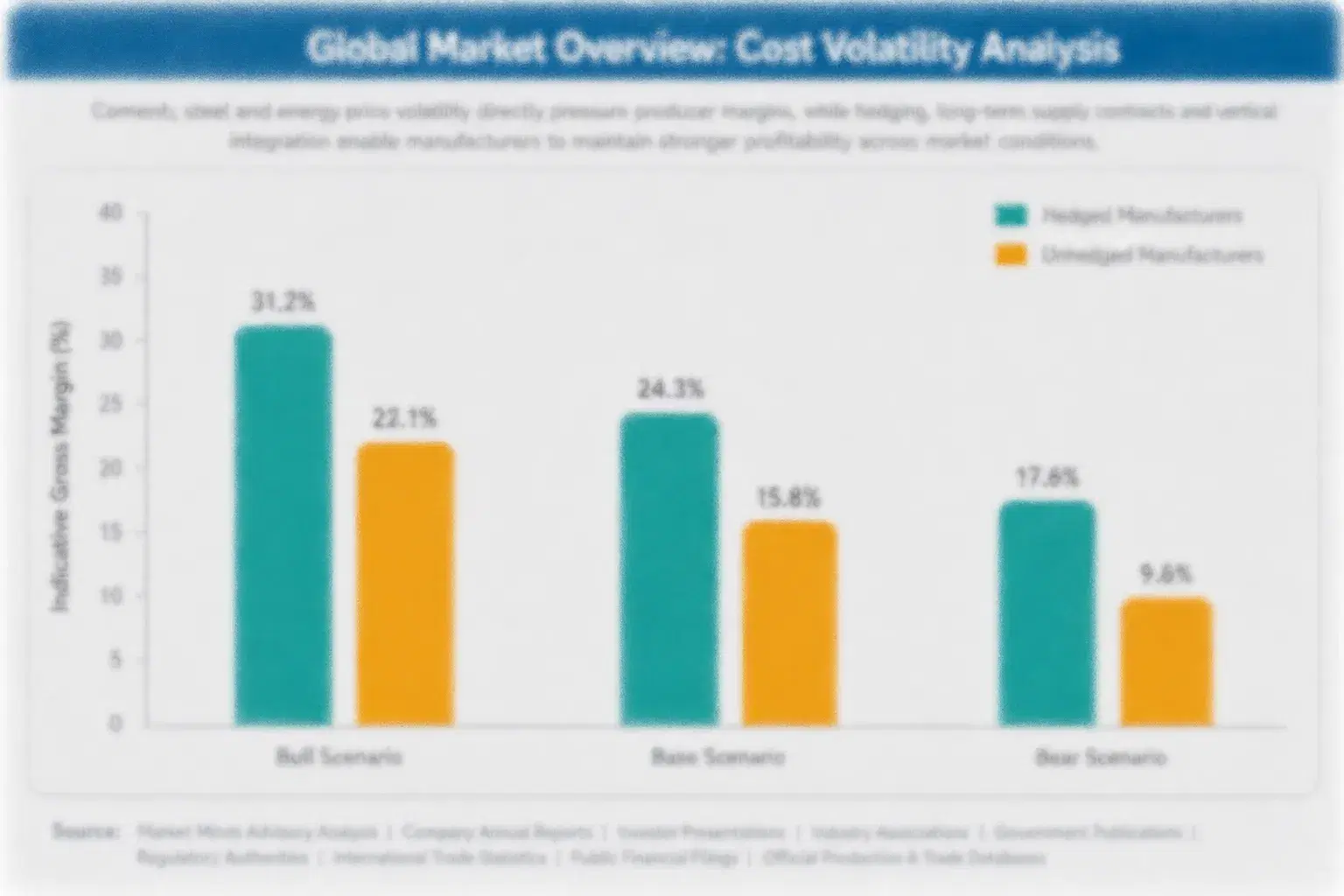
Vision sensors, servo motors, and gripper actuators account for roughly 40 to 50 percent of total bill of materials on vision-guided tending cells, with the remainder split between chassis hardware, control electronics, and software. Most precision vision components are sourced from Japan, Germany, and the United States, concentrating supply among a small number of specialized manufacturers rather than a broad commodity supplier base.
Vision sensor and servo motor prices rose sharply during 2022 as collaborative robot demand surged globally alongside broader industrial automation investment, according to EIA and OECD industrial component tracking. Tending cell vendors reported margin compression during that period as they absorbed higher component costs rather than passing the full increase through to shop customers mid-contract, a pattern several vendors cited in subsequent annual report commentary on input costs.

Smaller vendors without long-term supply agreements locked in before the spike faced a sharper margin hit than larger competitors able to negotiate volume pricing directly with sensor and motor manufacturers. This exposure gap compounds existing competitive disadvantage for smaller players already competing on price in the fixed-program tier, since they lack the purchasing scale to hedge against future input cost volatility the way larger integrators can absorb.
robotic-cnc-machine-tending-market-cost-volatility-analysis-1791042335907

Multi-Year Component Supply Agreements

Leading vendors are locking in multi-year supply agreements directly with vision sensor and servo motor manufacturers, trading some pricing flexibility for protection against the kind of sudden cost spikes that hit the market in 2022. This also secures allocation priority during periods of tight supply. Several vendors report this approach held sensor costs flat through the recent cycle.

Modular Gripper Platform Standardization

Several vendors are standardizing on modular gripper mounts that accept components from multiple suppliers, reducing dependence on any single manufacturer and creating room to switch suppliers quickly if one experiences a supply disruption or sharp price increase during peak demand. Operators benefit too, since switching does not require replacing the entire tending platform. ahead of plan.

Portfolio Architecture for Margin Defence

Tending cell margins split sharply by tier. Fixed-program systems compete almost entirely on price against regional manufacturers, leaving thin margins for vendors without a vision software layer to differentiate on. Vision-guided platforms carrying proprietary part recognition command substantially higher margins, since shops pay for setup simplicity and reduced changeover time rather than raw hardware specification alone, and that gap keeps widening each replacement cycle. That gap rarely narrows.
The volume versus premium tension shows up most clearly in how vendors allocate engineering investment. Companies chasing unit volume in the fixed-program tier face a hard margin ceiling regardless of scale, while those investing in vision capability and service contracts build a durable, recurring revenue base that compounds with each new shop relationship added to the fleet.

High-value margin pools concentrate specifically around part recognition software licensing and multi-year tending-as-a-service contracts with small and mid-sized shops, where switching costs are highest once a vendor's vision model has been trained on a customer's specific part catalog and fixture configuration. This dynamic is becoming more pronounced as service contract terms lengthen across the sector, favoring vendors with the deepest fleet data.

Basic fixed-program tending cells competing primarily on unit price against low-cost regional manufacturers, with limited vision capability and thin margins. Replacement cycles are long given typical usage intensity. Replacement cycles are long, which keeps unit volume moderate even as per-unit profitability stays thin.
Gross Margin

Vision-guided platforms with proprietary part recognition, typically sold into multi-cell fleet contracts with small and mid-sized shops that pay for documented setup simplicity and reduced changeover time. Replacement cycles run shorter here as recognition demands accelerate hardware upgrades.
Gross Margin

Tending-as-a-service contracts and standalone part recognition software licensing, capturing recurring revenue independent of hardware unit sales and expanding fastest as shops shift procurement models. This tier is growing fastest as more shops adopt subscription procurement.
Gross Margin
robotic-cnc-machine-tending-market-portfolio-architecture-1791042336238

High-value Sub-segments and Strategic Watch-out

Part Recognition Software Licensing

Standalone vision software licensed across competitor robot hardware, growing fastest of any revenue pool as shops separate part recognition technology from hardware procurement decisions entirely. Rankings shift fastest as new models emerge. Vendors with the deepest part catalogs hold a durable edge in this category.

Tending-as-a-Service Contracts

Recurring subscription contracts bundling cell maintenance, software updates, and vision model improvements into predictable monthly fees for small and mid-sized shops who increasingly prefer this structure over one-time purchases, now standard among the largest accounts. Adoption is accelerating as shops recognize the predictability this offers for annual budget planning.

Fixed-Program Tending Cell Hardware

Basic fixed-program cells remain the largest unit volume category, sold mainly to smaller shops priced out of vision-guided platform premiums. Incumbents bundle hardware with support contracts and compete on brand reputation built over decades of deployments. Pricing pressure here is intensifying each year as additional manufacturers enter.

Regional Low-Cost Manufacturing Entry

Chinese manufacturers scaling low-cost arm production threaten to compress fixed-program tier margins faster than incumbents can shift revenue toward vision software and services over the coming years. Incumbents are responding by accelerating their own vision investment to stay ahead. Incumbents are responding by accelerating their own software investment too.

From Capital Purchase to Service Annuity

Tending cell revenue is shifting from one-time capital purchase toward annuity-style contracts that bundle cell maintenance, software updates, and vision model improvements into a single recurring fee. Vendors that made this transition early now report that subscription revenue renews at rates well above typical equipment replacement cycles, since switching providers mid-contract means retraining a recognition model on a new vendor's platform entirely.
Adoption stickiness varies meaningfully by end-use vertical. Automotive and aerospace suppliers show the deepest stickiness, having integrated tending into quality certification documentation that would be costly to rebuild under a different vendor. General machining shops show moderate stickiness tied mainly to contract length, while the smallest job shops remain the most price-sensitive and most willing to switch providers between purchase cycles.

Buyer profiles are shifting generationally as shop owners who once resisted robotic tending on cost grounds are replaced by operators trained during the period when vision-guided cells already matched or exceeded manual tending throughput. This generational turnover is accelerating adoption among small shops who previously deferred the decision to more conservative predecessors, compressing the sales cycle vendors now budget for new account acquisition.
robotic-cnc-machine-tending-market-end-use-penetration-index-1791042336523

Where Tending Vendors Should Focus Next

These are among the four positions where our research anticipates prominent divergence between winners and laggards over the coming forecast period. Each is grounded in the demand model, the regulatory perimeter, and the announced capacity pipeline.
01 / VISION SOFTWARE INVESTMENT

Build or acquire vision recognition capability before hardware fully commoditizes

Hardware margins in the fixed-program tier are compressing fast as low-cost regional manufacturers scale production, leaving vision-guided recognition as the primary remaining differentiator vendors can defend against commoditized competition. Companies that delay this investment will find themselves competing purely on price against entrants who can undercut on manufacturing cost alone, a position with no durable path back to healthy margin. The window to build defensible recognition capability is narrowing each year as competitors accumulate their own training data across many comparable shop types.
02 / SUBSCRIPTION CONTRACT CONVERSION

Convert equipment sales to recurring tending-as-a-service contracts

Vendors that shift shops from one-time equipment purchase to recurring subscription contracts capture meaningfully more lifetime revenue per account while also building switching costs that protect against competitor poaching over the life of the relationship. This transition requires upfront investment in service infrastructure and billing systems that smaller vendors may struggle to fund without outside capital. Those that complete it first will set the contract structure that slower competitors are eventually forced to match on far less favorable terms down the line.
03 / REGIONAL MANUFACTURING RESPONSE

Respond directly to Chinese low-cost manufacturing competition

Low-cost Chinese manufacturers are scaling arm production at price points Western vendors cannot match on hardware alone, threatening the fixed-program tier most directly and squeezing out mid-tier competitors without a clear differentiation strategy. Vendors should either exit that tier entirely in favor of premium vision-guided platforms or establish their own lower-cost manufacturing footprint to compete on comparable terms. Splitting focus across both price points without a clear tier strategy risks losing ground in each segment simultaneously over the next several years.
04 / SMALL SHOP MARKET EXPANSION

Expand small shop accessibility ahead of collaborative robot price declines

Collaborative robot pricing continues falling across most categories, and vendors that build accessible financing and setup support for the smallest job shops capture disproportionate share of a buyer segment that larger industrial robot vendors tend to overlook. Vendors that delay this investment risk losing deals to competitors able to demonstrate simpler setup and lower total cost of ownership. Building this accessibility after a competitor already has it established is far costlier than building it first across the same shop segments.

Engagement Snapshot From the Field

A live engagement with an industry participant carrying material or product regulatory and market exposure ahead of a defining policy shift, showing how our research translates into a defensible multi-year portfolio strategy.
MARKET MINDS ADVISORY · CLIENT ENGAGEMENT SUMMARY
Robotic CNC Machine Tending Producer Strategic Portfolio Review and Transition Roadmap 2026·Investment Scenario on Robotic CNC Machine Tending Exposure Evaluation 2025-26
CLIENT PROFILE
A small precision machining shop running a handful of CNC lathes and machining centers engaged MMA to evaluate whether adding vision-guided tending robots could enable unattended overnight operation given its inability to hire a third shift. The shop's existing operation relied entirely on manual operators across two shifts, and leadership wanted an independent assessment before committing further capital to automation.
STRATEGIC CHALLENGE
The shop faced a persistent operator shortage that limited it to two shifts despite having enough order volume to justify running machines around the clock. Leadership needed to determine which tending vendors could realistically handle its varied part catalog within a defined budget cycle, and whether vision-guided capability justified its higher upfront cost over simpler fixed-program alternatives.
MMA APPROACH
MMA benchmarked four leading tending vendors against the shop's specific part catalog and machine configuration, evaluating vision recognition accuracy, setup time, and total cost of ownership across a five-year horizon. The engagement combined vendor technical interviews with site-specific deployment modeling to project realistic payback timelines and ongoing service costs. Findings were validated against comparable deployments at peer shops of similar size.
KEY FINDINGS
  1. Vision-guided tending enabled roughly sixteen hours of unattended overnight operation on the pilot machine (client-reported, unverified by MMA). across the full range of part families tested during the pilot period.
  2. Setup time between part families dropped from hours of manual fixture changes to under an hour using vision calibration. freeing the single operator remaining on staff for other scheduled tasks.
  3. Subscription-based service contracts cost less over a five-year horizon than continued reliance on a third shift of manual operators (client-reported, unverified by MMA).
  4. Recognition accuracy varied meaningfully across vendors on the shop's smallest and most reflective part geometries. ultimately resolved by adding a secondary lighting fixture to improve contrast.
CLIENT PROFILE
A small precision machining shop running a handful of CNC lathes and machining centers engaged MMA to evaluate whether adding vision-guided tending robots could enable unattended overnight operation given its inability to hire a third shift. The shop's existing operation relied entirely on manual operators across two shifts, and leadership wanted an independent assessment before committing further capital to automation.
STRATEGIC CHALLENGE
The shop faced a persistent operator shortage that limited it to two shifts despite having enough order volume to justify running machines around the clock. Leadership needed to determine which tending vendors could realistically handle its varied part catalog within a defined budget cycle, and whether vision-guided capability justified its higher upfront cost over simpler fixed-program alternatives.
MMA APPROACH
MMA benchmarked four leading tending vendors against the shop's specific part catalog and machine configuration, evaluating vision recognition accuracy, setup time, and total cost of ownership across a five-year horizon. The engagement combined vendor technical interviews with site-specific deployment modeling to project realistic payback timelines and ongoing service costs. Findings were validated against comparable deployments at peer shops of similar size.
KEY FINDINGS
  1. Vision-guided tending enabled roughly sixteen hours of unattended overnight operation on the pilot machine (client-reported, unverified by MMA). across the full range of part families tested during the pilot period.
  2. Setup time between part families dropped from hours of manual fixture changes to under an hour using vision calibration. freeing the single operator remaining on staff for other scheduled tasks.
  3. Subscription-based service contracts cost less over a five-year horizon than continued reliance on a third shift of manual operators (client-reported, unverified by MMA).
  4. Recognition accuracy varied meaningfully across vendors on the shop's smallest and most reflective part geometries. ultimately resolved by adding a secondary lighting fixture to improve contrast.
RECOMMENDED STRATEGY
Phase 1: Phase one deployed vision-guided tending on the highest-volume machine within the first six months of the engagement. and highest unattended potential. Phase 2: Phase two extended deployment to two additional machines using the validated vendor selection over the following year. across the broader shop footprint. Phase 3: Phase three converted the full shop to a tending-as-a-service contract with the originally selected primary vendor. across all remaining machines.
OUTCOME
The shop converted all of its CNC machines to vision-guided tending within fourteen months, reporting meaningfully increased unattended runtime and output without adding staff (client-reported, unverified by MMA). Leadership credited the phased approach with avoiding the disruption a simultaneous full-shop conversion would have caused. ahead of schedule.

Frequently Asked Questions

Foundational context covering the market sizes, CAGR, scope, country, region and competition that inform every finding below. This section is provided to cover basics and most often pre-purchase conversations, answered from the MMA Primary Research Dataset.

What is the current size of the Robotic CNC Machine Tending Market?

The Robotic CNC Machine Tending Market is estimated at 1.672 billion dollars in 2026. Growth is driven primarily by a persistent machine operator labor shortage.

How large will the Robotic CNC Machine Tending Market be by 2036?

The market is projected to reach approximately 4.966 billion dollars by 2036, adding 3.294 billion dollars of incremental value. That represents a 2.97x expansion over the 2026 base figure.

What is the CAGR for the Robotic CNC Machine Tending Market 2026 to 2036?

The market is forecast to grow at 11.5 percent annually through 2036 under the base case scenario. The bull case reaches 12.8 percent while the bear case falls to 10.2 percent.

Which segment is growing fastest?

Vision-guided collaborative tending cells for low-volume shops lead all segments at 15.8 percent CAGR. That is roughly 1.37 times the overall market growth rate of 11.5 percent.

Who are the major companies in the Robotic CNC Machine Tending Market?

FANUC, Universal Robots, ABB, Yaskawa, and Doosan Robotics lead the competitive field. Together these five companies hold a combined cr5 of 40 percent of robot revenue.

Which country is growing fastest?

China leads regional growth at 13.6 percent CAGR, driven by its dense population of small and mid-sized machine shops. Domestic manufacturing scale further reinforces this growth lead.

Report Segmentation Architecture

The full report scope spans multiple orthogonal segmentation dimensions, with cross-tabulated demand data provided for each dimension pair. Coverage extends further to regional breakdowns, trend trajectories, and the competitive detail needed to support segment-level decision-making.

By Control Architecture

    By End-Use Industry

      By Commercial Dimension

        By Region

        • North America
        • Western Europe
        • East Asia
        • South Asia and Pacific
        • Latin America
        • Middle East and Africa
        • Eastern Europe

        Scope, Methodology, and Coverage

        Every figure in this report is reproducible from documented input assumptions. The scope below maps the historical period, the forecast horizon, the segmentation dimensions, and the countries covered, alongside the underlying primary and qualitative methodology.
        Historical Period
        2020 to 2025
        Forecast Period
        2026 to 2036
        Base Year
        2025 (USD billions; MMA Primary Research Dataset, October 2026)
        Market Definition
        The Robotic CNC Machine Tending Market covers robotic systems that load and unload workpieces from CNC machining centers, lathes, and grinders. The scope excludes the CNC machines themselves and excludes general-purpose material handling robots not configured with dedicated machine tending end effectors.
        Quantitative Units
        USD billions
        Segmentation Dimensions
        Regions Covered
        North America, Western Europe, East Asia, South Asia and Pacific, Latin America, Middle East and Africa, Eastern Europe
        Countries Covered
        Key Companies Profiled
        FANUC, Universal Robots, ABB, Yaskawa, Doosan Robotics, Kawasaki Heavy Industries, Nachi-Fujikoshi, Techman Robot, Hanwha Robotics, Kassow Robots, AUBO Robotics, Elite Robot, JAKA Robotics, Productive Robotics, Siasun Robotics, Comau, Epson Robots, Mitsubishi Electric, Omron Adept, Staubli Robotics
        Quantitative Methodology
        Primary survey, n=3,800 respondents, Q4 2025, six countries; demand-side model with trade association cross-validation
        Qualitative Methodology
        47 expert interviews, Q4 2025; applied to validate demand model assumptions, identify emerging dynamics, and assess competitive positioning
        Report Format
        PDF and XLSX data workbook (Word format preview document)
        Publisher
        Market Minds Advisory
        Report Code
        MMA-2026-CON-519
        Published
        October 2026
        Contact
        sales@marketmindsadvisory.com | www.marketmindsadvisory.com

        Purchase the full Robotic CNC Machine Tending Market Report (2026 to 2036).

        This report provides a comprehensive analysis of the global Robotic CNC Machine Tending Market, covering market sizing, segmentation, regional dynamics, and competitive positioning through 2036. It examines the shift from fixed-program systems toward vision-guided collaborative cells and recurring tending-as-a-service revenue models. The analysis draws on primary survey data, expert interviews, and company disclosures to benchmark vendor strategy across labor shortage dynamics, sensor cost exposure, and emerging low-cost manufacturing competition in the basic tier. It also profiles the two leading vendors on moat and risk factors, documents recent competitive developments, and lays out revenue lever and portfolio tier economics for executives evaluating where to position within the market.
        Ten-year market sizing and forecast model
        Seven-region demand and growth breakdown analysis
        Competitive benchmarking of twenty leading vendors
        Segment-level CAGR and share analysis detail
        Input cost exposure and mitigation pathways
        Portfolio margin and tier economics breakdown

        Built For The People Who Decide

        From boardroom strategy to bench-side execution, this report is read cover-to-cover by leaders shaping the next decade of their industry, turning demand scenarios, market dynamics and valuation benchmarks into decisions.
        CXOs/ Presidents/ VPs/ Managers
        M&A and Corporate Development
        Strategy Teams and R&D Heads
        Procurement and Product Directors
        Regulatory and Compliance Leaders
        Investor Relations and Equity Analysts