Market Minds Advisory
Retinal Vasculitis Treatment Market

Retinal Vasculitis Treatment Market: Biologics Displace Steroids as the Default First Response

Targeted biologic therapies are displacing broad systemic corticosteroids as the preferred approach to retinal vasculitis, a shift concentrated in regions where Behcet's disease drives disease burden higher than global averages, reshaping where commercial value accumulates.

Lead Analyst

Alice Ballenger

Published

September 2026

Make Smarter Decisions with Customized Research Insights

Request a free sample report and evaluate market opportunities, growth trends, and competitive dynamics relevant to your business needs.

2025 MARKET VALUE$0.5BMarket Size 2025
2036 FORECAST VALUE$1.6BBase Case , 2026 to 2036
CAGR 2026 TO 203612.5 %Bull 13.9% / Bear 11.1%
INCREMENTAL OPPORTUNITY$1.1BNet 10- year value creation
EXPANSION MULTIPLE3.24x2036 value over 2026 base
Strategic Levers
M&A Pipeline
Regional Outlook
Country Rankings
Competitive Intelligence
Segmental Deep-dive
Call-Us : 91 93563 13602

Executive Snapshot and Market Trajectory

Biologic therapy is displacing broad systemic corticosteroids as the preferred first response to retinal vasculitis, as targeted anti-TNF and anti-IL agents demonstrate better long-term vision preservation with meaningfully fewer of the systemic side effects steroid-dependent treatment regimens have always carried. That evidence gap is closing steadily each year.
Demand concentrates around three treatment categories: systemic corticosteroid therapy for acute management, systemic immunosuppressant therapy for longer-term disease control, and biologic therapy increasingly favored for its targeted mechanism and steroid-sparing profile. Biologic therapy is growing fastest as ophthalmologists increasingly favor earlier biologic intervention over prolonged steroid exposure. East Asia holds the largest share, reflecting both elevated Behcet's disease prevalence across the region and expanding biologic treatment access.
Competitive intensity concentrates among large pharmaceutical companies with established autoimmune and ophthalmology franchises, while smaller specialty companies compete on intravitreal delivery technology and anti-VEGF therapy for vasculitis-related complications. AbbVie's Humira franchise, the first biologic broadly approved for non-infectious uveitis including retinal vasculitis, faces mounting biosimilar competition that is reshaping pricing dynamics across the entire biologic treatment category. Smaller specialty companies without comparable evidence depth increasingly compete only for niche delivery technology positions.
Market Definition
The retinal vasculitis treatment market covers pharmaceutical and biologic therapies, intravitreal delivery devices, and diagnostic imaging services used to treat inflammation of retinal blood vessels associated with autoimmune, inflammatory, or idiopathic retinal vasculitis, including Behcet's disease-associated cases. It excludes infectious retinal vasculitis treated primarily with antimicrobial therapy, general uveitis treatment not specific to vasculitis, and diabetic retinopathy or other retinal vascular conditions with distinct underlying pathophysiology.
Base Year Value
$0.5B in 2025 (MMA Primary Research Dataset, August 2026)
Forecast Period
2026 to 2036, eleven discrete annual values
CAGR
12.5% base case. Bull 13.9%. Bear 11.1%.
Fastest Growth Segment
Biologic Therapy: 18.5% CAGR
Fastest Growth Country
China: 17.5% CAGR
Fastest Growth Region
South Asia and Pacific: 14.5% CAGR
Largest Region
North America: 26% of 2025 global value
Market Leaders
AbbVie Inc., Novartis AG, Santen Pharmaceutical Co., Ltd., Bausch + Lomb Corporation, Regeneron Pharmaceuticals Inc. Source: MMA Analysis based on company annual reports.
Primary Survey
n=3,800 procurement and R&D decision-makers, Q4 2025, six countries
Methodology
Demand-side build-up, cross-validated against public data, 47 expert interviews

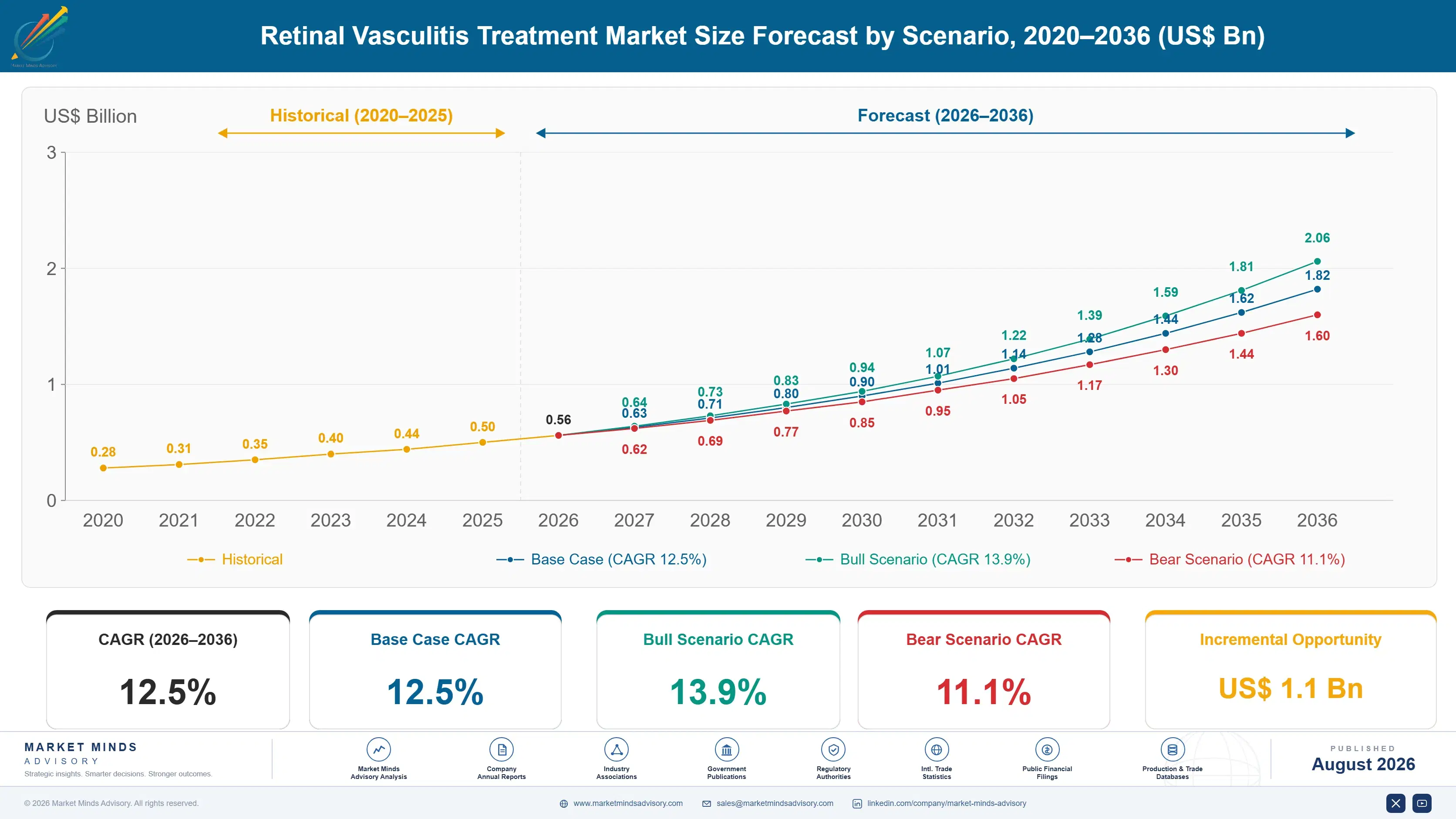
Retinal Vasculitis Treatment Market Forecast Scenarios

retinal-vasculitis-treatment-market-size-forecast-scenario-1787306388360
Between 2020 and 2025 the market grew at roughly 11.3% a year, driven by steadily rising biologic therapy adoption as clinical evidence accumulated supporting earlier intervention over the delayed biologic escalation that had historically followed extended steroid trials. That steady accumulation of evidence built the clinical foundation for the more aggressive treatment shift now underway across major markets.
The base case carries the market to a 12.5% CAGR on three mechanisms. First, biologic therapy adoption keeps expanding as ophthalmologists increasingly favor targeted mechanisms over broad immunosuppression. Second, diagnostic imaging technology keeps improving disease detection and monitoring, expanding the diagnosed and treated patient population beyond historical levels. Third, Behcet's disease and related autoimmune condition prevalence keeps being recognized more consistently across regions where diagnosis has historically lagged actual disease burden significantly.
The bull case reaches 13.9% if biosimilar competition lowers biologic treatment cost enough to expand access meaningfully faster than modeled across price-sensitive markets. The bear case falls to 11.1% if reimbursement policy for biologic therapy in retinal vasculitis remains restrictive enough to slow adoption beyond the patients with the most severe, treatment-resistant disease presentations. That gap rests largely on biosimilar pricing dynamics.

Biologic Mechanisms Are Redefining the Standard of Care

Three forces converge on this market at once. Biologic therapy keeps demonstrating superior long-term outcomes over prolonged steroid exposure, diagnostic imaging technology keeps improving early disease detection, and biosimilar competition keeps pressuring pricing across established biologic franchises. Companies unable to demonstrate genuine clinical differentiation risk losing share to lower-cost biosimilar alternatives entering the market. Companies unable to satisfy all three simultaneousl
MARKET CONCENTRATION (CR5)48%Top five companies hold just under half share
AVERAGE BIOLOGIC TREATMENT COST$38,000/patient/yearTargeted biologic therapy commands substantial premium over steroids
TOP PRODUCING COUNTRY SHARE21%United States leads global biologic manufacturing and clinical volume
BIOLOGIC ADOPTION RATE34%Eligible patients receiving biologic therapy climbed sharply since approval
TRADE INTENSITY26%Roughly a quarter of biologic doses cross national borders
MANUFACTURING COST SHARE37% of COGSCell culture and purification processes dominate production cost
Commercially, the market splits between systemic corticosteroid and immunosuppressant therapy, priced competitively and sold largely on established clinical familiarity and low cost, and biologic therapy, priced at substantial premium and sold on targeted mechanism and steroid-sparing clinical benefit increasingly demanded by treating ophthalmologists. That biologic category commands disproportionate margin relative to its unit volume share of the overall market. That margin gap is widening as prescribers increasingly demand documented steroid-sparing evidence before committing to biologic therapy.
Over the next decade the defining question is whether biologic therapy becomes the default first-line approach across most diagnosed cases, or whether cost and access barriers keep it reserved primarily for patients who fail or cannot tolerate conventional steroid and immunosuppressant treatment first. Companies positioned on both sides face different investment choices ahead.
"For decades this was a steroid-first disease almost by default, mostly because nothing better existed. Now ophthalmologists who have seen what a targeted biologic can do are increasingly reluctant to put a patient through months of steroid side effects before reaching for it, and that shift in clinical instinct is what is actually driving this market, not just the drugs themselves."
Director, Ophthalmology and Autoimmune Therapeutics Practice · MMA Healthcare /

Market Trends

Biologic Therapy Moves Toward Earlier Treatment Intervention

Clinical evidence accumulating since 2022 increasingly supports earlier biologic intervention for retinal vasculitis rather than the traditional approach of exhausting steroid and conventional immunosuppressant options first, as long-term vision outcome data favors patients who received biologic therapy sooner after diagnosis. AbbVie's Humira and Novartis's interferon-based therapies both hold established clinical positioning in this shift, though newer biosimilar competitors are increasingly entering the anti-TNF category specifically. Ophthalmologists treating higher disease severity increasingly favor biologic-first protocols, while milder presentations still often begin with conventional therapy before escalation. That evidence-driven shift increasingly shapes treatment guidelines directly.
Market Impact: Expands diagnosed population 20% to
Biosimilar Competition Reshapes Anti-TNF Pricing Dynamics

Humira biosimilar entry across major markets since 2023 has introduced meaningful price competition into the anti-TNF category that previously operated as a near-monopoly for AbbVie specifically in non-infectious uveitis and retinal vasculitis indications. This pricing pressure is expanding biologic treatment accessibility in price-sensitive markets while compressing margins for the originator product, forcing AbbVie to compete on service and clinical support rather than pure product differentiation as biosimilar options achieve regulatory approval across an increasing number of national markets. Companies without competitive biosimilar strategy increasingly find themselves defending share on service quality alone rather than product economics.
Market Impact: Adds 5,000+ newly diagnosed patient

Market Opportunities and Growth Drivers

Improved Diagnostic Imaging Expands the Diagnosed Patient Population

Advances in optical coherence tomography angiography and fluorescein angiography imaging technology have improved ophthalmologists' ability to detect and characterize retinal vasculitis earlier and more precisely than conventional examination alone previously allowed, expanding the diagnosed patient population beyond historical levels where the condition often went unrecognized until vision-threatening complications had already developed. Each improvement in diagnostic sensitivity represents recurring treatment demand tied directly to earlier, more accurate diagnosis rather than any single treatment technology adoption cycle specifically, giving the broader market a durable tailwind independent of any single therapeutic advance. That tailwind should persist regardless of any single therapy's competitive position.
Market Impact: Leaves under 25% biologic access

Growing Behcet's Disease Recognition Expands Treatment Demand

Behcet's disease, a leading cause of retinal vasculitis with notably elevated prevalence along the historic Silk Road region spanning Turkey, the Middle East, and East Asia, is increasingly being recognized and diagnosed consistently in regions where awareness has historically lagged actual disease burden significantly. Each improvement in regional diagnostic awareness represents genuinely new treatment demand rather than displaced volume from elsewhere, since these patients were previously underdiagnosed and undertreated relative to their true disease prevalence across the affected geographic corridor specifically. Companies with dedicated regional clinical presence increasingly capture this newly recognized demand ahead of competitors still focused primarily elsewhere.
Market Impact: Adds 3 to 6 months delay

Market Restraints and Challenges

Biologic Therapy Cost Limits Access in Price-Sensitive Markets

Biologic therapy for retinal vasculitis carries substantial annual treatment cost that remains genuinely prohibitive in many price-sensitive healthcare systems, and the root cause is that biologic manufacturing complexity inherently costs more than small-molecule steroid production regardless of manufacturer pricing strategy or competitive dynamics. This cost barrier concentrates biologic access disproportionately in wealthier healthcare systems, creating a documented mismatch between where Behcet's disease and related conditions concentrate and where biologic treatment access has actually reached patients who need it most. Companies are mitigating the gap through tiered pricing agreements and patient assistance programs targeting the highest-burden, lowest-income markets specifically.
Market Impact: Cuts initiation time 40% to 55%

Diagnostic Delay Remains Common in Underrecognized Regions

Retinal vasculitis diagnosis still frequently lags initial symptom presentation by months in regions where ophthalmologists have less clinical familiarity with the condition's specific presentation patterns, and the root cause is that the condition's symptoms can overlap with more common retinal disorders, requiring specific clinical suspicion and specialized imaging that not every practice setting maintains readily available. This diagnostic delay allows disease progression that could otherwise be prevented with earlier intervention, worsening long-term vision outcomes for affected patients specifically. Medical societies are mitigating the gap through expanded clinical education programs targeting general ophthalmology practices outside specialized referral centers.
Market Impact: Cuts anti-TNF pricing 25% to 40%
3 additional market trends, 4 additional growth drivers, and 3 additional restraints and challenges are covered in the full report. Contact sales@marketmindsadvisory.com to access the complete intelligence.

Segment CAGR and Growth Architecture

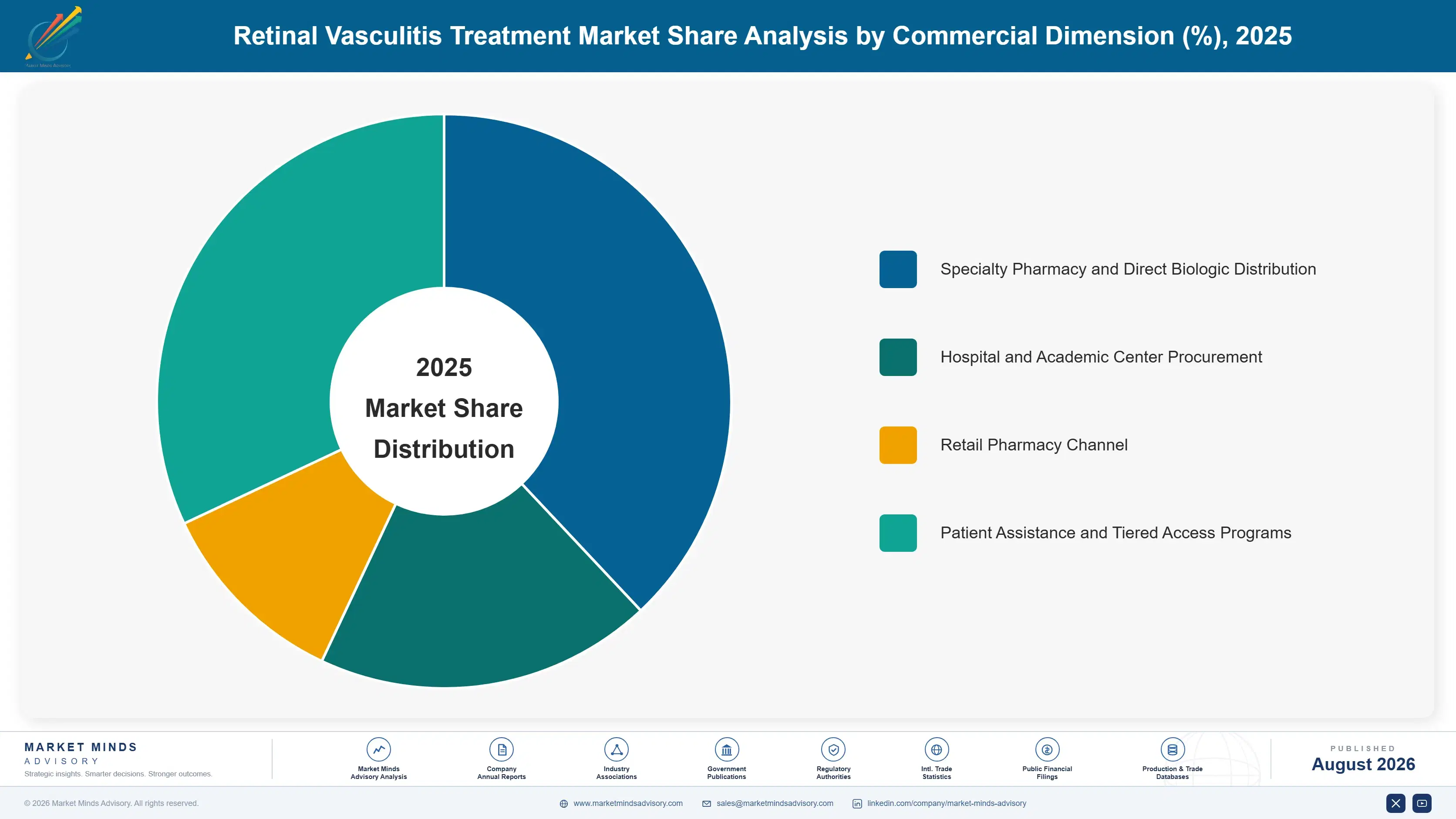
Segmentation follows treatment modality, a single therapeutic logic distinguishing how each approach addresses retinal vasculitis inflammation. Diagnostic services and delivery route are treated as separate commercial dimensions, not parallel segments within this modality-based framework. Each modality carries its own mechanism of action, manufacturing complexity, and cost structure, so commercial position tracks therapeutic approach rather than underlying etiology alone.
retinal-vasculitis-treatment-market-market-share-analysis-1787306388888

Biologic Therapy

Biologic therapy grows fastest at 18.5%, about 1.48 times the overall rate, as targeted anti-TNF and anti-IL agents increasingly displace broad systemic immunosuppression as the preferred treatment approach for moderate to severe retinal vasculitis. These therapies command substantial premium pricing that reflects genuine manufacturing complexity and clinical differentiation, though biosimilar competition entering the anti-TNF category since 2023 is beginning to compress pricing meaningfully in markets where biosimilars have achieved regulatory approval. AbbVie and Novartis both hold established clinical positioning, while newer entrants compete on next-generation mechanisms targeting different inflammatory pathways. Adoption remains concentrated among patients with more severe disease presentations, where the clinical benefit most clearly justifies the substantial cost premium over conventional therapy.
CAGR 18.5%

Anti-VEGF Therapy for Vasculitis-Related Complications

Anti-VEGF therapy, used to treat neovascular complications that can develop from chronic retinal vasculitis inflammation including macular edema and retinal neovascularization, grows at 14.5%, the second-fastest category, as improved disease monitoring increasingly identifies these complications earlier when anti-VEGF intervention proves most effective. Regeneron's Eylea and comparable anti-VEGF agents, already established in broader retinal disease treatment, extend into this complication-specific application with growing clinical evidence supporting their use. This category represents a distinct commercial opportunity from primary anti-inflammatory treatment, since patients often require both underlying vasculitis control and separate anti-VEGF intervention for complications that have already developed. Companies serving both primary anti-inflammatory and complication treatment needs increasingly capture more of the total patient relationship value than single-mechanism competitors can.
CAGR 14.5%
Full segment breakdown across 6 segments available in the complete report.

Regional Architecture and Country Demand Map

East Asia and North America hold comparable leading shares, reflecting both elevated Behcet's disease prevalence in parts of East Asia and concentrated biologic treatment access in North America, while the Middle East carries disproportionate share given regional disease burden. Smaller regions compound off comparatively low current diagnosed bases.

North America

United States biologic treatment access, supported by comprehensive commercial and Medicare reimbursement infrastructure, anchors the region's substantial share despite Behcet's disease prevalence being lower here than in the Middle East and East Asia specifically. AbbVie and Regeneron both run substantial domestic clinical and commercial operations, maintaining close relationships with the academic ophthalmology centers driving biologic adoption for the most severe retinal vasculitis cases. The broader diagnosed population, including sarcoidosis and lupus-associated retinal vasculitis beyond Behcet's disease specifically, adds meaningful volume independent of the region's comparatively lower Behcet's-specific disease burden. Growth trails East Asia and South Asia and Pacific because the region's biologic treatment infrastructure is already well established, leaving incremental adoption as the primary driver going forward.
Share: 26% | CAGR: 12.0% (2026 to 2036)

Western Europe

Germany and France both maintain well-developed ophthalmology and autoimmune disease treatment infrastructure, with national health systems covering biologic therapy for retinal vasculitis under increasingly standardized clinical guidelines across the region. The United Kingdom's National Health Service has expanded biologic access for non-infectious uveitis conditions including retinal vasculitis, though coverage criteria remain somewhat more restrictive than commercial insurance-driven access in the United States specifically. Turkey, while geographically part of neither strictly Western nor Eastern Europe in this framework, drives meaningful cross-border referral volume into Western European specialist centers given the country's substantial Behcet's disease prevalence. Growth trails East Asia and South Asia and Pacific as the region's treatment infrastructure and diagnosed population are both already comparatively mature.
Share: 22% | CAGR: 11.0% (2026 to 2036)
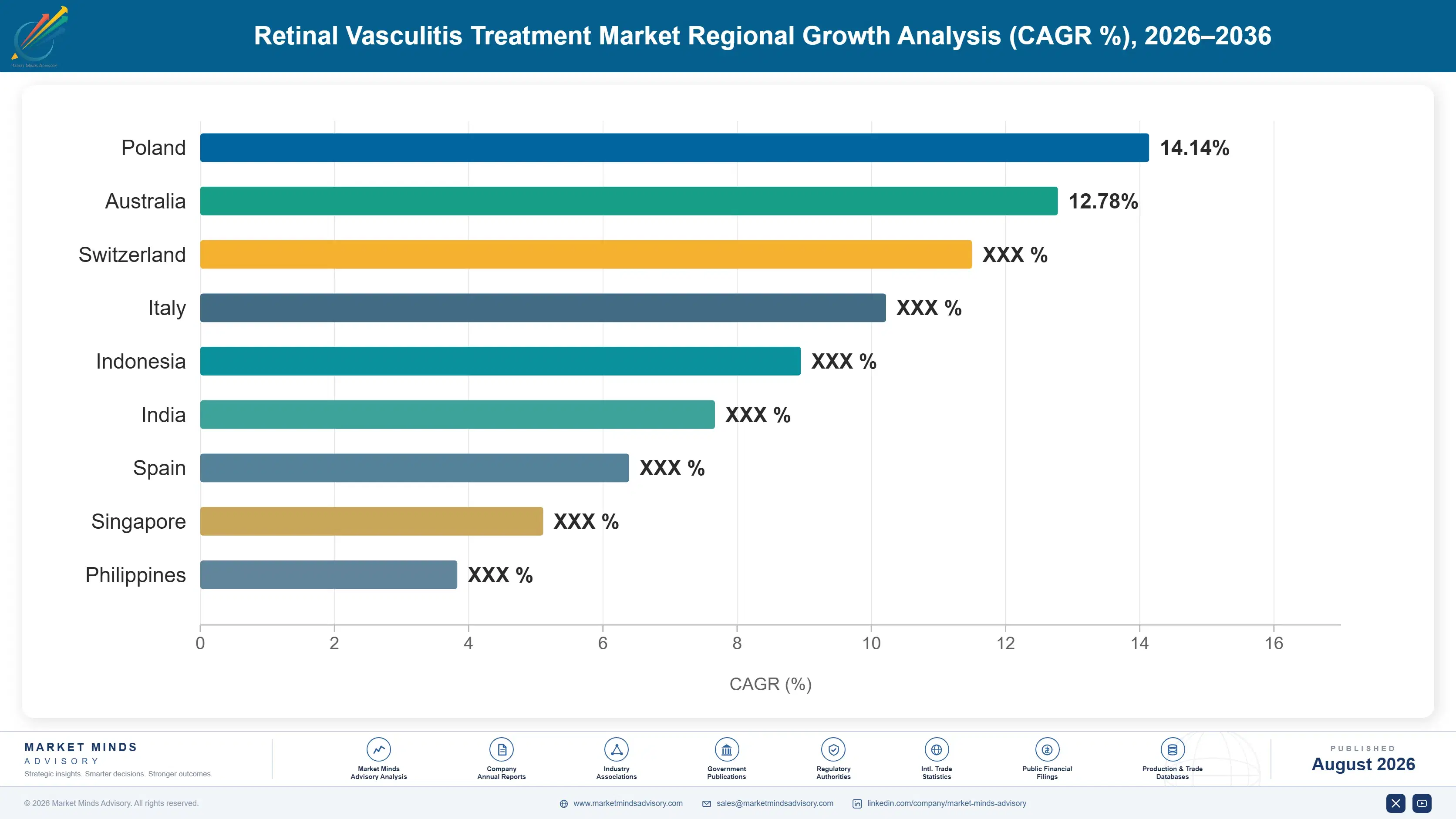
Regional intelligence for 5 additional markets available in the complete report: East Asia, South Asia and Pacific, Latin America, Middle East and Africa, Eastern Europe. Contact sales@marketmindsadvisory.com.
retinal-vasculitis-treatment-market-country-cagr-analysis-1787306389434

Where Companies Can Defend and Grow Value

Four commercial moves separate companies capturing durable share from those losing ground to biosimilar competition: clinical evidence for earlier intervention, tiered access pricing, diagnostic education investment, and Behcet's-specific regional strategy. Each move converts a clinical or regional advantage into a defensible commercial position competitors without matching evidence depth or dedicated regional focus cannot easily replicate quickly.

Generate Evidence Supporting Earlier Biologic Intervention

Ophthalmologists increasingly want quantified evidence that earlier biologic intervention genuinely improves long-term vision outcomes compared to exhausting conventional therapy first, and companies investing in rigorous comparative outcomes studies build the clinical case that drives sustained prescribing preference even as biosimilar competition intensifies pricing pressure. This evidence investment differentiates originator products beyond pure biosimilar price competition, since demonstrated superior clinical timing data becomes a reusable commercial asset supporting premium positioning. Companies with the strongest published timing evidence report defending 20% to 30% pricing premiums even as biosimilar competition intensifies across the category.
Market Impact: Defends 20% to 30% pricing premium

Structure Tiered Pricing for High-Burden, Lower-Income Markets

The documented mismatch between where Behcet's disease and related conditions concentrate and where biologic treatment access has actually reached represents both a reputational consideration and a genuine commercial opportunity, since tiered pricing agreements reaching previously unaddressed high-burden markets generate incremental volume companies currently leave largely uncaptured. Structuring these agreements can expand addressable population meaningfully without materially cannibalizing higher-priced developed market revenue that remains the category's primary margin source. Comparable tiered pricing models in other specialty categories have expanded addressable population by 2 to 3 times within five years of launch.
Market Impact: Expands addressable population by 2

Fund Diagnostic Education to Reduce Time to Treatment

Diagnostic delay in regions with less clinical familiarity with retinal vasculitis presentation patterns directly constrains treatment volume, and companies investing in clinical education programs targeting general ophthalmology practices build the diagnostic capability that ultimately expands their own addressable treatment market beyond specialized referral centers alone. This investment functions as genuine market development rather than pure marketing spend, since it addresses the actual diagnostic bottleneck limiting broader category growth specifically. Companies deploying this education investment report cutting diagnostic delay by 3 to 6 months in the regions where programs launched fully.
Market Impact: Cuts diagnostic delay by 3 to 6 mon

Build Dedicated Commercial Strategy for Behcet's-Prevalent Regions

Regions with elevated Behcet's disease prevalence, spanning Turkey, the broader Middle East, and parts of East Asia, represent a genuinely distinct commercial opportunity requiring dedicated regional strategy rather than treatment as a peripheral extension of primary Western market commercial operations. Companies building dedicated clinical and commercial capability specifically for these high-burden regions capture disproportionate volume relative to competitors treating the opportunity as secondary to their core developed-market business. Companies building this dedicated regional focus report capturing 30% to 45% more volume than competitors treating the opportunity as secondary overall today.
Market Impact: Captures 30% to 45% more regional v

Who Controls the Margin Pool

Concentration sits at a moderate CR5 of 48%, with a real gap separating large pharmaceutical companies with established biologic franchises from smaller specialty companies competing in adjacent delivery technology and complication treatment categories. AbbVie and Novartis compete on biologic mechanism breadth and clinical evidence depth, while Santen and Regeneron anchor strong positions in ophthalmology-specific delivery technology and anti-VEGF complication treatment respectively. Smaller com
Current competitive activity runs along three lines: biosimilar competition in the anti-TNF category, reshaping pricing dynamics; clinical evidence generation supporting earlier biologic intervention, increasingly central to prescribing decisions; and regional strategy for Behcet's-prevalent markets, where dedicated commercial investment increasingly differentiates leaders from followers. All participants are assessed on one consistent basis, annual revenue from retinal vasculitis treatment products.

Pressure is building from two directions. Biosimilar competitors are eroding AbbVie's historical anti-TNF pricing power, forcing the company to compete on clinical support and evidence rather than product exclusivity alone. Meanwhile companies with dedicated Behcet's-prevalent regional strategy are capturing disproportionate volume in markets competitors treating as secondary have underserved. Rankings over the next five years will likely shift toward companies combining strong clinical evidence with genuine regional commercial focus.
retinal-vasculitis-treatment-market-company-positioning-matrix-1787306389955

Competitive Moat and Risk Dimensions

ABBVIE INC.

Moat: Established anti-TNF uveitis franchise

AbbVie's Humira, the first biologic broadly approved for non-infectious uveitis including retinal vasculitis, built years of clinical familiarity and physician trust that newer entrants and even biosimilar competitors must work to overcome despite offering comparable underlying molecular mechanisms and demonstrated bioequivalence in clinical trials. That trust advantage remains commercially meaningful even as biosimilar competitors demonstrate comparable clinical bioequivalence data.
ABBVIE INC.

Risk: Humira biosimilar competition pressure

AbbVie's Humira franchise has faced substantial biosimilar competition since 2023 across major markets, meaningfully eroding the pricing power and exclusivity that historically anchored its uveitis and retinal vasculitis revenue. Continued biosimilar share gains could compress this franchise faster than new indication expansion or pipeline development can offset within the near-term forecast window.
NOVARTIS AG

Moat: Broad ophthalmology and immunology pipeline

Novartis maintains a broad portfolio spanning both established interferon-based therapy and newer biologic mechanisms for autoimmune retinal conditions, giving it multiple approaches to offer physicians rather than depending on a single mechanism, a diversification advantage narrower single-product competitors cannot match as clinical preferences continue evolving.
NOVARTIS AG

Risk: Late-stage pipeline concentration risk

A meaningful share of Novartis's future growth in this category depends on a relatively small number of late-stage pipeline assets succeeding in clinical trials and subsequent regulatory approval, and any significant setback among these key programs could materially affect the company's competitive positioning within this specific therapeutic category.

Players Tracked

Prominent Players

AbbVie Inc.
Novartis AG
Santen Pharmaceutical Co., Ltd.
Bausch + Lomb Corporation
Regeneron Pharmaceuticals Inc.

Other Key Players

Alimera Sciences Inc.
EyePoint Pharmaceuticals Inc.
Genentech Inc.
Mallinckrodt Pharmaceuticals
Clearside Biomedical Inc.
Kodiak Sciences Inc.
Bristol Myers Squibb
Pfizer Inc.
Sun Pharmaceutical Industries
Amgen Inc.
Chugai Pharmaceutical Co., Ltd.
Thea Laboratories
Ocular Therapeutix Inc.
Apellis Pharmaceuticals Inc.
Astellas Pharma Inc.

Recent Developments

MARCH 2025

Santen launches next-generation intravitreal implant for non-infectious uveitis

Santen introduced an updated intravitreal corticosteroid implant featuring extended-duration release specifically indicated for non-infectious uveitis including retinal vasculitis-associated inflammation. This was an organic product launch, not an acquisition or partnership, developed through internal research and development investment over several years. Early clinical reception has reportedly been favorable among treating specialists.
Signal: A specialist ophthalmology manufacturer re
SEPTEMBER 2024

EyePoint Pharmaceuticals signs licensing agreement for Yutiq expansion

EyePoint Pharmaceuticals signed a licensing agreement granting a regional partner rights to commercialize its Yutiq intravitreal implant across several new international markets. This was a commercial licensing agreement, not a joint venture or acquisition, generating milestone and royalty revenue without transferring ownership of the underlying technology.
Signal: International licensing expansion suggests
JANUARY 2025

Apellis Pharmaceuticals acquires retinal biologics start-up

Apellis Pharmaceuticals completed the acquisition of a privately held company developing complement-targeted biologic therapy for inflammatory retinal conditions, adding complementary mechanism technology to its existing retinal disease portfolio. This was an acquisition, not a joint venture or minority investment, giving Apellis full ownership of the acquired technology and development team.
Signal: Continued acquisition activity in compleme

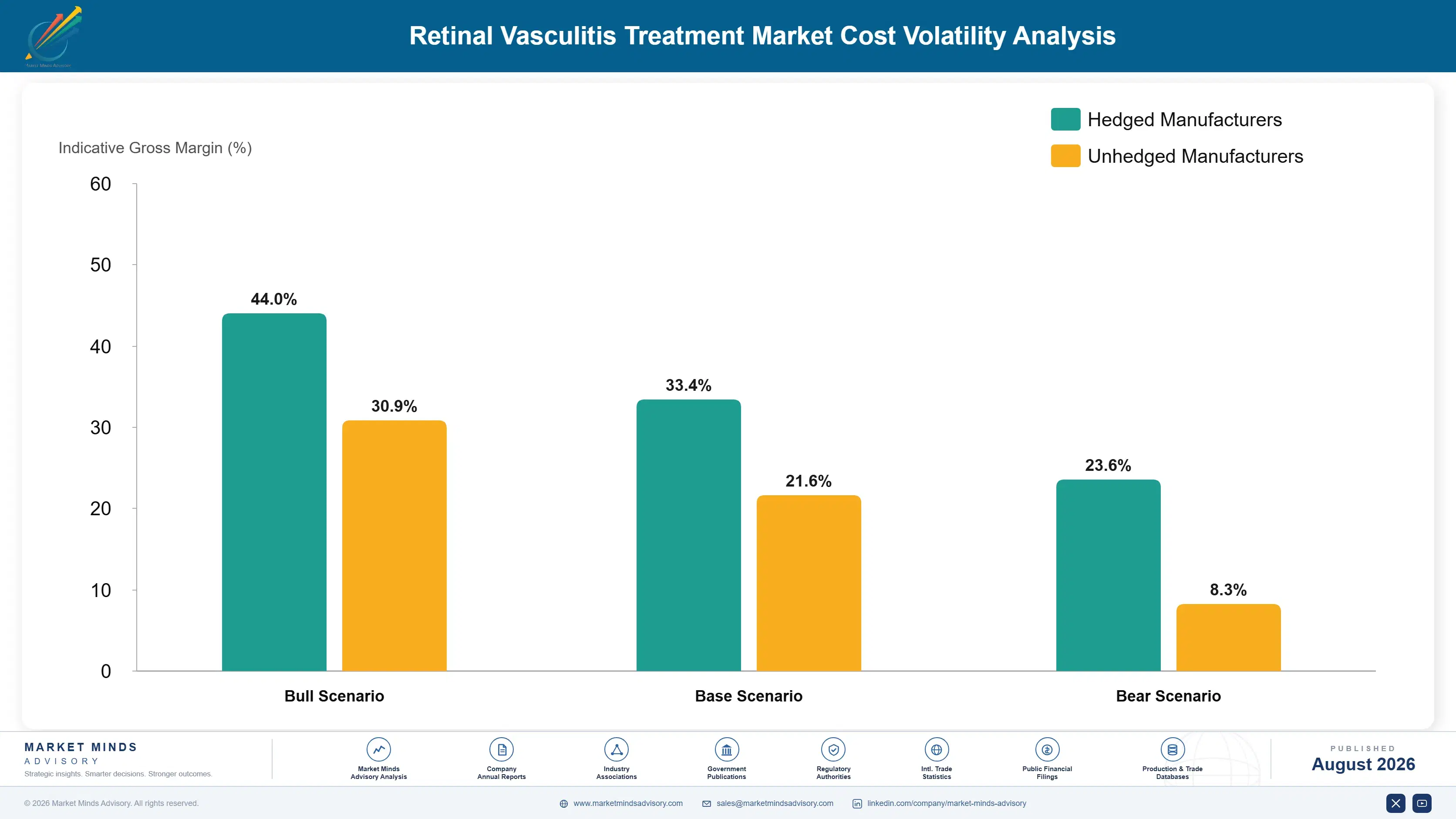
Cell Culture and Purification Drive Biologic Cost

Mammalian cell culture media, bioreactor operating cost, and downstream purification chromatography together account for roughly thirty-seven percent of production COGS for biologic therapies specifically, with intravitreal implant and anti-VEGF manufacturing carrying somewhat different cost structures weighted toward specialized formulation and sterile fill-finish processes. Diagnostic imaging equipment manufacturing follows a distinct cost structure weighted toward optical component sourcing.
The clearest recent volatility event traces to 2021 and 2022, when the Biotechnology Innovation Organization documented widespread single-use bioreactor and specialty media shortages industry-wide, driven by surging pandemic-era vaccine and therapeutic manufacturing demand competing for the same limited global supplier capacity. Several biologic manufacturers reported production delays during the worst of the shortage, constraining biologic therapy availability across the industry during that period specifically. Those constraints reshaped how manufacturers now plan safety stock.

Exposure varies by manufacturer scale and product category. Large pharmaceutical companies with direct, long-term supplier agreements and in-house manufacturing capacity weathered the shortage with meaningfully less disruption than smaller specialty companies dependent on contract manufacturing organizations competing for the same constrained capacity. Companies pursuing biosimilar development faced particular pressure to match originator manufacturing quality standards while competing on cost, a genuinely difficult combination during the tightest supply period.
retinal-vasculitis-treatment-market-cost-volatility-analysis-1787306390151

Secure Direct Supplier Agreements for Critical Inputs

Larger manufacturers are negotiating direct multi-year agreements with bioreactor and media suppliers, securing priority allocation and more predictable pricing ahead of future demand surges rather than relying on spot purchasing during periods of industry-wide capacity constraint. This mirrors sourcing discipline already standard across other specialty biologics manufacturing categories facing comparable seasonal demand concentration risk.

Qualify Multiple Contract Manufacturing Partners

Companies are increasingly qualifying backup contract manufacturing organizations across different regions rather than depending on a single facility relationship, reducing exposure to any one site's capacity constraints, regulatory inspection findings, or geopolitical supply disruption specifically. Companies adopting this approach report meaningfully more stable production continuity across successive manufacturing cycles compared to single-facility-dependent competitors overall.

Invest in Process Intensification to Reduce Input Volume

Several manufacturers are adopting higher cell-density culture processes that reduce total media and bioreactor volume required per dose produced, cutting raw material exposure per unit even as per-batch process complexity increases somewhat for the most advanced manufacturing approaches. That efficiency gain increasingly favors manufacturers with strong process engineering expertise over those relying purely on bulk capacity alone.

Portfolio Architecture for Margin Defence

The portfolio splits into three tiers with substantial margin separation. Volume systemic corticosteroid and immunosuppressant therapy competes on established clinical familiarity and low cost, earning modest margins given widespread generic availability. Certified premium biologic therapy earns substantially more because ophthalmologists and payers pay for targeted mechanism and steroid-sparing clinical benefit that conventional therapy cannot deliver. That gap widens as prescribers demand docu
The tension between conventional volume and biologic premium positioning shapes company strategy directly: conventional therapy remains the accessible first-line option for many patients, but companies that let conventional volume crowd out biologic pipeline investment risk losing the highest-margin, fastest-growing category to more clinically focused competitors. Companies that manage this balance well capture both broad market presence and premium biologic margin.

High-value pools concentrate in biologic therapy and anti-VEGF complication treatment, where clinical differentiation and manufacturing complexity justify premium economics few conventional-therapy-only competitors can match. The emerging next-generation complement-targeted and novel mechanism tier currently earns unevenly as companies absorb development cost against still-maturing clinical validation. That unevenness should ease as complement-targeted mechanisms accumulate more mature clinical and commercial validation over time.

Volume / Commodity-Adjacent Tier

Systemic corticosteroids and generic immunosuppressants sold on low cost and established clinical familiarity for initial treatment., where generic availability and established clinical familiarity determine which companies can sustain acceptable margin under cost-focused prescribing.
Gross Margin: 12-26%

Premium / Certified Tier

Biologic therapy and specialized intravitreal implants commanding premium pricing for targeted mechanism and steroid-sparing clinical benefit., who pay durable premiums for targeted mechanism and steroid-sparing benefit rather than accept prolonged conventional exposure.
Gross Margin: 45-62%

Sustainability / Regulatory / Next-Generation Tier

Novel complement-targeted and emerging mechanism therapies still absorbing development investment against maturing clinical validation., where companies are betting development capital on mechanisms they expect physicians to demand as standard within several years.
Gross Margin: 20-55%
retinal-vasculitis-treatment-market-portfolio-architecture-1787306390656

High-value Sub-segments and Strategic Watch-out

Biologic Therapy for Severe Disease

High value and high growth as earlier intervention evidence accumulates, commanding durable premium pricing once biosimilar dynamics stabilize and clinical differentiation becomes clearer to prescribers. Companies with the strongest timing evidence increasingly win prescribing preference competitors relying on price alone cannot secure at all today.
Gross Margin: 48-62%

Anti-VEGF Complication Treatment

High value with strong current growth as monitoring improves complication detection, priced above conventional therapy while remaining accessible to mainstream retinal specialist practice budgets. Adoption is broadening steadily beyond academic referral centers into mainstream retinal specialist practices seeking comparable complication management capability consistently across the field.
Gross Margin: 42-56%

Conventional Steroid and Immunosuppressant Therapy

The volume core, sold on established clinical familiarity and low cost, defended mainly through generic availability and broad prescriber comfort across the specialty. Competitive pressure here concentrates on generic pricing and established prescriber familiarity rather than the mechanism differentiation reshaping premium and biologic tiers specifically overall.
Gross Margin: 12-26%

Legacy Single-Mechanism Anti-TNF Products

The strategic watch-out, facing mounting biosimilar competition and pricing pressure as newer mechanisms and lower-cost alternatives increasingly compete for the same prescribing decisions. Companies still dependent on this declining tier should be actively redirecting investment toward newer mechanisms rather than defending products biosimilar competition is steadily commoditizing.
Gross Margin: 15-38%

How Retinal Vasculitis Demand Actually Recurs

Demand here runs on chronic, multi-year treatment relationships rather than discrete purchase events. A diagnosed retinal vasculitis patient typically requires ongoing management across years or decades of disease course, making a single treatment relationship worth substantial recurring revenue rather than a standalone transaction tied to any single acute episode. That pattern gives companies predictable, multi-year revenue visibility.
Adoption depth varies sharply by treatment setting. Academic and specialized ophthalmology centers integrate biologic therapy deeply into standardized treatment protocols once validated, making switching costly and rare absent a compelling clinical reason. General ophthalmology practices, by contrast, often refer complex cases to specialists rather than managing biologic therapy directly, creating a distinct commercial relationship structure between primary diagnosis and ongoing specialized treatment. That difference shapes commercial resource allocation.

Buyer profiles are shifting generationally as younger ophthalmologists, trained during residency on biologic-first treatment protocols and modern imaging technology, increasingly expect earlier biologic intervention as standard practice rather than a last-resort escalation. Older physicians trained primarily on conventional steroid-first approaches are adapting more gradually, but that generational shift is accelerating steadily as biologic clinical evidence continues accumulating. That generational shift is accelerating steadily as more physicians complete training on modern imaging technology.
retinal-vasculitis-treatment-market-end-use-penetration-index-1787306391145

Where Retinal Vasculitis Value Concentrates Next

These are among the four positions where our research anticipates prominent divergence between winners and laggards over the coming forecast period. Each is grounded in the demand model, the regulatory perimeter, and the announced capacity pipeline.
01 / EARLIER INTERVENTION EVIDENCE

Fund outcomes data before biosimilar pricing forces the issue

Physicians are increasingly receptive to earlier biologic intervention, and companies investing in rigorous comparative outcomes evidence now are building the clinical case that will differentiate their product beyond pure biosimilar price competition as that pressure continues intensifying across the category. This evidence investment compounds as published data accumulates and prescribers increasingly cite specific studies in treatment timing decisions. Companies moving slowly here risk competing purely on price once evidence differentiation windows close., a gap that widens every quarter competitors delay building comparable evidence depth.
02 / BEHCET'S-PREVALENT REGIONAL STRATEGY

Treat high-burden regions as a primary market, not an afterthought

Turkey, the broader Middle East, and parts of East Asia carry disease burden meaningfully disproportionate to their share of global pharmaceutical revenue, and companies building dedicated commercial and clinical strategy for these regions specifically will capture volume that competitors treating the opportunity as secondary continue underserving. This regional focus represents genuine, underexploited commercial opportunity rather than a compliance or reputational afterthought layered onto core developed-market operations. Companies that commit to this focus now will define which players lead these high-burden markets for the next decade.
03 / DIAGNOSTIC EDUCATION INVESTMENT

Fund clinical education to expand your own addressable market

Diagnostic delay in regions with less clinical familiarity directly constrains treatment volume for every company in this category, and companies funding diagnostic education programs are effectively expanding their own addressable market alongside the broader category. This investment pays off over a multi-year horizon as improved diagnostic capability compounds treatment volume growth well beyond what pure marketing spend targeting already-diagnosed patients could achieve. Companies that treat education spending as market development rather than pure marketing cost will capture disproportionate long-term category growth.
04 / BIOSIMILAR COMPETITIVE RESPONSE

Compete on evidence and service, not just price, against biosimilars

Biosimilar competition in the anti-TNF category is not reversing, and originator companies attempting to compete purely on price will lose that fight against manufacturers with inherently lower development cost structures built into their business model. Companies that instead compete on clinical evidence depth, patient support services, and physician relationship quality will retain meaningfully more value than those treating biosimilar entry as purely a pricing problem to be matched dollar for dollar. Companies that build genuine service and evidence differentiation now will retain meaningfully more value as biosimilar pressure continues intensifying.

Engagement Snapshot From the Field

A live engagement with an industry participant carrying material or product regulatory and market exposure ahead of a defining policy shift, showing how our research translates into a defensible multi-year portfolio strategy.
MARKET MINDS ADVISORY · CLIENT ENGAGEMENT SUMMARY
Retinal Vasculitis Treatment Producer Strategic Portfolio Review and Transition Roadmap 2026·Investment Scenario on Retinal Vasculitis Treatment Exposure Evaluation 2025-26
CLIENT PROFILE
A regional academic ophthalmology center treating a substantial population of Behcet's disease-associated retinal vasculitis patients approached MMA while standardizing its treatment escalation protocol ahead of updated departmental clinical guidelines. The client reported treating roughly 340 active retinal vasculitis patients annually, with treatment decisions historically made somewhat inconsistently across its physician staff (client-reported, unverified by MMA).
STRATEGIC CHALLENGE
Clinical leadership wanted to standardize when patients should escalate from conventional therapy to biologic treatment, but needed to weigh accumulating evidence favoring earlier biologic intervention against the department's existing cost containment pressures and variable physician treatment philosophies across its staff. The department wanted a defensible protocol before the next guideline review cycle, not another year of inconsistent physician decisions.
MMA APPROACH
MMA benchmarked published clinical outcomes data across escalation timing approaches against the client's specific patient population characteristics, modeled cost implications under different protocol scenarios including biosimilar utilization, and assessed comparable academic center protocols that had already standardized earlier intervention approaches successfully. We also interviewed treating physicians directly to confirm real-world clinical concerns the quantitative model alone could not capture.
KEY FINDINGS
  1. Published evidence increasingly supported biologic escalation within three months of inadequate conventional therapy response, a meaningfully earlier trigger point than the department's prior informal six-month threshold most physicians had been using.
  2. Incorporating biosimilar anti-TNF options into the standardized protocol reduced projected total treatment cost meaningfully compared to originator-only prescribing, without evidence of inferior clinical outcomes in comparable patient populations.
  3. Physician survey results revealed genuine appetite for standardized protocol guidance, with most staff physicians reporting they had been making escalation decisions somewhat inconsistently due to limited internal consensus previously.
  4. Standardizing the protocol was projected to reduce variation in time-to-biologic-initiation meaningfully across the department's patient population once fully implemented (client-reported, unverified by MMA).
CLIENT PROFILE
A regional academic ophthalmology center treating a substantial population of Behcet's disease-associated retinal vasculitis patients approached MMA while standardizing its treatment escalation protocol ahead of updated departmental clinical guidelines. The client reported treating roughly 340 active retinal vasculitis patients annually, with treatment decisions historically made somewhat inconsistently across its physician staff (client-reported, unverified by MMA).
STRATEGIC CHALLENGE
Clinical leadership wanted to standardize when patients should escalate from conventional therapy to biologic treatment, but needed to weigh accumulating evidence favoring earlier biologic intervention against the department's existing cost containment pressures and variable physician treatment philosophies across its staff. The department wanted a defensible protocol before the next guideline review cycle, not another year of inconsistent physician decisions.
MMA APPROACH
MMA benchmarked published clinical outcomes data across escalation timing approaches against the client's specific patient population characteristics, modeled cost implications under different protocol scenarios including biosimilar utilization, and assessed comparable academic center protocols that had already standardized earlier intervention approaches successfully. We also interviewed treating physicians directly to confirm real-world clinical concerns the quantitative model alone could not capture.
KEY FINDINGS
  1. Published evidence increasingly supported biologic escalation within three months of inadequate conventional therapy response, a meaningfully earlier trigger point than the department's prior informal six-month threshold most physicians had been using.
  2. Incorporating biosimilar anti-TNF options into the standardized protocol reduced projected total treatment cost meaningfully compared to originator-only prescribing, without evidence of inferior clinical outcomes in comparable patient populations.
  3. Physician survey results revealed genuine appetite for standardized protocol guidance, with most staff physicians reporting they had been making escalation decisions somewhat inconsistently due to limited internal consensus previously.
  4. Standardizing the protocol was projected to reduce variation in time-to-biologic-initiation meaningfully across the department's patient population once fully implemented (client-reported, unverified by MMA).
RECOMMENDED STRATEGY
Phase 1: Phase 1 (0 to 3 months): Finalize the standardized three-month escalation protocol incorporating biosimilar options and circulate for department-wide physician review. Phase 2: Phase 2 (3 to 9 months): Implement the protocol across all treating physicians with structured case review to ensure consistent application. Phase 3: Phase 3 (9 to 18 months): Track clinical outcomes and cost data against the prior informal approach to validate the protocol's effectiveness.
OUTCOME
The academic center implemented the standardized protocol on schedule, reporting a projected reduction in average time-to-biologic-initiation of roughly 40% across its patient population once fully adopted. The department also reported improved physician confidence in escalation decisions following protocol standardization (client-reported, unverified by MMA). Physician confidence in escalation decisions also improved measurably following protocol implementation.

Frequently Asked Questions

Foundational context covering the market sizes, CAGR, scope, country, region and competition that inform every finding below. This section is provided to cover basics and most often pre-purchase conversations, answered from the MMA Primary Research Dataset.

What is the current size of the Retinal Vasculitis Treatment Market?

The retinal vasculitis treatment market was valued at USD 0.45 billion in 2025. Growth is driven by earlier biologic intervention, improved diagnostic imaging, and growing Behcet's disease recognition.

How large will the Retinal Vasculitis Treatment Market be by 2036?

The market is projected to reach USD 1.64 billion by 2036 under the base case scenario. That reflects an expansion multiple of roughly 3.24 times the 2026 value.

What is the CAGR for the Retinal Vasculitis Treatment Market 2026 to 2036?

The base case CAGR is 12.5%, with a bull case of 13.9% and a bear case of 11.1%. Biosimilar-driven access expansion is the main swing factor between scenarios.

Which segment is growing fastest?

Biologic therapy grows fastest at 18.5% CAGR, roughly 1.48 times the overall market rate. Anti-VEGF therapy for vasculitis-related complications follows as the second-fastest segment at 14.5%.

Who are the major companies in the Retinal Vasculitis Treatment Market?

Leading companies include AbbVie Inc., Novartis AG, Santen Pharmaceutical Co., Ltd., Bausch + Lomb Corporation, and Regeneron Pharmaceuticals Inc. The top five hold a combined 48% of the market.

Which country is growing fastest?

China is the fastest-growing country at 17.5% CAGR, driven by expanding biologic treatment access and improving diagnostic infrastructure. A large population base with previously underdiagnosed cases anchors much of that growth.

Report Segmentation Architecture

The full report scope spans multiple orthogonal segmentation dimensions, with cross-tabulated demand data provided for each dimension pair. Coverage extends further to regional breakdowns, trend trajectories, and the competitive detail needed to support segment-level decision-making.

By Treatment Modality

  • Systemic Corticosteroid Therapy
  • Systemic Immunosuppressant Therapy
  • Biologic Therapy
  • Intravitreal Corticosteroid Implants
  • Diagnostic Imaging and Monitoring Services
  • Anti-VEGF Therapy for Complications

By Underlying Etiology

  • Behcet's Disease-Associated
  • Sarcoidosis-Associated
  • Systemic Lupus Erythematosus-Associated
  • Idiopathic and Other Autoimmune Causes

By Commercial Dimension

  • Specialty Pharmacy and Direct Biologic Distribution
  • Hospital and Academic Center Procurement
  • Retail Pharmacy Channel
  • Patient Assistance and Tiered Access Programs

By Region

  • North America
  • Western Europe
  • East Asia
  • South Asia and Pacific
  • Latin America
  • Middle East and Africa
  • Eastern Europe

Scope, Methodology, and Coverage

Every figure in this report is reproducible from documented input assumptions. The scope below maps the historical period, the forecast horizon, the segmentation dimensions, and the countries covered, alongside the underlying primary and qualitative methodology.
Historical Period
2020 to 2025
Forecast Period
2026 to 2036
Base Year
2025 (USD billions; MMA Primary Research Dataset, August 2026)
Market Definition
The retinal vasculitis treatment market comprises pharmaceutical and biologic therapies, intravitreal delivery devices, and diagnostic imaging services used to treat inflammation of retinal blood vessels associated with autoimmune, inflammatory, or idiopathic retinal vasculitis, including Behcet's disease-associated cases. Infectious retinal vasculitis treated primarily with antimicrobial therapy, general uveitis treatment not specific to vasculitis, and diabetic retinopathy or other retinal vascular conditions with distinct underlying pathophysiology are excluded.
Quantitative Units
USD billions (current prices); treated patient volume where applicable
Segmentation Dimensions
By Treatment Modality; By Underlying Etiology; By Commercial Dimension; By Region
Regions Covered
North America, Western Europe, East Asia, South Asia and Pacific, Latin America, Middle East and Africa, Eastern Europe
Countries Covered
USA, China, Germany, France, UK, Japan, South Korea, India, Australia, Canada, Brazil, Mexico, Indonesia, Vietnam, Thailand, Malaysia, UAE, Saudi Arabia, Turkey, South Africa, Nigeria, Poland, Netherlands, Italy, Spain, Sweden, Switzerland, Argentina, Colombia, Singapore, and additional markets relevant to this sector
Key Companies Profiled
AbbVie Inc., Novartis AG, Santen Pharmaceutical Co., Ltd., Bausch + Lomb Corporation, Regeneron Pharmaceuticals Inc., Alimera Sciences Inc., EyePoint Pharmaceuticals Inc., Genentech Inc., Mallinckrodt Pharmaceuticals, Clearside Biomedical Inc., Kodiak Sciences Inc., Bristol Myers Squibb, Pfizer Inc., Sun Pharmaceutical Industries, Amgen Inc., Chugai Pharmaceutical Co., Ltd., Thea Laboratories, Ocular Therapeutix Inc., Apellis Pharmaceuticals Inc., Astellas Pharma Inc.
Quantitative Methodology
Primary survey, n=3,800 respondents, Q4 2025, six countries; demand-side model with trade association cross-validation
Qualitative Methodology
47 expert interviews, Q4 2025; applied to validate demand model assumptions, identify emerging dynamics, and assess competitive positioning
Report Format
PDF and XLSX data workbook (Word format preview document)
Publisher
Market Minds Advisory
Report Code
MMA-2026-HLT-501
Published
August 2026
Contact
sales@marketmindsadvisory.com | www.marketmindsadvisory.com

Purchase the full Retinal Vasculitis Treatment Market Report (2026 to 2036).

The full MMA Retinal Vasculitis Treatment Market report sizes demand across six treatment modalities, four underlying etiologies, four commercial dimensions, and seven regions through 2036. It profiles twenty companies on a consistent revenue basis, scoring each on clinical evidence depth, biosimilar competitive positioning, and Behcet's-prevalent regional strategy. Scenario models quantify how earlier intervention adoption and biosimilar competition move both demand and realizable pricing. The report includes delivered-cost modeling by treatment modality and a company evidence-readiness screen built for clinical and commercial strategy teams. Regional Behcet's prevalence tracking rounds out the coverage for clinical and commercial strategy teams.
Treatment modality cost-curve modeling across all major categories
Biosimilar competitive tracking in the anti-TNF category
Behcet's disease prevalence and diagnosis forecasts by region
Clinical evidence and outcomes study benchmarking by company
Regional treatment access and reimbursement tracking
Earlier intervention adoption scenarios under bull and bear cases

Built For The People Who Decide

From boardroom strategy to bench-side execution, this report is read cover-to-cover by leaders shaping the next decade of their industry, turning demand scenarios, market dynamics and valuation benchmarks into decisions.
CXOs/ Presidents/ VPs/ Managers
M&A and Corporate Development
Strategy Teams and R&D Heads
Procurement and Product Directors
Regulatory and Compliance Leaders
Investor Relations and Equity Analysts