Rare Gastrointestinal Diseases Treatment Market
Rare Gastrointestinal Diseases Treatment Market: Diagnostic Delay, Orphan Pricing and the Decade Before Anybody Names the Condition
A patient with a rare gut disease sees seven specialists over eight years before anybody names it, and the therapy that follows costs more per year than the whole diagnostic odyssey did.
2025 MARKET VALUE$8.4BMarket Size 2025
2036 FORECAST VALUE$27.0BBase Case , 2026 to 2036
CAGR 2026 TO 203611.2 %Bull 12.6% / Bear 9.8%
INCREMENTAL OPPORTUNITY$17.7BNet 10- year value creation
EXPANSION MULTIPLE2.89x2036 value over 2026 base
Strategic Levers
M&A Pipeline
Regional Outlook
Country Rankings
Competitive Intelligence
Segmental Deep-dive
Executive Snapshot and Market Trajectory
The therapeutic problem in rare gastrointestinal disease is mostly a diagnostic one. Short bowel syndrome, eosinophilic oesophagitis, hereditary pancreatitis and the congenital enteropathies all present as symptoms that look like commoner conditions, and the average patient waits years for a name. Seven specialists is the usual count.
Enzyme and protein replacement therapy compounds at 16.8%, exactly 1.50 times the market, as recombinant products reach conditions previously managed only with nutrition support. North America holds 31% of spend, and the reason is orphan pricing and reimbursement infrastructure rather than any concentration of disease. Diagnostic delay averages eight years globally. Only about 34% of the estimated prevalent population receives any approved therapy, and the missing two-thirds are undiagnosed rather than treatment failures.
Five companies hold 51%. Positions rest on centre-of-excellence relationships and on patient identification programmes rather than on molecules, because a therapy nobody can find patients for earns nothing regardless of how well it works. Roughly 72% of prescribing sits inside designated centres of excellence, which is where diagnoses are made and funding cases assembled. Reaching a few hundred named specialists is nothing like any primary care therapeutic area.
Market Definition
The market covers therapeutics used to treat rare gastrointestinal and hepatobiliary disorders, spanning enzyme and protein replacement therapy, biologic and targeted immunomodulators, specialised parenteral and enteral nutrition therapy, bile acid and metabolic modulators, gene and cell-based therapies, and symptomatic and supportive pharmacotherapy. Common inflammatory bowel disease, coeliac disease, functional gastrointestinal disorders, gastrointestinal oncology, and diagnostic testing services are excluded.
Base Year Value
$8.4B in 2025 (MMA Primary Research Dataset, August 2026)
Forecast Period
2026 to 2036, eleven discrete annual values
CAGR
11.2% base case. Bull 12.6%. Bear 9.8%.
Fastest Growth Segment
Enzyme and Protein Replacement Therapy: 16.8% CAGR
Fastest Growth Country
China: 14.1% CAGR
Fastest Growth Region
South Asia and Pacific: 13.4% CAGR
Largest Region
North America: 31% of 2025 global value
Market Leaders
Takeda Pharmaceutical, Ipsen, Albireo Pharma, Sanofi, Mirum Pharmaceuticals. Source: MMA Analysis based on company annual reports.
Primary Survey
n=3,800 procurement and R&D decision-makers, Q4 2025, six countries
Methodology
Demand-side build-up, cross-validated against public data, 47 expert interviews
Rare Gastrointestinal Diseases Treatment Market Forecast Scenarios

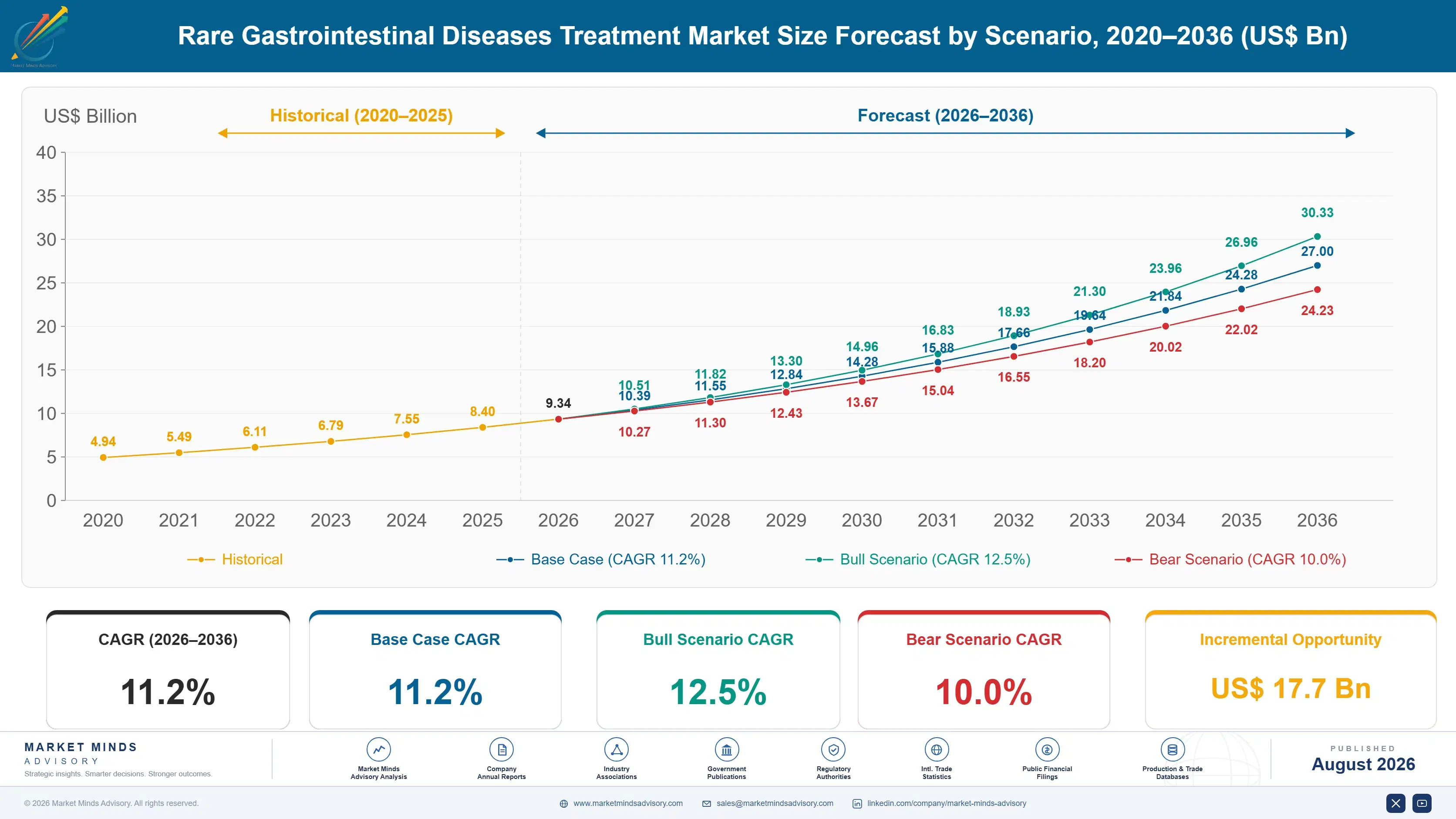
Growth of 9.9% across 2020 to 2025 came from two products and one recurring problem. Teduglutide established that intestinal failure could be treated pharmacologically, and reimbursement followed slowly across systems that had budgeted for parenteral nutrition. Biologic therapy for eosinophilic oesophagitis arrived and grew quickly from nothing. Meanwhile diagnostic delay stayed close to five years, which meant every launch reached a fraction of its eligible population.
The base case of 11.2% rests on three mechanisms. Eosinophilic disorders beyond the oesophagus are moving into treatment as biologic indications extend into gastritis and enteritis, which multiplies the eligible population without requiring any new molecule. Motility disorder therapy is advancing after two decades of nothing, with prokinetic approaches reaching later-stage development. And diagnostic pathways are improving as biopsy protocols become routine in gastroenterology rather than exceptional, which converts prevalence into treated patients.
The bull case of 12.5% assumes diagnostic delay falls through protocol change in general gastroenterology, since every year removed converts undiagnosed patients into treated ones. The bear case of 10.0% reflects the payer response to orphan pricing across an expanding list of indications: budget impact assessment applied across conditions individually rare and collectively substantial, with step therapy required before any biologic.
The base case of 11.2% rests on three mechanisms. Eosinophilic disorders beyond the oesophagus are moving into treatment as biologic indications extend into gastritis and enteritis, which multiplies the eligible population without requiring any new molecule. Motility disorder therapy is advancing after two decades of nothing, with prokinetic approaches reaching later-stage development. And diagnostic pathways are improving as biopsy protocols become routine in gastroenterology rather than exceptional, which converts prevalence into treated patients.
The bull case of 12.5% assumes diagnostic delay falls through protocol change in general gastroenterology, since every year removed converts undiagnosed patients into treated ones. The bear case of 10.0% reflects the payer response to orphan pricing across an expanding list of indications: budget impact assessment applied across conditions individually rare and collectively substantial, with step therapy required before any biologic.
Finding the Patient Is the Hard Part
Rare gastrointestinal disease is a category defined by how long it takes to recognise. Chronic diarrhoea, failure to thrive, dysphagia and abdominal pain are the presenting features of both common disorders and rare ones, so the rare patient is worked up for the common thing repeatedly. Eight years and seven specialists is the typical path, and by then irreversible damage has frequently accumulated.
TOP FIVE CONCENTRATION51%Combined share held by the five largest participating companies
DIAGNOSTIC DELAY8 yearsAverage interval from first symptoms to a correct diagnosis
ANNUAL THERAPY COSTUSD 310,000Median cost per patient across approved orphan therapies
SPECIALISTS CONSULTED7 physiciansTypical number seen before the correct condition is identified
TREATED SHARE OF PREVALENCE34%Proportion of estimated patients receiving any approved therapy
CENTRE OF EXCELLENCE SHARE72% of prescribingConcentration of prescribing inside designated specialist treatment centres
That delay is the market's binding constraint rather than any therapeutic gap. Only about 34% of the estimated prevalent population receives any approved therapy, and the missing two-thirds are not treatment failures. They are undiagnosed, or carry a diagnosis of something else entirely. A company launching an effective orphan therapy discovers quickly that finding patients costs more than developing the product did.
Prescribing concentrates severely as a result. Roughly 72% happens inside designated centres of excellence, because those are the only places where the diagnosis gets made and where the funding case can be assembled. Median annual therapy cost of around USD 310,000 makes each patient commercially significant, which is exactly why patient identification programmes have become the operative commercial capability in this field.
"Every launch plan I review budgets carefully for prescriber education and almost nothing for finding the patients. Then eighteen months later the product is excellent, the payers have said yes, and the forecast is a third of plan because nobody has been diagnosed."
Market Trends
Gastrointestinal and hepatobiliary gene panels have moved from research use into routine paediatric and adult practice, and they identify congenital enteropathies, cholestatic liver disorders and hereditary pancreatitis in weeks rather than years. Genetic confirmation now accounts for around 46% of diagnoses against a small fraction a decade ago. Every reduction in the eight year average delay converts an undiagnosed patient into a treated one, which is how this market grows rather than through new molecules reaching approval. Panel testing reimbursement rather than availability is now the binding constraint in most markets.
Market Impact: Median therapy at USD 310,000 yearl
Approved Therapies Expand Into Adjacent Rare Indications
Companies holding an approved rare gastrointestinal product routinely pursue adjacent conditions where the same mechanism applies, because the trial infrastructure, centre relationships and regulatory experience all transfer. Bile acid transport inhibitors moved between cholestatic diseases, and interleukin-directed biologics have moved across eosinophilic conditions. Each expansion reaches a population already concentrated in the same centres of excellence, where 72% of prescribing occurs, which makes incremental commercial cost unusually low. The second indication in a mechanism costs a fraction of the first, which is why every company holding one approval is pursuing another.
Market Impact: Prescribing concentrated in 72% sha
Market Opportunities and Growth Drivers
Orphan Pricing Makes Small Populations Commercially Viable
Median annual therapy cost of around USD 310,000 means a few thousand treated patients supports a substantial commercial programme, which is what makes development in these conditions rational at all. Orphan designation adds market exclusivity, protocol assistance and fee relief that materially change programme economics. That pricing environment is what has pulled a dozen serious developers into a field that was almost entirely nutrition support and supportive care fifteen years ago. Fifteen years ago this field was nutrition support and supportive care almost entirely, and the pricing environment rather than the science is what changed.
Market Impact: Only 34% of patients treated
Paediatric Centres Formalise Congenital Enteropathy Pathways
Congenital enteropathies present in infancy with intractable diarrhoea and failure to thrive, and specialist paediatric gastroenterology centres have built structured diagnostic pathways that reach a molecular answer within months rather than years. That is the sharpest reduction in diagnostic delay anywhere in the field. It also identifies patients early enough for therapy to prevent irreversible intestinal damage, which changes both the clinical outcome and the duration of treatment revenue substantially. Treatment beginning in infancy also produces the longest revenue duration available anywhere in pharmaceuticals, since these are lifelong conditions with no competing mechanism.
Market Impact: Assessment scrutinising USD 310,000
Market Restraints and Challenges
Two-Thirds of Prevalent Patients Remain Undiagnosed
Only around 34% of the estimated prevalent population receives any approved therapy, and the shortfall is diagnostic rather than therapeutic. The root cause is that rare gastrointestinal presentations overlap almost completely with common ones, so patients are worked up repeatedly for the wrong condition across an average of seven specialists. Companies mitigate with patient identification programmes, panel testing support and referral algorithms distributed to general gastroenterology, which is slow work and the only thing that expands the market. Expanding the market beats competing for a share of it. Panel testing reimbursement is the binding variable.
Market Impact: Confirmation reaching 46% of diagno
Payer Resistance to Orphan Pricing Keeps Hardening
Median annual costs near USD 310,000 have drawn increasingly formal health technology assessment scrutiny, and several European and Asian payers now require managed entry agreements or outcomes-based arrangements before funding. The root cause is that orphan pricing was set when these products were rare and is now being applied across a growing catalogue. Companies mitigate with outcome-linked contracts, registry evidence of real-world benefit and staged pricing tied to confirmed diagnosis. Arriving with those terms rather than conceding them late negotiates from a considerably stronger position, and the registry data supports later indication expansions as well.
Market Impact: Reaching 72% concentrated prescribi
3 additional market trends, 4 additional growth drivers, and 2 additional restraints and challenges are covered in the full report. Contact sales@marketmindsadvisory.com to access the complete intelligence.
Segment CAGR and Growth Architecture
Segmentation follows therapeutic modality, because each addresses a different failure: a missing protein, an aberrant immune response, absent absorptive surface, or a defective transport mechanism. A company choosing a modality is choosing which rare gastrointestinal conditions it can plausibly serve at all. Six modalities sit in the hierarchy, separated by mechanism rather than by the condition treated.

Enzyme and Protein Replacement Therapy
Enzyme and protein replacement compounds at 16.8%, exactly 1.50 times the market, as recombinant products reach conditions previously managed only with nutrition support and symptom control. Glucagon-like peptide analogues in short bowel syndrome, pancreatic enzyme products in hereditary pancreatitis and recombinant approaches to congenital enteropathies all sit here. The mechanism is straightforward and the clinical benefit measurable, which makes both regulatory and payer conversations easier than for immunomodulators where endpoints are softer. Median annual cost sits near the category average of USD 310,000. The constraint is entirely diagnostic: these products work reliably in identified patients, and roughly two-thirds of the prevalent population has never been identified at all. Identification is the whole commercial problem.
CAGR 16.8%
Bile Acid and Metabolic Modulators
Bile acid and metabolic modulators grow at 14.6% on the cholestatic liver diseases, where ileal bile acid transport inhibition has produced the first genuinely effective pharmacological options for progressive familial intrahepatic cholestasis and Alagille syndrome. Pruritus relief is the endpoint patients care most about, and it is measurable in a way that liver histology is not, which has made these approvals unusually clean. The modality also transfers between related cholestatic conditions, so a company holding one approval has a defensible path to adjacent ones through the same centres. Paediatric hepatology centres control almost all prescribing, which concentrates the commercial effort into a small number of relationships that take years to build.
CAGR 14.6%
Full segment breakdown across 6 segments available in the complete report.
Regional Architecture and Country Demand Map
Demand follows orphan reimbursement infrastructure and specialist centre density rather than disease prevalence, since a rare condition generates revenue only where it is diagnosed and where a payer will fund the therapy. North America leads on orphan pricing rather than on any concentration of disease.
North America
North America holds 31% of spend, the largest regional share, growing at 10.9%. The reason is commercial rather than epidemiological and worth stating plainly: orphan drug pricing is highest here, reimbursement pathways for rare disease are the most established, and designated centres of excellence carry the diagnostic capability that makes patients findable. Paediatric gastroenterology and hepatology programmes at major academic centres identify congenital enteropathies faster than almost anywhere else. Prescribing is heavily concentrated, which suits a commercial model built on a small number of deep centre relationships rather than broad prescriber reach. Panel testing reimbursement for these indications is uneven even here, which caps diagnosed prevalence well below epidemiological estimates.
Share: 31% | CAGR: 10.9% (2026 to 2036)
Western Europe
Twenty-six percent of spend sits in Western Europe, growing at 9.7%. Reference centre networks under European rare disease frameworks concentrate diagnosis and prescribing formally, which makes patient identification more systematic than in most regions and market access considerably harder. Health technology assessment scrutiny of orphan pricing is the most developed anywhere, and managed entry agreements are now routine rather than exceptional. French, German, Dutch and Nordic paediatric hepatology centres produced much of the foundational evidence in cholestatic disease, which gives the region disproportionate clinical influence relative to its spend. Managed entry agreements are now the entry condition rather than a late concession, which changes how a launch has to be prepared.
Share: 26% | CAGR: 9.7% (2026 to 2036)
Regional intelligence for 5 additional markets available in the complete report: East Asia, South Asia and Pacific, Latin America, Middle East and Africa, Eastern Europe. Contact sales@marketmindsadvisory.com.

Finding Patients Before Selling Therapy
An orphan therapy in this field can be excellent, approved and reimbursed while still missing two-thirds of its patients, because they have not been diagnosed. Four positions matter, and the first is worth more than the other three combined in most launches. The others concern centre depth, mechanism reuse and how a company arrives at a payer negotiation.
Fund Panel Testing Access in General Gastroenterology
Only around 34% of the prevalent population receives any approved therapy, and the shortfall is diagnostic. Genetic panels now confirm roughly 46% of diagnoses and they reach an answer in weeks rather than the eight year average. Companies that fund or subsidise panel access in general gastroenterology and paediatric practice, rather than only in centres of excellence, convert undiagnosed patients into identified ones. That expands the market itself rather than competing for a share of it. Reimbursement for the test itself is the binding constraint in most markets. That distinction decides where the spend belongs.
Market Impact: Treated share rising from a 34% tre
Build Deep Relationships With Designated Centres
Roughly 72% of prescribing happens inside designated centres of excellence, because that is where diagnosis occurs and where the funding case gets assembled. A commercial model built on broad prescriber reach wastes almost all of its effort here. Concentrating on a small number of centre relationships, sustained over years and covering diagnosis, funding applications and registry participation together, is what actually delivers patients at median annual therapy cost near USD 310,000. Those relationships take years to build and they cover diagnosis support, funding applications and registry participation together rather than promotion alone.
Market Impact: Centres controlling fully 72% of th
Expand Approved Mechanisms Into Adjacent Conditions
A company holding one approval carries trial infrastructure, centre relationships and regulatory experience that transfer directly to adjacent conditions sharing the mechanism. Bile acid transport inhibition moved between cholestatic diseases this way, growing at 14.6%, and interleukin-directed biologics have moved across eosinophilic conditions. Each expansion reaches patients already concentrated in the same 72% of prescribing centres, which makes incremental commercial cost very low relative to a first launch in the field. Trial infrastructure and regulatory experience transfer as directly as the mechanism does. Incremental commercial cost is very low against a first entry into the field.
Market Impact: Adjacent mechanism expansion compou
Offer Outcome-Linked Contracts Before Payers Demand Them
Health technology assessment scrutiny of orphan pricing near USD 310,000 annually keeps hardening, and managed entry agreements are now routine across European and Asian payers rather than exceptional. Companies that arrive with outcome-linked terms, registry commitments and staged pricing tied to confirmed genetic diagnosis negotiate from a stronger position than those defending a list price. The registry data also supports the adjacent indication expansions that follow, so the concession pays for itself twice. Defending a list price is the weakest available position. The registry evidence supports later expansions as well.
Market Impact: Managed entry now covering USD 310,
Who Controls the Margin Pool
Five companies hold 51% measured on rare gastrointestinal therapeutic revenue, the basis applied throughout this section. Takeda and Ipsen lead from different positions, the first on short bowel syndrome and broad rare disease infrastructure, the second on gastrointestinal and hepatology depth built through acquisition. The gap to the challenger group is narrow on science and wide on centre relationships.
Competition operates on three dimensions. Patient identification capability decides how much of a prevalent population a company can actually reach. Centre of excellence relationships decide who is present when a diagnosis is made and a funding case assembled. And payer negotiation experience decides who secures access at orphan pricing rather than at a discount that undermines every subsequent launch. None of the three is about the molecule.
Two pressures are reshaping position. Panel genetic testing is expanding the diagnosed population faster than any single company's efforts, which benefits whoever has centre relationships in place. Meanwhile payer resistance is hardening. Rankings will shift toward companies pairing identification programmes with outcome-linked access agreements rather than list price defence. That expansion rewards whoever already holds the centre relationships when the newly diagnosed patients appear.

Competitive Moat and Risk Dimensions
Moat: Rare disease infrastructure breadth
Takeda operates rare disease commercial, medical affairs and patient support infrastructure across dozens of countries, and that apparatus is expensive to build and directly reusable across every rare gastrointestinal indication it enters. In a field where finding patients costs more than developing therapies, an existing identification and support organisation is the operative asset rather than any single molecule.
Risk: Portfolio breadth dilutes focus
Rare gastrointestinal disease competes internally against haematology, immunology and neuroscience for the same commercial attention and capital. Specialist companies built entirely around one or two gastrointestinal conditions can commit disproportionate resource to a small number of centre relationships, and in a field where 72% of prescribing sits in those centres, focus beats breadth more often than scale suggests.
Moat: Hepatology centre relationships
Ipsen built genuine depth in rare hepatology and cholestatic liver disease, and the paediatric hepatology centres controlling that prescribing are few enough that established relationships function as a real barrier. Those relationships took years to develop and cover diagnosis support, funding applications and registry participation together rather than promotion alone.
Risk: Narrow indication concentration
Depth in cholestatic liver disease is also exposure to it. A single payer reassessment of bile acid modulator pricing, or a competitor demonstrating superiority in progressive familial intrahepatic cholestasis, affects a disproportionate share of the position. Companies spread across several rare gastrointestinal modalities absorb that kind of shock considerably better.
Players Tracked
Prominent Players
Takeda Pharmaceutical
Ipsen
Albireo Pharma
Sanofi
Mirum Pharmaceuticals
Other Key Players
Zealand Pharma
VectivBio
AbbVie
Johnson & Johnson
Regeneron Pharmaceuticals
Sanofi Genzyme
Alexion Pharmaceuticals
Nestlé Health Science
Fresenius Kabi
Baxter International
AstraZeneca
Amryt Pharma
Chiesi Farmaceutici
Recordati Rare Diseases
Nutricia
Recent Developments
Gastrointestinal gene panels enter routine paediatric practice
Paediatric gastroenterology and hepatology services across several health systems adopted broad gene panel testing as first-line investigation for intractable infant diarrhoea and cholestasis. This reflects diagnostic service adoption rather than any commercial development among therapeutic companies themselves. Reimbursement for the tests lags adoption in most of those systems.
Signal: Faster molecular diagnosis expands the tre
Managed entry agreements become standard for orphan gastrointestinal therapies
European and Asian payers moved from case-by-case negotiation to standing managed entry frameworks for orphan therapies priced above defined thresholds, requiring outcome data and registry participation. These were reimbursement policy decisions rather than commercial transactions between the companies affected by them. Companies without prepared outcome terms now negotiate from weakness.
Signal: Outcome-linked terms are now the entry con
Chinese rare disease catalogue expands with dedicated funding pathways
China extended its national rare disease catalogue and associated reimbursement mechanisms to cover additional gastrointestinal and hepatobiliary conditions, alongside designating further specialist treatment centres. These were national health policy decisions rather than corporate developments among suppliers. Diagnosis capability at the designated centres improved alongside the funding mechanism.
Signal: Catalogue inclusion converts a nominally l
Biologic Manufacture, Trials and Patient Finding
Biologic and recombinant protein manufacture accounts for roughly 24% of cost of goods across the enzyme and protein replacement segment, with fill-finish, cold chain and release testing dominating that figure. Small molecule bile acid modulators carry considerably lower manufacturing cost. The larger economic burden sits outside cost of goods entirely, in clinical development against tiny populations and in the patient identification programmes that make any of it commercially viable.
Biologic manufacturing input costs rose through 2021 and 2023 as single-use consumables, cell culture media and cold chain capacity tightened across the whole sector. Company annual reports across the rare disease developers disclose the resulting cost per patient pressure and programme delays. World Health Organization reporting on access to essential and orphan medicines documents the concentration of manufacturing and the resulting supply fragility. Volumes are too small to command any supplier priority.
Exposure divides by modality and by market access position. Biologic developers carry manufacturing and cold chain cost against small volumes, so per-patient cost is high and utilisation of any facility is poor. Small molecule developers carry almost no manufacturing exposure and face the same payer scrutiny regardless. Companies with outcome-linked contracts carry revenue risk instead.

Share fill-finish and cold chain capacity across rare portfolios
Dedicated biologic capacity for a few thousand patients runs at hopeless utilisation and carries the full fixed cost regardless. Sharing fill-finish and cold chain infrastructure across several rare indications, or contracting it entirely, converts a fixed burden into a variable one and removes the capital argument that has stalled several otherwise viable programmes. Contracting it entirely is usually cheaper.
Treat patient identification spend as development not promotion
Finding patients frequently costs more than developing the therapy did, and budgeting it as promotional spend puts it in the wrong place and under the wrong scrutiny. Classifying identification programmes, panel testing support and referral algorithms as part of the development case makes the true economics visible and stops the spend being cut in the first commercial review.
Build registries during trials rather than after approval
Managed entry agreements now require outcome data as an entry condition rather than a later concession, and assembling it retrospectively is slow and incomplete. Establishing patient registries alongside the registrational programme produces the evidence payers demand at launch, and the same data supports the adjacent indication expansions that follow later. Retrospective assembly is slow and incomplete.
Portfolio Architecture for Margin Defence
The portfolio separates by modality and by how measurable the benefit is. Enzyme and protein replacement produces objective clinical improvement that regulators and payers accept readily. Bile acid modulators relieve symptoms patients care about and can report. Biologic immunomodulators face softer endpoints. Nutrition therapy is the established standard of care that everything else is measured against, and gene therapy remains largely aspirational here.
The tension is between measurability and ambition. The modalities with clean endpoints reach approval and reimbursement most easily and address the least complex pathology. Gene and cell approaches address the underlying genetic defect in congenital enteropathies and face endpoint, durability and payer questions nobody has yet answered. Companies weighted toward the second are funding science against a market access environment that is hardening.
High-value pools concentrate where the mechanism is clear and the patients are findable. Enzyme and protein replacement, bile acid modulation in cholestatic disease, and any position built on genuine centre of excellence depth all qualify, and none of them depends on broad prescriber reach. What they share is that a patient, once found, stays for life at a median annual cost near USD 310,000.
Volume / Commodity-Adjacent Tier
Symptomatic and supportive pharmacotherapy alongside standard parenteral and enteral nutrition products. Established as baseline care across every rare gastrointestinal condition, competitively supplied, and priced far below the orphan therapies measured against it.
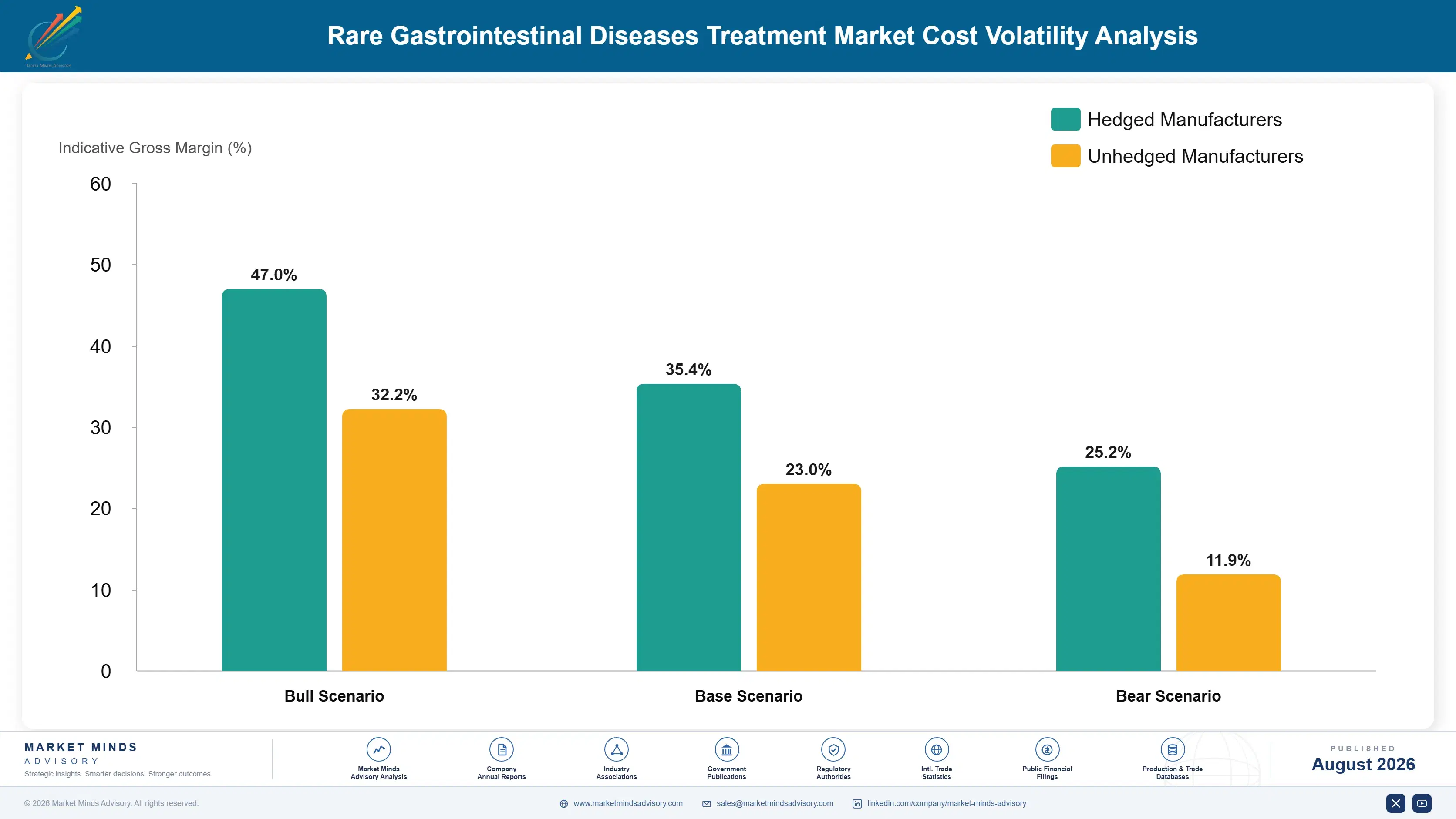
Gross Margin: 18-30%
Premium / Certified Tier
Enzyme and protein replacement therapy and bile acid modulators with clean measurable endpoints and established orphan reimbursement. Centre relationships and patient identification capability qualify a company far more than the molecule itself does.
Gross Margin: 52-70%
Sustainability / Regulatory / Next-Generation Tier
Gene and cell-based therapies targeting the underlying defect in congenital enteropathies. The very wide margin range separates approved durable products from development programmes whose endpoint and durability questions remain entirely unresolved.
Gross Margin: 30-78%

High-value Sub-segments and Strategic Watch-out
Enzyme and Protein Replacement Therapy
Compounding at 16.8% on objective measurable benefit that regulators and payers accept readily. The products work reliably in identified patients, and roughly two-thirds of the prevalent population has never been identified at all. Identification spend rather than promotion is what actually moves the numbers here.
Gross Margin: 54-70%
Bile Acid and Metabolic Modulators
Growing at 14.6% in cholestatic liver disease, where pruritus relief is an endpoint patients report and payers accept. The mechanism transfers between related conditions through the same small group of paediatric hepatology centres. Those paediatric hepatology centre relationships take years of work to establish properly.
Gross Margin: 56-72%
Specialised Nutrition Therapy
The clinical baseline at 6.4%, supplied competitively and priced far below the orphan therapies measured against it. It remains the standard of care wherever a diagnosis has not been made or funding has not been secured. It is the comparator every orphan therapy is judged against.
Gross Margin: 18-30%
Gene and Cell-Based Therapies
The strategic watch-out. Targeting the underlying defect in congenital enteropathies is the right ambition, and durability, endpoint and payer questions remain unresolved while several comparable rare disease programmes have already stalled. Payers have not yet indicated what they would fund for a durable single-administration therapy in these conditions.
Gross Margin: 30-78%
Lifelong Therapy Once Diagnosed
This is among the most durable annuity revenue in pharmaceuticals. A patient with a congenital enteropathy or a genetic cholestatic disease requires therapy for life, and at a median annual cost near USD 310,000 each identified patient represents a very substantial revenue stream that no competitor easily displaces. Switching is rare because the diagnosis is fixed, the mechanism is specific and the centre managing the patient has established what works.
Depth varies by whether the diagnosis is genetic and confirmed. Molecularly confirmed congenital conditions produce the deepest and longest relationships, with treatment beginning in infancy. Acquired rare conditions such as short bowel syndrome after resection produce shorter but still multi-year courses. Eosinophilic conditions involve episodic escalation and de-escalation. Undiagnosed patients generate nutrition support revenue and nothing else at all.
The deciding clinician is unusually concentrated and unusually senior. Roughly 72% of prescribing sits with a small number of specialists inside designated centres, who make the diagnosis, assemble the funding case and manage the patient for decades. That population is small enough to know individually, which is a completely different commercial exercise from any primary care therapeutic area.

Where Developers Build Position
These are among the four positions where our research anticipates prominent divergence between winners and laggards over the coming forecast period. Each is grounded in the demand model, the regulatory perimeter, and the announced capacity pipeline.
Two-thirds of the population has never been diagnosed
Only around 34% of the prevalent population receives any approved therapy, and the missing patients are undiagnosed rather than treatment failures. Funding panel testing access in general gastroenterology, not only in centres of excellence, converts unidentified patients into treated ones and expands the market itself rather than competing for share. Genetic confirmation already accounts for 46% of diagnoses, and every point of improvement reaches patients no competitor is reaching either, and reimbursement for the test rather than its availability is the binding constraint.
A few hundred specialists write almost every prescription
Roughly 72% of prescribing happens inside designated centres of excellence, because that is where diagnosis occurs and where funding cases are assembled and won. Commercial models built on broad prescriber reach waste nearly all their effort in this field. Concentrating instead on a small number of relationships covering diagnosis support, funding applications and registry participation together is what actually delivers patients at these therapy costs, and those relationships take years to build and cannot be bought when a launch approaches.
The second indication costs a fraction of the first
A company holding one approval carries trial infrastructure, centre relationships and regulatory experience that transfer directly into adjacent conditions sharing the same mechanism. Bile acid transport inhibition moved between cholestatic diseases this way and now grows at 14.6% annually. Each expansion reaches patients already concentrated in the same prescribing centres, which makes incremental commercial cost very low against what a first entry into the field demands, which is why almost every company holding one approval here is already pursuing a second.
Outcome-linked terms are the entry condition now
Payers across Europe and Asia have moved from case-by-case negotiation to standing managed entry frameworks covering orphan therapies priced above defined thresholds, which the USD 310,000 median here comfortably exceeds. Arriving with outcome-linked terms, registry commitments and staged pricing tied to confirmed genetic diagnosis means negotiating from real strength rather than defending a list price that nobody now accepts. The registry evidence then supports the adjacent indication expansions that follow it, so the concession effectively pays for itself twice over.
Engagement Snapshot From the Field
A live engagement with an industry participant carrying material or product regulatory and market exposure ahead of a defining policy shift, showing how our research translates into a defensible multi-year portfolio strategy.
MARKET MINDS ADVISORY · CLIENT ENGAGEMENT SUMMARY
Rare Gastrointestinal Diseases Treatment Producer Strategic Portfolio Review and Transition Roadmap 2026·Investment Scenario on Rare Gastrointestinal Diseases Treatment Exposure Evaluation 2025-26
CLIENT PROFILE
A mid-sized rare disease company holding an approved enzyme replacement therapy for a congenital enteropathy, launched two years earlier across eleven markets with reimbursement secured in eight of them, and roughly USD 340 million in total revenue (client-reported, unverified by MMA). Treated patient numbers stood at 38% of the launch forecast despite favourable access. Diagnosed prevalence had never been measured.
STRATEGIC CHALLENGE
Commercial leadership attributed the shortfall to prescriber awareness and had doubled medical education spend without measurable effect. Payer access was in place, the clinical data was strong, and specialists at target centres were familiar with the product. Nobody had established how many patients with the condition had actually been diagnosed in those markets at all.
MMA APPROACH
MMA reconstructed the diagnosed prevalent population in each market from centre records, genetic laboratory volumes and registry data, then compared it against published epidemiological prevalence estimates. Diagnostic pathways were traced for treated patients to establish how each had actually reached a molecular diagnosis. Panel testing availability and reimbursement status were recorded market by market alongside the diagnosed population figures.
KEY FINDINGS
- Diagnosed patients across the eleven markets totalled 41% of epidemiological prevalence, and the client's treated share of that diagnosed population was already 84%, which was close to a ceiling.
- Prescriber awareness at target centres measured above 90%, which eliminated the explanation commercial leadership had been funding for eighteen months at considerable cost.
- Every treated patient had reached diagnosis through a specialist centre, and no patient in the cohort had been identified through general gastroenterology or paediatric practice at all.
- Genetic panel testing was available but not reimbursed for this indication in six of the eleven markets, which was the single clearest determinant of diagnosed prevalence by country.
CLIENT PROFILE
A mid-sized rare disease company holding an approved enzyme replacement therapy for a congenital enteropathy, launched two years earlier across eleven markets with reimbursement secured in eight of them, and roughly USD 340 million in total revenue (client-reported, unverified by MMA). Treated patient numbers stood at 38% of the launch forecast despite favourable access. Diagnosed prevalence had never been measured.
STRATEGIC CHALLENGE
Commercial leadership attributed the shortfall to prescriber awareness and had doubled medical education spend without measurable effect. Payer access was in place, the clinical data was strong, and specialists at target centres were familiar with the product. Nobody had established how many patients with the condition had actually been diagnosed in those markets at all.
MMA APPROACH
MMA reconstructed the diagnosed prevalent population in each market from centre records, genetic laboratory volumes and registry data, then compared it against published epidemiological prevalence estimates. Diagnostic pathways were traced for treated patients to establish how each had actually reached a molecular diagnosis. Panel testing availability and reimbursement status were recorded market by market alongside the diagnosed population figures.
KEY FINDINGS
- Diagnosed patients across the eleven markets totalled 41% of epidemiological prevalence, and the client's treated share of that diagnosed population was already 84%, which was close to a ceiling.
- Prescriber awareness at target centres measured above 90%, which eliminated the explanation commercial leadership had been funding for eighteen months at considerable cost.
- Every treated patient had reached diagnosis through a specialist centre, and no patient in the cohort had been identified through general gastroenterology or paediatric practice at all.
- Genetic panel testing was available but not reimbursed for this indication in six of the eleven markets, which was the single clearest determinant of diagnosed prevalence by country.
RECOMMENDED STRATEGY
Phase 1: Phase 1 (months 1 to 5): Redirect medical education spend toward funding panel testing access in general gastroenterology and paediatric practice. Phase 2: Phase 2 (months 5 to 14): Distribute referral algorithms naming the condition explicitly to general practice in the six markets lacking test reimbursement. Phase 3: Phase 3 (months 14 to 26): Build reimbursement submissions for the panel testing itself alongside the existing therapy access agreements.
OUTCOME
Newly diagnosed patient numbers rose by approximately 60% across the six target markets within a year of redirecting spend toward testing access (client-reported, unverified by MMA). Treated patients reached 71% of the original launch forecast, and total commercial spend fell slightly (client-reported, unverified by MMA). Diagnosed prevalence is now the primary forecast input rather than prescriber awareness.
Frequently Asked Questions
Foundational context covering the market sizes, CAGR, scope, country, region and competition that inform every finding below. This section is provided to cover basics and most often pre-purchase conversations, answered from the MMA Primary Research Dataset.
What is the current size of the Rare Gastrointestinal Diseases Treatment Market?
The global market was worth USD 8.4 billion in 2025, reaching USD 9.34 billion in 2026. North America holds the largest regional share at 31% of spend.
How large will the Rare Gastrointestinal Diseases Treatment Market be by 2036?
MMA forecasts USD 27.0 billion by 2036, an expansion multiple of 2.89 times the 2026 base. That represents roughly USD 17.66 billion of incremental value.
What is the CAGR for the Rare Gastrointestinal Diseases Treatment Market 2026 to 2036?
The base case compounds at 11.2% annually, with a bull case of 12.6% and a bear case of 9.8%. Historical growth from 2020 to 2025 ran at 9.9%.
Which segment is growing fastest?
Enzyme and protein replacement therapy compounds at 16.8%, exactly 1.50 times the market rate. Objective measurable endpoints make both regulatory and payer conversations considerably easier here.
Who are the major companies in the Rare Gastrointestinal Diseases Treatment Market?
Takeda Pharmaceutical, Ipsen, Albireo Pharma, Sanofi and Mirum Pharmaceuticals hold a combined 51%. Centre relationships and patient identification capability sustain those positions rather than molecules.
Which country is growing fastest?
China compounds at 14.1%, ahead of every other national market. A national rare disease catalogue and dedicated reimbursement pathways have transformed access within a few years.
Report Segmentation Architecture
The full report scope spans multiple orthogonal segmentation dimensions, with cross-tabulated demand data provided for each dimension pair. Coverage extends further to regional breakdowns, trend trajectories, and the competitive detail needed to support segment-level decision-making.
By Therapeutic Modality
- Enzyme and Protein Replacement Therapy
- Biologic and Targeted Immunomodulators
- Specialised Parenteral and Enteral Nutrition Therapy
- Bile Acid and Metabolic Modulators
- Gene and Cell-Based Therapies
- Symptomatic and Supportive Pharmacotherapy
By End-Use Industry
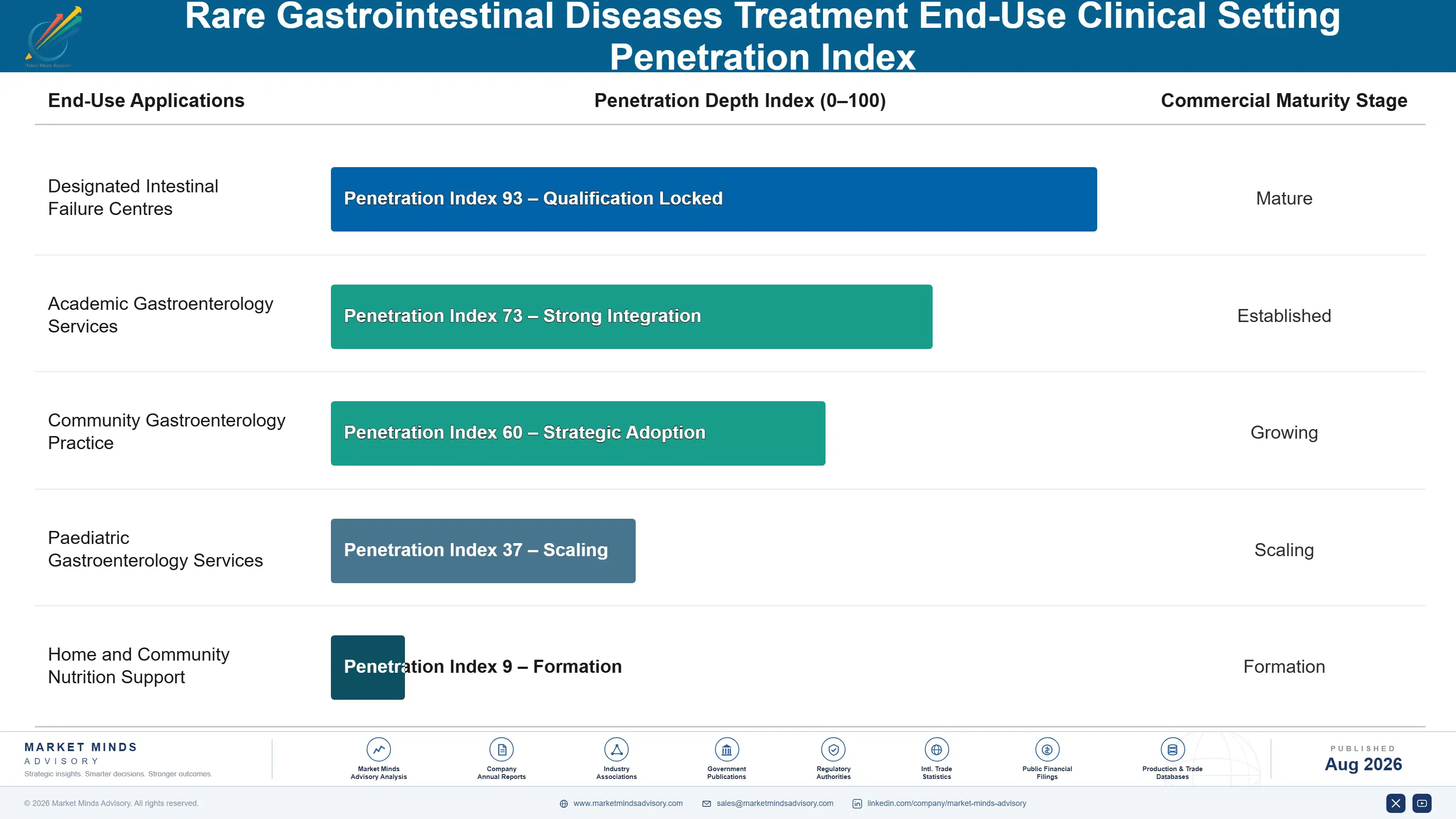
- Paediatric Gastroenterology and Hepatology
- Adult Rare Disease Gastroenterology
- Intestinal Failure and Transplant Programmes
- Clinical Nutrition Services
- Genetic Medicine and Metabolic Services
By Commercial Dimension
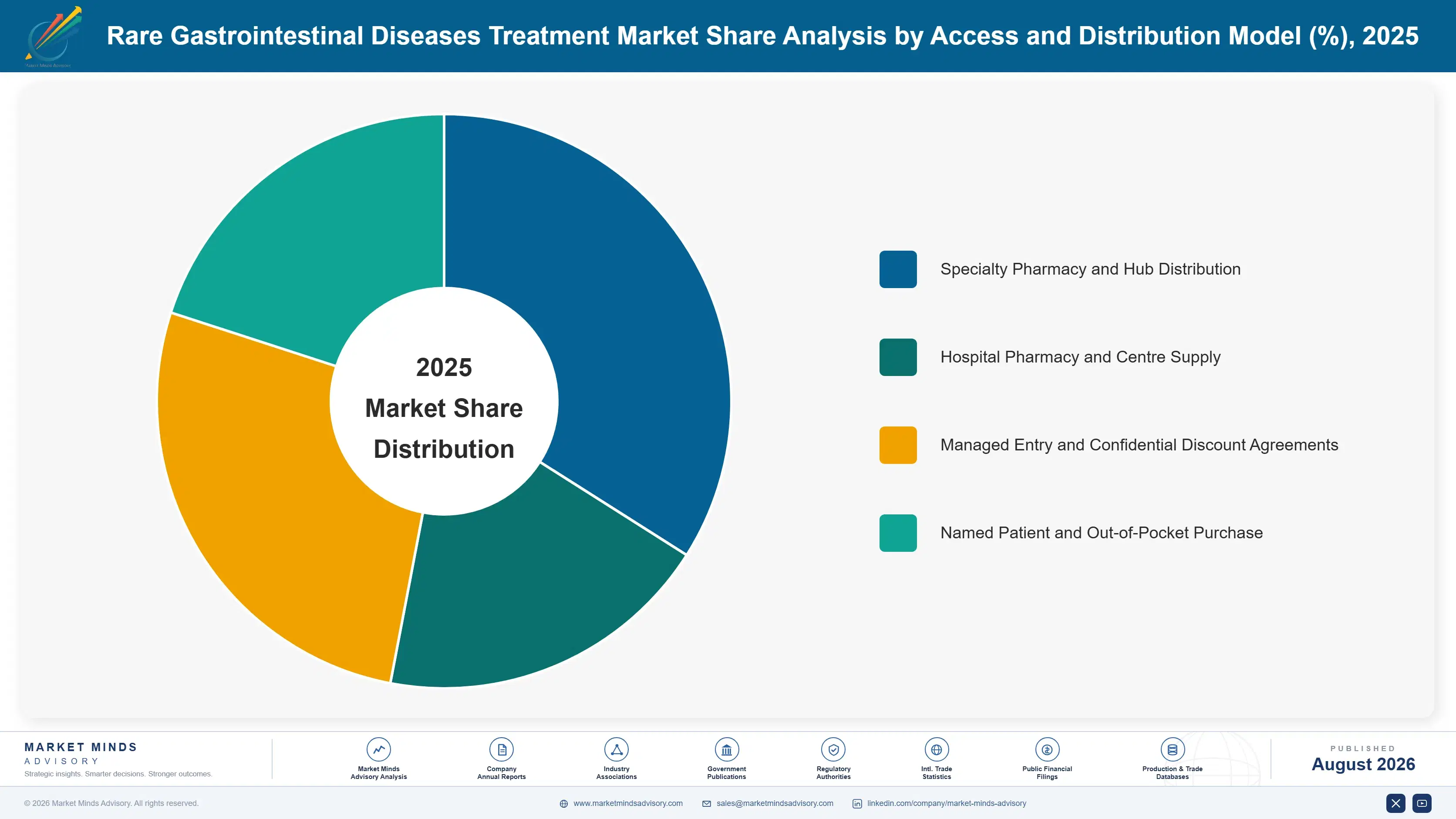
- Designated Centre of Excellence Supply
- Managed Entry and Outcome-Based Agreements
- Named Patient and Expanded Access Programmes
- Specialty Pharmacy and Home Care Channel
By Region
- North America
- Western Europe
- East Asia
- South Asia and Pacific
- Latin America
- Middle East and Africa
- Eastern Europe
Scope, Methodology, and Coverage
Every figure in this report is reproducible from documented input assumptions. The scope below maps the historical period, the forecast horizon, the segmentation dimensions, and the countries covered, alongside the underlying primary and qualitative methodology.
Historical Period
2020 to 2025
Forecast Period
2026 to 2036
Base Year
2025 (USD billions; MMA Primary Research Dataset, August 2026)
Market Definition
The market covers therapeutics used to treat rare gastrointestinal and hepatobiliary disorders, spanning enzyme and protein replacement therapy, biologic and targeted immunomodulators, specialised parenteral and enteral nutrition therapy, bile acid and metabolic modulators, gene and cell-based therapies, and symptomatic and supportive pharmacotherapy, across conditions including short bowel syndrome, congenital enteropathies, eosinophilic gastrointestinal disorders, hereditary pancreatitis and genetic cholestatic liver diseases. Common inflammatory bowel disease, coeliac disease, functional gastrointestinal disorders, gastrointestinal and hepatic oncology, viral hepatitis, diagnostic testing services, and intestinal transplantation surgery are excluded. Sizing is measured at manufacturer revenue in current prices.
Quantitative Units
USD billions (current prices); treated patient counts, diagnosed prevalence and annual therapy cost where applicable
Segmentation Dimensions
By Therapeutic Modality; By End-Use Industry; By Commercial Dimension; By Region
Regions Covered
North America, Western Europe, East Asia, South Asia and Pacific, Latin America, Middle East and Africa, Eastern Europe
Countries Covered
USA, Germany, France, UK, Italy, Spain, Netherlands, Sweden, Denmark, Canada, Japan, China, South Korea, Taiwan, India, Australia, Brazil, Mexico, Argentina, Colombia, Turkey, Israel, Saudi Arabia, UAE, Qatar, Egypt, South Africa, Poland, Czech Republic, Hungary, and additional markets relevant to this sector
Key Companies Profiled
Takeda Pharmaceutical, Ipsen, Albireo Pharma, Sanofi, Mirum Pharmaceuticals, Zealand Pharma, VectivBio, AbbVie, Johnson & Johnson, Regeneron Pharmaceuticals, Sanofi Genzyme, Alexion Pharmaceuticals, Nestlé Health Science, Fresenius Kabi, Baxter International, AstraZeneca, Amryt Pharma, Chiesi Farmaceutici, Recordati Rare Diseases, Nutricia
Quantitative Methodology
Primary survey, n=3,800 respondents, Q4 2025, six countries; demand-side model with trade association cross-validation
Qualitative Methodology
47 expert interviews, Q4 2025; applied to validate demand model assumptions, identify emerging dynamics, and assess competitive positioning
Report Format
PDF and XLSX data workbook (Word format preview document)
Publisher
Market Minds Advisory
Report Code
MMA-2026-HLT-906
Published
August 2026
Contact
sales@marketmindsadvisory.com | www.marketmindsadvisory.com
Purchase the full Rare Gastrointestinal Diseases Treatment Market Report (2026 to 2036).
The full report sizes rare gastrointestinal disease treatment across six therapeutic modalities, three commercial dimensions and seven regions, with annual forecasts to 2036 under base, bull and bear scenarios. Diagnosed prevalence is measured against epidemiological estimates by condition and country, which is the gap that determines what any approved therapy can actually reach. Genetic panel testing availability and reimbursement are mapped by market. Managed entry agreement structures are compared across payers alongside realised orphan pricing. Twenty companies are profiled on a consistent rare gastrointestinal revenue basis.
Diagnosed prevalence measured against epidemiological estimates by condition
Genetic panel testing availability and reimbursement mapped by market
Managed entry agreement structures compared against realised orphan pricing
Centre of excellence prescribing concentration quantified by country
Diagnostic pathway intervals traced from first symptoms to molecular confirmation
Mechanism adjacency opportunities assessed across approved modalities
Built For The People Who Decide
From boardroom strategy to bench-side execution, this report is read cover-to-cover by leaders shaping the next decade of their industry, turning demand scenarios, market dynamics and valuation benchmarks into decisions.
CXOs/ Presidents/ VPs/ Managers
M&A and Corporate Development
Strategy Teams and R&D Heads
Procurement and Product Directors
Regulatory and Compliance Leaders
Investor Relations and Equity Analysts