Market Minds Advisory
Quadriplegia Treatment Market

Quadriplegia Treatment Market: Forty Years of Complications, Not One Cure

Almost none of the money in this market treats paralysis. It manages bladder, skin, spasticity and breathing across four decades, and the biggest lever on all of it is how fast surgery happened.

Lead Analyst

Alice Ballenger

Published

September 2026

Make Smarter Decisions with Customized Research Insights

Request a free sample report and evaluate market opportunities, growth trends, and competitive dynamics relevant to your business needs.

2025 MARKET VALUE$6.2BMarket Size 2025
2036 FORECAST VALUE$14.2BBase Case , 2026 to 2036
CAGR 2026 TO 20367.8 %Bull 9.0% / Bear 6.6%
INCREMENTAL OPPORTUNITY$7.5BNet 10- year value creation
EXPANSION MULTIPLE2.12x2036 value over 2026 base
Strategic Levers
M&A Pipeline
Regional Outlook
Country Rankings
Competitive Intelligence
Segmental Deep-dive
Call-Us : 91 93563 13602

Executive Snapshot and Market Trajectory

The headlines belong to neural interfaces and regenerative work. The money does not. Around 79% of lifetime spend after a cervical spinal cord injury goes on bladder management, spasticity, pressure injuries, and breathing support, repeated monthly for four decades, and that steady monthly consumption is what this market actually sells.
Growth runs at 7.8% on chronic care volume and on rehabilitation technology finally reaching patients who previously received none of it at all. Rehabilitation robotics and functional electrical stimulation grow fastest at 11.7%, exactly 1.50 times the market rate, as reimbursement caught up with two decades of accumulated clinical evidence. Neural interface and neuromodulation restoration follows at 10.3%, from a very small base indeed.
Concentration reaches only 29% across the top five measured on annual revenue from products used in tetraplegia care, because no supplier manufactures catheters, botulinum toxin, implanted pumps, ventilators, and exoskeletons together under a single roof. North America holds 38%, above its framework band, on chronic equipment and consumable funding that exists nowhere else at that level of intensity. China grows fastest at 10.6% on rehabilitation hospital construction and on coverage expansion.
Market Definition
This market covers therapies, devices, and consumables used in the treatment and long-term management of quadriplegia arising from cervical spinal cord injury, measured at manufacturer realised prices, spanning neurogenic bladder and bowel management, spasticity management, respiratory support, rehabilitation robotics and functional electrical stimulation, acute surgical stabilisation and neuroprotection, and neural interface restoration. Attendant care labour, home modification, wheelchairs and mobility bases, vehicle adaptation, and general hospital overhead fall outside scope.
Base Year Value
$6.2B in 2025 (MMA Primary Research Dataset, August 2026)
Forecast Period
2026 to 2036, eleven discrete annual values
CAGR
7.8% base case. Bull 9.0%. Bear 6.6%.
Fastest Growth Segment
Rehabilitation Robotics and Functional Electrical Stimulation: 11.7% CAGR
Fastest Growth Country
China: 10.6% CAGR
Fastest Growth Region
South Asia and Pacific: 9.8% CAGR
Largest Region
North America: 38% of 2025 global value
Market Leaders
Coloplast, Medtronic, Becton Dickinson, AbbVie, Ottobock. Source: MMA Analysis based on company annual reports.
Primary Survey
n=3,800 procurement and R&D decision-makers, Q4 2025, six countries
Methodology
Demand-side build-up, cross-validated against public data, 47 expert interviews

Quadriplegia Treatment Market Forecast Scenarios

quadriplegia-treatment-market-size-forecast-scenario-1787299650854
The 2020 to 2025 period ran at 6.6% and the composition of it shifted meaningfully. Chronic consumable volume grew with a surviving population that keeps getting larger, since people injured decades ago are living into old age. Rehabilitation robotics moved from research settings into funded clinical use across several health systems. Acute surgical volume grew slowly, tracking injury incidence rather than anything therapeutic, which has been roughly flat.
Three mechanisms carry the 7.8% base case. Prevalence growth is the largest, because survival after cervical injury keeps improving while incidence holds broadly steady, so the treated population compounds every year without any change in injury rates. Rehabilitation technology reimbursement is the second, running at 11.7% as health systems fund what evidence supported for two decades. And Asian rehabilitation capacity is the third, opening treatment to populations previously managed at home.
The 9.0% bull case rests on epidural stimulation for volitional movement moving from trial centres into funded practice, which would create an entirely new category rather than expanding an existing one. The 6.6% bear case is chronic consumable reimbursement tightening, since bladder management alone carries 26% of annual product spend and payers in several systems have begun questioning single-use catheter quantities.

What the Forty Years Actually Cost

A cervical spinal cord injury at 34 produces a patient who will consume care for another forty years. Roughly 79% of that lifetime spend arrives after the acute episode closes, in monthly quantities of intermittent catheters, spasticity management, pressure-relieving surfaces, respiratory consumables, and the periodic readmissions that follow when any of those fail. Nothing about this market resembles an acute one, and suppliers who model it as episodic get the volume badly wrong.
TOP FIVE CONCENTRATION29%Fragmented because no supplier spans the whole care pathway
CHRONIC CARE SHARE79%Of lifetime spend consumed after the acute episode ends
MEDIAN AGE AT INJURY34 yearsWhich places a very long horizon on every decision
TIME TO DECOMPRESSION41 hoursMedian across systems against the threshold evidence actually supports
BLADDER MANAGEMENT SHARE26%Of annual product spend across the whole treated population
ANNUAL REHOSPITALISATION RATE32%Of patients readmitted each year for preventable complications
The readmission figure is the one worth sitting with. Around 32% of tetraplegic patients are rehospitalised each year, overwhelmingly for urinary tract infection, pressure injury, or respiratory complication, and almost all of it is preventable with better chronic management. Payers see the readmission cost. Suppliers sell the products that prevent it. Those two facts have never been properly connected in most reimbursement systems.
Upstream, median time from injury to surgical decompression sits near 41 hours across most systems, well beyond the window the clinical evidence supports, because the delay is transfer logistics rather than surgical capacity. A single grade of neurological improvement changes forty years of care requirement, which makes hours in an emergency department the largest cost variable in the whole pathway.
"The most expensive thing in this pathway is the ambulance that took a patient to a hospital without a spine service. Everything downstream, for four decades, is priced off that decision, and nobody in the supply chain has any influence over it whatsoever."
Director, Neurological Rehabilitation and Chronic Care Practice · MMA Healthcare

Market Trends

Rehabilitation Robotics Finally Cleared The Reimbursement Barrier

Robotic gait training and functional electrical stimulation accumulated clinical evidence for two decades while remaining largely unfunded outside research settings, which kept installed bases small and unit costs high. Several major health systems have now established reimbursement pathways, and the class grows at 11.7% against 7.8% for the market. The interesting effect is on rehabilitation centre economics rather than on patient outcomes alone: a funded robotic programme changes what a unit can bill per patient hour, which is what actually drives purchasing decisions in most rehabilitation facilities. Outcome data alone never moved a purchase order here.
Market Impact: Readmission affects 32% annually
Prevalence Compounds While Incidence Stays Broadly Flat

Cervical spinal cord injury incidence has held roughly steady for a decade across most developed systems, while survival after injury keeps improving through better acute care and better complication management. The treated population therefore compounds every year without any change in how many people are injured. Demographics are also shifting: falls in older adults now account for a growing share of cervical injuries, producing patients with shorter horizons but heavier comorbidity. Suppliers forecasting from incidence rather than prevalence have consistently understated chronic consumable demand. Prevalence exceeds incidence-based projections by more than 20% across a five-year window.
Market Impact: China grows at 10.6% annually

Market Opportunities and Growth Drivers

Preventable Readmissions Cost More Than Prevention Does

Around 32% of tetraplegic patients are readmitted annually, mostly for urinary tract infection, pressure injury, or respiratory complication, and each admission costs a health system multiples of the annual consumable spend that would have prevented it. Systems that moved to bundled or capitated chronic spinal cord injury care discovered this arithmetic immediately and increased consumable provision rather than restricting it. That reversal is now spreading, and it is the clearest commercial argument any supplier in this market possesses. The obstacle is that it only lands where both budgets sit together.
Market Impact: Median delay reaches 41 hours

Asian Rehabilitation Capacity Is Being Built From Nothing

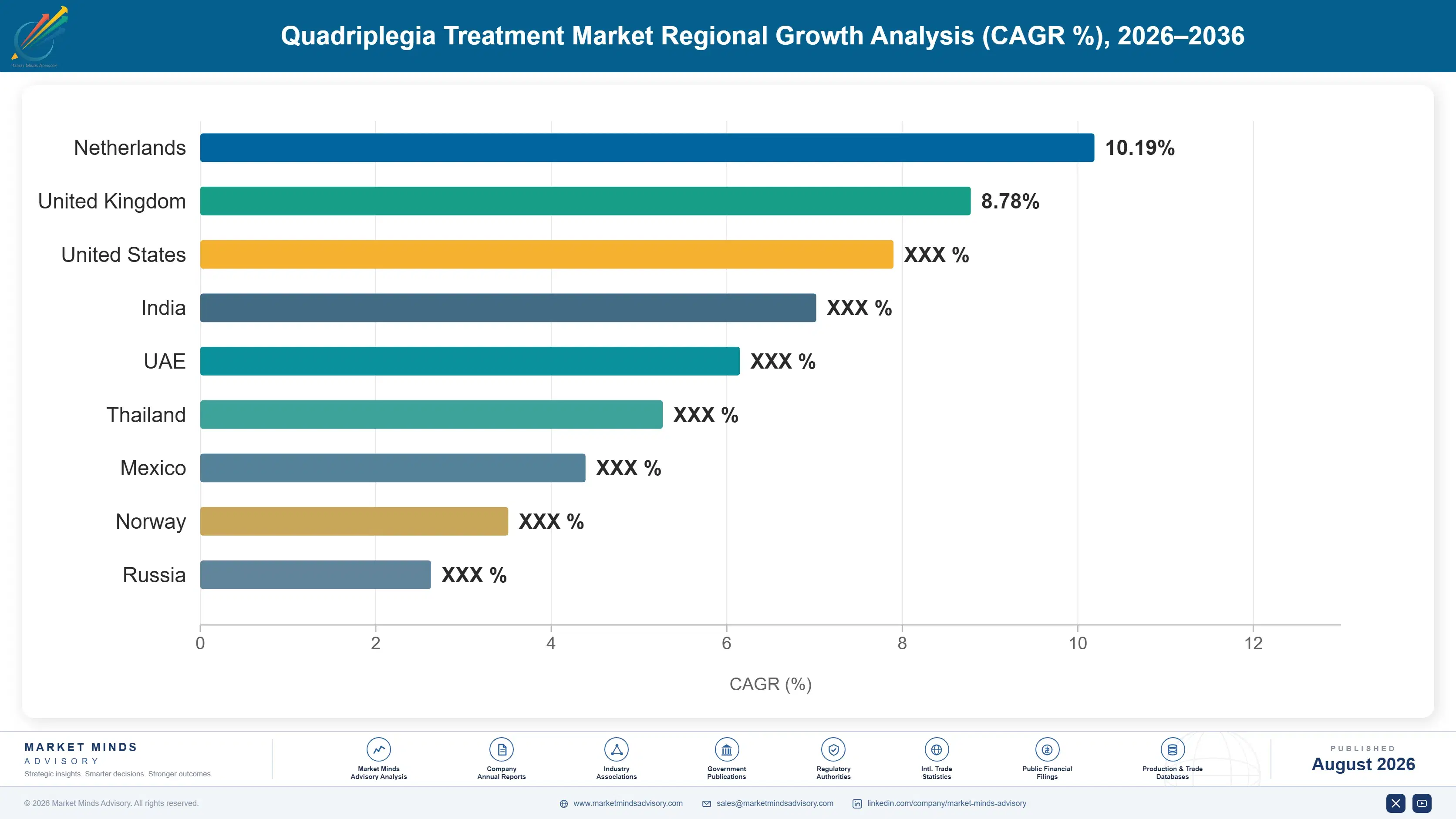
Specialist spinal cord injury rehabilitation beds barely existed across much of Asia a decade ago, and patients were discharged home to family care with minimal equipment or follow-up. Hospital construction programmes and expanding insurance coverage for assistive technology have changed that quickly. China contributes the fastest national growth rate in this forecast at 10.6%, driven by rehabilitation hospital building alongside coverage decisions that brought catheters and pressure-relieving surfaces within reach of ordinary households for the first time. Japanese and Korean provision already matched Western standards, so the growth comes from markets that had nothing.
Market Impact: Bladder carries 26% of spend

Market Restraints and Challenges

Transfer Logistics Delay Surgery Past The Evidence Window

Median time from cervical injury to surgical decompression runs near 41 hours across most health systems, far beyond what the clinical evidence supports, and the cause is almost never surgical capacity. Patients arrive at hospitals without spine services and wait for transfer, imaging, and a theatre slot at the receiving centre. Commercial impact is enormous but indirect: a lost grade of neurological function changes forty years of care requirement. Mitigation runs through regional trauma network design, direct-to-centre triage protocols, and prehospital identification, none of which any supplier controls. Suppliers can fund network research and nothing more.
Market Impact: Growing at 11.7% annually

Payers Are Questioning Single-Use Catheter Quantities

Bladder management carries 26% of annual product spend, and several health systems have begun restricting the number of single-use hydrophilic catheters supplied per month on cost grounds. The root cause is that the saving is visible in a procurement line while the resulting infection cost lands in a different budget entirely. Commercial impact is direct volume loss on the largest consumable category in this market. Suppliers are responding with health economic evidence linking catheter quantity to infection rates and readmission, which works only where budgets are combined. Bundled payment systems are the ones where that argument lands.
Market Impact: Prevalence exceeds forecasts by 20%
3 additional market trends, 4 additional growth drivers, and 2 additional restraints and challenges are covered in the full report. Contact sales@marketmindsadvisory.com to access the complete intelligence.

Segment CAGR and Growth Architecture

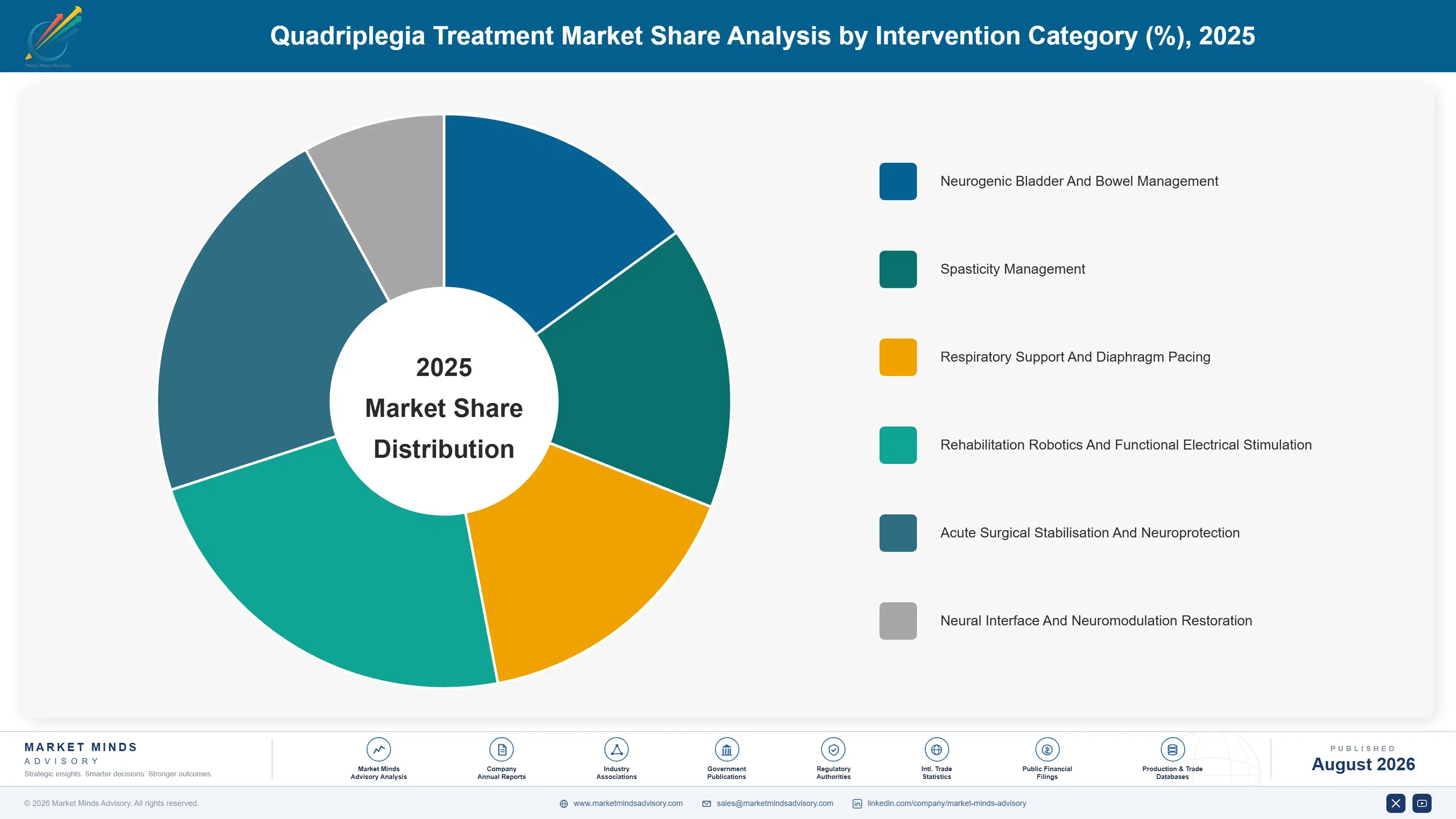
Segmentation follows the intervention category consumed, because that determines who purchases it, which budget pays, whether the revenue is capital or consumable, and how often it repeats across a patient's remaining decades. Disease severity level and care setting both cut across every category rather than separating them, which makes either a weak primary dimension for this market.
quadriplegia-treatment-market-market-share-analysis-1787299651390

Rehabilitation Robotics And Functional Electrical Stimulation

The fastest category at 11.7%, exactly 1.50 times the market rate, and the one where reimbursement rather than evidence was always the constraint. Robotic gait trainers, upper limb therapy systems, and functional electrical stimulation devices accumulated two decades of clinical literature while remaining unfunded outside research programmes. Several health systems have now built reimbursement pathways, and adoption followed immediately. The commercial driver inside a rehabilitation centre is billing per patient hour rather than outcome improvement alone, since a funded robotic programme changes unit economics in a way that additional therapist time cannot. Capital intensity keeps smaller facilities out entirely. Facilities below a certain size therefore stay entirely out of the category.
CAGR 11.7%

Neural Interface And Neuromodulation Restoration

Second fastest at 10.3% and by far the smallest category in absolute terms, which is worth stating plainly given how much attention it receives. Epidural spinal cord stimulation has restored volitional movement in carefully selected trial participants, and implanted brain-computer interfaces have driven communication and limb control in single-digit patient numbers. Neither is a commercial market yet. Diaphragm pacing and implanted functional electrical stimulation systems are genuinely commercial and represent most of the current revenue here. The category matters for what it may become rather than for anything it currently contributes to supplier accounts. Expectation here runs a very long way ahead of revenue, which is worth remembering when reading forecasts.
CAGR 10.3%
Full segment breakdown across 6 segments available in the complete report.

Regional Architecture and Country Demand Map

Value follows what a health system funds per patient across decades rather than where the injuries actually occur, and those two things diverge sharply. North America sits above its framework band on chronic equipment and consumable provision that no other system matches at that intensity.

North America

Thirty-eight percent, above the framework band, and the justification is funding intensity rather than injury numbers: workers' compensation, liability settlement, Medicare, and Medicaid between them support a level of chronic equipment and consumable provision that no other system approaches. A catastrophically injured worker in the United States frequently has care funded through a settlement structured across a lifetime, which produces spending patterns unrelated to any national health budget. Specialist model systems of care concentrate expertise in a way that improves outcomes measurably. Growth at 7.0% sits below the global rate, reflecting a market already well penetrated on chronic products rather than any weakness in demand. Canadian provision is comprehensive at considerably lower realised prices.
Share: 38% | CAGR: 7.0% (2026 to 2036)

Western Europe

National health systems fund this care comprehensively but at prices set through central procurement, which compresses realised value well below North American levels for identical products. Scandinavian and Dutch systems achieve the best documented outcomes on complication rates, largely through community spinal cord injury nursing that catches problems before they become admissions. German and French rehabilitation capacity is extensive and well funded. Southern European provision is more variable, with family care substituting for formal services in parts of it. Growth at 6.3% is the slowest of any region, reflecting mature provision and procurement that transmits price reductions across borders quickly. The Nordic community nursing model is the most transferable thing here, and few outside it have copied it.
Share: 24% | CAGR: 6.3% (2026 to 2036)
Regional intelligence for 5 additional markets available in the complete report: East Asia, South Asia and Pacific, Latin America, Middle East and Africa, Eastern Europe. Contact sales@marketmindsadvisory.com.
quadriplegia-treatment-market-country-cagr-analysis-1787299651903

Selling Into A Forty Year Horizon

Roughly 79% of lifetime spend arrives after the acute episode and repeats monthly for four decades, while 32% of patients are readmitted each year for problems those very products prevent. Value comes from connecting prevention to readmission cost, from forecasting on prevalence, from funding rehabilitation centre economics, and from serving the ageing injured population.

Connect Consumable Provision To Readmission Cost

A health system restricting monthly catheter quantities saves a visible amount in a procurement line and pays considerably more in urinary tract infection admissions charged to a different budget. With 32% of patients readmitted annually, the arithmetic favours provision by a wide margin, and systems that moved to bundled chronic spinal cord injury payment worked it out within a year. Building that evidence costs perhaps 2 million dollars in health economic work per major market. It only persuades where budgets are combined, which is why targeting matters as much as the evidence.
Market Impact: Health economic evidence costs about 2 million dollars

Forecast On Prevalence Rather Than On Incidence

Cervical injury incidence has been broadly flat for a decade while survival keeps improving, so the treated population compounds annually without any change in injury numbers at all. Suppliers forecasting chronic consumable demand from incidence have understated it consistently, in several cases by 20% or more across a five-year planning window, and then run short on supply. Prevalence data exists in national registries and is rarely used commercially. Switching the basis of the forecast costs nothing and changes both capacity planning and territory allocation immediately. Registry access is generally free to request.
Market Impact: Incidence forecasts understate demand by roughly 20% here

Sell Rehabilitation Robots On Billable Hours

A rehabilitation centre buying a robotic gait trainer is making a capital decision about what it can bill per patient hour, not primarily a clinical one, however the clinical evidence is presented. A funded robotic programme lets one therapist supervise sessions that previously required two, which changes the unit economics of the whole department. Systems priced around 280,000 dollars pay back on throughput rather than on outcome improvement. Suppliers presenting only outcome data are answering a question the finance director never asked in the first place. Utilisation data settles it faster than any trial.
Market Impact: Robotic systems priced around 280,000 dollars per unit

Build For The Older Injured Patient Now Arriving

Falls in older adults account for a growing share of cervical injuries, producing patients with shorter horizons, heavier comorbidity, weaker hand function, and often no family carer available. Products designed around a thirty-four year old with good upper limb strength suit them poorly, particularly catheter handling and transfer equipment. This group is roughly 30% of new cervical injuries in several developed registries and rising steadily. Very few suppliers have redesigned anything around them, which leaves a growing population served by products designed for somebody else. That gap will widen every year from here.
Market Impact: Older adults now reach 30% of new injuries

Who Controls the Margin Pool

Concentration reaches only 29% across the top five measured on annual revenue from products used in tetraplegia care, which is low and follows from how little the categories resemble one another. Nobody manufactures intermittent catheters, botulinum toxin, implanted baclofen pumps, home ventilators, and robotic gait trainers together, so the leaderboard is assembled from companies competing in entirely separate contests. The gap between leader and challenger is narrow and depends heavily on whic
Competitive activity runs on three fronts. Health economic evidence linking product provision to readmission cost is the first, and it decides procurement in every system moving toward bundled payment. Community nursing and support programmes are the second, since compliance rather than product performance drives most chronic outcomes. Rehabilitation centre economics is the third, where capital equipment is bought on billable throughput.

Pressure comes from two directions. Domestic Asian manufacturers are taking chronic consumable volume at price points Western suppliers cannot match on the largest category in this market. And bundled payment models are shifting purchasing authority away from procurement departments toward clinicians who measure readmissions rather than unit cost, which rewards an entirely different kind of supplier.
quadriplegia-treatment-market-company-positioning-matrix-1787299652424

Competitive Moat and Risk Dimensions

COLOPLAST

Moat: Depth in chronic bladder management

Bladder management carries 26% of annual product spend and repeats several times daily for decades, which makes it the deepest consumable relationship a supplier can hold. Patients trained on a particular catheter and coating rarely change without clinical reason, and community nursing support reinforces that. Nothing else recurs at that frequency.
COLOPLAST

Risk: Exposure to quantity restriction

The largest consumable category is also the one payers have begun restricting on monthly quantity, so a supplier concentrated there feels every such decision directly in volume. Health economic evidence persuades only where budgets are combined, which many systems have not done. Depth becomes exposure once a category becomes the target.
MEDTRONIC

Moat: Implanted therapy clinical relationships

Intrathecal baclofen pumps and neuromodulation systems are implanted by specialist clinicians who follow patients for years afterward, which builds a relationship no procurement cycle disturbs. Implant decisions are made on clinical grounds rather than tender price, and the refill and programming pattern that follows creates recurring revenue attached to a specific device already inside the patient.
MEDTRONIC

Risk: Limited chronic consumable presence

Implanted therapies reach a modest share of the tetraplegic population, while the consumable categories reaching almost all of them sit largely with other suppliers. That leaves the strongest positions concentrated in a narrow patient group. As bundled payment pushes systems toward prevention spending, the categories growing fastest in volume are the ones this position touches least.

Players Tracked

Prominent Players

Coloplast
Medtronic
Becton Dickinson
AbbVie
Ottobock

Other Key Players

Convatec
Hollister
Wellspect HealthCare
Teleflex
B. Braun
Ipsen
Merz Pharma
Boston Scientific
Abbott
Nevro
Ekso Bionics
Lifeward
Hocoma
Permobil
Invacare

Recent Developments

FEBRUARY 2025

Health system adopts bundled payment for chronic spinal cord injury care

A national health system moved chronic spinal cord injury management to a bundled annual payment covering consumables, community nursing, and readmissions within a single budget line. The change was a reimbursement policy decision rather than any procurement agreement, joint venture, or arrangement with a particular device manufacturer.
Signal: Combining budgets is what finally makes prevention spending rational, and suppliers have waited years for it
MAY 2025

Rehabilitation robotics maker publishes therapist utilisation data

A rehabilitation robotics manufacturer published data on therapist supervision ratios and billable hours across installed systems, addressing the economic question rehabilitation directors ask rather than the clinical one. The publication was internal outcome reporting rather than any commercial arrangement, joint venture, or partnership with a hospital group.
Signal: Capital equipment in rehabilitation is bought on throughput economics, and suppliers are finally arguing on that ground
AUGUST 2025

Chinese manufacturer expands hydrophilic catheter production capacity

A Chinese medical device manufacturer expanded hydrophilic intermittent catheter production aimed at domestic coverage expansion and export into emerging markets at substantially lower price points. The expansion was organic capital investment rather than any joint venture, licensing arrangement, or acquisition of an established Western supplier.
Signal: Chronic consumable volume is moving toward domestic Asian supply at price points Western manufacturers cannot match

What These Products Cost To Make

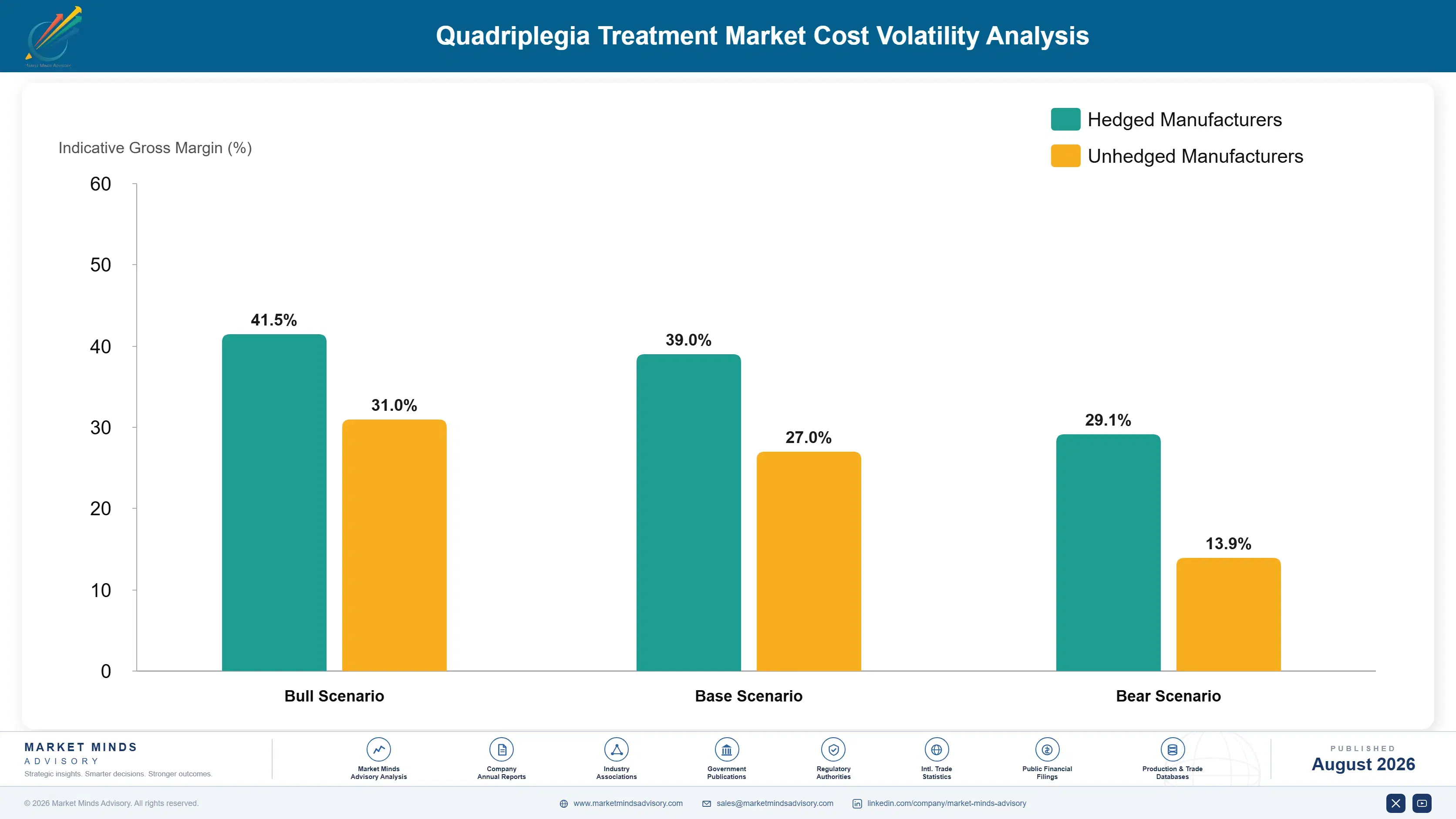
Cost structure varies enormously by category. Across chronic consumables, medical grade polymer and hydrophilic coating chemistry run about 29% of cost of goods, sourced from European and Asian compounders, with sterilisation at roughly 16%, packaging 12%, and distribution 14%. Implanted devices invert that entirely, carrying electronics, battery, and hermetic packaging costs against far higher realised prices per unit sold.
Ethylene oxide sterilisation capacity was the constraint that mattered most recently. EPA action on ethylene oxide emissions led to closures and controls at contract sterilisation facilities across the United States, and because most single-use catheters and many implant components are sterilised that way, capacity tightened sharply. Manufacturers who had qualified only one sterilisation route found finished goods held while alternatives were validated, which takes months rather than weeks.

The competitive disadvantage mechanism runs through sterilisation qualification rather than through material purchasing. A manufacturer holding validated ethylene oxide, gamma, and electron beam routes on the same product moves volume between them when one tightens, while a single-route manufacturer simply stops. Exposure also varies by geography, since sterilisation capacity is regionally concentrated and shipping unsterile product across borders for processing adds weeks nobody has.
quadriplegia-treatment-market-cost-volatility-analysis-1787299652619

Validate more than one sterilisation route per product

Qualifying gamma or electron beam alongside ethylene oxide on the same product means volume can move when one route tightens, which is exactly what happened when emissions controls reduced contract sterilisation capacity. Validation costs are modest against the value of finished goods held waiting. Manufacturers who treated single-route qualification as sufficient discovered the cost of that decision all at once.

Hold coating chemistry supply across two qualified sources

Hydrophilic coating chemistry is specialised, supplied by a small number of formulators, and changing it requires biocompatibility work that takes many months to complete properly. A second qualified source removes a single point of failure on the component that most differentiates a catheter clinically. The qualification work is inexpensive in advance and cannot be compressed once supply has already failed.

Place sterilisation capacity near the manufacturing site

Shipping unsterile product across a border for processing and back again adds weeks to a supply chain and exposes finished goods to customs and capacity risk at both ends of the journey. Regional sterilisation arrangements shorten that considerably and improve responsiveness when demand moves. The freight saving alone rarely justifies it, but the cycle time reduction reliably does.

Portfolio Architecture for Margin Defence

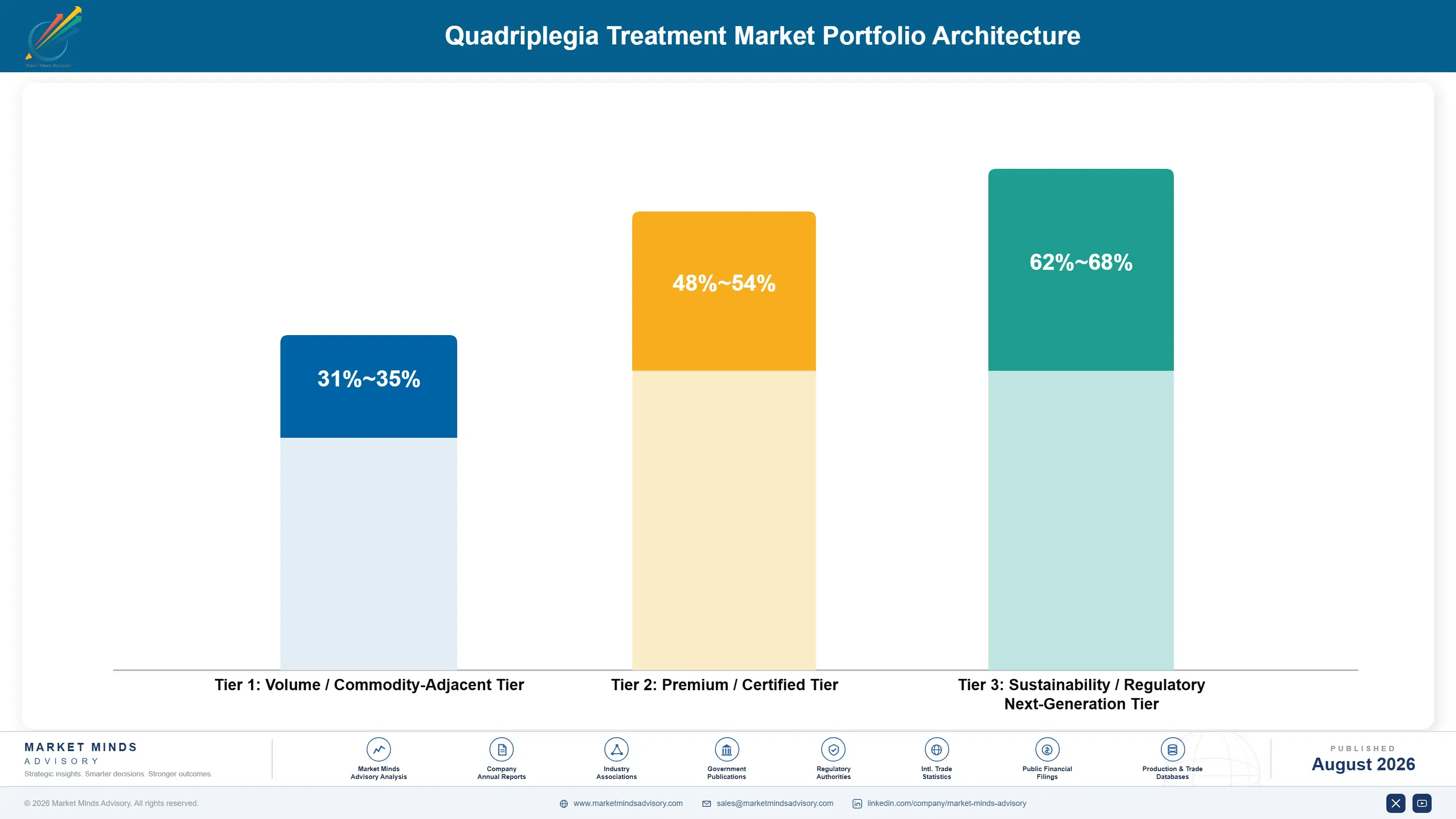
Three tiers describe this market and the spread is set by how the product is chosen rather than by what it costs to make. Basic chronic consumables sit at the bottom, tendered on price across national procurement with Asian entrants pressing hard. Clinically differentiated consumables and community-supported programmes sit higher, where training and compliance create genuine switching friction. Implanted therapies and rehabilitation capital occupy a third tier chosen clinically rather than throu
The tension is that the tendered tier reaches almost every patient while the differentiated tiers reach a minority. A supplier abandoning basic consumables on margin grounds loses the daily relationship that makes everything else possible, since the community nurse who trains a patient on catheterisation is the same person who identifies candidates for anything more sophisticated later on.

High-value pools concentrate where the clinician rather than the procurement officer decides. Implanted baclofen and neuromodulation, diaphragm pacing, and rehabilitation capital equipment all sit outside tender processes, and none of them re-tender annually the way consumables do. That combination of clinical selection and long dwell time is what makes the third tier worth building toward, even though it reaches far fewer patients than the tendered categories underneath it do.

Volume / Commodity-Adjacent Tier

Basic intermittent catheters, drainage, and pressure-relieving consumables tendered through national procurement on price. Thin and falling margin under Asian competition, but the daily patient relationship that gives a supplier standing across everything else in the pathway.
Gross Margin: 31-35%

Premium / Certified Tier

Clinically differentiated hydrophilic catheters, advanced wound and pressure care, and respiratory consumables supplied alongside community nursing support. Margin reflects training, compliance support, and outcome evidence rather than any manufacturing difference in the product itself.
Gross Margin: 48-54%

Sustainability / Regulatory / Next-Generation Tier

Implanted baclofen and neuromodulation systems, diaphragm pacing, and rehabilitation robotics chosen clinically rather than through procurement tender. Best margin because the decision sits with a specialist who follows the patient for years and rarely revisits it.
Gross Margin: 62-68%
quadriplegia-treatment-market-portfolio-architecture-1787299653116

High-value Sub-segments and Strategic Watch-out

Rehabilitation Robotics And Stimulation

Fastest growth at 11.7%, exactly 1.50 times the market rate, now that reimbursement pathways finally exist after two decades of evidence. Bought on billable hours and therapist ratios rather than on outcome data, which is the argument most suppliers still fail to make. Capital intensity keeps smaller units out.
Gross Margin: 62-68%

Community-Supported Chronic Programmes

Strong margin earned through training and compliance support rather than any product difference at all, and it is the tier that bundled payment models reward most directly of all. The community nurse relationship also identifies implant candidates years before any specialist referral would otherwise happen.
Gross Margin: 48-54%

Tendered Basic Consumables

The volume core at compressing margin, under direct pressure from Asian manufacturers and from payers restricting monthly quantities on the largest category in this market. It nonetheless reaches almost every patient daily, which is why abandoning it costs far more than it saves. Exit costs more than it saves.
Gross Margin: 31-35%

Neural Interface Restoration

The strategic watch-out in both directions, receiving attention far beyond its revenue and capable of becoming a genuine category if epidural stimulation reaches funded practice. Currently a very small business attached to an extremely large expectation, which rarely ends comfortably. Nobody should size it on the press coverage.
Gross Margin: 62-68%

How This Demand Compounds

Demand here accumulates rather than repeats. A patient injured at 34 enters the chronic pathway and stays in it for decades, consuming catheters several times daily, spasticity management continuously, and pressure care indefinitely, while the population ahead of them never leaves either. Because survival keeps improving and incidence stays broadly flat, the treated population compounds every single year without any change in injury rates, which is why prevalence rather than incidence is the onl
Stickiness varies by how the product was introduced. Consumables a patient was trained on by a community nurse are extremely sticky, since changing catheter type means relearning a technique performed several times a day and few clinicians disturb that without cause. Implanted therapies stick hardest of all, being physically present and followed by a named specialist. Tendered basics stick least and move whenever a procurement cycle turns. Rehabilitation capital sits outside the pattern entirely.

Buyer profiles have shifted where payment models changed. Procurement officers decided almost everything under line-item budgets; bundled payment moves authority toward clinicians measuring readmissions instead. That shift favours suppliers holding outcome evidence over those competing purely on tender price.
quadriplegia-treatment-market-end-use-penetration-index-1787299653606

What We Would Tell a Board

These are among the four positions where our research anticipates prominent divergence between winners and laggards over the coming forecast period. Each is grounded in the demand model, the regulatory perimeter, and the announced capacity pipeline.
01 / PREVENTION ECONOMICS EVIDENCE

Restricting consumables costs payers more than it saves

Around 32% of tetraplegic patients are readmitted every year, overwhelmingly for urinary tract infection, pressure injury, or respiratory complication that better chronic provision would have prevented. A system restricting monthly catheter quantities books a visible procurement saving and pays several times that amount in admissions charged to a separate budget entirely. Building the health economic case costs perhaps 2 million dollars per major market and persuades only where budgets are combined, which makes targeting the argument as important as making it.
02 / PREVALENCE BASED FORECASTING

Incidence has been flat while the population compounds

Cervical spinal cord injury incidence has held broadly steady for a decade while survival after injury keeps improving, so the treated population grows every year regardless of how many people are injured. Suppliers forecasting chronic consumable demand from incidence have understated it by 20% or more across five-year planning windows and then run short at exactly the wrong moment. Prevalence data sits in national registries and is almost never used commercially, which makes switching the forecasting basis the cheapest correction available anywhere in this business.
03 / REHABILITATION CAPITAL ECONOMICS

Finance directors never asked about clinical outcomes

A rehabilitation centre buying a robotic gait trainer priced around 280,000 dollars is deciding what it can bill per patient hour, and a funded programme lets one therapist supervise sessions that previously needed two. That throughput arithmetic is what carries the capital request through a finance committee, not the two decades of clinical literature suppliers keep presenting instead. Manufacturers publishing therapist utilisation and billable hour data are finally answering the question that is actually being asked in the committee room.
04 / OLDER PATIENT REDESIGN

The average new patient is no longer thirty-four

Falls in older adults now account for roughly 30% of new cervical injuries across several developed registries, and that share keeps rising as populations age and younger road traffic injury declines. Those patients have weaker hand function, heavier comorbidity, shorter horizons, and frequently no family carer, which makes products designed around a thirty-four year old with good grip a poor fit. Almost nobody has redesigned catheter handling or transfer equipment around them yet, which leaves a growing population using products built for somebody else entirely.

Engagement Snapshot From the Field

A live engagement with an industry participant carrying material or product regulatory and market exposure ahead of a defining policy shift, showing how our research translates into a defensible multi-year portfolio strategy.
MARKET MINDS ADVISORY · CLIENT ENGAGEMENT SUMMARY
Quadriplegia Treatment Producer Strategic Portfolio Review and Transition Roadmap 2026·Investment Scenario on Quadriplegia Treatment Exposure Evaluation 2025-26
CLIENT PROFILE
A medical device manufacturer with approximately 640 million dollars of annual revenue in continence and chronic care (client-reported, unverified by MMA), supplying intermittent catheters and pressure care consumables across Europe and North America. The business tendered largely on price, ran no community nursing support programme, and forecast demand from published injury incidence figures rather than from any registry prevalence data.
STRATEGIC CHALLENGE
Volume in the largest consumable category had fallen for two consecutive years as several health systems restricted monthly catheter quantities, and management proposed matching Asian entrant pricing to defend tender positions. The board wanted an independent view on whether price competition was the right response before approving a margin reduction across the range.
MMA APPROACH
We modelled readmission cost against consumable provision across eleven health systems using published admission and complication data. Demand forecasting was rebuilt on prevalence from national spinal cord injury registries rather than on incidence. Tender losses were analysed by whether the buying system operated line-item or bundled budgets, and the age profile of new patients was assessed against current product design assumptions.
KEY FINDINGS
  1. Systems restricting catheter quantities were paying an estimated four times the procurement saving in additional admissions, a calculation none of them had performed themselves.
  2. Prevalence-based demand exceeded the incidence-based forecast by 23% over five years, which explained supply shortfalls management had been attributing to distribution failures.
  3. Every tender lost on price was to a line-item budget buyer; in the three bundled-payment systems reviewed, the client had lost nothing on price at all.
  4. Roughly 30% of new patients in the client's largest markets were over sixty-five with reduced hand function, a group no product in the range had been designed around.
CLIENT PROFILE
A medical device manufacturer with approximately 640 million dollars of annual revenue in continence and chronic care (client-reported, unverified by MMA), supplying intermittent catheters and pressure care consumables across Europe and North America. The business tendered largely on price, ran no community nursing support programme, and forecast demand from published injury incidence figures rather than from any registry prevalence data.
STRATEGIC CHALLENGE
Volume in the largest consumable category had fallen for two consecutive years as several health systems restricted monthly catheter quantities, and management proposed matching Asian entrant pricing to defend tender positions. The board wanted an independent view on whether price competition was the right response before approving a margin reduction across the range.
MMA APPROACH
We modelled readmission cost against consumable provision across eleven health systems using published admission and complication data. Demand forecasting was rebuilt on prevalence from national spinal cord injury registries rather than on incidence. Tender losses were analysed by whether the buying system operated line-item or bundled budgets, and the age profile of new patients was assessed against current product design assumptions.
KEY FINDINGS
  1. Systems restricting catheter quantities were paying an estimated four times the procurement saving in additional admissions, a calculation none of them had performed themselves.
  2. Prevalence-based demand exceeded the incidence-based forecast by 23% over five years, which explained supply shortfalls management had been attributing to distribution failures.
  3. Every tender lost on price was to a line-item budget buyer; in the three bundled-payment systems reviewed, the client had lost nothing on price at all.
  4. Roughly 30% of new patients in the client's largest markets were over sixty-five with reduced hand function, a group no product in the range had been designed around.
RECOMMENDED STRATEGY
Phase 1: Phase 1 (months one to nine): cancel the pricing response and build health economic evidence targeted specifically at systems operating bundled budgets. Phase 2: Phase 2 (months nine to twenty-four): establish community nursing support in the largest markets and rebuild demand forecasting on registry prevalence data. Phase 3: Phase 3 (months twenty-four to forty-two): develop catheter handling designed around reduced hand function in older patients. Grip strength is the design constraint.
OUTCOME
The pricing response was cancelled. Health economic submissions recovered volume in two bundled-payment systems within four quarters, prevalence-based forecasting removed the recurring supply shortfalls, and a redesigned handling programme entered development for the older patient group (client-reported, unverified by MMA). Tender behaviour changed accordingly. Two further systems are under review.

Frequently Asked Questions

Foundational context covering the market sizes, CAGR, scope, country, region and competition that inform every finding below. This section is provided to cover basics and most often pre-purchase conversations, answered from the MMA Primary Research Dataset.

What is the current size of the Quadriplegia Treatment Market?

The market is valued at USD 6.2 billion in 2025, rising to USD 6.68 billion in 2026. Scope covers therapies, devices, and consumables rather than attendant care or home modification.

How large will the Quadriplegia Treatment Market be by 2036?

MMA forecasts USD 14.17 billion by 2036, an increase of USD 7.49 billion over the 2026 base. That represents an expansion multiple of 2.12 times across the forecast period.

What is the CAGR for the Quadriplegia Treatment Market 2026 to 2036?

The base case CAGR is 7.8%, with a bull case of 9.0% and a bear case of 6.6%. The historical rate from 2020 to 2025 was 6.6%, so growth is accelerating.

Which segment is growing fastest?

Rehabilitation robotics and functional electrical stimulation at 11.7%, exactly 1.50 times the market rate. Reimbursement rather than clinical evidence was always the constraint on this category.

Who are the major companies in the Quadriplegia Treatment Market?

Coloplast, Medtronic, Becton Dickinson, AbbVie, and Ottobock lead on annual revenue from products used in tetraplegia care. The top five hold only 29%, since no supplier spans the pathway.

Which country is growing fastest?

China at 10.6%, driven by rehabilitation hospital construction and by insurance coverage decisions that brought catheters and pressure-relieving surfaces within reach of ordinary households for the first time.

Report Segmentation Architecture

The full report scope spans multiple orthogonal segmentation dimensions, with cross-tabulated demand data provided for each dimension pair. Coverage extends further to regional breakdowns, trend trajectories, and the competitive detail needed to support segment-level decision-making.

By Intervention Category

  • Neurogenic Bladder And Bowel Management
  • Spasticity Management
  • Respiratory Support And Diaphragm Pacing
  • Rehabilitation Robotics And Functional Electrical Stimulation
  • Acute Surgical Stabilisation And Neuroprotection
  • Neural Interface And Neuromodulation Restoration

By Care Setting

  • Acute Trauma And Spine Surgical Centres
  • Specialist Spinal Cord Injury Rehabilitation Units
  • Community And Home Care
  • Outpatient Rehabilitation Clinics
  • Long-Term Residential Care Facilities

By Payer Channel

  • National Health System Procurement
  • Commercial And Private Insurance
  • Workers Compensation And Liability Settlement
  • Medicare And Medicaid Programmes
  • Patient Self-Pay And Charitable Funding

By Region

  • North America
  • Western Europe
  • East Asia
  • South Asia and Pacific
  • Latin America
  • Middle East and Africa
  • Eastern Europe

Scope, Methodology, and Coverage

Every figure in this report is reproducible from documented input assumptions. The scope below maps the historical period, the forecast horizon, the segmentation dimensions, and the countries covered, alongside the underlying primary and qualitative methodology.
Historical Period
2020 to 2025
Forecast Period
2026 to 2036
Base Year
2025 (USD billions; MMA Primary Research Dataset, August 2026)
Market Definition
This market comprises therapies, devices, and consumables used in the acute treatment and long-term management of quadriplegia arising from cervical spinal cord injury, measured at manufacturer realised prices across all care settings. Category coverage spans neurogenic bladder and bowel management, spasticity management including intrathecal and injectable therapies, respiratory support and diaphragm pacing, rehabilitation robotics and functional electrical stimulation, acute surgical stabilisation and neuroprotective agents, and neural interface and neuromodulation restoration systems. Attendant care labour, home and vehicle modification, wheelchairs and mobility bases, diagnostic imaging, general hospital overhead, and non-traumatic causes of tetraplegia fall outside scope.
Quantitative Units
USD billions (current prices); treated prevalent population; annual product spend per patient; readmissions per patient year
Segmentation Dimensions
By Intervention Category; By Care Setting; By Payer Channel; By Region
Regions Covered
North America, Western Europe, East Asia, South Asia and Pacific, Latin America, Middle East and Africa, Eastern Europe
Countries Covered
USA, Canada, Germany, France, UK, Italy, Spain, Netherlands, Sweden, Denmark, Norway, Switzerland, Belgium, Austria, Poland, Czechia, Romania, Japan, China, South Korea, Taiwan, India, Australia, New Zealand, Thailand, Brazil, Mexico, Argentina, Colombia, Saudi Arabia, UAE, Israel, South Africa, and additional markets relevant to this sector
Key Companies Profiled
Coloplast, Medtronic, Becton Dickinson, AbbVie, Ottobock, Convatec, Hollister, Wellspect HealthCare, Teleflex, B. Braun, Ipsen, Merz Pharma, Boston Scientific, Abbott, Nevro, Ekso Bionics, Lifeward, Hocoma, Permobil, Invacare
Quantitative Methodology
Primary survey, n=3,800 respondents, Q4 2025, six countries; demand-side model with trade association cross-validation
Qualitative Methodology
47 expert interviews, Q4 2025; applied to validate demand model assumptions, identify emerging dynamics, and assess competitive positioning
Report Format
PDF and XLSX data workbook (Word format preview document)
Publisher
Market Minds Advisory
Report Code
MMA-2026-HLT-420
Published
August 2026
Contact
sales@marketmindsadvisory.com | www.marketmindsadvisory.com

Purchase the full Quadriplegia Treatment Market Report (2026 to 2036).

The full report sizes quadriplegia treatment across six intervention categories, five care settings, five payer channels, and seven regions, with country detail for the thirty largest markets. Prevalent treated population is modelled by country and by age at injury, since prevalence rather than incidence drives chronic consumable demand and the two have diverged for a decade. Readmission rates and preventable complication costs are quantified against consumable provision levels across health systems. Competitive profiling covers twenty companies on annual revenue from products used in tetraplegia care. Time to surgical decompression is benchmarked by trauma network design.
Prevalent treated population modelled by country and age
Readmission costs quantified against consumable provision levels
Time to decompression benchmarked across trauma network designs
Rehabilitation robotics economics assessed on therapist utilisation ratios
Bundled payment adoption tracked across major health systems
Older injured patient share measured by national registry

Built For The People Who Decide

From boardroom strategy to bench-side execution, this report is read cover-to-cover by leaders shaping the next decade of their industry, turning demand scenarios, market dynamics and valuation benchmarks into decisions.
CXOs/ Presidents/ VPs/ Managers
M&A and Corporate Development
Strategy Teams and R&D Heads
Procurement and Product Directors
Regulatory and Compliance Leaders
Investor Relations and Equity Analysts