Market Minds Advisory
Pulses Market

Pulses Market: Rotation Economics, Indian Import Policy and the Protein Fractionation Pull, 2026 to 2036

Farmers plant pulses for the nitrogen they leave behind as much as for the grain they sell, which means acreage responds to fertiliser prices rather than to pulse prices at all.

Lead Analyst

Lisa Gevelber

Published

September 2026

Make Smarter Decisions with Customized Research Insights

Request a free sample report and evaluate market opportunities, growth trends, and competitive dynamics relevant to your business needs.

2025 MARKET VALUE$78.0BMarket Size 2025
2036 FORECAST VALUE$130.6BBase Case , 2026 to 2036
CAGR 2026 TO 20364.8 %Bull 6.0% / Bear 3.6%
INCREMENTAL OPPORTUNITY$48.9BNet 10- year value creation
EXPANSION MULTIPLE1.60x2036 value over 2026 base
Strategic Levers
M&A Pipeline
Regional Outlook
Country Rankings
Competitive Intelligence
Segmental Deep-dive
Call-Us : 91 93563 13602

Executive Snapshot and Market Trajectory

Two forces set pulse prices and neither is demand. Acreage responds to nitrogen fertiliser costs, because the rotation benefit is worth more to many growers than the grain itself is, and Indian import policy then moves world prices within days of any announcement it makes.
Faba beans and lupins grow at 7.2%, a full 1.50 times the market rate, pulled by European protein autonomy programmes and by aquafeed formulators substituting away from imported soybean meal entirely. South Asia and Pacific holds 32% of global value, which is far outside the standard regional band, because India alone produces roughly a quarter of world pulse output while consuming more than it grows in most years.
Concentration is almost nil at 9% for the top five participants, which is exactly what a genuine farm commodity looks like before processing consolidates it. The interesting development is fractionation. Only 6% of pulse output currently becomes protein isolate or concentrate, but that pool grows several times faster than the crop itself and pays multiples of food-grade pricing per tonne of input crop consumed. It is also reshaping which varieties growers plant.
Market Definition
The market covers pulses as harvested and traded dry grain legumes, spanning dry beans, chickpeas, lentils, dry peas, faba beans, lupins, pigeon peas and cowpeas, valued at farmgate and traded value through to the point of milling, splitting or industrial processing. It excludes fresh and frozen green legumes, soybeans and groundnuts, pulse protein isolates and concentrates as finished ingredients, pulse flours and starches, forage legumes, and prepared foods made from pulses.
Base Year Value
$78.0B in 2025 (MMA Primary Research Dataset, August 2026)
Forecast Period
2026 to 2036, eleven discrete annual values
CAGR
4.8% base case. Bull 6.0%. Bear 3.6%.
Fastest Growth Segment
Faba Beans and Lupins: 7.2% CAGR
Fastest Growth Country
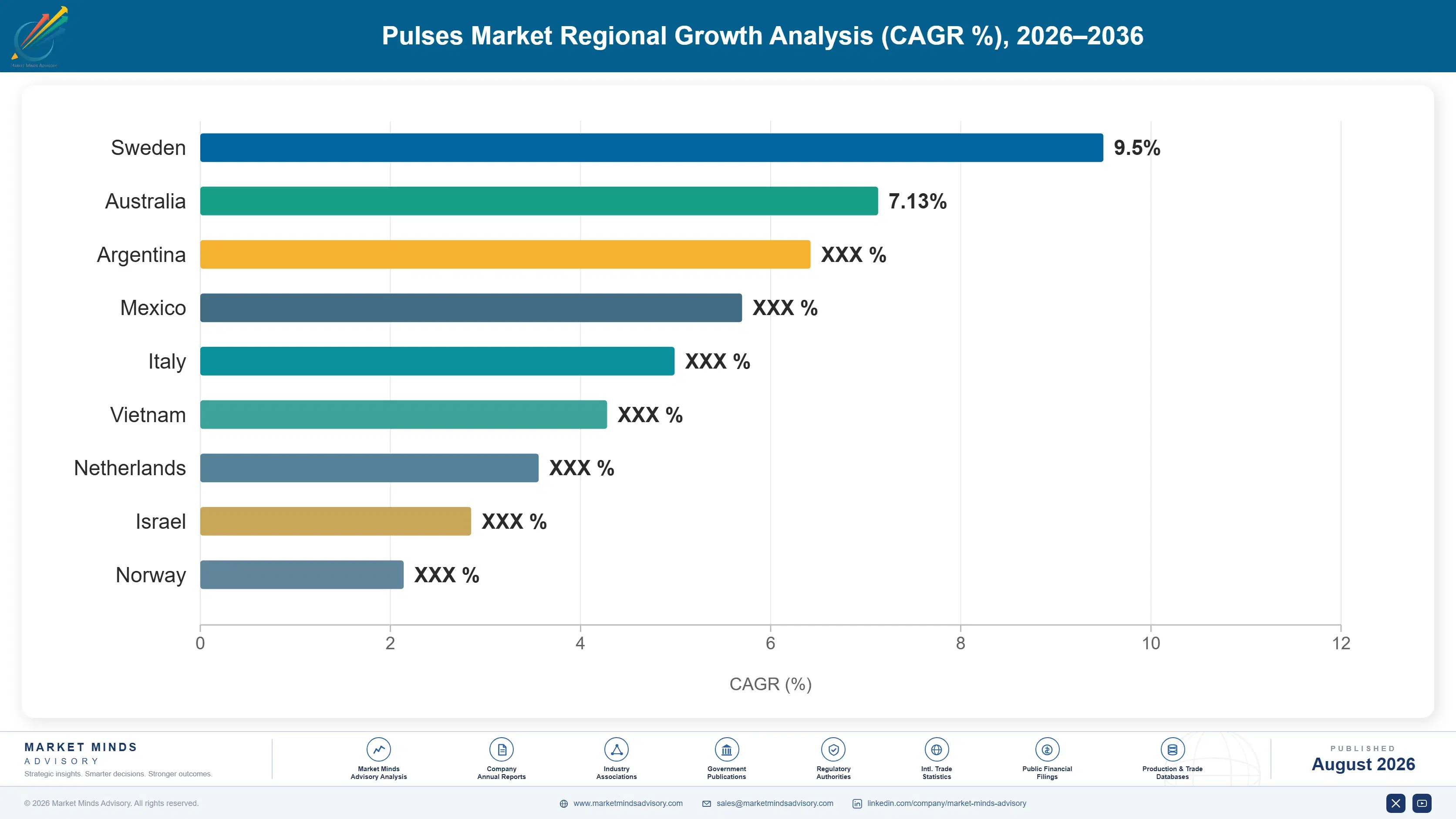
India: 7.6% CAGR
Fastest Growth Region
South Asia and Pacific: 7.1% CAGR
Largest Region
South Asia and Pacific: 32% of 2025 global value
Market Leaders
AGT Food and Ingredients, Olam Agri, Archer Daniels Midland, Louis Dreyfus Company, Export Trading Group. Source: MMA Primary Research Dataset, July 2026.
Primary Survey
n=3,800 procurement and R&D decision-makers, Q4 2025, six countries
Methodology
Demand-side build-up, cross-validated against public data, 47 expert interviews

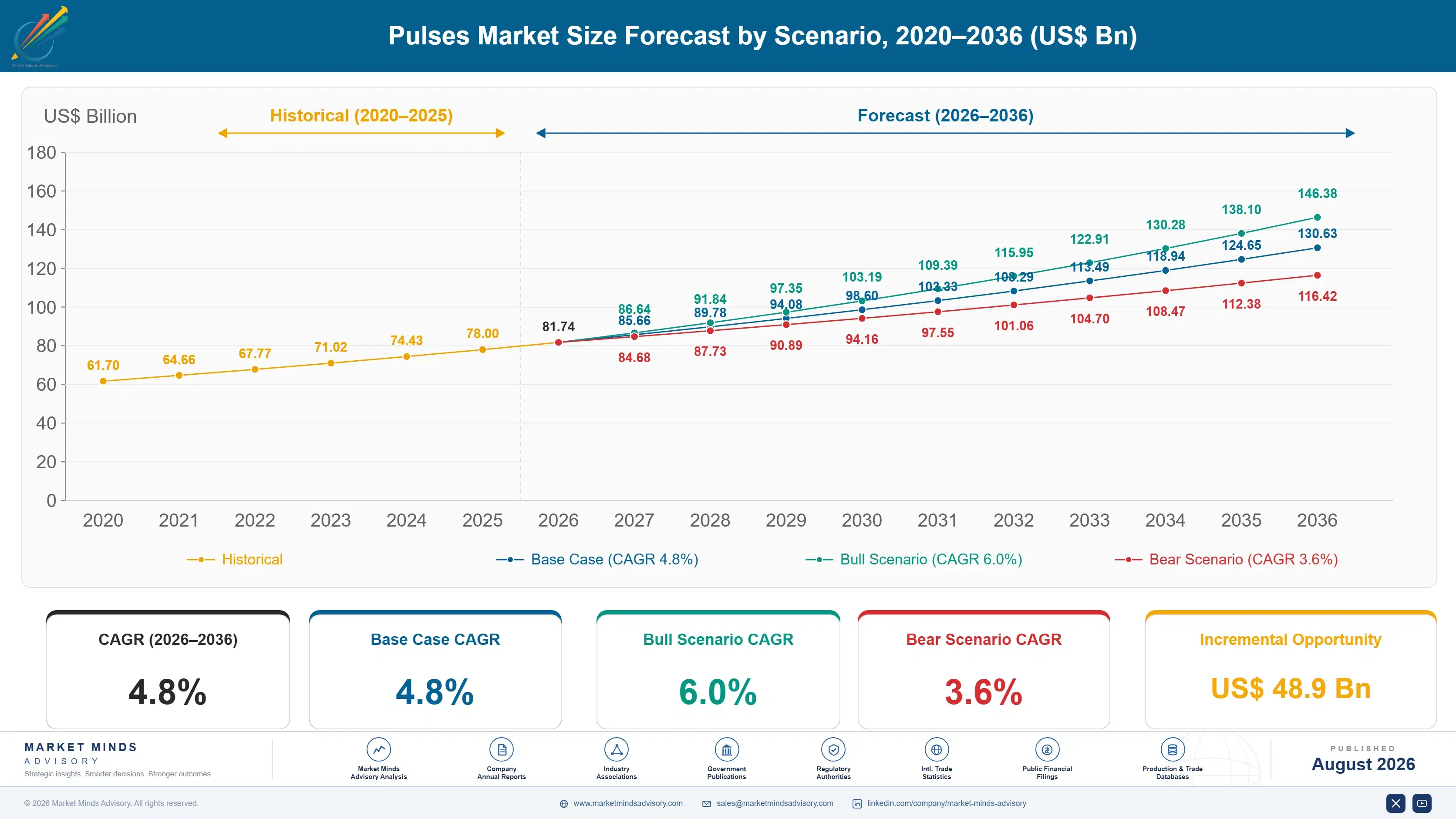
Pulses Market Forecast Scenarios

pulses-market-trends-size-forecast-scenario-1787312583754
The market compounded at 3.6% between 2020 and 2025, and policy rather than agronomy explains most of the variation. Indian import tariffs and stock limits were adjusted repeatedly across the period, moving world chickpea and lentil prices sharply each time. The 2021 Canadian drought cut lentil and pea supply severely, and the 2022 fertiliser price spike then pushed pulse acreage up across several producing regions.
The 4.8% base case rests on three mechanisms. First, protein fractionation keeps expanding and pays several times food-grade pricing per tonne of input crop, which pulls acreage toward the varieties fractionators want. Second, European protein autonomy programmes continue subsidising domestic pulse area in order to displace imported soybean meal. Third, consumption growth across South Asia and Africa tracks population directly and remains by far the largest absolute driver of volume anywhere.
The bull case at 6.0% assumes fractionation capacity additions land on schedule while European area support continues. The bear case at 3.6% turns on Indian policy: a sustained push toward domestic self-sufficiency, combined with the higher minimum support prices already announced for pulse crops, would reduce the import demand that currently sets the floor under world pricing for chickpeas, lentils and pigeon peas alike.

Why Rotation Value Drives Planted Area

Pulses behave differently from every other field crop because a large part of their value never appears in the grain price. A pulse crop fixes atmospheric nitrogen, breaks disease cycles and leaves residual fertility that lifts the following cereal yield, and growers price that benefit into the planting decision.
TOP FIVE CONCENTRATION9%Combined position of the five largest pulse trading companies
AVERAGE FARMGATE PRICE$690 per tonneTypical realised farm price across the major pulse crops
TOP PRODUCING COUNTRY SHARE25%Indian share of total global pulse production volume
TRADED SHARE OF PRODUCTION17%Portion of global pulse output crossing an international border
PROTEIN FRACTIONATION SHARE6%Portion of output processed into isolates and concentrates
POST-HARVEST LOSS RATE12%Share of harvested pulse lost before reaching any market
The consequence is that pulse acreage responds to nitrogen fertiliser costs more reliably than to pulse prices themselves. When urea and ammonia are expensive, as they were through 2022, the rotation argument strengthens and area expands even where pulse prices are unremarkable. When nitrogen is cheap, growers revert to cereals and oilseeds and pulse supply tightens without any demand signal having changed at all. Anyone forecasting this market from consumption trends alone will be wrong at exactly the moments that matter.
Demand structure is equally unusual in that one country dominates it. India produces roughly a quarter of world output, consumes more than it grows in most years, and adjusts tariffs, stock limits and minimum support prices frequently. Those announcements move Australian chickpea, Canadian lentil and East African pigeon pea prices within days. No participant hedges that risk effectively, which is why the top five hold barely 9% of this market.
"The pulse trade is the only agricultural commodity business where the most important analyst in the world sits in a ministry in New Delhi rather than in a trading house. A tariff notification issued on a Friday afternoon can move Australian chickpea values twenty percent before Monday. Everyone in this business knows it and nobody has found a way to manage it."
Principal Analyst, Grains, Pulses and Oilseeds Practice · MMA Agriculture Practi

Market Trends

Protein Fractionation Pulls Acreage Toward Specific Varieties

Pea and faba protein isolate plants pay several times food-grade pricing per tonne of input crop, and they specify varietal characteristics that food and feed buyers never asked about. Protein content, starch profile and colour all matter to a fractionator in ways they do not to a splitting mill. Roughly 6% of global pulse output now moves into fractionation, against under 2% a decade ago. That demand is small in volume but it is reshaping which varieties growers plant and which contracts they sign, particularly across Canada and Northern Europe.
Market Impact: Expands European pulse area 18%
Fertiliser Price Volatility Now Governs Planted Area

The 2022 nitrogen price spike demonstrated how directly pulse acreage responds to fertiliser economics rather than to pulse markets. Global urea prices roughly tripled within a year, the rotation benefit strengthened accordingly, and pulse area expanded across Canada, Australia and Europe in the following season despite unremarkable pulse pricing. When nitrogen prices fell back, planted area followed them straight back down. That inverse relationship is now the single most reliable predictor of pulse supply, and it remains largely absent from the demand-led forecasting that most participants in this trade still rely upon.
Market Impact: Consumes over 40 million tonnes ann

Market Opportunities and Growth Drivers

European Protein Autonomy Programmes Subsidise Pulse Area

European Union and national protein strategies aim to reduce dependence on imported soybean meal, and coupled support payments now attach to pulse and legume area across several member states. Faba beans, lupins and peas are the practical beneficiaries, because they suit European growing conditions particularly well. European pulse area has expanded roughly 18% since 2020 under these schemes, and the support is written into agricultural policy rather than depending on market pricing. That makes the demand unusually durable through exactly the commodity cycles that move everything else in this crop.
Market Impact: Moves prices within 2 days

South Asian And African Consumption Tracks Population

Pulses supply the majority of dietary protein across much of South Asia and sub-Saharan Africa, and consumption grows broadly with population rather than with income in those markets. Combined regional consumption exceeds 40 million tonnes annually and rises steadily each year. Government procurement, buffer stocking and subsidised distribution programmes across India, Bangladesh, Ethiopia and Nigeria add a layer of policy demand on top. This is the largest absolute volume driver in the market and it is almost entirely insensitive to the fractionation and plant protein trends currently occupying Western commercial attention.
Market Impact: Destroys 12% of harvested crop

Market Restraints and Challenges

Indian Policy Announcements Move World Prices Overnight

India adjusts import tariffs, quantitative restrictions, stock holding limits and minimum support prices frequently, and each change moves world chickpea, lentil and pigeon pea values within days. The root cause is that one country produces a quarter of global output while consuming more, so its import requirement sets the marginal price everywhere. Commercially this makes forward position taking genuinely hazardous for traders and processors alike. Participants manage it through shorter position durations, through origin diversification, and by contracting with Indian buyers on formula terms rather than fixed prices wherever possible.
Market Impact: Draws 6% of global pulse output

Post-Harvest Losses Remove An Eighth Of The Crop

Roughly 12% of harvested pulse is lost before reaching any market, principally to bruchid beetle infestation, moisture damage and poor on-farm storage across South Asia and Africa. The root cause is storage infrastructure rather than agronomy, since the crop is harvested successfully and then degrades. Commercially this removes volume that no yield improvement recovers, and it concentrates losses in exactly the regions least able to absorb them. Participants are addressing it through hermetic storage bag distribution, through aggregation warehousing at cooperative level, and through improved drying capability installed at village collection points.
Market Impact: Tripled urea prices within 1 year
3 additional market trends, 2 additional growth drivers, and 4 additional restraints and challenges are covered in the full report. Contact sales@marketmindsadvisory.com to access the complete intelligence.

Segment CAGR and Growth Architecture

Segmentation here follows pulse crop type, meaning the botanical species exactly as it is grown, traded and consumed. That single dimension determines growing geography, agronomic rotation fit, protein and starch composition, culinary and industrial application, and which policy regimes affect it, and it is how every single participant in this trade organises its commercial thinking.
pulses-market-trends-market-share-analysis-1787312584345

Faba Beans and Lupins

The fastest segment at 7.2%, a full 1.50 times the market rate, covering faba beans, broad beans and sweet lupins grown predominantly across Europe, Australia and the North African coast. Growth comes from two directions that barely existed a decade ago: European protein autonomy support payments attaching to legume area, and aquafeed formulators substituting faba and lupin protein for imported soybean meal in salmon and trout diets. Protein content is high enough to interest fractionators seriously, which adds a third distinct demand stream behind it. Vicine and convicine content in faba beans remains the technical constraint for monogastric feed, and low-vicine varieties are only now reaching genuinely commercial planted area anywhere.
CAGR 7.2%

Lentils

Growing at 6.1% on red and green lentil production concentrated in Canada, India, Australia and Turkey, with Canadian and Australian crops between them supplying most of the internationally traded volume each year. Demand here splits between South Asian dal consumption, which is enormous and grows steadily with population, and Western retail and foodservice use that has expanded considerably as pulses acquired a health and sustainability profile. Red lentils dominate international trade because they cook quickly and split cleanly, which suits both of those markets equally well. Canadian production and Indian import policy between them set world pricing, and those two forces frequently move in opposite directions within a single marketing season.
CAGR 6.1%
Full segment breakdown across 6 segments available in the complete report.

Regional Architecture and Country Demand Map

South Asia and Pacific dominates on Indian production and consumption together. Middle East and Africa and Latin America both hold shares far above the usual bands because pulses are dietary staples there. Western Europe and East Asia both consume comparatively little per head by comparison.

South Asia and Pacific

Thirty-two percent of global value. Note: this sits far outside the standard regional band because India alone produces roughly a quarter of world pulse output and consumes more than it grows in most years, making it the single most important market on both sides of the trade. Chickpea and pigeon pea dominate Indian production, with imports filling a persistent deficit. Australian chickpea and lentil crops are grown substantially for Indian demand and their pricing follows Indian policy directly. Myanmar remains a significant pigeon pea and black gram exporter. Growth of 7.1% is the fastest anywhere and it tracks population and government procurement together. Post-harvest losses remain heavy across the region.
Share: 32% | CAGR: 7.1% (2026 to 2036)

Middle East and Africa

Thirteen percent of global value. Note: this sits far above the standard regional band because pulses are dietary staples across much of sub-Saharan Africa and the Middle East rather than a specialty crop. Ethiopian faba bean and chickpea production is substantial and increasingly export-oriented, while Nigerian and Tanzanian cowpea output serves enormous domestic consumption. Turkish lentil and chickpea processing is regionally dominant and supplies both local and export demand. Growth of 5.1% tracks population growth closely. Post-harvest losses are heaviest here, removing volume that no agronomic improvement recovers. Cowpea in particular is grown and consumed almost entirely within the region, with very little reaching international trade at all. Storage infrastructure remains the binding constraint.
Share: 13% | CAGR: 5.1% (2026 to 2036)
Regional intelligence for 5 additional markets available in the complete report: North America, Western Europe, East Asia, Latin America, Eastern Europe. Contact sales@marketmindsadvisory.com.
pulses-market-trends-country-cagr-analysis-1787312584911

Where Value Escapes The Commodity Trade

Four commercial moves separate the participants earning genuine processing and origination margins from those merely trading a farm commodity at spread. Each depends on holding something a buyer cannot obtain from the next trader: contracted varietal supply, fractionation offtake, origin diversification against policy risk, or the storage capability that captures the twelve percent of crop currently lost each year.

Contract Varietal Acreage For Fractionation Buyers

Protein isolate plants specify protein content, starch profile and colour that ordinary food and feed buyers never mention, and they pay several times food-grade pricing for every tonne of input crop they consume. Originators contracting identity-preserved varietal acreage capture 25% to 40% above ordinary commodity pulse values grown on exactly the same land. The requirement is grower agreements, segregated handling and analytical verification rather than any trading capability. Most pulse traders have never built any of that, because their entire commercial history sits in undifferentiated bulk movement rather than in specification supply.
Market Impact: Captures up to 40% above bulk commo

Diversify Origination Against Indian Policy Risk

A single Indian tariff notification can move chickpea and lentil values twenty percent within days, and traders holding concentrated origin positions carry that exposure without any hedge available. Originators sourcing across Canadian, Australian, East African and Black Sea crops in the same season report earnings volatility roughly 35% lower than single-origin competitors. The cost of that is thinner relationships within each origin and considerably more complex logistics. Against an exposure that nobody can hedge financially at all, geographic spread remains the only genuine risk management available anywhere in this trade.
Market Impact: Cuts earnings volatility by roughly

Invest In Hermetic Storage Across Producing Regions

Roughly 12% of harvested pulse is lost to bruchid infestation and moisture damage before reaching any market, and those losses concentrate heavily across South Asia and Africa, where on-farm storage infrastructure is weakest of all. Hermetic bag distribution and aggregation warehouse programmes cut those losses to under 4%, at a cost of between $18 and $30 per tonne protected. Originators funding those programmes capture volume that would otherwise never have existed at all, and they secure genuine supplier loyalty in regions where trading relationships are otherwise entirely transactional and easily displaced.
Market Impact: Cuts post-harvest losses from 12% t

Move Downstream Into Splitting And Cleaning

Splitting, dehulling, cleaning and colour sorting add modest capital requirement and materially more margin than trading whole pulse, because the buyer then receives a product ready for retail packing or milling without further work. Processing capability typically earns 8 to 14 percentage points above pure trading spread on exactly the same tonnage handled. Equipment costs $6 million to $14 million per facility. The constraint is that processing must sit near either the crop or the consumer, which forces a genuine geographic commitment that traders habitually prefer to avoid making at all.
Market Impact: Earns up to 14 points above trading

Who Controls the Margin Pool

Concentration is almost nil at 9% for the five largest participants, measured on pulse trading and processing revenue across all participants, which is what a genuine farm commodity looks like before any processing consolidates it. AGT Food and Ingredients leads on combined origination and processing footprint, and the gap to the second tier is widest in downstream processing rather than in traded volume.
Competition runs on three dimensions. Origination relationships decide who secures crop in a tight year, and grower loyalty is built over seasons rather than bought. Processing capability decides who captures value beyond the trading spread, since splitting and cleaning add real margin that bulk movement never delivers. Price competition is essentially total in undifferentiated bulk trade, where the only variables are freight, quality specification and payment terms.

Two pressures are building. Protein fractionators are contracting acreage directly with growers, bypassing the trade entirely for the varieties they need and removing the highest-value crop from the commodity pool. Meanwhile Indian policy volatility continues to punish anyone holding concentrated positions, which has pushed several participants toward asset-light agency models. Rankings shift where origination depth meets processing capability, since trading alone has become a poor place to stand.
pulses-market-trends-company-positioning-matrix-1787312585445

Competitive Moat and Risk Dimensions

AGT FOOD AND INGREDIENTS

Moat: Origination combined with processing footprint

Grower relationships across Canadian, Turkish and Australian pulse regions combined with splitting, cleaning and packaging assets close to those crops give the company margin layers that pure traders cannot access. In a business where trading spread is thin and contested, owning the processing step is what converts volume into genuine earnings.
AGT FOOD AND INGREDIENTS

Risk: Concentrated exposure to policy shocks

Origination weighted toward crops destined for Indian demand leaves the company exposed to tariff and quota announcements it cannot hedge in any market. Processing assets are fixed where the crop grows, so a demand shift toward different origins strands capacity. Both exposures materialised simultaneously during recent Indian policy adjustments.
OLAM AGRI

Moat: Deepest African origination network

Buying networks reaching smallholder pulse production across Ethiopia, Tanzania, Nigeria and Mozambique give the company access to crop that competitors cannot aggregate at all, since the volume arrives in very small lots from dispersed growers. Building that capability takes years of field presence rather than capital, which makes it genuinely difficult to replicate.
OLAM AGRI

Risk: Smallholder aggregation cost exposure

Aggregating crop from dispersed smallholders carries a cost structure that is high, fixed and difficult to flex when volumes fall. Post-harvest losses in those same regions remove volume the network was built to handle. When African crops disappoint, the aggregation infrastructure still costs what it did, which compresses returns sharply in exactly the seasons that matter most.

Players Tracked

Prominent Players

AGT Food and Ingredients
Olam Agri
Archer Daniels Midland
Louis Dreyfus Company
Export Trading Group

Other Key Players

Adani Wilmar
Viterra
Simpson Seeds
Broadgrain Commodities
Columbia Grain International
Hakan Agro
Arbel Group
Mangalam Global Enterprise
Roquette
Ingredion
Bunge
Cargill
Agrocorp International
Sunrise Foods International
Vicente Trapani

Recent Developments

JANUARY 2025

India adjusts pulse import tariffs and stock limits again

Import duty and stock holding limit changes covering chickpeas and lentils were announced during the month, moving both Australian and Canadian crop values within days and demonstrating once again how a single policy decision taken in Delhi resets world pricing across every producing origin simultaneously.
Signal: Indian policy remains by far the single la
MAY 2025

Roquette contracts identity-preserved faba bean acreage

Direct varietal acreage contracting was concluded with a substantial group of Northern European growers during the planting window covering faba beans meeting the protein and colour specifications that fractionation requires, bypassing the commodity trade entirely for the crop the company needs delivered in identity-preserved condition.
Signal: Fractionators are now contracting growers
SEPTEMBER 2025

Olam expands hermetic storage across East African origins

Hermetic storage and aggregation warehousing programmes were extended considerably further across the Ethiopian and Tanzanian pulse growing regions during the season, targeting the bruchid infestation and moisture losses that together remove roughly an eighth of the harvested crop before it reaches any market at all.
Signal: Post-harvest loss reduction is now being p

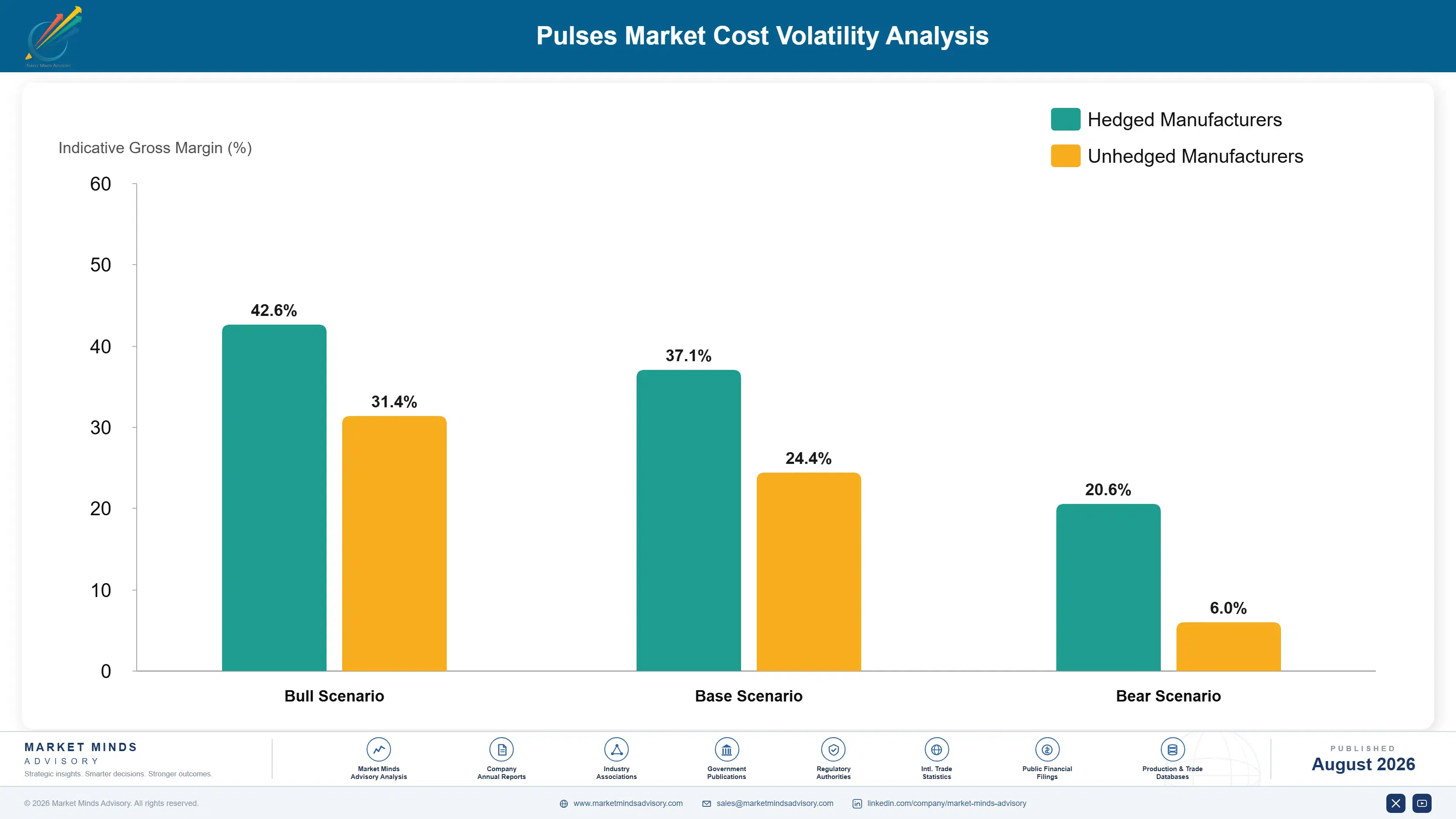
What Actually Sets Pulse Costs

Farm production cost dominates everything downstream, and within it seed accounts for roughly 21%, crop protection 18%, machinery and fuel 24% and land charge 27%. Nitrogen fertiliser is conspicuously absent from that list because the crop fixes its own, which is precisely why the rotation economics work and why planted acreage responds inversely to fertiliser markets.
The 2022 fertiliser episode illustrated the mechanism clearly. Global urea and ammonia prices roughly tripled following energy market disruption, cereal production costs rose sharply, and the relative attraction of a nitrogen-fixing rotation crop improved without any change in pulse pricing at all. Planted area expanded across Canada, Australia and Europe the following season. USDA and FAO area data confirm the pattern, and it reversed as fertiliser prices normalised through 2024.

The competitive disadvantage mechanism runs through storage and logistics, not farm cost. A trader without storage near production must buy at harvest when everyone else sells, which is when prices are lowest and working capital most strained. A trader holding storage buys across the season and captures the carry. In South Asia and Africa the same gap produces the 12% post-harvest loss, so storage recovers volume and margin at once.
pulses-market-trends-cost-volatility-analysis-1787312585641

Hold storage capacity close to production areas

Buying only at harvest concentrates purchasing into the weeks when prices are lowest but working capital demands are greatest, and it forfeits the seasonal carry entirely. Storage near production lets a participant buy across the whole marketing year, capture that carry, and avoid competing with every other buyer in the same fortnight each season.

Contract on formula rather than fixed terms with India

Fixed-price forward sales into Indian demand carry policy risk that no financial instrument hedges, since tariff changes reset values overnight. Formula contracts referencing published origin benchmarks with agreed adjustment for duty changes transfer that specific exposure back toward the buyer, and Indian importers have increasingly come to accept those terms as ordinary commercial practice.

Distribute hermetic storage to smallholder suppliers

Bruchid infestation and moisture damage destroy roughly an eighth of harvested crop across South Asia and Africa, and the losses fall on growers who then have less to sell. Funding hermetic bag distribution costs $18 to $30 per tonne protected, creates volume that would not otherwise have existed at all, and builds genuine supplier loyalty besides.

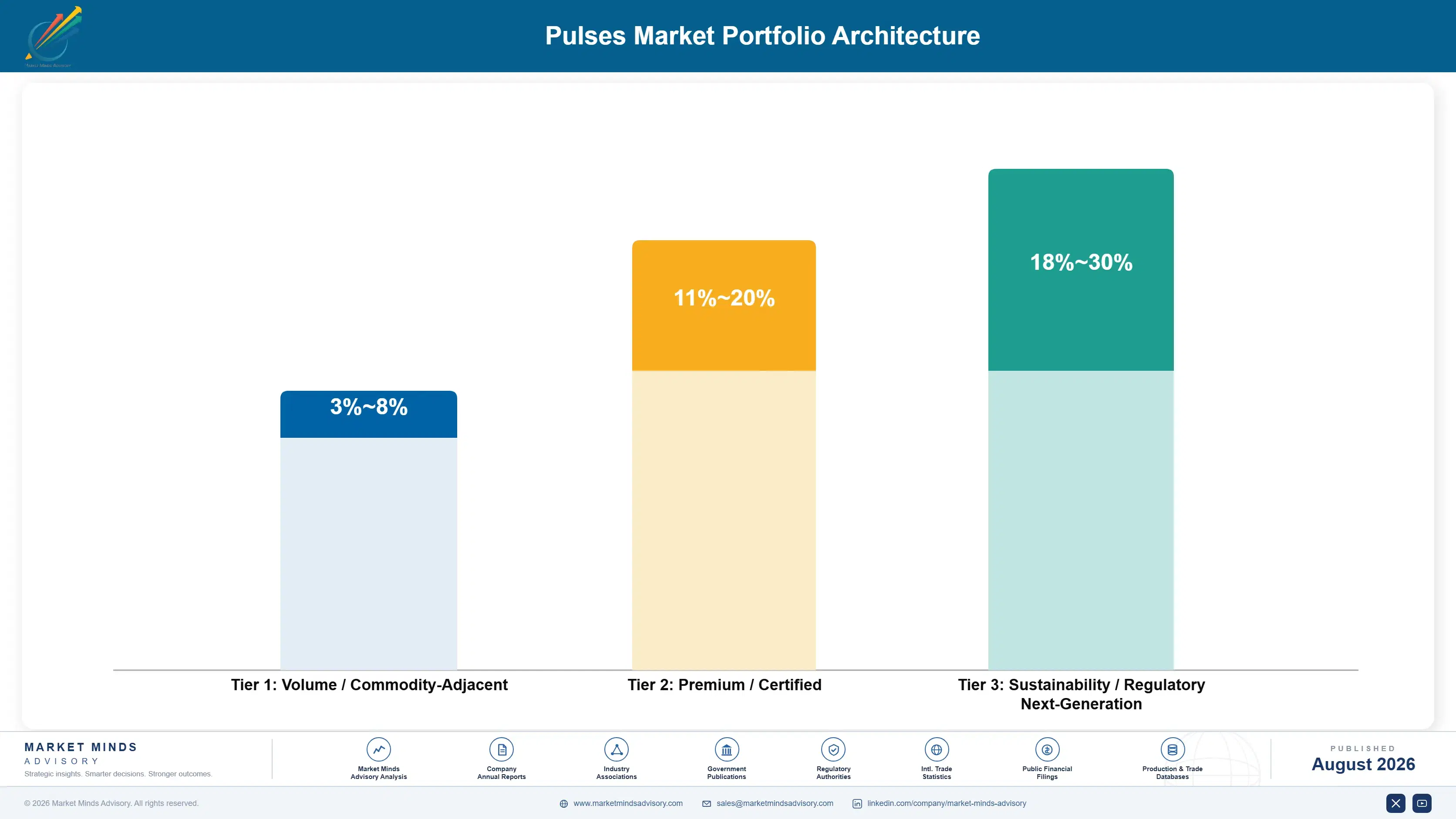
Portfolio Architecture for Margin Defence

Margin architecture separates almost entirely on whether a participant does anything to the crop. Bulk trading of undifferentiated pulse runs at gross margins in the low single digits, because the product is fungible and freight, specification and payment terms are the only variables anybody can compete on at all. Processing changes that arithmetic completely.
The volume-versus-premium tension is unusual because bulk volume is what creates the origination relationships everything else depends upon. A trader who handles only identity-preserved varietal crop cannot maintain the grower coverage that identifies and secures that crop in the first place. Bulk trade is therefore an access cost rather than a profit centre, and participants who tried to exit it discovered their origination networks decayed within two seasons.

Value concentrates where the crop is differentiated before it is sold. Identity-preserved varietal supply to fractionators sits at the top, because those buyers specify characteristics the commodity market does not measure and pay accordingly. Split, cleaned and colour-sorted product sits below it on genuine processing value. Undifferentiated bulk sits at the other extreme, where a quality specification and a freight rate settle the entire negotiation.

Volume / Commodity-Adjacent

Undifferentiated bulk pulse traded on quality specification and freight against fungible alternative origins. Margins are thin and contested, and no participant holds any defensible position. This volume exists to maintain the origination relationships that everything more valuable depends upon.
Gross Margin: 3-8%

Premium / Certified

Split, dehulled, cleaned and colour-sorted pulse supplied ready for retail packing or milling. Processing adds genuine value the buyer would otherwise perform itself, and equipment plus location commitment limit who can compete. Range reflects the spread across crops and processing depth.
Gross Margin: 11-20%

Sustainability / Regulatory / Next-Generation

Identity-preserved varietal supply to protein fractionators, organic and certified sustainable production, and contracted specification crop for branded food manufacture. Grower agreements, segregation and analytical verification rather than any trading skill justify the pricing here.
Gross Margin: 18-30%
pulses-market-trends-portfolio-architecture-1787312586147

High-value Sub-segments and Strategic Watch-out

Identity-Preserved Fractionation Supply

High value on genuinely high growth, since fractionators specify protein, starch and colour characteristics that commodity markets never measure at all, and they pay 25% to 40% above bulk values for them. Segregated handling and direct grower agreements keep pure commodity traders out of this pool entirely.
Gross Margin: 22-30%

Processed And Colour-Sorted Pulse

Solid margins on steady and genuinely predictable growth, earning eight to fourteen points above trading spread because the buyer receives product ready for packing or milling. Processing must sit near crop or consumer, which forces a fixed geographic commitment that traders habitually prefer to avoid making.
Gross Margin: 13-20%

Undifferentiated Bulk Trade

The origination access cost of this entire business, earning gross margins in low single digits on fungible product. Participants who tried exiting it found their grower networks decayed within two seasons, which is precisely why nobody in this business ever actually leaves the bulk trade.
Gross Margin: 3-8%

Indian Demand Exposure

The strategic watch-out sitting squarely in this portfolio. Indian import requirement currently sets the floor under world pricing for chickpeas, lentils and pigeon peas alike, but rising minimum support prices and a clearly stated self-sufficiency ambition could remove that floor entirely within the forecast period.
Gross Margin: 5-14%

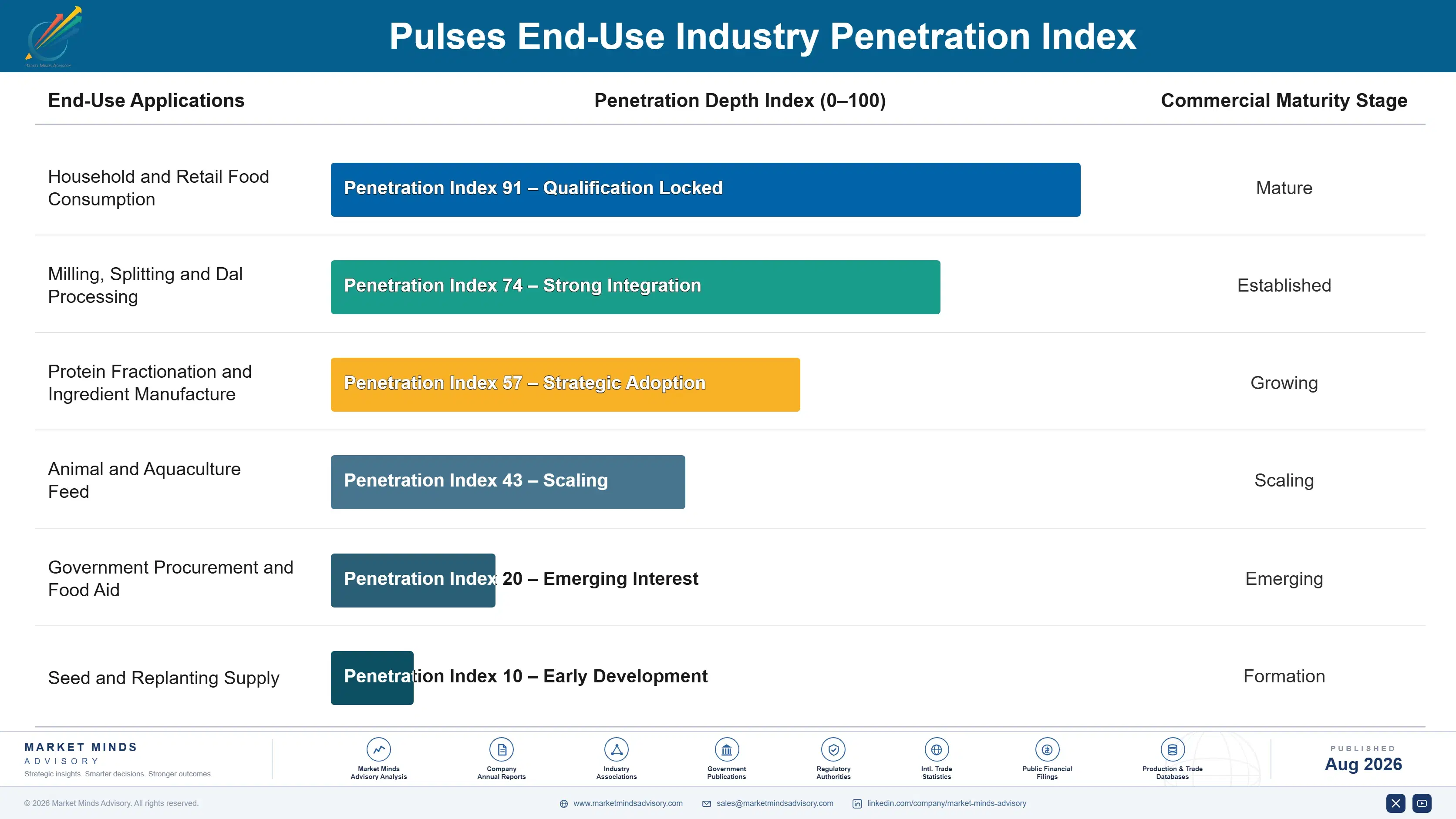
How Pulse Demand Actually Repeats

Pulse demand recurs biologically rather than commercially across most of its volume. In South Asia and much of Africa pulses supply the majority of dietary protein, consumption is daily and habitual, and it grows with population rather than with income or preference. That demand does not respond to marketing and it does not disappear in a downturn either.
Stickiness varies enormously by buyer type. Protein fractionators are the tightest, running multi-year identity-preserved acreage contracts because varietal characteristics matter to their process and switching origin means requalifying it. Government procurement and buffer stock buying is policy-driven and unpredictable in timing though reliable in aggregate. Bulk commodity buyers are entirely unsticky, purchasing origin by origin on landed cost every single cargo.

Buyer profiles have changed at the top of the market. Purchasing once sat with traders and millers comparing specification and freight. It increasingly involves fractionation plant managers, food manufacturer technical teams and sustainability functions asking about varietal identity, protein content, carbon footprint and grower practice. Participants whose commercial approach still leads with a quality certificate and a freight quote find themselves talking to buyers asking questions bulk trade never had to answer.
pulses-market-trends-end-use-penetration-index-1787312586637

Where To Place Capital

These are among the four positions where our research anticipates prominent divergence between winners and laggards over the coming forecast period. Each is grounded in the demand model, the regulatory perimeter, and the announced capacity pipeline.
01 / VARIETAL CONTRACTING CAPABILITY

Fractionators pay for what commodity markets ignore

Protein isolate plants specify protein content, starch profile and colour characteristics that ordinary pulse buyers never once mention, and they pay 25% to 40% above commodity values for identity-preserved supply meeting them. The requirement is direct grower agreements, segregated handling and analytical verification rather than any trading capability whatsoever. Most pulse traders have never built it because their entire commercial history sits in undifferentiated bulk movement, which is exactly why that opening remains available to anyone willing to take it.
02 / ORIGIN SPREAD DISCIPLINE

Geography is the only hedge against Delhi

A single Indian tariff notification moves chickpea and lentil values twenty percent within days, and no financial instrument available anywhere hedges that exposure for anybody. Participants originating across Canadian, Australian, East African and Black Sea crops within the same season report earnings volatility roughly 35% lower than their single-origin competitors. The cost is thinner relationships in each origin and more complex logistics, which is a genuine price to pay but a considerably smaller one than the risk it actually removes.
03 / STORAGE INFRASTRUCTURE INVESTMENT

Twelve percent of the crop is simply lost

Bruchid infestation and moisture damage destroy roughly 12% of harvested pulse before it reaches any market, concentrated across South Asia and Africa where on-farm storage infrastructure is weakest. Hermetic bag distribution and aggregation warehouse programmes cut that to under 4%, at between $18 and $30 per tonne of crop protected. That investment creates volume which would not otherwise exist and it builds genuine supplier loyalty across regions where trading relationships are otherwise entirely transactional, contested and easily displaced by anyone.
04 / DOWNSTREAM PROCESSING COMMITMENT

Trading spread alone is no longer sufficient

Splitting, dehulling, cleaning and colour sorting together earn 8 to 14 percentage points above pure trading spread on identical tonnage, because the buyer then receives product ready for retail packing or milling without any further processing. Equipment costs between $6 million and $14 million for each processing facility built. The genuine constraint is that processing must sit near the crop or the consumer, which forces exactly the kind of fixed geographic commitment that most traders instinctively resist making at all.

Engagement Snapshot From the Field

A live engagement with an industry participant carrying material or product regulatory and market exposure ahead of a defining policy shift, showing how our research translates into a defensible multi-year portfolio strategy.
MARKET MINDS ADVISORY · CLIENT ENGAGEMENT SUMMARY
Pulses Producer Strategic Portfolio Review and Transition Roadmap 2026·Investment Scenario on Pulses Exposure Evaluation 2025-26
CLIENT PROFILE
An international pulse originator and trading house with annual revenue near $840 million (client-reported, unverified by MMA), buying Canadian, Australian and Turkish crop for sale predominantly into South Asian and Middle Eastern demand. Roughly 84% of volume moved as undifferentiated bulk, processing assets were limited to two cleaning facilities, and no identity-preserved varietal programme existed anywhere.
STRATEGIC CHALLENGE
Two successive Indian tariff adjustments had produced trading losses on forward positions the company could not hedge, and bulk margins had compressed to a level where the business was barely covering its origination cost base. Management needed to establish whether the answer was reducing position risk, moving downstream into processing, or contracting varietal crop for fractionators.
MMA APPROACH
MMA decomposed five years of earnings by origin, crop and margin layer, quantified the volatility contribution of Indian-destined positions specifically, and sized the identity-preserved fractionation opportunity across the client's existing grower base. Findings were tested against 47 expert interviews covering fractionator varietal requirements, Indian import policy practice and pulse processing economics.
KEY FINDINGS
  1. Indian-destined positions contributed roughly 71% of total earnings volatility while representing under half of traded volume, a concentration nobody internally had quantified before.
  2. Identity-preserved faba and pea supply to European fractionators would realise an estimated 31% above commodity values (client-reported, unverified by MMA) using growers the company already worked with.
  3. Bulk trading was covering origination cost but contributing almost nothing beyond it, meaning the network was effectively being funded by the two processing facilities.
  4. Exiting bulk trade entirely was not viable, since grower relationships in every origin depended on the company being a reliable buyer of whatever the crop actually produced.
CLIENT PROFILE
An international pulse originator and trading house with annual revenue near $840 million (client-reported, unverified by MMA), buying Canadian, Australian and Turkish crop for sale predominantly into South Asian and Middle Eastern demand. Roughly 84% of volume moved as undifferentiated bulk, processing assets were limited to two cleaning facilities, and no identity-preserved varietal programme existed anywhere.
STRATEGIC CHALLENGE
Two successive Indian tariff adjustments had produced trading losses on forward positions the company could not hedge, and bulk margins had compressed to a level where the business was barely covering its origination cost base. Management needed to establish whether the answer was reducing position risk, moving downstream into processing, or contracting varietal crop for fractionators.
MMA APPROACH
MMA decomposed five years of earnings by origin, crop and margin layer, quantified the volatility contribution of Indian-destined positions specifically, and sized the identity-preserved fractionation opportunity across the client's existing grower base. Findings were tested against 47 expert interviews covering fractionator varietal requirements, Indian import policy practice and pulse processing economics.
KEY FINDINGS
  1. Indian-destined positions contributed roughly 71% of total earnings volatility while representing under half of traded volume, a concentration nobody internally had quantified before.
  2. Identity-preserved faba and pea supply to European fractionators would realise an estimated 31% above commodity values (client-reported, unverified by MMA) using growers the company already worked with.
  3. Bulk trading was covering origination cost but contributing almost nothing beyond it, meaning the network was effectively being funded by the two processing facilities.
  4. Exiting bulk trade entirely was not viable, since grower relationships in every origin depended on the company being a reliable buyer of whatever the crop actually produced.
RECOMMENDED STRATEGY
Phase 1: Phase one: build identity-preserved varietal programmes with existing growers for fractionation buyers, since the relationships and the crop are already in place. Phase 2: Phase two: shorten position duration on Indian-destined trade and move to formula pricing with duty adjustment, accepting lower spread for far lower volatility. Phase 3: Phase three: add colour sorting and splitting at one origin facility, converting trading tonnage into processed product where the crop already sits.
OUTCOME
The client launched varietal contracting with roughly ninety growers within a season and reported realised pricing on that crop 27% above commodity equivalents (client-reported, unverified by MMA). Indian-destined position duration was halved, and earnings volatility fell materially without any reduction at all in overall traded volume.

Frequently Asked Questions

Foundational context covering the market sizes, CAGR, scope, country, region and competition that inform every finding below. This section is provided to cover basics and most often pre-purchase conversations, answered from the MMA Primary Research Dataset.

What is the current size of the Pulses Market?

The market was worth $78.0 billion in 2025 and is forecast to reach $81.74 billion in 2026. This values pulses as traded dry grain rather than as processed ingredients.

How large will the Pulses Market be by 2036?

MMA forecasts $130.63 billion by 2036, an expansion multiple of 1.60 times the 2026 base. That represents $48.89 billion of incremental value across the forecast period.

What is the CAGR for the Pulses Market 2026 to 2036?

The base case compound annual growth rate is 4.8%, with a bull case of 6.0% and a bear case of 3.6%. Historical growth from 2020 to 2025 also ran at 3.6%.

Which segment is growing fastest?

Faba beans and lupins at 7.2%, a full 1.50 times the market rate. European protein autonomy support and aquafeed substitution away from soy drive that growth.

Who are the major companies in the Pulses Market?

AGT Food and Ingredients, Olam Agri, Archer Daniels Midland, Louis Dreyfus Company and Export Trading Group lead with just 9% between them. Fifteen further participants hold meaningful origination or processing positions.

Which country is growing fastest?

India at 7.6% annually, driven by population growth, government procurement programmes and a persistent domestic production deficit which imports have to fill in most years.

Report Segmentation Architecture

The full report scope spans multiple orthogonal segmentation dimensions, with cross-tabulated demand data provided for each dimension pair. Coverage extends further to regional breakdowns, trend trajectories, and the competitive detail needed to support segment-level decision-making.

By Pulse Crop Type

  • Faba Beans and Lupins
  • Lentils
  • Chickpeas
  • Dry Peas
  • Dry Beans
  • Pigeon Peas and Cowpeas

By End-Use Industry

  • Household and Retail Food Consumption
  • Milling, Splitting and Dal Processing
  • Protein Fractionation and Ingredient Manufacture
  • Animal and Aquaculture Feed
  • Government Procurement and Food Aid
  • Seed and Replanting Supply

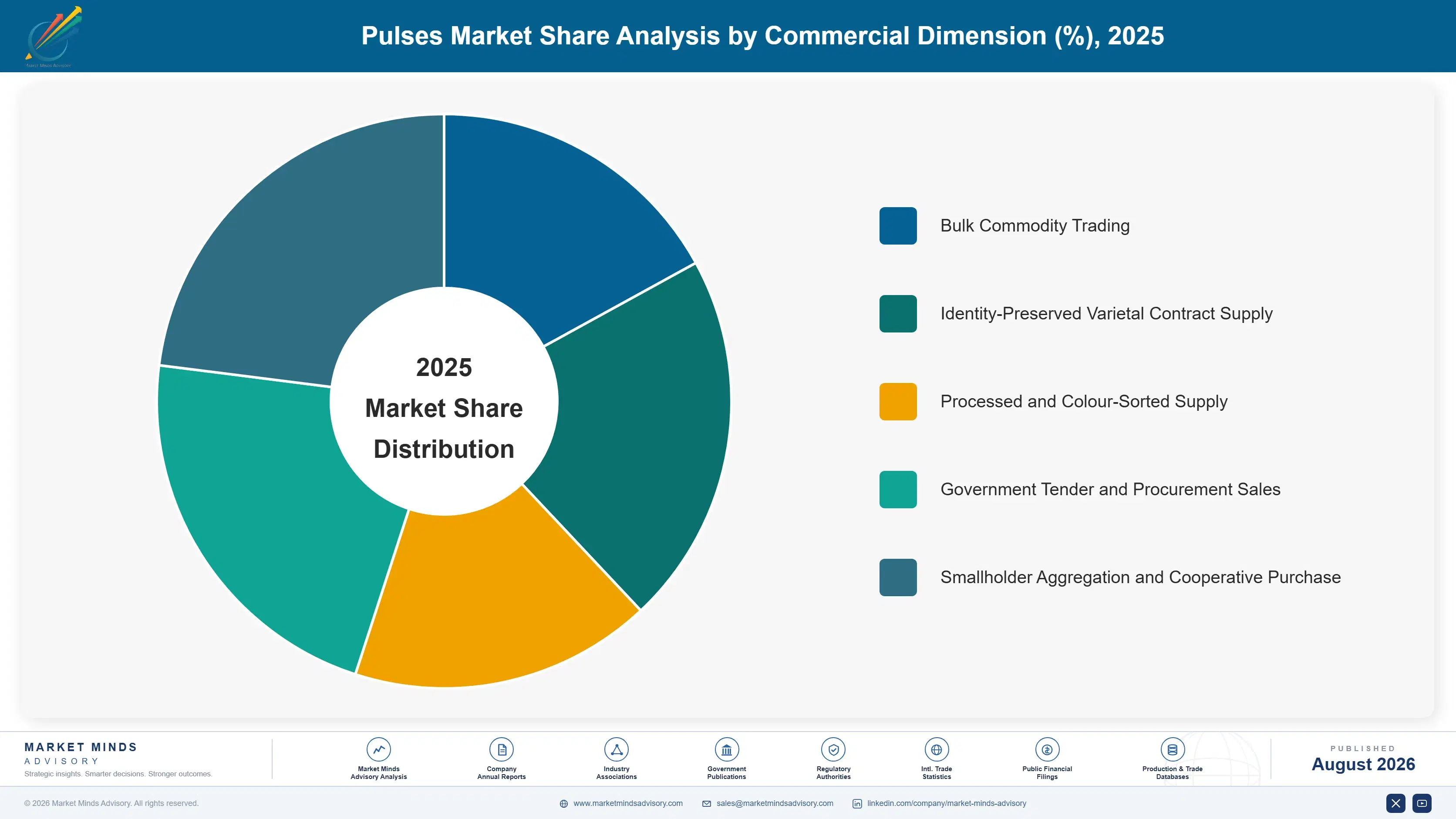
By Commercial Dimension

  • Bulk Commodity Trading
  • Identity-Preserved Varietal Contract Supply
  • Processed and Colour-Sorted Supply
  • Government Tender and Procurement Sales
  • Smallholder Aggregation and Cooperative Purchase

By Region

  • North America
  • Western Europe
  • East Asia
  • South Asia and Pacific
  • Latin America
  • Middle East and Africa
  • Eastern Europe

Scope, Methodology, and Coverage

Every figure in this report is reproducible from documented input assumptions. The scope below maps the historical period, the forecast horizon, the segmentation dimensions, and the countries covered, alongside the underlying primary and qualitative methodology.
Historical Period
2020 to 2025
Forecast Period
2026 to 2036
Base Year
2025 (USD billions; MMA Primary Research Dataset, August 2026)
Market Definition
This report covers pulses as harvested and traded dry grain legumes, spanning dry beans, chickpeas, lentils, dry peas, faba beans, lupins, pigeon peas and cowpeas, valued from farmgate through traded value to the point of milling, splitting or industrial processing. Coverage includes identity-preserved varietal supply, processing services such as cleaning, splitting and colour sorting, and government procurement volumes. Fresh and frozen green legumes, soybeans and groundnuts, pulse protein isolates and concentrates as finished ingredients, pulse flours and starches, forage legumes and prepared foods made from pulses are excluded from scope.
Quantitative Units
USD billions at farmgate and traded value; volume in million tonnes; gross margin percentages by commercial tier and post-harvest loss rates by region.
Segmentation Dimensions
Pulse crop type, end-use industry, commercial dimension, region.
Regions Covered
North America, Western Europe, East Asia, South Asia and Pacific, Latin America, Middle East and Africa, Eastern Europe
Countries Covered
India, Myanmar, Bangladesh, Pakistan, Australia, China, Japan, Canada, United States, Mexico, Brazil, Argentina, France, Germany, United Kingdom, Turkey, Russia, Ethiopia, Nigeria, Tanzania.
Key Companies Profiled
AGT Food and Ingredients, Olam Agri, Archer Daniels Midland, Louis Dreyfus Company, Export Trading Group, Adani Wilmar, Viterra, Arbel Group, Agrocorp International, Roquette, and ten further participants.
Quantitative Methodology
Primary survey, n=3,800 respondents, Q4 2025, six countries; demand-side model with trade association cross-validation
Qualitative Methodology
47 expert interviews, Q4 2025; applied to validate demand model assumptions, identify emerging dynamics, and assess competitive positioning
Report Format
PDF and XLSX data workbook (Word format preview document)
Publisher
Market Minds Advisory
Report Code
MMA-2026-AGR-809
Published
August 2026
Contact
sales@marketmindsadvisory.com | www.marketmindsadvisory.com

Purchase the full Pulses Market Report (2026 to 2036).

The full report sets out ten-year forecasts for pulses by crop type, end-use industry and commercial model across seven regions. It models planted area against nitrogen fertiliser pricing, quantifying the inverse relationship that governs supply far more reliably than pulse prices do. Competitive assessment covers twenty participants on a consistent revenue basis, separating origination reach from processing and varietal contracting capability. Indian policy scenarios are modelled against world price outcomes for chickpeas, lentils and pigeon peas individually. Findings draw on a quantitative survey of 3,800 respondents across six countries and 47 expert interviews conducted during the fourth quarter of 2025.
Ten-year forecasts by pulse crop type and region
Planted area modelled against nitrogen fertiliser pricing
Indian policy scenarios mapped to world price outcomes
Twenty-participant assessment on consistent revenue basis
Post-harvest loss quantified by region and storage method
Margin architecture across three commercial portfolio tiers

Built For The People Who Decide

From boardroom strategy to bench-side execution, this report is read cover-to-cover by leaders shaping the next decade of their industry, turning demand scenarios, market dynamics and valuation benchmarks into decisions.
CXOs/ Presidents/ VPs/ Managers
M&A and Corporate Development
Strategy Teams and R&D Heads
Procurement and Product Directors
Regulatory and Compliance Leaders
Investor Relations and Equity Analysts